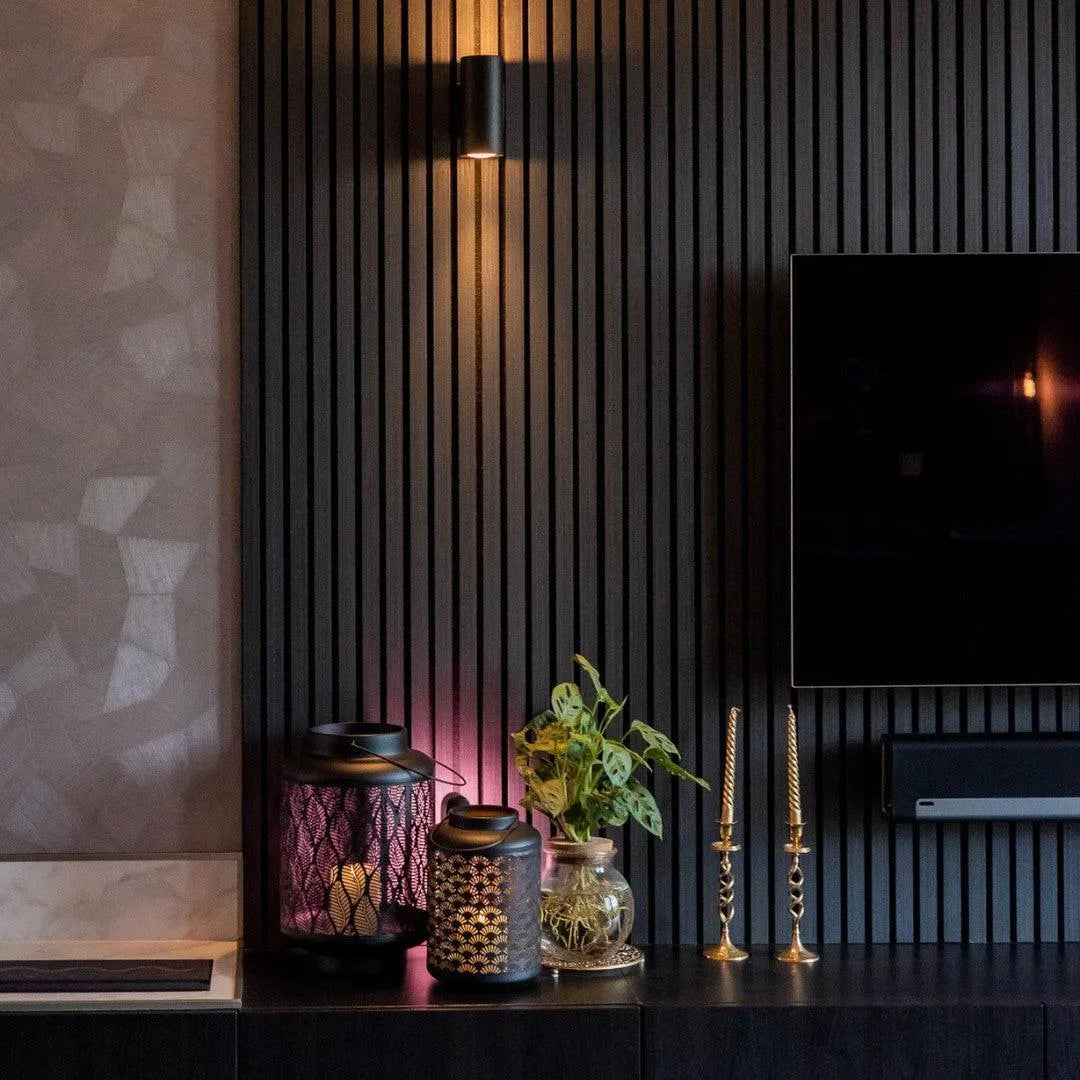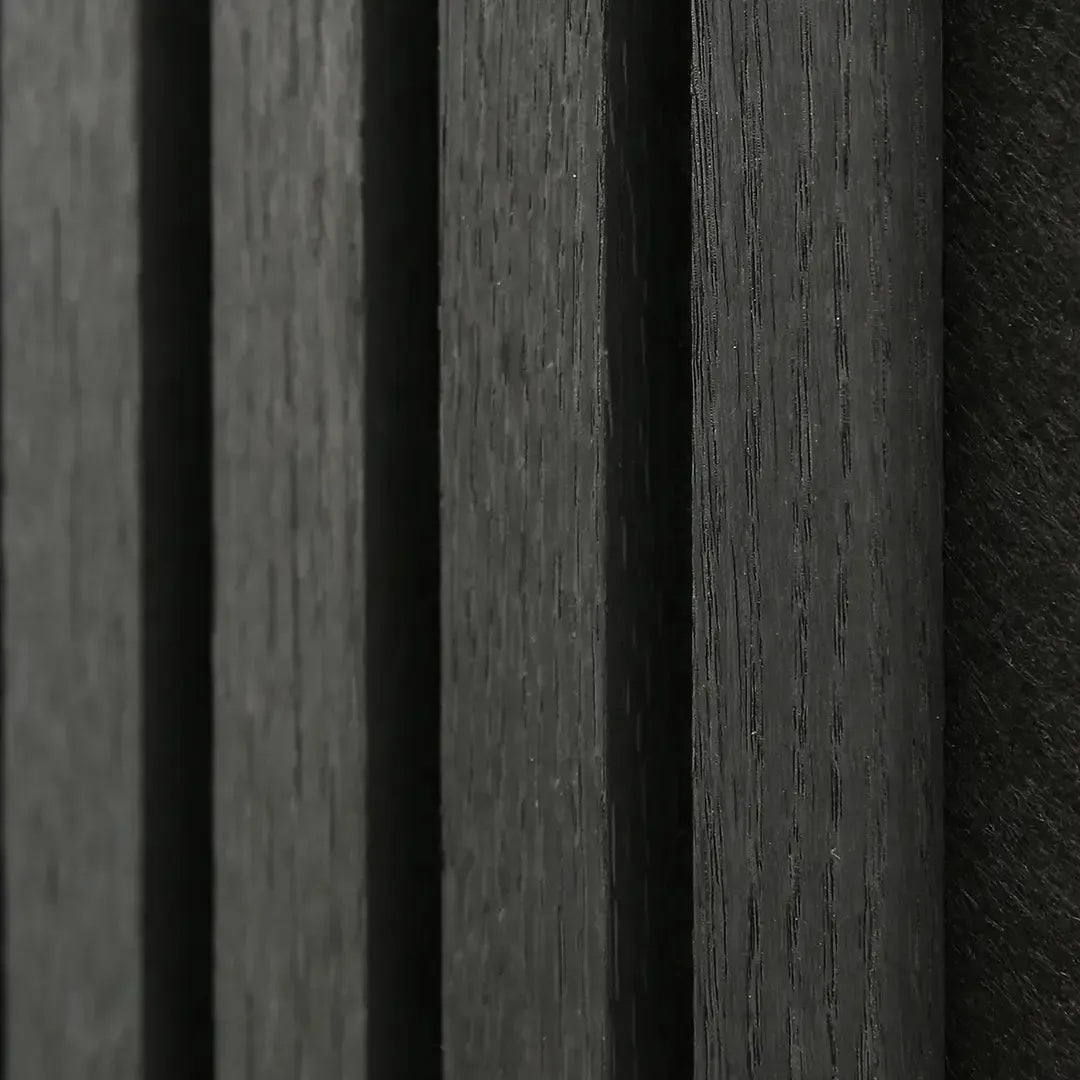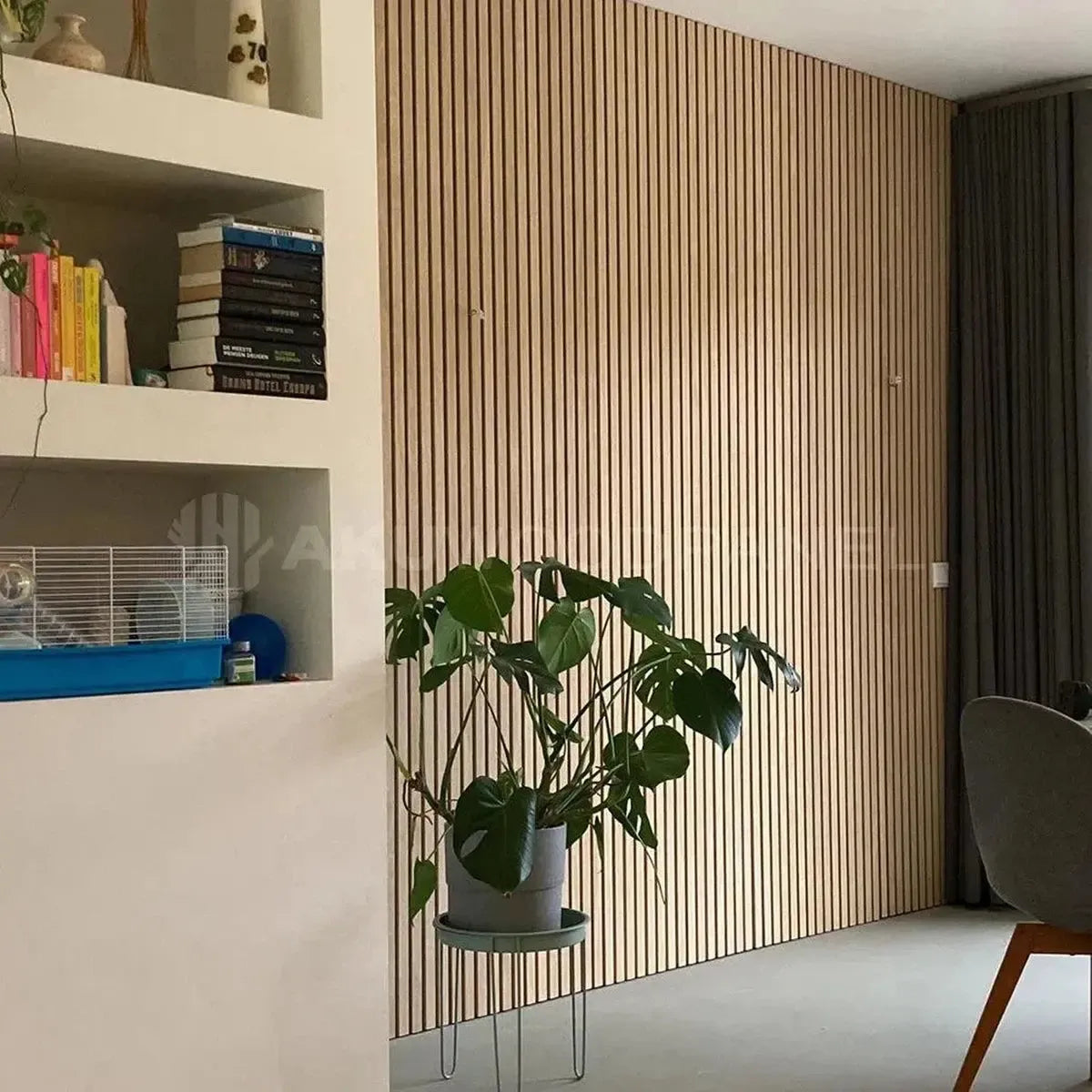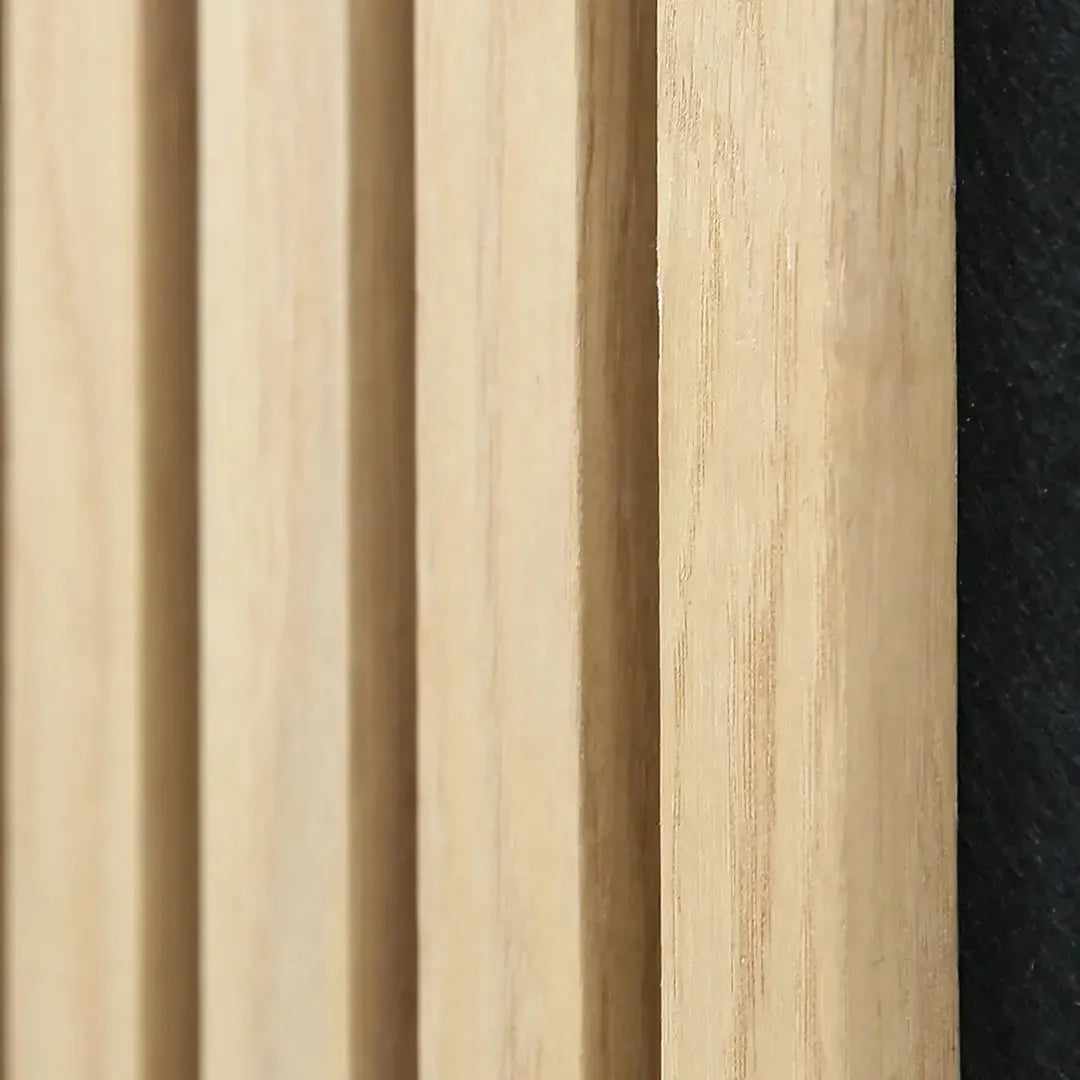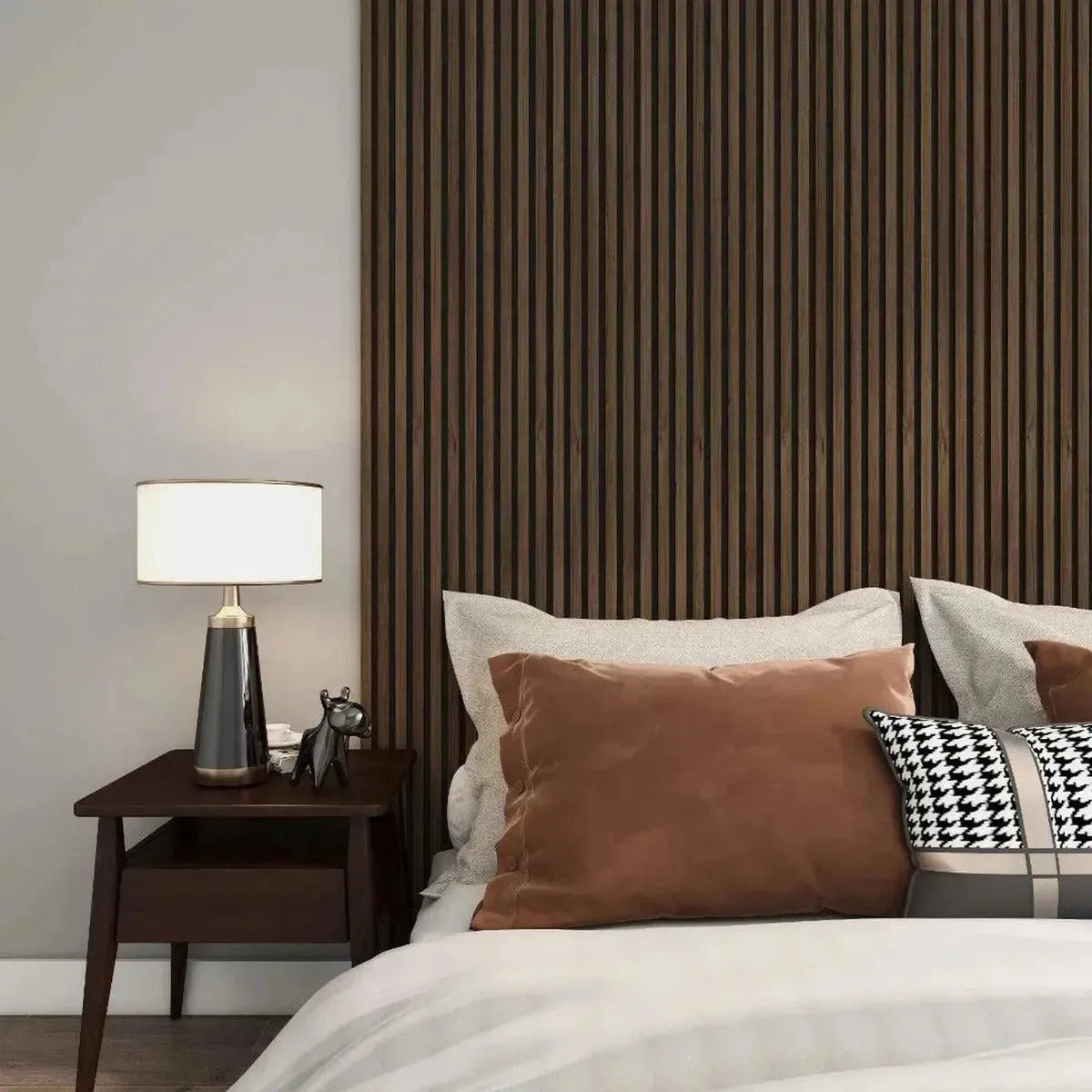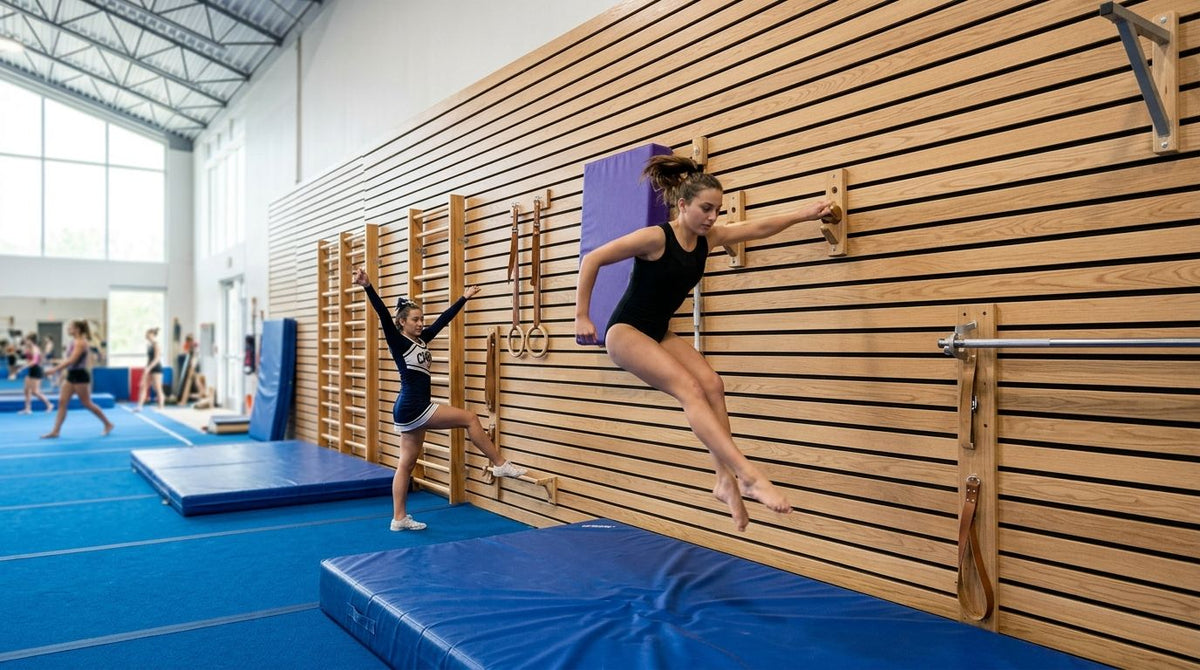
Gymnastics gym wood slat panels are acoustic wall treatments built from real wood veneer over an NRC-rated core, installed along tumble-floor perimeters and spectator walls with the aim of cutting echo while giving the facility a finished, branded look instead of bare block. Cheer and gymnastics spaces fight acoustic problems most gyms never deal with: tall open ceilings, hard tumbling and vault surfaces, and dozens of kids cheering at once during a meet, all bouncing off cinderblock walls that reflect sound instead of absorbing it.
- Felt-backed wood slat panels for gymnastics gyms hit an NRC of 0.75, enough to knock down echo in open tumbling bays.
- AKU Woodpanel's hexagon acoustic panels with gray felt backing are the strongest pick for spectator and reception walls in 2026.
- Foam acoustic panels don't survive chalk dust or ball impact the way a real wood veneer panel does.
- Phase the install in three zones: tumble perimeter, spectator wall, then reception, instead of covering the whole gym at once.
Why wood slat panels matter for gymnastics and cheer gyms
A tumbling floor with 24-plus foot ceilings and a concrete or cinderblock shell is one of the worst acoustic environments in any building type. Sound has nowhere to go, so it reflects off every hard surface and stacks on top of itself the moment 30 kids start cheering at the same time. Coaches lose the ability to give corrections mid-drill, and parents in the spectator section can barely hear the meet announcer.
Acoustic wood panels solve this by absorbing sound at the wall instead of letting it bounce, and hexagon acoustic panels with gray felt backing do it while looking like a finished interior wall rather than a gymnasium retrofit. That matters for programs competing for enrollment: parents touring a facility read wall finish as a signal of how well-run the gym is, long before they see a single routine.
Gymnastics and cheer gyms also have a wall-durability problem that most commercial spaces skip past. Chalk dust, ball impact, and constant foot traffic near equipment chew through soft finishes fast, so the acoustic material has to hold up the same way a locker room wall does, not the way a quiet office does.
How to plan wood slat panels for your gym
Map your gym's echo and impact zones
Walk the facility and separate walls into acoustic priority versus impact priority before buying anything. A tumble run wall needs both; a hallway wall might only need one.
- Tumble run perimeter walls (highest echo and impact)
- Spring floor sideline walls
- Spectator or bleacher-facing wall
- Reception and lobby walls
- Coach office and locker room walls
Choose felt-backed acoustic slat panels over foam
Foam acoustic panels are cheaper on paper but they tear, dent, and discolor fast in a gym environment. A felt-backed wood slat panel absorbs the same range of frequencies while surviving daily contact.
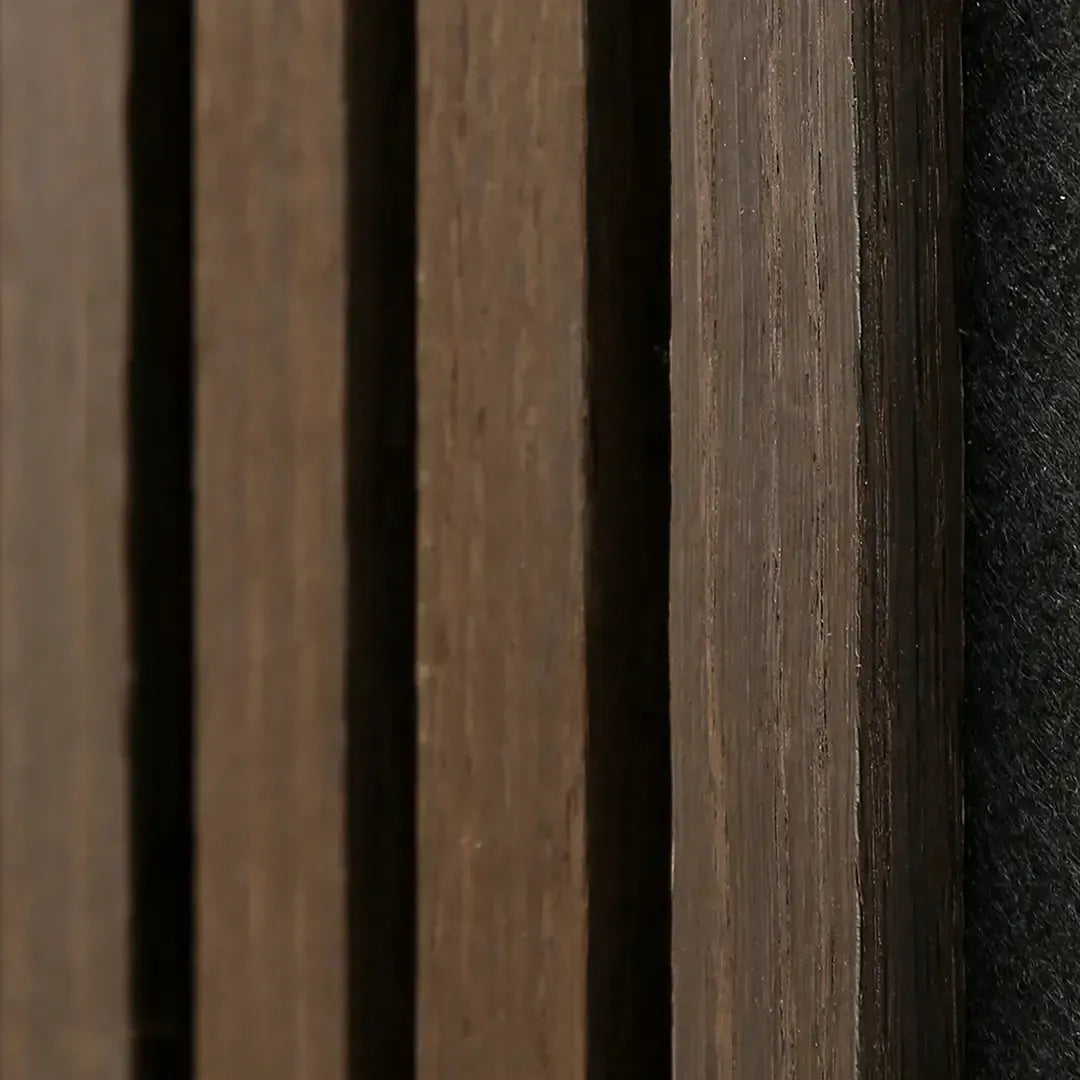
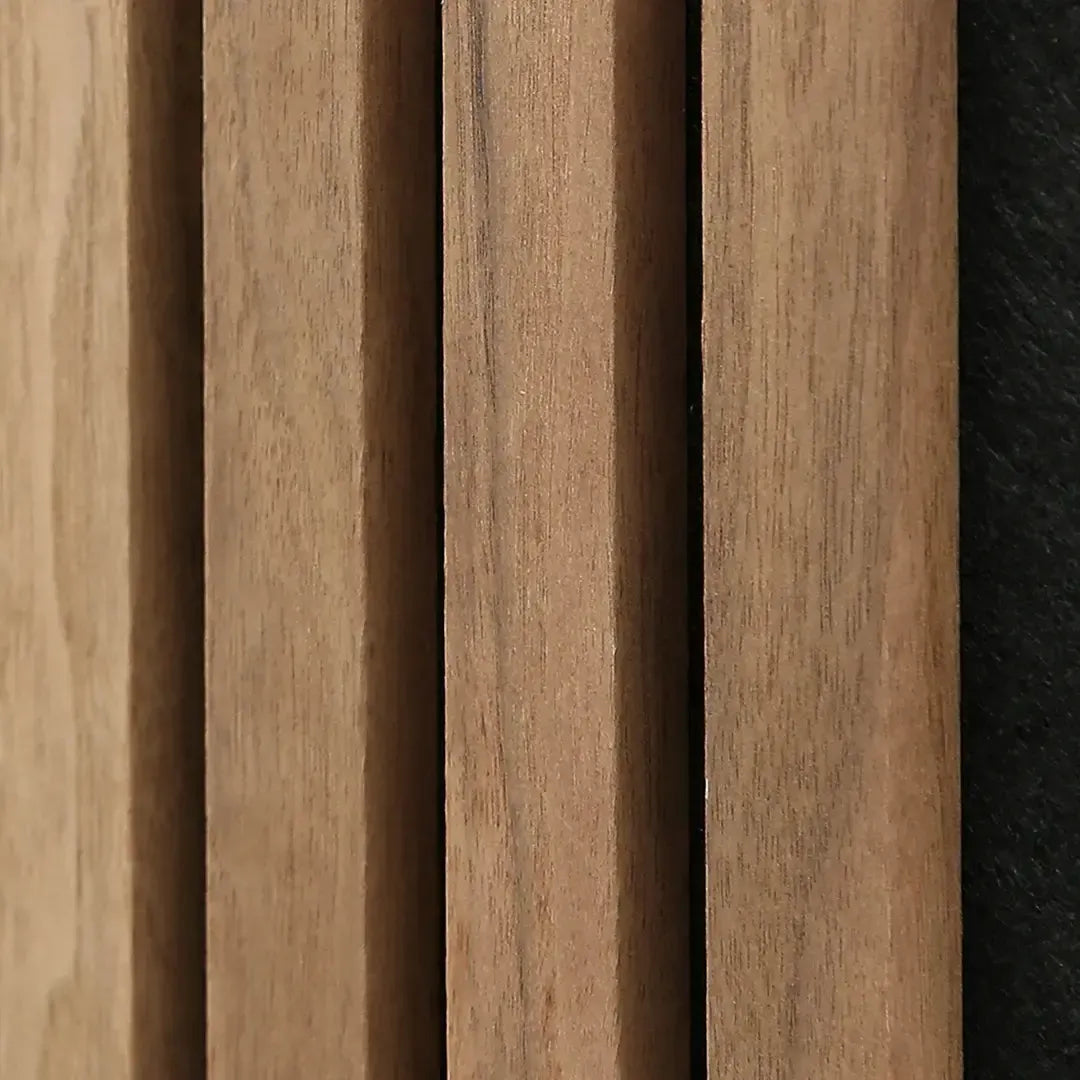
- Real wood veneer face over an acoustic felt backing
- NRC rating around 0.75 for meaningful echo reduction
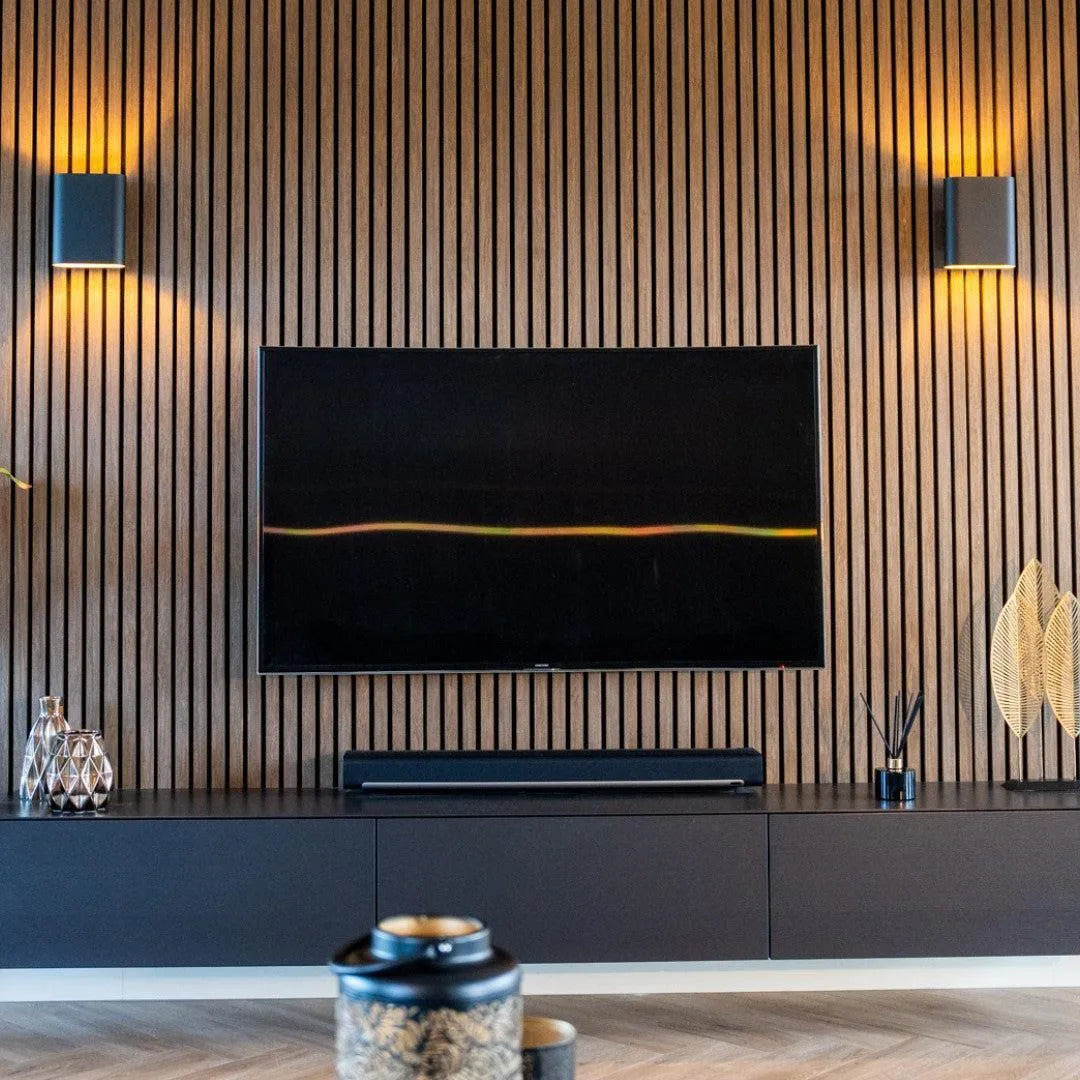
- Finish options like natural oak, walnut, black oak, and smoked oak to match team branding
- Panel format that mounts in sections instead of one giant sheet, so damaged pieces swap out individually
Install on impact-prone walls first
Don't try to panel the entire gym in one pass. Start with the walls that take the most abuse and the most noise, then expand.
- Mount on furring strips or a plywood backer over cinderblock, not directly on bare block
- Prioritize the tumble run and spring floor perimeter before decorative zones
- Leave a small gap at the base for cleaning equipment to pass without scuffing the panel edge
- Use finishing trim on any exposed panel edge near equipment storage
Add hexagon or fluted panels for reception and branding walls
Once the functional zones are covered, the reception desk and team photo wall are where the gym's look actually gets judged by visiting parents.
- Hexagon acoustic panels behind the front desk for a textured, branded feature wall
- A darker finish like black oak or smoked oak for a team wall that photographs well
- Fluted panel accents in coach offices for a lower-noise workspace without a full acoustic buildout
- Mixed finishes across zones instead of one finish gym-wide, so tumble walls and branding walls read as intentionally different
Budget and phase the rollout
A full gym re-wall in one order gets expensive and disruptive fast. Phase it the way most facility managers actually run renovations.
- Zone 1: tumble floor perimeter (highest acoustic and durability need)
- Zone 2: spectator wall (highest visible impact for parents)
- Zone 3: reception and branding walls
- Zone 4: coach offices and back-of-house
- Get a bulk quote before ordering multiple zones at once if the gym is doing a full renovation
Protect and maintain panels in daily use
Chalk dust and rubber-soled traffic are the two things that shorten the life of any gym wall finish.
- Dry-dust or vacuum panels weekly instead of wet-wiping chalk buildup
- Avoid ammonia-based cleaners on real wood veneer
- Inspect corner and finishing trim quarterly near high-contact zones
- Replace individual damaged sections rather than resurfacing the whole wall
Comparing wall treatment options for gymnastics gyms
| Option | Best for | Key limitation |
|---|---|---|
| Felt-backed acoustic slat panel (real wood veneer) | Tumble floor perimeter and spectator walls needing real echo control | Higher material cost than foam per square foot |
| Hexagon acoustic panel with felt backing | Reception desks and branding accent walls | Not meant to cover full-height walls on its own |
| Standard foam acoustic panel | Small offices or low-traffic corners only | Tears and discolors fast under chalk dust and impact |
| Painted drywall (no treatment) | Budget-only stopgap | Adds no acoustic absorption; echo stays exactly where it was |
Verdict: felt-backed wood slat panels win for any wall inside the tumbling and spectator zone, foam only makes sense for a back-office corner nobody touches.


Common mistakes gymnastics gyms make with wall acoustics
- Paneling only the ceiling. Cheer noise reflects off side walls just as hard as it does off the ceiling, and skipping the walls leaves the echo problem half-solved.
- Using foam near tumble runs. Foam panels tear on first contact with a stray mat edge or ball, while a wood veneer panel shrugs it off.
- Ignoring the spectator wall. 100-plus parents cheering during a meet create the single worst echo spike in the building, and it's the wall visiting families judge the program on.
- Skipping corner and finishing trim. Raw panel edges near equipment storage chip within months without trim protecting the corner.
- Picking one finish for the whole gym. A single finish gym-wide reads flat; pairing a lighter finish on tumble walls with a darker one on the team branding wall reads intentional.
FAQ
What's the best wood slat panel for a gymnastics gym?
A felt-backed acoustic slat panel with an NRC around 0.75 is the strongest pick for tumble floor perimeter and spectator walls in 2026. Hexagon acoustic panels work well as an accent on reception and branding walls rather than full wall coverage.
Do acoustic wood panels actually reduce echo in a cheer gym?
Yes, a felt-backed wood panel absorbs sound at the wall instead of letting it reflect, which is what causes the buildup in a tall, hard-surfaced gym. The higher the NRC rating, the more sound the panel absorbs versus bounces back.
Can wood slat panels handle chalk dust and impact?
Real wood veneer over an acoustic felt core holds up to daily chalk dust and incidental ball or mat contact far better than foam acoustic panels. Foam tears and discolors within months in a high-traffic gym.
Is wood paneling better than foam acoustic panels for gyms?
For any wall inside the tumbling or spectator zone, yes, because foam doesn't survive the physical wear a gym wall takes. Foam still makes sense for a low-traffic office corner where durability isn't a factor.
How many panels does a typical gym wall need?
Coverage depends on wall height and length, so measure the specific wall in square feet before ordering rather than estimating from a typical room size. Phasing the tumble perimeter first keeps the first order manageable.
Do these panels work on cinderblock or concrete gym walls?
Yes, but they need to mount on furring strips or a plywood backer rather than directly on bare block. Mounting directly on block without a backer risks a poor bond and an uneven surface.
What NRC rating do gym acoustic panels need?
An NRC around 0.75 is a strong benchmark for meaningful echo reduction in an open gym space. Lower-rated finishes like plain painted drywall add effectively zero absorption.
Should spectator walls get the same treatment as tumble walls?
Spectator walls should get the same acoustic priority since crowd noise during a meet creates one of the worst echo spikes in the building. The finish can differ though, since spectator walls face less physical impact than tumble run walls.
One last thing
The NRC 0.75 rating on a felt-backed panel isn't a marketing number, it's the same absorption class used in commercial sound-treatment specs outside of gyms entirely, which means a gymnastics facility paneling its tumble perimeter in 2026 is applying the same standard an office or studio would use, just on a wall that also has to survive chalk dust and mat contact.

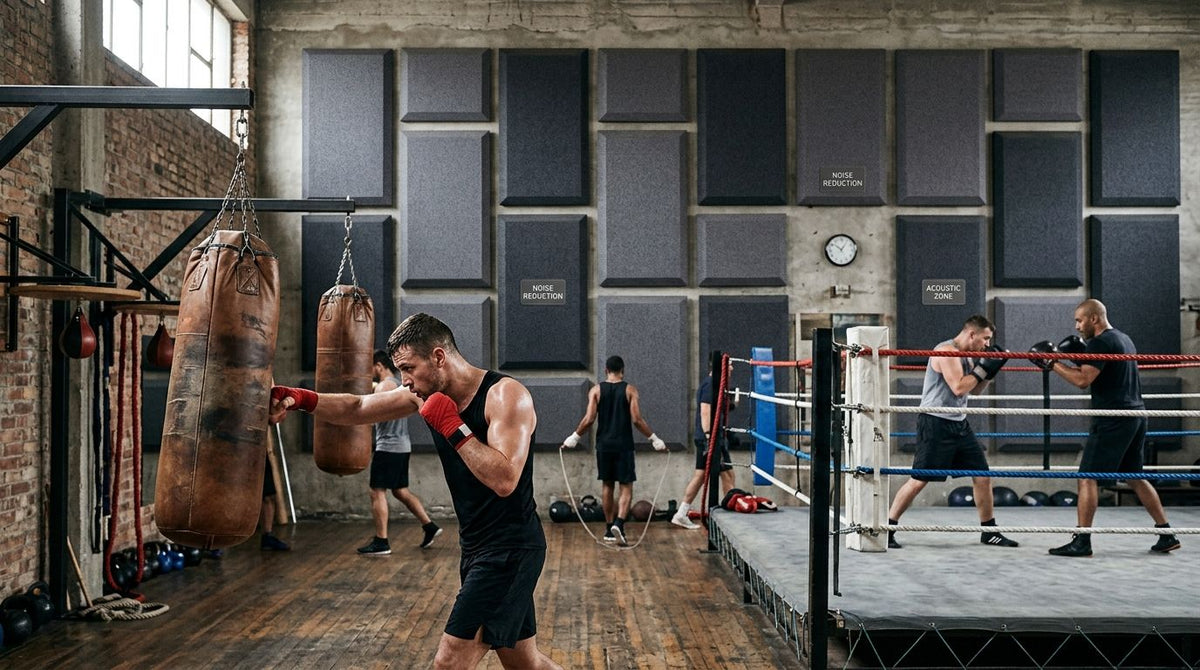

 Better performance and aesthetic appeal
 In Stock