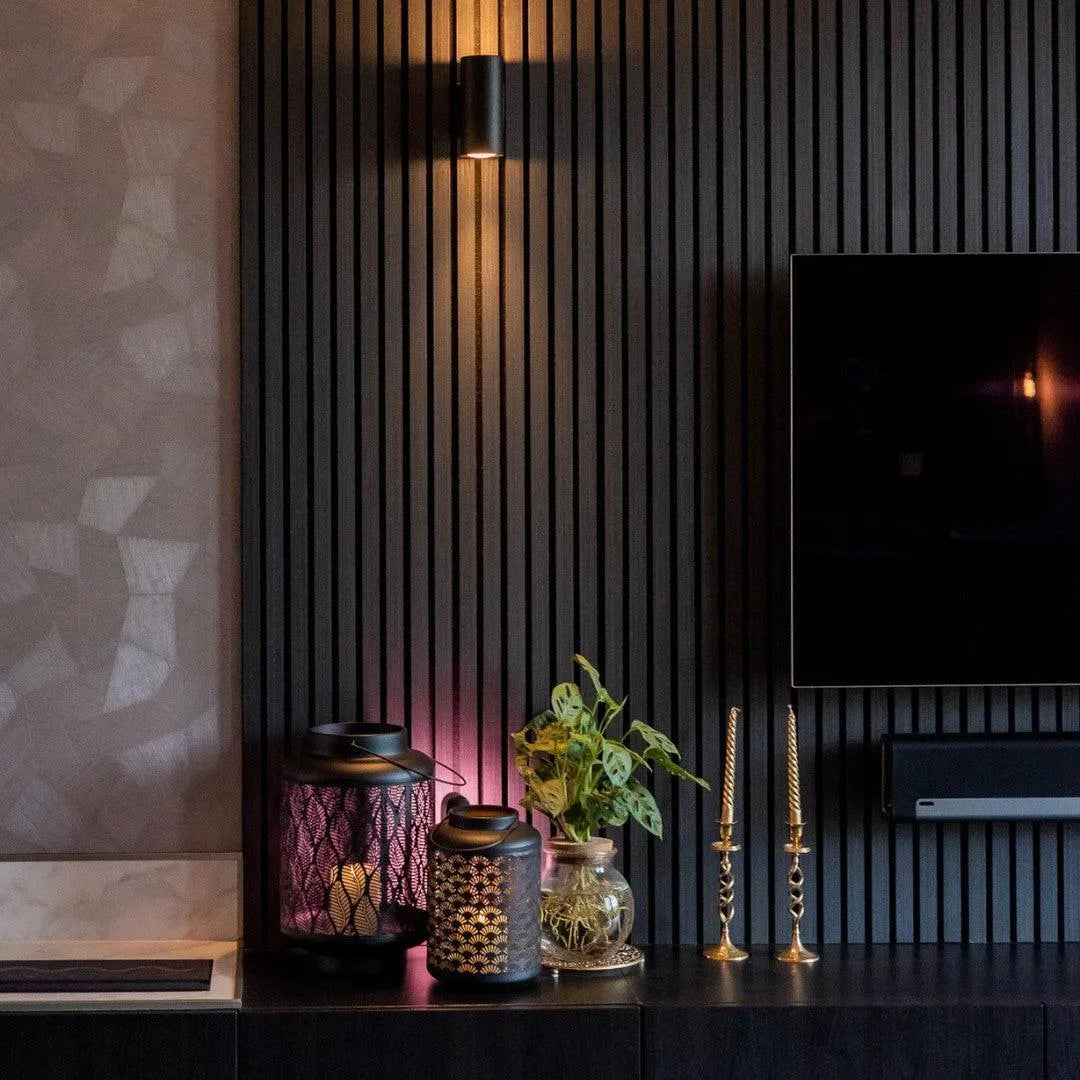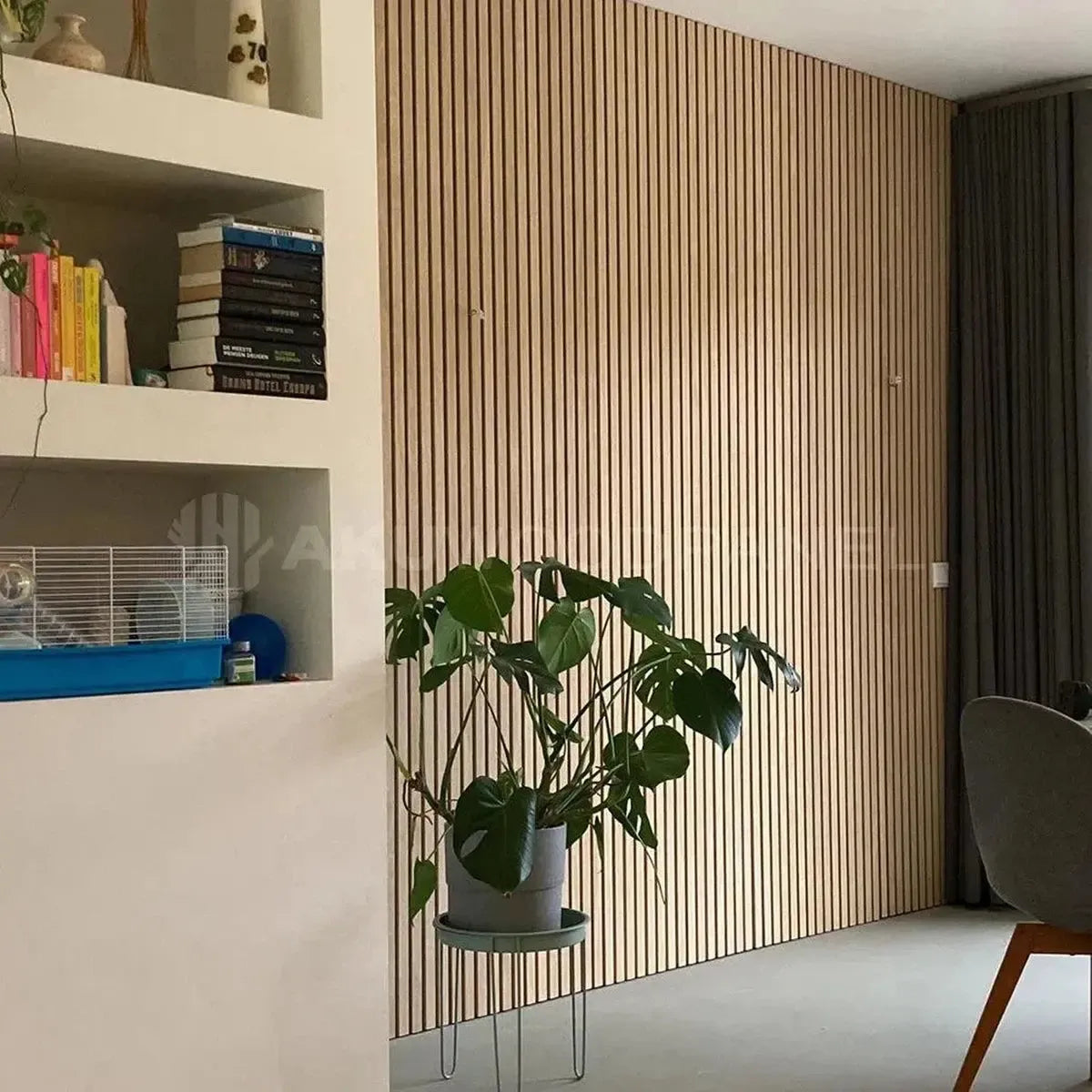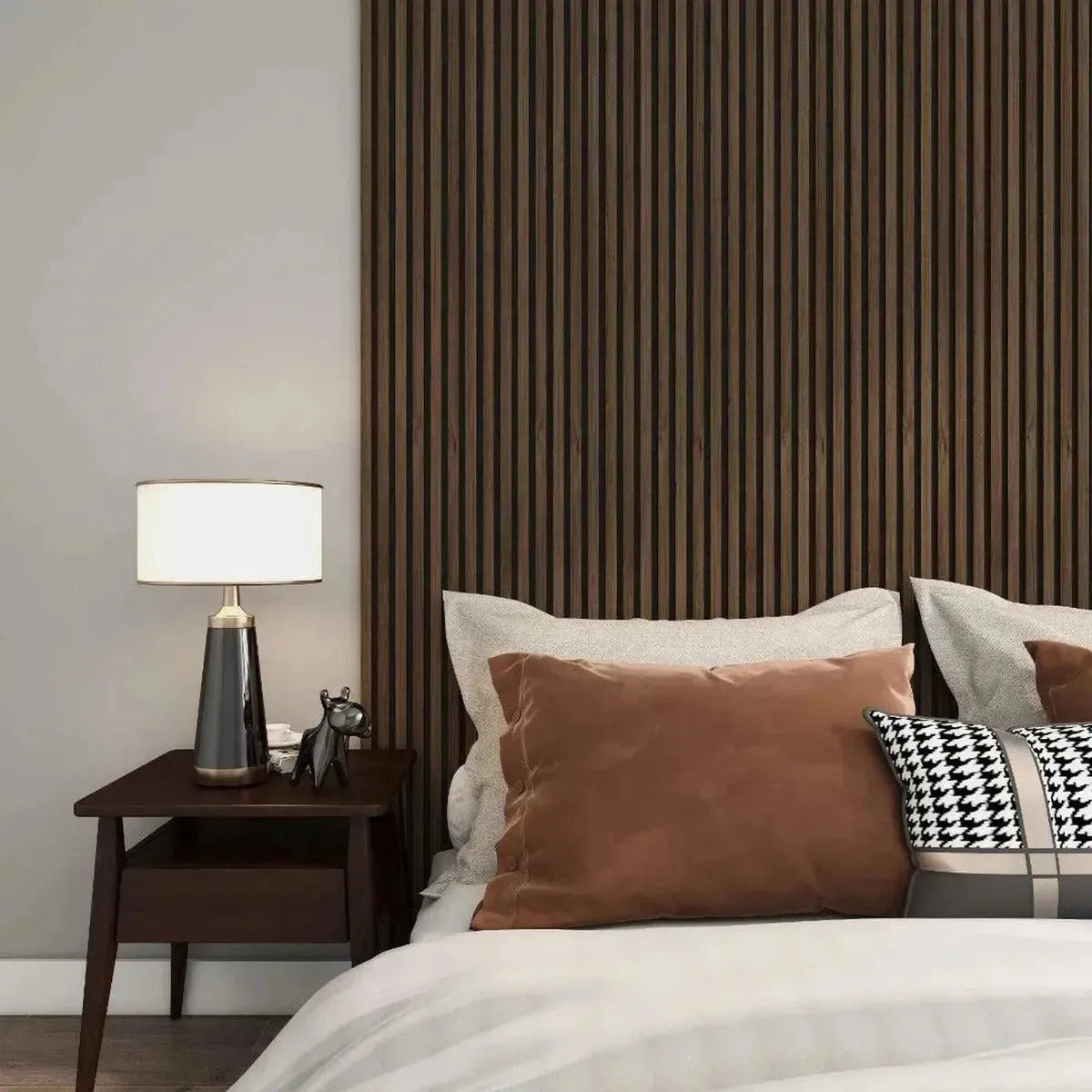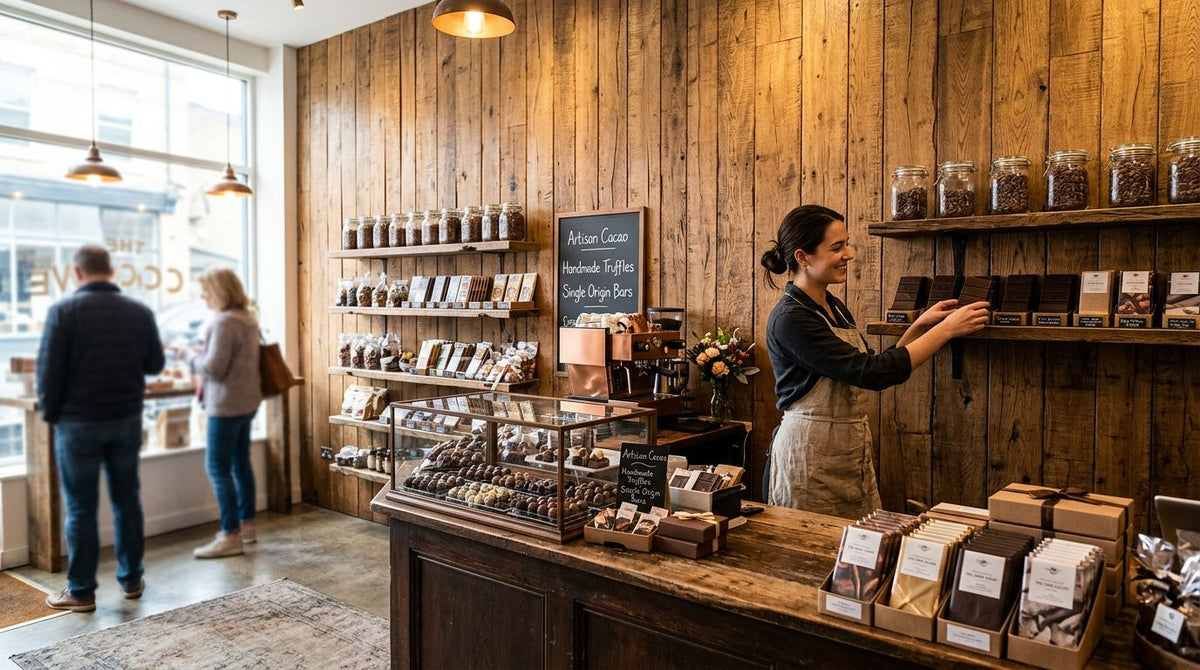
Wood panels for chocolate shop interiors solve two problems most chocolatiers only notice after opening day: hard-surface echo bouncing off tile, glass display cases, and stainless equipment, and a retail floor that reads more like a lab than a place selling $8 truffles. Acoustic wood panels absorb that noise around the counter and production-view walls while adding the material warmth that makes dark chocolate, caramel, and gift boxes photograph better under case lighting.
- Acoustic slat wall panels from AKU Woodpanel cut counter-area echo in chocolate shops with tile floors and glass cases.
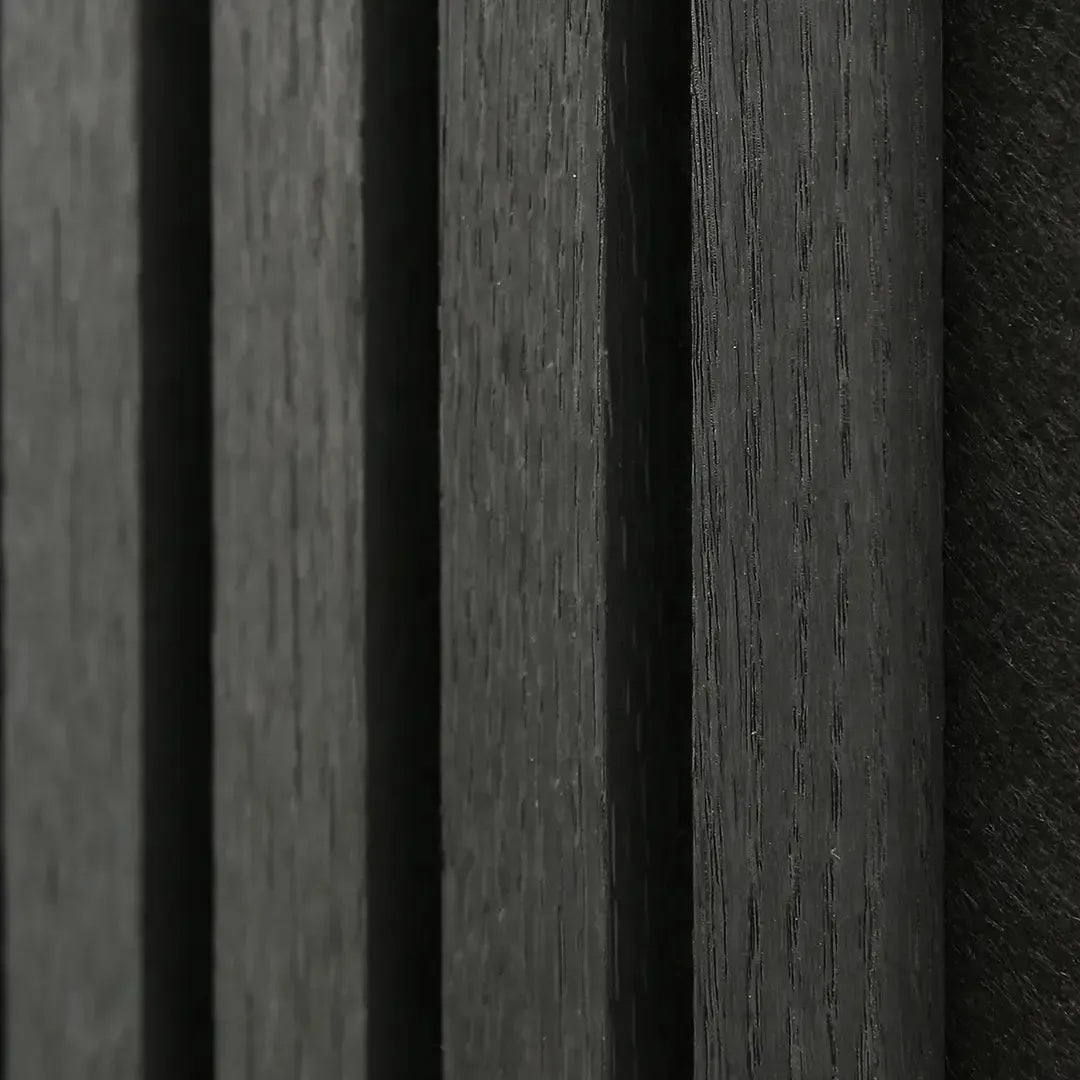
- Walnut and smoked oak tones read warmer against packaging and dark chocolate than pale natural oak under case lighting.
- Hexagon acoustic panels with felt backing carry an NRC rating of 0.75 — strong enough for open-plan tasting counters.
- Slat panels behind production glass beat curtains or foam on durability and cleanability in 2026 health-code inspections.
Why wood panels matter for chocolate shop interiors
A chocolate shop packs more hard, reflective surface into a small footprint than almost any other food retailer: glass cases on two or three sides, tile or polished concrete underfoot, stainless tempering equipment behind the counter, and often a low drop ceiling. Every one of those surfaces bounces sound instead of absorbing it, so a shop that feels quiet at 9 a.m. turns into a wall of noise the moment a Saturday crowd and a running tempering machine show up together.
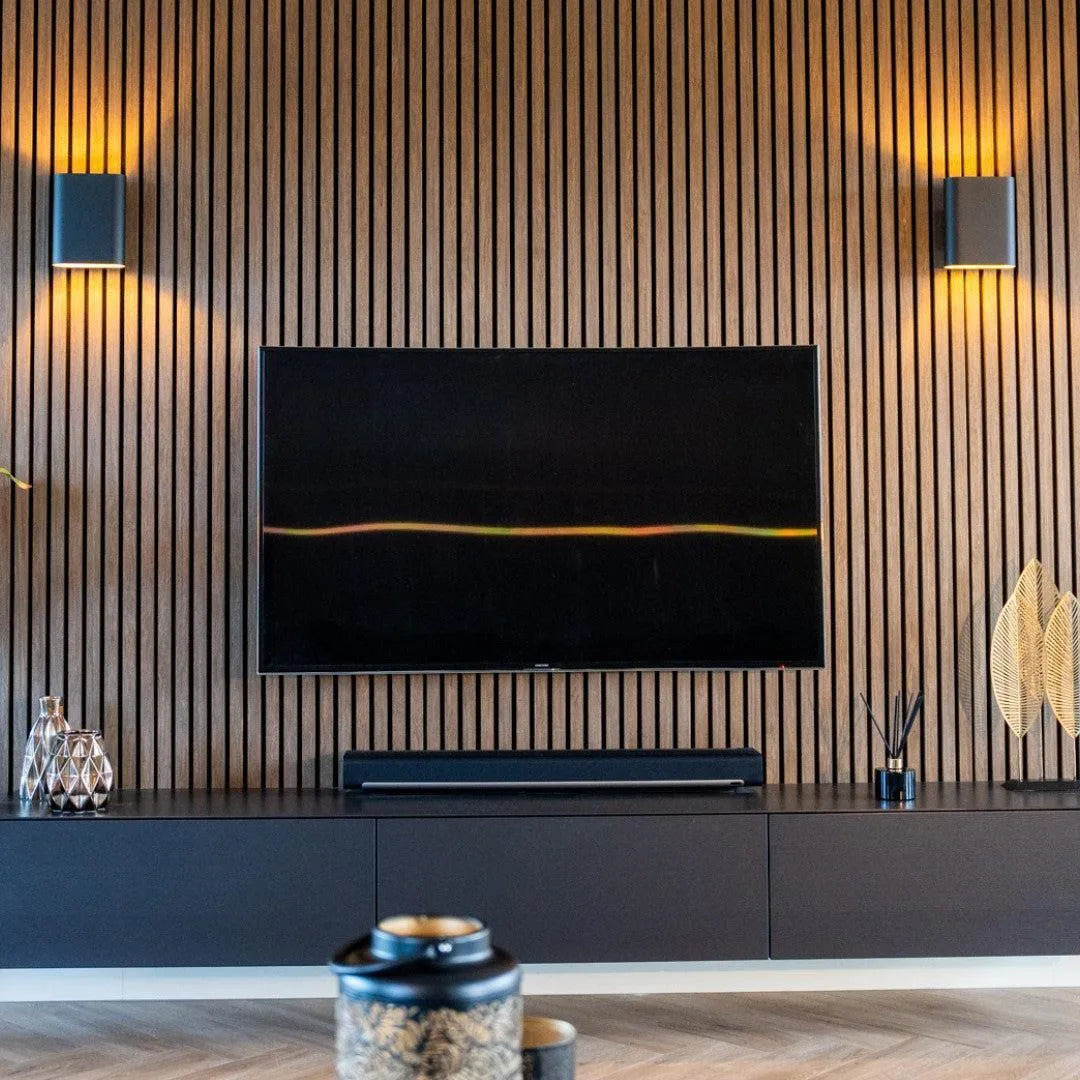
Wood wall panels address the acoustic side while doing double duty on brand feel. A chocolate shop selling itself on craftsmanship and small-batch production benefits from a wall material that looks handmade rather than mass-produced, which is exactly what a walnut acoustic slat wall panel delivers behind a register or tasting bar. The panel does the sound work; the wood grain does the branding work.
How to plan wood panels for your chocolate shop
Measure your echo problem before you buy anything
Don't guess at how bad the acoustics are — test it. A shop with more hard surface than soft surface almost always has a real reverberation problem, not just a perception of noise.
- Clap once in the empty shop and count how long the echo tail lasts — anything over a second or two flags a problem
- Walk the floor and tally square footage of tile, glass, and stainless versus rugs, fabric seating, or existing wood
- Note ceiling height; anything over 10 feet worsens reverberation and needs more absorptive surface, not less
- Stand near the tempering or enrobing machine during a normal run and see how far conversation carries
- Check for existing soft materials (curtains, upholstered seating) that are already doing acoustic work
Map which walls actually need treatment
Not every wall in a chocolate shop needs acoustic panels. Cheap fixes work in low-traffic zones; save panel budget for the walls doing the real acoustic and visual heavy lifting.
- Heavy curtains or acoustic foam behind non-visible storage walls handle basic absorption for free or cheap
- Fabric-wrapped bulletin boards or menu walls add soft surface without touching your design budget
- Area rugs near seating nooks cut floor-level reflection at low cost
- Reserve panel spend for the counter wall, the production-view wall, and any feature wall customers photograph
- Skip treating storage rooms or back-of-house prep areas that customers never enter
Choose acoustic slat panels for counter and production-view walls
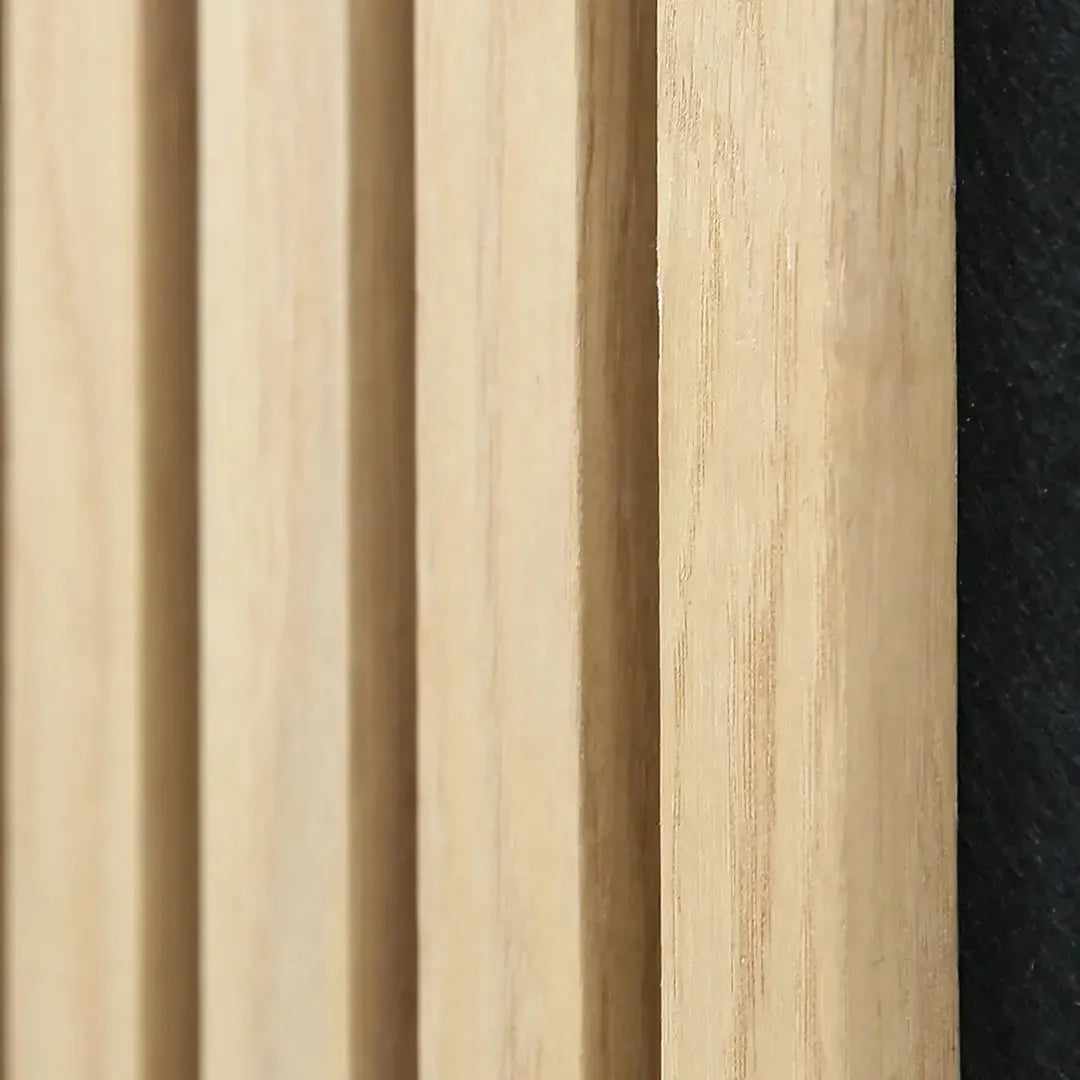
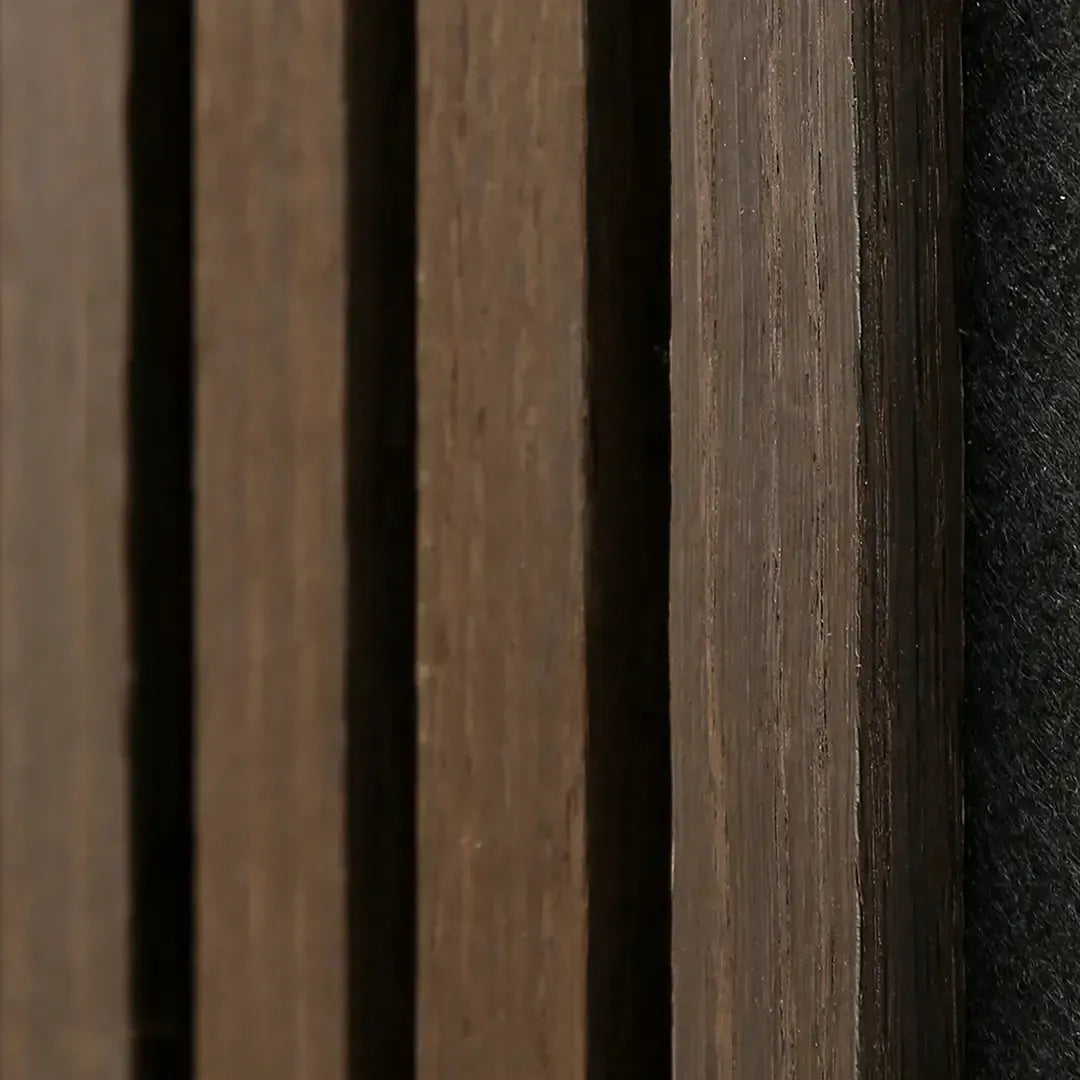
Once you know which walls matter, acoustic slat wall panels are the faster, more durable path compared to fabric panels or foam, especially on walls that get touched, leaned on, or splashed near a tempering station. AKU Woodpanel's slat panels use a 3-sided wood veneer over an acoustic core, so the wall absorbs sound instead of just decorating over the problem.
- Put slat panels behind the register and behind any glass where customers watch chocolate being made or wrapped
- Choose felt-backed versions like smoked oak with gray felt for the highest absorption on your loudest wall
- Run panels floor-to-counter-height on production-view walls so wipe-downs don't damage finish higher up
- Avoid placing raw veneer slats directly beside open-flame equipment or steam sources
- Leave narrow reveal gaps at panel joints for expansion in humid kitchens
Match panel tone to your chocolate branding
Panel color changes how your product looks under case lighting, and it changes faster than most owners expect once the display case is stocked.
- Walnut and black oak panels create contrast that makes light-colored bonbons and pastel wrapping pop
- Natural oak and rustic oak read Scandinavian and pair well with minimalist packaging and pastel branding
- Smoked oak splits the difference — dark enough for contrast, warm enough to avoid feeling industrial
- Test a sample against your actual packaging and case lighting before ordering a full wall, not a photo online
- Keep panel tone consistent between the sales floor and any visible production window so the space reads as one design
Plan placement around health-code and food-safety surfaces
Health inspectors care about what's within splash range of food prep, not what's on a customer-facing accent wall, so plan panel placement with that line in mind.
- Keep wood panels a documented distance back from any food-contact prep surface per your local health code
- Use tile, stainless, or sealed laminate on walls directly behind open prep, and reserve wood panels for sales-floor walls
- Confirm with your local inspector before installing wood panels anywhere near a hand-wash sink or three-compartment sink
- Add a washable trim strip where panels meet a wall segment that does require frequent wipe-down
Budget panel coverage by square footage, not guesswork
Most chocolate shop owners either over-order panels for walls that didn't need full coverage or under-order and end up with a patchwork look.
- Measure each wall you're treating in square feet, not linear feet, before ordering
- Add 10% extra coverage for cuts around outlets, switches, and any curved counter edges
- Order a sample box of finishes before committing a full wall — matching stain lots matters more than most owners expect
- Treat the counter wall and production-view wall first; add secondary walls only if the echo test still fails after phase one
Install around electrical, refrigeration, and tempering equipment lines
A chocolate shop has more wall-mounted equipment than a typical boutique — refrigeration compressors, tempering units, sometimes a small roaster — and panels need to work around all of it without trapping heat or moisture.
- Leave clearance gaps around any equipment that vents heat directly into the wall cavity
- Route panel installation around existing conduit runs rather than through them
- Avoid full panel coverage directly behind refrigeration units where condensation risk is higher
- Use end pieces to finish exposed panel edges cleanly around equipment cutouts instead of raw cuts
Panel options for chocolate shop interiors
| Panel type | Best for | Key limitation |
|---|---|---|
| Acoustic slat wall panels | Counter walls, production-view walls, main echo control | Vertical grooves collect dust faster in high-touch zones |
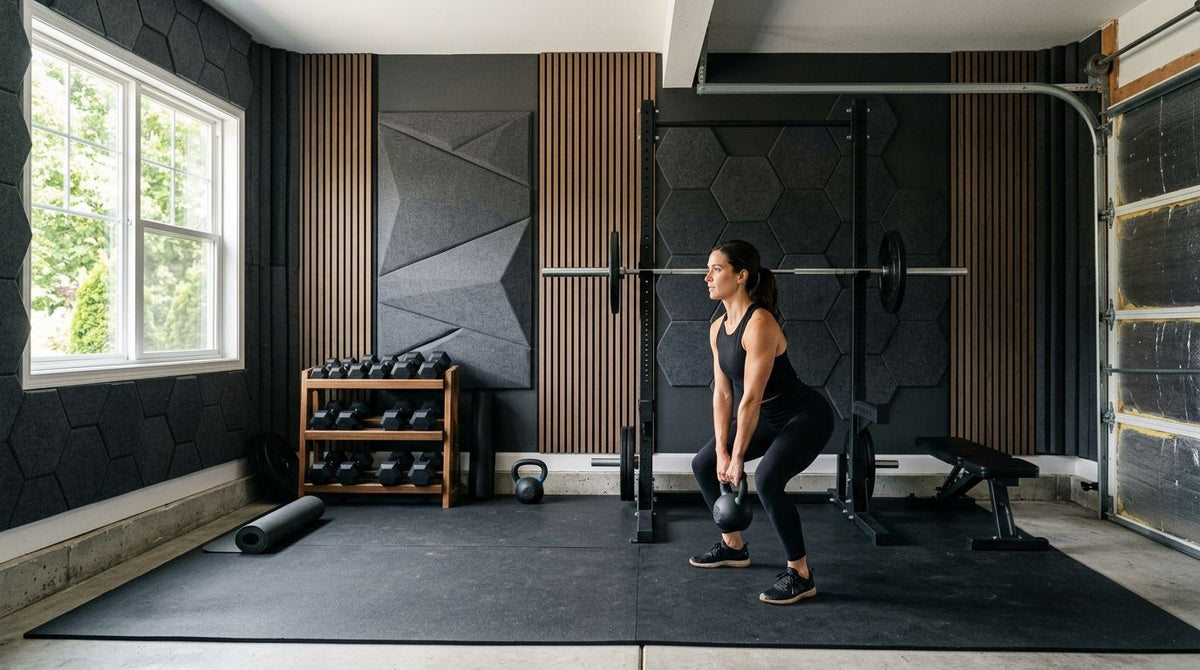
| Hexagon acoustic panels | Seating nooks, tasting counters, modular accent layouts | Layout planning takes longer around corners and outlets |
| Fluted wall panels | Curved display counters, column wraps | Lower sound absorption than felt-backed slat panels |
| 3D wood wall panels | Small accent zones, packaging display backdrops | Decorative only — not rated for acoustic treatment |
| Exterior wall panels | Storefront facade, awning surrounds | Not built for interior acoustic use |
Verdict: for a chocolate shop's main sales floor, acoustic slat wall panels win on both noise control and durability near equipment — hexagon panels are the better call only for a dedicated seating or tasting nook.


Common mistakes chocolate shops make with wall panels
Chocolatiers plan the case, the packaging, and the menu board carefully, then treat the walls as an afterthought. That order of operations causes most of the problems below.
- Skipping the echo test. Owners order panels for the wall that looks unfinished instead of the wall that's actually loud, and the noise complaint doesn't go away.
- Ordering one finish for the whole shop. A single wood tone across sales floor, seating, and back wall reads flat under case lighting instead of layered.
- Ignoring humidity near tempering equipment. Panels installed too close to a tempering machine's heat output can warp or discolor faster than panels on a dry wall.
- Treating acoustics and scent as separate budgets. Sound and aroma both shape how long a customer lingers near the case, and shops that already control humidity and airflow around production lines are frequently the same ones running cold air scent diffusers to keep cocoa aroma consistent without adding heat near the display.
- Under-measuring coverage. Owners order panel quantity by eyeballing a wall instead of measuring square footage, then run short mid-install and end up with a mismatched dye lot filling the gap.
FAQ
What's the best wood panel for a chocolate shop interior?
Acoustic slat wall panels are the best wood panel for a chocolate shop interior because they absorb counter-area noise while adding a warm, handmade look that supports premium pricing. Walnut and smoked oak tones work best against packaging and dark chocolate under case lighting.
Do acoustic panels actually reduce noise in a small retail space?
Yes, acoustic wood panels reduce noise by absorbing sound instead of letting it bounce off tile, glass, and stainless equipment. Felt-backed panels, like the hexagon panel with an NRC rating of 0.75, absorb more than plain veneer.
Is walnut or oak better for chocolate shop walls?
Walnut and black oak create more contrast against light packaging and pale bonbons, while natural oak reads lighter and more Scandinavian. The right choice depends on your existing branding and case lighting, so test a sample against your packaging first.
How much wall coverage do I need for acoustic treatment?
Measure the square footage of hard, reflective surfaces in the shop and add roughly 10% extra for cuts around outlets and curved edges. Most chocolate shops only need to treat the counter wall and the production-view wall to fix the worst of the echo.
Can wood panels go behind a chocolate production counter?
Wood panels can go on the sales-floor side of a production-view wall, but the food-contact prep side should stay tile, stainless, or sealed laminate per local health code. Keep panels a documented distance back from any wash sink or prep surface.
Are hexagon panels or slat panels better for chocolate shops?
Slat panels are better for main sales-floor walls and production-view walls where noise control matters most. Hexagon panels work better for a dedicated seating nook or tasting counter where the layout calls for a modular, geometric look.
How do I keep wood panels safe near tempering machines?
Leave clearance gaps around any equipment that vents heat into the wall cavity and avoid full panel coverage directly behind refrigeration units where condensation collects. Route panels around existing conduit rather than cutting through it.
Is real wood veneer better than laminate for a food retail interior?
Real 3-sided wood veneer holds grain detail and repairs more naturally than laminate, which shows wear at seams and edges faster in high-traffic retail settings. Laminate can be cheaper up front but tends to look synthetic under case lighting within a year or two.
One last thing
The felt-backed hexagon panel carries an NRC rating of 0.75 — that single spec is the difference between a tasting counter that still echoes after you've added slat panels to the main wall and one that doesn't. If your first echo test still fails after treating the counter wall in 2026, add a small run of felt-backed hexagon panels to the seating nook before touching anything else.



 Better performance and aesthetic appeal
 In Stock