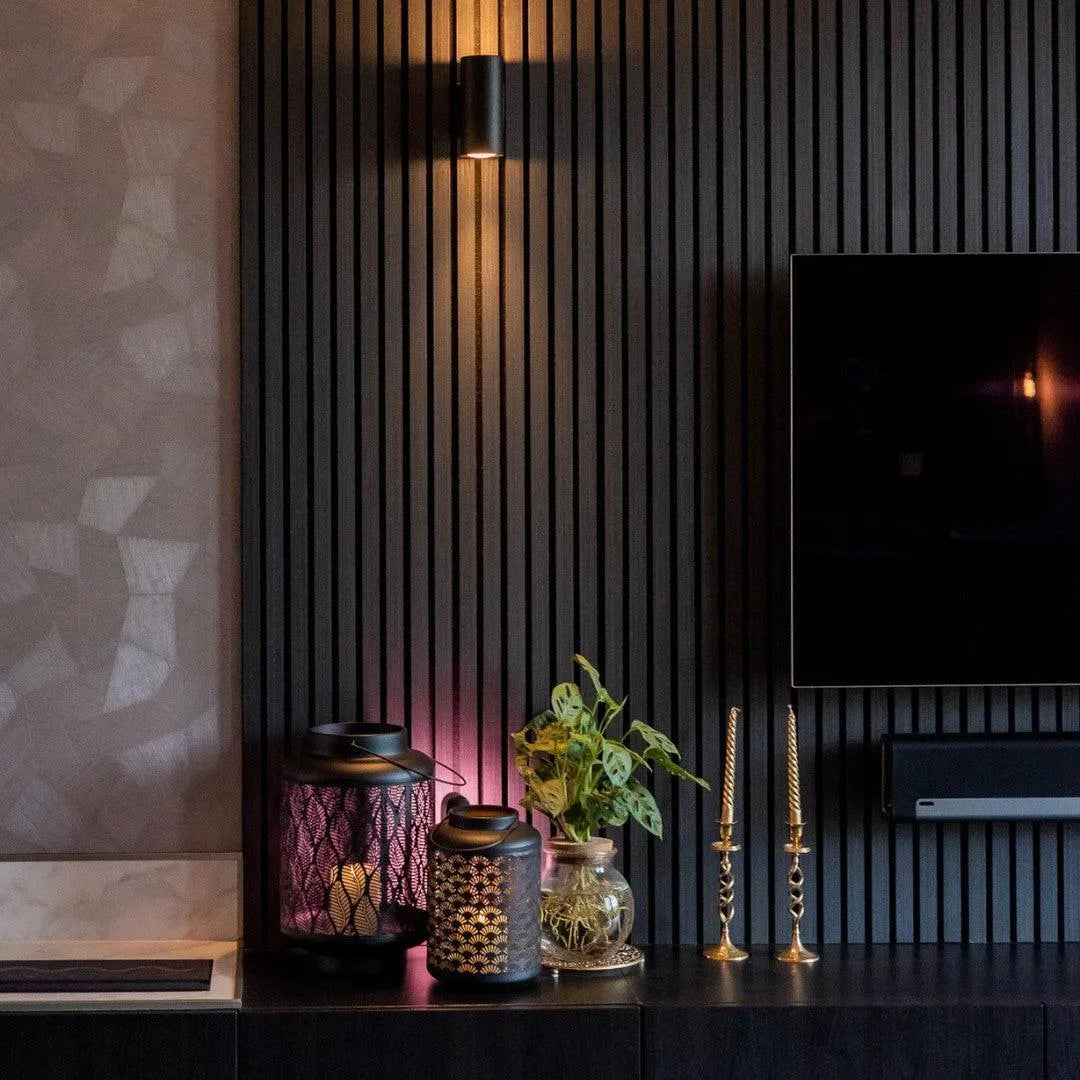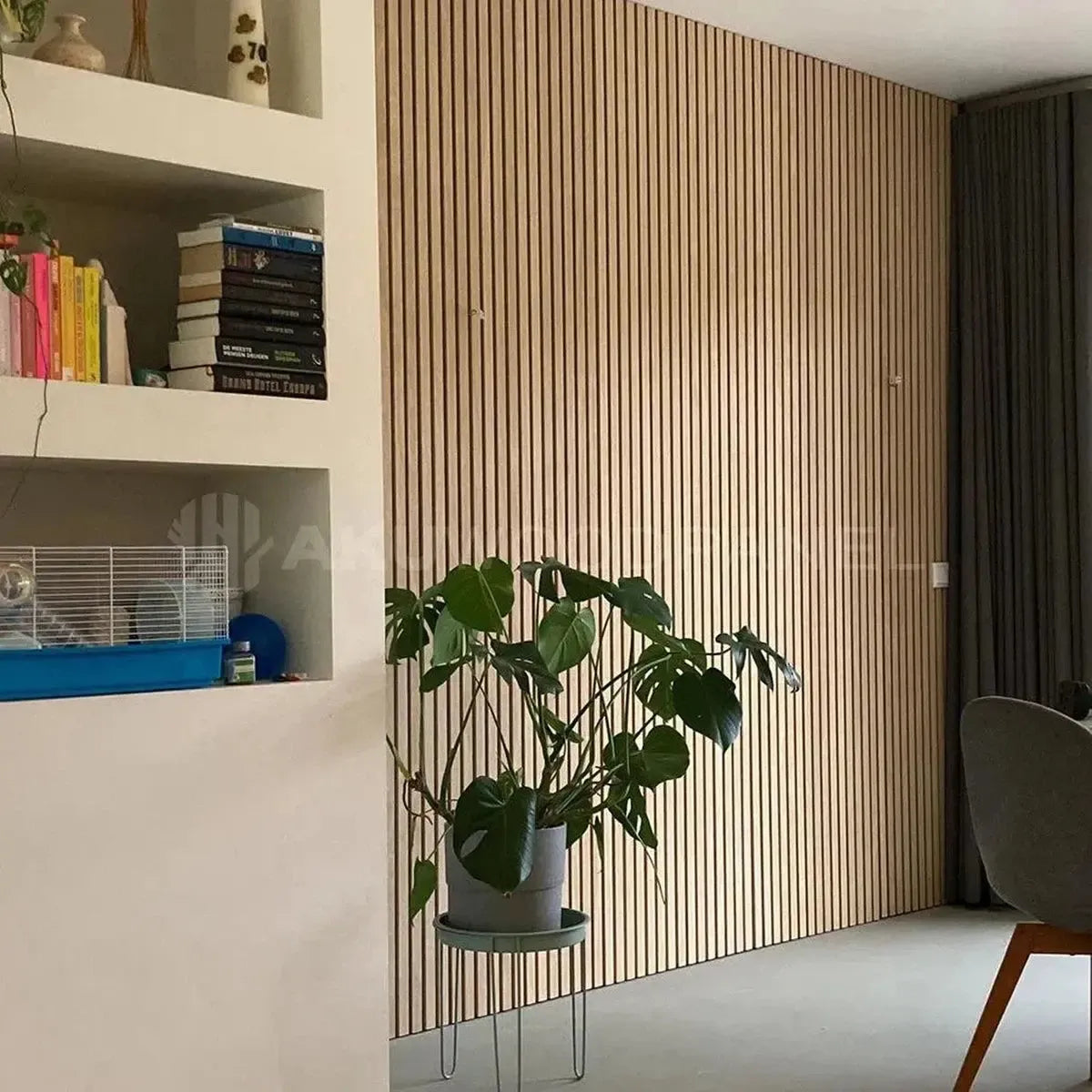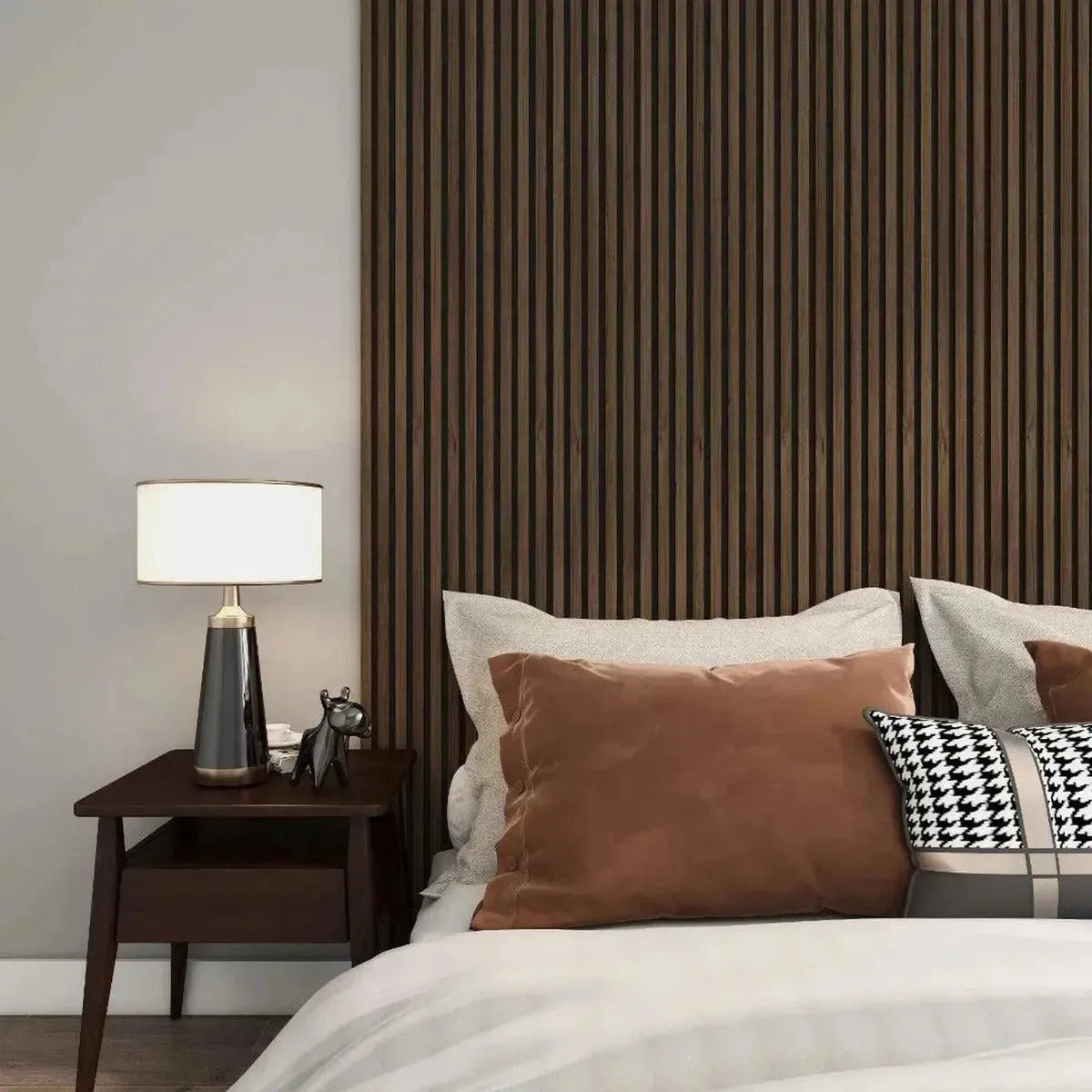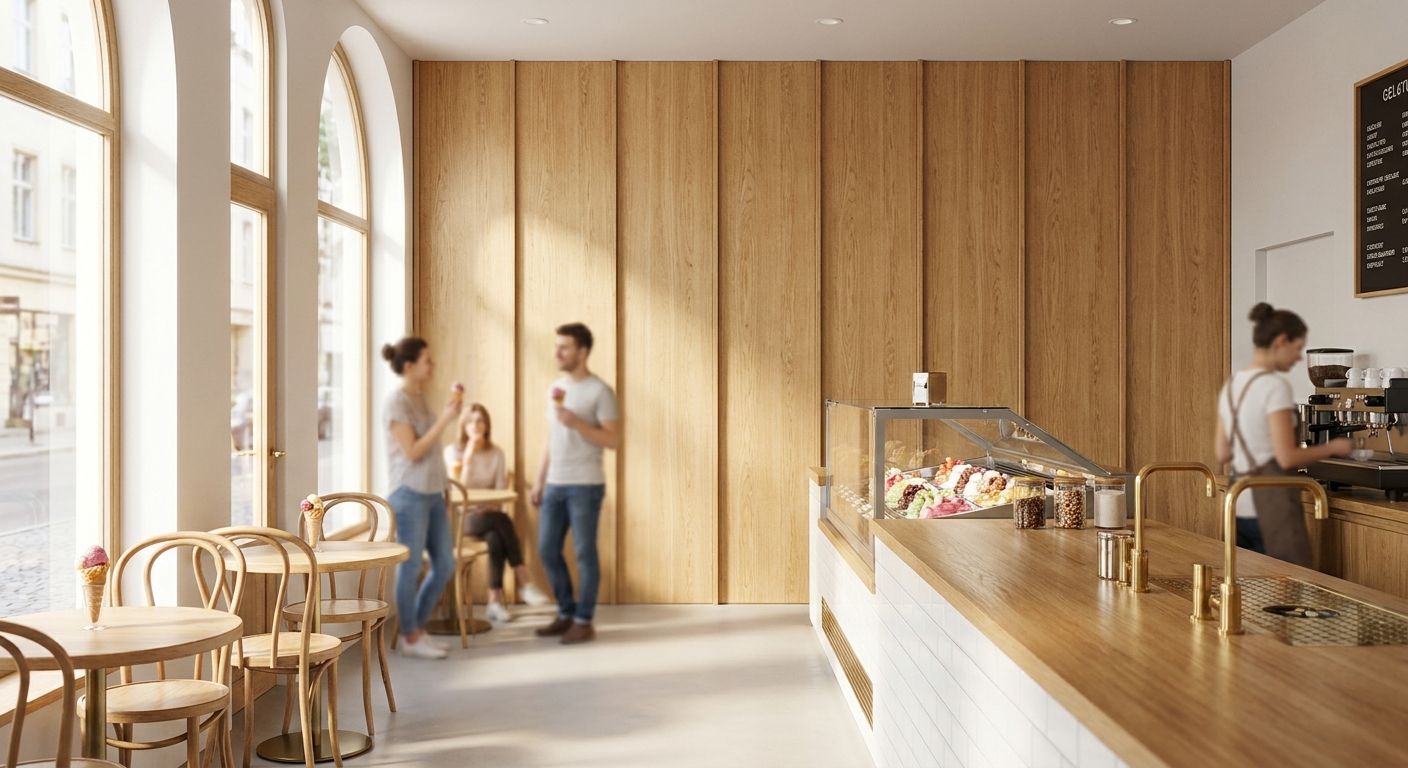
Ice cream parlor wood panels are decorative, acoustic wall coverings installed behind counters, seating nooks, and feature walls to absorb noise from hard freezer cases and tile floors while giving the shop a warmer, camera-ready look. Ice cream parlors run small, loud, high-traffic rooms with constant splash exposure near the dipping cabinet, so the finish has to handle wipe-downs and humidity that a living-room accent wall never sees.
- Wood panels for ice cream parlor walls cut echo from tile floors and glass freezer cases without losing floor space.
- Akustiq USA's acoustic slat panels use real 3-sided wood veneer, not laminate, for parlor feature walls in 2026.
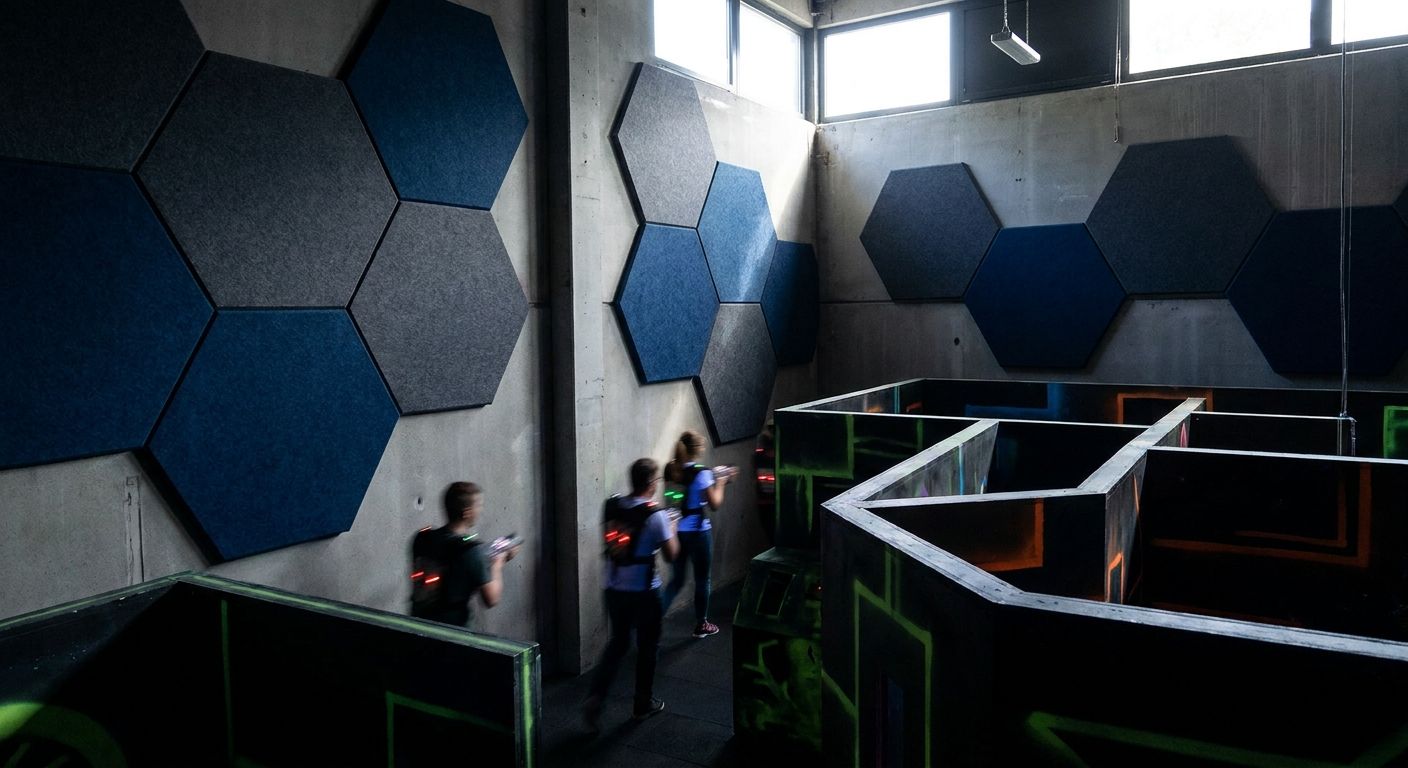
- Hexagon felt-backed panels reach an NRC of 0.75 - strong absorption for small, loud retail rooms.
- Skip raw or unsealed wood near splash zones; sealed veneer and felt-backed slats handle wipe-downs better.
- Order a sample panel before a full wall - finish color reads differently under parlor case lighting.
Why wood panels matter for ice cream parlors
Most ice cream shops run under 1,000 square feet with glass freezer cases, tile floors, and stainless steel equipment on every wall. Those surfaces reflect sound instead of absorbing it, so a busy Saturday afternoon turns into a wall of noise bouncing between kids ordering, blenders running, and the door chime. A soft wood panel wall behind the counter or seating area breaks that up.
There's a second reason this segment cares more than most retail categories: the wall behind the counter is the backdrop for every customer photo. A flat painted wall photographs flat. A textured wood wood wall panels surface with visible grain gives the shop a warmer look in every social post customers take without being asked.
Health code is the third factor. Any wall finish near food prep or a hand-wash sink needs to be non-porous and wipeable, which rules out raw wood, fabric wallcovering, and most laminate that peels at the seams.
Plan your ice cream parlor wall in six steps
Measure where sound bounces around your counter
Walk the shop during a busy hour before you buy anything. Free diagnosis beats guessing at panel coverage.
- Note every hard, flat surface: tile, glass cases, mirrors, stainless equipment
- Use a decibel meter app on your phone during peak hours to get a baseline reading
- Mark the wall directly behind the seating area - that's usually the loudest reflection point
- Flag the wall behind or beside the dipping cabinet separately; it needs a different finish than a seating wall
Choose a finish that reads warm on camera and wipes clean
A matte paint refresh is the cheapest fix and it does nothing for echo. Wallpaper looks warmer but fails fast near humidity and steam from a waffle cone iron.
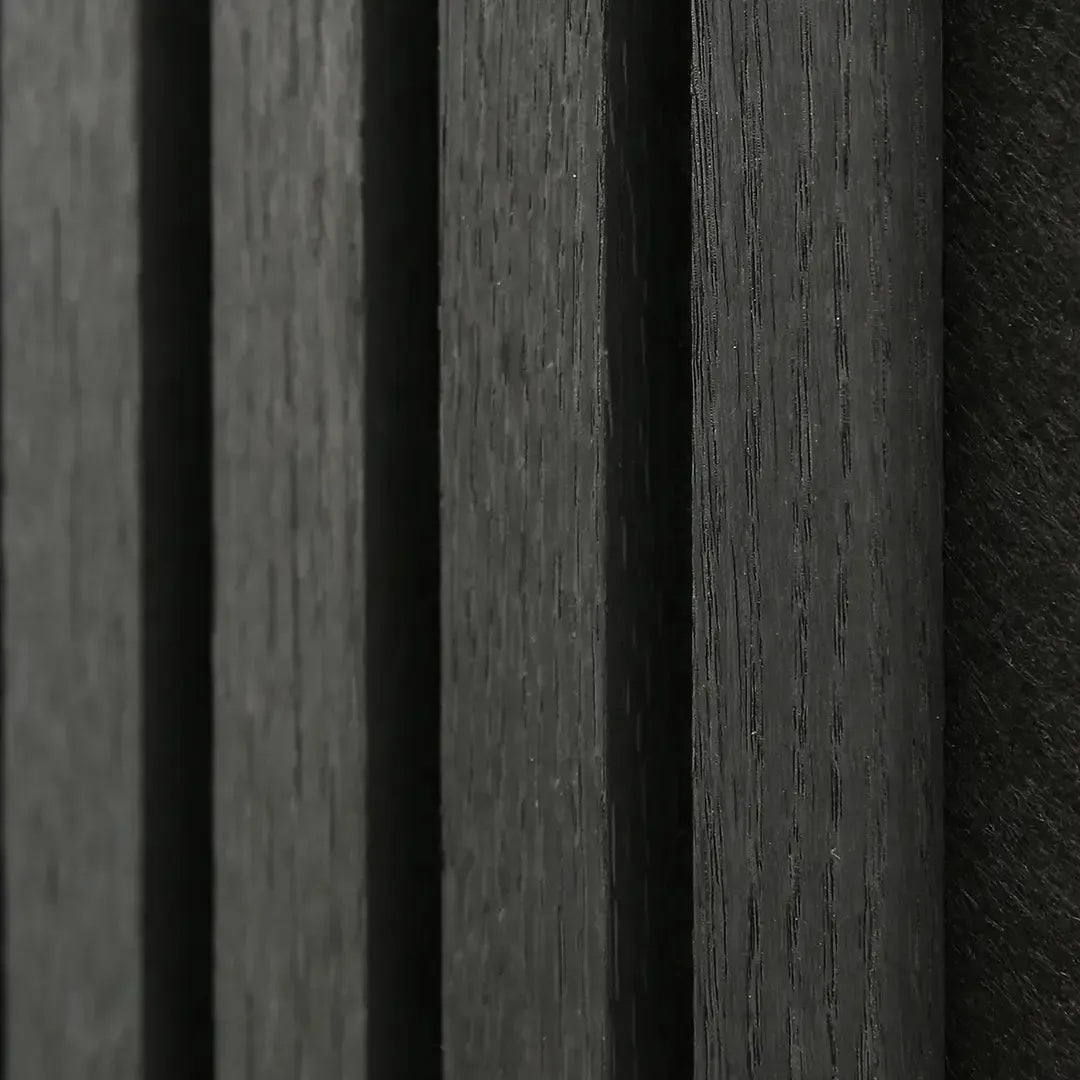
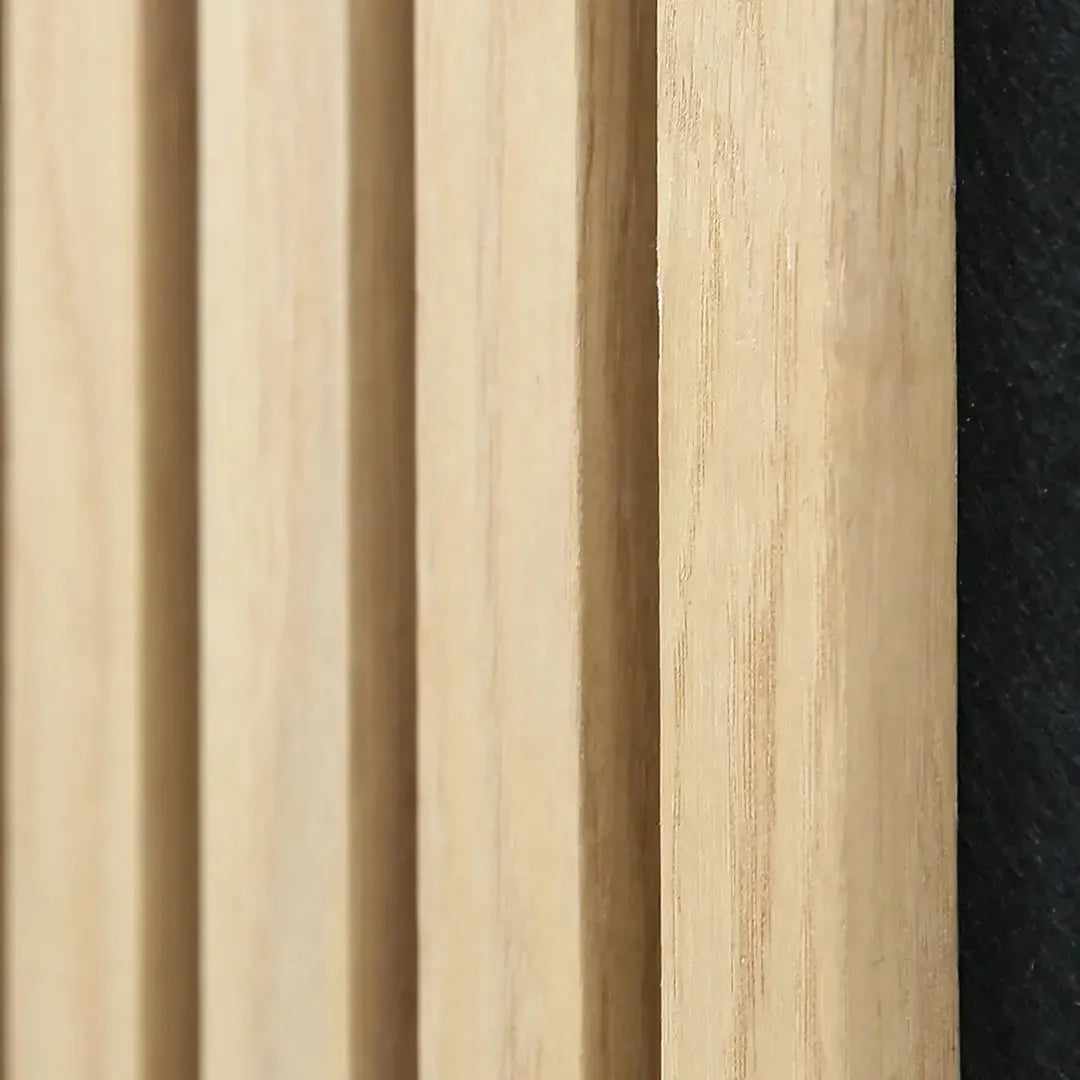
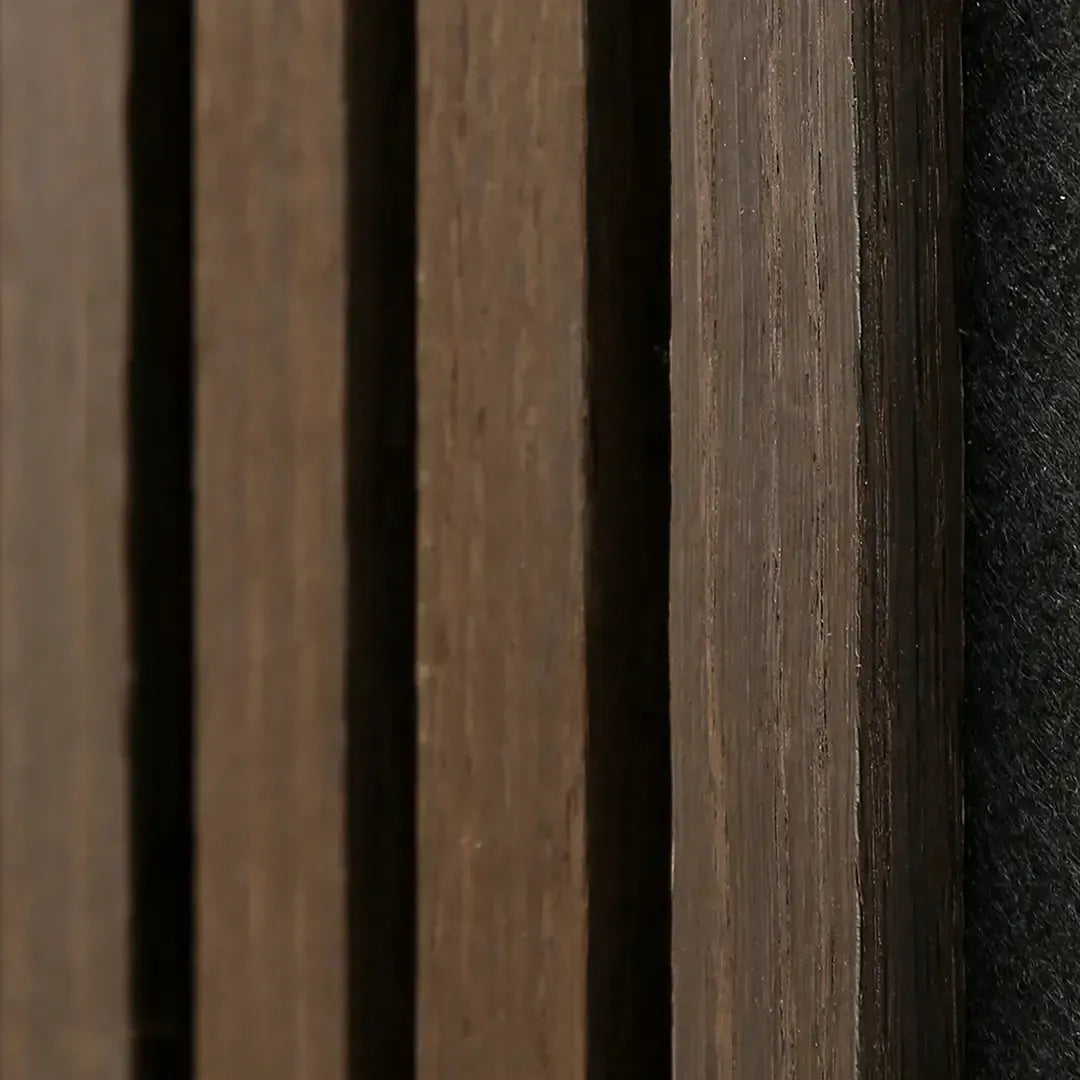
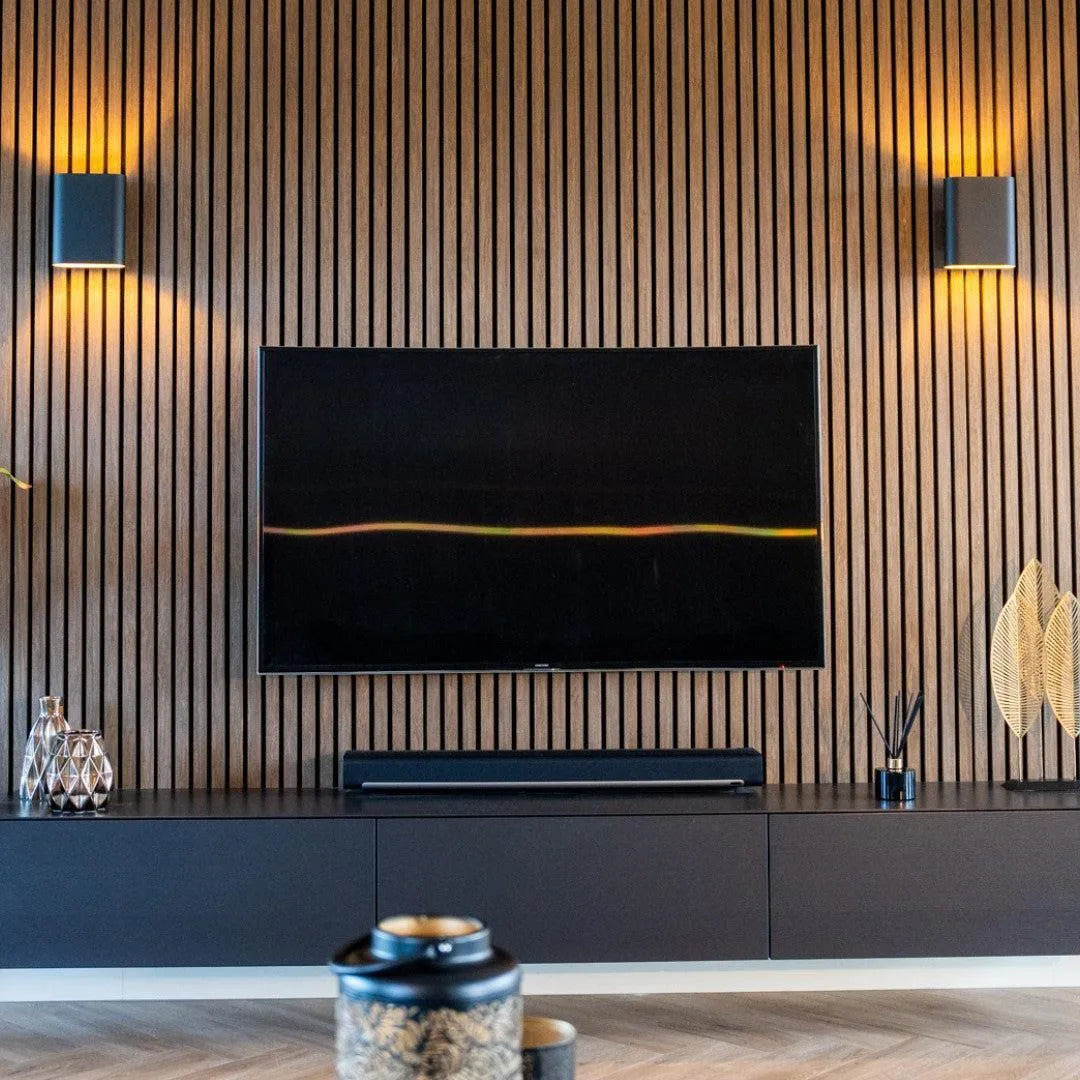
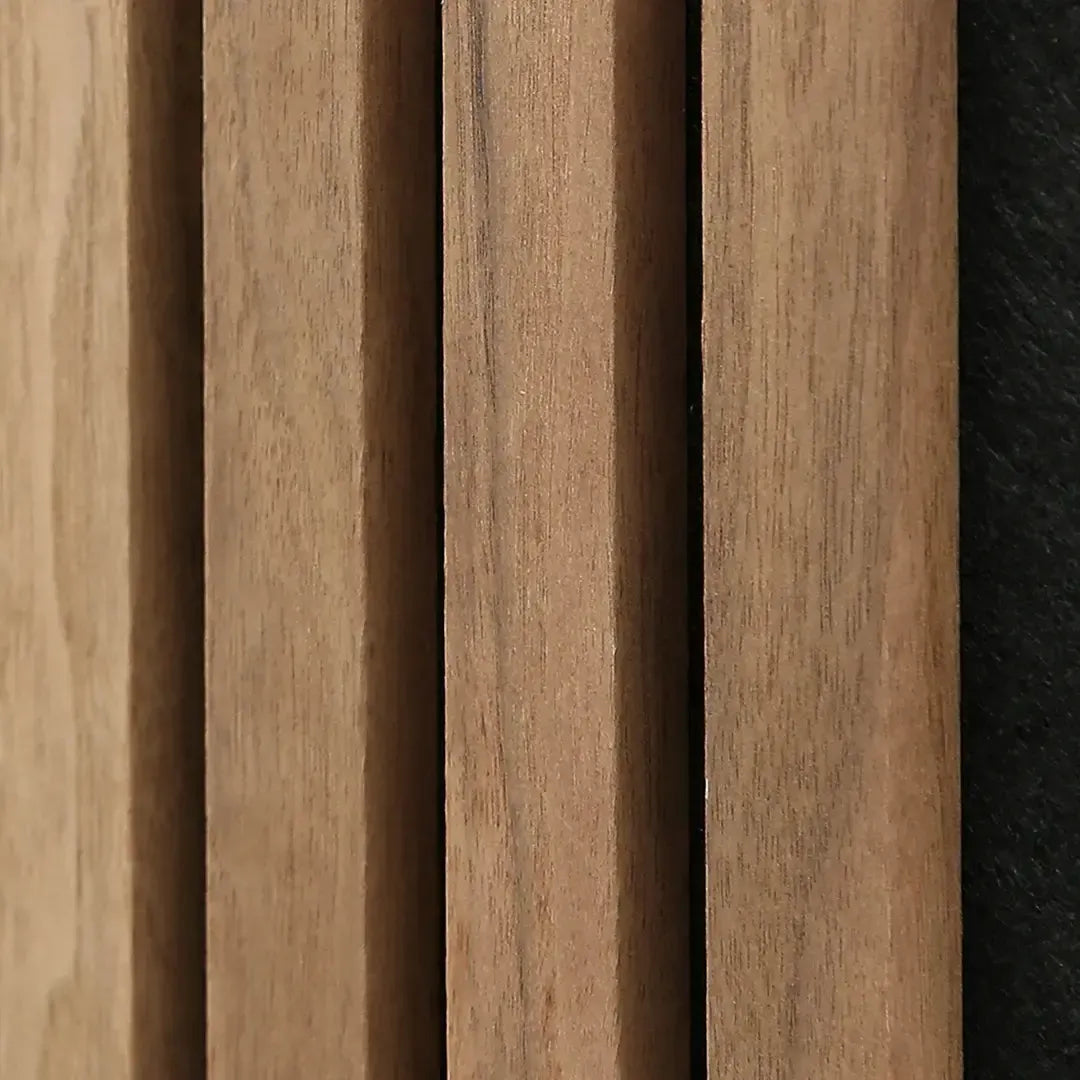
Real wood veneer slat panels solve both problems at once. Akustiq USA's acoustic slat wall panels use a 3-sided wood veneer, not a printed laminate, so the grain holds up to close-up phone cameras and repeated wipe-downs. A smoked oak panel with gray felt finish works well for parlors going for a darker, moodier dessert-bar look, while natural oak keeps a bright storefront feeling airy.
- Match the finish tone to your signage and cup colors, not the trend of the year
- Test one panel under your actual case lighting before ordering a full wall - LED case lights shift wood tone more than daylight does
- Pick a sealed veneer over raw wood for anything within 3 feet of a prep sink
- Avoid pure white-painted wood; it shows sticky fingerprints within a week in a kid-heavy shop
Map panel placement around the dipping cabinet and seating
Don't panel the entire room on day one. Phase it around where customers actually stand and look.
- Leave 6+ inches of clearance from the dipping cabinet's open lid swing
- Run panels floor-to-half-wall behind bench seating as a lower-cost accent instead of full coverage
- Reserve the full feature wall for the main photo backdrop behind the register, not a side wall nobody sees
- Plan outlet and switch cutouts before the panels go up, not after
- Skip paneling directly above a hand-wash sink unless the finish is rated for constant splash
Protect panels from splashes, steam, and heat
An ice cream parlor generates more moisture and heat spikes than a typical retail store - hot fudge warmers, waffle cone irons, dishwashing at the back sink.
- Choose sealed 3-sided veneer over unfinished wood in any splash-adjacent zone
- Keep panels at least a foot from open-flame or high-heat equipment like a cone iron
- Use felt-backed acoustic panels away from direct spray; felt traps grease faster than solid wood
- Wipe with a damp cloth, never a soaked rag - standing water is the enemy of any veneer finish
Calculate coverage and sample before you commit
Measure the wall square footage minus doors, windows, and equipment footprints first. Then order a sample before the full run - color and grain read differently once panels are actually on the wall under your lighting.
- Subtract door swings and window openings from your raw wall measurement
- Add 5-10% extra panel coverage for cut waste around outlets and corners
- Order one full-size sample panel, not just a swatch, before locking in a finish
- Compare the sample against your case lighting at the actual time of day you're busiest
Plan installation timing around health-code sign-off
Any wall finish change near food service can trigger a health inspector visit before you reopen.
- Confirm with your local health department whether a wall finish change near prep needs sign-off
- Keep panels non-porous and sealed to pass a wipeable-surface requirement
- Schedule installation during closed hours or a slow weekday, not a weekend rush
- Use trim pieces to close seams cleanly at corners and floor lines - an open seam is the first thing an inspector flags
“The wall behind the register is the one surface every customer photographs without being asked - paint it flat and you waste that.”
Comparing panel options for ice cream parlor walls
| Option | Best for | Key limitation |
|---|---|---|
| Natural Oak Slat Panel | Bright storefronts wanting a light, airy backdrop | Shows dust and fingerprints faster than darker finishes |
| Walnut Slat Panel | Parlors going for a dark, moody dessert-bar look | Absorbs more light; needs stronger case and counter lighting |
| Smoked Oak with Gray Felt Panel | Splash-adjacent walls needing acoustic and wipe-down performance together | Felt backing can trap grease if placed too close to fryers or irons |
| Hexagon Acoustic Panel with Gray Felt | Small rooms needing strong sound absorption in a tight footprint | Hexagon layout takes longer to install than a straight slat run |
| 3D Wood Wall Tile | Small accent walls behind seating, not full-room acoustics | Adds texture and depth but isn't a primary sound absorber |
The hexagon felt-backed panel carries an NRC of 0.75, which is strong absorption for a room this small - most parlors don't need full-room acoustic treatment, just the one wall behind seating or the register.
Common mistakes ice cream parlors make with wall panels
- Paneling directly over the dipping cabinet without a splash barrier. Ice cream spatter and cone crumbs sit in the grain and stain the finish within months.
- Choosing a dark finish in a small storefront. Walnut and black oak look sharp in photos but shrink a tight room visually when used on more than one wall.
- Skipping felt backing and expecting slats alone to kill noise. Slat panels alone cut some reflection, but a felt-backed option does more work per square foot in a loud, small room.
- Not planning outlet cutouts before installation. Retrofitting a switch plate into a finished slat wall means cutting into panels you've already paid for.
- Ignoring health-code sign-off on wall finishes near prep. A wall that fails a wipeable-surface check means tearing it out and starting over.


Another food-retail category dealing with the same splash-and-echo problem is covered in the specialty food store interiors guide, which walks through similar counter-adjacent placement decisions.
FAQ
What's the best wood panel for an ice cream parlor accent wall?
Natural oak or smoked oak slat panels with a 3-sided wood veneer work best for a main photo-backdrop wall. Choose gray felt backing if the wall is also handling echo from tile floors or seating noise.
Do acoustic wood panels work near a splash zone?
Sealed 3-sided veneer slat panels handle occasional splash and wipe-downs, but they aren't rated for direct, constant spray. Keep any panel at least a foot away from the dipping cabinet's active splash radius and skip panels directly over a prep sink.
How much wall coverage does a small ice cream shop need?
Most parlors under 1,000 square feet only need one or two walls treated - the wall behind the register and the wall behind seating carry most of the echo. Measure raw wall square footage minus doors and windows, then add 5-10% for cut waste.
Is real wood veneer better than laminate panels for food retail?
Real wood veneer holds grain detail through repeated wipe-downs, while printed laminate can peel at the seams under humidity and steam. For a shop running a waffle cone iron daily, veneer is the more durable choice in 2026.
How do you reduce echo in a small ice cream shop?
Add a felt-backed acoustic panel to the loudest reflective wall - usually the one facing the seating area or across from the tile floor. A hexagon panel with an NRC of 0.75 absorbs more per square foot than a plain slat panel in a small room.
Can wood panels go behind a dipping cabinet?
Yes, but leave clearance for the cabinet lid swing and use a sealed finish rated for splash exposure. Unsealed or raw wood in that spot stains within months from spatter and crumbs.
How long does a wood panel wall install take?
A single feature wall in a small parlor typically installs in a day when outlet cutouts are planned ahead of time. Retrofitting cutouts after panels are up adds significant time and wastes cut panels.
What NRC rating do I need for a small retail room?
An NRC of 0.75, like the hexagon felt-backed panel, is strong absorption for a room under 1,000 square feet. Most parlors don't need full-room acoustic treatment - one or two walls at that NRC level is enough.
One last thing
The hexagon felt-backed panel's NRC of 0.75 is higher absorption than most parlors ever need for a single wall - which means one treated wall behind seating, not a full-room retrofit, solves the noise problem for most shops under 1,000 square feet in 2026. Order the sample first; case lighting shifts wood tone more than daylight ever will.
 Better performance and aesthetic appeal
 In Stock