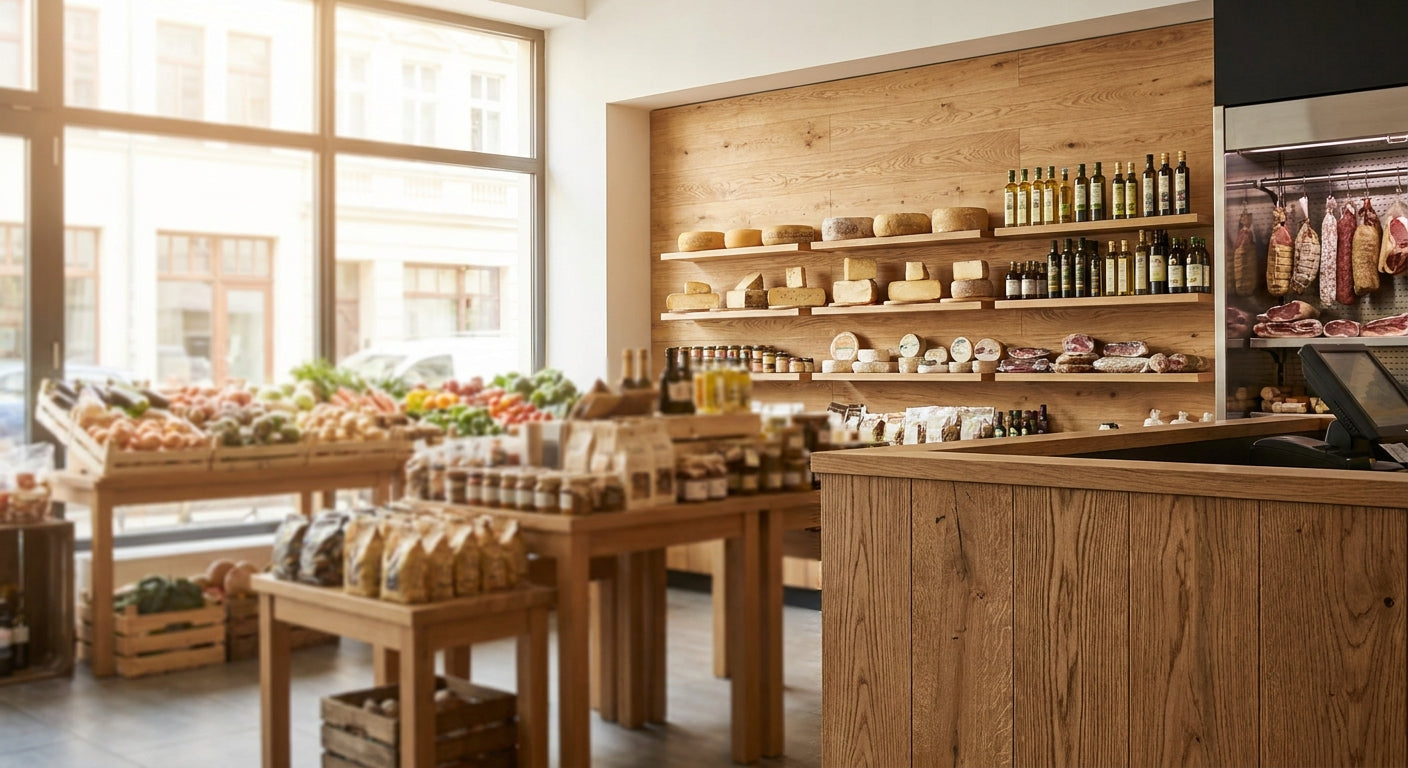
Specialty grocery and gourmet food store interiors live or die on two things most buildouts get wrong: acoustics and material honesty. Wood panels for specialty grocery store walls solve both when you pick the right format, and this guide breaks down which AKU Woodpanel styles earn a spot on your walls in 2026 and which ones to skip.
- AKU Woodpanel's Acoustic Slat Wall Panel in Natural Oak ($169.95) is the safe pick for gourmet food store feature walls in 2026 - buy it.
- Hexagon Acoustic Panel Walnut with Gray Felt carries a 0.75 NRC rating, the strongest sound absorption in this lineup - buy it for high-ceiling grocery halls.
- The Tile Acoustic Slat Wall Panel Natural Oak at $126.95 fits tight counter and checkout endcap runs where a full panel box is overkill.
- Skip painted MDF slat lookalikes for cheese counters and wine walls - they don't hold up to moisture and foot traffic like real 3-sided wood veneer.
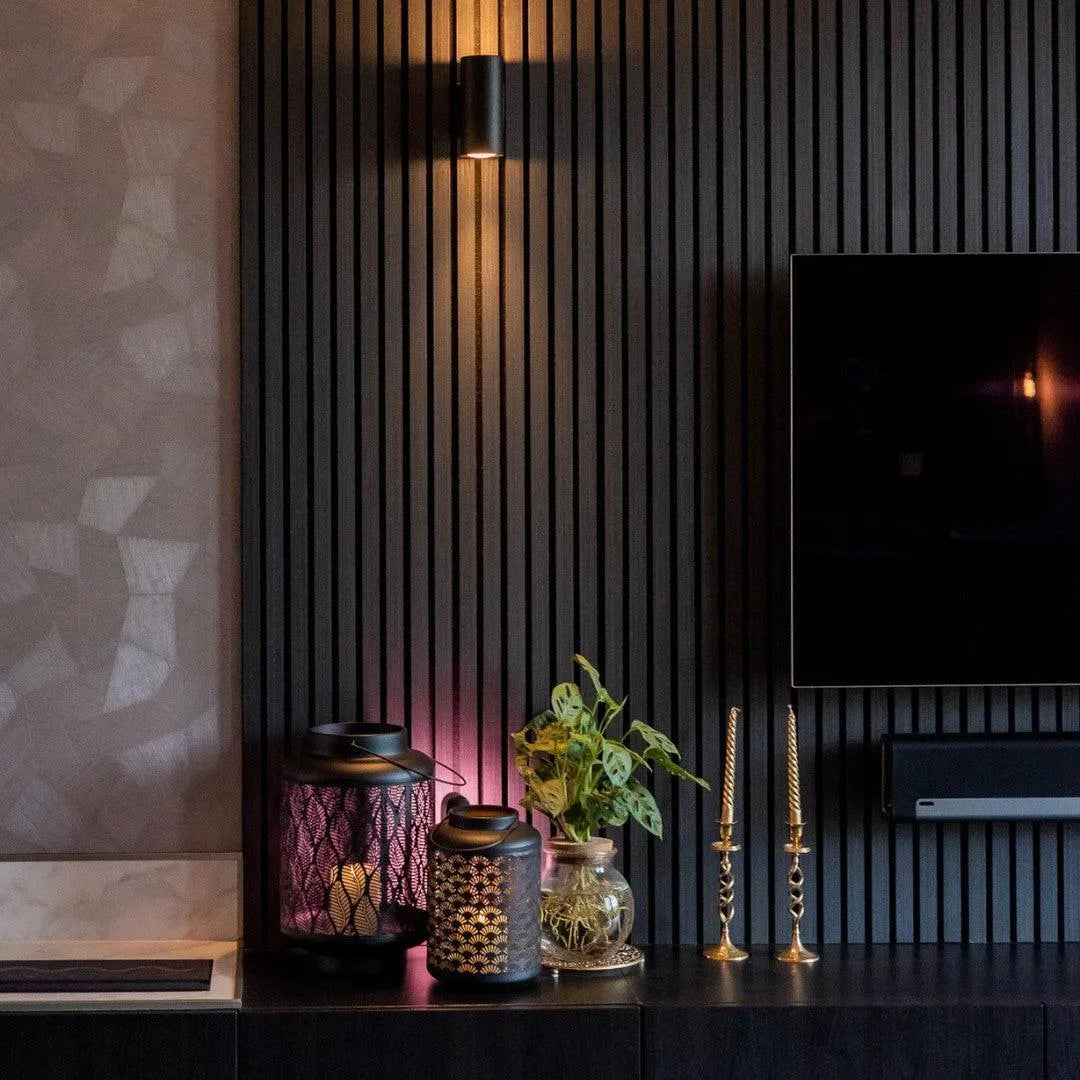
- Black Oak slat panels make a bold specialty-aisle backdrop but need warm task lighting so the wall doesn't read as a cave.
Why this matters
A specialty grocery or gourmet food store is a hard-surface trap: polished concrete floors, glass refrigerated cases, steel shelving, and a ceiling full of HVAC ducting. Every one of those surfaces reflects sound instead of absorbing it, and the result is the clatter and echo that makes a small shop feel loud even at half capacity.
Wood panels fix the acoustic problem and the branding problem at the same time. A slat or hexagon panel with a felt backing does real acoustic work - the Hexagon Acoustic Panel Walnut with Gray Felt is rated at 0.75 NRC, meaning it absorbs roughly three-quarters of the sound energy that hits it. That's not a marketing number, it's a functional spec you can put in front of a landlord or architect.
The branding half matters just as much. Real wood veneer signals artisan and gourmet in a way that laminate, tile, or exposed drywall never will. Shoppers read a walnut or oak feature wall as a cue that the products behind the counter are worth the premium price, before they've read a single label.
Who this is for
This guide is for owners and buildout managers of specialty grocery stores, gourmet food markets, cheese shops, wine and spirits boutiques, and artisan bakeries planning a wall treatment in 2026. If you're comparing wood panels against tile, shiplap, or paint for a retail food space, the criteria below are built around your specific constraints: food-adjacent cleanliness, acoustic control, and a look that justifies premium pricing.
What to look for in wood panels for specialty grocery stores
Real wood veneer, not printed laminate
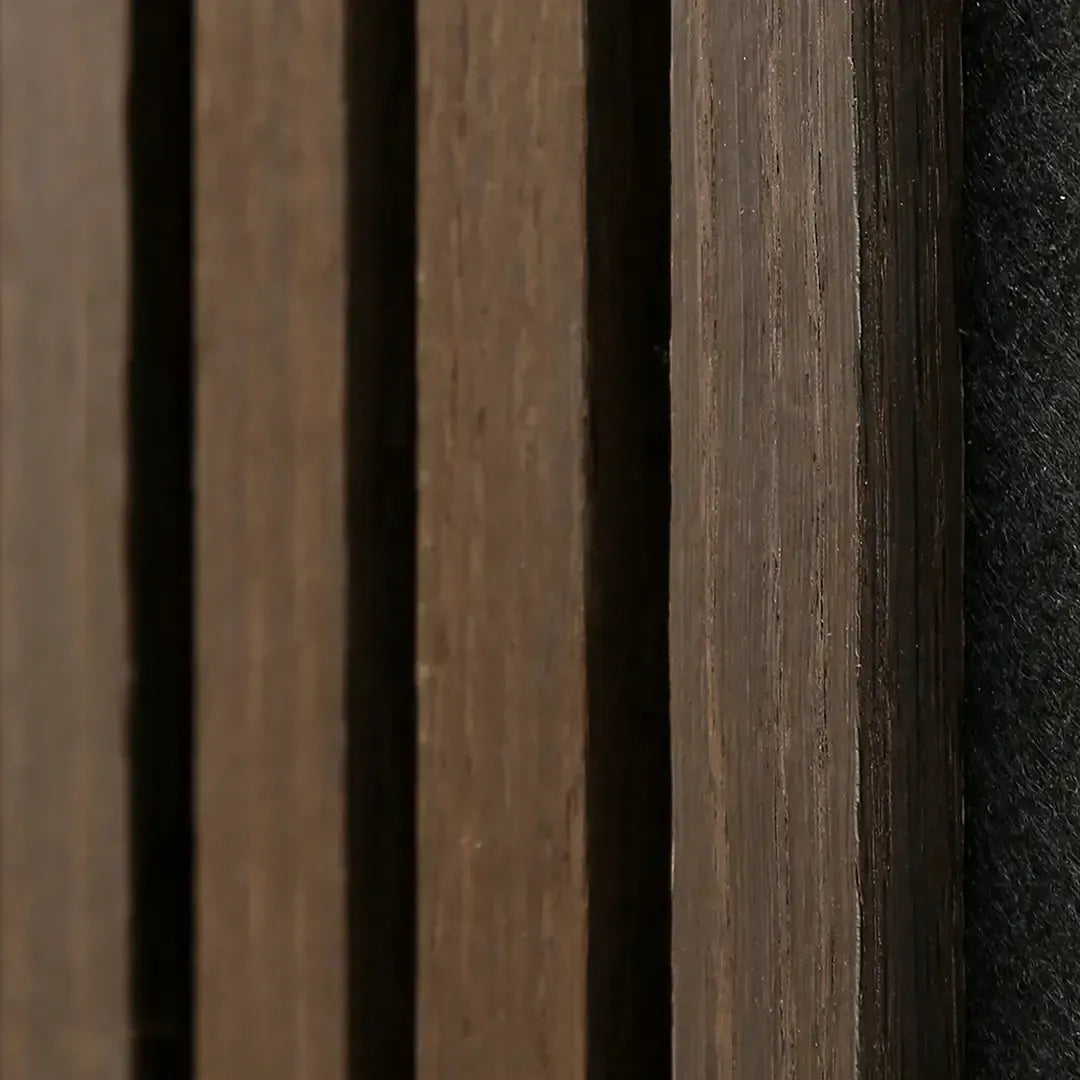
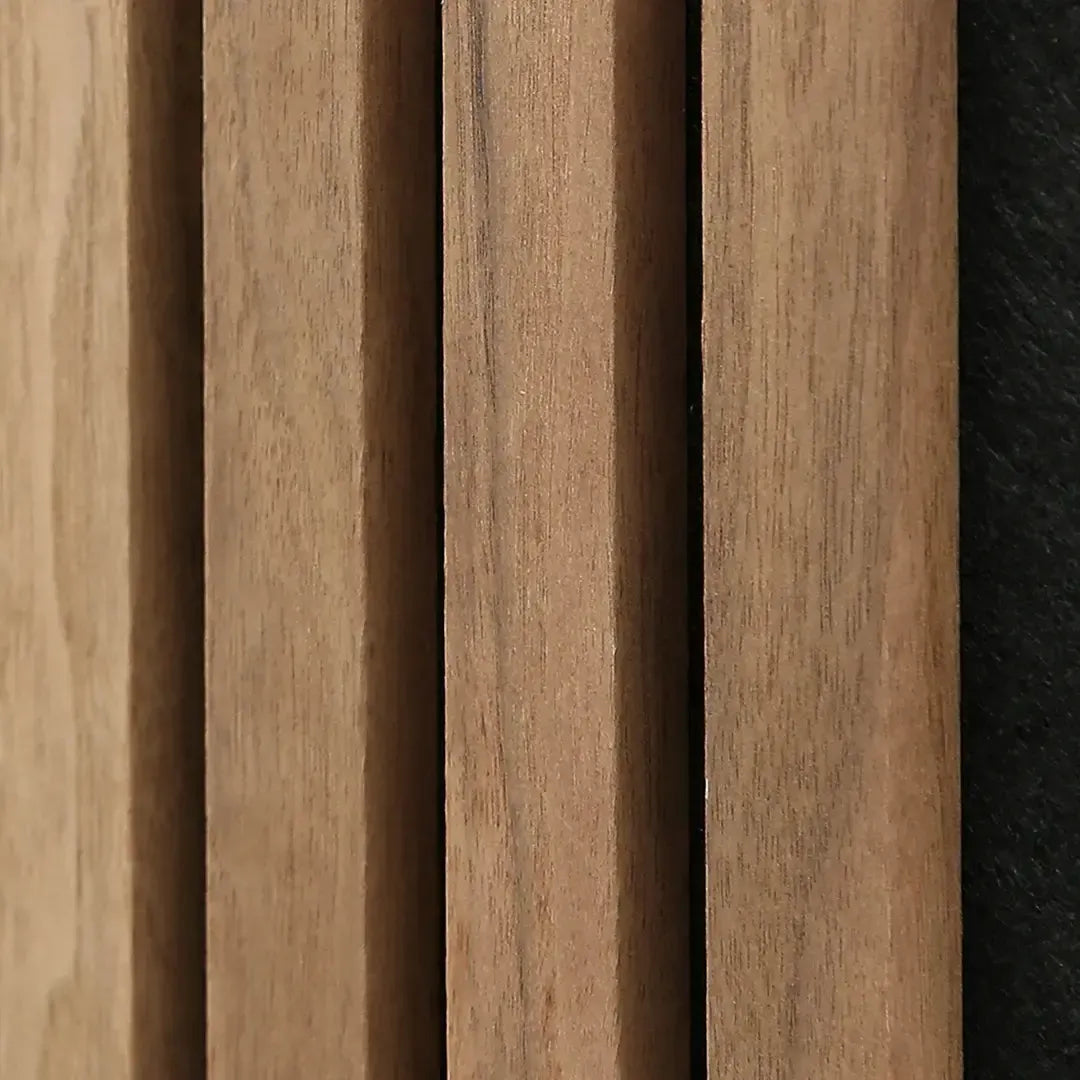
Printed laminate slat panels look convincing in a photo and cheap in person under store lighting. A genuine 3-sided wood veneer panel keeps its grain depth and color consistency after years of foot traffic and daily wipe-downs, which matters more in a food retail space than almost anywhere else.
Acoustic performance you can quote
Any panel marketed as "acoustic" should carry a measurable NRC rating. The 0.75 NRC on AKU Woodpanel's felt-backed hexagon panels gives you a number to hand to a contractor or landlord instead of a vague promise about "sound dampening."
A format that works around fixed fixtures
Grocery and gourmet stores are full of shelving runs, endcaps, checkout counters, and refrigerated cases that break up a wall into small, awkward sections. Tile-format panels sold in small boxes cover these tight runs without the waste you get cutting down full-size panels.
Color that reads premium under store lighting
Natural oak and walnut read warm under the 3000K-4000K lighting most gourmet stores use. Darker finishes like black oak or smoked oak need brighter accent lighting or they flatten into a shadow instead of a feature.
Install speed for a live retail schedule
A specialty food store rarely has the luxury of a multi-week closure. Panel systems that click or clip into place without wet trades cut install time down to days, which is the difference between a weekend renovation and a week of lost sales.
Cost per wall, not just cost per panel
A $169.95 panel and a $126.95 tile box cover different square footage at different densities. Price the whole wall, including trim and end pieces, before comparing formats.
Top picks for specialty grocery and gourmet store walls
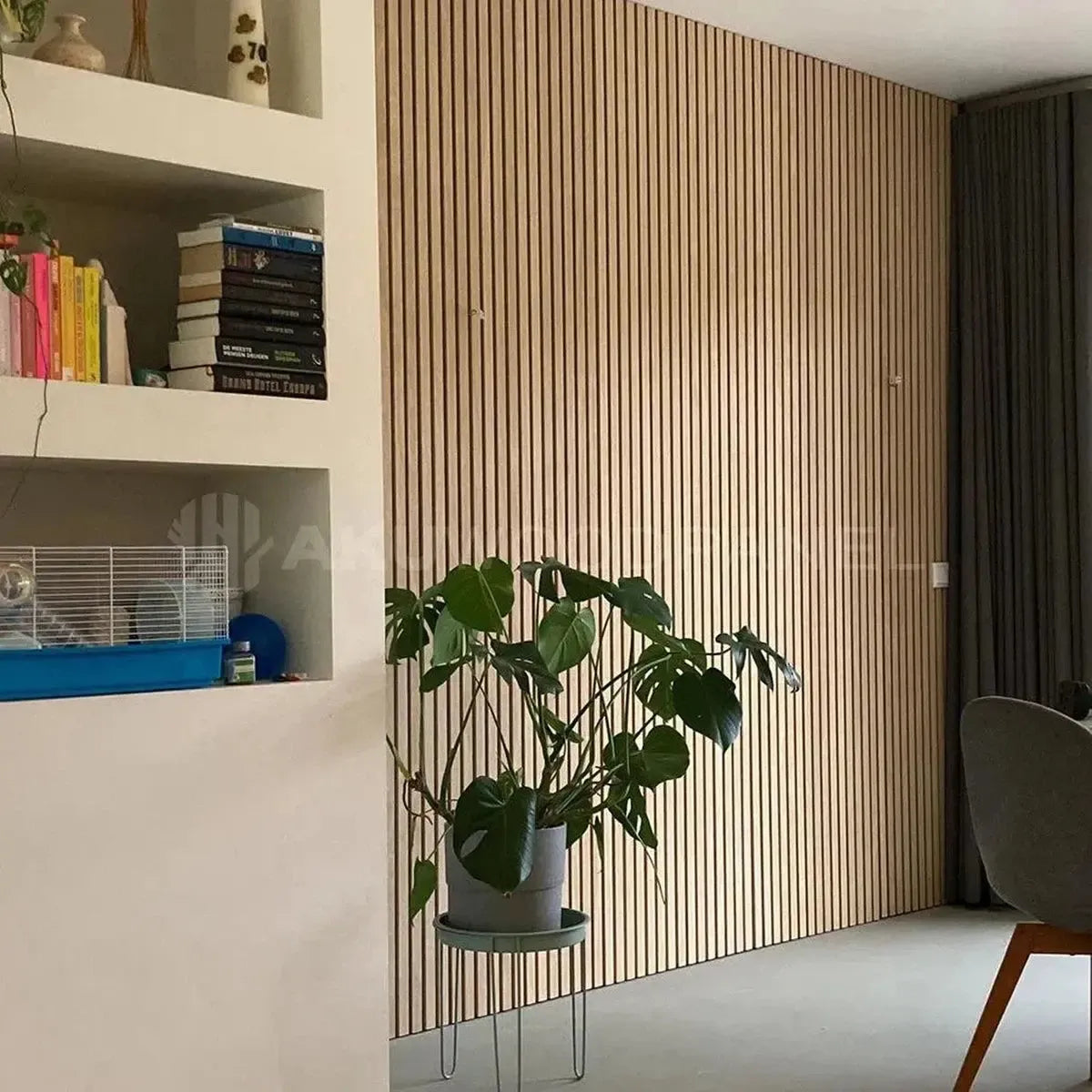
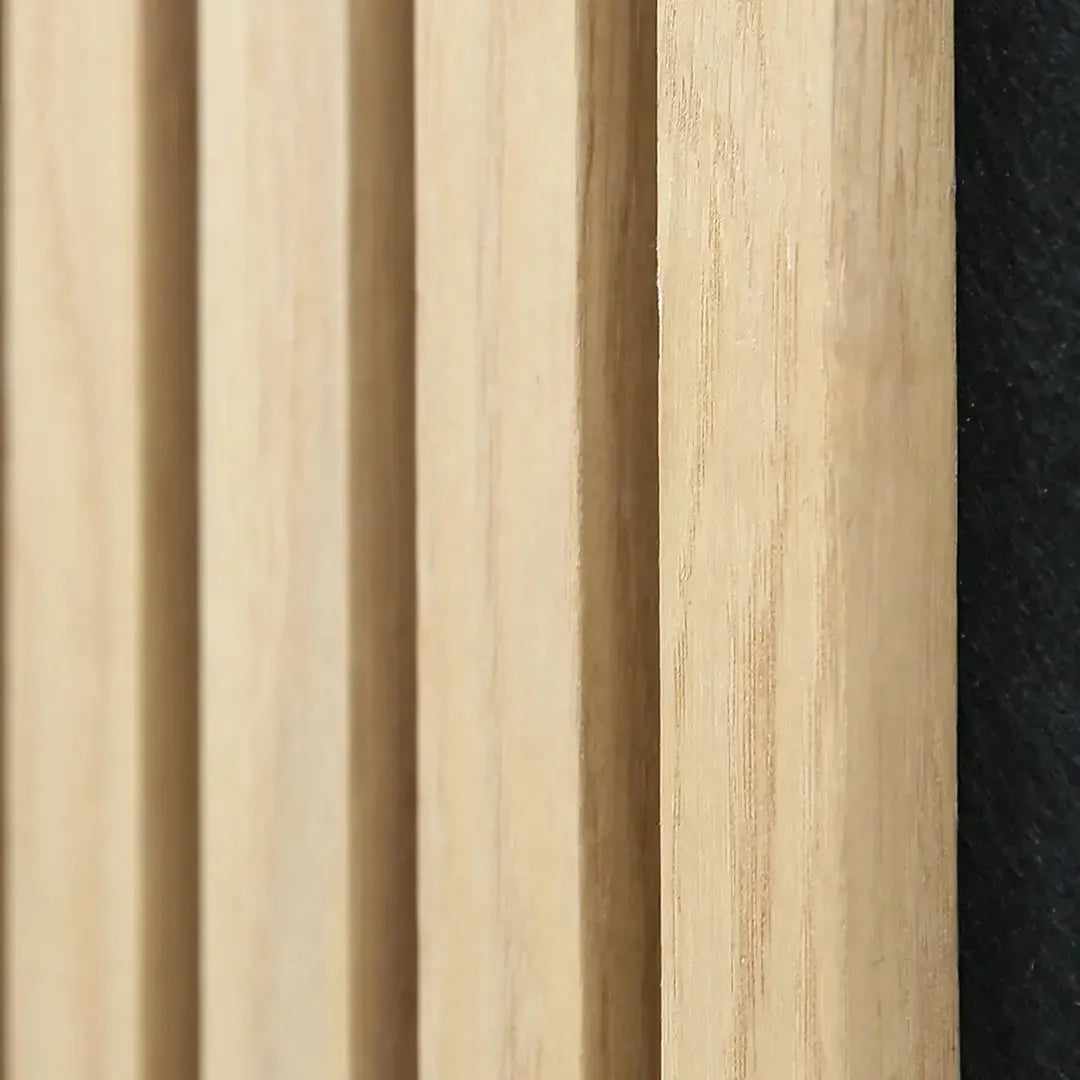
Acoustic Slat Wall Panel Natural Oak - the safe pick
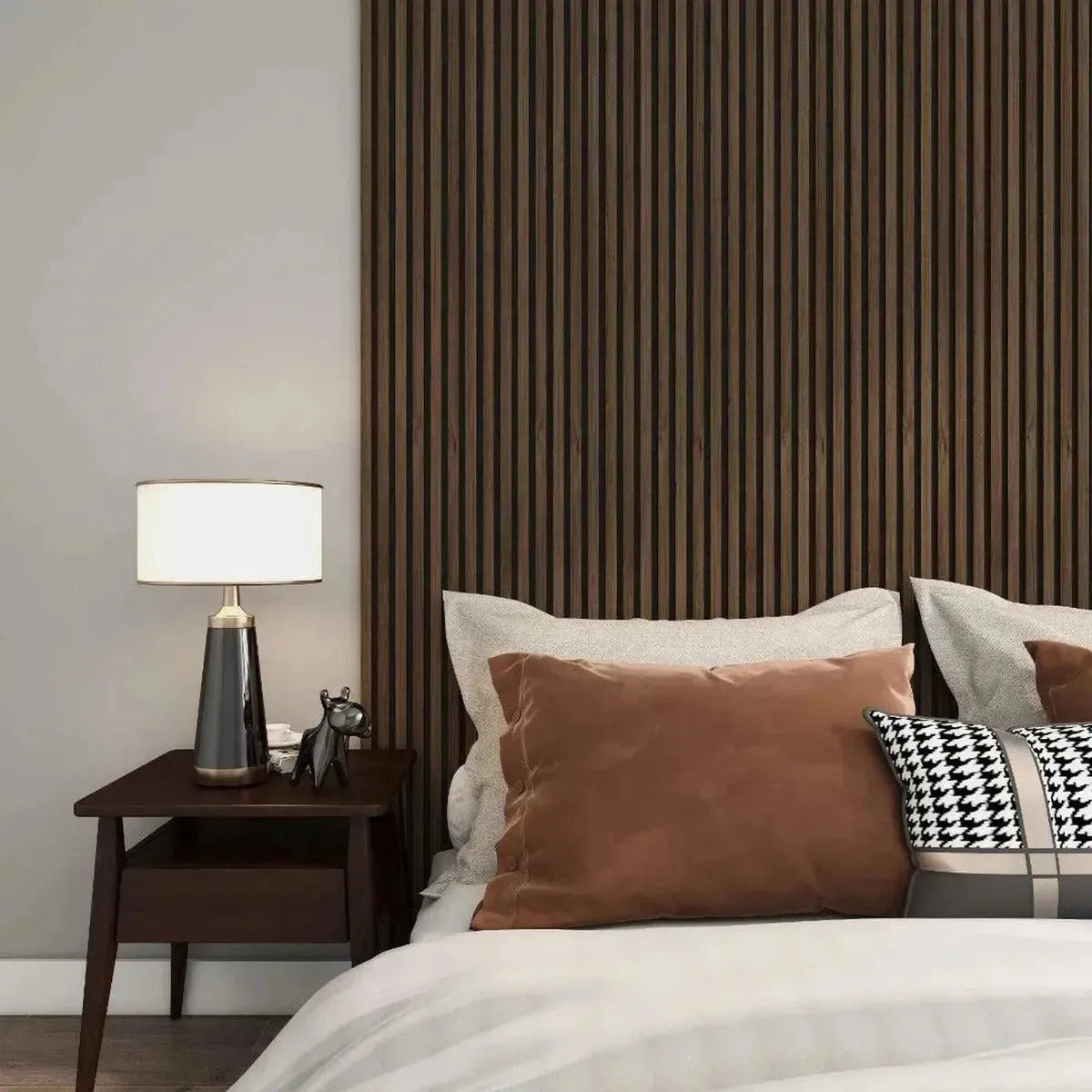
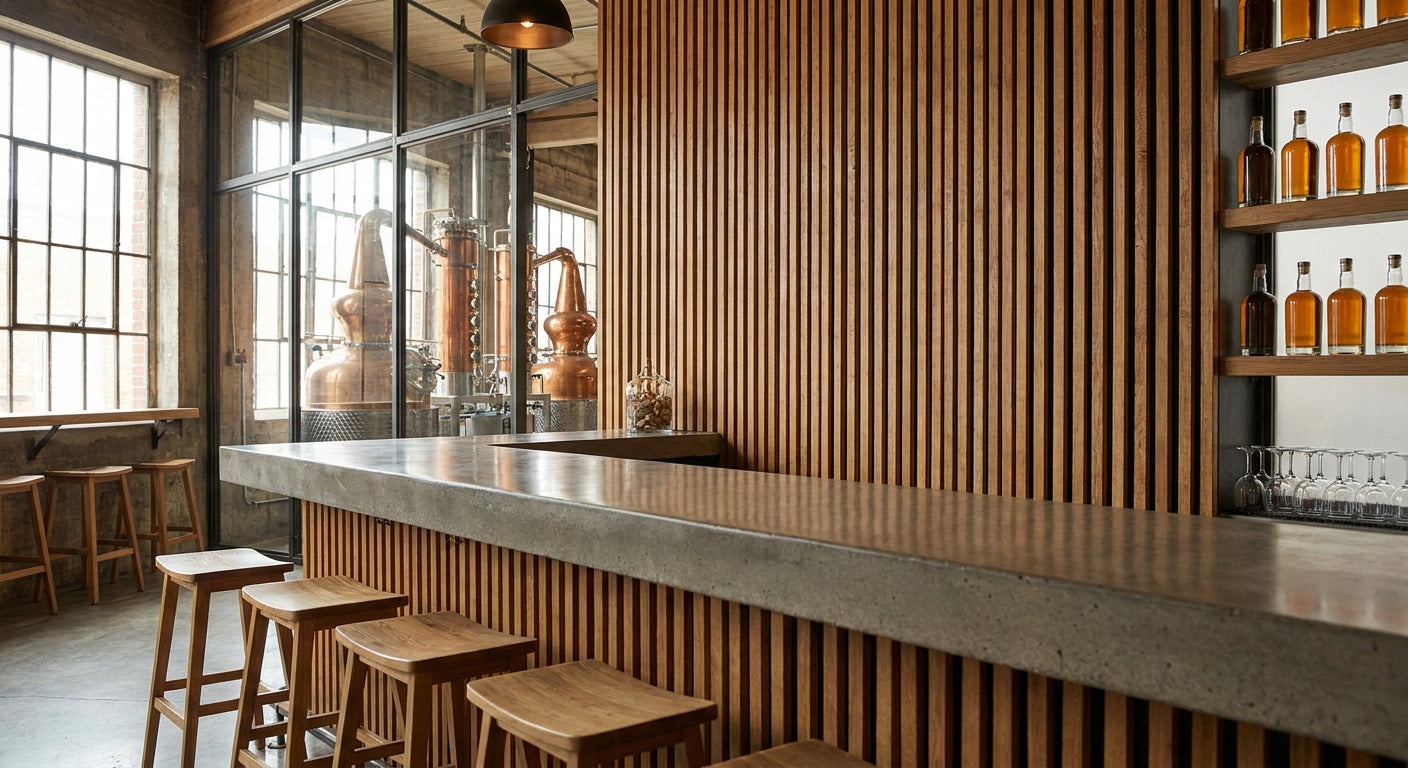
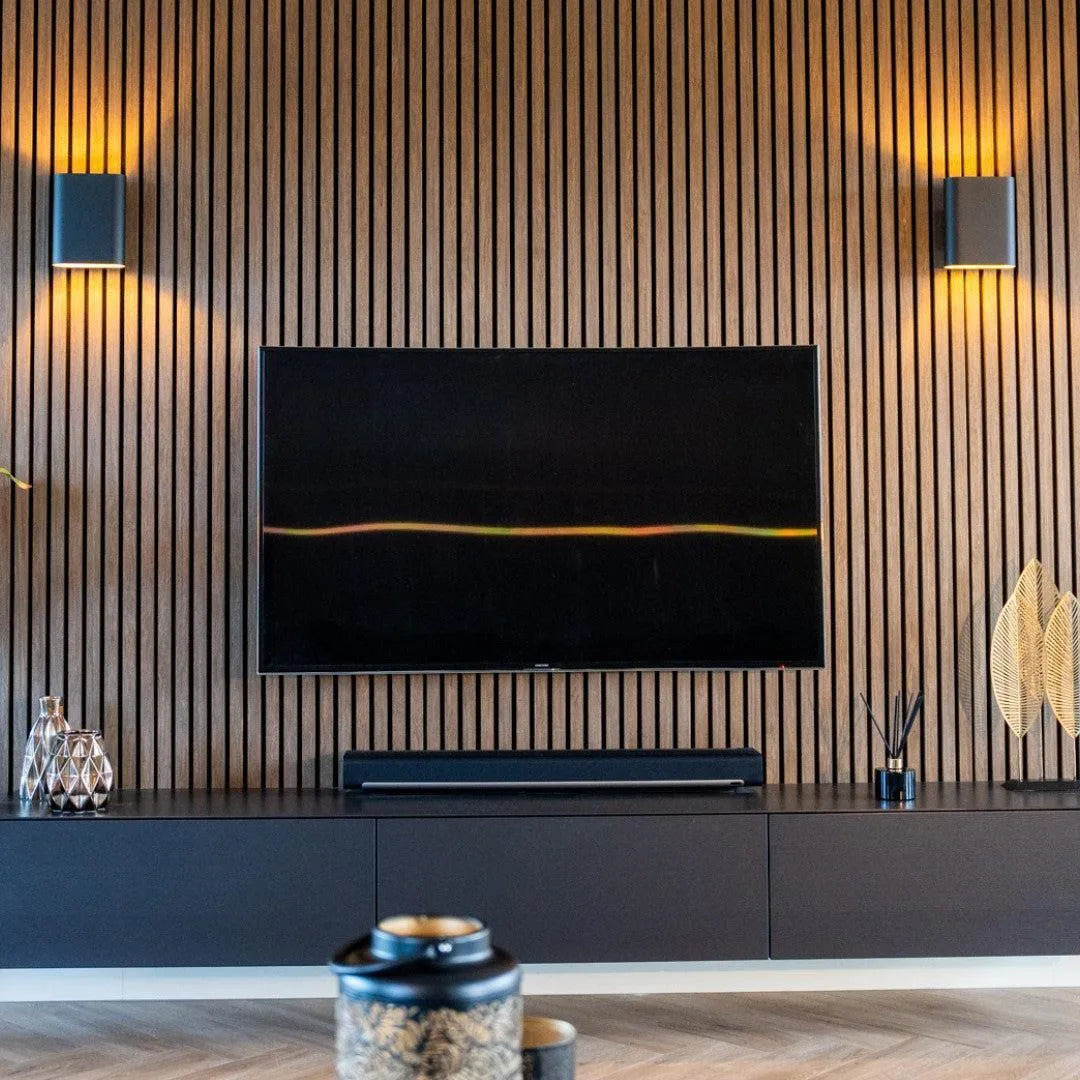
Natural oak is the default for a reason: it reads warm and premium under almost any lighting setup a gourmet store already has installed. At $169.95, this AKU Woodpanel slat option is the version most gourmet food buildouts land on for a main feature wall behind a bakery counter or wine display. Verdict: Buy for any specialty grocery store wall that needs to look premium without a design risk.
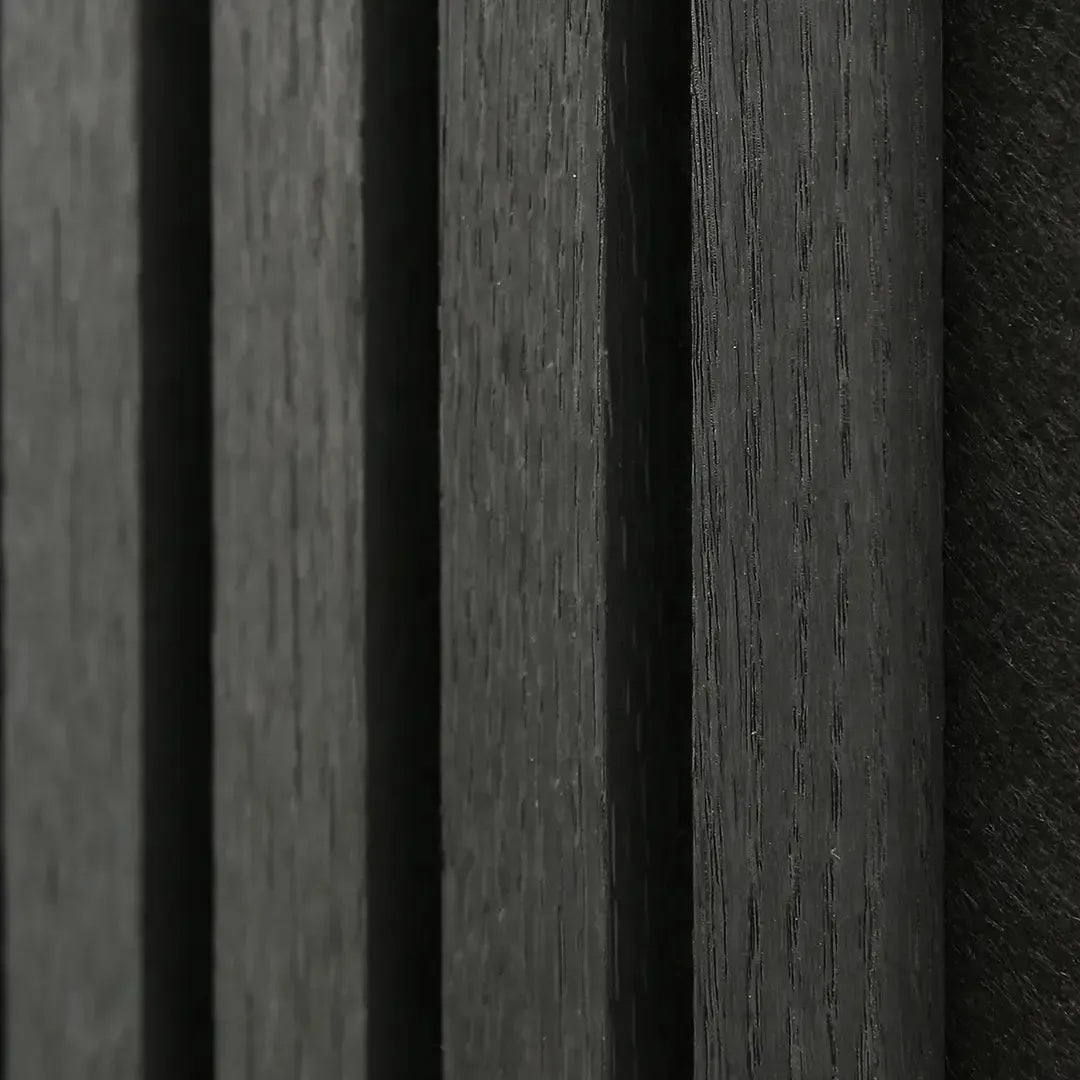
Acoustic Slat Wall Panel Black Oak - the bold statement
Black oak turns a wall into a backdrop instead of a background, which works well behind a specialty spirits section or a cheese cave display where you want the products to pop against dark wood. At $177.95, it costs a few dollars more than natural oak and demands stronger accent lighting to avoid looking flat. Verdict: Consider if your lighting plan already includes warm spotlighting; Skip if the space relies on general overhead light.
Hexagon Acoustic Panel Walnut with Gray Felt - the acoustic workhorse
This is the pick for stores with 12-foot-plus ceilings and hard floors, where echo is the actual complaint from staff and customers, not just an aesthetic gap. The 0.75 NRC rating on this $165.95 panel does more measurable sound absorption per square foot than any slat option in the lineup. Verdict: Buy for open-plan gourmet markets with noise complaints.
Tile Acoustic Slat Wall Panel Natural Oak - the small-footprint pick
Sold in a smaller box at $126.95, this tile format is built for exactly the tight, broken-up wall runs a grocery buildout is full of - behind a checkout counter, on a short endcap, or framing a deli case. Verdict: Buy for small-format sections where a full panel run would mean excess cutting and waste.


What to avoid
- Printed laminate slat panels marketed as "wood look" - they photograph fine but the surface dulls and chips under daily wipe-downs near a deli or bakery counter, and the grain pattern repeats visibly across a wide wall.
- Full-size panels forced into broken-up wall runs - cutting a large slat panel down to fit around a checkout counter or endcap wastes material and leaves mismatched edges; use a tile or end-piece format instead.
- Dark finishes under flat overhead lighting - black oak and smoked oak both need warm accent lighting; under generic fluorescent tubes they read muddy instead of premium.
“A wall rated at 0.75 NRC absorbs three-quarters of the sound hitting it - in a store with polished concrete and refrigerated glass, that's the difference between comfortable and chaotic.”
Verdict comparison table
| Panel | Format | Best For | Price | Verdict |
|---|---|---|---|---|
| Acoustic Slat Wall Panel Natural Oak | Full slat panel | Main feature wall, bakery/wine displays | $169.95 | Buy |
| Acoustic Slat Wall Panel Black Oak | Full slat panel | Bold accent wall, spirits/cheese cave | $177.95 | Consider |
| Hexagon Acoustic Panel Walnut with Gray Felt | Hexagon tile, 32 in, 4/box | High-ceiling open floor plans | $165.95 | Buy |
| Tile Acoustic Slat Wall Panel Natural Oak | Small tile box | Checkout counters, endcaps | $126.95 | Buy |
FAQ
What's the best wood panel for specialty grocery store walls in 2026?
Acoustic Slat Wall Panel Natural Oak at $169.95 is the safest pick for a main feature wall in 2026 because it reads premium under most store lighting without needing extra accent fixtures. For open-plan spaces with echo complaints, the Hexagon Acoustic Panel Walnut with Gray Felt at 0.75 NRC does more measurable sound absorption per square foot.
Do acoustic wood panels actually reduce noise in grocery stores?
Yes, felt-backed panels with a rated NRC absorb sound rather than reflect it, which matters in stores with concrete floors and glass refrigerated cases. AKU Woodpanel's hexagon panel with gray felt backing carries a 0.75 NRC rating, meaning it absorbs about three-quarters of the sound hitting the wall.
Are wood wall panels food-safe for gourmet food store interiors?
Real 3-sided wood veneer panels hold up to regular wipe-downs better than printed laminate, which is the surface most food retailers actually clean daily. Keep panels a reasonable distance from direct food-prep splash zones and treat them as a wall finish, not a food-contact surface.
How much do wood panels cost for a gourmet food store buildout?
Panel pricing in this lineup runs from $126.95 for a small tile box up to $177.95 for a full Black Oak slat panel, in 2026 pricing. Total wall cost depends on square footage, trim, and end pieces needed to finish the run cleanly.
Is black oak or natural oak better for a specialty grocery store?
Natural oak is the safer choice for most gourmet stores because it reads warm under standard retail lighting without extra work. Black oak looks striking as a bold accent wall but needs dedicated warm accent lighting or it flattens into a shadow.
Can wood slat panels go behind a cheese counter or wine display?
Yes, slat and tile-format panels both work as backdrops for cheese counters and wine displays as long as they're kept clear of direct moisture exposure. The tile format at $126.95 is built for exactly these tighter, broken-up wall sections.
How do I install wood panels around grocery store shelving and endcaps?
Use a smaller tile-format panel for tight runs around fixed shelving and endcaps instead of cutting down full-size slat panels, which wastes material and leaves mismatched edges. Plan the layout around fixture locations before ordering panel quantity.
Do hexagon panels work better than slat panels for grocery ceilings and high walls?
Hexagon panels with felt backing are the stronger acoustic choice for tall, open-plan grocery spaces because the 0.75 NRC rating targets the echo that hard floors and high ceilings create. Slat panels are better suited to lower feature walls where the linear grain pattern reads as a design statement rather than a sound-treatment tool.
One last thing
The number that gets skipped in most grocery buildout conversations is the NRC rating, not the finish color. A wall that looks perfect in a rendering but has zero acoustic rating will still leave staff shouting over the espresso machine and the walk-in cooler compressor by the time the store opens in 2026 - price the sound absorption first, pick the wood tone second.

 Better performance and aesthetic appeal
 In Stock