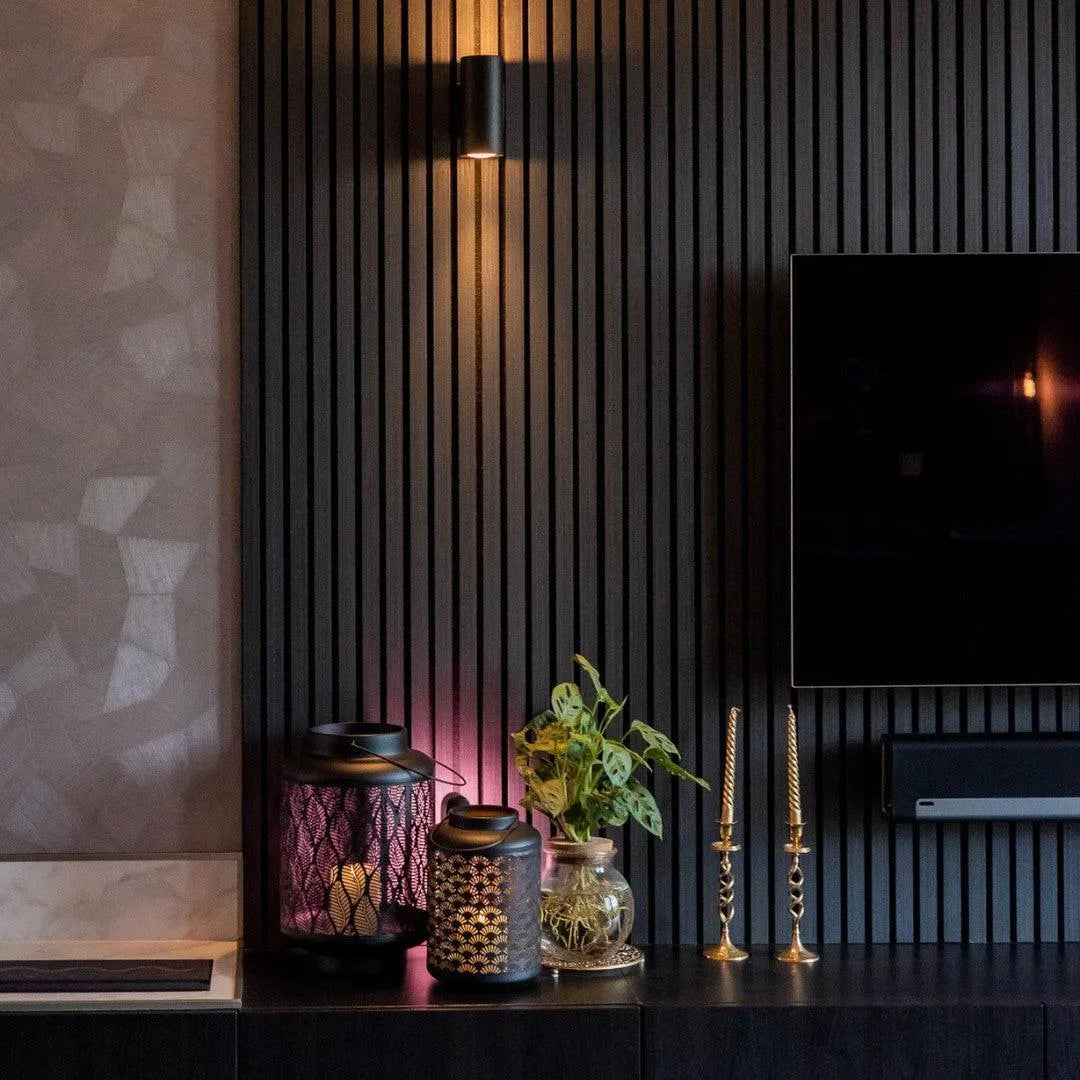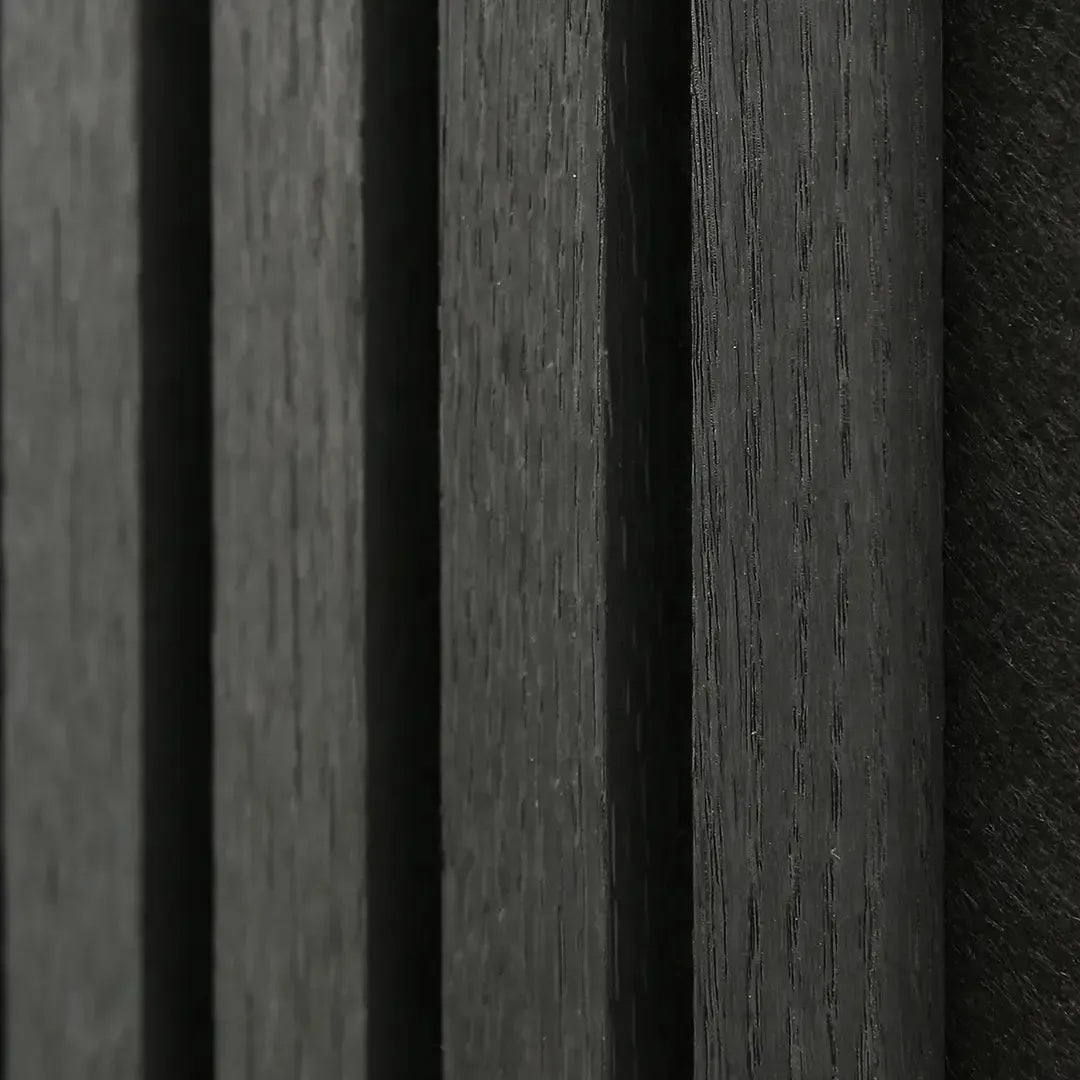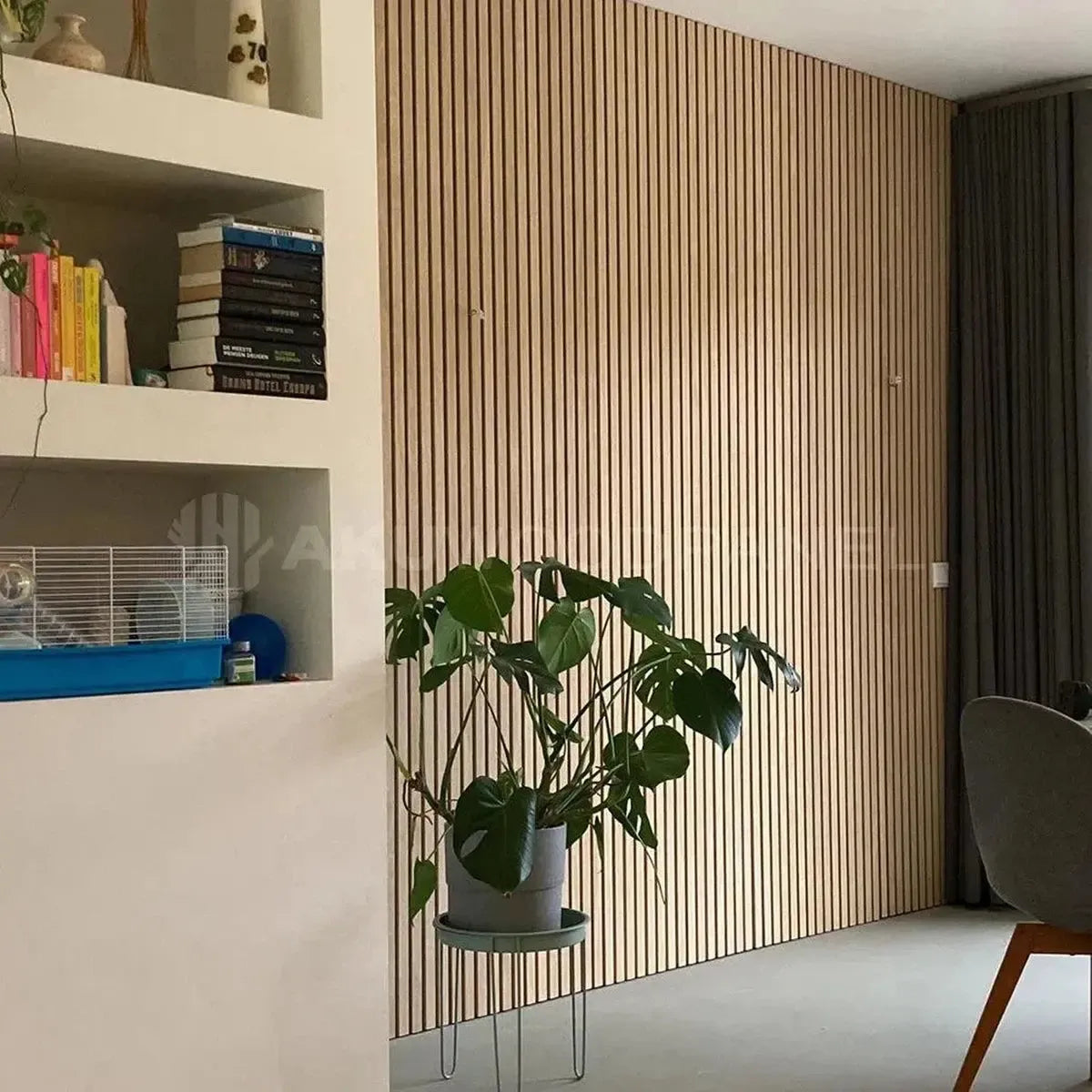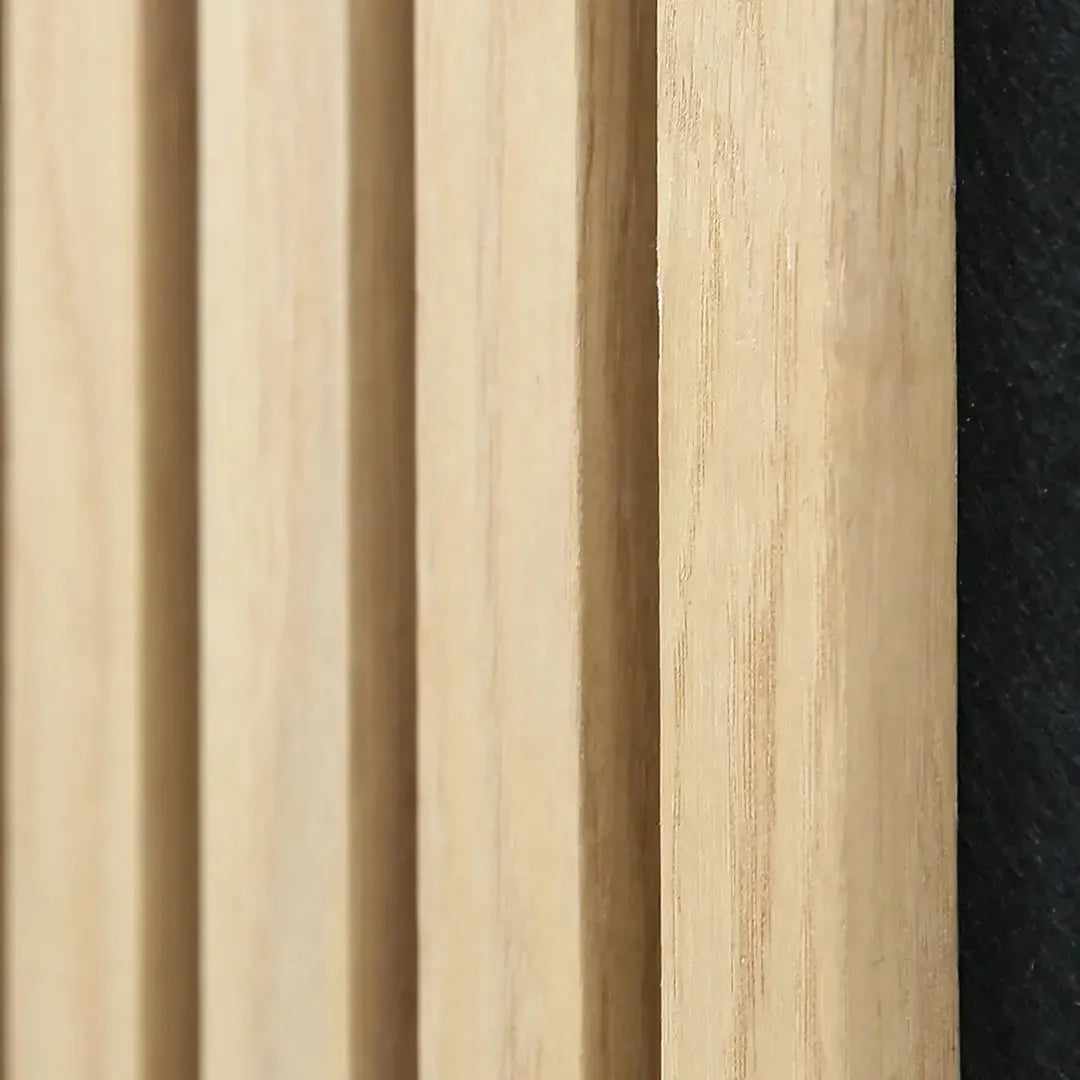
A wood panel spec sheet buries the details that decide whether your install passes inspection, meets acoustic targets, and survives the job site — this guide breaks down every line so you're not guessing at NRC values, veneer construction, or fire class before you sign a purchase order in 2026.
- A wood panel spec sheet without an NRC value is incomplete for any acoustic install — AKU Woodpanel's acoustic slat and hexagon panels publish NRC 0.75 for reference.
- Coverage math starts with panels per box: 4 panels per box on hexagon and slat lines, so measure square footage before ordering.
- Fire rating and core material lines matter most for commercial specs — skip any sheet that omits them.
- Order a sample before finalizing quantities; a full sample box runs $10 and confirms veneer color and grain before a bulk buy.
Why This Matters
A spec sheet is the only document that tells you what you're actually installing before the panels arrive on a truck. Miss the fire rating line on a commercial job and you fail inspection after the panels are already on the wall. Miss the coverage-per-box number and you're short three boxes on a 400-square-foot feature wall with a six-week reorder lag.
Most buyers skim a wood panel spec sheet for price and color and skip the technical rows entirely. That's the gap between a smooth install and a change order. If you're specifying acoustic wall panels for a construction project, the spec sheet is where the job gets decided, not the product photo.
What You'll Need Before You Read the Spec Sheet
- The room's square footage and ceiling height, measured, not estimated
- A copy of the local fire code requirement for the space type (retail, multifamily, healthcare all differ)
- Your acoustic target if the wall is doing sound work — a target NRC or a decibel reduction goal
- Access to a physical sample, not just a photo, before quantities are locked
- The panel category already narrowed down: slat, fluted, hexagon, 3D tile, or exterior cladding
The Steps: Reading a Wood Panel Spec Sheet Line by Line
1. Confirm the panel category matches the application
Every spec sheet leads with a category line — slat, fluted, hexagon, 3D wood tile, or exterior panel — and that single line rules out half the wrong picks. Exterior wall panels carry weather ratings that interior slat panels don't need, and interior acoustic panels carry NRC ratings that pure decorative 3D tiles skip entirely. Confirm the category before reading anything else, because a spec sheet for the wrong category wastes the rest of the review. Common mistake: ordering an interior fluted panel for an exterior application because the wood grain photo looked right.
2. Check the NRC rating and what backs it
NRC (Noise Reduction Coefficient) is the single number that tells you how much sound a panel absorbs, scored 0 to 1. AKU Woodpanel's felt-backed acoustic slat and hexagon panels list an NRC of 0.75, which is a solid mid-to-high range for a decorative wood product competing against foam-only acoustic tiles. A sheet with no NRC line usually means the panel is decorative only — fine for a feature wall, wrong for a room with an actual echo problem. Expected outcome: you know within 30 seconds whether the panel does acoustic work or just looks like it does.
3. Verify the veneer construction, not just the veneer species
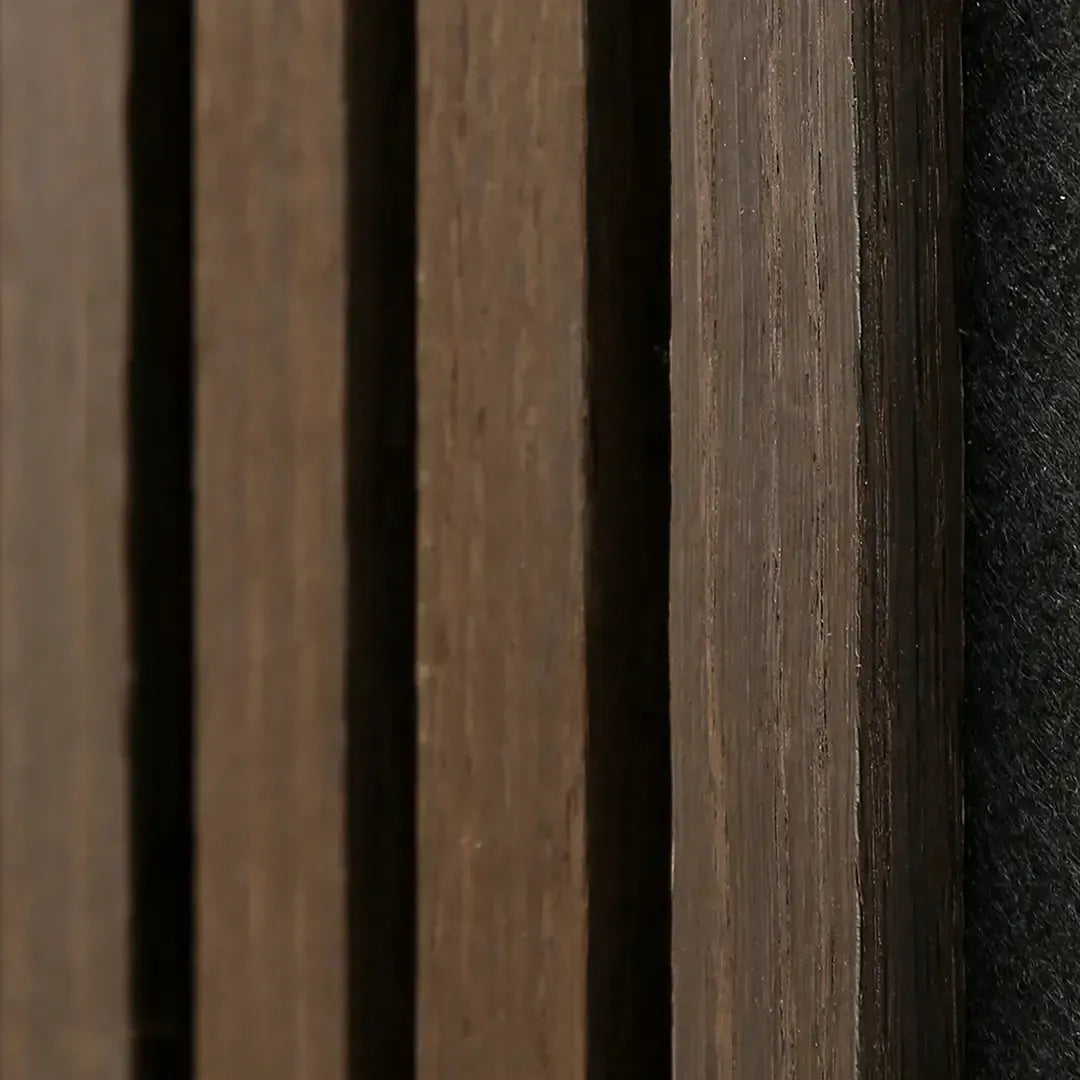
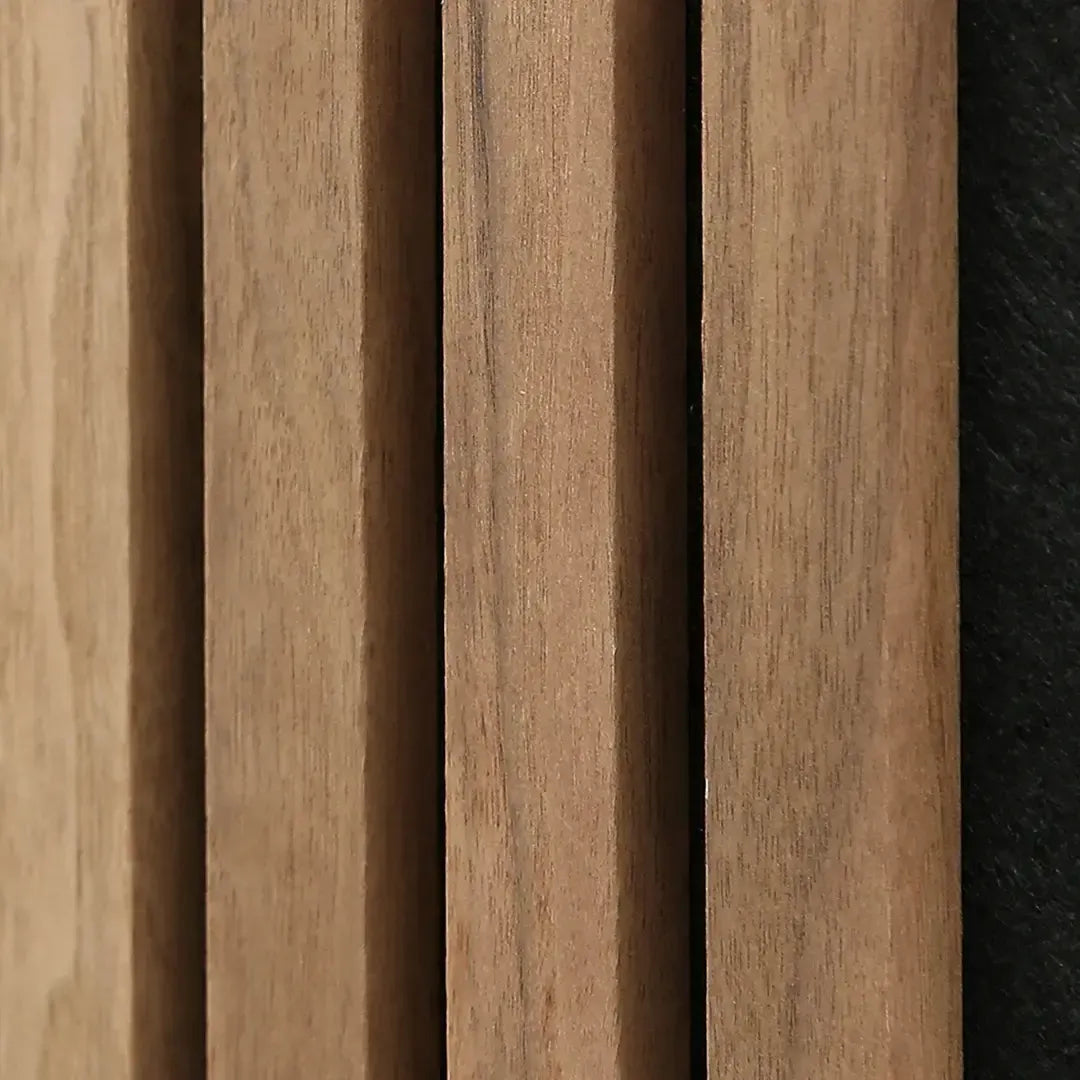
A spec sheet that lists "walnut" or "oak" without construction detail is hiding the more important fact: is that a full wood veneer wrap or a printed laminate? Three-sided wood veneer construction — veneer on the face and both visible edges — holds up to close inspection and repeated cleaning far better than a single-face laminate that shows its substrate at every seam. Ask for the construction line specifically if the sheet only names the finish color.
4. Read the dimensions and coverage-per-box math
Panel dimensions determine your waste factor, and coverage-per-box determines your order quantity. Standard boxes run 4 panels per box across the hexagon and slat lines, so a 320-square-foot wall needs the panel's individual square footage multiplied out before you round up. Common mistake: ordering exact square footage with zero waste allowance — add 10% for cuts around outlets, corners, and trim.
5. Check the fire rating line for any commercial job
Commercial specifications almost always require a documented fire rating, typically Class B or better under ASTM E84 testing, and residential jobs in multifamily or rental buildings increasingly ask for the same. If the spec sheet you're holding has no fire rating row at all, that's a red flag for anything beyond a single-family living room. Fire-retardant-treated slat panels exist specifically to clear this bar on commercial projects — confirm the treatment is documented, not just claimed on a sales page.
6. Confirm the core material and its moisture tolerance
The core sits behind the veneer and determines whether the panel survives a humid bathroom, a basement, or a kitchen backsplash. Recycled MDF cores are standard on acoustic slat and hexagon panels and perform well in normal interior humidity, but any wet-room or exterior application needs a sheet that specifically calls out moisture resistance or an exterior-rated core. Don't assume — the spec sheet should state the intended humidity range, not just the finish.
7. Review the hardware and trim listed alongside the panel
A panel spec sheet that ignores installation hardware is incomplete — end pieces, corner trim, and mounting screws are separate line items that change your total order and your finished-edge look. Missing trim details on the sheet usually means an unfinished edge at every outside corner unless you specify it separately.
8. Order a physical sample before finalizing the quantity
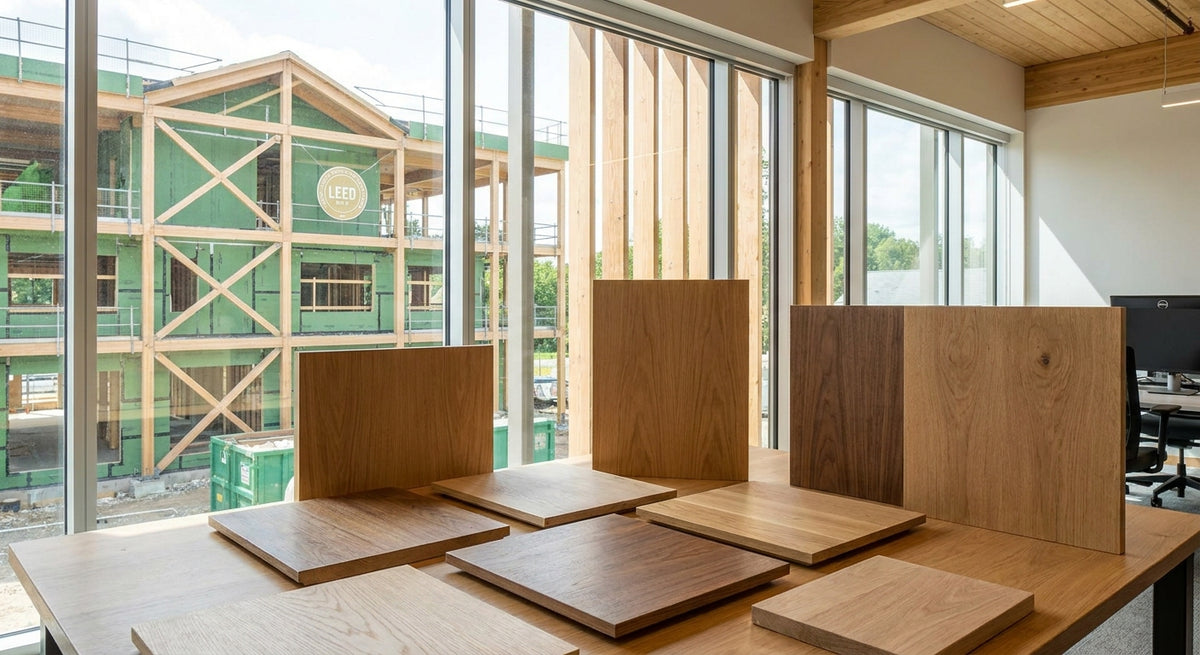
Color rendering on a screen never matches wood grain and felt color in the room's actual lighting. A full sample box costs $10 and covers the core finish range, which is cheap insurance against a bulk order in the wrong tone. Common mistake: approving a spec sheet from a digital swatch and discovering the grain reads too orange or too dark once panels are on the wall.


Troubleshooting Common Spec Sheet Problems
- No NRC value listed at all. Treat the panel as decorative only and don't specify it for a room with an acoustic requirement — request the acoustic test data directly from the supplier before you spec it for a noise-control job.
- Dimensions in mixed units. Some sheets mix millimeters and inches across different rows. Convert everything to one unit before running your coverage math, or the box count comes out wrong.
- Fire rating claimed but not documented. A sales page claim isn't a spec sheet fact. Ask for the actual test report or class rating in writing before a commercial job goes to permitting.
- Coverage math comes up short on delivery. This is almost always a waste-factor miss — recalculate with a 10% buffer for cuts, not the raw square footage.
- Vendor won't send a physical sample. That's a signal to slow down on a bulk order regardless of how complete the rest of the sheet looks.
- Core material row is blank. Assume standard interior MDF and don't use the panel in a wet room or exterior application until you get it confirmed in writing.
Tools and Resources
- A tape measure and a simple square-footage calculator for your wall dimensions
- The full sample box to confirm finish and grain in person
- Your local building department's fire code reference for the space type
- A copy of the guide on specifying acoustic wall panels for a construction project for the full procurement checklist
What to Do Next
Once you've verified NRC, veneer construction, dimensions, fire rating, core material, and hardware, the spec sheet review is done — the next step is ordering a sample, not a bulk quantity. Compare the physical sample against your room's actual lighting before the purchase order goes out, and keep a copy of the spec sheet on file for the inspector.
FAQ
What's the most important number on a wood panel spec sheet?
NRC rating is the most important number for any acoustic application, since it tells you how much sound the panel actually absorbs rather than just how it looks. A rating around 0.75 is solid for a decorative acoustic panel competing against foam-only alternatives.
Is a wood panel spec sheet the same as a cut sheet?
A cut sheet is usually a shorter version focused on dimensions and finish, while a full spec sheet includes acoustic rating, fire class, core material, and installation hardware. Always ask for the full spec sheet on any commercial job.
How much does a wood wall panel cost per square foot in 2026?
Pricing varies by category and finish, and panel pricing on individual product pages reflects current 2026 rates rather than a single fixed number. Check the coverage-per-box math against the listed price to get your true cost per square foot.
Do all wood panels need a fire rating?
Residential single-family installs often don't require a documented fire rating, but commercial and multifamily jobs almost always do under local code. Confirm the requirement with your building department before finalizing the spec.
What's the difference between engineered and solid wood panel cores?
Engineered cores like MDF offer more dimensional stability and lower cost, while solid wood cores handle differently under humidity swings. The spec sheet should state which core is used and its moisture tolerance.
Can I get a physical sample before ordering a full spec?
Yes — ordering a sample before committing to a bulk quantity is standard practice and catches color and grain mismatches a photo can't show. A full sample box typically costs a small fraction of a bulk order.
How many panels come in a standard box?
Most acoustic slat and hexagon panel boxes ship 4 panels per box, which is the number you use to calculate total boxes needed for a given square footage.
What happens if I skip reading the core material line?
Skipping the core material line risks specifying a standard interior panel for a wet room or exterior application, where it can warp or delaminate. Always confirm moisture tolerance in writing for any non-standard humidity environment.
One Last Thing
The row buyers skip most often isn't the fire rating or the NRC value — it's the core material line, and it's the one that causes callbacks. A panel with the right finish and the right acoustic number still fails in a bathroom or a basement if the core isn't rated for that humidity, and that failure shows up eight months after install, not on delivery day.


 Better performance and aesthetic appeal
 In Stock