Picking between engineered and solid wood wall panels comes down to three questions: where the panel goes, how much movement your walls can tolerate, and what you're willing to maintain over the next 5-10 years. Get those answers right and the rest of the decision is arithmetic.
- Engineered wood wall panels with veneer over MDF resist warping better than solid wood in humidity swings — buy for kitchens, basements, offices.
- Solid wood wall panels cost more per square foot and move with seasonal humidity — reserve for climate-controlled rooms only.
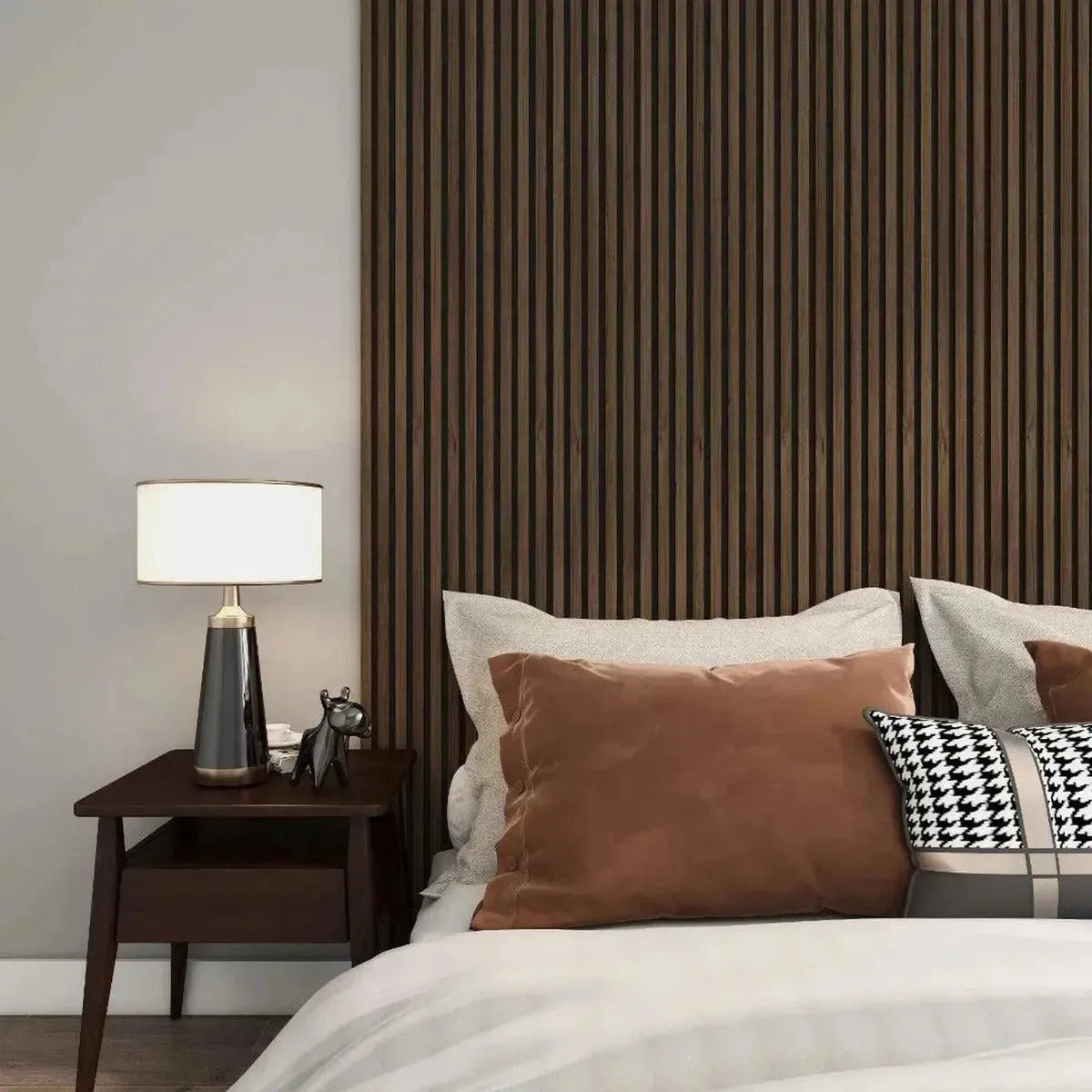
- Akuwood Panel's 3-sided veneer construction is engineered, not solid, and that's the right call for most interior feature walls in 2026.
- Order a sample before committing — grain and color read differently under your actual room lighting.
Why this matters
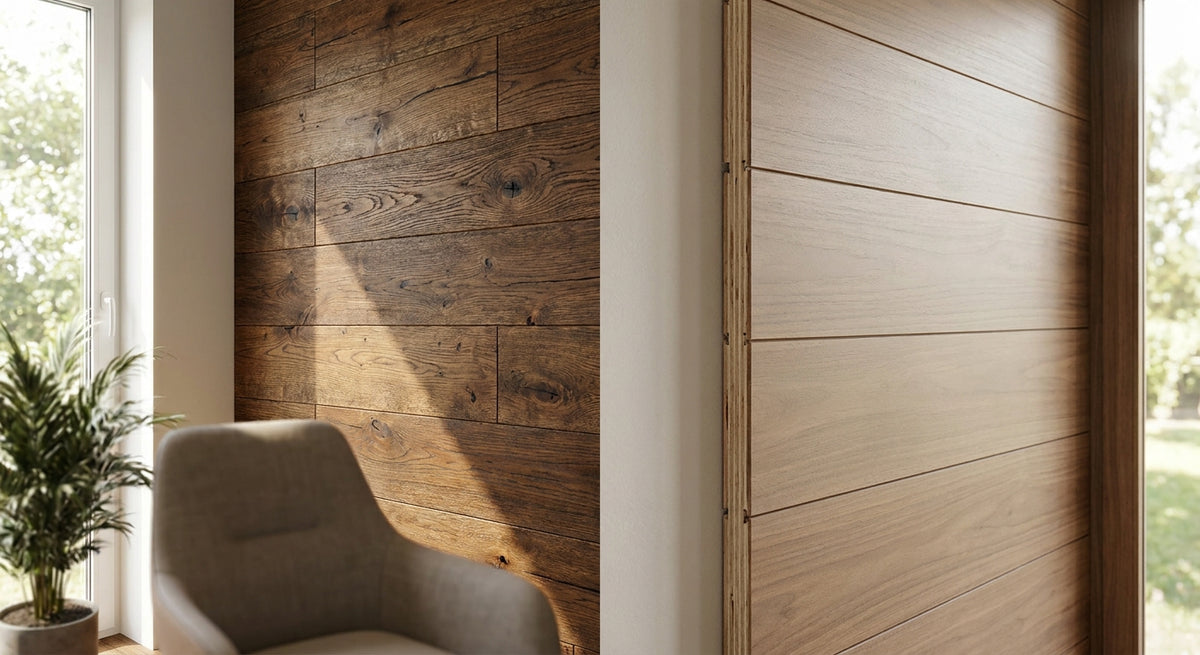
The engineered vs solid wood wall panels question isn't cosmetic — it's a structural decision disguised as a style decision. Solid wood planks expand and contract across seasons because they're a single piece of timber reacting to humidity as one unit. Engineered panels — veneer bonded to an MDF or plywood core — split that movement across layers, so the surface stays flatter over time.
That difference decides whether your feature wall still looks good in year three or starts cupping at the seams. Akuwood Panel builds its acoustic slat, fluted, and hexagon panels on an engineered core specifically because it holds dimension better across the humidity range most US homes see between January and August.
If you're weighing real wood against a faux or laminate alternative instead, that's a different comparison — the guide to choosing real wood over faux wood wall panels covers that decision separately.
What you'll need
- A tape measure and the square footage of the wall (length x height, minus openings)
- A moisture reading or at least a general sense of the room's humidity swing across the year
- A budget per square foot — engineered veneer panels and solid wood planks price very differently
- A sample of at least one finish, ordered before you commit to a full order
- Basic install tools: level, stud finder, construction adhesive or screws depending on wall type
- A decision on acoustic needs — do you need echo control (felt-backed slat panels) or is this purely visual
The steps
1. Measure the room's humidity exposure
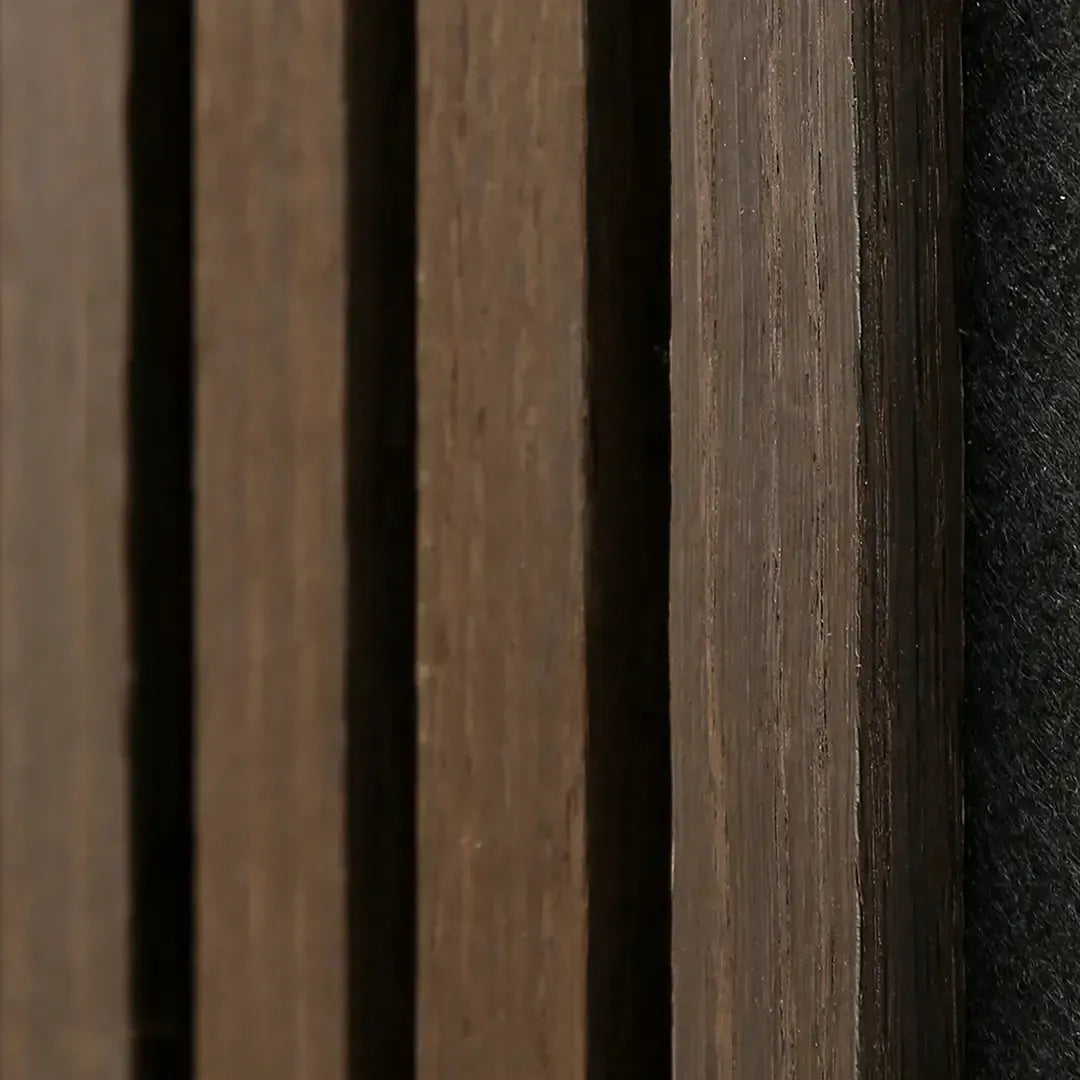
Start here, not with color swatches. Solid wood wall panels move with moisture — in a bathroom, kitchen, or basement with seasonal dampness, planks can gap, cup, or crack at the joints within a year or two. Engineered panels with an MDF core and real wood veneer distribute that stress across a bonded structure instead of one solid grain.
If the room sits below grade, near plumbing, or without HVAC control, engineered is the safer call. Common mistake: assuming a "solid wood look" panel is actually solid — check the construction spec, not just the marketing photo.
2. Set your per-square-foot budget
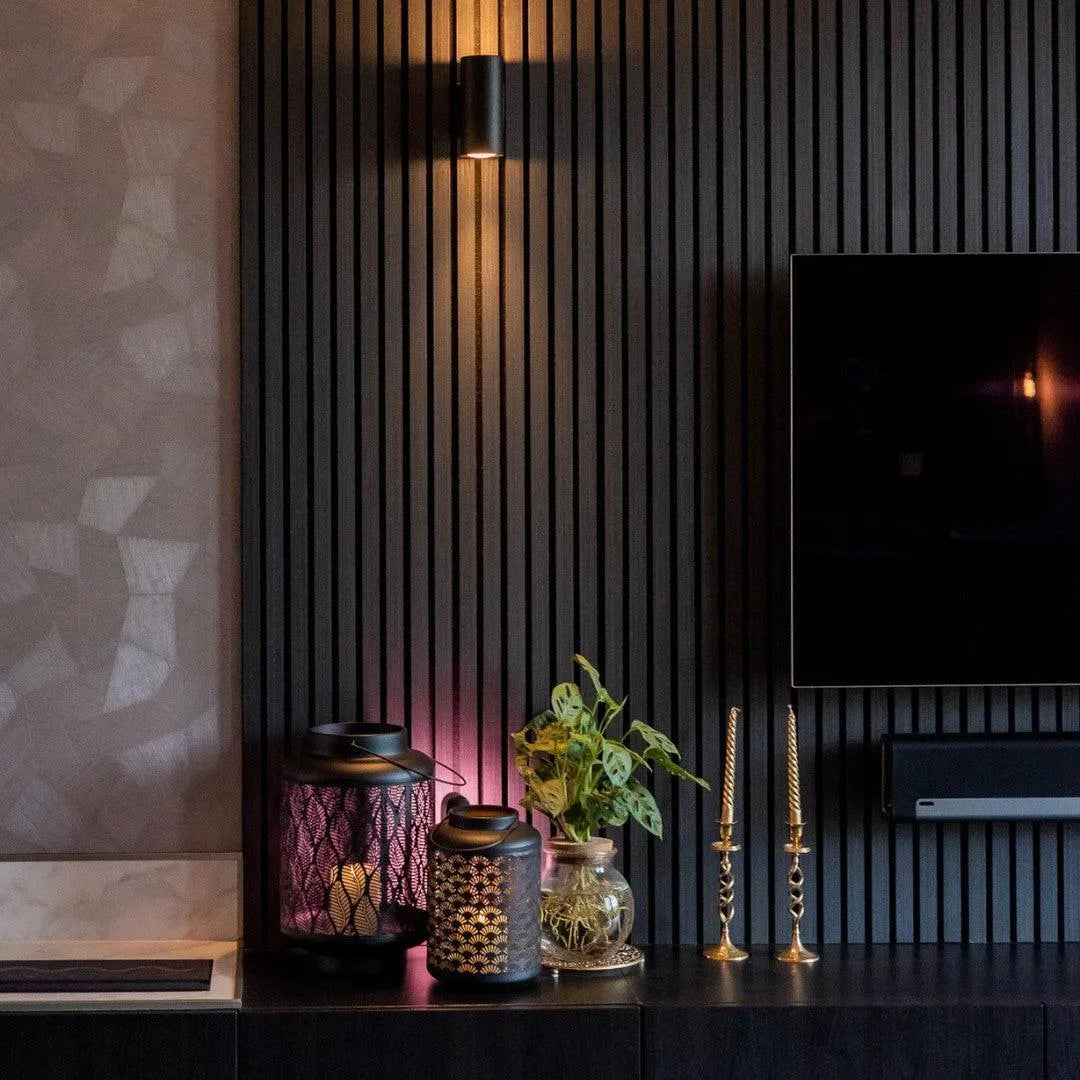
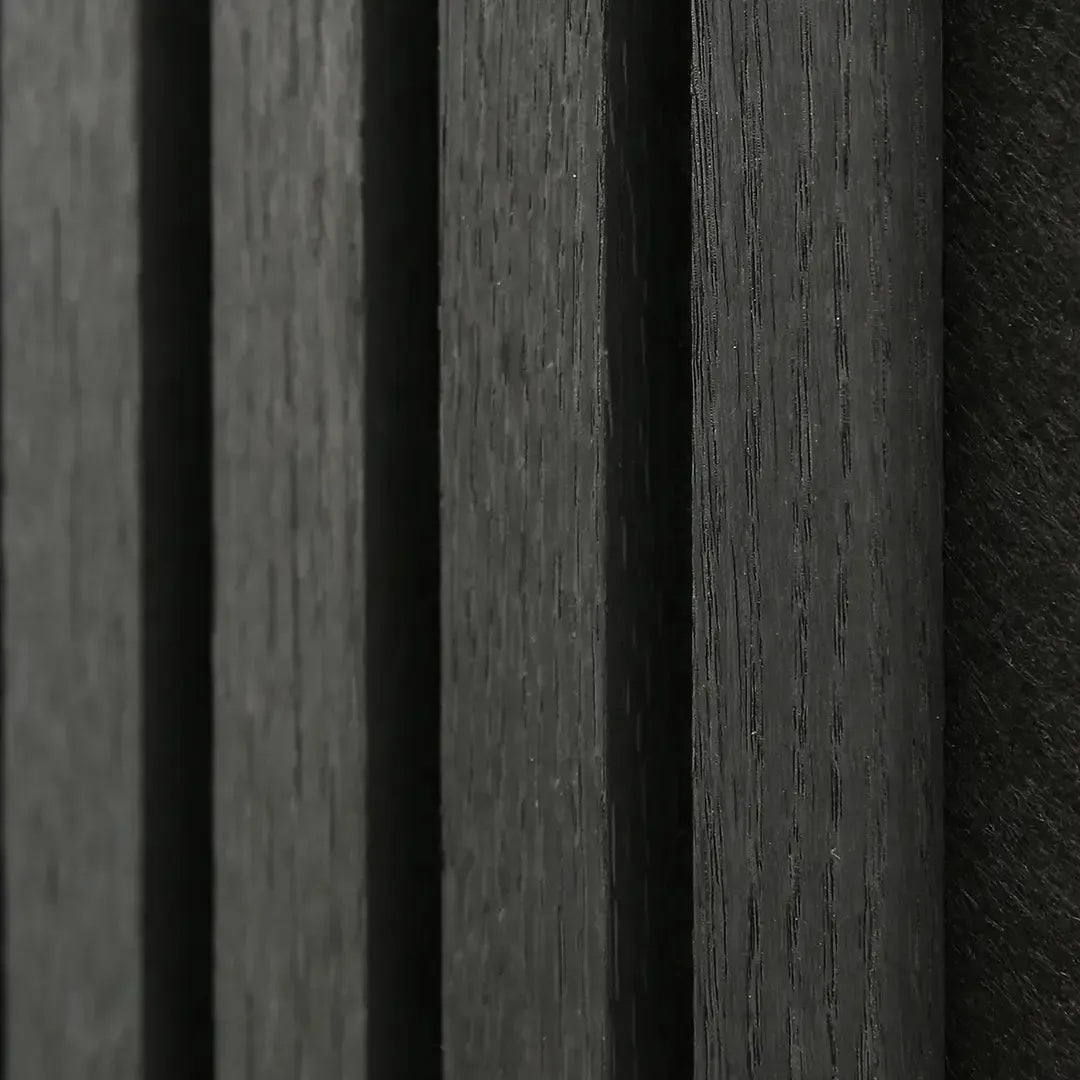
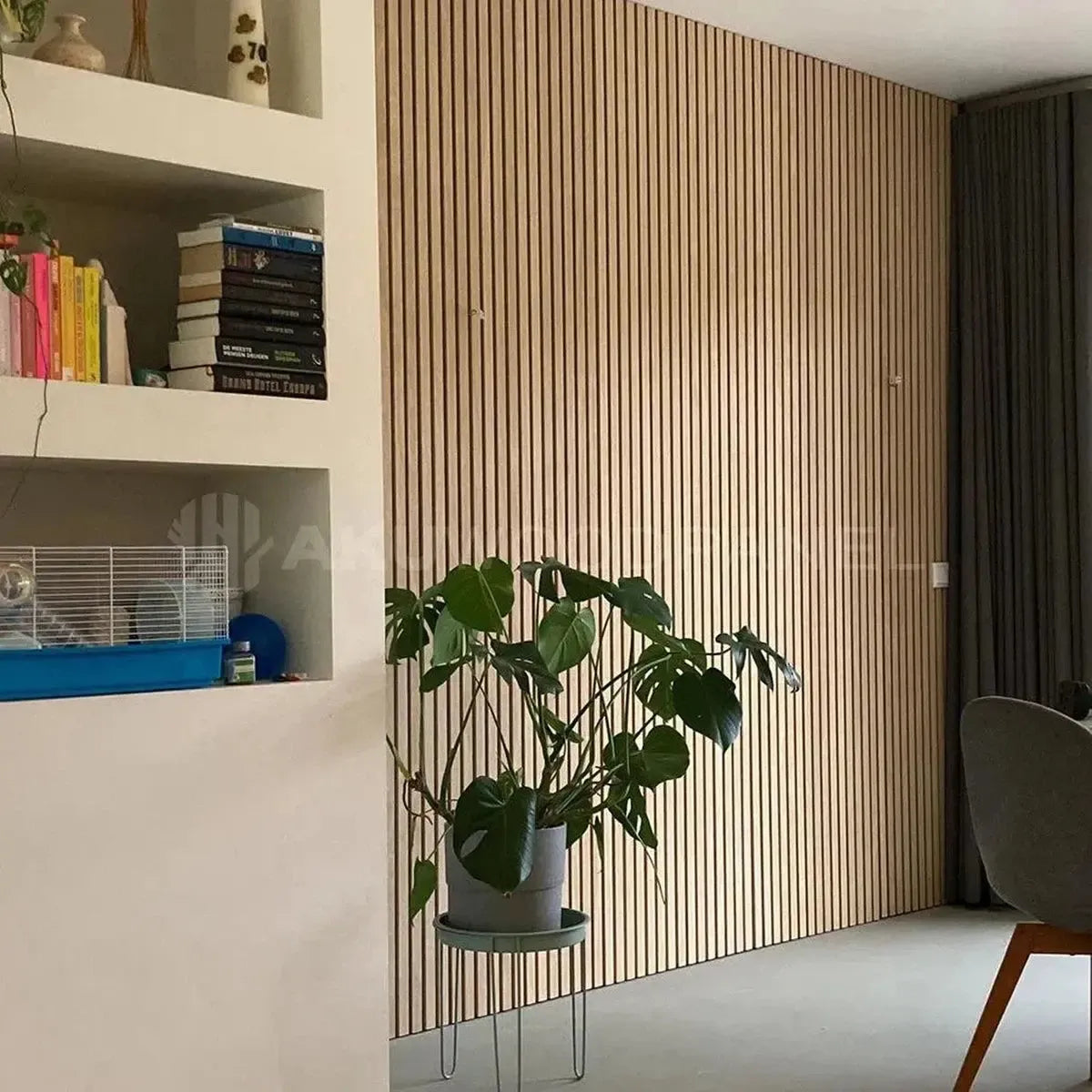
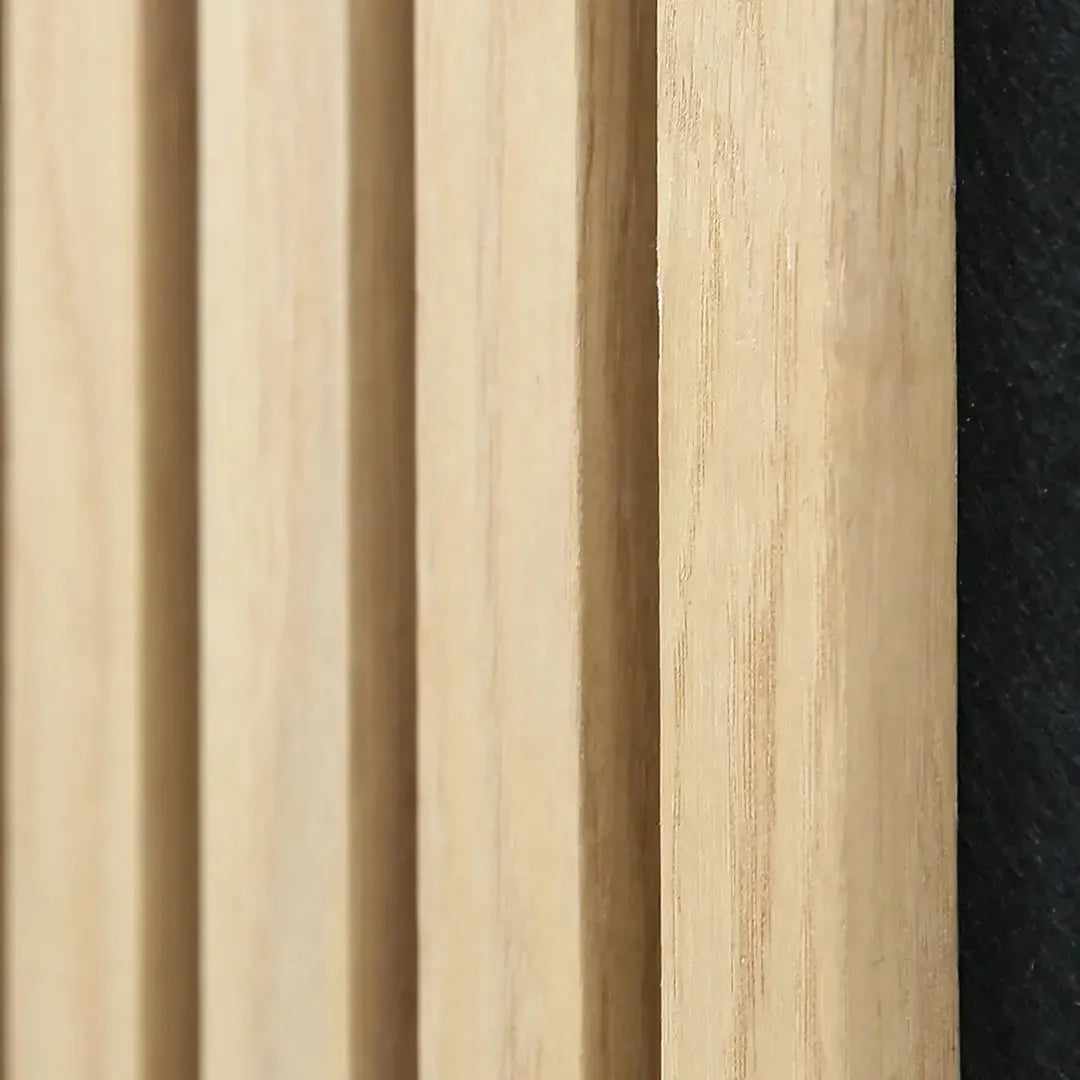
Solid wood plank walls typically run higher per square foot than engineered veneer panels, because you're paying for full-thickness timber instead of a veneer layer over a manufactured core. Engineered panels like the natural oak acoustic slat wall panel deliver the same visible grain at a lower material cost, since only the surface layer is hardwood.
Calculate total wall square footage first, then price both options against it — the gap widens fast on rooms over 100 square feet. Common mistake: budgeting off a single panel price without multiplying by full wall coverage.
3. Decide on your wall prep and install method
Engineered panels install faster on drywall, plywood, or even over tile with adhesive or screws, because the backing is flat and consistent. Solid wood planks often need furring strips, acclimation time (sitting in the room for days before install), and more careful joint spacing to allow for expansion.
If your timeline is tight — a rental turnover, an Airbnb refresh, a retail build-out before a launch date — engineered panels cut install time significantly. Common mistake: skipping acclimation on solid wood and installing it straight from the truck, which guarantees gaps within months.
4. Match the panel to your acoustic goals
If echo control matters — open-plan living rooms, home offices, media rooms — felt-backed engineered slat panels solve two problems at once: wood grain on the surface, sound absorption behind it. Solid wood planks offer zero acoustic benefit on their own; they're a visual product only.
For a room where noise is the actual complaint, not just the look, engineered wins outright. Common mistake: buying solid wood for a noisy open-plan space and expecting an acoustic result it was never built to deliver.
5. Order a sample before you order the wall
Grain, color, and sheen all read differently under your actual lighting than on a screen. A full sample box lets you hold multiple finishes against your wall before spending on the full order — a five-dollar decision that prevents a five-hundred-dollar mistake.
Check how the veneer grain runs and whether the tone shifts warmer or cooler once it's under your bulbs, not a product photo. Common mistake: ordering a full pallet based on a listing image alone.


6. Confirm the finish holds up to your maintenance tolerance
Engineered veneer panels typically need less upkeep than solid wood — no seasonal refinishing, no worrying about splitting at joints. Solid wood often needs periodic oiling or resealing to keep the surface stable, especially in rooms with light or temperature swings.
If you don't want a maintenance schedule attached to your wall, engineered is the lower-effort choice for 2026 and beyond. Common mistake: choosing solid wood for the "authentic" feel, then skipping the upkeep it actually requires.
Troubleshooting
- Panel edges are gapping after a few months — likely solid wood without proper acclimation; humidity swing is doing the work. Engineered veneer panels don't have this failure mode at the same rate.
- Color looks different once installed vs. the sample — check your lighting temperature (warm vs. cool bulbs shift oak and walnut tones noticeably).
- Panel feels flimsy or hollow when tapped — confirm you bought a full veneer panel, not a printed laminate; check the product spec for "3-sided wood veneer" or similar wording.
- Wall isn't flat enough for clean panel seams — shim or skim-coat before install; engineered panels show gaps at uneven seams just as readily as solid wood.
- Panel warped within a year in a bathroom or basement — that's a moisture problem, not a defect; swap to an engineered core or add a vapor barrier behind the wall.
- Acoustic panel isn't reducing echo as expected — check whether you bought a felt-backed slat panel or a purely decorative fluted panel; only the felt-backed version absorbs sound.
Tools and resources
- Full sample box for testing multiple finishes side by side before ordering
- Level and stud finder for accurate panel alignment
- Construction adhesive or panel screws depending on your wall substrate
- The oak exterior wall panel line, if the application is outdoor rather than interior — exterior conditions rule out most solid wood options outright
What to do next
Once you've picked engineered or solid, the next decision is layout — horizontal vs. vertical orientation, panel width, and whether you're covering a full wall or an accent section. Measure twice, order the sample first, and don't skip acclimation time if solid wood wins your comparison.
FAQ
Is engineered wood or solid wood better for wall panels?
Engineered wood wall panels hold up better in rooms with humidity swings because the veneer-over-MDF construction resists warping. Solid wood works best only in climate-controlled rooms with stable humidity year-round.
Do engineered wood wall panels look as good as solid wood?
Yes — engineered panels use a real wood veneer surface, so the grain and color match solid wood closely. The difference is in the core material, not the visible finish.
Can I install engineered wood wall panels in a bathroom?
Engineered panels with a sealed or moisture-resistant core handle bathroom humidity better than solid wood planks, which are prone to warping in wet rooms. Check the specific panel's moisture rating before install.
Are solid wood wall panels more expensive than engineered?
Solid wood wall panels typically cost more per square foot than engineered veneer panels because you're paying for full-thickness hardwood instead of a thin surface layer. The gap grows with larger wall areas.
Do I need acclimation time for engineered wood panels?
Engineered wood wall panels need less acclimation than solid wood because the manufactured core is more dimensionally stable. Solid wood should sit in the install room for several days before mounting.
Which panel type is better for acoustic control?
Felt-backed engineered slat panels handle sound absorption; solid wood planks offer no acoustic benefit since they're a purely visual product. If echo is the complaint, engineered acoustic panels are the right fit.
How do I know if a panel is engineered or solid wood before buying?
Check the product spec for terms like veneer, MDF core, or 3-sided wood veneer — those indicate engineered construction. Solid wood listings will specify full hardwood thickness with no core material mentioned.
One last thing
The panels that fail fastest aren't cheap ones — they're solid wood installed in rooms nobody checked for humidity first. Run the moisture question before the color question, and the engineered vs solid wood wall panels decision mostly makes itself.


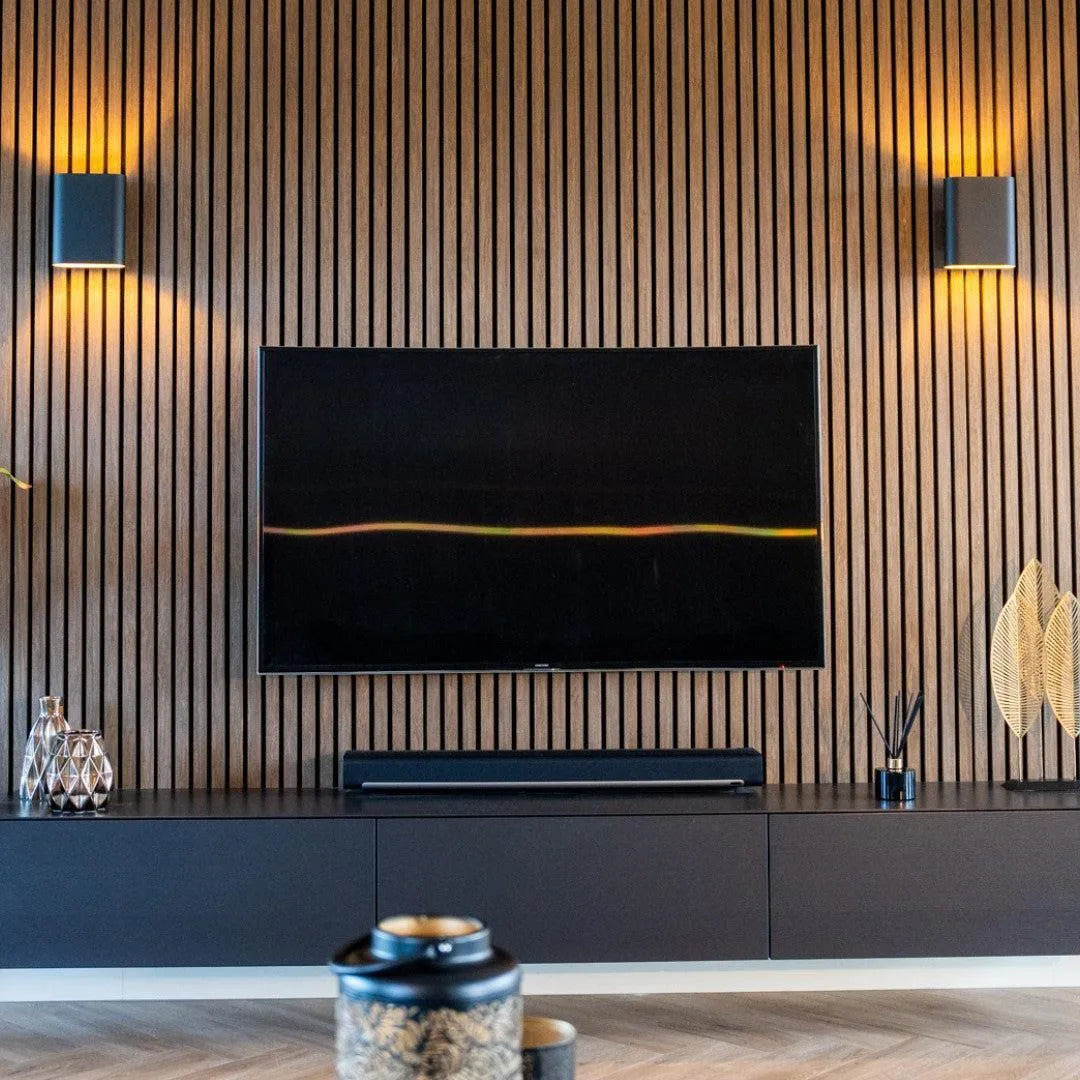
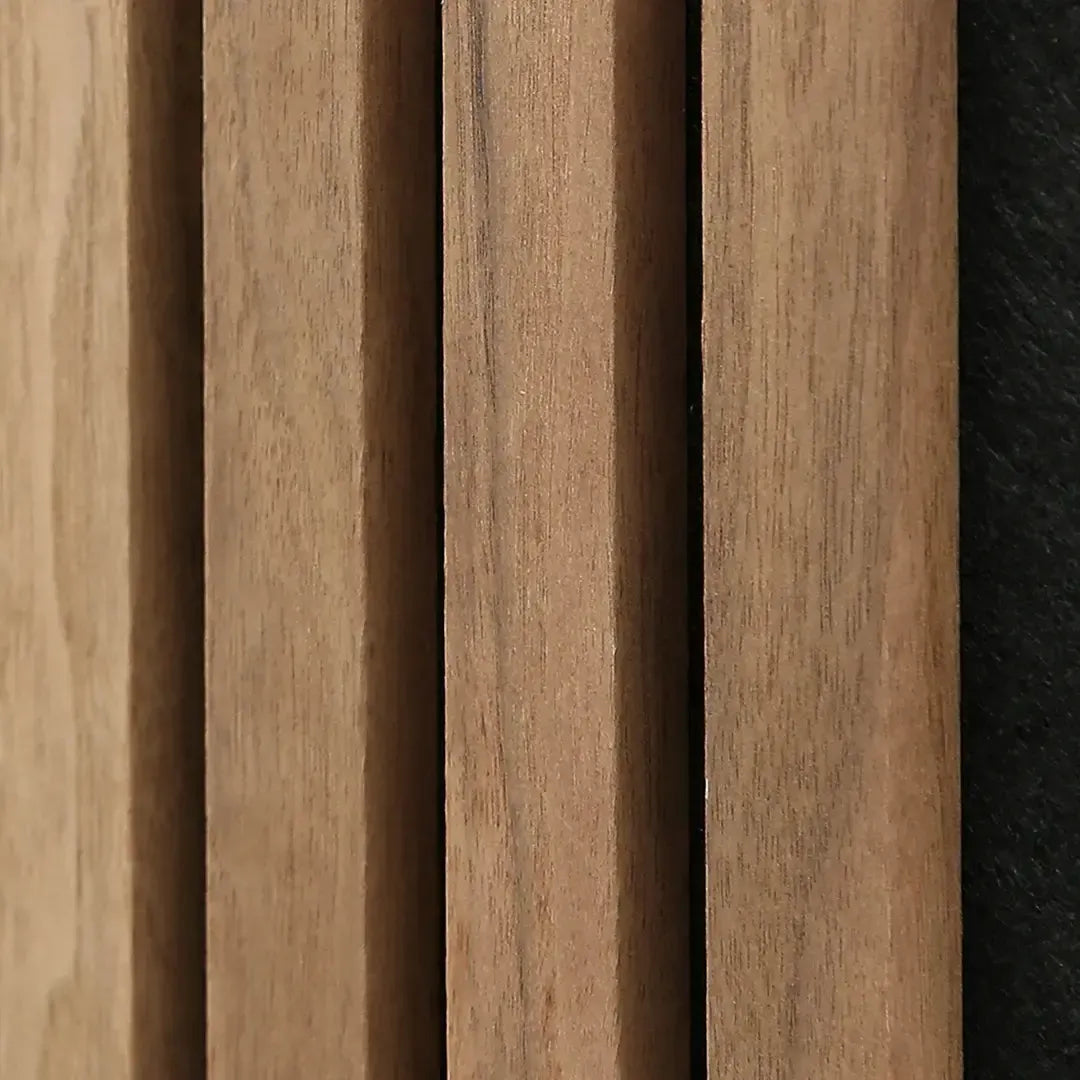
 Better performance and aesthetic appeal
 In Stock