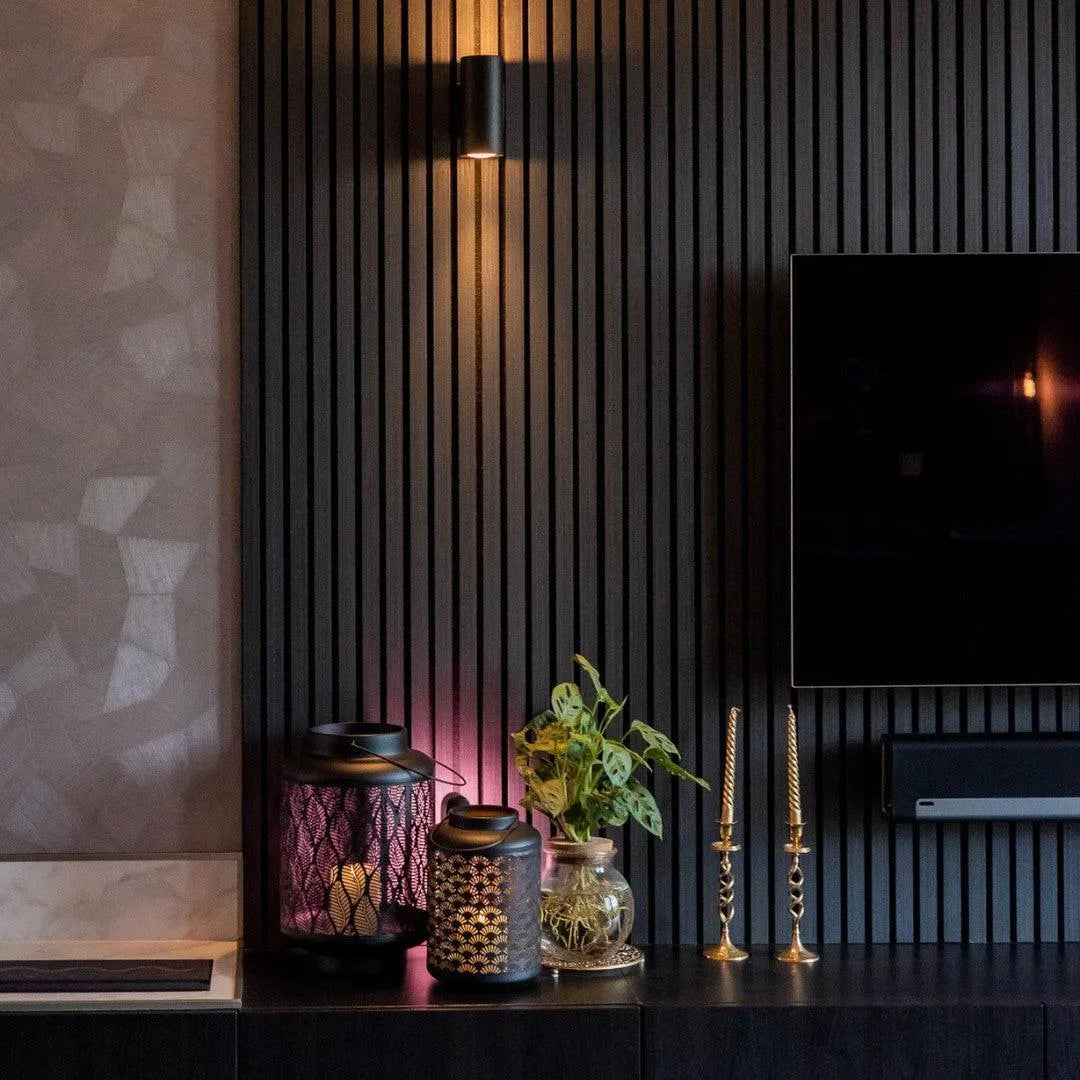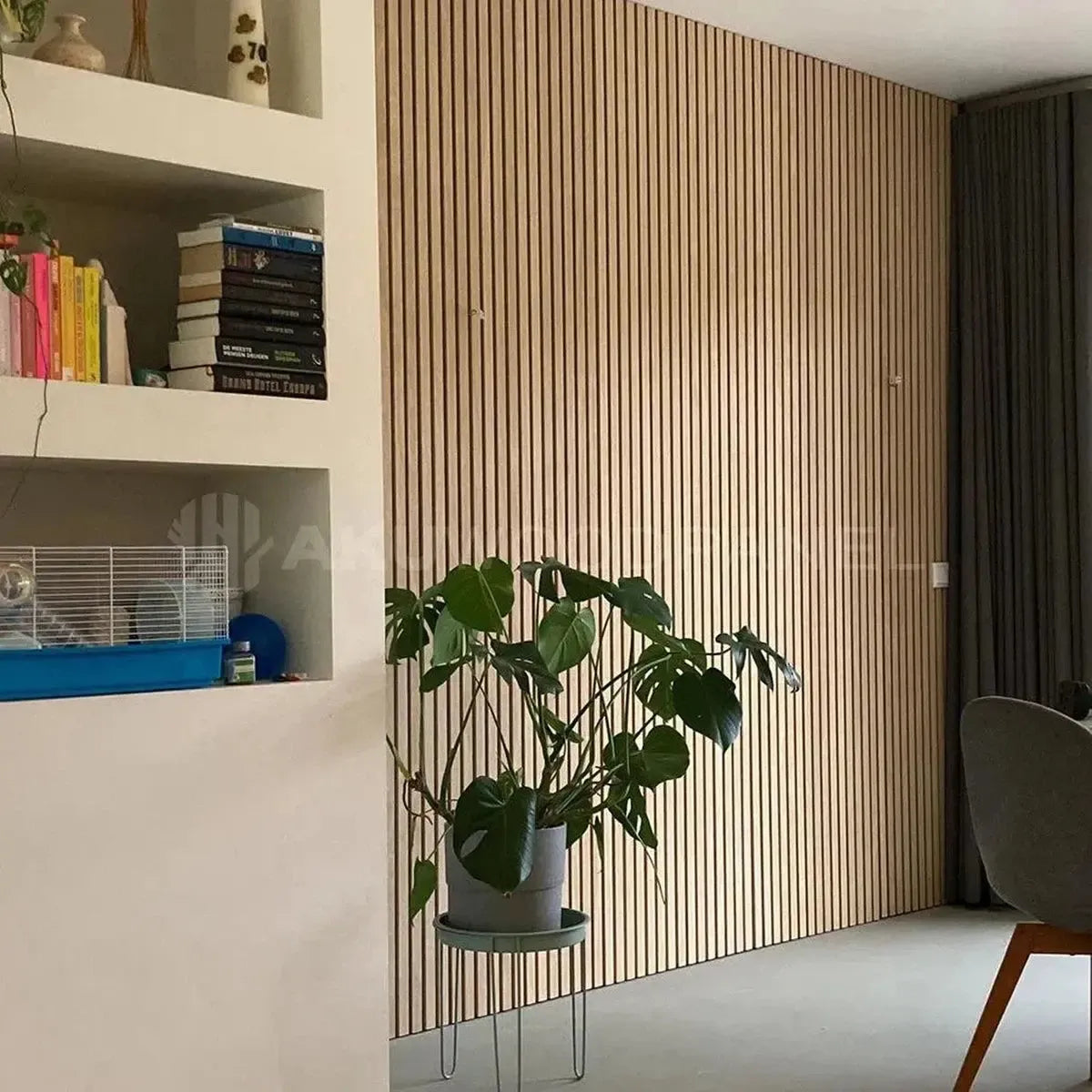
Faux wood panels for walls promise oak or walnut character without the price tag, and in 2026 the vinyl and laminate versions look better than they used to. But the compromises don't show up in the store — they show up eighteen months later, when the surface fades, the seams curl, or the room still echoes.
- Real wood veneer panels cost more upfront but outlast faux wood panels for walls by years, not months.
- Faux wood panels for walls handle dry, low-traffic rooms fine but fail in bathrooms, kitchens and high-touch areas.
- An acoustic slat wall panel in natural oak carries a 0.75 NRC rating faux laminate panels can't match — buy real wood for noise control.
- Exterior-rated real wood panels run 25+ years of maintenance-free use versus repainting faux composite every few seasons.
- Order physical samples before committing — photos hide grain depth and veneer thickness every time.
Why this matters
Faux wood panels for walls are usually PVC, MDF with a printed foil, or thin laminate pressed to look like grain. They're lighter, cheaper, and easier to cut. None of that matters if the room's actual problem is echo, not aesthetics — printed foil doesn't absorb sound, it reflects it.
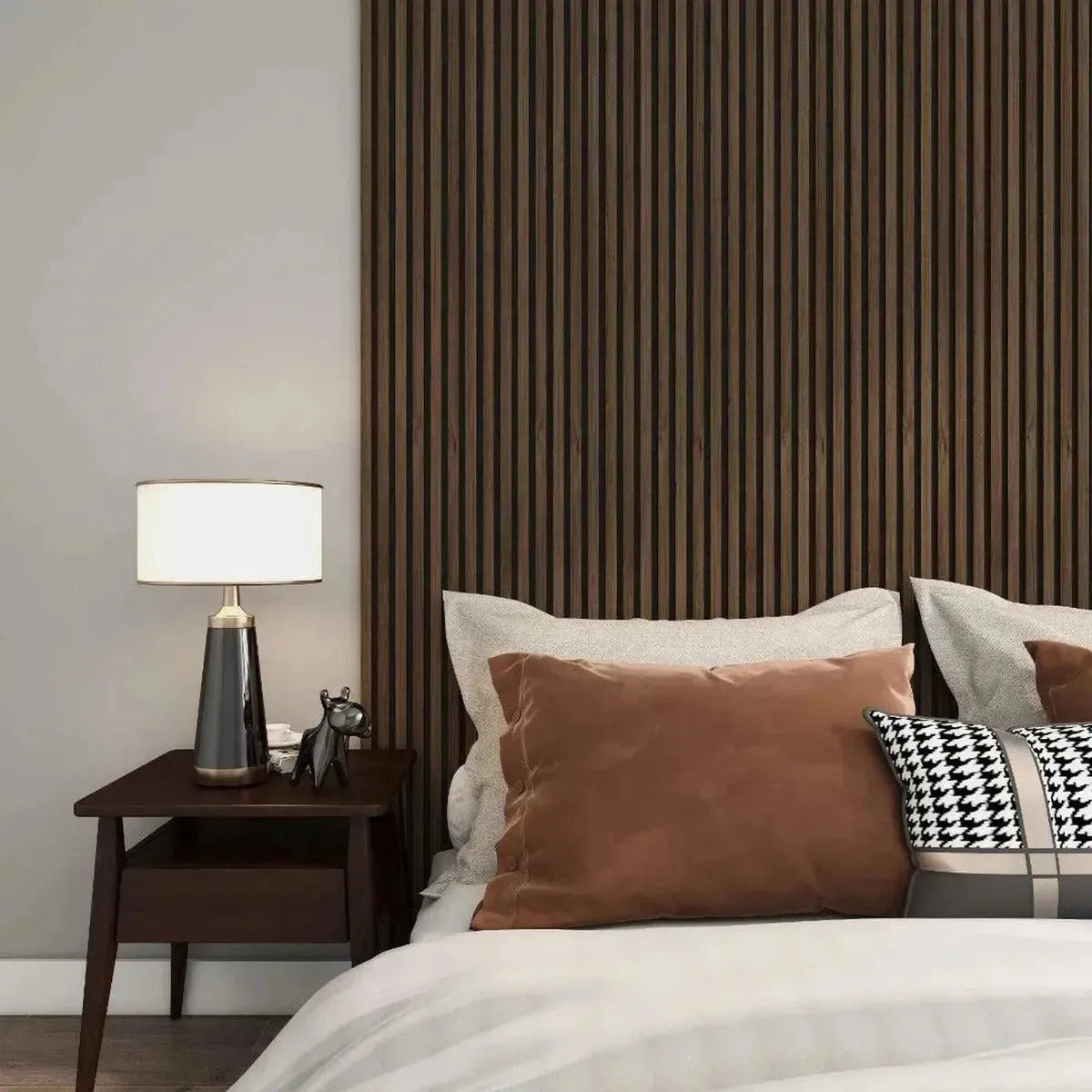
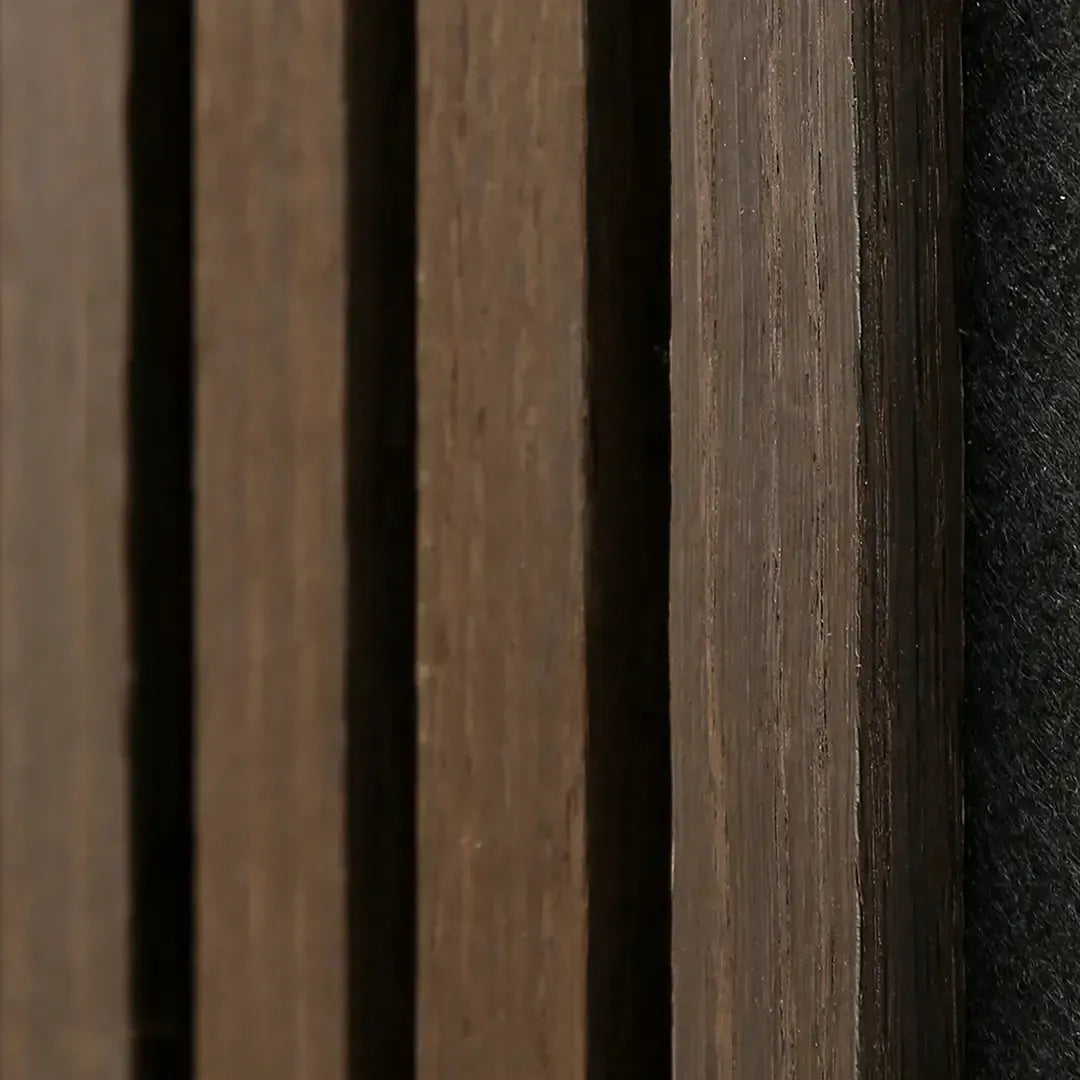
Real wood veneer panels, like an acoustic slat wall panel in natural oak, use a felt or acoustic backing that does the acoustic work. The wood layer on top is genuine veneer, not a photograph of one. That distinction is the whole decision.
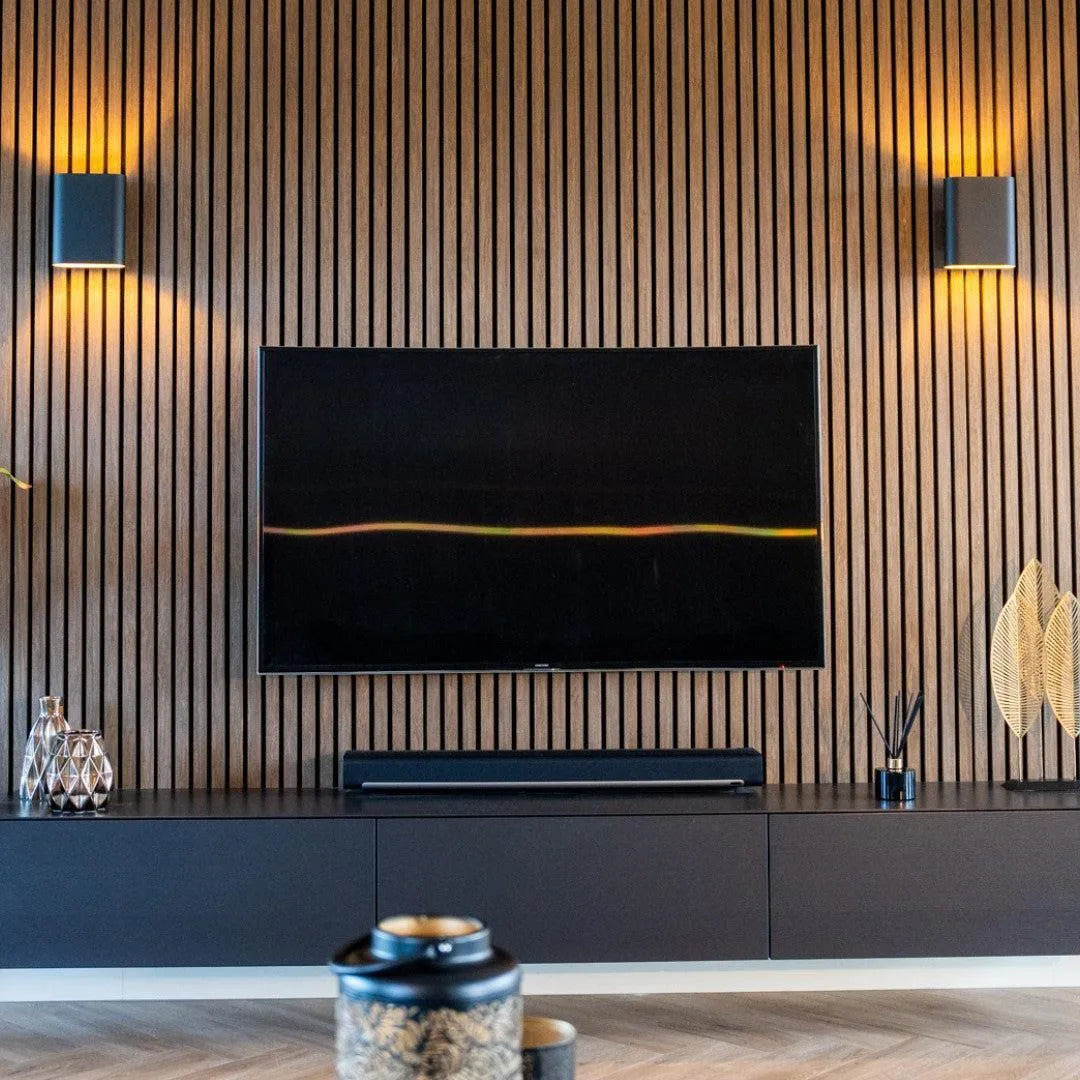
In 2026, the price gap between faux and real has narrowed enough that the choice usually comes down to room function, not budget. A living room accent wall behind a TV can survive on faux. A home office where you're on calls all day cannot.
What you'll need
- A tape measure and the exact square footage of the wall, including window and outlet cutouts
- A moisture reading or at least an honest assessment of the room (bathroom, kitchen, exterior wall)
- One or two physical panel samples — never decide off a product photo
- A stud finder if you're mounting on drywall
- A basic miter saw or fine-tooth handsaw for trimming panel edges
- A budget range per square foot, since real wood veneer and faux composite land in different tiers
The steps
1. Check the veneer construction, not the photo
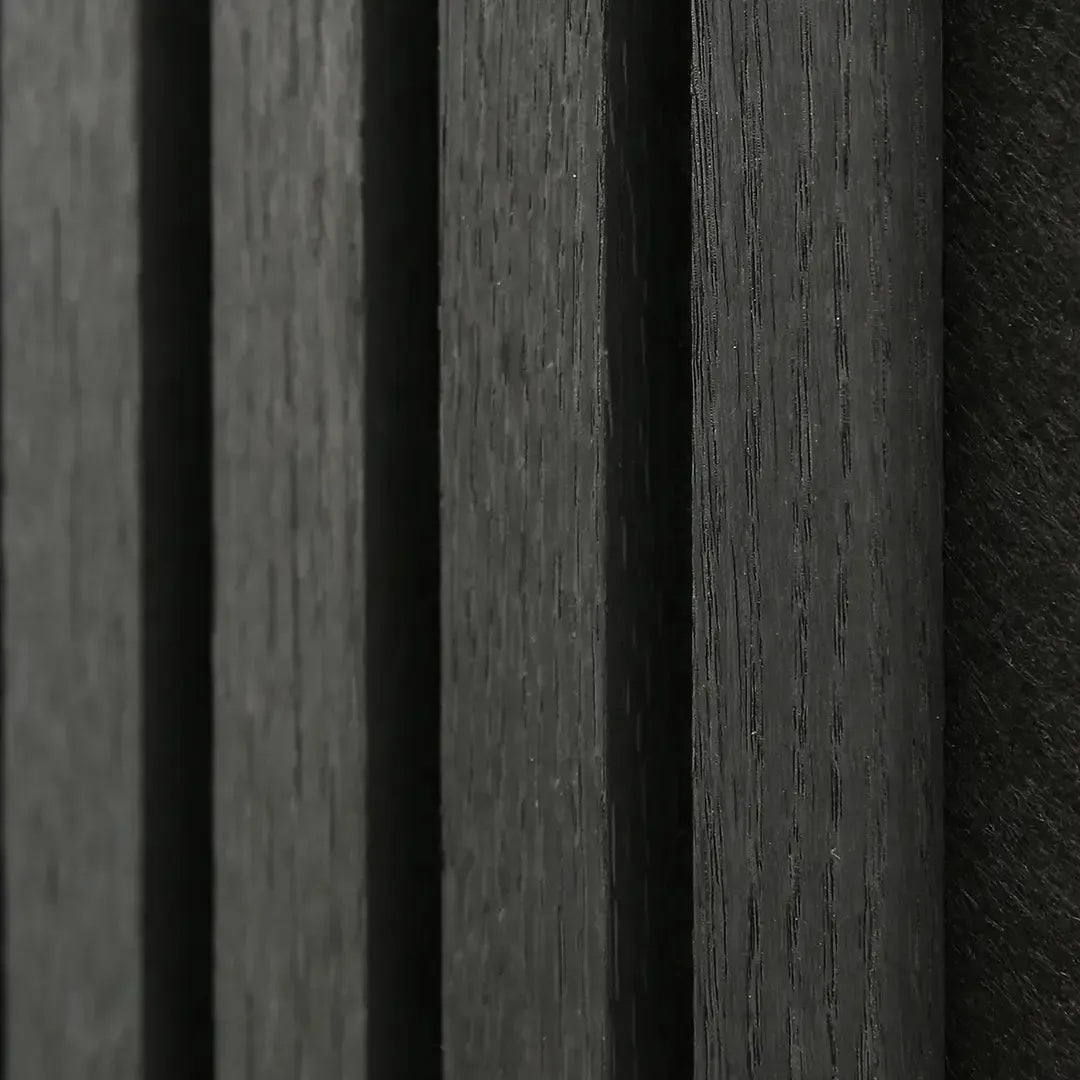
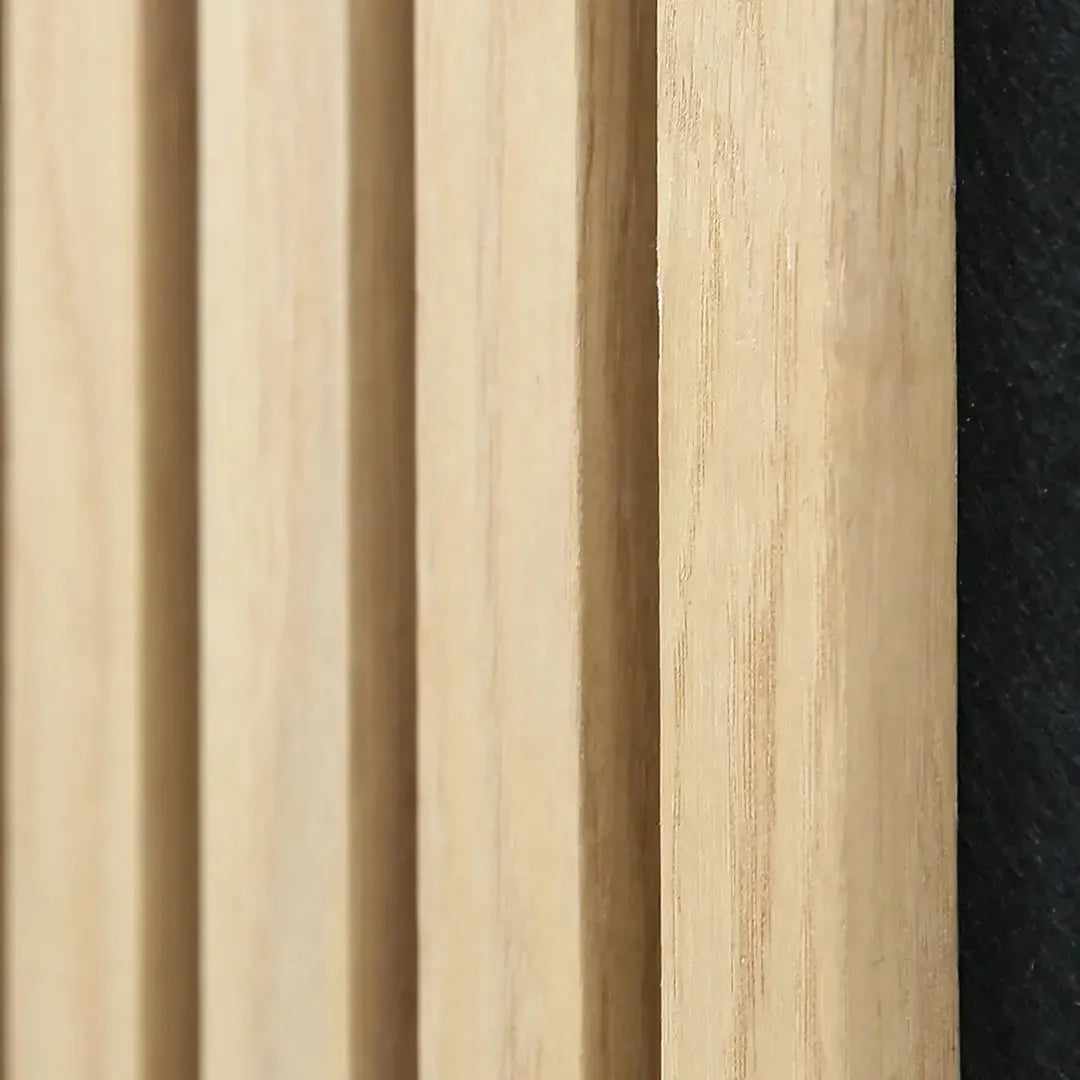
Most faux wood panels for walls use a printed layer under a clear coat. Real panels use an actual wood veneer bonded to an MDF or plywood core, often described as 3-sided wood veneer construction. Run a finger across a sample: printed foil feels uniform and slightly plastic; real veneer has texture variation from board to board. If the listing doesn't specify veneer thickness or construction, assume it's faux.
Common mistake: buying based on a hero image shot in studio lighting, which flattens the difference between print and grain.
2. Test acoustic performance if noise is the actual problem
If the wall you're panelling is behind a TV in an open-plan room, echo control matters as much as looks. Felt-backed real wood panels carry NRC ratings around 0.75 in current 2026 product data — that's a real absorption number, not a marketing claim. Printed faux panels have no acoustic backing and no NRC rating worth quoting, because they're decorative only.
If you're panelling a home office, podcast corner, or media room, this step alone should end the debate in favor of real wood.
3. Compare true cost per square foot over ten years
Faux composite panels run cheaper per box, but they don't get repainted or refinished — they get replaced when the print fades or the edges lift. Real wood veneer panels, priced from $126.95 for a 4-tile box up to the $180s for full-size slat panels, hold their finish because the color is in the wood itself, not a coating.
Run the math over a decade, not over the checkout page. A faux panel replaced twice in ten years costs more than one real wood install that just sits there.
4. Match grain direction and finish across the whole room
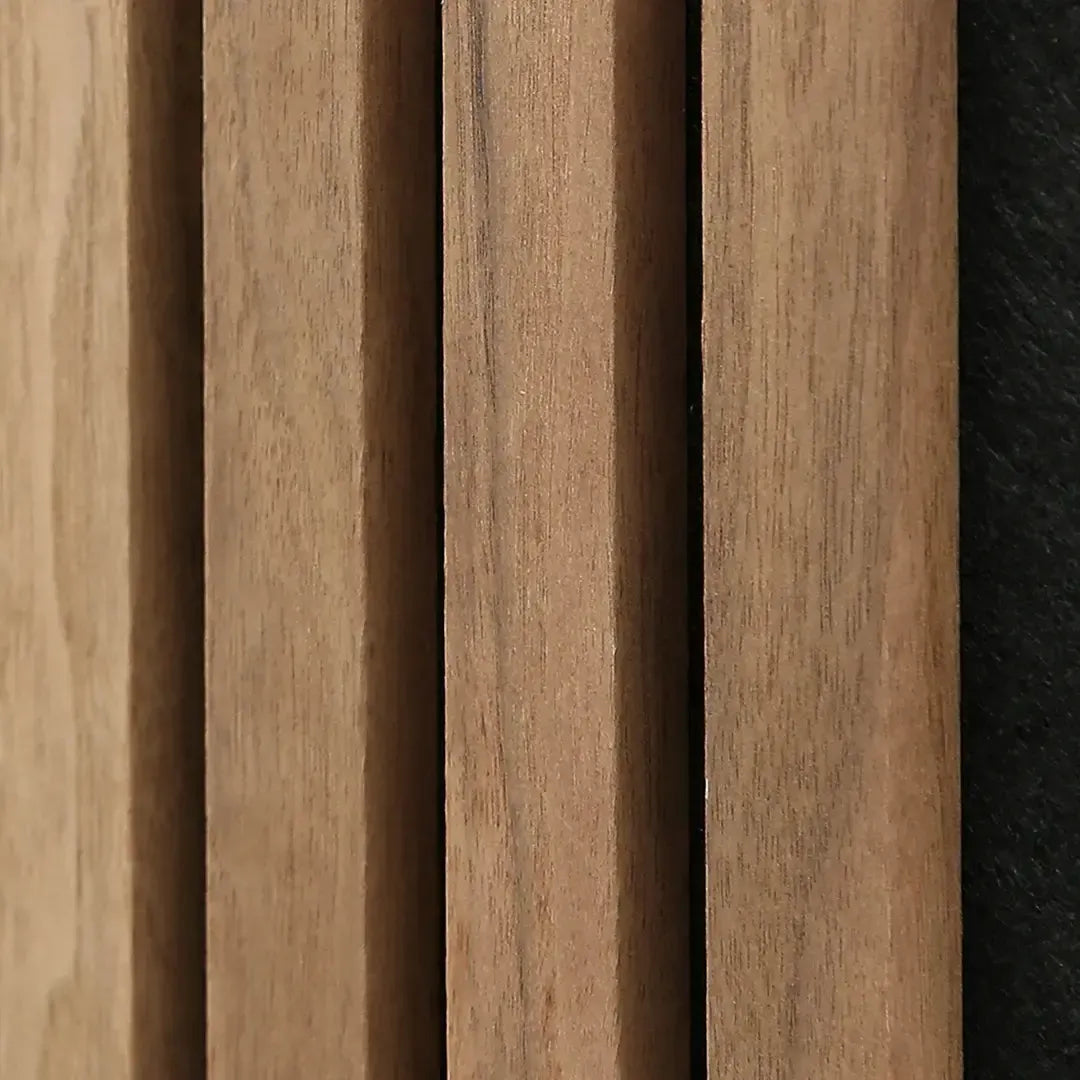
Real wood veneer, like a walnut acoustic slat panel, varies slightly board to board because it's a natural material — that's the point, not a flaw. Faux panels are printed on a repeating pattern, which means large walls can show an obvious visual repeat every few feet.
For accent walls under 8 feet wide, either option can work. For anything larger — a full living room wall, a hallway run — the repeat pattern in faux panels becomes obvious under normal lighting.
5. Verify moisture and humidity ratings before the room decides for you
Bathrooms, kitchen backsplashes, and exterior walls are where faux composite sometimes wins on paper, since PVC doesn't absorb water. But cheap faux panels still warp at the seams if installed without proper edge sealing. Real wood panels rated for those environments need a sealant step; unrated real wood panels don't belong in wet rooms at all.
Check the specific product listing for humidity or exterior ratings in 2026 before you order — don't assume either category is automatically safe.
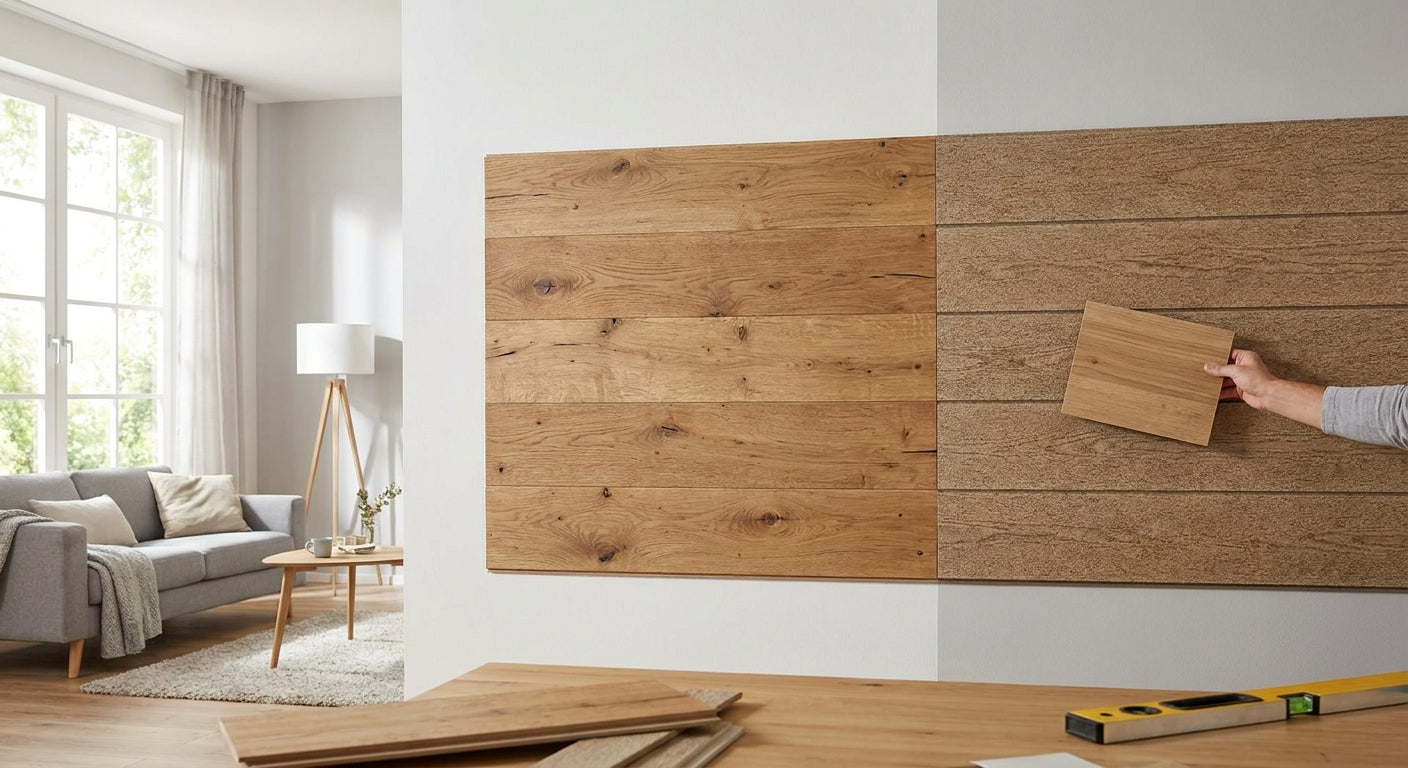
6. Order physical samples before you commit to a full wall
This step gets skipped more than any other, and it's the one that prevents the most returns. You can order acoustic wall panel samples in the exact finish you're considering and hold them against your actual wall lighting before buying full boxes.
Photos on any website, faux or real, are color-corrected. Your living room lamp is not.
7. Check fire ratings if this is a commercial or rental install
Commercial spaces — offices, retail, hospitality — often require fire-retardant ratings that not every panel, real or faux, carries by default. This is a spec question, not a style question: ask for the rating in writing before a commercial order, since building codes in 2026 vary by state and occupancy type.
8. Confirm the installation method fits your wall type
Real wood veneer slat panels typically click-fit or screw to furring strips over drywall, concrete, or brick. Faux composite panels sometimes rely on adhesive alone, which fails faster on textured or uneven walls. Match the installation method to your actual wall before you order, not after the boxes arrive.
Troubleshooting
Problem: the faux panel seams are visible even after installation. This usually means the panels weren't cut to a consistent module width. Real wood slat systems with end pieces close this gap cleanly; faux composite rarely has a matching trim piece.
Problem: real wood panels look inconsistent between boxes. That's normal veneer variation, not a defect — natural wood grain isn't uniform. If the variation looks jarring, order one extra box and hand-pick boards during install.
Problem: the room still echoes after installing faux panels. Faux composite has no acoustic backing. If echo was the goal, the panels were the wrong choice from the start — swap to a felt-backed real wood option for the same wall.
Problem: panels warped near a window or exterior wall. Condensation and temperature swings hit unsealed panels hardest. Confirm the moisture rating before installing near any exterior-facing surface.
Problem: budget won't stretch to real wood for the whole room. Mix formats: real wood veneer on the focal wall, paint or a simpler finish elsewhere. A single accent wall in real oak still reads as intentional in 2026 interiors, and it costs a fraction of a full-room install.


Tools and resources
- A full sample box if you're comparing multiple finishes across one project rather than a single color
- A miter saw with a fine-tooth blade for clean end-piece cuts
- A stud finder and level for furring-strip mounting
- A moisture meter if the wall backs onto an exterior surface
What to do next
Once you've picked real wood over faux for the room that needs it, the next question is quantity. Get the math right before ordering by working through how to calculate how many wall panels you need for your exact wall dimensions — overordering wastes money, underordering delays the install by a full shipping cycle.
FAQ
Are faux wood panels for walls worth it in 2026?
Faux wood panels for walls work fine for low-traffic, dry rooms where the goal is purely visual, but they carry no acoustic value and typically need replacing sooner than real veneer. For echo control or long-term durability, real wood veneer panels are the better spend.
Is real wood veneer better than laminate for accent walls?
Yes for durability and acoustic performance, since laminate is a printed surface with no sound absorption. Real wood veneer, like natural oak or walnut slat panels, holds its finish because the color comes from the wood, not a coating.
How much do real wood wall panels cost in 2026?
Real wood veneer tile boxes start around $126.95 for a 4-pack, with full slat panels in walnut or oak running into the $180s depending on finish. Faux composite panels are usually cheaper per box but need replacing more often.
Can faux wood panels reduce room echo?
No. Faux wood panels for walls are decorative surfaces without acoustic backing, so they don't absorb sound. Felt-backed real wood veneer panels with NRC ratings near 0.75 are built specifically for that job.
Do real wood panels work in bathrooms?
Only when rated for humidity and properly sealed at installation; unrated real wood panels warp in wet rooms. Check the specific product's moisture rating in 2026 listings before ordering for a bathroom or kitchen.
What's the difference between an acoustic slat wall panel and a faux slat panel?
An acoustic slat wall panel uses real wood veneer over an acoustic felt backing that absorbs sound, while a faux slat panel is typically printed PVC or laminate with no acoustic function. The visual slat look can be similar; the performance is not.
Should I order samples before buying wood wall panels?
Yes, always order physical samples before a full order, since studio photos color-correct wood tone and grain depth in ways your room lighting won't match. This is true whether you're comparing real wood veneer or faux composite.
How long do real wood wall panels last compared to faux?
Exterior-rated real wood panels carry ratings of 25+ years of maintenance-free use in current 2026 product data, while faux composite panels typically fade or lift at the seams well before that mark and require replacement.
One last thing
The fastest way to tell real wood from faux in a showroom isn't the photo or the price tag — it's the edge. Slice a fingernail across the panel edge: real veneer shows a thin, consistent wood layer bonded to the core; faux composite shows a printed line that stops the moment the coating ends. That five-second check saves more return shipments than any spec sheet.


 Better performance and aesthetic appeal
 In Stock