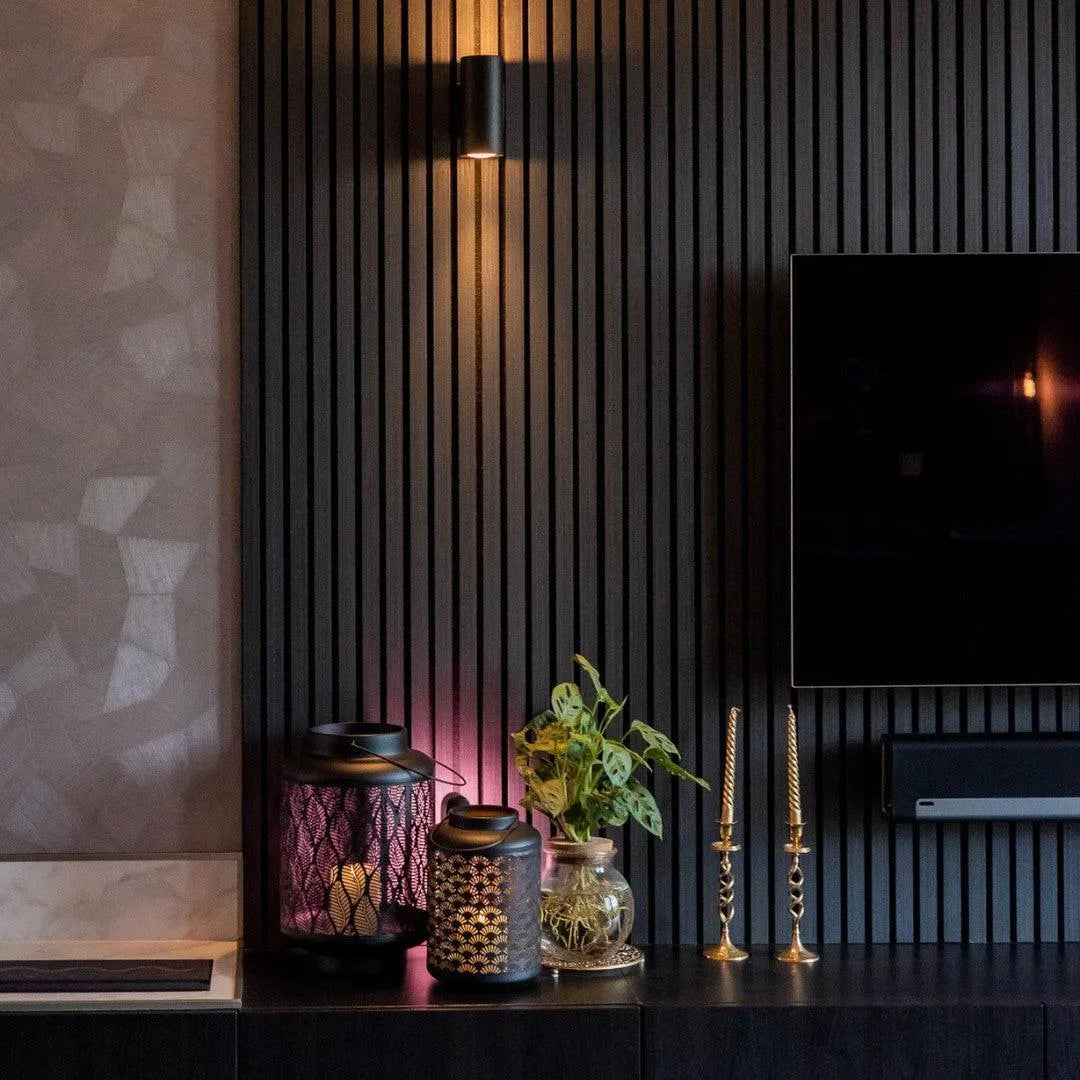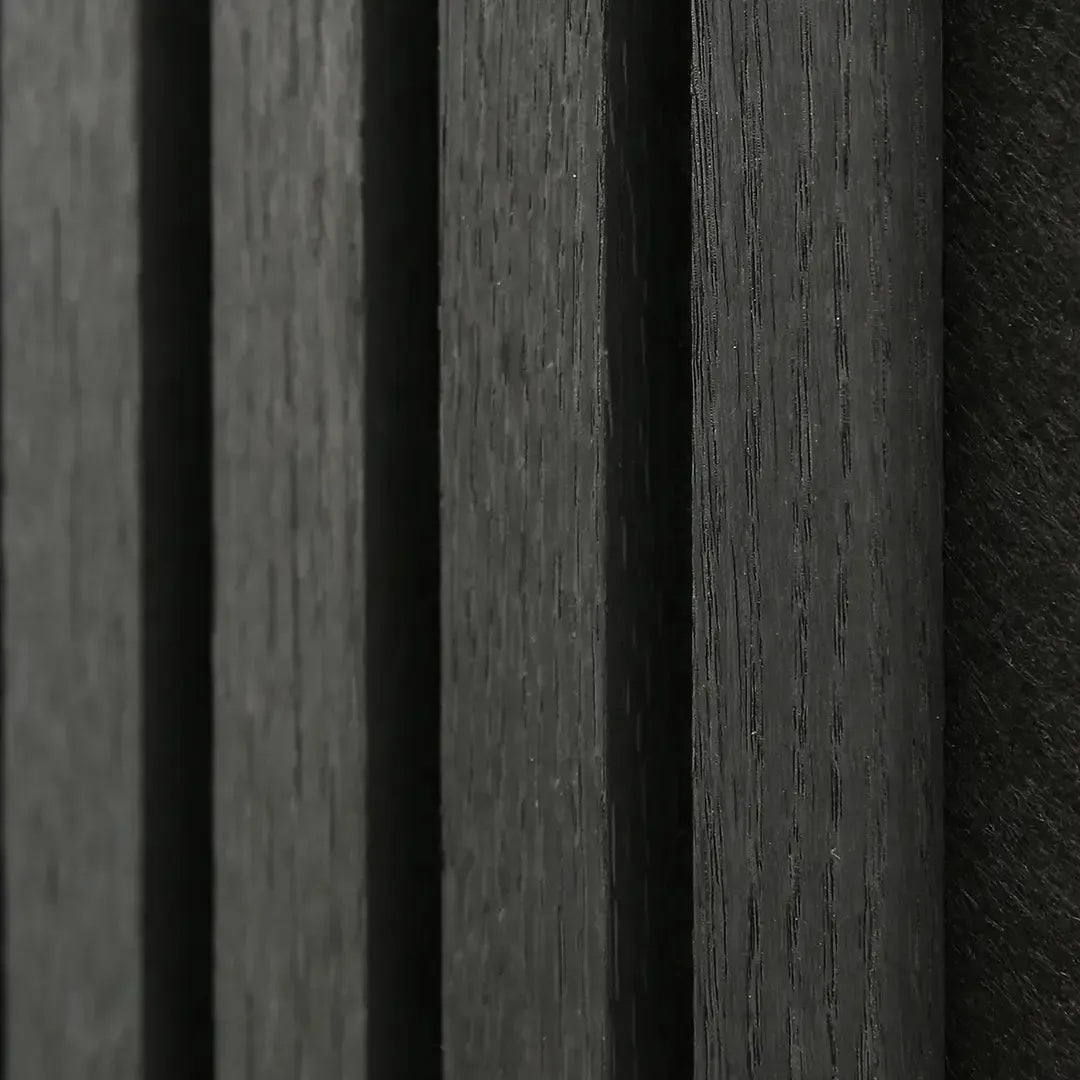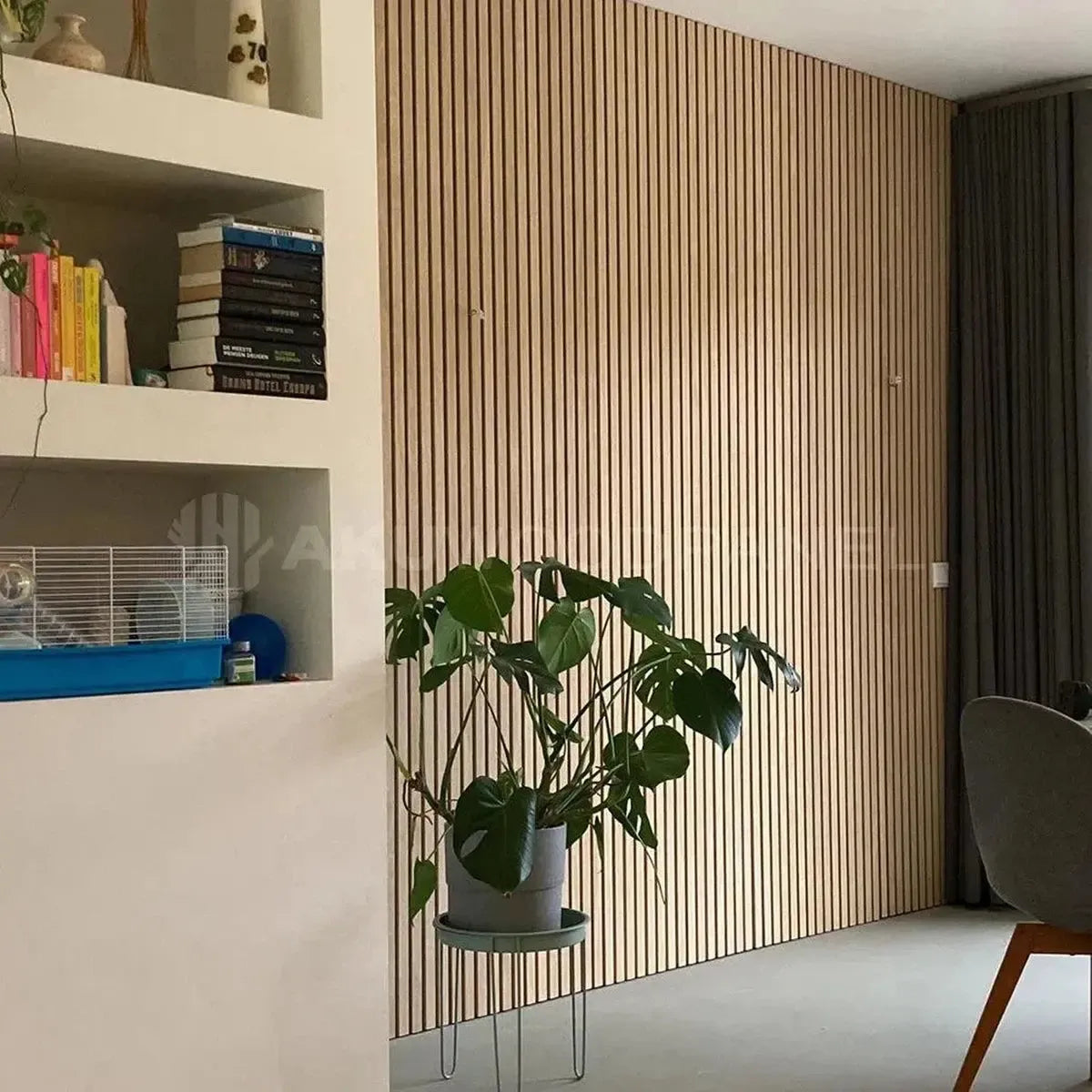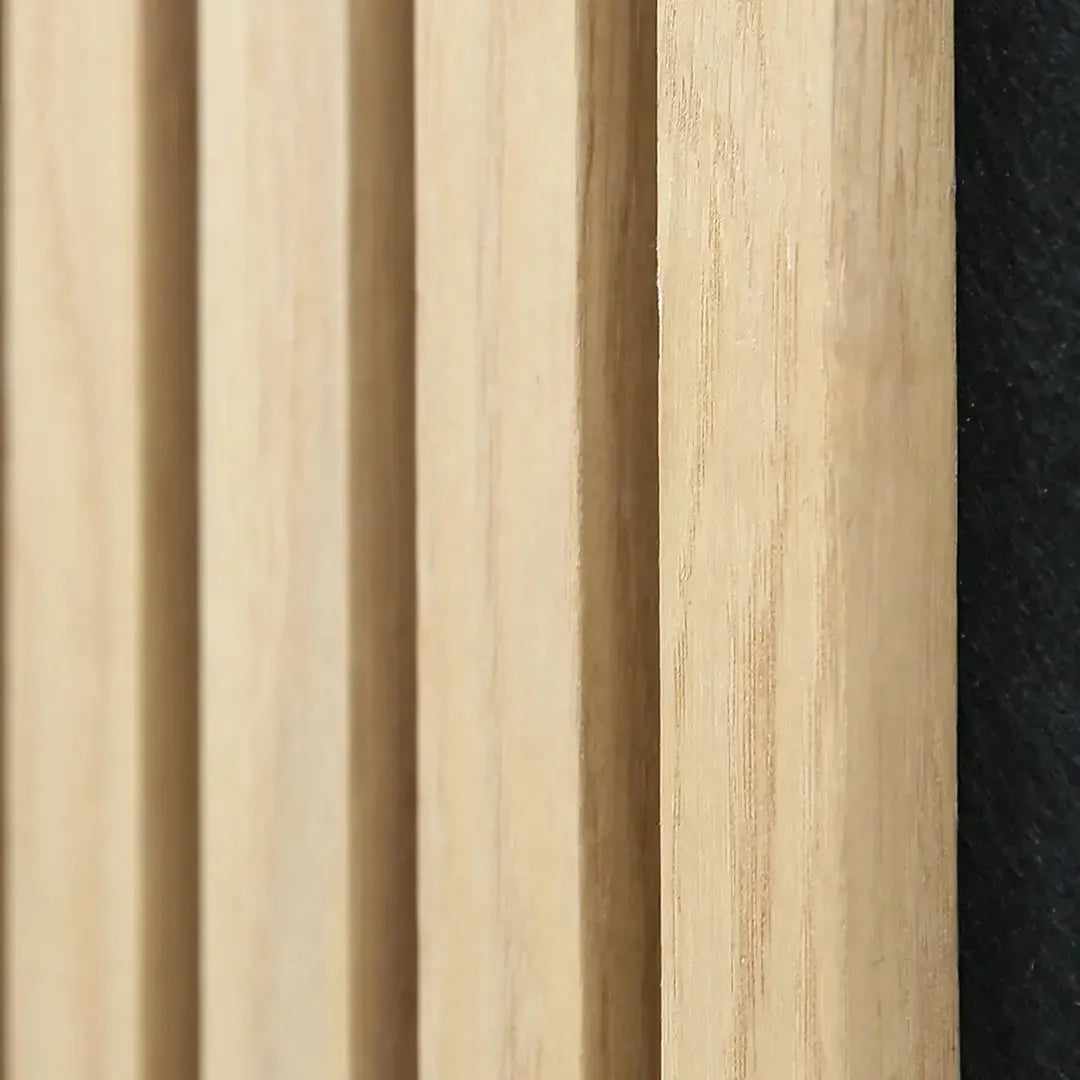
Calculating the NRC rating for a room means measuring how much sound each surface absorbs, then averaging that against total surface area to see if you're actually solving an echo problem or just guessing. Most people buy acoustic wood panels based on looks and hope for the best — this guide gives you the actual math.
- NRC rating calculation averages absorption coefficients at 250Hz, 500Hz, 1000Hz and 2000Hz, rounded to the nearest 0.05.
- A 12x14 ft room with hard surfaces often sits near 0.07 average NRC — treat 15-20% of wall area to hit 0.20-0.25.
- Felt-backed acoustic slat panels typically publish NRC ratings in the 0.70-0.90 range versus 0.05 for bare drywall.
- Sabine's formula (RT60 = 0.049V / total sabins) confirms whether your panel count actually shortens reverberation time in 2026 rooms.
Why This Math Actually Matters
An echoey living room, a home office where every phone call sounds like a tunnel, a restaurant dining room where nobody can hear the person across the table — all three come down to one number: the room's average NRC, or Noise Reduction Coefficient. NRC measures the fraction of sound energy a surface absorbs versus reflects, on a scale from 0 (fully reflective, like glass or tile) to 1.0 (fully absorptive).
Most rooms built with drywall, hardwood, and glass sit between 0.05 and 0.15 average NRC. That's why they echo. Acoustic wood panels with felt backing exist specifically to pull that average up without turning a room into a recording studio. The calculation tells you exactly how much panel coverage gets you there — not a guess, a number.
What You'll Need
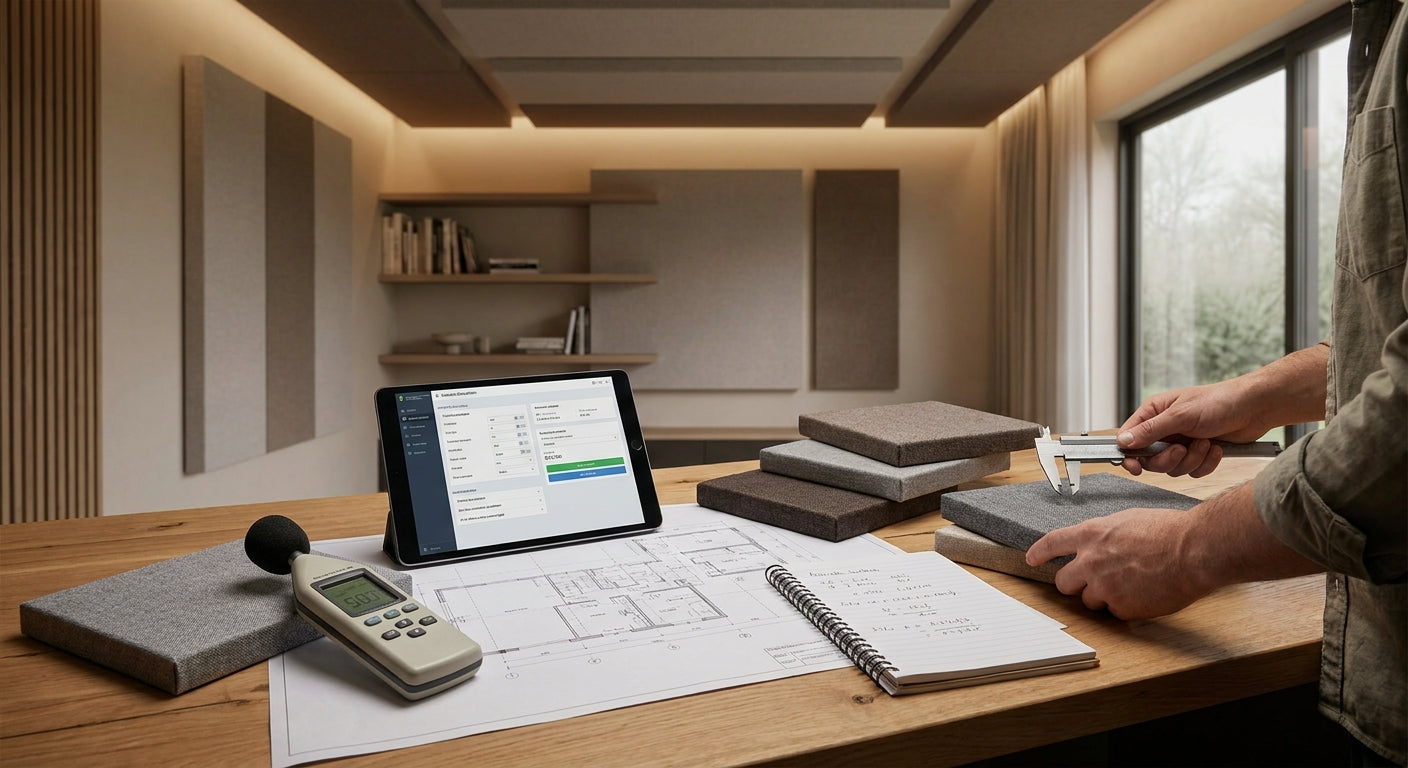
- A tape measure or laser measure (room length, width, ceiling height)
- A calculator or spreadsheet
- NRC values for your existing surfaces (drywall ≈ 0.05, hardwood floor ≈ 0.05-0.10, carpet ≈ 0.30, glass ≈ 0.03-0.05 — manufacturer spec sheets have exact figures)
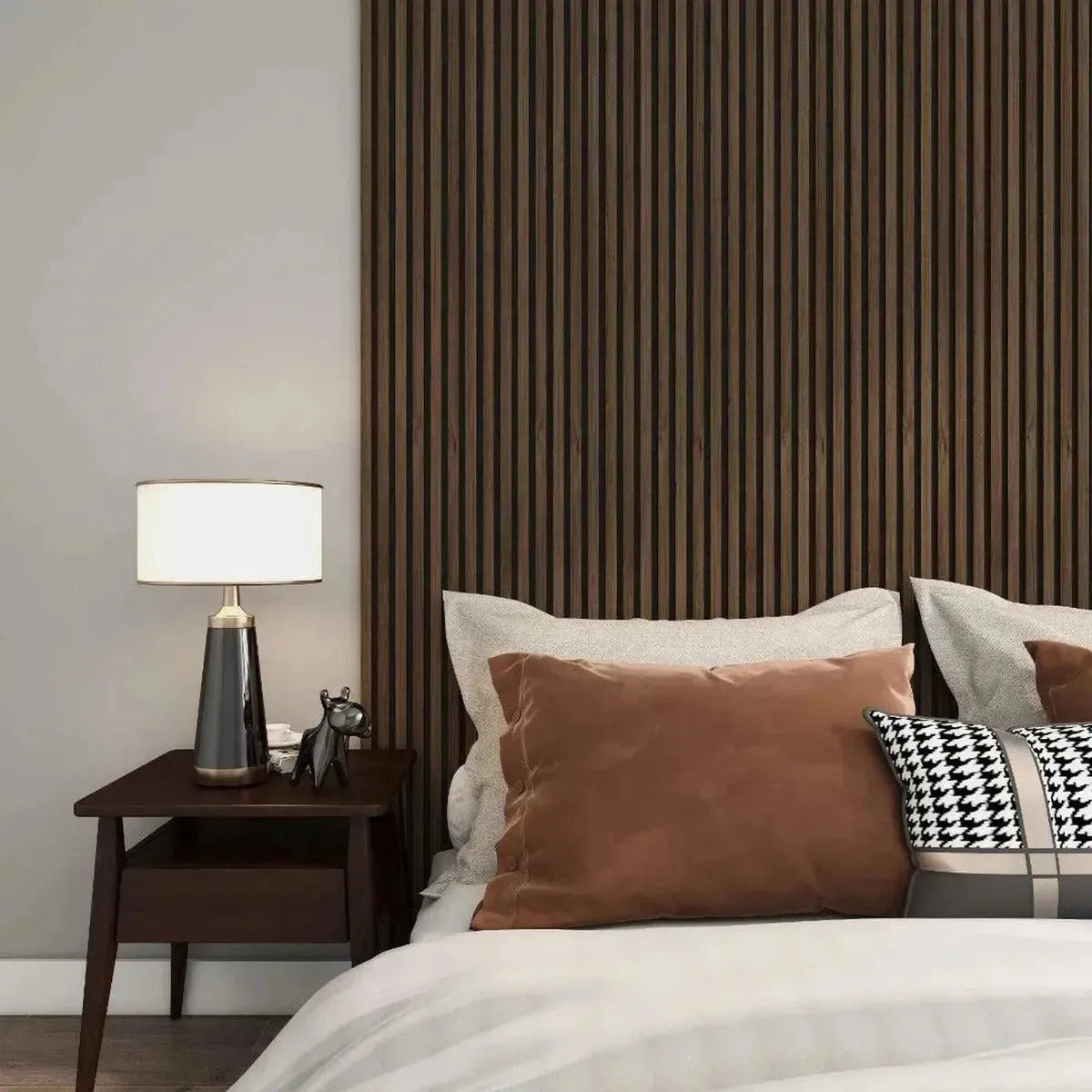
- The published NRC rating for the acoustic panel you're considering, such as felt-backed acoustic slat wall panels in natural oak
- A target NRC range for your room type (living rooms and bedrooms typically aim for 0.20-0.30 average; home theaters and studios go higher)
- 15-20 minutes, no tools beyond the above
The Steps
1. Measure total surface area
Measure length, width, and ceiling height, then calculate floor, ceiling, and wall area separately. For a 12 ft x 14 ft room with a 9 ft ceiling: floor = 168 sq ft, ceiling = 168 sq ft, walls = 2 x (12+14) x 9 = 468 sq ft. Total surface area = 804 sq ft.
Skipping this step is the single biggest reason NRC math goes wrong — people estimate wall area instead of measuring it, and the error compounds through every later calculation.
2. Assign an NRC value to every existing surface
List every surface material in the room and its published or estimated NRC: hardwood floor (0.05), painted drywall walls (0.05), drywall ceiling (0.05), one window (0.03). Manufacturer cut sheets list tested NRC values under ASTM C423 — use those over generic tables when you have them.
Common mistake: forgetting furniture and rugs. A large area rug can add 20-40 sabins of absorption on its own and will throw off your "before" baseline if you ignore it.
3. Calculate total absorption in sabins
Multiply each surface's area by its NRC value, then sum them. Using the room above with all-hard surfaces: (168 x 0.05) + (168 x 0.05) + (468 x 0.05) = 8.4 + 8.4 + 23.4 = 40.2 sabins.
A sabin is the unit of absorption — one square foot of a perfectly absorptive surface equals one sabin. This total is what you're trying to raise.
4. Calculate the room's current average NRC
Divide total absorption (sabins) by total surface area. In this example: 40.2 / 804 = 0.05 average NRC. That's a hard, reflective room — the kind that produces noticeable echo and makes conversations across the room difficult to follow.
Anything under 0.10 average NRC in a living space usually means visible slap-back echo and TV dialogue that's hard to parse. This is your starting point, not your goal.
5. Set a target average NRC for the room type
Living rooms and bedrooms generally target 0.20-0.25 average NRC for comfortable speech clarity. Open offices and dining rooms often aim closer to 0.25-0.30 given denser occupant noise. Recording spaces and home theaters go higher still.
Pick the low end of the range first — you can always add panel coverage later, but over-treating a room kills its natural warmth and makes it sound dead.
6. Calculate additional sabins needed
Subtract current absorption from the target: (target NRC x total area) - current sabins. For a 0.20 target: (0.20 x 804) - 40.2 = 160.8 - 40.2 = 120.6 additional sabins required.
This number is the whole point of the exercise — everything before it was setup, everything after it is coverage math.
7. Convert sabins to panel coverage
Divide additional sabins needed by the difference between the panel's NRC and the surface it's replacing. Felt-backed slat panels commonly publish NRC ratings around 0.85; replacing drywall (0.05) gives a delta of 0.80. Coverage needed = 120.6 / 0.80 = 150.75 sq ft of paneled wall.
Round up and add a 10% waste factor for cuts around outlets, corners, and trim — that puts you closer to 166 sq ft of actual panel purchase. Check exact per-panel square footage against the wall panel coverage calculator before ordering.
8. Verify with the reverberation time formula
Sabine's equation confirms the math: RT60 = 0.049 x room volume (cu ft) / total sabins. Room volume here is floor area x height = 168 x 9 = 1,512 cu ft. Before treatment: 0.049 x 1512 / 40.2 = 1.84 seconds. After adding 120.6 sabins (total = 160.8): 0.049 x 1512 / 160.8 = 0.46 seconds.
That drop from 1.84 to 0.46 seconds is the difference between an echoey room and a comfortable one — most living rooms sound natural between 0.4 and 0.6 seconds RT60.
Troubleshooting
- Math says you need coverage but the room still echoes — you likely under-measured wall area or used generic NRC values instead of manufacturer-tested ones. Re-measure and pull the actual spec sheet.
- Panels installed but bass rumble persists — NRC is a mid-to-high frequency average (250Hz-2000Hz); it doesn't address low-frequency boom the way bass traps do. Different problem, different fix.
- Calculated coverage feels too low to matter — you probably targeted the low end of the NRC range. Bump the target to 0.25-0.30 and recalculate additional sabins.
- Room sounds dead after installation — you over-treated. Average NRC above 0.35 in a living space removes too much natural reflection; consider removing a panel section.
- Furniture and rugs weren't factored in — recalculate current absorption including soft furnishings before ordering panels; you may need less coverage than the first pass suggested.
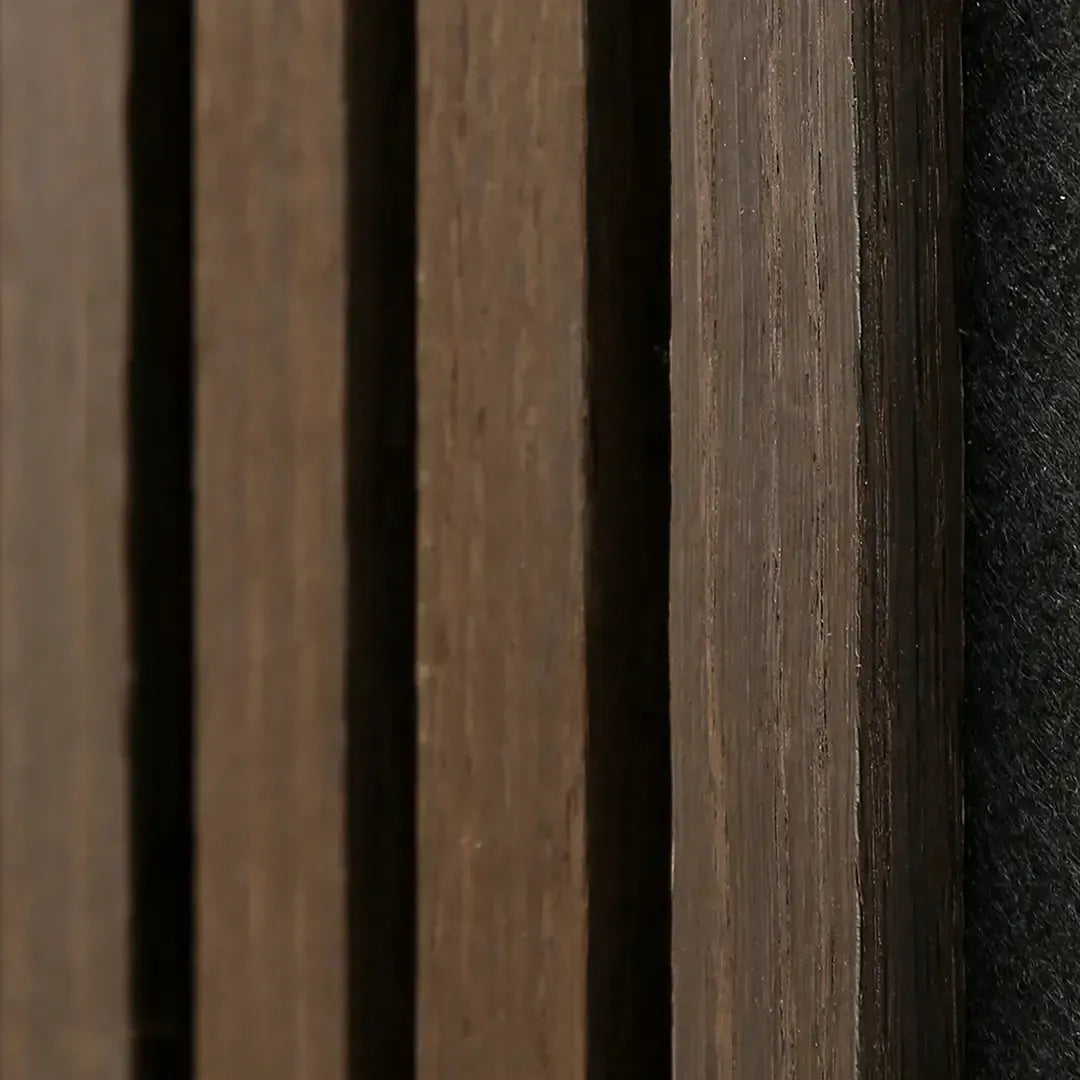
- Manufacturer NRC values differ between similar-looking panels — felt backing versus no backing changes NRC dramatically. A non-felt fluted or 3D panel can sit well under 0.30 NRC even though it looks similar to a felt-backed slat panel.
Tools and Resources
- Manufacturer NRC spec sheets for any panel under consideration
- A room sketch with measured dimensions (not eyeballed)
- Wall panel quantity calculator to convert square footage into box counts
- Felt-backed slat panel samples to confirm real-world absorption before ordering a full room's worth


What to Do Next
Once your coverage number is set, confirm the panel color and finish against your room before ordering the full run — Akuwood Panel lists current NRC specs on every acoustic slat product page, so you can plug exact figures back into the sabins formula instead of using estimates.
FAQ
What is a good NRC rating for a living room in 2026?
A living room typically targets 0.20-0.25 average NRC for comfortable speech clarity without sounding acoustically dead. Rooms under 0.10 average NRC usually have noticeable echo; above 0.35 starts to feel muffled.
How is NRC rating calculated?
NRC is the average of a material's absorption coefficients at 250Hz, 500Hz, 1000Hz and 2000Hz, rounded to the nearest 0.05. For a whole room, average NRC equals total absorption in sabins divided by total surface area.
Is a higher NRC always better?
No. Once a room passes roughly 0.30-0.35 average NRC it can sound flat and lifeless. Match the target NRC to the room's use rather than maximizing it.
How many acoustic panels do I need to reach a target NRC?
Subtract current absorption in sabins from your target sabins, then divide by the difference between the panel's NRC and the surface it replaces. A 12x14 ft room commonly needs 130-170 sq ft of felt-backed panel to move from 0.05 to 0.20 average NRC.
Does felt backing increase a panel's NRC rating?
Yes. Felt-backed acoustic slat panels commonly publish NRC ratings around 0.70-0.90, while the same slat profile without felt backing can sit well under 0.30.
What's the difference between NRC and STC?
NRC measures how much sound a surface absorbs inside a room to reduce echo; STC measures how much sound a wall assembly blocks from passing between rooms. They solve different problems and aren't interchangeable.
How much does acoustic panel installation cost for a room in 2026?
Cost depends on square footage needed and finish chosen; check current per-panel pricing on the product page once your coverage calculation is finished.
Can I calculate NRC without a spec sheet?
You can estimate using standard published values for common materials like drywall, carpet and hardwood, but manufacturer-tested NRC figures under ASTM C423 give a far more accurate coverage calculation.
One Last Thing
The reverberation time swing in the worked example above — 1.84 seconds down to 0.46 seconds — came from treating roughly 20% of total wall area, not the whole room. Most people over-order panels because they assume full wall coverage is required; the sabins math almost always says otherwise.


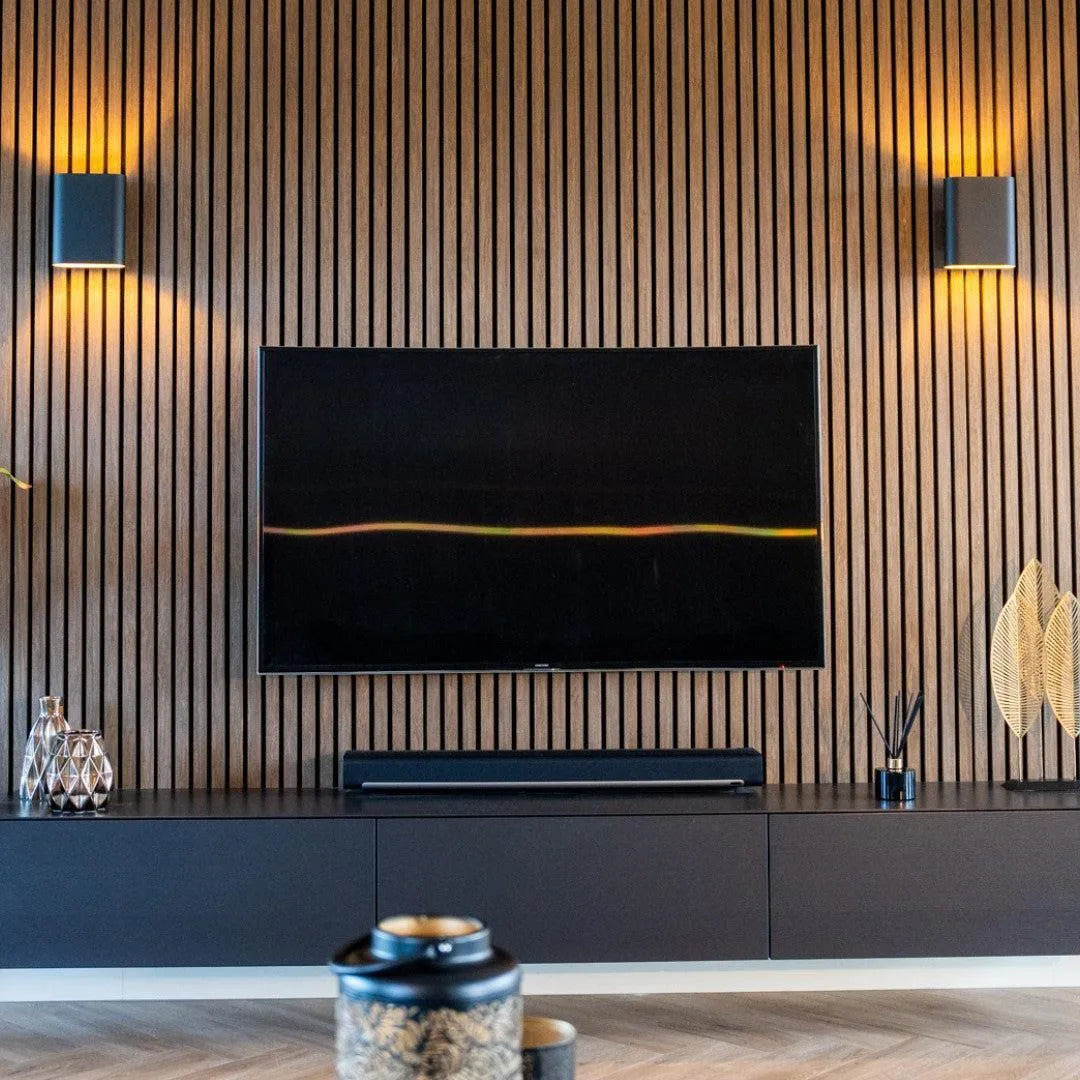
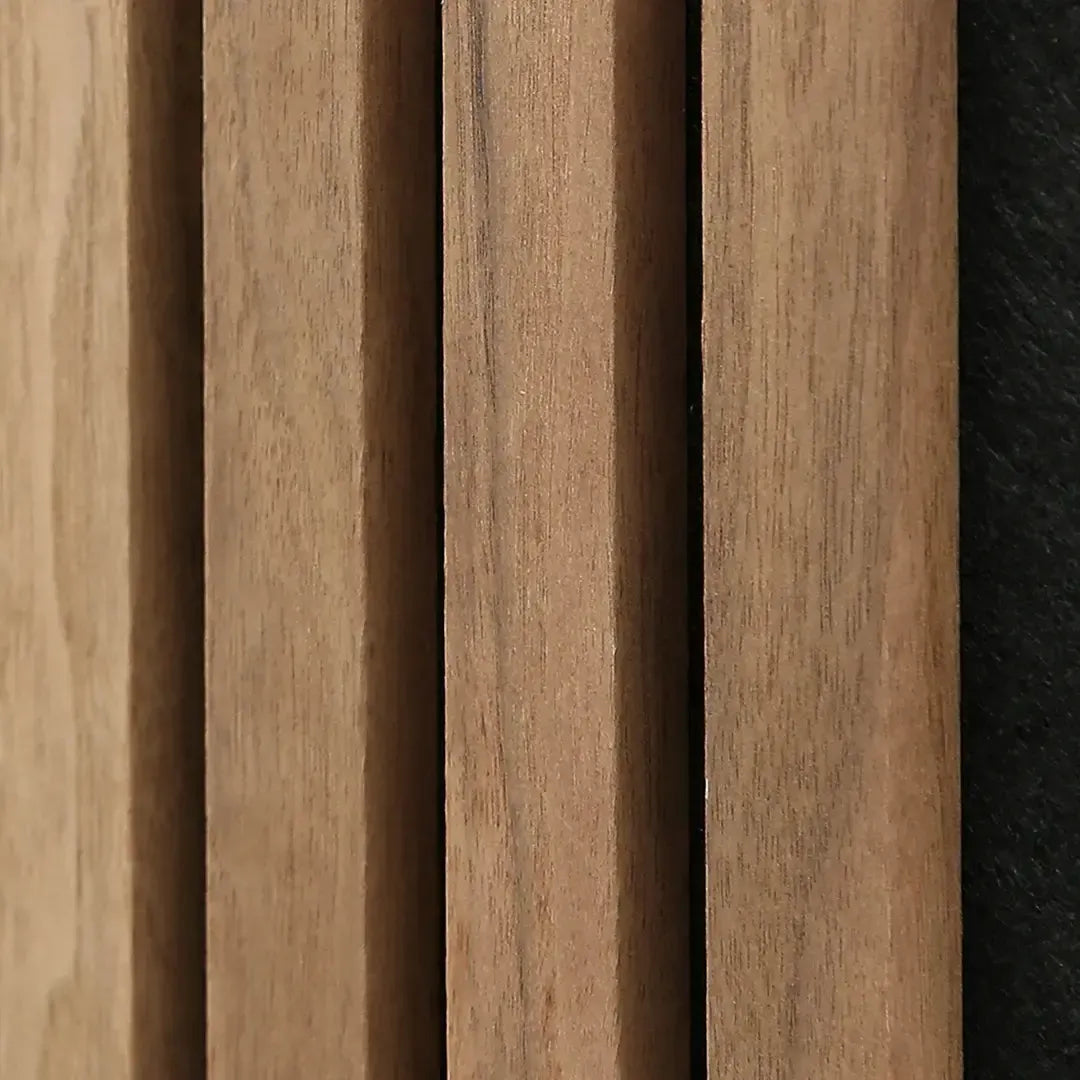
 Better performance and aesthetic appeal
 In Stock