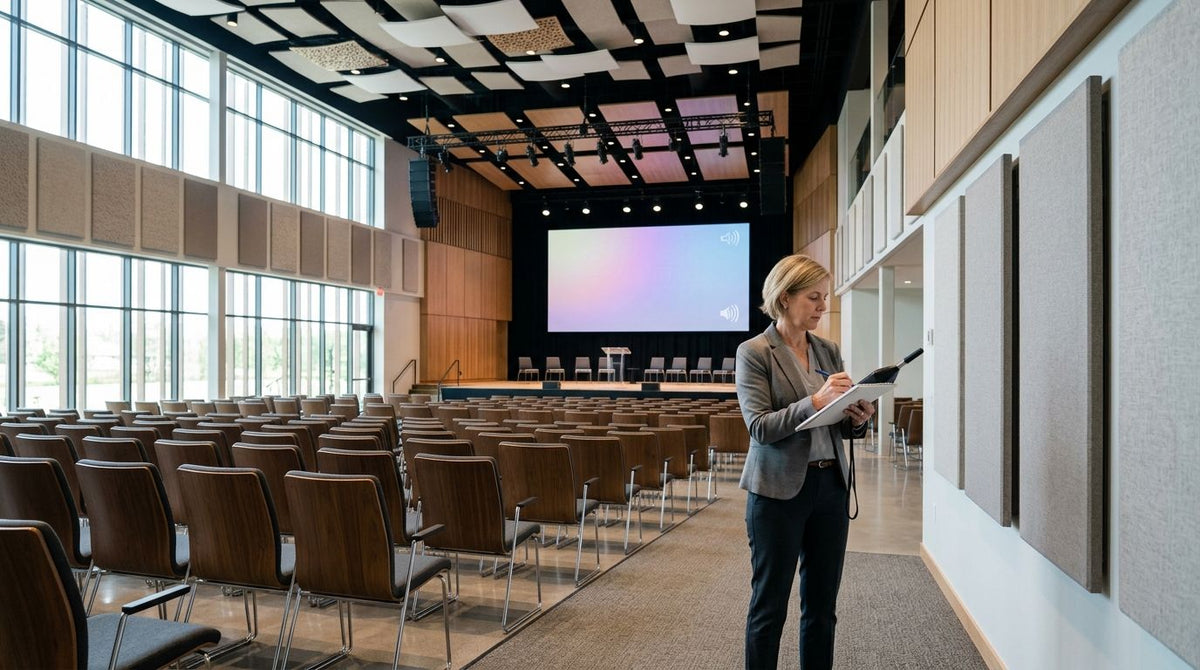
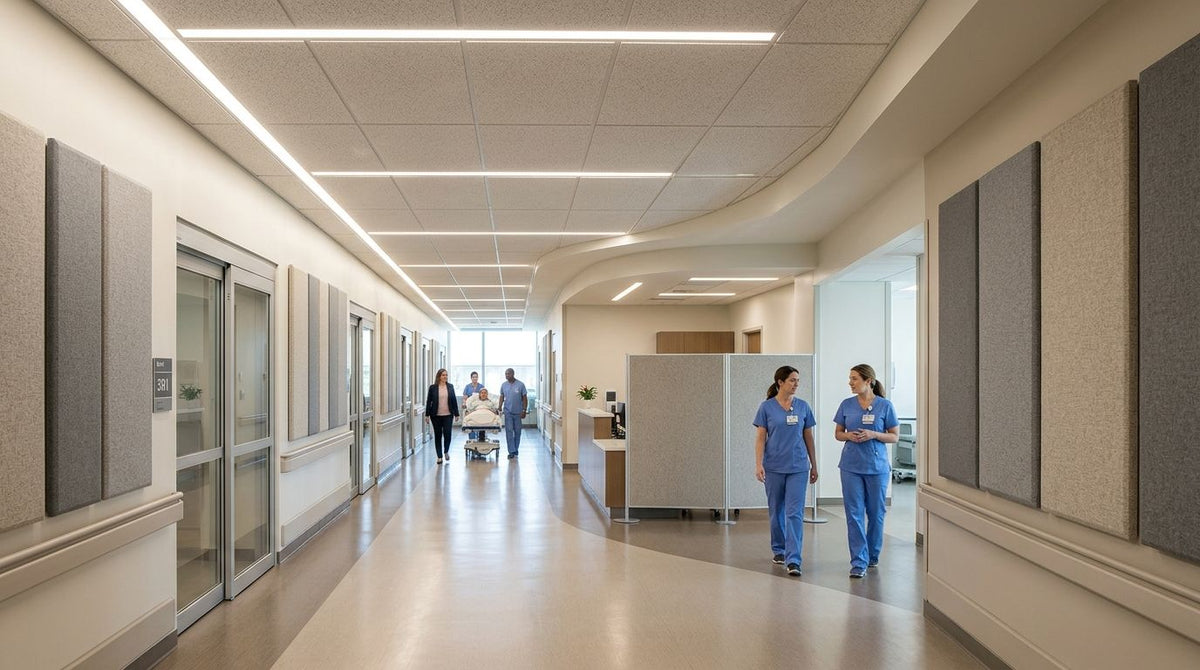
Corporate town hall spaces fail acoustically for one reason: open volume plus hard surfaces plus a live mic. Acoustic treatment for a town hall space means covering roughly 20-30% of the room's hard wall or ceiling area with sound-absorbing panels, placed at first reflection points and the rear wall, to cut reverberation enough that a speaker at a podium sounds clear to the back row and to remote employees on a video feed.
- Acoustic treatment for a town hall space works when 20-30% of hard wall area gets covered with NRC 0.75+ panels.
- Glass walls, concrete floors, and 12+ foot ceilings are the three biggest reverberation drivers in 2026 corporate town halls.
- Akuwood Panel's acoustic slat wall panels carry an NRC of 0.75, enough to treat speech-heavy meeting spaces.
- Panel placement at first reflection points beats spreading coverage evenly across the whole room.
- A basic clap test or speech walkthrough after install tells you if the room still has a slap-back echo.
Why this matters
Town halls are built to look impressive, not to sound good. Glass partitions, polished concrete, exposed ceiling decks, and a 20-foot ceiling height create a reverberant box where speech smears into itself before it reaches the last row of chairs. Add a live microphone and a video conferencing feed, and any echo gets amplified twice: once in the room, once for remote attendees straining to parse garbled audio.
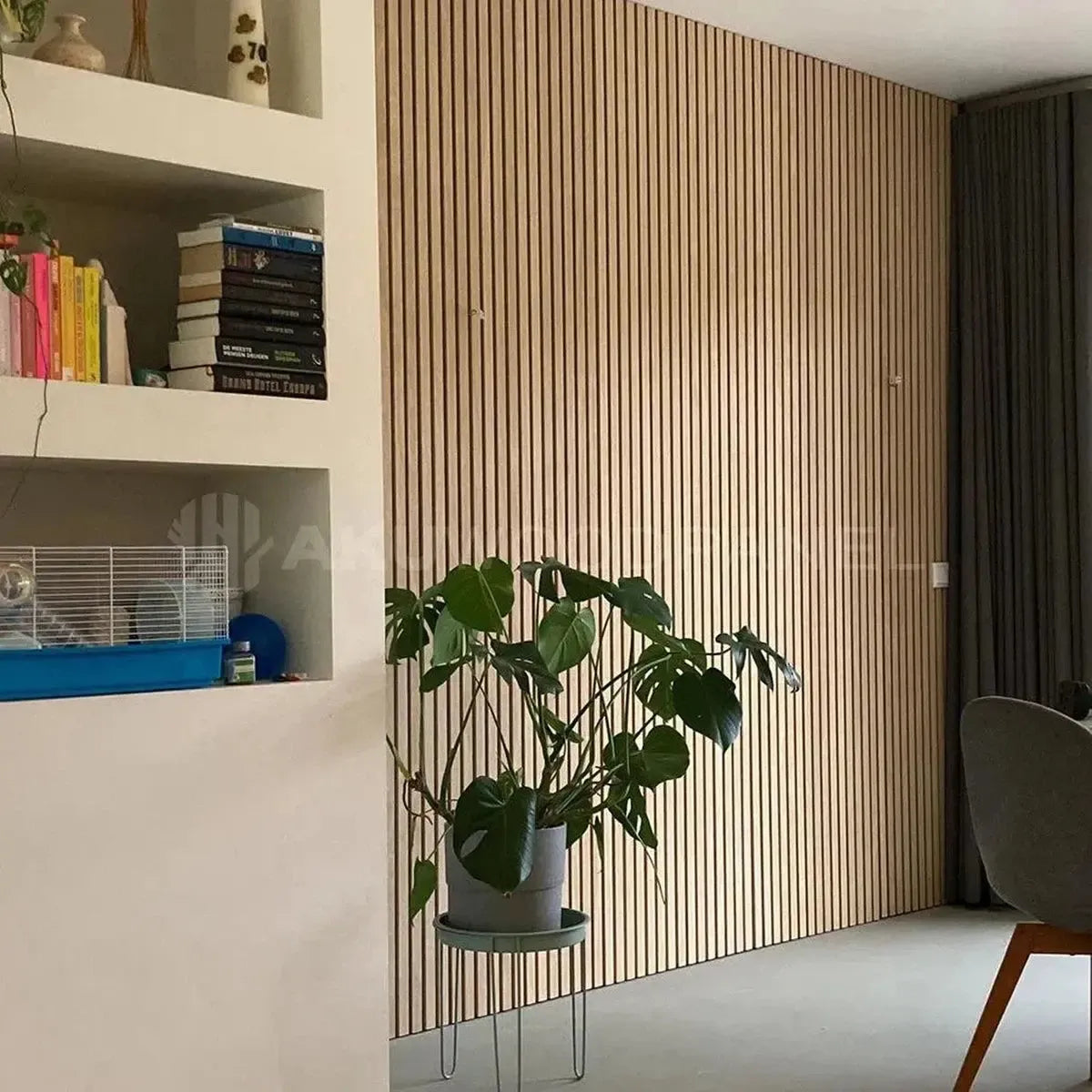
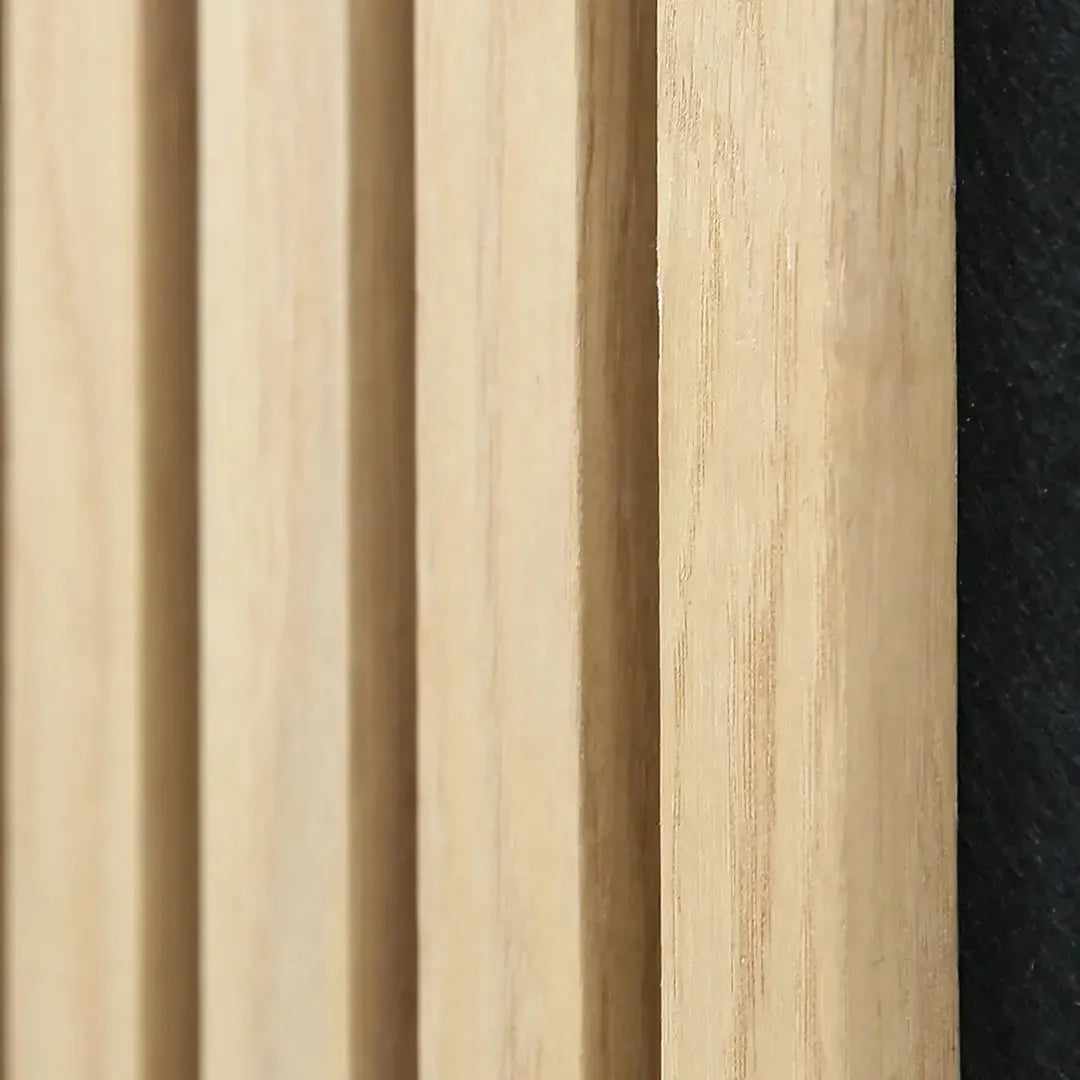
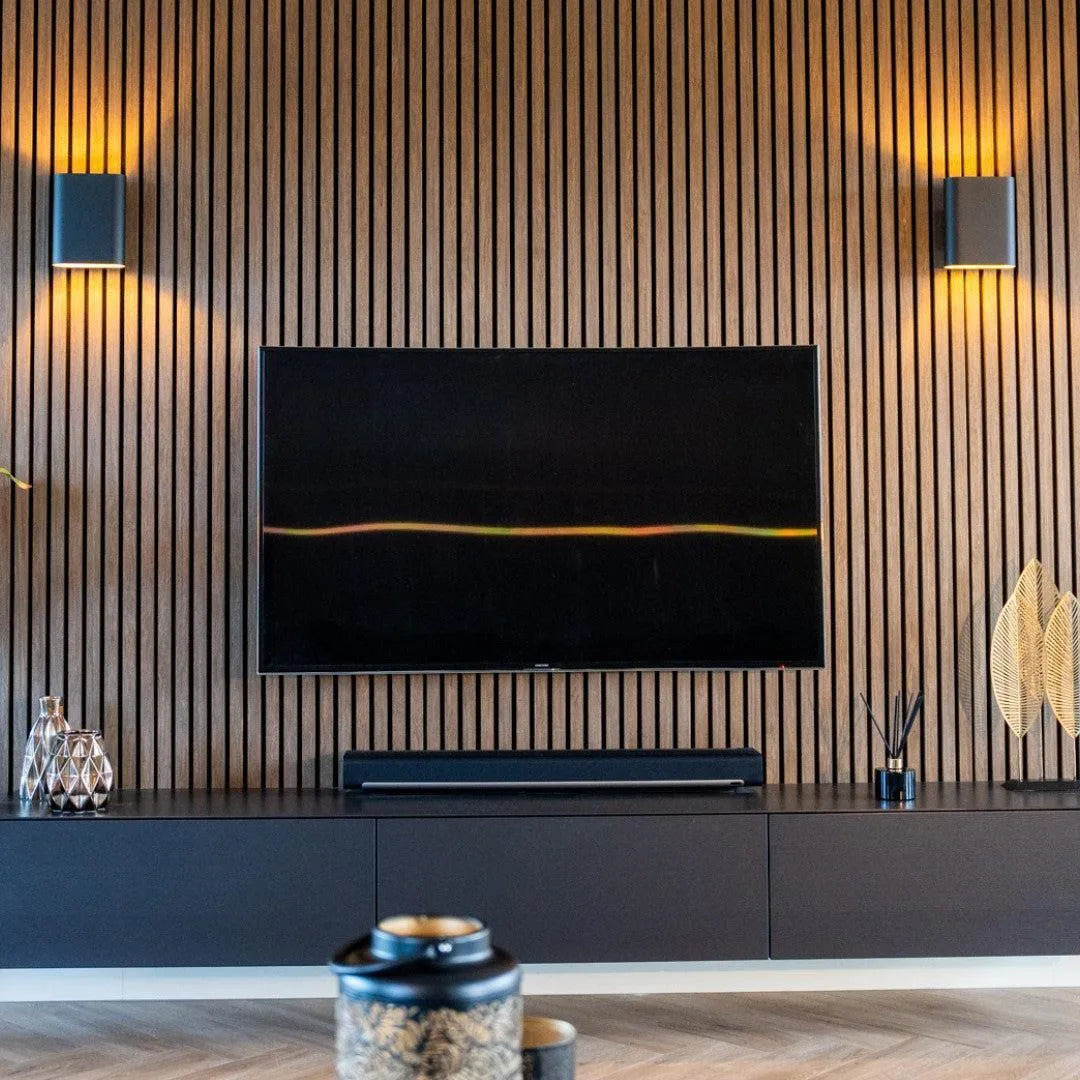
The fix isn't a bigger PA system. Louder speech in an untreated room just produces louder echo. The fix is absorption, and a natural oak acoustic slat wall panel rated at NRC 0.75 does more to fix intelligibility in a 2026 renovation than any AV upgrade on its own.
How to plan acoustics for a corporate town hall space
Follow this sequence rather than guessing at panel count:
- Measure the room. Record floor area, ceiling height, and note every hard surface: glass, drywall, concrete, tile.
- Identify the noise sources. HVAC hum, foot traffic from an adjacent lobby, and AV equipment fans all add to the baseline noise floor before anyone speaks.
- Target 20-30% hard-surface coverage. This is the standard acoustic-treatment rule of thumb for cutting a room's reverberation time meaningfully without over-treating it into a dead, muffled space.
- Place panels at first reflection points. These are the wall and ceiling spots where sound from the podium bounces directly toward a listener's ear — treating them does more per square foot than blanket coverage.
- Treat the rear wall. Sound that reaches the back of a town hall space and bounces straight back toward the stage causes flutter echo that a microphone picks up clearly.
- Walk the room and talk. A basic clap test or a five-minute speech test from the podium after install tells you immediately whether slap-back echo is gone.
For a step-by-step breakdown of turning square footage into a panel count, see how to calculate acoustic panel coverage for a room.
Matching panel type to a town hall layout
| Panel type | Best for | NRC | Verdict |
|---|---|---|---|
| Acoustic slat wall panel | Rear and side walls behind seating | 0.75 | Buy for primary absorption |
| Hexagon acoustic panel | Feature wall behind the stage or podium | 0.75 | Buy for a treated focal wall |
| Fluted wall panel | Foyer or entrance zones outside the main hall | Lower absorption than felt-backed slat | Hold for secondary zones only |
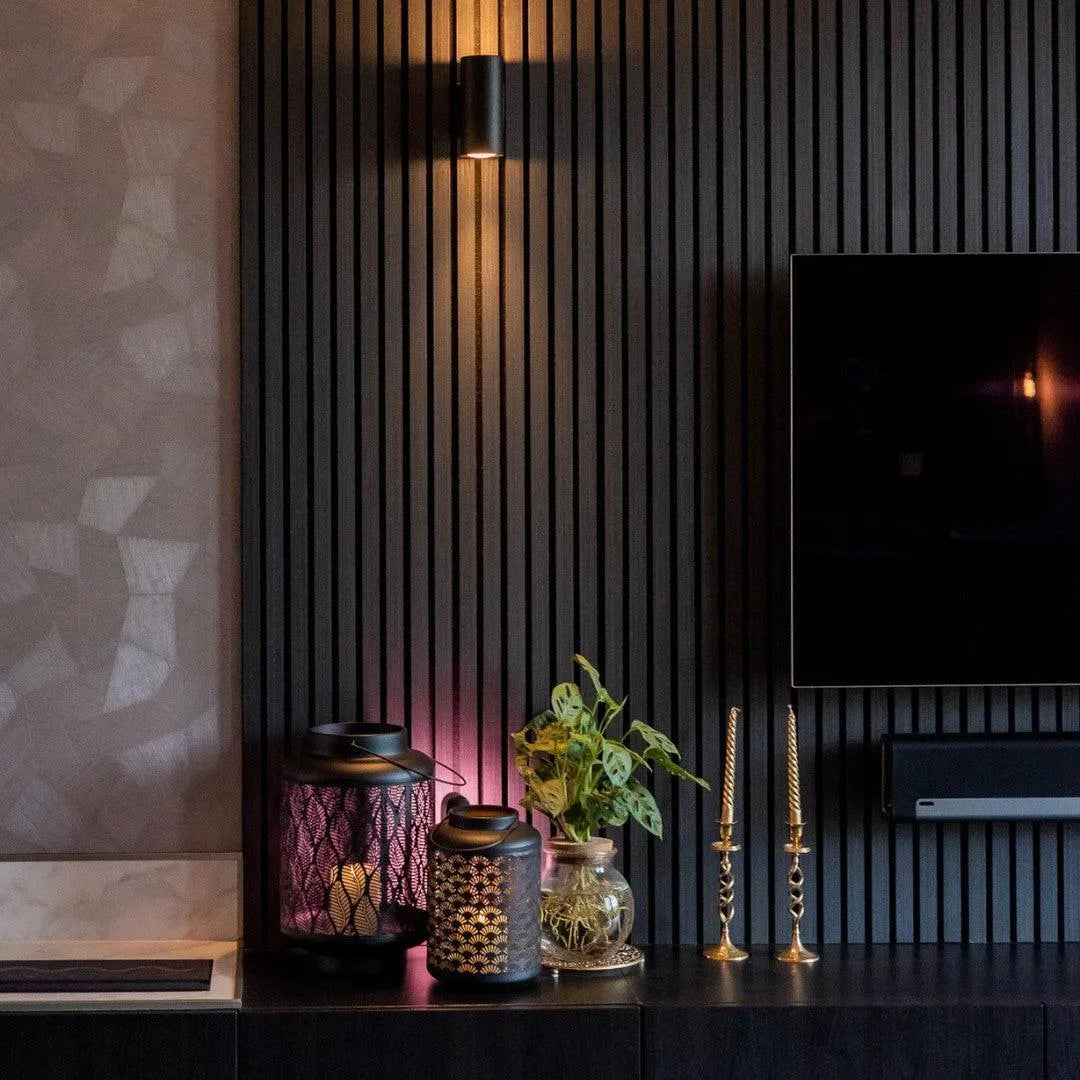
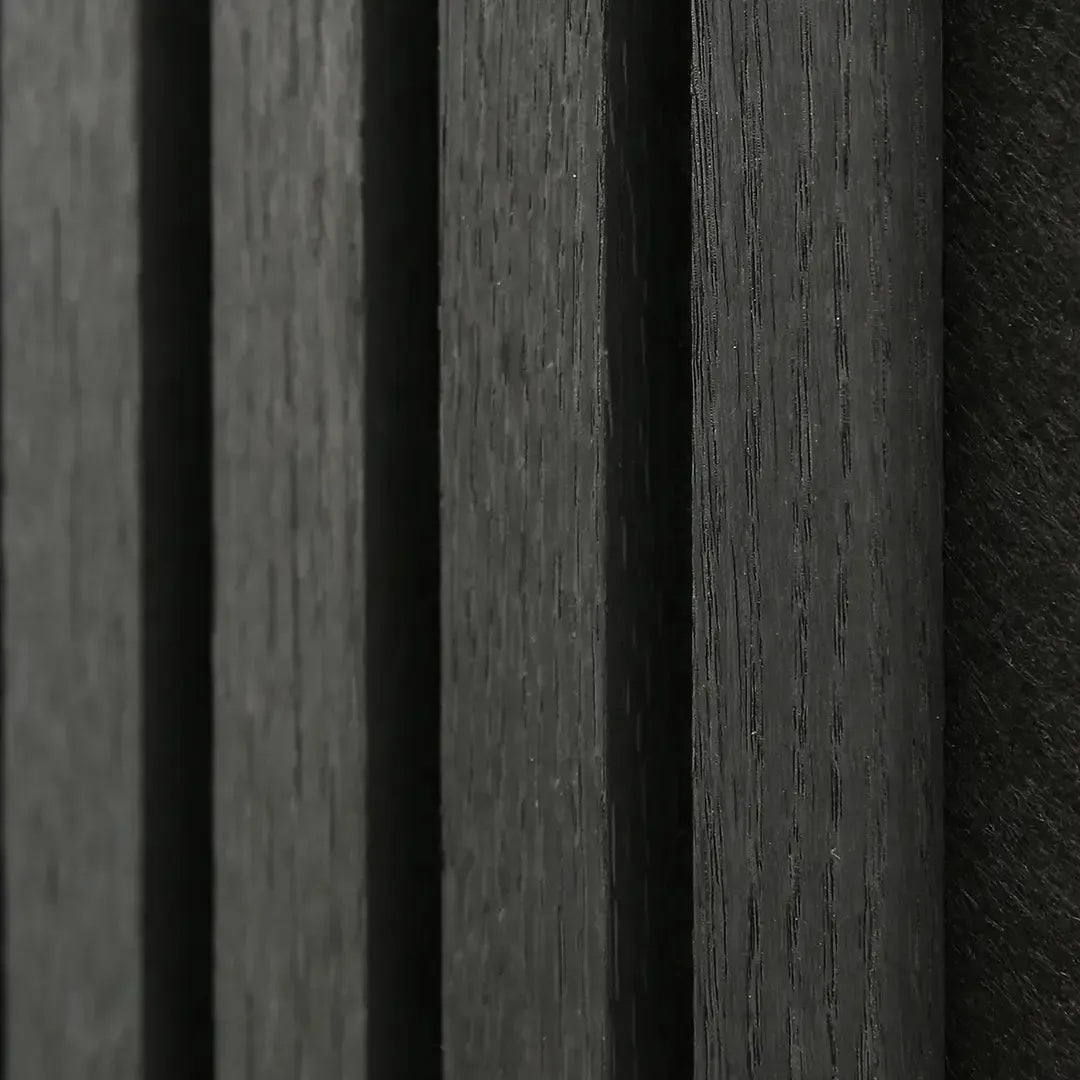
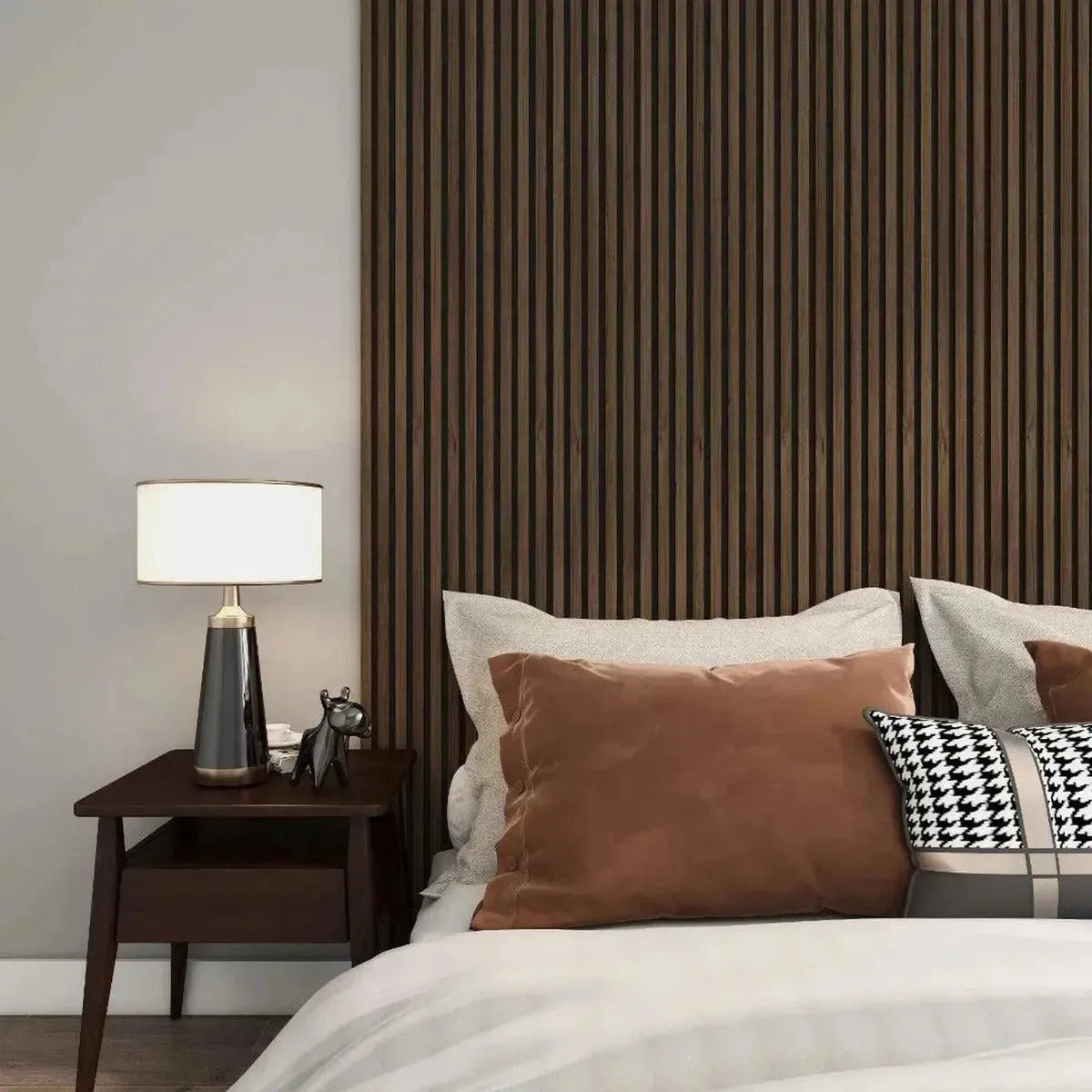
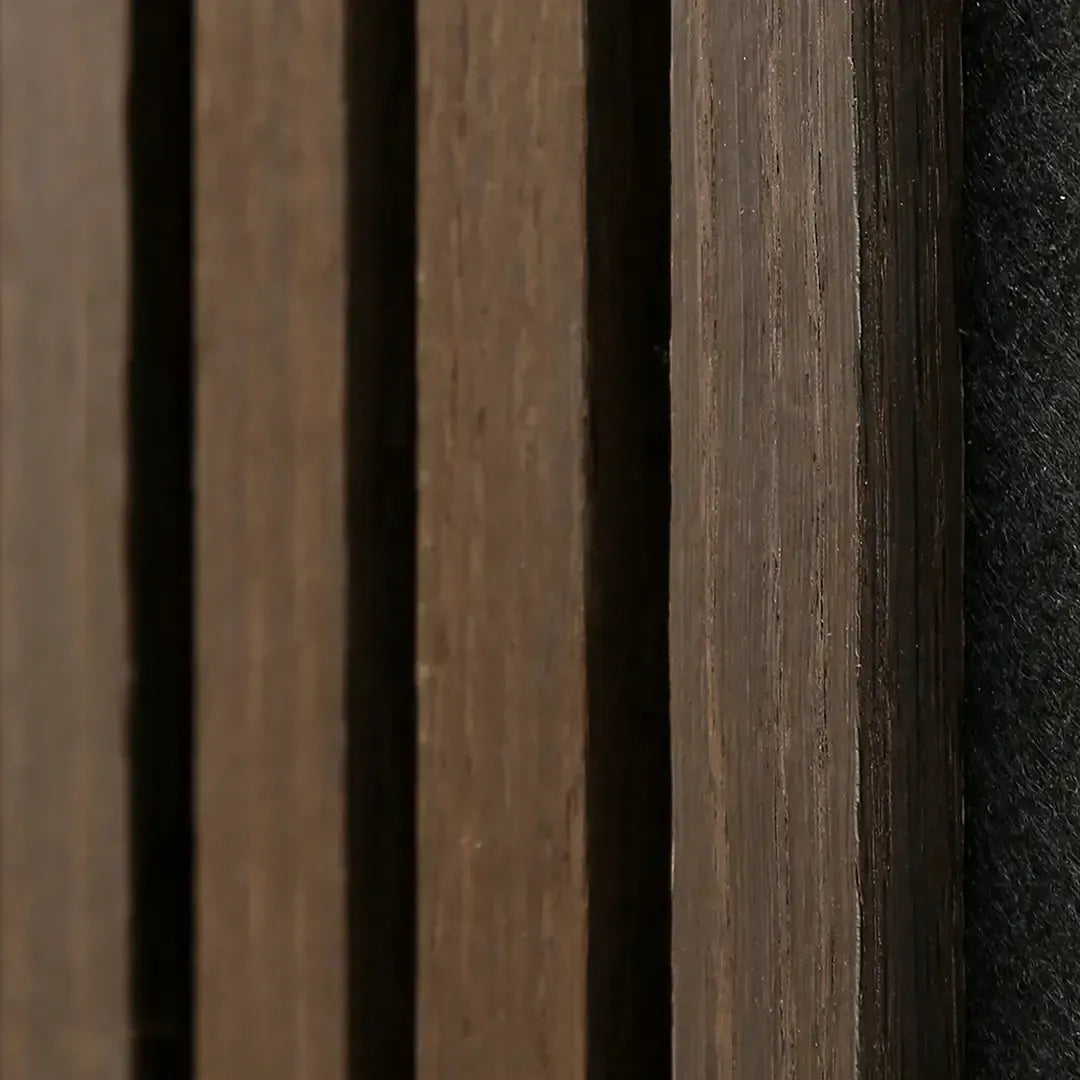
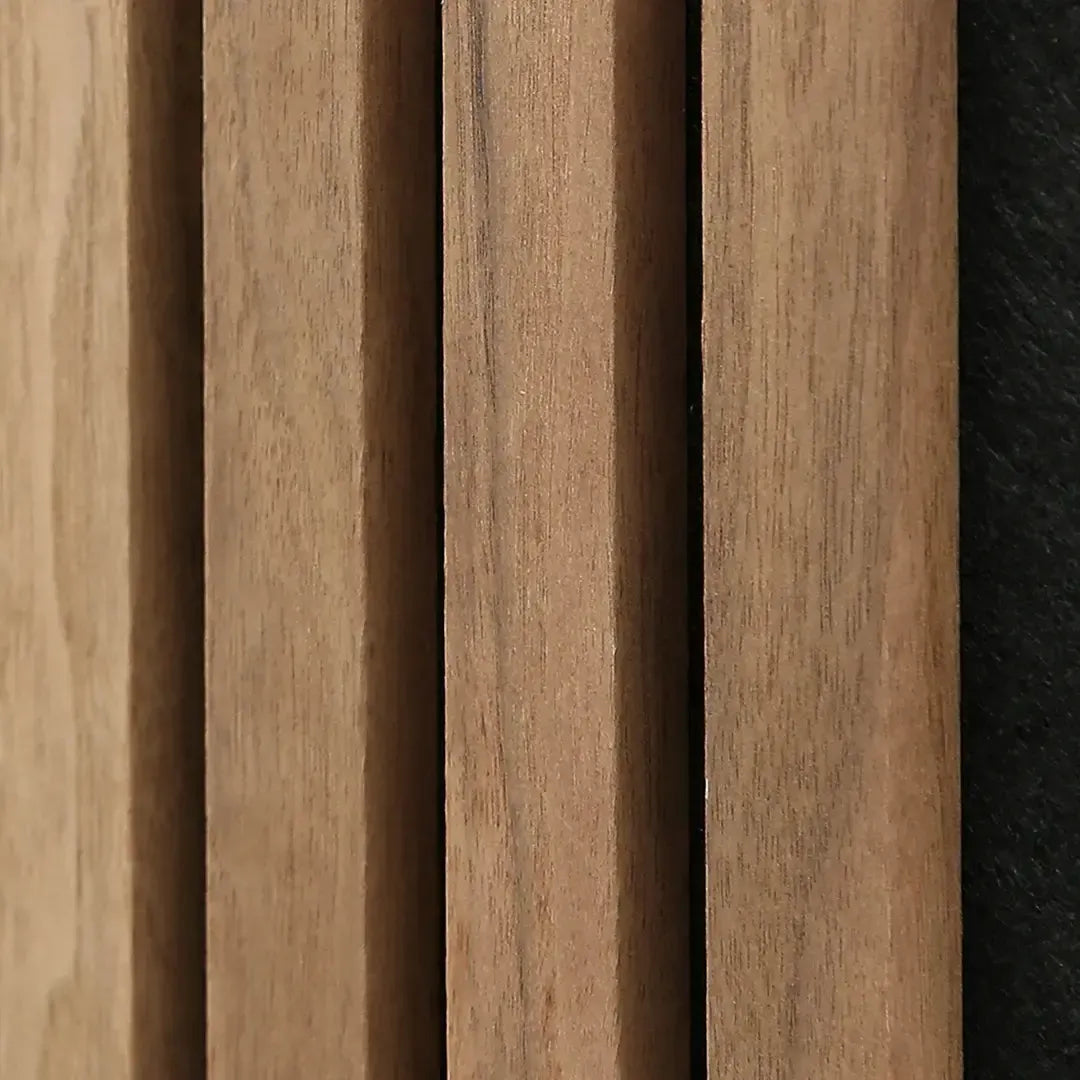
Slat panels with a felt backing, like the smoked oak acoustic slat wall panel, carry the highest absorption of the line at NRC 0.75 and cover large flat runs efficiently. Hexagon panels do the same absorption job in a shape that reads as a design feature, which matters when the town hall doubles as the space executives walk visitors through.
Why acoustic needs vary by town hall
No two corporate town halls need the same panel count. The variables that move the number:
- Ceiling height. A 20-foot ceiling holds more reverberant volume than a 10-foot drop ceiling and needs proportionally more absorption.
- Glass and hard flooring ratio. Rooms with floor-to-ceiling glass and polished concrete reflect sound harder than rooms with carpet and drywall.
- Seating capacity. More chairs means more bodies absorbing sound naturally when full, but an empty room during rehearsal will sound far livelier.
- AV and mic setup. A single podium mic behaves differently than a lapel mic plus a wireless handheld passed through the audience.
- Adjacent noise. A town hall next to an open-plan office or a lobby inherits HVAC and foot-traffic noise the panels can't fully solve on their own.
- Use case beyond all-hands meetings. A room also used for training sessions or client presentations needs more consistent speech clarity than one used quarterly.
Rooms that double as flexible event space have their own planning logic — see planning acoustic treatment for a multi-purpose hall for the version of this problem that includes stacking chairs and moving stages.


A town hall with floor-to-ceiling glass and a 20-foot ceiling needs absorption on the rear and side walls first, not the glass itself — you can't panel over windows, so the treatable wall area has to do more work.
Related questions
How many acoustic panels do I need for a town hall space?
The panel count depends on covering 20-30% of the room's hard wall area, which varies by square footage, ceiling height, and how much glass or concrete is already in the room. A 2,000-square-foot town hall with a 15-foot ceiling and two glass walls typically needs more coverage than the same footprint with a lower ceiling and carpeted walls.
Do acoustic panels work in rooms with high ceilings?
Yes, acoustic panels work in high-ceiling rooms, but ceiling-mounted or clerestory-level treatment matters more as height increases because untreated upper volume keeps reflecting sound back down. A 20-foot ceiling without any high treatment will still echo even with the lower walls fully covered.
What NRC rating is good enough for a town hall?
An NRC of 0.70 or higher is generally considered strong for speech-focused spaces, and Akuwood Panel's acoustic slat and hexagon panels test at NRC 0.75. That rating means roughly three-quarters of the sound hitting the panel gets absorbed rather than reflected back into the room.
Should the stage wall or the rear wall get treated first?
The rear wall usually gets priority because it causes the flutter echo a podium microphone picks up directly, while the stage wall mainly affects how the speaker sounds to themselves. Treating both eventually matters, but budget-constrained 2026 renovations should start at the back of the room.
FAQ
How much wall coverage does a town hall space need for acoustic treatment?
Most town hall spaces need 20-30% of hard wall area covered with sound-absorbing panels to noticeably cut reverberation. Glass walls and concrete floors push that percentage toward the higher end of the range.
Are wood acoustic panels as effective as foam panels?
Felt-backed wood acoustic panels like Akuwood Panel's slat and hexagon lines test at NRC 0.75, comparable to many foam options, while adding a finished wood surface instead of exposed foam. The tradeoff is aesthetic, not primarily performance.
What's the best acoustic panel shape for a corporate town hall?
Slat wall panels work best for large flat runs along rear and side walls, while hexagon panels suit a stage-facing feature wall where the room also serves a design purpose. Both carry the same NRC 0.75 rating in Akuwood Panel's line.
Do I need acoustic treatment if the town hall has good AV equipment?
Yes, AV quality doesn't fix room acoustics; a reverberant room will still smear speech and audio pickup regardless of microphone or speaker quality. Treatment addresses the room, AV addresses signal transmission, and both matter separately.
How long does it take to plan an acoustic panel install for a town hall?
Planning typically takes one to two site visits: one to measure the room and identify reflection points, another to confirm the panel layout before ordering. Installation timelines vary by contractor and room size.
Can acoustic panels reduce noise between a town hall space and adjacent offices?
Acoustic panels reduce reverberation inside the room but don't stop sound transmission through walls to adjacent offices; that requires mass-loaded barriers or wall insulation instead. Panels and soundproofing solve different problems.
What's the difference between acoustic treatment and soundproofing?
Acoustic treatment controls how sound behaves inside a room by absorbing reflections, while soundproofing stops sound from passing between rooms. A town hall space typically needs treatment first since the goal is speech clarity, not isolation.
One last thing
The detail most planners skip in 2026: treating the room empty versus treating it full changes the math. A town hall that measures fine acoustically during a rehearsal with three people in the room will sound completely different once 150 bodies absorb sound naturally during the actual meeting. Plan panel coverage for the empty-room worst case, and a full house only improves the result.

 Better performance and aesthetic appeal
 In Stock