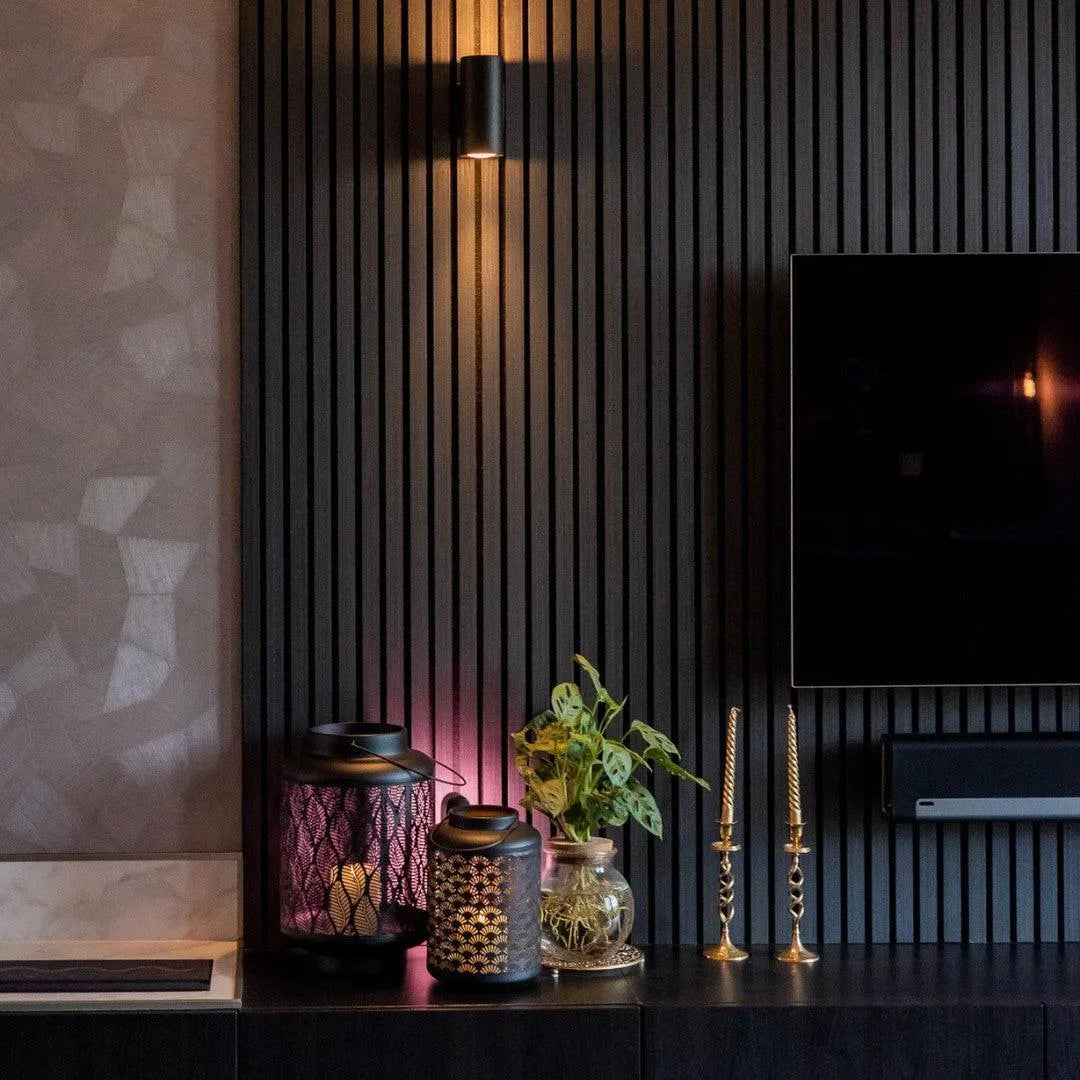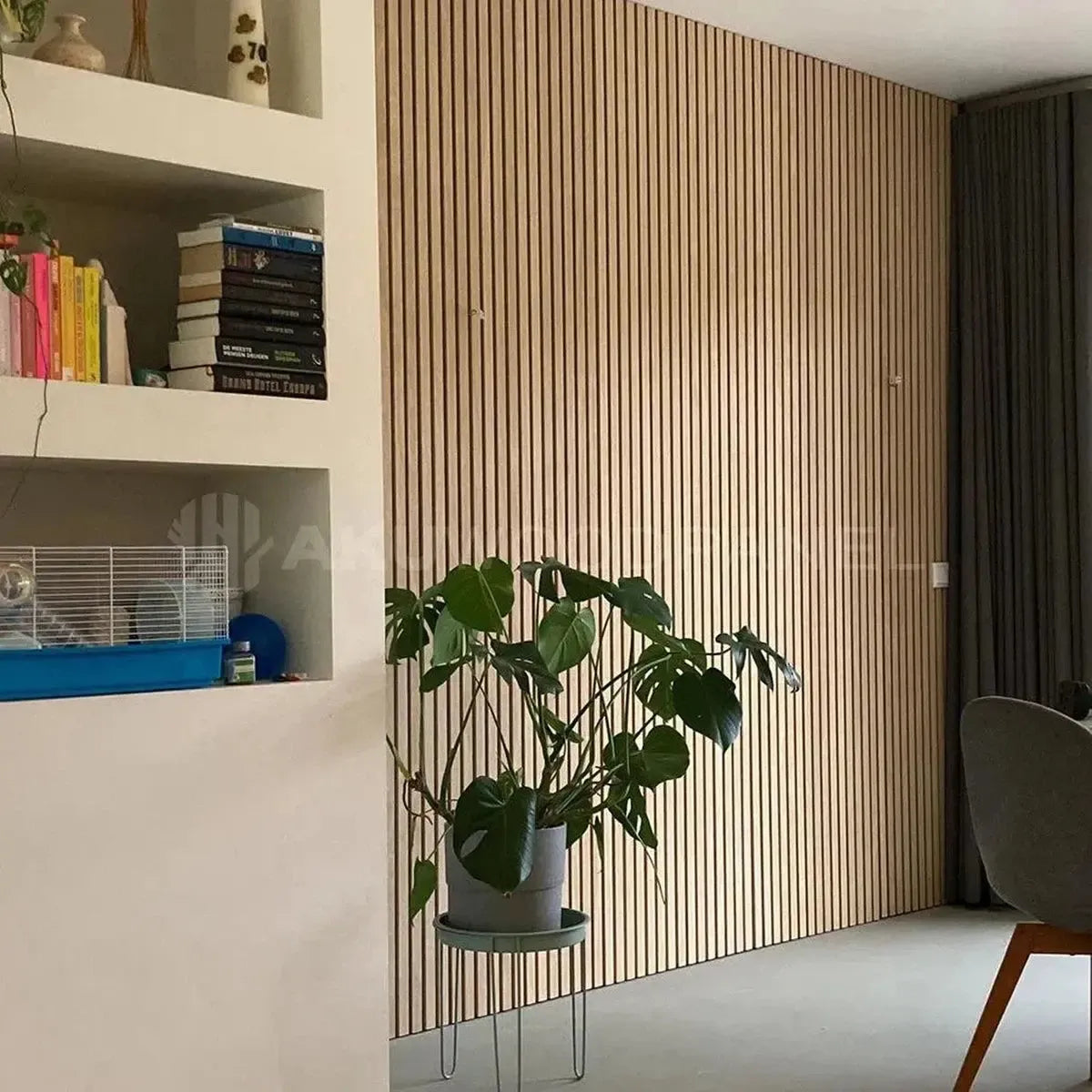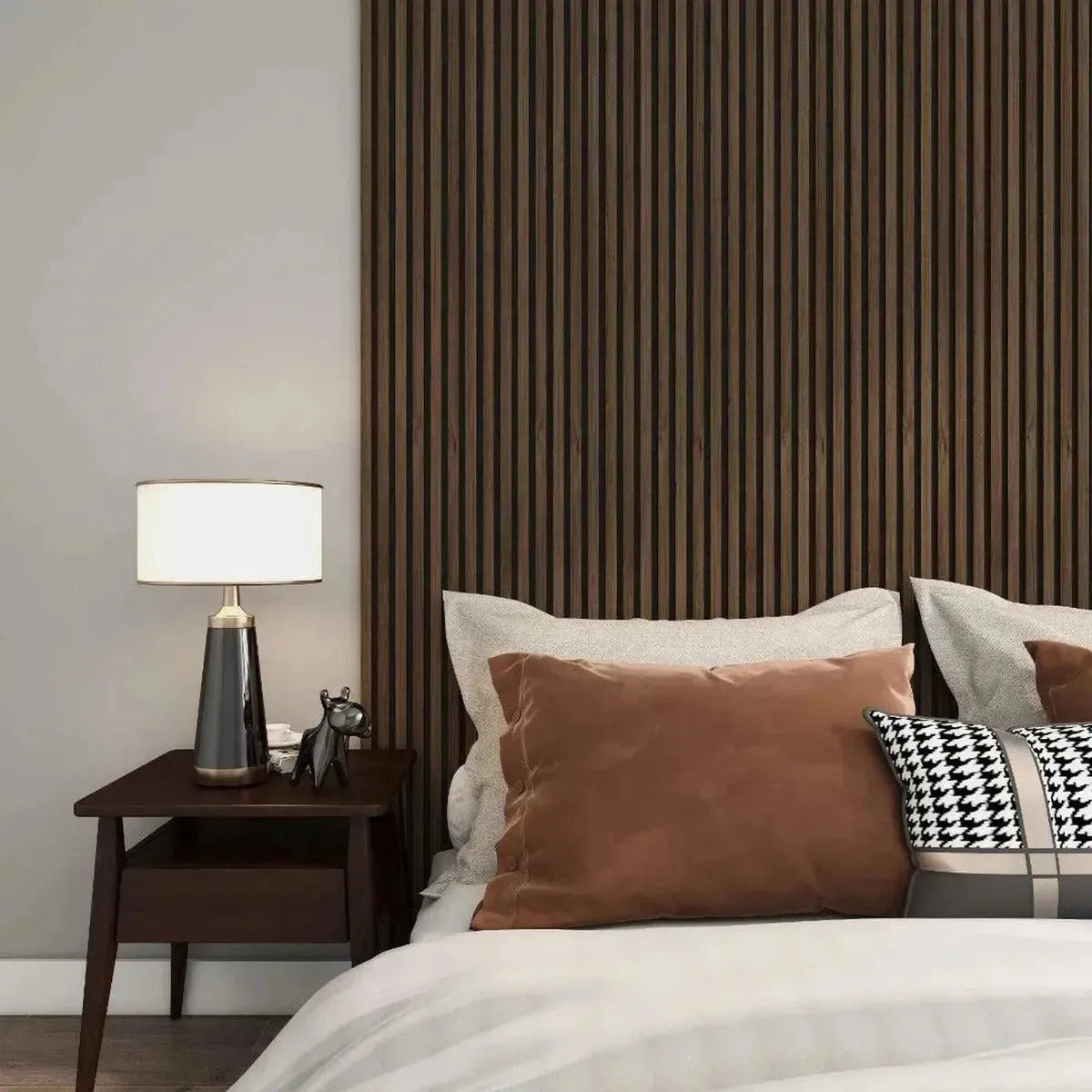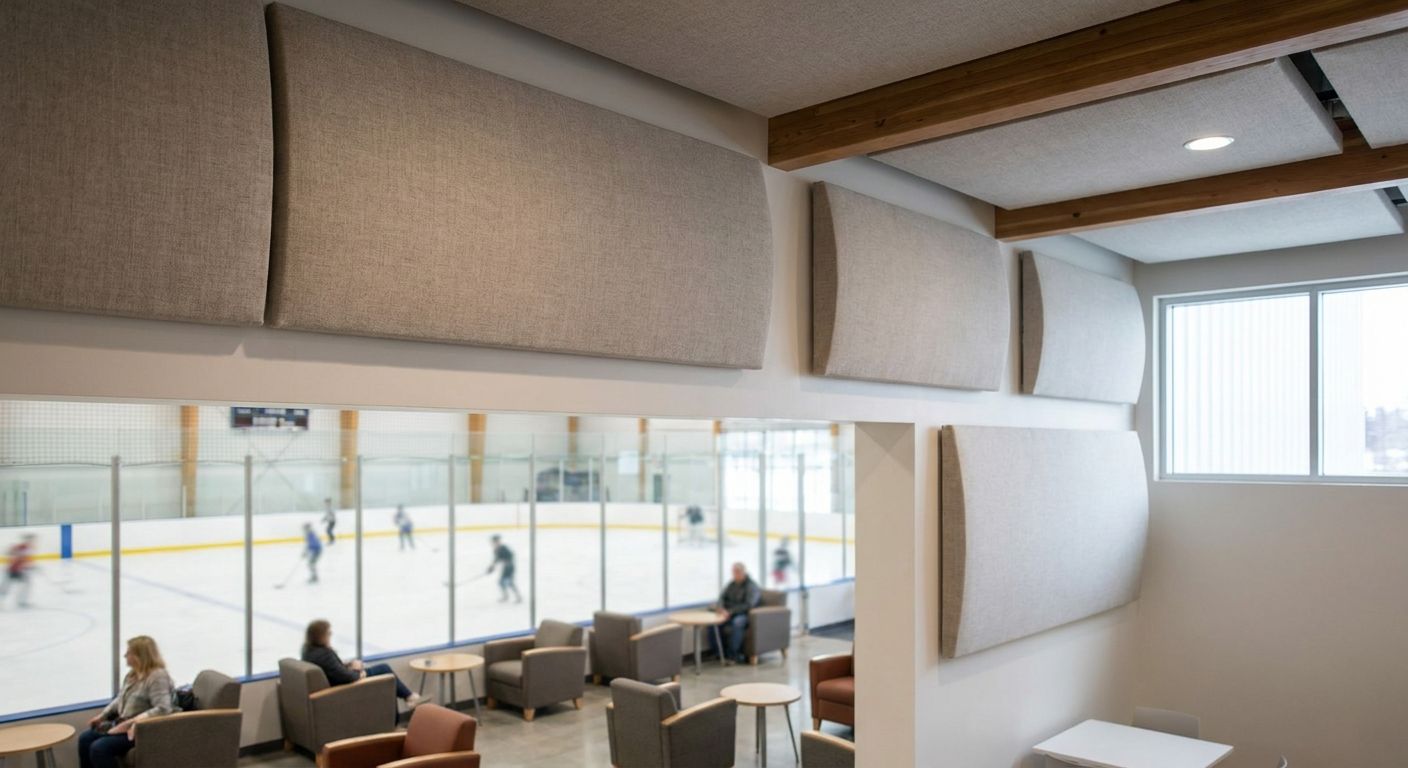
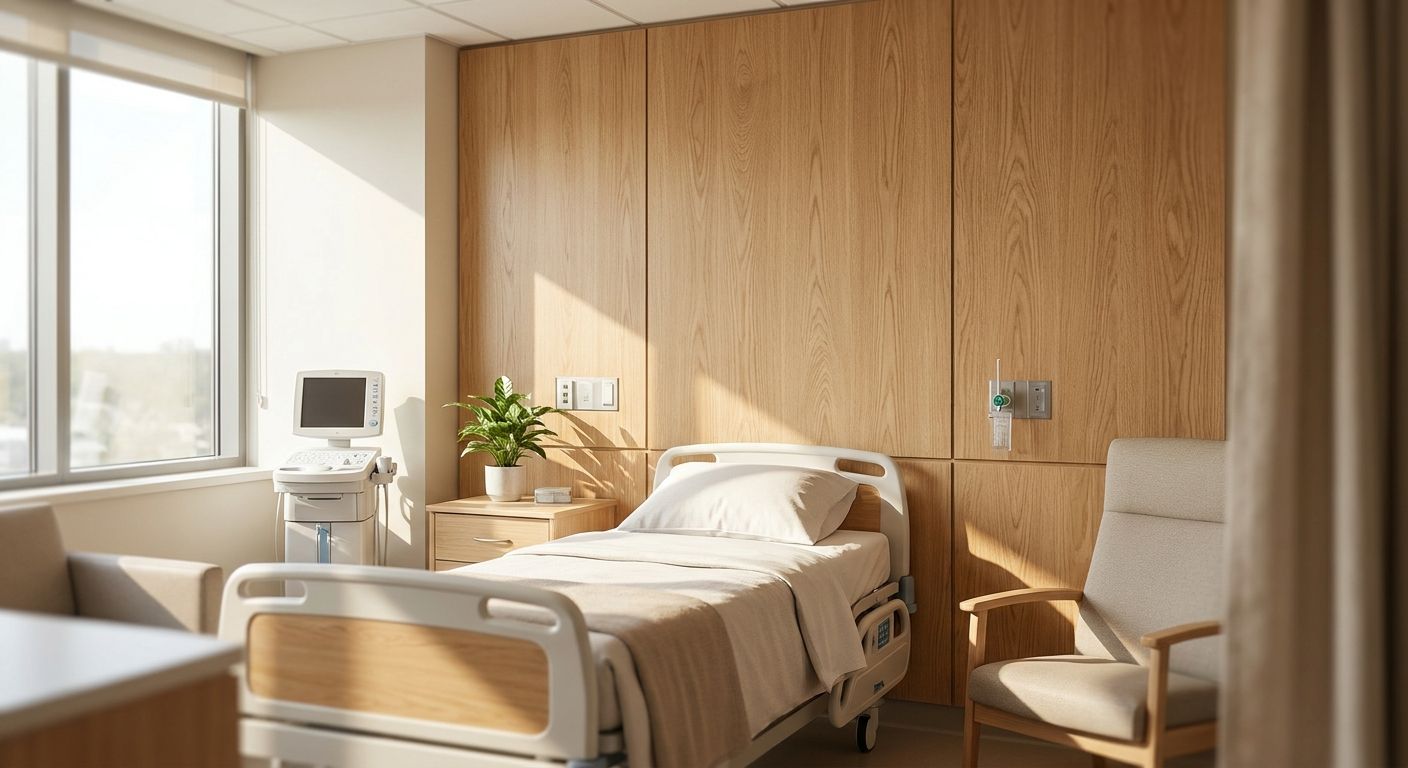
Acoustic panels for ice rink spectator lounges are wood-veneer slat, hexagon, or felt-backed wall panels installed to absorb the reverberation that concrete, glass, and hard flooring create around the ice. The goal is simple: fans need to hear the PA announcer, the concession line, and each other over boards contact and skate noise bouncing off every hard surface in the room.
- AKU Woodpanel's hexagon acoustic panel with gray felt reaches NRC 0.75 - the pick for high-ceiling ice rink lounges in 2026.
- Ice rink lounges stack three reflective surfaces in one room: concrete, glass, and hard flooring - treat walls first.
- Order the $10 full sample box before specifying acoustic panels for ice rink lounges across a full concourse.
- Felt-backed slat panels beat plain wood veneer on pure sound absorption in loud, high-traffic rinks.
Why acoustic panels for ice rink spectator lounges matter
A rink lounge is one of the loudest rooms a building manager treats all year: boards contact, skate blades, a PA system fighting its own echo, and a concourse full of parents talking over the noise. Concrete block walls and glass partitions reflect almost everything back into the room instead of absorbing it, which is the same problem covered in acoustic panels for noise reduction in sports halls - hard-shell rooms with spectators need the same wall treatment logic whether the sport is on ice or a court.
Spectator lounges add a wrinkle sports halls don't have: temperature swings and condensation near rink-side glass. Any panel spec for this space has to survive humidity cycling, not just soak up sound. That's the real reason a plain drywall-and-paint approach fails here year after year - the room gets louder as the wall finish degrades.
1. Diagnose what's actually causing the echo
Before ordering anything, walk the lounge and identify where sound is bouncing hardest.
- Clap once near the glass wall and count how long the echo trails
- Note ceiling height - double-height lounges reflect sound overhead, not just off walls
- Flag flutter echo near parallel glass and concrete surfaces
- Check what percentage of wall area is bare concrete or block versus finished material
- Stand at the concession counter and listen for PA intelligibility during a live period
2. Rank the walls by how much noise they actually take
Not every wall in the lounge needs treatment on day one. Prioritize by exposure.
- The wall facing the glass and boards absorbs the most direct slap-back
- Walls behind the concession stand carry crowd noise plus equipment hum
- Corridor walls near entry doors take the least acoustic load - treat last
- Ceiling planes in double-height sections matter more than a single low wall
3. Match panel acoustic rating to the room, not the aesthetic
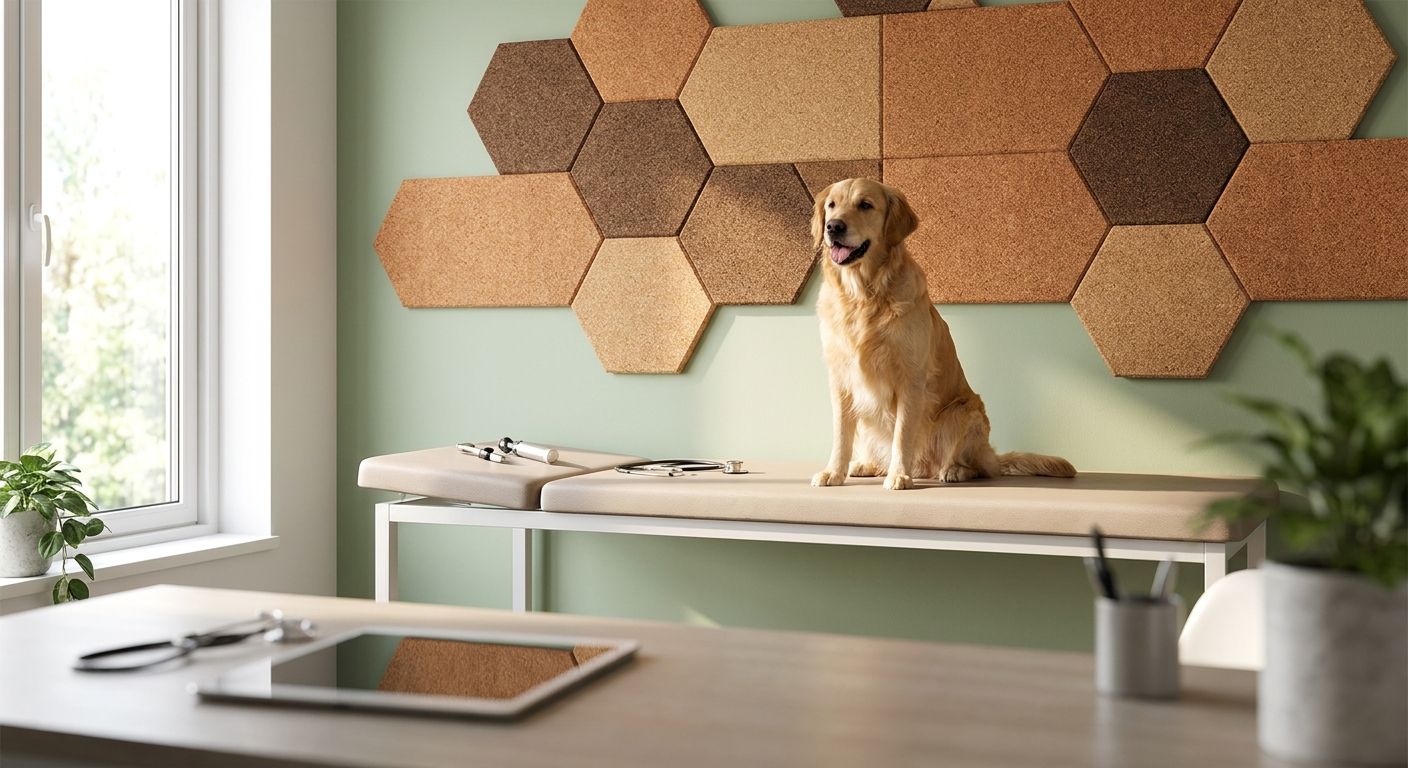
Decorative wood panels look good, but a rink lounge needs a rated product, not just a finish. The hexagon acoustic panel with gray felt carries an NRC of 0.75, which is the felt-backed acoustic performance you want on the walls that face the ice. For the math behind how much of that rating you actually need per wall, how to calculate acoustic panel NRC rating walks through the formula before you commit to a full order.
- Confirm NRC rating on the spec sheet, not the product photo
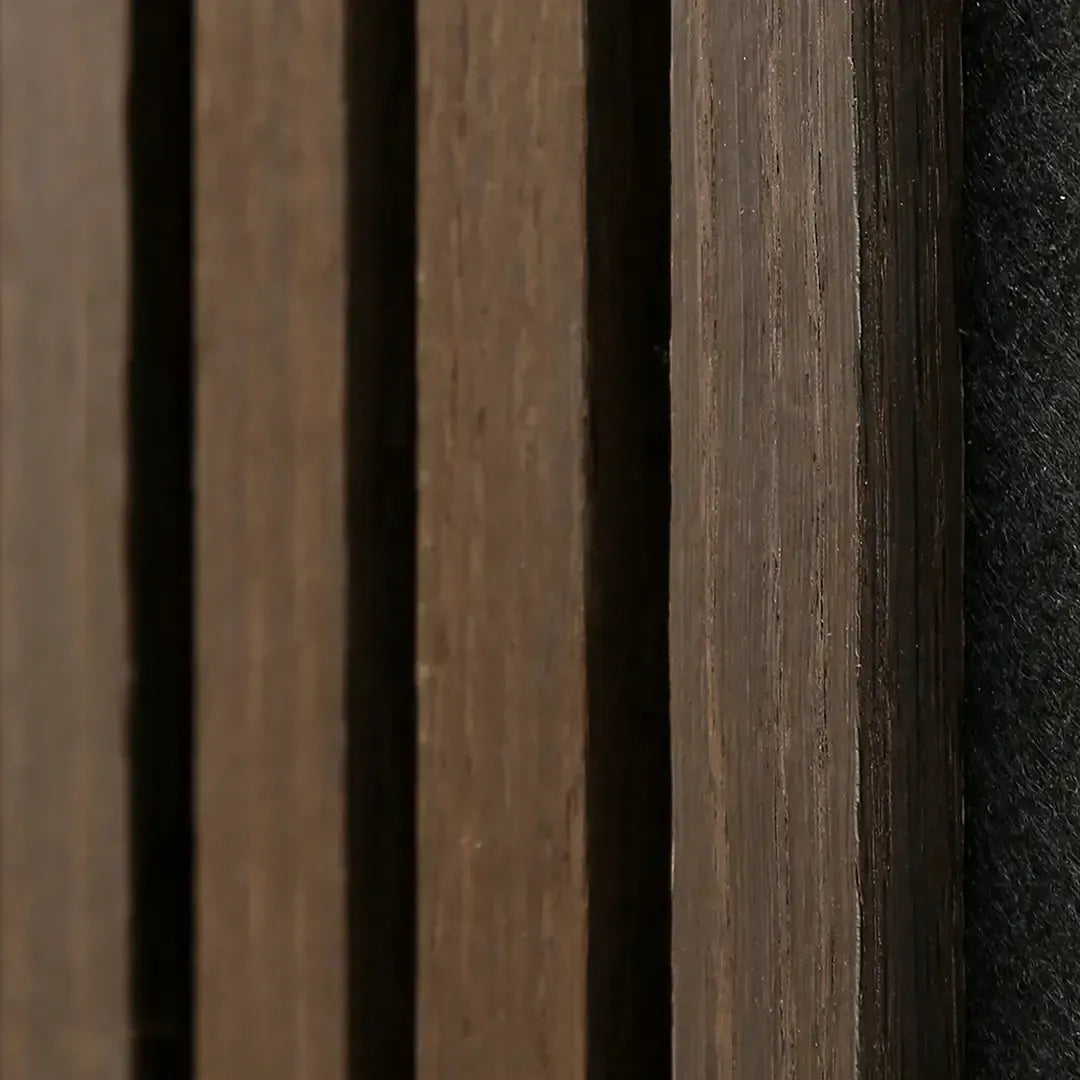
- Felt-backed panels absorb more than plain 3-sided wood veneer
- Geometric hexagon layouts break up flat reflective surfaces better than a single flat panel run
- Slat panels cover long concourse walls faster per linear foot
4. Cover the walls that face the ice and the concourse first
Budget-limited projects should treat the highest-exposure walls in year one and phase the rest.
- Glass-facing and boards-facing walls get first priority
- Concession-stand walls come second
- Corridor and low-traffic walls can wait a season
- Ceiling treatment in double-height lounges should follow once the walls are done
5. Order samples before you commit to a full concourse run
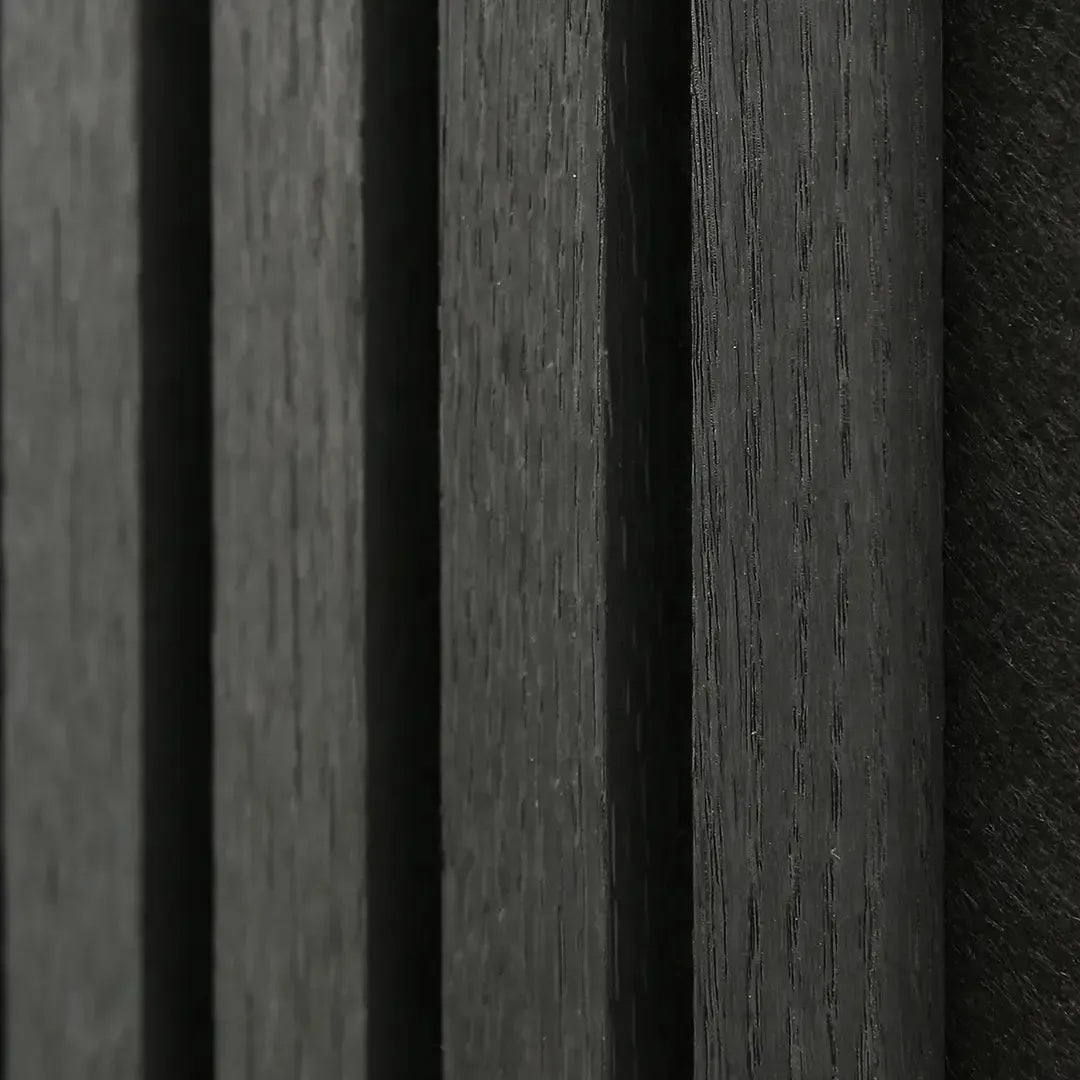
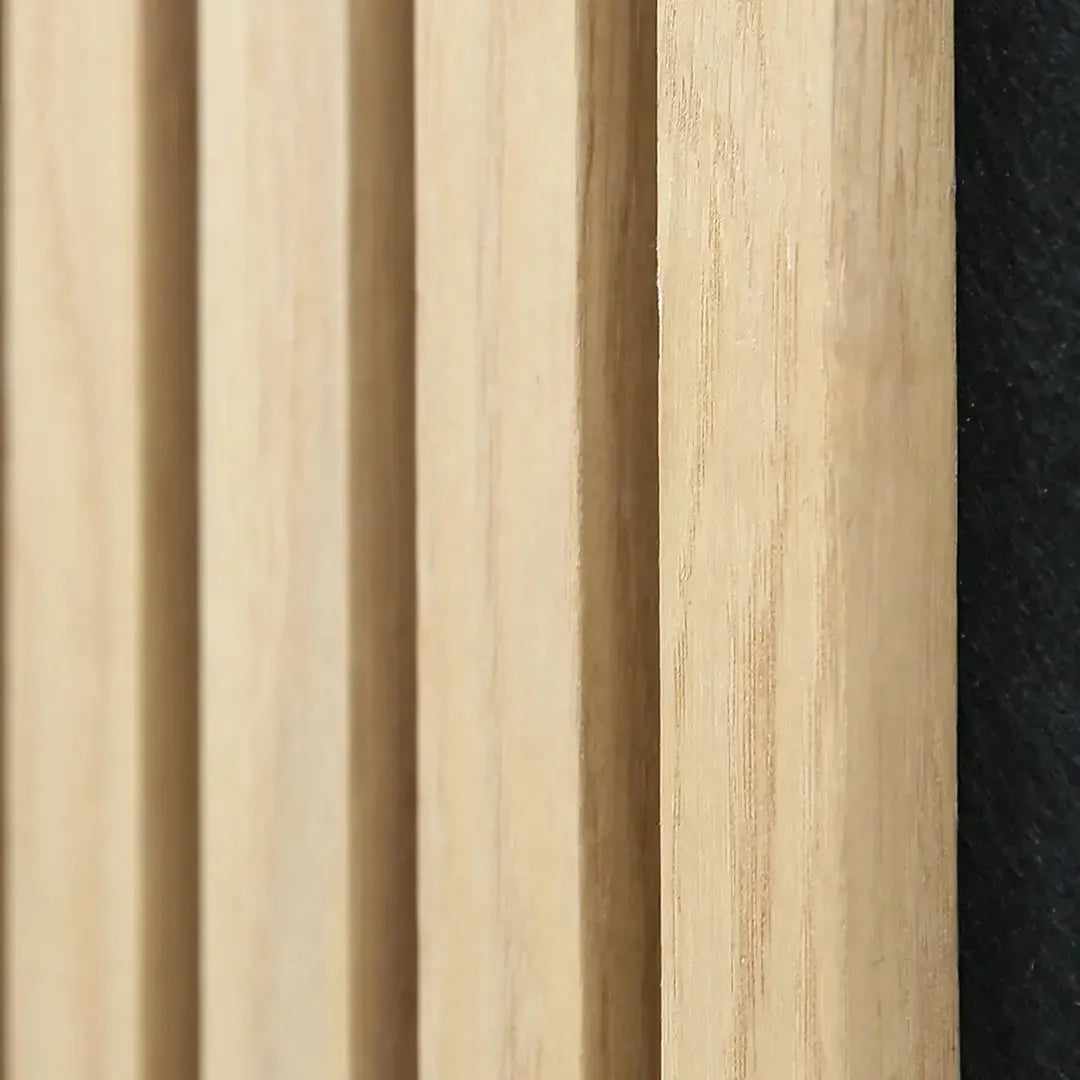
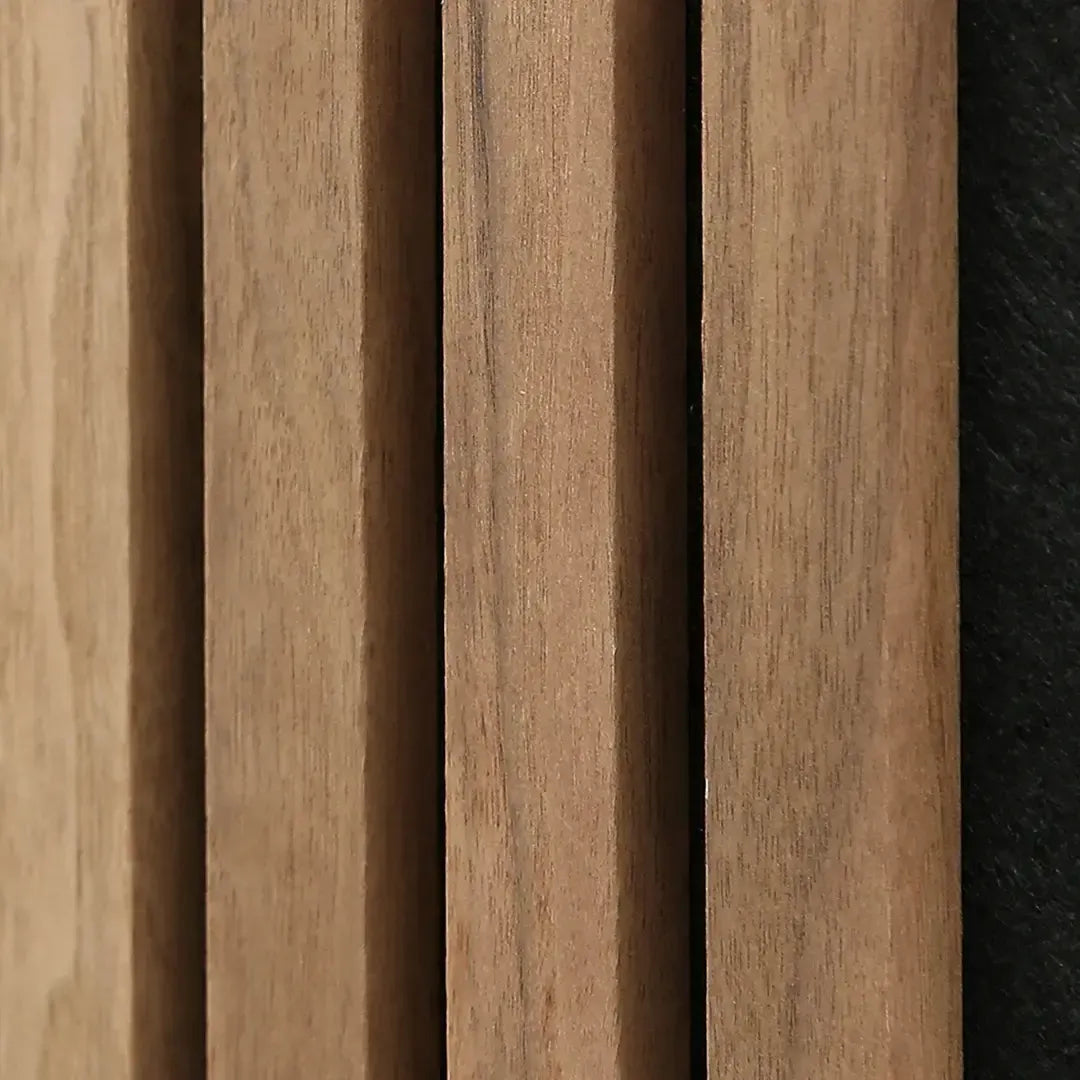
A facility manager specifying acoustic panels for ice rink concourses across multiple walls should never order blind. The full sample box at $10 covers natural, smoked oak, and walnut finishes so you can hold the grain and felt color against existing concession millwork before a bulk order.
- Confirm grain direction against existing wood trim
- Check felt color under the rink's actual lighting, not a showroom light
- Test how the finish photographs under arena signage and sponsor branding
- Verify panel thickness clears any existing conduit or outlet boxes
6. Install for rink conditions, not office conditions
Condensation near rink-side glass and high foot traffic through the concourse change how you mount panels.
- Use moisture-tolerant adhesive or mechanical fastening near glass walls
- Keep panels off direct contact with condensation-prone surfaces
- Reinforce corners and edges in areas with cart or equipment traffic
- Allow acclimation time before install if the concourse runs cold in winter
7. Maintain the finish through a full season
A rink lounge sees heavier and dirtier foot traffic than a typical commercial interior across a full season.
- Wipe down panels with a dry or barely damp cloth - no harsh solvents
- Inspect felt-backed sections for moisture staining after each cold snap
- Touch up scuffed corners before they spread across a full panel run
- Re-check fastening near entry doors where traffic concentrates


Comparing panel options for ice rink spectator lounges
| Option | Best for | Starting price | Key limitation |
|---|---|---|---|
| Hexagon acoustic panel with gray felt | Decorative lounges needing NRC 0.75 in a geometric layout | $165.95 | Smaller module means more seams to align on long walls |
| Smoked oak slat panel with gray felt | Long concourse walls needing fast, uninterrupted coverage | $169.95 | Darker finish shows dust under bright rink lighting |
| Natural oak slat panel with gray felt | Lounges pairing with existing light-wood concession millwork | $169.95 | Lighter finish shows scuffs near high-traffic doors |
| Full sample box | Confirming grain and felt color before a bulk order | $10 | Covers only 4 panels - not a coverage-planning tool |
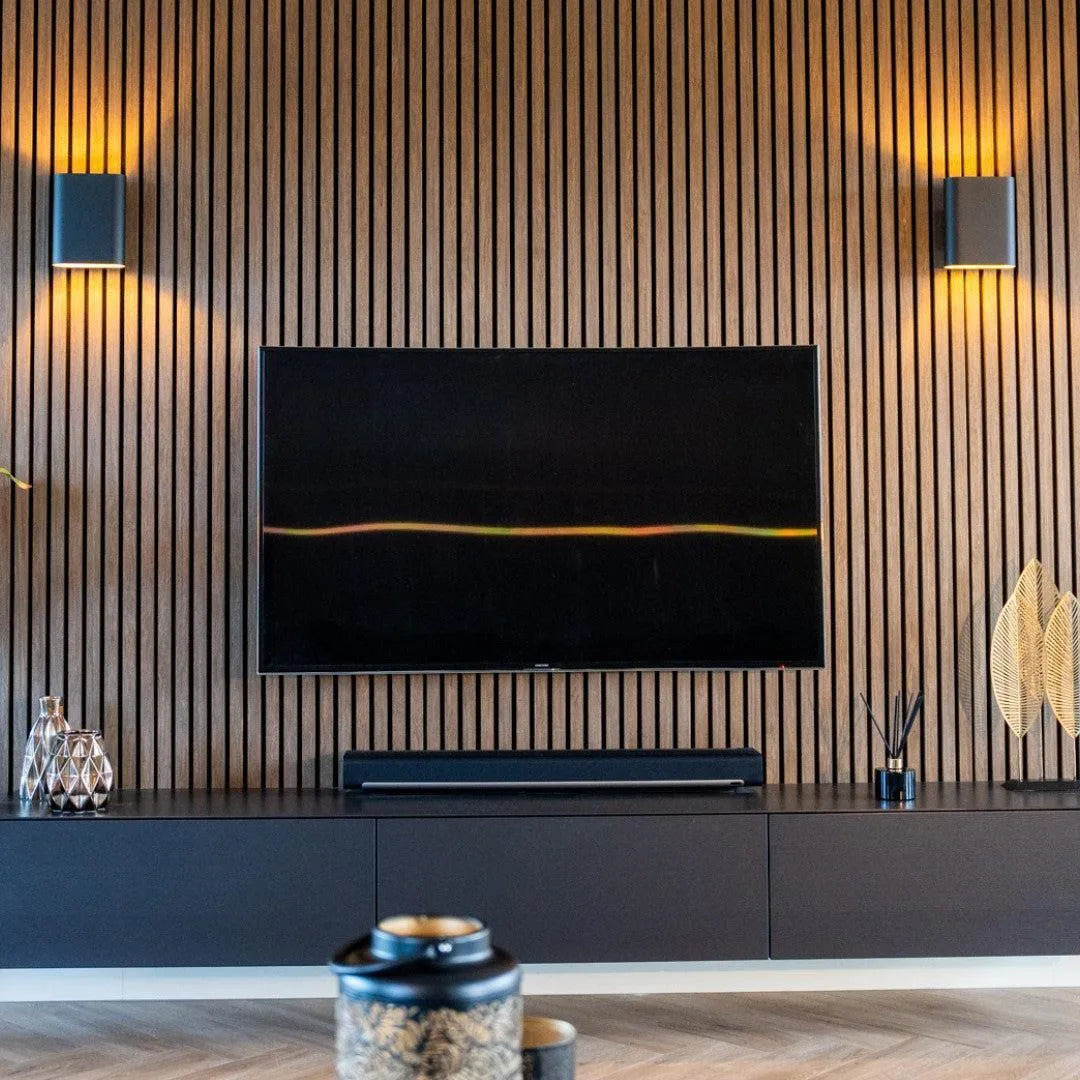
The hexagon acoustic panel with gray felt is the strongest single pick for ice rink spectator lounges in 2026 - it pairs a 0.75 NRC rating with a wood finish that reads as intentional decor, not gym-class foam.
Common mistakes rink managers make with lounge acoustics
- Treating only the concession wall and ignoring the glass-facing wall, which reflects boards noise straight back into the room
- Choosing thin, unbacked decorative panels because they're cheaper upfront, then re-doing the wall a season later once the echo returns
- Skipping humidity-tolerant fastening near rink-side entrances where condensation collects through winter
- Sizing coverage off the blueprint square footage instead of the actual percentage of hard, reflective surface in the room
- Ignoring the ceiling plane in double-height lounges where sound bounces overhead long after the walls are treated
“If spectators can't hear the PA over boards noise, the lounge wall treatment failed at its one job.”
FAQ
What's the best acoustic panel for an ice rink spectator lounge?
The hexagon acoustic panel with gray felt from AKU Woodpanel is the strongest pick for 2026 - it carries an NRC of 0.75 and reads as decor rather than utilitarian foam. Slat panels with the same felt backing work better on long, uninterrupted concourse walls.
How much NRC rating does an ice rink lounge need?
A rink lounge with concrete, glass, and hard flooring benefits from felt-backed panels at NRC 0.75 or higher on the highest-exposure walls. Lower-traffic corridor walls can use a lower-rated finish since they take less direct noise.
Are wood acoustic panels durable enough for rink humidity?
Wood veneer acoustic panels hold up in rink lounges when installed with moisture-tolerant fastening away from direct condensation contact. Felt-backed sections near glass walls need periodic inspection after cold snaps for moisture staining.
How many acoustic panels does a typical rink lounge need?
Coverage depends on the percentage of hard, reflective wall surface in the specific lounge, not a fixed number - measure the glass-facing and concession walls first since those take the most direct noise. Phase corridor and low-traffic walls into a later budget cycle.
Is felt-backed or plain wood veneer better for rink noise?
Felt-backed panels absorb more sound than plain 3-sided wood veneer, which is why AKU Woodpanel's gray felt options carry the 0.75 NRC rating. Plain veneer panels look similar but perform closer to a decorative finish than an acoustic one.
How much do acoustic panels for ice rink lounges cost in 2026?
Felt-backed hexagon and slat panels from AKU Woodpanel run from $165.95 to $169.95 per box in 2026, with a $10 full sample box available to confirm finish before a bulk order. Exact project cost depends on total wall coverage needed.
Can acoustic panels handle condensation near the rink boards?
Panels installed with moisture-tolerant fastening and kept off direct condensation contact hold up near rink-side glass. Inspect felt-backed sections after cold weather stretches since that's where moisture staining shows first.
Should acoustic panels go on the wall or the ceiling in a double-height lounge?
Walls come first since they take the most direct noise from boards and PA slap-back, but double-height lounges should add ceiling treatment once wall coverage is done. Sound bounces overhead in tall rooms long after side walls are treated.
One last thing
Most rink lounges get the concession wall treated first because that's where staff complain loudest - but the glass-facing wall is almost always the bigger acoustic problem, since it reflects boards contact straight back at the crowd standing closest to the ice. Treat that wall first in 2026, even if it means the concession wall waits a phase.
 Better performance and aesthetic appeal
 In Stock