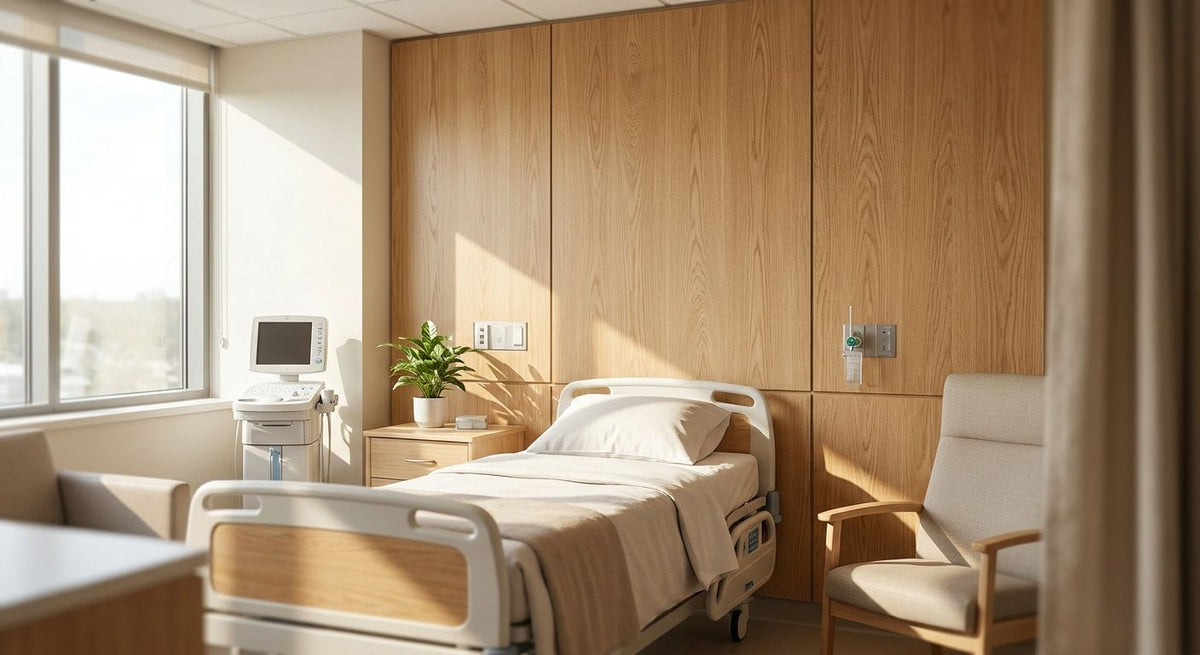
Wood panels for hospital patient rooms have to do three jobs at once: absorb noise, meet fire code, and read as calm instead of clinical. This guide breaks down how facility managers and healthcare interior designers spec acoustic wood wall panels for patient rooms in 2026 without failing an inspection or blowing the finish budget.
- Wood panels for hospital patient rooms work best as accent walls with felt-backed acoustic slat panels, not full wet-zone coverage.
- Akuwood Panel's hexagon acoustic panel line carries a 0.75 NRC rating, suited for headwalls and corridor transitions.
- Fire rating and low-VOC certification must be confirmed before finish selection, not after installation.
- Tile-format acoustic slat panels start at $126.95 per box in 2026, the lowest entry point for a single headwall.
Why acoustic wood panels matter for hospital patient rooms
Patient rooms are graded on quietness. The HCAHPS survey that hospitals report to CMS includes a "quietness of hospital environment" domain, and hard, reflective surfaces in a standard patient room push conversation, cart wheels, and monitor alarms into a constant low roar. A gypsum wall with a painted finish reflects almost all of that sound back into the room.
Patients recovering from surgery or managing chronic pain need lower ambient noise to sleep, and staff need a room quiet enough to hear alarms and each other without raising their voices. That is a different brief than an office lobby or a retail floor: the wall finish has to hit an acoustic target, survive institutional cleaning schedules, and pass fire code, all before anyone talks about how the room looks.
The finish also affects patient mood. Warm wood tones read as less institutional than bare drywall or laminate, which matters when a family is spending days in a small room. That aesthetic case only holds up if the acoustic and safety fundamentals are handled first — a calm-looking wall that fails a flame-spread test gets torn out before it ever helps a patient.
Map the noise sources in the room
Start with a walk-through before selecting any material. Most patient rooms have the same repeat offenders, and knowing which ones dominate tells you where panels actually help versus where the fix is mechanical.
- HVAC diffusers and return air grilles near the headwall
- Hallway conversation bleeding through the door gap
- Equipment carts and IV pole wheels on hard flooring
- Roommate noise in semi-private rooms
- Alarm and monitor beeping reflecting off flat walls
Check the finish for indoor air quality compliance
Healthcare interiors run stricter indoor air quality rules than retail or residential jobs, and infection control teams will ask for documentation before a finish gets approved. Handle this before you fall in love with a specific wood tone.
- Confirm low-VOC or no-added-formaldehyde certification on the veneer and adhesive
- Ask for off-gassing data, not just a marketing claim
- Schedule installation with extra ventilation and a curing period before the room is occupied
- Keep the compliance paperwork on file for the next accreditation survey
Low-VOC wood wall panels for healthcare interiors breaks down what certifications to ask a supplier for before you sign off on a finish.
Confirm the fire rating before you specify anything
This is the step that kills projects late if it's skipped early. Hospitals are held to stricter flame-spread requirements than most commercial buildings, and a wood finish that looks identical to a compliant one can carry a different Class rating.
- Get the ASTM E84 flame spread and smoke development numbers in writing
- Confirm the required Class (A or B) with your local fire marshal or code consultant
- Coordinate with sprinkler and detector placement before panels go up
- Re-verify the rating any time the finish, adhesive, or backing changes
How to specify acoustic wood panels for a hospital project walks through the documentation a facilities team typically needs to hand a code reviewer.
Choose a wood finish that supports patient calm
Once compliance is settled, the finish choice is about the patient experience. Biophilic design research consistently links visible wood grain and warm tones to lower reported stress in healthcare settings, which is why more hospital renovations are moving away from all-white, all-vinyl rooms.
- Favor lighter, warmer tones like natural oak over high-contrast dark finishes near the bed
- Avoid high-gloss surfaces that create glare under overhead lighting
- Keep enough tonal contrast between wall and door frame for low-vision patients
- Test the finish under the room's actual lighting, not a showroom sample
Select the acoustic backing and mounting method
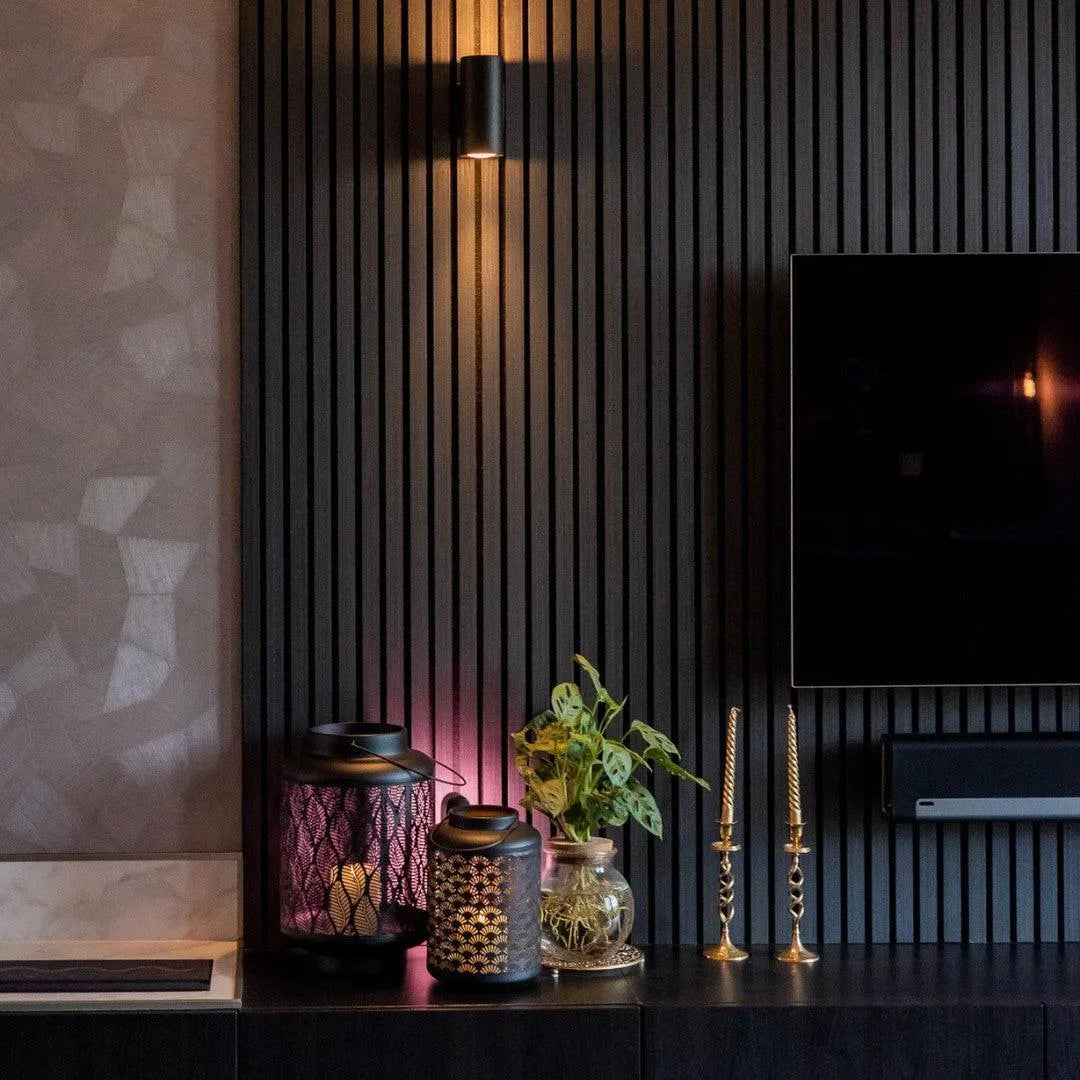
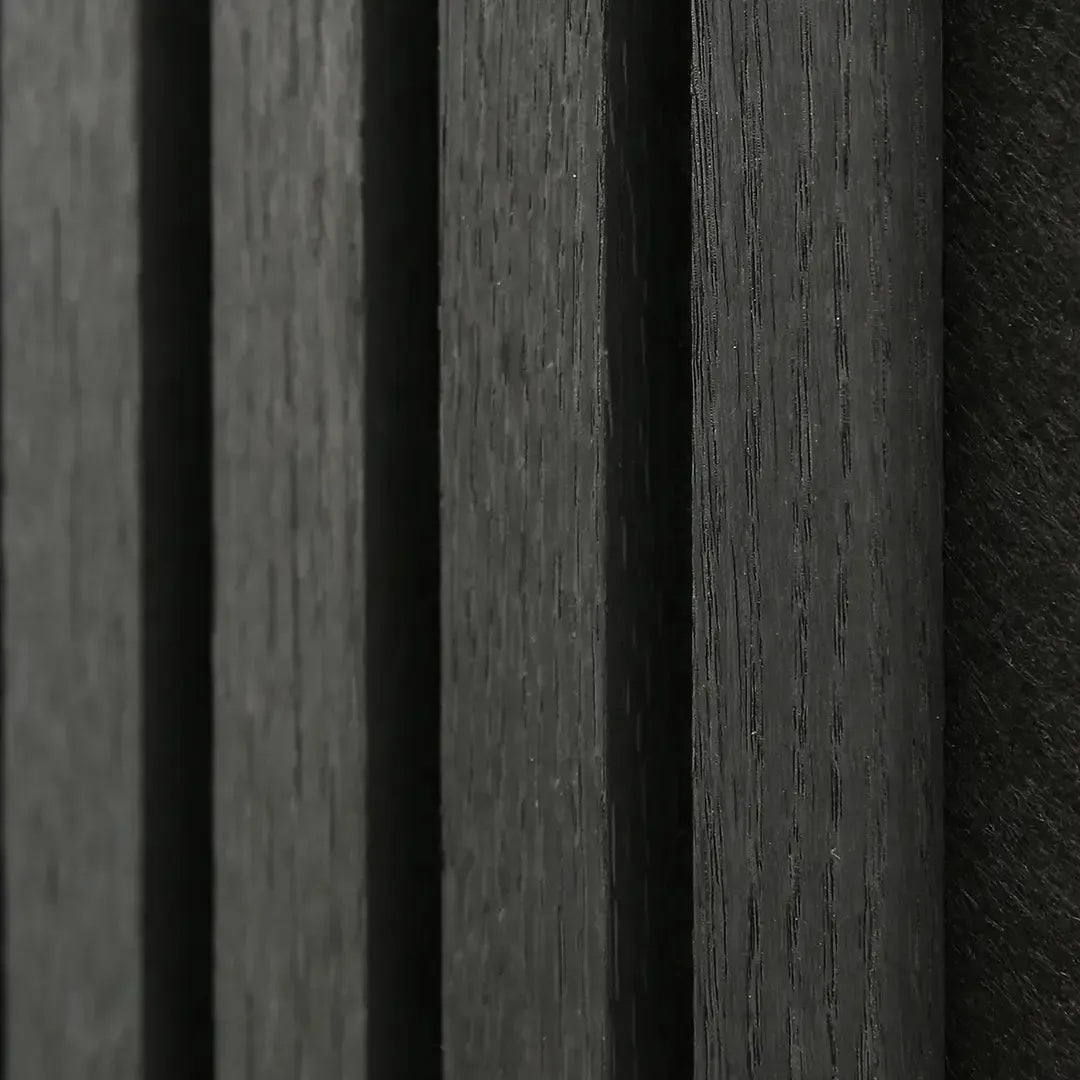
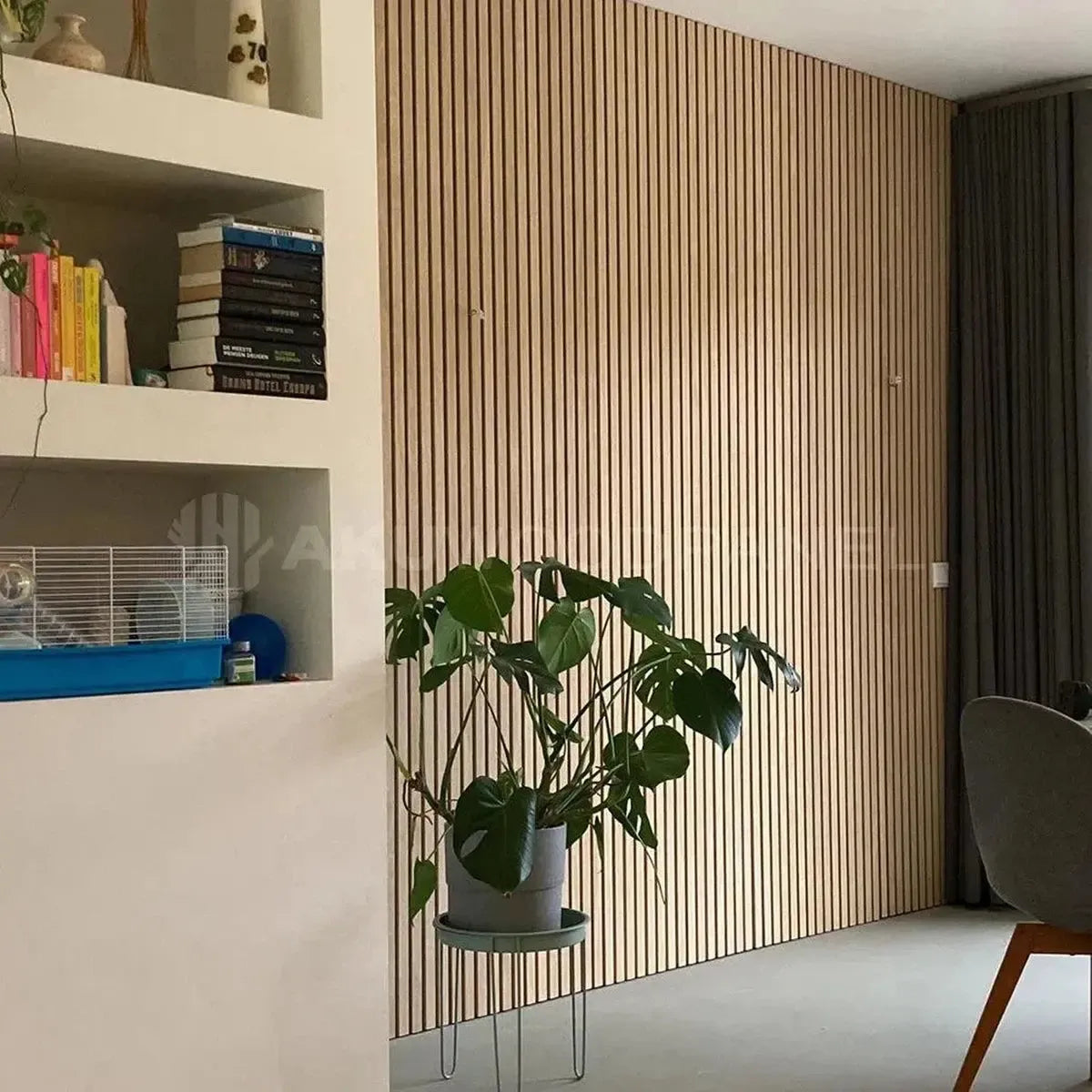
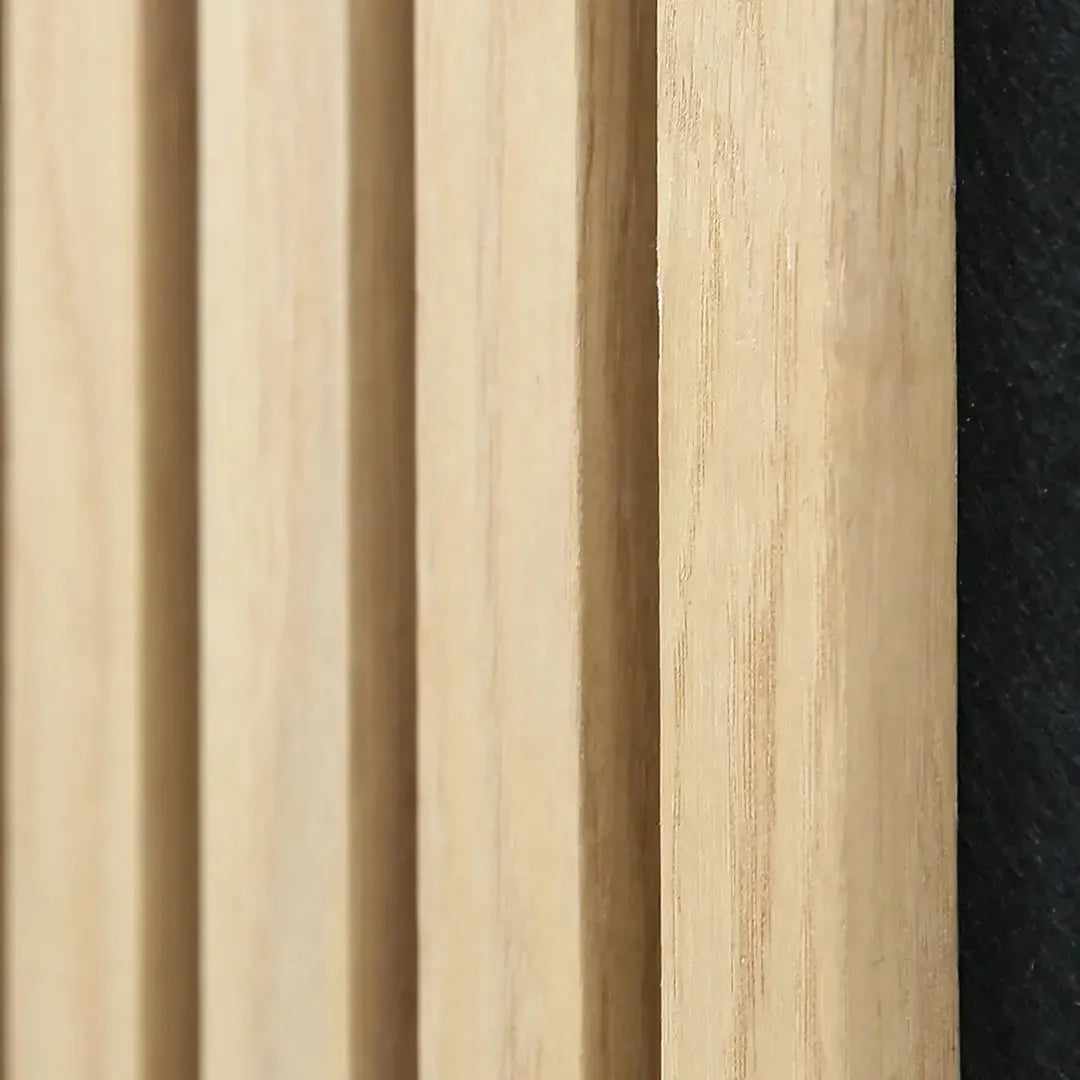
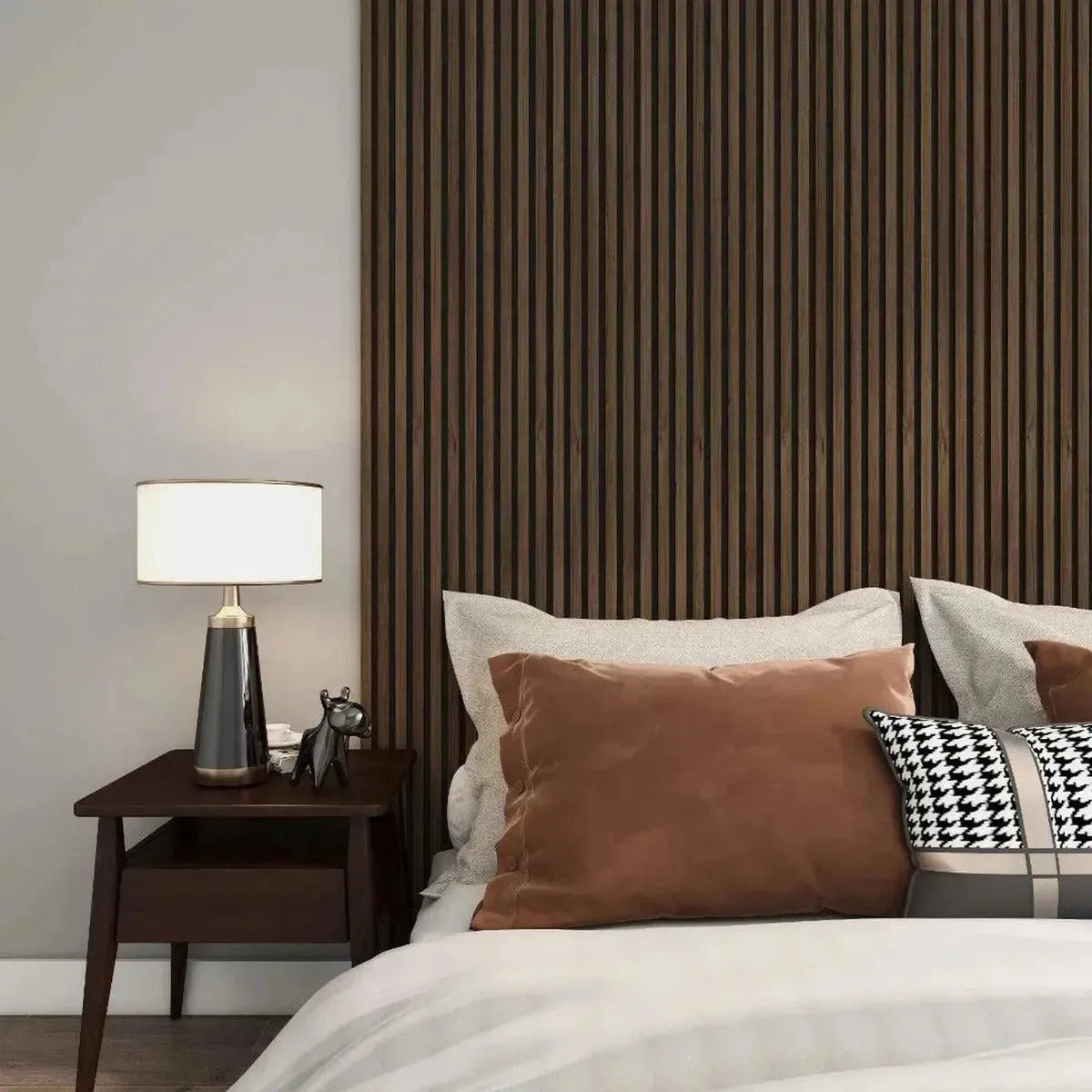
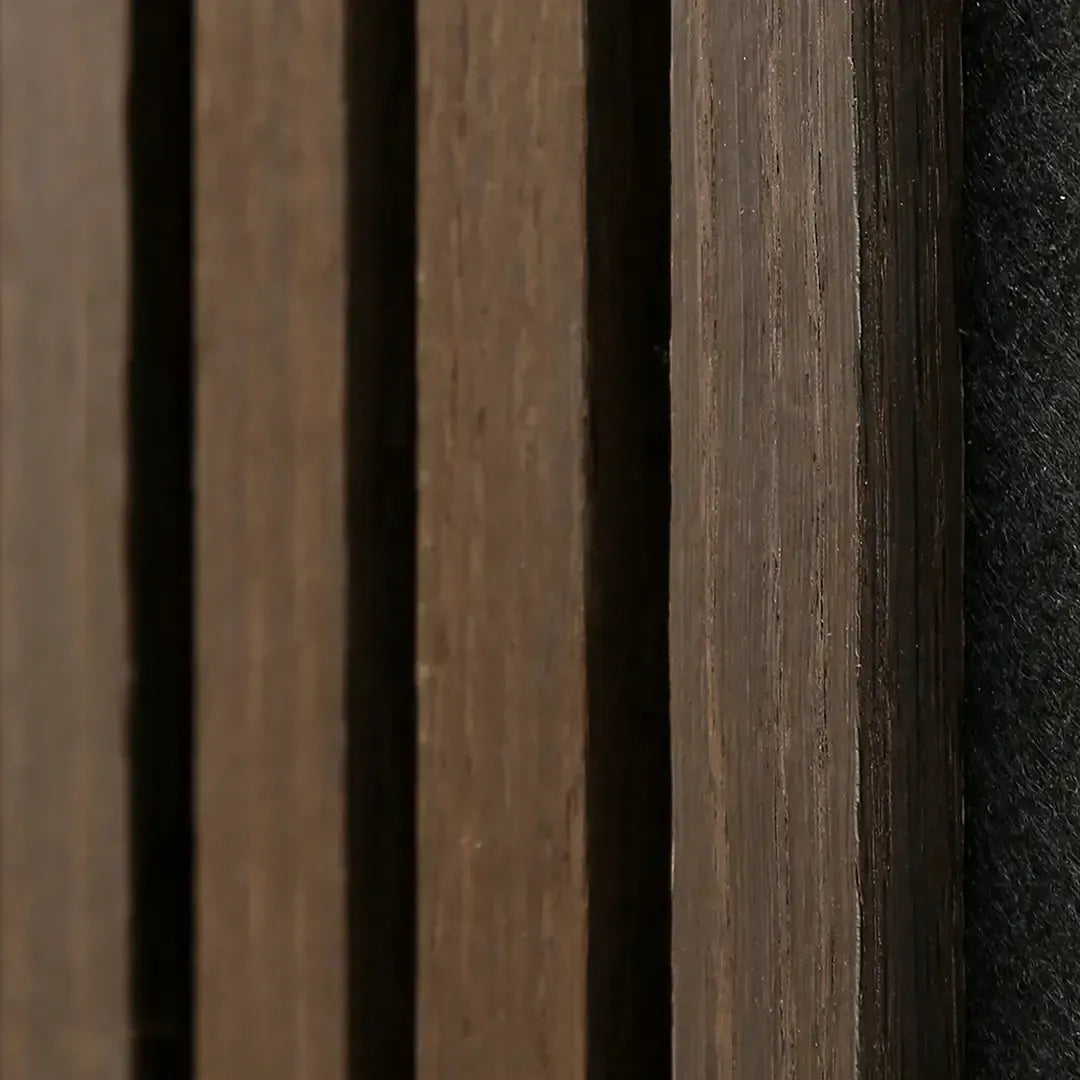
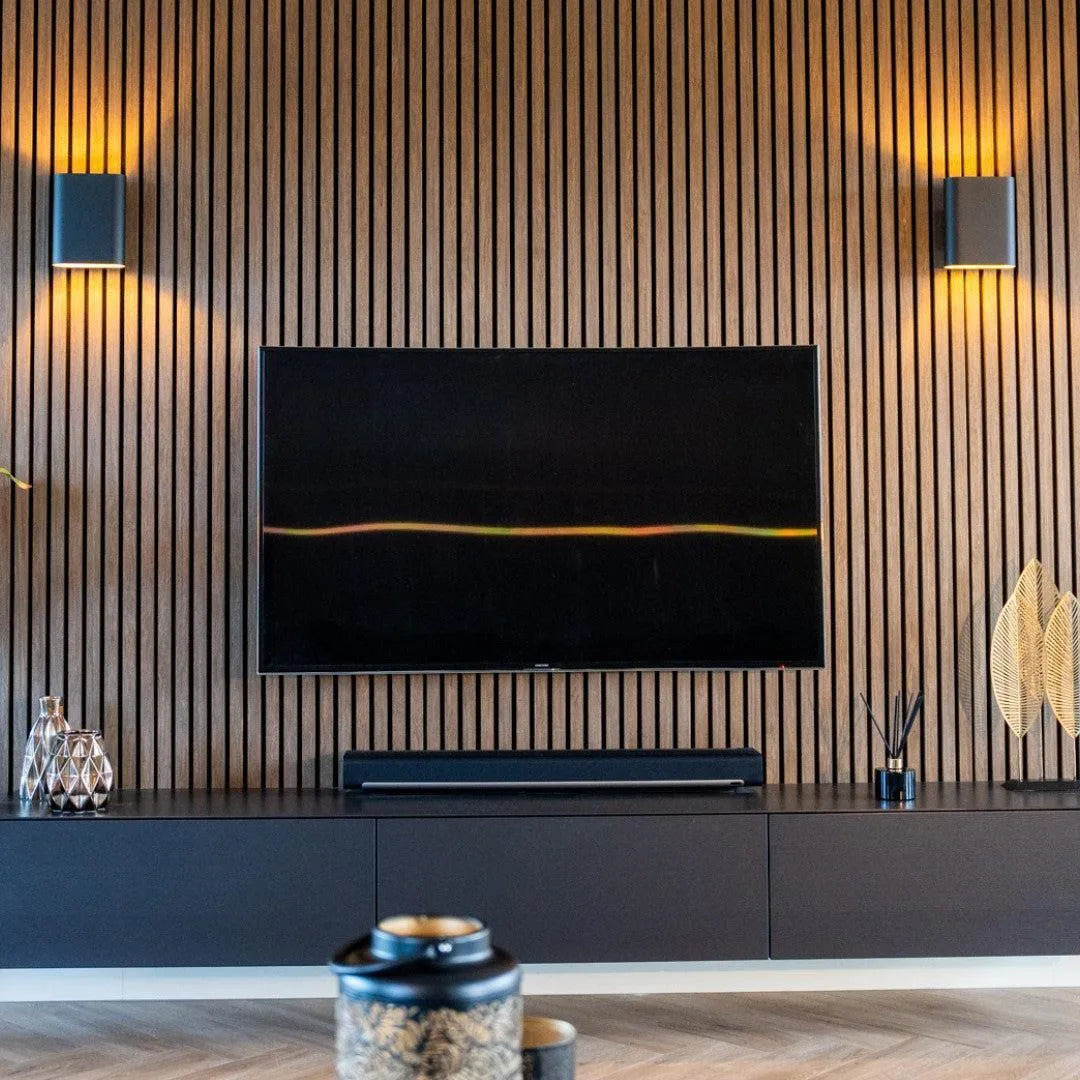
This is where the panel choice actually earns its keep acoustically. Akuwood Panel's acoustic slat wall panels use a 3-sided real wood veneer over a felt-backed core, and the hexagon acoustic panel line carries a 0.75 NRC rating — enough to noticeably cut reverb on a headwall or a corridor transition without turning the room into a padded cell.
The acoustic slat wall panel in natural oak with gray felt is a common starting point for patient room headwalls because the felt backing does the sound absorption work while the veneer keeps the finish looking like real wood rather than acoustic foam.
- Mount on the headwall behind the bed, where reflected noise is worst
- Use felt-backed slat or hexagon panels rather than solid veneer where NRC matters
- Keep panels off direct-splash zones near sinks and toilets
- Coordinate outlet and grab-bar cutouts with the installer before panels arrive
Plan cleaning and durability protocols with facilities
Wood veneer is not a scrubbable surface in the same way solid surface or vinyl is, and infection control teams need to know that before rooms open. Set the protocol in writing.
- Keep panels out of splash zones near sinks, toilets, and shower stalls
- Use manufacturer-approved cleaning agents, not harsh disinfectant sprays directly on veneer
- Protect lower panel edges from bed rail and cart impact with corner guards
- Train environmental services staff on the difference between wood veneer and washable wallcovering
Budget per room and phase the rollout
Most hospital renovations don't panel every room at once. Budget per bed, then phase.
- Price the job per headwall rather than per square foot of the whole room
- Order samples before committing a full floor's worth of panels
- Phase by wing or by floor so one unit's disruption doesn't halt the whole building
- Hold back 5-10% of budget for trim, corners, and edge finishing pieces


Comparing wall finish options for hospital patient rooms
| Option | Best for | Starting price | Key limitation |
|---|---|---|---|
| Acoustic slat wall panel (felt-backed) | Headwall accent with sound absorption | $169.95 | Not scrubbable — keep away from wet zones |
| Hexagon acoustic panel | Corridor transitions, geometric feature walls | $165.95 | Pattern layout adds install time |
| Tile-format acoustic slat panel | Budget single-bed accent or nurse station | $126.95 | Smaller format needs more units per wall |
| Standard vinyl wallcovering | Full-room wet-zone coverage | Varies by supplier | No acoustic absorption, contributes to echo |
| Painted gypsum board (baseline) | Lowest-cost renovation | Varies by supplier | Zero sound absorption, flat institutional look |
Verdict: for a hospital patient room in 2026, a felt-backed acoustic slat or hexagon panel on the headwall beats vinyl or painted drywall on every metric except wet-zone durability — pair it with vinyl or a sealed panel near sinks and bathrooms instead of trying to make one material do both jobs.
Common mistakes hospitals make with wood panel specs
- Installing wood panels in wet zones. Bathroom splash areas and sink backsplashes need a sealed or non-wood finish, not veneer.
- Skipping fire-rating verification until inspection. Confirm Class A/B flame spread during design, not after the panels are already on the wall.
- Choosing high-contrast, glossy finishes. These increase glare and disorient elderly or low-vision patients under overhead lighting.
- Ignoring ceiling and door gaps. Felt-backed panels only treat the wall; noise still leaks through an untreated door gap or exposed ceiling grid.
- Assuming wood veneer cleans like vinyl. Hospital-grade disinfectant sprayed directly on veneer can degrade the finish faster than the specified lifespan.
FAQ
Are wood panels safe for hospital patient rooms?
Wood panels are safe for hospital patient rooms when they carry a verified fire rating and low-VOC certification, and when they're kept off wet-zone walls near sinks and toilets. Confirm ASTM E84 flame spread data before specifying any finish.
What NRC rating should acoustic wood panels have for a patient room?
A 0.70-0.75 NRC rating, like Akuwood Panel's hexagon acoustic panel line, meaningfully cuts reverb on a headwall without over-treating the room. Full-wall NRC above that adds cost with diminishing acoustic return in a room this size.
How much do acoustic wood panels cost for a hospital room in 2026?
Felt-backed acoustic slat or hexagon panels start around $126.95 to $169.95 per box in 2026, priced per headwall rather than per full room. Budget an extra 5-10% for trim and corner pieces.
Can wood panels be used in bathroom or wet areas of a patient room?
No — wood veneer panels aren't scrubbable and shouldn't go in direct splash zones near sinks or showers. Use a sealed or non-wood finish in those areas instead.
Do wood wall panels help with HCAHPS quietness scores?
Acoustic wood panels reduce reflected noise on treated walls, which supports the quietness domain hospitals report under HCAHPS, though panels alone won't fix HVAC or door-gap noise. Treat panels as one part of a broader noise-control plan.
What fire rating do hospital wall panels need?
Most healthcare facilities require Class A or Class B flame spread ratings under ASTM E84, but the exact requirement depends on your local fire marshal and the room's occupancy classification. Confirm the rating in writing before installation.
Is real wood veneer better than laminate for patient rooms?
Real wood veneer reads warmer and less institutional than laminate, and Akuwood Panel's 3-sided veneer construction holds grain detail better over time. Laminate can be a reasonable lower-cost substitute where budget, not aesthetics, drives the decision.
One last thing
The detail most healthcare projects miss isn't the panel — it's the door gap. A room can have a fully treated, 0.75 NRC headwall and still sound loud at 2 a.m. because hallway conversation leaks straight through an untreated door sweep. Fix the gap before adding more wall panel than the room needs.


 Better performance and aesthetic appeal
 In Stock