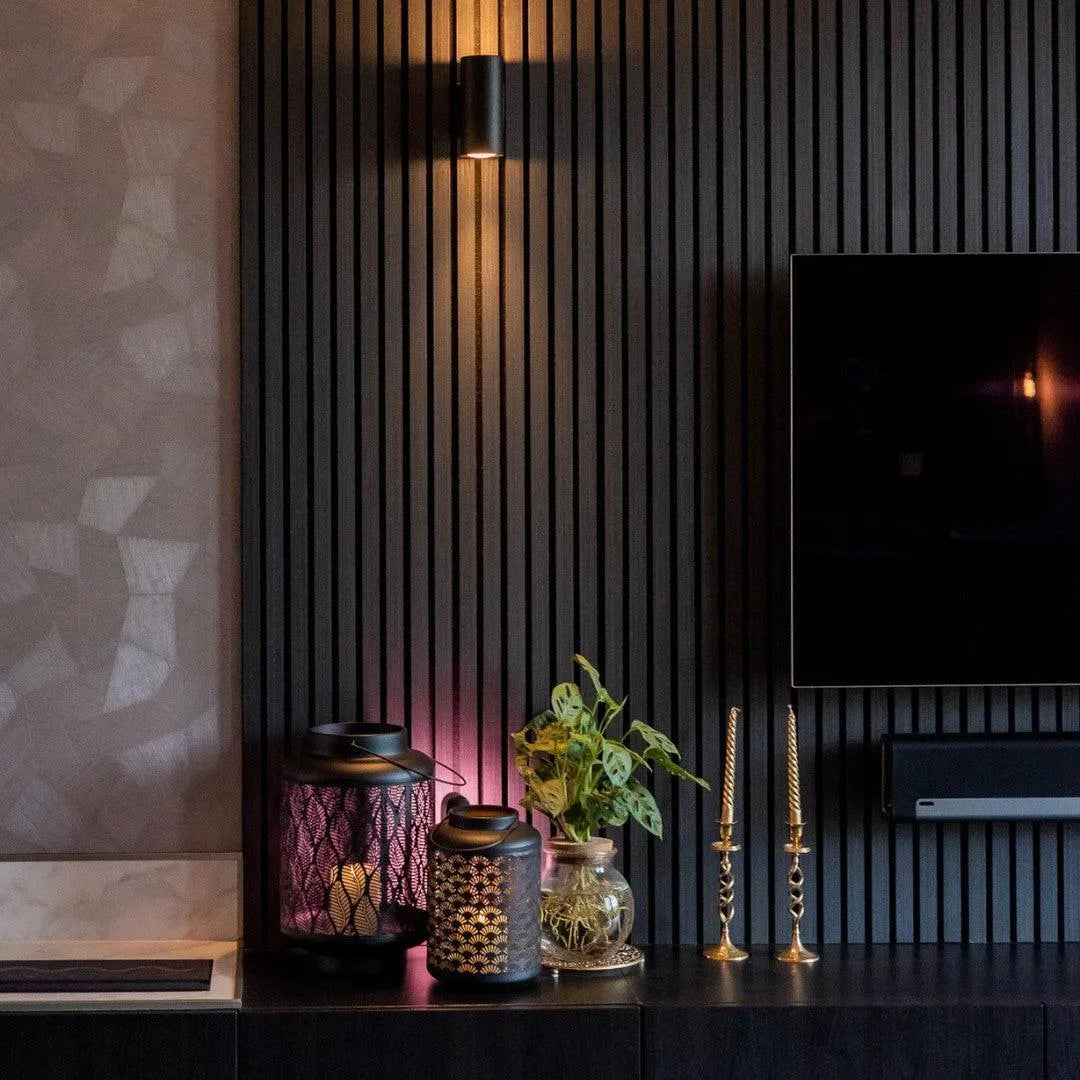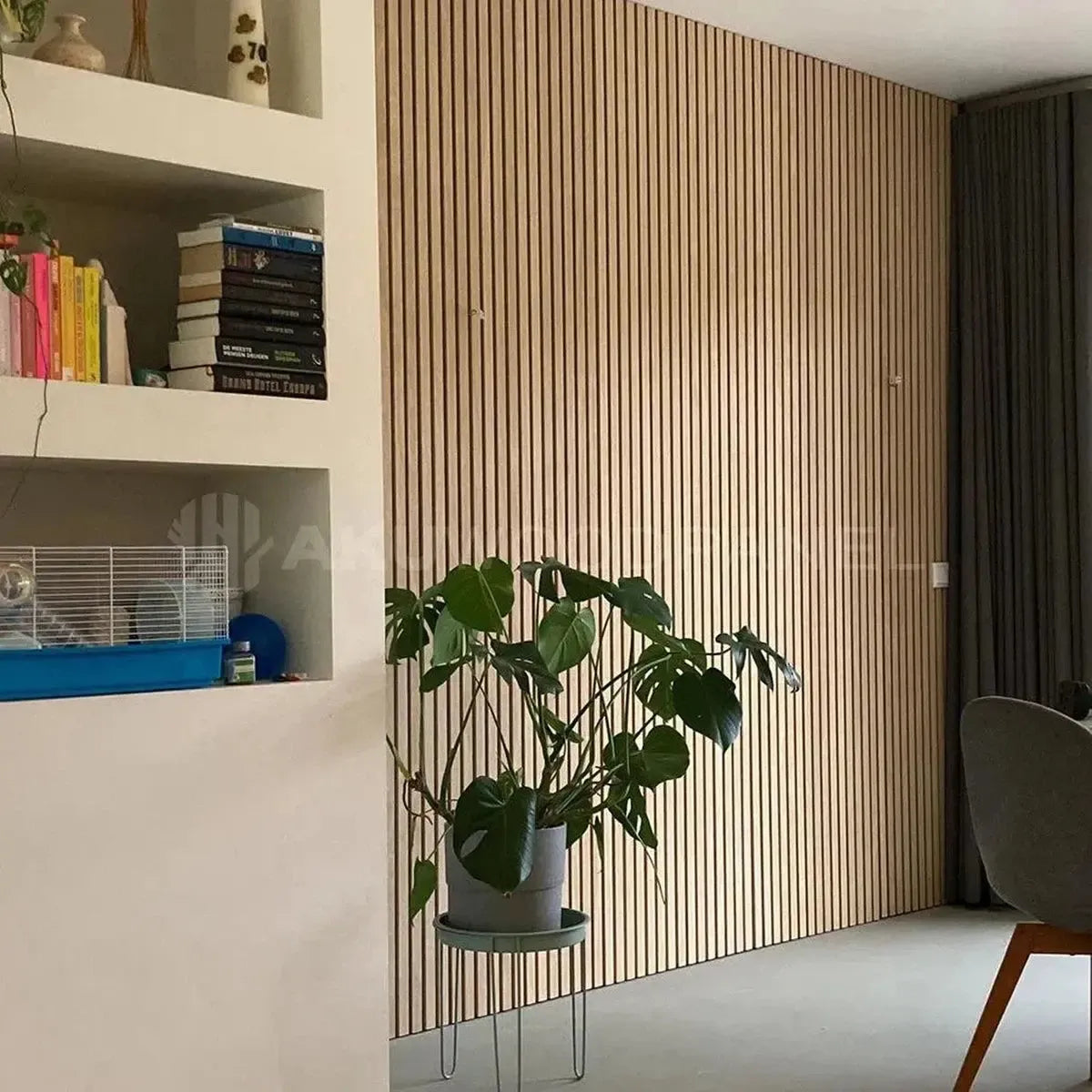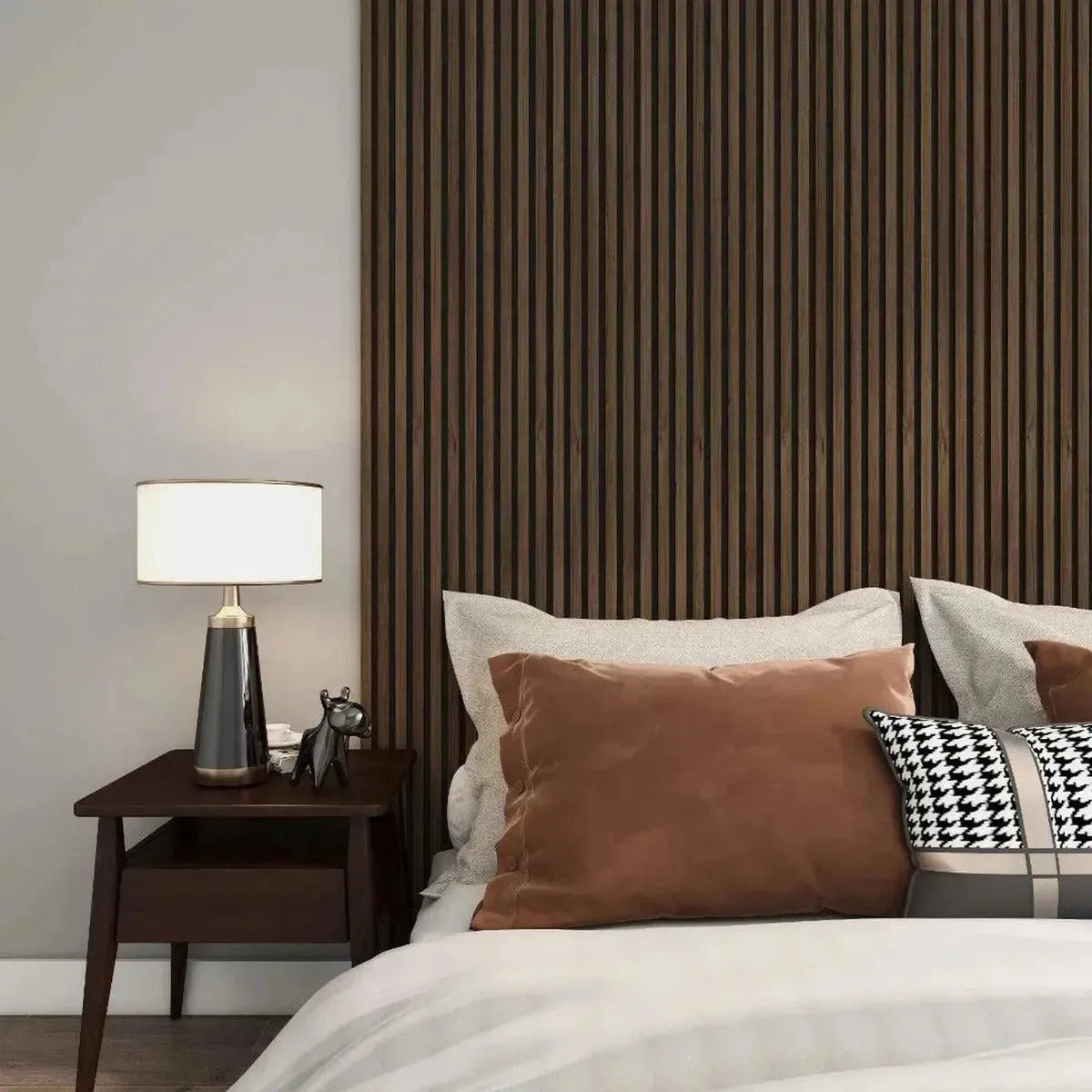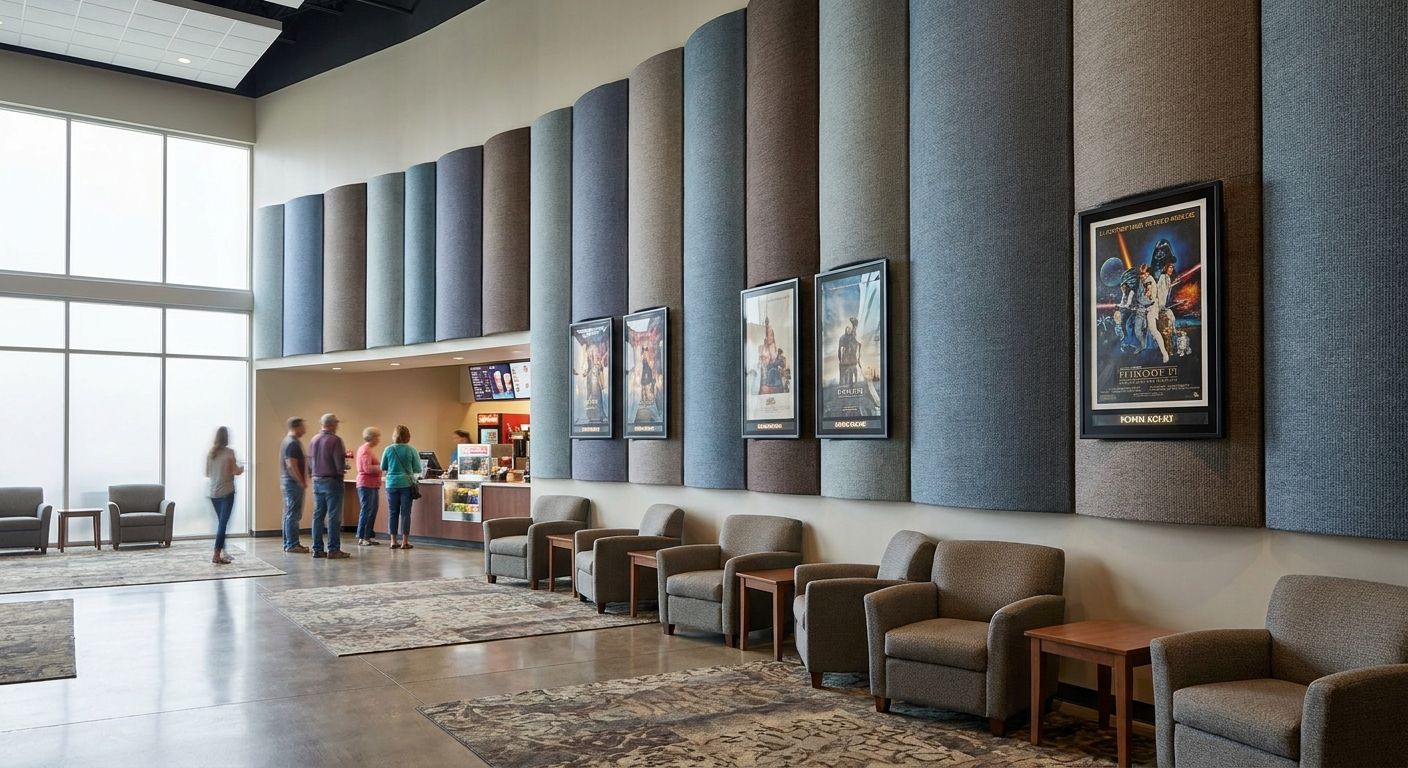
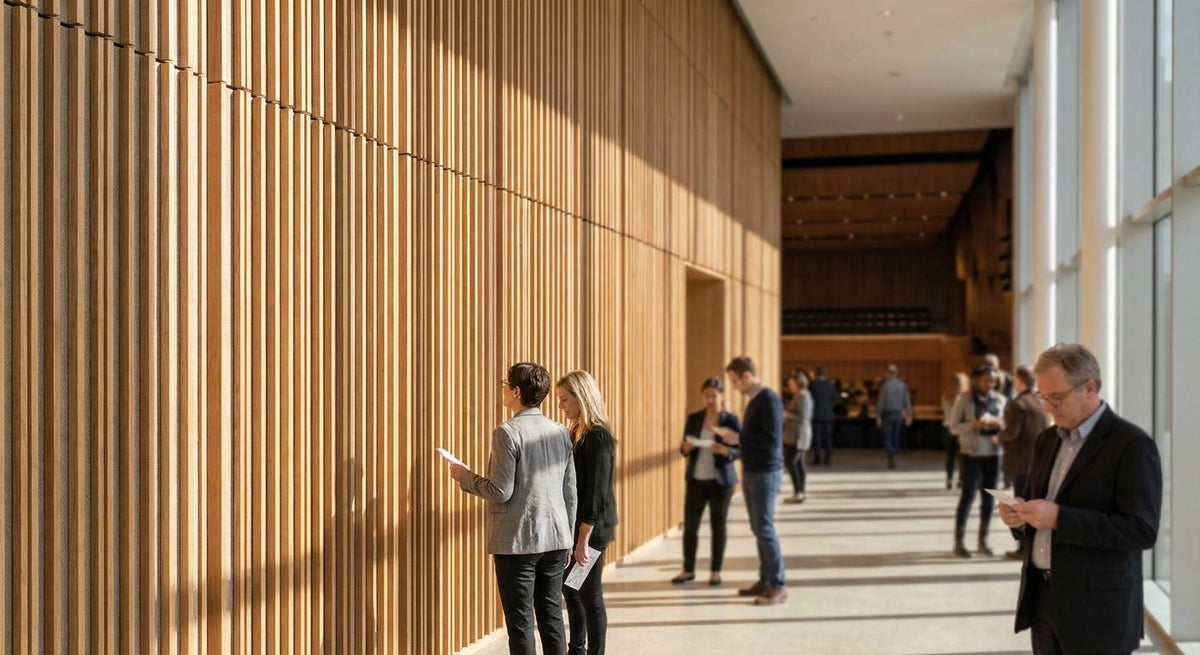
Movie theater lobby acoustic panels are wood-veneer slat, hexagon, or fluted wall systems installed to cut reverberation in high-ceiling, hard-surface entry spaces, so ticket lines, concession orders, and box office chatter stay intelligible through 2026 without stripping the lobby of visual energy. Theater lobbies fight a specific combination other commercial spaces don't: terrazzo or polished concrete floors, floor-to-ceiling glass storefronts, and open ceilings with exposed HVAC — all surfaces that bounce sound instead of absorbing it.
- Acoustic panels for movie theater lobby walls should target the loudest reflective zone first, not the whole room.
- Hexagon acoustic panels carry an NRC rating of 0.75, strong absorption for a decorative wood finish.
- Slat wall panels from Akuwood Panel start at $169.95 for Natural Oak; hexagon panels start at $148.95 for Gray Walnut.
- Match panel type to traffic zone: slat for feature walls, hexagon for pillars and concession accents.
- Budget-phase the install starting at the box office wall, where crowd noise peaks first.
Why acoustic treatment matters for a theater lobby
A theater lobby isn't a living room with an echo problem — it's a transit space built for crowds, and every hard surface in it was chosen for durability and cleanability, not sound absorption. Terrazzo floors, glass entry walls, and drywall or concrete ceilings all reflect sound rather than soak it up, so a lobby that's dead quiet before doors open turns into a wall of noise the moment three screens let out at once.
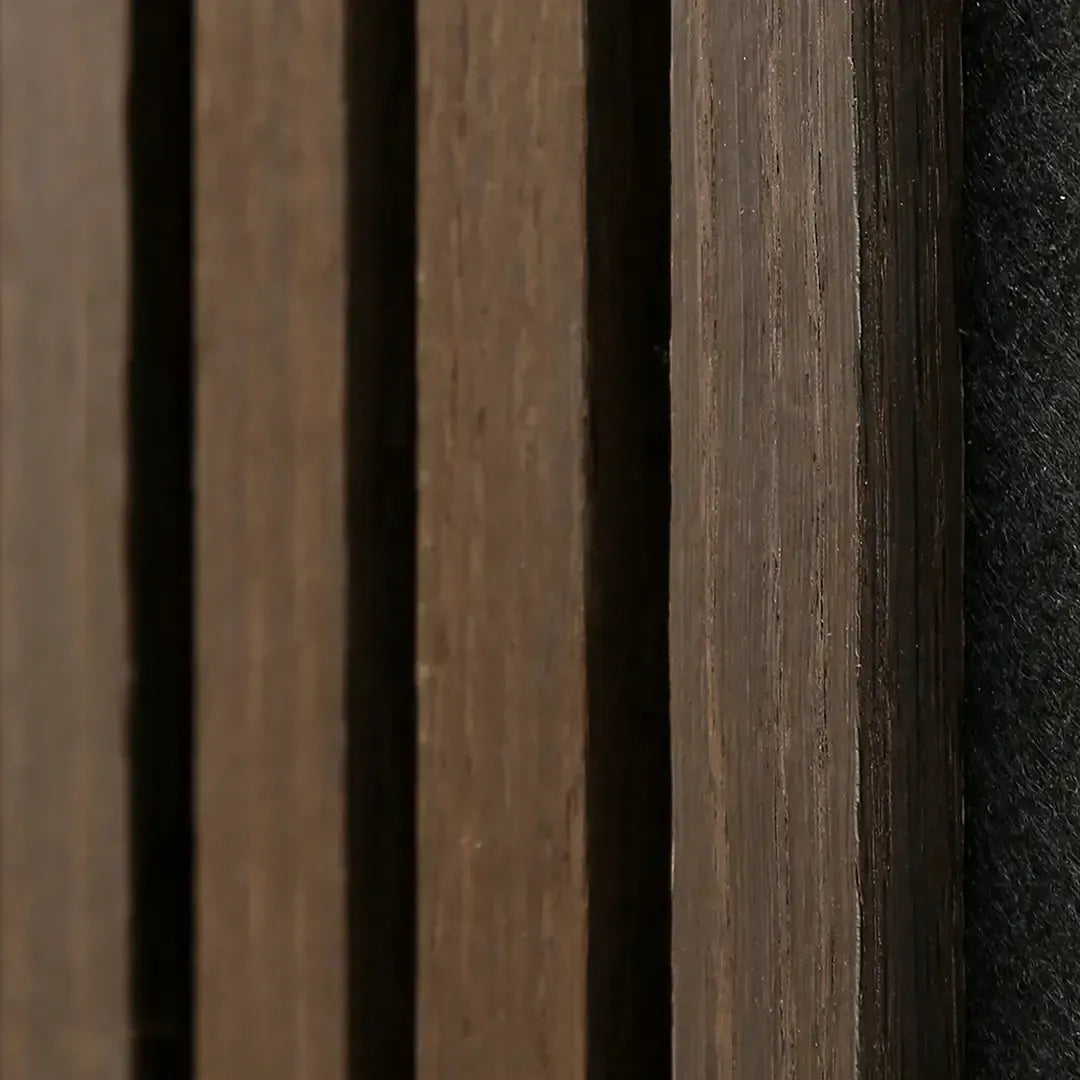
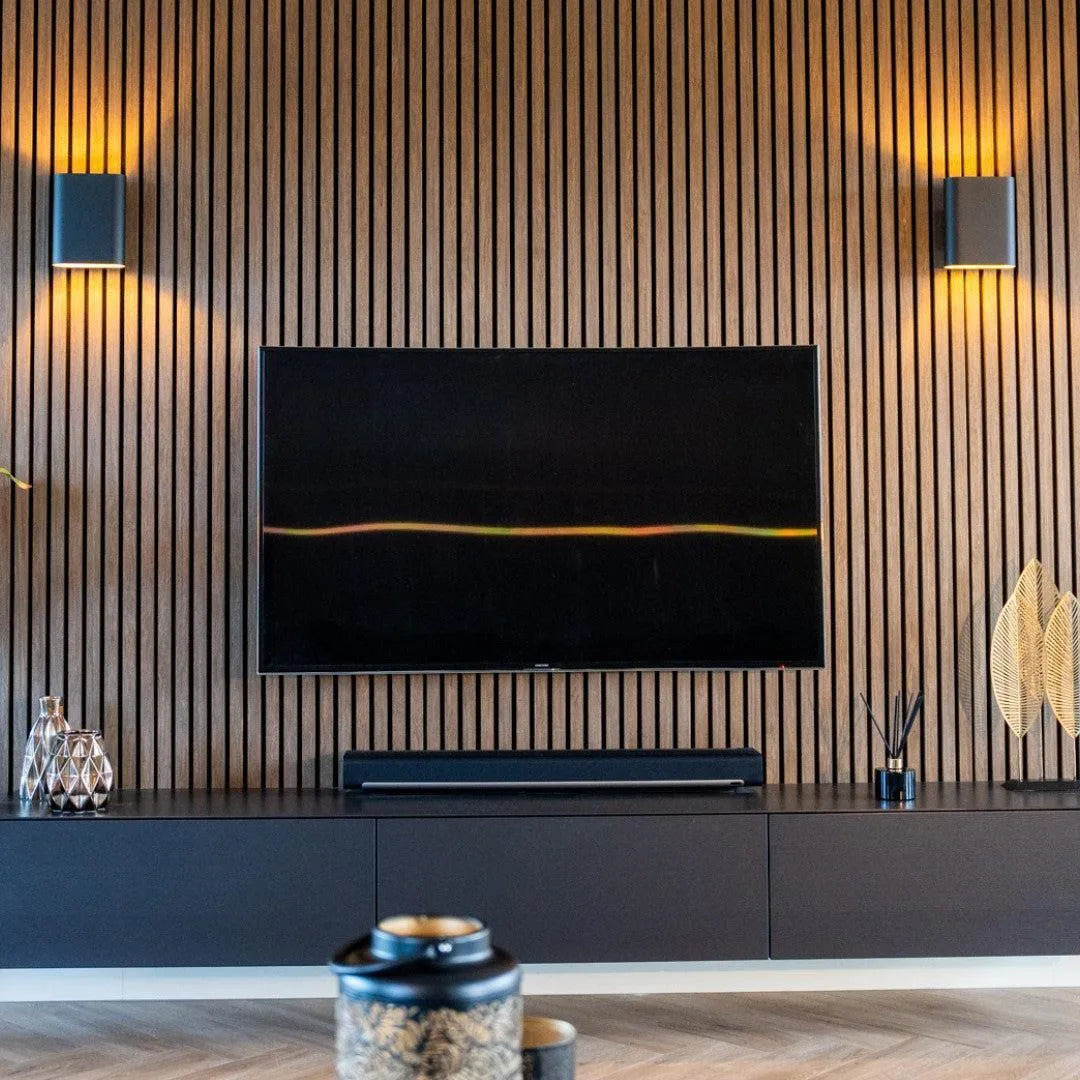
Wood wall panels from Akuwood Panel address this with a real wood veneer face over an acoustic-rated core, which gives a lobby the warmth of a hospitality build-out while doing the sound-absorption job foam or fabric panels usually handle. Hotel lobbies deal with a near-identical mix of hard floors and open sightlines — the wood slat panels for luxury hotel lobby interiors guide covers the same reverberation logic from a hospitality angle if you're comparing approaches across venue types in 2026.
Update: what makes a theater lobby different from a retail or office space
A theater lobby gets a spike in noise and foot traffic every 90 to 120 minutes as screens let out, not a steady low hum like a retail floor. Panels here need to survive rolling concession carts, stanchion contact, and marquee lighting glare — a finish that looks right under gallery track lighting can read flat or shiny under theater marquee bulbs.
How to plan acoustic panels for a movie theater lobby
Identify where reverberation is worst
Walk the lobby during peak show turnover — not during a quiet matinee — and note where sound actually stacks up.
- Stand at the box office and listen for how long a spoken sentence takes to die out
- Check whether glass storefront walls face a hard opposite wall, creating a flutter echo
- Note ceiling height and material — open concrete or metal deck ceilings reflect more than acoustic tile
- Flag corridors leading to auditoriums, where sound funnels and compounds
- Mark the concession stand separately; equipment noise adds to voice noise here
Choose the panel type for each traffic zone
Not every wall in the lobby needs the same panel. Match the format to the job.
- Slat wall panels for large, flat feature walls behind the box office or ticket kiosk
- Hexagon acoustic panels for columns, pillars, and smaller concession-area accent zones
- Fluted wall panels for wrapping corridor walls leading to auditorium entrances
- Reserve dense, continuous coverage for the loudest zone first rather than spreading panels thin across the whole lobby
Match veneer and finish to lobby branding
Marquee lighting and neon accents change how a wood finish reads compared to daylight or gallery lighting.
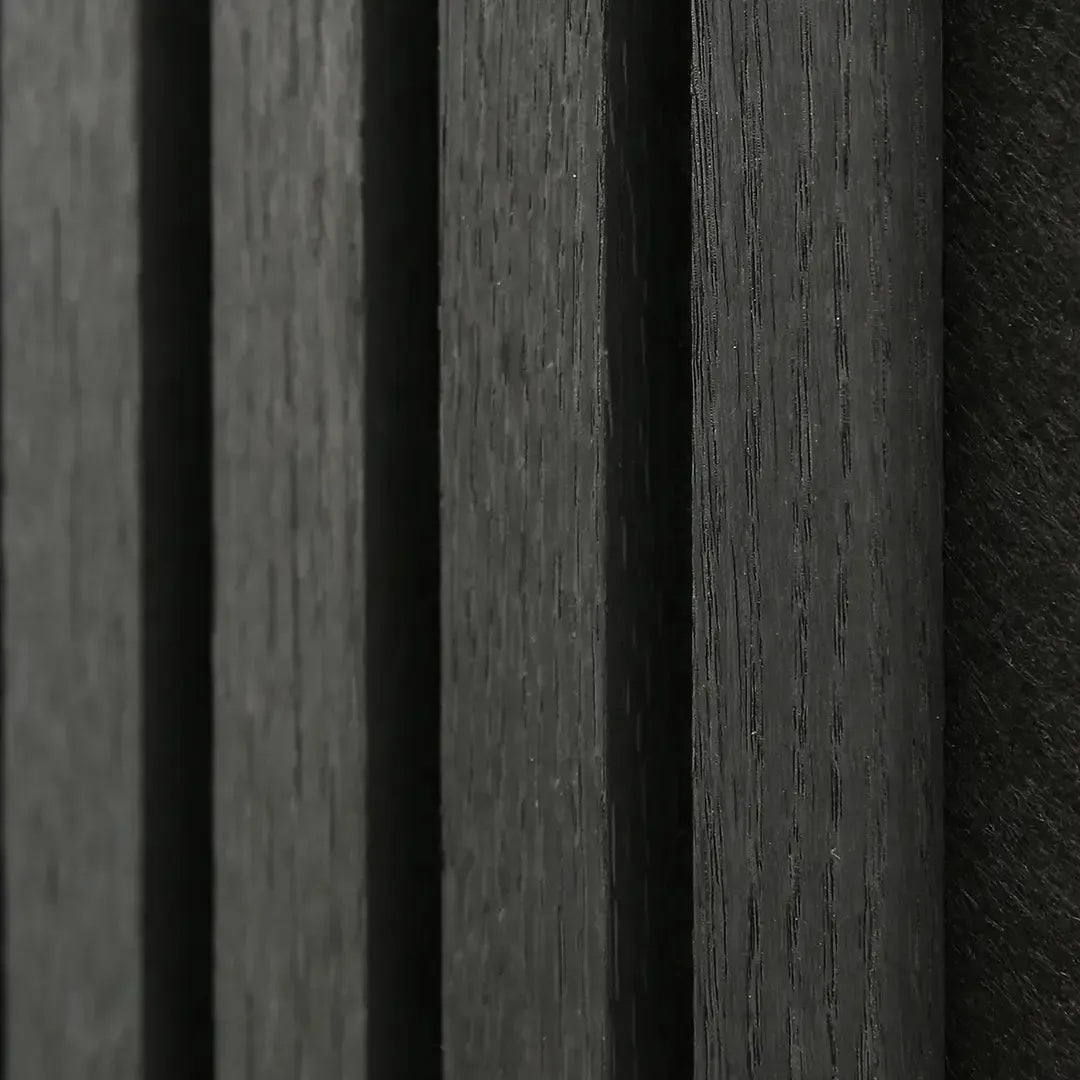
- Darker finishes like the Acoustic Slat Wall Panel Black Oak hold up visually under colored marquee light without washing out
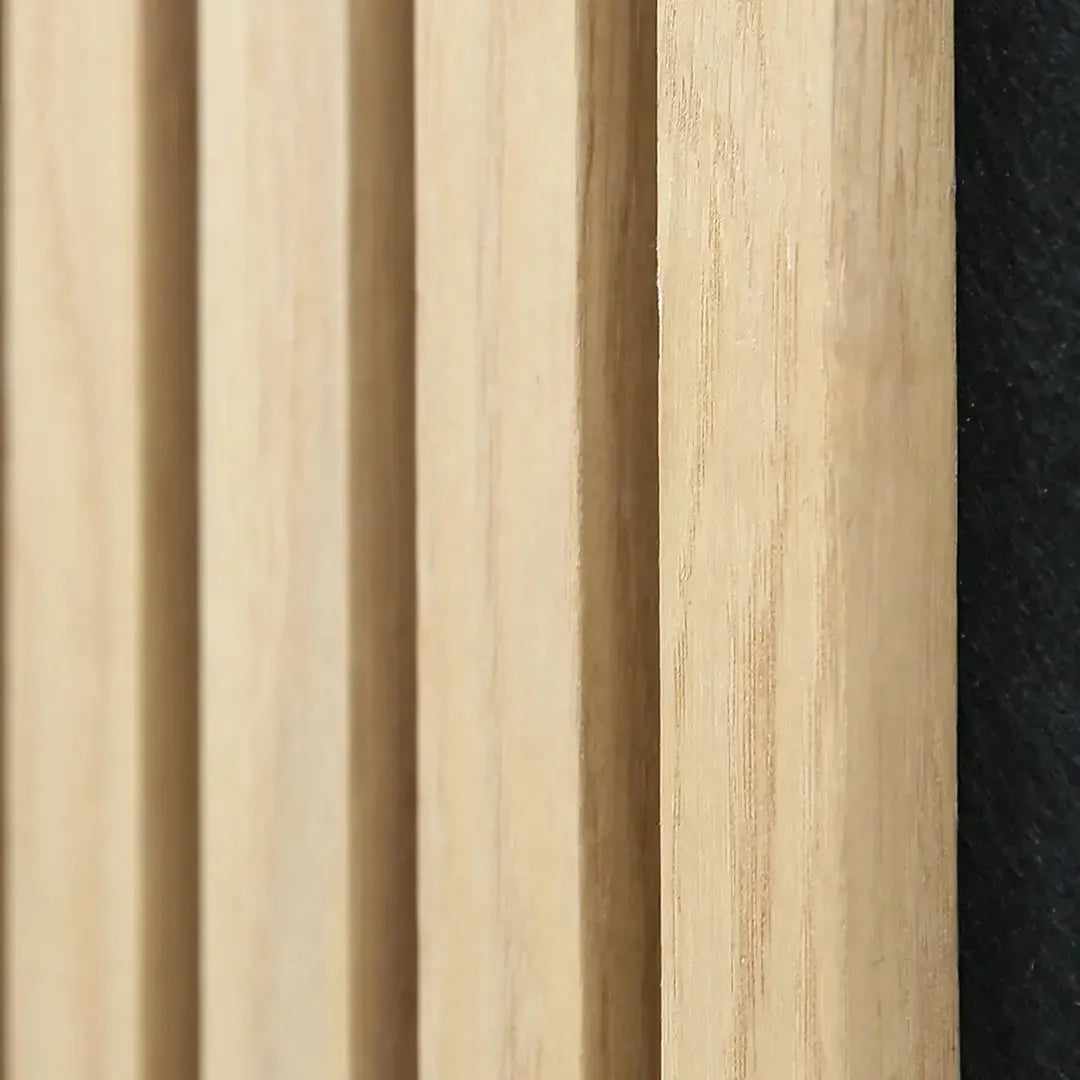
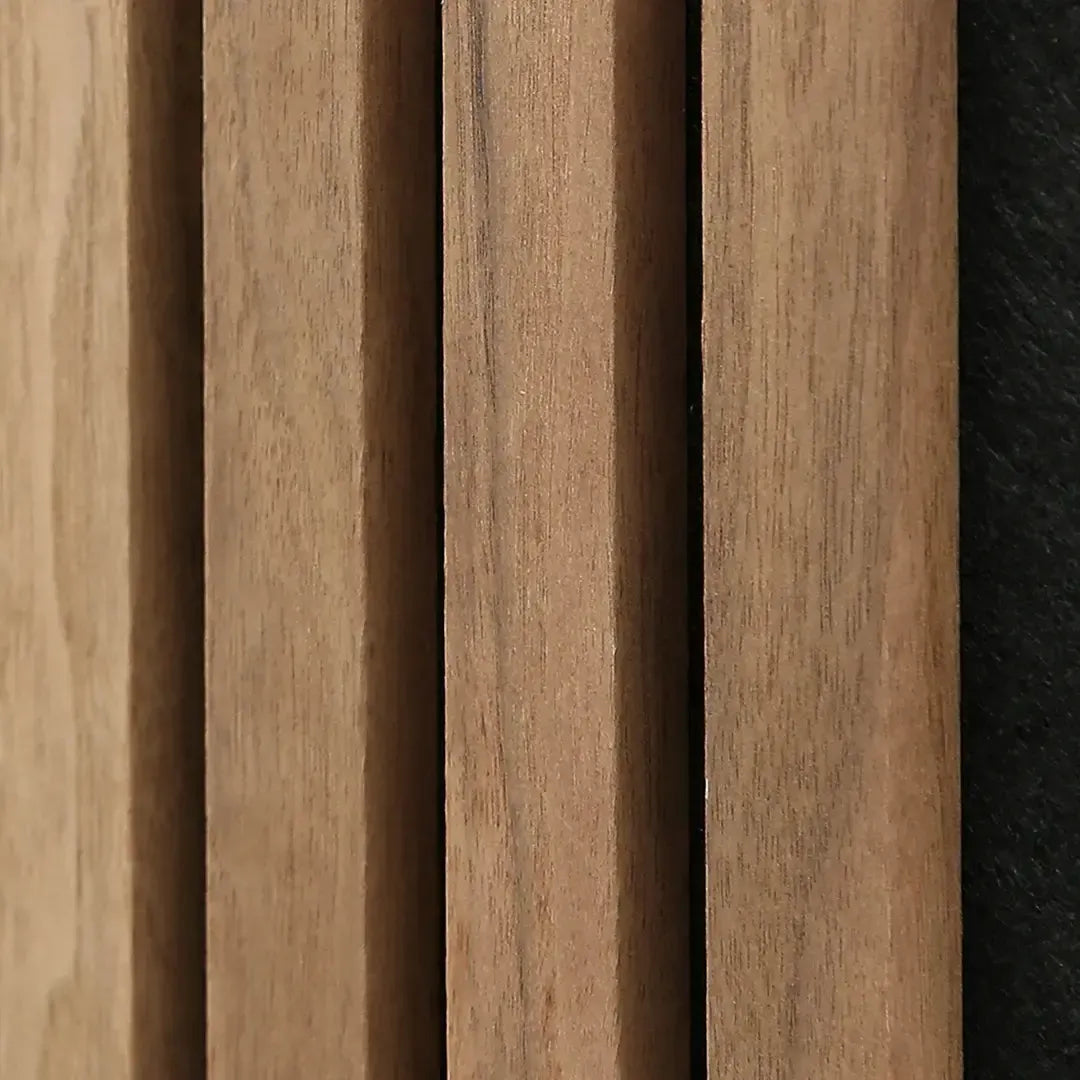
- Natural Oak and Walnut finishes read warmer under standard white LED lobby lighting
- Smoked Oak splits the difference — dark enough for contrast, warm enough not to look cold
- Test a finish under your actual lobby lighting before committing to a full wall, since showroom lighting rarely matches a marquee-lit entry
Calculate coverage and acoustic target
Don't try to solve reverberation by covering every wall — treat the reflective surfaces causing the worst bounce first.
- Measure the square footage of the single hardest-reflecting wall (usually opposite the glass entry or behind the box office)
- Check the NRC rating of the panel line you're specifying — Akuwood Panel's hexagon acoustic line carries an NRC of 0.75
- Prioritize the wall facing the loudest queue zone over decorative corridor walls
- Leave sightlines to signage and wayfinding uncovered — dense slat coverage across an entire wall can visually bury directional signs
Plan for durability against carts, stanchions and crowds
A theater lobby panel gets more physical contact per week than almost any residential wall.
- Mount panels with a solid backing rather than direct-to-drywall in high-contact zones
- Keep rolling concession cart paths clear of protruding slat edges
- Use stanchion-post placement to shield feature walls from direct crowd contact
- Choose a 3-sided veneer finish over painted MDF, since chipped paint shows faster than worn wood grain
Budget and phase the installation
Few theater renovations treat the entire lobby in one pass — phase it by where the noise actually starts.
- Start with the box office feature wall, where queue noise peaks first
- Phase concession-area hexagon accents second, once the main feature wall is proven out
- Save corridor fluted panels for a later phase tied to auditorium refresh cycles
- Budget for sample panels before ordering a full wall run, since color and sheen shift under marquee lighting


Comparing panel options for a theater lobby
| Option | Best for | Starting price | Key limitation | Verdict |
|---|---|---|---|---|
| Slat wall panel (Natural Oak) | Large feature walls behind box office | $169.95 | Linear grain reads busy on curved or very wide walls | Buy for main feature walls |
| Hexagon acoustic panel (Gray Walnut) | Pillars and concession-stand accents | $148.95 | More seams to align across large runs | Buy for accent zones |
| Fluted wall panel | Corridor wraps and column cladding | Check current pricing on site | Narrower panel width means more joints per linear foot | Hold for corridor phase |
| Standard foam acoustic tile (non-wood) | Back-of-house or staff corridors | Not applicable | No wood finish, doesn't match lobby branding | Skip for public-facing walls |
Common mistakes theater lobbies make with acoustic panels
- Treating only the ceiling and ignoring hard terrazzo floors that reflect sound straight back up into the queue line
- Choosing a painted or laminate finish that chips under rolling concession cart contact within months
- Covering an entire wall in dense slat pattern and burying wayfinding signage behind it
- Skipping a check of local commercial and fire code requirements for wall assemblies in public assembly spaces before ordering
- Treating the whole lobby evenly instead of prioritizing the single loudest reflective wall first
FAQ
What are the best acoustic panels for a movie theater lobby in 2026?
Wood slat wall panels for large feature walls and hexagon acoustic panels for pillars and concession accents are the strongest fit for 2026 theater lobbies, since both combine a hard-wearing wood veneer with real sound absorption. Slat panels from Akuwood Panel start at $169.95; hexagon panels start at $148.95.
Do wood slat panels actually reduce echo, or just look good?
Yes — acoustic slat and hexagon wall panels have a perforated or slotted core behind the veneer that absorbs sound rather than reflecting it. Akuwood Panel's hexagon acoustic line carries an NRC rating of 0.75, which measures real sound absorption, not just visual texture.
How much do acoustic panels for a theater lobby cost?
Slat wall panels start at $169.95 for Natural Oak and run to $182.95 for Walnut; hexagon acoustic panels start at $148.95 for Gray Walnut and run to $165.95 for Smoked Oak. Total cost depends on how many square feet of wall you're treating in 2026.
Is hexagon or slat panel better for a concession stand wall?
Hexagon acoustic panels work better around concession stands because they handle columns, corners, and smaller accent zones without needing a continuous flat run. Slat panels are better suited to the large, flat feature wall behind the box office.
Can acoustic wood panels handle high foot traffic without damage?
A 3-sided wood veneer finish holds up better against cart and stanchion contact than painted MDF, which chips visibly within months of heavy use. Mount panels with solid backing in any zone with direct crowd or cart contact.
Do movie theater lobbies need fire-retardant acoustic panels?
Public assembly spaces like theater lobbies are subject to local commercial building and fire codes, so check requirements for your specific jurisdiction before ordering a full wall run. Confirm code compliance with your contractor or building inspector before installation.
How do I calculate how many panels I need for a lobby wall?
Measure the square footage of the single hardest-reflecting wall first — usually the one opposite the glass entry or behind the box office — rather than the whole lobby. Order sample panels before committing to a full run, since finish and sheen shift under marquee lighting.
Should I treat the ceiling or the walls first in a theater lobby?
Start with the wall causing the worst reflection, usually the one facing the queue line, before moving to the ceiling. Ceilings in theater lobbies are often higher and harder to access, so wall treatment gives a faster return on the first phase of a 2026 renovation budget.
One last thing
The detail most lobby renovations miss in 2026: hexagon acoustic panels carry the same NRC 0.75 rating as the slat line, but their smaller module size means they go up around columns and box-office corners that a full slat panel run can't reach cleanly — treat those corners instead of leaving them bare just because the flat walls are already covered.
 Better performance and aesthetic appeal
 In Stock