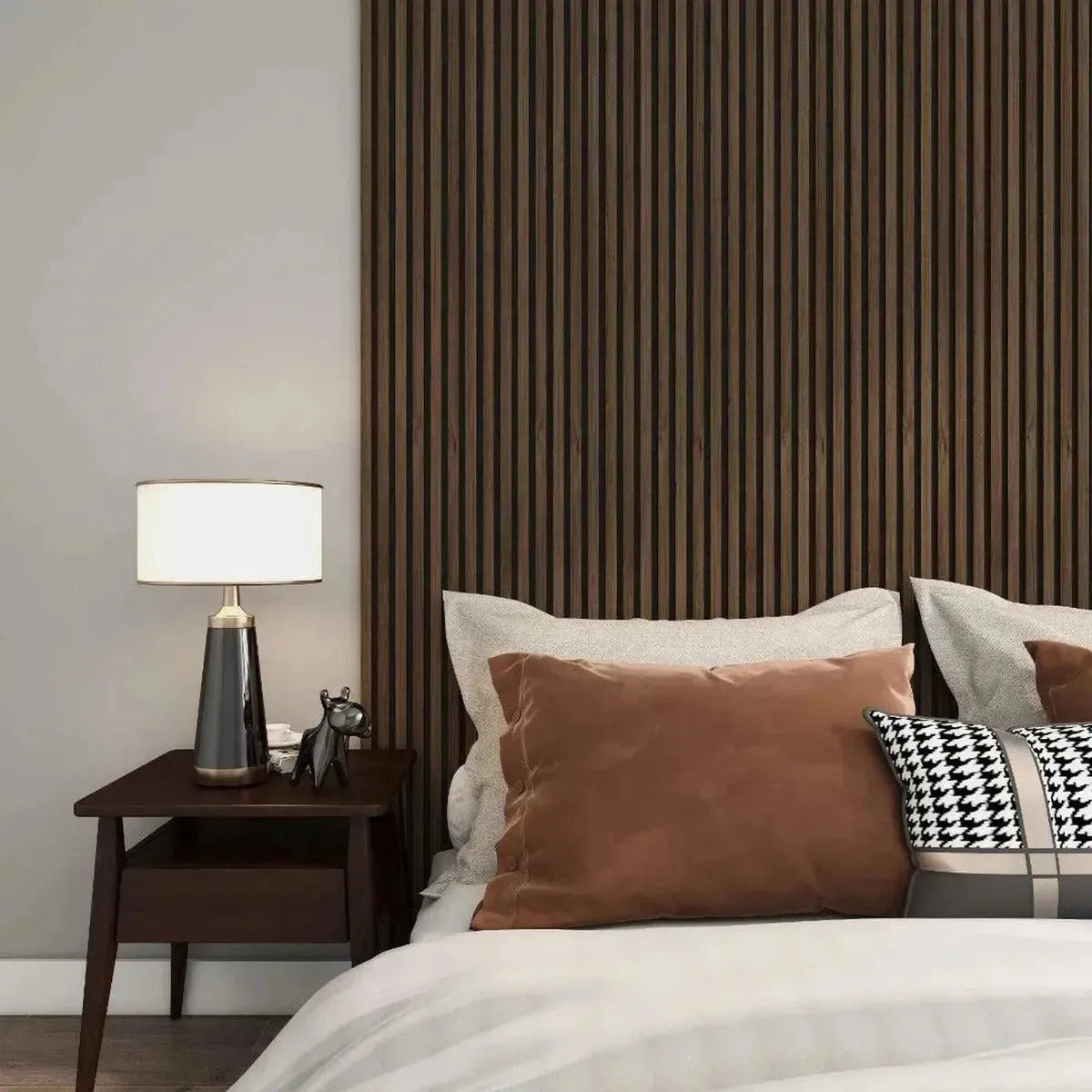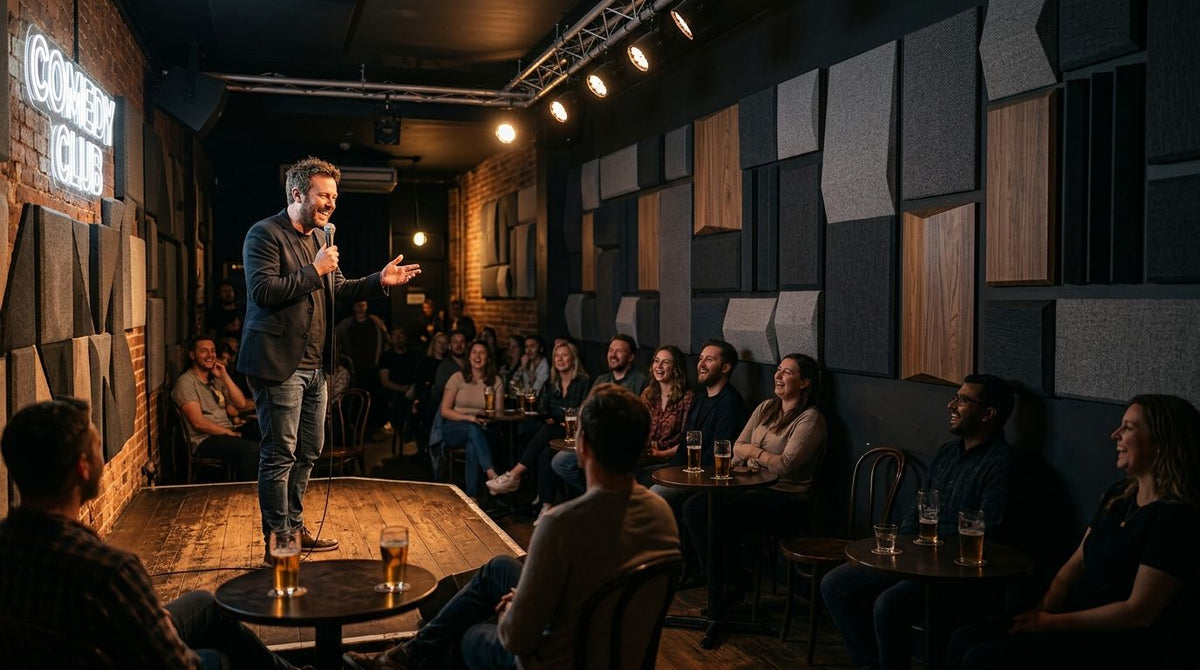
Acoustic panels for comedy club and stand-up venue walls are wood or felt-backed sound absorbers mounted on showroom walls to cut reverb so punchlines land clean and crowd laughter reads as energy instead of noise. A comedy room has a different acoustic problem than a concert hall or restaurant: the comic needs the room to react in real time, but a flat, live surface turns every laugh into a wash of slap-back that steps on the next line. The fix is targeted absorption on the back wall and side walls, not a fully dead room.
- Acoustic panels for comedy club walls should target the back wall and both side walls first, not the stage wall.
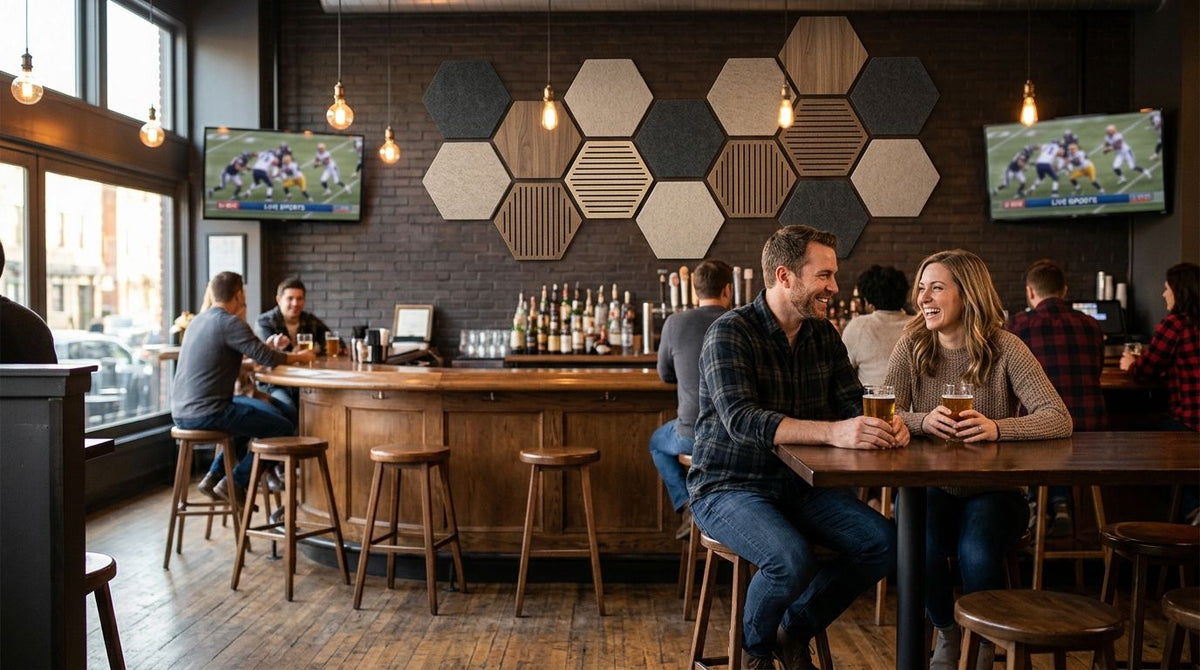
- Akuwood Panel felt-backed hexagon panels carry an NRC of 0.75, enough to cut slap-back in a 200-400 seat room.
- Full foam treatment kills the room energy comics rely on for crowd work in 2026 shows; partial coverage keeps the room alive.
- Wood slat and hexagon panels double as a finished interior for bar-adjacent and lounge-style venues.
Why acoustic panels matter for comedy clubs
Most stand-up rooms get built into whatever space was available first: a former bar, a converted restaurant, a black-box theater with concrete block walls. None of those spaces were designed for spoken-word comedy, and the mismatch shows up fast once a room fills past half capacity.
A comic delivering a punchline into a hard-surfaced room fights two problems at once. First, the reverb tail from the previous line blurs into the next one, so timing-dependent jokes lose their edge. Second, laughter itself bounces around long enough that the comic cannot read the room accurately mid-set, which throws off crowd work. Akuwood Panel builds its acoustic slat and hexagon panel lines around exactly this kind of speech-clarity problem, not just music studio damping.
Unlike a home theater or a bedroom, a comedy club cannot go fully dead. Comics and club owners both want laughter to carry through the room so a table three rows back still feels the reaction. The goal for acoustic panels in a comedy club is absorbing the reflected slap-back off hard walls while keeping enough room tone for a live, communal feel.
Diagnose the room before buying anything
Do not guess at coverage. A five-minute clap test tells you more than any spec sheet.
- Clap once from the back of the room and count the decay: a long ring means the room is under-treated
- Stand at the stage mic position and speak at normal volume; if you hear your own voice bounce back, the back wall is the priority zone
- Walk the perimeter and note hard parallel surfaces (brick-to-brick, concrete-to-glass), since parallel hard walls create flutter echo
- Check ceiling height: rooms over 12 feet often need ceiling treatment in addition to walls
- Note existing soft surfaces (curtains, carpet, upholstered seating), since these already absorb energy and reduce how many panels you need
Cover the back wall and side walls first
The stage wall behind the comic gets treated last, not first, because most problem reflections come from surfaces the sound hits after leaving the mic.
- Treat the back wall of the room first, since it is the longest throw distance and creates the most audible slap-back
- Treat the first reflection points on side walls, roughly level with the stage and the first few rows
- Leave the stage backdrop wall for branding or minimal treatment unless a live mic sits directly against it
- Skip full ceiling coverage in rooms under 10 feet; wall treatment usually solves most of the problem
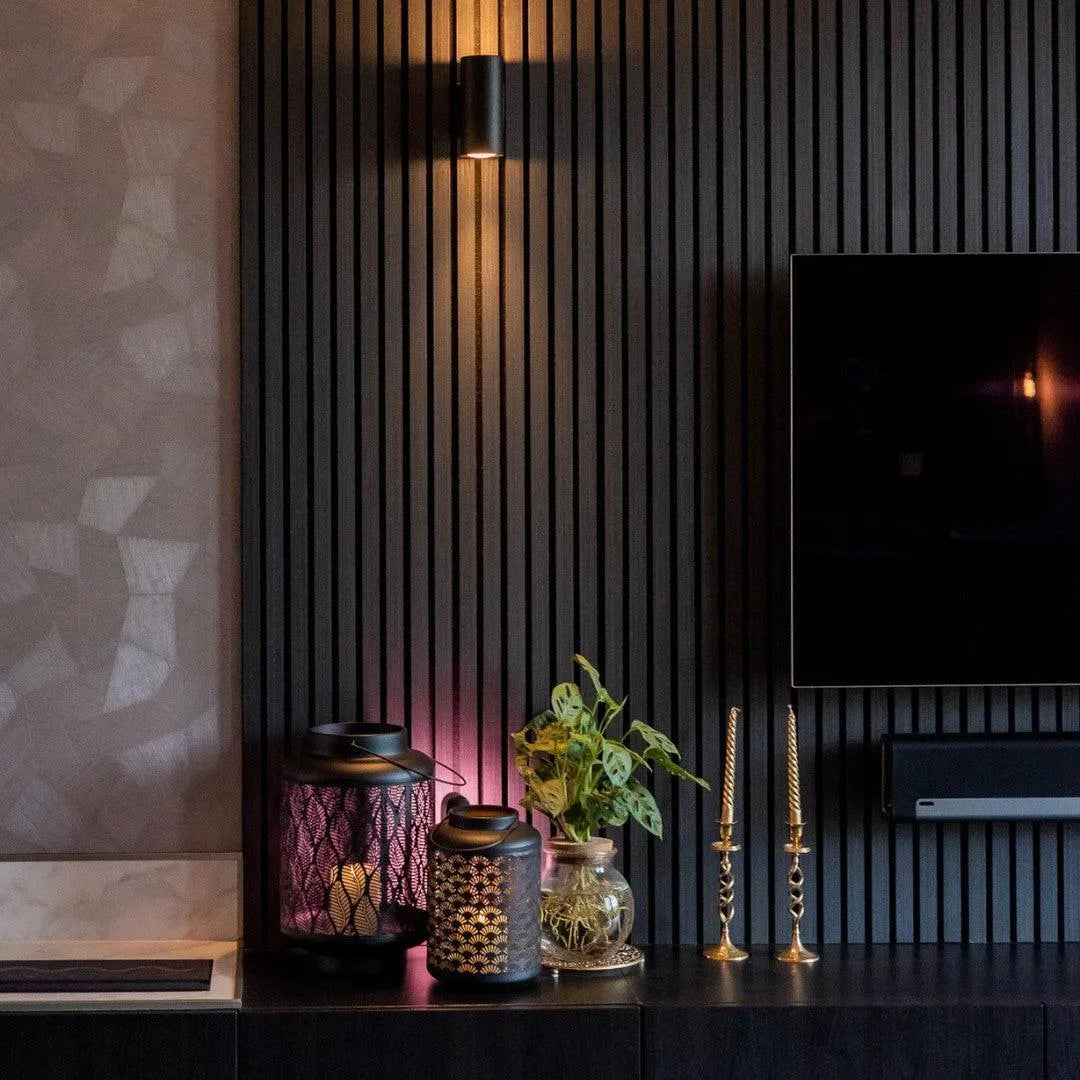
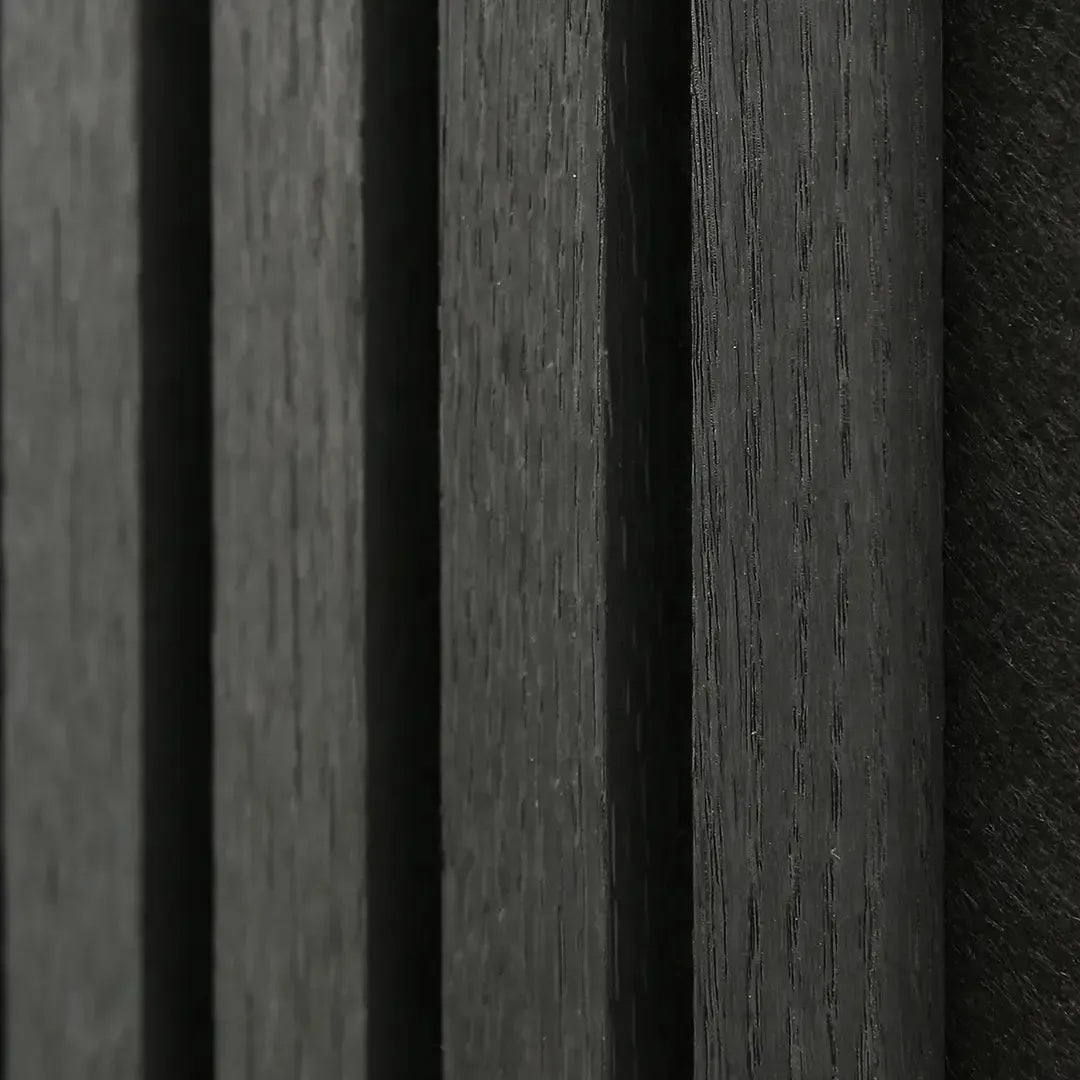
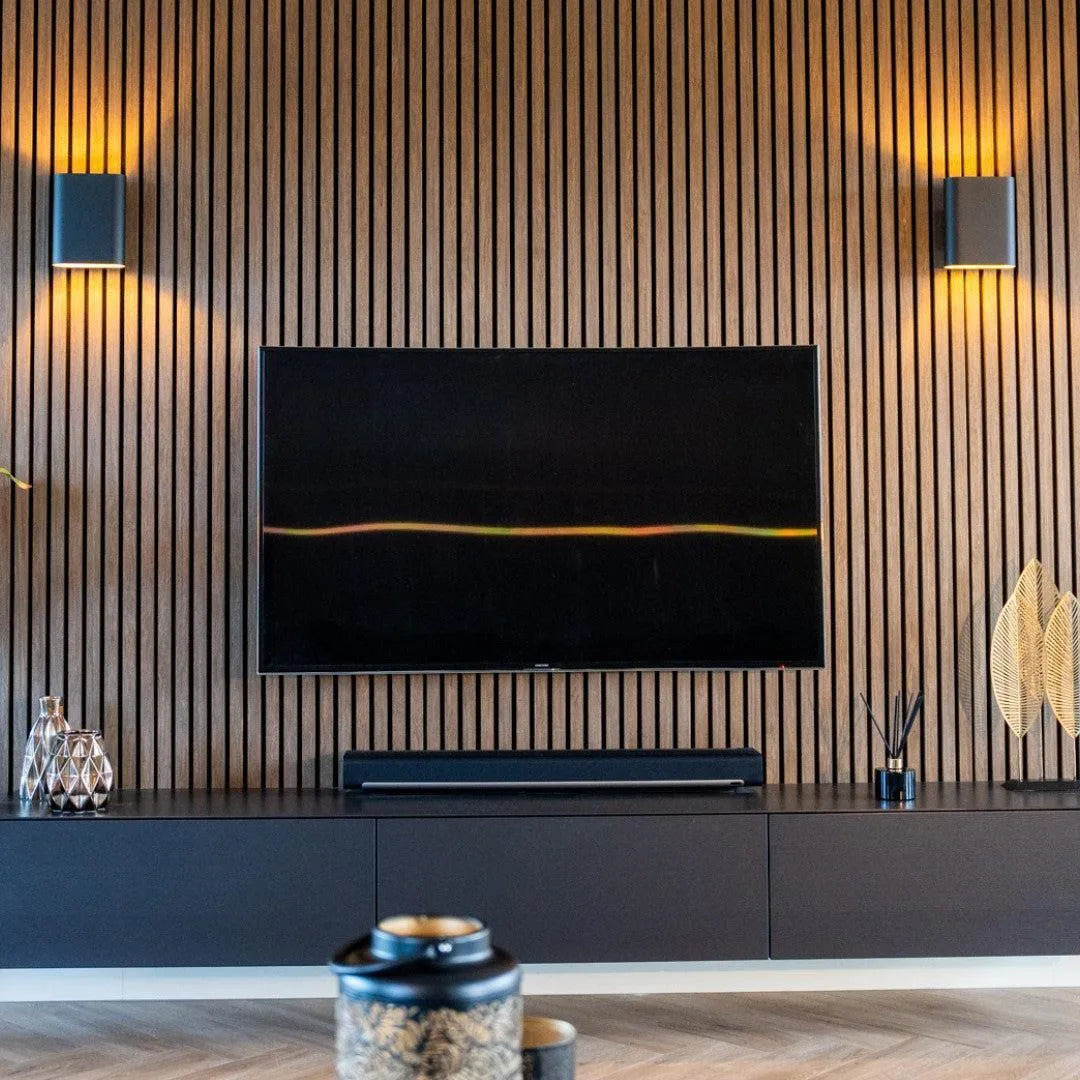
- For a faster path than sourcing raw foam and fabric separately, a pre-finished option like the black oak slat wall panel covers absorption and the finished-wall look in one install
Choose panel material for speech clarity, not just looks
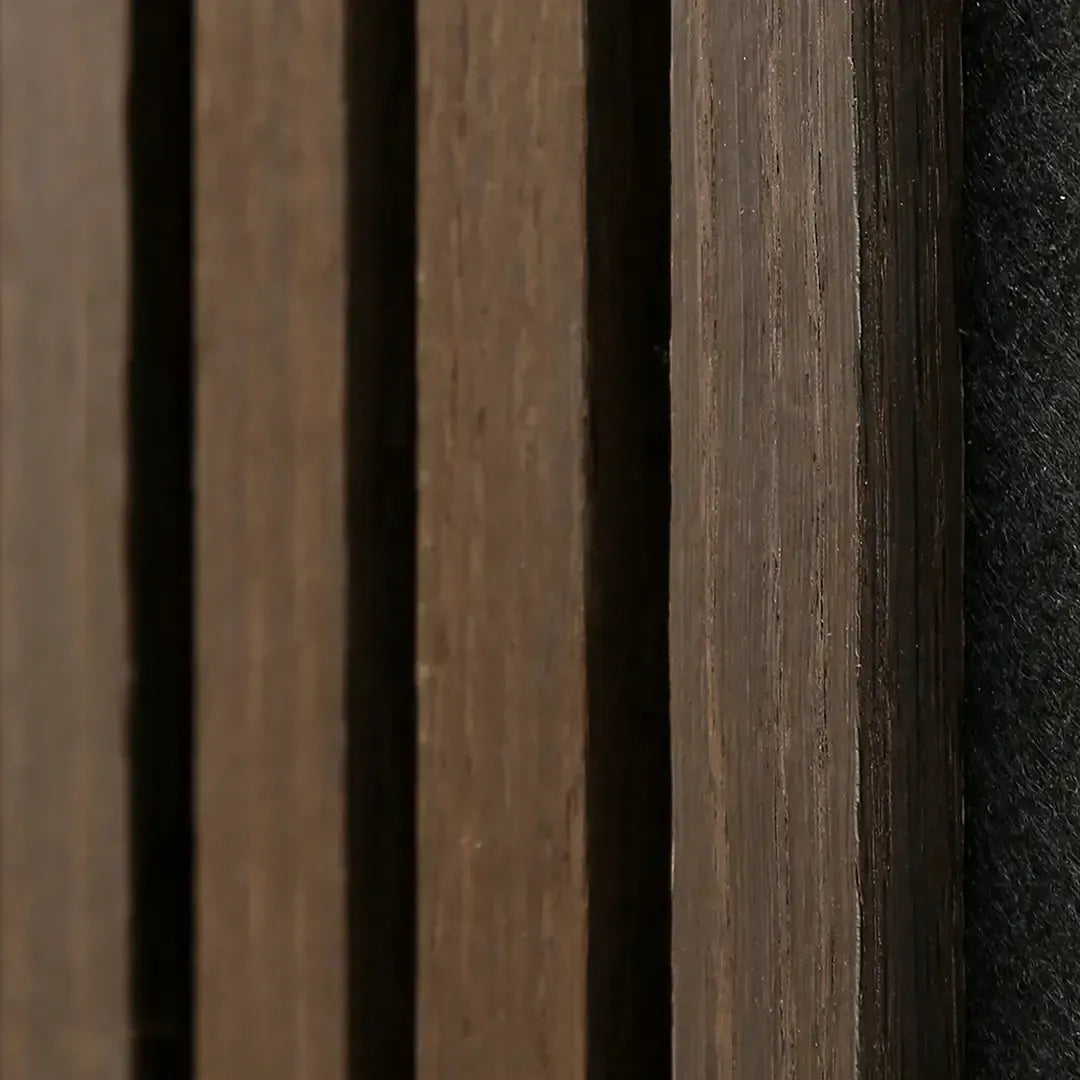
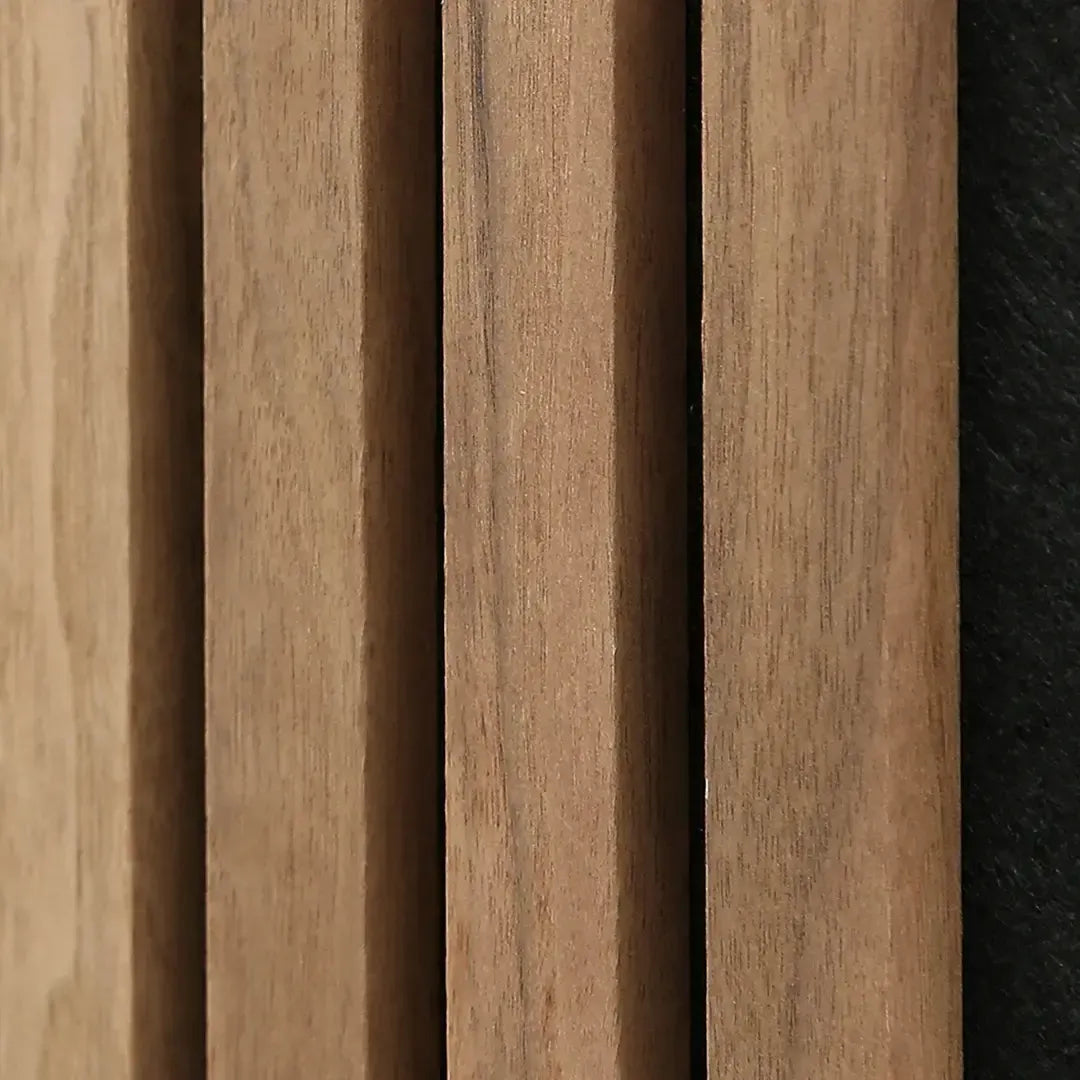
Foam absorbs highs and mids well but does little for low-frequency rumble from a sound system or street noise bleeding through exterior walls. Felt-backed wood panels split the difference: real wood veneer on the face, acoustic felt behind it.
- Foam wedges: cheapest option, but look unfinished under stage lighting and degrade fast in high-traffic rooms
- Fabric-wrapped fiberglass panels: strong absorption across frequencies, but plain fabric reads as conference room, not venue
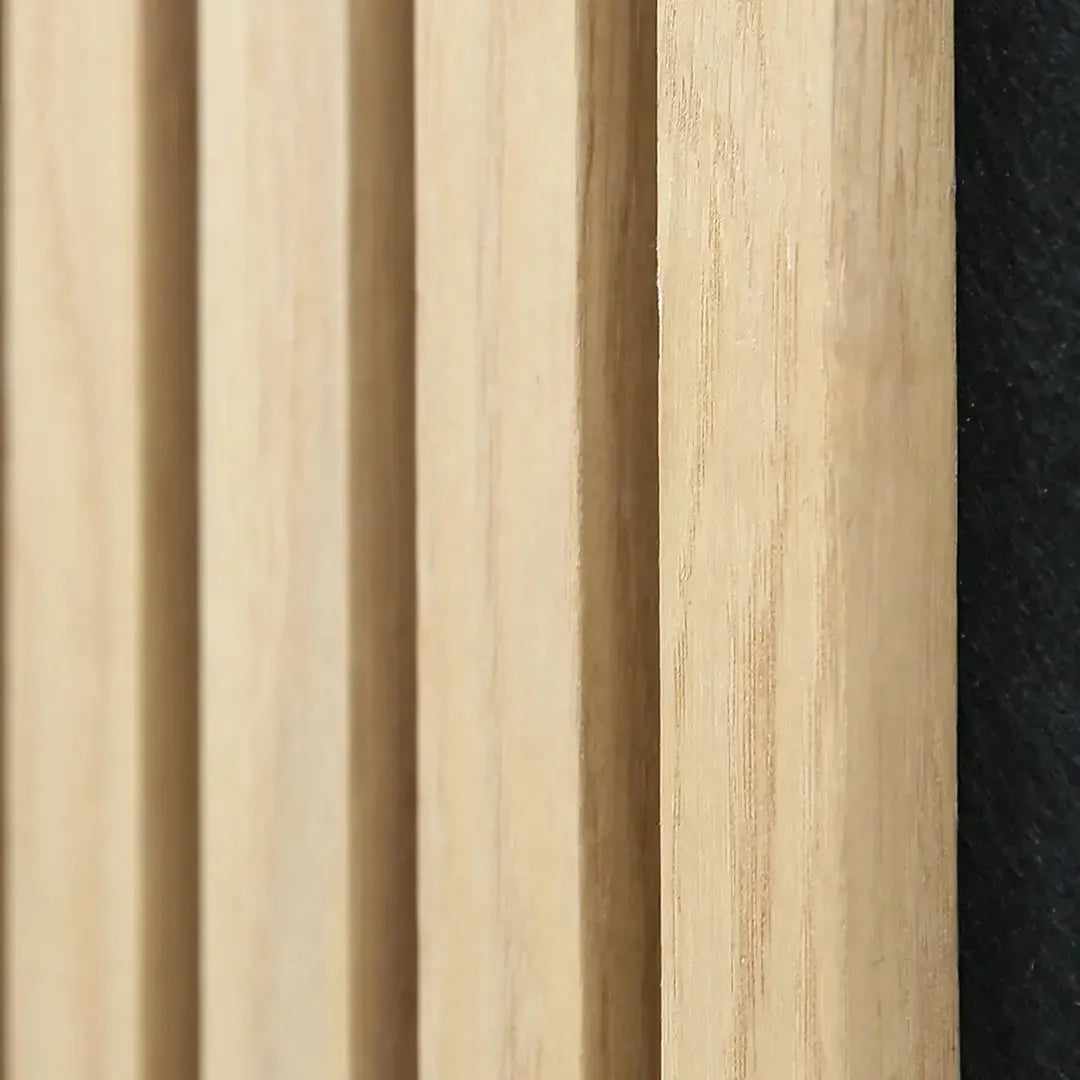
- Wood slat panels with acoustic felt backing: absorb mid and high frequencies while keeping a finished, branded wall surface
- Hexagon felt-backed panels: same absorption principle in a modular shape that works for irregular or segmented back walls
Calculate how much wall you actually need to cover
Most rooms do not need every wall panelled edge to edge. Over-treating a comedy room deadens the crowd reaction the room depends on.
- Start with 25-40% wall coverage across the back wall and side walls combined for rooms under 150 seats
- Push toward 50% coverage for rooms with hard ceilings and no soft seating
- Recheck with a second clap test after the first phase of panels goes up, before ordering more
- Budget extra coverage near exposed HVAC or bar equipment that adds background hum
Install around the stage and front rows with intent
The mic position and the first few rows are where slap-back does the most damage to timing. Treat this zone deliberately, not with leftover panels from the back wall.
- Mount panels at ear height on side walls flanking the first three rows
- Keep placement symmetrical left-to-right so the room does not sound lopsided from house left versus house right
- Leave a clear zone around wall-mounted lighting and speaker cabinets
- If the venue runs merch or bar service against a side wall, panel behind the fixture rather than around it for a cleaner finish
Match the panel finish to the venue brand
A dive-bar-style room and a polished downtown club need different finishes even though the acoustic math is identical.
- Dark finishes (black oak, smoked oak) read as moody and intimate, which suits late-night rooms
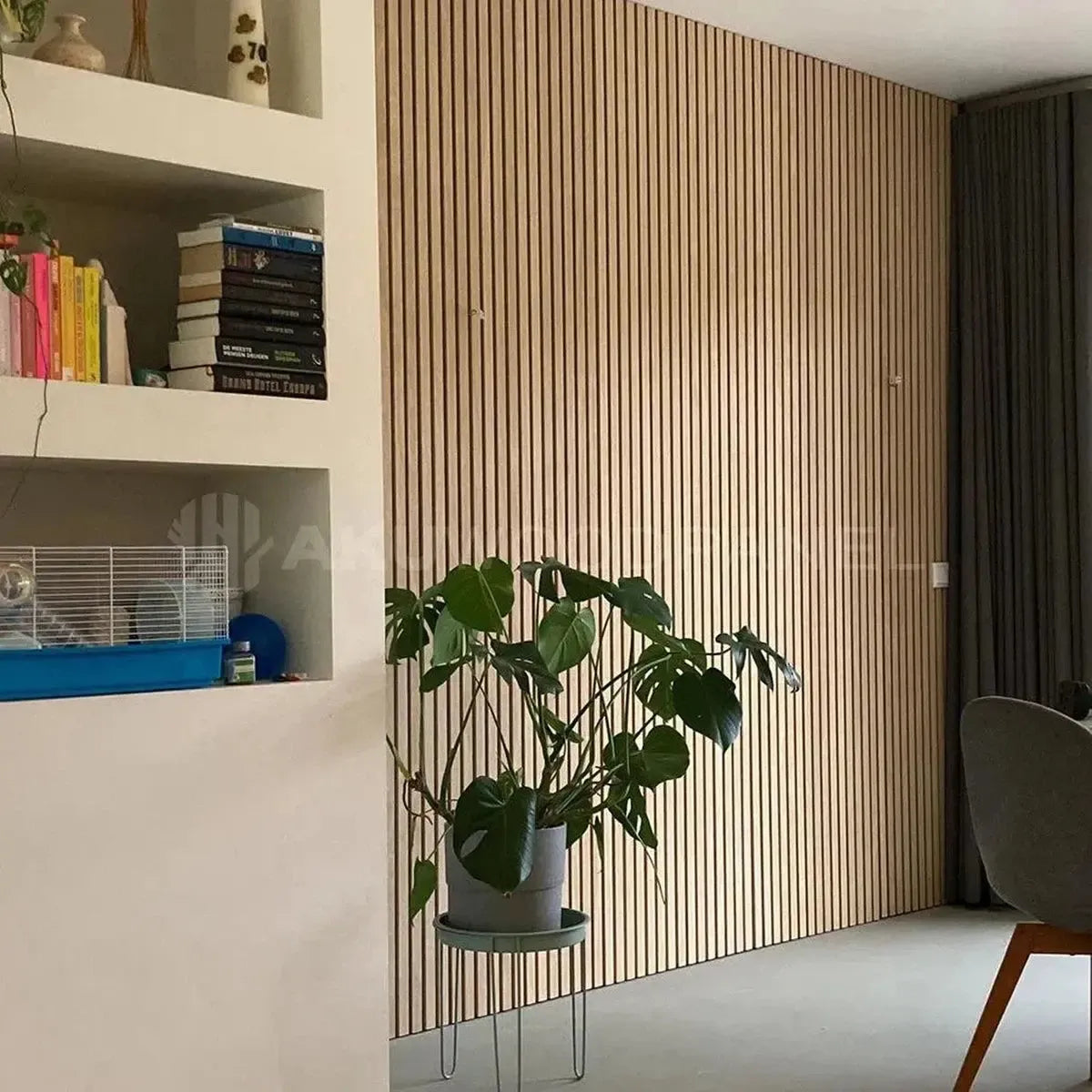
- Natural oak and walnut finishes work better for early-evening, family-friendly comedy nights
- Felt color behind the wood should match or contrast intentionally with existing stage curtains
- For venues that also host live music between comedy nights, the same panel run doubles as live music venue wall treatment
Comparison table: acoustic panel options for comedy clubs
| Option | Best for | Key limitation |
|---|---|---|
| DIY foam wedges | Pop-up rooms and tight budgets | Absorbs highs only; looks unfinished under stage lighting |
| Fabric-wrapped fiberglass | Rooms needing broad frequency absorption | Plain look; needs a careful installer for a clean finish |
| Acoustic wood slat panels | Venues wanting finished walls plus real absorption | Deeper mounting profile than surface-applied foam |
| Hexagon felt-backed panels | Back walls, segmented walls, feature walls | More cutting required around irregular architecture |
Verdict: for a stand-up venue that wants a finished look and real absorption, wood slat or hexagon panels from Akuwood Panel beat bare foam because they solve the acoustic problem without turning the room into a warehouse.


Common mistakes comedy club owners make with acoustic panels
- Treating only the stage backdrop wall. The stage wall matters least for slap-back; the back and side walls carry the reflections that ruin timing.
- Over-absorbing the room. A fully dead comedy room kills the collective laughter energy audiences feed off. Leave most of the hard wall untreated.
- Ignoring bar and lobby noise bleed. Rooms sharing a wall with a loud bar need treatment on that shared wall, not just the showroom perimeter.
- Picking foam for a room with stage lighting. Foam wedges shadow badly under colored lights; a finished wood panel holds up in the 2026 photos and clips you use for marketing.
- Skipping the coverage math. Guessing at panel count leads to under-treatment. Re-run the clap test after the first install phase before reordering.
FAQ
What are the best acoustic panels for a comedy club?
Felt-backed wood slat or hexagon panels work best for comedy clubs because they absorb slap-back reflections while keeping enough room tone for laughter to carry. Akuwood Panel hexagon panels with gray felt backing carry an NRC value of 0.75.
Do comedy clubs need full-room acoustic treatment?
No. Most stand-up rooms only need 25-50% wall coverage concentrated on the back wall and side walls. Full coverage risks deadening the room and removing the crowd energy comedy depends on.
Are wood acoustic panels better than foam for a comedy venue?
Wood slat and hexagon panels look finished under stage lighting and absorb the mid and high frequencies that carry speech clarity. Foam is cheaper up front but degrades faster and looks unfinished on camera.
Where should acoustic panels go in a comedy club?
Start with the back wall, which produces the longest-throw slap-back, then move to side walls beside the first few rows. The stage backdrop wall is treated last and can stay mostly bare for branding.
How much does it cost to treat a comedy club acoustically?
Cost depends on room size, wall material and the coverage percentage you choose. Check the current options and pricing on the product pages before setting a budget.
Can acoustic panels double as decor in a stand-up venue?
Yes. Wood veneer slat and hexagon panels work as a finished wall surface as well as an absorber. Dark finishes like black oak suit late-night rooms; natural oak suits early family-friendly shows.
What NRC rating do comedy clubs need?
An NRC around 0.75 on the treated wall sections handles most stand-up rooms. Chasing higher figures is unnecessary because over-absorbing removes the live-room feel comedy needs.
Should the ceiling be treated in a comedy club?
Only when ceiling height passes roughly 12 feet or the ceiling is hard and flat. In lower rooms, back wall and side wall treatment resolves most of the audible slap-back.
One last thing
The detail most comedy club owners miss in 2026 room upgrades: symmetry matters as much as square footage. A room with 30% wall coverage split evenly left-to-right sounds more balanced to a comic reading the crowd than a room with 60% coverage bunched on one side. Run the clap test from both house-left and house-right before you finalize panel count for 2026.
 Better performance and aesthetic appeal
 In Stock