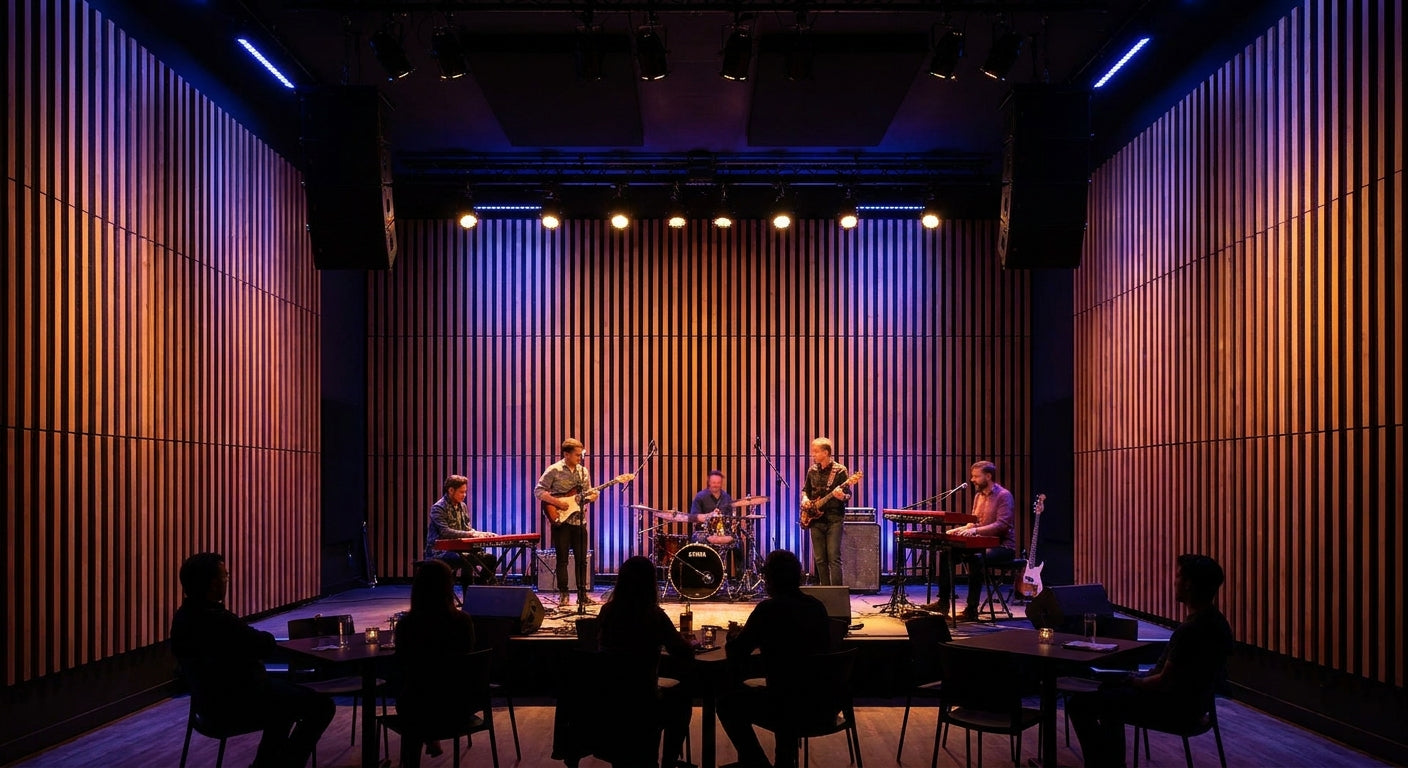
Live music venues fight slap-back, flutter, and low-end buildup every night the PA runs, and acoustic slat wall panels are one of the few wall treatments that cut reverb without turning your stage wall into a gray foam box.
TL;DR
For acoustic slat panels in a live music venue, felt-backed panels are the only category worth ordering in 2026 — bare decorative slats with no backing look identical online but do almost nothing to the room's reverb tail. The Black Oak Acoustic Slat Wall Panel and Smoked Oak Acoustic Slat Panel with Gray Felt are the two picks that hold up on a stage-facing wall, both Buy. A hexagon panel works for lobby and bar zones but is a Consider, not a first choice for front-of-house. Skip any panel marketed as "acoustic" that doesn't disclose a felt or fiber backing layer.
Why this matters
A 1,200-square-foot main room reflects sound completely differently full versus empty, and most venues only get acoustically treated once — during buildout — then live with whatever reverb tail that one decision leaves behind for years. Hang a few decorative slat panels on the back wall in 2026 thinking it solved the echo problem, and the first sold-out Friday show proves otherwise: hard surfaces above head height still throw every kick-drum transient straight back at the mix position. This is exactly the gap the Black Oak Acoustic Slat Wall Panel is built to close — felt sits behind the slats, not just under a decorative veneer, which is the entire difference between a wall that looks acoustic and one that measures acoustic.
Who this is for
This guide is for venue owners, GMs, and sound engineers planning wall treatment for a room that hosts amplified live music — clubs, listening rooms, brewery stages, black-box theaters. It is not written for home theaters, open-plan offices, or bedroom vocal booths, which have different SPL and traffic demands. If your PA runs above 95 dB SPL at front-of-house on a busy night and your walls are drywall, block, or exposed brick, keep reading.
What to look for in acoustic slat panels for a live music venue
Absorption performance, not just the look
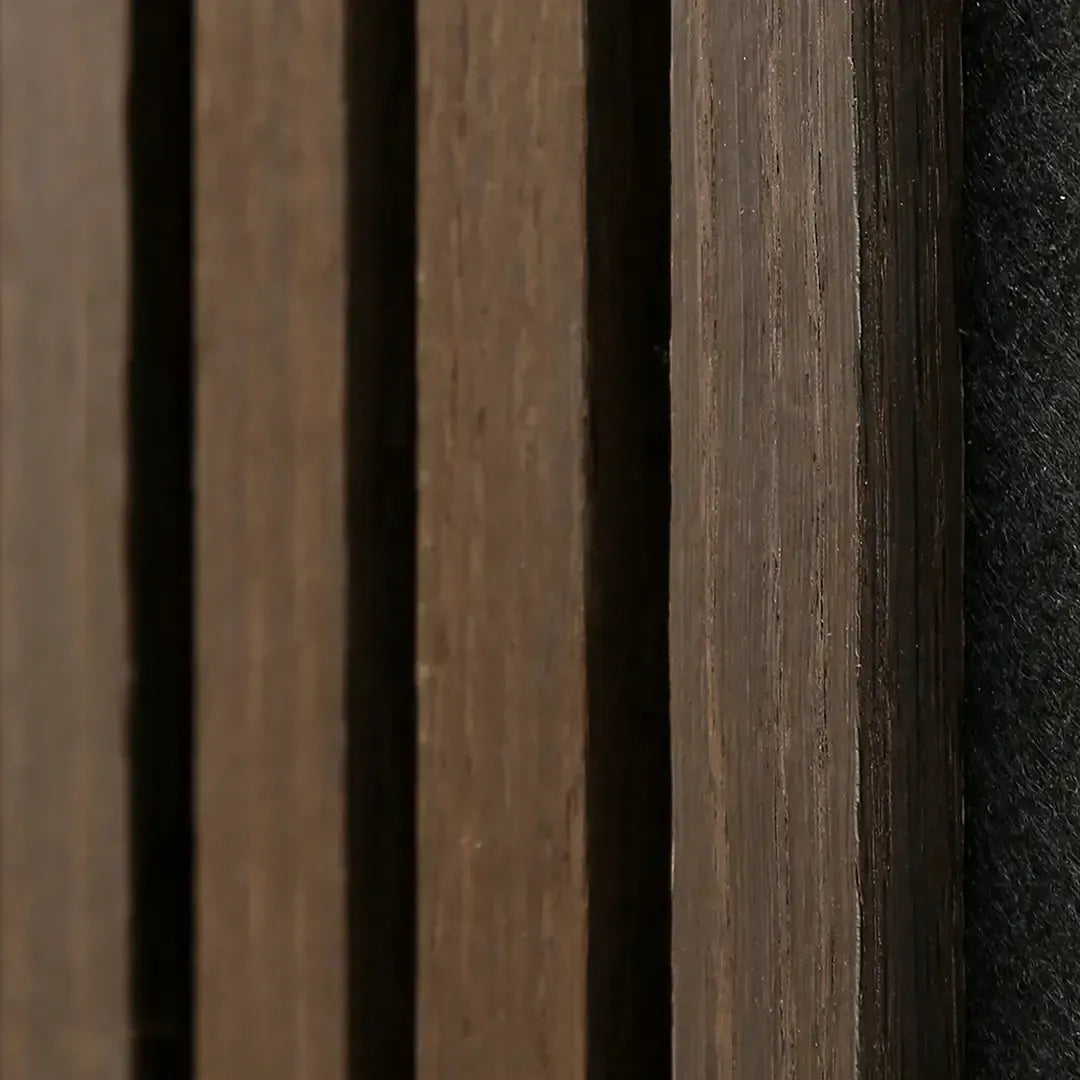
A slat panel with no backing is a decorative product, not an acoustic one — felt or fiber behind the slats is what actually converts sound energy into heat instead of bouncing it back into the room. In a live venue, absorption on the wall opposite the stage and on side walls near the mix position matters more than absorption anywhere else in the building.
Fire rating documentation
Commercial venues classified as public assembly space need wall finish materials with documented fire performance, and this is not optional paperwork — it's the first thing an inspector or insurer asks for. Ask any supplier for fire test documentation before a pallet order ships, not after installation.
Durability against crowd contact and spills
Walls near a bar, a stage lip, or a crowd barrier take contact, condensation, and cleaning chemicals that a living-room accent wall never sees. A panel that scuffs or delaminates after six months of bar rag wipedowns is a maintenance cost, not a one-time purchase.
Fast install between show cycles
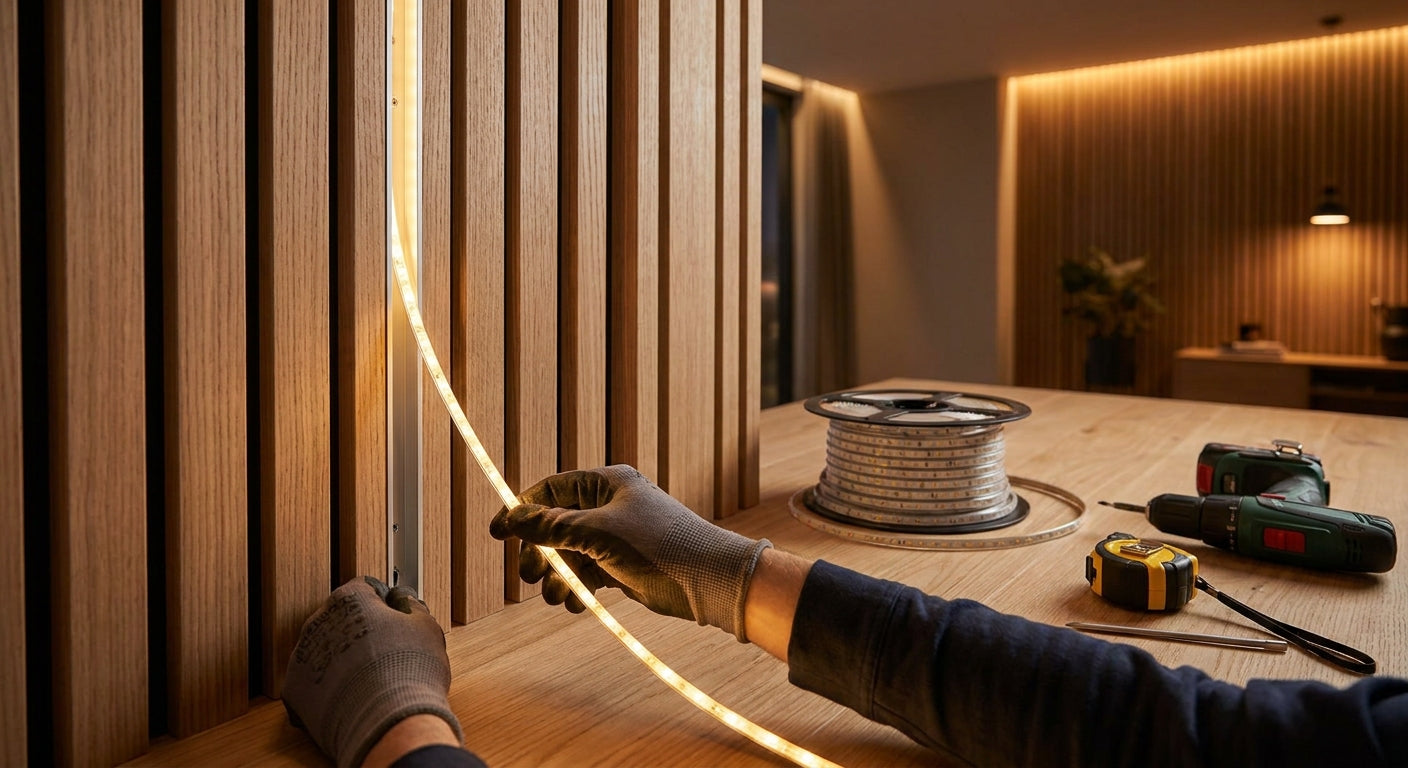
Venues rarely get more than a few dark nights in a row for buildout work, so a panel system that clicks or screws into place in hours, not days, matters more here than in a residential remodel. A crew that can panel a 20-foot back wall over a single dark Monday keeps the calendar intact.
Finish that reads correctly under stage lighting
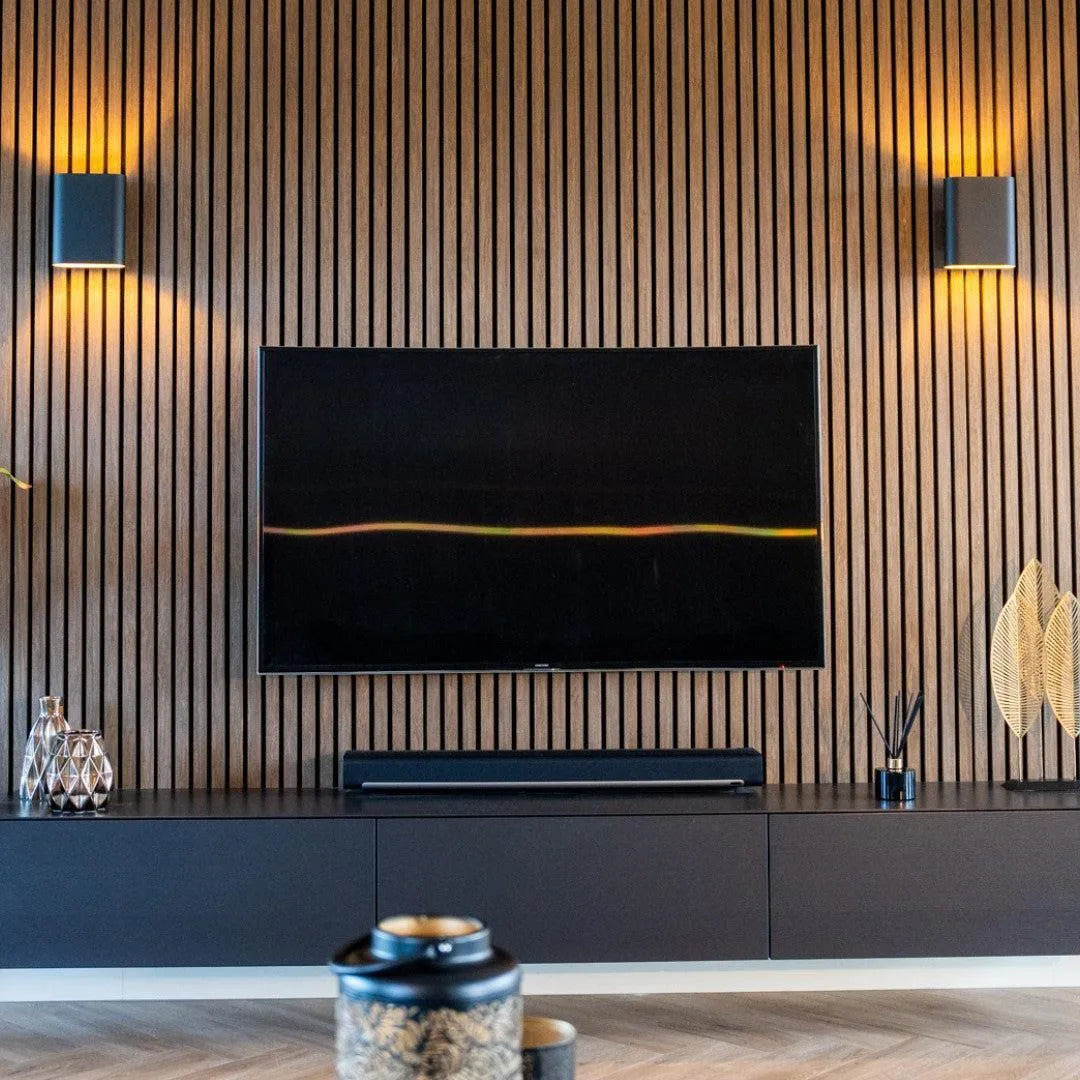
Dark finishes hide house lighting hot spots and camera glare on a wall directly behind performers, while lighter finishes bounce more light and can wash out on stream or broadcast. Warm wood tones under an LED wash read differently than they do in a showroom, so this decision should be made with the lighting rig in mind, not just a swatch under daylight.
Top picks for live music venue walls
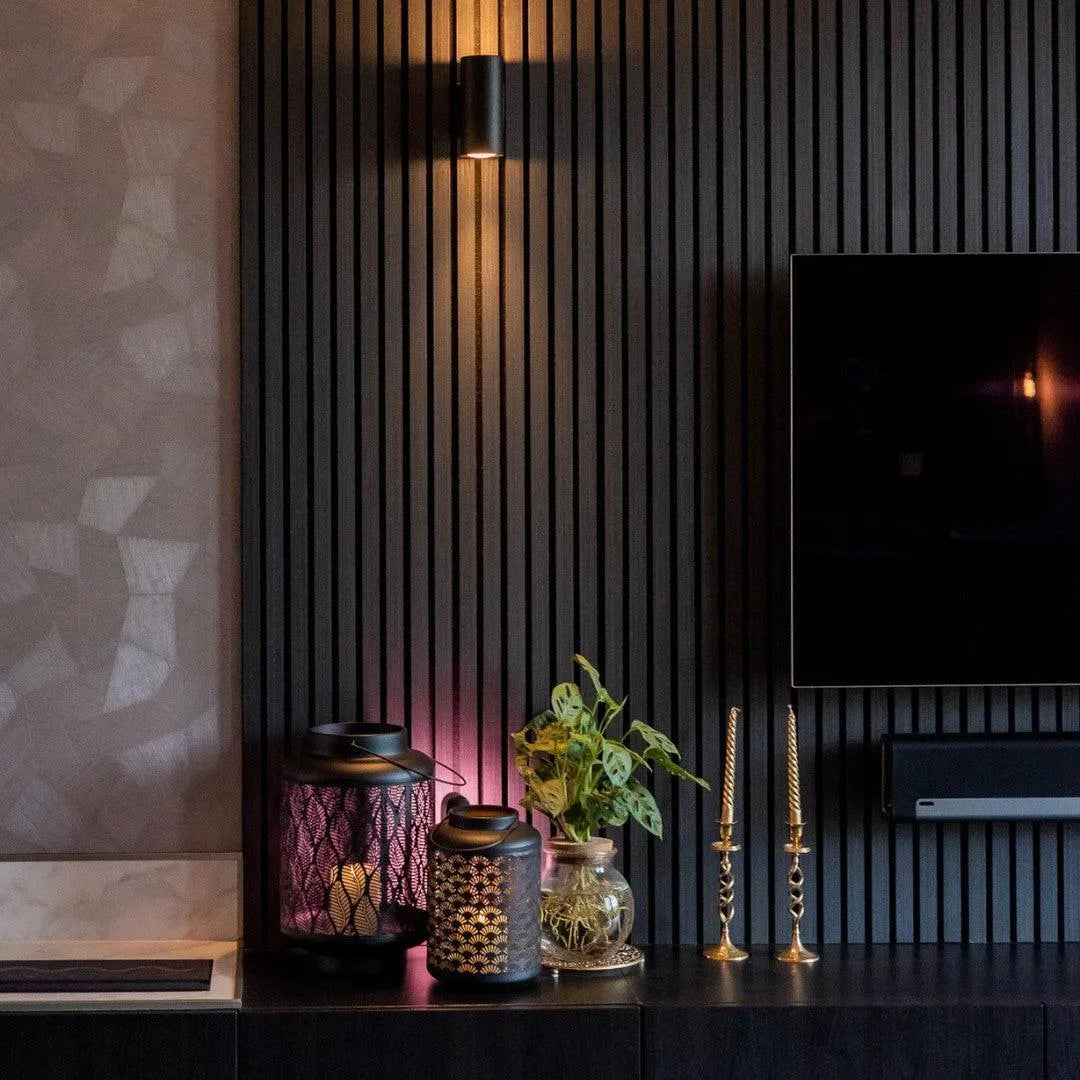
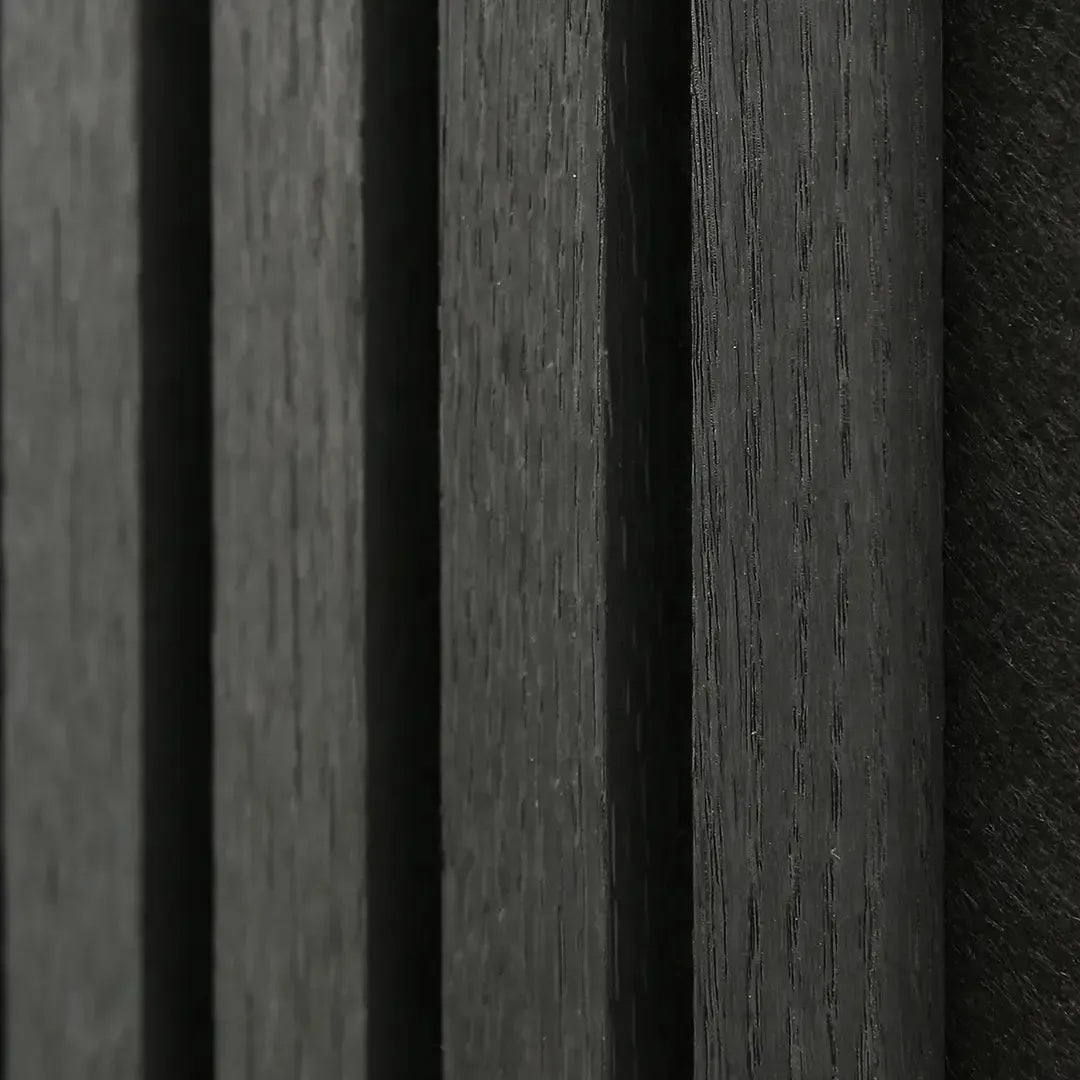
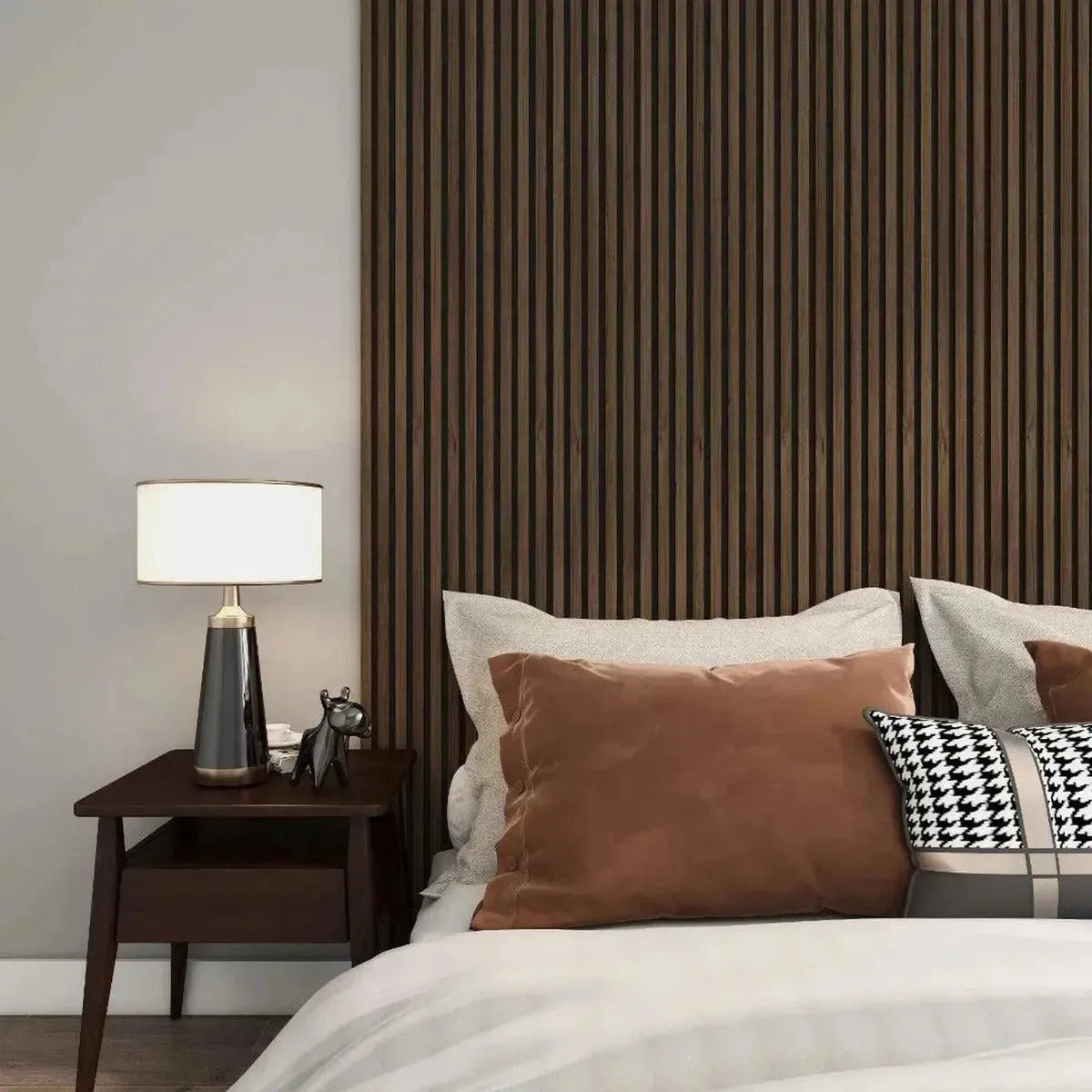
Black Oak Acoustic Slat Wall Panel — the stage-wall workhorse. Dark tone kills glare on the wall directly behind performers, and felt backing sits behind every slat rather than under a thin decorative face. Verdict: Buy for any wall inside sightline of the stage.
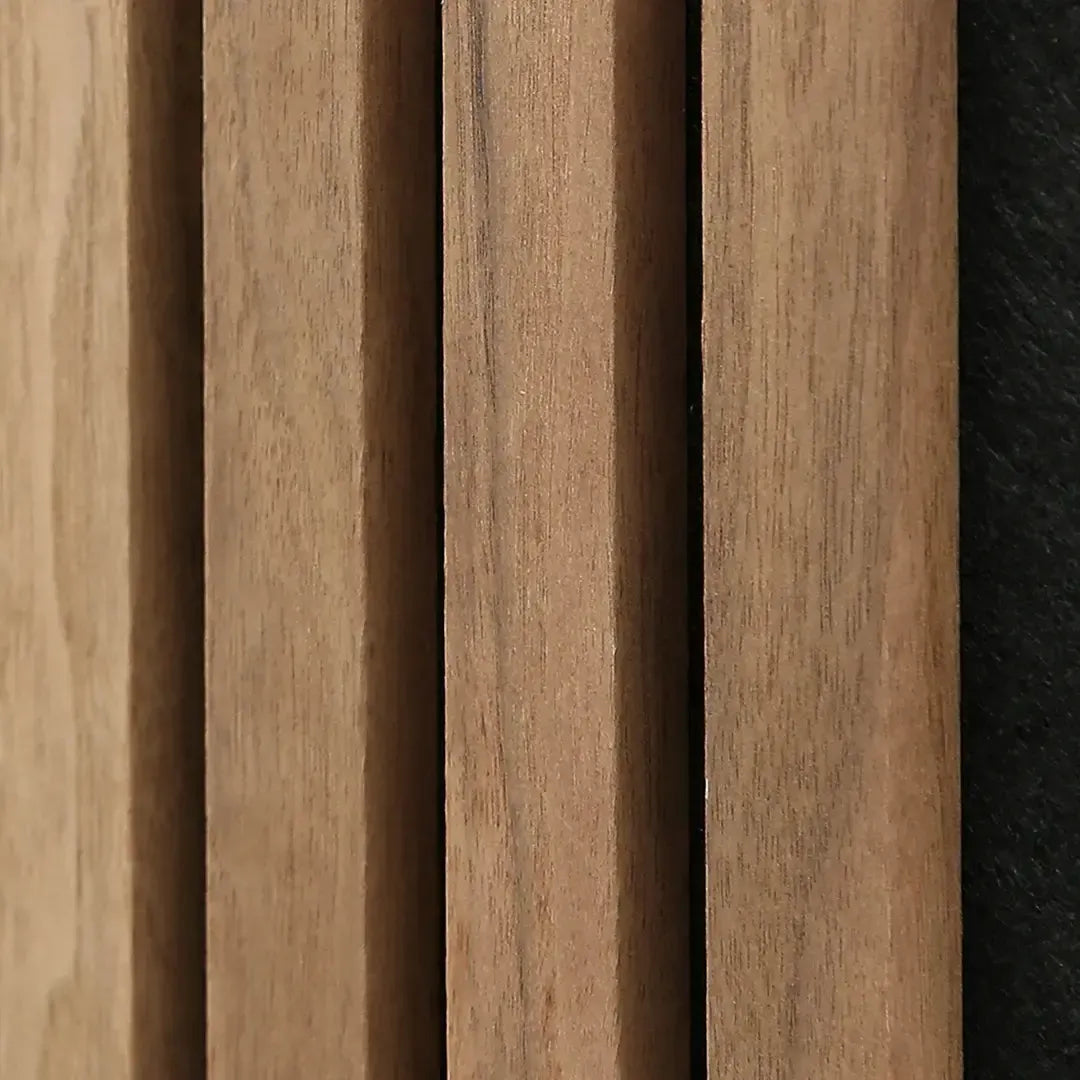
Smoked Oak Acoustic Slat Panel with Gray Felt — the sound engineer's pick. Gray felt density behind the slats targets the mid-frequency range where vocals and snare crack live, and the smoked tone reads lower-reflectivity on camera than a lighter oak. Verdict: Buy for side walls flanking the mix position.
Black Hexagon Acoustic Panel — the wildcard for lobby and bar zones. Modular hexagon tiles break up a flat lobby wall with less footprint commitment than a full slat run, useful where you want acoustic control but not a full stage-style treatment. Verdict: Consider for secondary spaces, not front-of-house.
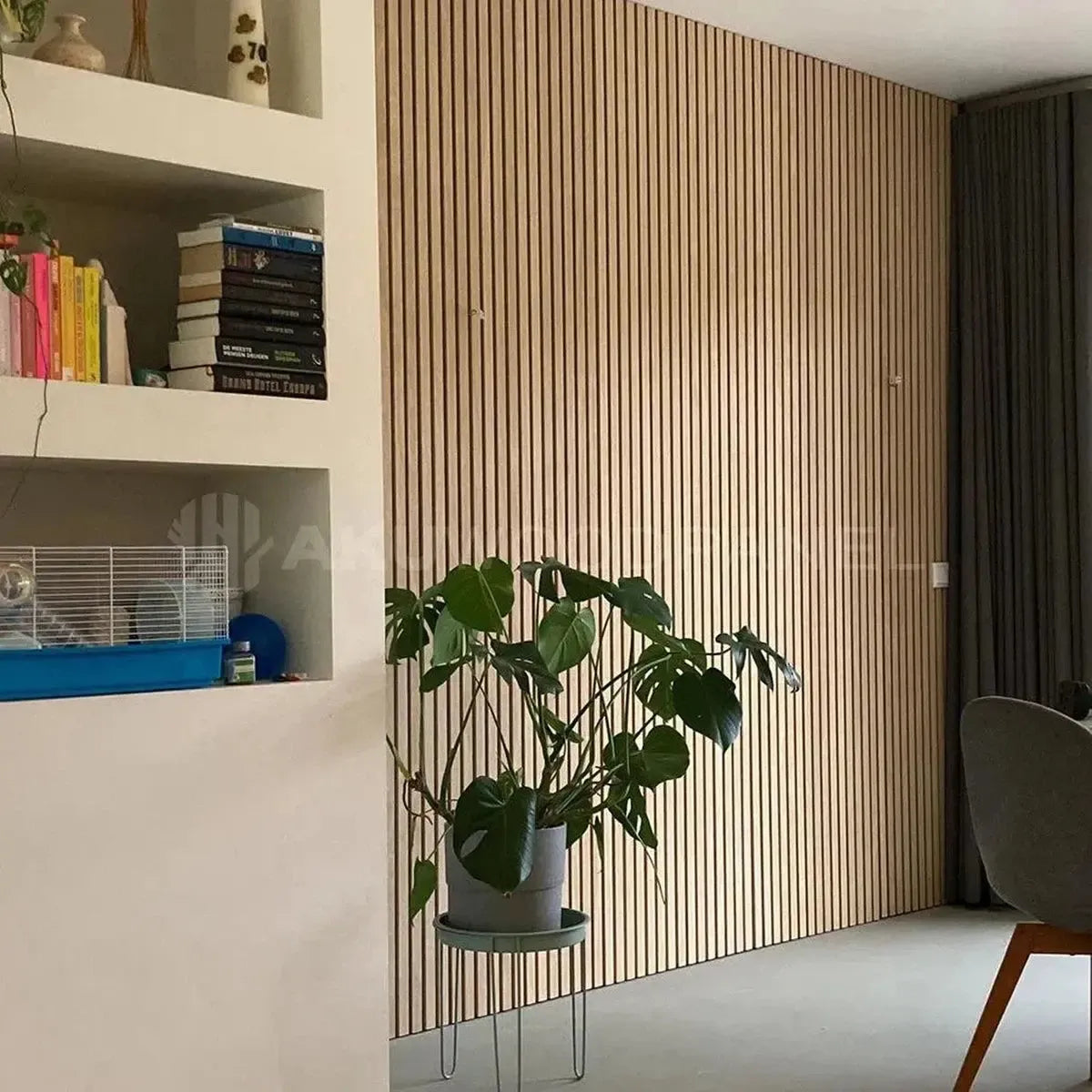
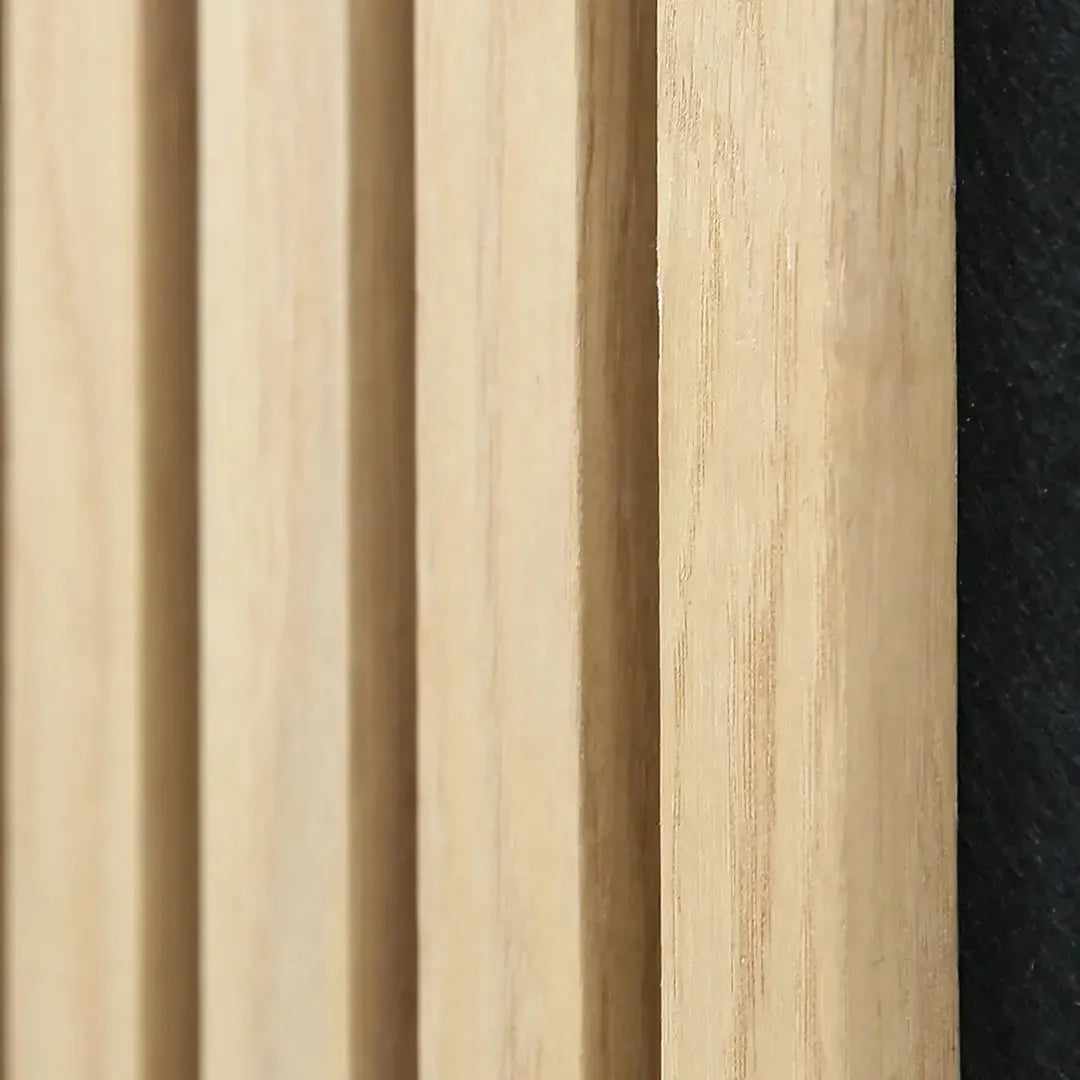
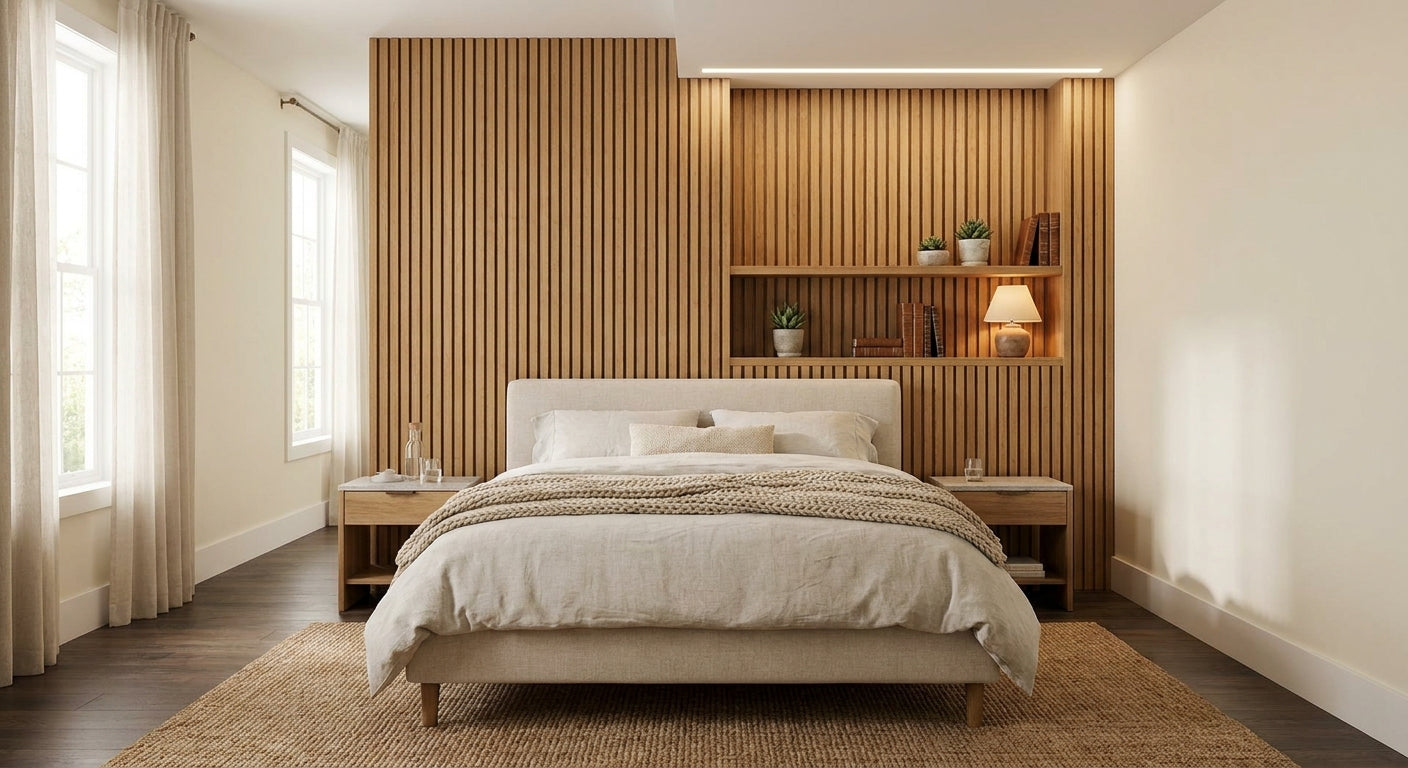
Natural Oak Acoustic Slat Panel — the skip for stage walls, fine backstage. Brighter finish reflects stage lighting more than the darker oaks, which makes it a poor choice directly behind a lit performer but perfectly fine in a green room or corridor. Verdict: Consider for backstage only, Skip for anything visible from the audience.
What to avoid
- Decorative-only slat panels with no felt or fiber backing. They photograph identically to the acoustic versions on a product page and do almost nothing to reduce reverb where the PA actually needs help.
- Any panel without fire rating documentation on file. Public assembly occupancy rules exist for a reason, and retrofitting compliance after an inspection fails costs far more than asking upfront.
- A single accent-wall order for a full main room. Treating one wall in a 3,000-square-foot room and expecting venue-wide echo control is the most common underspec mistake — order physical samples first, then calculate coverage for every reflective surface, not just the obvious one.
Verdict comparison
| Panel | Best Zone | Felt Backing | Verdict |
|---|---|---|---|
| Black Oak Acoustic Slat Wall Panel | Stage back wall | Yes | Buy |
| Smoked Oak Acoustic Slat Panel w/ Gray Felt | FOH side walls | Yes | Buy |
| Black Hexagon Acoustic Panel | Lobby / bar zone | Yes | Consider |
| Natural Oak Acoustic Slat Panel | Green room / backstage | Yes | Consider (Skip for stage) |
FAQ
What's the best acoustic slat panel for a live music venue? A felt-backed panel in a dark finish, such as black oak or smoked oak, works best directly behind or beside a stage because it manages both sound absorption and stage lighting glare. Decorative-only slats without backing are not a substitute, regardless of how similar they look.
Do wood slat panels actually reduce echo in a concert room? Only if the panel has a felt or fiber layer behind the slats — the gaps between slats let sound pass through to that backing material, where it gets absorbed instead of reflected. A slat face over drywall with nothing behind it barely changes the room's reverb tail.
How many acoustic panels does a venue need? Coverage depends on room volume and how many hard reflective surfaces exist, but treating only one wall in a large room rarely solves the problem — side walls and the wall opposite the stage usually need attention too. Measure every reflective surface before ordering, not just the one behind the band.
Are slat panels fire rated for commercial venues? Fire rating varies by product and finish, so request documentation directly from the supplier before ordering for a public assembly space in 2026. Never assume a rating based on marketing copy alone — ask for the test report.
Slat panels vs foam panels for a music venue? Foam handles high-frequency absorption cheaply but looks utilitarian and doesn't hold up to crowd contact near a bar or stage lip. Felt-backed wood slat panels cost more per square foot but double as a finished wall surface, which matters in a venue guests actually look at.
Do I need felt backing behind slat panels? Yes, if acoustic performance is the goal — without it, a slat panel is a decorative wood surface, not an acoustic treatment. Felt-backed products typically land in the NRC 0.75–0.90 range, while bare decorative slats sit closer to 0.15.
Can slat panels handle spills and moisture near a stage bar? Some finishes hold up better than others near bar zones, and durability against contact and cleaning chemicals should be confirmed before installing near high-traffic wet areas. This is one of the criteria worth checking directly with a supplier rather than assuming from a product photo.
How long does it take to install acoustic slat panels in a venue? A click-together or screw-mounted system can cover a 20-foot back wall in a single dark night if the crew has prepped the substrate in advance. Plan for prep time separately — uneven block or brick walls need furring or a mounting frame before panels go up.
One last thing
Most venue buyers focus entirely on felt density and skip the slat gap ratio — the spacing between slats relative to slat width — but that ratio changes low-frequency absorption more than the felt itself does. A wider gap lets more low-end energy reach the backing material; a tighter gap looks cleaner but absorbs less bass. If your room has a boomy low end at 100-200 Hz, that's the spec to ask about before finish color, not after.

 Better performance and aesthetic appeal
 In Stock