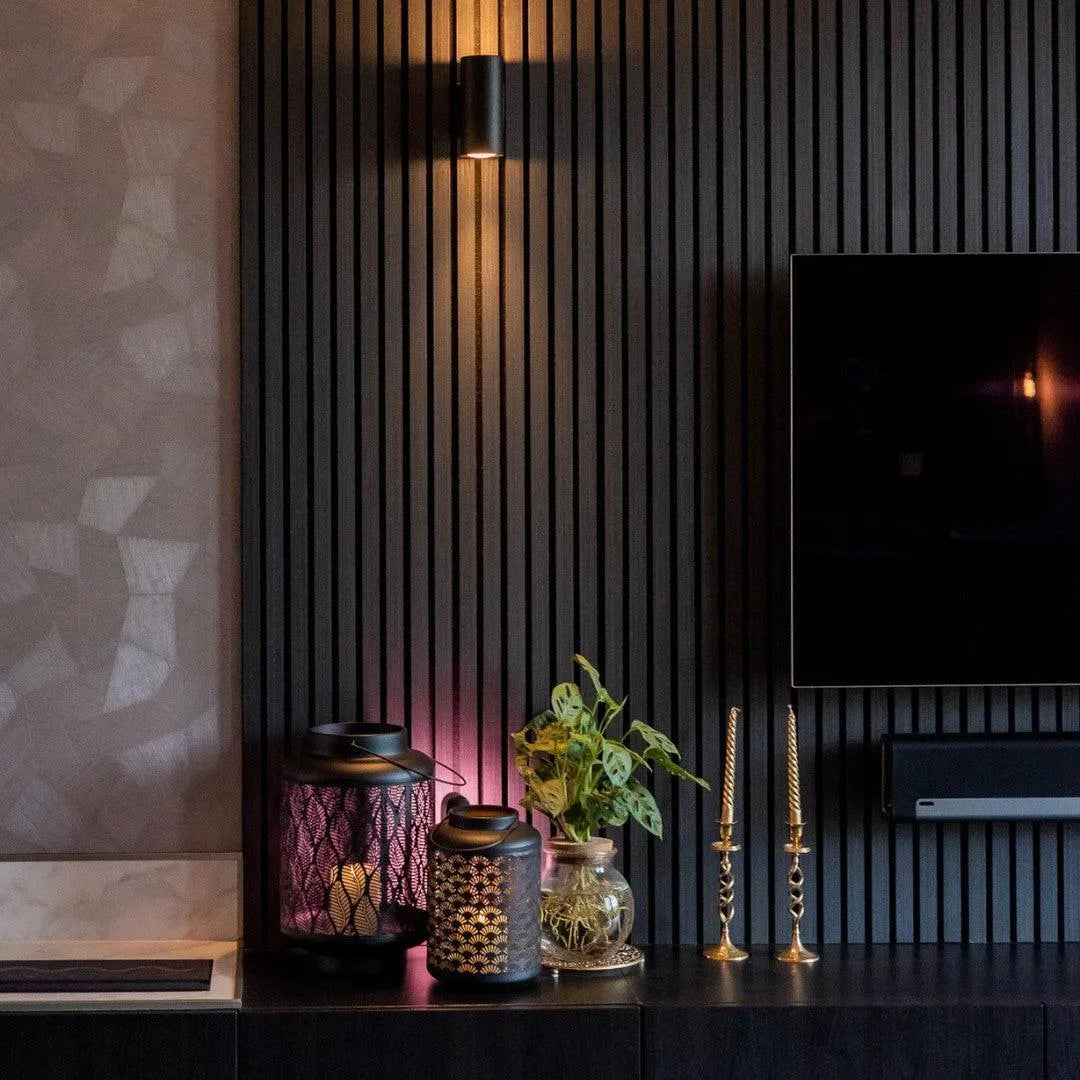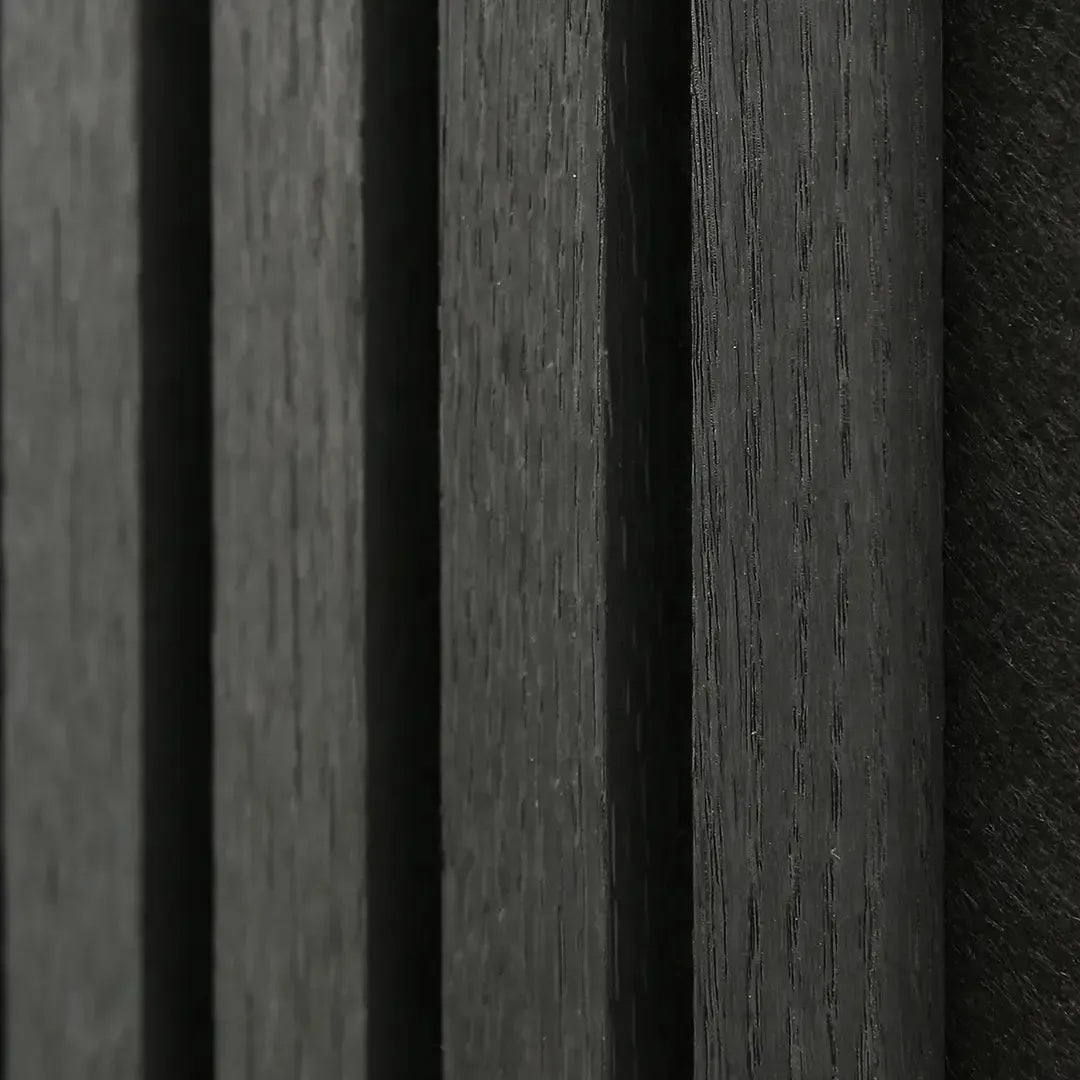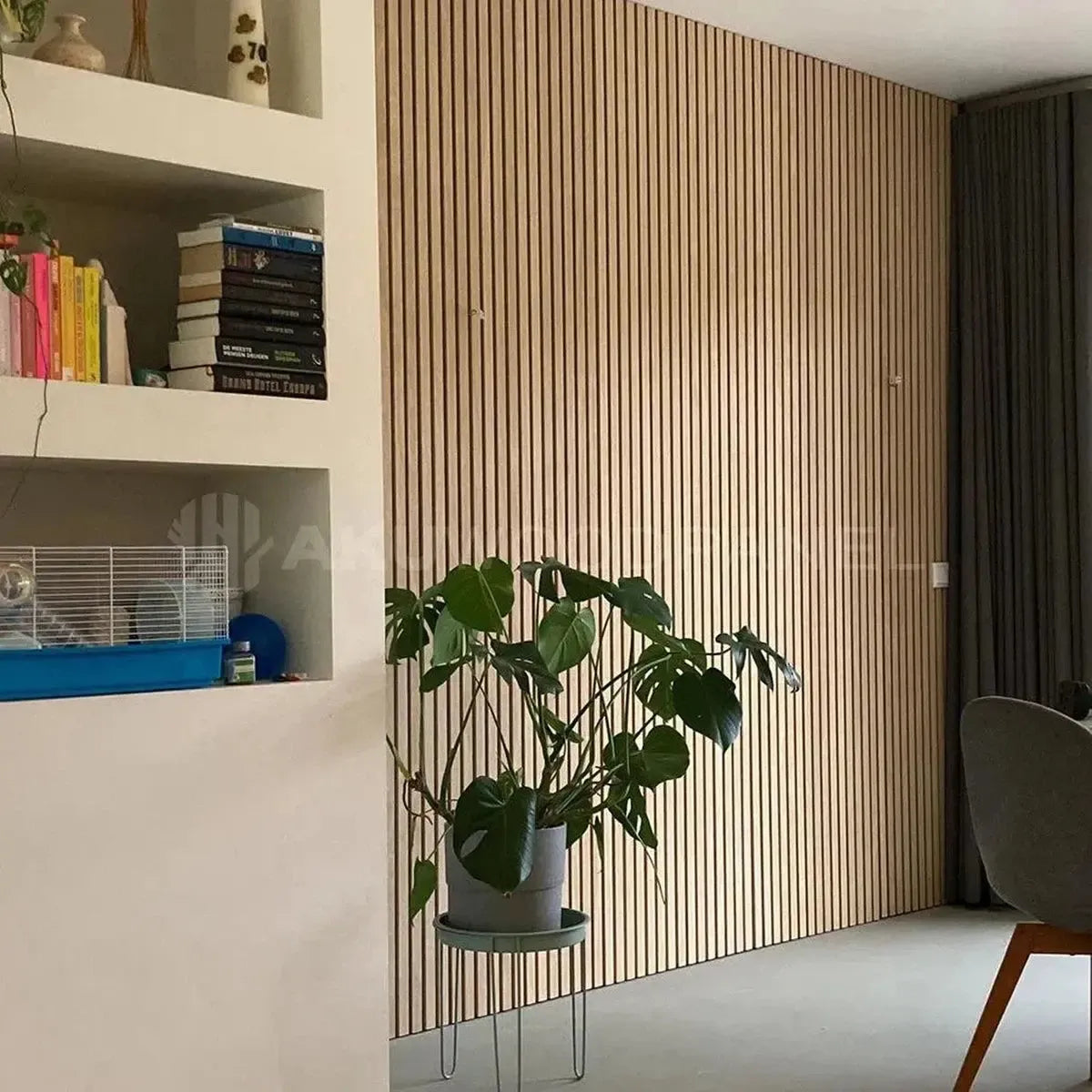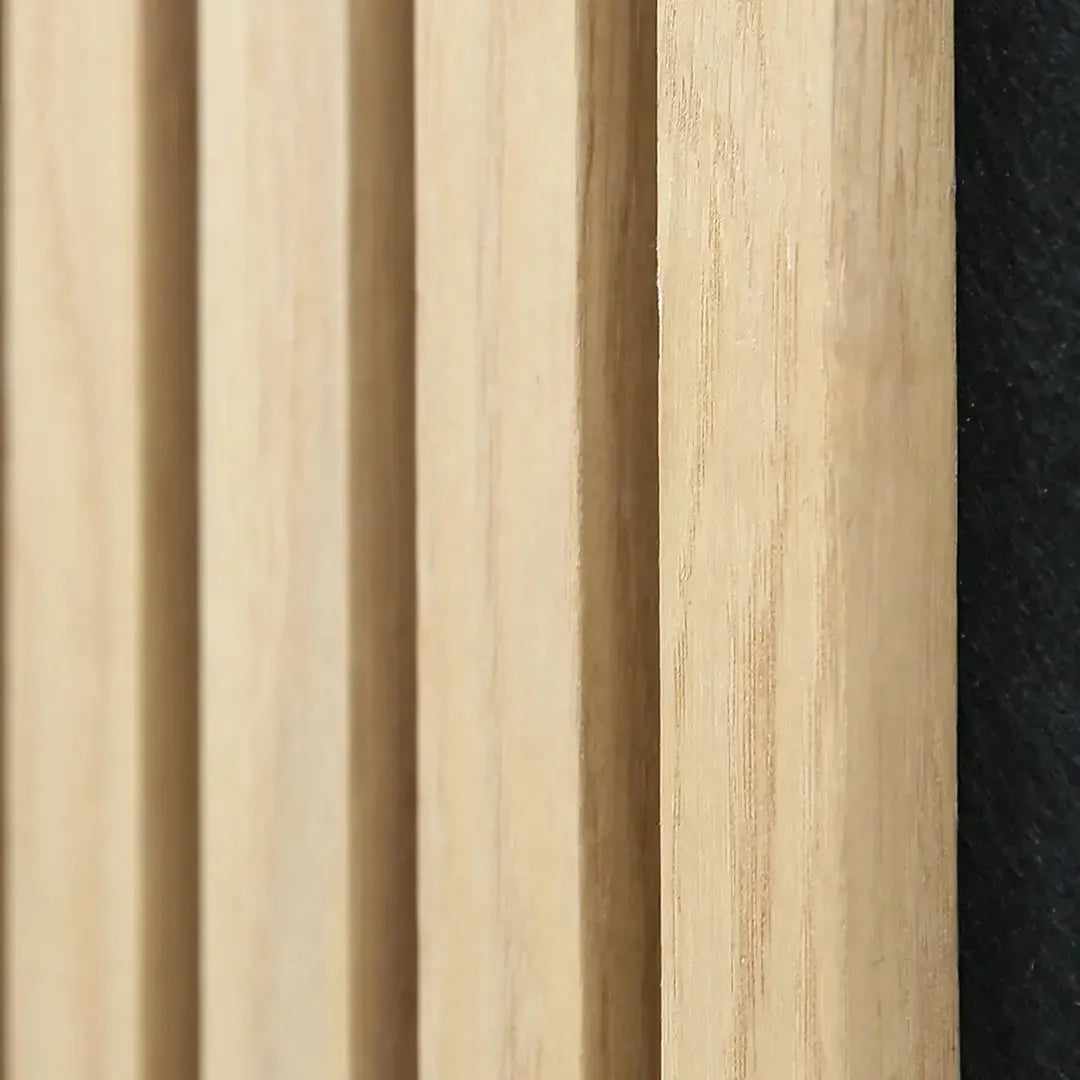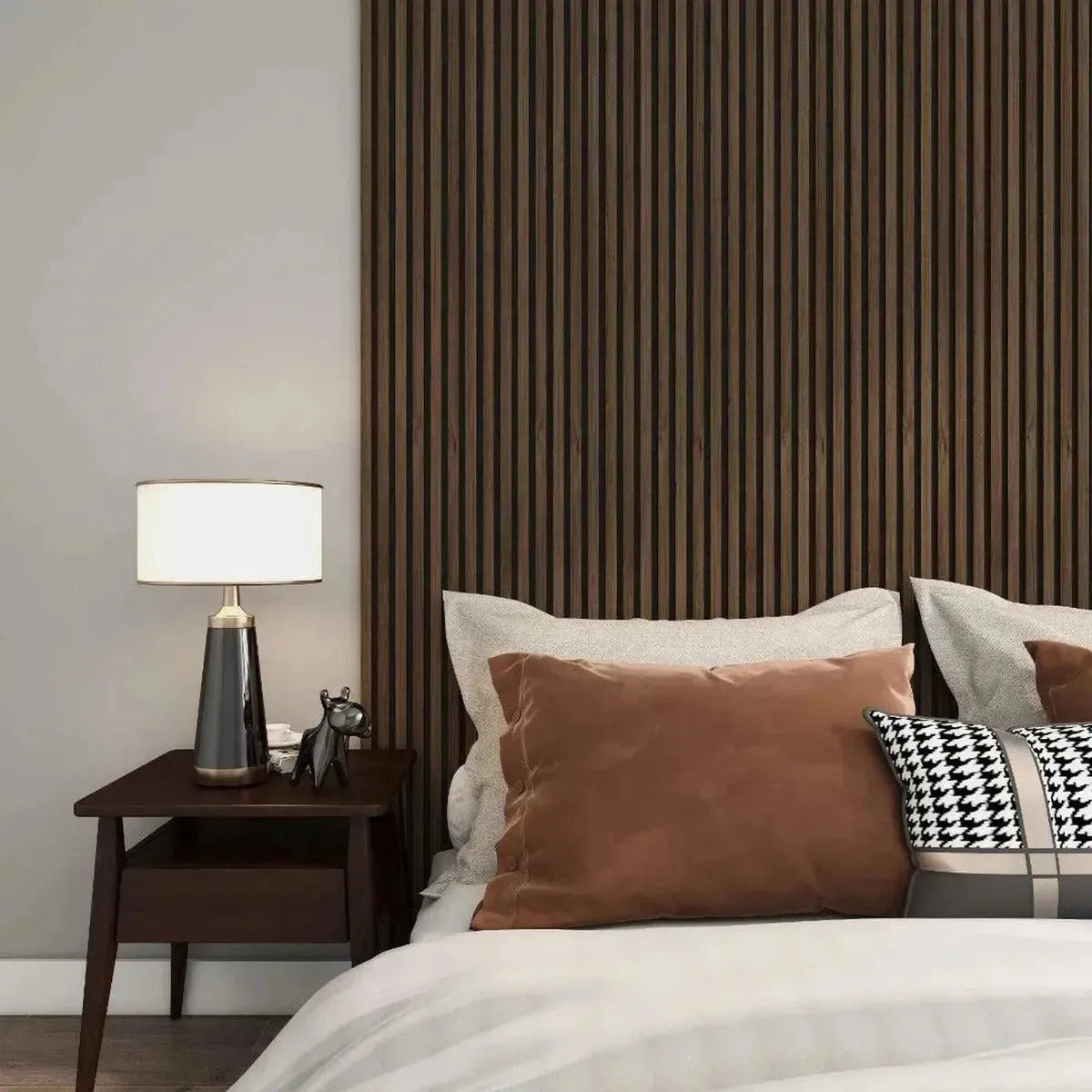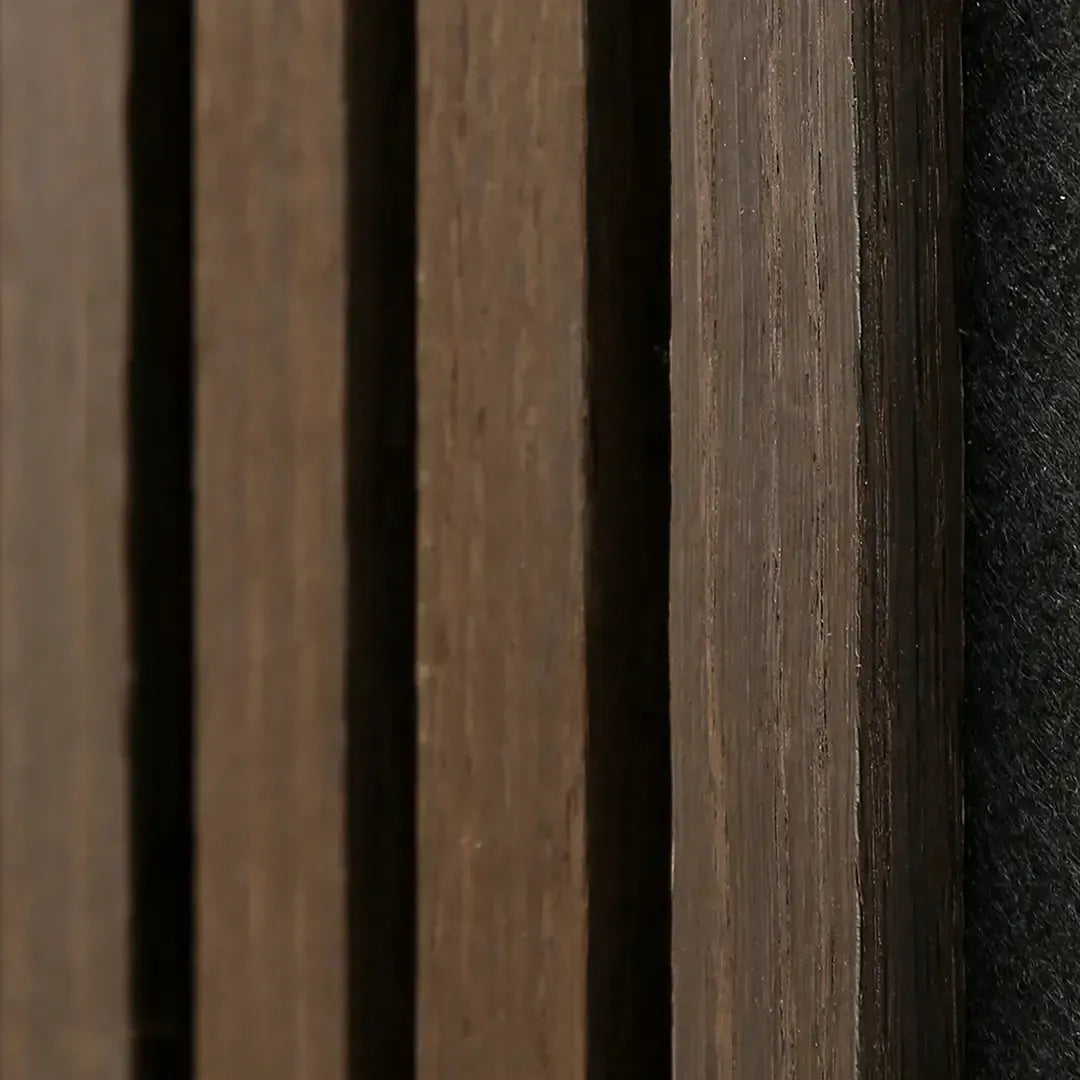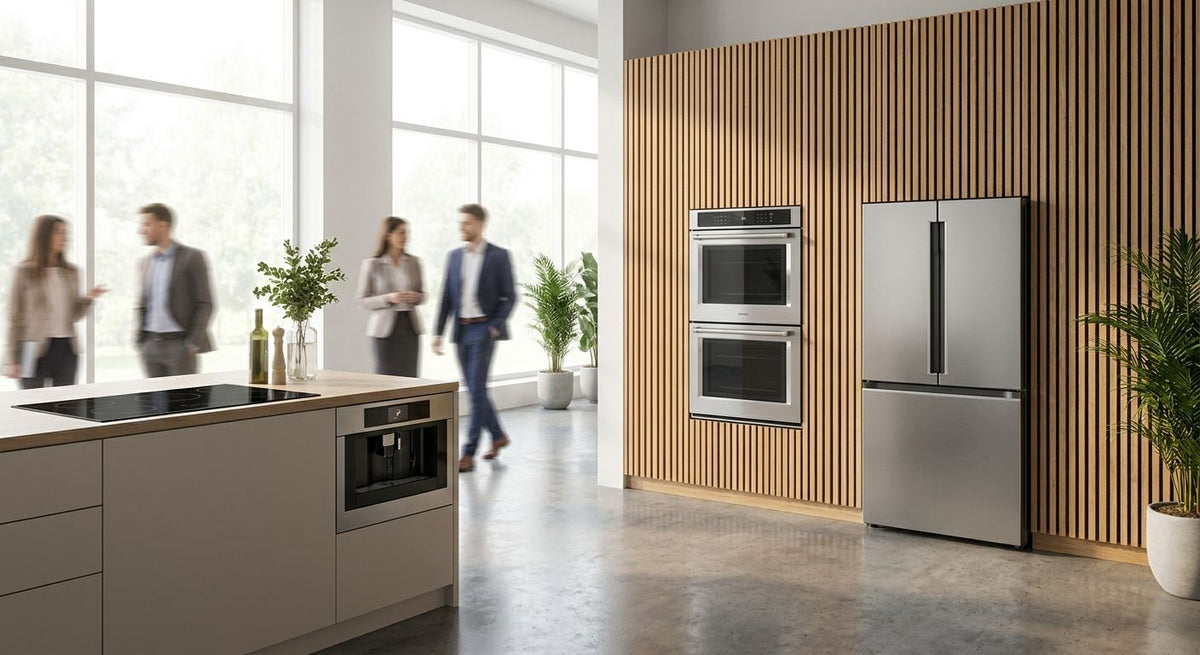
Appliance showroom wood slat panels are acoustic wall treatments installed behind display zones to cut echo bouncing off tile floors and glass cabinet fronts while giving stainless steel and matte-black finishes a warm surface to sit against. A big-box appliance floor and a boutique kitchen studio have different needs: one needs panels that survive cart traffic and running washers on demo, the other needs a feature wall that photographs well for a design-forward buyer. Both need the panel to work as sound absorption, not just decoration.
- Wood slat panels for appliance showroom walls cut echo from tile floors and glass cases while framing stainless and matte-black finishes.
- Hexagon acoustic panels carry an NRC of 0.75 — verified sound absorption, not a marketing number.
- Slat and fluted formats both work; fluted flexes around curved endcaps, slats read cleaner behind flat demo walls.
- Skip panels directly behind running dishwashers and washers on demo loop — vibration loosens adhesive-mounted sections over time.
- Akuwood Panel ships 3D wood tile in sizes from 12x12" up to 12x24" for mixed-scale accent zones.
Why wood slat panels matter for appliance showrooms
Appliance floors are loud by design. Concrete or polished tile, drop ceilings, glass display cases, and a dozen running demo units create a reverberant box that makes sales conversations hard to hold at normal volume. Add a washer on spin cycle or a dishwasher mid-demo and a customer standing three feet from a rep can lose the pitch entirely.
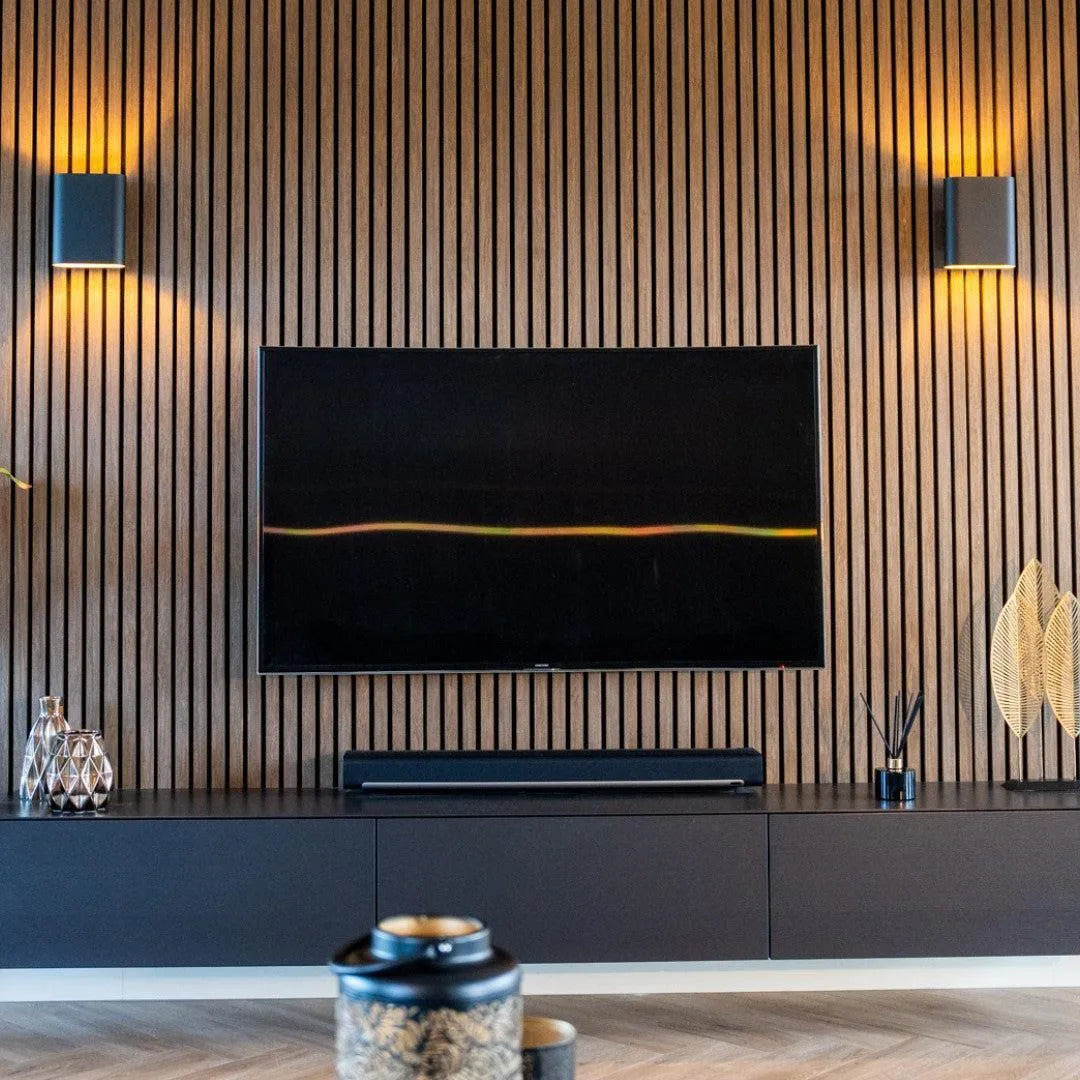
The visual problem runs parallel to the acoustic one. Stainless steel, brushed nickel, and matte black are cold finishes under fluorescent lighting. A bare drywall or painted block wall behind a wall of refrigerators reads like a warehouse, not a showroom. Real wood veneer slats or hexagon tiles behind the same units add warmth and texture that make the metal finishes look intentional instead of institutional. This is the same logic Akuwood Panel applies across furniture showroom feature walls — the wood does double duty as sound treatment and merchandising backdrop.
Assess your echo and sightline problem first
Walk the floor at a normal midday traffic level and note where conversations get hard to follow. Don't guess at coverage — most showrooms only need treatment on 20-30% of wall area to bring reverb down to a comfortable level.
- Stand at the point furthest from a running demo unit and check if a normal speaking voice carries clearly
- Flag hard parallel surfaces (glass case facing tile wall) — these cause flutter echo, the worst offender for showroom floors
- Note ceiling height; taller open ceilings need more coverage than a standard 9-10 ft drop ceiling
- Mark which walls sit behind the loudest categories — laundry and dishwasher demo zones first, refrigeration last
- Photograph the space under actual store lighting, not phone flash — wood tone reads differently under warm LED vs. cool fluorescent
Pick a wood tone that contrasts with your appliance finishes
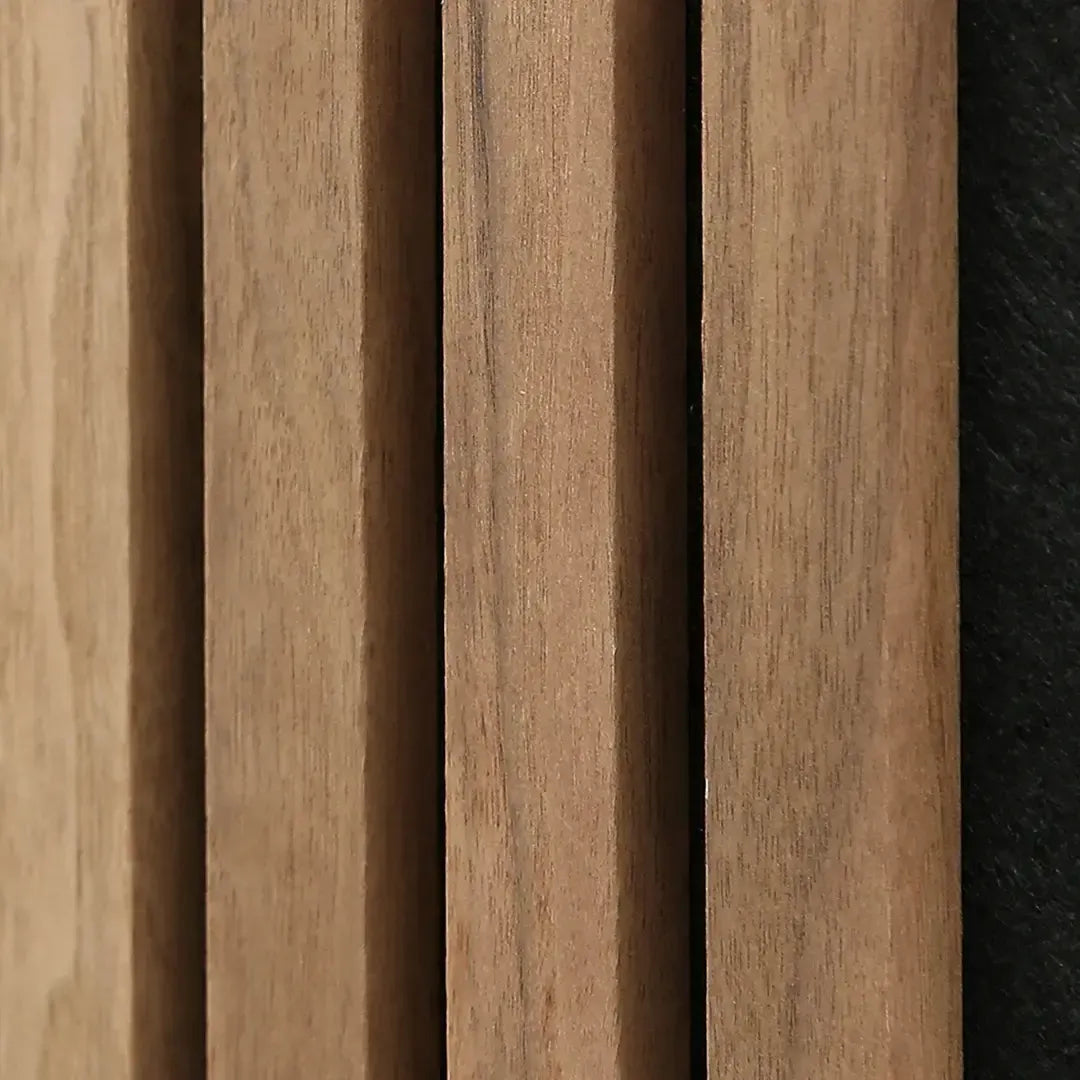
Stainless and matte black need a warm counterpoint or the whole wall reads monochrome and flat. Natural oak and lighter walnut tones do this reliably; black oak and smoked oak work better as an accent behind a single hero display rather than a full wall.
- Natural oak for showrooms running mostly stainless and white finishes — highest contrast, brightest under LED
- Walnut for stores mixing matte black and slate gray appliances — reads warm without competing
- Smoked oak or black oak as a single feature wall behind a hero demo unit, not the full perimeter
- Gray felt-backed slat panels where the showroom already leans neutral and needs texture, not more color contrast
- Avoid mixing more than two wood tones on connected walls — appliance buyers are already processing a lot of visual information from the units themselves
Select the panel format for your demo zones
Flat slat panels suit straight runs behind refrigerator and range walls. Fluted panels flex around curved endcaps and column wraps, which matters in stores with rounded display islands. Hexagon panels break up large blank walls behind laundry or small-appliance sections where a busy visual pattern doesn't compete with product.
The acoustic slat wall panel in natural oak is the standard pick for straight-run demo walls — it's the format most appliance retailers land on because it installs on flat drywall runs without custom cutting for curves. Fluted panels earn their keep on the 10-15% of showrooms with curved fixtures or rounded columns; don't default to fluted just because it looks more textured on a spec sheet.
- Flat slat panels for straight demo walls behind refrigeration and range rows
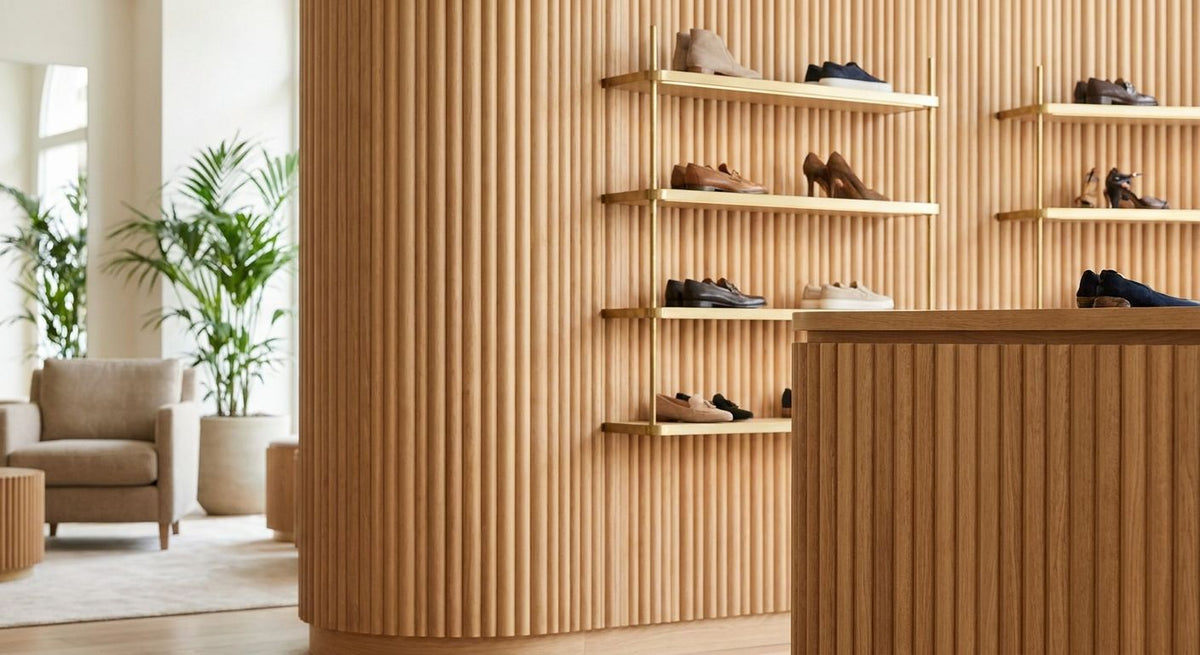
- Fluted panels for curved endcaps, columns, or rounded island fixtures
- Hexagon panels for large blank walls behind small-appliance or laundry sections
- 3D wood tile in smaller formats (as small as 12x12") for accent strips near checkout or the design consultation desk
- Slat panels with a felt backing where the wall also needs to absorb sound, not just texture it
Confirm the acoustic rating actually fits your noise problem
A panel that looks like an acoustic product isn't automatically one. Check the NRC (Noise Reduction Coefficient) before treating it as sound control rather than décor. Akuwood's hexagon acoustic panel line carries an NRC of 0.75, tested performance that puts it in the range appropriate for a mid-size showroom floor, not a purely cosmetic add-on.
- Confirm NRC rating before buying anything marketed as "acoustic" — decorative wood slats with no backing material don't absorb meaningfully
- Treat walls facing the loudest demo zones first; a partial wall of untreated hard surface can undo coverage elsewhere
- Combine wall panels with a soft flooring zone near consultation desks if the floor is polished concrete or tile throughout
- Don't over-treat: a fully padded showroom kills the ambient hum that makes a floor feel busy and active
Plan for high-traffic durability and cleaning
Appliance showrooms see cart traffic, forklift deliveries in the back, and constant hand contact from customers opening demo unit doors. Panels near aisles and loading paths need a harder-wearing veneer than a feature wall in a quiet corner.
- Keep slat and hexagon panels at least a few feet clear of dolly and cart paths where scuffing is likely
- Choose a sealed veneer finish for any wall within reach of customers opening demo doors repeatedly
- Budget for end pieces and trim on every exposed panel edge — unfinished edges are the first thing that looks worn in year one
- Wipe fingerprints and dust with a dry or lightly damp cloth; avoid anything abrasive on real wood veneer
Compare panel formats before you commit to a wall
| Panel format | Best for | Key limitation |
|---|---|---|
| Flat slat panel (natural oak, walnut, black oak) | Straight demo walls, refrigeration and range rows | Needs a flat substrate; not built for tight curves |
| Fluted panel | Curved endcaps, columns, rounded islands | Higher material cost per linear foot on large runs |
| Hexagon acoustic panel | Large blank walls, laundry and small-appliance zones | Installation takes longer with a tessellated pattern |
| 3D wood wall tile | Small accent strips, consultation desks, checkout walls | Not a primary acoustic solution on its own |
Flat slat panels in natural oak or walnut are the right default for most appliance showrooms in 2026 — they cover the most wall area with the least installation complexity, and they carry acoustic backing where hexagon or 3D tile alone would be purely decorative.


Common mistakes appliance showrooms make with wall panels
- Treating one feature wall and calling it done. A single accent wall behind checkout does nothing for flutter echo happening between the refrigeration aisle and the glass case across from it.
- Mounting panels directly behind running demo units. Washers and dishwashers on a demo loop vibrate the wall; adhesive-mounted panel sections can work loose faster than the same panel on a static wall.
- Matching wood tone to flooring instead of to the appliances. The appliances are the product on display in 2026 — the wall should contrast the metal finishes, not the floor plank color.
- Skipping trim and end pieces to save on the order. Exposed panel edges near customer traffic show wear within months, not years.
- Over-ordering hexagon panels for a wall that needed acoustic absorption, not pattern. Hexagon reads busy; a wall with three appliance categories on it doesn't need a fourth visual pattern competing for attention.
FAQ
What's the best wood panel type for an appliance showroom wall?
Flat acoustic slat panels in natural oak or walnut are the best default for appliance showroom walls in 2026 because they cover straight demo runs efficiently and carry real acoustic backing, not just decorative veneer.
Do wood slat panels actually reduce noise in a showroom?
Panels with a felt or acoustic backing do — Akuwood's hexagon line carries an NRC of 0.75, a tested absorption rating. Plain decorative slats without backing material provide texture but little sound control.
Is fluted or flat slat paneling better for appliance displays?
Flat slat panels suit straight demo walls behind refrigeration and range rows. Fluted panels are better reserved for curved endcaps and rounded columns, where flat panels can't wrap cleanly.
How much wall coverage does an appliance showroom actually need?
Most showrooms only need treatment on 20-30% of total wall area to bring reverb down to a comfortable conversational level — full-wall treatment on every surface is rarely necessary and can flatten the space's ambient feel.
Can wood slat panels handle high foot and cart traffic?
Yes, with a sealed veneer finish and proper end-piece trim on exposed edges, but panels should stay a few feet clear of dolly and cart paths where scuffing risk is highest.
What wood tone works best against stainless steel appliances?
Natural oak gives the highest contrast against stainless and white finishes under standard LED showroom lighting. Walnut works better against matte black and slate gray appliance lines.
Should panels go behind running demo units like washers or dishwashers?
Keep panels off walls that vibrate from running demo units when possible — adhesive-mounted sections near constant vibration loosen faster than panels on a static wall elsewhere in the showroom.
What size wood wall tiles work for small accent zones?
3D wood wall tiles come in sizes as small as 12x12 inches, which fit narrow accent strips near consultation desks or checkout counters without committing an entire wall to the format.
One last thing
The detail most appliance showrooms skip: panel orientation changes how a wall reads under overhead fluorescent versus warm LED track lighting. A horizontal slat run under cool fluorescent can look flat and gray by late afternoon; the same panel under angled warm LED accent lighting shows the full grain depth. If the lighting plan isn't finalized yet, hold the panel order until it is — reordering a wall's worth of trim after install costs more than waiting two weeks.

 Better performance and aesthetic appeal
 In Stock