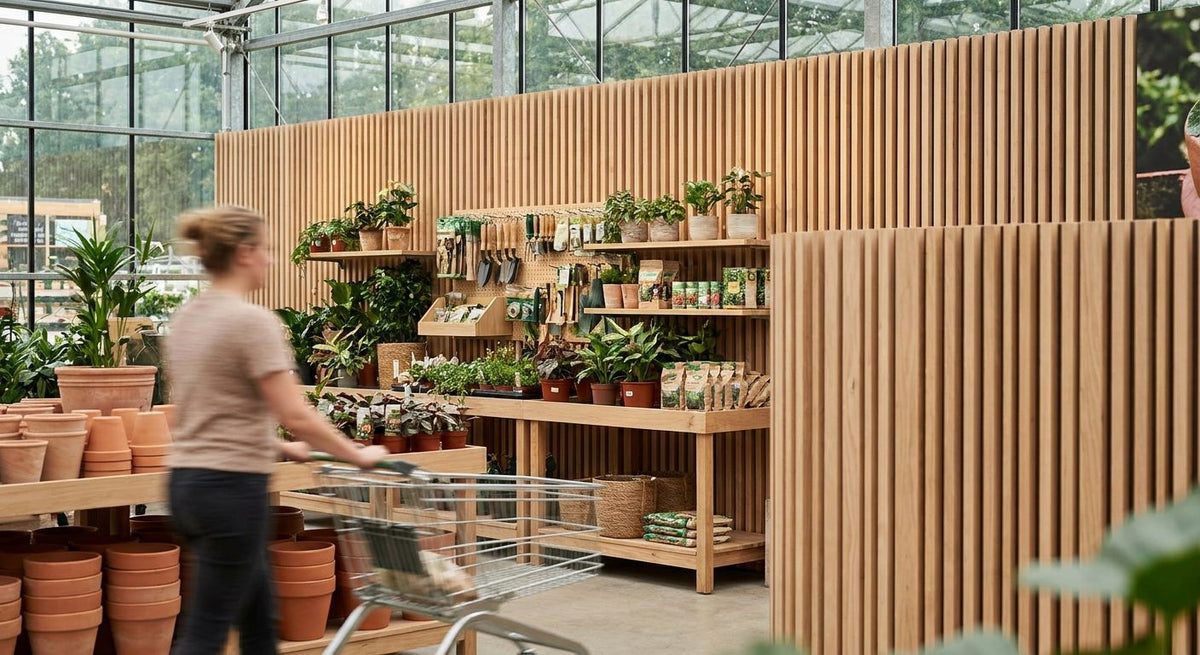
Garden center retail interiors get wood slat panels installed to warm up concrete floors and metal shelving, frame plant and gift displays, and cut the echo that glass-roofed retail buildings create. The needs here differ from a boutique or office fit-out: panels have to survive humidity swings, hose spray near watering stations, and constant cart traffic, while still reading as a warm backdrop against green foliage rather than fighting it.
- Wood slat panels for garden center retail interiors belong in dry, covered zones — not open greenhouse rows exposed to hose spray.
- Natural Oak acoustic slat panels cut checkout and cafe reverb without darkening displays against green foliage.
- Exterior wall panels, not interior slat veneer, are the right pick for covered breezeways and yard-facing walls in 2026.
- Hexagon acoustic panels rated NRC 0.75 double as feature backdrops for seasonal plant and gift displays.
Why wood slat panels matter for garden center retail
Garden centers mix hard surfaces on purpose: concrete floors for wet cleanup, metal racking that holds plant weight, and glass or polycarbonate roofing for light. That combination bounces sound and reads cold next to terracotta pots and greenery. A slat or hexagon panel wall breaks up the hard lines and gives customers a warm backdrop for plant staging and photography — the kind of backdrop that's hard to fake with paint alone.
The zone matters more than the material choice. Covered outdoor retail areas — the breezeway between the indoor store and the open growing yard — take rain, hose spray, and temperature swings that interior slat panels were never built for. That's where an exterior wall panel belongs, not a standard interior veneer panel. Everywhere else — checkout, indoor plant hall, gift shop — interior acoustic slat panels from Akuwood Panel do the job without the exterior-rated construction or the higher install complexity.
How to plan wood slat panels for garden center retail interiors
Map every zone before you order a single panel
A garden center floor plan usually has five distinct acoustic and moisture environments, and each one needs a different panel answer. Walk the store with this list before you spec anything:
- Entrance and checkout — high foot traffic, hard flooring, register noise
- Indoor plant hall — moderate humidity, filtered light, dense product shelving
- Gift and decor section — dry, carpeted or tiled, closer to retail-store norms
- Cafe or seating nook — conversation-level noise control matters more than acoustic absorption
- Covered outdoor breezeway or yard-facing wall — full weather exposure, no roof protection from wind-driven rain
Match the panel finish to each zone's moisture level
Once the zones are mapped, assign finish by exposure, not by what looks best on a mood board. This is where most first-time orders go wrong.
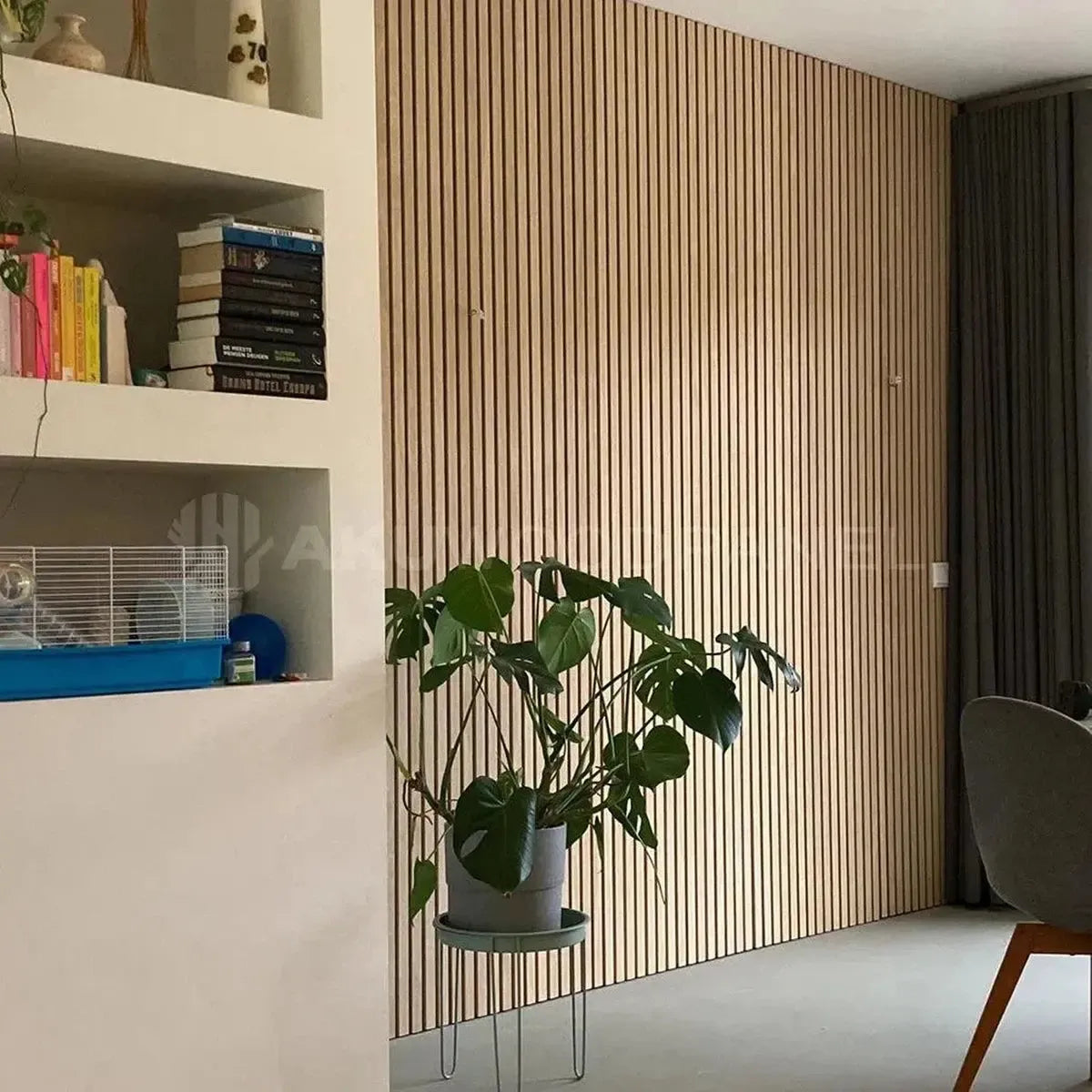
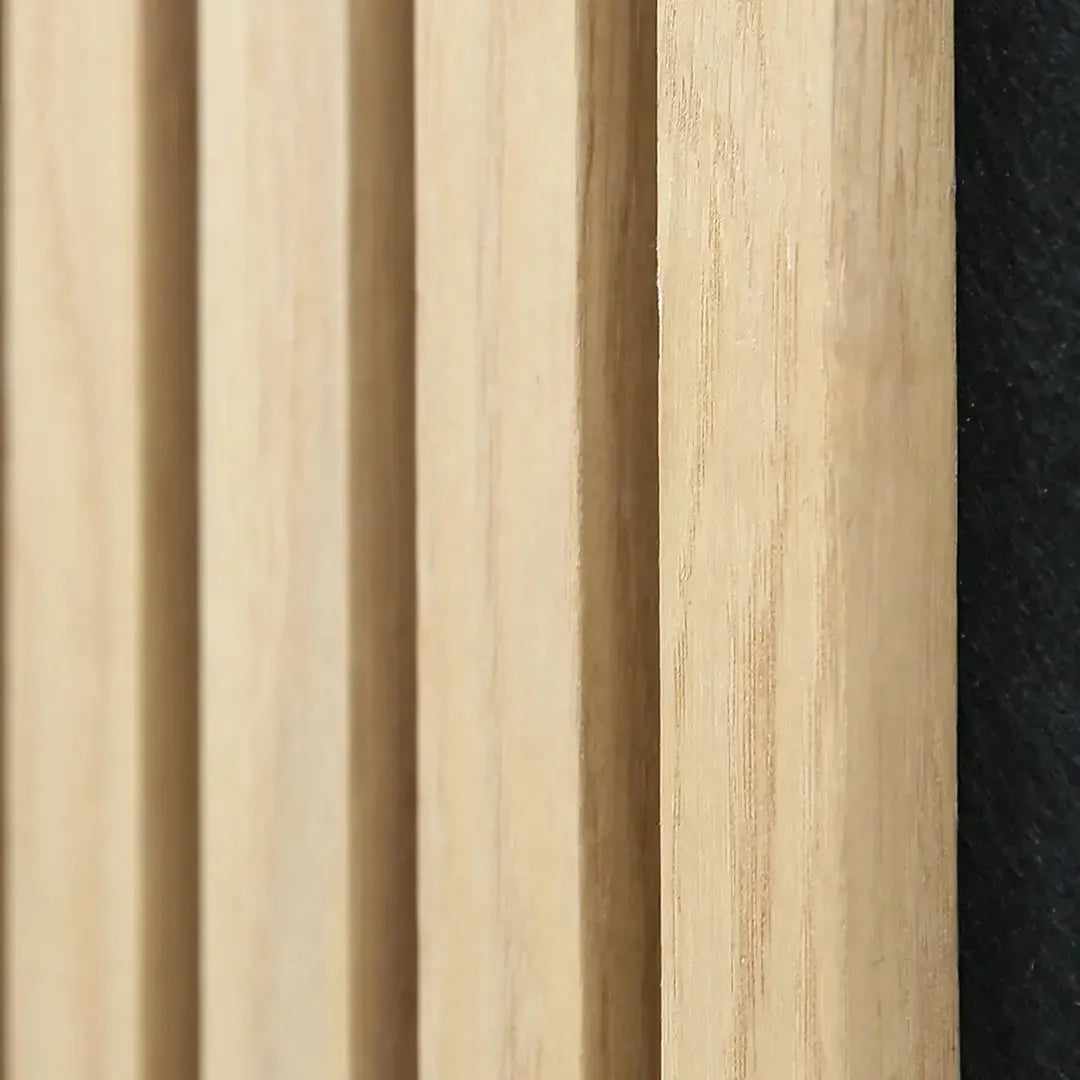
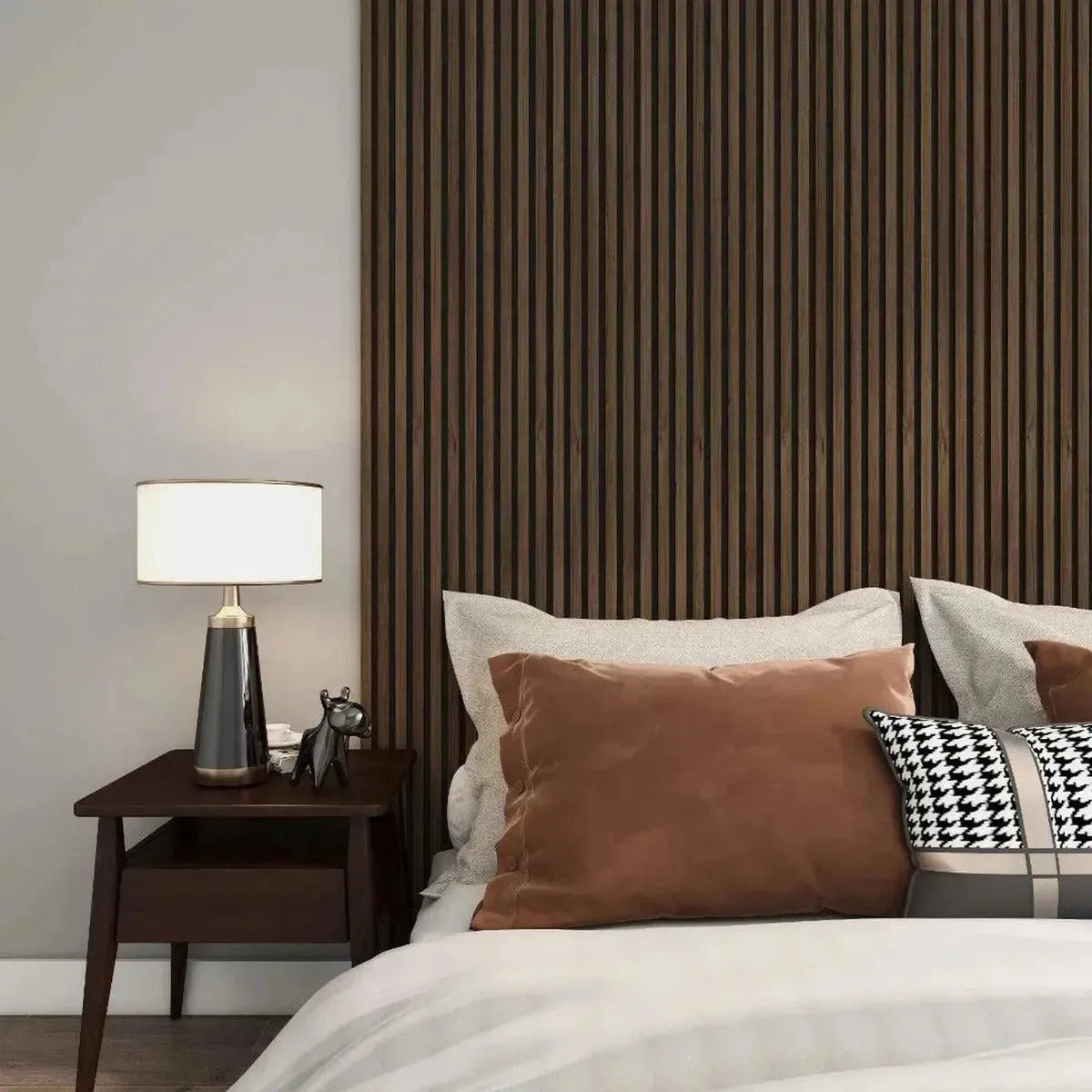
- Natural Oak or Walnut acoustic slat panels for dry indoor zones — checkout, gift shop, cafe
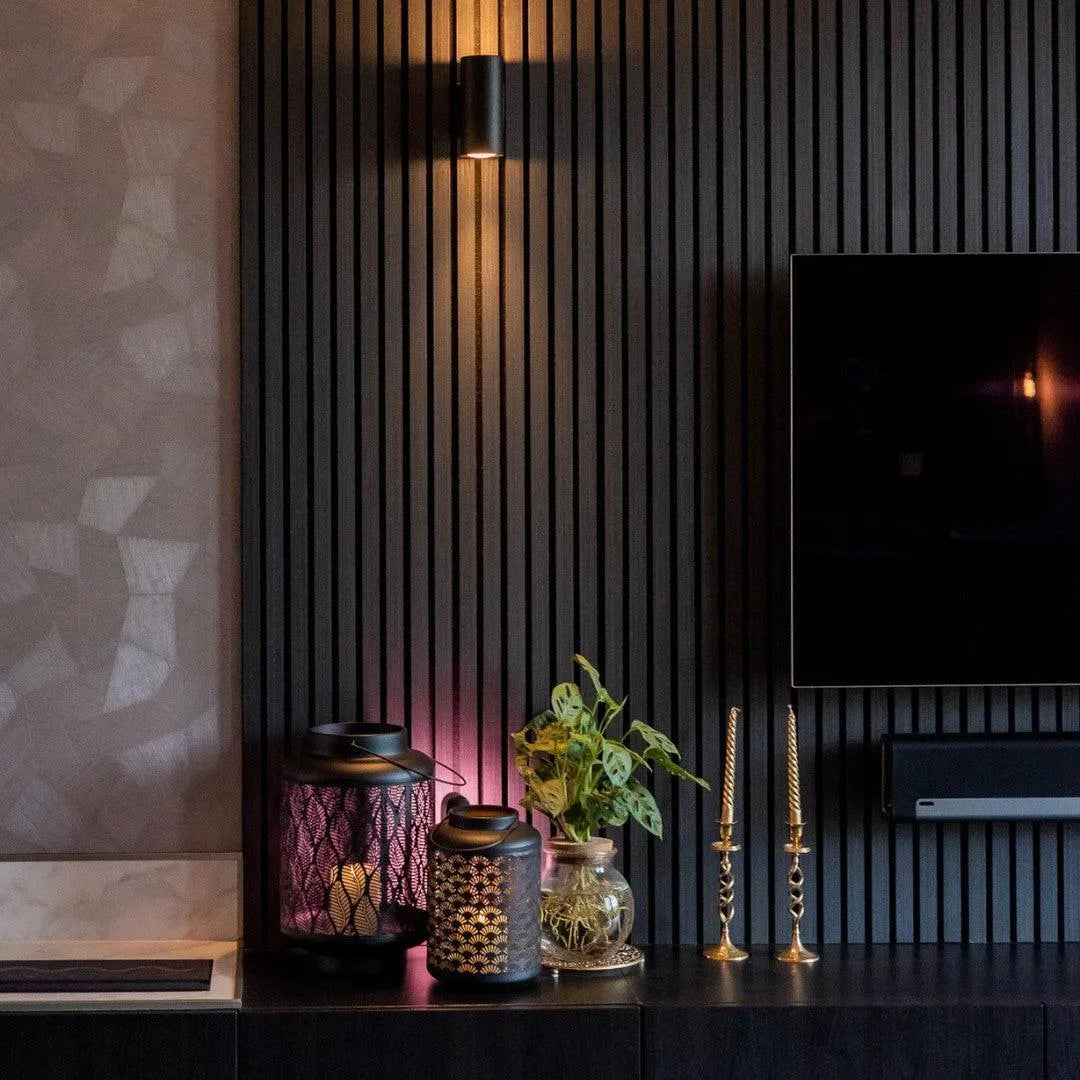
- Smoked Oak or Black Oak for high-contrast accent walls, used sparingly against green foliage
- Gray felt-backed slat panels where absorption matters more than looks — behind registers, near HVAC units
- Exterior wall panels in Oak, Birch, Black, or Stone Gray for anything touched by rain or hose spray
- Skip standard interior veneer slat panels on any wall within reach of overspray from watering stations
Cut checkout and cafe reverb first
Checkout areas in garden centers stack scanner beeps, cart wheels, gift-wrap stations, and often an overhead fan or irrigation pump into one hard-surfaced room. That's the highest-value zone to treat first because it's where staff spend the most hours and customers form their first impression.
- Panel the wall behind the checkout counter, not just the customer-facing side
- Add felt-backed slat panels if the ceiling is also hard (metal deck or exposed concrete)
- Treat at least one full wall, not a partial strip — partial coverage barely moves the noise floor
- Leave register sightlines and signage zones unpaneled so staff visibility isn't blocked
Build plant and gift display backdrops
A slat or hexagon panel wall behind a seasonal display does two jobs: it absorbs some of the hard-surface echo, and it gives plants and gift items a warm, non-competing background. Retailers running rotating seasonal sets get more mileage from a neutral tone here than from a bold accent finish. For layout ideas built for retail floors specifically, see this guide on slat wall panels for retail store displays.
- Use Natural Oak or a lighter Walnut for backdrops behind live plants
- Reserve Hexagon Acoustic Panels for feature walls behind registers or seasonal end-caps
- Keep 3D wood wall tiles to framed accent sections — sample tables, small nook walls — not full-height runs
- Rotate seasonal signage in front of the panel wall instead of swapping the panel finish itself


Protect exterior-facing and yard-perimeter walls
Any wall that isn't fully enclosed needs exterior-rated construction, not an interior panel with a sealant coat added after the fact. This is the single most common spec mistake garden centers make.
- Use exterior wall panels (Oak or Birch) for breezeway walls and storefront fascia facing the yard
- Pair exterior panels with matching finishing trim and corner trim rather than mitering raw edges on site
- Keep interior acoustic slat panels at least one full wall back from any open-air threshold
- Check that fasteners and trim are exterior-rated — interior panel hardware corrodes faster outdoors
“If a panel wall sits within a few feet of a hose bib or an open bay door, treat it as exterior — no felt-backed interior slat panel survives a season of overspray.”
Plan panel specs for multi-location rollout
Chains running more than one location need one documented palette, not a fresh decision at every store opening. Lock the finish list before the second location breaks ground.
- Pick one primary finish (commonly Natural Oak) for all indoor plant halls across locations
- Reserve one accent finish (Smoked Oak or Black Oak) for checkout walls only
- Standardize exterior panel color for every yard-facing breezeway wall
- Order end pieces and corner trim in matching finishes with every main panel order, not as an afterthought
Comparison: panel types for garden center zones
| Panel type | Best for | Key limitation |
|---|---|---|
| Acoustic slat wall panel (Natural Oak, Walnut, Smoked Oak, Black Oak) | Indoor plant hall, checkout, gift shop | Not built for direct water exposure or full weather |
| Hexagon acoustic panel | Seasonal display backdrops, feature walls behind registers | Costs more per wall than flat slat panels |
| 3D wood wall panel tile | Small accent zones — sample tables, cafe nooks | Built for framed sections, not full-height coverage |
| Exterior wall panel (Oak, Birch, Black, Stone Gray) | Covered breezeways, yard-facing walls | Needs exterior-rated trim and fasteners, not a drop-in swap for interior panels |
| Fluted wall panel | Curved displays, column wraps near entrance | Flexible design trades off some absorption versus felt-backed slat panels |
Verdict: for a typical indoor garden center retail floor, Natural Oak acoustic slat panels are the default pick in 2026 — they don't compete with plant color the way Black Oak or Smoked Oak can, and they hold up fine in dry indoor zones.
Common mistakes garden centers make with wood slat panels
- Installing interior acoustic slat panels on covered breezeway walls that catch wind-driven rain — panels swell and delaminate within a season.
- Choosing Black Oak or Smoked Oak behind live plant walls, which flattens the green under greenhouse-style lighting and makes displays look muddy.
- Skipping acoustic treatment at checkout, where scanner beeps, cart wheels, and irrigation pumps already stack up noise in a hard-surfaced room.
- Rolling out five different panel finishes across a multi-location chain because no one owns the palette, which breaks brand consistency in every store photo.
- Forgetting end pieces and corner trim, leaving raw edges exposed exactly where carts and customers brush past all day.
FAQ
What's the best wood slat panel for a garden center checkout wall?
Natural Oak acoustic slat panels work best behind garden center checkout counters in 2026 because they cut register and cart noise without darkening the retail floor. Gray felt-backed versions add more absorption if the ceiling above the register is also hard.
Can wood slat panels handle the humidity in a greenhouse retail zone?
Standard interior acoustic slat panels are built for indoor humidity swings, not direct hose spray or open-air rain. Any wall touched by watering overspray needs an exterior wall panel instead.
Is an exterior wall panel or interior acoustic slat panel right for a covered breezeway?
A covered breezeway between the indoor store and the open yard needs an exterior-rated panel, since it's exposed to wind-driven rain and temperature swings that interior slat panels aren't built for.
How many hexagon panels cover a typical feature wall?
Hexagon acoustic panels ship 4 panels per box at 32 inches wide, so coverage depends on the wall's total width and height divided into that unit. Measure the feature wall first, then order in whole boxes.
Do wood slat panels fade under grow lights or direct sun through glass roofing?
Direct, sustained sun exposure through glass or polycarbonate roofing can affect any wood veneer finish over time, which is why panels are better suited to walls set back from direct overhead glazing rather than under it.
What panel finish works best against green plant displays?
Lighter finishes like Natural Oak or White Oak let plant greens stand out, while very dark finishes like Black Oak can flatten foliage color under greenhouse-style lighting.
Can garden center chains standardize panel finishes across multiple locations?
Yes — locking one primary indoor finish and one accent finish before a second location opens keeps store photography and merchandising consistent across a multi-location rollout.
How do you finish panel edges at aisle ends?
Use matching end pieces and corner trim ordered with the main panel run rather than caulking or mitering raw edges on site, since aisle ends take the most cart and foot traffic in the store.
One last thing
The spec garden centers skip most often isn't the panel — it's the trim. Order end pieces and corner trim in the same finish as the main slat run at the same time, not as a follow-up purchase. Raw panel edges at aisle ends are the first thing to chip once carts start clipping corners in daily operation, and by the time someone notices, the matching trim run from the original order may no longer be in stock in that finish.


 Better performance and aesthetic appeal
 In Stock