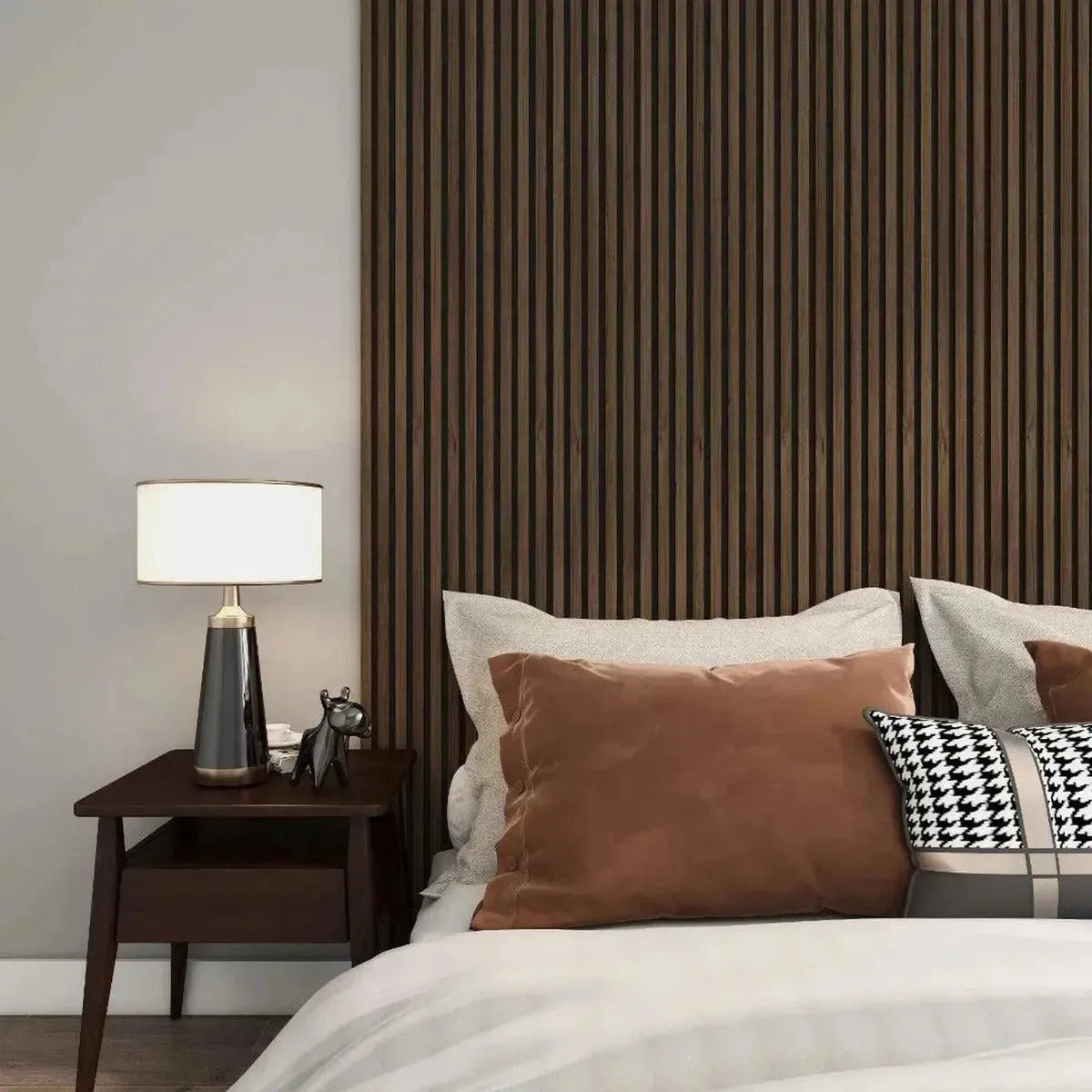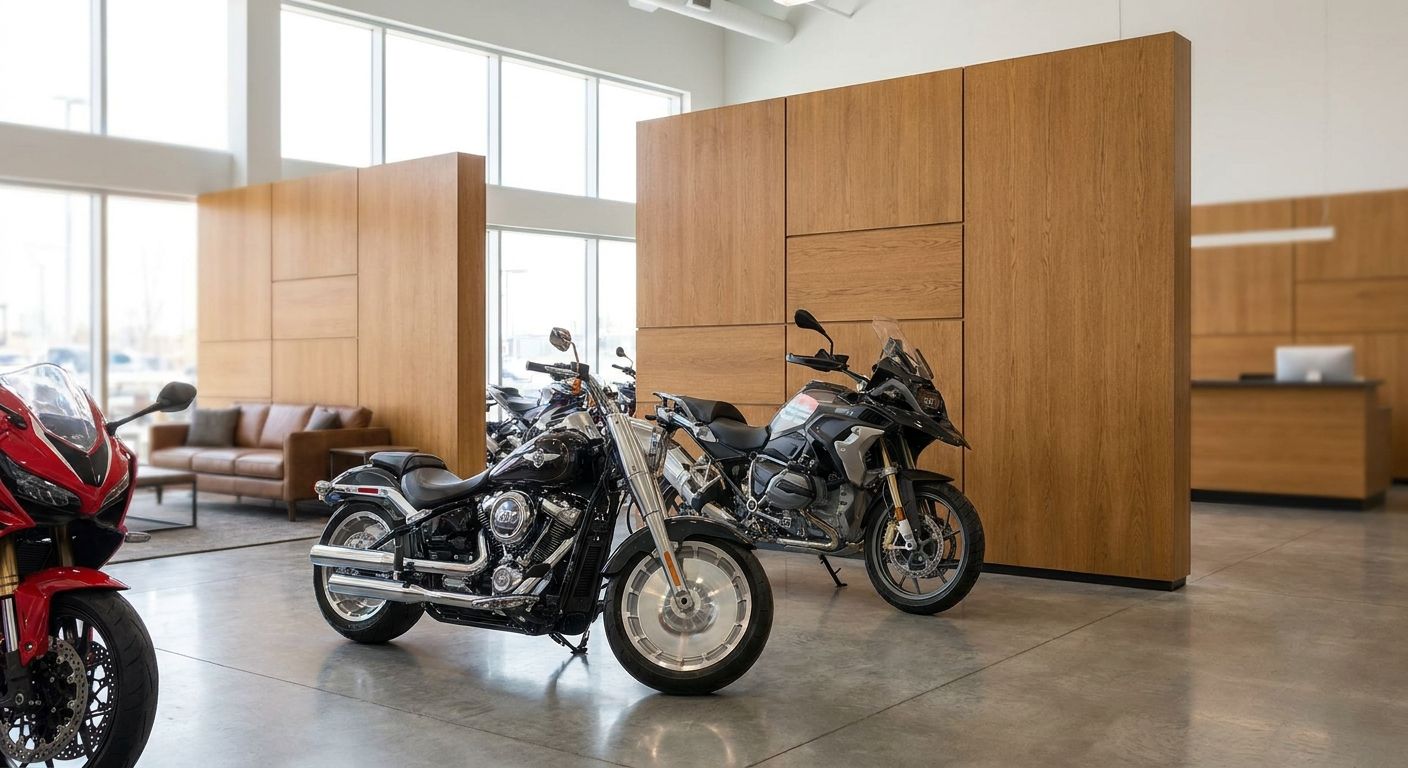
Wood panels for a motorcycle dealership showroom are acoustic and decorative wall systems that cut reverb from concrete floors and glass storefronts while giving the sales floor a finish that reads premium next to chrome and painted tanks. A bike showroom isn't a typical retail box: open-plan concrete, floor-to-ceiling glass, and a service bay running right next to the sales floor mean acoustic control and scuff resistance both carry more weight here than in a boutique or an office lobby.
- Wood panels for a motorcycle dealership showroom work best as black oak or walnut acoustic slat panels behind the hero bike display in 2026.
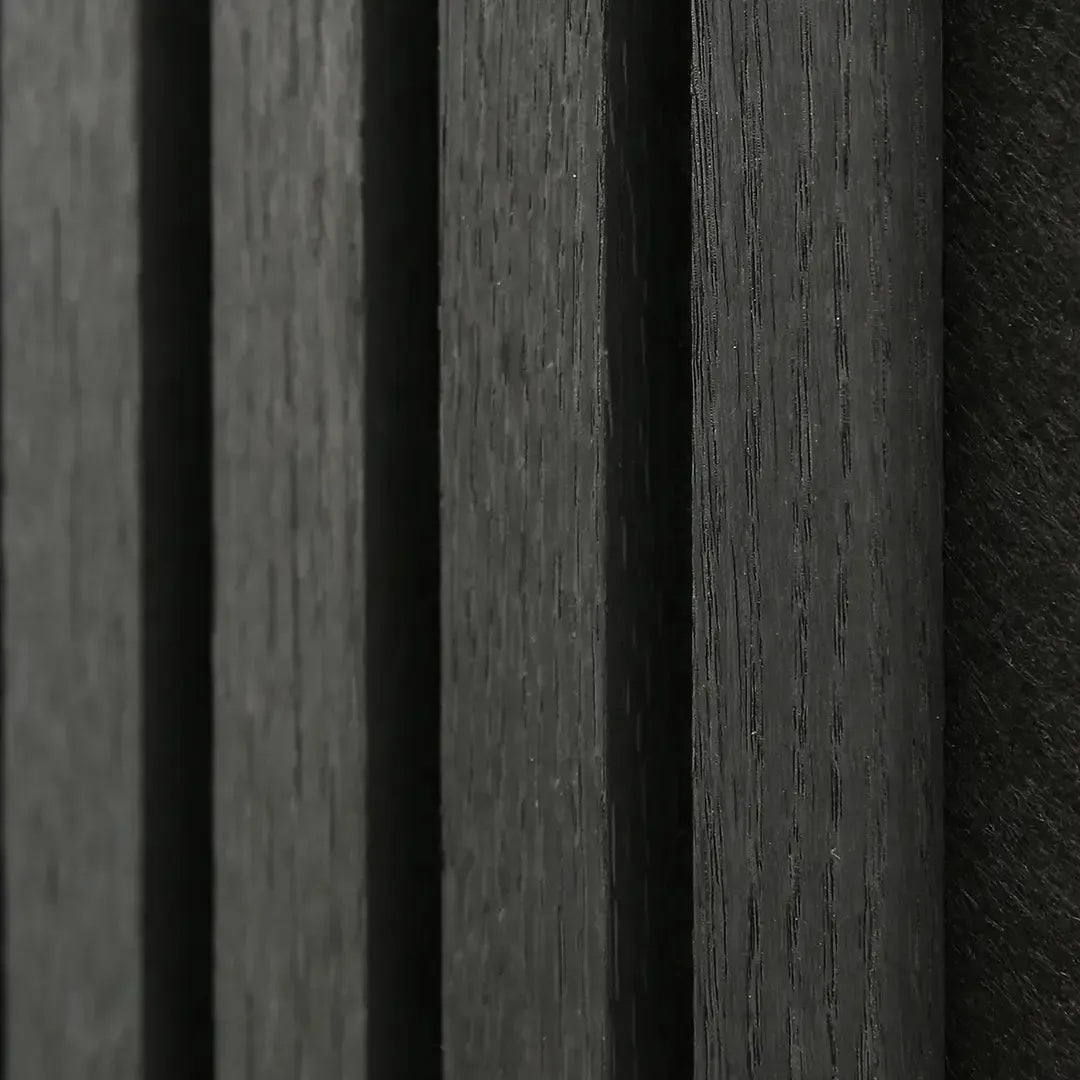
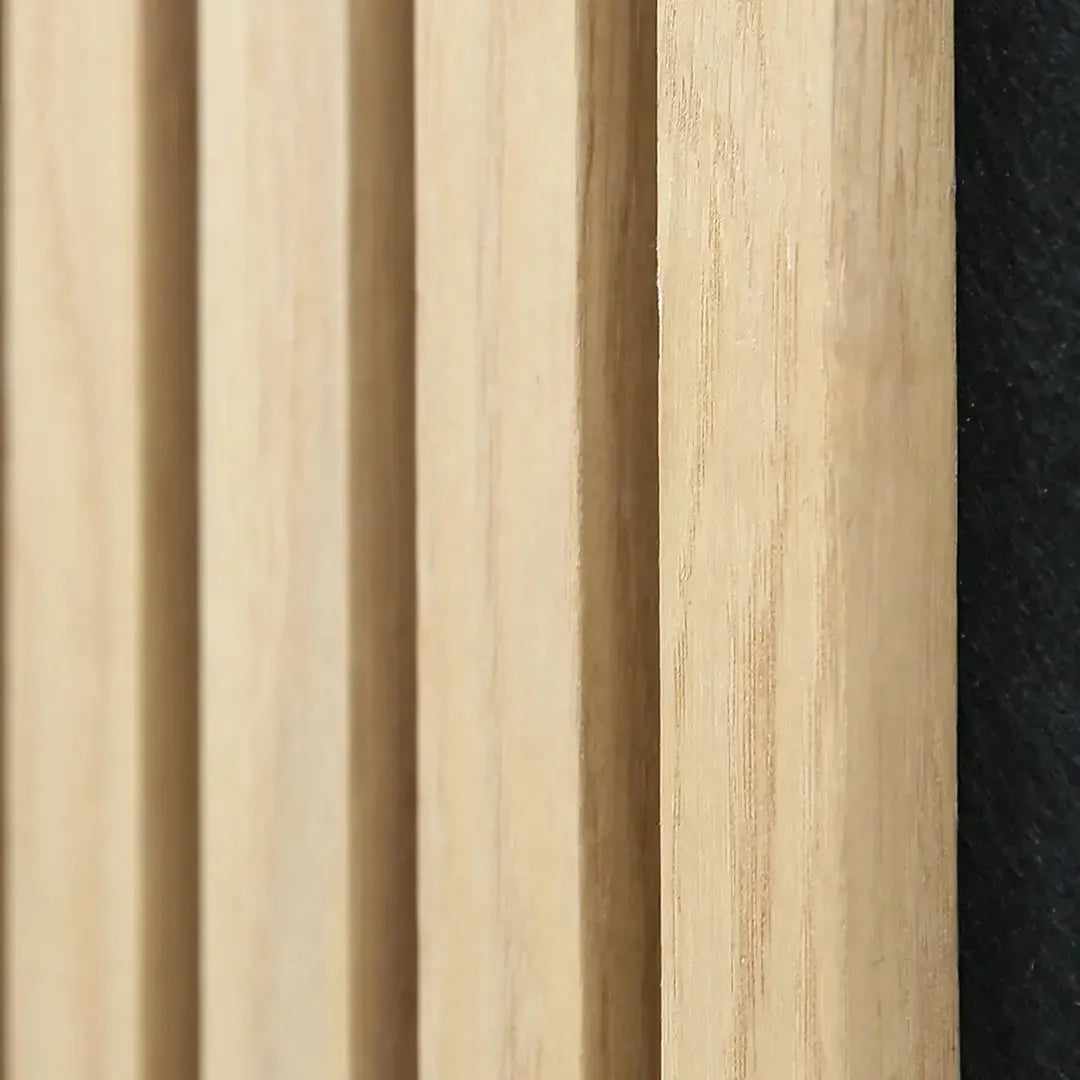
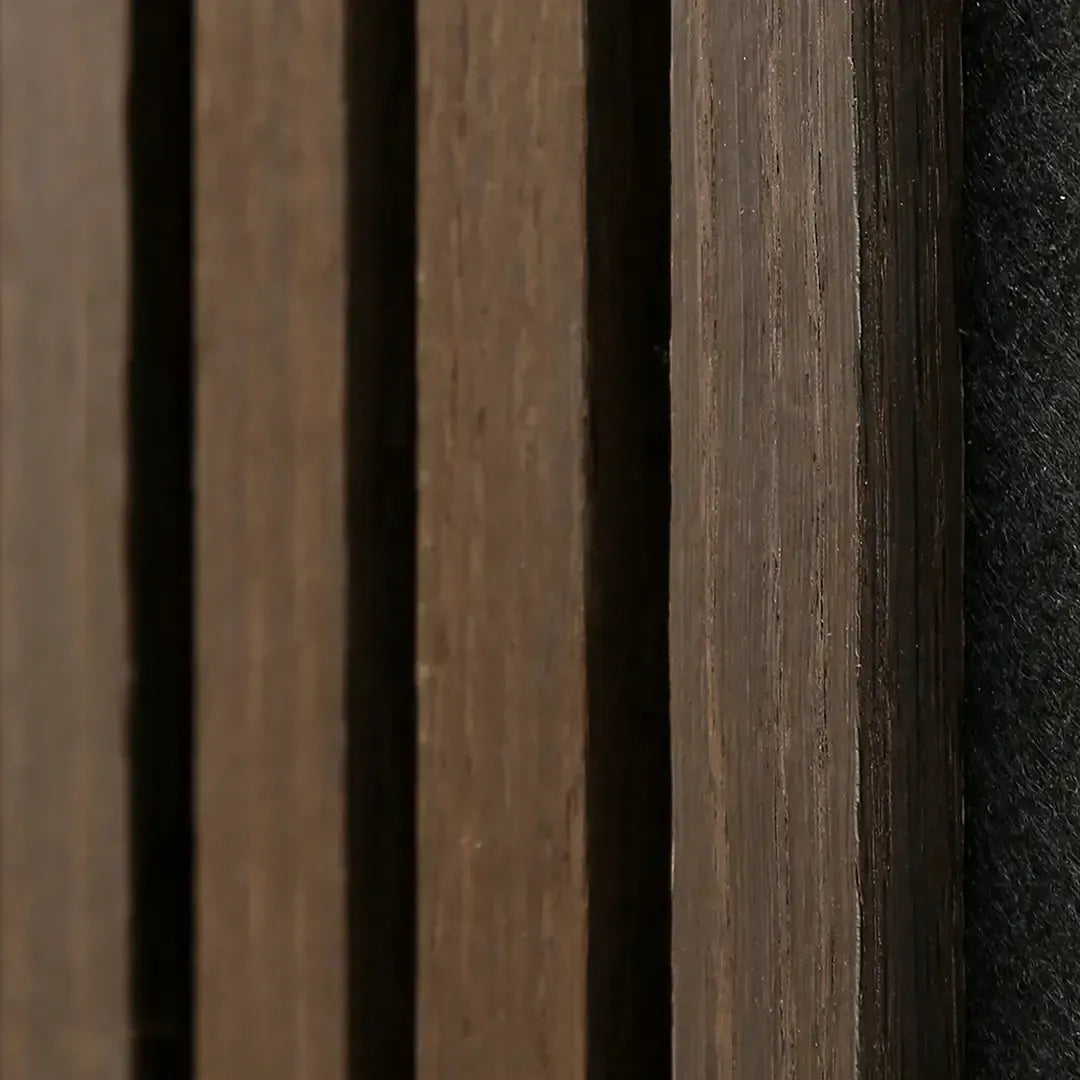
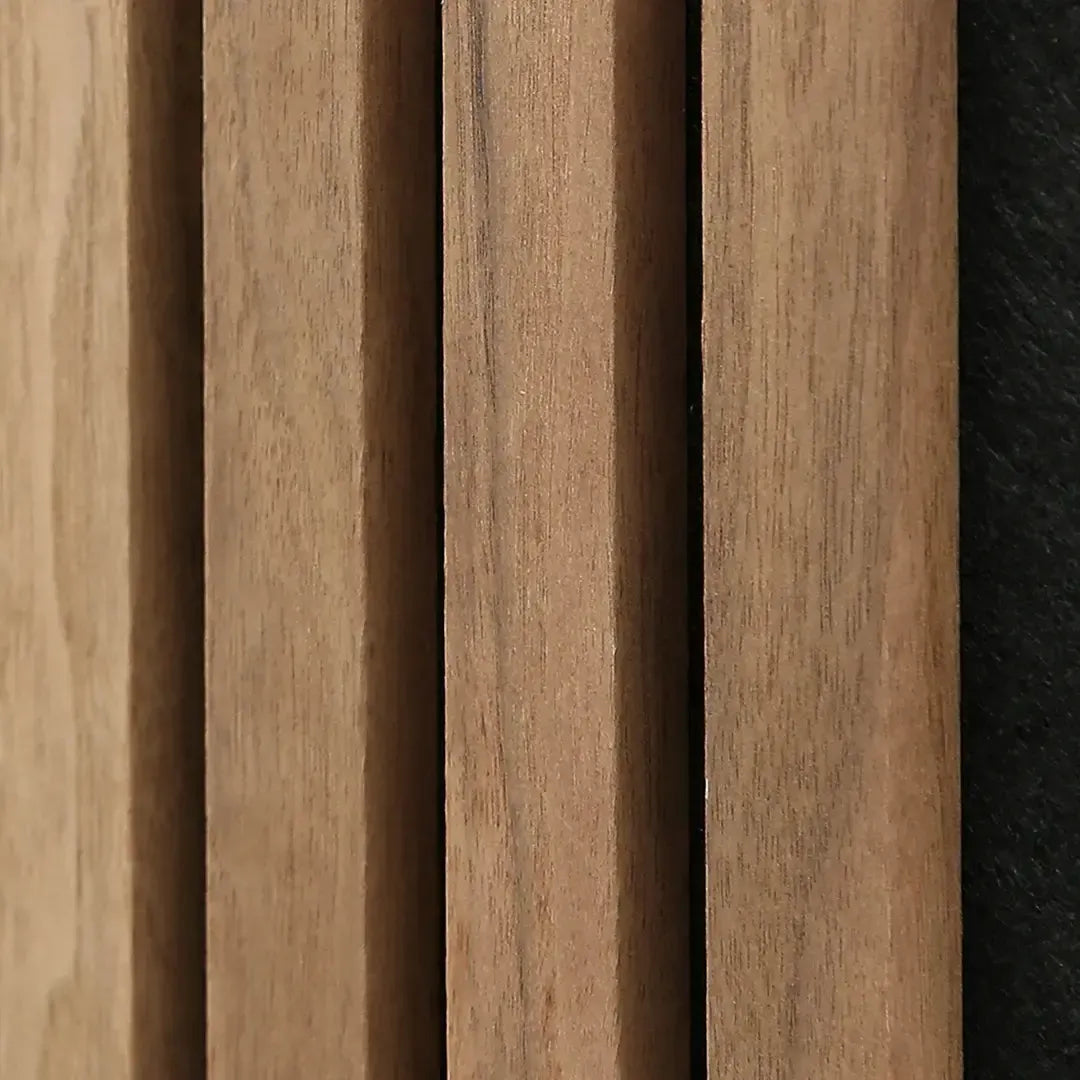
- Akuwood Panel's acoustic slat panels use 3-sided wood veneer that absorbs sound bouncing off concrete floors and glass storefronts.
- Hexagon acoustic panels carry an NRC of 0.75, useful for breaking up noise near F&I offices and seating areas.
- Order a sample before a full showroom run - commercial lighting shifts finish color more than product photos suggest.
Why wood panels matter for motorcycle dealership showrooms
A motorcycle showroom floor is almost always hard-surfaced: polished concrete or epoxy, chosen because it survives bike stands and dropped tools. Pair that with the glass frontage most dealerships use to show off inventory from the street, and you get a room that reflects sound instead of absorbing it. Every revving test, every raised voice at the parts counter, every closing conversation near the service write-up desk bounces around untreated.
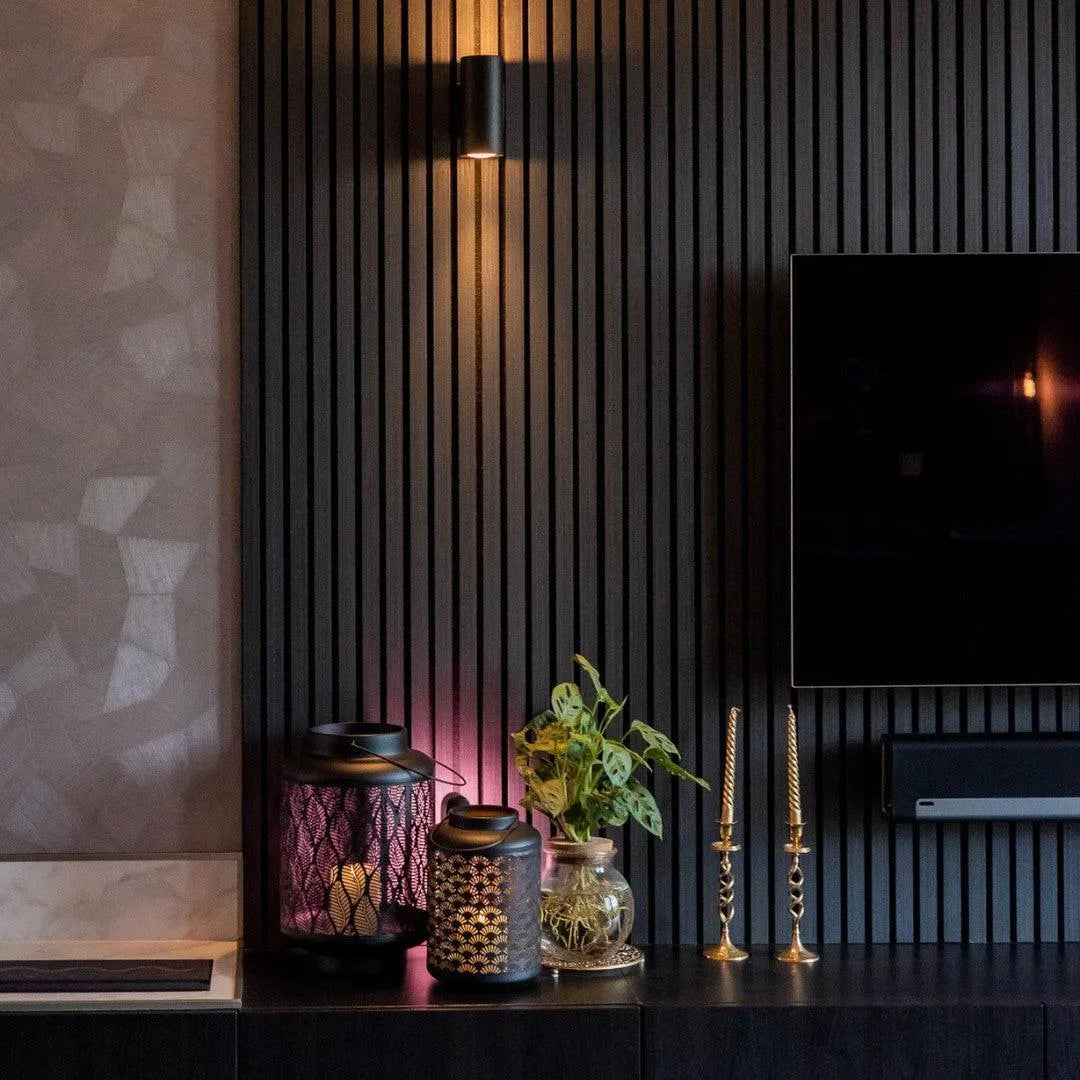
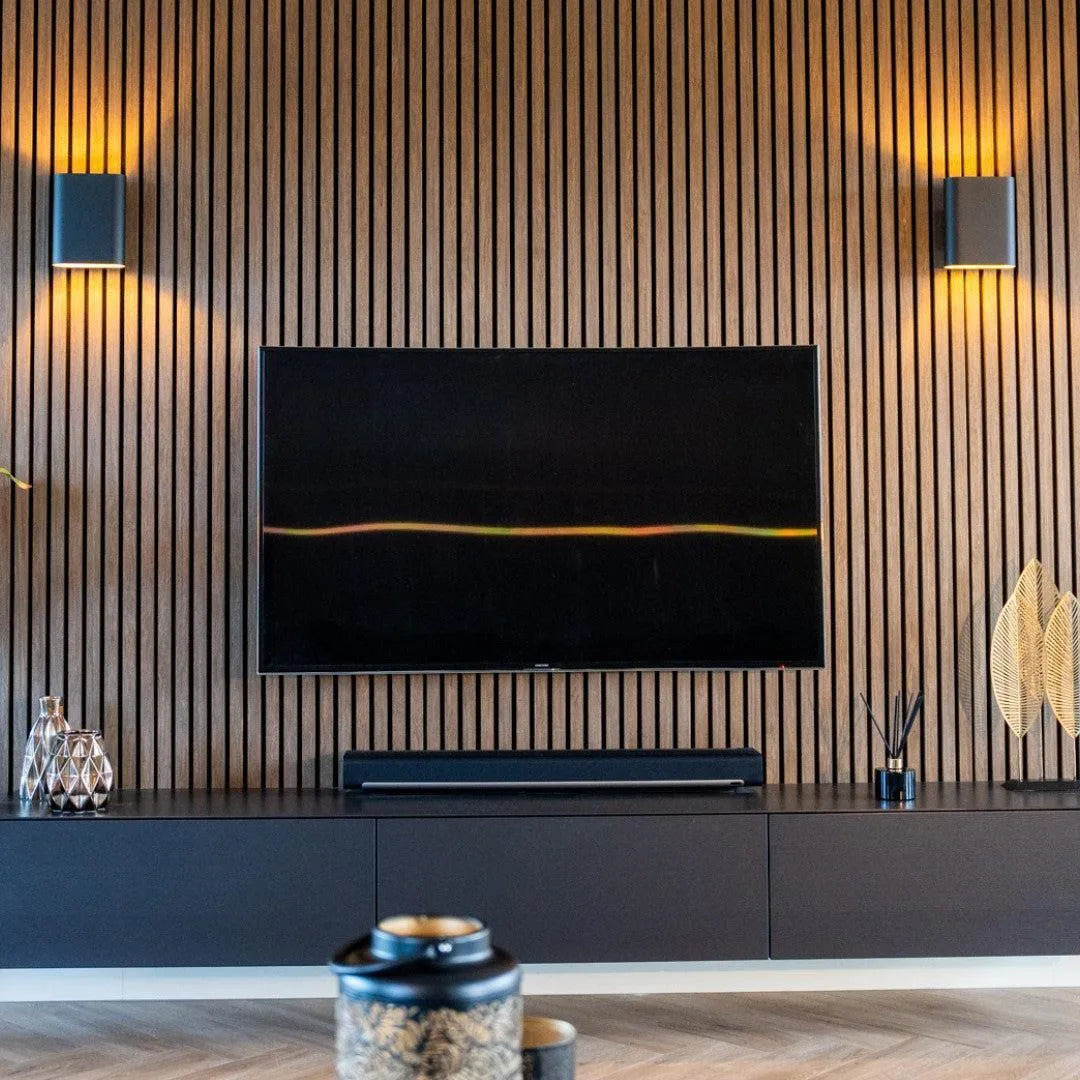
An acoustic slat wall panel in black oak does two jobs at once in this setting: the felt backing behind the slats absorbs some of that reflected sound, and the dark finish gives chrome, paint, and metallic tanks a backdrop that makes them pop under showroom lighting. That combination — acoustic function plus a finish built for contrast — is the whole case for wood panels for motorcycle dealership showroom walls in 2026.
Map the noise sources before you panel anything
Don't panel the whole room the same way. Walk the floor and note where sound actually collects.
- Test-ride staging area near the service bay door
- The sales floor itself, especially under high or vaulted ceilings
- The parts counter and F&I offices, where private conversation matters
- Any hallway or corridor connecting showroom to service
- Waiting areas near glass walls, where sound reflects hardest
Choose a panel finish that matches the brand and bike lineup
Finish choice is a merchandising decision as much as an acoustic one. Light natural oak washes out next to bright fairings and chrome under bright showroom lighting; darker finishes hold contrast better.
- Black oak — highest contrast against chrome, paint, and glass; reads modern and premium
- Walnut — warmer tone, works if the brand leans classic or heritage rather than sport
- Smoked oak — middle ground between black oak's drama and walnut's warmth
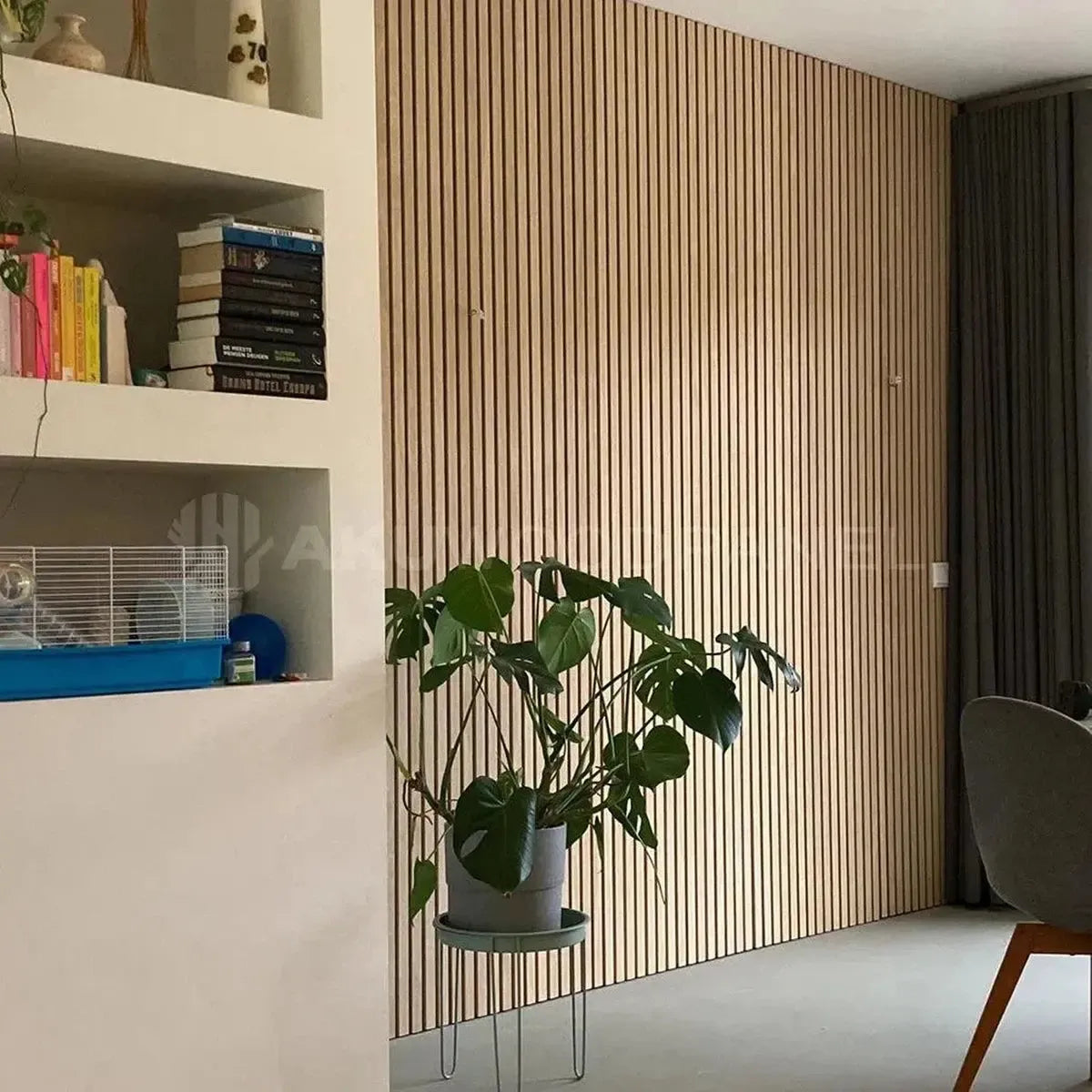
- Natural oak — lightest option, best for brands going Scandinavian-minimal rather than moody
- Avoid mixing more than two finishes on visible sales-floor walls; it reads inconsistent, not curated
Protect high-traffic zones from bike handlebars and toolboxes
Panels near where bikes get walked, wheeled, or staged take contact damage that a living room wall never sees.
- Keep full panel runs above 36 inches where handlebars can swing
- Use end pieces or trim to finish exposed edges rather than leaving raw cuts
- Reserve slat panels for walls, not the base of columns bikes get walked around
- Test one panel section in the highest-traffic spot for 30 days before a full rollout
Build a feature wall behind the hero bike display
Every showroom has one wall meant to frame the flagship model. This is where the acoustic and visual jobs of the panel matter most simultaneously.
- Center the panel run behind the platform or turntable, not off to one side
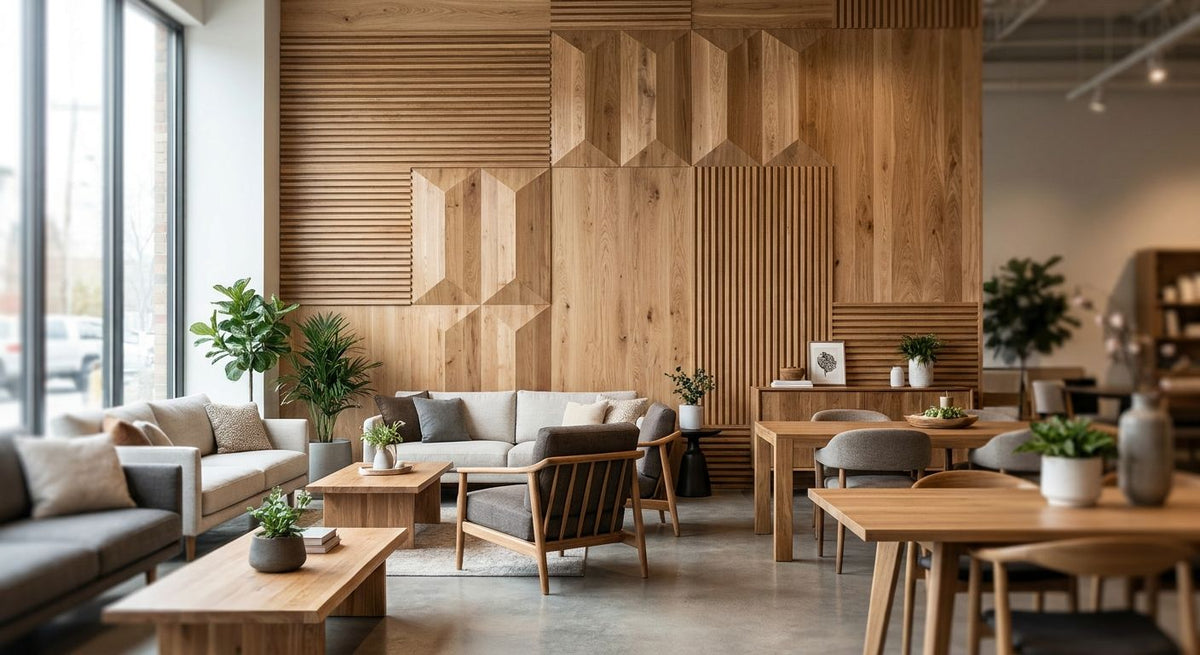
- Use a walnut hexagon acoustic panel to break a flat slat run into a geometric feature without switching finishes entirely
- Add directional lighting that rakes across the panel grain — flat wood photographs poorly under flat light
- Keep the display bike's paint color in mind; panels shouldn't compete with a bright red or yellow tank


Treat the reception and service write-up counter separately from the sales floor
The write-up counter is where a customer signs off on a repair estimate; it needs quieter treatment than the open sales floor, not louder branding.
- Use panel runs closer to desk height rather than full-wall drama
- Prioritize acoustic slat over decorative 3D tile in this zone — function over flash
- Keep finish consistent with the sales floor so the transition doesn't feel like a different building
- Skip glossy or laminate options here; matte wood veneer reduces glare for staff working on screens
Coordinate panel placement with lighting and glass
Dealership showrooms run bright, even lighting to show off inventory. Panels installed without checking light angles end up looking flat instead of textured.
- Rake light across slat and hexagon panels rather than lighting them head-on
- Avoid placing dark panels directly opposite floor-to-ceiling glass where daylight will wash the contrast out at midday
- Check how panels read under both daylight and evening showroom lighting before finalizing the layout
- Leave panel edges away from direct glare off polished floors
Order samples before committing to a full run
A showroom is too much square footage to get wrong on finish color. Akuwood Panel sells a full sample box of the slat wall panel line specifically for this reason.
- Order samples in the two or three finishes under consideration
- View them under the actual showroom lighting, not daylight near a window
- Hold samples against the bike colors that dominate current inventory
- Confirm grain direction preference (horizontal vs. vertical) before ordering full panel runs
Comparing panel options for a motorcycle dealership showroom
| Panel type | Best for | Key limitation |
|---|---|---|
| Acoustic slat wall panel (black oak / walnut) | Hero backdrop walls behind bike displays | Needs the felt backing seated flush against the wall to absorb sound, not just surface mounting |
| Hexagon acoustic panel | Feature walls near seating or F&I offices | Takes longer to install per square foot than a flat slat run |
| Fluted wall panel | Reception desks and column wraps | Vertical grooves show misalignment if cut panels aren't matched carefully |
| 3D wood wall panel | Small accent zones, service counter risers | Decorative only — not built for large-format acoustic treatment |
| Exterior wall panel | Storefront and entry canopy cladding | Needs exterior-rated fixings, different from an interior slat install |
Verdict: for the single highest-impact wall in a motorcycle dealership showroom in 2026, the black oak acoustic slat panel wins — it's the only option on this list doing acoustic work and merchandising work at the same time.
Common mistakes motorcycle dealerships make with wall panels
- Treating the whole building as one acoustic zone. The sales floor, the service bay, and the F&I office all have different noise problems and don't need identical panel treatment.
- Picking a light finish that washes out under showroom lighting. Natural oak next to a bright red or yellow fairing under bright LEDs reads flat instead of premium.
- Skipping the sample step. Commercial lighting shifts wood tone more than a product photo ever will — a full room order without a sample check is a rollback waiting to happen.
- Ignoring foot and bike traffic patterns near panel edges. Handlebars and rolling toolboxes scuff corners faster than designers expect; unfinished edges show damage first.
- Not coordinating panels with existing lift columns or bike ramps. A feature wall planned without checking sightlines around service equipment ends up half-hidden.
FAQ
What's the best wood panel for a motorcycle dealership showroom?
A black oak or walnut acoustic slat wall panel works best behind the hero bike display in 2026 because it absorbs sound and gives chrome and paint a contrast backdrop. Lighter finishes like natural oak wash out under bright showroom lighting next to bright bike colors.
Do acoustic wood panels actually reduce noise in a showroom with concrete floors?
Yes — the felt backing behind an acoustic slat panel absorbs reflected sound that would otherwise bounce off concrete and glass. It won't eliminate noise from an adjacent service bay entirely, but it noticeably cuts reverb on the sales floor.
Is black oak or walnut better for a motorcycle showroom wall?
Black oak gives the highest contrast against chrome and bright paint, which suits modern or sport-focused dealerships. Walnut reads warmer and fits brands leaning heritage or classic rather than performance.
Can hexagon acoustic panels handle high-traffic commercial use?
Hexagon acoustic panels carry an NRC of 0.75 and a wood veneer finish built to hold up over years of use, making them suitable for commercial feature walls away from direct bike contact. Keep them off zones where handlebars or equipment might scrape the surface.
How much wall coverage does a motorcycle dealership showroom typically need?
Coverage depends on floor plan, but most dealerships treat one feature wall behind the hero display plus the write-up counter rather than paneling every wall. Measure the specific walls you're targeting before ordering.
Should service bay walls use the same panels as the sales floor?
No — the write-up counter and service-adjacent walls need quieter, function-first treatment while the sales floor can carry more decorative feature-wall panels. Keep the finish consistent across both so the space still feels like one building.
Are wood wall panels durable enough for a space with moving vehicles?
Acoustic slat and hexagon panels hold up fine on walls away from direct contact, but any wall where handlebars or toolboxes pass close should use trim or end pieces to protect exposed edges. Keep panel runs above the height where bikes get walked through.
Can I order samples before committing to a full showroom install?
Yes — ordering a sample box in the finishes under consideration and checking them under actual showroom lighting is the standard way to avoid a costly full-room mismatch.
One last thing
The detail dealerships skip most often isn't finish choice — it's checking panel color under the showroom's actual lighting rig before ordering the full run. A black oak panel photographed under daylight and the same panel under warm LED showroom lighting can read like two different products; the sample step exists for exactly that gap.

 Better performance and aesthetic appeal
 In Stock