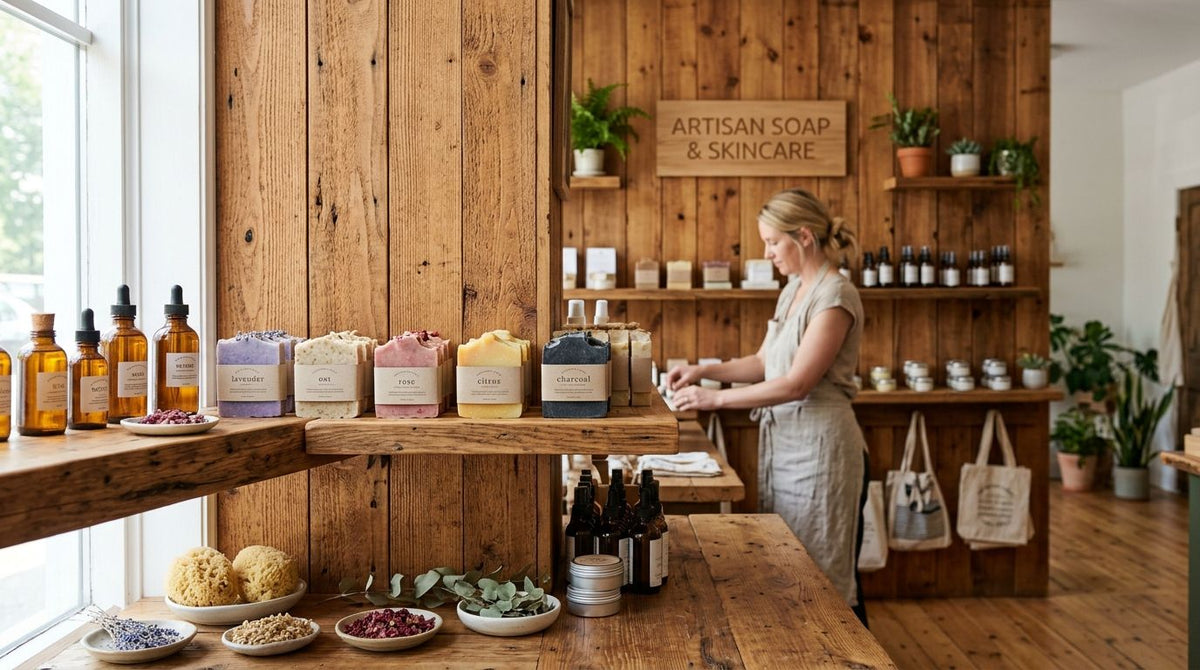
Artisan soap and skincare boutiques need wall material that survives water splashes, steam from testing stations, and a constant flow of hands touching everything at counter height, while still looking like a curated apothecary rather than a hardware store. Real wood slat, fluted, and hexagon panels solve both problems at once: they absorb sound in a small retail footprint and read as premium, natural, and calming — the exact tone a soap or skincare brand wants to sell. This segment's biggest constraint isn't square footage, it's moisture and oil exposure near sinks, testers, and refill bars, which most generic accent-wall advice ignores.
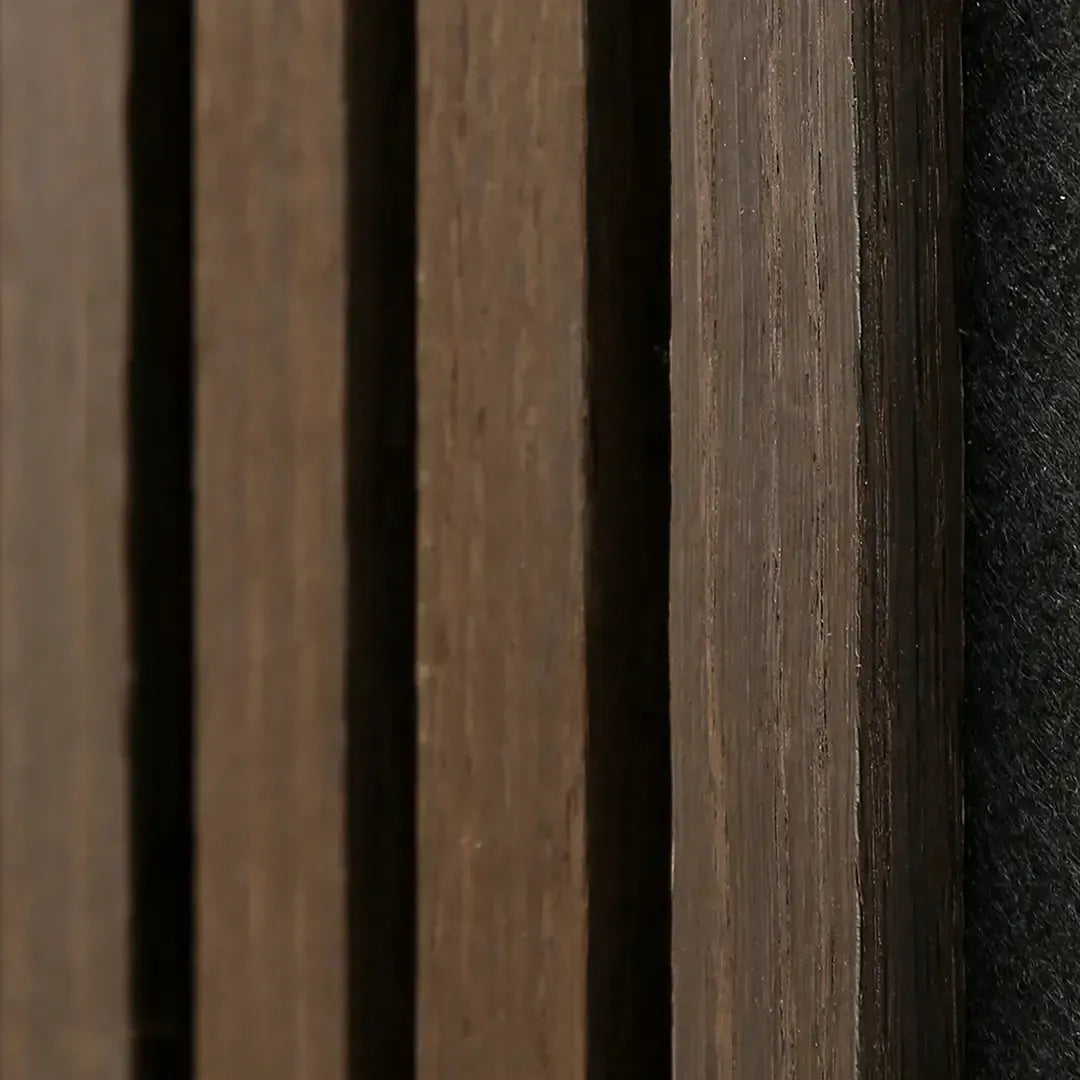
- Acoustic slat panels with felt backing cut echo around tile floors and sinks in soap boutiques better than plain oak veneer.
- Fluted panels suit fitting-room and display-niche walls; skip them where acoustic absorption near a wash station is the priority.
- Hexagon panels behind the till give a branded feature wall without needing full-wall coverage.
- AKU Woodpanel's natural oak and walnut lines cover both acoustic and decorative needs for wood panels for soap boutique interiors in 2026.
- Budget the install in phases — till wall first, fitting rooms second — rather than paneling the whole store at once.
Why wood panels for soap boutique interiors matters
A soap and skincare boutique packs hard surfaces into a small space: tile or concrete floors, glass display cases, metal shelving, and a sink or testing station running water most of the day. Sound bounces hard in that mix, and customer conversations at the register carry across the whole shop. Acoustic wood panels with an NRC around 0.75 pull that reverberation down without adding soft furnishings that would clash with a clean apothecary look.
The second driver is touch. Soap boutiques are tactile by design — customers pick up bars, sniff testers, run fingers over packaging — and the wall behind that experience needs to hold up visually under near-constant proximity to water and oils. AKU Woodpanel works for this because the veneer finish is built for repeated cleaning, not just a one-time accent wall.
Map your boutique's noise and moisture zones
Before ordering panels, walk the floor plan and separate it into zones by exposure, not just by décor intent.
- Wash and refill stations: high humidity, frequent wipe-downs
- Testing counters: oil residue, hand contact
- Fitting or gifting nooks: low moisture, high visibility
- Till and checkout wall: highest customer eye-time, brand-forward
- Storage or back-of-house walls: low priority for finish, still benefits from sound control
This zoning decides which panel finish and mounting method goes where — a felt-backed acoustic slat near a sink needs more frequent wiping than the same panel on a dry display wall.
Choose acoustic slat panels for the main retail floor
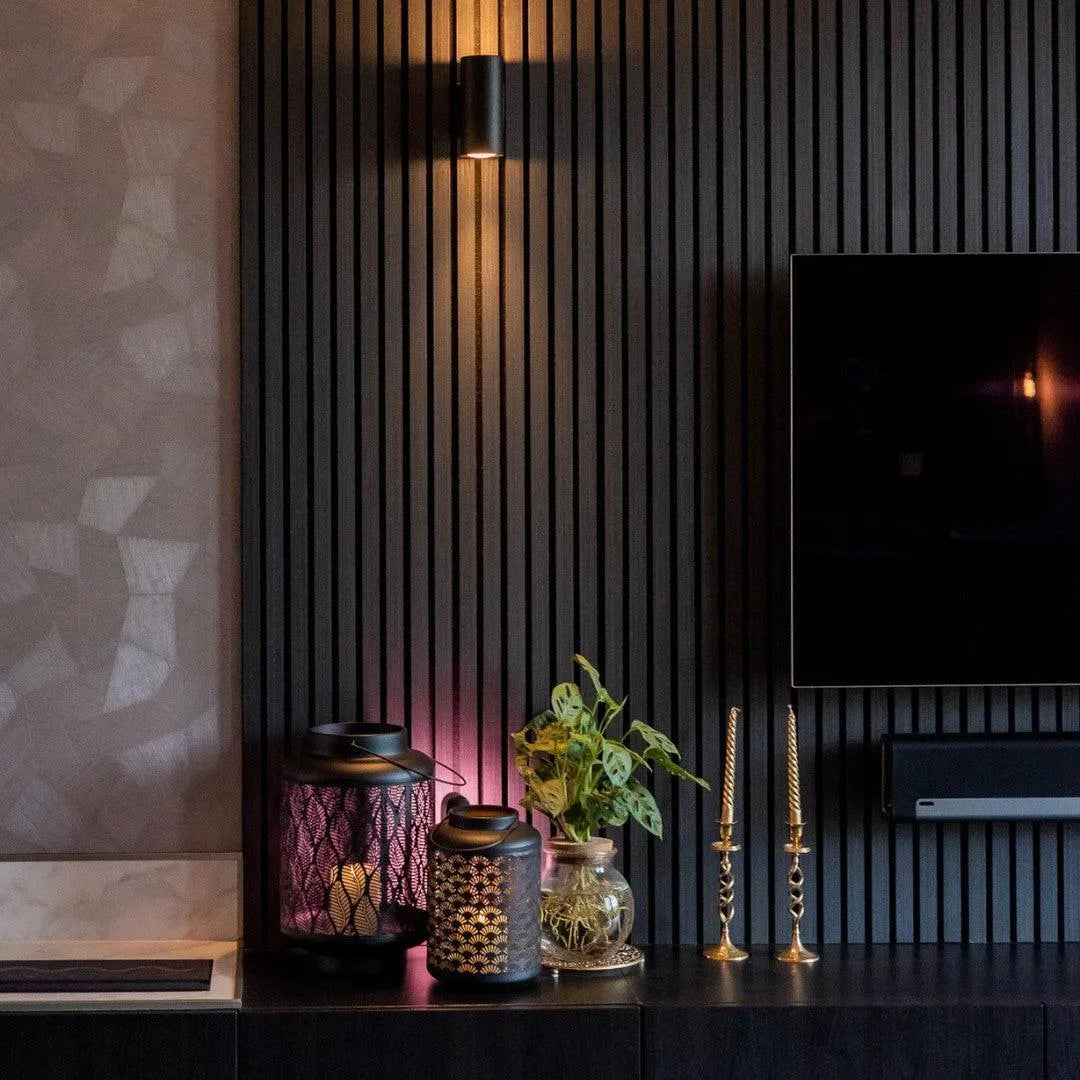
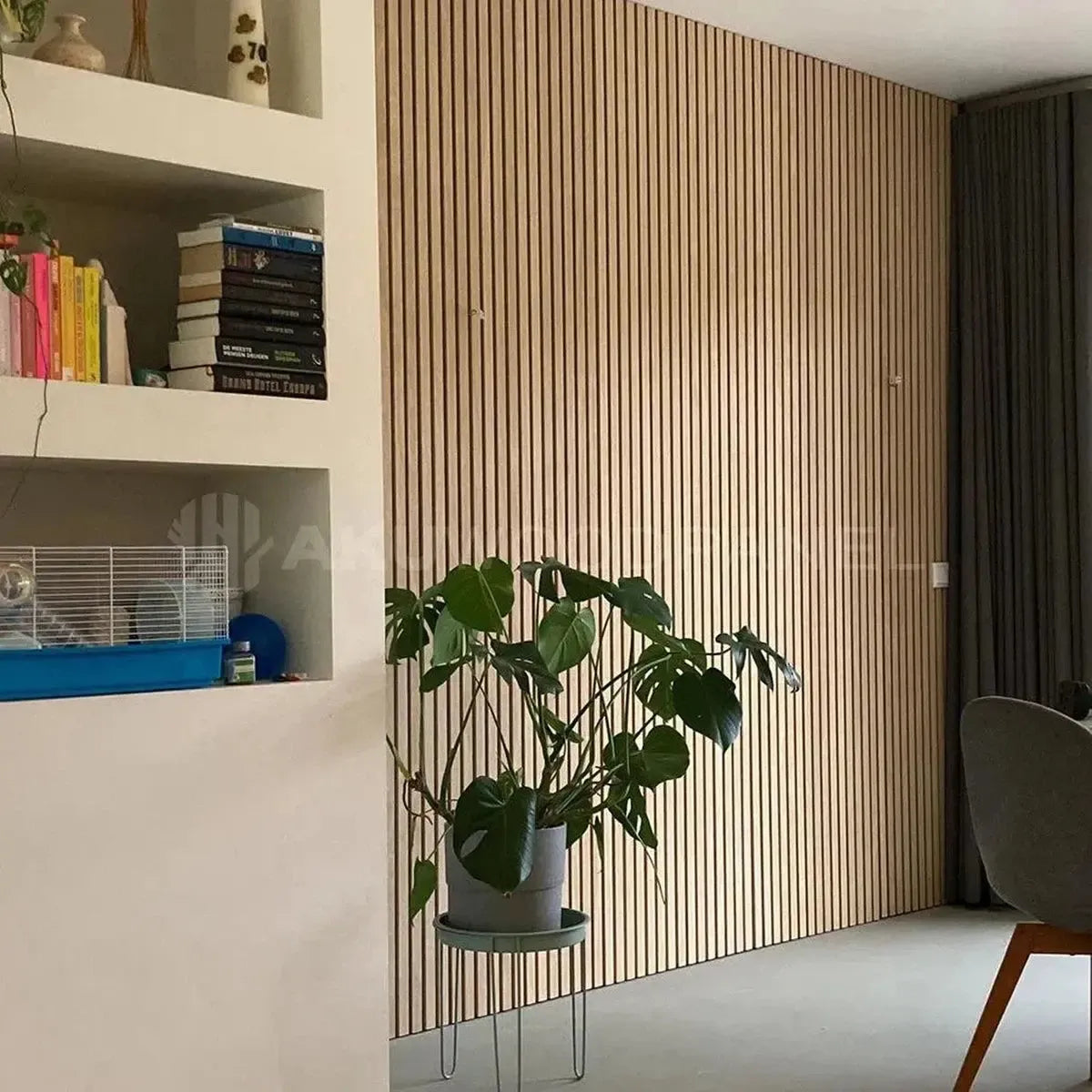
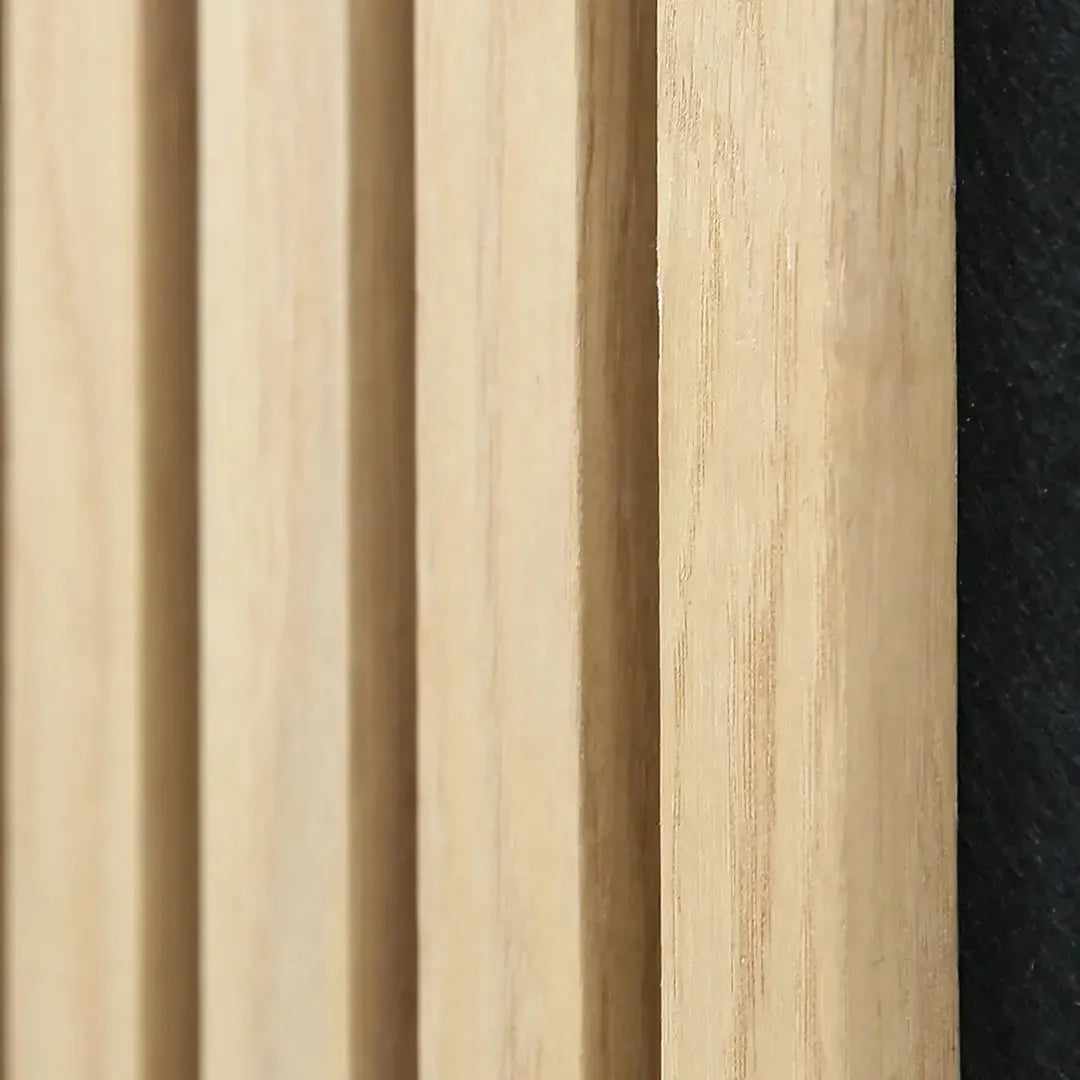
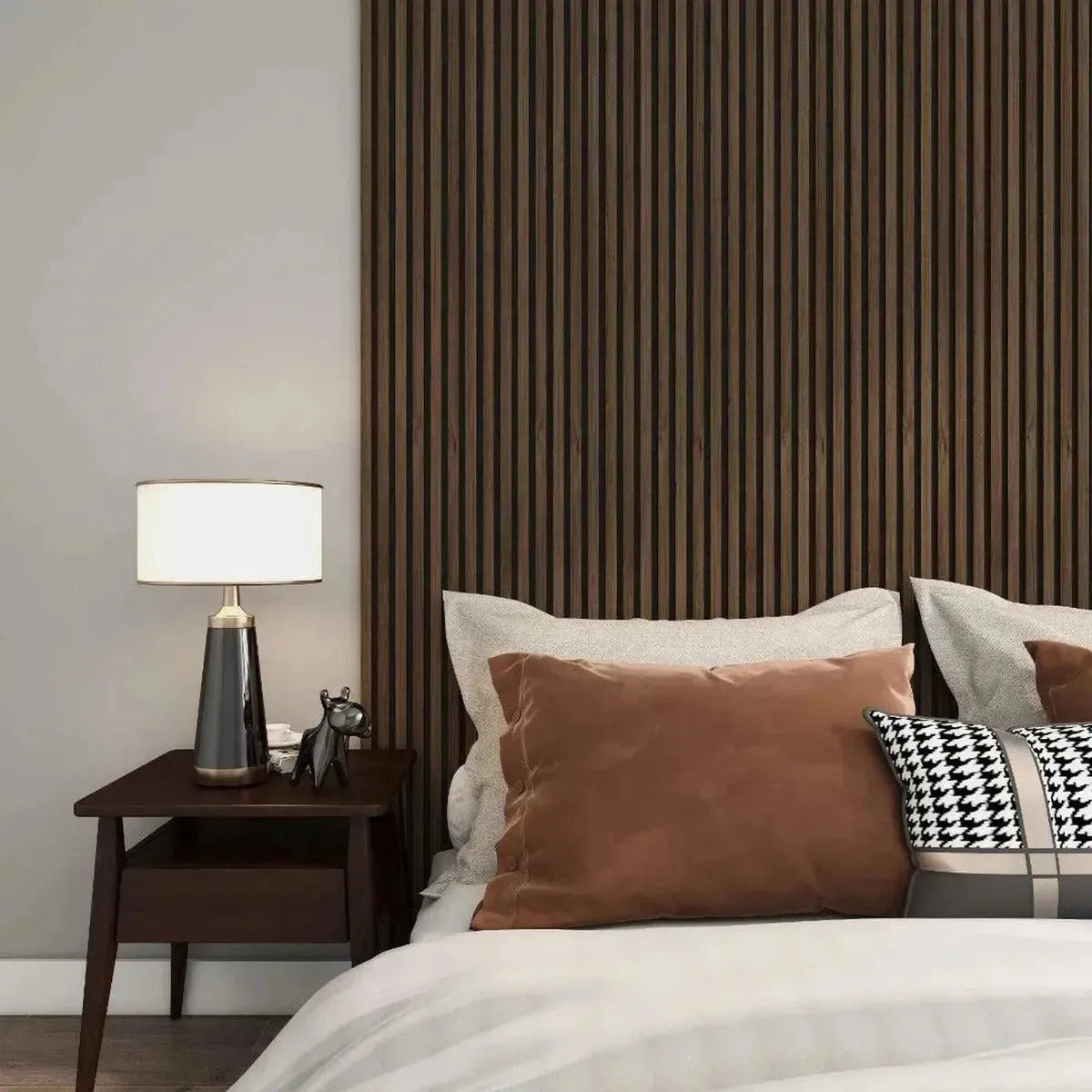
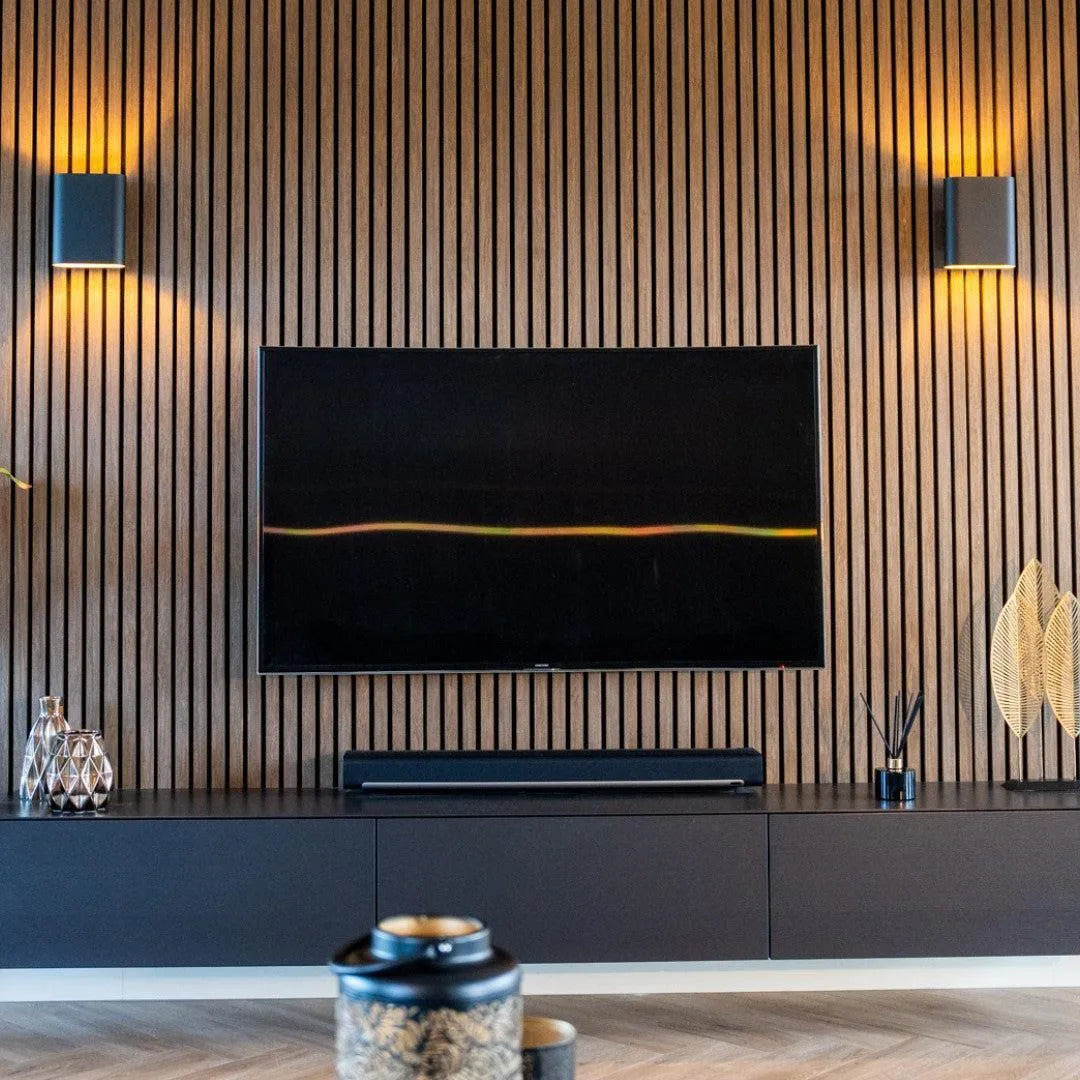
The acoustic slat wall panel in natural oak is the default pick for the bulk of a soap boutique's wall area because it cuts echo while keeping the wood-forward look that skincare buyers associate with clean, natural ingredients.
- Run panels floor-to-shelf-height behind product displays, not full ceiling height, to control cost
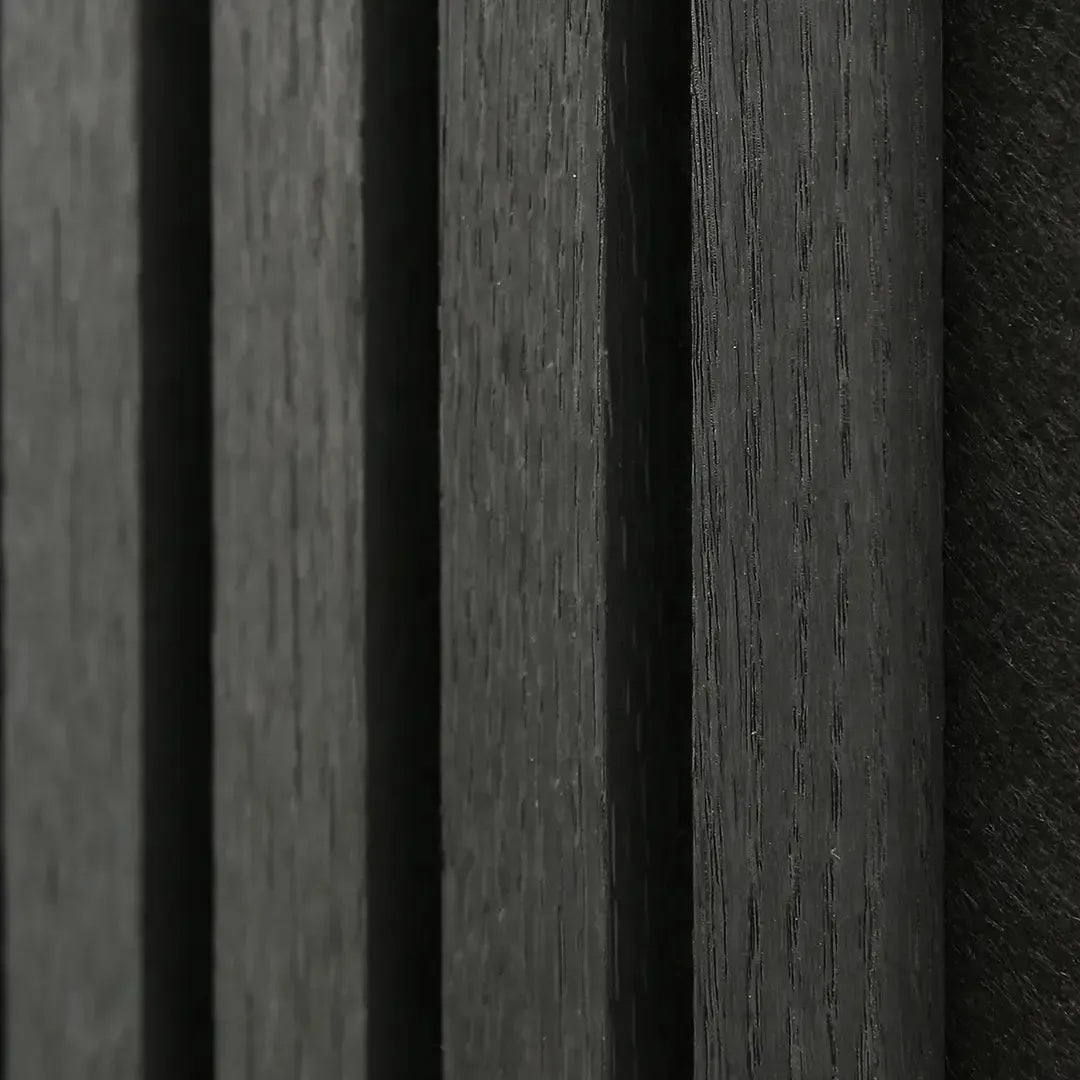
- Use the gray felt backing versions where the sales floor sits closer to a wash station
- Keep grain direction vertical for a boutique that reads narrow and long
- Avoid mounting directly behind a sink splash zone without a sealed edge
Use fluted panels for fitting rooms and display niches
Fluted panels add vertical texture without the acoustic felt bulk, which suits smaller enclosed spaces like a changing nook or a recessed gift-wrap counter where sound absorption matters less than visual rhythm. The fluted wall panel in natural oak reads as more architectural than flat veneer, which works well framing a mirror or a testing mirror wall.
- Reserve fluted panels for dry, low-splash zones only
- Use them to frame, not replace, the acoustic slat wall near the main floor
- Vertical fluting elongates a low-ceiling boutique visually
- Skip fluted panels directly beside open water basins
Add hexagon panels for a branded feature wall
A soap boutique's till wall is the highest-visibility surface in the store — every transaction happens facing it. The hexagon acoustic panel in walnut turns that wall into a geometric feature without custom millwork, and it carries acoustic value where the till area gets loud during peak hours.
- Center the hexagon pattern behind the register, not spread across the whole wall
- Use a darker tone like walnut or black oak to contrast lighter oak used elsewhere
- Keep the pattern symmetrical around a logo or shelf if branding is mounted on top
- Order samples before committing to a large hexagon run — pattern read changes at scale
Match panel tone to packaging and branding
Soap and skincare packaging tends to lean into muted, natural palettes — kraft paper, sage, soft pink — so panel tone needs to complement rather than compete.
- Natural oak and rustic oak pair with earthy, botanical branding
- Smoked oak or black oak suit apothecary-style, minimalist labels
- Walnut works for boutiques leaning into a warmer, artisanal aesthetic
- Avoid mixing more than two wood tones on a single visible wall
Protect panels from soap oils, water, and steam
Soap-making residue and skincare oils leave films that plain painted drywall shows quickly; veneer wood panels hide it better but still need a maintenance routine.
- Wipe high-touch panel zones daily with a dry or barely damp cloth
- Never use ammonia-based cleaners on veneer finishes
- Seal edges near sinks with trim rather than leaving raw panel cuts exposed
- Check felt-backed sections monthly for moisture buildup behind the panel
Plan lighting to highlight wood grain
Boutique lighting does as much work as the panel choice itself — flat overhead light flattens veneer grain and kills the texture you paid for.
- Use warm-temperature (2700K-3000K) accent lighting angled across slat panels
- Avoid direct downlights that wash out fluted panel shadow lines
- Uplighting behind hexagon panels adds depth to the till wall at night
- Test lighting against a sample before finalizing the full order
Budget and phase the install
Most soap boutiques operate in under 1,000 square feet, so a full-room wood panel job is rarely necessary in one pass.
- Phase 1: till wall and main sales floor backdrop
- Phase 2: fitting or gifting nook accents
- Phase 3: back-of-house or storage wall, lowest priority
- Check current pricing on the AKU Woodpanel site before locking a phase budget
The verdict: for a soap or skincare boutique in 2026, felt-backed acoustic slat panels from AKU Woodpanel are the right call for the main retail floor, with hexagon panels reserved for the till wall.
Comparison: panel options for soap and skincare boutiques
| Option | Best for | Key limitation |
|---|---|---|
| Acoustic slat panel (felt-backed) | Main retail floor, sound control near tile and glass | Felt backing needs a dry mount, not direct splash zones |
| Fluted panel | Fitting rooms, display niches, mirror surrounds | No acoustic felt layer, decorative performance only |
| Hexagon panel | Feature wall behind till or register | Pattern alignment takes more planning around corners |
| Peel-and-stick backsplash tile | Small accent zones near a refill or testing bar | Not rated for acoustic absorption, decorative only |


Common mistakes soap and skincare boutiques make
- Paneling the entire store before testing a sample under the actual lighting rig. Grain and tone shift noticeably under warm retail spotlights compared to daylight product photos.
- Mounting felt-backed acoustic panels directly beside an open sink without sealed trim, which lets moisture work behind the panel over a season.
- Choosing a wood tone that fights the packaging palette. A cool gray-toned panel behind kraft-paper soap bars reads mismatched rather than curated.
- Skipping acoustic treatment because the space feels small. Small rooms with tile floors and glass cases echo more, not less, than open-plan stores.
- Ordering full runs without checking current lead times, which stalls a fixed opening date in 2026.
FAQ
What wood panels work best for soap boutique interiors?
Felt-backed acoustic slat panels in natural oak or walnut work best for the main retail floor because they cut echo from tile and glass while matching a natural, apothecary-style look. Fluted and hexagon panels suit accent zones like fitting rooms or the till wall.
Are wood wall panels safe near sinks and testing stations in a skincare shop?
Wood veneer panels hold up near sinks when edges are sealed with trim and the panel is not mounted in a direct splash zone. Wipe high-touch areas daily and avoid ammonia-based cleaners on the veneer finish.
Do acoustic wood panels actually reduce noise in a small retail space?
Yes. Acoustic panels with an NRC of 0.75 absorb sound that would otherwise bounce off tile floors and glass display cases. The effect is most noticeable near a till where conversation volume builds during peak hours.
Should a soap boutique use fluted or slat panels?
Slat panels with acoustic backing suit the main sales floor where echo control matters most. Fluted panels work better for fitting rooms, mirror surrounds, and display niches where visual texture matters more than sound absorption.
How much wall coverage does a small soap boutique need?
Most boutiques under 1,000 square feet do not need full-room paneling. Phasing the till wall first, then a fitting or gifting nook, covers the highest-visibility zones without over-ordering.
What panel tone matches natural skincare branding?
Natural oak and rustic oak pair well with earthy, botanical packaging, while smoked oak or black oak suit a minimalist apothecary aesthetic. Walnut fits boutiques with a warmer, artisanal direction.
Can peel-and-stick wood panels work in a skincare retail space?
Peel-and-stick backsplash tiles work for small decorative accents near a refill or testing bar, but they are not rated for acoustic absorption. Keep acoustic slat panels on the main floor for sound control.
How do I test a wood panel finish before ordering a full run?
Order a sample in the exact finish and view it under the boutique's own lighting, since warm spotlights shift wood tone compared to daylight photos. A full sample box lets you compare several finishes side by side on the actual wall.
One last thing
The till wall sells harder than any shelf in a soap boutique — it is the one surface every customer faces during the transaction that closes the sale. If the 2026 budget covers only one panel phase, put it there before the fitting room or the back wall.
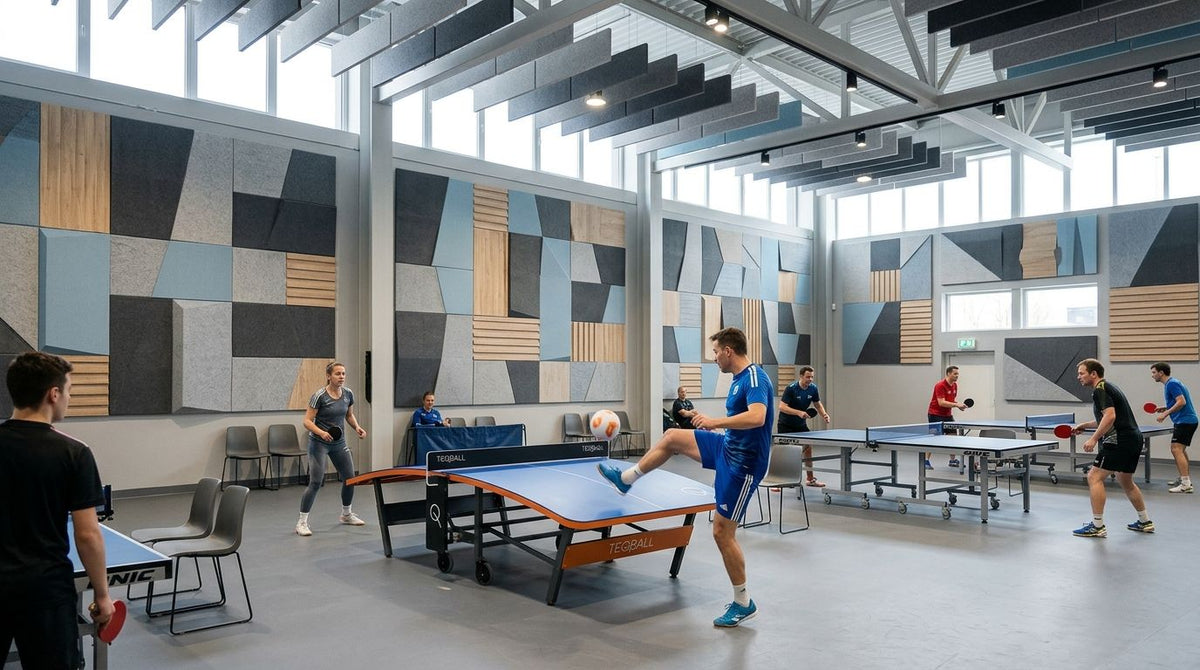

 Better performance and aesthetic appeal
 In Stock