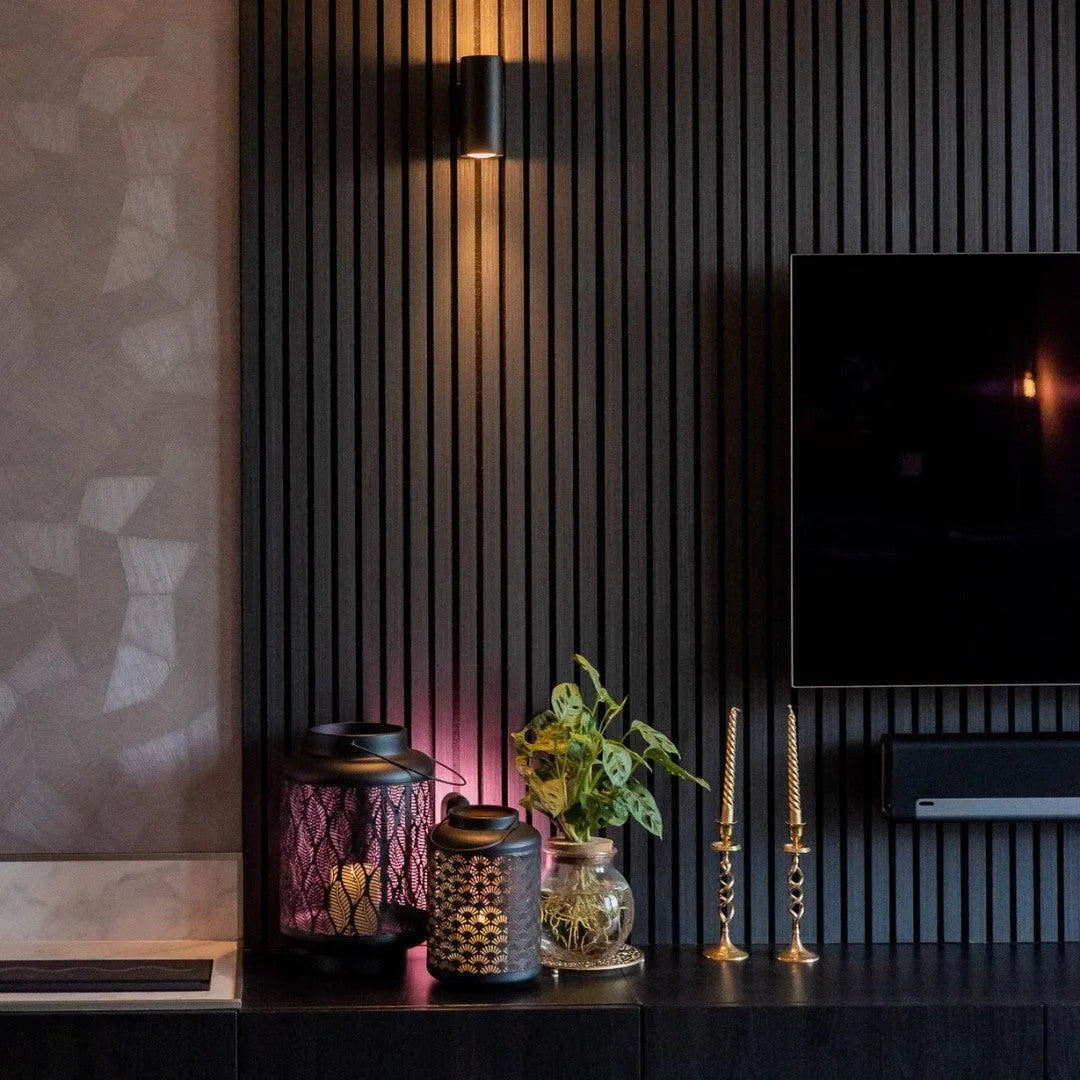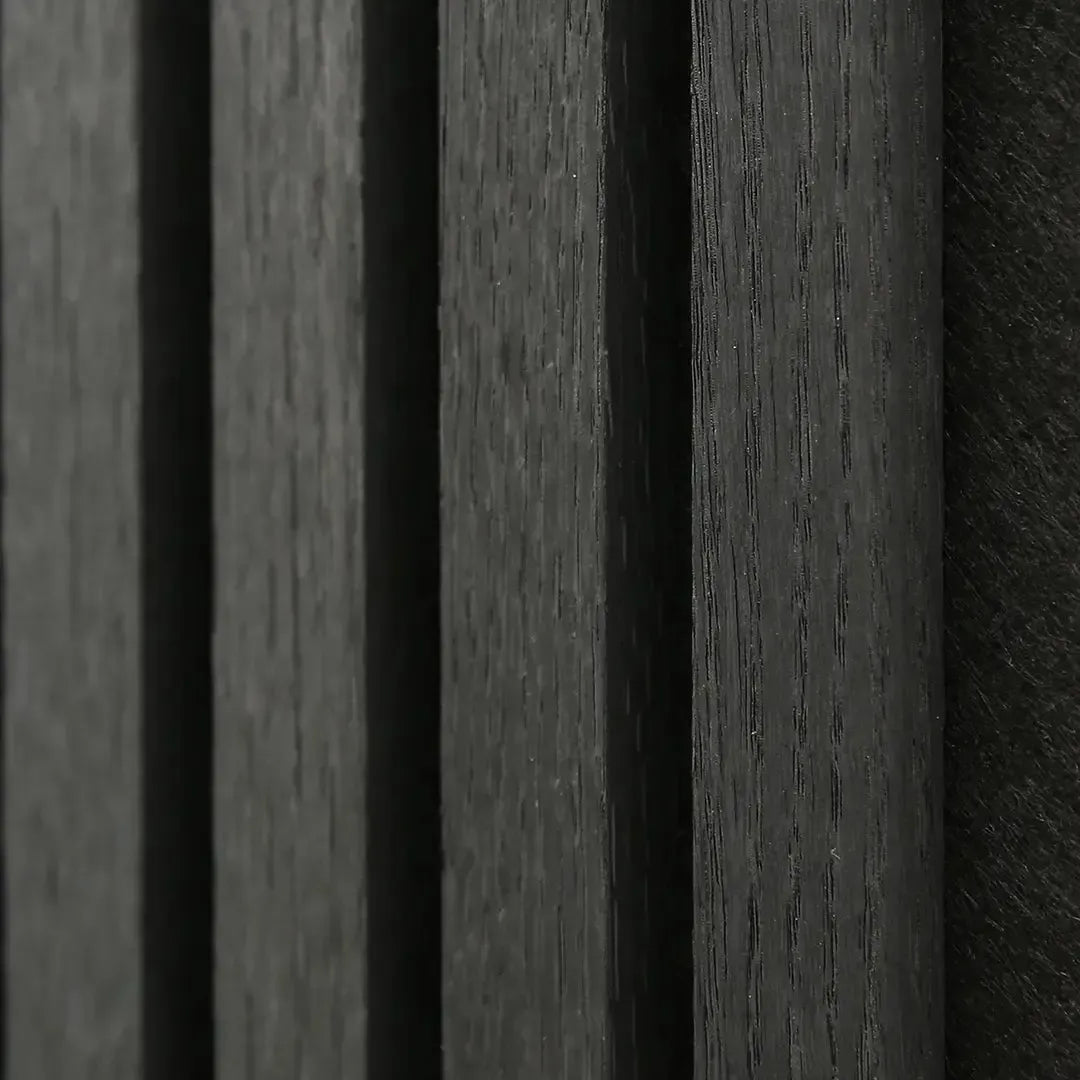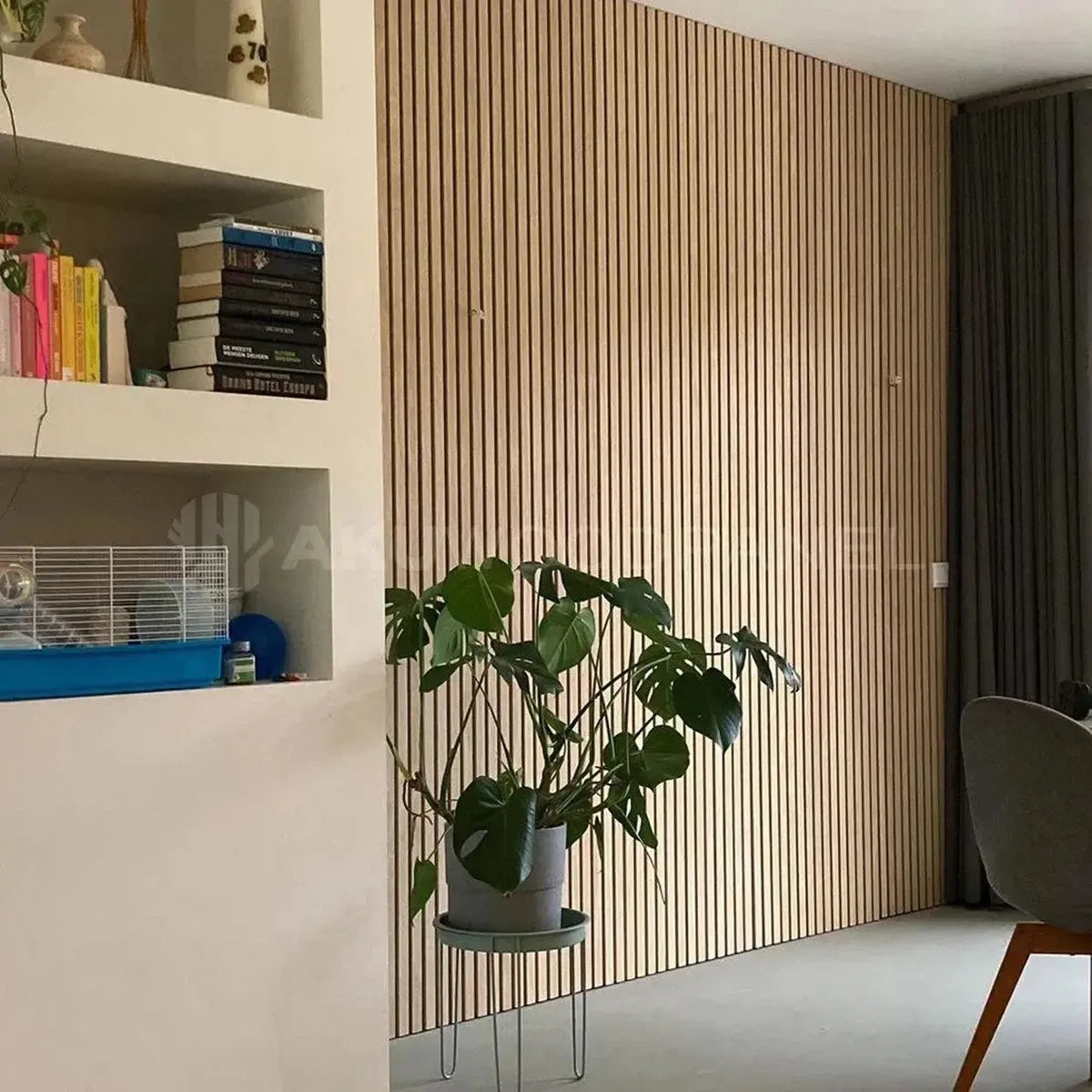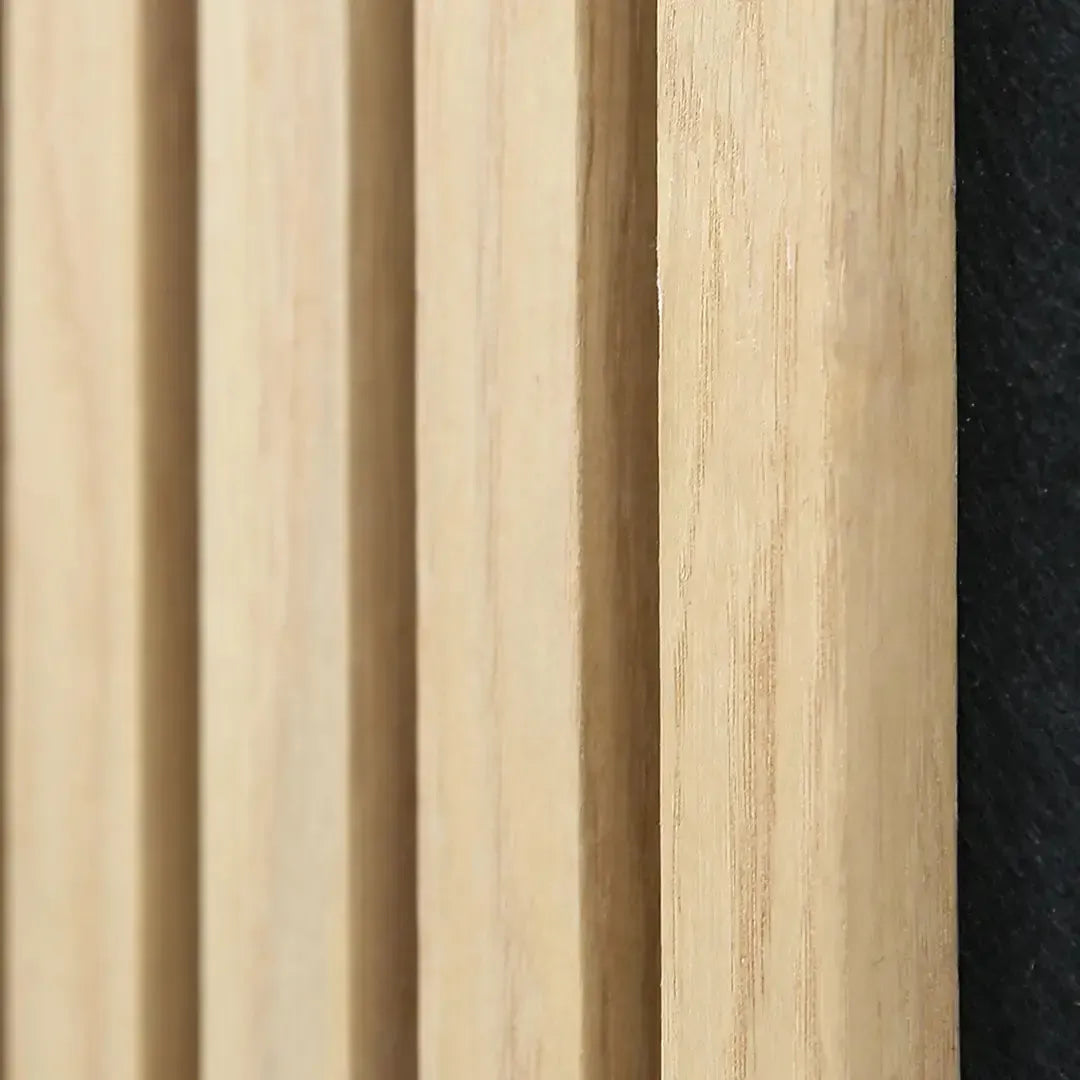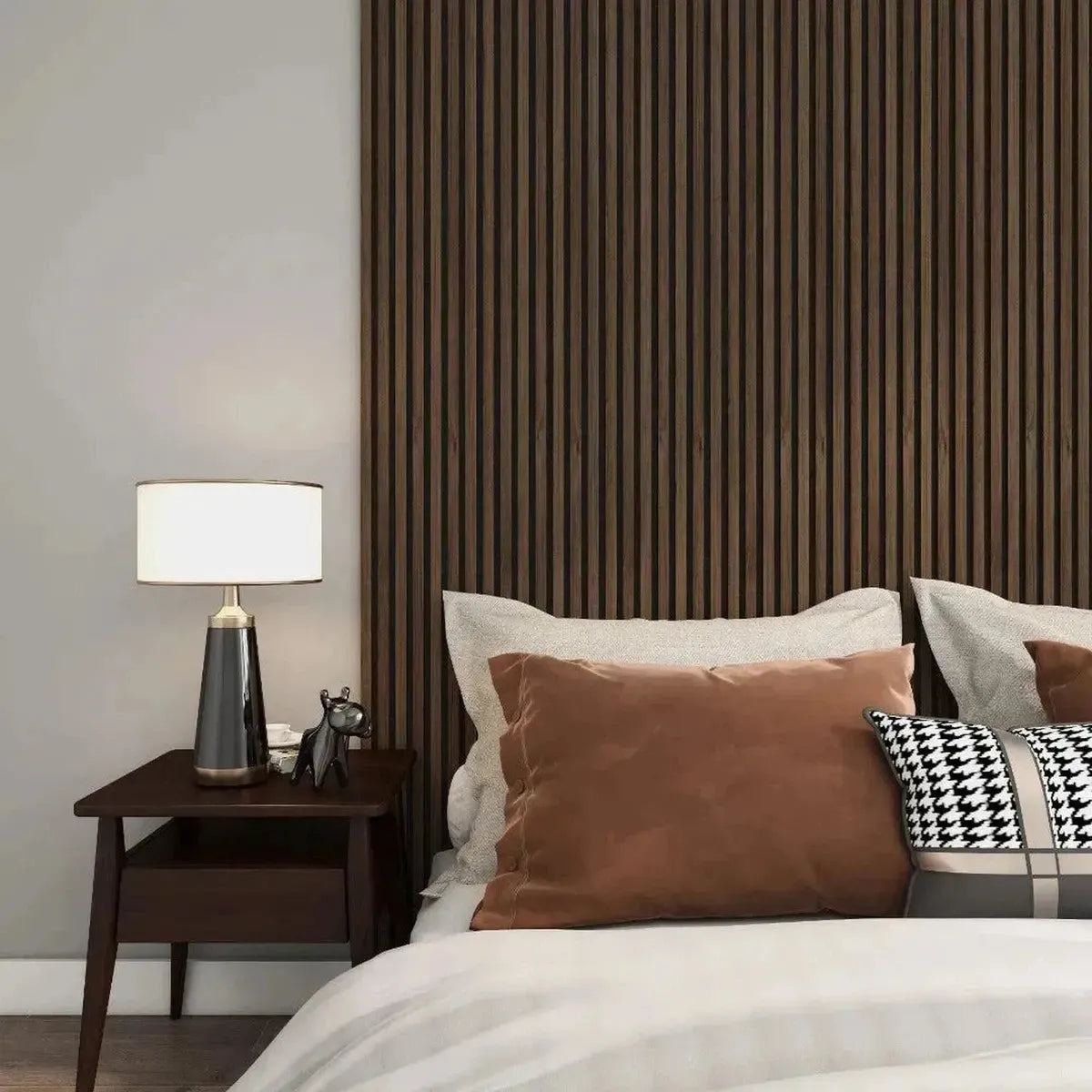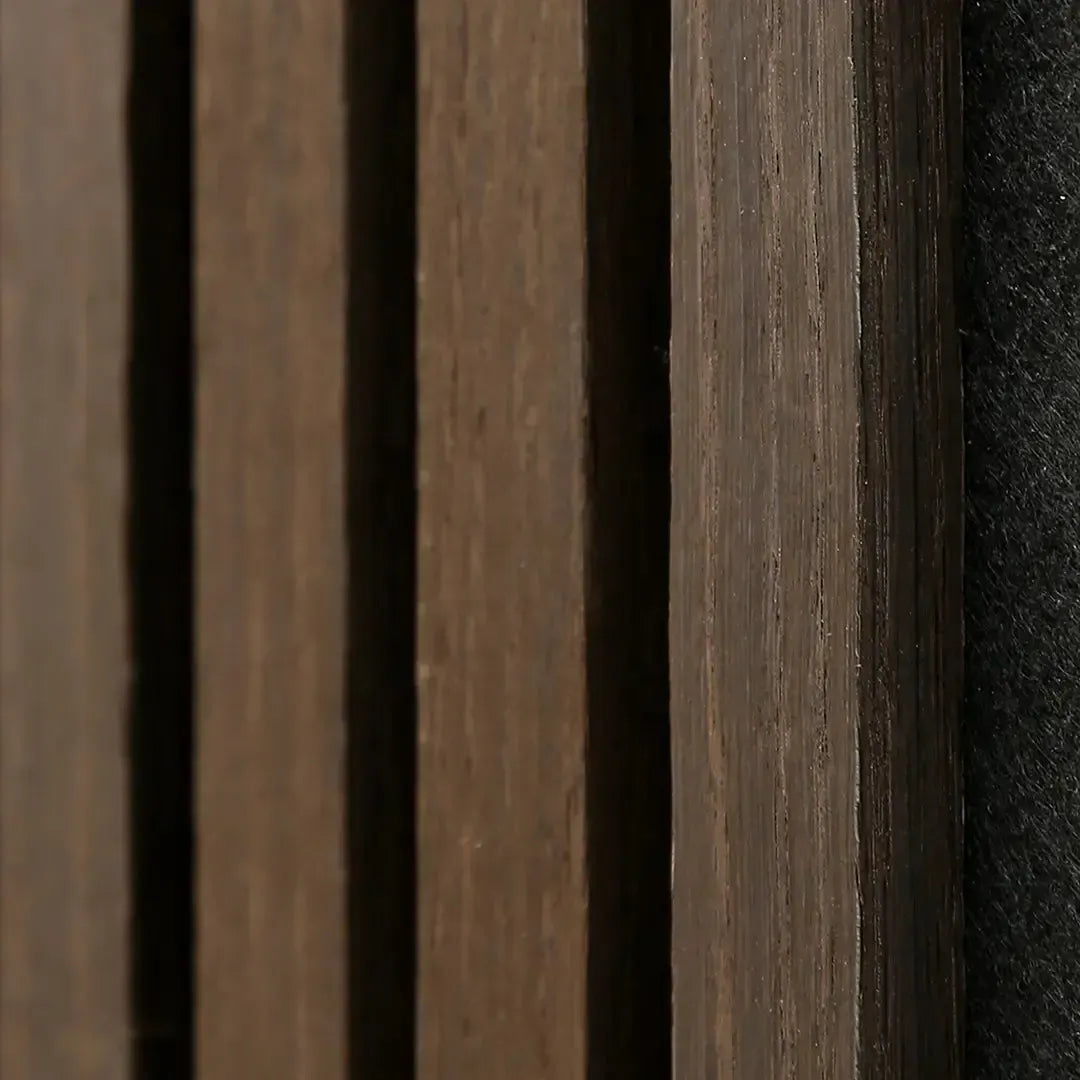
Acoustic wood panels do not have a universal replacement age: keep them while the wood face, acoustic backing, and mounting remain sound. Replace damaged sections when they cannot be safely repaired, and fix moisture or installation problems before fitting new panels.
- How long do acoustic wood panels last? Judge their condition, not an unsupported replacement schedule.
- Akustiq USA supplies decorative acoustic wood panels; confirm care instructions for the specific panel before cleaning or repairing.
- Surface scratches do not automatically mean acoustic backing has failed.
- Replace irreparably damaged sections, and correct moisture or mounting problems before reinstalling.
Why this matters
Replacing a whole feature wall because it looks tired confuses cosmetic wear with material failure. Keeping swollen panels or loose fixings because the installation is relatively new makes the opposite mistake. The replacement decision starts with the defect, not the installation date.
For a 2026 purchase, separate expected service life from warranty coverage. A warranty defines the supplier's obligations under stated conditions; it is not an automatic replacement timetable. Read the guide to comparing wood panel warranties before buying before treating a coverage period as a durability promise.
How long do acoustic wood panels last before they need replacing?
There is no single defensible year count for every acoustic wood panel. Construction, exposure, installation, and care differ, so an age estimate without product-specific evidence does not tell you when your wall needs replacing.
Inspect the assembly instead. Look at the decorative surface, the sound-absorbing material, the connections between components, and the attachment to the wall. A problem in one part does not establish that every panel has failed.
Use this condition-based comparison for your 2026 maintenance decisions:
| Decision | Best for | Benefit | Limitation |
|---|---|---|---|
| Keep and maintain | Dry, secure panels with acceptable appearance | Retains a functioning installation without unnecessary removal | Does not correct underlying material damage |
| Repair locally | Isolated cosmetic damage or a repairable mounting defect | Addresses the affected area rather than replacing the wall | Requires a repair method suitable for the panel and substrate |
| Replace affected sections | Irreversible swelling, broken components, or backing that cannot be restored | Removes the damaged material | New sections need a suitable visual and installation match |
| Investigate before deciding | Dampness, suspected mold, unexplained movement, or changed room acoustics | Identifies the cause before money goes into replacement | Requires diagnosis rather than an immediate cosmetic fix |
Keep sound panels; replace failed material; investigate the cause before repeating the installation. A fresh panel is not a solution to a leaking wall or an unsuitable fixing.
What counts as the end of useful life?
An acoustic wood panel reaches the end of its useful life when it cannot safely and acceptably perform its intended role after appropriate maintenance or repair. That role includes its appearance, physical integrity, and contribution to the room's acoustic treatment.
Your reason for replacement matters. Changing a finish to suit new furniture is a design choice, while replacing a swollen section is a response to damage. Record those separately when planning a home renovation or maintaining a commercial interior.
Why acoustic wood panel lifespan varies
The following factors explain why a protected bedroom feature wall and a frequently touched commercial wall need different attention. None establishes a guaranteed service life on its own.
- Moisture exposure: Leaks, condensation, and unsuitable wet cleaning threaten wood-based components. Identify the source of dampness rather than covering it with replacement panels.
- Indoor humidity: Wood exchanges moisture with surrounding air. Changes in moisture content cause movement, so room conditions belong in any investigation of distortion or opening joints.
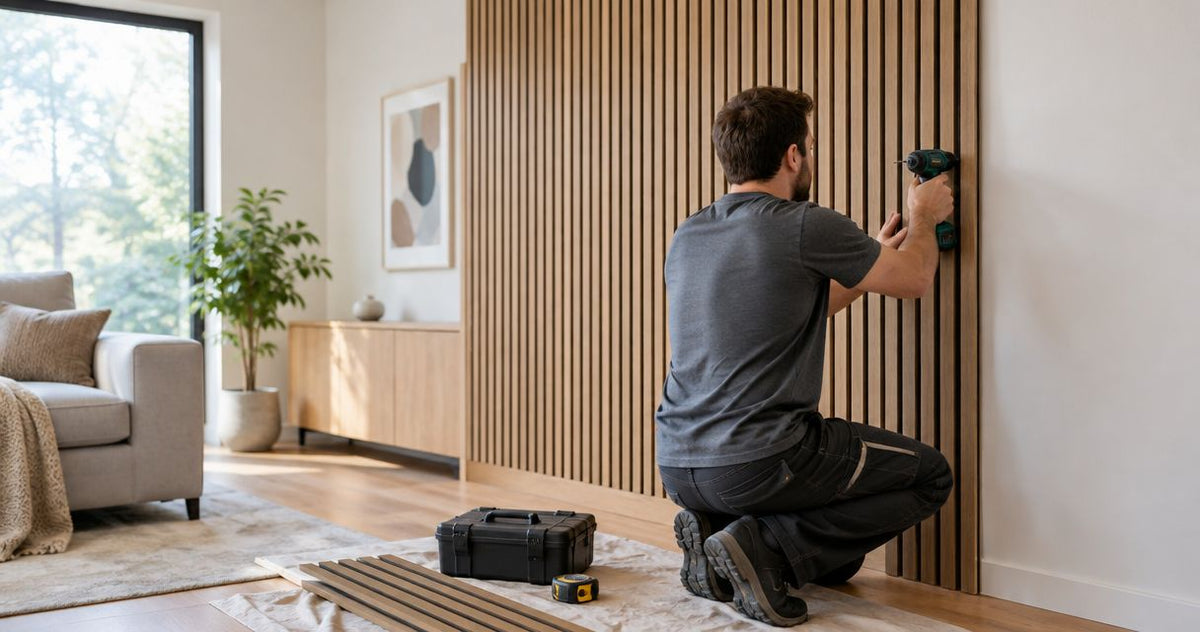
- Installation quality: The panel depends on its fixings, adhesive where specified, and the supporting wall. A mounting problem requires attention to the assembly, not just the visible face.
- Physical contact: Chairs, luggage, cleaning equipment, and repeated handling create localized wear. Inspect exposed edges and contact points rather than assuming the entire wall has deteriorated equally.
- Light exposure: Wood color changes with light exposure. Uneven fading affects appearance and replacement matching, but color change alone does not prove loss of sound absorption.
- Cleaning and alterations: Abrasive cleaning, excess water, sanding, paint, and coatings affect different materials differently. Follow instructions for the actual surface and backing rather than treating the panel as ordinary solid timber.
For your 2026 maintenance plan, the U.S. Environmental Protection Agency's mold-prevention guidance recommends keeping indoor relative humidity below 60%, ideally between 30% and 50%. These are general indoor moisture-control figures, not a panel-specific operating specification or lifespan guarantee.
Measure the room rather than guessing from how it feels. If the panel manufacturer specifies different environmental requirements, use those requirements when assessing suitability and care.
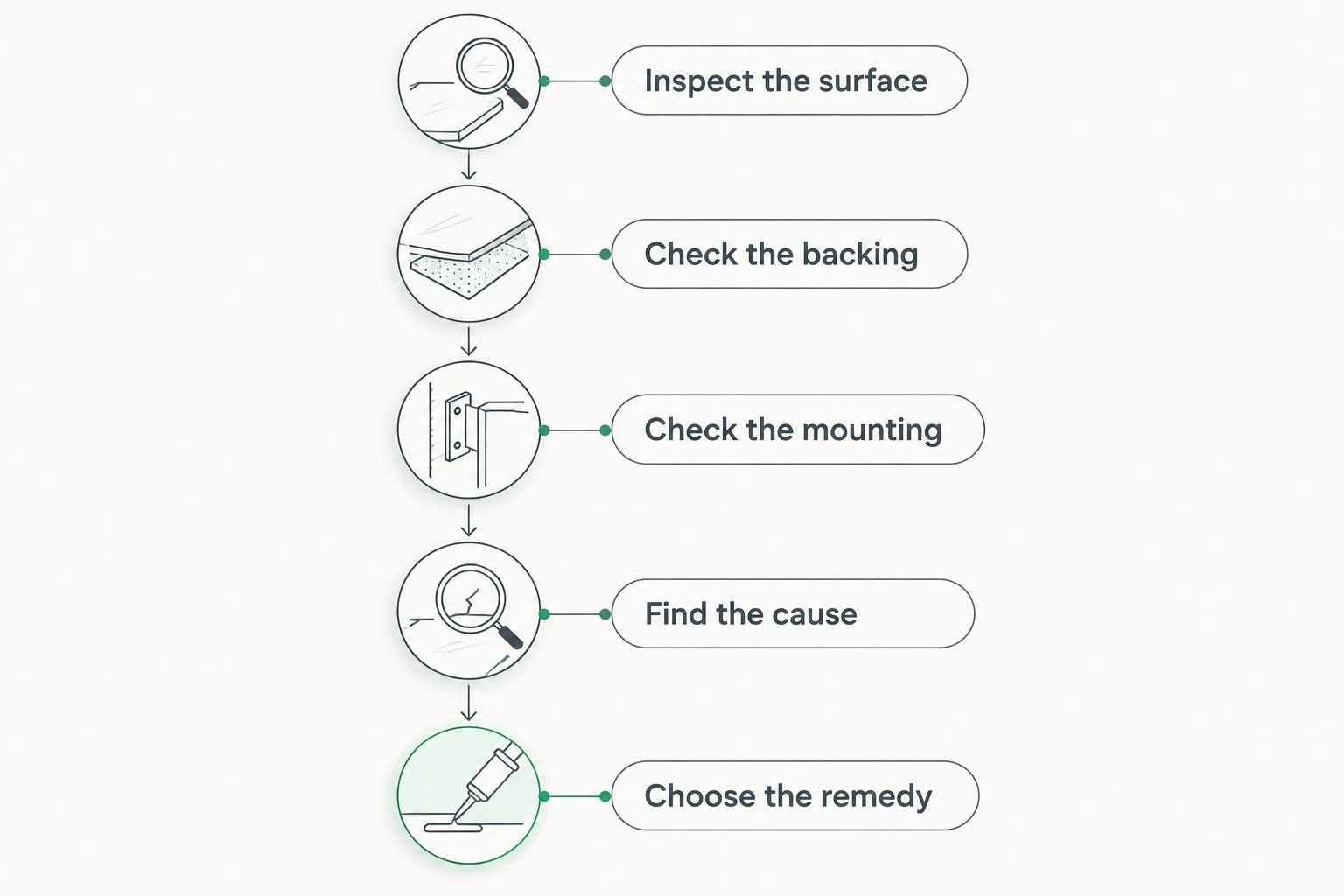
How to decide whether to keep, repair, or replace panels
Work through the inspection before ordering replacements. Stop handling a loose or unstable panel until its attachment has been assessed, especially where falling material could injure someone.
Inspect the surface
Look for scratches, dents, lifting veneer, stains, and changes around cut edges. Compare the damaged area with an unaffected section under similar lighting; shadows between slats can make surface irregularities look more severe.
A scratch is primarily an appearance issue unless it accompanies deeper damage. Lifted layers, crumbling edges, or persistent distortion call for closer assessment rather than a cosmetic touch-up.
Check the backing
Inspect exposed acoustic backing for tears, separation, heavy contamination, or deformation. Do not pull at it to test its strength, because the inspection itself should not damage the assembly.
Distinguish removable surface dust from damaged material. If contamination extends into a porous backing, get advice appropriate to the material and contaminant before attempting to clean or retain it.
Check the mounting
Look for movement, opening joints, loose components, and changes around fasteners. Establish whether the problem is in the panel, its attachment, or the wall supporting it.
Do not simply add adhesive over a failed connection. The correct repair depends on the specified installation system and the condition of the substrate behind it.
Find the cause
Check whether the defect follows a leak, impact, cleaning change, or alteration to the room. Repeated damage at the same location is a reason to investigate that location, not assume a replacement panel will behave differently.
Photograph the affected area and retain the product identification. Clear records help an installer or supplier distinguish a surface problem from a wider installation issue.
Choose the remedy
Keep panels that remain dry, secure, and suitable for their purpose. Repair isolated defects only with a method approved for the material, and replace sections whose integrity cannot be restored.
Before removing a section, establish how it was attached and what removal will disturb. The guide to repairing a damaged wood slat wall panel section addresses the localized repair decision without making full-wall replacement the default.
Do acoustic panels lose sound absorption as they get older?
Calendar age alone does not establish a loss of sound absorption. Acoustic performance depends on the material and installed assembly, including its condition, coverage, and mounting arrangement.
A faded wood face does not automatically mean the sound-absorbing backing has stopped working. Conversely, an attractive surface does not prove the backing and attachment remain intact.
If your room sounds more echoey in 2026, check what changed before replacing the panels. Removed rugs, different furniture, newly exposed hard surfaces, and altered room use change the acoustic conditions independently of panel age.
For a meaningful before-and-after comparison, keep the sound source, listening position, furnishings, and room conditions consistent. A hand clap identifies an audible reflection informally; it does not certify a panel's absorption rating or isolate the cause of a change.
Does faded or scratched wood mean the panels need replacing?
Fading and minor scratches are not automatic replacement triggers. Decide whether the change is acceptable visually, then check whether it accompanies physical deterioration.
Do not assume a veneered panel can be refinished like a solid wood board. Sanding removes material, and the appropriate repair depends on the face construction and finish. Get product-specific instructions before using abrasives, oils, fillers, or stain.
Replacement also has a visual limitation: a new section does not necessarily match wood that has experienced different light exposure. Compare the intended replacement beside the existing wall before committing to a conspicuous patch.
Can you replace just the damaged acoustic wood panels?
Localized replacement is appropriate when the damage is isolated and the installation allows safe removal. Check neighboring sections and the substrate before deciding where the repair should stop.
If moisture caused the damage, the visible stain is not a reliable boundary for the problem. Investigate the wall behind it and resolve the moisture source before closing the area again.
For a 2026 refurbishment, record the finish, panel layout, fixing method, and backing arrangement before removal. Those details help preserve the intended appearance and acoustic assembly when replacing only part of the wall.
How to care for panels without creating new damage
Start with the manufacturer's cleaning instructions for the specific panel. A method suitable for a finished wood face is not automatically suitable for felt, exposed edges, or adhesive connections.
Use the least aggressive approved method. Avoid soaking the assembly, forcing liquid between slats, or experimenting with strong cleaners on the visible wall. Where testing is permitted, use an inconspicuous area first.
Keep furniture and equipment from repeatedly striking exposed edges. Investigate new stains, movement, or lifting components promptly rather than waiting for the next decorating project.
Do not paint or coat acoustic backing without confirmation that the alteration is suitable. Porous sound absorbers rely on their material structure, and an unapproved coating changes the assembly you originally selected.
Choosing acoustic wood panels with replacement in mind
Akustiq USA is best for homeowners and businesses shopping for decorative acoustic wood panels. The category combines a wood wall finish with acoustic treatment, but the specific panel still needs to suit the room and installation.
When assessing Akustiq USA acoustic wood panels, ask for care instructions, construction details, installation requirements, and relevant acoustic documentation. A finish name alone does not establish durability, moisture suitability, or sound absorption.
For Akustiq USA panels, as for any wood-faced acoustic assembly, confirm the repair approach before attempting it. The limitation is practical: veneer care, backing care, and mounting repairs are different tasks, so a general wood-cleaning tip is not enough.
FAQ
How long do acoustic wood panels last before I should replace them?
Acoustic wood panels have no universal replacement interval. Keep them while the surface, backing, and mounting remain sound, and use product-specific documentation for any stated service-life expectation.
Should I replace acoustic panels just because they are old?
Age alone is not a reason to replace acoustic panels. Inspect their physical condition, attachment, and suitability for the room before deciding.
Will cleaning make old acoustic wood panels work like new?
Cleaning does not reverse structural damage or establish restored acoustic performance. Use the approved cleaning method for surface dirt, and assess damaged backing or mounting separately.
What humidity should I aim for around indoor wood panels?
EPA mold-prevention guidance recommends indoor relative humidity below 60%, ideally between 30% and 50%. Treat those figures as general moisture-control guidance and follow the panel manufacturer's specific environmental requirements.
Can I sand scratches out of wood veneer acoustic panels?
Do not sand wood veneer acoustic panels without product-specific approval. Sanding removes face material, and the appropriate repair depends on the veneer and finish.
Do acoustic wood panels need replacing when my room gets louder?
A louder or more echoey room does not by itself prove panel failure. Check changes in furnishings, room use, sound sources, and the installed panel assembly before ordering replacements.
Should water-damaged acoustic wood panels be covered with new panels?
Do not cover unresolved water damage with new acoustic wood panels. Correct the moisture source and assess the affected materials and substrate before reinstalling.
One last thing
Keep an installation record, not just a receipt. Save the product identification, care instructions, layout photographs, and fixing details together; a future repair needs to match the assembly as well as the wood color.
If you install panels in 2026, take clear baseline photographs before furniture hides the lower edges. Later, those photographs help distinguish an original joint or natural wood variation from a new defect.

 Better performance and aesthetic appeal
 In Stock