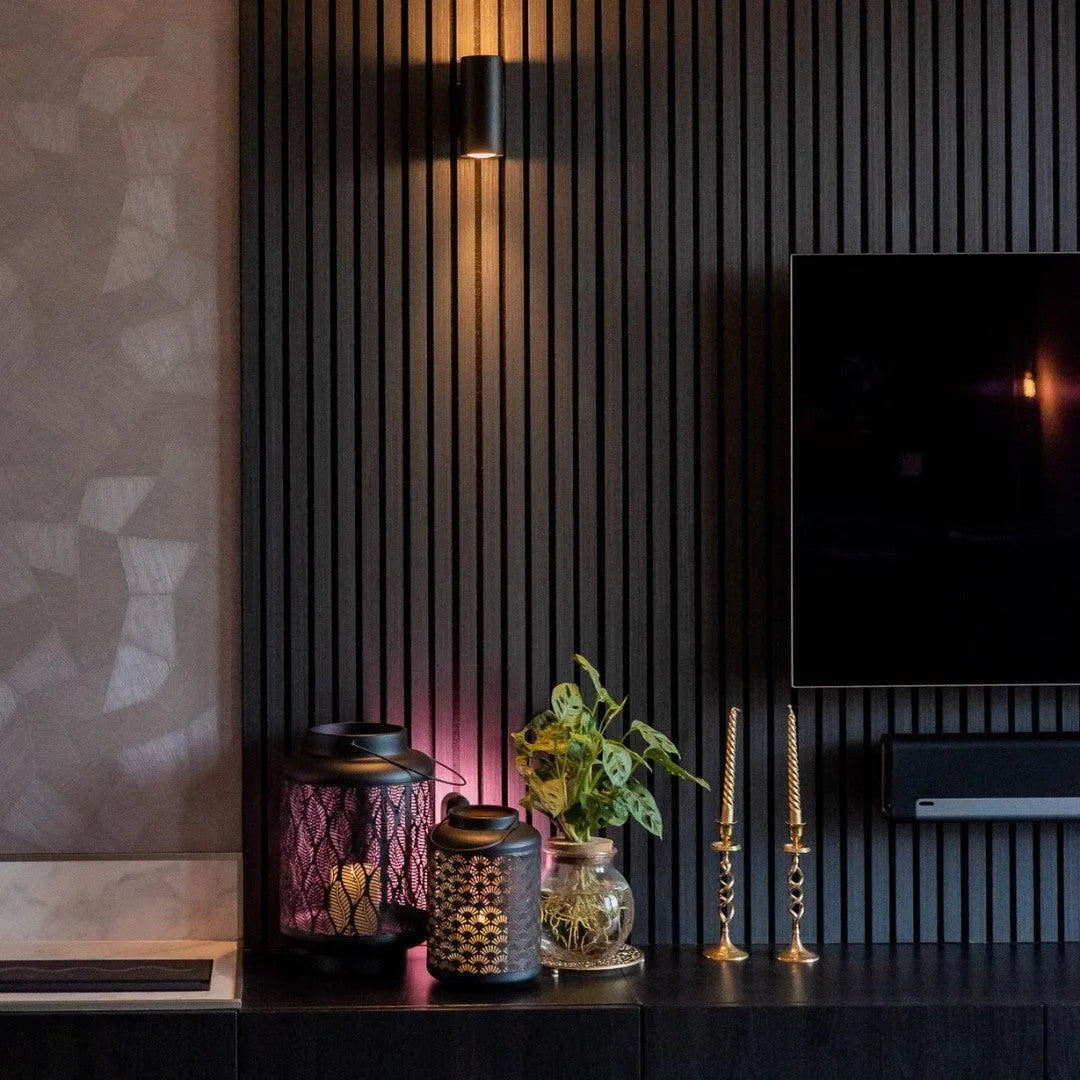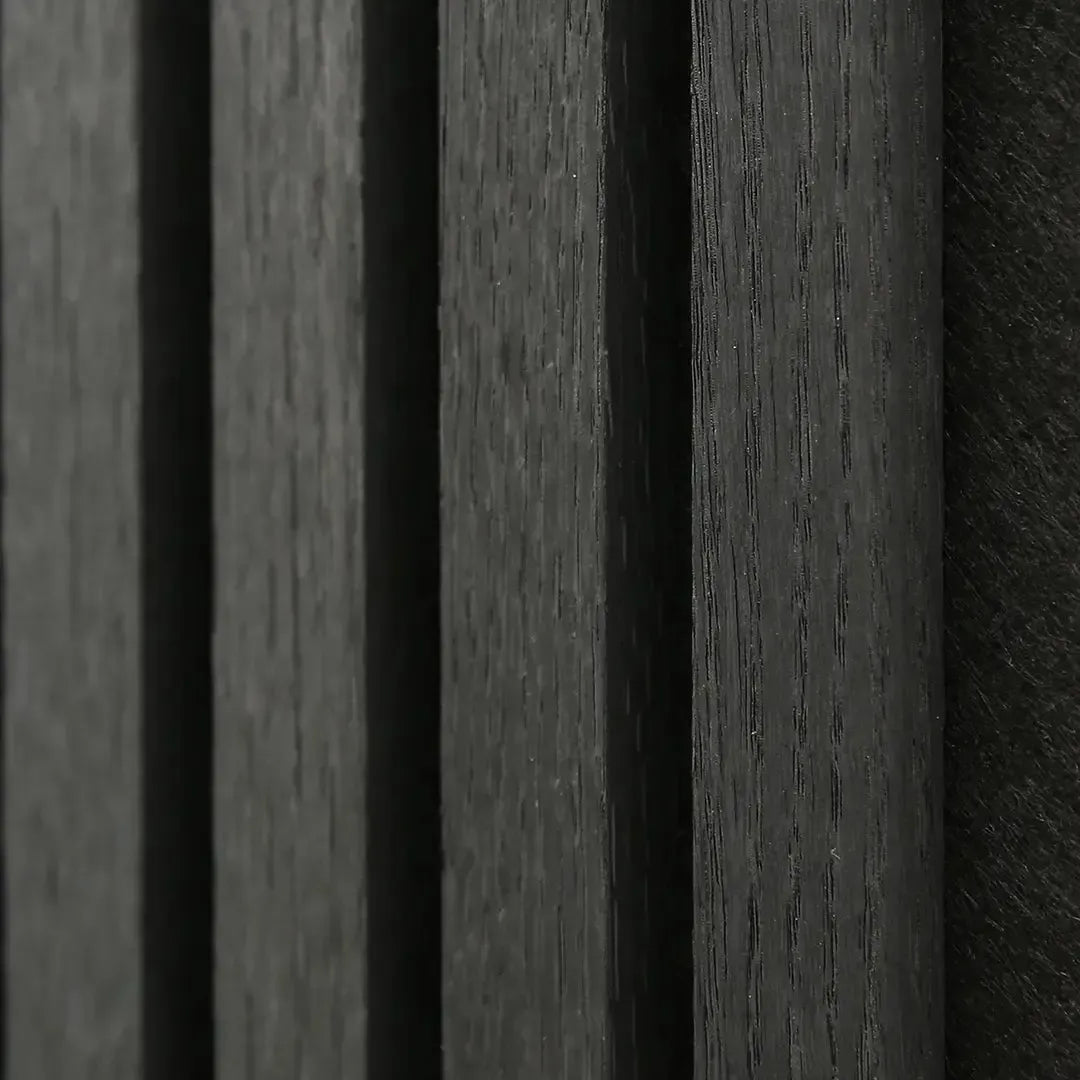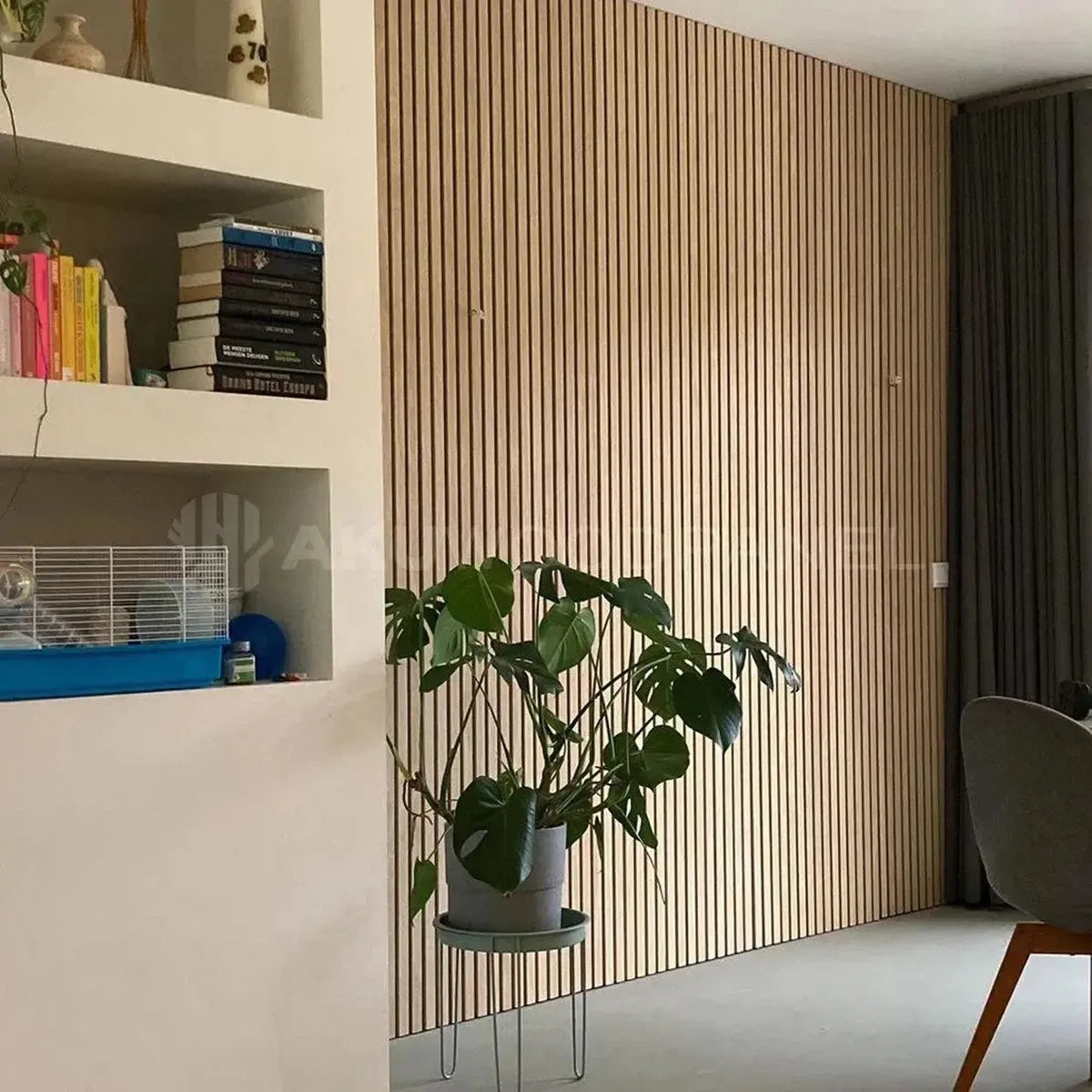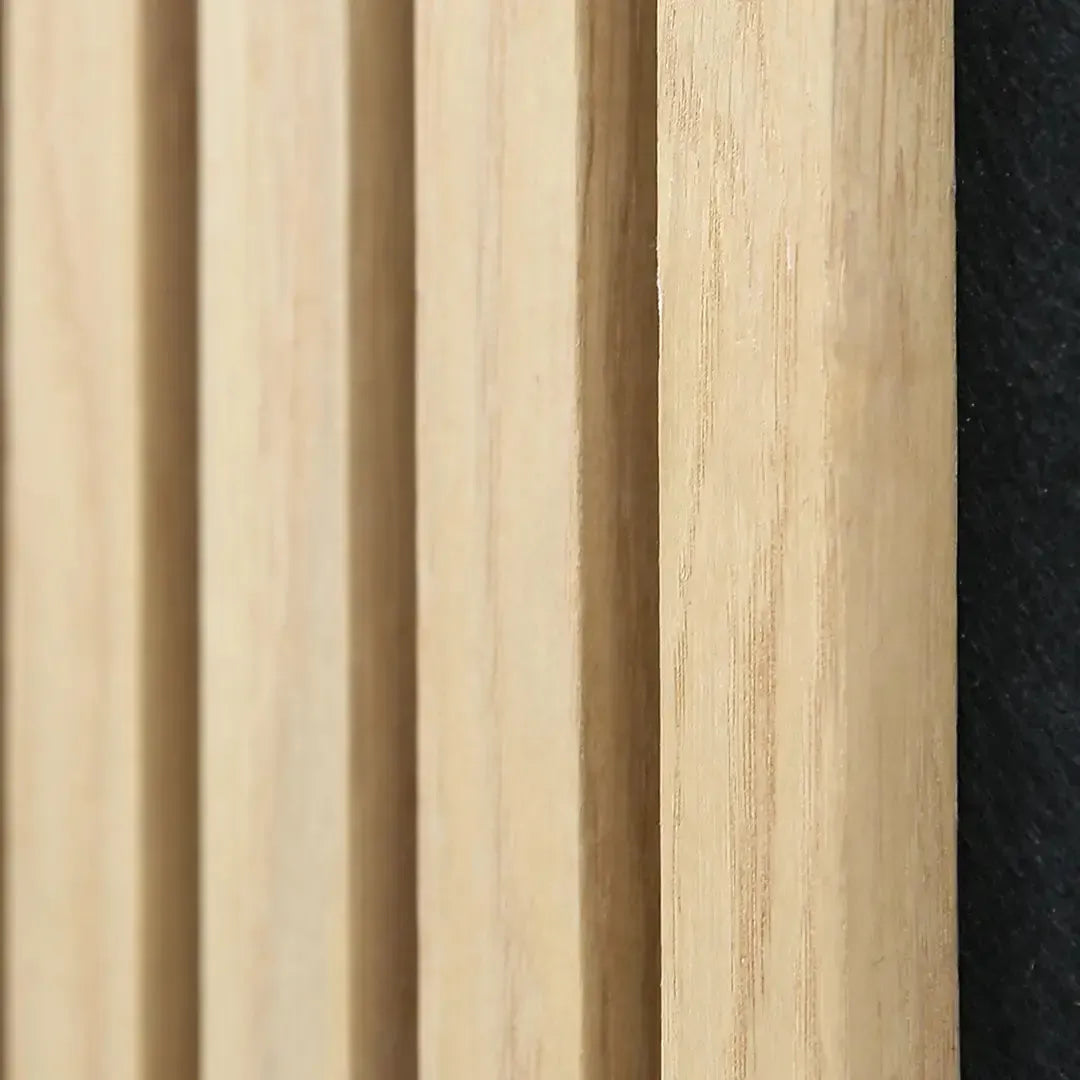
Yes, wood slat panels can warp in high humidity because wood absorbs moisture and changes dimensions; suitable construction, stable indoor conditions, and correct installation reduce that risk without eliminating it. Condensation, splashes, and moisture behind the panel create additional risks that a decorative finish does not resolve. For a 2026 installation, choose panels approved for the actual exposure rather than treating all indoor walls as equally suitable.
- Do wood slat panels warp in high humidity? Yes; moisture changes can distort wood and damage moisture-sensitive components.
- Akustiq USA supplies acoustic wood panels; confirm the selected panel’s humidity limits before choosing a damp location.
- Humidity control reduces risk, but it does not make indoor acoustic panels waterproof.
- Check the wall, panel construction, ventilation, and installation instructions before mounting wood slat panels.
Can wood slat panels handle high humidity without warping?
Some wood slat panels can tolerate humid indoor conditions within their manufacturer’s stated limits, but no wood appearance or acoustic label guarantees freedom from warping. The complete assembly matters: the wood face, any core, backing, adhesive, and attachment method all need to suit the location.
Start with the exposure comparison below, then review the guide to wood panel finishes for high-humidity rooms. A finish is only part of moisture protection, not permission to install an indoor panel in a wet area.
| Wall conditions | Best for | Main advantage | Main limitation | Decision |
|---|---|---|---|---|
| Dry, climate-controlled interior | Decorative acoustic feature walls | Easier control of moisture exposure | Seasonal humidity changes still affect wood | Proceed within product instructions |
| Occasionally humid interior, without condensation | Locations specifically approved by the manufacturer | Wood remains an option when conditions meet the specification | Ventilation and humidity control require attention | Verify approval before ordering |
| Wall with recurring condensation or splashes | A wall system expressly approved for that exposure | A suitable system addresses the actual moisture conditions | Indoor decorative panel approval is insufficient | Do not assume suitability |
| Wall affected by leaks or dampness | Moisture diagnosis and repair | Addresses the cause before concealing the wall | Decorative cladding cannot repair a moisture problem | Postpone panel installation |
Why this matters
A slat wall can look straight when you install it and change shape after its moisture content changes. Wood exchanges moisture with surrounding air, and uneven moisture exposure contributes to cupping, bowing, or twisting.
For your 2026 project, separate appearance from suitability. A panel that matches your room visually still needs the right exposure approval, a dry supporting wall, and an installation method that accommodates the material.
The visible wood is not the only concern. Depending on construction, moisture also affects a wood-based core, bonded layers, or the connection to the backing; a straight-looking face does not prove that the assembly is undamaged.
Why humidity-related warping varies
Warping risk depends on the material and its surroundings, not simply whether you choose oak or walnut. Check these factors before comparing colors:
- Exposure pattern: Persistent humidity, repeated wetting, and condensation differ from a brief increase in room humidity.
- Panel construction: Solid wood, veneer-faced components, cores, and backing materials respond differently to moisture.
- Uneven moisture: Different conditions at the face and rear of a panel encourage unequal movement.
- Wall condition: Leaks, damp masonry, and cold surfaces introduce moisture independently of the room’s average humidity.
- Installation details: Acclimation, approved fixings, support, and specified clearances affect how the assembly handles movement.
- Moisture control: Extraction, heating, cooling, and dehumidification influence the conditions around the installed panels.
These factors explain why a panel in a dry bedroom and a similar-looking panel beside a shower are different specification decisions. Choose for the exposure first; choose the finish second.
What humidity level should you aim for?
The U.S. Environmental Protection Agency’s mold-prevention guidance recommends indoor relative humidity below 60% RH, ideally 30%–50% RH. Those are building moisture-control targets, not a certified operating range for every wood slat panel.
Use that distinction when planning in 2026. A room within the EPA’s preferred range still needs to meet the selected panel’s instructions, and an acceptable room reading does not rule out condensation on a cold wall.
Measure with a hygrometer during normal room use, including activities that release moisture. Record the temperature alongside relative humidity because relative humidity changes with temperature; a single reading taken in an unused room does not describe every operating condition.
Do not translate the EPA guidance into an invented product guarantee. If a panel manufacturer specifies a different permitted range, installation condition, or excluded location, use that product-specific requirement when deciding suitability.
How to reduce warping risk before installation
Follow this sequence before cutting panels or applying adhesive. It keeps moisture checks ahead of work that is difficult to reverse.
- Check exposure. Identify steam, splashes, condensation, leaks, and moisture-producing activities near the proposed wall. Describe the conditions, not just the room name.
- Verify suitability. Obtain the panel’s construction details and written installation requirements. Ask specifically about the intended location and exposure.
- Inspect the wall. Resolve leaks, damp patches, loose finishes, and condensation causes before covering the surface. Investigate recurring staining rather than hiding it.
- Condition the room. Bring heating, cooling, extraction, and humidity control into normal operation. Follow the manufacturer’s storage and acclimation directions.
- Install as specified. Use the approved fixing method, support, clearances, and substrate preparation. Keep the instructions with your project records.
Do not borrow an acclimation period or expansion gap from instructions for another wood product. Panel dimensions, construction, fixing systems, and manufacturer requirements differ, so a universal waiting time or clearance is not a reliable specification.
When preparing a 2026 installation schedule, allow the moisture checks to determine readiness. A delivery date does not establish that a recently plastered or previously damp wall is ready to cover.
Can you install wood slat panels in a bathroom?
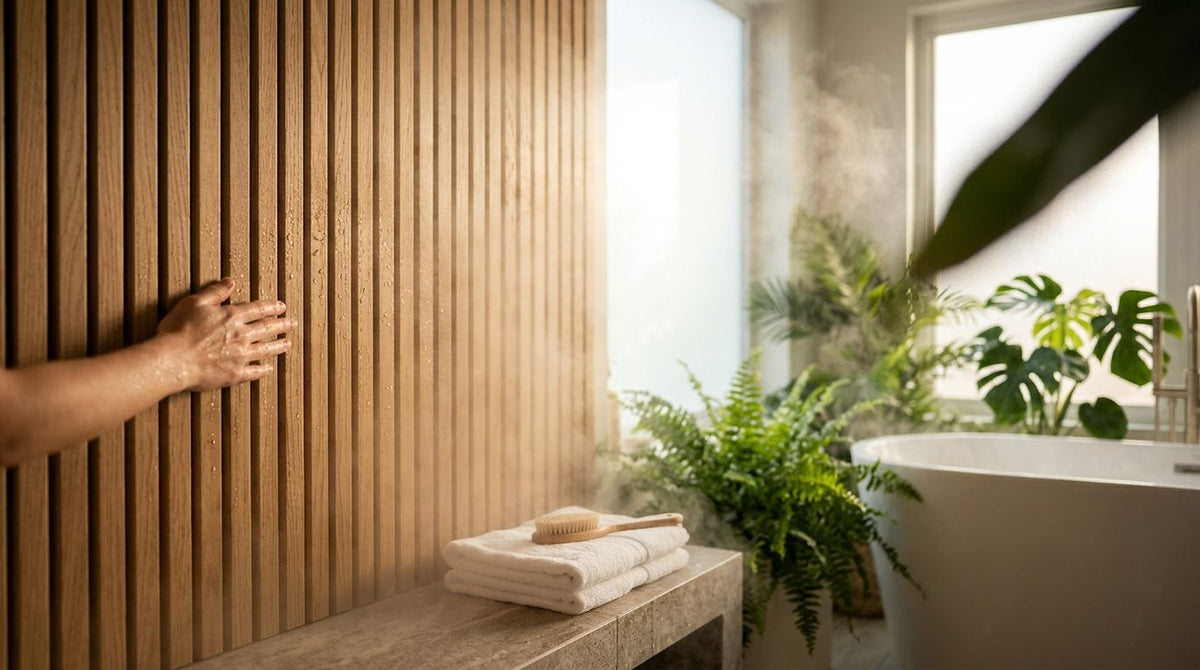
Bathroom use requires explicit approval for the selected panel and its exact location. A dry wall outside the splash zone, a wall beside a basin, and a shower enclosure present different moisture conditions.
An extractor helps remove moisture, but it does not change an indoor decorative panel into a waterproof wall system. Likewise, distance from the shower does not establish suitability if condensation repeatedly forms on the proposed surface.
Check cleaning requirements too. A wall exposed to frequent wet cleaning needs approval for that maintenance method, not just permission to stand in humid air.
For a bathroom project, ask the supplier to confirm the complete assembly: panel, backing, adhesive or fixings, edge treatment, and supporting wall. Do not rely on a photograph of a bathroom installation as technical approval.
Does sealing wood slat panels stop warping?
A compatible finish slows moisture exchange; it does not stop wood movement or make the complete panel waterproof. The USDA Forest Products Laboratory’s Wood Handbook explains that coatings retard moisture exchange rather than prevent it.
That distinction matters for slat panels with exposed edges, cut ends, bonded layers, or backing. Coating the visible face alone does not establish protection for the rest of the assembly.
Use only a treatment the panel manufacturer approves. Check whether field-applied coatings affect appearance, adhesion, maintenance requirements, or any declared acoustic performance before you alter the panel.
Never apply sealer as a repair for an unresolved damp wall. Find and correct the moisture source first, then assess whether the existing panel remains serviceable.
What should you check when choosing a panel?
Akustiq USA is best suited to buyers seeking decorative acoustic wood panels, not a substitute for a specified waterproof wall system. Its acoustic wood panel category is relevant to interior feature-wall planning, but suitability for high humidity needs confirmation for the selected product.
For example, the natural oak acoustic slat wall panel is a relevant starting point when you want an oak slat appearance. That product name identifies the style; it does not establish a humidity rating, wet-area approval, or resistance to warping.
Before ordering Akustiq USA acoustic wood panels for a moisture-prone location, request:
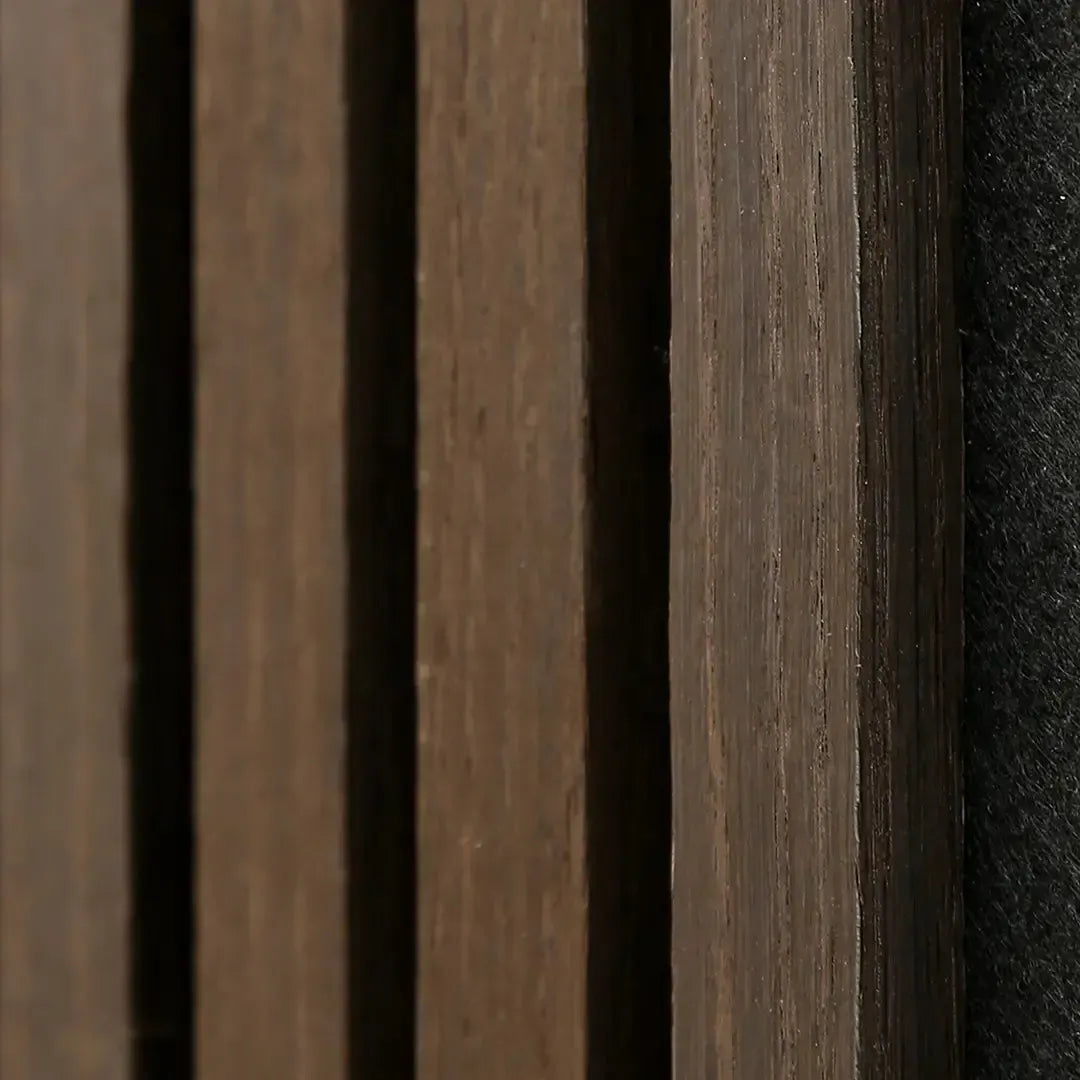
- The face material, core construction, and backing details.
- Permitted environmental conditions and excluded applications.
- Storage, acclimation, fixing, and clearance instructions.
- Approved cleaning and finishing methods.
- Any application-specific warranty conditions.
The benefit is a decorative acoustic panel option for your design. The limitation is equally important: neither the category name nor the wood finish answers the moisture-suitability question by itself.
What if your installed slat panels start bowing?
Treat new distortion as a reason to inspect, not immediately add more screws. Additional restraint does not remove moisture, repair a swollen core, or restore a failing bond.
First, check for leaks, recurring condensation, dampness at the wall, and changes in room operation. Photograph the affected area and record room conditions so the supplier or installer can assess the pattern.
Next, distinguish panel deformation from attachment failure. A panel pulling away from the wall, a slat lifting from its backing, and a bowed slat are different problems and require different corrective work.
Follow the manufacturer’s assessment process before removing or refinishing components. Do not soak, steam, aggressively heat, or force a distorted panel flat; those actions introduce further material and attachment risks.
Correct the cause before replacing the finish. Otherwise, a replacement panel remains exposed to the same conditions that damaged the original installation.
FAQ
Do wood slat panels warp in high humidity?
Yes, wood slat panels can warp when moisture changes cause uneven dimensional movement. Construction, exposure, wall condition, and installation determine the risk; a decorative finish does not eliminate it.
What indoor humidity should I aim for around wood panels?
The EPA recommends indoor humidity below 60% RH, ideally 30%–50% RH, for building moisture control. These targets are not a product rating: follow the selected panel manufacturer’s environmental limits too.
Can I put acoustic wood slat panels inside a shower?
Do not install acoustic wood slat panels inside a shower unless the manufacturer expressly approves the complete system for that exposure. An acoustic label does not establish waterproofing or wet-area suitability.
Will a dehumidifier prevent my wood panels from warping?
A dehumidifier helps control airborne moisture, but it does not guarantee that wood panels will remain flat. Leaks, condensation, wall dampness, and unsuitable panel construction still require attention.
Are veneer slat panels always better than solid wood in humid rooms?
No, veneer construction alone does not establish better humidity resistance. Assess the core, backing, bonding, edge protection, and approved exposure conditions of the complete panel.
How long should I acclimate wood slat panels before installation?
Use the acclimation period and storage conditions specified by the panel manufacturer. A universal waiting period does not account for differences in construction or site conditions.
Can I seal Akustiq USA acoustic wood panels for a damp room?
Confirm an approved treatment and the intended application with Akustiq USA before coating acoustic wood panels. A field-applied sealer does not establish wet-area approval or make the assembly waterproof.
One last thing
The driest-looking side of a panel is not always the side facing the moisture problem. A cold or damp supporting wall exposes the rear of the assembly to conditions that a room hygrometer alone does not describe.
Before signing off your 2026 feature wall, check the surface you are about to hide. If condensation or dampness returns, stop the installation and resolve it rather than relying on a finish, extra fixings, or a different wood color.
 Better performance and aesthetic appeal
 In Stock