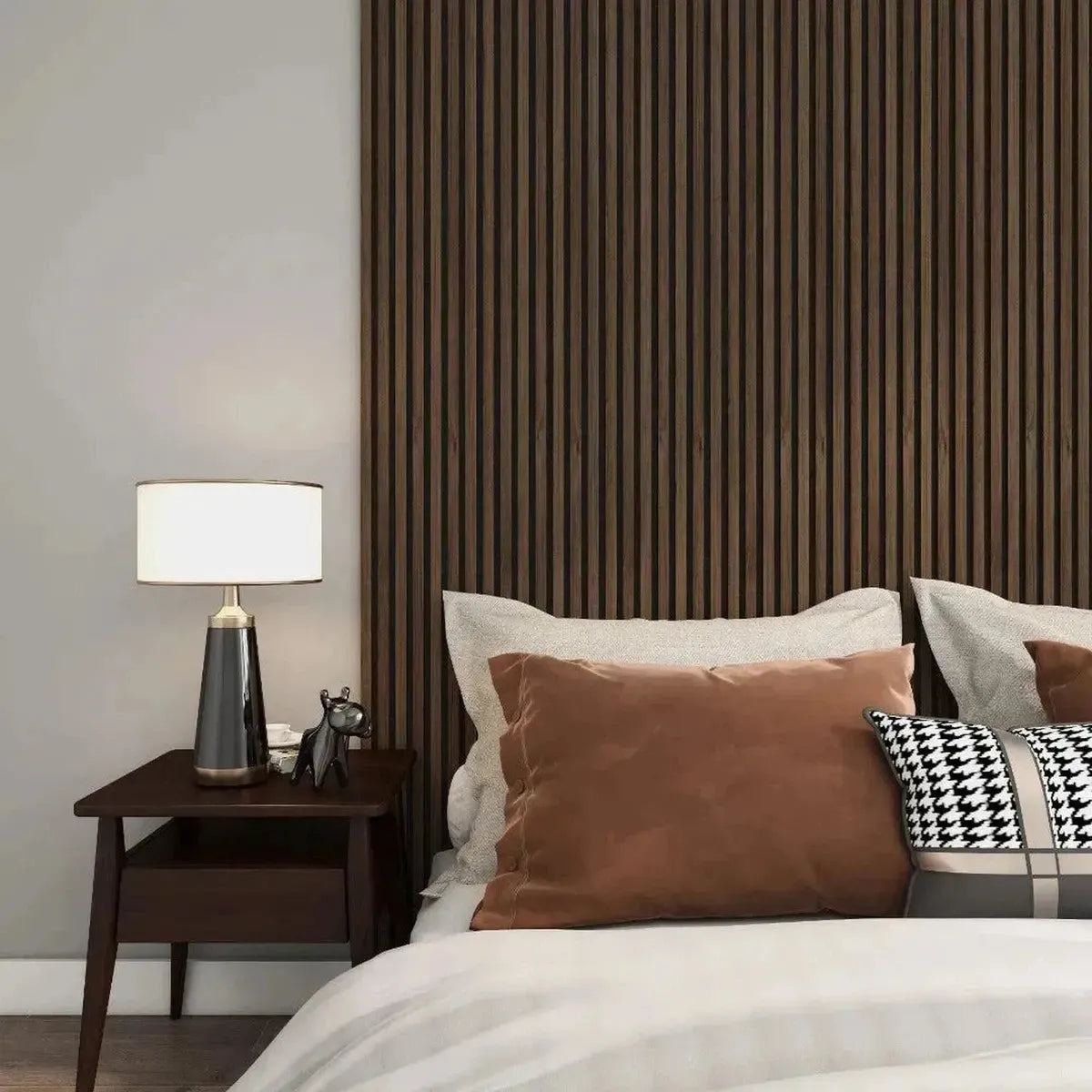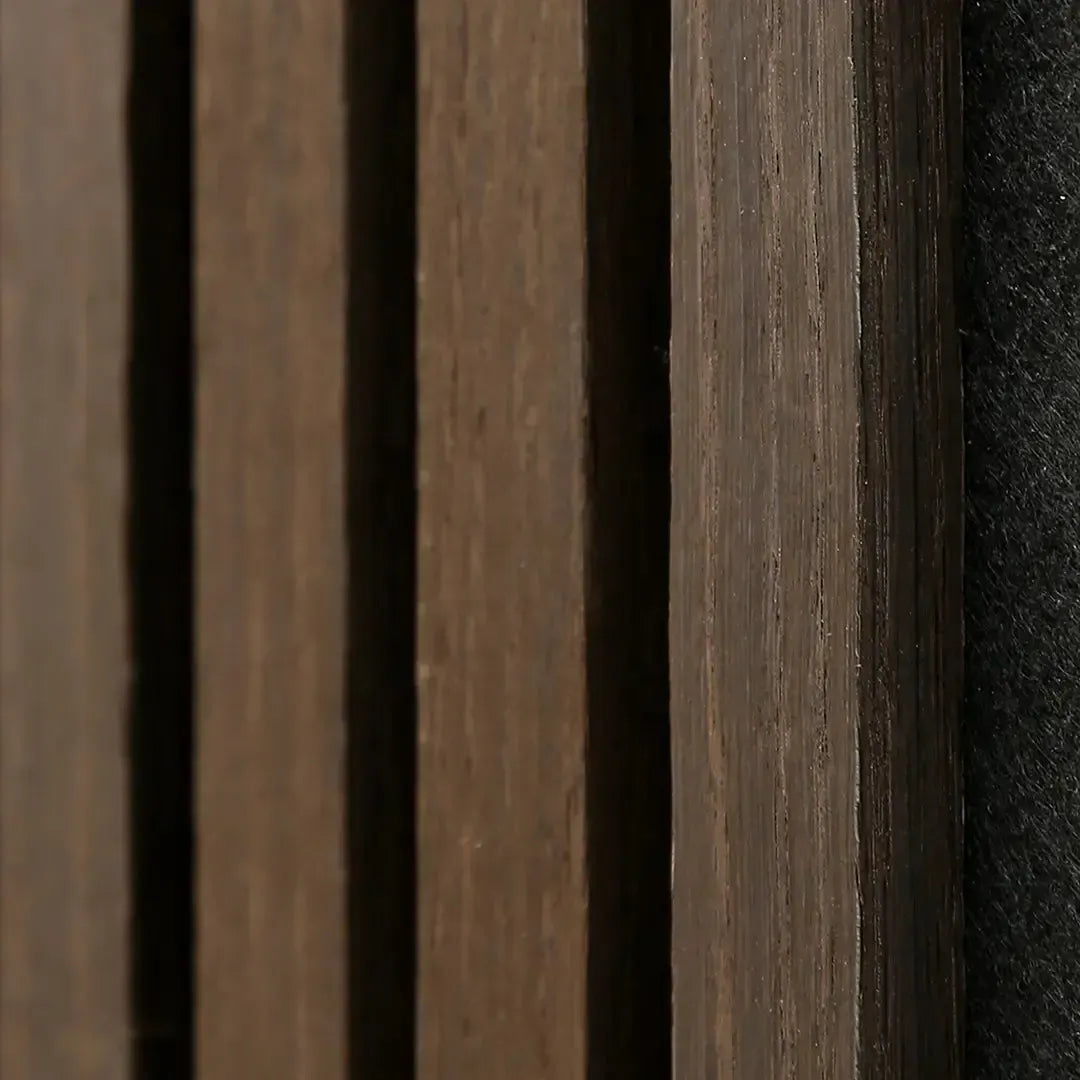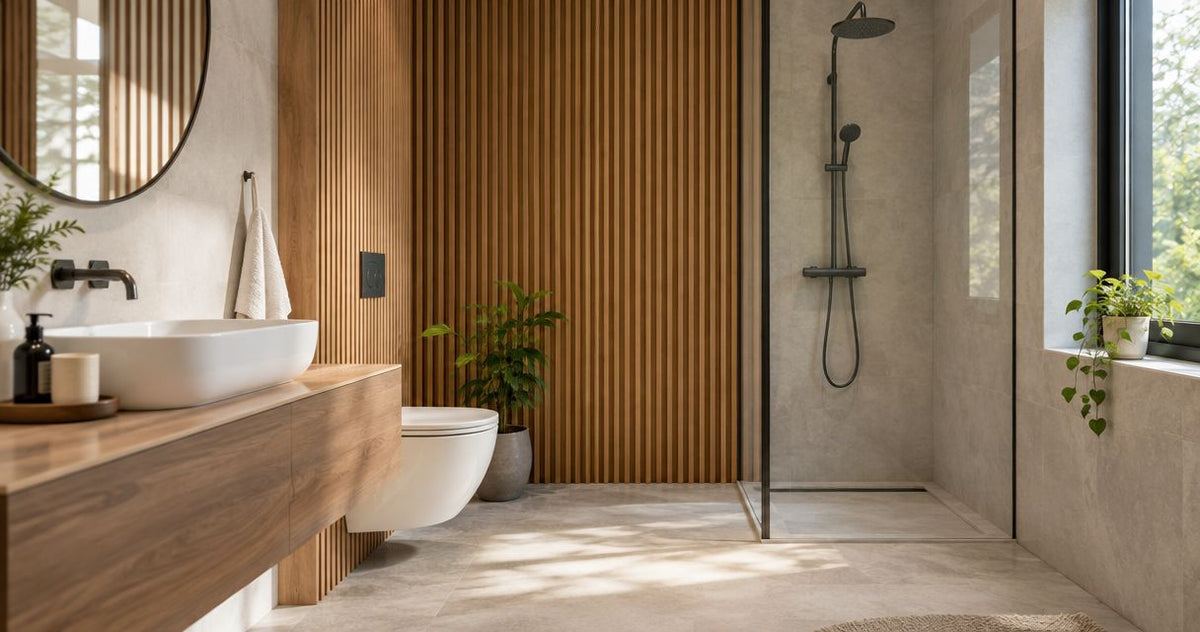
Acoustic wood panels can be used on dry bathroom walls only when the manufacturer approves the exact panel and installation for that environment; ordinary interior acoustic panels are not shower or wet-room cladding. Keep them away from direct spray, recurring splashes, and persistent condensation, and do not treat a surface sealer as a substitute for a waterproof wall system.
- Can acoustic wood panels be used in bathrooms? Only on suitable dry walls with manufacturer approval.
- Akustiq USA acoustic wood panels need product-specific approval before bathroom installation; appearance does not establish moisture suitability.
- Keep ordinary interior acoustic wood panels outside showers, splash zones, steam rooms, and persistently damp areas.
- Control bathroom humidity and confirm backing, adhesive, edge treatment, and cleaning requirements before installing.
Can acoustic wood panels be used in bathrooms or other wet areas?
A bathroom location is not automatically a wet location, but a dry-looking wall is not automatically suitable for wood panels. Your decision depends on the panel construction, the manufacturer's permitted conditions, and the moisture that actually reaches the wall.
When considering Akustiq USA acoustic wood panels for a 2026 bathroom project, confirm suitability before choosing a finish. The following comparison separates possible dry-wall applications from locations that need purpose-designed wet-area finishes.
| Location | Main exposure | Benefit of considering wood panels | Limitation and decision |
|---|---|---|---|
| Dry powder-room feature wall | Occasional humidity and cleaning | Adds wood texture away from bathing water | Best for decorative use where the manufacturer permits it; confirm cleaning requirements |
| Bathroom wall outside splash areas | Humidity and possible condensation | Adds texture and potentially sound absorption with a suitable acoustic assembly | Best for approved dry-wall applications; ventilation alone does not establish suitability |
| Wall immediately behind a sink | Recurring splashes and cleaning | Creates a coordinated vanity feature | Best for a splash-rated finish instead; ordinary acoustic panels need explicit approval |
| Shower enclosure or wet-room wall | Direct water and wet joints | A wood-look finish can suit the design | Best for a documented wet-area wall system, not ordinary interior acoustic panels |
| Steam room or sauna | Sustained moisture, heat, or both | Specialized materials can provide a wood interior | Best for purpose-designed materials; bathroom approval does not establish suitability |
Why this matters
Wood exchanges moisture with surrounding air. Changes in moisture content cause movement, while repeated wetting creates additional risks for finishes, joints, adhesives, and moisture-sensitive cores.
The visible wood face is only part of an acoustic panel. Assess the complete assembly, including any backing and concealed mounting materials, rather than assuming a finished surface protects everything behind it.
For a 2026 remodel, settle the moisture question before ordering enough material to cover the wall. Choose the wall by exposure first and the panel by appearance second.
Dry bathroom feature walls: conditional use
A wall outside the shower enclosure and away from sink splashes is a more sensible candidate than a wet wall. It still needs product-specific approval, a dry substrate, and humidity conditions within the manufacturer's limits.
A powder room avoids shower-generated steam, but the sink, plumbing, and cleaning routine still matter. Look at the exact installation area rather than treating the entire room as one exposure category.
Best for: homeowners who want a wood feature on a genuinely dry wall and can meet the manufacturer's installation conditions. The benefit is decorative texture; the drawback is that you must keep the installation within those conditions throughout its use.
Do not hide staining, peeling paint, damp plaster, or an unresolved leak behind new panels. Fix the moisture source and assess the substrate before covering it.
Sink surrounds: splashes change the decision
A vanity wall receives more than humid air. Handwashing, cleaning, and water running down the wall create direct liquid exposure, particularly near the faucet and countertop joint.
A panel mounted above a backsplash is not automatically outside the splash area. Observe how the sink is used, including whether children splash water or cleaning products are sprayed onto surrounding surfaces.
Best for: a finish documented for the actual splash exposure and cleaning routine. A wood feature can work elsewhere in the layout, but ordinary acoustic panels should not replace the protective surface immediately behind the sink without explicit approval.
Keep the design boundary clear. Finish the splash area with a suitable system and reserve any approved acoustic wood treatment for the dry part of the wall.
Showers and wet rooms: use a wet-area wall system
Do not use ordinary interior acoustic wood panels as shower lining. Shower walls need a coordinated water-management system, including suitable substrates, waterproofing, joints, penetrations, and surface finishes.
Slat gaps and exposed backing do not form a waterproof barrier. Applying a coating to the visible wood face does not establish protection for cut edges, fastener holes, adhesive interfaces, or the wall behind the panel.
Best for: shower-rated wall systems where direct water exposure is expected. Their advantage is documented suitability for the application; their limitation is that a hard wet-area finish does not automatically provide the sound absorption of an acoustic assembly.
For a 2026 wet-room specification, request the actual system instructions. A wood appearance, an exterior label, or a water-resistant surface claim is not enough to approve the whole installation.
Why bathroom suitability varies
The same room can contain both a dry feature wall and an unsuitable wet wall. These factors determine which conditions your panel installation must withstand:
- Water exposure: Direct spray and recurring splashes are different from occasional increases in room humidity.
- Panel construction: Veneer, core, backing, adhesive, and finish each need to suit the intended environment. Do not judge the assembly by its visible face alone.
- Drying conditions: Ventilation helps remove moisture, while condensation and slow drying increase exposure.
- Installation details: Cut edges, joints, penetrations, and concealed spaces need the treatment specified for the approved assembly.
- Maintenance: Cleaning products and methods must be compatible with the panel, including its backing and adhesive.
Ask about these factors together. Approval for the wood face alone does not answer whether the finished wall assembly belongs in your bathroom.
How do you check a bathroom wall before installing panels?
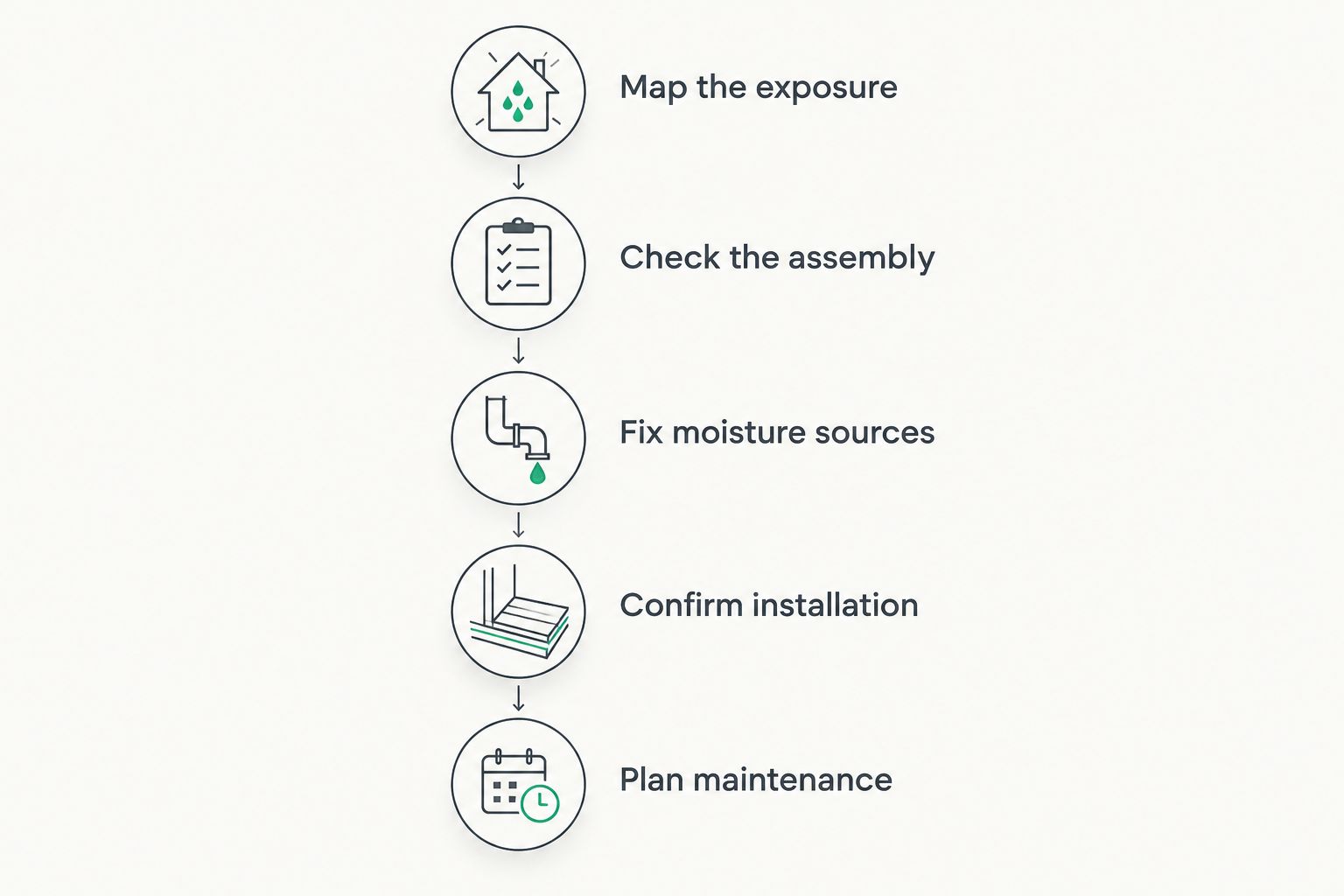
Use this sequence before cutting panels or applying adhesive. Each step answers a different question, so a suitable finish cannot compensate for an unsuitable location.
- Map the exposure. Mark direct spray, sink splashes, condensation, and areas touched by wet towels. Include normal cleaning practices.
- Check the assembly. Identify the exact panel and request written confirmation covering the location, humidity conditions, backing, and fixing method.
- Fix moisture sources. Resolve leaks, damp substrates, and ventilation problems before covering the wall. Have persistent moisture investigated rather than concealed.
- Confirm installation. Follow the approved instructions for substrate preparation, conditioning, adhesive or fasteners, edges, and clearances. Do not substitute a general online installation method.
- Plan maintenance. Confirm how you will clean the surface and inspect vulnerable edges without soaking the assembly or blocking access to plumbing.
Written approval should describe your use, not merely repeat that the product is suitable for interiors. A bathroom wall that stays dry and a shower wall are different applications, even when they share the same room.
For commercial bathrooms, give the supplier the cleaning regime and expected exposure as part of the specification. Frequent washdowns and disinfectant use need an explicit compatibility check.
What humidity level should you aim for?
The U.S. Environmental Protection Agency's household mold guidance recommends keeping indoor relative humidity below 60%, ideally 30%–50%. For a 2026 bathroom plan, use that general moisture-control guidance alongside—not instead of—the panel manufacturer's requirements.
Those figures describe indoor moisture management, not a bathroom rating for wood panels. A reading of 50% relative humidity does not make a directly splashed wall suitable, and a compliant room average does not rule out condensation on a colder surface.
Use a hygrometer to understand room conditions and observe whether surfaces remain damp after bathing. Operate the exhaust system according to its instructions and address persistent condensation before installing decorative panels.
Avoid choosing an arbitrary fan runtime or a universal distance from the shower. Room layout, extraction, temperature, and actual water exposure determine the conditions at your chosen wall.
Will acoustic panels make a tiled bathroom quieter?
A suitable sound-absorbing assembly reduces reflected sound within a room. That can address the hard, echoing quality associated with reflective surfaces, but the result depends on the panel's tested construction, mounting, placement, and coverage.
Sound absorption is not soundproofing. Do not expect a decorative acoustic wall to stop plumbing noise or prevent bathroom sounds from passing into another room.
Akustiq USA acoustic wood panels belong on the shortlist for homeowners seeking decorative sound treatment, subject to approval for the intended wall. Their acoustic purpose does not establish wet-area suitability, and a bathroom moisture decision must come before a coverage decision.
If no approved dry installation area exists, do not force acoustic wood panels into the room. Ask an acoustic specialist about treatments documented for the actual moisture conditions.
Can you seal acoustic wood panels to make them waterproof?
A surface sealer does not turn an ordinary acoustic panel into a waterproof wall system. It treats only the surfaces it reaches and does not establish suitability for the backing, joints, core, or attachment method.
Coatings also change an acoustic assembly when they cover porous absorbing surfaces. Do not paint, coat, or seal the acoustic backing unless the manufacturer approves that treatment and its effect on performance.
For your 2026 project, request a specified finish and application method rather than adding an improvised waterproofing step. If the manufacturer does not approve the intended exposure, change the location or material.
Can exterior wood-look panels replace bathroom acoustic panels?
An exterior designation does not establish approval for showers, steam rooms, indoor cleaning chemicals, or a particular bathroom wall assembly. Exterior cladding and interior wet-area lining solve different installation problems.
Check the exact product documentation rather than transferring claims between categories. Likewise, a backsplash label does not establish shower suitability, and decorative fluting does not establish acoustic performance.
The safest comparison is between documented applications, not product names. Ask what the complete system is approved to do, then choose the appearance within that suitable group.
FAQ
Can acoustic wood panels be used in bathrooms if there is an exhaust fan?
An exhaust fan alone does not make acoustic wood panels suitable for bathrooms. Use panels only where the manufacturer approves the exact assembly and exposure, and keep ordinary interior panels out of direct-water areas.
Can I put acoustic wood panels inside a walk-in shower?
Do not put ordinary interior acoustic wood panels inside a walk-in shower. Use a documented shower wall system with suitable waterproofing, joints, penetrations, and finishes.
Are acoustic wood panels suitable behind a bathroom sink?
Acoustic wood panels belong behind a sink only if the manufacturer explicitly approves the recurring splash exposure and cleaning method. A location above the countertop is not automatically a dry area.
Does varnish make felt-backed acoustic panels waterproof?
Varnish does not make a felt-backed acoustic panel assembly waterproof. It does not establish protection for the backing, joints, cut edges, fastener penetrations, or concealed wall.
What humidity should I maintain around bathroom wood panels?
Follow the panel manufacturer's humidity limits. The U.S. Environmental Protection Agency recommends indoor relative humidity below 60%, ideally 30%–50%, for general household moisture control; those figures are not product approval.
Will bathroom acoustic panels stop noise reaching my bedroom?
Acoustic panels used for sound absorption are not a substitute for soundproofing. Reducing reflected sound inside the bathroom differs from controlling sound transmission through walls, doors, and service openings.
Can I use acoustic wood panels in a sauna or steam room?
Ordinary interior acoustic wood panels should not be assumed suitable for a sauna or steam room. Select materials and mounting systems explicitly approved for the relevant heat and moisture conditions.
What should I ask before buying Akustiq USA panels for a bathroom?
Ask Akustiq USA for approval covering the exact panel, bathroom location, humidity conditions, fixing method, and cleaning routine. Confirm restrictions on splashes, condensation, backing treatments, and cut edges before ordering.
One last thing
Inspect the wall after a normal shower before designing the feature. A wall beyond the reach of the showerhead still needs attention if condensation forms on it or wet towels rest against it.
Use those observations in your approval request. A photograph and an accurate description of water exposure give the manufacturer a clearer application to assess than the word bathroom alone.
 Better performance and aesthetic appeal
 In Stock