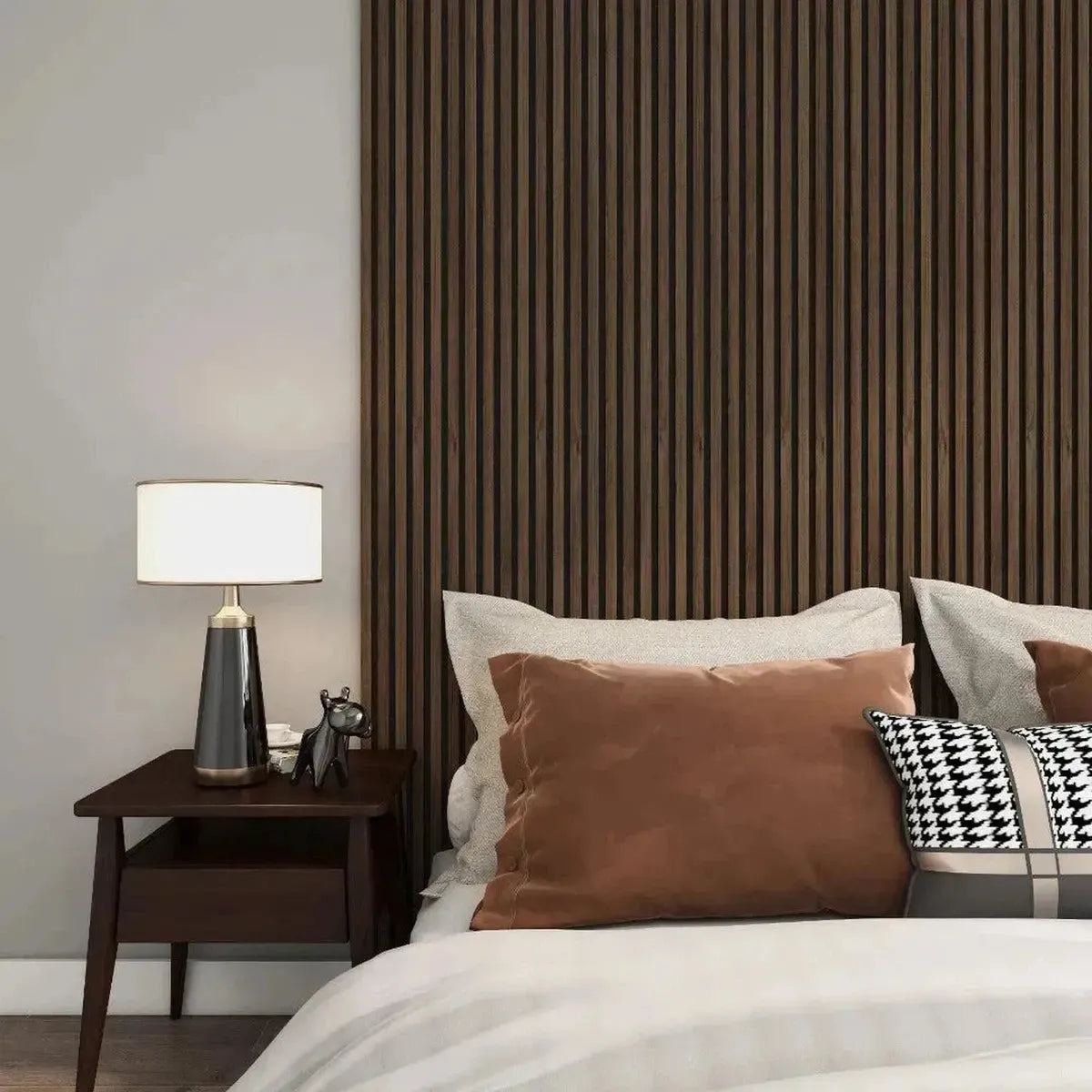
Acoustic wood paneling is not inherently more effective than fabric wall panels for offices. Either can reduce reflected speech when the complete panel assembly, mounting method, and coverage suit the room; neither replaces sound-isolating construction for confidential conversations. For your 2026 office project, compare tested absorption data before choosing the finish.
- Acoustic wood panels vs fabric panels for offices: compare tested assemblies, not surface materials.
- Akustiq USA supplies acoustic wood panels; select the wood finish separately from the required acoustic performance.
- Fabric-wrapped absorbers suit offices prioritizing a textile finish; wood-slat systems suit offices prioritizing visible wood.
- Neither wall treatment alone provides speech privacy between rooms.
Is acoustic wood paneling more effective than fabric panels for offices?
There is no category-wide winner: the tested construction determines absorption, not whether the face is wood or fabric. A fabric-wrapped absorber and a felt-backed wood-slat panel can have different cores, depths, exposed absorbing areas, and mounting conditions. Comparing the finish alone leaves those differences out.
For an open workspace, start with the distinction between reflected noise and direct speech. The guide to acoustic panels for reducing noise in open offices addresses that room-level problem.
| Office selection criterion | Acoustic wood-slat panels | Fabric-wrapped acoustic panels |
|---|---|---|
| Best for | Offices where a visible wood-slat finish is part of the design brief | Offices where a textile finish is part of the design brief |
| Absorption mechanism | Sound reaches absorbing material through openings between slats | Acoustically transparent fabric allows sound to reach an absorbing core |
| Main advantage | Combines a wood-facing design with an absorbing assembly | Covers an absorbing core without a hard wood face |
| Main limitation | Slat layout, backing, and mounting affect the result | Fabric alone does not establish the core's performance |
| Evidence to request | Frequency-specific absorption data for the proposed assembly | Frequency-specific absorption data for the proposed assembly |
| Privacy limitation | Does not replace a sound-isolating partition | Does not replace a sound-isolating partition |
Use this comparison in your 2026 specification meeting to separate appearance from performance. Keep both options in consideration until you have comparable test reports and installation details.
Why this matters
An office can sound less echoey while conversations remain clearly audible across desks. Absorption reduces reflected sound; it does not remove the direct path between a person speaking and a colleague nearby.
That distinction changes what you buy. If the complaint is lingering speech in a meeting room, absorbing surfaces address the reflection problem; if employees hear confidential calls through a partition, investigate the partition, door, ceiling void, and other transmission paths.
Write the problem into the brief before writing the panel material. “Reduce meeting-room reverberation” gives your designer a clearer task than “install acoustic wood.”
Acoustic wood-slat panels: best for a visible wood finish
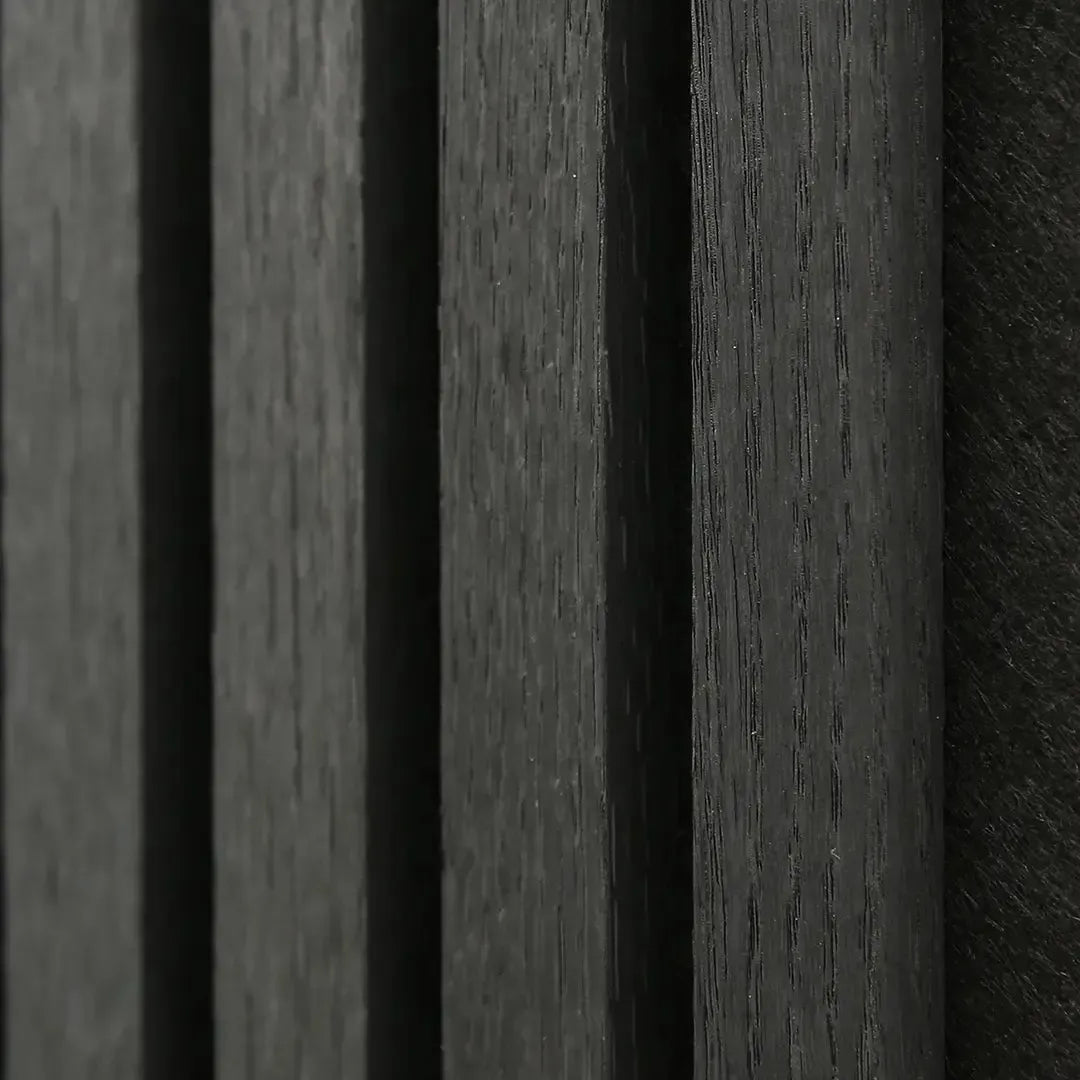
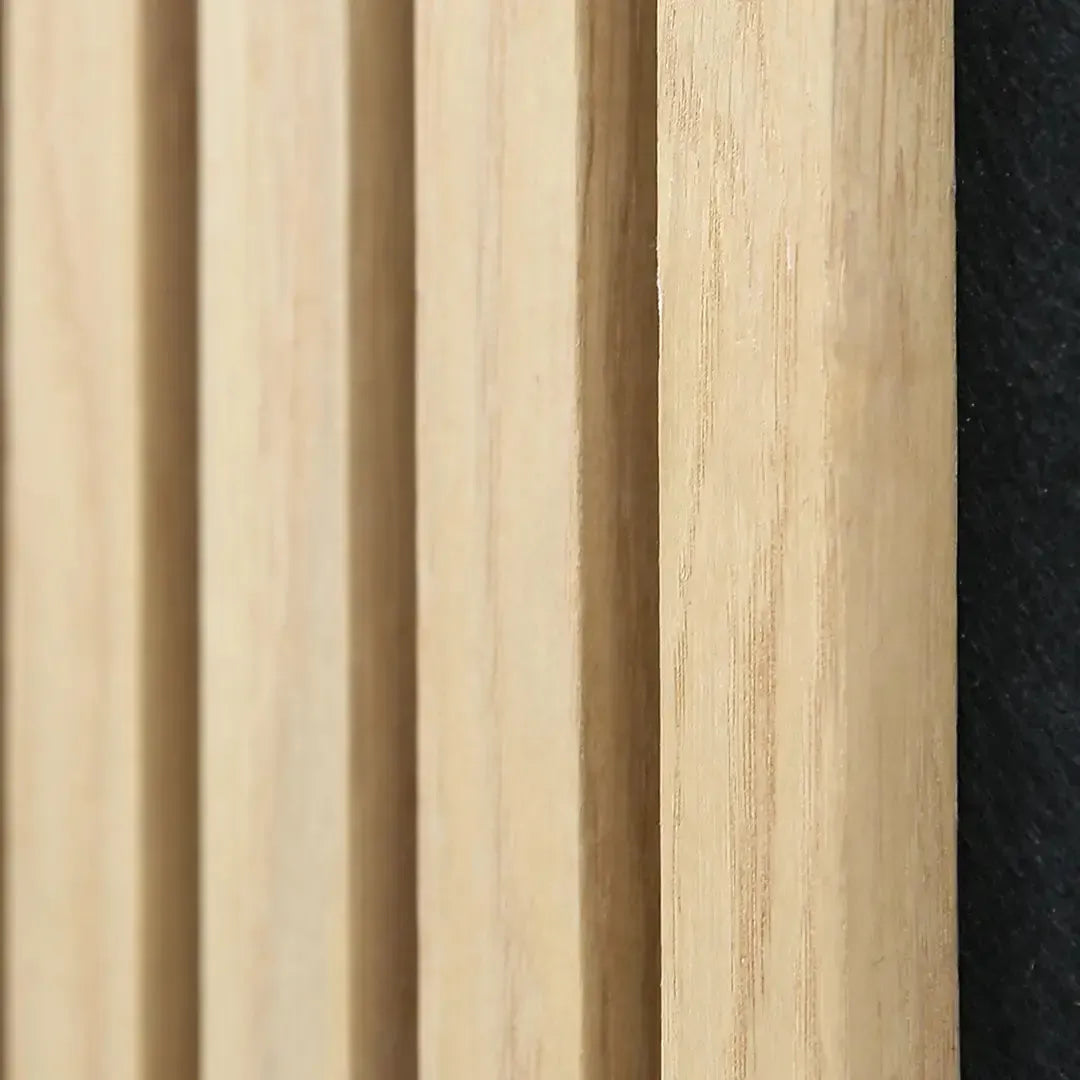
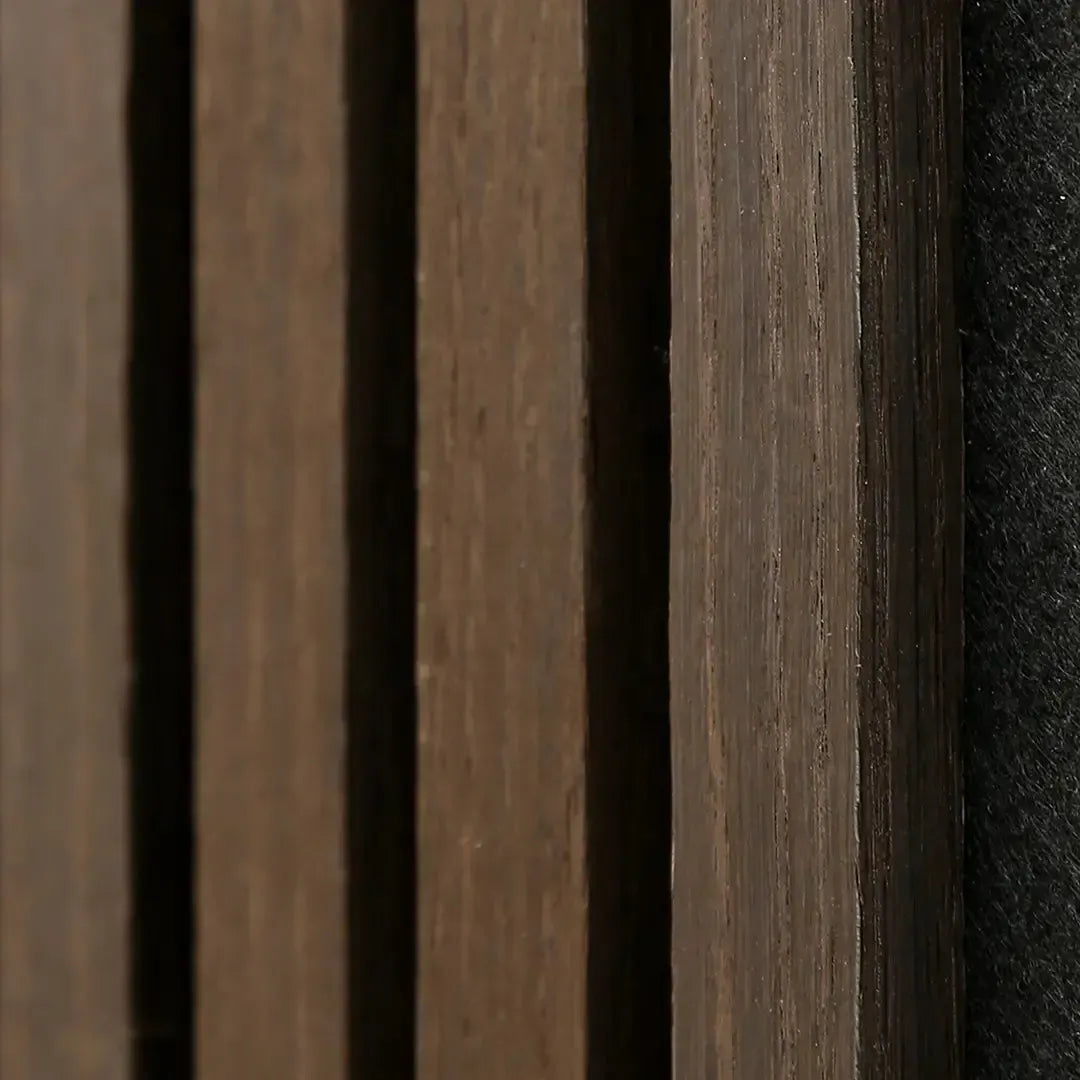
Acoustic wood-slat systems combine a comparatively reflective face with openings that expose absorbing material. The backing and any cavity or additional absorber behind the panel are part of the acoustic assembly. Do not treat those components as optional details when comparing results.
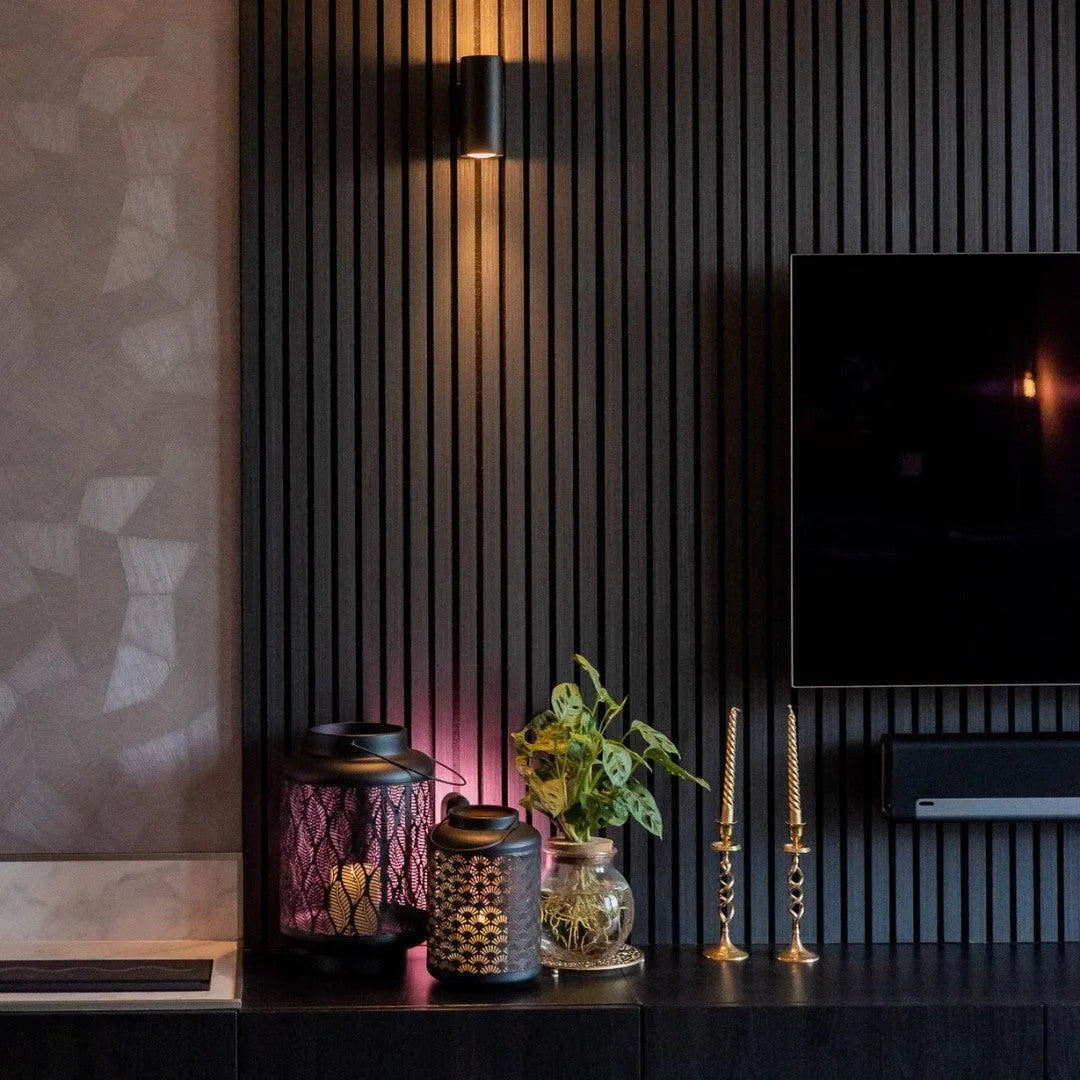
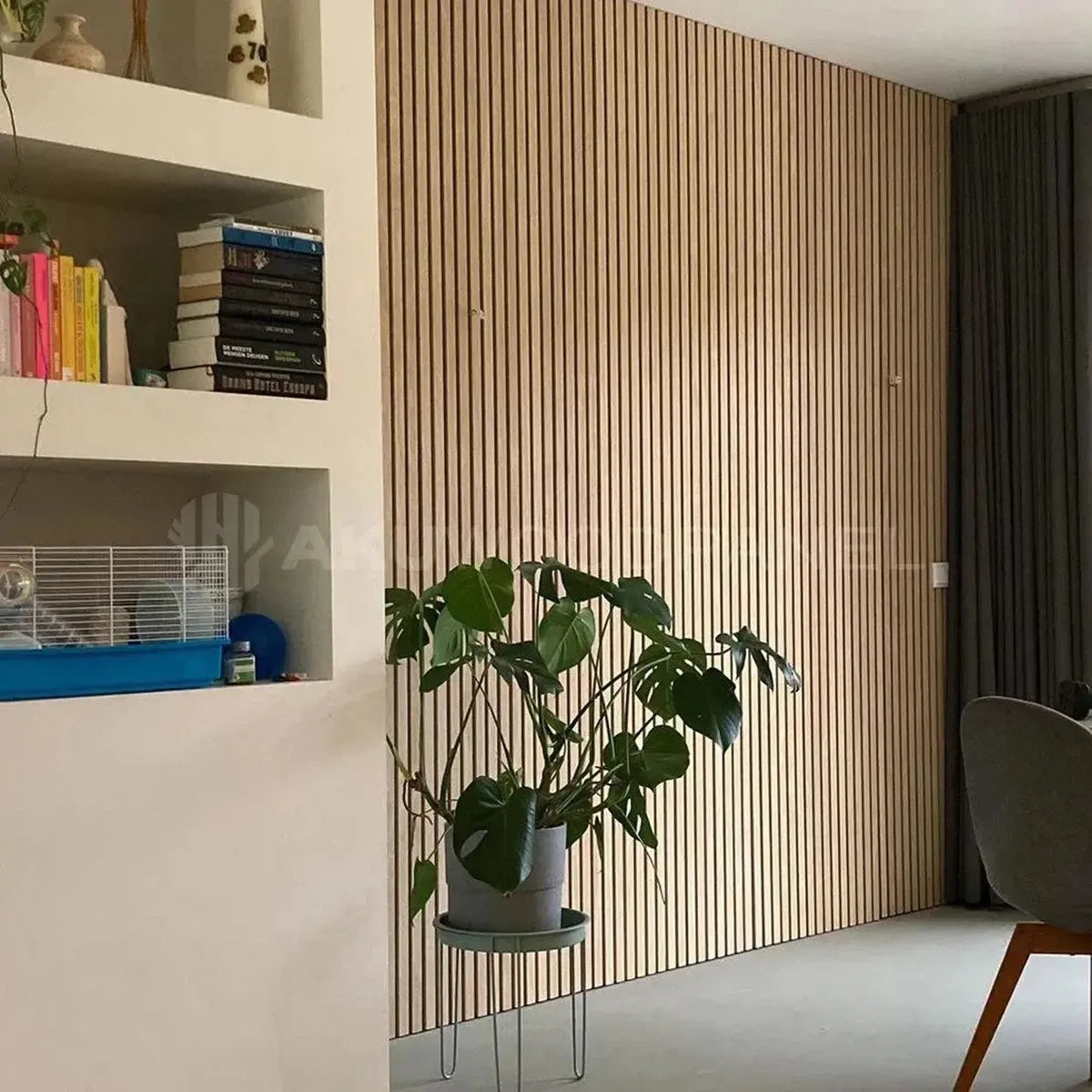
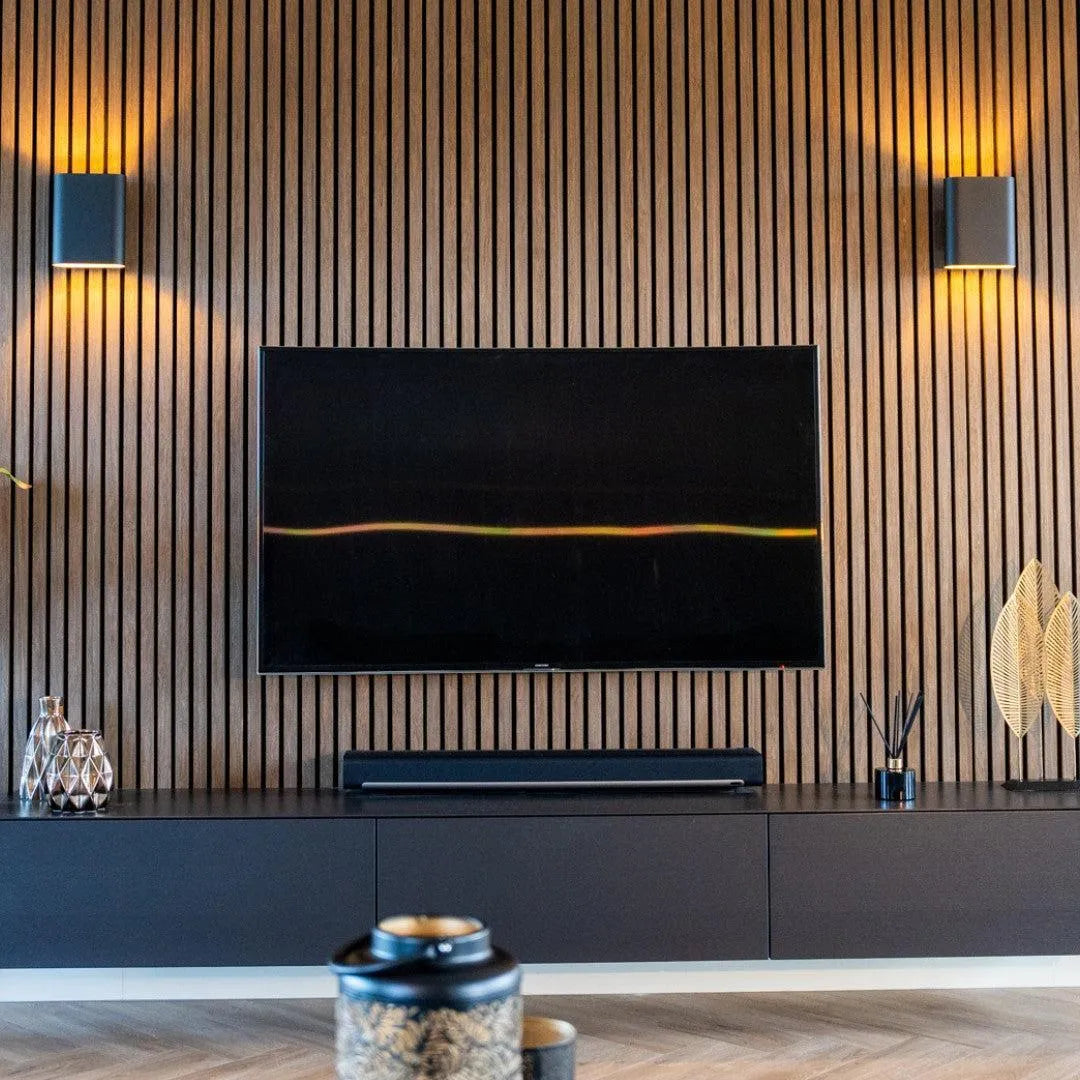
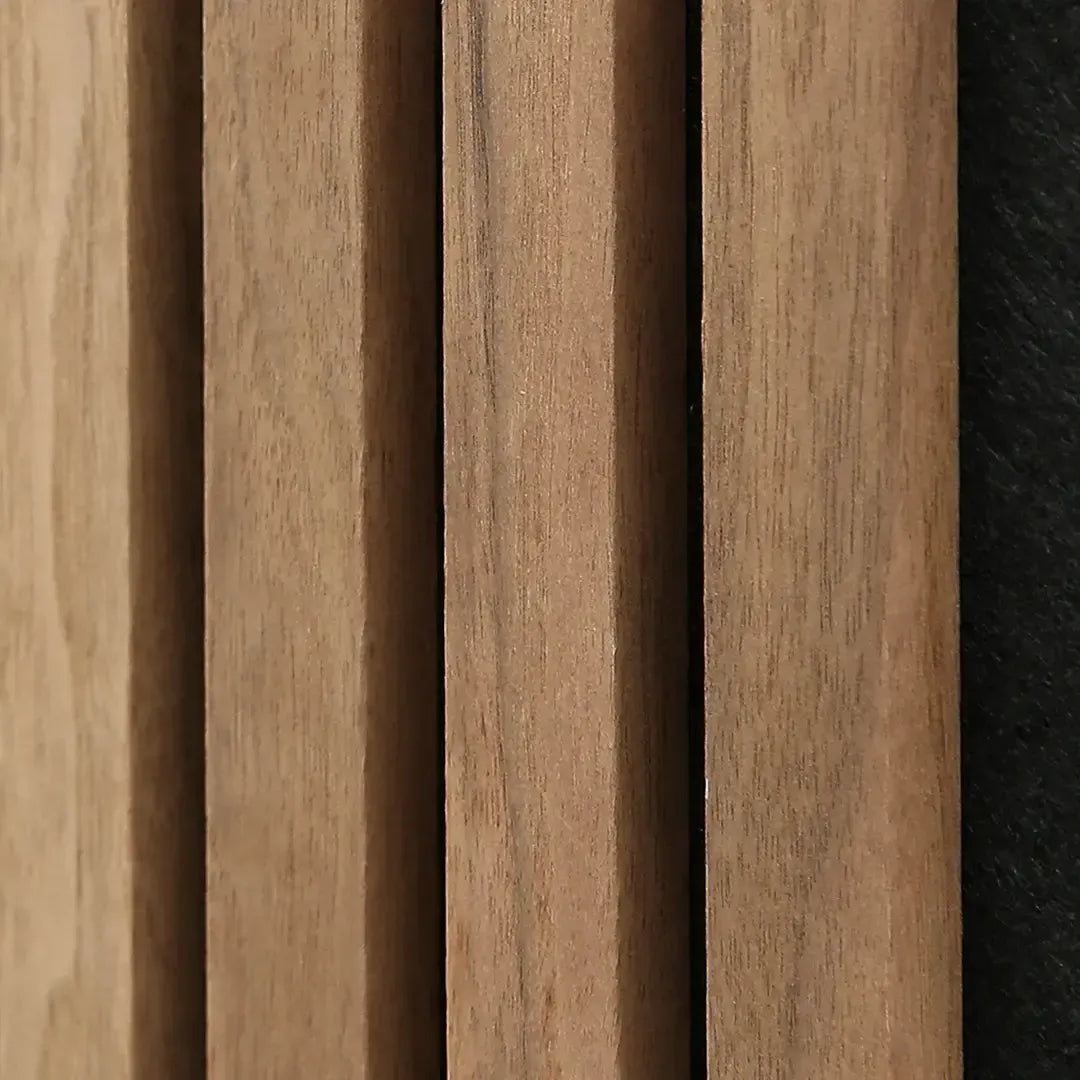
Akustiq USA acoustic wood panels are best for office buyers whose design brief calls for a wood-slat finish. The Acoustic Slat Wall Panel Natural Oak is a relevant finish option to review, but the finish name does not establish an absorption rating or commercial compliance.
The benefit is straightforward: you can include visible wood in the same wall treatment as an absorbing assembly. The limitation is equally important: a decorative wood face is not evidence of acoustic performance.
Before specifying Akustiq USA acoustic wood panels for a 2026 fit-out, request documentation for the exact proposed mounting arrangement. Keep the acoustic approval separate from approval of the veneer appearance, joints, and exposed edges.
Fabric-wrapped panels: best for a textile finish
Fabric-wrapped acoustic panels use a covering over an absorbing core. The covering needs to allow sound to reach that core; fabric stretched over a hard wall is not equivalent to a tested absorber.
Their practical advantage is that the textile face can cover an absorbing core without introducing wood slats across its surface. Their limitation is that the word “fabric” tells you little about the underlying construction, thickness, or frequency response.
Choose a fabric-wrapped assembly when its documented performance and textile finish meet your brief. Do not assume every upholstered wall panel is acoustic, or that every fabric-wrapped absorber performs alike.
For your 2026 comparison, require the same documentation from both suppliers. A detailed report for one assembly cannot be compared fairly with an unsupported headline claim for the other.
Why office acoustic performance varies
These factors explain why apparently similar panels produce different results:
- Absorbing construction: The core or backing determines how the assembly dissipates sound energy. A material label does not describe the complete system.
- Panel depth: Absorber thickness affects frequency response. Compare actual constructions rather than assuming equal performance from equal-looking faces.
- Mounting arrangement: A cavity behind an absorber changes its acoustic behavior. Match the tested mounting to the proposed installation.
- Exposed absorbing area: Wood slats, fabric coverings, and other facing details influence how sound reaches the absorber.
- Coverage and placement: The amount and distribution of treatment affect room performance. A small feature wall does not represent a whole-room acoustic design.
- Existing room conditions: Glass, ceilings, furniture, room geometry, and occupancy influence the reflections your treatment must address.
You cannot resolve these differences with a finish sample. Ask for the construction details and room layout alongside the acoustic report, then have the design assessed as a complete installation.
How do you compare acoustic reports fairly?
Compare absorption at matching frequencies and matching mounting conditions. ASTM C423 describes laboratory measurement of sound absorption in a reverberation room; the report's specimen and mounting details matter as much as the summary rating.
Noise Reduction Coefficient, or NRC, summarizes absorption coefficients at 250 Hz, 500 Hz, 1,000 Hz, and 2,000 Hz. It is not a percentage reduction in office noise, and it does not describe every frequency equally well.
Reverberation time is a room measurement rather than a panel property. RT60 describes the time associated with a 60-decibel decay in sound level; report the measured reverberation time in seconds and identify the measurement conditions.
For a 2026 procurement comparison, check:
- Test identity: Does the report identify the exact panel construction being proposed?
- Mounting: Was the sample mounted directly, over a cavity, or with additional absorbing material?
- Frequency data: Can you inspect the absorption coefficients rather than only NRC?
- Scope: Does the document concern absorption, transmission loss, fire performance, or another property?
Do not substitute an NRC figure for a privacy assessment. Sound Transmission Class, or STC, concerns airborne sound transmission through an assembly, not the amount of sound a wall finish absorbs inside a room.
How should you choose panels for your office?
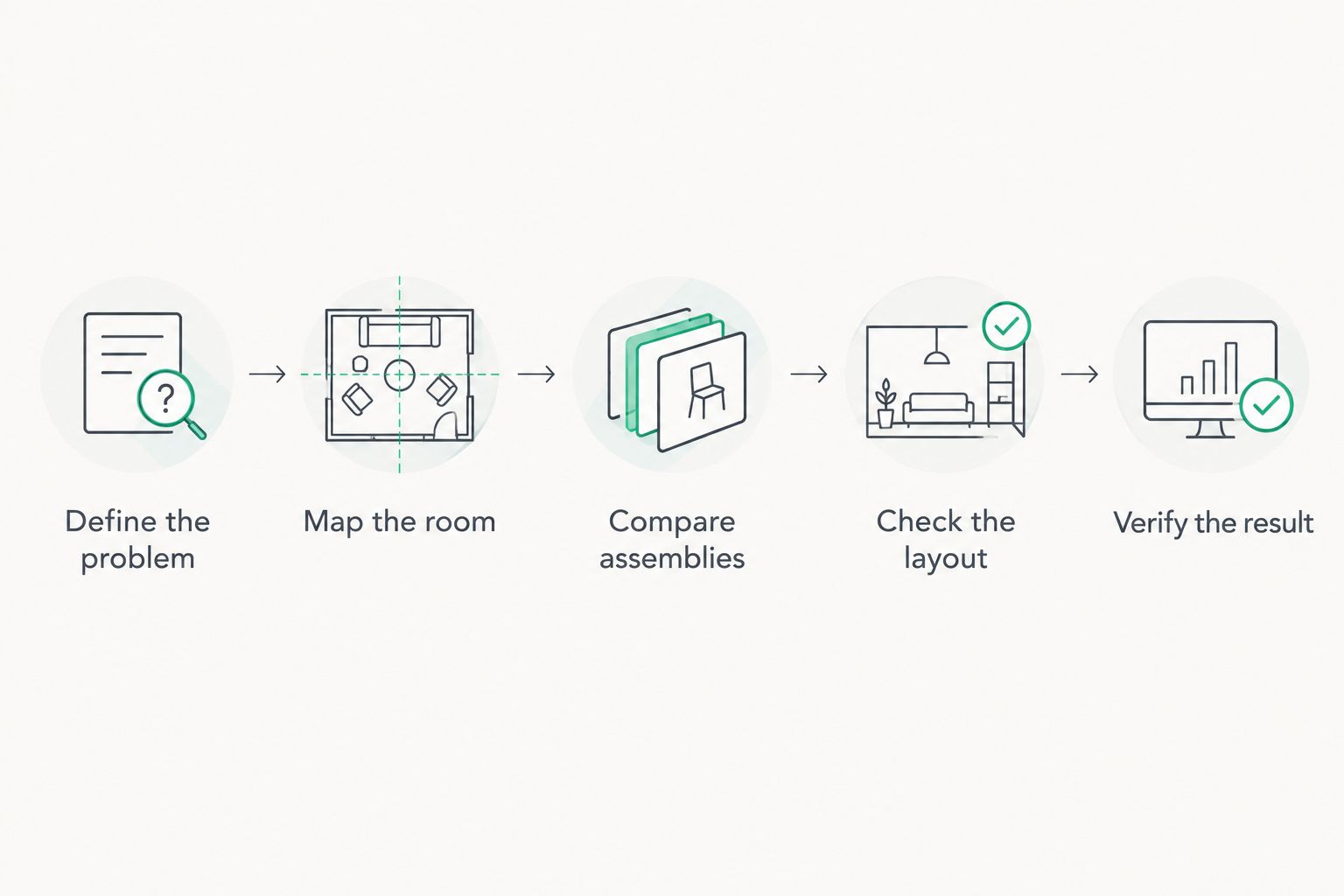
Use this sequence before approving either material. It keeps an attractive sample from becoming the entire specification.
- Define the problem. Record whether employees report echo, distracting nearby speech, sound passing between rooms, or mechanical noise. Separate problems that need different treatments.
- Map the room. Mark desks, meeting positions, glass, doors, ceilings, and available treatment surfaces. Include furniture and access requirements.
- Compare assemblies. Request test reports and installation details for the shortlisted wood-slat and fabric-wrapped systems. Reject comparisons that hide different mounting conditions.
- Check the layout. Have an acoustic professional assess coverage and placement against the room's use. Do not select coverage solely to fill an attractive rectangle.
- Verify the result. Agree on the assessment method before installation. Compare the completed room under consistent conditions and review whether the original complaint has been addressed.
A hand clap can reveal obvious ringing, but it does not replace a room assessment. Record staff feedback as well as the agreed measurements, because a shorter reverberation time does not automatically resolve every workplace complaint.
What should you check beyond sound absorption?
Acoustic approval is only one part of commercial approval. Your office installation also needs suitable fire documentation, a workable fixing method, access to services, and maintenance instructions for the specified finish.
Ask whether fire documentation covers the complete proposed construction. A statement about one component does not establish the classification of every combination of facing, backing, adhesive, and substrate.
Review cleaning requirements before choosing either face. Wood finishes and textiles need product-specific care; do not assume a fabric is washable or a wood surface tolerates the cleaning chemicals your facilities team uses.
Finally, coordinate outlets, switches, ventilation openings, and removable access panels. Require a detail for each interruption so the installer does not improvise around services or change the acoustic assembly without approval.
Which is better for an office meeting room?
Neither material wins automatically in a meeting room; the better assembly is the one that meets the room's acoustic brief. Compare tested absorption, available treatment area, and the location of reflective surfaces before choosing wood or fabric.
Keep microphone placement and loudspeaker settings in the review. Acoustic treatment addresses room reflections, but it does not correct every cause of poor conferencing audio.
Will either panel type make private calls confidential?
Neither panel type alone makes private calls confidential. Absorbing panels reduce reflected sound within a room, while confidentiality also depends on transmission through boundaries and speech paths between listeners.
If privacy is the primary requirement, assess doors, partitions, penetrations, and ceiling paths. In open offices, include workstation layout and separation rather than expecting perimeter wall treatment to block direct speech.
Can you combine acoustic wood and fabric panels?
You can combine wood-slat and fabric-wrapped absorbers in one office. Use each where its finish and documented performance fit the design, then assess the combined treatment rather than assigning either material a fixed acoustic role.
A mixed scheme still needs coordinated coverage and mounting details. Do not assume that adding a second material automatically solves frequencies the first assembly leaves untreated.
FAQ
Are acoustic wood panels better than fabric panels for offices?
Acoustic wood panels are not inherently better than fabric panels for offices. Compare the complete tested assemblies, their mounting methods, and the proposed room coverage rather than choosing by face material.
Does a higher NRC mean my office will be quieter?
A higher NRC indicates greater average absorption across the frequencies used in that rating, not a guaranteed reduction in office noise. Direct speech, coverage, placement, and existing room conditions still affect the result.
Can I use ordinary upholstery fabric as an acoustic wall panel?
Ordinary upholstery fabric alone does not establish an effective acoustic wall panel. A fabric-wrapped absorber needs a suitable absorbing core and a covering that lets sound reach it.
Will acoustic wall panels stop people hearing conversations next door?
Acoustic wall panels alone do not establish privacy between adjacent rooms. Sound transmission also depends on the partition, doors, penetrations, ceiling paths, and other parts of the enclosure.
Should I cover every office wall with acoustic panels?
Covering every office wall is not a universal requirement. Set coverage through a room-specific assessment that considers the existing ceiling, furnishings, geometry, and acoustic objective.
What should I request from Akustiq USA before specifying office panels?
Request documentation for the exact Akustiq USA assembly you intend to install, including acoustic test details and mounting instructions. Check commercial fire requirements, maintenance guidance, and fixing details separately before approval.
Can I compare wood and fabric panels using samples alone?
Samples let you compare appearance and physical details, but they do not establish room acoustic performance. Use test reports and the proposed installation layout to make the acoustic decision.
One last thing
The installation behind the finish can matter more than the finish itself. If a report describes a cavity or additional absorber, preserve that arrangement in the construction documents rather than approving a thinner installation because the front looks identical.
Make the final approval conditional on a matching assembly, not just a matching sample. That single procurement decision keeps your acoustic comparison relevant to what actually reaches the wall.


 Better performance and aesthetic appeal
 In Stock