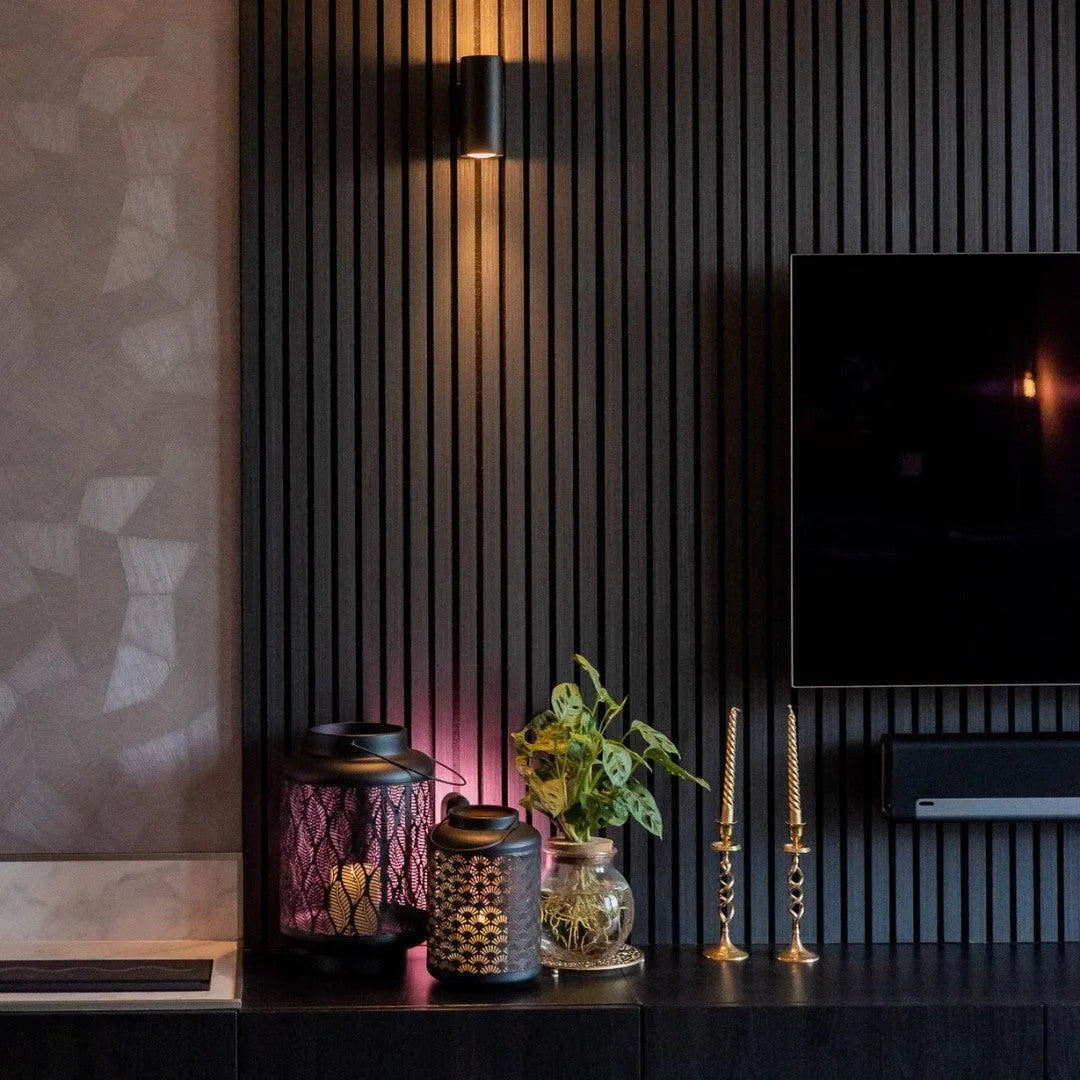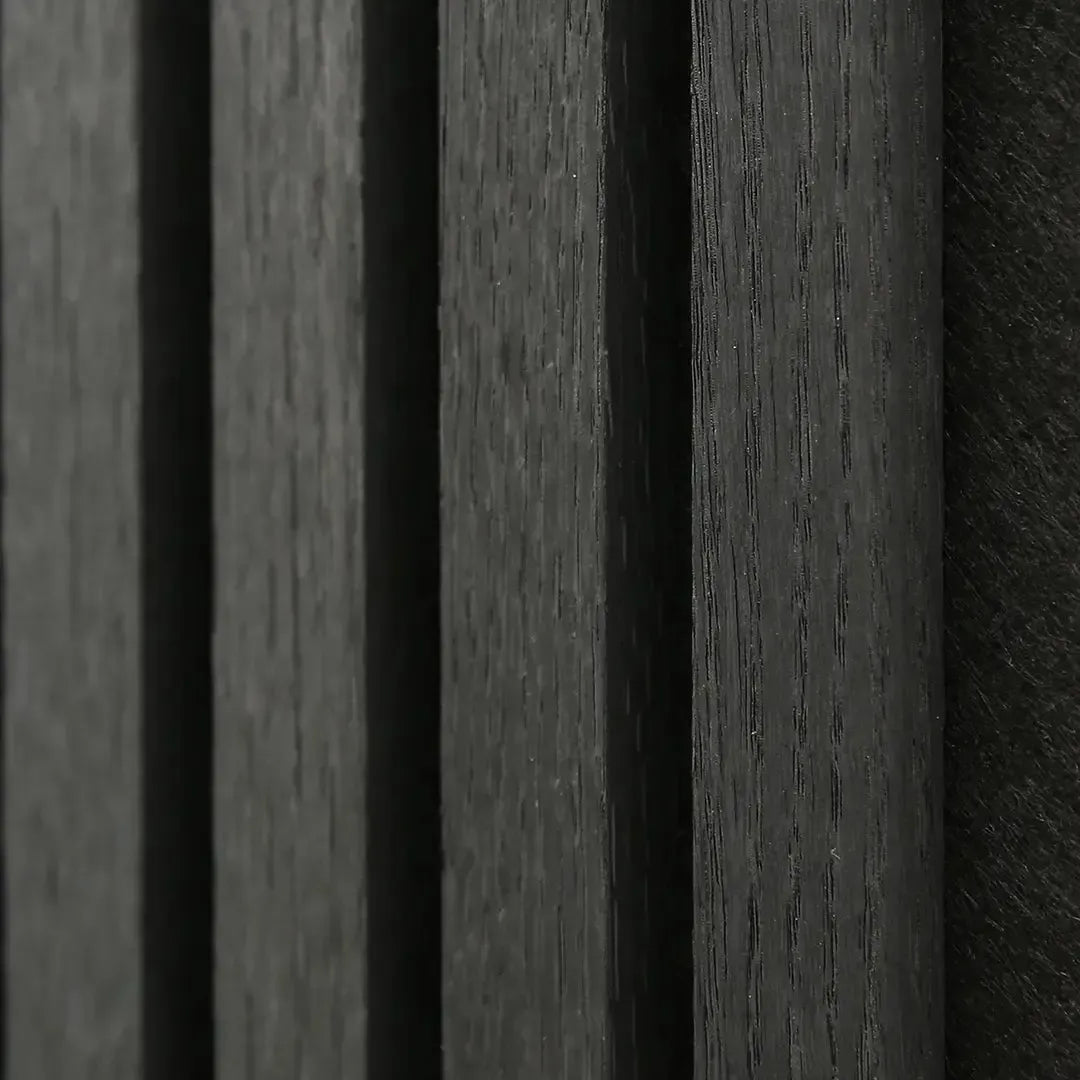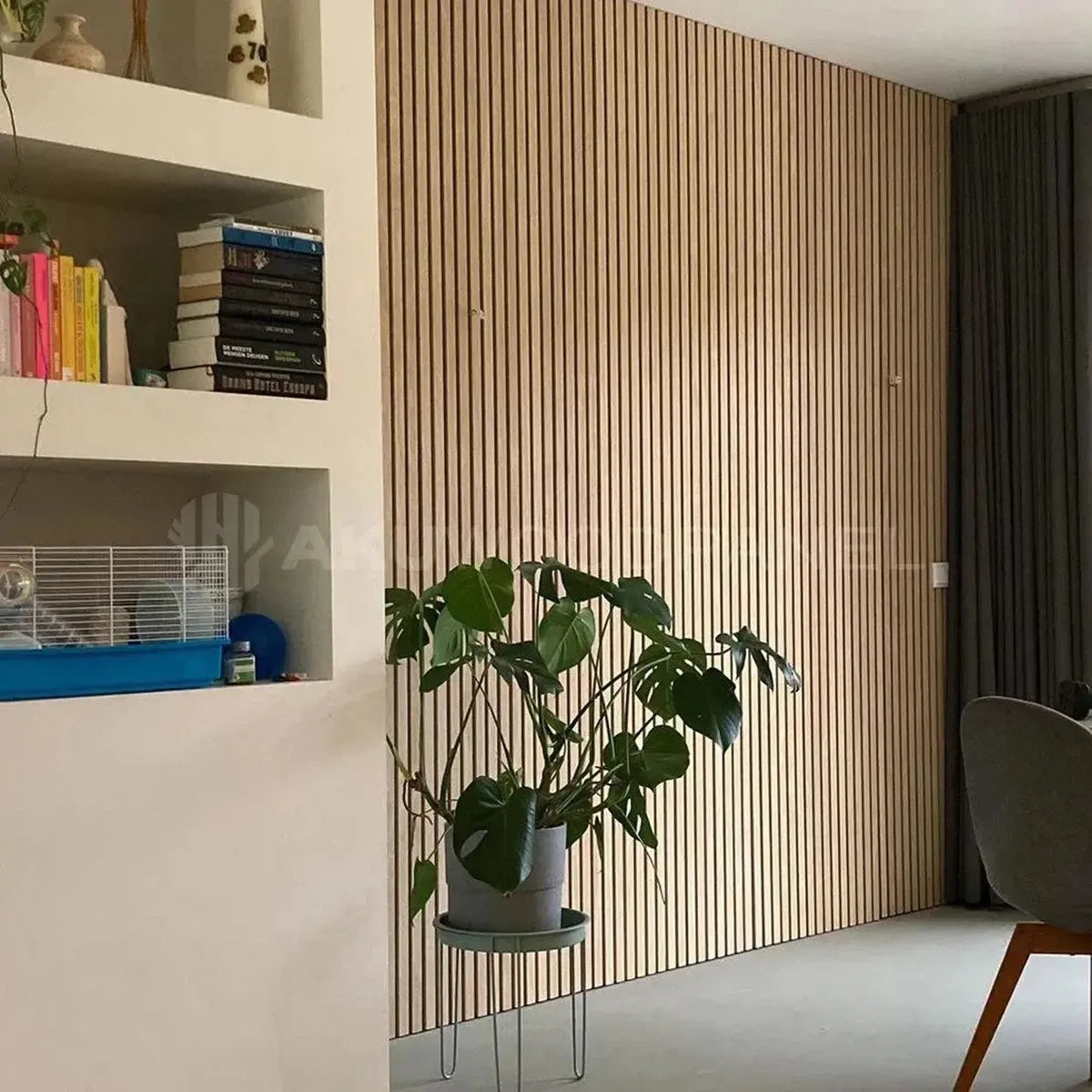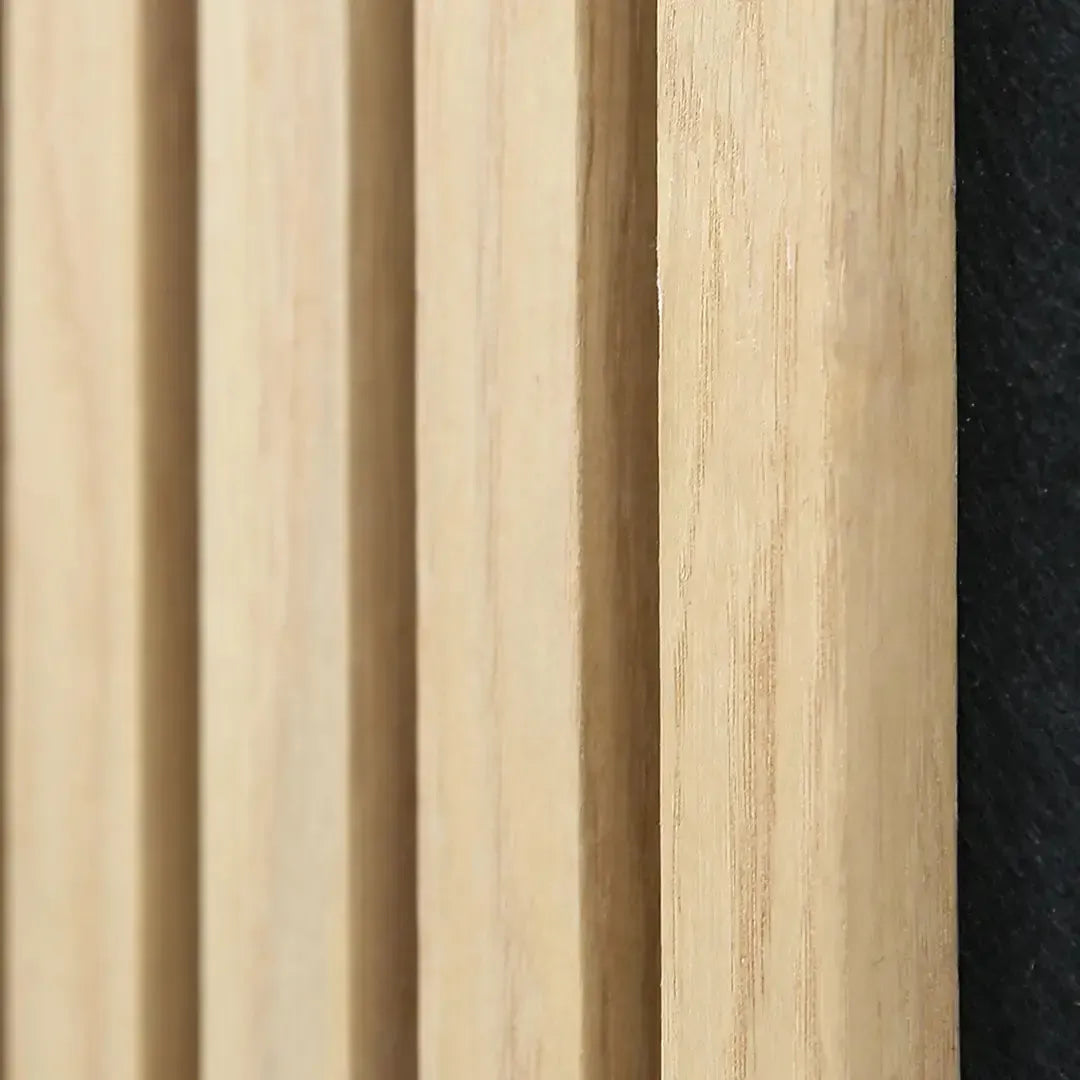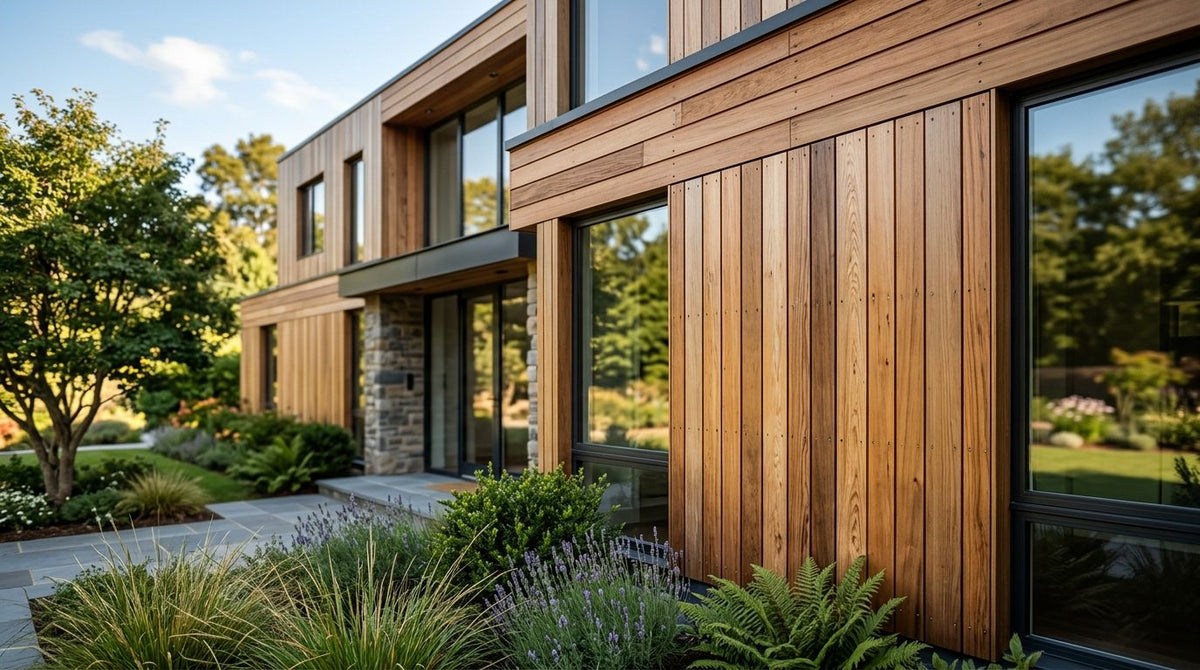
Exterior wood cladding cost per square foot in 2026 is calculated by dividing your quoted project total by the wall area being clad; a materials-only figure covers a different scope from an installed figure. Panels alone exclude installation and any separately quoted fasteners, trim, wall preparation, and delivery, so compare complete scopes before choosing a bid.
- Calculate exterior wood cladding cost per square foot from a complete quote, not the panel total alone.
- Akustiq USA exterior wall panels belong in a project budget alongside installation, fasteners, and finishing details.
- Use installed wall area for project comparisons and manufacturer-stated coverage for panel quantities.
- Compare written inclusions and exclusions before deciding which cladding quote offers better value.
Why this matters
A lower materials figure does not establish a lower finished-project cost. You need to know what the quote buys, which wall area it covers, and what remains outside the contract. Otherwise, you are comparing different jobs under the same square-foot label.
Start with accurate measurements. The guide to calculating coverage for exterior wall cladding panels helps you separate the area you want to cover from the quantity you need to order.
For a useful 2026 budget, keep those measurements attached to every supplier and installer request. Changing the area or installation scope between requests makes the resulting figures harder to compare.
How much does exterior wood cladding cost per square foot in 2026?
Your project-specific figure comes from this calculation:
Installed cost per square foot = complete quoted installation total ÷ net wall area being clad.
For a materials-only comparison, divide the panel purchase total by the manufacturer's stated coverage for the quantity purchased. Label that result materials-only; it does not represent a completed exterior wall.
Ask each bidder to separate the following items rather than burying everything under a panel allowance.
| Budget component | What the quote should identify | What to check |
|---|---|---|
| Cladding panels | Exact product and order quantity | Stated installed coverage and pack contents |
| Fasteners | Specified screws or fixing system | Whether the required quantity is included |
| Finishing components | Trims, corners, and end caps where specified | Which exposed edges and transitions are covered |
| Wall preparation | Included preparation and repair work | Exclusions and conditions requiring additional approval |
| Installation | Layout, cutting, fitting, and finishing labor | Whether the scope includes openings and returns |
| Other project charges | Delivery, access equipment, disposal, and applicable taxes | Which charges sit outside the main total |
This breakdown is a request for a complete quote, not a claim that every wall needs every component. Your selected system, existing wall, and installation instructions determine the actual scope.
Keep the denominator consistent. Divide complete project bids by the same net wall area, even when the bidders propose different purchase quantities.
Materials-only versus installed cladding: which figure should you use?
Use a materials-only figure to compare panel purchases. Use an installed figure to compare complete construction bids. Neither replaces the other.
| Quote type | Best for | Main advantage | Main limitation |
|---|---|---|---|
| Materials-only | Buyers arranging installation separately | Makes the panel purchase easier to examine | Leaves installation and other project work outside the comparison |
| Installed | Buyers assigning a defined scope to an installer | Connects the cladding purchase with fitting labor | Still needs written exclusions and a clear measurement basis |
A materials-only purchase gives you direct control over ordering, but you must coordinate quantities, accessories, and installation responsibilities. An installed quote groups more of that work together, but a single total can conceal an incomplete scope.
For your 2026 comparison sheet, put the quote type beside the total. Do not place a panel-only offer next to a fully installed bid and treat the difference as a saving.
Check whether accessories are included
A panel listing and a finished wall are not the same purchase. Confirm which fastening and finishing components the selected installation requires, then identify who supplies them.
Do not assume that a matching color name proves compatibility. Ask for the specified accessory and its intended use with the exact panel.
Separate confirmed work from conditional work
Ask the installer to distinguish work included in the contract from work that depends on opening up or inspecting the existing wall. Get the approval process for additional work in writing.
That distinction protects your comparison. A bid with unresolved preparation work is not equivalent to a bid that explicitly includes it.
How do you calculate the wall area and panel quantity?
Measure the wall before converting any quote into a square-foot figure. Then build a panel layout; dividing wall area by nominal panel dimensions alone does not account for how pieces fit.
- Measure the wall. Record the width and height of each rectangular section in feet. Break irregular elevations into measurable shapes and keep a sketch with the dimensions.
- Record openings. Measure doors, windows, and other areas that will not receive cladding. Identify any window or door returns that will receive it.
- Calculate net area. Add the areas being clad and subtract excluded openings. Keep the same treatment of openings across every bid.
- Confirm panel coverage. Use the manufacturer's stated installed coverage, including any specified overlap or joint arrangement. Distinguish coverage per panel from coverage per package.
- Plan the cuts. Map panel direction, joints, corners, and openings before finalizing quantities. Ask the installer to explain the additional material required by that layout.
Keep units consistent throughout the calculation. 1 foot equals 12 inches, and 1 square foot equals 144 square inches. When dimensions arrive in inches, convert both dimensions to feet before multiplying, or divide the resulting square inches by 144.
Do not apply a universal waste allowance without checking the layout. Offcuts are useful only when their dimensions and the permitted installation details let you reuse them.
Why ordered coverage and finished coverage differ
You buy whole panels or packages, but your wall rarely matches those quantities exactly. Cuts around openings and at wall boundaries create pieces that do not all return to the installation.
Track purchased coverage and installed wall area separately. The purchase figure explains your order; the wall figure gives you a consistent basis for comparing the complete project.
Why exterior wood cladding cost per square foot varies
The useful question is not simply why bids differ. It is which measurable part of your project explains the difference.
- Panel specification and coverage. Compare the exact panel construction and stated coverage. A wood-related finish name does not establish whether a panel is solid wood, veneered, or another material.
- Fastening requirements. Identify the fixing method and required components for the selected panel and supporting wall. Confirm whether the quote includes those components and their installation.
- Finishing details. List exposed ends, corners, and transitions before requesting a bid. Trim and end-cap requirements belong in the scope rather than a last-minute shopping list.
- Cutting and layout. Show panel direction and the position of doors and windows. Ask the installer to connect the proposed order quantity to that drawing.
- Existing wall conditions. Define the preparation included before cladding begins. Require written approval for repair work outside that definition.
For a 2026 project, ask bidders to explain differences against these items. A written explanation is more useful than an unsupported statement that one installation is simply more difficult.
How should you compare exterior panel specifications?
Choose for documented exterior use before comparing appearance. Interior acoustic performance does not establish suitability for rain exposure, outdoor fastening, or an exterior wall assembly.
Akustiq USA's Exterior Wall Panel Birch is an exterior-panel option to assess against your project requirements. Confirm its current construction, coverage, installation instructions, and required accessories before using it in a material estimate; do not infer those specifications from the finish name.
Akustiq USA is best for buyers comparing its exterior wall panels against a defined project specification. The practical advantage is having an exterior-panel option to evaluate; the limitation is that a product selection alone does not define the installed scope or prove suitability for your particular wall.
Keep the specification request focused:
- What is the panel made from, beyond its finish name?
- What installed area does each panel or package cover?
- Which supporting surfaces and fixing methods do the instructions permit?
- Which trims, end treatments, and joints does the system require?
- What maintenance instructions apply to the selected panel?
- What documentation does your installer need for local approval?
Retain the answers with the quote. If you change the panel after the installer has priced the job, request a revised scope rather than assuming the original installation allowance still applies.
Does exterior cladding cost per square foot include labor?
An installed exterior cladding cost per square foot includes labor only to the extent stated in the quote. A materials-only figure does not include fitting the panels.
Ask whether labor covers layout, cutting, fastening, and finishing details. Also identify responsibility for unloading, moving materials, access equipment, cleanup, and disposal rather than assuming those tasks are included.
Should I deduct windows and doors from the cladding area?
Deduct openings that will not receive cladding when calculating net wall area, and add any returns that will receive it. Keep the drawing and calculation visible to each bidder.
A deducted opening does not eliminate the cutting and finishing around its perimeter. Ask the installer to explain that work separately from the panel coverage calculation.
Is DIY exterior cladding better than hiring an installer?
DIY is best for buyers who can follow the selected system's instructions, work safely, and handle the required wall details. Its advantage is direct control over the work; its limitation is that you take responsibility for measurement, preparation, installation, and corrections.
Professional installation is best for buyers assigning that work to a contractor under a written scope. Its advantage is a defined installation responsibility; its limitation is that exclusions still need close review. For a 2026 decision, compare responsibilities as carefully as the quoted total.
FAQ
What's the best way to compare exterior wood cladding cost per square foot?
Compare complete quotes divided by the same net wall area. Match the panel specification, preparation, accessories, labor, and exclusions before judging the totals.
Can I calculate exterior cladding coverage from dimensions in inches?
Yes: 1 square foot equals 144 square inches. Multiply the dimensions in inches and divide by 144, then check whether the manufacturer specifies a different installed coverage because of joints or overlaps.
Does a box of panels cover the same area as its outside dimensions suggest?
Use the manufacturer's stated installed coverage rather than assuming nominal dimensions equal usable coverage. Confirm whether the stated coverage applies to each panel or the entire package.
Do exterior cladding quotes include screws and trim?
Screws and trim are included only when the written quote lists them within its scope. Ask who supplies every required fastening and finishing component.
Can I use indoor acoustic panels as exterior cladding?
Do not treat indoor acoustic panels as exterior cladding without explicit manufacturer documentation permitting that use. Acoustic performance and a wood appearance do not establish exterior suitability.
Does Akustiq USA's exterior panel selection determine my installation budget?
No: selecting an Akustiq USA exterior wall panel does not establish your complete installation budget. You still need confirmed coverage, required accessories, a wall assessment, and a defined installation scope.
Should I order extra panels for cutting waste?
Base the additional quantity on a panel layout and the installer's cutting plan. Do not assume every offcut is reusable or apply an unexplained allowance to every wall.
One last thing
An opening removes cladding area but adds edges to finish. That is why a wall with windows cannot be budgeted accurately from net square footage alone.
Before accepting a 2026 bid, ask the installer to mark every included corner, opening, return, and exposed end on your wall sketch. Keep that marked drawing with the contract so the finished scope is clear.
 Better performance and aesthetic appeal
 In Stock