

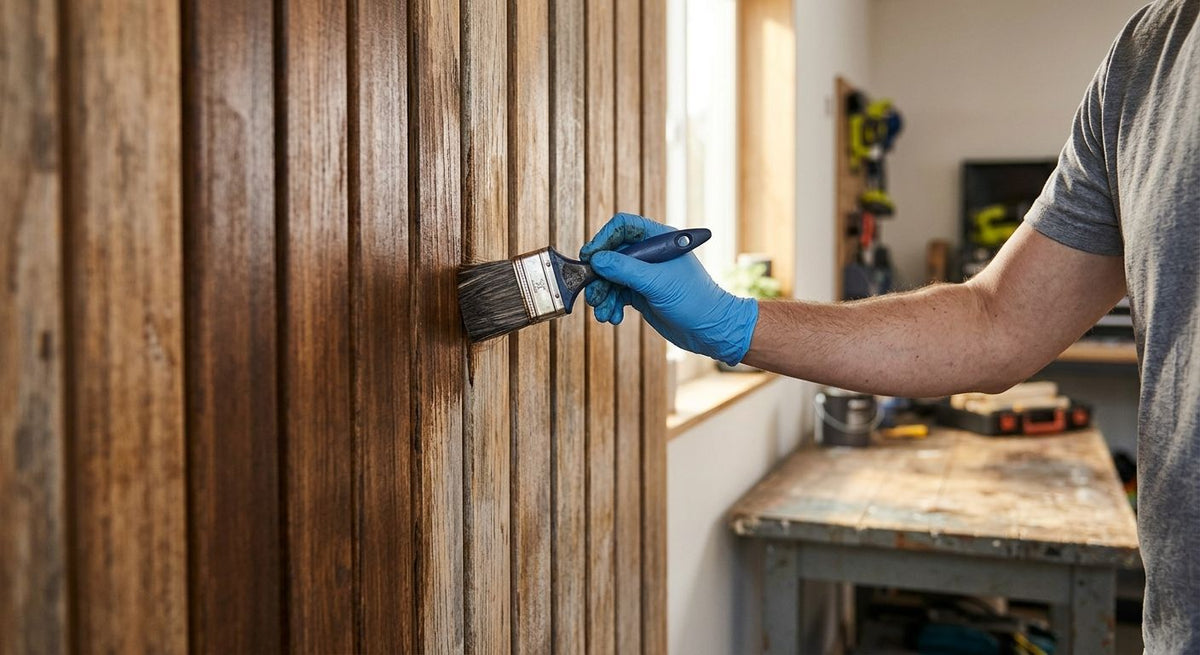
Yes, wood slat panels can be repainted after years of use if the surface is sound and the new coating is compatible; restaining requires an exposed, stainable wood surface or a finishing system approved for the existing coating. The main limitations are thin veneer, sealed finishes, and felt backing, so test the complete process before treating the wall.
- Can wood slat panels be repainted? Yes, after checking surface condition, coating compatibility, and manufacturer instructions.
- Restaining wood veneer requires more care than painting because removing the existing finish risks exposing the core.
- Keep paint and stain off acoustic felt, and leave the gaps between slats open.
- Akustiq USA acoustic wood panels suit decorative interior projects; confirm refinishing instructions for your exact panel before changing its finish.
Can wood slat panels be repainted or restained after years of use?
Repainting is an option for sound panels; restaining is a separate decision that depends on the face material and existing finish. Age alone does not tell you whether either process will work. Inspect the actual surface rather than assuming an older panel needs replacement.
Start with cleaning. Dust and surface residue can make the finish look dull without the wood itself needing treatment; use the guide to maintaining and cleaning walnut wood wall panels before deciding to refinish.
| Approach | Best for | Main benefit | Main limitation |
|---|---|---|---|
| Repainting | A solid-color change on sound, compatible surfaces | Covers the existing wood color | Hides natural color variation and requires reliable adhesion |
| Restaining | Keeping visible grain on stainable wood | Changes tone while retaining the wood appearance | Existing sealers and thin veneer restrict preparation |
| Section replacement | Swollen, loose, or badly damaged material | Removes damage instead of covering it | Requires matching and installation work |
For a 2026 refresh, choose the approach from the panel's condition and your desired appearance—not from a color sample alone.
Why this matters
A wood slat wall is not a flat cabinet door. You have narrow faces, side edges, recessed gaps, and sometimes exposed acoustic felt to protect. A coating that looks good on the front can still leave visible drips along the sides.
Preparation also has limits. Solid wood and wood veneer are not interchangeable sanding surfaces, and a wood-effect covering is not necessarily stainable wood. Identify the construction before you select abrasives, primer, or stain.
Repainting: best for changing to a solid color
Painting makes sense when you want to replace the wood's existing color with an opaque finish. The trade-off is permanent visual change: paint covers the color variation that makes wood veneer distinctive, even when some grain texture remains visible.
Do not apply wall paint directly over an unidentified finish. First identify the existing coating where possible, then choose a preparation and primer system whose technical instructions cover that surface. A successful adhesion test matters more than whether the paint is described as suitable for wood generally.
Pay attention to slat edges. If you paint only the broad faces, the original color can remain visible from the doorway or beside a window. Decide which exposed wood surfaces need coating before you begin, and protect the backing accordingly.
Choose repainting for a deliberate solid-color change, not as a way to conceal loose veneer or moisture damage. Repair or replace unsound material first.
Restaining: best for retaining visible wood grain
Restaining suits a project where you want to keep the wood character but change its tone. Conventional penetrating stain needs access to absorbent wood; an intact clear coating blocks that access. Applying stain over a sealed surface without an approved system does not reproduce staining bare wood.
Some finishing products are formulated to add color over compatible existing finishes. Follow the specific product instructions rather than treating these products as interchangeable with penetrating stain. Test the final appearance with any required topcoat included.
Thin veneer makes stripping back especially risky. Aggressive sanding can pass through the decorative wood face, while chemical stripping introduces compatibility concerns for the finish, adhesive, core, and backing. Do not begin either process without panel-specific guidance.
A lighter result is particularly demanding. Adding a darker stain does not remove the existing dark color, and removing that color can require preparation the panel cannot tolerate. If a light natural-wood appearance is essential, compare replacement with refinishing before touching the wall.
Why refinishing results vary
The same stain or paint does not produce the same result on every slat wall. These factors determine the preparation route and the limits of the project:
- Face material: Solid wood, real wood veneer, and decorative coverings require different treatment. A printed wood effect does not accept penetrating stain like wood.
- Existing finish: Oil, wax, clear coatings, and previous paint affect cleaning, adhesion, and compatibility. Identify the finish rather than guessing from its sheen.
- Surface condition: Dirt is a cleaning issue; lifted veneer, swelling, and loose slats are repair issues. A new coating does not restore structural integrity.
- Backing and gaps: Exposed felt needs protection from liquid coatings and sanding dust. Narrow gaps also make edge preparation harder.
- Color direction: An opaque color change differs from a transparent wood-tone change. Moving toward a lighter natural appearance demands a separate assessment.
- Installation method: Accessible fixings can make off-wall work practical. Adhesive-mounted panels require a removal assessment before you attempt dismantling.
For your 2026 project notes, record the panel identity and existing finish before recording a proposed color. Those details determine whether the coating system is suitable.
How to prepare and test an older slat wall
Use the following sequence before committing to a whole-wall finish. Work on a matching offcut when one exists, then confirm the result on a discreet part of the installed wall because an unused sample does not reproduce years of exposure.
- Identify the surface. Find the original order details and installation instructions. Confirm whether the face is solid wood, veneer, or a decorative covering, and ask about permitted refinishing methods.
- Inspect the wall. Look for lifting edges, loose components, swelling, and evidence of moisture. Resolve the cause of damage before choosing a finish.
- Clean and dry. Use the panel manufacturer's cleaning method and avoid saturating the wood or felt. Let the surface dry before further preparation.
- Test the finish. Apply the proposed cleaning, preparation, primer, color, and topcoat sequence to the test area. Follow each product's drying and curing instructions.
- Check the result. Inspect adhesion, color, sheen, and edge coverage after the specified cure. Reject a system that lifts, stays tacky, or produces an unacceptable appearance.
Keep the test area for comparison while you work. Write down the exact products and application method so you can repeat the successful process rather than relying on memory.
How to repaint without coating the felt
Treat the wood faces and acoustic backing as separate surfaces. Mask exposed backing and adjacent finishes using a method tested for clean removal. Do not assume tape will release safely from every felt or aged coating.
Choose an applicator that lets you control the narrow slat faces and edges. Avoid loading it heavily enough for paint to run into the recesses. Check from the side as you work; front-on viewing can hide an uncoated edge or a drip.
Follow the coating manufacturer's specified application conditions and recoat intervals. Do not substitute a universal coat count or drying time for the instructions on the selected system. Ventilate the work area and use the protection specified for sanding and coating work.
If the installation allows safe removal, finishing panels away from the wall can improve access. Assess removal first, though: pulling an adhesive-mounted panel off the wall can create damage that repainting would not have caused.
Will repainting change the acoustic performance?
A refinished panel does not automatically retain its original tested performance. Coating porous backing or bridging gaps changes parts of the acoustic assembly, so keep those areas free of paint and stain.
There is no universal performance figure for a repainted slat wall. The result depends on the panel construction, coating, mounting, and backing. Do not carry an original acoustic rating over to a modified assembly without supporting evidence.
For commercial work in 2026, confirm acoustic and fire-performance requirements with the project team before changing a specified finish. A decorative update must not be treated as proof that the altered assembly still meets the specification.
When should you replace panels instead of refinishing them?
Replace damaged material when the core has swollen, the veneer has separated, or the panel cannot hold a new finish reliably. Paint changes appearance; it does not reverse those defects. Address moisture or installation problems before fitting replacement sections.
Replacement also deserves consideration when your desired natural-wood color would require aggressive stripping. Preserving a thin veneer is more important than forcing a stain change. Compare a replacement sample beside the existing wall under the room's normal lighting.
Akustiq USA supplies acoustic wood panels for construction and interior applications. For an existing Akustiq USA acoustic wood panel installation, confirm the exact panel's finish and permitted treatment before choosing between refinishing and replacement.
Can I stain over the existing clear finish?
Conventional penetrating stain does not soak through an intact clear finish as it does into bare wood. Use an over-finish coloring product only when its instructions cover the identified coating and your test confirms adhesion and appearance.
Can I sand veneer slats back to bare wood?
Do not assume veneer slats have enough wood for sanding back to bare wood. Confirm the construction and permitted preparation first; removing the decorative face exposes the underlying core rather than a fresh wood surface.
Can I repaint just the faded section?
You can test a local repaint, but a small repair does not guarantee a visual match with the surrounding wall. Compare the cured color and sheen from normal viewing positions before expanding the repair to a full slat or panel section.
FAQ
Can wood slat panels be repainted after years of use?
Yes, sound wood slat panels can be repainted with a compatible coating system after proper preparation. Identify the face material and existing finish, protect the backing, and test the full process first.
Is painting better than restaining old wood slat panels?
Painting is better for an opaque color change; restaining is better for retaining visible grain on a suitable wood surface. Restaining becomes more demanding when an existing sealer must be removed from thin veneer.
Can I make dark wood slat panels look like light natural oak?
A light natural-oak appearance is not a straightforward stain-over-stain change. Compare replacement with refinishing if removing the dark finish would put the decorative wood face at risk.
Do I need primer before painting wood slat panels?
Use primer when the selected coating system requires it for the existing surface. Choose it for the identified finish and substrate, then test adhesion rather than assuming every wood primer is suitable.
Can I paint the acoustic felt between the slats?
Keep paint off acoustic felt when refinishing the wood slats. Coating porous backing changes the acoustic assembly and does not establish that its original tested performance remains valid.
How long should I wait between coats on wood slat panels?
Follow the selected coating manufacturer's recoat and curing instructions. Dry-to-touch does not establish that a finish is ready for another coat or an adhesion assessment.
Can Akustiq USA wood panels be restained?
Confirm restaining instructions for the exact Akustiq USA panel before proceeding. A wood appearance alone does not establish whether its existing finish can be removed safely or coated with stain.
One last thing
Judge the test from the doorway, not just at arm's length. Slat edges and recessed shadows can make a color look different across the wall, even when the face looks right close up. Check your 2026 finish test in daylight and with the room lighting switched on before committing.
Save a labeled offcut or finish record from your 2026 refresh. A note of the coating system and preparation method makes the next touch-up a repeatable task instead of another compatibility experiment.
Share:
How much does exterior wood cladding cost per square foot in 2026?
Can acoustic panels be mixed with different wood finishes in one room?