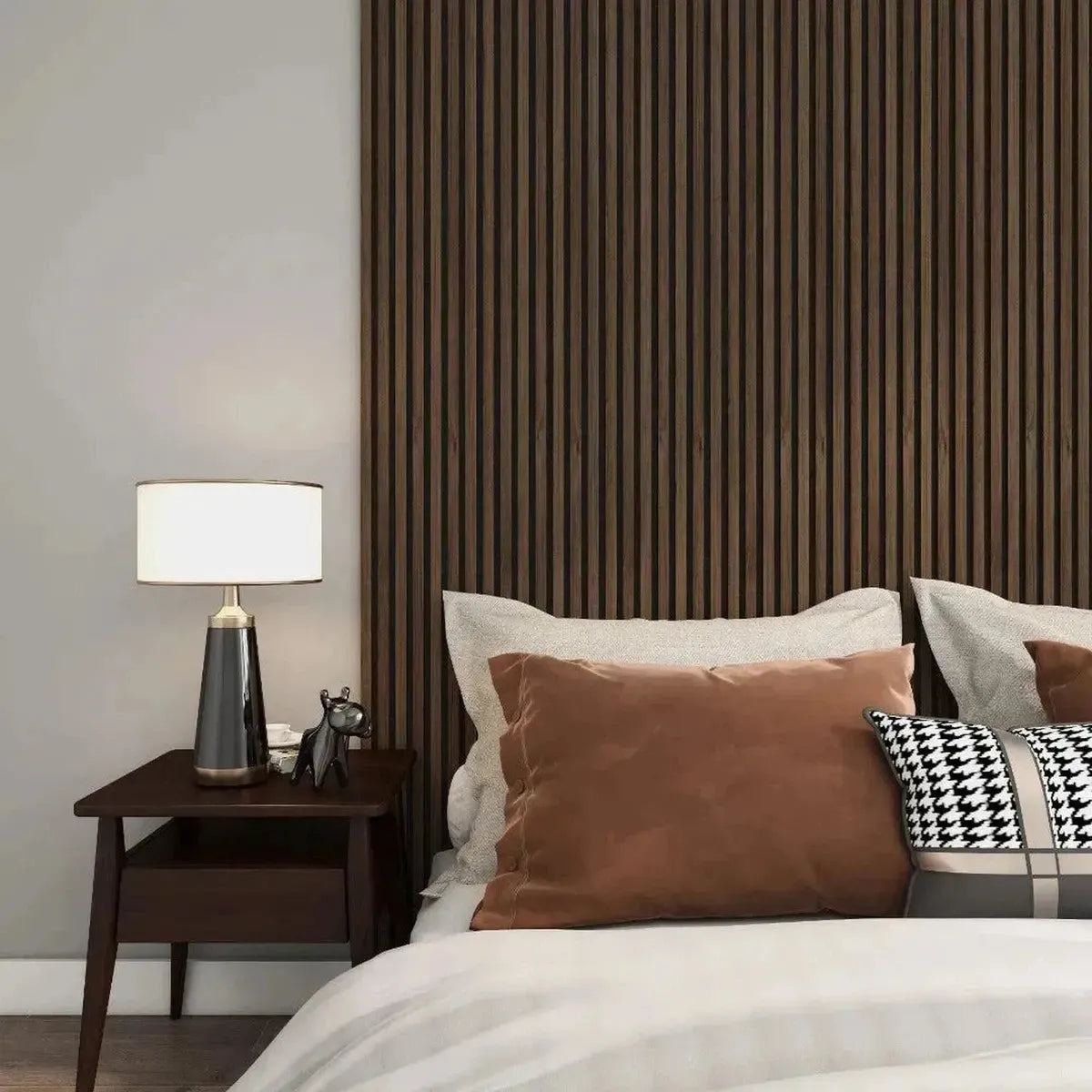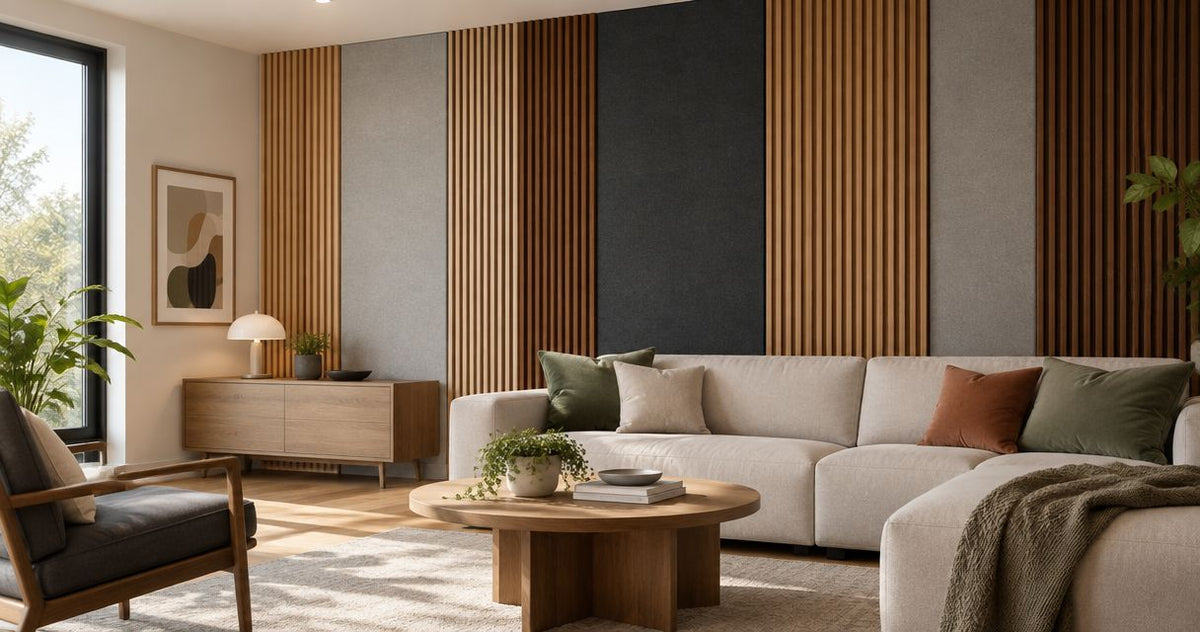
Yes, you can mix wood finishes on acoustic panels in one room: choose a dominant finish, give the contrasting finish a clear location, and check both against your flooring and furniture. The main caveat is that matching color names do not establish matching undertones, panel dimensions, or acoustic performance; assess those separately before you install.
- Can you mix wood finishes on acoustic panels? Yes—use a dominant finish and deliberate contrast.
- Keep wood undertones, slat direction, and felt color coordinated rather than trying to match every surface.
- Akustiq USA acoustic panels offer finish choices; compare physical samples before combining them.
- Wood veneer color does not establish sound absorption; check the complete panel and installation specifications.
Can acoustic panels be mixed with different wood finishes in one room?
Yes. Different wood finishes work together when you control what changes and what stays consistent. Start with the wood surface you are keeping—usually flooring, cabinetry, or a large piece of furniture—and choose panel finishes around it.
For a broader room scheme, see the guide to mixing wood panel finishes in a single room. For this 2026 project, use the following comparison to decide how much contrast you actually want.
| Layout | Best for | Main advantage | Main drawback |
|---|---|---|---|
| One panel finish with different wood furniture | Rooms with an existing mixed-wood palette | Keeps the wall visually simple | Does not create a two-tone panel feature |
| Different finishes on separate walls | Defining distinct areas in an open room | Gives each finish a clear boundary | Both walls still need to relate to the floor |
| A contrasting section within one wall | Highlighting a desk, bed, or seating area | Creates a deliberate focal point | Requires careful joint and edge planning |
| Alternating finishes across one wall | A deliberately patterned feature | Makes the finish contrast part of the design | Adds visual activity beside furniture and artwork |
For a first mixed-finish project, put the contrast on a separate wall or in one clearly bounded section. You can assess that arrangement without committing to a repeating pattern across the entire room.
Why this matters
Your acoustic panels sit beside surfaces you already own. An exact match to the floor is not necessary, but an almost-match that you dislike becomes difficult to ignore once it covers a wall.
Treat the visual scheme and acoustic specification as separate decisions. A room can have coordinated wood finishes and still need a different treatment layout to address echoes; equally, an acoustic treatment can function without every veneer sharing the same color.
For your 2026 room plan, write down the visual goal before choosing finishes. Decide whether the panel wall should blend into the room, contrast with the floor, or mark out a particular activity area.
How to plan a mixed-finish acoustic panel layout
Start with the fixed wood surfaces
Look at the floor, doors, built-ins, and cabinetry before considering movable accessories. Choose the surface that has the strongest presence in the room as your reference.
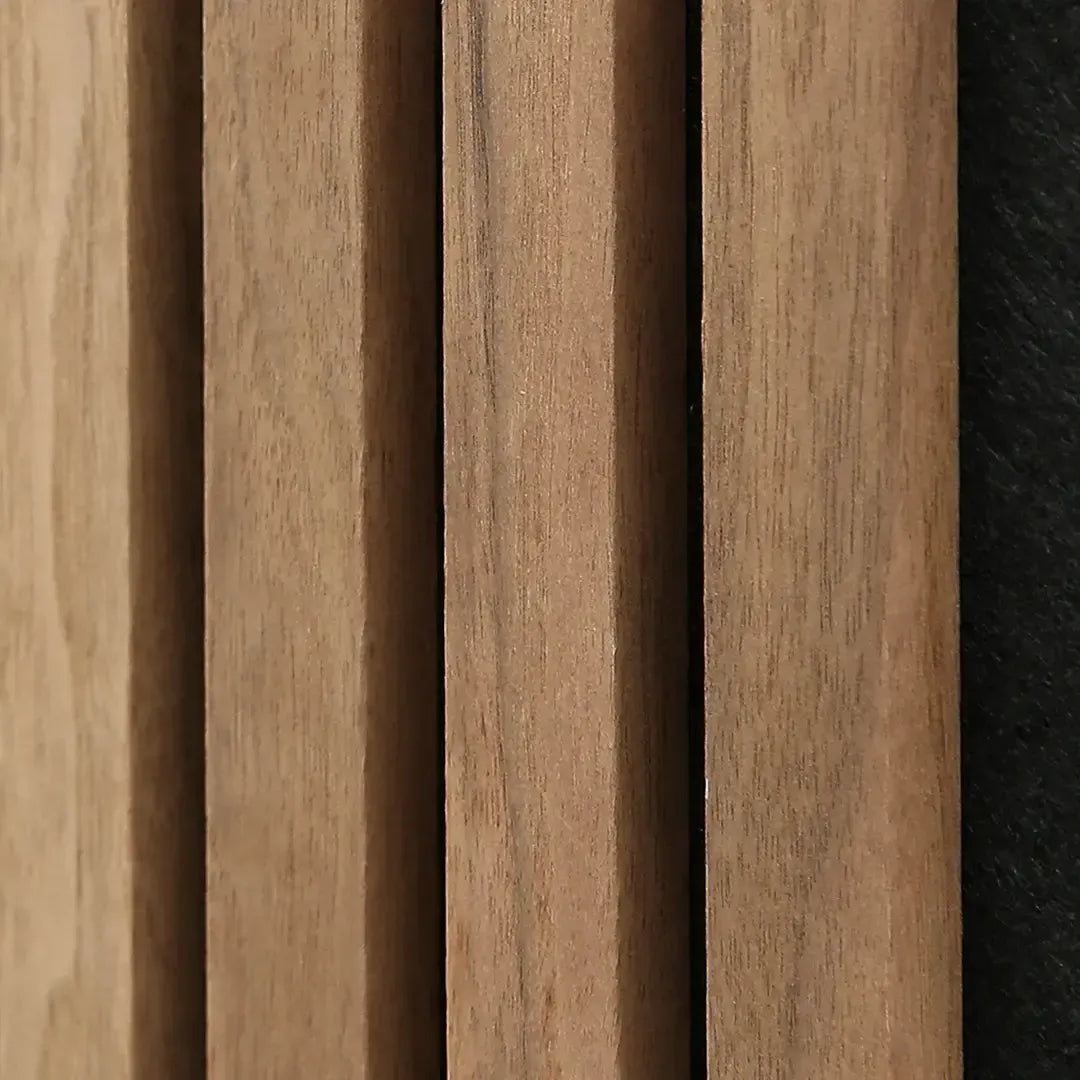
Describe what you see rather than relying on the species name. Is the wood visibly yellow, reddish, brown, or gray? Is the grain quiet or prominent, and does the surface look matte or reflective?
You do not need every surface to answer those questions identically. Use the answers to identify a relationship you like, rather than ordering something called “oak” and assuming it will match existing oak flooring.
Give each finish a job
Choose where the dominant finish begins and ends. Then assign the contrasting finish to a specific feature, such as a recessed wall, desk backdrop, or section behind a bed.
Make the boundary part of the design. A corner, opening, or furniture edge gives you a place to stop; a finish change with no relationship to the room needs more careful visual testing.
If you are considering alternating finishes, lay out the complete sequence before installation. Include the final section at each end so you can judge the whole pattern, not just an attractive central detail.
Compare samples in position
Hold the samples upright against the intended wall and place your flooring or furniture reference beside them. Compare the finishes in daylight and under the lights you actually use at night.
Look from the doorway as well as from the nearest seat. A close-up reveals grain and surface detail; the wider view shows whether the contrasting section has become more dominant than you intended.
Confirm the physical details
Before joining different finishes on one wall, compare the published panel dimensions, overall thickness, slat layout, backing, and installation instructions. Matching finish families do not prove that separate products meet neatly at their edges.
Check the intended edge treatment too. Do not assume that an exterior trim, a decorative panel accessory, and an acoustic slat panel are interchangeable because their color names sound similar.
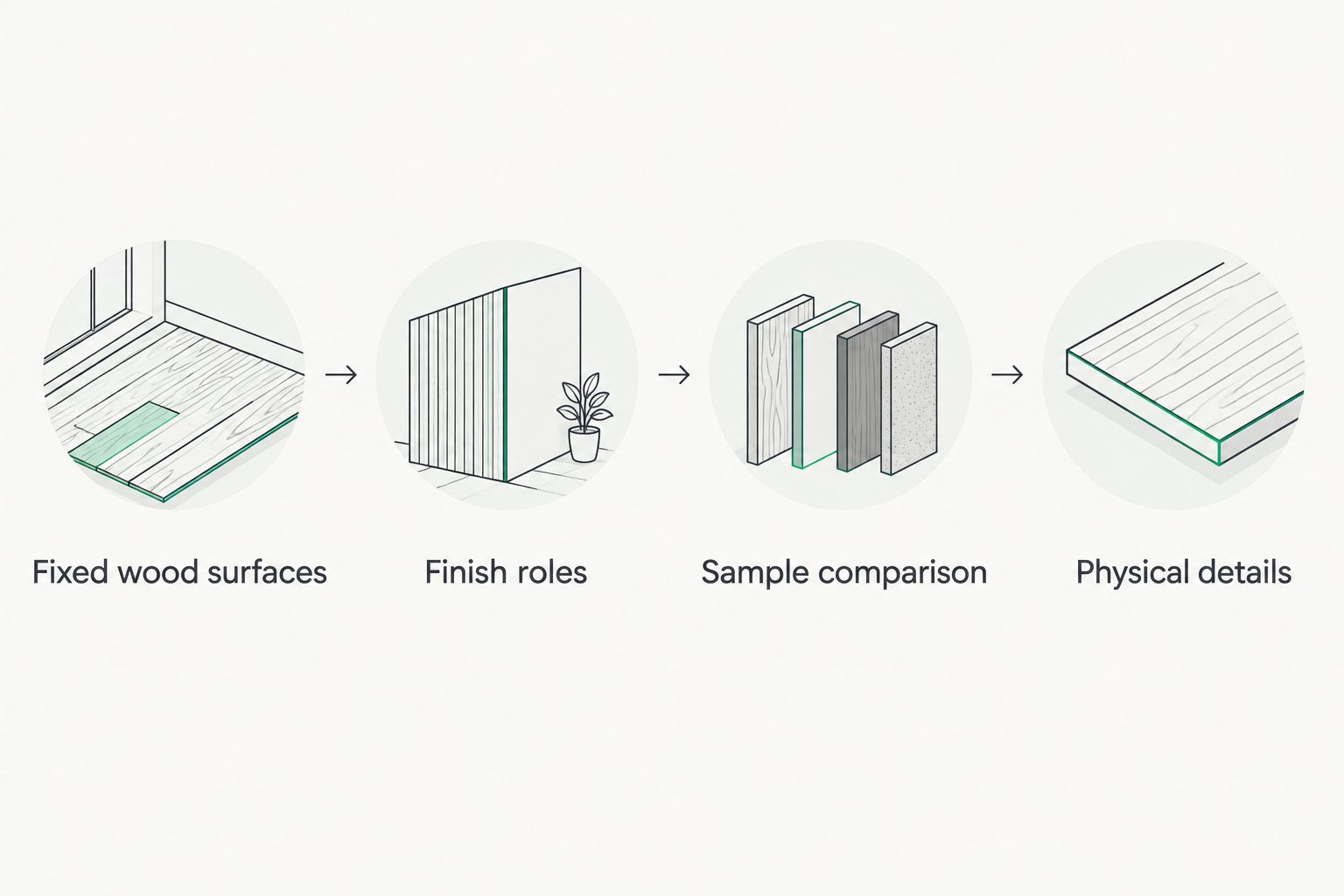
Keep a brief finish schedule with your 2026 installation plan. Record the selected finish for each wall section, the backing choice, and the edge treatment so the intended arrangement survives the ordering and installation stages.
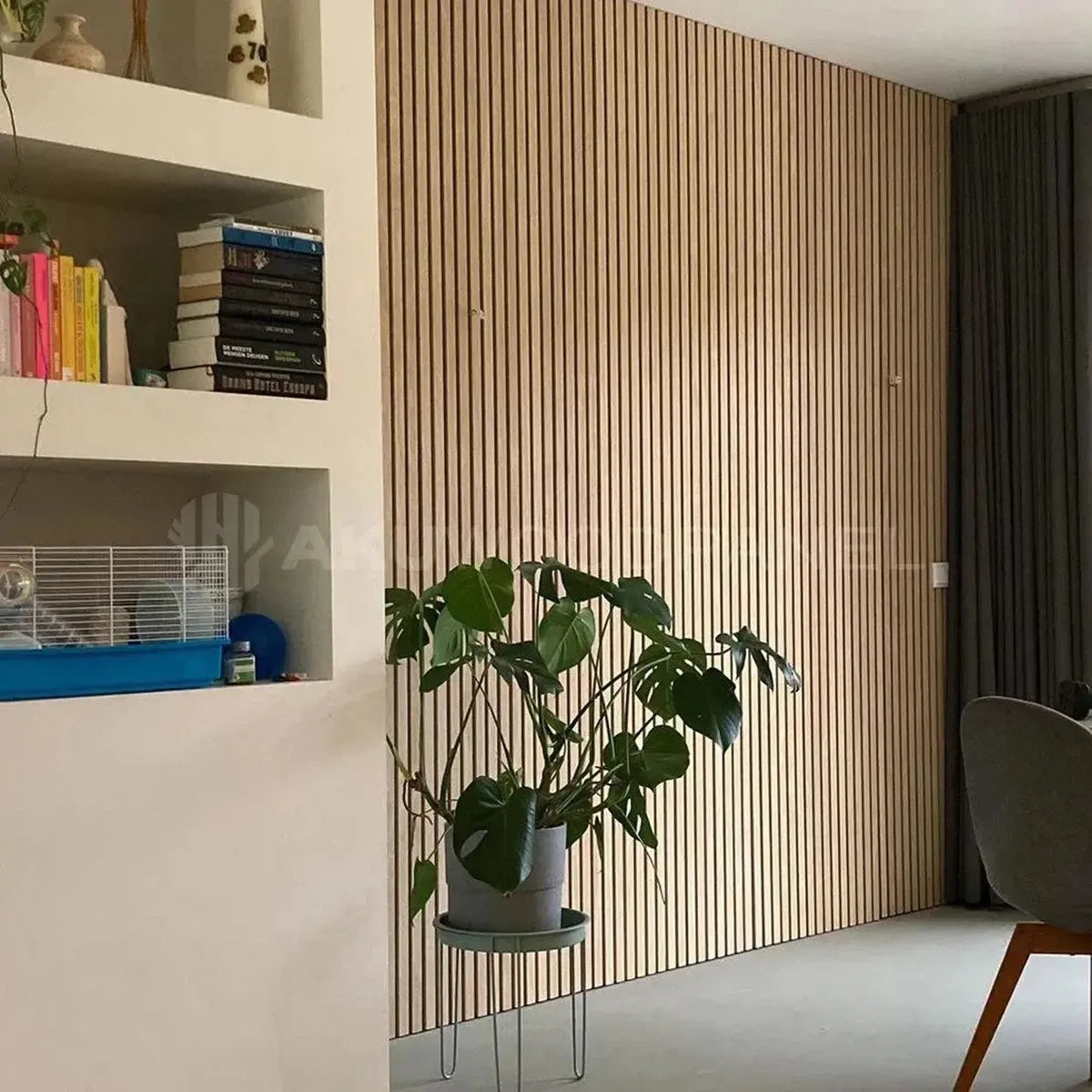
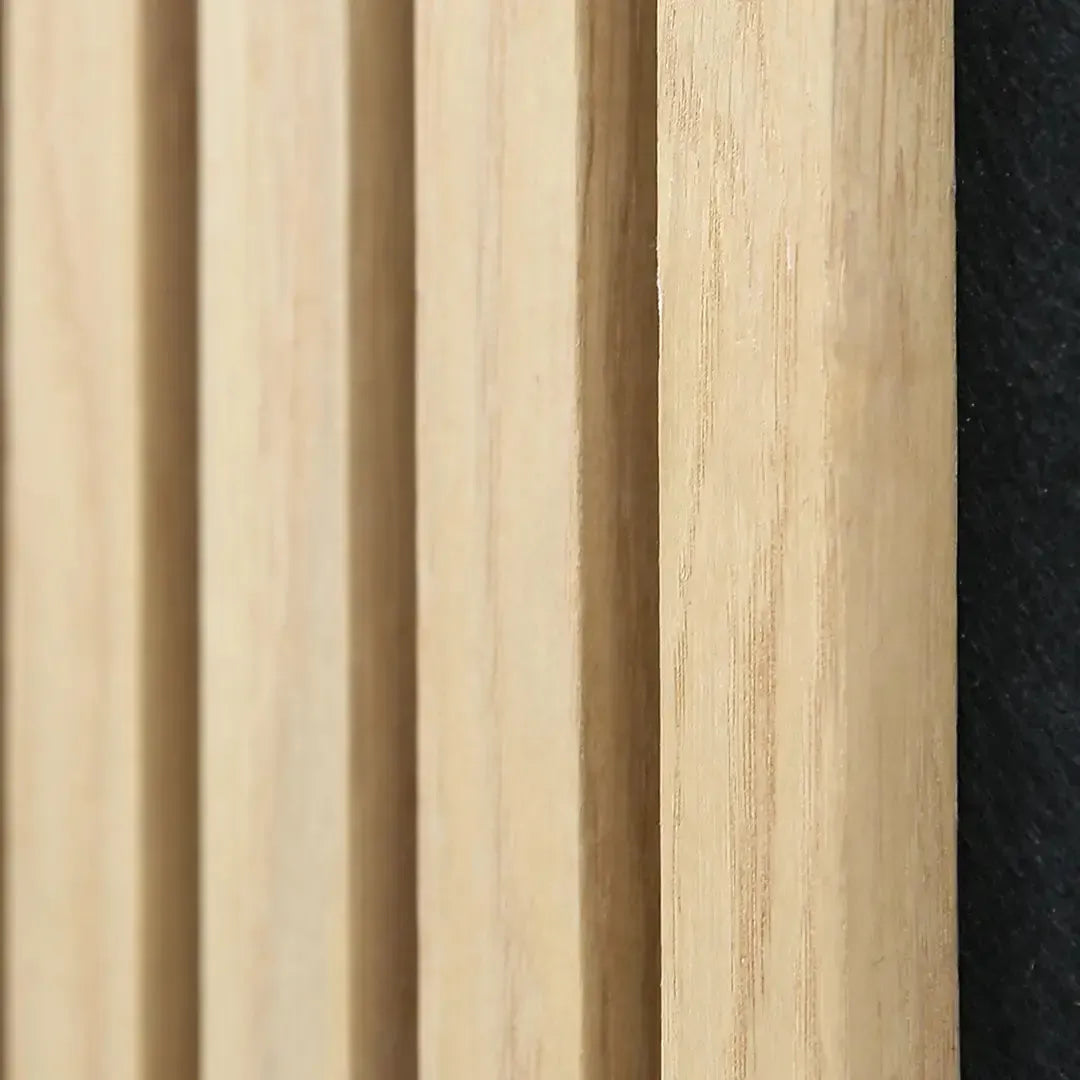
Natural Oak with Gray Felt: 3-sided wood veneer
Best for: a scheme that uses natural oak alongside a contrasting finish while retaining gray felt as a shared detail. The listed Natural Oak with Gray Felt acoustic slat panel has 3-sided wood veneer.
Its practical advantage in a mixed-finish scheme is the opportunity to repeat the backing color while changing the wood finish. The limitation is that “Natural Oak” does not establish an exact match to your floor, doors, or furniture; judge the actual sample beside them.
Do not choose this option solely because an existing surface is also described as oak. Compare its visible color and grain in the room, then decide whether you prefer a close relationship or a clear contrast.
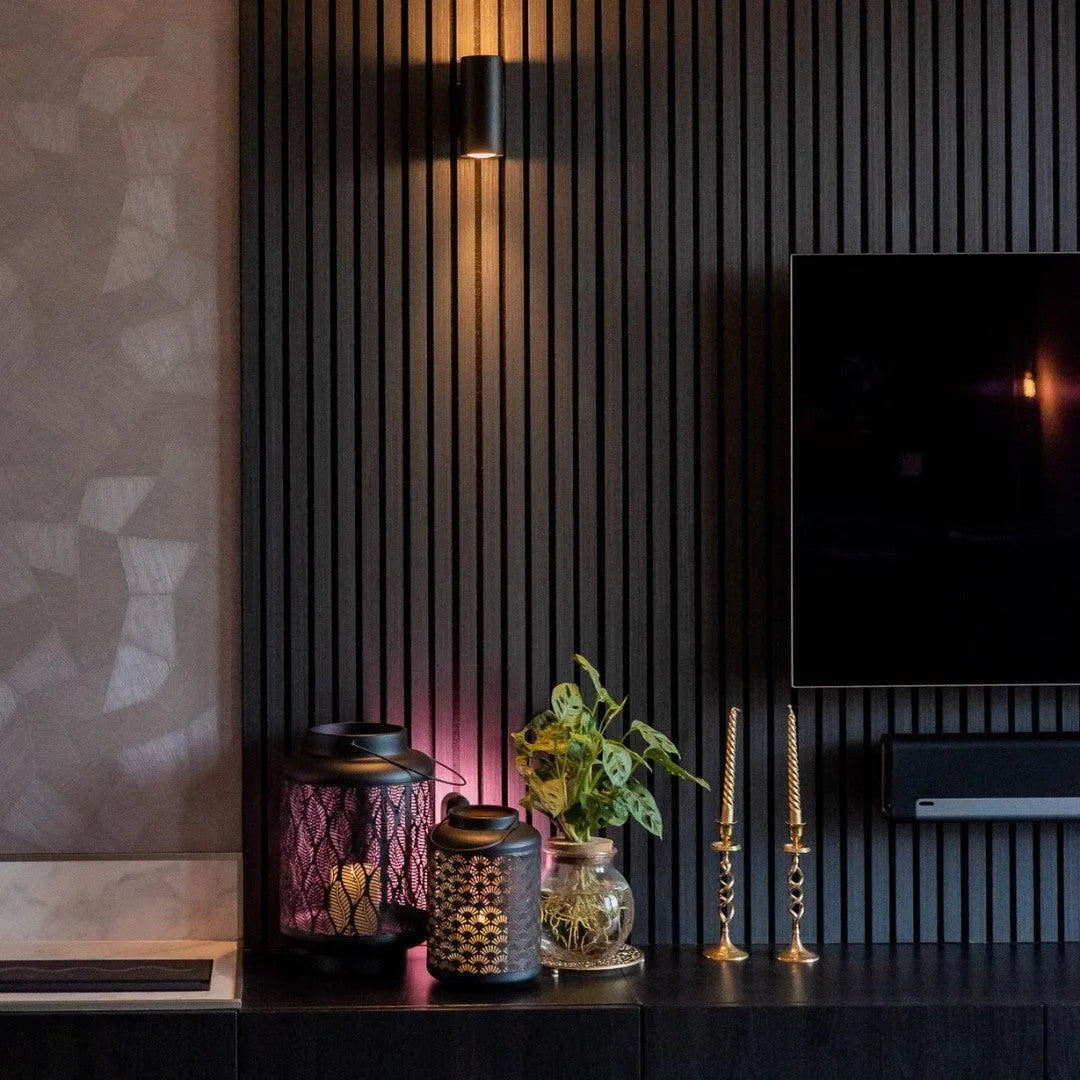
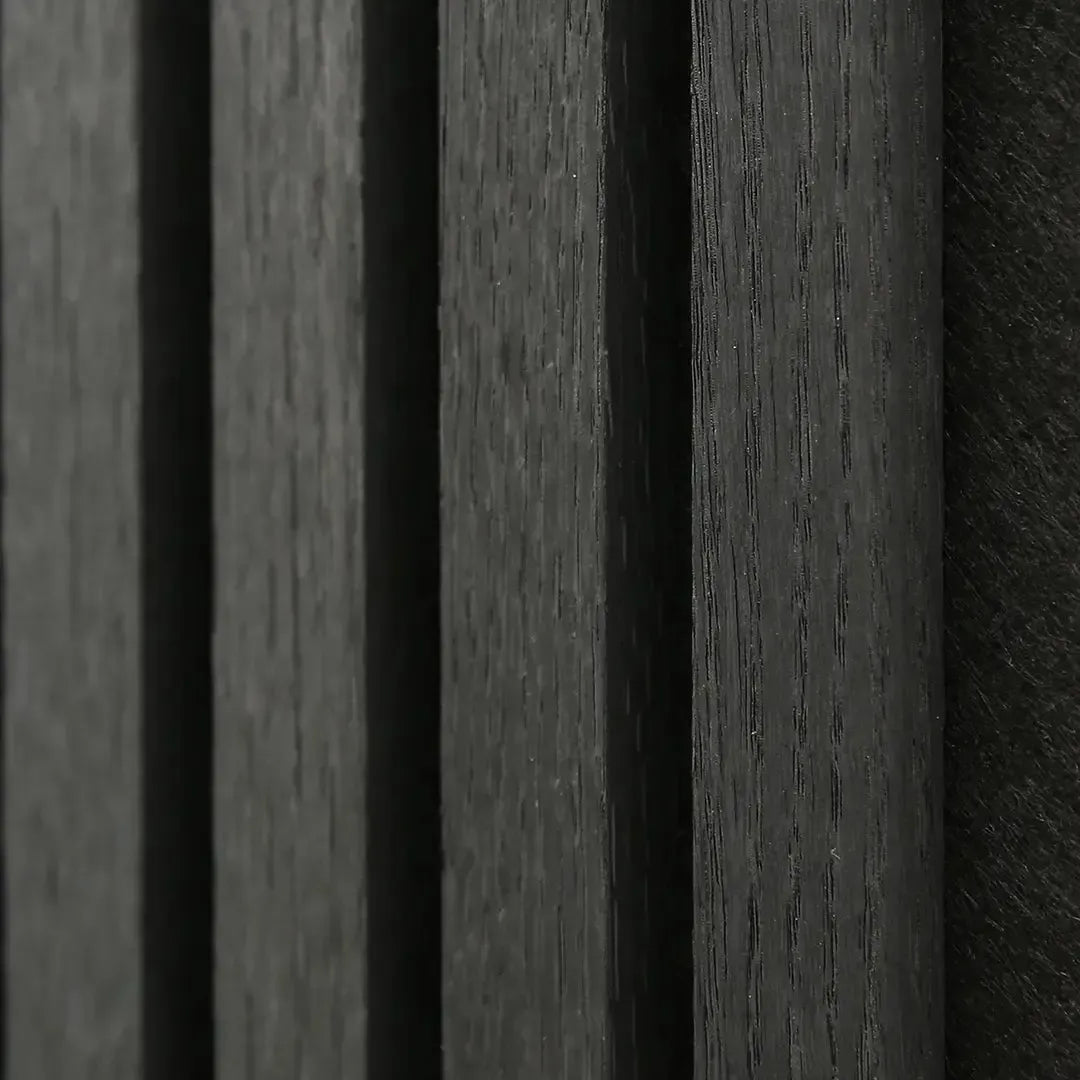
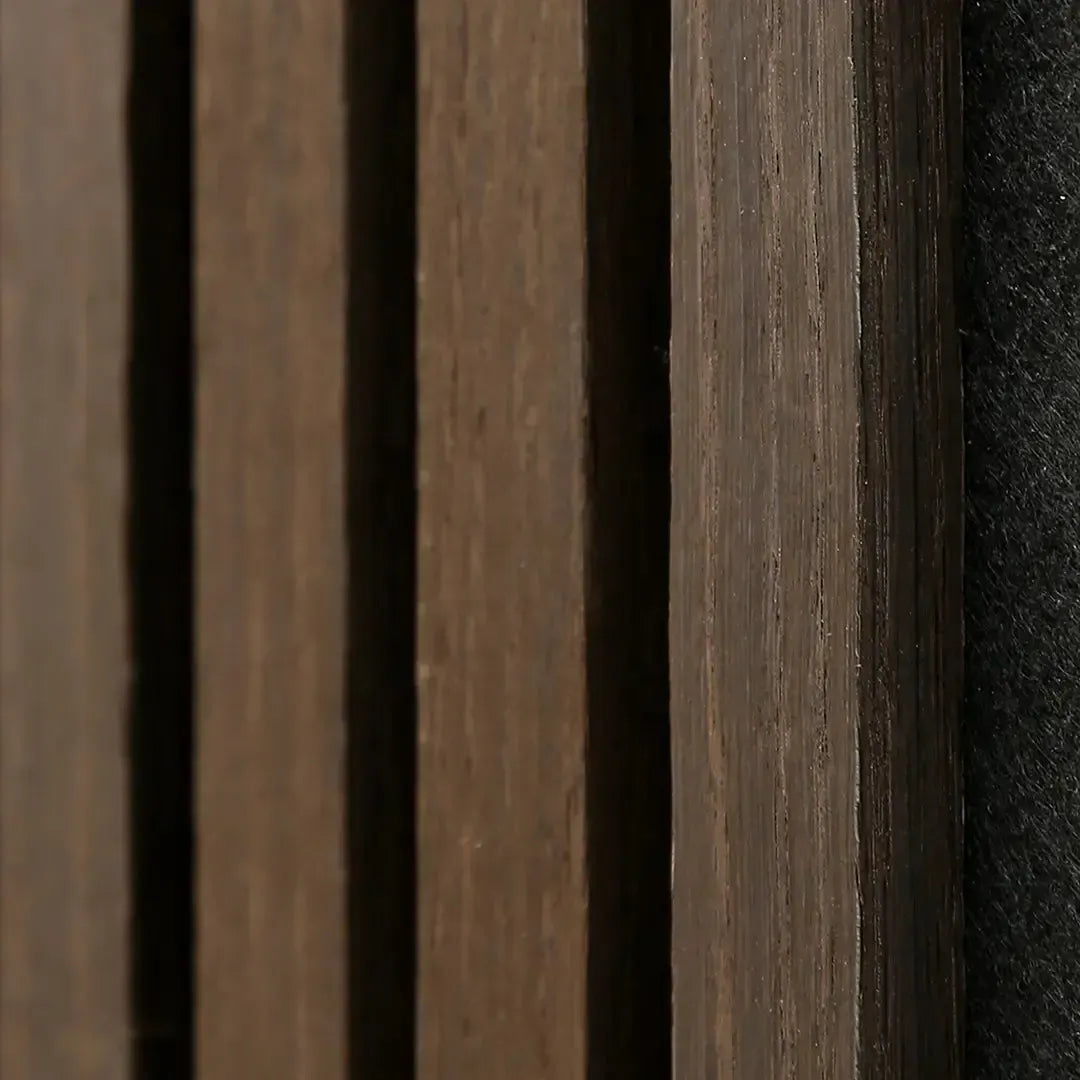
Smoked Oak with Gray Felt: 3-sided wood veneer
Best for: a scheme that introduces a smoked oak finish while keeping gray felt consistent. The listed Smoked Oak with Gray Felt acoustic slat panel also has 3-sided wood veneer.
The shared backing gives you a detail to coordinate with the natural oak option. The trade-off is that a matching veneer description and felt color do not establish identical dimensions, compatible joints, or equal acoustic results.
Use the following comparison as a finish-selection aid, not as a technical compatibility statement. Confirm the complete specifications for your 2026 order before combining the panels on a continuous wall.
| Akustiq USA acoustic panel option | Best for | Confirmed detail | What to check before combining |
|---|---|---|---|
| Acoustic Slat Wall Panel Natural Oak with Gray Felt | A natural oak section with a shared gray backing | 3-sided wood veneer; gray felt | Actual undertone beside your existing wood |
| Acoustic Slat Wall Panel Smoked Oak with Gray Felt | A contrasting smoked oak section with a shared gray backing | 3-sided wood veneer; gray felt | Dimensions, slat layout, and the intended joint |
Akustiq USA is best for homeowners and businesses seeking decorative acoustic wood panels. For this particular pairing, the reason to compare the options is their different named wood finishes and shared gray felt—not an assumed difference in sound absorption.


Why mixed wood finishes look different from room to room
A pairing you like in a photograph still needs an in-room check. Use these factors to assess your own combination rather than treating a finish name as a complete color description.
- Existing wood: Compare the panels with flooring, furniture, doors, and cabinetry together. Do not assess each pairing in isolation.
- Wood undertone: Look for the underlying yellow, red, brown, or gray cast. Decide whether the relationship feels coordinated or deliberately contrasting.
- Lighting: View the samples in daylight and under your usual evening lighting. Make the decision in the conditions you live with.
- Backing color: Include the visible felt in your comparison. It is part of the wall's appearance, not just a detail behind the slats.
- Grain and direction: Compare the wood pattern and slat orientation alongside the color. Avoid changing every visual element unintentionally.
- Placement: Judge how much of each finish you see from the main doorway and seating positions. A narrow section and a full wall have different visual roles.
Keep a consistent detail wherever you introduce contrast. That detail can be the backing, slat direction, or a repeated relationship to furniture; it does not have to be an exact wood-color match.
Do acoustic panels have to match the wood floor?
Acoustic panels do not have to match the wood floor. Choose either a relationship you can see clearly in samples or a contrast you deliberately want, rather than pursuing an exact match from product photographs.
Start your 2026 selection with the floor because it is already a large, fixed surface. If the room contains several furniture finishes, a single panel finish is a simpler starting point than adding another patterned combination.
Can I use different wood finishes on the same acoustic panel wall?
You can use different wood finishes on the same acoustic panel wall, provided you confirm the physical fit and plan the transitions. Keep the slat direction and edge treatment consistent unless changing them is an intentional part of the layout.
A contrasting central section gives the wall a defined feature, but it also creates joints that need resolving. Sketch the panel boundaries around outlets, furniture, and wall ends before committing to that arrangement.
Will mixing finishes change how much sound the panels absorb?
Mixing wood finish names does not tell you how much sound the panels absorb. Sound absorption depends on the panel construction and installation, so compare the relevant test information rather than using veneer color as a performance guide.
Do not substitute a decorative wood panel for a specified acoustic assembly on appearance alone. Also distinguish room sound absorption from sound isolation: reducing reflections within a room is not the same as preventing sound from passing into another room.
FAQ
Can you mix wood finishes on acoustic panels without making the room look busy?
Yes—give one finish the dominant role and place the contrast in a clearly defined section. Keep another visible detail, such as felt color or slat direction, consistent.
Should my acoustic panels match my furniture or my flooring?
Start with the large fixed surfaces, including flooring and cabinetry, then assess the furniture alongside them. You do not need an exact match, but you should like the complete combination in the room.
Can I put natural oak and smoked oak acoustic panels together?
Yes, natural oak and smoked oak are finishes you can consider together. Check physical samples, dimensions, backing, and slat layout before combining specific panels on one wall.
Do different felt colors matter when mixing wood panels?
Yes, visible felt contributes to the finished wall's appearance. Compare the backing alongside the wood veneer so you know whether you are changing one visual element or several.
Can I stain acoustic panels to match an existing table?
Do not assume that an acoustic panel accepts stain or another coating. Check the manufacturer's instructions for the exact product before altering its veneer, coating, or backing.
Is a darker wood finish better for sound absorption?
A darker wood finish is not evidence of better sound absorption. Compare the complete panel construction, tested assembly, and installation requirements instead.
What should I check before choosing mixed finishes in 2026?
Compare physical samples against your existing wood in daylight and evening lighting, then confirm technical compatibility. For Akustiq USA acoustic panels, check the specifications of each selected product rather than assuming all finishes share every detail.
One last thing
Check the finish change from the doorway before approving the close-up. Stand where you first see the room and ask whether the contrasting panel section relates to the architecture or simply interrupts the wall.
If the layout feels unsettled, simplify the boundary before replacing the entire palette. Moving the finish change to a corner or aligning it with a furniture grouping gives you a more deliberate arrangement to assess.


 Better performance and aesthetic appeal
 In Stock