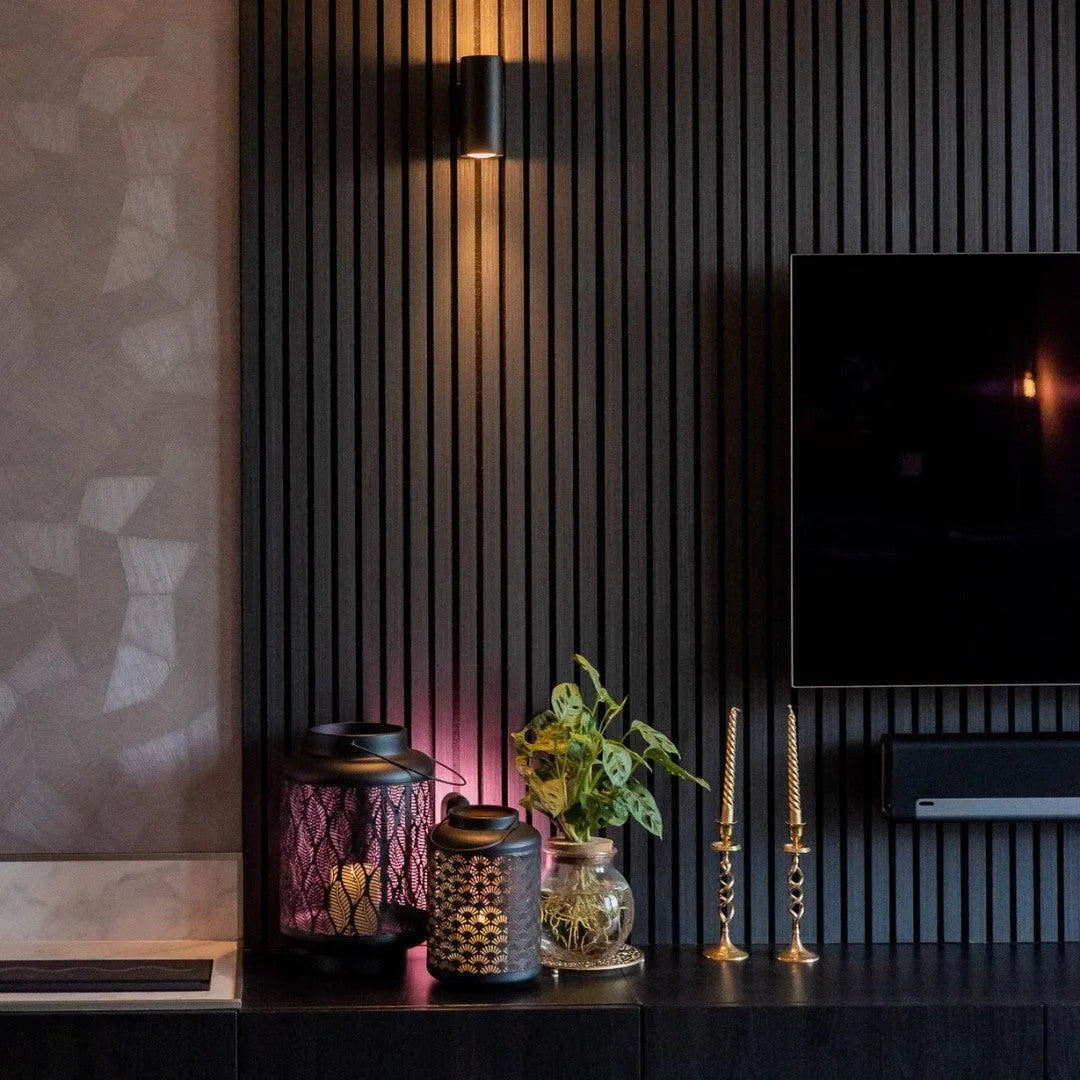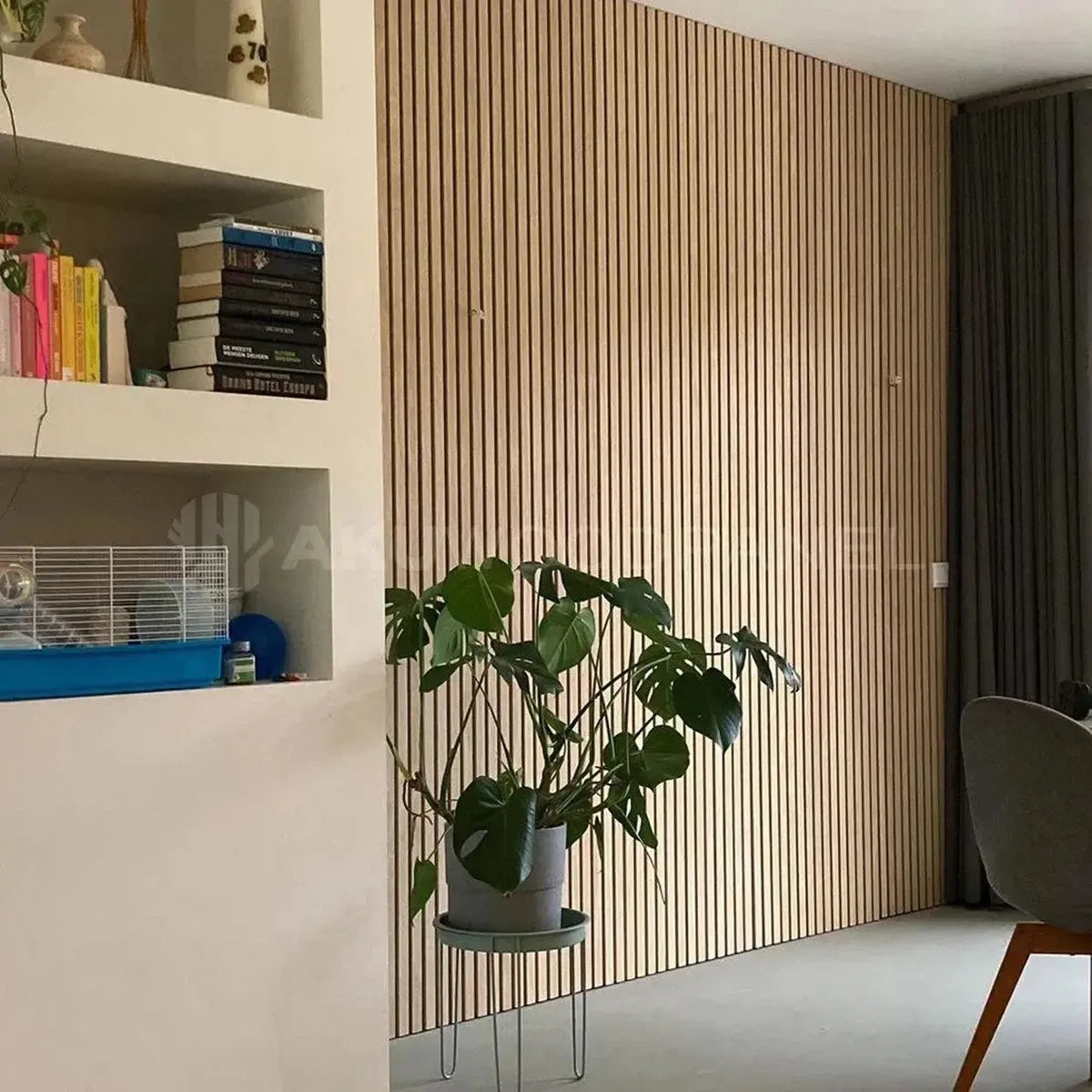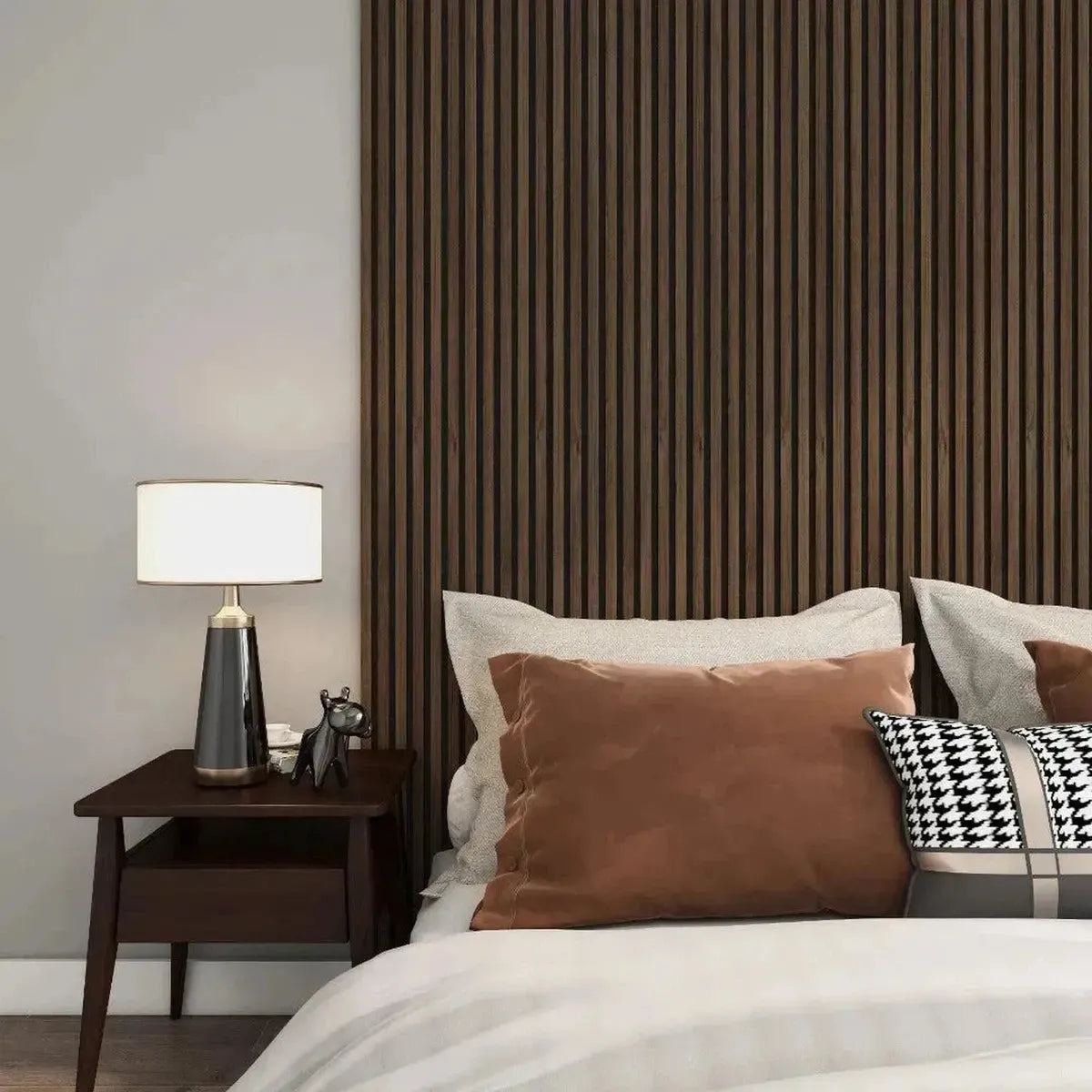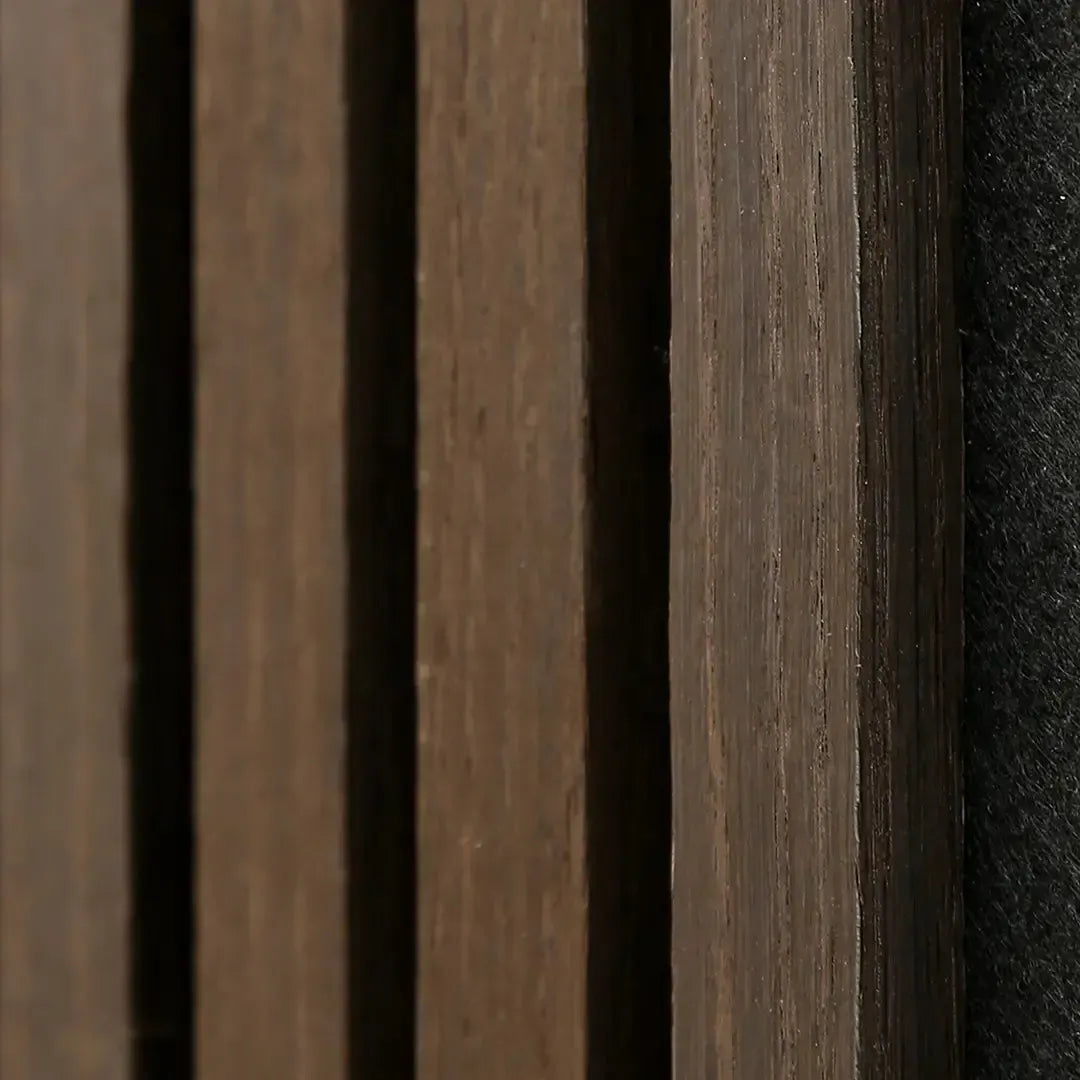
Yes, acoustic wood panels reduce reflected sound and reverberation when their construction includes effective sound-absorbing material; they do more than add texture. They are not a substitute for soundproofing walls, doors, or ceilings, so expect less echo inside your room—not an automatic solution to traffic, neighboring voices, or footsteps.
- Do acoustic wood panels actually reduce noise? Yes: sound-absorbing construction reduces echo, not necessarily noise traveling through walls.
- Akustiq USA supplies acoustic wood panels; choose by construction and installation evidence, not appearance alone.
- NRC describes sound absorption. STC describes sound transmission through a tested building assembly.
- Best for echo: tested absorptive panels. Best for neighboring noise: a sound-isolation assessment.
Why this matters
A room that sounds harsh needs a different fix from a room where you hear the neighbors. Confuse those problems and you can finish a beautiful feature wall without solving the noise that prompted the project.
When comparing an Acoustic Slat Wall Panel in Natural Oak, separate the finish decision from the acoustic decision. The finish determines how the wall looks; the panel construction and installation determine its sound-absorbing behavior. For a 2026 renovation, write down the sound problem before choosing the wood tone.
Can acoustic wood panels actually reduce noise or just add texture?
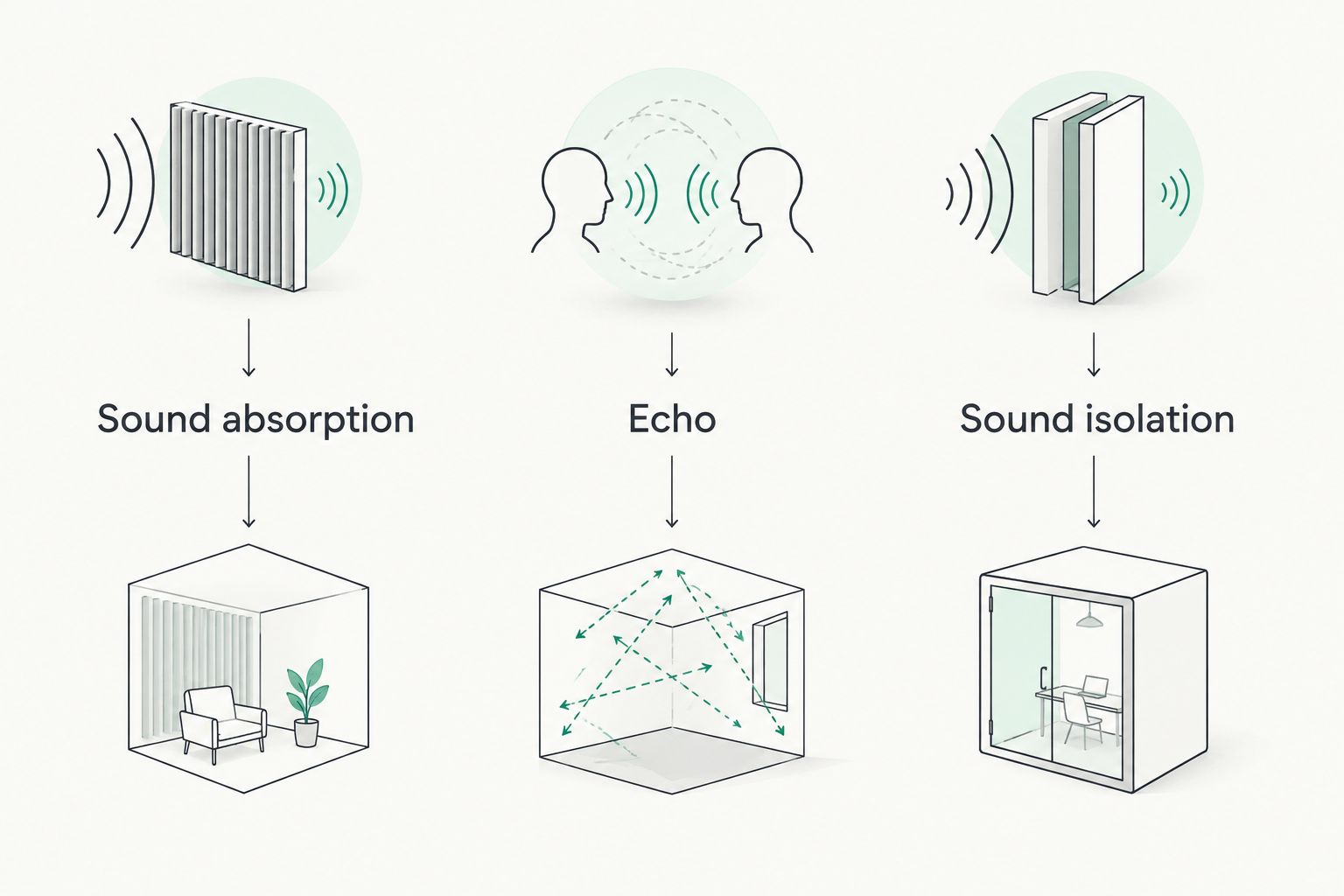
Acoustic wood panels reduce echo when the complete panel system absorbs sound; wood texture alone does not establish acoustic performance. The useful distinction is between absorption, which controls reflected sound within a room, and isolation, which limits sound traveling between spaces.
| Approach | Best for | Main benefit | Main limitation |
|---|---|---|---|
| Sound absorption | Echo and lingering speech inside a room | Reduces sound energy reflected back into the room | Does not establish privacy through a shared wall |
| Sound isolation | Voices, music, or traffic entering another space | Limits transmission through a properly designed building assembly | Requires attention to walls, openings, and other sound paths |
| Decorative texture | Changing the appearance of a wall | Adds visual depth and pattern | Appearance alone proves neither absorption nor isolation |
A hard wood face reflects sound. In an absorptive slat system, openings between slats allow sound to reach absorbent material behind them. That material dissipates some sound energy as heat through friction and related losses; the complete construction matters more than the visible wood species.
Texture can also change how sound reflects. But scattering sound and absorbing it are different effects, and a patterned wall is not automatically a tested acoustic diffuser.
What improvement should you listen for?
Listen for a shorter sound tail after speech or a handclap, rather than expecting every sound to become quiet. In a reverberant room, reflected speech overlaps subsequent words, making conversation harder to follow.
Effective absorption reduces that buildup. It does not turn down the original voice, television, or appliance at the source, although reducing the reflected contribution can lower the overall sound level in a reverberant space.
Felt-backed slat panels: evaluate the complete construction
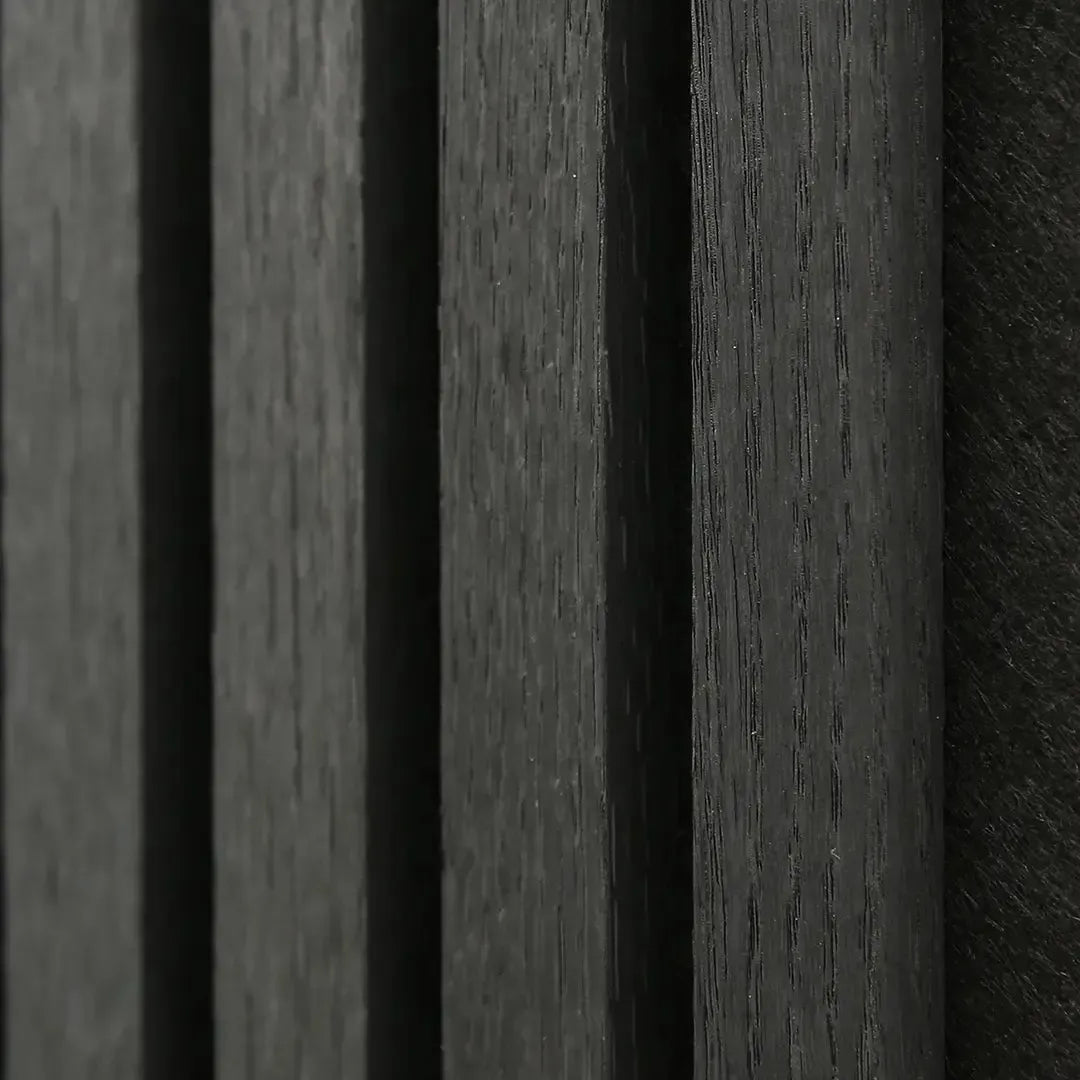
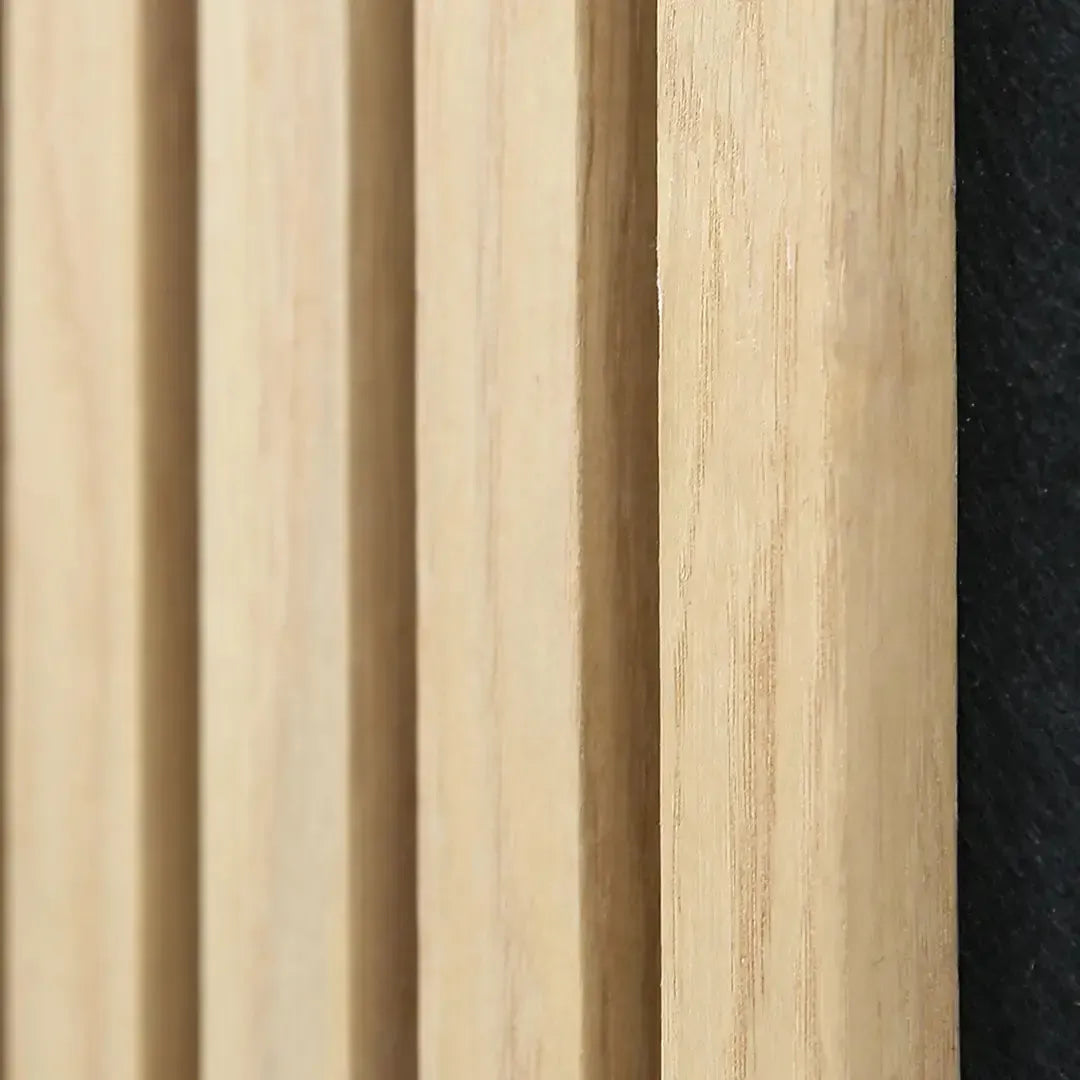
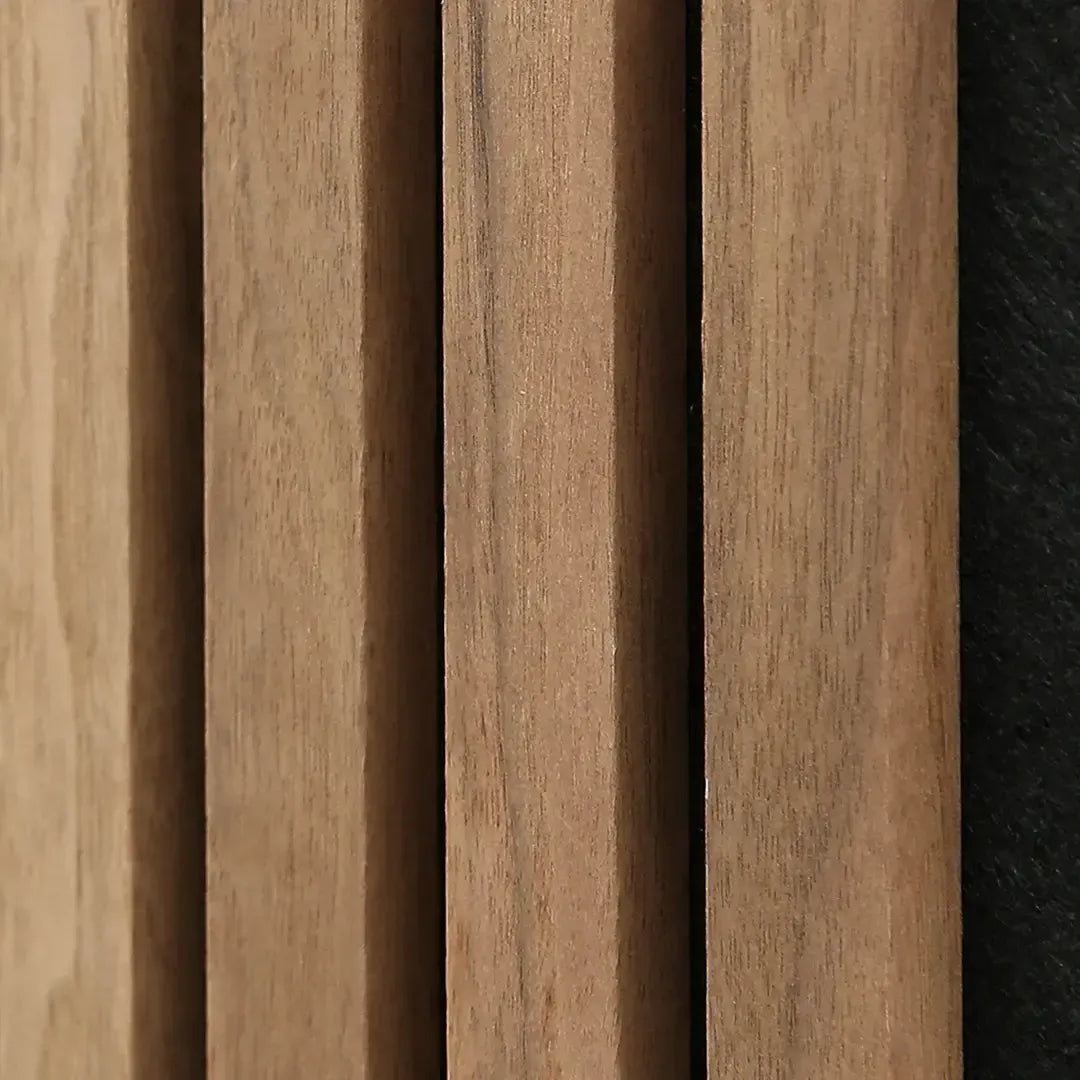
Best for: buyers who want a wood feature wall with sound absorption, supported by a relevant test report. Assess the slats, exposed absorbent backing, and mounting arrangement as one system. A backing color or a wood finish does not establish a performance rating.
A porous backing gives sound a route into absorbent material, but its thickness and acoustic properties affect the result. Thin absorptive systems generally have greater limitations at low frequencies than deeper treatments designed for that purpose.
The benefit is combining a visible wood surface with an absorptive construction. The limitation is that the decorative face, backing, and installation constrain the performance; you cannot infer the result from a photograph.
Akustiq USA is best for buyers seeking acoustic wood panels, not a standalone soundproofing system. Match any selected panel to your actual goal and check its installation documentation before specifying the wall.
Decorative wood panels: choose them for appearance first
Best for: a feature wall where texture is the primary goal. A solid decorative panel can change a room's appearance without providing meaningful porous absorption. Raised profiles do not, by themselves, prove that the wall will reduce reverberation.
The advantage is visual choice. The limitation is that you still need acoustic evidence if echo control is part of the brief.
For a 2026 project, keep separate acceptance criteria: the finish must suit the room, and the acoustic construction must address the sound problem. A product that meets the first requirement does not automatically meet the second.
Why acoustic wood panel results vary
Your room and installation affect the result, even when the panel itself has documented absorption performance. Check these factors before deciding how much wall to cover:
- Backing construction: The absorbent material, its thickness, and how much is exposed affect absorption.
- Mounting arrangement: Direct mounting, an air cavity, and additional absorbent material are different test configurations. Use the result that matches your installation.
- Coverage: A small decorative patch treats less surface area than a larger installation of the same system. There is no universal panel count for every room.
- Room surfaces and volume: Glass, concrete, hard flooring, furnishings, and room size affect the sound field and reverberation.
- Sound frequency: A system that controls speech reflections does not automatically control deep bass or structure-borne vibration.
- Placement: Treatment must intercept useful reflection paths. A convenient empty wall is not necessarily the only surface that needs attention.
Keep the comparison fair. If a published result requires a cavity and extra insulation, do not apply that result to the panel fixed directly against drywall.
Which acoustic ratings should you check in 2026?
Check absorption data for echo control and assembly transmission data for sound isolation. The letters on the report matter because they answer different questions.
NRC: useful for comparing sound absorption
Noise Reduction Coefficient, or NRC, is a single-number summary of absorption measured under ASTM C423. Its calculation uses absorption coefficients at 250 Hz, 500 Hz, 1,000 Hz, and 2,000 Hz. Those frequencies help summarize performance, but the average does not describe every frequency equally.
An NRC value is not a promise that your room becomes a corresponding percentage quieter. Nor does it tell you how much neighboring speech a wall blocks.
When reviewing a report in 2026, check the specimen description, mounting conditions, and frequency-by-frequency results. A familiar product name is not enough if the tested construction differs from the one you plan to install.
STC: useful for evaluating sound transmission
Sound Transmission Class, or STC, rates airborne sound transmission through a tested partition or assembly. It is relevant to separating rooms, not to describing how quickly sound dies away inside them.
Do not substitute an absorption rating for a transmission rating. If privacy is the goal, ask about the complete wall or ceiling assembly, including openings and connections, rather than treating a decorative facing as the whole solution.
Reverberation time: useful for evaluating the room
Reverberation time describes sound decay within a space. RT60 refers to the time associated with a 60 dB decay, expressed in seconds; practical measurement methods can estimate that decay from a shorter measured interval.
A lower reverberation time is not automatically the right target for every use. Speech, music, and mixed-use spaces need different acoustic decisions, so use an appropriate project brief rather than a universal target copied from another room.
How do you check whether panels suit your room?
Start with diagnosis, not a panel quantity. This sequence helps you distinguish an echo problem from an incoming-noise problem before committing to a layout.
- Identify the source. Decide whether the bothersome sound originates inside the room or arrives through a wall, ceiling, window, or doorway. Both problems can exist together.
- Listen for reflections. Speak from your normal seating position and listen for lingering sound. A handclap helps reveal obvious reflections, but it does not produce a certified acoustic rating.
- Map the surfaces. Note large hard areas around the activity zone, including the ceiling. Include existing rugs, curtains, and upholstered furniture in your assessment.
- Check the evidence. Request documentation for the exact panel construction and mounting arrangement. Separate acoustic reports from finish samples and installation photographs.
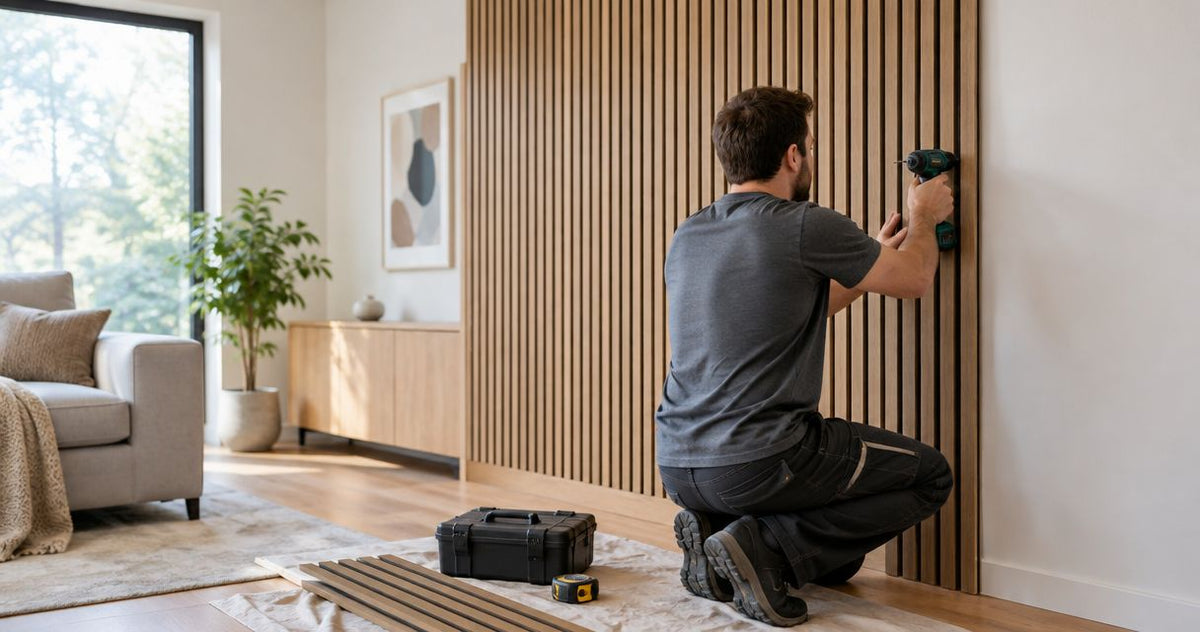
- Plan the installation. Confirm suitable fixings, wall condition, required cavities, and any specified backing materials. Follow the manufacturer's instructions rather than improvising a tested build-up.
- Compare under consistent conditions. Keep seating, furnishings, source position, and listening position consistent when assessing the change. Use professional measurements when the project requires documented performance.
For your 2026 project record, save the selected construction and mounting details alongside the layout. That gives your installer something more useful than an inspiration image.

What should you ask a supplier before ordering?
Ask which acoustic report applies to the exact panel and how the specimen was mounted. Then ask whether your planned installation reproduces that arrangement, including any cavity or additional absorbent layer.
When considering Akustiq USA acoustic wood panels, use the same evidence standard you would use for any specified finish. A sample helps you judge color and texture; a relevant report supports an acoustic claim. Neither replaces the other.
Will acoustic wood panels stop noise from next door?
Acoustic wood panels are not a standalone solution to noise from next door. Absorbing reflections inside your room is different from preventing sound from entering it.
Investigate the transmission path before covering a shared wall. Sound can travel through doors, penetrations, connecting structures, and other routes that a surface treatment leaves unchanged.
How many acoustic wood panels do I need to reduce echo?
Panel quantity depends on your room, the selected system, and the acoustic goal—not a universal coverage rule. Measure the available surfaces, then use appropriate absorption data and room-acoustic guidance to plan treatment.
Do not confuse the quantity needed to cover a feature wall with the quantity needed to achieve an acoustic target. For commercial rooms or difficult residential spaces, an acoustician can turn the room dimensions and performance brief into a treatment plan.
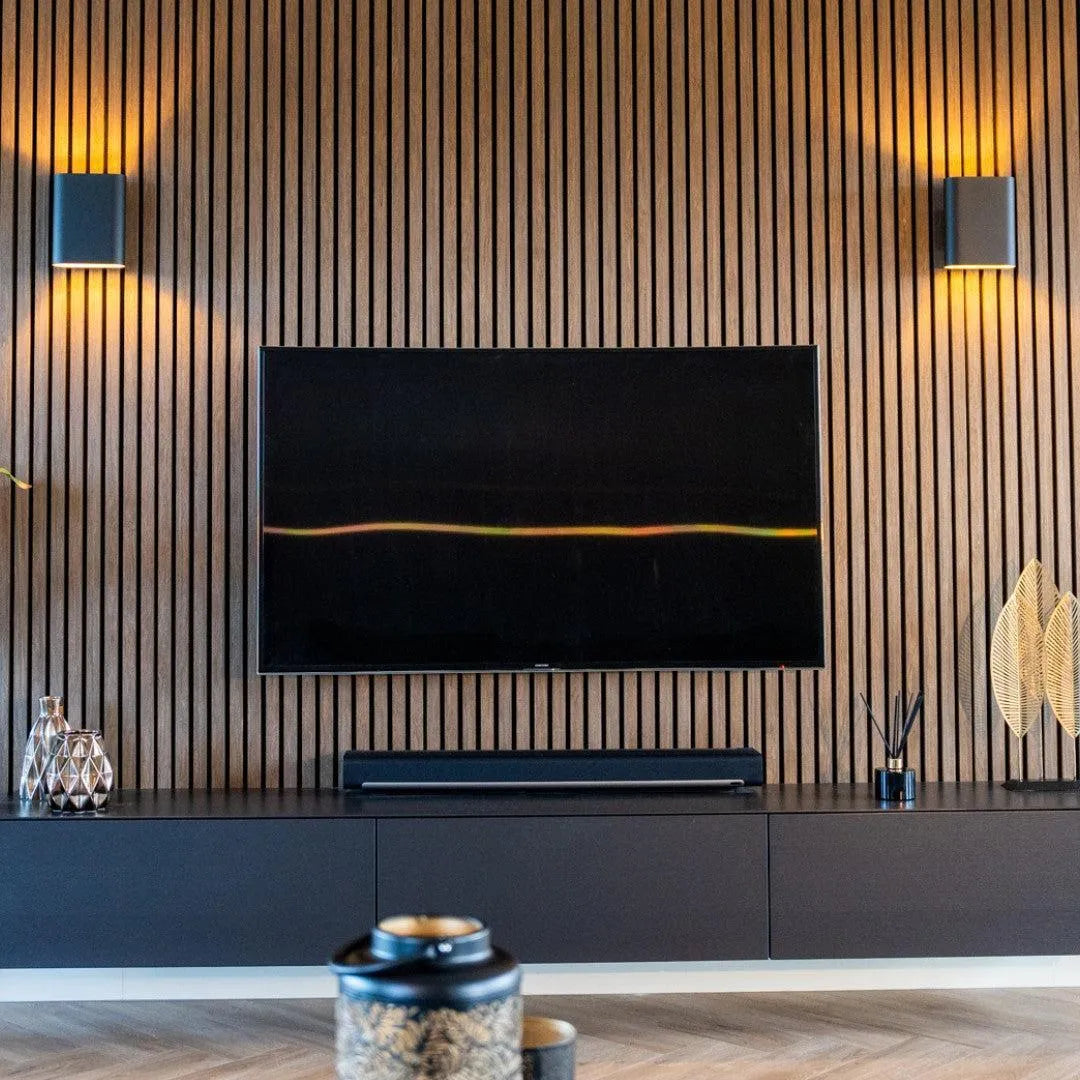
Will panels behind my TV make dialogue clearer?
Panels behind a television help only with reflections that reach that treated surface. They do not correct every cause of unclear dialogue, including source settings, speaker placement, hearing difficulty, or incoming background noise.
Treat the listening area as a room rather than assuming the screen wall is always the answer. Check speaker positioning and the other reflective surfaces before finalizing the feature wall.
FAQ
Do acoustic wood panels actually reduce noise in a living room?
Yes, sound-absorbing acoustic wood panels reduce reflected sound and reverberation in a living room. They do not automatically stop noise entering through walls, doors, or windows.
Are acoustic wood panels better than decorative wood panels for echo?
A panel with documented sound absorption is the better choice for echo control than decorative wood texture without acoustic evidence. Compare the complete construction and mounting conditions, not just the surface pattern.
Does gray felt absorb sound better than black felt?
Felt color alone does not establish sound absorption performance. Compare material construction, thickness, and test results rather than choosing by backing color.
Can I use wood slat panels to block my neighbor's television?
Do not rely on wood slat panels alone to block a neighbor's television. Sound isolation requires an assessment of the separating assembly and the paths carrying sound into your room.
Does a higher NRC mean better soundproofing?
No, a higher NRC describes greater average sound absorption under the relevant test conditions, not better sound isolation. Use transmission data for the complete assembly when evaluating separation between rooms.
Will a small acoustic feature wall fix a large echoey room?
A small feature wall does not establish that a large room's reverberation problem is solved. The result depends on treatment area, absorption performance, placement, room volume, and existing surfaces.
Should I choose acoustic panels before or after furnishing the room?
Plan acoustic treatment with the intended furnishings included. Rugs, curtains, and upholstered furniture affect the room's absorption, so an empty-room impression is not the same as the finished-room condition.
One last thing
Write your success criterion as a sound problem, not a product description. “Conversation should linger less around the dining table” gives you a useful direction; “install a wood wall” describes only the finish.
Before ordering for a 2026 installation, decide whether success means shorter reverberation, clearer speech, or less sound entering from elsewhere. Akustiq USA acoustic wood panels belong in an absorption-led assessment; sound isolation needs its own construction plan.


 Better performance and aesthetic appeal
 In Stock