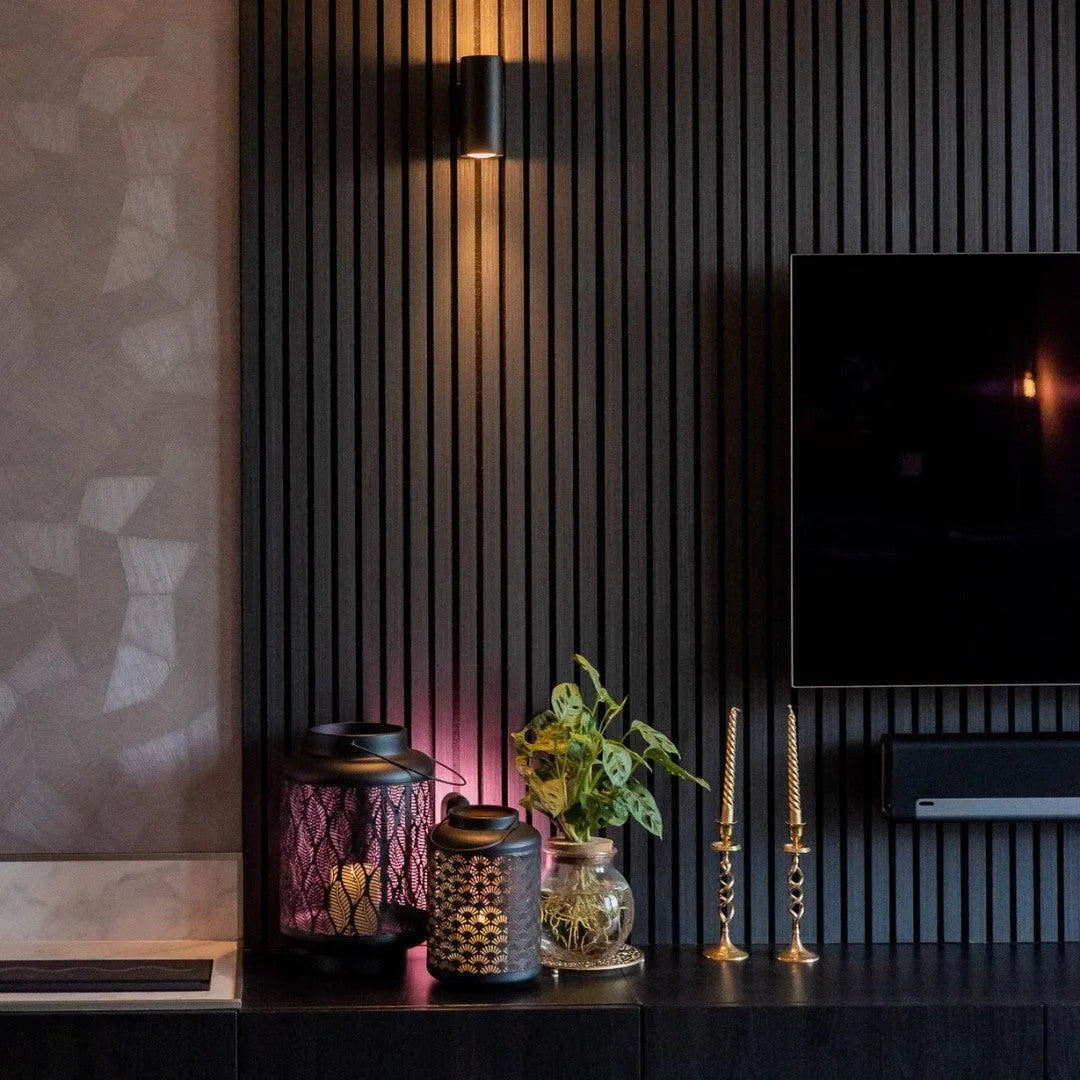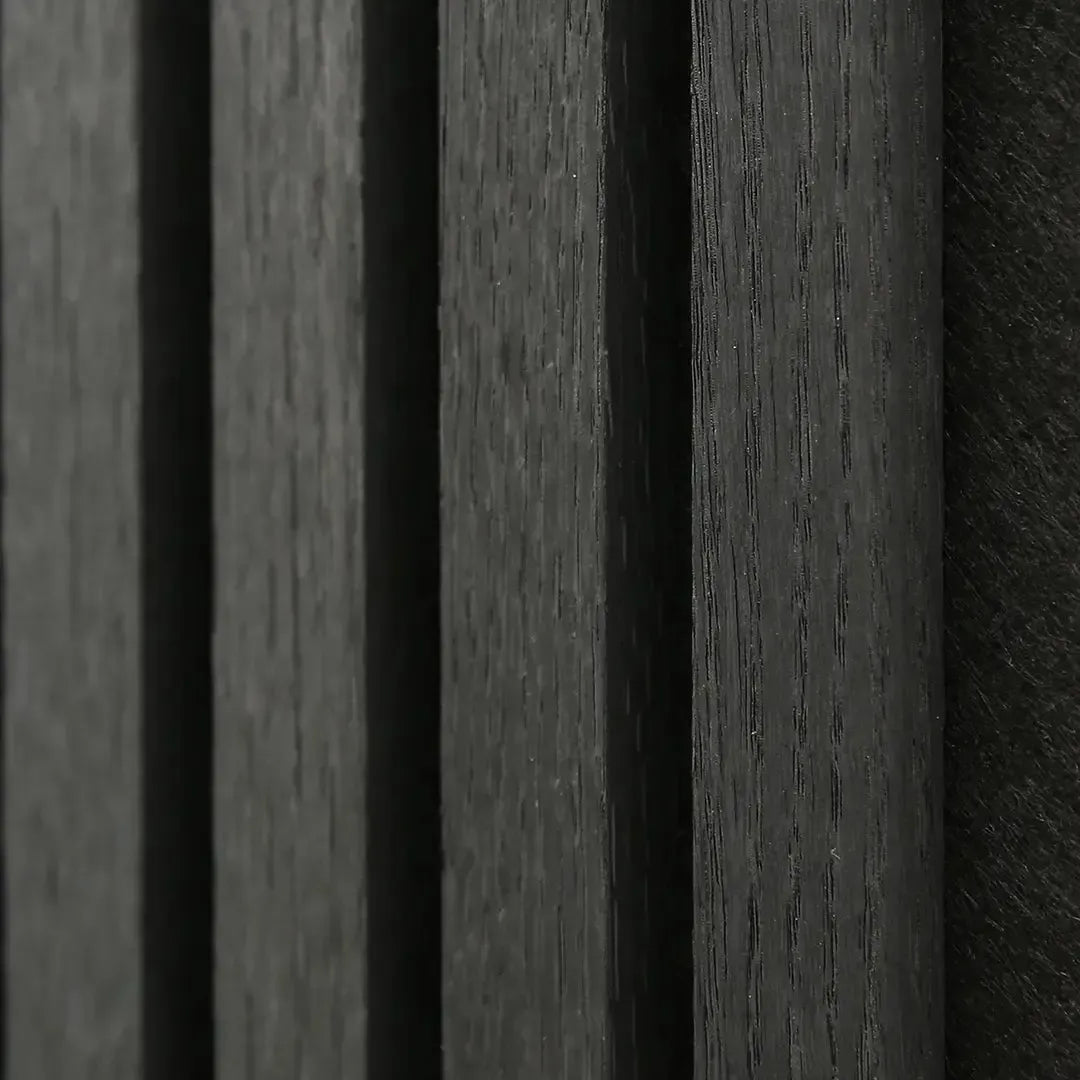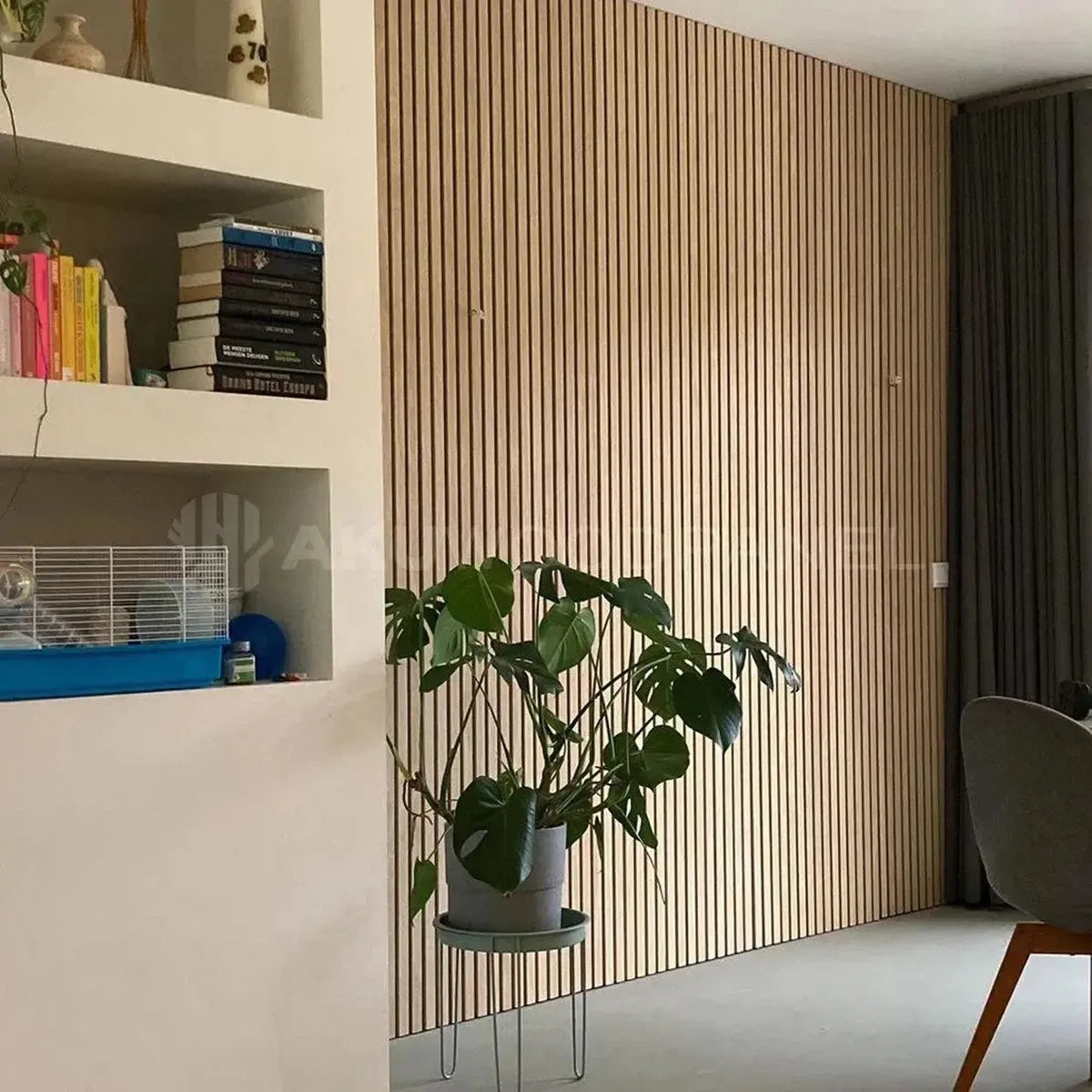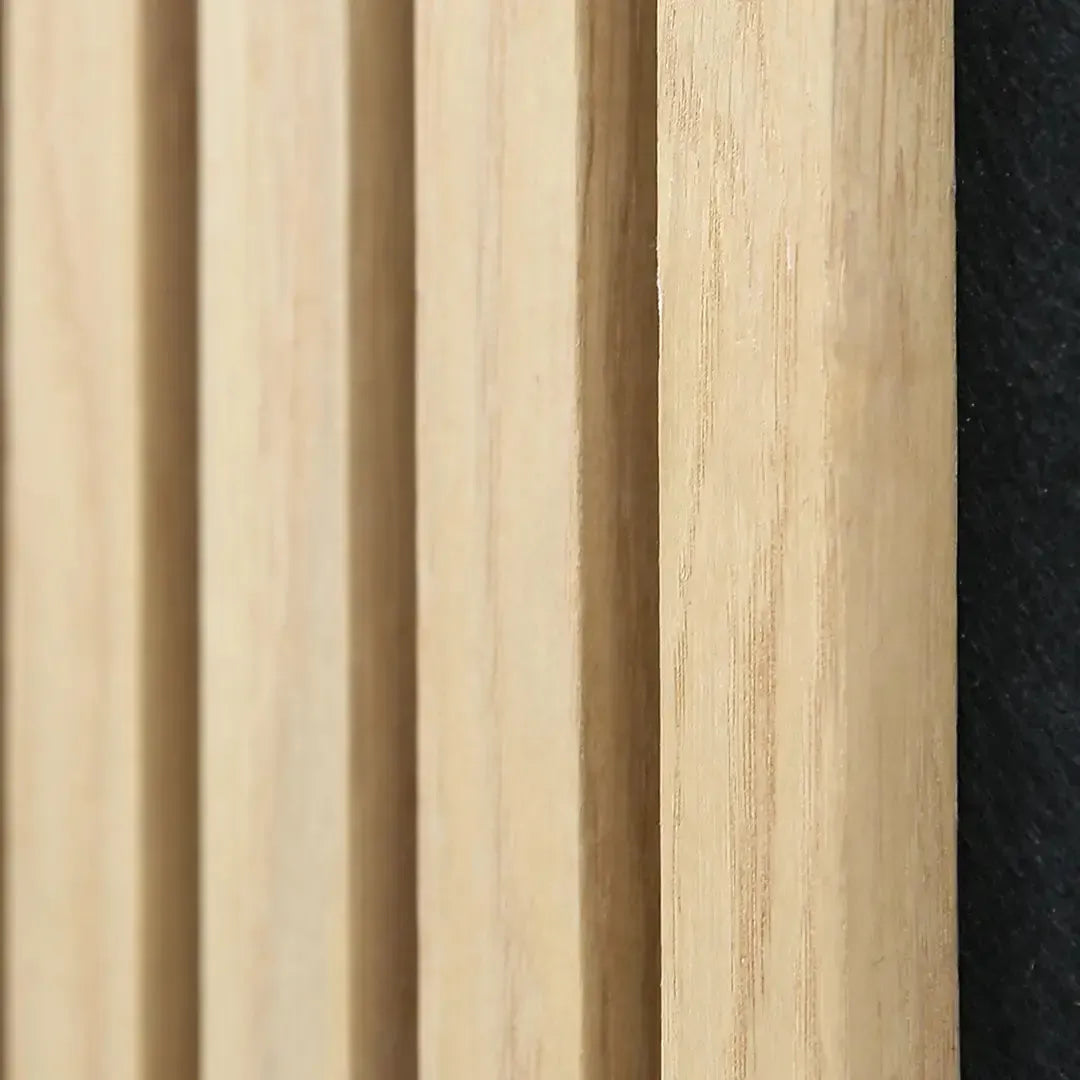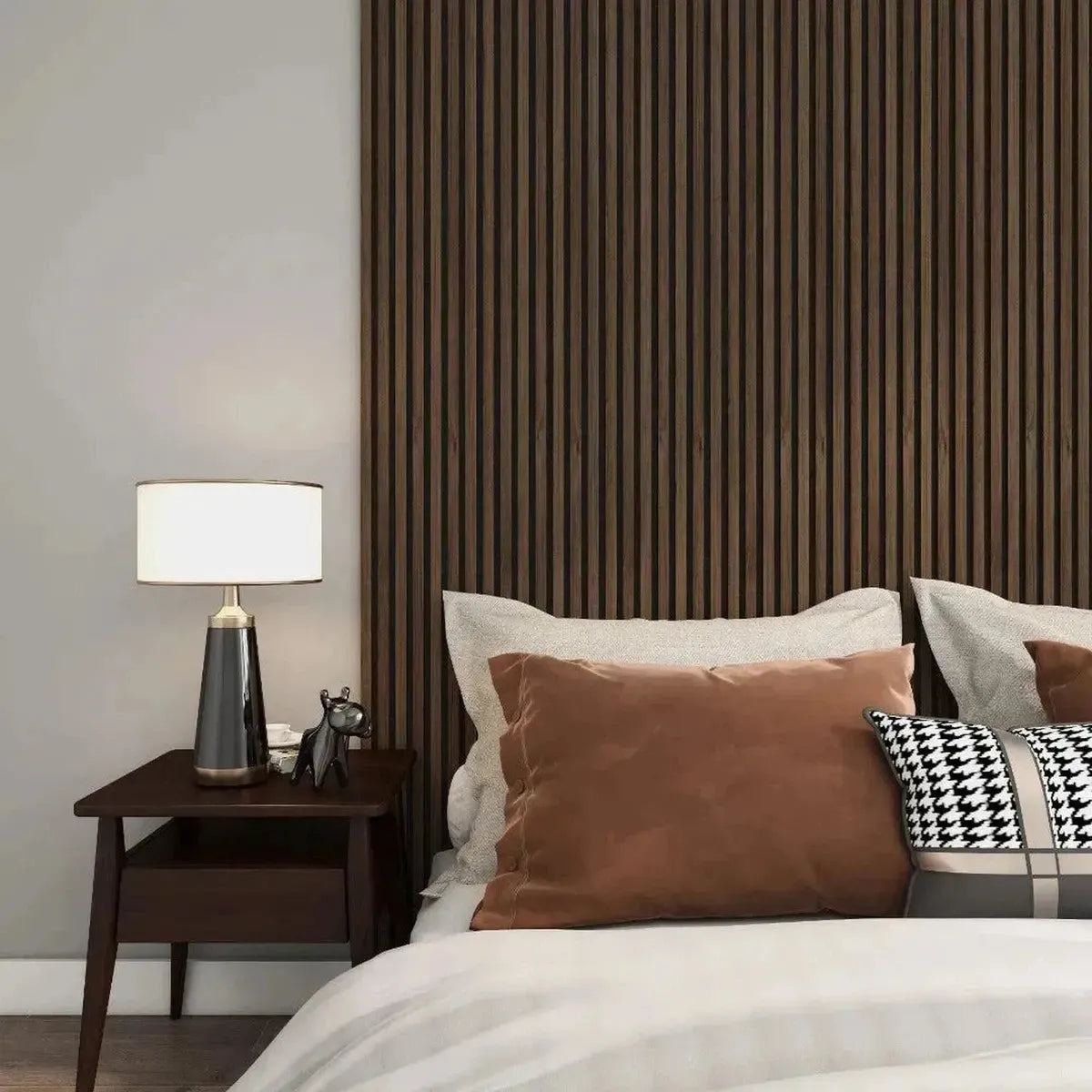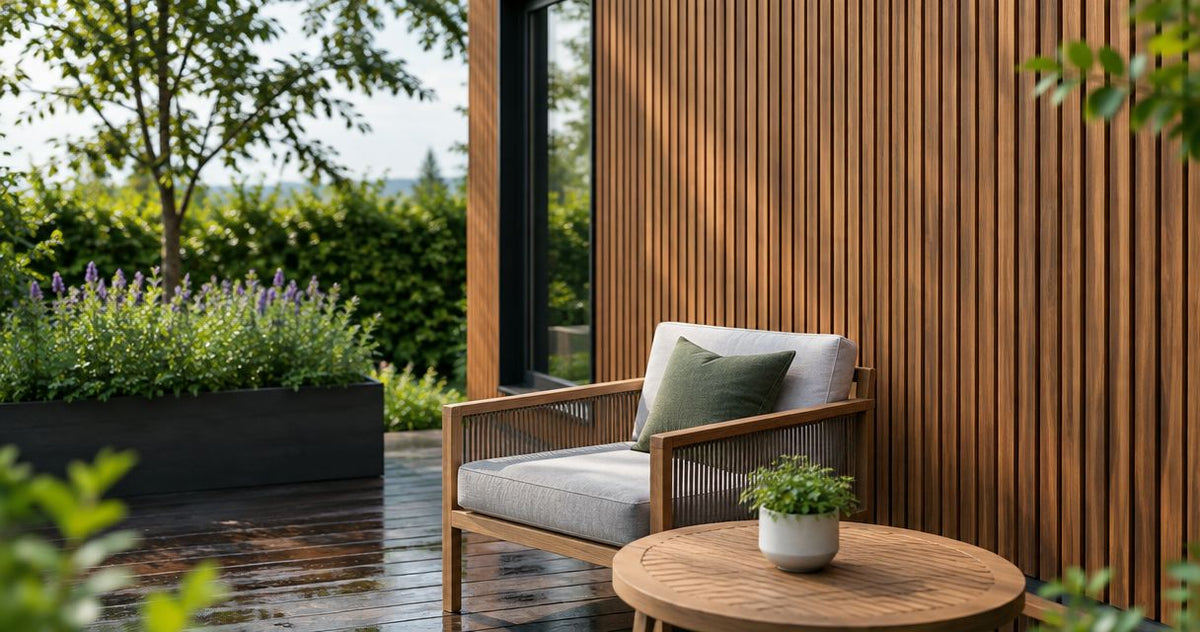
Yes, fluted wood panels can be used outdoors when the manufacturer explicitly approves the complete panel for exterior exposure and you install it according to its exterior instructions. Indoor decorative panels do not become exterior-rated just because you add a sealer, and no outdoor wood installation comes with a blanket promise of zero weathering or damage.
- Can fluted wood panels be used outdoors? Yes, but only with documented exterior suitability and correct installation.
- Fluted profiles describe appearance, not resistance to rain, sunlight, or moisture.
- A covered patio does not make an indoor wood panel suitable for exterior use.
- Compare Akustiq USA exterior wall panels separately from its interior acoustic wood panels.
Why this matters
An outdoor feature wall needs more than a wood finish you like. The face, core, adhesive, backing, fasteners, and wall behind it must all suit the exposure; a weak component puts the installation at risk.
For a 2026 patio or facade project, choose the exposure rating before the color or flute pattern. The guide to installing exterior wall panels in a wet climate addresses the installation context you need to assess before ordering.
When comparing Akustiq USA wood panels, keep decorative appearance, acoustic function, and exterior suitability separate. Evidence for one does not establish the others.
Can fluted wood panels be used outdoors without damage?
Use fluted panels outside only when their documented intended use matches your actual location. A roofed porch, an exposed facade, and a garden wall present different conditions, so an approval for sheltered use is not permission for unrestricted exposure.
The comparison below separates application choices rather than ranking materials by appearance. Each option has a useful role and a clear limitation.
| Panel or installation option | Best for | Main advantage | Main limitation | Decision |
|---|---|---|---|---|
| Interior decorative fluted panels | Dry interior feature walls | Creates a textured wall finish | Interior suitability does not establish outdoor performance | Keep indoors unless exterior use is explicitly approved |
| Exterior-approved fluted wood panels | Outdoor walls within the documented exposure limits | Provides a fluted wood appearance outside | Requires the specified installation and maintenance | Consider after checking the complete system |
| Exterior-approved wood-look cladding | Exterior projects where actual wood is not essential | Offers another route to a textured exterior finish | Composition, movement, and fixing requirements differ by product | Compare product documentation, not appearance alone |
| Indoor panels under a patio roof | Interior use, unless sheltered exterior use is documented | A roof reduces direct rainfall | Wind-driven rain, humidity, and condensation remain relevant | Do not treat shelter as exterior approval |
For your 2026 shortlist, reject any candidate whose documentation leaves the exterior application unresolved. A sample shows color and texture; it does not demonstrate weather resistance.
What does “without damage” realistically mean?
Separate structural condition from cosmetic change. Wood exposed outdoors changes appearance through weathering, and a sound installation can still develop a different surface color over time.
Swelling, splitting, loose fixings, and separating layers require investigation rather than acceptance as normal patina. Ask what appearance changes the manufacturer describes as expected and what conditions its maintenance instructions address.
Interior fluted panels: keep them within their approved use
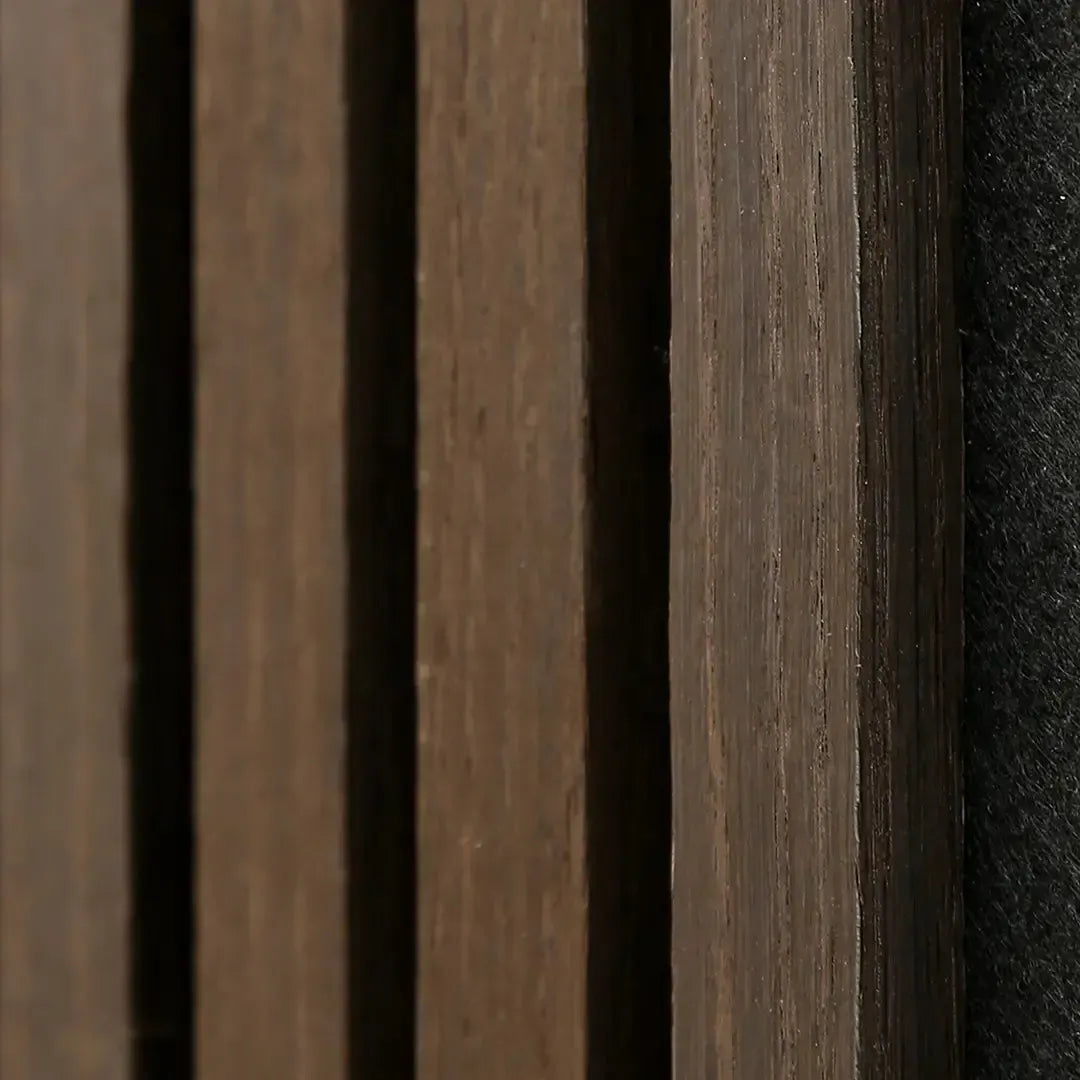
A wood face does not tell you what sits behind it. Decorative panels can combine a veneer, an engineered core, adhesive, and backing, and the complete construction determines suitability.
For example, a specification describing veneer on 3 sides tells you about surface coverage. It does not establish exterior approval, waterproofing, or resistance to prolonged dampness.
Do not assume that a flexible panel, an acoustic backing, or a real wood veneer is suitable outside. Those descriptions explain different features, not a shared weather-resistance standard.
Best for: dry interior walls within the product's stated application. The benefit is decorative texture; the limitation is that exterior use needs separate evidence. Keep an indoor panel indoors rather than trying to upgrade its rating with an aftermarket coating.
Exterior-approved panels: match the approval to the wall
An exterior designation is the starting point, not the entire specification. Check whether the panel suits your wall orientation, level of shelter, supporting structure, and local exposure.
If you are comparing Akustiq USA exterior wall panels, the Exterior Wall Panel Birch is a relevant exterior-category starting point. Confirm the current technical instructions for your application rather than transferring claims from another panel or accessory.
Best for: outdoor cladding projects that match the documented application. The advantage is selecting from the intended exterior category; the limitation is that the panel still depends on compatible fixings, detailing, and installation.
For a 2026 specification, request the panel construction, permitted exposure, installation instructions, maintenance requirements, and applicable warranty terms together. A product name alone does not settle those questions.
Why outdoor damage risk varies
Outdoor performance depends on the material and the conditions around it. These factors explain why an installation beneath a deep roof differs from the same-looking wall beside an exposed terrace.
- Panel construction: Solid wood, veneered boards, engineered cores, and wood-look products respond differently to exposure. Check every layer, including the backing and adhesive.
- Rain and splash: Roof runoff, irrigation, and water splashing from paving add wetting beyond direct rainfall. Trace these sources before positioning the panels.
- Sun exposure: Sunlight weathers wood surfaces and affects finishes. Check the manufacturer's guidance for the intended orientation and finish.
- Drying conditions: Water trapped behind cladding creates a different problem from rain that drains away. Follow the specified drainage and ventilation details.
- Movement and fixings: Wood responds to changing moisture conditions. The installation must accommodate movement using the manufacturer's fixing and joint details.
- Maintenance: Damaged finishes, blocked drainage routes, and loose components need attention. Follow the care instructions for the exact material rather than a generic wood-care schedule.
A sheltered location reduces some exposure; it does not remove all these factors. Assess the wall as an outdoor assembly, not as a decorated indoor surface.
How do you check a panel before installing it outside?
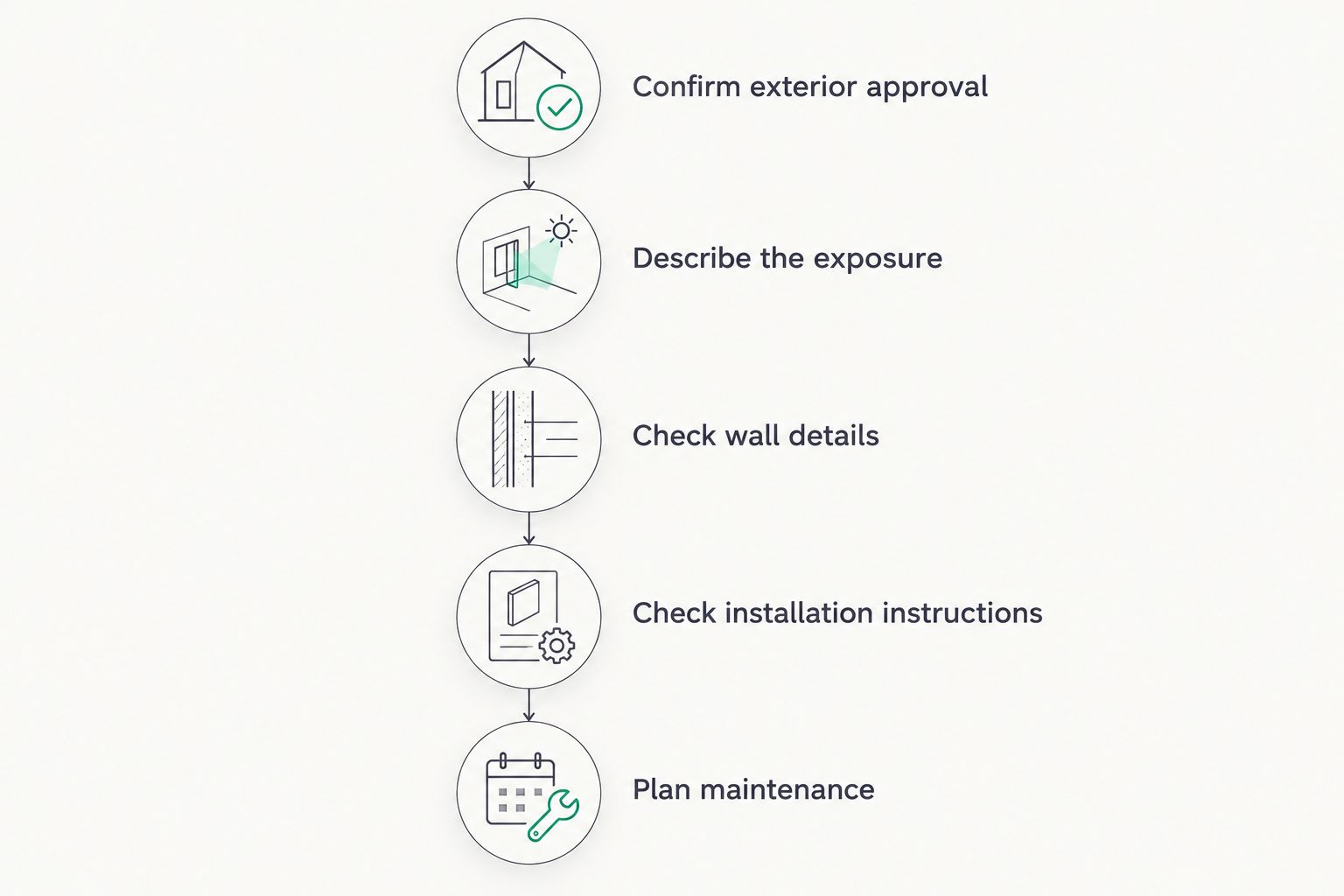
Use this sequence before you cut panels or prepare the wall. It keeps appearance decisions from getting ahead of technical suitability.
- Confirm exterior approval. Find an explicit statement covering the complete panel, not just its face material or coating. Resolve any uncertainty with the manufacturer before purchase.
- Describe the exposure. Record whether the wall receives direct rain, wind-driven rain, strong sun, irrigation spray, or runoff. Include sheltered conditions rather than simply calling the area covered.
- Check wall details. Review the substrate, water-management approach, drainage, openings, and transitions. Have a qualified installer assess details that affect the building envelope.
- Check installation instructions. Confirm the approved supports, fasteners, joints, edge treatments, and finishing accessories. Do not substitute indoor adhesive instructions for exterior fixing details.
- Plan maintenance. Establish how you will inspect, clean, and maintain the completed wall. Keep the product instructions with the project records.
In 2026, use the instructions supplied for the exact product you order. Similar-looking panels can have different construction, so advice for another range is not a substitute.
What should you ask the supplier?
Send a photograph of the wall and describe the exposure in plain language. Ask whether the exact panel is approved there, which installation document applies, and whether the proposed finish or coating is permitted.
For a commercial project, also ask your designer or contractor to check applicable building requirements. Decorative cladding selection does not replace a review of the wall assembly, fire requirements, or structural support.
How should you handle edges, corners, and drainage?
The visible face is only part of the job. Cut edges, top terminations, corners, and penetrations need the details specified for the exterior system.
Plan accessories before laying out the flutes. The listed Birch Corner Trim is 94.5 inches long, and the listed birch finishing trim is also 94.5 inches long; use those stated component lengths when checking joints and quantities, not as evidence of panel performance.
A trim covers or finishes an edge according to its intended function. It does not automatically make that joint watertight, and a matching color does not prove compatibility with another panel range.
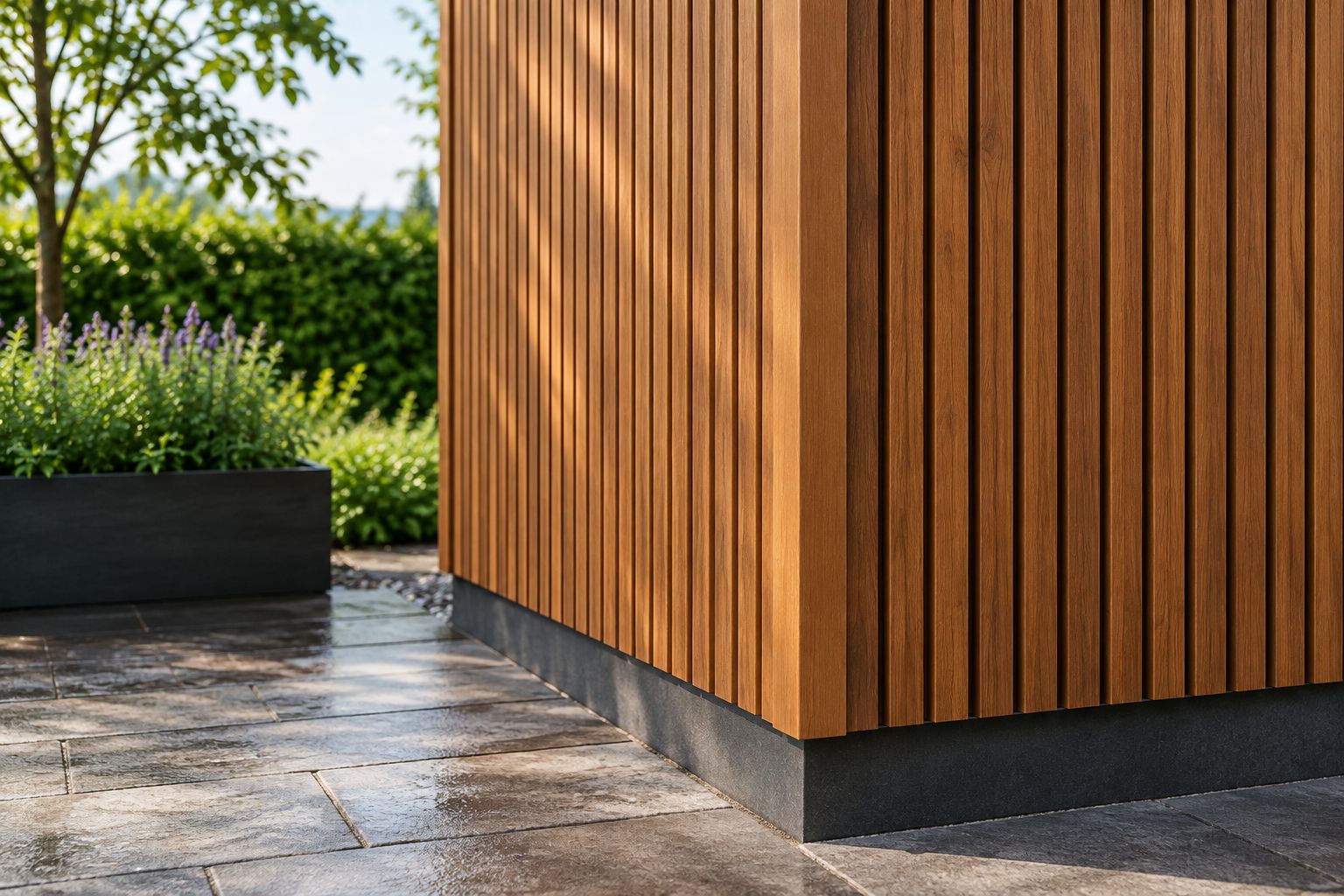
Follow the specified drainage arrangement instead of sealing every visible opening. Some joints and openings serve a water-management or ventilation purpose, so an improvised bead of sealant can interfere with the intended assembly.
Keep roof leaks and persistent wall dampness out of the cladding scope until their causes are repaired. New panels conceal the surface; they do not correct the source of unwanted water.
Can you waterproof indoor fluted panels for outdoor use?
A sealer does not establish exterior suitability for an indoor panel. A coating on the face does not change the documented use of its core, adhesive, backing, or assembled joints.
Only apply a finish that the panel manufacturer permits for the intended application. Check preparation, edge treatment, compatibility, and maintenance together rather than assuming a tougher-sounding coating solves the problem.
A homemade soaking test is not proof of long-term exterior performance. It does not reproduce the full combination of weather, sunlight, movement, and installation conditions.
Can fluted panels go on a covered patio?
Fluted panels can go on a covered patio when the manufacturer approves them for that sheltered exterior setting. A patio roof reduces direct rain but does not eliminate humid air, wind-driven water, or condensation.
Describe the open sides, nearby irrigation, and wall position when requesting confirmation. For a 2026 patio renovation, use an exterior-approved option or keep the decorative fluted treatment inside the building's weather-protected enclosure.
What should you do if outdoor panels are already swelling?
Identify and stop the moisture source before attempting a cosmetic repair. Check runoff, joints, drainage routes, and the wall behind the affected area, and have loose or unstable panels assessed promptly.
Do not coat over damp, swollen, or separating material. Establish whether the panel was approved for the location and ask the manufacturer or installer whether the affected components need replacement.
FAQ
Can fluted wood panels be used outdoors all year?
Fluted wood panels can remain outdoors when the manufacturer approves year-round exterior use for the actual exposure. Follow the specified installation and maintenance instructions; exterior approval is not a promise of zero weathering.
Will varnish make indoor fluted panels weatherproof?
Varnish does not establish exterior approval for indoor fluted panels. The core, adhesive, backing, and joints must also suit outdoor conditions.
Can I use acoustic wood panels outside under a roof?
Use acoustic wood panels outside under a roof only when the exact panel is approved for sheltered exterior use. An acoustic function or wood veneer does not establish weather resistance.
Are wood-look fluted panels better than real wood outdoors?
Neither appearance alone establishes better outdoor performance. Compare each product's documented exposure limits, installation requirements, and maintenance needs.
Does exterior cladding waterproof the wall behind it?
Do not assume decorative exterior cladding waterproofs the wall behind it. Use the water-management assembly and junction details required for the specific wall and cladding system.
Which Akustiq USA wood panels should I check for an outdoor wall?
Start with Akustiq USA exterior wall panels rather than assuming an interior acoustic or decorative panel suits outdoor use. Confirm the exact panel's technical instructions against your wall and exposure.
How often should I reseal outdoor fluted wood panels?
Follow the finish and panel manufacturers' maintenance instructions rather than a universal resealing interval. Material, exposure, and finish condition determine the appropriate care.
One last thing
Before approving the design, draw where water goes at the top, bottom, and corners of the wall. Include runoff from anything above it and splash from anything below.
If you cannot explain how the assembly drains and dries, the installation plan is not ready. A fluted finish is the visible choice; managing water behind and around it is the practical one.
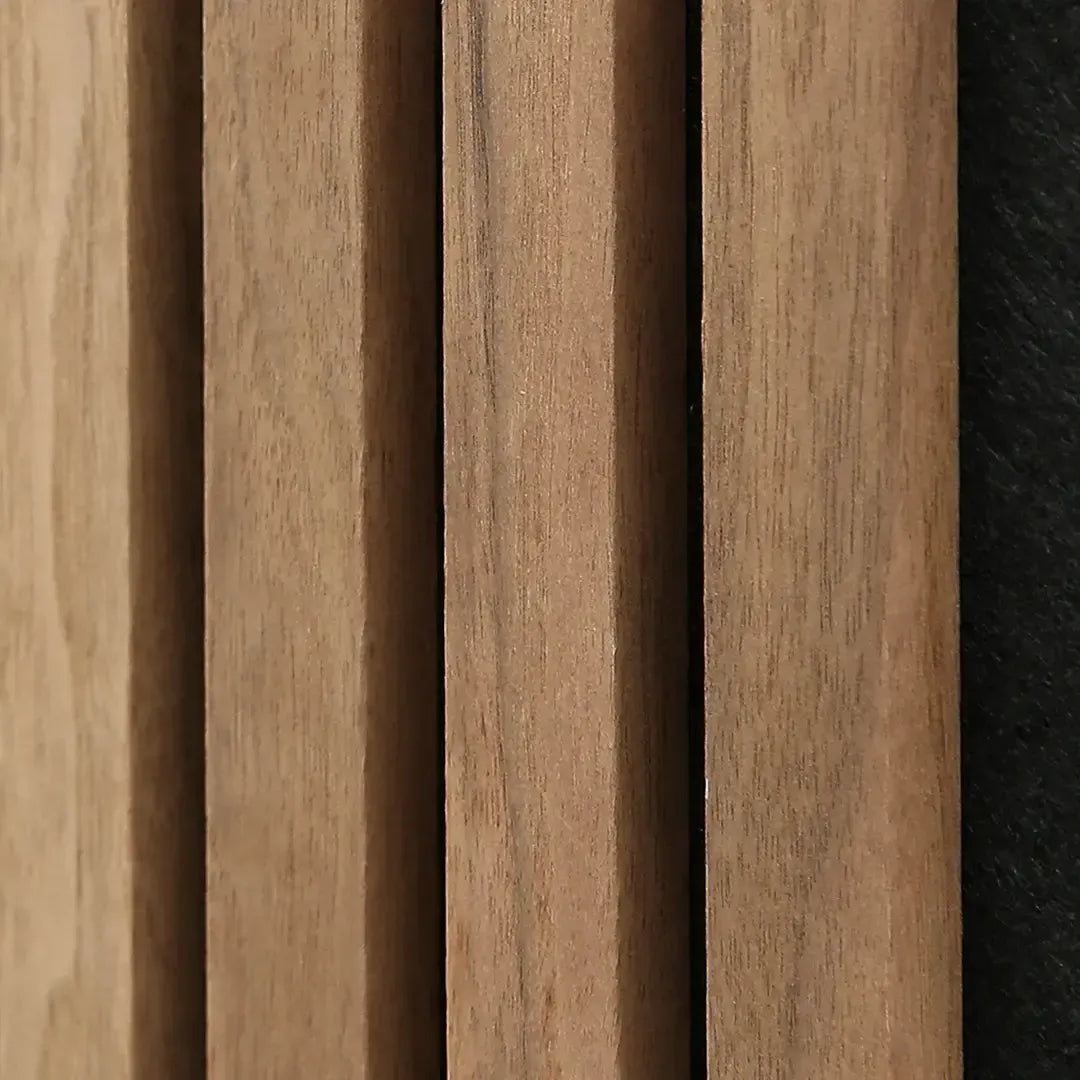
 Better performance and aesthetic appeal
 In Stock