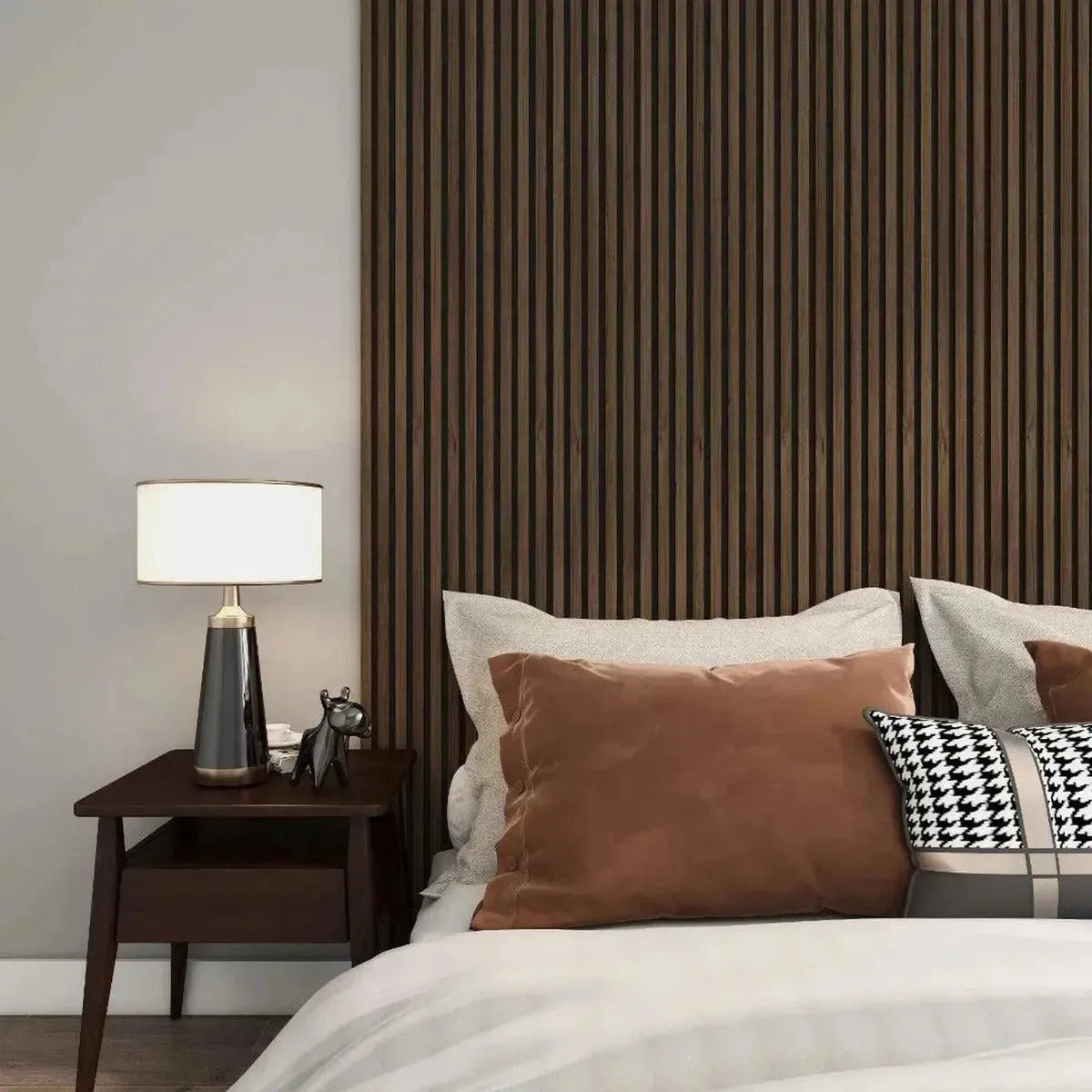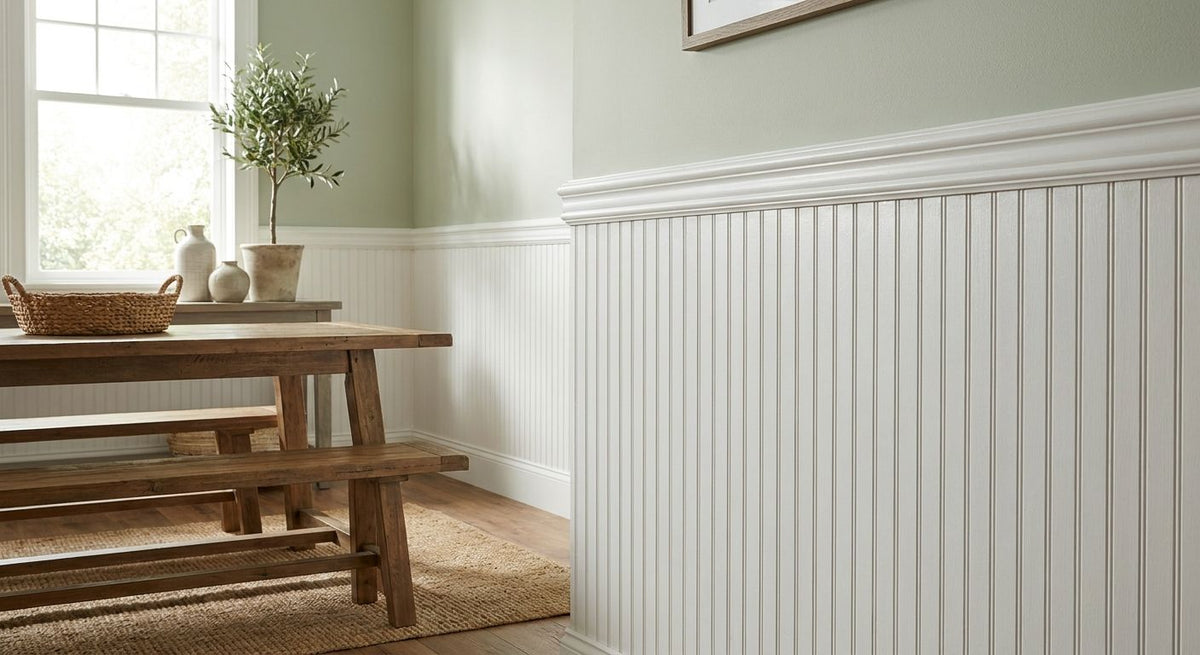
Beadboard wall panels built the wainscoting look for a century: painted MDF or wood strips with narrow grooves, capped with a chair rail, running from the baseboard up to waist height. That look still works in 2026, but the material behind it has changed — real wood veneer slat and fluted panels now do the same paneled-wall job with less painting, less peeling, and a grain pattern that no groove-and-paint job can fake.
TL;DR
- Beadboard wall panels suit classic wainscoting, but 3-sided wood veneer slat panels do the same job with real grain and no repainting - Buy.
- Akuwood Panel's Rustic Oak wall panel at $169.95 replaces painted beadboard on chair-rail walls without the yearly touch-up.
- Skip MDF beadboard in bathrooms and mudrooms; the grooves swell and separate faster than a solid veneer panel.
- Fluted Walnut panels give a rounder, more modern take on wainscoting for anyone who wants the rhythm without the flat squares.
- End Piece Slat Wall Panels in Natural Oak solve the raw-edge problem beadboard installers usually caulk around.
Why this matters
Wainscoting exists to break up a tall, blank wall and protect the lower third from scuffs. Beadboard did that with narrow vertical grooves pressed into MDF or thin wood strips, then painted white, gray, or whatever trim color the room called for. It works, but it's a paint job that needs redoing every few years and a material that swells if a bathroom or entryway gets damp.
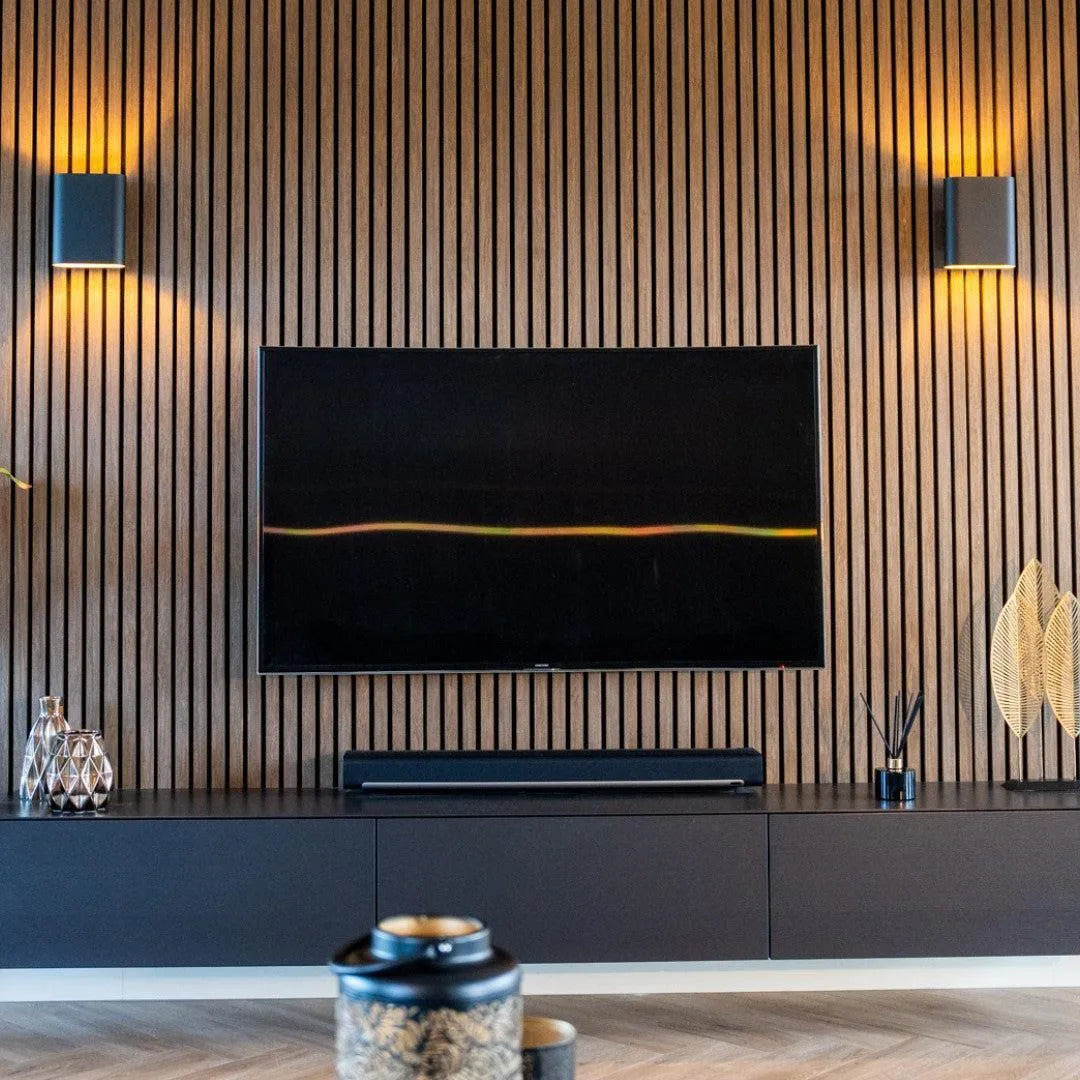
A fluted wall panel in natural oak gives the same vertical rhythm as beadboard without the paint layer. The grooves are milled into real wood veneer, so the grain shows through instead of a flat painted surface, and there's no repainting cycle to plan around. For anyone comparing beadboard wall panels against a modern alternative, that's the trade to understand before buying anything.
What to look for in beadboard wall panels for wainscoting
Real wood veneer vs printed vinyl wrap
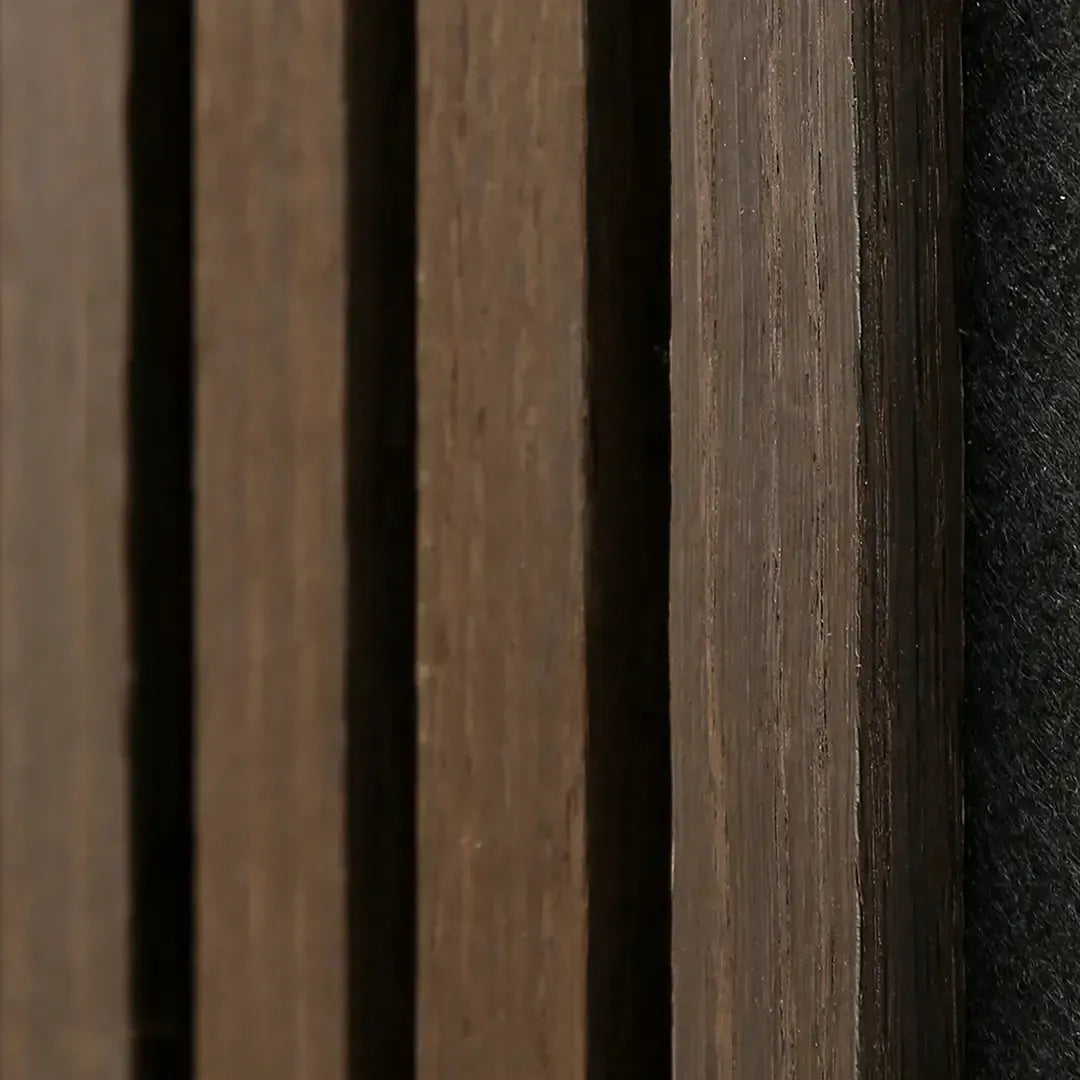
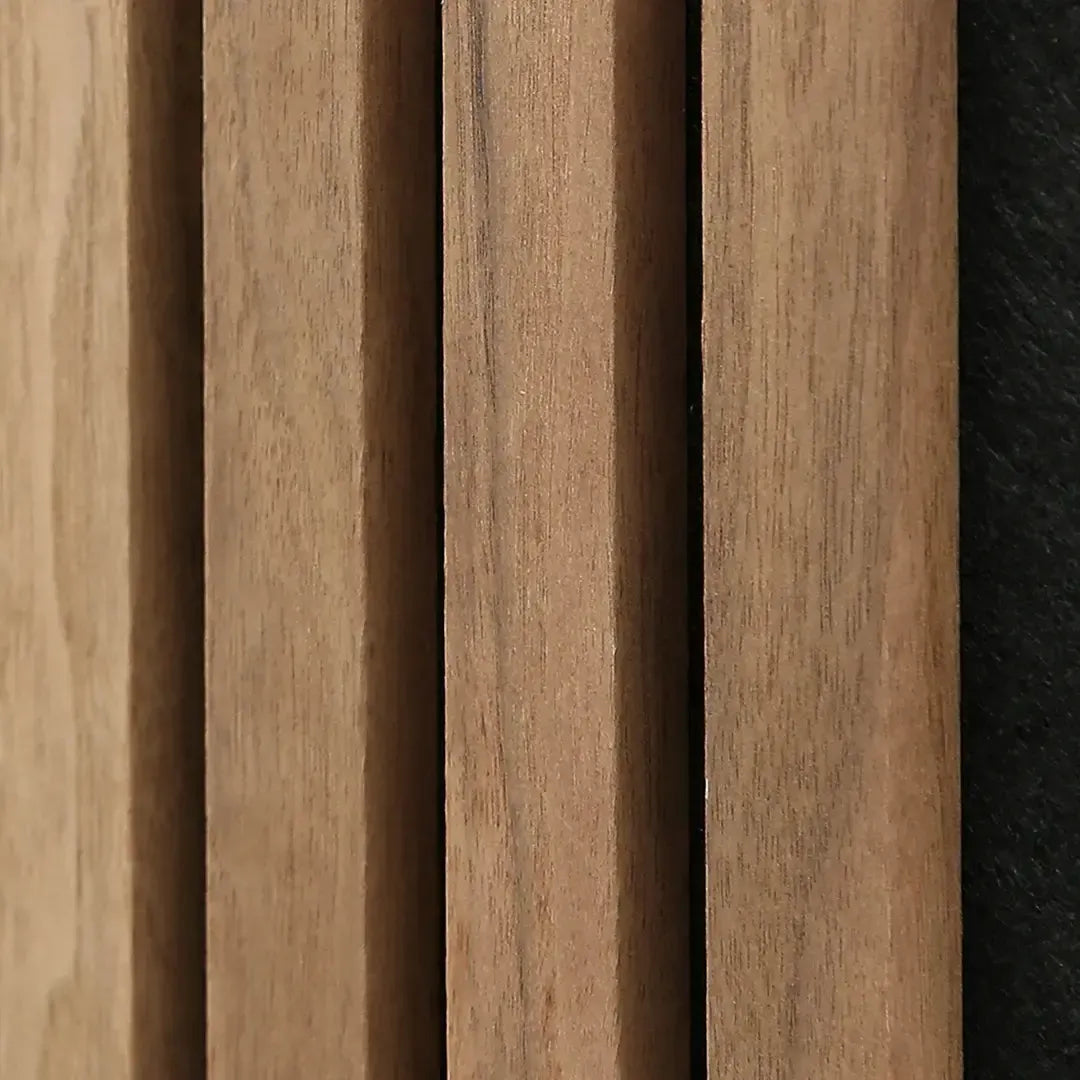
A lot of "wood-look" beadboard on the market is printed vinyl over MDF, which looks fine in photos and flat in person once light hits it at an angle. Panels built with a 3-sided wood veneer show actual grain variation from piece to piece, which is the detail that sells a wainscoting wall as a real upgrade rather than a stick-on finish.
Groove spacing and reveal depth
Beadboard's narrow, evenly spaced grooves create a specific visual rhythm — tight and repetitive. Slat and fluted panels use wider reveals, which read as more deliberate and modern from across the room. Decide which rhythm the room wants before ordering, because mixing groove widths on adjoining walls looks like a mistake, not a design choice.
Moisture and room suitability
MDF beadboard swells at the grooves when humidity sits high for long stretches — bathrooms, mudrooms, laundry rooms are the usual failure points. Solid wood veneer panels handle occasional humidity better than pressed MDF, but no wood product is a wet-room material without proper ventilation, so match the panel to the room's actual moisture load.
Panel thickness for a flush wainscoting line
Wainscoting needs to sit flush against a chair rail or cap trim, so panel thickness matters more here than on a full accent wall. Thin panels can leave a visible step where they meet trim; check the spec sheet before ordering enough for a full room.
Finishing pieces for clean edges and corners
Beadboard installs typically get caulked at every seam and corner. Dedicated end pieces and corner trim close those same gaps without a caulk gun, and they're the difference between a wainscoting wall that looks factory-finished and one that looks like a weekend patch job.
Feasibility as a DIY weekend job
Beadboard sheets are large and awkward for one person to cut and hang alone. Individual slat and fluted panels install piece by piece, which makes them easier to handle solo and easier to fix if one section gets damaged later — you replace one panel, not the whole wall.
Top picks for a wainscoting-style wall
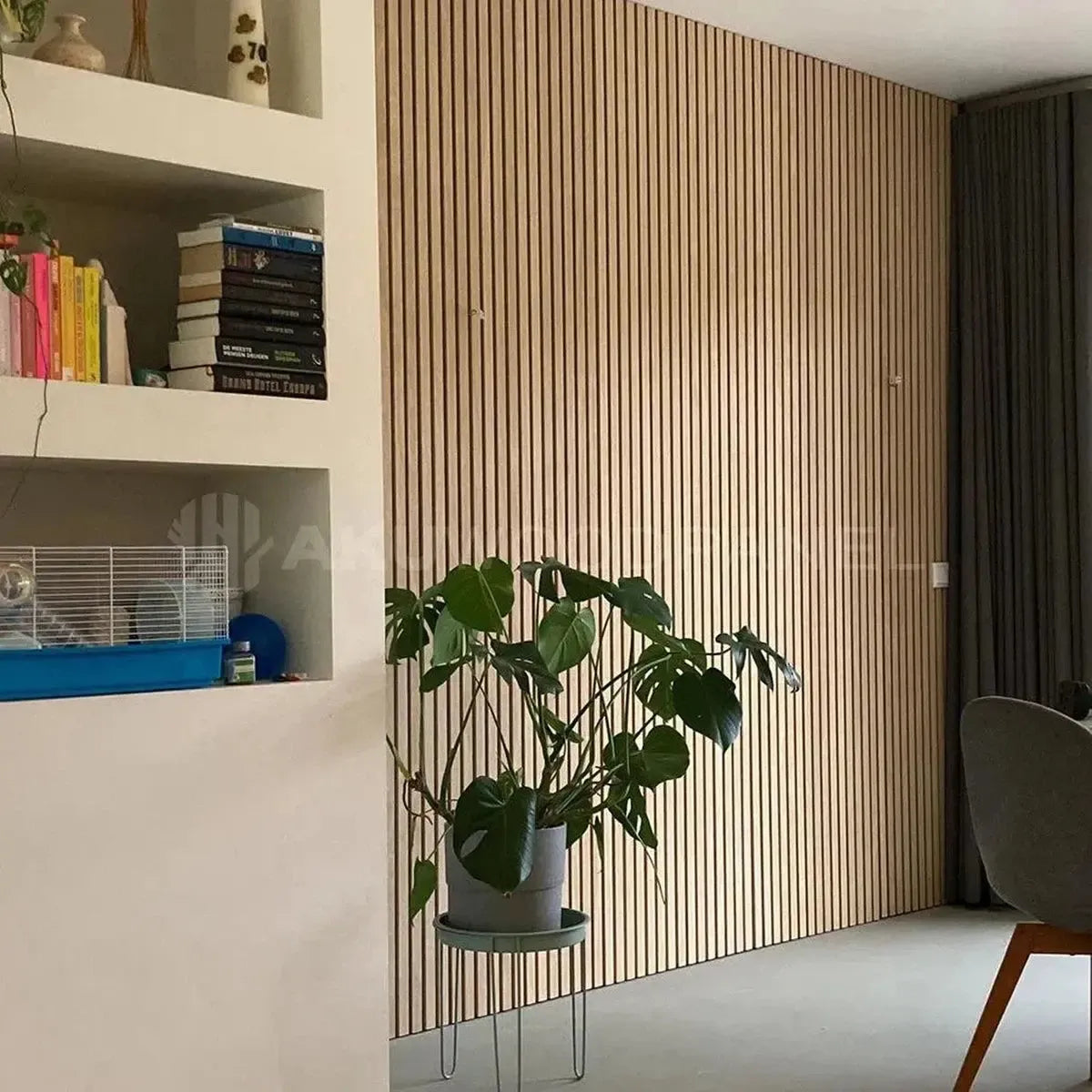
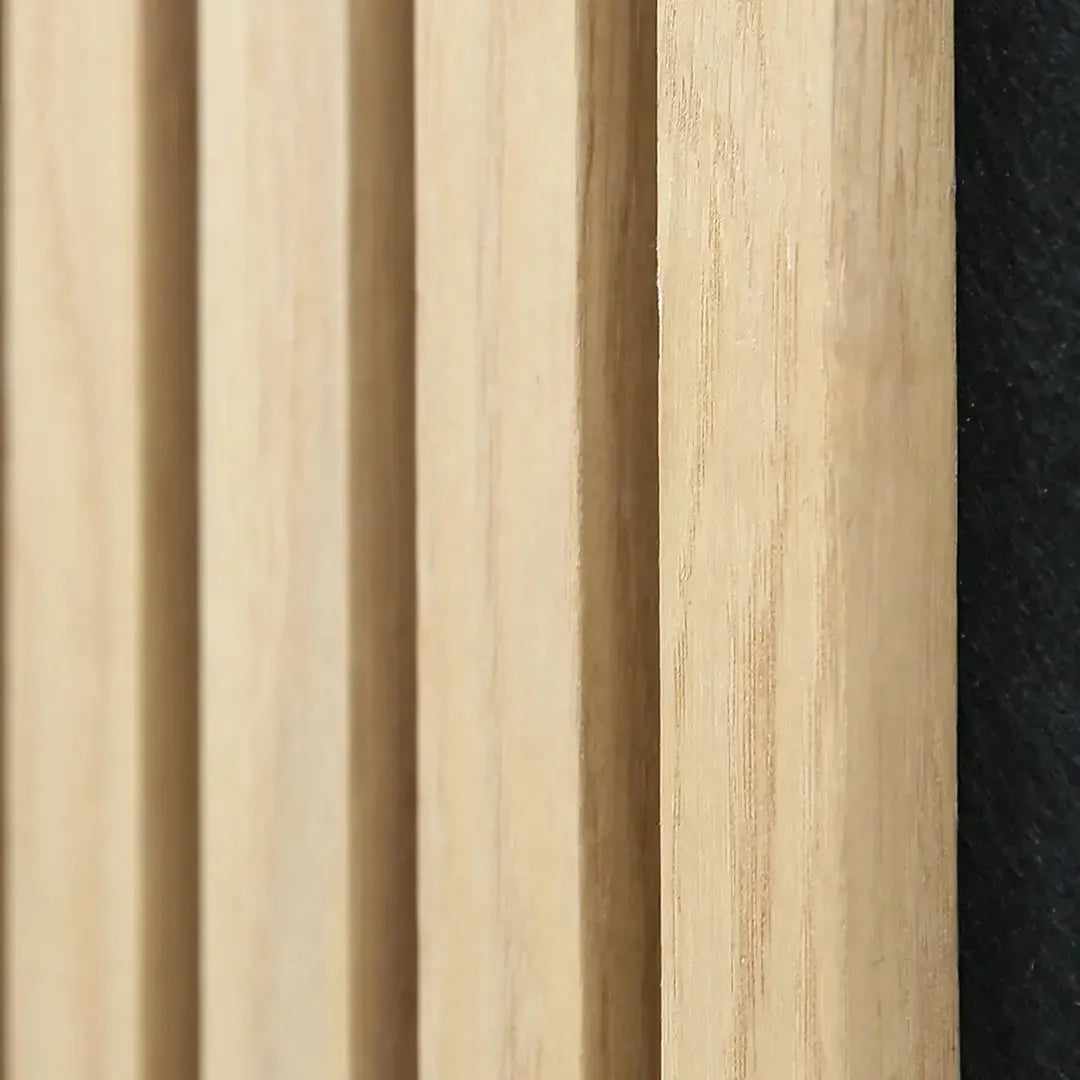
The classic pick: Wooden Wall Panel, Rustic Oak. This is the closest match to a traditional painted wainscoting look, minus the paint. It runs $169.95 per panel and uses the same 3-sided wood veneer construction across the Akuwood Panel lineup, so the grain reads consistent from panel to panel. Buy if the goal is a warm, traditional accent wall below a chair rail line.
The modern reinterpretation: Fluted Wall Panel, Walnut, Modern Flexible Design. Rounded flutes instead of flat slats give a softer, more contemporary version of the wainscoting rhythm, and the flexible design bends around curved walls or columns that flat beadboard sheets can't follow. Consider it for a living room or entry that wants texture without looking like a period-correct paint job.
The finishing detail pick: End Piece Slat Wall Panel, Natural Oak. This is the part most beadboard-to-panel comparisons skip. End piece panels close off exposed edges where a wainscoting wall meets a doorway, window, or outside corner, replacing the caulk line beadboard installers rely on. Buy as a companion purchase whenever a wainscoting run doesn't end cleanly at a corner.
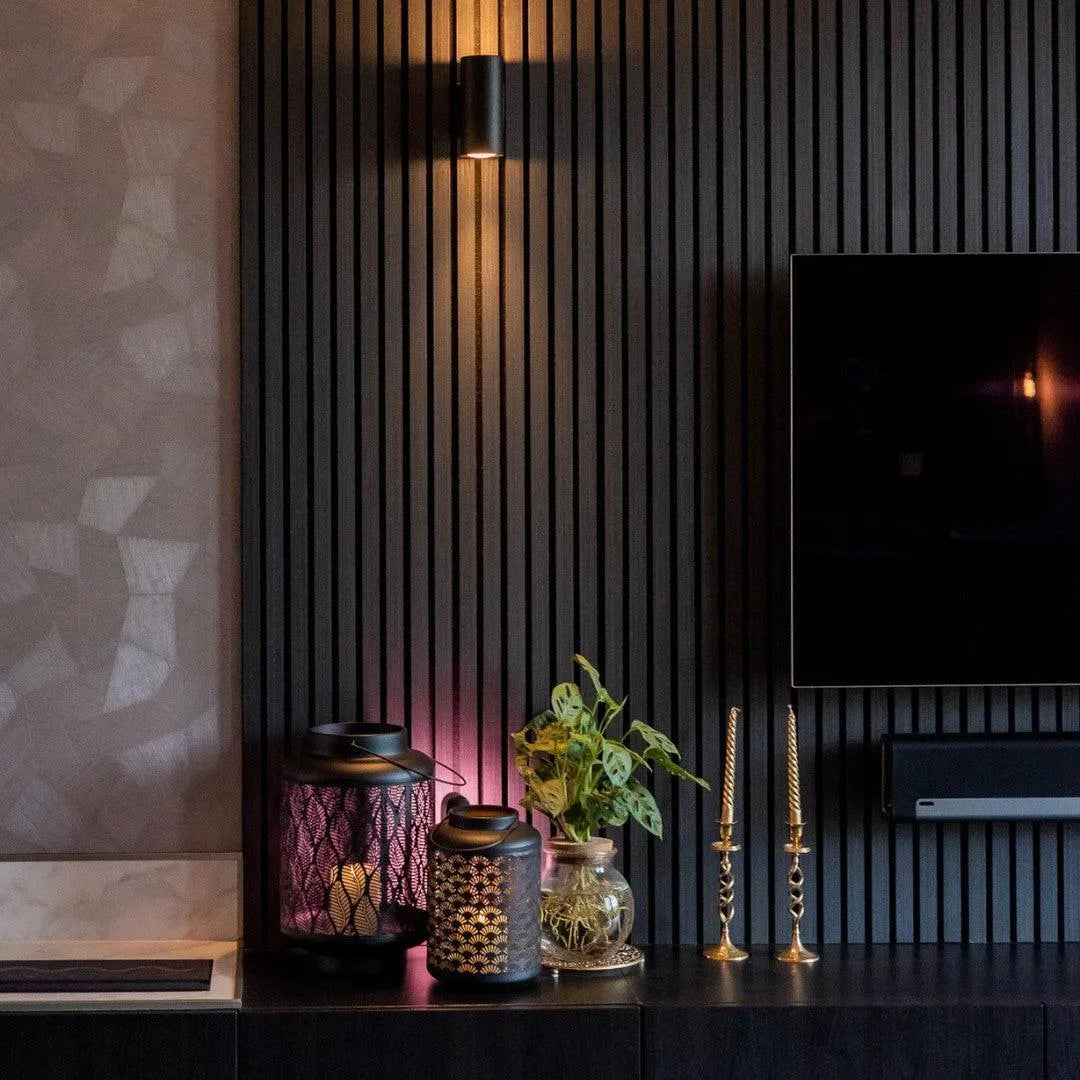
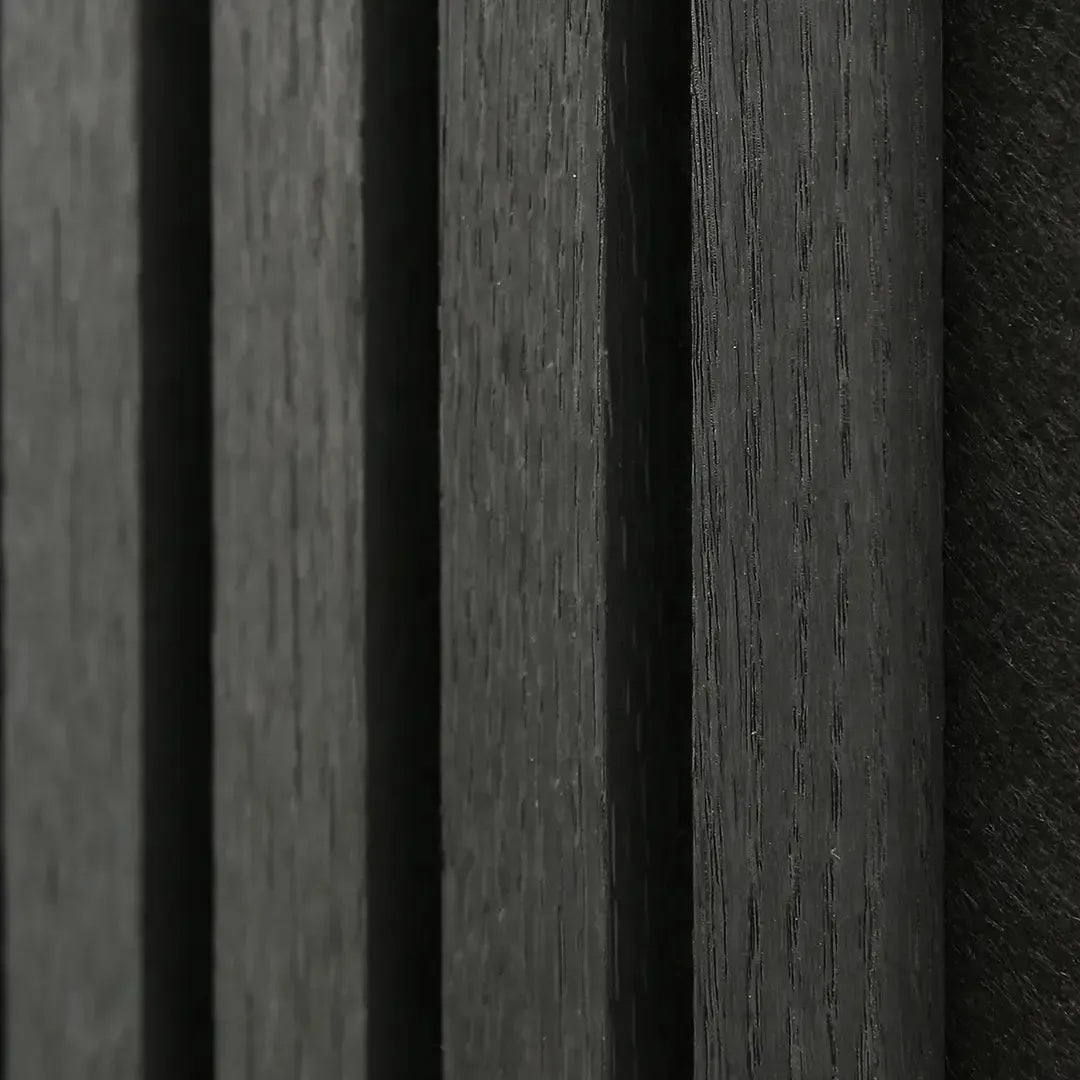
The moody upgrade: Acoustic Slat Wall Panel, Smoked Oak. At $177.95, this panel trades the light, traditional oak look for a darker, more dramatic reveal — good for a dining room or home office wainscoting wall that wants contrast against white trim instead of a matching tone. Consider it where the room already leans dark or industrial.


“Match the reveal spacing above the chair rail to the baseboard height below it - get that math wrong and a wainscoting wall reads as random slats instead of a designed feature.”
What to avoid
- Printed vinyl "wood-look" beadboard. It photographs fine and fails under raking light — the grain pattern repeats every few feet because it's printed, not milled.
- Mixing groove widths mid-room. A narrow-groove beadboard wall next to a wide-reveal slat panel on an adjoining wall looks like two different projects, not one finished room.
- Skipping edge and corner pieces to save money. Raw panel edges at doorways and outside corners are the fastest way to make an otherwise good wainscoting wall look unfinished.
Verdict comparison
| Panel | Veneer finish | Groove style | Best for | Verdict |
|---|---|---|---|---|
| Rustic Oak Wall Panel | 3-sided oak veneer | Wide, square-set slats | Traditional living rooms, hallways | Buy |
| Fluted Walnut Panel (Modern Flexible) | Walnut veneer | Rounded vertical flutes | Curved walls, contemporary rooms | Consider |
| End Piece Slat Wall Panel (Natural Oak) | Oak veneer edge cap | Finishing piece, no groove | Corners, doorway edges | Buy |
| Smoked Oak Slat Wall Panel | Smoked oak veneer | Standard slat reveal | Dark, dramatic accent walls | Consider |
FAQ
What is the difference between beadboard and slat wall panels for wainscoting?
Beadboard uses narrow, painted grooves pressed into MDF or thin wood strips, while slat wall panels use wider reveals milled into real wood veneer. Both create a wainscoting-style break on the lower wall, but slat panels show actual wood grain instead of a painted surface.
Are wood veneer panels better than PVC beadboard for wainscoting?
For rooms that need long-term durability without repainting, 3-sided wood veneer panels hold up better than painted PVC or MDF beadboard, which chips and needs recoating over time. PVC still has a place in very wet rooms where wood isn't practical at all.
How much does a beadboard-style accent wall cost in 2026?
Wood veneer slat panels for a wainscoting-style wall run roughly $169.95 to $182.95 per panel in 2026, depending on finish. Total project cost depends on wall square footage and how many finishing pieces the layout needs.
Can you install wainscoting-style wood panels yourself?
Yes, individual slat and fluted panels are sized for one person to handle and mount, unlike full beadboard sheets that usually need two people. Budget a weekend for a standard-size room, plus extra time for corners and outlets.
Is fluted paneling considered a form of wainscoting?
Fluted paneling serves the same function as wainscoting - breaking up a tall wall at chair-rail height with a repeating vertical pattern. The rounded flute profile just reads more contemporary than the flat, narrow grooves of classic beadboard.
Do wood panels work in bathrooms and other humid rooms?
Solid wood veneer panels handle occasional humidity better than pressed MDF beadboard, but no wood product should go in a room with poor ventilation. Check care guidance for the specific panel before installing near a shower or tub.
How high should a wainscoting panel line sit on the wall?
Chair-rail height for wainscoting typically falls between 32 and 36 inches from the floor, roughly a third of standard wall height. Going higher makes the room feel shorter; going lower can look like an afterthought.
What is the best wood veneer finish for a classic wainscoting look?
Natural Oak and Rustic Oak veneers read closest to traditional painted wainscoting warmth, while Walnut and Smoked Oak lean darker and more modern. Pick the finish based on the trim color already in the room.
One last thing
The detail that separates a good wainscoting-style wall from a great one isn't the panel — it's the trim math. Get the reveal spacing above the chair rail to line up with the baseboard height below it, and the wall reads as one designed feature instead of two mismatched sections stacked on top of each other. Most DIY installs skip this measurement step entirely, and it's the first thing a trained eye notices walking into the room.

 Better performance and aesthetic appeal
 In Stock