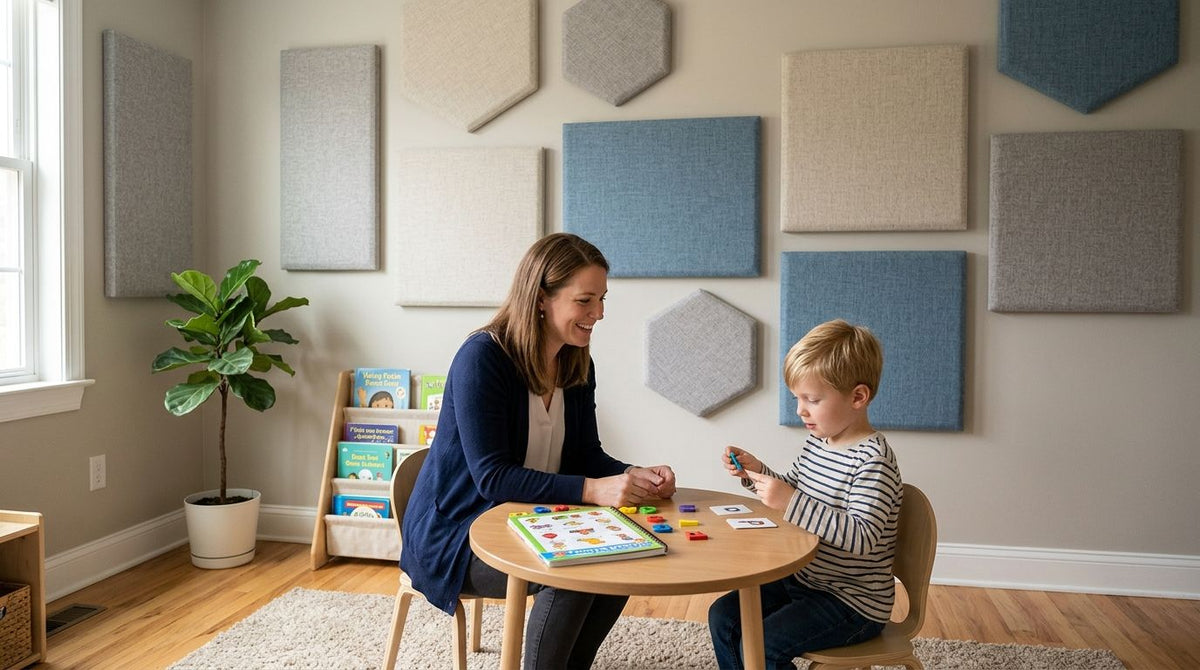
Speech therapy practice rooms need acoustic panels that cut reverberation without turning the room into a padded box, because a speech-language pathologist has to hear a client's /s/, /f/, and /th/ sounds clearly, not guess at them through an echo. A general office panel plan doesn't fit here: SLPs work in small rooms (often 8x10 to 10x12 feet), need durable finishes that survive years of daily pediatric sessions, and can't afford a room so dead that clients lose the feedback loop for their own volume.
- Felt-backed acoustic panels for speech therapy rooms should carry a published NRC rating near 0.75 to absorb the 2,000-4,000 Hz range where consonants live.
- Treat the wall behind the client's chair first, not the waiting room, since that surface reflects speech straight back into recordings.
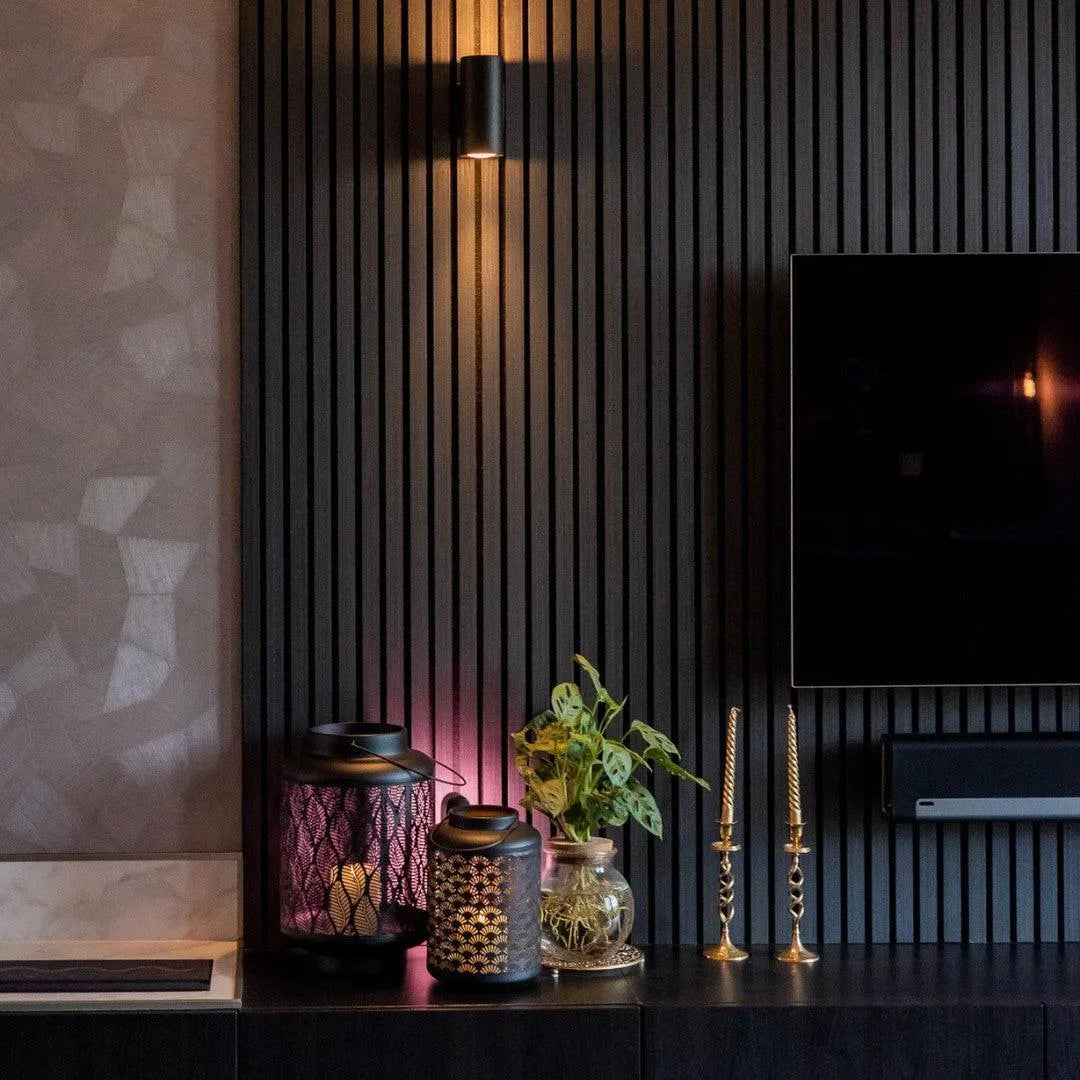
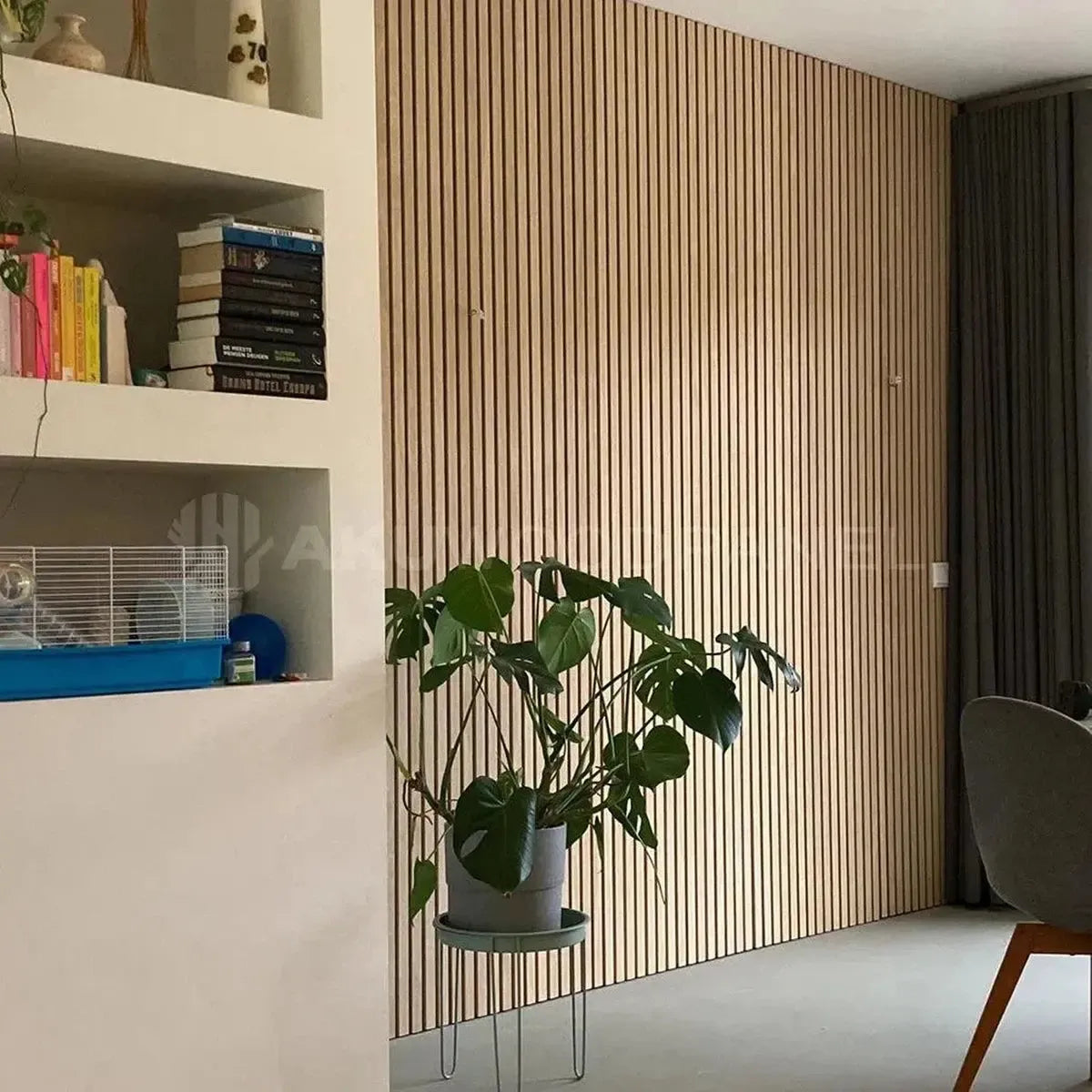
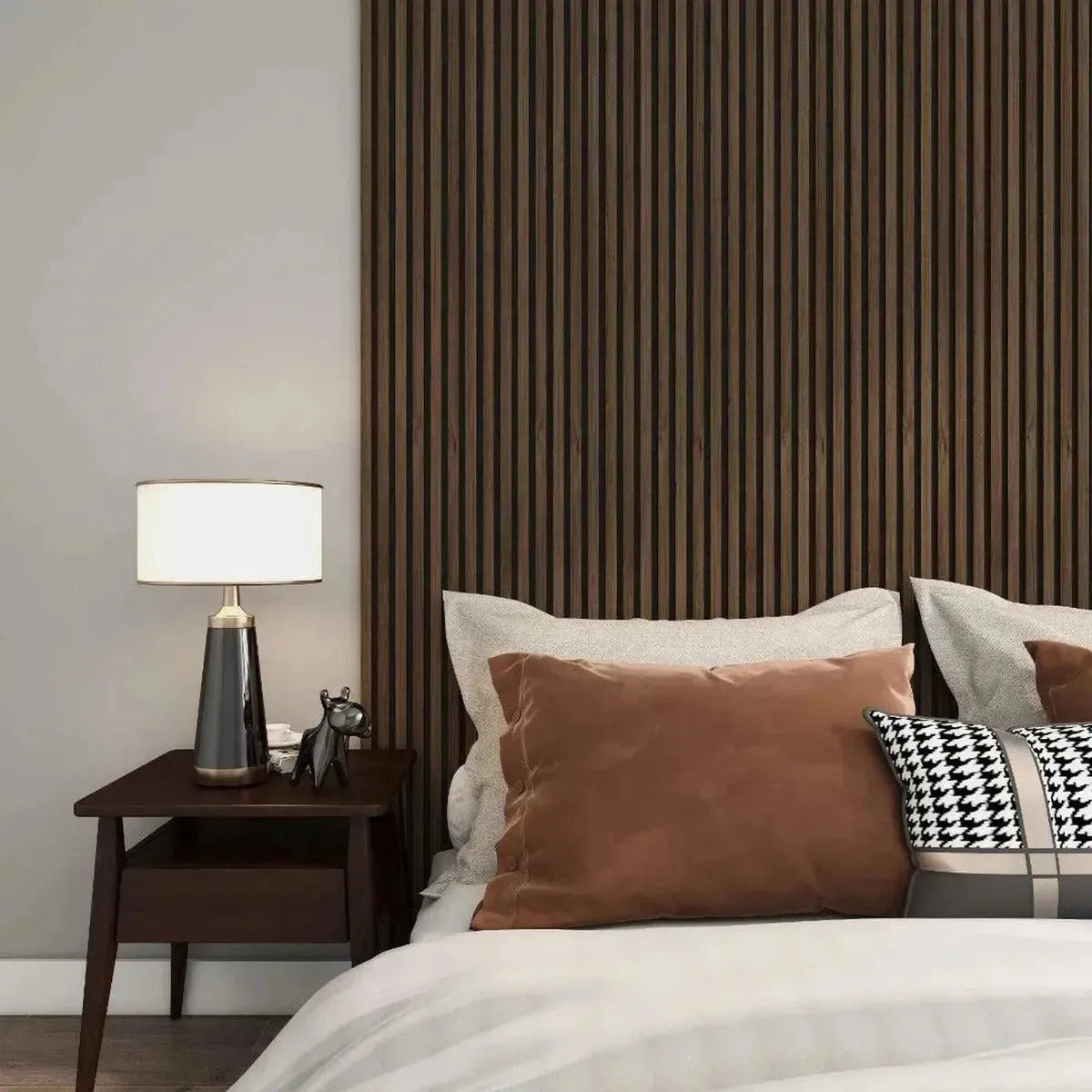
- Real wood veneer slat and hexagon panels from Akuwood Panel outlast foam tiles in clinics running daily pediatric caseloads.
- Leave part of the wall untreated in 2026 installs so the room stays natural enough for volume-matching drills.
Why this matters for speech therapy rooms
Most therapy rooms are converted offices, school storage closets, or leased clinic suites: drywall, laminate floor, a one-way observation window, maybe a whiteboard. Every one of those surfaces bounces sound back at the client, and the frequencies that suffer most are the high-frequency consonants SLPs test constantly. That's a documented acoustics fact, not a clinic-specific stat: sibilants and fricatives cluster in the 2,000-4,000 Hz band, and untreated hard-surface rooms reflect that range the hardest.
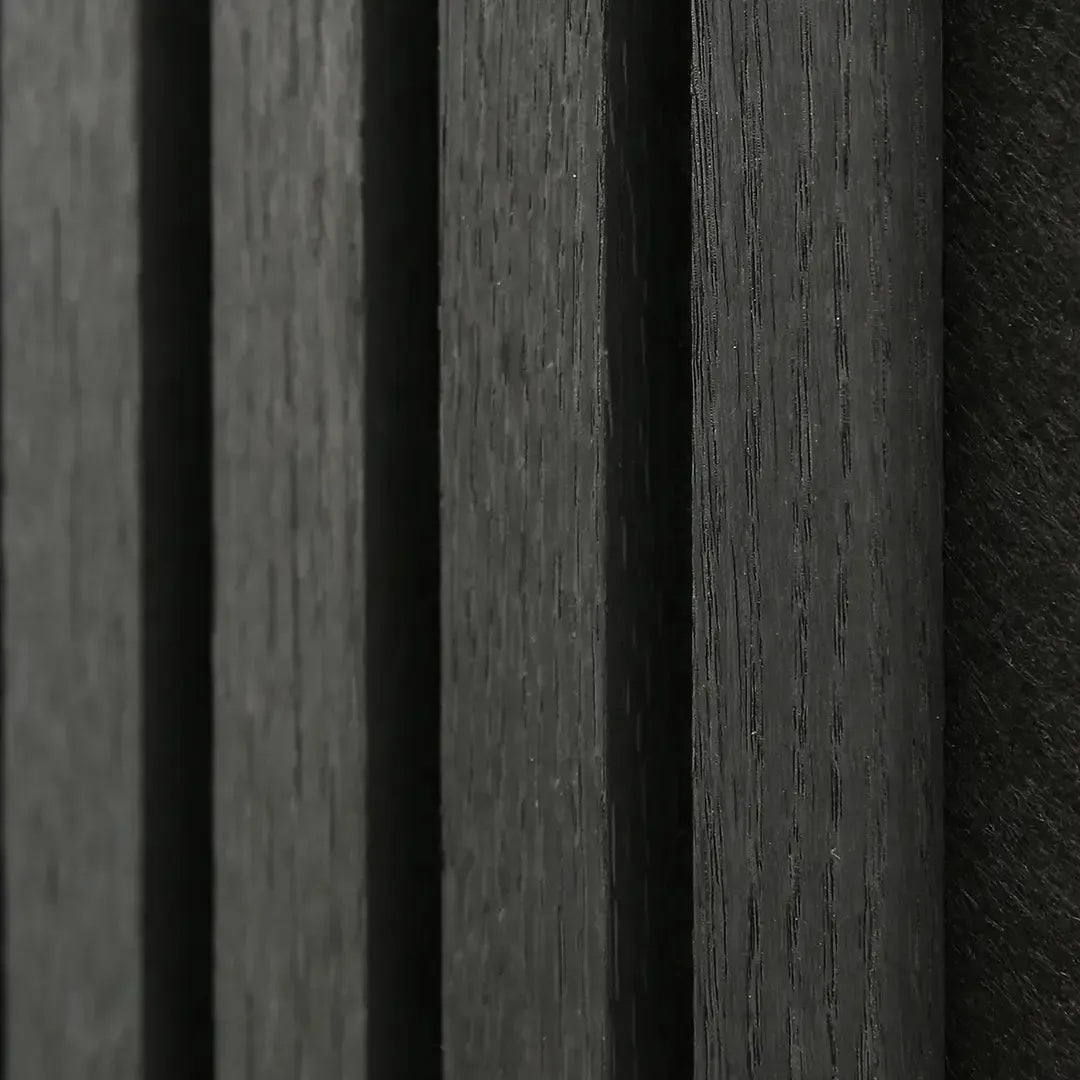
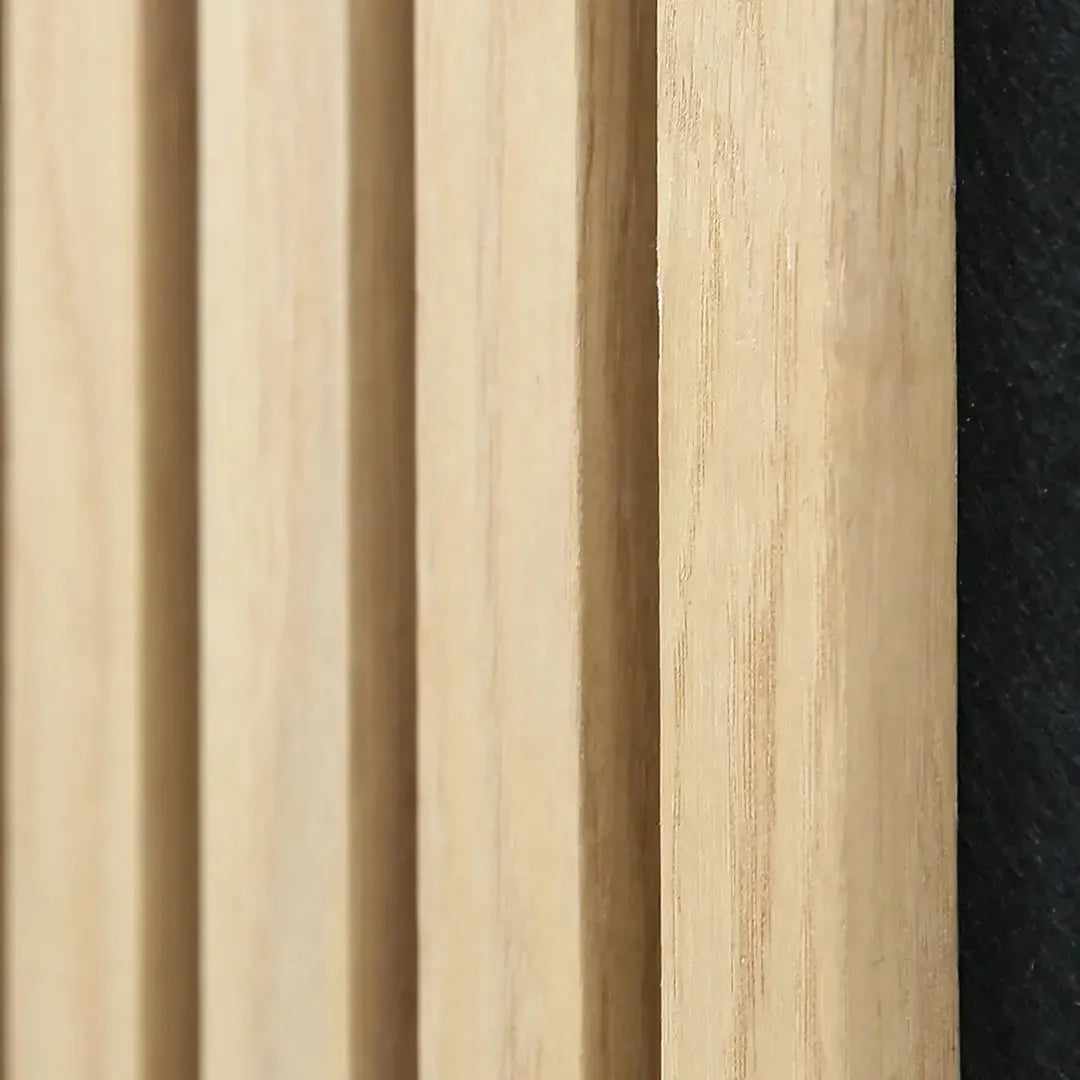
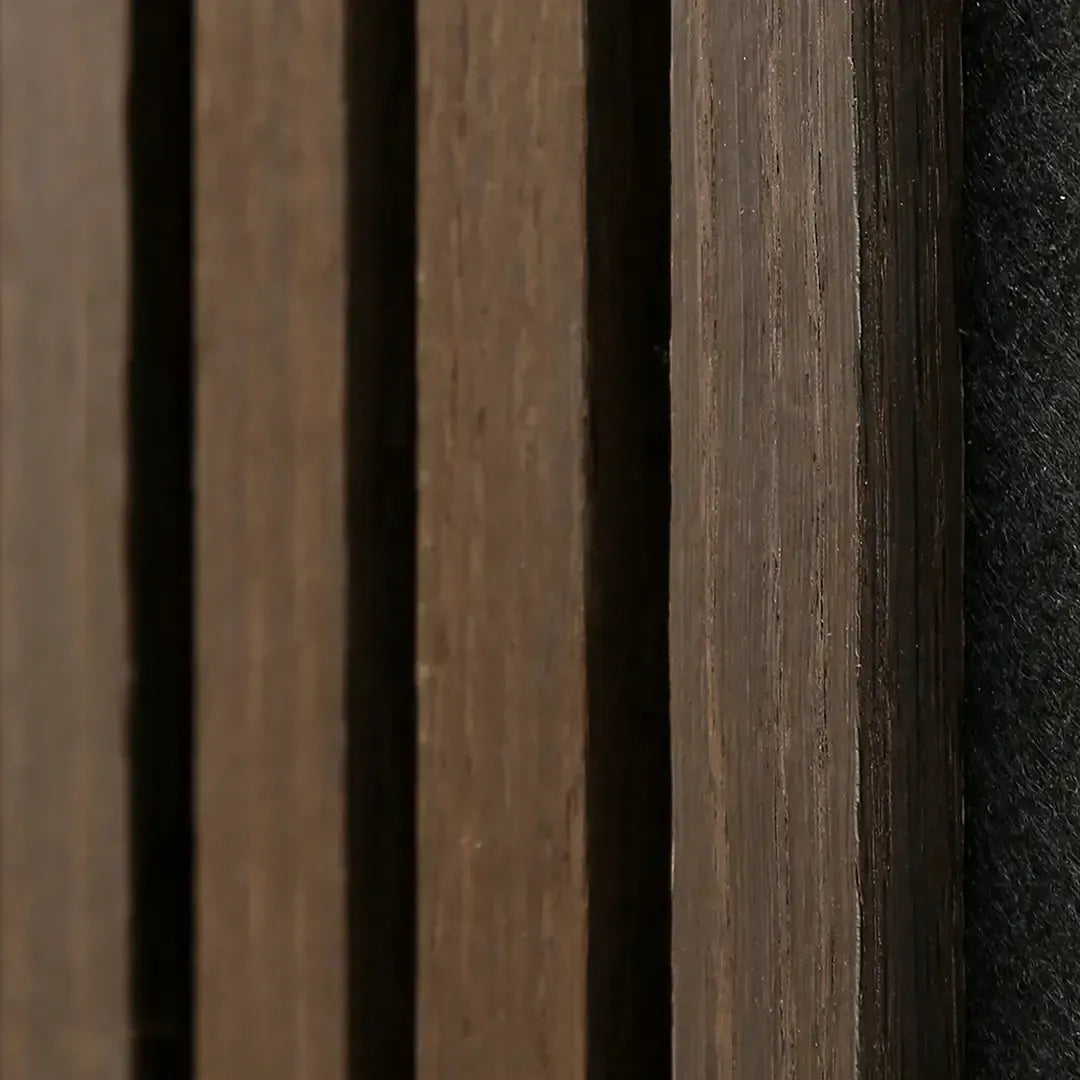
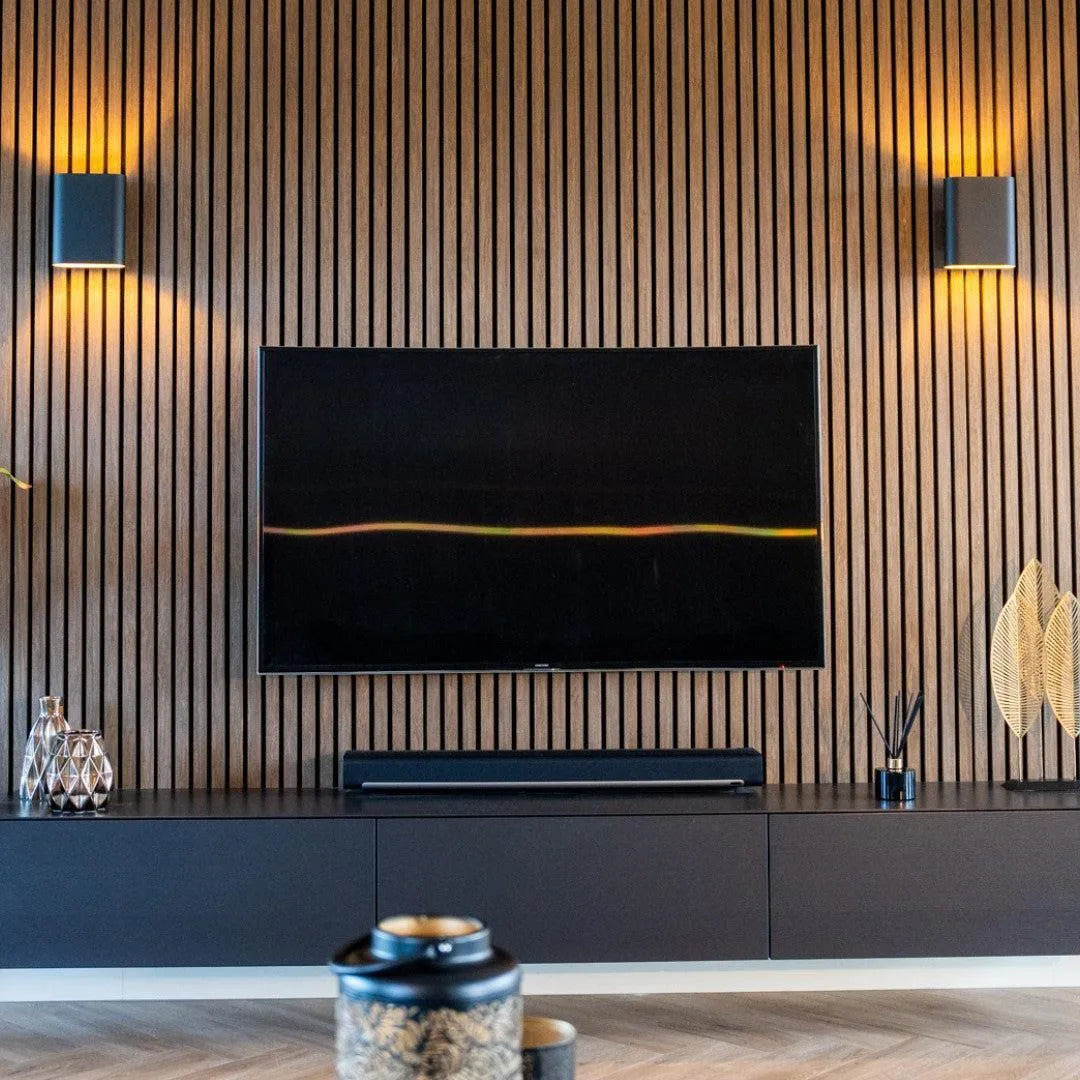
A practice renovating in 2026 doesn't need a recording-studio build-out. It needs targeted coverage on the walls that matter, at a rating that actually absorbs mid-to-high frequencies, without spending a school district's or a private practice's entire facilities budget. The acoustic wood wall panels built for this job pair a real wood veneer finish with a felt-backed core, so the room reads as a clinical, professional space instead of a foam-covered garage.
Measure your room's echo problem
Before buying anything, confirm the room actually has an absorption problem and not just a layout problem.
- Clap once in the empty room and count the decay: more than roughly a second of ring signals a reflection problem worth treating
- Note every hard, flat, parallel surface: drywall pairs, glass observation windows, laminate or vinyl flooring, whiteboards
- Check room size against caseload type: small 8x10 rooms reflect sound faster than shared open-plan clinic bays
- Flag which session types suffer most: articulation drills built around sibilants degrade fastest in an untreated room
Cover your hard, reflective surfaces first
Start with the walls doing the most damage, not the whole room at once.
- Prioritize the wall directly behind the therapist's chair, since it reflects the client's speech straight back into the room and into any recording device
- Treat parallel wall pairs before corners; flutter echo between two facing hard walls is the loudest problem in small rooms
- Skip the window and door walls on the first pass and panel the drywall runs between them
- Leave a portion of hard surface untreated on purpose; a fully deadened room makes it harder for a client to judge their own volume during drills
Choose panels rated for speech-frequency absorption
Not every slat-style panel absorbs sound. Some are purely decorative grooved wood with no acoustic backing at all.
- Look for a published NRC (Noise Reduction Coefficient) number, not just a photo of grooves
- Akuwood Panel's felt-backed hexagon acoustic panels test at an NRC of 0.75, which sits solidly in the range that meaningfully cuts mid-to-high frequency reflection
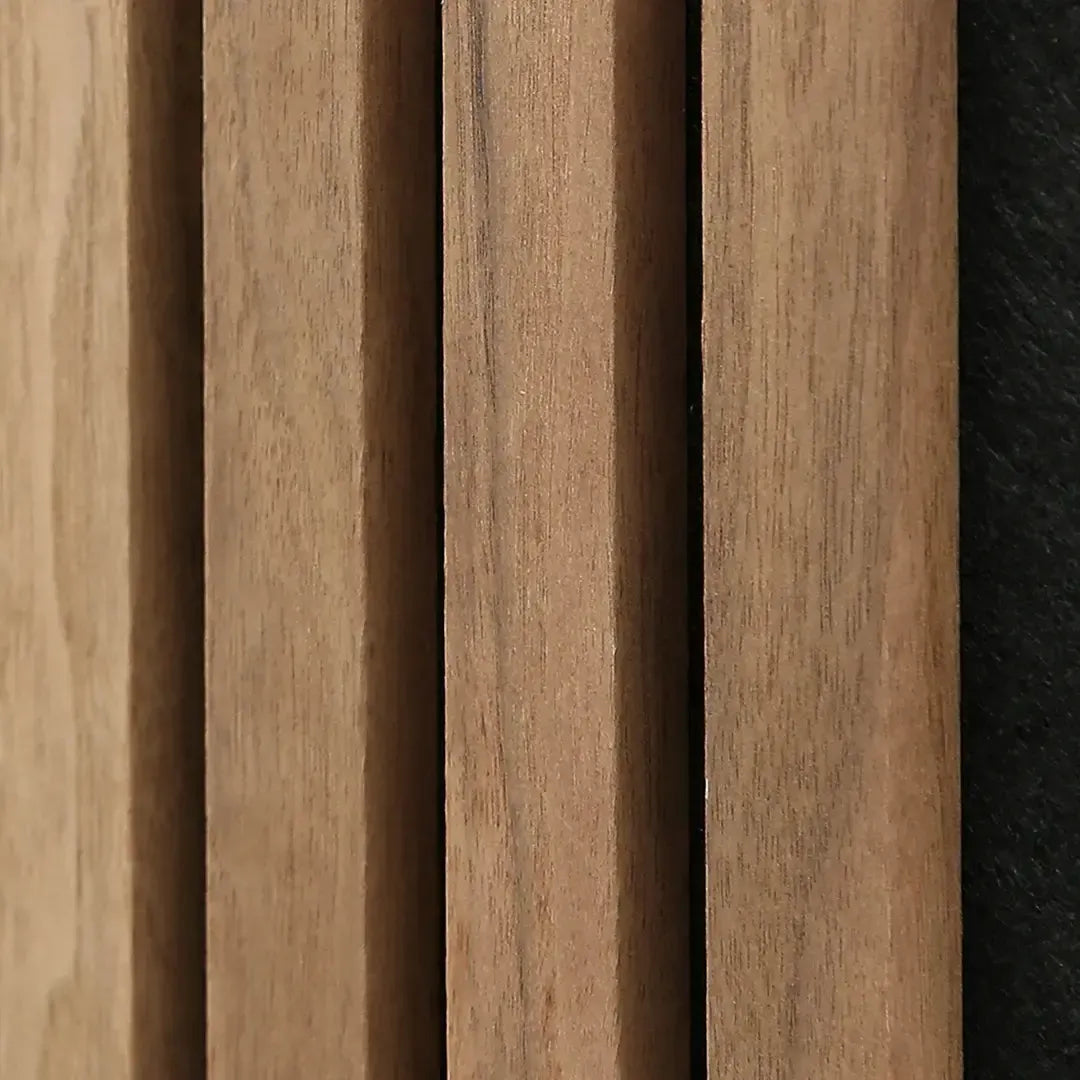
- Confirm the felt layer, not just the wood veneer, is doing the absorbing; solid wood veneer alone reflects nearly as much as drywall
- Skip panels marketed as "acoustic-style" with no tested rating listed anywhere on the product page
Treat the walls behind the client's chair and the therapist's desk
Coverage placement matters more than total square footage in a small room.
- Panel the wall the client faces during drills; that surface reflects sound back toward both the client's ears and any recording mic on the desk
- Add a shorter panel run above head height in rooms with high sightlines or exam-style layouts
- Match the finish to your waiting room or reception panels for a consistent clinical look clients recognize walking in
- Route panel cuts around outlets and light switches rather than working around fixed hardware after the fact
Add coverage for open-plan and multi-room clinics
Shared-bay clinics have a second problem: sound crossing between sessions, not just echo inside one room.
- Run panels above the sightline in shared bays so adjacent sessions don't bleed into each other's recordings
- Prioritize the dividing wall between two active therapy stations over decorative walls facing the hallway
- In school-based SLP rooms, which are often converted storage space with blocked ceiling access, put the full treatment budget into wall coverage since ceiling tile isn't an option
- Use a consistent panel color across all rooms in a multi-therapist clinic so the space reads as one designed environment, not a patchwork of fixes
Install without damaging leased or clinical spaces
Most speech therapy practices operate out of leased suites, and that changes the install plan.
- Confirm with the building or facility manager before drilling into shared walls, especially in medical office parks
- Favor mounting methods that come down cleanly if the practice relocates or the suite is handed back at lease end
- Keep a per-room install record for multi-location practice groups so replacement panels match years later
- Get sign-off from a landlord before covering an entire wall in a room shared with another tenant
Budget panel coverage by square footage
Ordering the right amount up front avoids a second shipment mid-install in 2026, when lead times on custom finishes can slow a renovation timeline.
- Calculate wall square footage and subtract door and window area before placing an order
- Order roughly 5-10% extra to cover cutting waste around outlets, corners, and trim
- Request a sample box before committing to a full room; finish color reads differently under clinic fluorescent lighting than on a screen
- Budget separately for end pieces or trim if the room has exposed panel edges at doorways or corners


Comparing your treatment options
| Option | Best for | Key limitation | Verdict |
|---|---|---|---|
| Untreated drywall + area rug | Budget-first practices with mild echo | Doesn't touch mid-to-high frequency reflection where consonants live | Skip for active caseloads |
| Foam acoustic tiles | Temporary or short-term leased rooms | Looks clinical, degrades, and needs replacing within a few years | Hold for interim fixes only |
| Felt-backed acoustic wood slat panels | Practices wanting real absorption plus a finish parents and clients notice | Costs more upfront than foam, full-wall runs benefit from a professional install | Buy for permanent rooms |
| Felt-backed hexagon acoustic panels | Practices wanting a decorative pattern instead of straight slat lines | Coverage math around corners takes more planning than slat panels | Buy for feature walls |
Common mistakes speech therapy practices make
- Treating the waiting room and skipping the actual therapy room. The reception area isn't where articulation drills happen; the treatment room is.
- Buying foam tiles because they're cheap, then replacing them within a couple of years once the surface degrades and starts peeling at the corners.
- Covering 100% of the wall area, which creates a room so dead that clients can't judge their own speaking volume during feedback exercises.
- Ignoring the observation window or one-way glass, which reflects as hard as bare drywall and undoes coverage on the opposite wall.
- Skipping the sample step and ordering a full room's worth of panels in a finish that reads wrong under clinic lighting.
“If a panel doesn't list a tested NRC rating, you're buying decoration, not acoustic treatment.”
FAQ
What's the best acoustic panel for a speech therapy room?
A felt-backed wood veneer slat or hexagon panel with a published NRC rating near 0.75 is the best fit for a speech therapy room in 2026, since it absorbs the 2,000-4,000 Hz range where consonants sit while still looking like a finished clinical space.
Is real wood veneer better than foam panels for a therapy office?
Real wood veneer panels hold their finish for years and read as professional in a client-facing room, while foam tiles degrade faster and look institutional. Foam still works as a short-term fix in a leased room you're not staying in long.
How many acoustic panels does a small therapy room need?
Coverage depends on wall square footage minus doors and windows, but most small 8x10 to 10x12 rooms only need the two walls facing the client and therapist treated, not the full room. Ordering 5-10% extra covers cutting waste.
Do acoustic panels help with speech clarity or just background noise?
Both. Panels absorb reflected speech off hard walls, which reduces the echo that muddies consonant sounds, and they also cut ambient noise bleeding in from hallways or adjacent rooms.
Can acoustic panels go in a rented clinic suite?
Yes, but confirm with the property manager before drilling into shared walls, and favor mounting methods that come down cleanly if the lease ends. Many practice groups panel only the rooms they plan to occupy long-term.
What NRC rating do speech therapy rooms need?
Look for panels rated around 0.75 NRC, which meaningfully absorbs mid-to-high frequencies without over-deadening a small room. A rating below roughly 0.5 won't move the needle much on a hard-surfaced office.
How much wall coverage stops echo in a small therapy room?
Full wall coverage isn't necessary in most small rooms; treating the two walls facing the client and therapist chairs handles the worst of the reflection. Leaving some hard surface untreated keeps the room from sounding unnaturally dead.
Are hexagon acoustic panels as effective as slat panels?
When both carry the same felt backing and NRC rating, yes, hexagon and slat panels absorb sound equally well. The choice between them comes down to the wall pattern you want, not acoustic performance.
One last thing
Akuwood Panel's felt-backed hexagon panels ship four 32-inch panels per box, which is usually enough to cover one full accent wall behind a therapy chair without cutting into a second box. Order the full sample box before committing a 2026 renovation budget to a finish you've only seen on a screen; clinic fluorescent lighting shifts wood tone more than most people expect.


 Better performance and aesthetic appeal
 In Stock