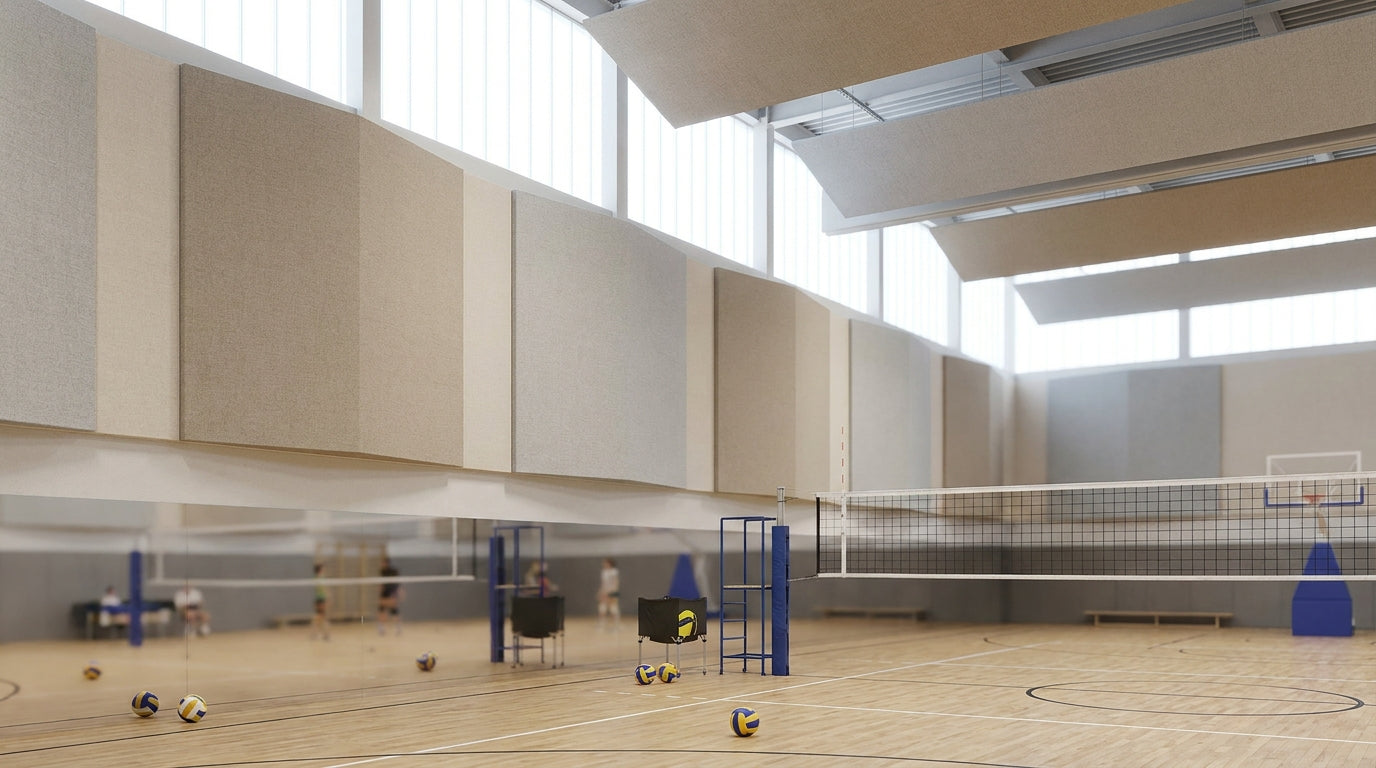
Indoor volleyball courts and multipurpose sports halls turn every whistle, serve, and shout into an echo problem the moment ceilings climb past 20 feet and walls stay bare concrete or block. This guide breaks down what acoustic panels for volleyball court walls actually need to do their job, and which Akuwood Panel picks hold up under ball contact, humidity, and daily use in 2026.
- Acoustic panels for volleyball court walls need NRC 0.75 or higher — hexagon felt-backed panels from Akuwood Panel hit that number at $165.95 per box.
- Mount panels above the 8-foot impact zone; anything lower takes ball hits daily and voids most warranties.
- Standard drywall or bare block above the dasher line loses 40-plus percent of speech clarity in gyms over 20 feet tall.
- The Hexagon Acoustic Panel Walnut with Gray Felt is the safe pick for shared-use courts — Buy.
- Slat panels cost less per square foot but need a felt backing to hit useful acoustic performance in large volume rooms.
Who this is for
This guide is for facility managers, athletic directors, and gym owners fitting out an indoor volleyball court, a multipurpose hall used for volleyball plus basketball or futsal, or a fitness center adding a court space. If your PA announcements blur together, coaches have to shout over reverb, or parents in the bleachers can't follow the referee's calls, the room has an acoustics problem, not a sound-system problem. Regulation volleyball courts run 59 feet by 29.5 feet with ceiling clearance around 23 feet — that much air volume with hard, parallel surfaces is a reverb chamber by default.
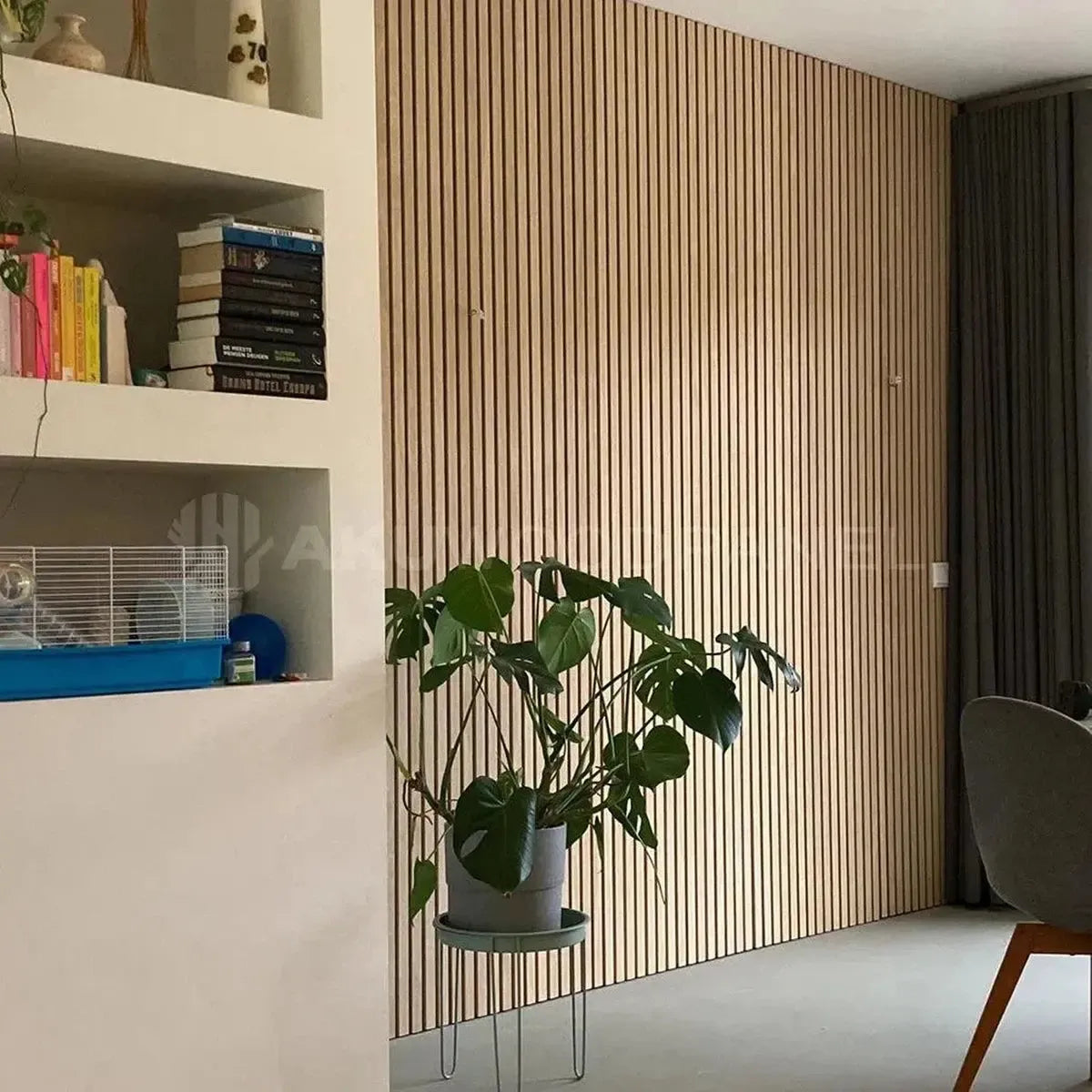
Acoustic slat panels cut echo in sports halls the same way they do in offices and studios: by breaking up sound waves before they bounce wall-to-wall. The difference in a sports facility is durability — panels need to survive ball impact, sweat, and daily cleaning, not just look good.
Why this matters
Most gyms get acoustic treatment wrong by fixing the ceiling and ignoring the walls, or by installing standard commercial foam that looks fine in a conference room and falls apart under a volleyball serve. A facility spending money on acoustic panels for a volleyball court in 2026 needs a product rated for high-traffic public assembly use, not decorative foam meant for a home theater. Get the spec wrong and you're re-doing the wall inside two years.
What to look for in acoustic panels for a volleyball court
NRC rating of 0.70 or higher
Noise Reduction Coefficient (NRC) measures how much sound a panel absorbs versus reflects. Akuwood Panel's hexagon acoustic line rates NRC 0.75, which is the threshold that actually changes how a 23-foot-ceiling gym sounds during a match. Anything under 0.5 is closer to decorative than acoustic.
Impact resistance above the dasher line
Balls hit walls constantly during warmups and rallies. Panels mounted below roughly 8 feet need impact-rated backing or should be skipped in favor of padded wall mats, with acoustic treatment starting above that line. Wood veneer over engineered board holds up better than fabric-wrapped foam, which tears on contact.
Moisture and sweat tolerance
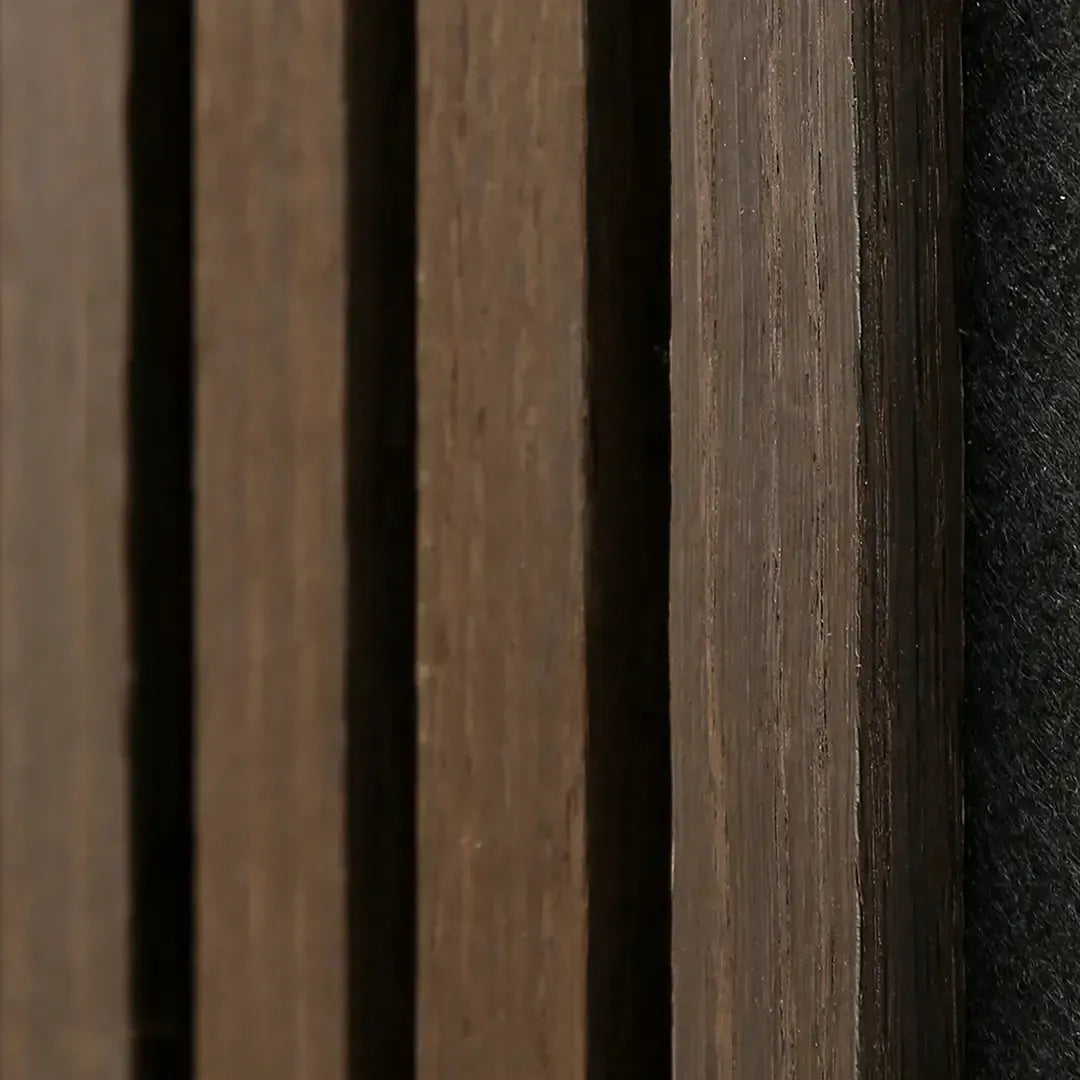
Gyms run humid, especially during tournaments with packed bleachers. A premium 3-sided wood veneer finish resists warping better than raw MDF, and it's why felt-backed panels built for interior use outperform cheap fiberboard tiles in a sports hall over a full season.
Fire rating for public assembly occupancy
Most sports facilities fall under public assembly building codes, which require Class A or Class B fire-rated wall finishes above certain square footage. Confirm the fire rating documentation for any panel line before ordering — this is a code check, not a style choice.
Coverage efficiency for large wall runs
A multipurpose court wall can run 50 feet or more per side. Panels sold in boxes of four, like the hexagon line, cover ground faster during install than single-tile products, cutting labor time on a job with hundreds of square feet to treat.
Color match to the rest of the facility
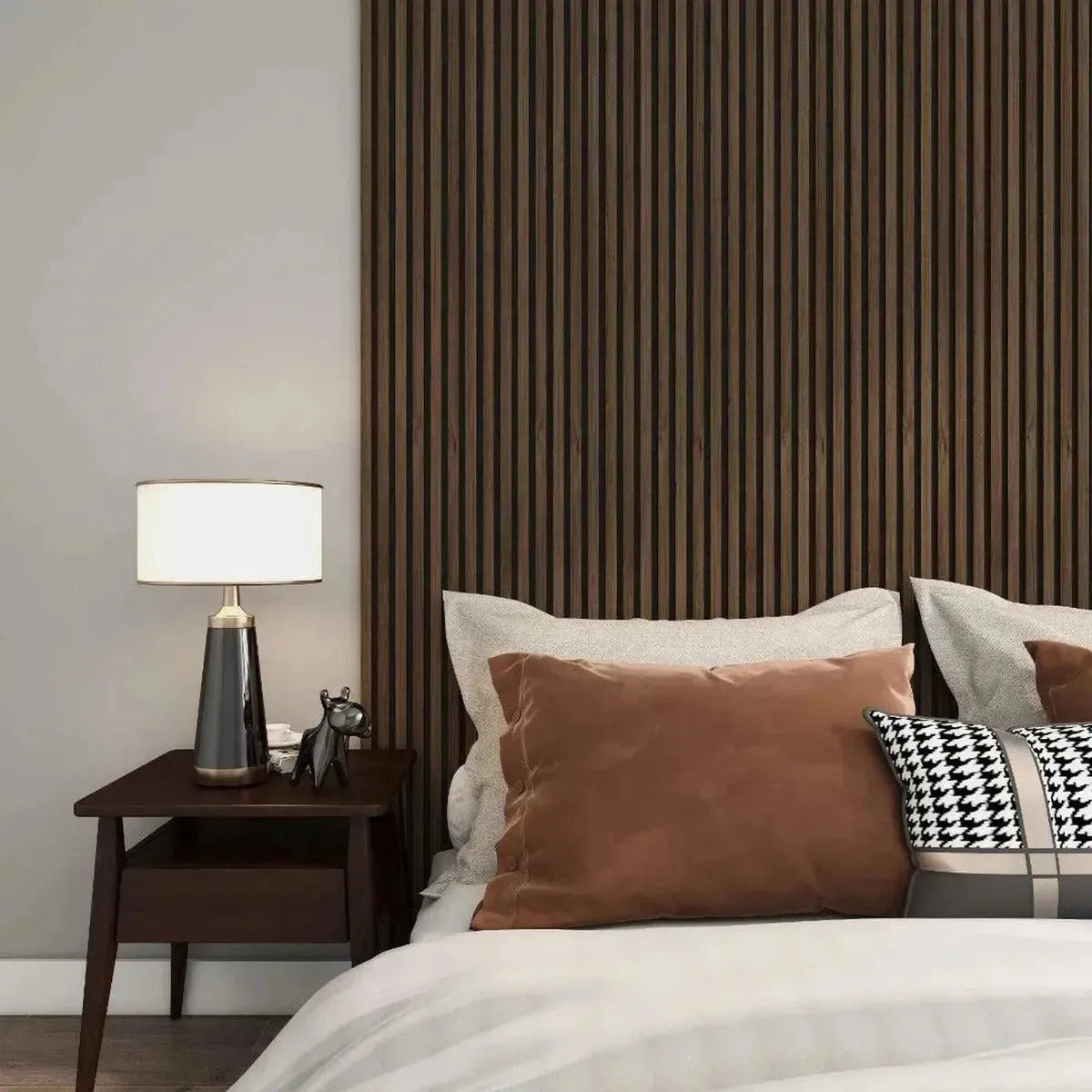
Multipurpose courts double as event spaces, so wall color needs to work with branding, lighting, and photography, not just acoustics. Walnut and smoked oak read darker and hide scuff marks better than natural oak in a high-traffic gym.
Top picks for volleyball and multipurpose sports courts
The safe pick: Hexagon Acoustic Panel Walnut with Gray Felt — NRC 0.75, $165.95 per box of four. This is the panel to specify when you need proven sound absorption and a finish that won't show every scuff after a season of tournaments. Buy.
The matched-tone option: Hexagon Acoustic Panel Smoked Oak with Gray Felt — same NRC 0.75 rating, $165.95 per box, but a darker finish that suits multipurpose halls with dimmer LED lighting rigs common in 2026 gym retrofits. Buy.
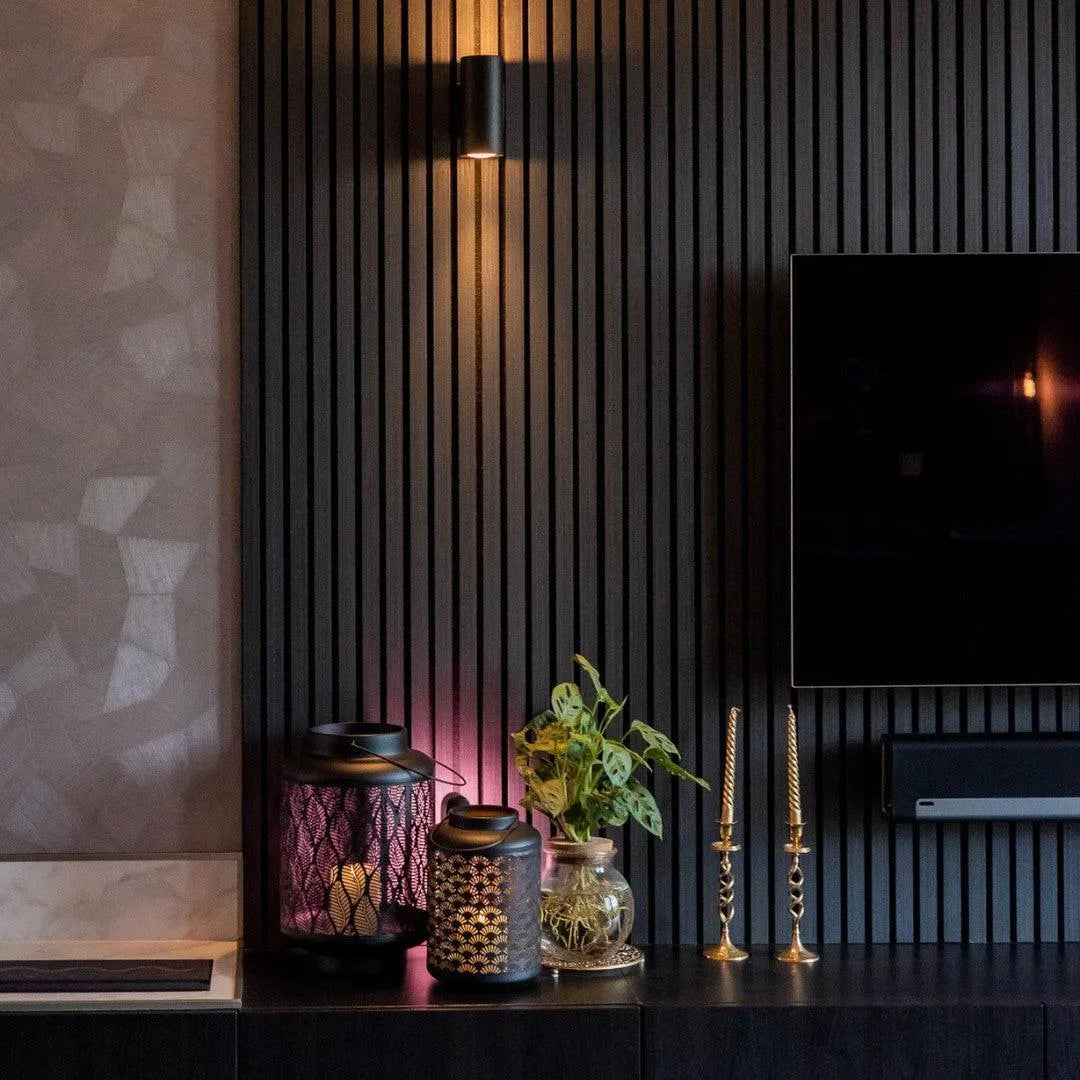
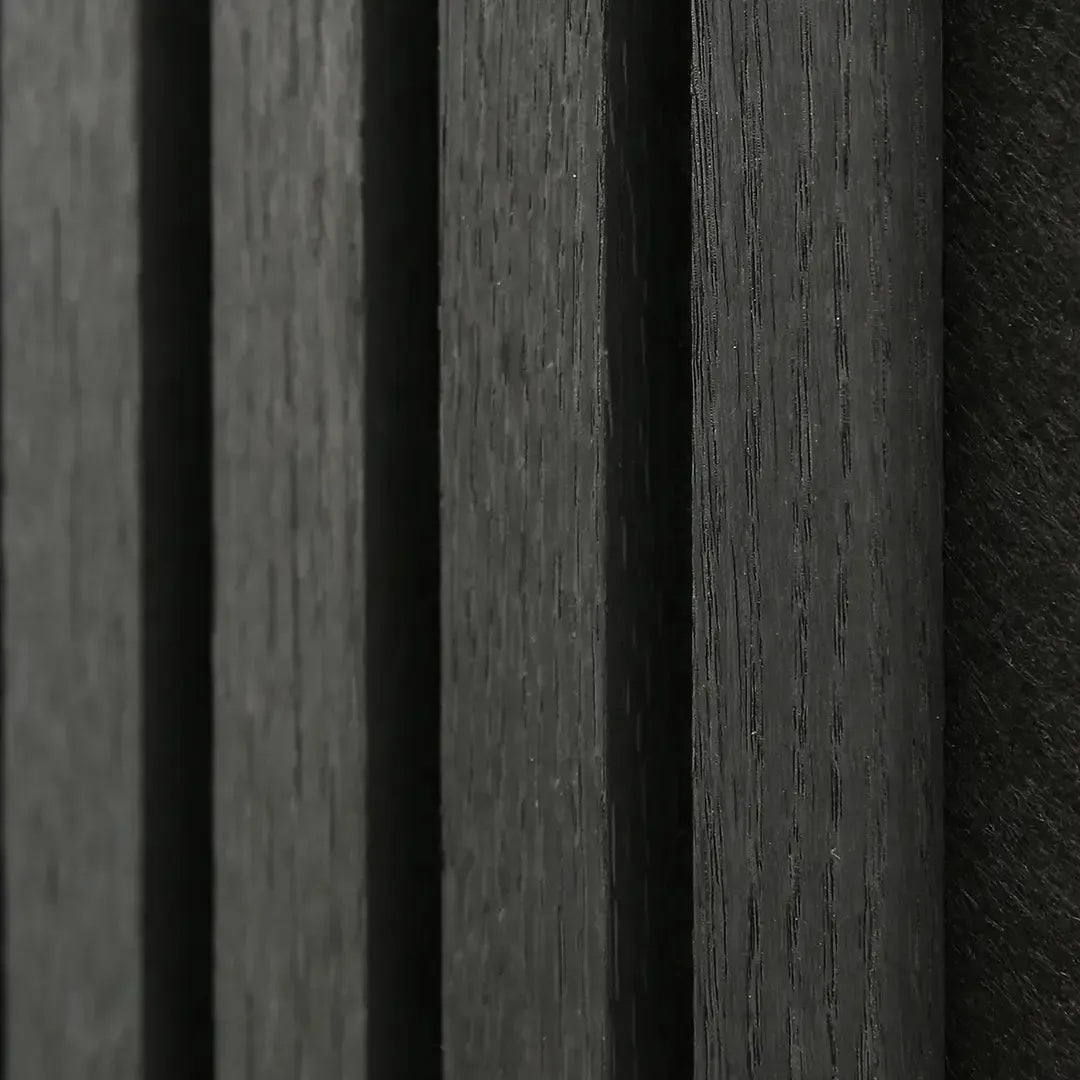
The budget full-wall option: Acoustic Slat Wall Panel Smoked Oak with Gray Felt — $169.95, premium 3-sided wood veneer with felt backing, better suited to lower-traffic sidelines and lobby areas adjacent to the court rather than the direct impact zone. Consider.


What to avoid
- Bare foam acoustic tiles. They soften low-cost budgets but tear under ball contact within a season and don't come close to the durability profile a public assembly space needs in 2026.
- Full-height panel coverage down to the floor. Below the 8-foot line, wall treatment should be impact padding, not decorative acoustic panel — mixing the two functions in one product usually fails both.
- Uncoated MDF slat panels. Anything without a proper wood veneer or sealed finish absorbs sweat and humidity, then warps at the seams within a year in a gym environment.
“If the panel isn't rated for impact above the 8-foot line, it's a lobby product, not a court-wall product.”
Verdict comparison
| Panel | NRC Rating | Price (per box) | Best Zone | Verdict |
|---|---|---|---|---|
| Hexagon Acoustic Panel Walnut with Gray Felt | 0.75 | $165.95 | Full court walls, above 8 ft | Buy |
| Hexagon Acoustic Panel Smoked Oak with Gray Felt | 0.75 | $165.95 | Full court walls, dim lighting | Buy |
| Acoustic Slat Wall Panel Smoked Oak with Gray Felt | Not felt-rated at hexagon level | $169.95 | Lobby, sidelines, low-traffic zones | Consider |
| Uncoated foam tiles (generic) | Varies, often below 0.5 | Lower upfront | Not recommended for courts | Skip |
FAQ
What's the best acoustic panel for a volleyball court?
Hexagon acoustic panels rated NRC 0.75, like the walnut or smoked oak felt-backed lines from Akuwood Panel, work best for volleyball court walls in 2026. They combine sound absorption with a wood veneer finish that survives daily ball contact and sweat exposure.
Do acoustic panels work in high-ceiling multipurpose gyms?
Yes, but only above a certain coverage threshold. A gym with a 23-foot ceiling needs wall coverage across most of the perimeter, not a single accent wall, to meaningfully cut reverb during matches.
How high should acoustic wall panels be mounted in a sports hall?
Start acoustic treatment above roughly 8 feet, where ball contact is rare. Below that line, use impact padding rather than decorative acoustic panel, since foam and thin veneer tear under repeated hits.
Is wood veneer durable enough for a sports court wall?
Premium 3-sided wood veneer over engineered board holds up well above the impact zone, especially with a felt-backed acoustic layer. It resists warping from gym humidity better than raw MDF or fabric-wrapped foam.
How much does it cost to treat a gym wall with acoustic panels?
Hexagon acoustic panels run $148.95 to $165.95 per box of four as of 2026, with acoustic slat panels priced similarly per linear coverage. Total cost scales with wall square footage, so get a coverage count before ordering.
Can acoustic panels handle ball impact in a volleyball court?
Panels mounted above the 8-foot line generally avoid direct ball contact during normal play. Panels mounted lower need impact-rated backing, which most decorative acoustic lines are not built for.
What NRC rating do I need for a sports hall?
Aim for NRC 0.70 or higher in a gym with a ceiling over 20 feet. Anything below 0.5 functions as decoration rather than meaningful echo control in a large-volume room.
Are hexagon acoustic panels good for multipurpose courts?
Yes — the modular hexagon shape covers large wall runs efficiently and the felt-backed versions hit NRC 0.75, which suits shared-use courts handling volleyball, basketball, and futsal in the same space.
One last thing
The detail most facility managers miss: acoustic panel coverage matters more than acoustic panel quality once you're below about 25% wall coverage. A premium NRC 0.75 panel on one accent wall does less for reverb than a mid-tier panel spread across three walls. Budget for square footage first, finish second.
 Better performance and aesthetic appeal
 In Stock