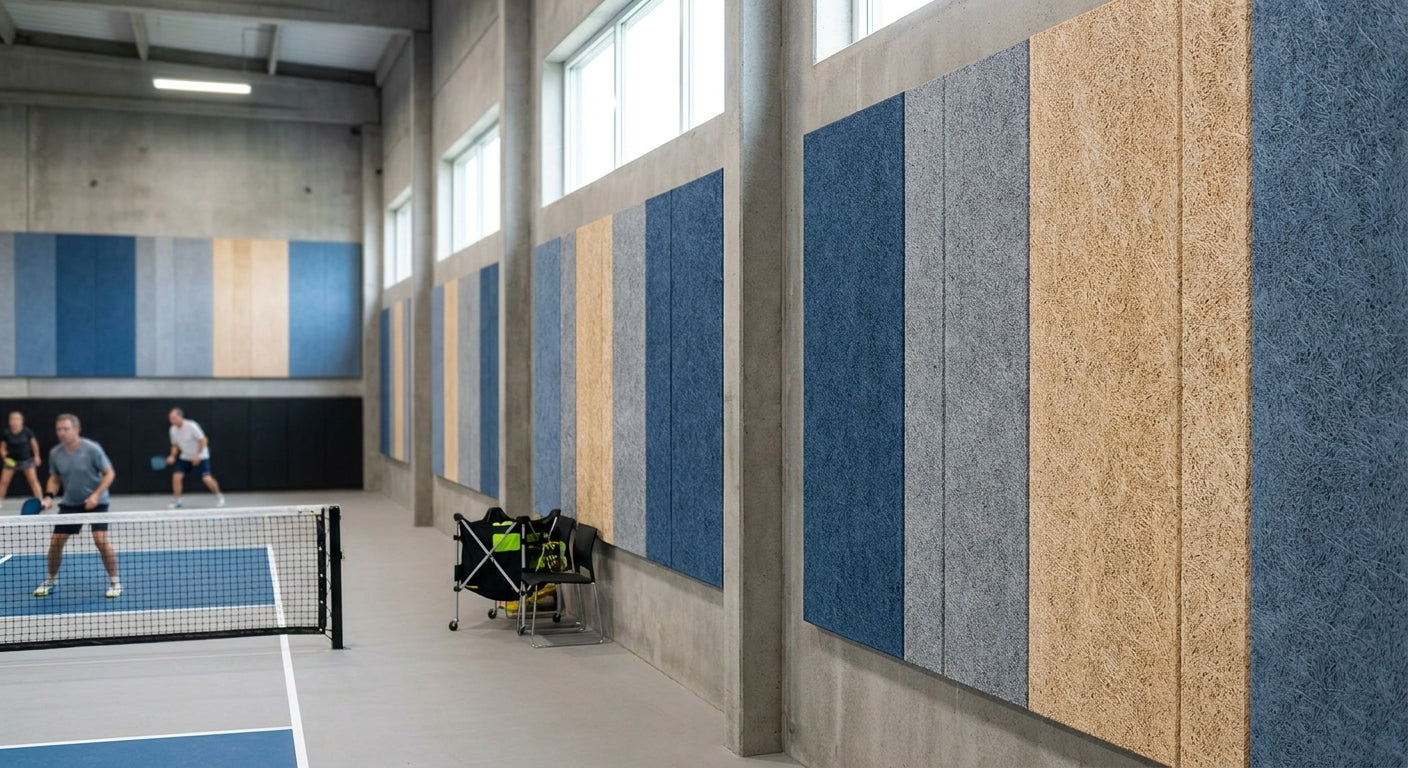
Indoor pickleball courts built inside metal warehouses, converted racquetball facilities, or big-box retail shells turn every paddle pop and shoe squeak into a wall-to-wall echo — the wrong wall treatment either does nothing or gets torn apart by ball strikes inside a year.
- Hexagon Acoustic Panel Walnut carries a 0.75 NRC rating and handles end-wall placement behind the net — Buy.
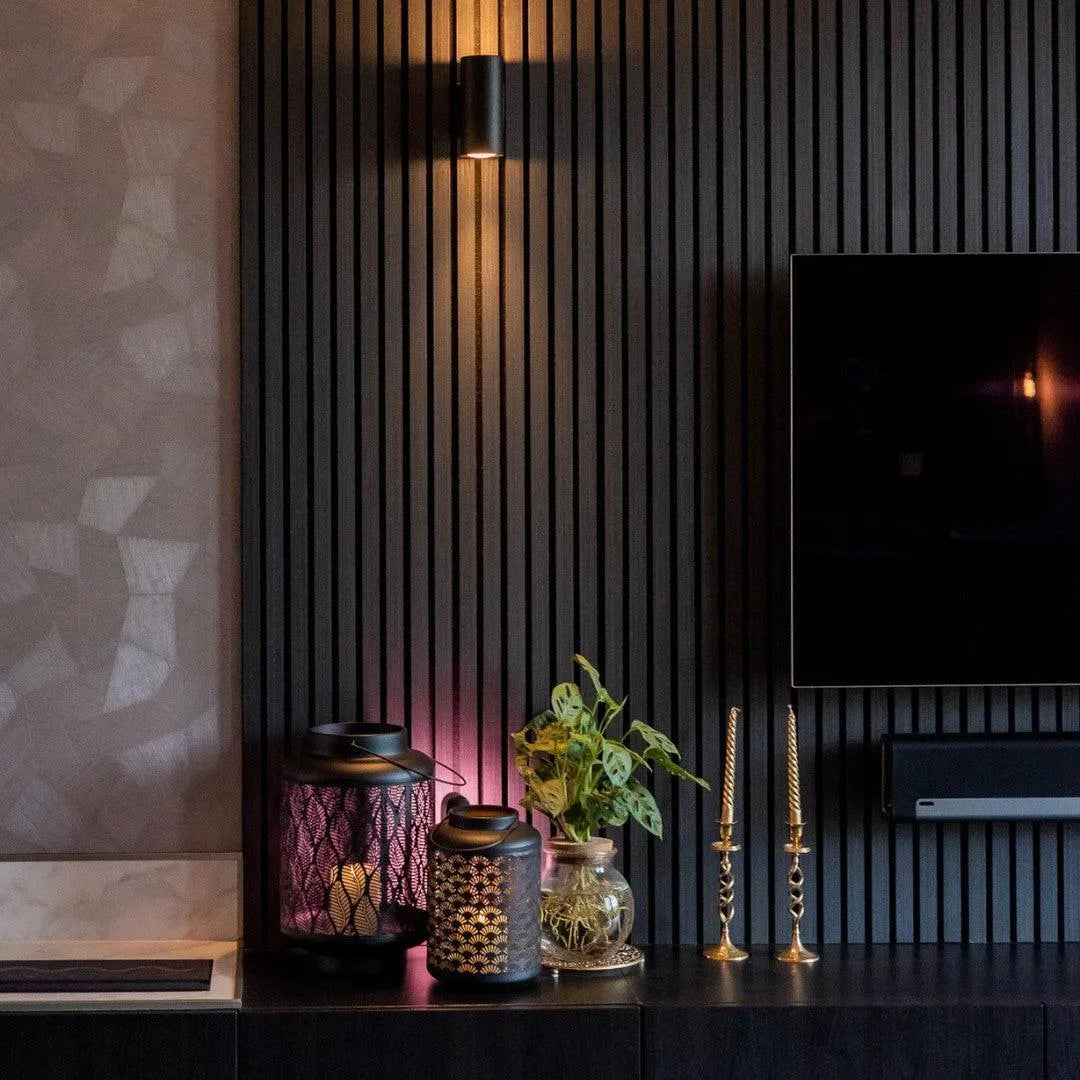
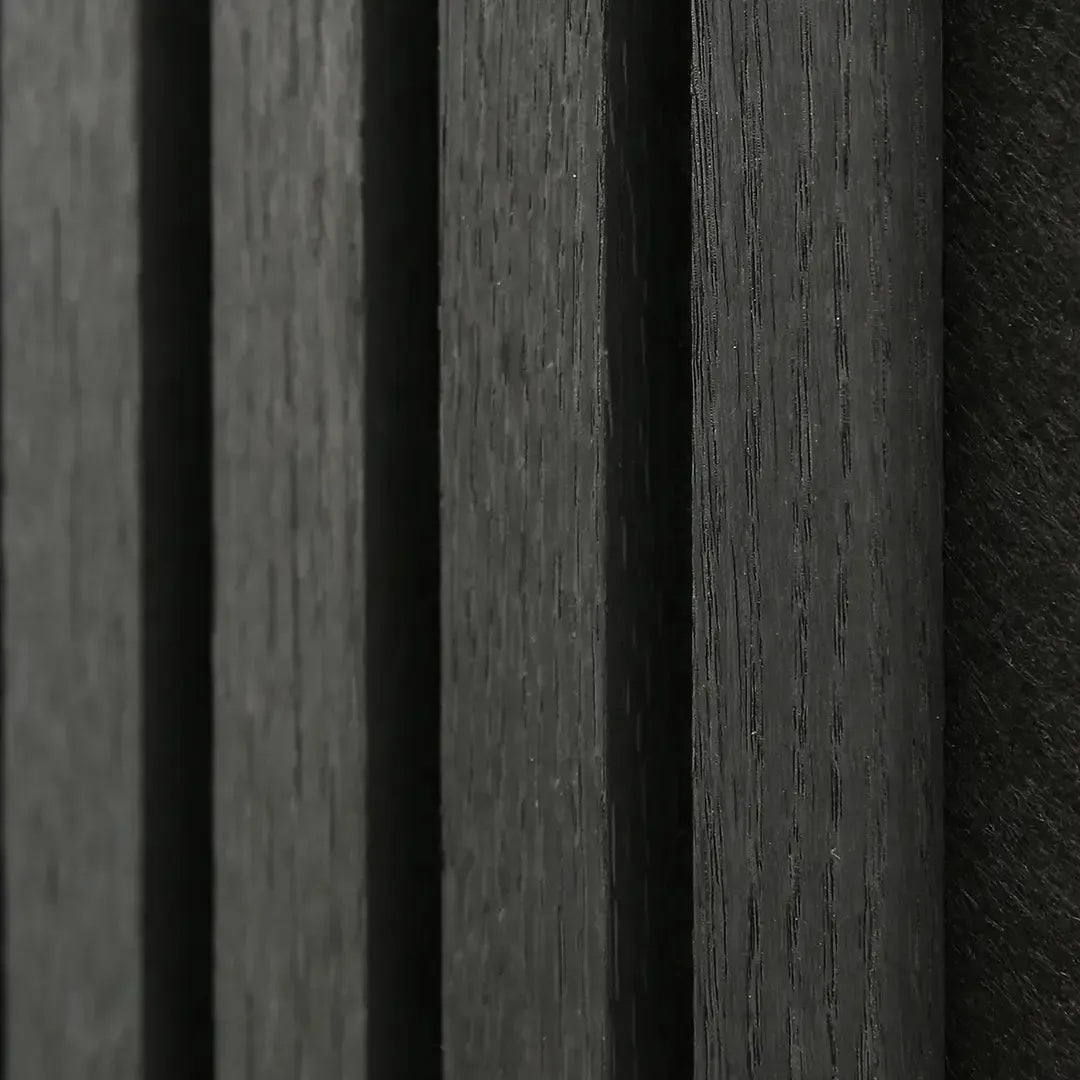
- Acoustic Slat Wall Panel Black Oak resists paddle scuffs on side walls at $177.95 per panel — Buy.
- Skip foam and fabric-wrapped panels for acoustic panels for pickleball court walls; they tear on first ball contact.
- Order the Full Sample Box before a court-wide purchase — $10 beats a mis-matched finish across 2026 court walls.
Why this matters
A pickleball court built inside a metal-clad warehouse or an old tennis bubble has none of the soft surfaces a wood-floor gym or carpeted rec room has — just concrete, steel, and glass. That combination bounces the paddle-on-ball pop and player chatter around the room instead of absorbing it, and facility owners opening courts in 2026 keep hitting the same complaint from players and neighbors alike: it's too loud to hear a line call from across the court.
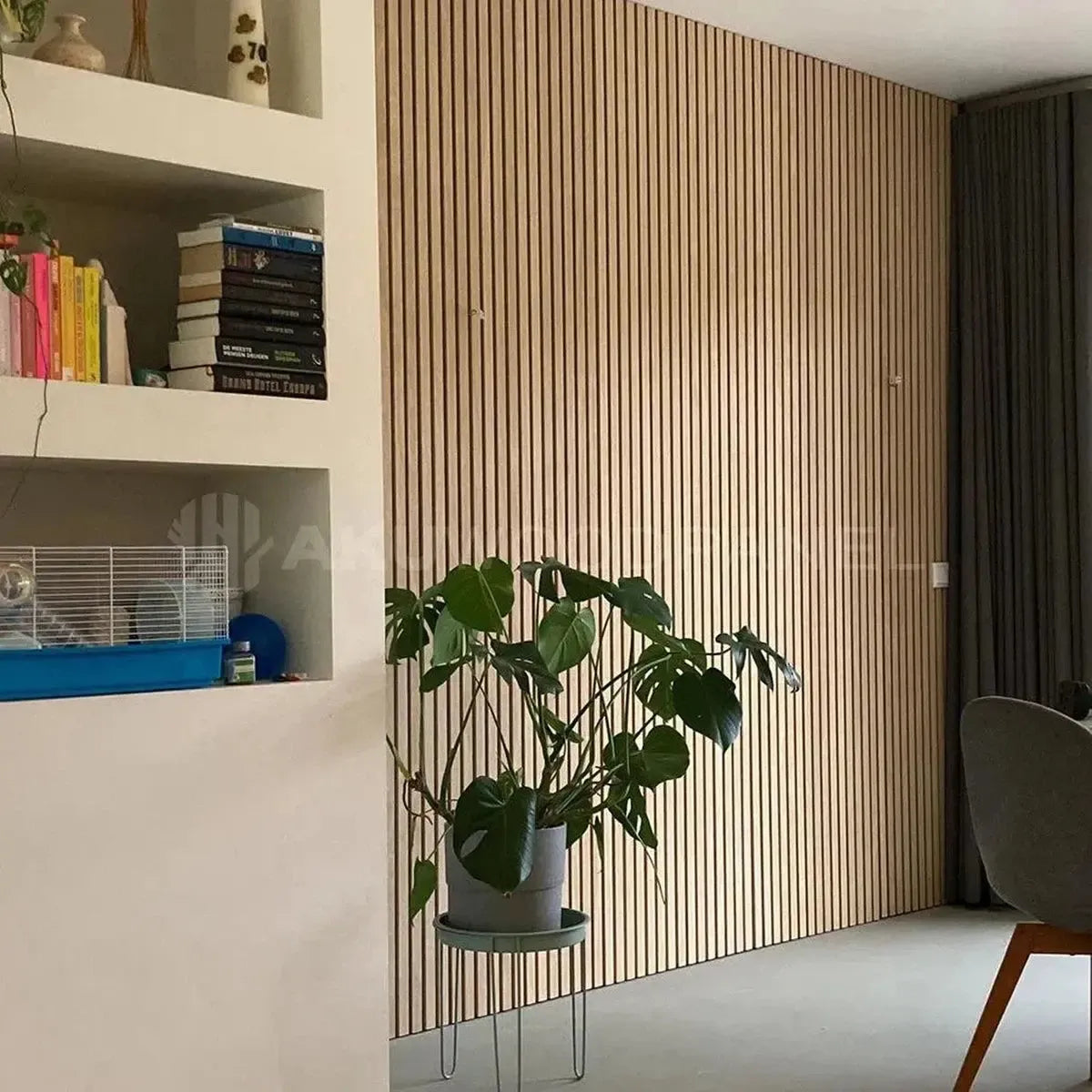
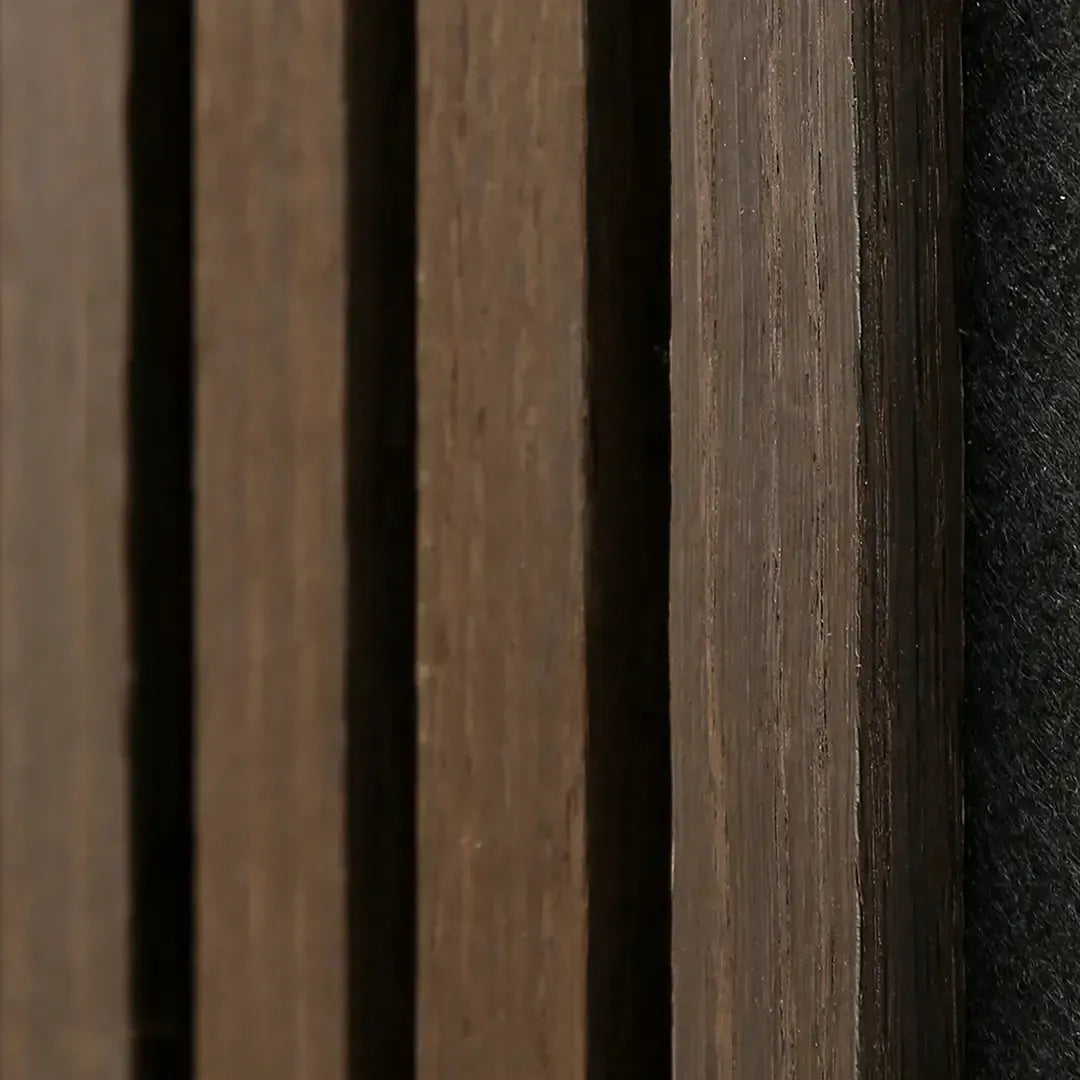
Acoustic slat and hexagon wood panels solve this differently than foam or fabric because they combine a felt or acoustic backing with a real wood veneer face that survives contact. The acoustic slat panels built for sports halls follow the same logic pickleball facilities need: absorb sound at the wall without turning the room into a padded box.
Who this is for
This guide is for facility owners, gym operators, and HOA or rec center directors building or retrofitting an indoor pickleball court in 2026 — anyone converting a warehouse bay, old tennis dome, or unused retail floor into paddle courts and getting complaints about echo, noise bleed to neighboring units, or players unable to hear calls over reverberation.
What to look for in acoustic panels for pickleball court walls
Sound absorption rating (NRC)
NRC (Noise Reduction Coefficient) tells you how much sound a panel absorbs versus reflects. A panel rated at 0.75 NRC absorbs roughly three-quarters of the sound hitting it, which matters more on courts than in a living room because a pickleball ball strike happens dozens of times per minute across multiple simultaneous games.
Impact and abrasion resistance
Balls miss the net. Paddles clip walls. Any panel going up within 6-8 feet of court boundaries needs a real wood veneer face, not a fabric wrap or exposed foam core that tears on first contact — this is the single biggest reason foam acoustic tiles fail in sports facilities within months.
Coverage speed for large wall runs
A single pickleball court runs roughly 44 by 20 feet of playing surface, and most facilities run 2-6 courts side by side. Panels that install in continuous slat or hexagon runs cover wall area faster than tile-by-tile foam systems, which matters when you're treating thousands of square feet before a 2026 opening date.
Fire rating for commercial buildings
Any material going into a commercial athletic facility needs to clear local fire code, and this gets checked during permitting long before the first serve. Confirm fire rating documentation before ordering at court-wide volume — retrofitting after a failed inspection costs far more than the panels themselves.
Maintenance in humid, high-traffic air
Courts run HVAC systems hard, and player sweat plus condensation on metal buildings raises humidity near walls. Wood veneer over composite or MDF core holds up better than raw MDF panels, which swell and delaminate in facilities that don't run tight humidity control.


Top picks for indoor pickleball court walls
The sound-first pick: Hexagon Acoustic Panel Walnut Hexagon geometry breaks up flat reflective surfaces better than a straight slat run, and the wood veneer face carries a 0.75 NRC rating for absorbing the paddle pop off end walls behind each net. Best placed where players stand closest to hard walls and echo is worst. Verdict: Buy for end-wall treatment.
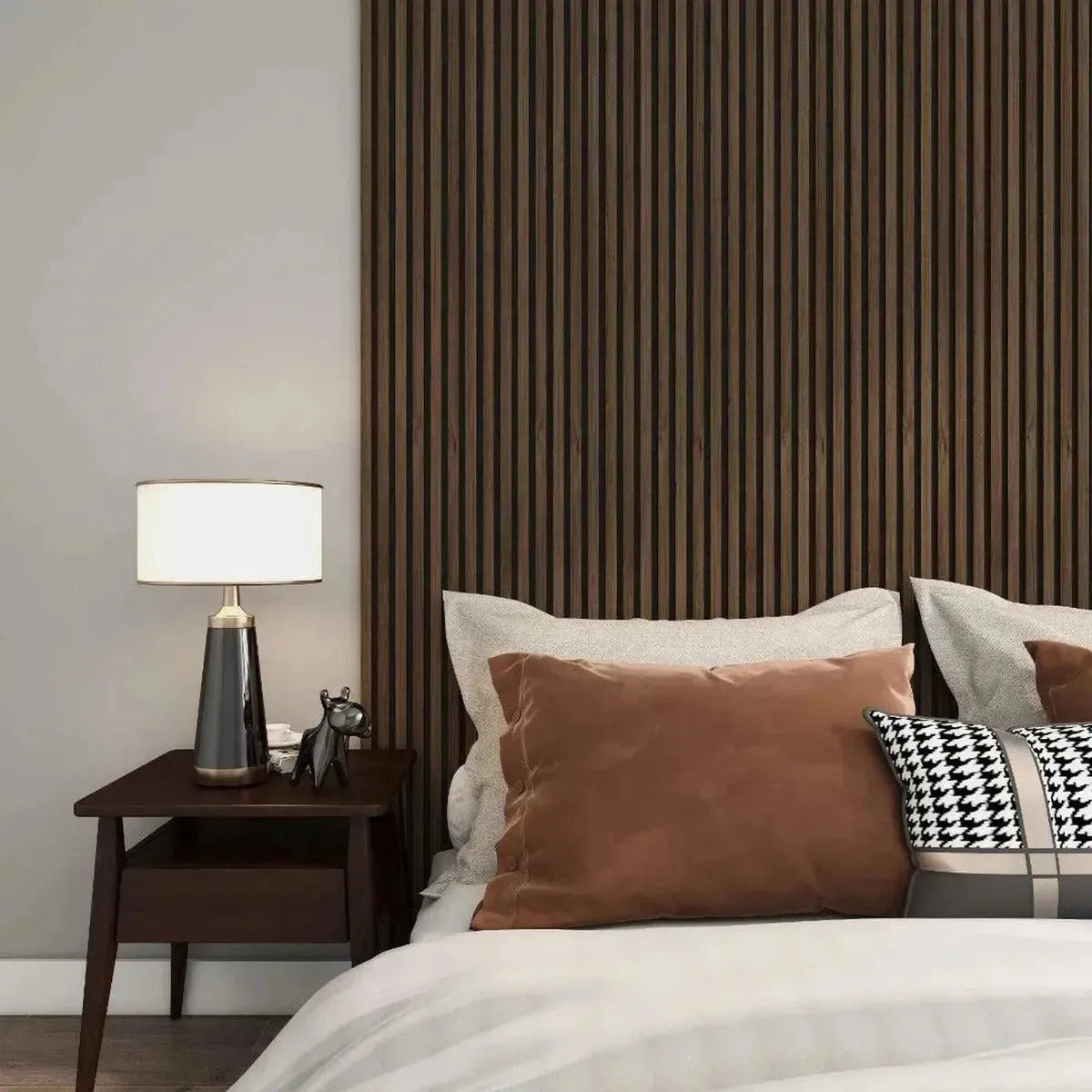
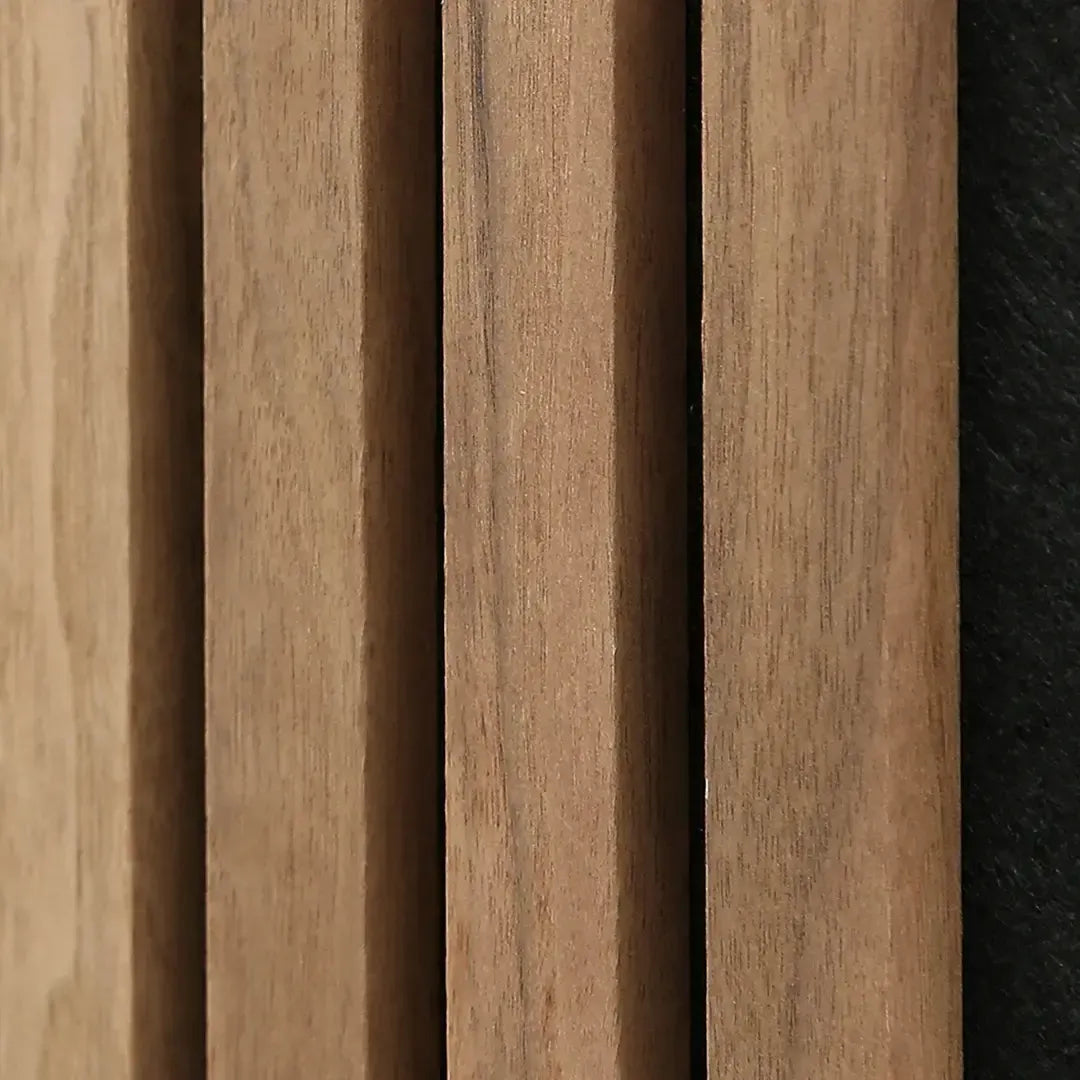
The impact-resistant pick: Acoustic Slat Wall Panel Black Oak The 3-sided wood veneer face at $177.95 per panel holds up to stray ball contact along side walls, and the dark finish hides scuff marks that show up fast on lighter finishes. This is the panel to run along the sidelines where players are closest to the wall for the whole game. Verdict: Buy for perimeter walls under 8 feet.
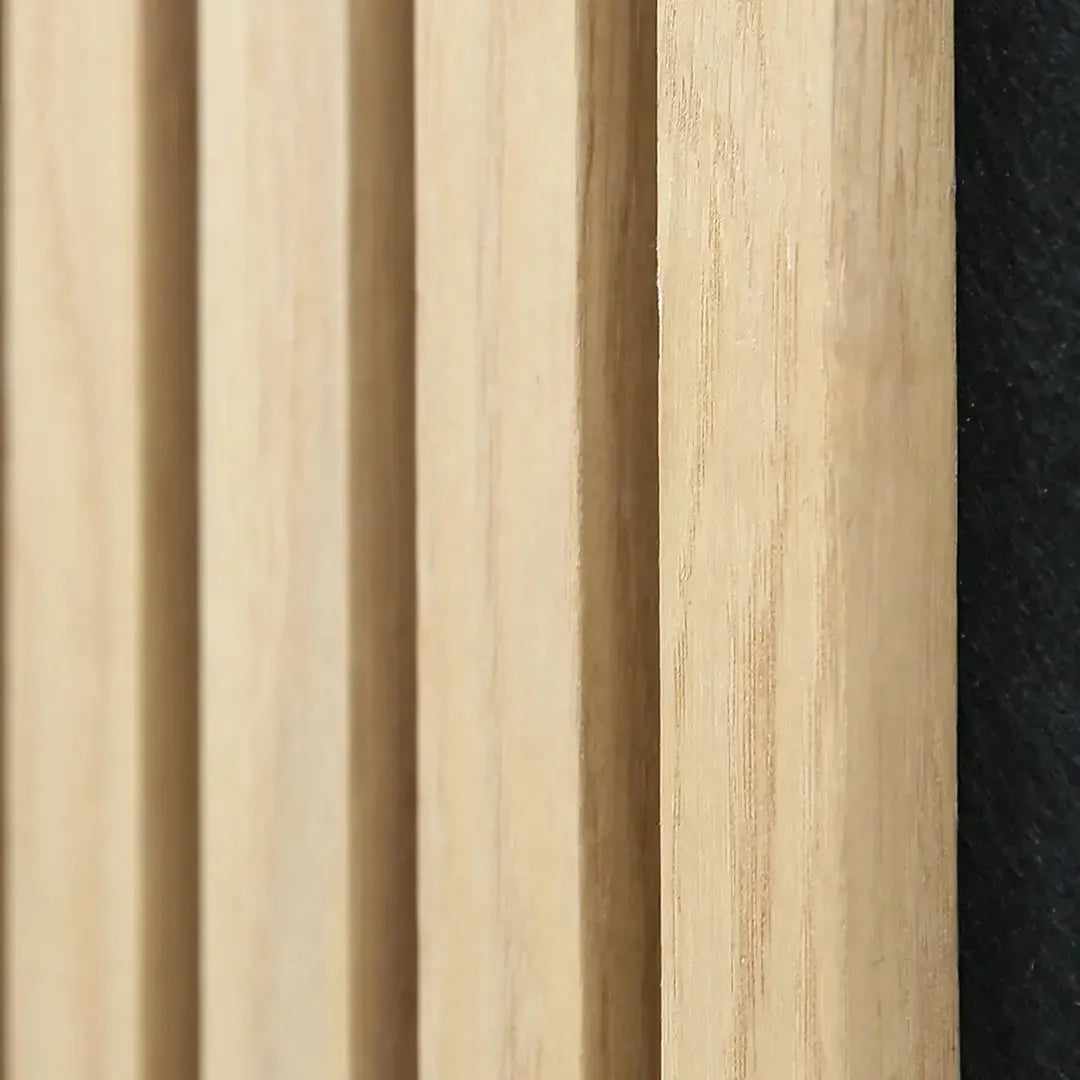
The test-first pick: Full Sample Box At $10 for four finish samples — natural, smoked oak, and walnut — this is the cheapest way to confirm a finish reads right under court lighting before committing to a multi-court order. Facilities ordering for 2026 openings should run this step first; matching finish across 4-6 courts after the fact is expensive to fix. Verdict: Buy as the first order, every time.
What to avoid
- Foam acoustic tiles — great NRC numbers on paper, but foam tears and dents on the first errant ball strike near court boundaries.
- Fabric-wrapped panels — the fabric face looks clean in a showroom photo but shreds against paddle contact and picks up dirt fast in a high-traffic athletic space.
- Raw MDF veneer without acoustic backing — looks like a wood panel but does nothing for reverberation; if a product page doesn't mention an NRC number or felt/acoustic backing, it's decorative only.
Verdict comparison
| Panel | Sound focus | Best wall zone | Price | Verdict |
|---|---|---|---|---|
| Hexagon Acoustic Panel Walnut | 0.75 NRC | End walls behind nets | See product page | Buy |
| Acoustic Slat Wall Panel Black Oak | Wood veneer, impact-ready | Side walls, sidelines | $177.95 | Buy |
| Full Sample Box | Finish testing | Pre-order sampling | $10 | Buy first |
FAQ
What are the best acoustic panels for pickleball court walls in 2026?
Wood-veneer slat and hexagon panels with an NRC rating around 0.75, like the Hexagon Acoustic Panel Walnut, outperform foam or fabric panels because they absorb sound without tearing under ball contact. Facilities opening courts in 2026 should prioritize panels rated for commercial fire code first.
How much does it cost to acoustically treat an indoor pickleball court?
Cost scales with wall area treated, not the whole room; slat panels like Acoustic Slat Wall Panel Black Oak run $177.95 per panel and most courts only need side and end walls covered, not ceilings. Get a full sample box for around $10 before ordering court-wide.
Is foam or wood panel better for pickleball court acoustics?
Wood veneer panels with acoustic backing beat foam for pickleball courts because foam tears and dents on ball contact within months of daily play. Wood veneer over an acoustic core holds its NRC performance while surviving repeated impact near the walls.
Do acoustic wood panels reduce echo in metal building pickleball courts?
Yes, wood veneer panels with an NRC rating near 0.75 reduce flat reflective echo common in metal-clad and warehouse-converted courts. Placing panels on end walls behind each net first addresses the loudest reflection points before treating side walls.
How many panels does a pickleball court need for sound control?
Coverage depends on court count and wall height, but most facilities start with end walls behind the nets and side walls at player height rather than covering full walls floor to ceiling. Treating the hardest, most reflective surfaces first controls most of the flutter echo without a full-wall budget.
What NRC rating do I need for a pickleball facility?
An NRC around 0.75, like the hexagon acoustic panels here, is a reasonable target for court walls dealing with constant paddle-on-ball impact noise. Lower-rated decorative panels will look right but won't cut the reverberation players complain about.
Can wood acoustic panels handle high humidity in an indoor court facility?
Wood veneer over an acoustic composite core holds up better in humid court environments than raw MDF, which swells and delaminates without tight climate control. Confirm the panel uses a 3-sided wood veneer face rather than an exposed particleboard edge before ordering at volume.
Should I order samples before buying acoustic panels for a whole court?
Yes — a full sample box costs around $10 and lets you check finish color under actual court lighting before committing to a multi-court order. Matching finish across several courts after the fact costs far more than the sample box itself.
One last thing
Most facility operators overspend by treating entire walls floor to ceiling when the loudest reflections come off the end walls directly behind each net, where the ball pop bounces straight back at players. Start hexagon panels there, run slat panels along the sidelines where paddles actually make contact, and leave upper wall sections untreated until you've measured whether the echo problem is solved — a lot of 2026 court builds find the mid-wall band handles 80% of the complaint with a fraction of the panel budget.
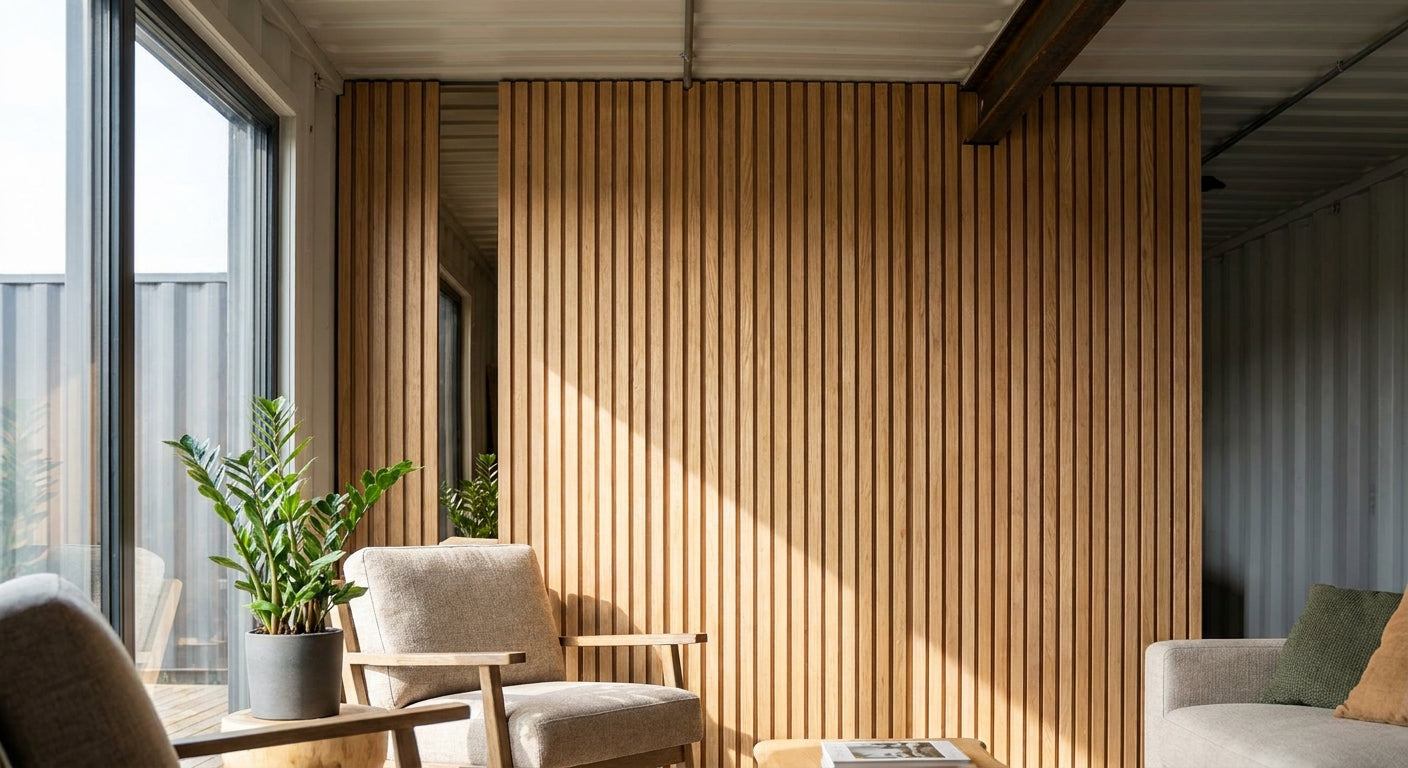
 Better performance and aesthetic appeal
 In Stock