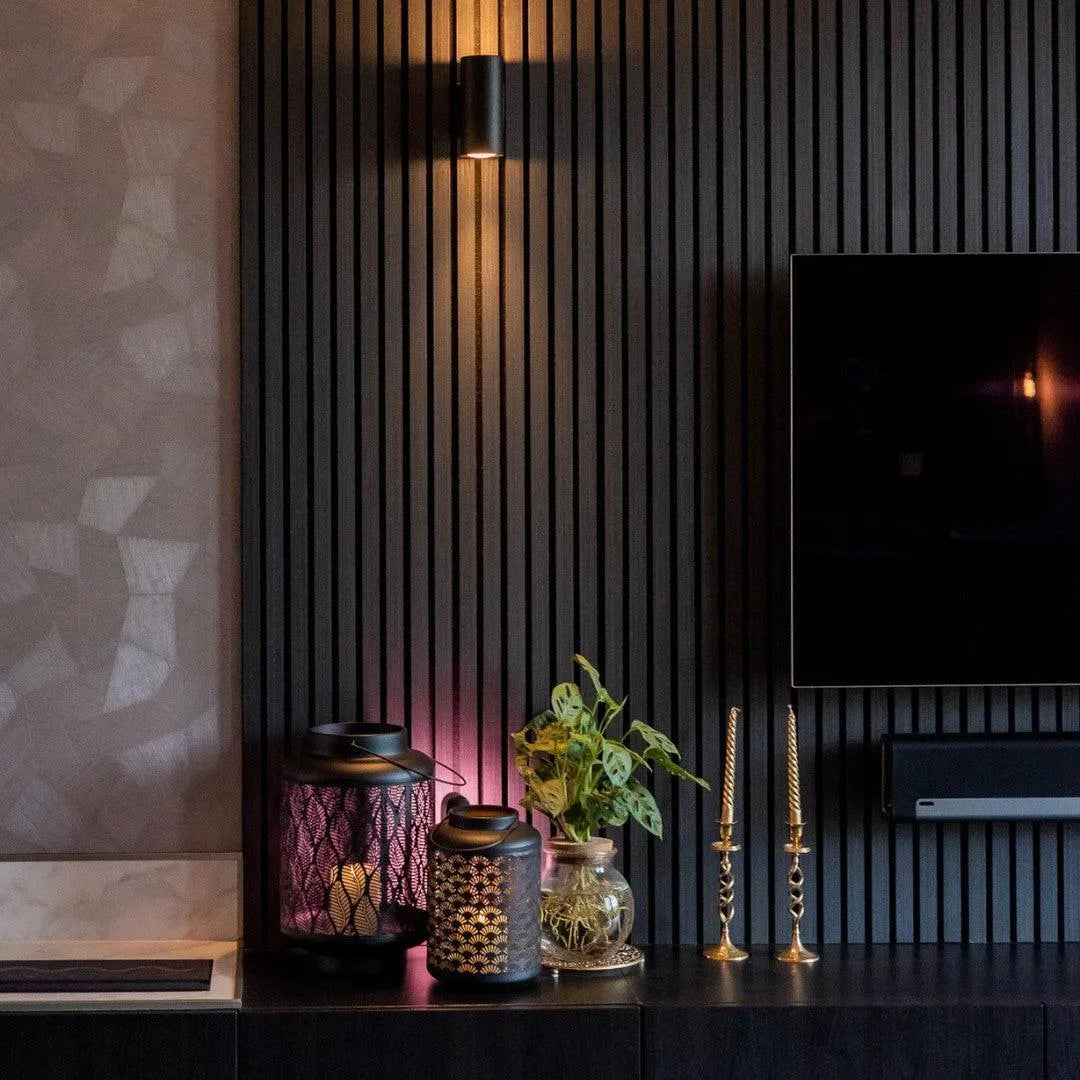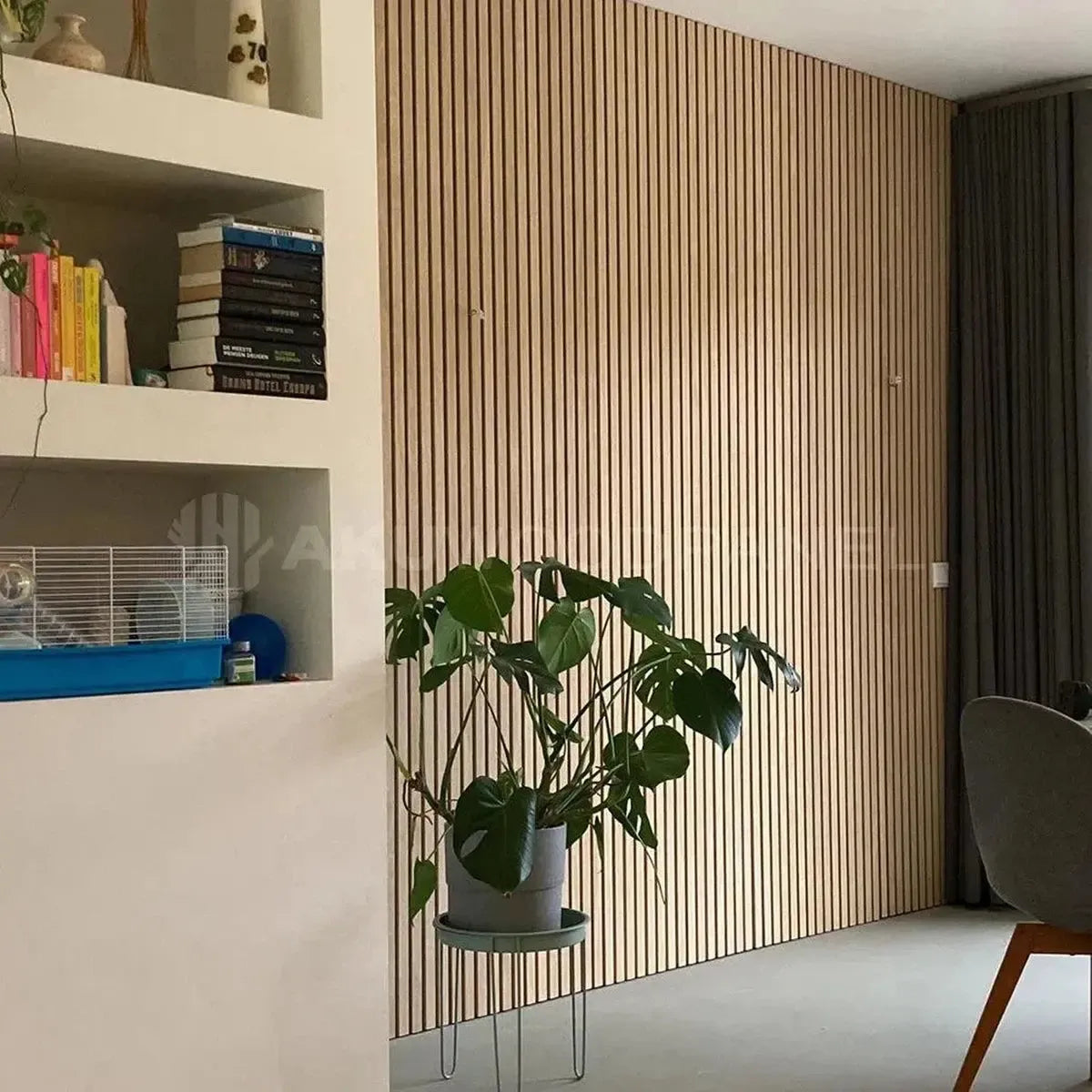
Co-living common rooms take more acoustic abuse in a month than a single-family living room takes in a year — six to twenty residents cycling through, hard floors, open kitchens, and zero soft furniture buffering the noise. Wood slat panels for co-living space common rooms solve the echo problem and the "this place looks like a dorm" problem at the same time, if you pick the right finish.
- Acoustic Slat Wall Panel Walnut is the safe pick for co-living common rooms in 2026 — buy it for durability under daily traffic.
- Hexagon Acoustic Panel Walnut with Gray Felt carries a 0.75 NRC rating, the strongest sound-dampening pick in the lineup.
- Skip non-felt panels as your only fix if the room already echoes badly — they read as decorative, not acoustic.
- Order the full sample box before committing a multi-unit budget to one finish.
Why this matters
A co-living common room is a shared kitchen, lounge, and sometimes a coworking corner rolled into one open floor plan. That openness is the selling point in the listing photos and the reason the room bounces sound off every hard surface in it.
Operators managing multiple properties in 2026 are under pressure on two fronts: resident complaints about noise, and the need for common areas that photograph well for marketing. Acoustic wood panels solve both — they cut reverberation and they read as a finished, premium amenity instead of a rental-grade afterthought. The condo common area noise guide covers the same core problem in a related building type, if you're managing mixed housing stock.
Who this is for
This guide is for co-living operators, property managers, and developers converting large houses or former commercial buildings into shared housing with common rooms serving 6 to 20 residents. If you're specifying finishes across a portfolio rather than one apartment, the cost-per-room math and install speed matter as much as the look.
What to look for in wood panels for co-living space common rooms
Acoustic performance, not just wood-grain looks
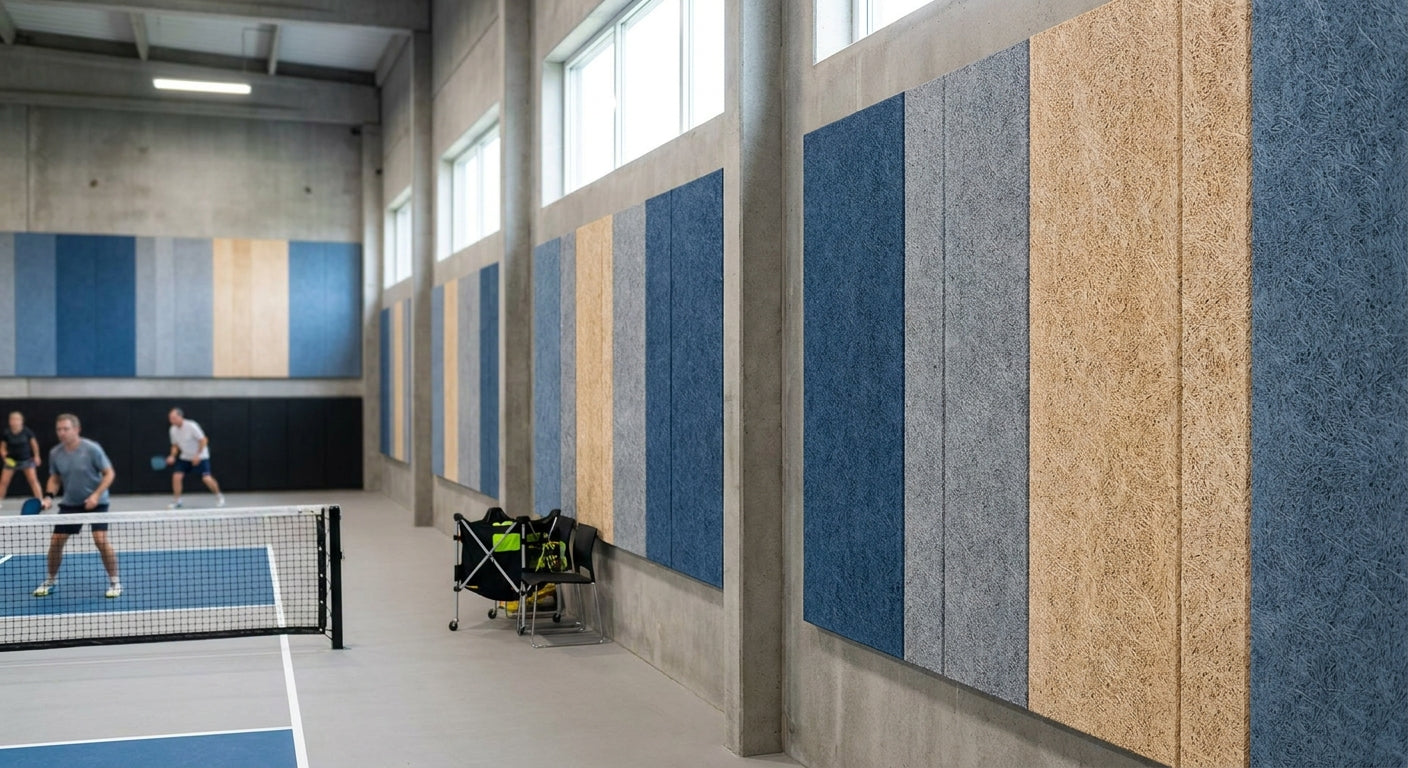
A common room with a kitchen, a TV wall, and a dining table needs actual sound absorption, not a wood-look surface that happens to hang on a wall. Felt-backed slat and hexagon panels carry NRC ratings in the AKU Woodpanel catalog — the felt-backed hexagon panels are rated 0.75 NRC, meaning they absorb roughly three-quarters of the sound energy that hits them. Panels without felt backing look identical from six feet away but do far less for reverberation.
Durability under multi-tenant traffic
Co-living turnover means new residents touching, leaning on, and bumping into common-room walls every few months. A 3-sided wood veneer construction holds up to that better than a thin laminate skin, and it's worth checking veneer construction on the product page before ordering at scale.
Installation speed across multiple units
If you're rolling a finish out to five or ten properties in 2026, install time per room compounds fast. Slat panels that click together horizontally or vertically install faster than custom millwork, and that speed advantage only matters if the crew doesn't need to special-order trim for every room shape.
Cost per common room at portfolio scale
A single box runs $126.95 to $182.95 depending on finish and format, and a common room typically needs several boxes to cover a feature wall. Budget per room, not per box, when comparing finishes across a portfolio — a $12 difference per box turns into real money across ten properties.
Aesthetic that photographs as premium
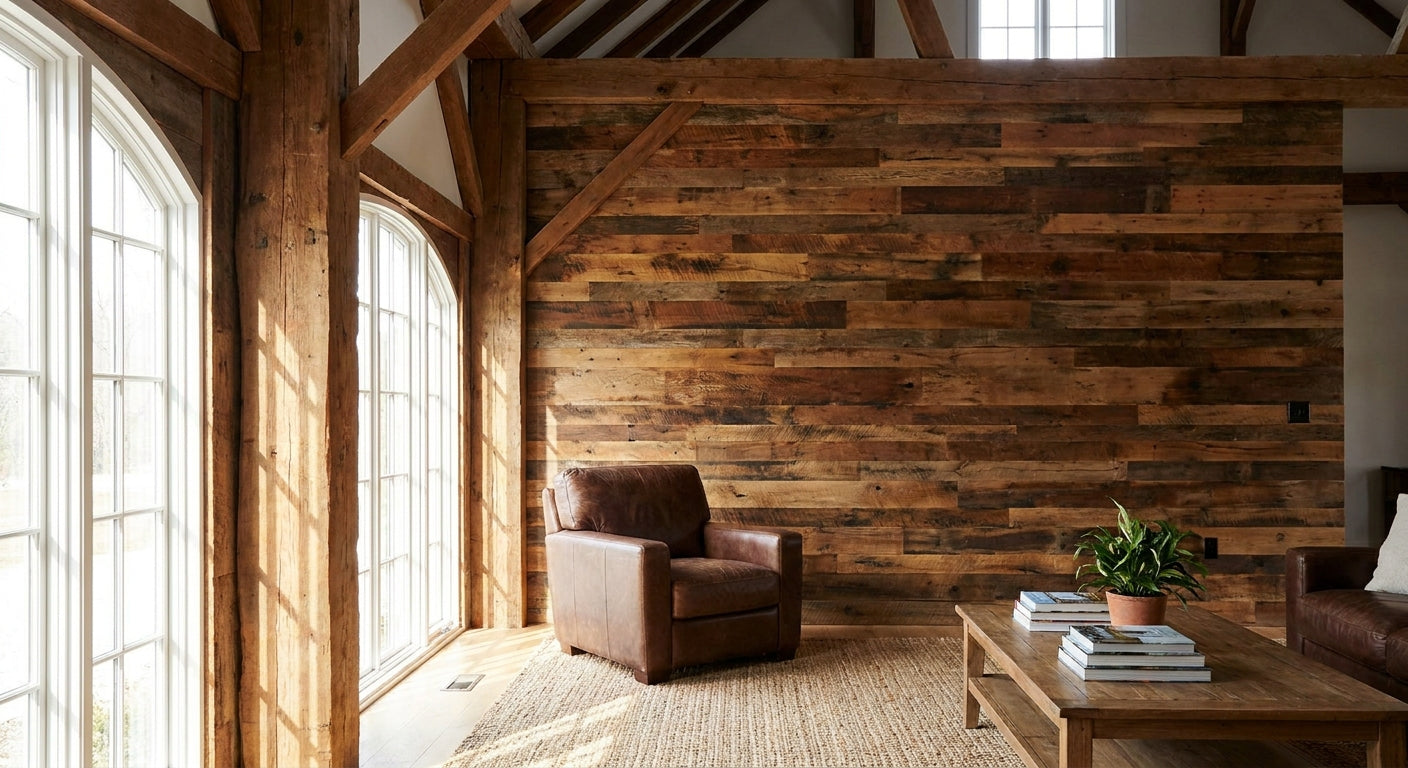
Listing photos sell co-living rooms before a prospective resident ever walks in. Walnut and smoked oak finishes photograph darker and richer under listing lighting; natural oak and gray-felt combinations photograph brighter and more Scandinavian. Pick the tone that matches the rest of your unit photography, not just what looks good in person.
Fire and code compliance for shared spaces
Shared common rooms fall under different occupancy rules than individual bedrooms in most jurisdictions. Confirm fire rating requirements with your local code office before finalizing a finish for a room used by unrelated residents — this is a compliance step, not a product spec, and it varies by city.
Top picks for co-living common rooms
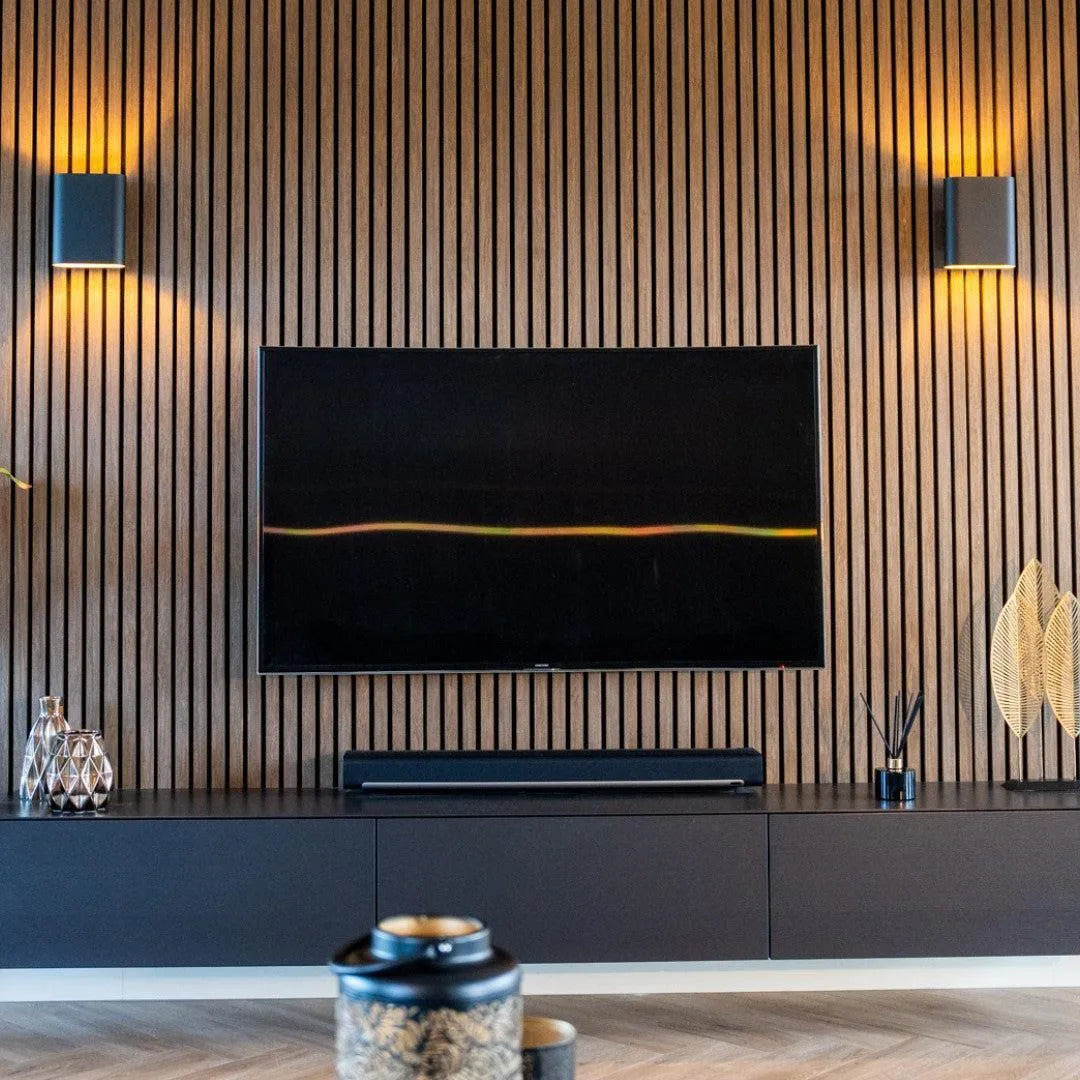
Acoustic Slat Wall Panel Walnut — the safe pick. Premium 3-sided wood veneer, $182.95, and the darkest standard tone in the slat lineup. It reads as a finished amenity wall in a common room with a TV or fireplace focal point. Verdict: Buy. Acoustic Slat Wall Panel Walnut
Hexagon Acoustic Panel Walnut with Gray Felt — the acoustic workhorse. Four 32-inch panels per box at $165.95, with a 0.75 NRC rating that does real work against echo in an open kitchen-lounge combo. This is the pick when noise complaints, not just looks, are the driving problem. Verdict: Buy. Hexagon Acoustic Panel Walnut with Gray Felt
Acoustic Slat Wall Panel Natural Oak with Gray Felt — the budget-friendly rollout choice. At $169.95 it sits in the middle of the price range and the lighter tone works across more common-room color schemes than dark walnut does, which matters when you're standardizing one finish across a whole portfolio. Verdict: Consider. Acoustic Slat Wall Panel Natural Oak with Gray Felt
Acoustic Slat Wall Panel Smoked Oak, no felt backing — skip it as your only fix. It's a real catalog item and it looks sharp, but a non-felt panel leans decorative. If the room already has an echo problem — hard floors, high ceilings, an open kitchen — don't rely on a non-felt finish alone. Verdict: Skip (as the sole acoustic solution; fine as a design accent elsewhere in the unit).


What to avoid in co-living common rooms
- Peel-and-stick backsplash tiles as a wall finish. They're built for kitchen splashbacks, not full common-room walls that take resident traffic — wrong product for the job even though the finish looks similar in photos.
- Solid 3D wood tiles as your only echo fix. They add texture but carry no stated NRC value, so a room that already reverberates will still reverberate after installing them alone.
- Mixing exterior-rated panels indoors. Exterior wall panels are built for weather exposure, not interior acoustic performance, and installing them in a common room wastes the weatherproofing you're paying for.
“If residents can hear a phone call through the common-room wall, the room needs more sound absorption, not another coat of paint.”
Verdict comparison
| Pick | Price | Acoustic rating | Best for | Verdict |
|---|---|---|---|---|
| Acoustic Slat Wall Panel Walnut | $182.95 | Standard slat construction | Dark, premium-photo common rooms | Buy |
| Hexagon Acoustic Panel Walnut with Gray Felt | $165.95 | 0.75 NRC | High-echo open kitchens | Buy |
| Acoustic Slat Wall Panel Natural Oak with Gray Felt | $169.95 | Felt-backed | Portfolio-wide light finish | Consider |
| Acoustic Slat Wall Panel Smoked Oak (no felt) | $177.95 | Decorative only | Accent walls, not sole acoustic fix | Skip |
FAQ
What are the best wood panels for co-living space common rooms in 2026?
Felt-backed slat and hexagon panels rated for acoustic performance are the best wood panels for co-living space common rooms in 2026, since they cut echo instead of just adding wood-grain texture. Non-felt panels can supplement the look but shouldn't be the only acoustic fix.
Do wood slat panels actually reduce noise in a shared common room?
Yes, felt-backed panels in the AKU Woodpanel lineup carry a 0.75 NRC rating, meaning they absorb roughly 75% of the sound energy that hits them. Non-felt slat panels look similar but provide far less absorption.
How much do acoustic wood panels cost for a common room?
Individual boxes range from $126.95 for tile formats to $182.95 for premium walnut slat panels as of 2026. A full common-room feature wall typically needs several boxes, so budget per wall rather than per box.
Is walnut or natural oak better for a co-living common room?
Walnut reads darker and more premium in listing photos, while natural oak with gray felt is lighter and matches more color schemes across a multi-property portfolio. Neither is objectively better — match the tone to your existing unit photography.
Should I order samples before buying panels for multiple properties?
Yes, order a full sample box before committing a portfolio-wide budget to one finish, since lighting and existing decor vary by property. It's a small upfront cost against a rollout mistake across ten common rooms.
Can wood slat panels be installed over drywall in an existing common room?
Slat wall panels are built to install over standard interior walls including drywall, which is why they suit renovation projects better than full millwork. Confirm wall condition and flatness before installation for the cleanest result.
Do co-living common rooms need fire-rated wall panels?
Shared common rooms used by unrelated residents can fall under different fire code requirements than private bedrooms, depending on local jurisdiction. Check with your local code office before finalizing a finish, since this varies by city in 2026.
One last thing
The felt-backed hexagon panels ship four to a box at 32 inches each — that's a detail buried in the product spec, not the marketing copy, and it's the number that actually determines how many boxes a real common-room wall needs. Measure the wall in square feet first, then order boxes against that number instead of guessing from a photo.


 Better performance and aesthetic appeal
 In Stock