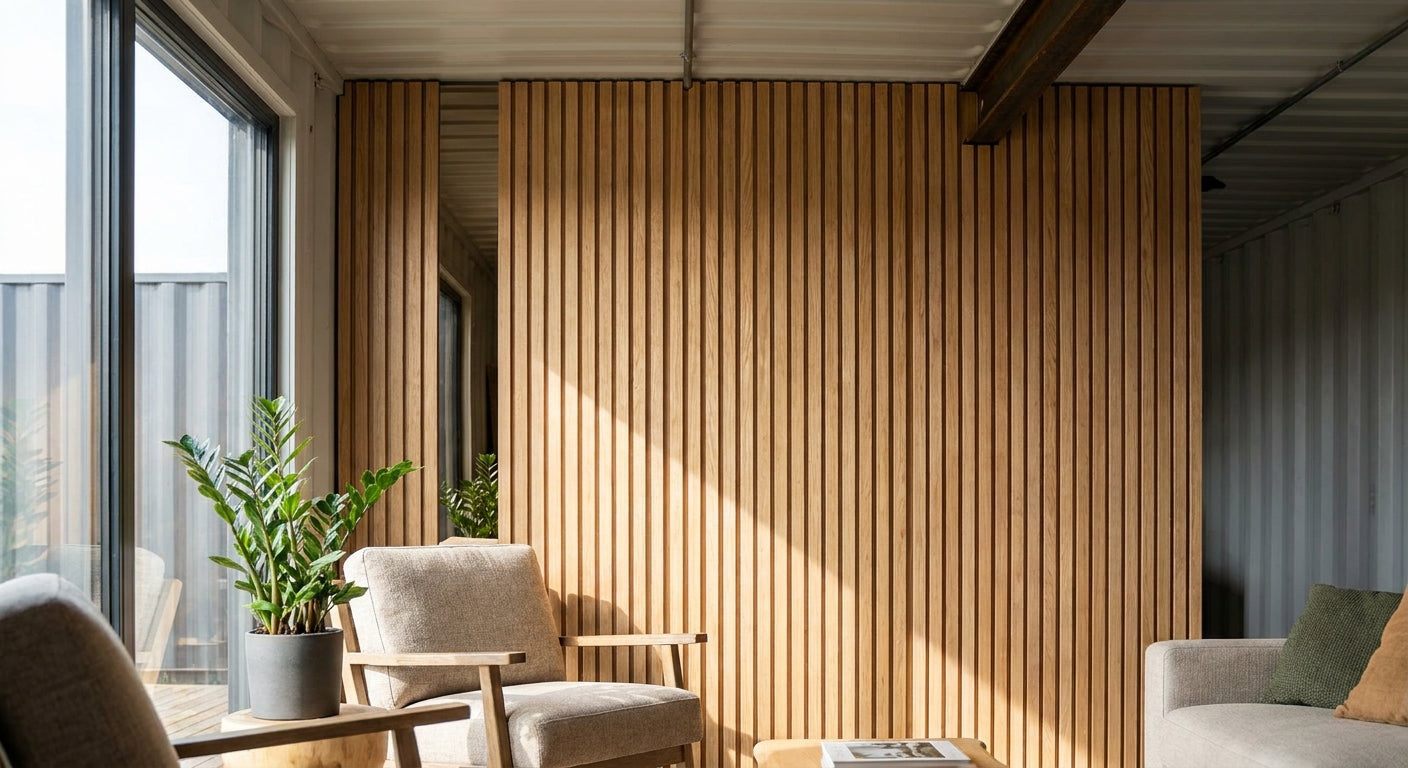
Shipping container homes trap sound like a drum and sweat condensation like a cold soda can — bare Corten steel walls need a real fix, not decoration. Wood panels for container home interiors solve both problems when you pick the right acoustic backing, thickness, and veneer for a structure with fixed 8-foot width and shallow furring depth.
- Acoustic Slat Wall Panel Black Oak wins for container homes needing max echo control — Buy.
- Hexagon Acoustic Panel Natural Oak with Gray Felt rates NRC 0.75, ideal for a bedroom pod inside a container build.
- Skip raw plywood veneer without acoustic backing — steel boxes bounce sound back at you within 2026 spec builds.
- Fluted Wall Panel Natural Oak fits container furring depth without eating living space — Consider.
- Wood panels for container home interiors run $165.95 to $182.95 per box depending on finish and acoustic backing.
Why this matters
A steel box is an acoustic nightmare. Sound waves hit flat metal, bounce, and stack on top of the next reflection instead of dying out — that's why an empty container home sounds like a bathroom stall even after drywall goes in. Add condensation risk (steel sweats when interior humidity meets a cold shell) and you've got two problems that ordinary paint or laminate can't touch.
Akuwood Panel builds its acoustic slat panels with a wood veneer face over a sound-absorbing core specifically for rooms that reflect noise — container interiors qualify. The panels also install over standard furring strips, which matters because container wall cavities rarely give you more than 1 to 2 inches of build-out room before you start losing floor space in an 8-foot-wide box.
Who this is for
This guide is for people converting a shipping container into a livable structure — a backyard studio, an off-grid cabin, a full container home build — who need interior wall cladding that kills echo, survives humidity swings, and doesn't eat the narrow wall cavity they've already budgeted for insulation. If you're planning a 20-foot or 40-foot container conversion in 2026 and you've noticed how loud an empty steel box sounds, you're the buyer this covers.
What to look for in wood panels for container home builds
Acoustic performance, not just wood texture
A container's parallel steel walls create flutter echo — sound bouncing back and forth between two hard flat surfaces. Panels need an actual sound-absorbing core, not just a wood-look surface, or you've spent money on decoration that does nothing for the noise problem you're actually solving.
Panel thickness versus furring depth
Container interiors are fixed at roughly 8 feet wide once insulation and framing go in, so every inch a panel system adds comes straight out of usable floor space. Thinner acoustic slat panels that mount on shallow furring strips protect that width better than thick solid-wood cladding.
Moisture and condensation tolerance
Steel walls sweat when warm interior air meets a cold shell, especially in shoulder seasons before insulation fully evens things out. A wood veneer face bonded to a stable core handles humidity swings better than raw plywood, which can cup or delaminate against a damp substrate.
Installation without structural changes
Container homes are often self-built or built on tight 2026 timelines, so panels that click or screw onto furring strips without welding brackets into the steel frame save real labor. Look for systems designed to mount directly to studs or furring rather than requiring specialty fasteners into corrugated steel.
Authentic veneer versus printed laminate
A container home already reads industrial from the outside — inside, a real 3-sided wood veneer face reads warm and finished, while printed laminate looks flat under the kind of bright task lighting most container conversions use. The veneer difference shows up most in direct light, which is exactly what small container interiors get a lot of.
Cost per box for a full interior run
Container homes run smaller square footage than a house, but walls are floor-to-ceiling in every room, so panel cost per box adds up fast across a full 20-foot unit. Budgeting per box before you start, not per panel, keeps the math honest.
Top picks for container home interiors
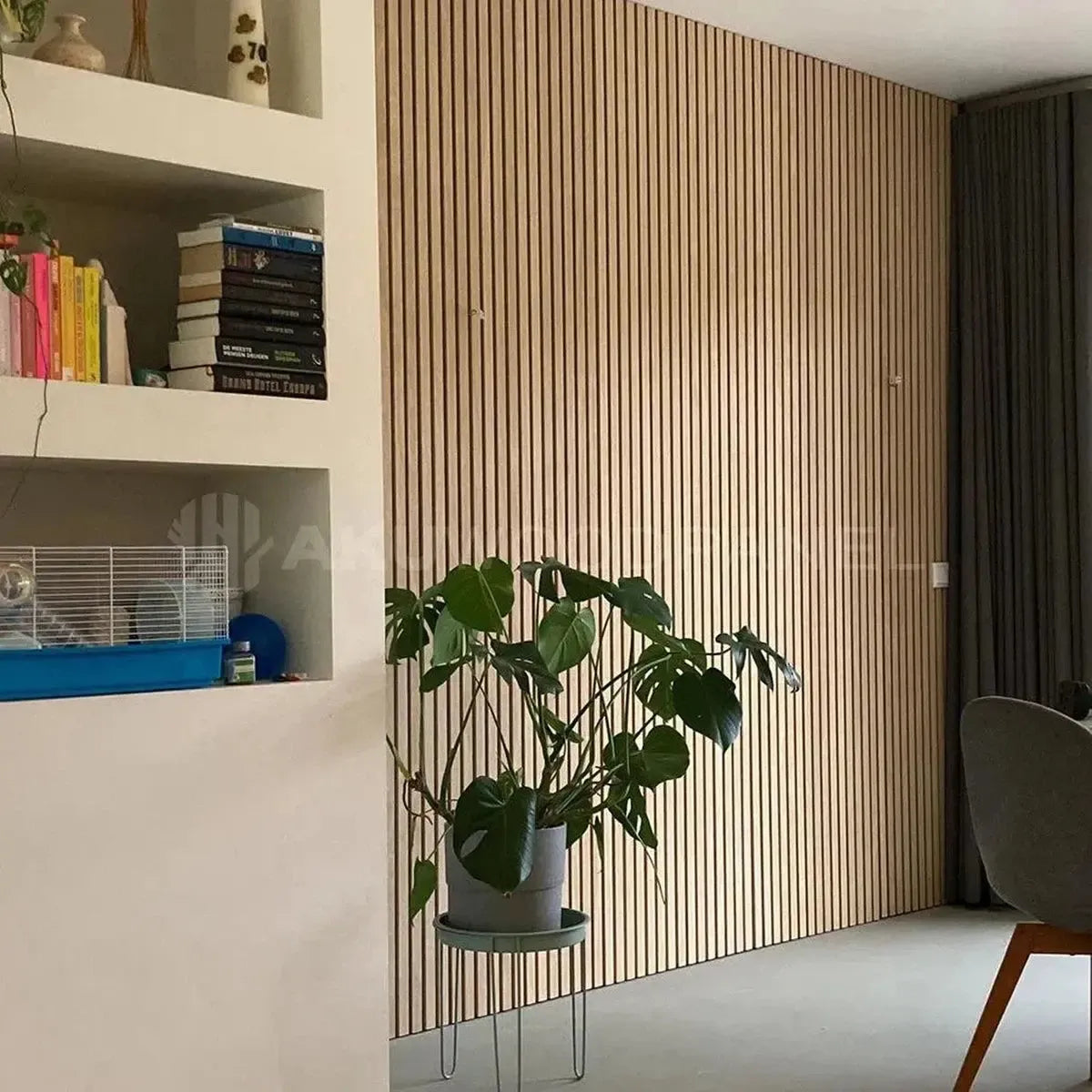
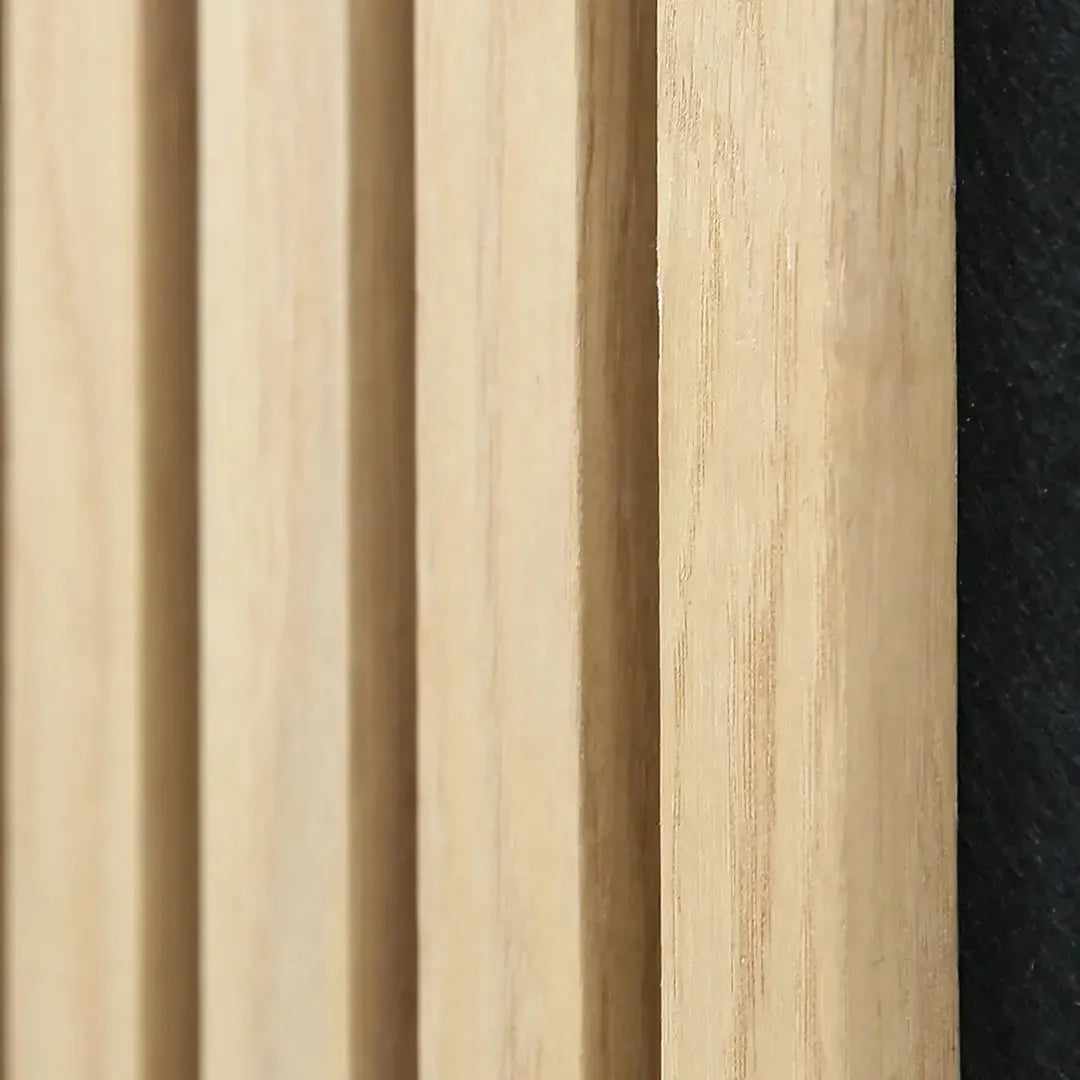
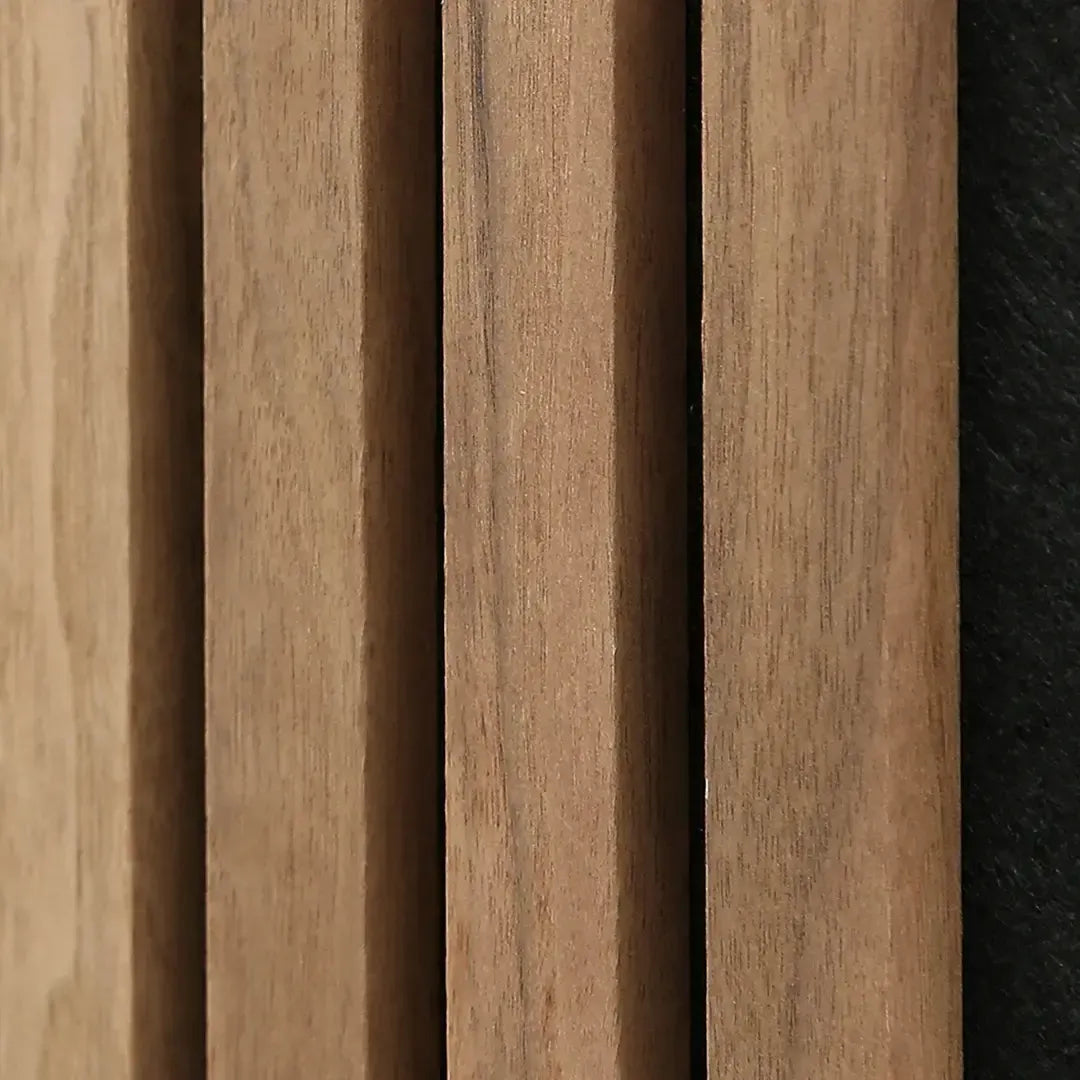
Acoustic Slat Wall Panel Natural Oak — the safe pick. Priced at $169.95, this panel uses a 3-sided wood veneer face over an acoustic backing, and its lighter oak tone reflects light well in a container interior that often has limited window area. Buy it as your default for main living areas where you want warmth without a dark, closed-in feel. See the Natural Oak slat panel.
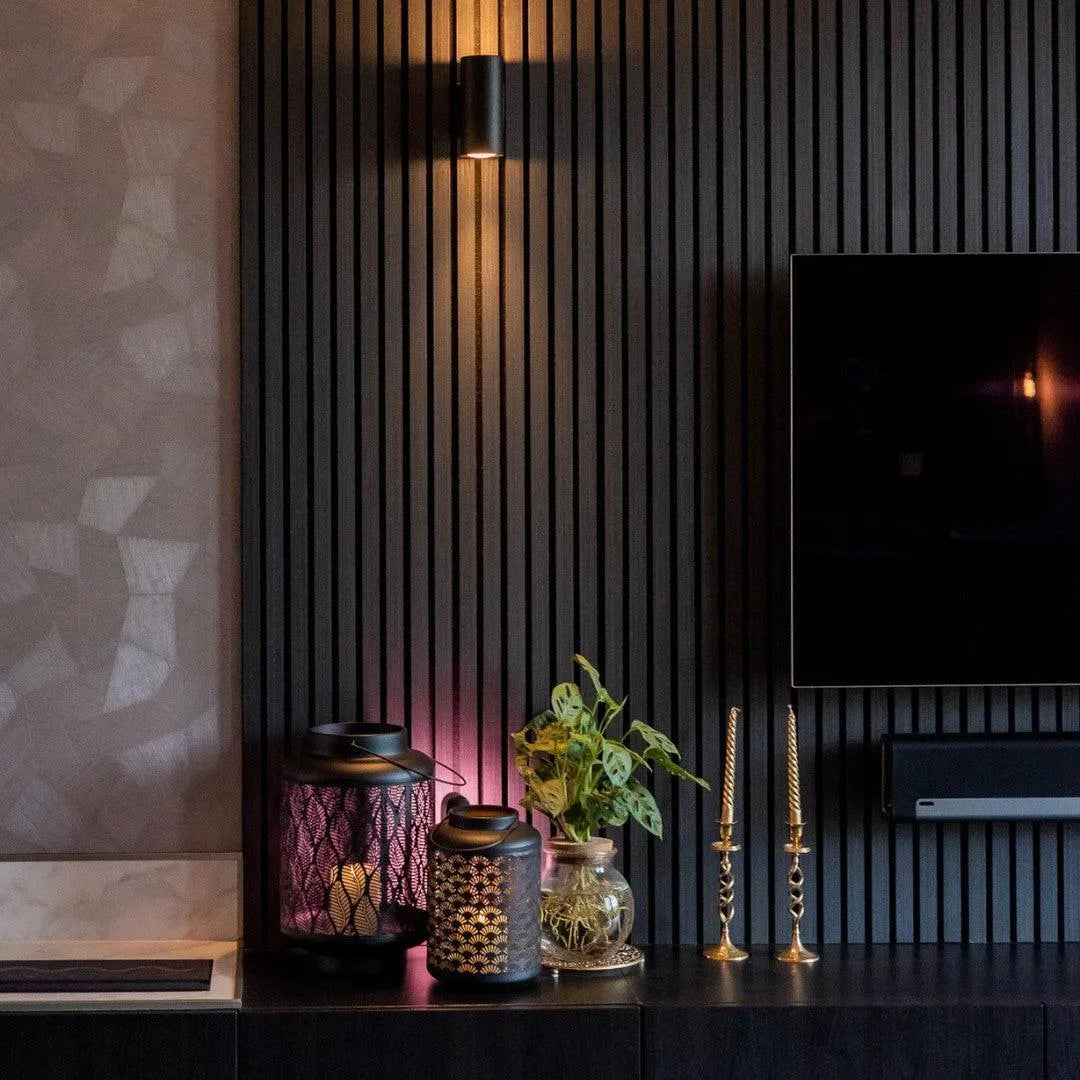
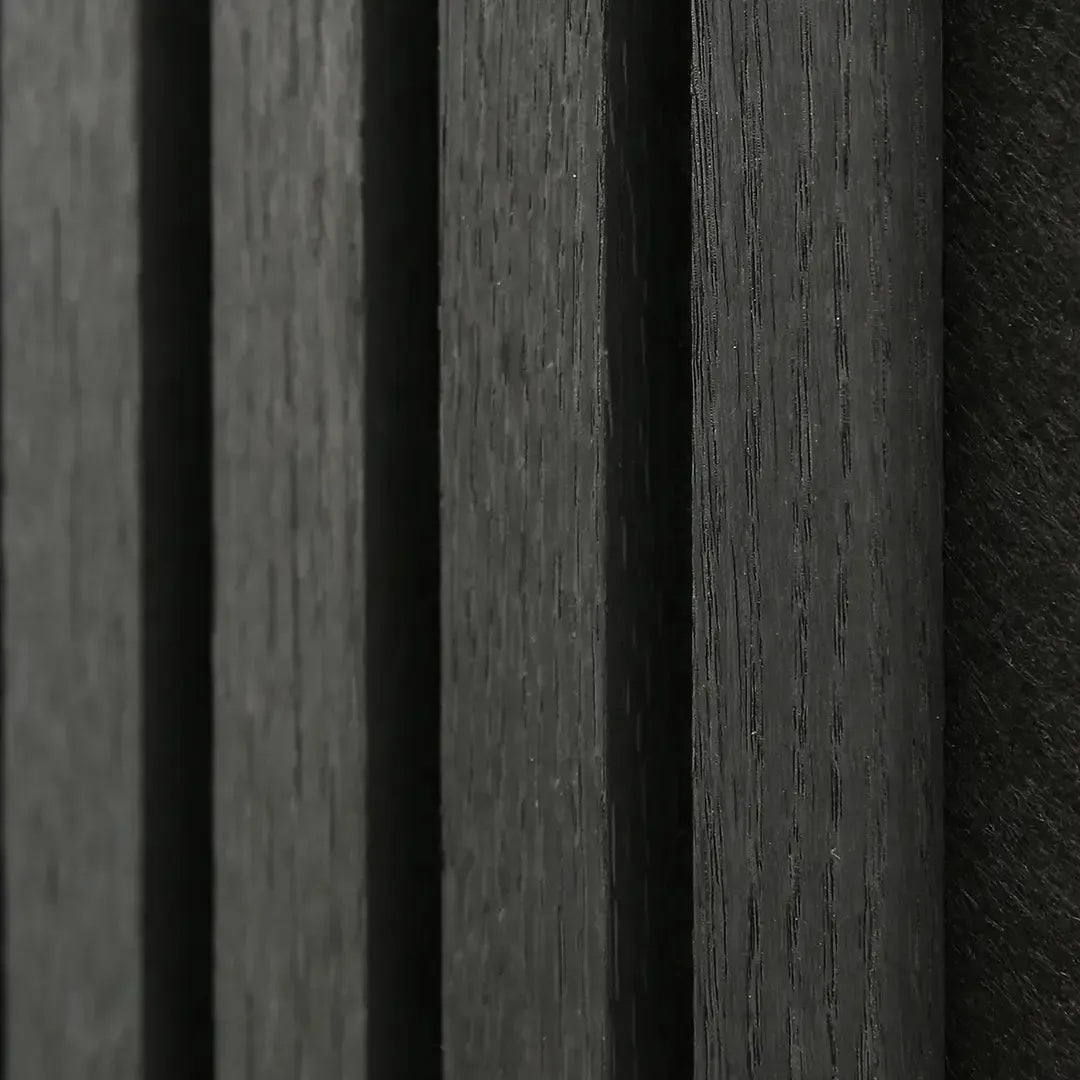
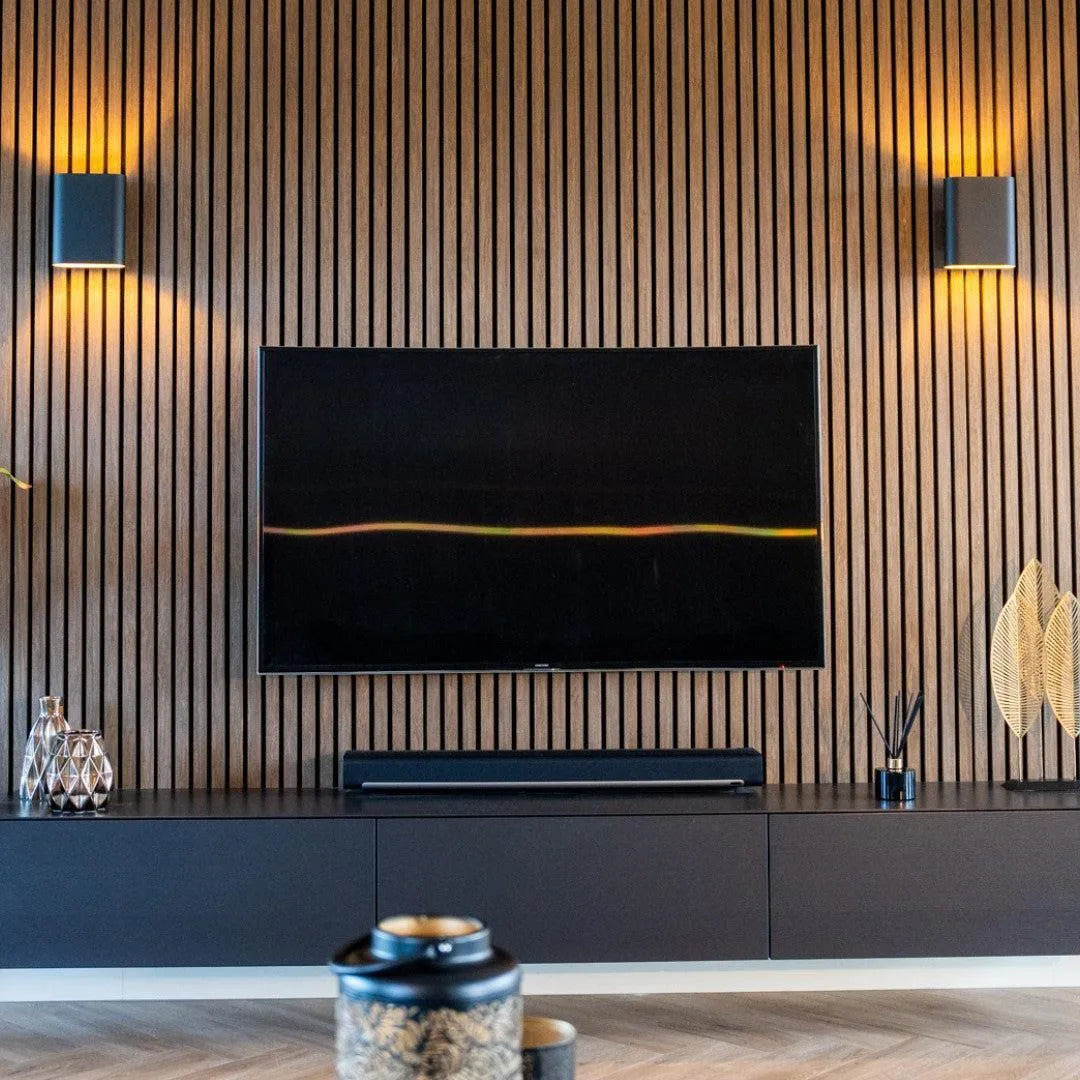
Acoustic Slat Wall Panel Black Oak — the statement wall. At $177.95, the black oak finish reads intentional against exposed steel or concrete accents, which a lot of 2026 container builds lean into deliberately. Buy it for a single feature wall in a living or sleeping area — full-room coverage in black can shrink an already narrow 8-foot-wide space visually. Check the Black Oak slat panel.
Fluted Wall Panel Natural Oak — the wildcard. The fluted profile adds vertical texture without the deeper furring buildout that thicker slat systems need, which matters most in a container's tight wall cavity. Consider it for a bedroom or bathroom accent wall where you want texture over pure acoustic control. View the Fluted Wall Panel Natural Oak.
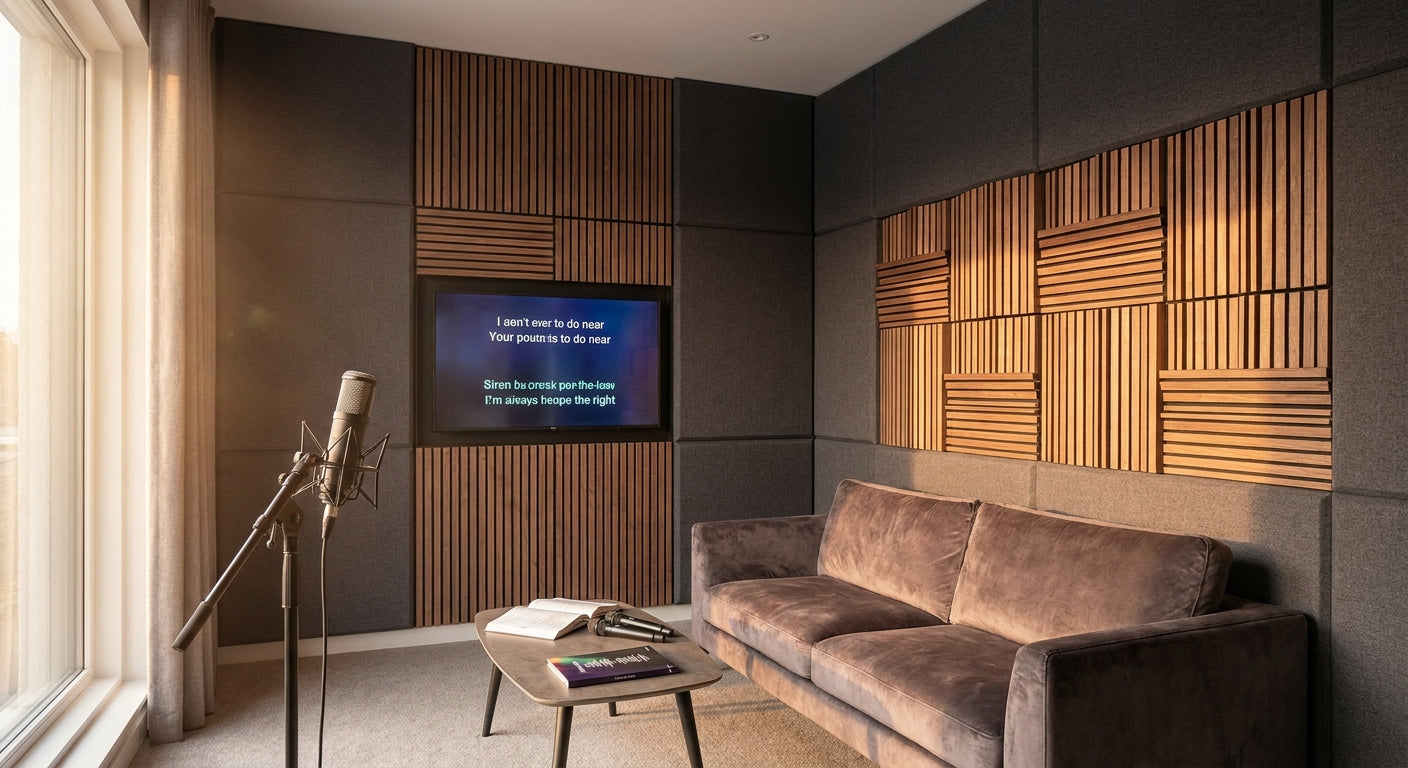
Acoustic Slat Wall Panel Smoked Oak with Gray Felt — the acoustic upgrade. Also priced at $169.95, the gray felt backing behind the slats adds a second layer of sound absorption on top of the wood veneer face. Consider it for a home office or media room pod inside the container where echo control matters more than in a hallway.
Hexagon Acoustic Panel Natural Oak with Gray Felt — the small-room specialist. At $165.95 with an NRC rating of 0.75, this geometric format works well in the smaller, boxier rooms a container home tends to have — think a sleeping nook or a compact bathroom vestibule. Buy it when your container layout has a room too small for full slat runs.


What to avoid
- Raw plywood veneer with no acoustic core. It looks like a wood panel in photos but does nothing for the flutter echo a steel box produces — you'll spend money and still hear every conversation bounce.
- Full-thickness solid wood cladding. It eats into the shallow furring depth an 8-foot-wide container can spare, shrinking your already tight floor plan.
- Exterior-rated cladding used indoors. Exterior wall panels are built for weather exposure, not acoustic absorption — they solve a different problem than the echo and condensation issues container interiors actually have.
Verdict comparison
| Pick | Best for | Price | Verdict |
|---|---|---|---|
| Acoustic Slat Wall Panel Natural Oak | Main living areas, light-reflecting rooms | $169.95 | Buy |
| Acoustic Slat Wall Panel Black Oak | Single statement wall | $177.95 | Buy |
| Fluted Wall Panel Natural Oak | Tight furring depth, texture over acoustics | Not listed | Consider |
| Acoustic Slat Wall Panel Smoked Oak with Gray Felt | Home office or media pod | $169.95 | Consider |
| Hexagon Acoustic Panel Natural Oak with Gray Felt | Small rooms, NRC 0.75 | $165.95 | Buy |
FAQ
What's the best wood panels for container home interiors?
The Acoustic Slat Wall Panel Black Oak and Natural Oak lines are the strongest picks for container home interiors in 2026 because they pair a real 3-sided wood veneer face with an acoustic backing built for hard, reflective rooms. For small rooms specifically, the Hexagon Acoustic Panel with an NRC 0.75 rating is the better fit.
Do wood slat panels stop echo in a metal shipping container?
Acoustic slat panels reduce flutter echo by absorbing sound at the panel core instead of letting it bounce off bare steel. They won't make a container silent, but they cut the harsh slap-back reflection that makes empty steel boxes sound hollow.
Can you install wood wall panels directly on steel container walls?
Wood panels mount to furring strips or stud framing, not bare steel directly, since the metal surface itself doesn't give fasteners a stable grip. Most container home builds already frame out furring for insulation, so panels attach to that layer.
How much do wood panels for container home builds cost per box?
Acoustic slat panel boxes run from $165.95 for hexagon formats up to $182.95 for premium walnut slat panels as of 2026. Cost scales with finish and whether the panel includes a felt acoustic backing layer.
Are hexagon acoustic panels good for small container home layouts?
Yes — the Hexagon Acoustic Panel Natural Oak with Gray Felt rates NRC 0.75 and its geometric format suits small, boxy rooms like a container sleeping nook better than long slat runs. It's a strong pick when a room is too tight for full-length paneling.
Do wood panels handle condensation inside a steel container?
A stable veneer-over-core construction resists the cupping and delamination that raw plywood shows against a damp substrate, but panels alone don't replace proper insulation and a vapor barrier. Pair panels with correct container insulation to manage condensation at the source.
What thickness of wood panel fits inside an 8-foot-wide container?
Slat and hexagon acoustic panels are built for shallow furring strip mounting, which protects floor space better than thick solid-wood cladding in a fixed 8-foot-wide shell. Every inch matters once insulation and framing are already installed.
Is fluted wall panel or slat panel better for a container home?
Fluted panels add vertical texture with a thinner build-out, which suits tight furring depth, while slat panels with acoustic backing do more work against echo. Choose fluted for texture-first rooms and slat for rooms where noise control is the priority.
One last thing
The detail most container home builders miss: NRC ratings only mean something once you know your room's actual reflective surface area, not just wall count. A 20-foot container bedroom with a steel ceiling and steel floor under thin flooring reflects sound from six hard surfaces, not four walls — which is why an NRC 0.75 panel on the walls alone still leaves noticeable echo unless the ceiling gets treated too.

 Better performance and aesthetic appeal
 In Stock