Tiny house walls have to do more work per square inch than walls in a normal home — insulate, absorb sound, and still look finished in 200 to 400 square feet where every seam shows. This guide covers which wood panels for tiny house walls actually earn their weight and which ones just look good in a showroom photo.
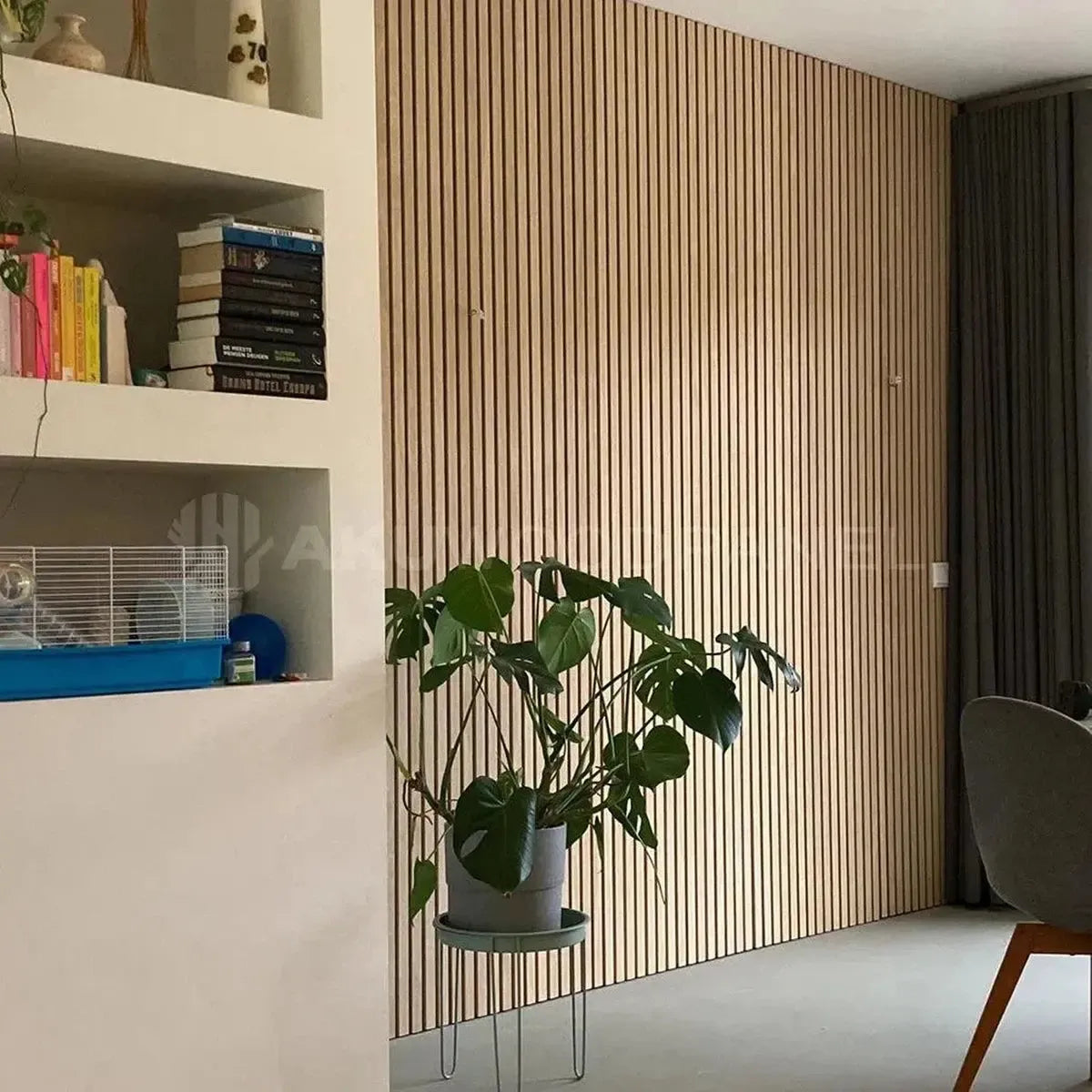
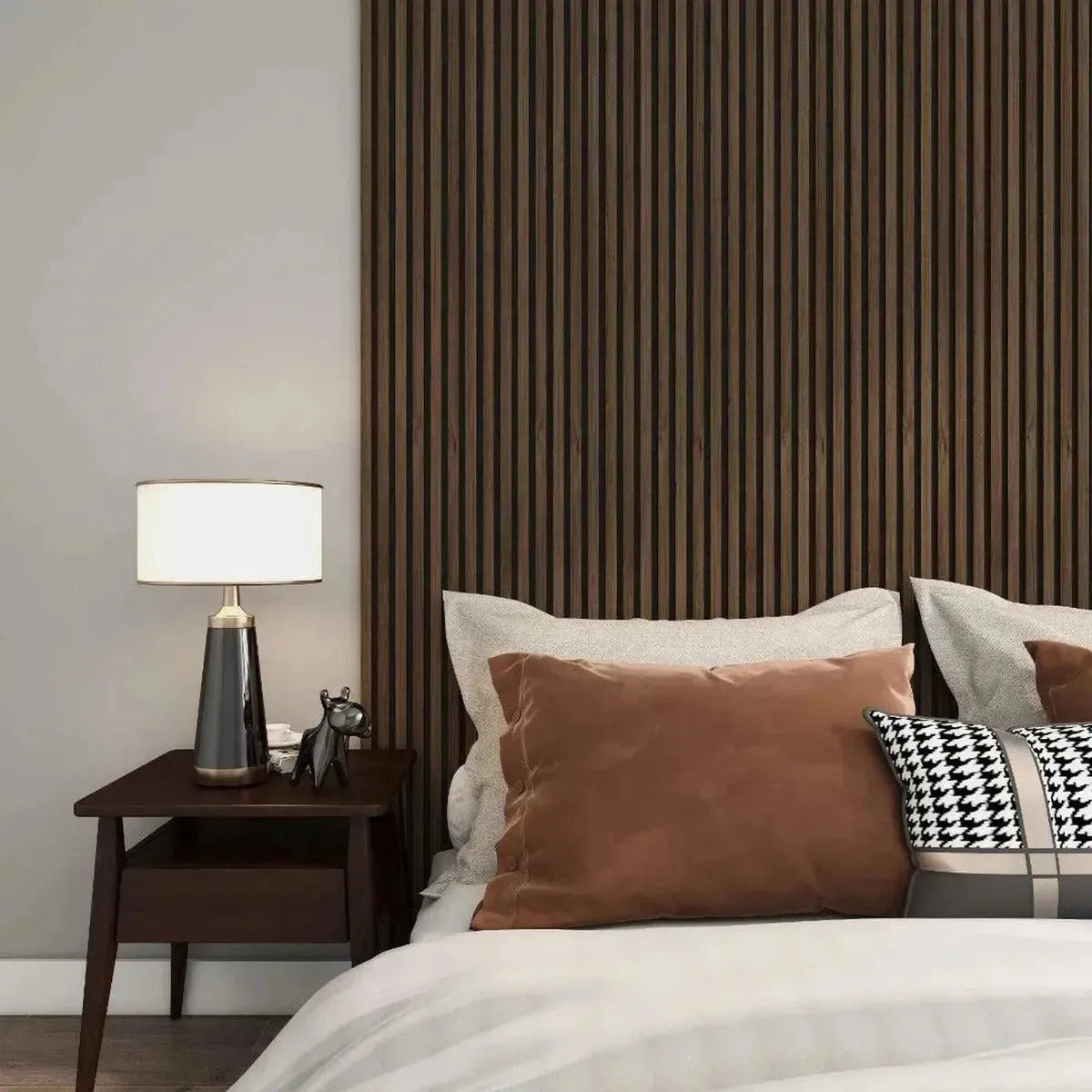
- Acoustic Slat Wall Panel Natural Oak is the safe buy for tiny house walls in 2026 at $169.95 — light finish, felt-backed acoustic core.
- Skip full-depth tongue-and-groove board; it adds weight and depth a trailer-built tiny house can't spare.
- The Tile Acoustic Slat Wall Panel Natural Oak 4-pack at $126.95 fits accent walls and lofts without a full-room order.
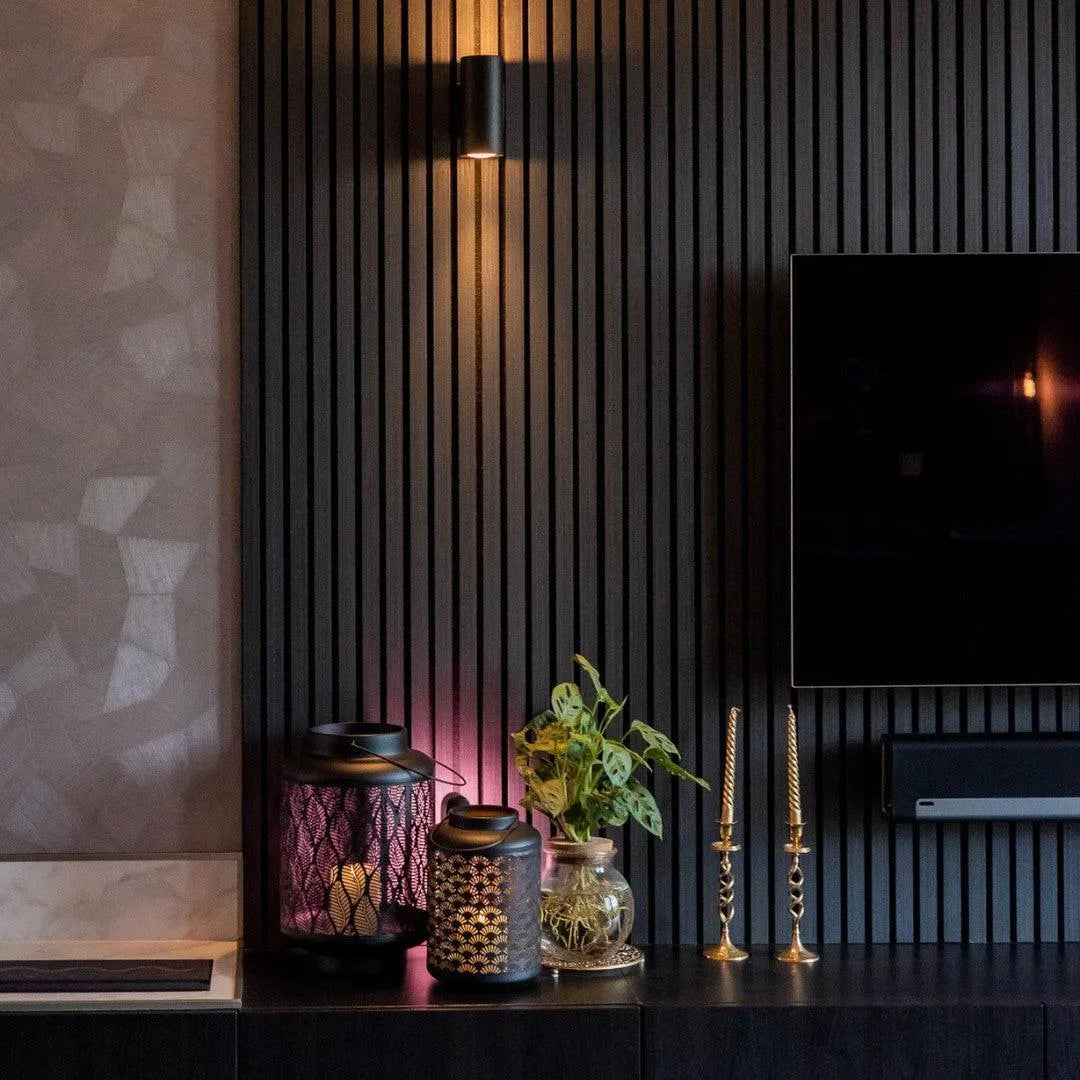
- Black Oak slat panels work as a single feature wall in a tiny house — an entire room in Black Oak reads heavy and shrinks the space.
Why this matters
A tiny house amplifies every mistake. Hard drywall in a 250-square-foot box bounces sound off every surface, so a dishwasher running or a conversation at the kitchen counter sounds louder than it would in a 2,000-square-foot house. Wood panels for tiny house interior wall cladding solve two problems at once when you pick the right ones: they add real acoustic absorption and they finish the wall in a material that doesn't need paint, caulking, or a second coat.
The wrong panel creates two new problems instead. Panels with too much depth eat into a room where four extra inches of wall thickness is a real loss of usable floor space. Panels built for exterior weatherproofing bring finishes and fastening systems designed for rain exposure, not a warm interior — you pay for weather resistance you don't need and get a look that reads industrial instead of warm. Akuwood Panel builds acoustic slat, hexagon, fluted, and 3D wood tile panels specifically for interior cladding, which is the category tiny house walls actually call for.
Who this is for
This guide is for tiny house builders and owners finishing interior walls on a trailer or skid foundation — whether it's a self-build, a builder-assisted project, or a short-term rental unit where guests will judge the finish on sight. If you're cladding a full-size cabin, guest house, or ADU with more square footage to spare, some of the weight and depth trade-offs here matter less, but the acoustic and finish logic still applies.
What to look for in wood panels for tiny house walls
Panel weight and profile depth
Every pound added to wall cladding is a pound subtracted from your trailer's payload budget if the tiny house sits on wheels. Slat and 3D tile panels run a slim profile compared to full board-and-batten or tongue-and-groove lumber, which keeps wall buildup thin enough that you don't lose interior width across a 20-foot-wide build. Ask for the panel's actual depth before ordering — a slim slat panel reclaims wall space a thick veneer board would cost you.
Acoustic performance in a small volume
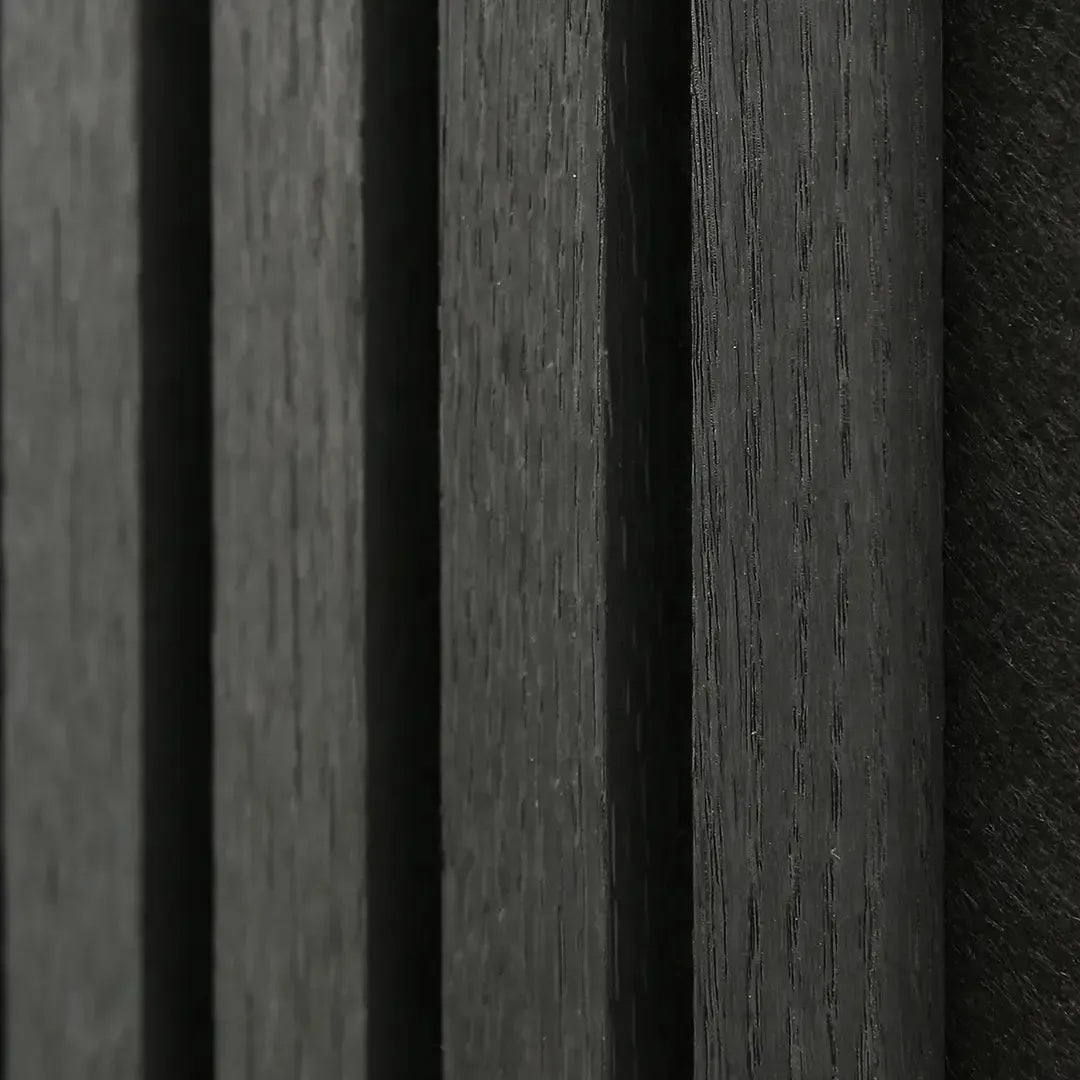
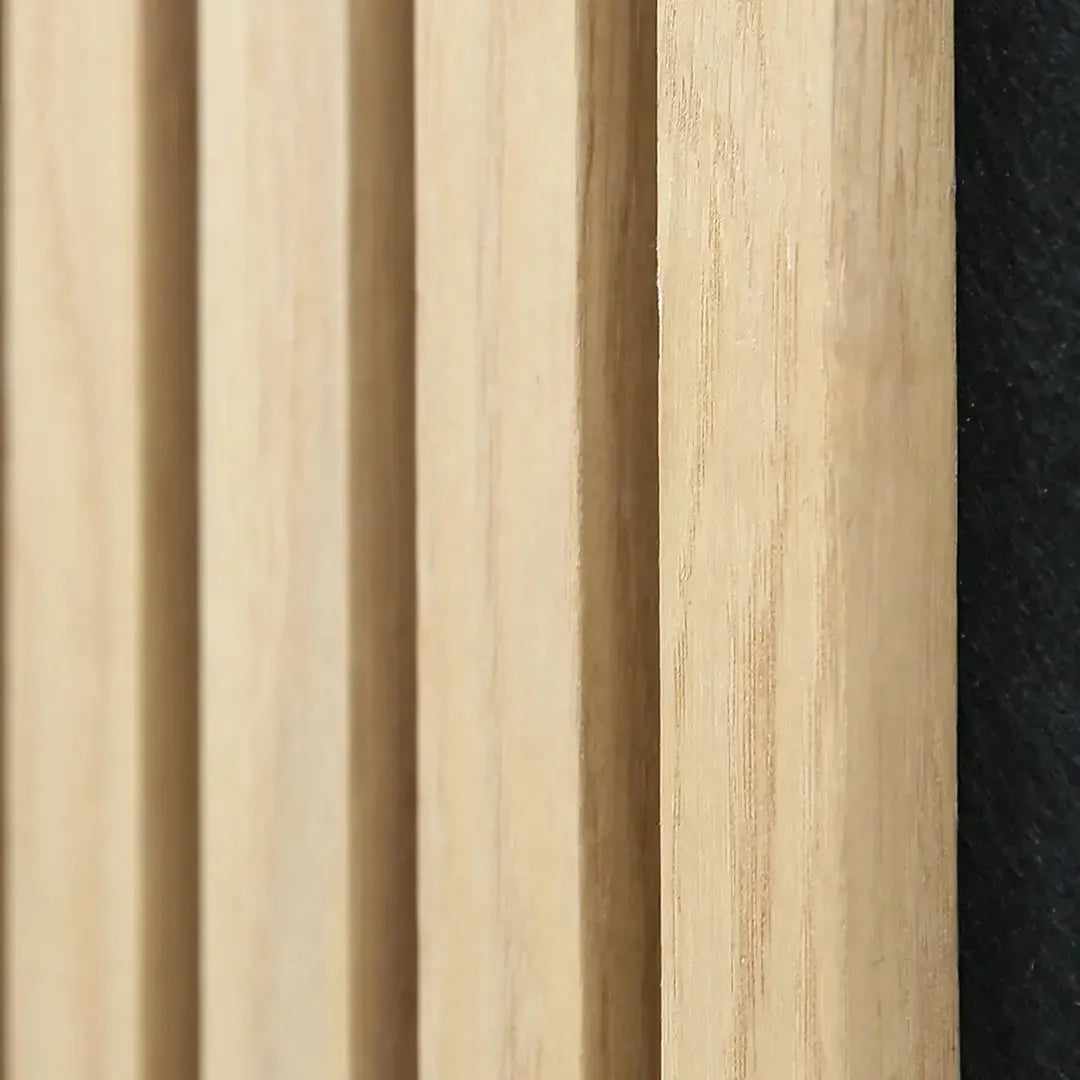
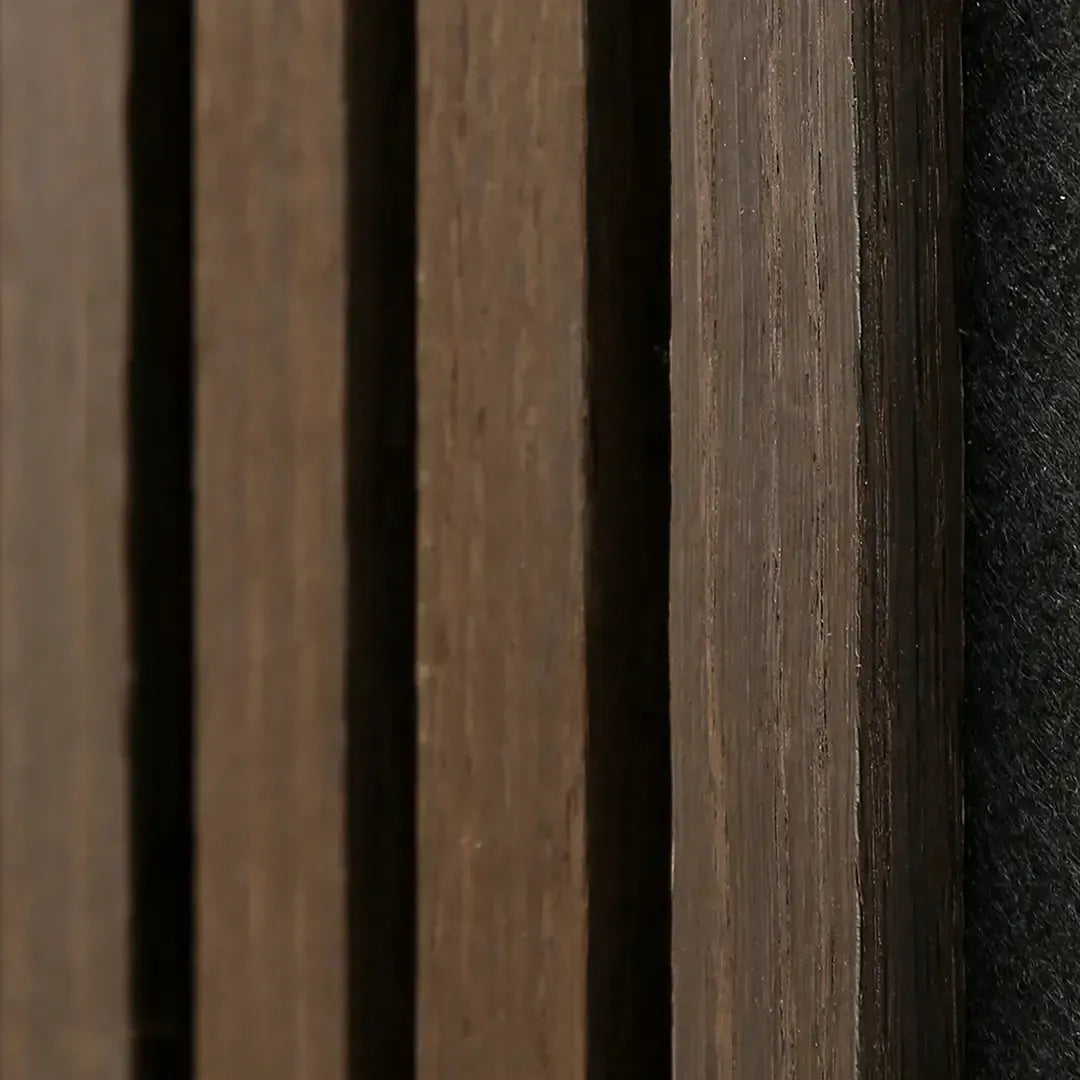
A hard-surfaced room under 400 square feet reflects sound differently than a normal room — echoes are sharper because there's less air volume to dissipate them in. Felt-backed acoustic slat panels are built with a documented NRC (Noise Reduction Coefficient) around 0.75, meaning they absorb roughly three-quarters of the sound energy that hits them instead of bouncing it back. That number matters more in a tiny house than almost anywhere else, because there's no second room for sound to travel into and lose energy.
Moisture and temperature swing tolerance
Tiny houses move more air-temperature and humidity swings than a slab-foundation home, especially towable units parked in different climates through the year. A 3-sided wood veneer construction with a stable engineered core handles that cycling better than raw solid board, which expands and contracts enough to open gaps at the seams over a few seasons.
DIY installation without a contractor
Most tiny house builds don't have a paneling contractor on the crew. Click-together slat systems and peel-and-stick 3D wood tiles install with basic tools and a level, which matters when the person doing the install is the same person who framed the walls. Look for panels with clear end-piece and trim options so edges finish clean without custom mitering.
Finish and color that doesn't shrink the room
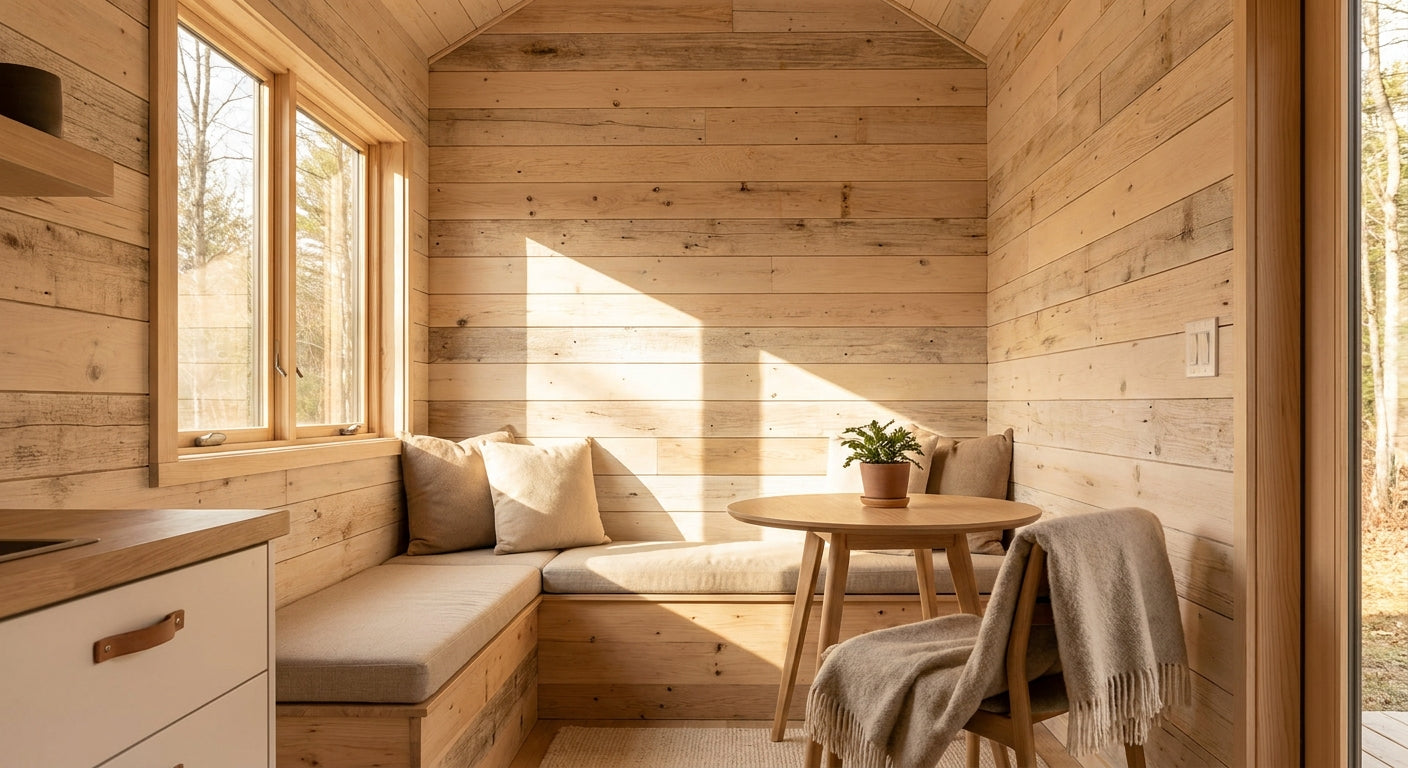
Dark finishes read dramatic in a photo and cramped in a 9-foot-wide room. Natural Oak and lighter finishes bounce available light and read larger; Black Oak and Smoked Oak work as a single accent wall but flatten a whole room's sense of space when used floor to ceiling.
Top picks for tiny house interior wall cladding
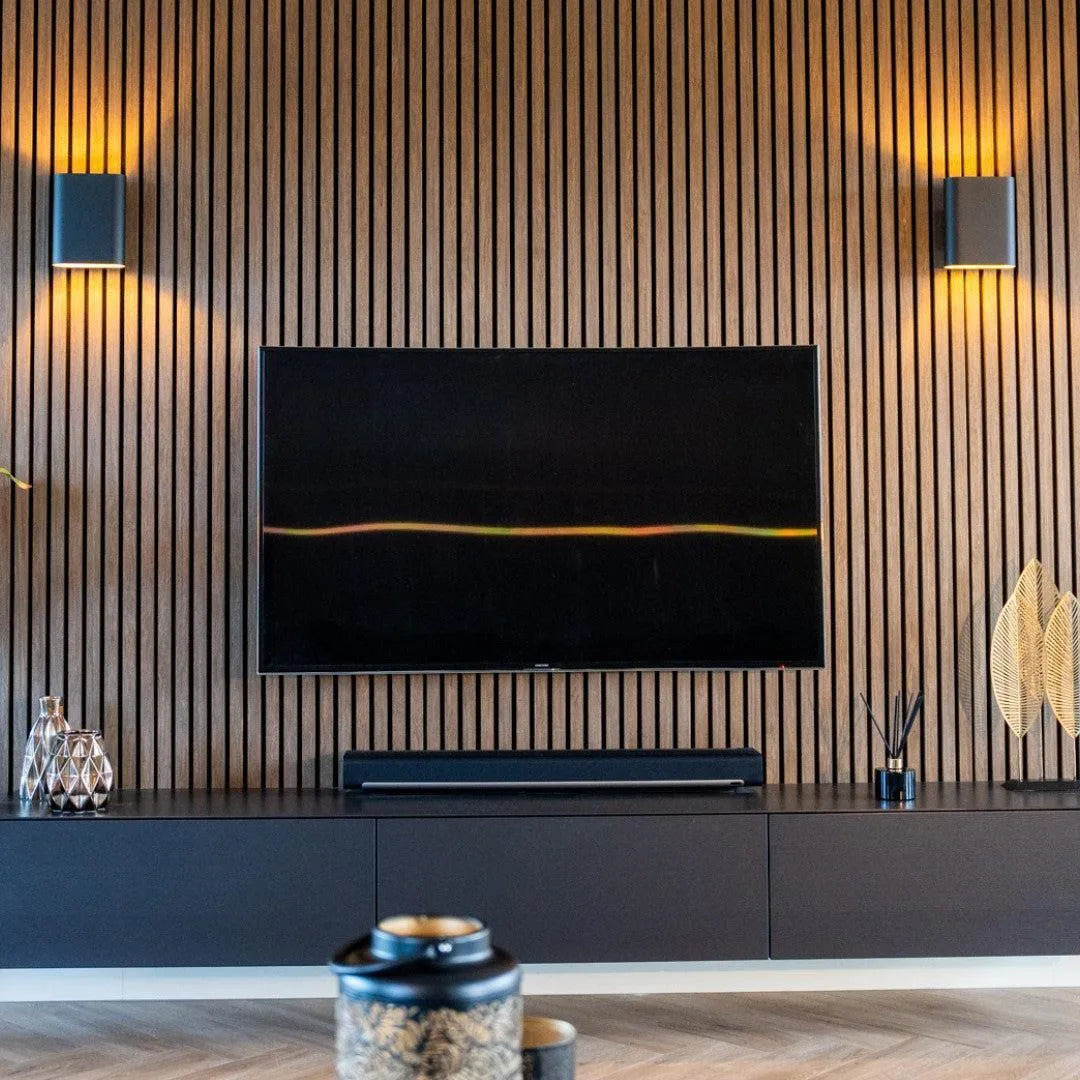
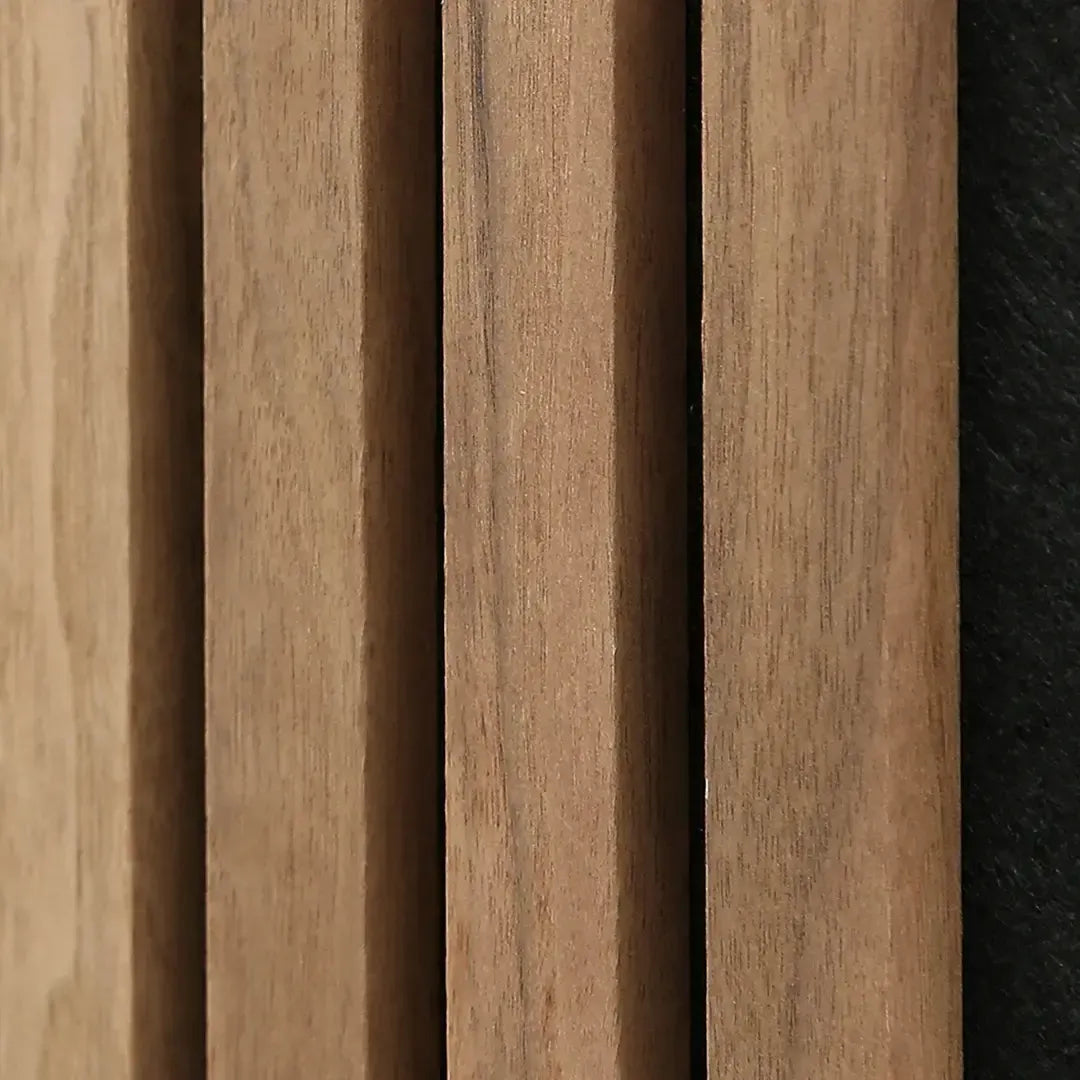
The safe pick: Acoustic Slat Wall Panel Natural Oak — $169.95, felt-backed, 3-sided wood veneer construction. This is the panel to default to for a main living wall: light finish keeps the room feeling open, and the felt backing does the acoustic work a hard drywall wall can't. Buy.
The wildcard: Acoustic Slat Wall Panel Black Oak — $177.95, same slat profile in a near-black finish. Works as a single feature wall behind a bed or TV nook where you want contrast against light cabinetry, but cladding an entire tiny house in Black Oak makes the room read smaller and darker than the square footage actually is. Consider for one wall only.
The budget and small-footprint pick: Tile Acoustic Slat Wall Panel Natural Oak — $126.95 for a 4-panel box. Sized for smaller runs like a loft accent, a headboard wall, or a bathroom niche where a full-size panel order is more material than the space needs. Buy for accent applications under roughly 40 square feet.


What to avoid
- Full-depth solid tongue-and-groove board. It looks rustic on Pinterest, but the added depth and weight fight against every constraint a tiny house on a trailer has to work within.
- Exterior-rated cladding used indoors. Exterior wall panels are built for UV and weather exposure — you're paying for a spec you don't need and the fastening system isn't designed for a finished interior look.
- Any panel without felt or an acoustic backing in the main living area. A hard slat panel with no absorptive layer still bounces sound in a small room; you lose the one advantage acoustic paneling has over plain plywood.
Verdict comparison
| Panel | Format | Price | Acoustic backing | Best for | Verdict |
|---|---|---|---|---|---|
| Acoustic Slat Wall Panel Natural Oak | Full slat panel | $169.95 | Felt-backed | Main living wall | Buy |
| Acoustic Slat Wall Panel Black Oak | Full slat panel | $177.95 | Felt-backed | Single feature wall | Consider |
| Tile Acoustic Slat Wall Panel Natural Oak | 4-panel box | $126.95 | Felt-backed | Loft, headboard, accent | Buy |
| 3D Wood Wall Panel Deep Dusk Walnut | 12x12 tile | $41.95 | None (solid wood tile) | Small decorative sections | Consider |
Where the acoustic number comes from
Felt-backed hexagon and slat panels in this category carry a documented NRC of 0.75, meaning roughly 75% of the sound energy hitting the panel gets absorbed rather than reflected. In a room under 400 square feet, that's the difference between a conversation that carries clearly and one that echoes off every hard surface.
“A tiny house with hard drywall walls behaves acoustically like a much smaller version of a warehouse — everything bounces because there's nowhere for the sound to go.”
FAQ
What's the best wood panel for a tiny house interior?
Acoustic Slat Wall Panel Natural Oak is the strongest all-around choice for tiny house interior wall cladding in 2026 because it combines a slim profile with felt-backed acoustic absorption. It runs $169.95 and works on any main living wall without adding excess depth.
Is wood paneling too heavy for a tiny house on a trailer?
Slim slat and 3D tile panels weigh far less than solid tongue-and-groove board, so they're a reasonable option for trailer-built tiny houses. Check the specific panel's weight per unit against your build's payload budget before ordering a full room.
Can you install wood slat panels yourself in a tiny house?
Yes — click-together slat systems and peel-and-stick 3D wood tiles are built for DIY install with basic tools and a level. Most tiny house builders finish an accent wall in a single weekend without hiring a contractor.
Do wood panels help with noise in a tiny house?
Felt-backed acoustic slat and hexagon panels carry an NRC around 0.75, which meaningfully cuts echo in a small hard-surfaced room. Plain solid wood tiles without a felt backing don't deliver the same acoustic benefit.
How much do wood panels cost for a tiny house wall?
Full acoustic slat panels run roughly $169.95 to $177.95 depending on finish, while smaller tile boxes start around $126.95 for accent-sized projects. A single accent wall in a tiny house typically needs far less material than a full-size home wall.
Should a tiny house use dark or light wood panels?
Light finishes like Natural Oak keep a small room feeling open, while dark finishes like Black Oak work best limited to a single feature wall. Cladding an entire tiny house in a dark finish makes the space read smaller than its actual square footage.
Are peel-and-stick panels good for tiny houses?
Peel-and-stick and click-together formats are well suited to tiny houses because they install without heavy tools or a contractor crew. They also make it easier to finish odd angles common in loft and sloped-ceiling sections of a tiny house.
What's the difference between acoustic and standard wood panels?
Acoustic panels include a felt or absorptive backing layer that reduces echo, carrying an NRC rating around 0.75 in tested formats. Standard decorative wood panels without that backing look similar but don't reduce sound reflection in a room.
One last thing
The detail most tiny house builders miss isn't the panel — it's the trim. A slat or tile wall that stops at a raw edge next to a window or door frame reads unfinished no matter how good the panel itself looks, so budget for end pieces and corner trim as part of the order, not an afterthought once the main wall is up.
 Better performance and aesthetic appeal
 In Stock