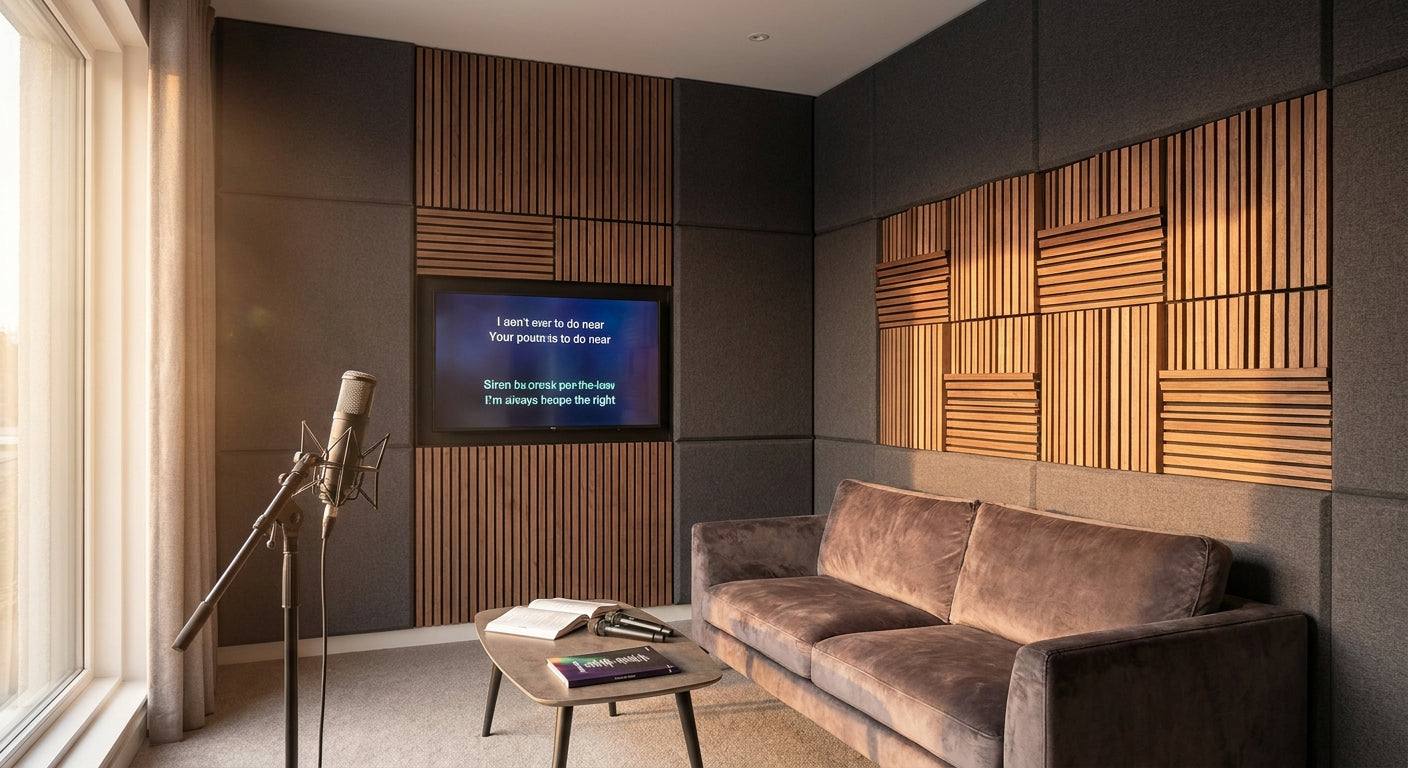
Karaoke rooms turn into echo chambers fast: hard floors, glass mirrors, and drywall bounce vocal frequencies right back at the mic, and the room sounds worse the louder everyone sings. This guide picks acoustic panels for karaoke room walls that actually cut reflection instead of just decorating over the problem.
- Hexagon Acoustic Panel Walnut with Gray Felt carries an NRC of 0.75 — buy it for the main singing wall.
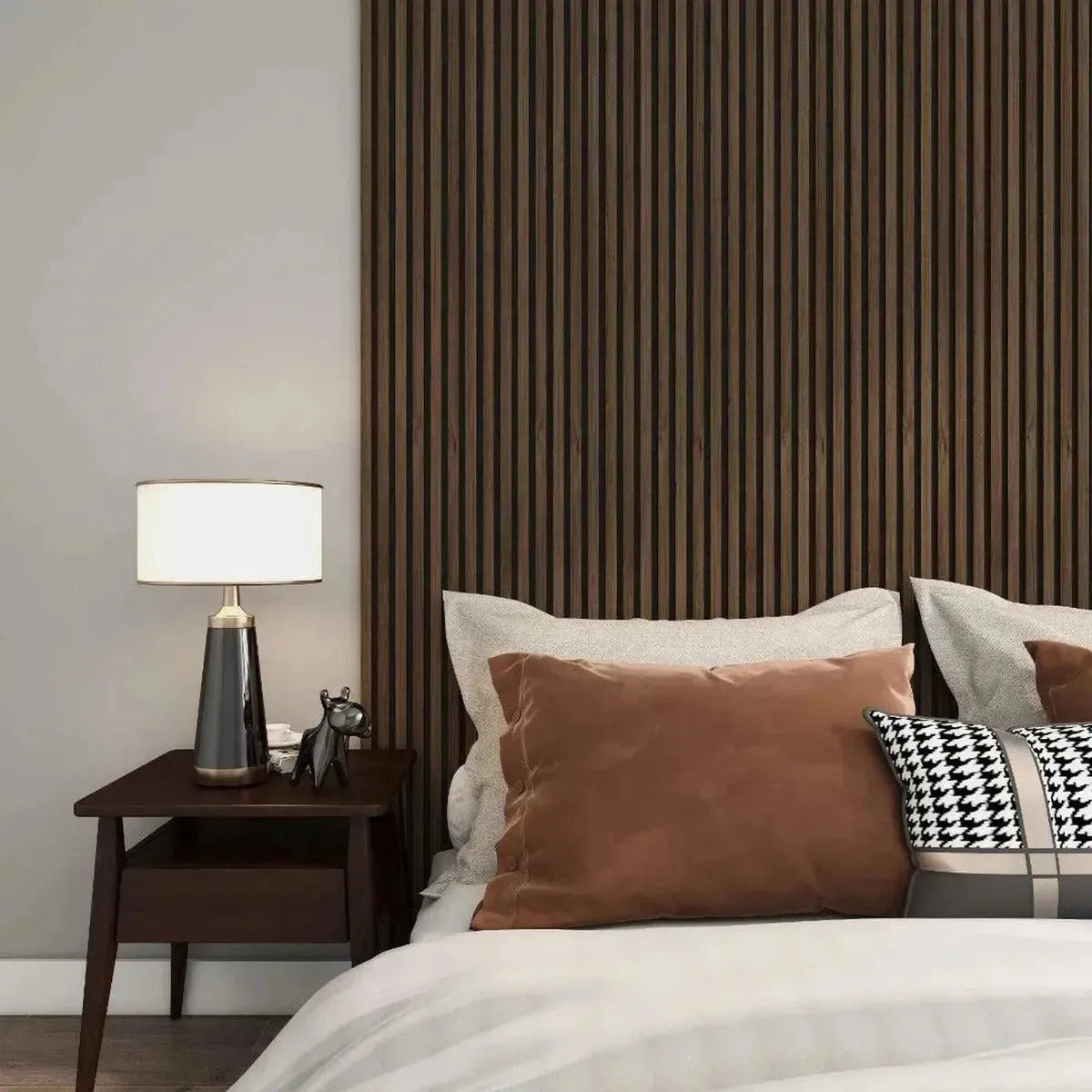
- Acoustic Slat Wall Panel Walnut at $182.95 is the safe pick for a full feature wall in 2026.
- Skip solid, non-perforated wood panels with no felt backing — they look right but absorb almost nothing.
- Full Sample Box Slat Wall Panel at $10 lets you test tone against your lighting before committing to a wall.
Why this matters
A karaoke room with bare drywall and a laminate floor reflects most of the sound energy hitting the walls, which is why voices sound thin through the mic and why the backing track fights the room instead of blending into it. Acoustic panels for karaoke room walls fix this by trapping mid and high frequencies before they bounce back into the mic path. The Hexagon Acoustic Panel Walnut with Gray Felt carries a published NRC of 0.75, which means roughly three-quarters of the sound energy hitting the panel gets absorbed rather than reflected. That single number explains why felt-backed wood panels outperform decorative-only wood slats in a room where people are singing into a live mic for hours.
Home karaoke rooms built in 2026 tend to reuse existing bedrooms, basements, or garages, all of which have hard parallel walls that create flutter echo. A panel that's purely decorative won't touch that problem. A panel with a felt or acoustic backing will.
Who this is for
This guide is for homeowners converting a spare room, basement, or garage into a dedicated karaoke space, and for small bar or lounge owners adding a karaoke booth to an existing venue. If you're choosing between paint colors and stick-on foam tiles, you're in the wrong aisle — this is for people who want the room to sound noticeably tighter after installation, not just look styled for photos.
What to look for in acoustic panels for karaoke room walls
Sound absorption rating (NRC), not just wood grain
NRC (Noise Reduction Coefficient) tells you what fraction of sound a panel absorbs versus bounces back — a rating near 0 reflects almost everything, a rating near 1 absorbs almost everything. Karaoke rooms need absorption in the 0.6 to 0.8 range on at least one or two walls to tame flutter echo without deadening the room completely. A panel marketed only on its veneer finish and never on its NRC number is a decoration, not an acoustic treatment.
Coverage math for your actual room size
A typical spare-bedroom karaoke setup runs 10 by 12 feet, which is 120 square feet of floor and roughly 350-400 square feet of wall surface once you subtract the door and one window. You don't need to panel every wall — covering 30-40% of wall area with absorptive panels, concentrated behind the singer and opposite the speakers, does most of the work. Measure before you order; overbuying panels for a room this size wastes money on a wall that was never the echo source.
Felt-backed veneer vs. solid wood veneer
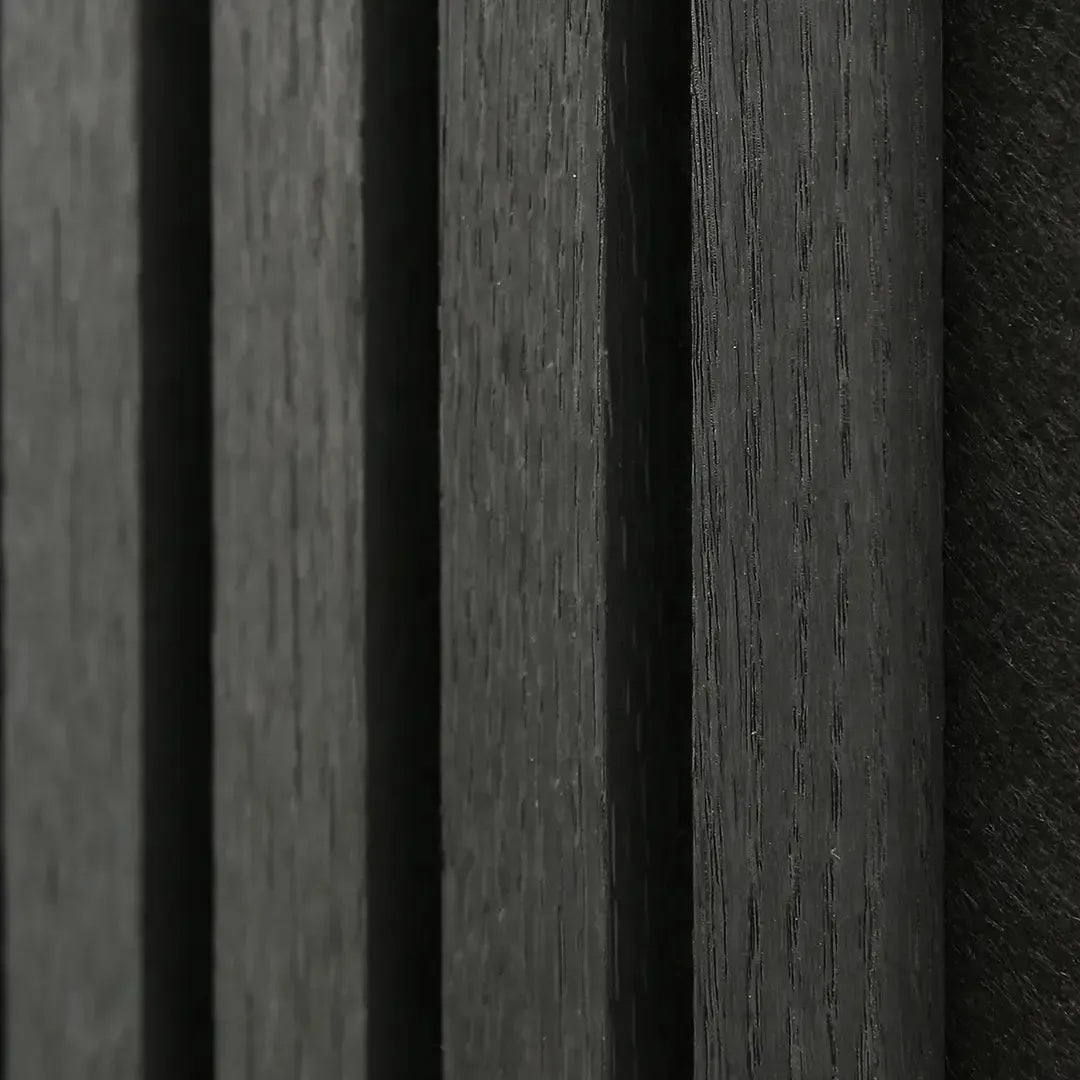
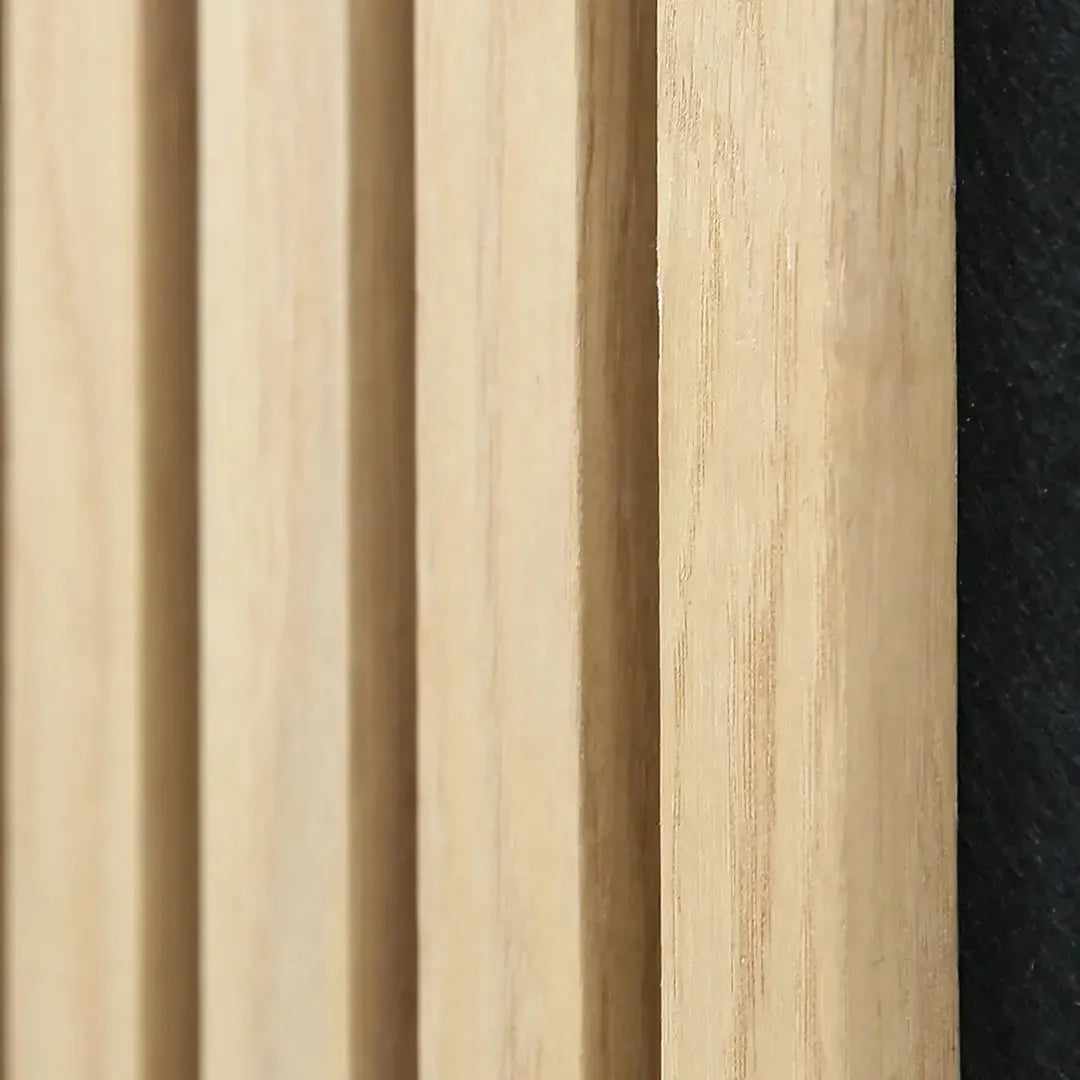
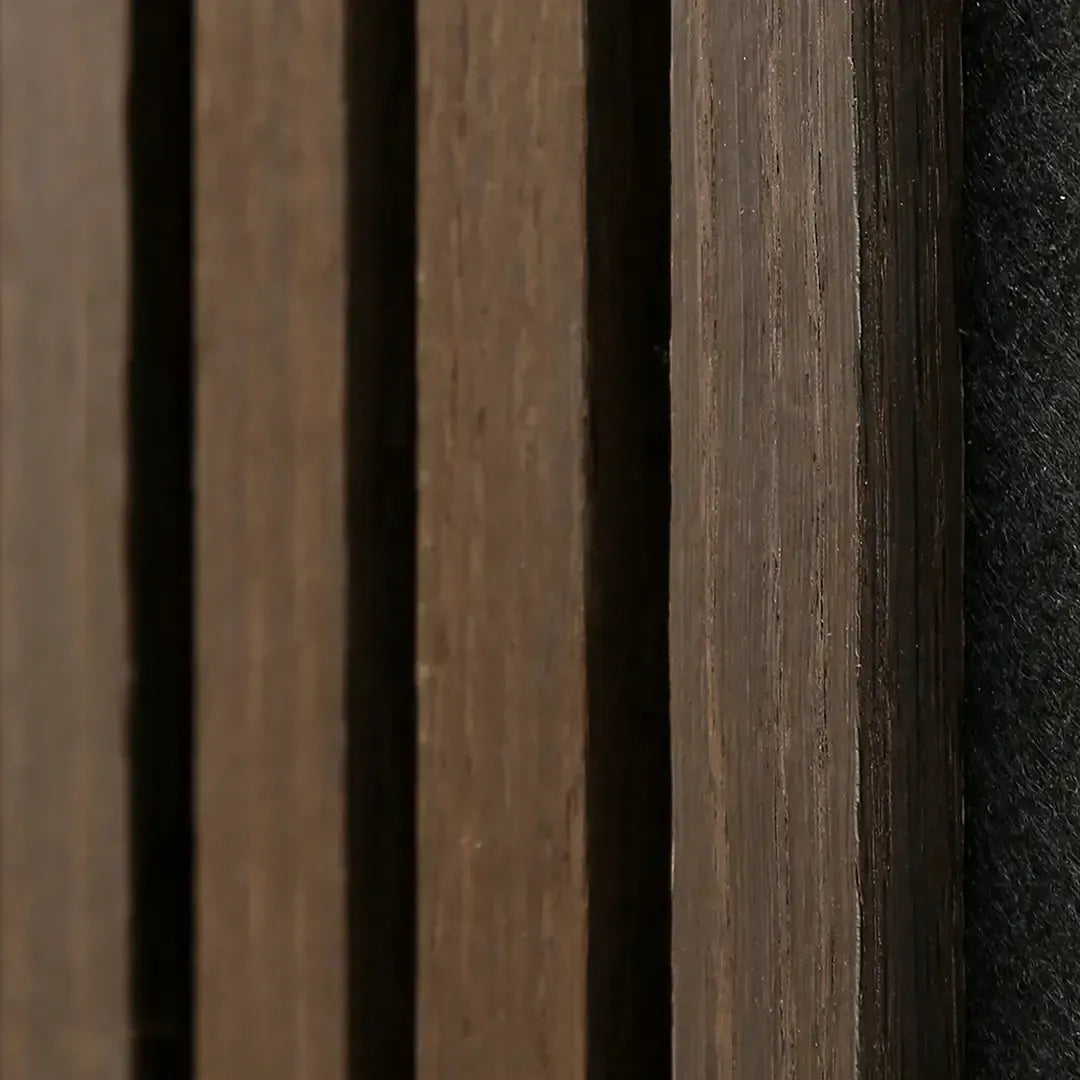
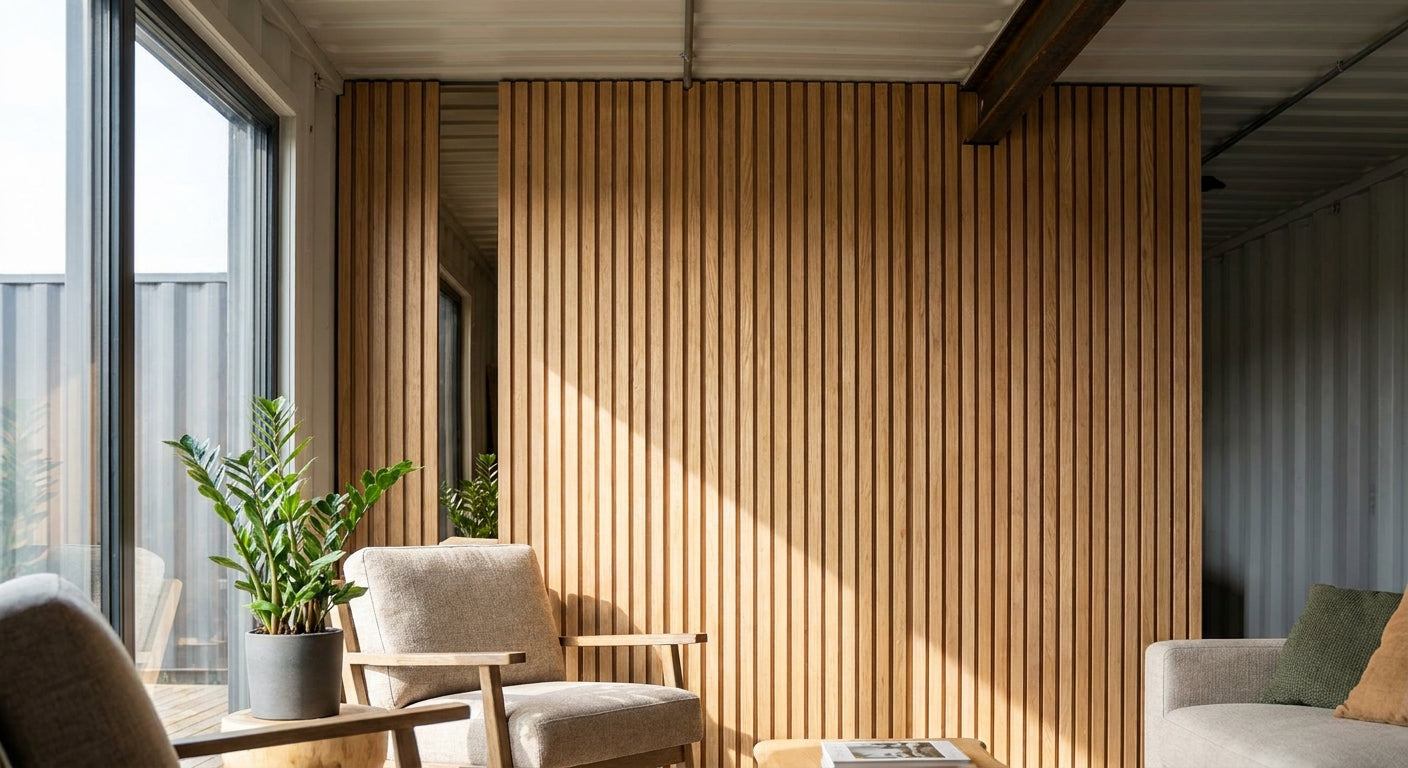
Felt-backed slat and hexagon panels absorb sound at the felt layer behind the wood slats. Solid 3-sided wood veneer panels without a felt or acoustic backer look nearly identical on the wall but perform closer to plain wood paneling acoustically. If the room's main complaint is echo rather than looks, felt-backed construction is the deciding spec, not the wood tone.
Mounting substrate — drywall, concrete, or studio isolation
Most home karaoke conversions go on drywall with standard adhesive or screw-in mounting. Basement and garage conversions often hit concrete or masonry, which changes the fastening approach and adds a step most people skip and regret. Confirm your wall substrate before ordering panels sized for a full accent wall, since remounting after the fact damages the felt backing.
Finish tone against your lighting setup
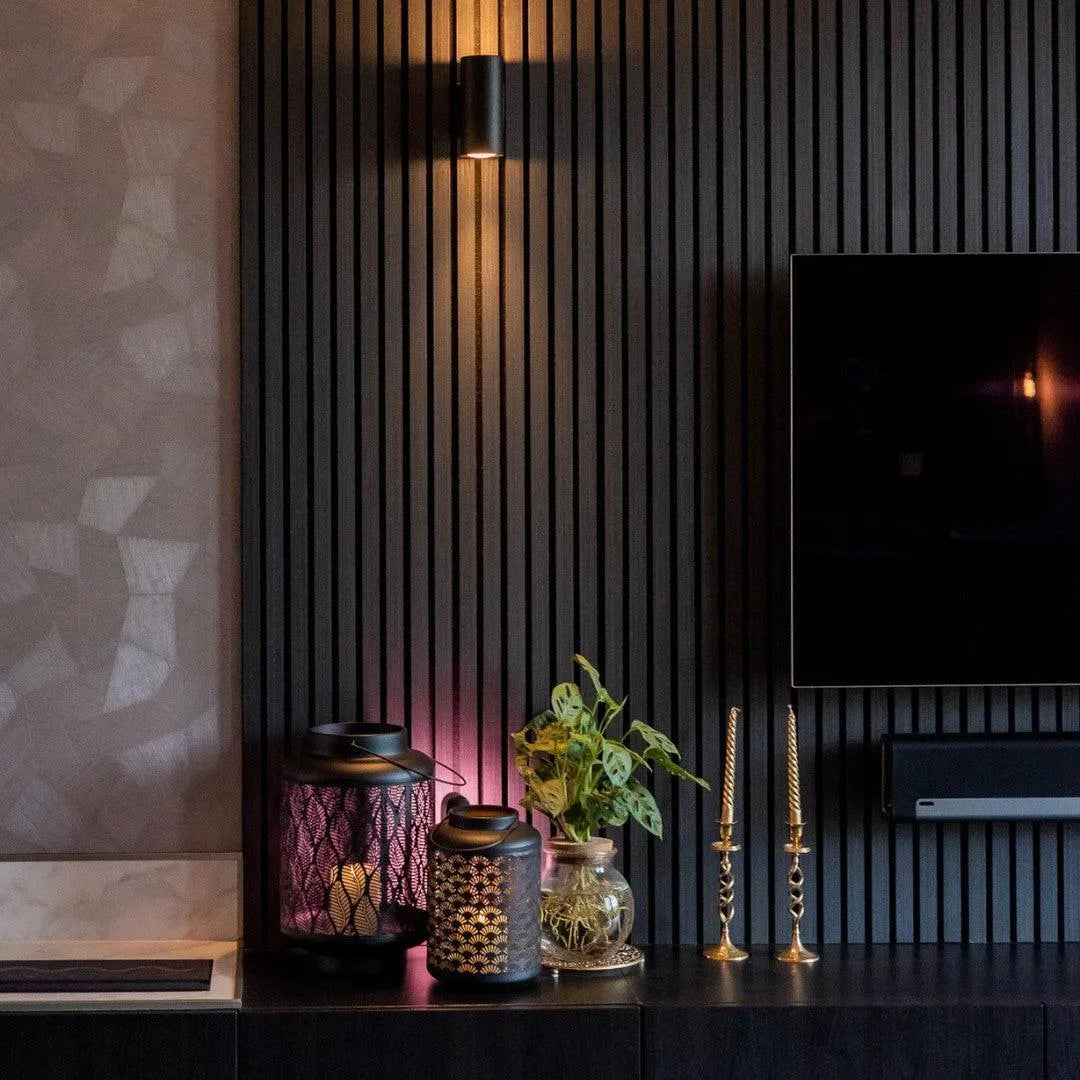
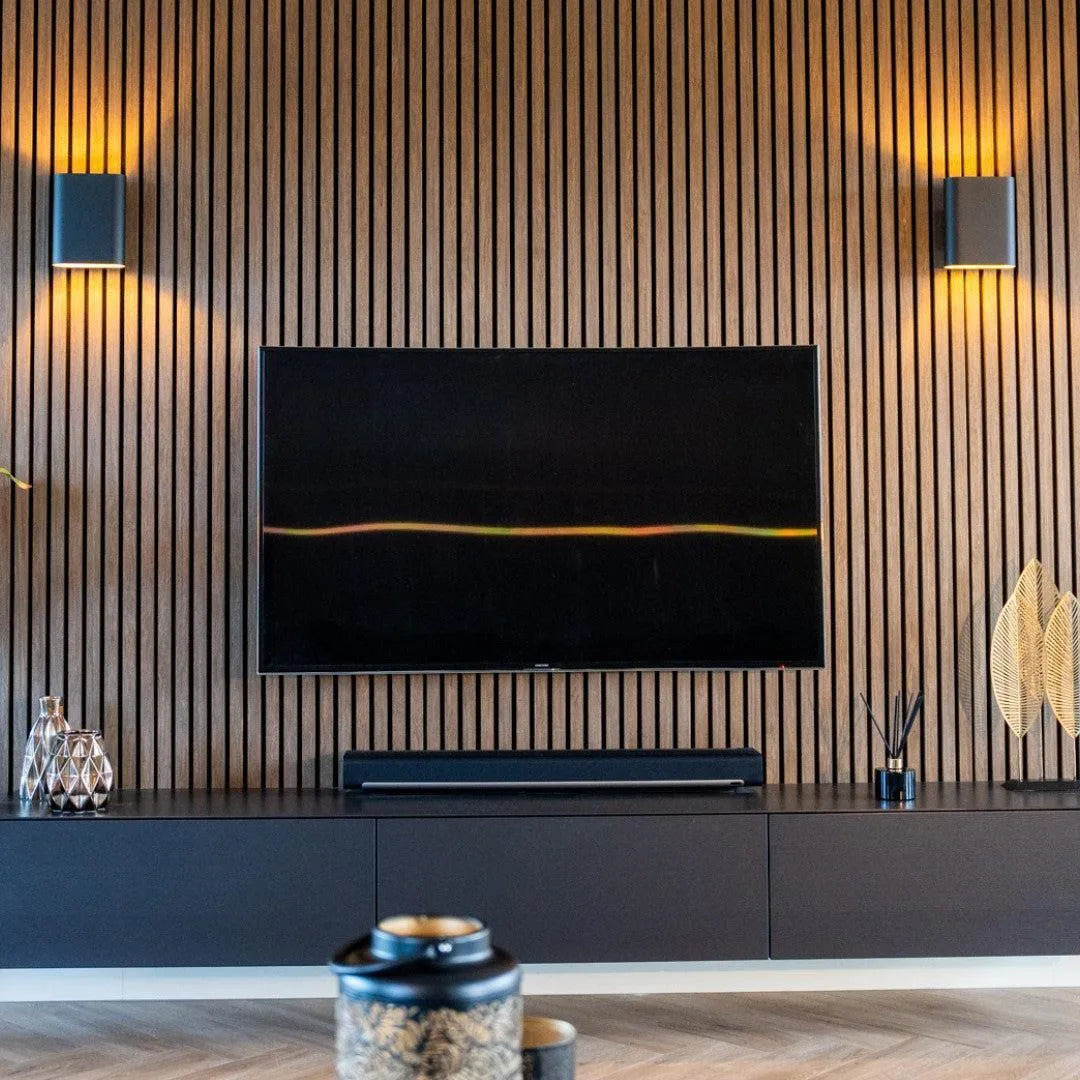
Karaoke rooms usually run dim, colored, or disco-style lighting, and dark finishes like black oak or smoked oak read moodier under LED strip lighting than natural or walnut tones. Lighter woods reflect ambient light and photograph brighter on video; darker woods hide fingerprints and wear better in a room that gets touched constantly during parties.


Top picks for a karaoke room in 2026
The safe pick: Acoustic Slat Wall Panel Walnut
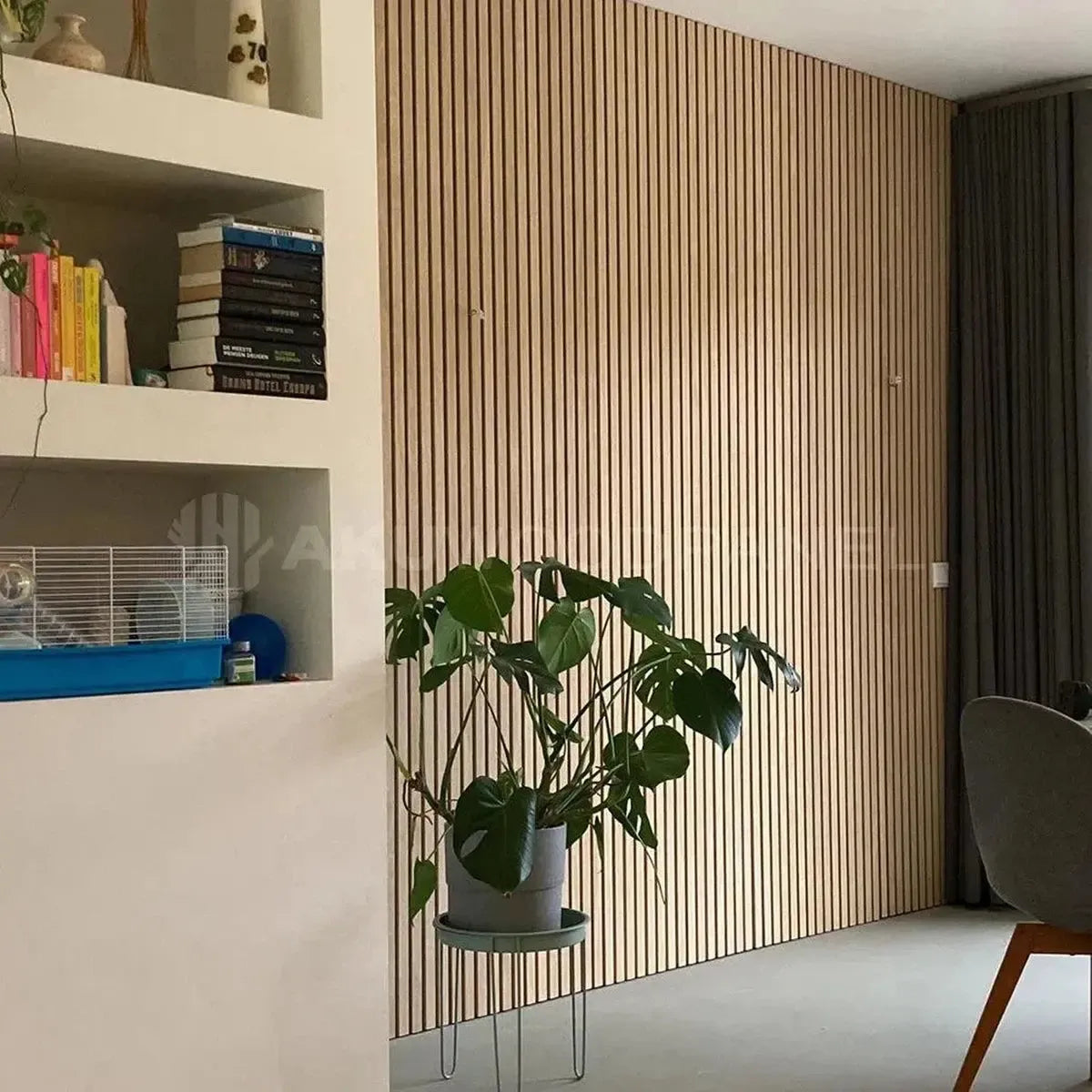
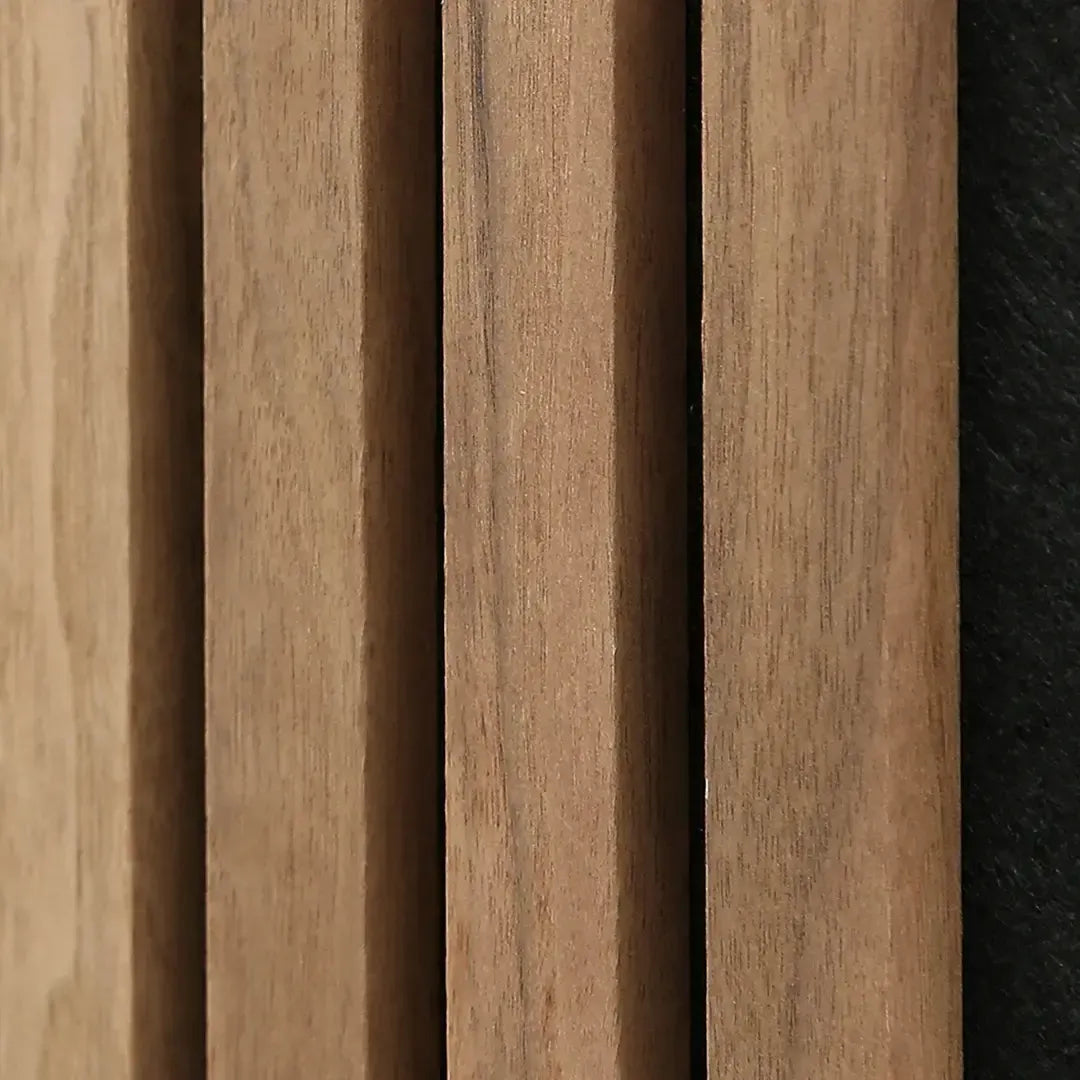
The Acoustic Slat Wall Panel Walnut runs $182.95 and uses the same 3-sided wood veneer construction across the whole slat line, which means consistent grain from panel to panel on a full feature wall. Walnut reads warm under both daylight and colored LED lighting, which matters when a karaoke room doubles as a photo backdrop for parties. Verdict: Buy for the primary singing wall behind the mic setup.
The wildcard: Acoustic Slat Wall Panel Black Oak
The Acoustic Slat Wall Panel Black Oak at $177.95 leans into the dark, moody-lounge look that a lot of 2026 karaoke room builds are chasing, especially basement conversions with LED strip lighting. It hides scuffs and hand marks better than lighter finishes in a room that gets touched constantly. Verdict: Consider if the room's aesthetic is dark-lounge rather than bright and Scandinavian.
The acoustic workhorse: Hexagon Acoustic Panel Walnut with Gray Felt
Already named above for its NRC of 0.75, this hexagon panel at $165.95 does the heaviest acoustic lifting of the group and installs in a modular grid instead of a full slat wall, which works well behind a single mic stand or speaker cluster. Verdict: Buy as the primary absorption zone even if the rest of the room uses slat panels for looks.
The low-risk tester: Full Sample Box Slat Wall Panel
At $10 for four panels across Natural, Smoked Oak, and Walnut finishes, the Full Sample Box Slat Wall Panel lets you hold real material against your karaoke room's lighting before ordering a full wall's worth. It won't tell you anything about acoustic performance, but it settles the color argument before money is spent. Verdict: Buy first if you're undecided on finish.
What to avoid
- Foam-only acoustic tiles with no wood facing. They absorb sound but look like a recording studio, not a room people want to sing and party in.
- Solid wood veneer panels with no felt or acoustic backer marketed as "acoustic." They look identical to felt-backed panels in photos but do almost nothing for flutter echo.
- Full-wall coverage on every surface. Overdamping a karaoke room kills the live, fun energy of the space — treat 30-40% of wall area, not 100%.
Verdict comparison
| Panel | Sound Rating | Price | Best For | Verdict |
|---|---|---|---|---|
| Acoustic Slat Wall Panel Walnut | Veneer + slat gap absorption | $182.95 | Full feature wall behind the mic | Buy |
| Acoustic Slat Wall Panel Black Oak | Veneer + slat gap absorption | $177.95 | Dark, moody karaoke lounges | Consider |
| Hexagon Acoustic Panel Walnut with Gray Felt | NRC 0.75 | $165.95 | Primary absorption zone | Buy |
| Full Sample Box Slat Wall Panel | N/A — visual test only | $10 | Testing finish before full order | Buy first |
FAQ
What are the best acoustic panels for a karaoke room?
Felt-backed hexagon or slat wood panels with a published NRC around 0.75, like the Hexagon Acoustic Panel Walnut with Gray Felt, perform best because they absorb reflected sound instead of just decorating the wall. Solid wood veneer without a felt backer looks similar but absorbs far less.
How many acoustic panels do I need for a karaoke room?
Cover 30-40% of the wall surface concentrated behind the singer and opposite the speakers rather than the whole room. For a 10 by 12 foot room with roughly 350-400 square feet of wall area, that's about 120-160 square feet of panel coverage.
Is wood panel better than foam for karaoke room acoustics?
Felt-backed wood panels give you visible absorption performance plus a finished look, while foam tiles absorb sound but read like a recording booth. For a room people actually socialize in, felt-backed wood wins on both fronts.
How much do acoustic panels for a karaoke room cost in 2026?
Individual acoustic slat and hexagon wood panels run $148.95 to $182.95 per unit in 2026, and a sample box to test finish costs $10. A partial-wall treatment for a 10 by 12 foot room typically needs 8-14 panels depending on coverage chosen.
Do acoustic panels stop karaoke noise from leaving the room?
Acoustic panels absorb reflected sound inside the room to reduce echo; they don't block sound transmission through walls to neighboring rooms. Soundproofing noise transfer needs mass-loaded barriers or added drywall layers, which is a separate project from wall panel treatment.
Can I mount acoustic wood panels on a basement concrete wall?
Yes, but concrete and masonry need different fasteners than drywall, so confirm the mounting method before ordering panels sized for a full wall. Getting this wrong after the felt backing is installed usually means damaging the panel during removal.
What NRC rating do I need for a home karaoke room?
An NRC in the 0.6 to 0.8 range on the walls behind the mic and speakers is enough to cut flutter echo without deadening the room's energy. The Hexagon Acoustic Panel Walnut with Gray Felt at NRC 0.75 sits right in that range.
One last thing
The felt backing does more acoustic work than the wood grain ever will — pick the finish for how the room looks under your lighting, and pick the NRC number for how the room actually sounds once ten people are singing into a mic at once.
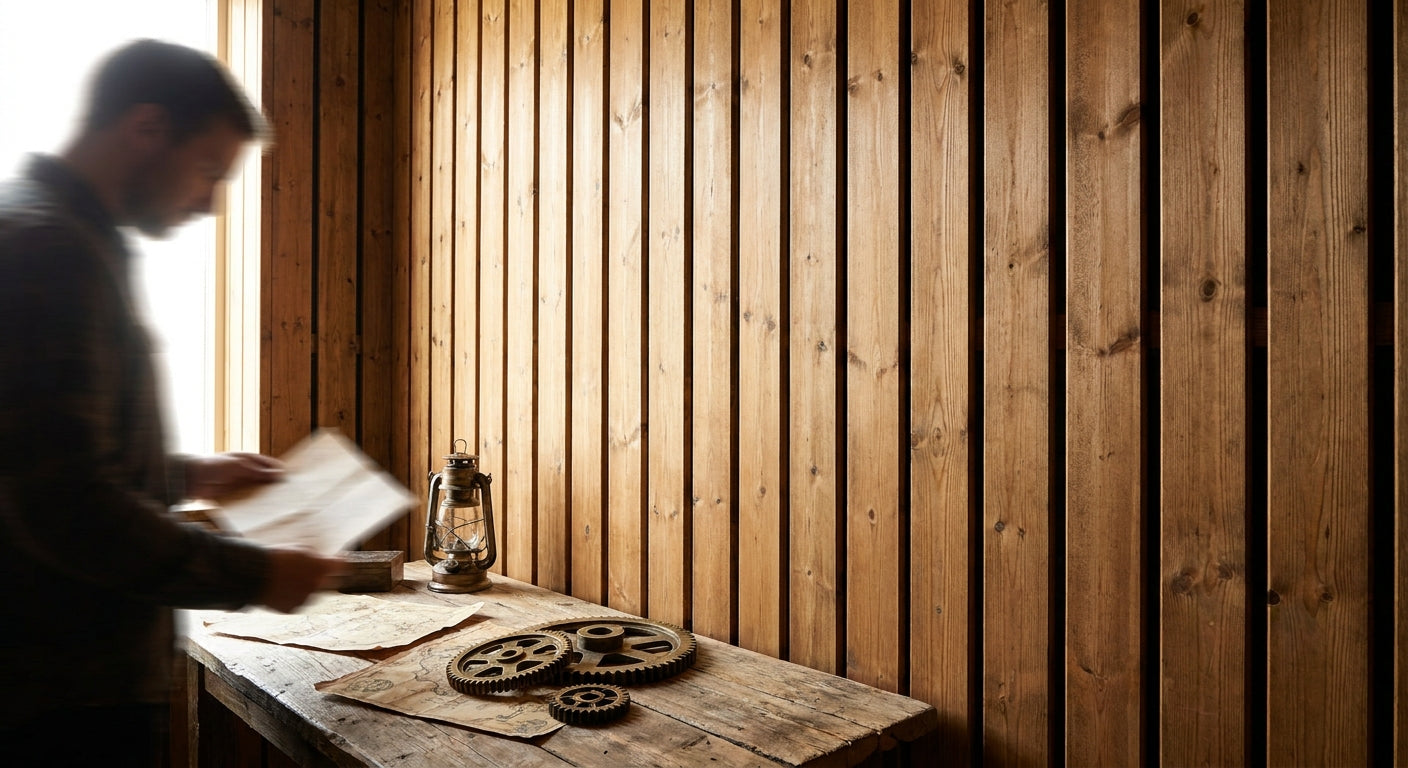
 Better performance and aesthetic appeal
 In Stock