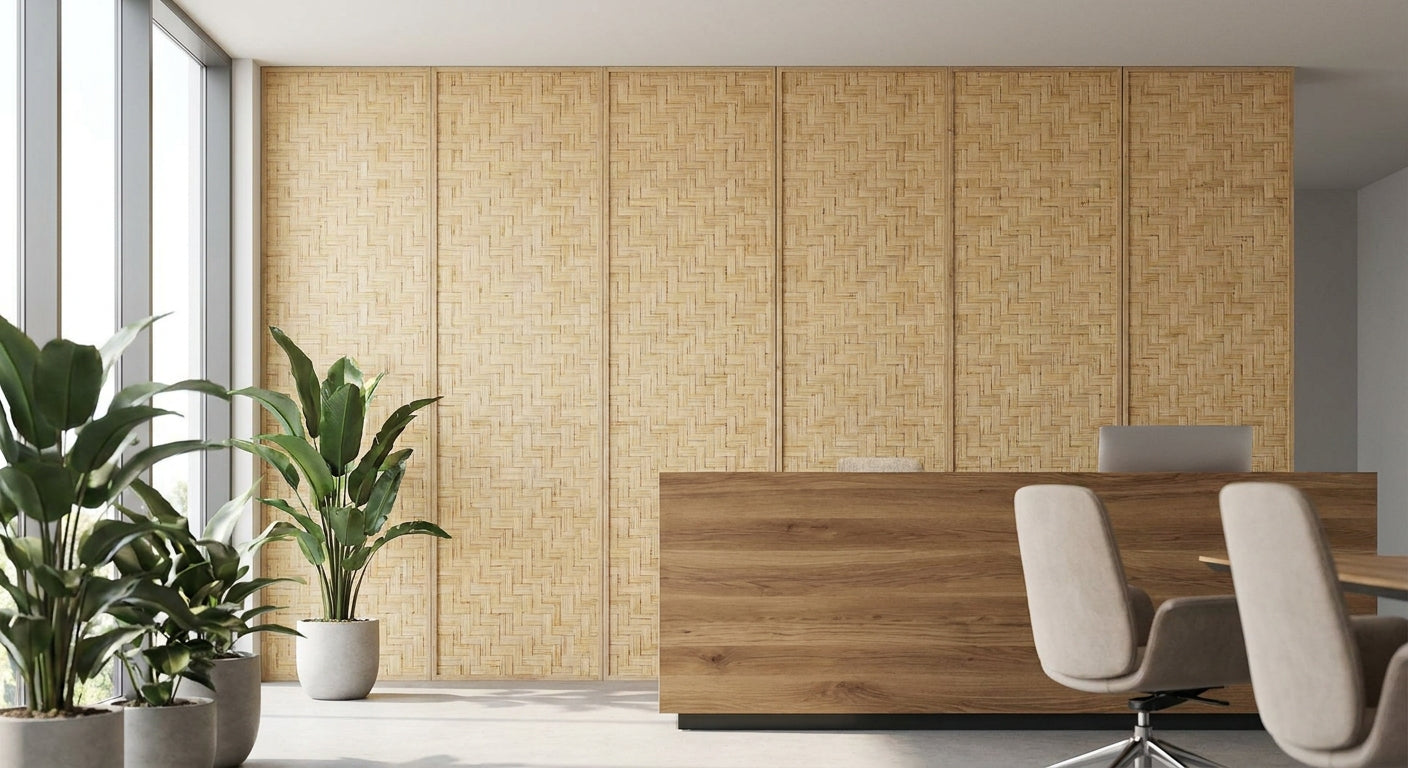
Bamboo wall panels get pitched as the default eco-friendly office finish, but for open-plan floors with hard ceilings and glass, straight bamboo slats do almost nothing for noise — and noise is usually the real problem you're solving for in 2026 office renovations.
- Solid bamboo slat panels look sustainable but add zero acoustic damping — skip them for open offices with echo problems.
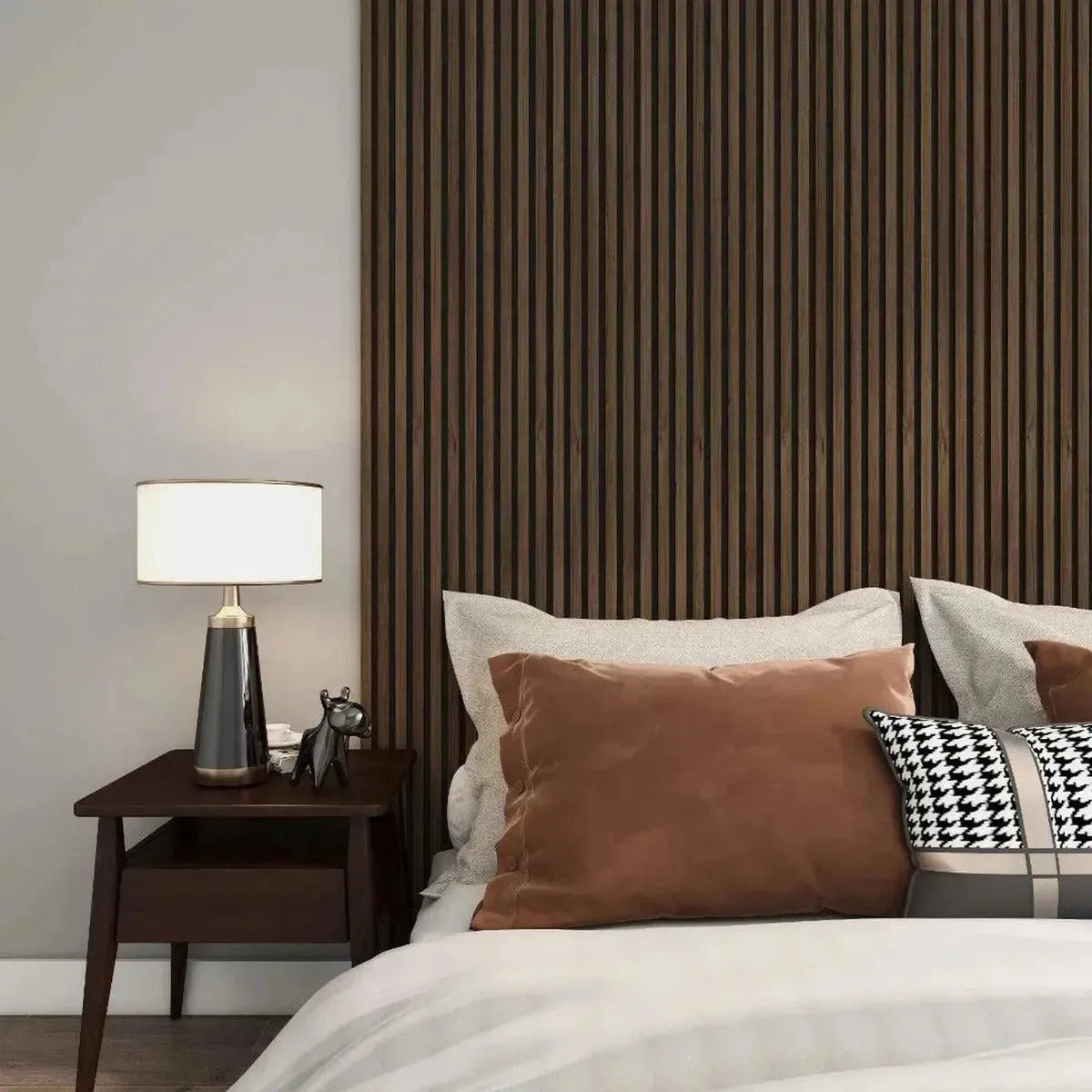
- Natural Oak acoustic slat wall panel ($169.95) pairs a renewable 3-sided wood veneer face with real sound absorption — Buy for meeting rooms and lobbies.
- Walnut acoustic slat wall panel ($182.95) is the premium pick for executive offices wanting a darker, denser grain — Buy.
- Bamboo veneer plywood is a fair budget option for feature walls with no acoustic requirement — Consider.
- Cork wall tiles absorb sound but scuff fast in high-traffic corridors — Hold for low-traffic zones only.
Why this matters
Biophilic design has been the standard pitch for office refreshes since well before 2026, and bamboo keeps showing up on every "sustainable materials" list because it regenerates faster than hardwood. That's true and it's also incomplete. An office wall isn't just a surface — it's either doing acoustic work or it isn't, and most bamboo wall panels sold for interiors are flat, hard, and reflective, which means they bounce sound around a room instead of absorbing it.
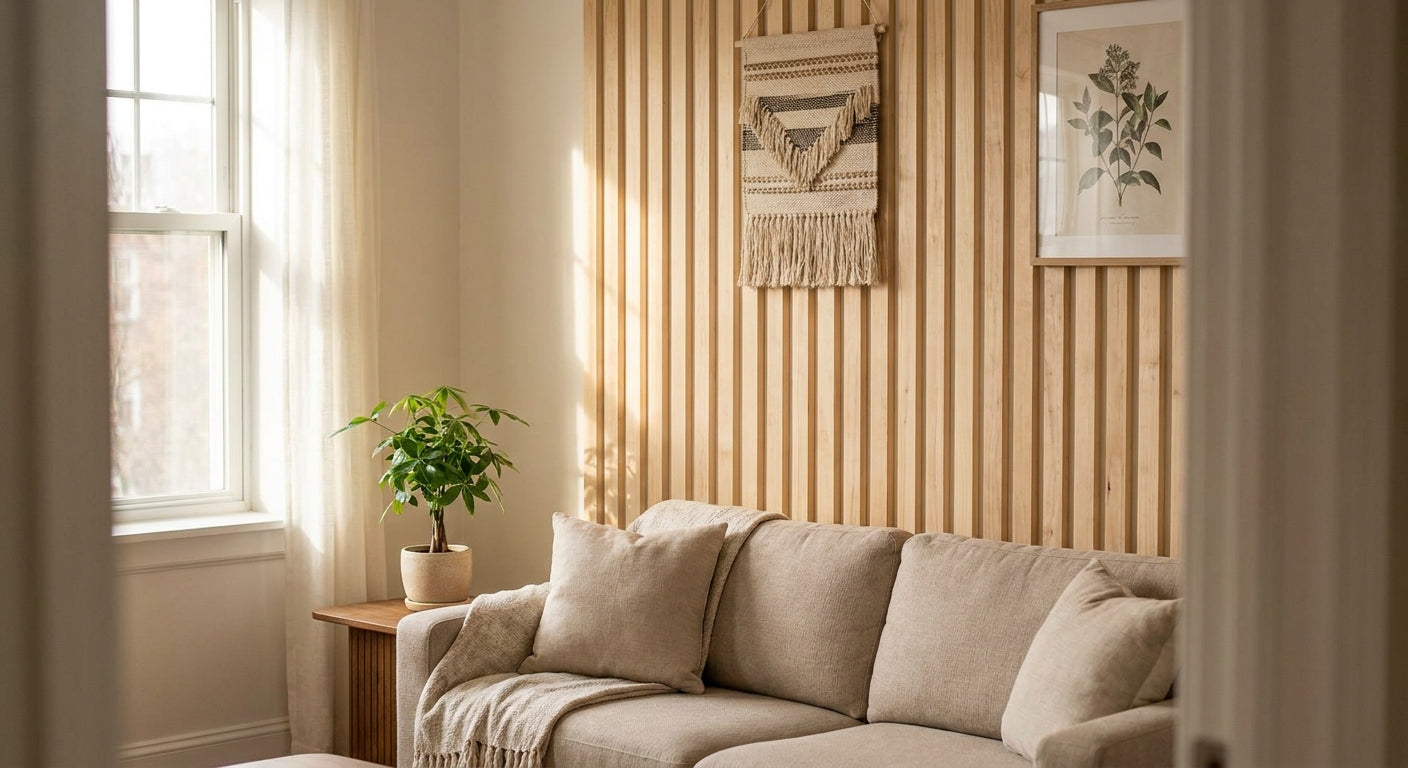
If your office has hard floors, glass partitions, and a ceiling that isn't acoustically treated, a flat bamboo panel wall adds visual warmth and changes nothing about the noise level. A slatted, felt-backed Natural Oak acoustic slat wall panel does the same visual job while actually cutting reverberation. That distinction is the entire point of this guide.
How the picks below are ranked
Each option is scored on four factors that matter specifically for office use in 2026: renewable sourcing of the face material, real acoustic contribution (slatted with a felt or acoustic backing versus flat and hard), install flexibility around cable runs and glass, and how the finish holds up under daily foot traffic and cleaning. Straight material cost matters too, but it's ranked below performance because a cheap flat panel that does nothing for noise ends up costing more once you add ceiling baffles later to fix the echo it didn't solve.
The ranked list
1. Solid bamboo slat panels — the classic pick
Bamboo reaches harvest maturity in roughly 3 to 5 years, far faster than oak or walnut, which is the whole reason it dominates "eco office" mood boards. As a flat, unbacked slat product it has essentially no NRC (noise reduction coefficient) rating worth citing — it's a visual material, not an acoustic one. Good for a reception feature wall with no echo problem. Skip for open-plan floors or conference rooms with hard surfaces.
2. Bamboo veneer plywood panels — the budget play
Thinner and cheaper than solid bamboo slats, these panels work as a low-cost accent behind a reception desk or on a single non-acoustic wall. They carry the same limitation as solid bamboo: flat face, no sound absorption, and veneer that scratches more visibly than a 3-sided wood veneer product because there's no protective wrap on the back edge. Consider only for budget-constrained feature walls where noise isn't the issue.
3. Natural Oak acoustic slat wall panel — the safe pick
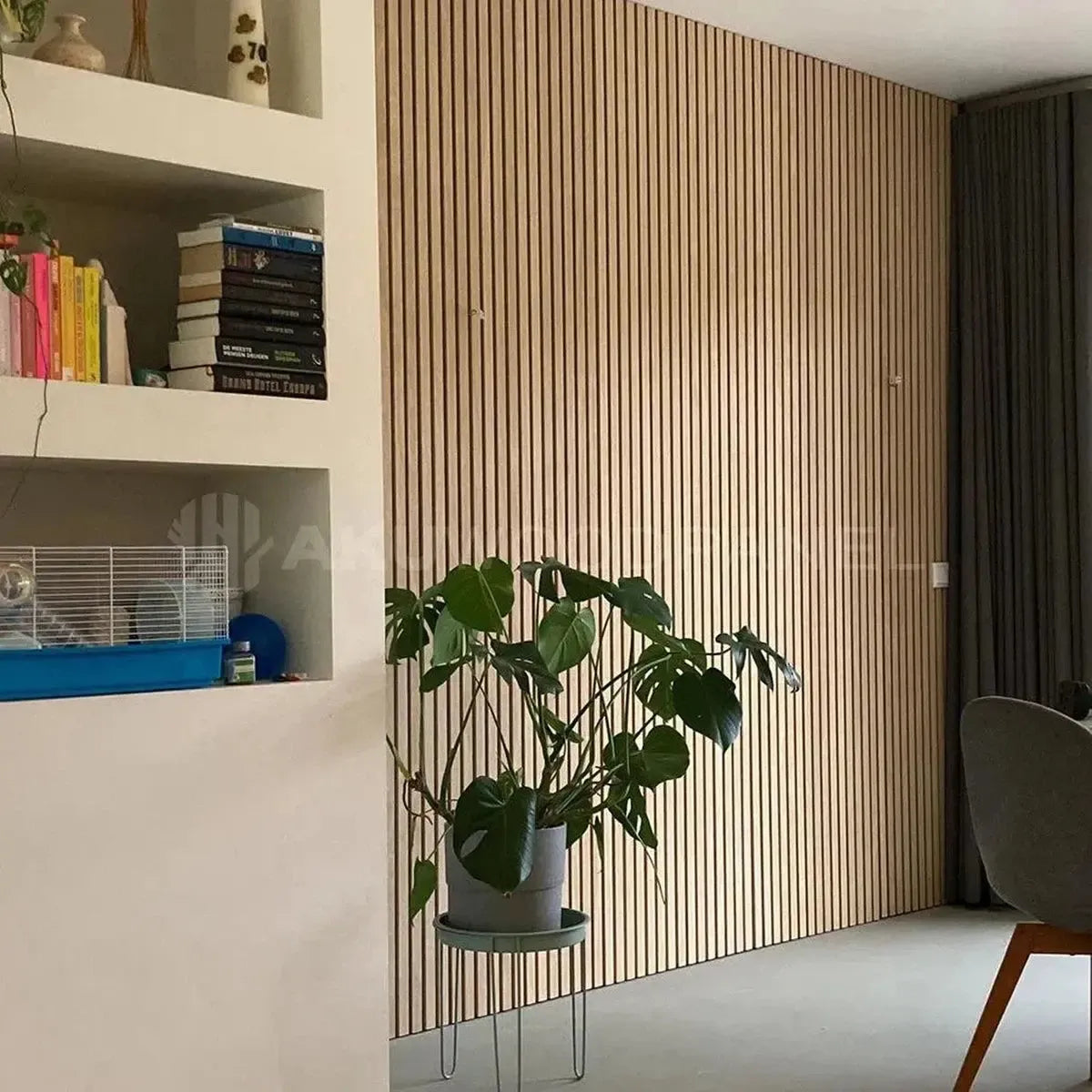
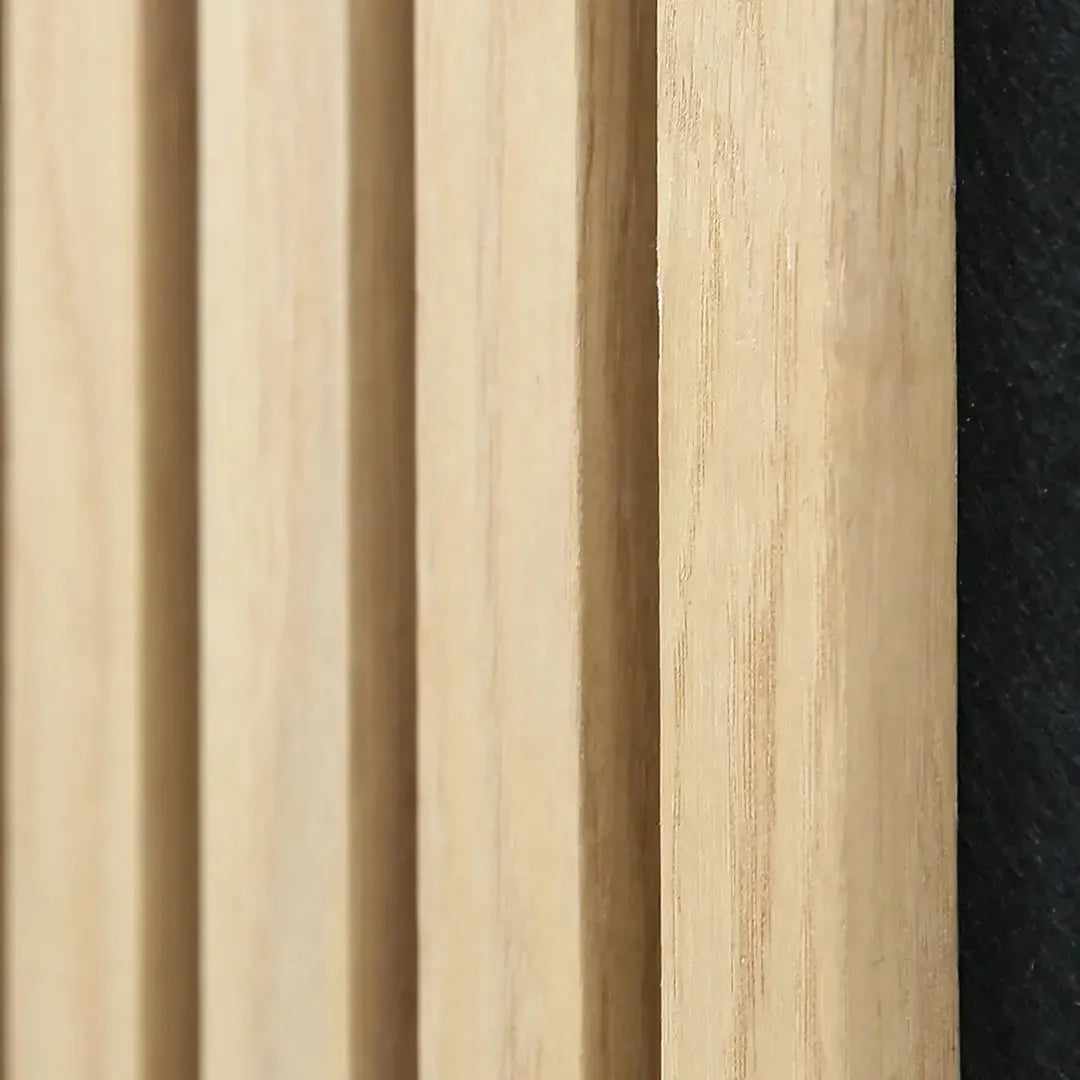
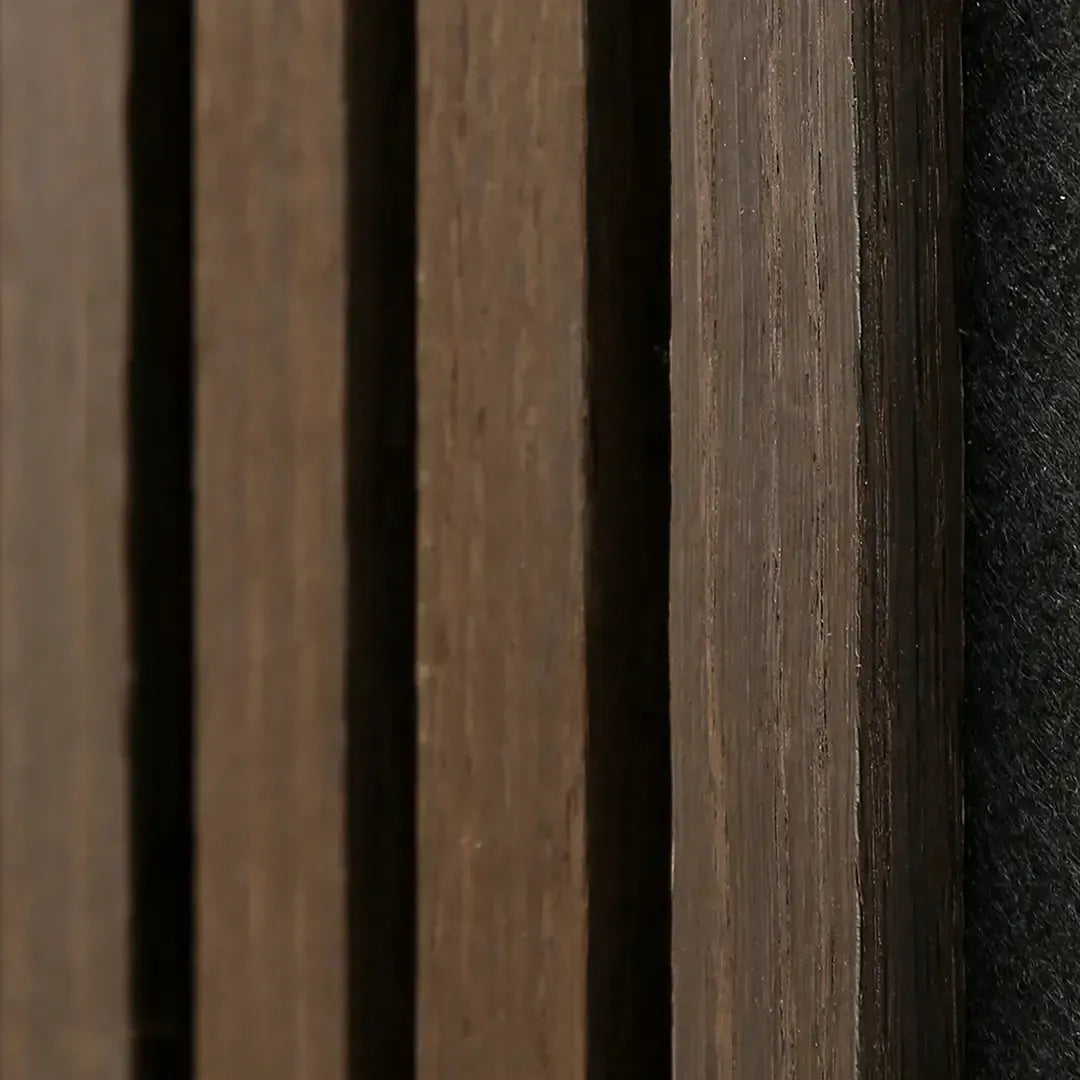
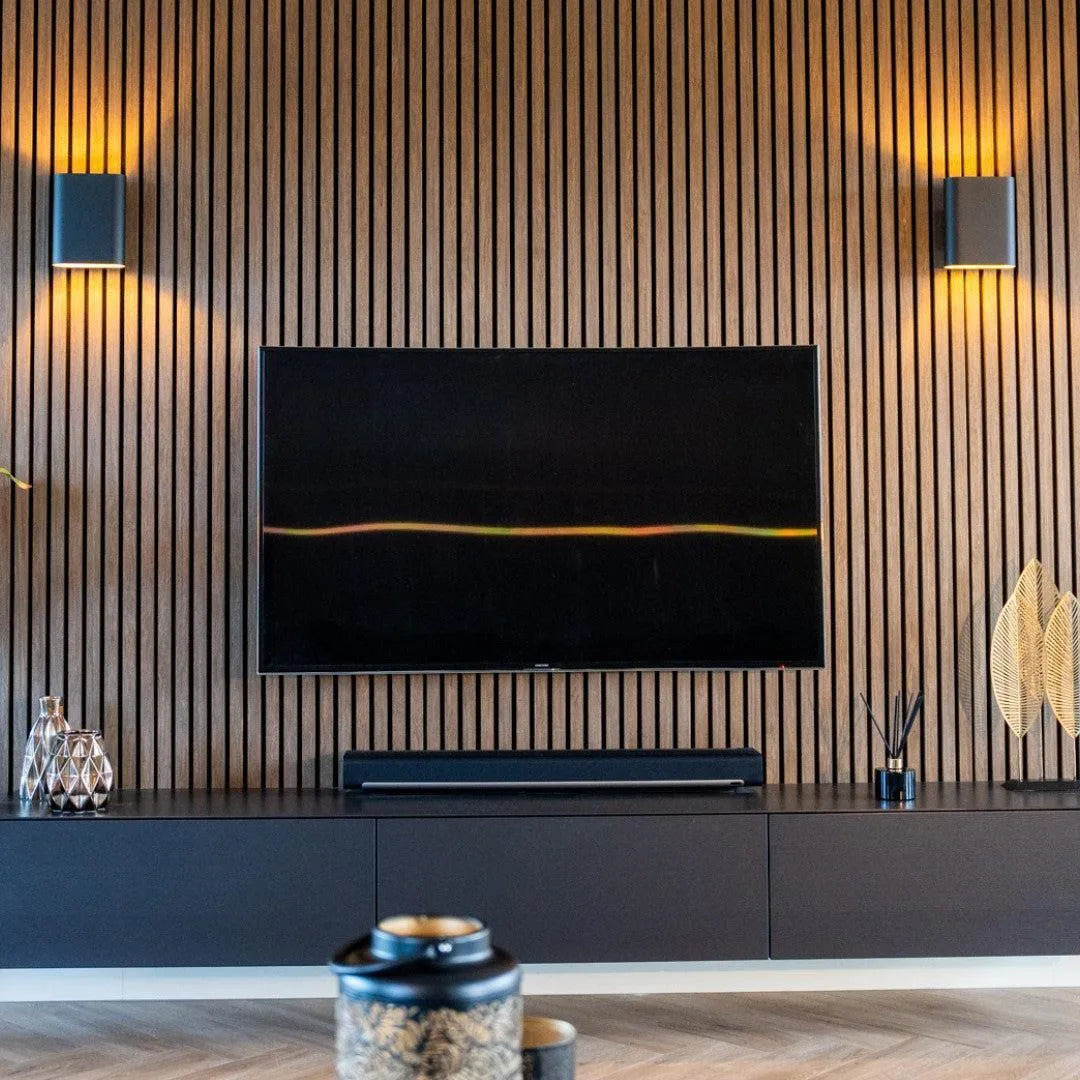
This is the panel most offices should actually be comparing bamboo against. It uses a premium 3-sided wood veneer over a slatted acoustic core, so it absorbs reverberation in meeting rooms and lobbies instead of reflecting it, and it installs both horizontally and vertically. At $169.95, it undercuts most solid bamboo slat systems on a per-panel basis while doing a job bamboo can't. Buy for reception areas, meeting rooms, and open-plan zones with an echo complaint.
4. Walnut acoustic slat wall panel — the premium pick
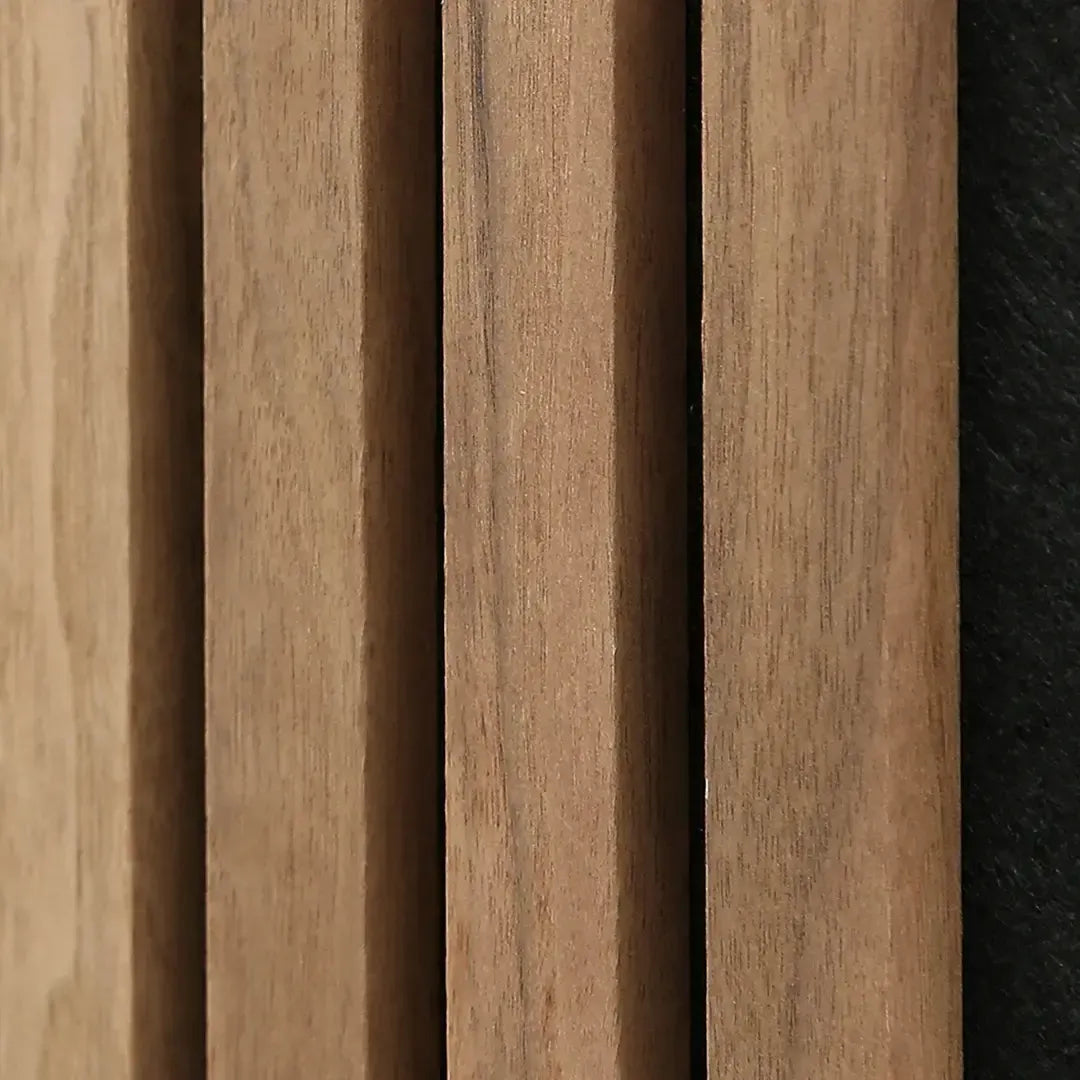
Same acoustic slat construction as the Natural Oak option, but with a darker walnut face that reads more executive-suite than lobby-casual. At $182.95 it's the priciest panel on this list, and it's worth it specifically for boardrooms and partner offices where the finish needs to look deliberate, not decorative. Buy for leadership floors and client-facing meeting rooms.
5. Black Oak acoustic slat wall panel — the wildcard
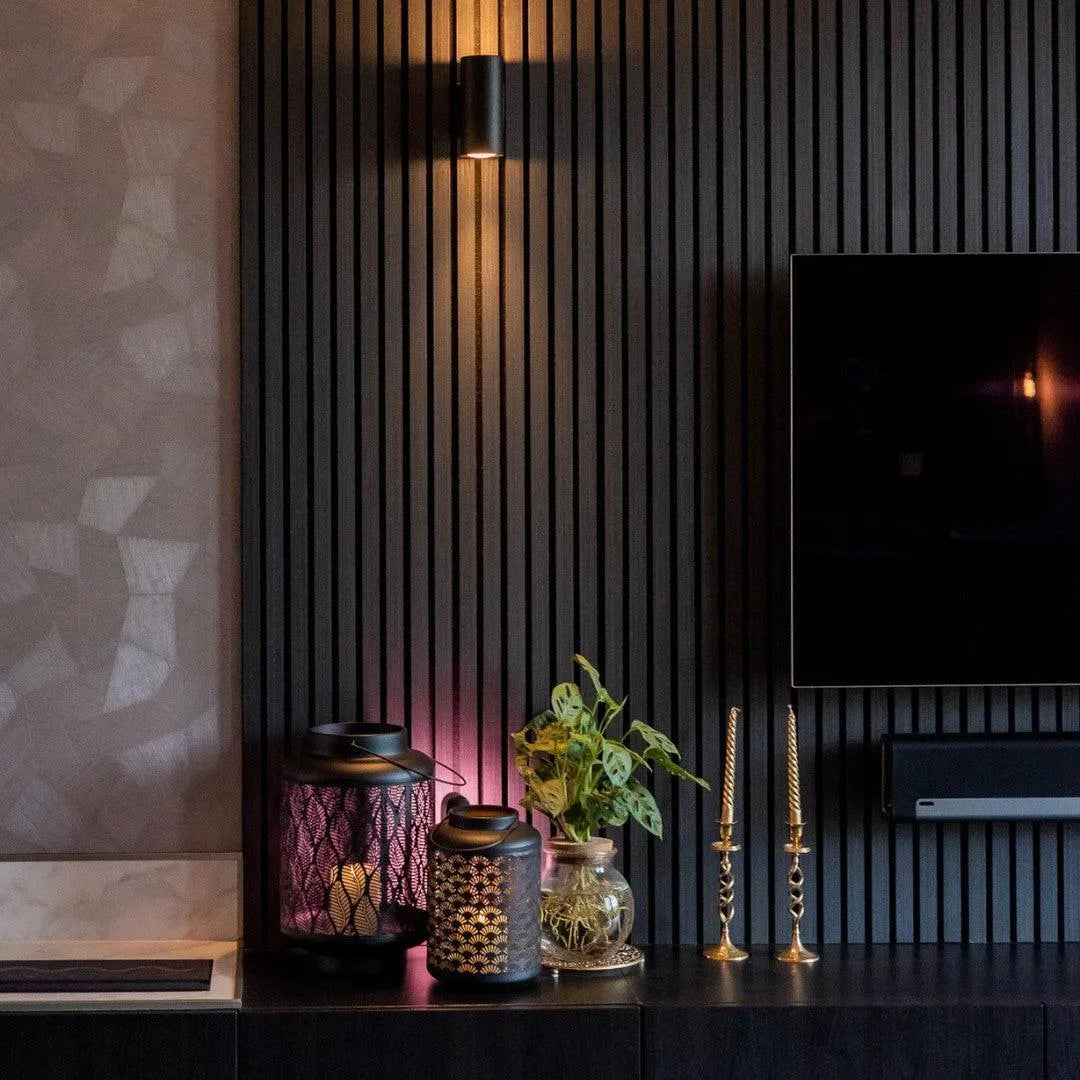
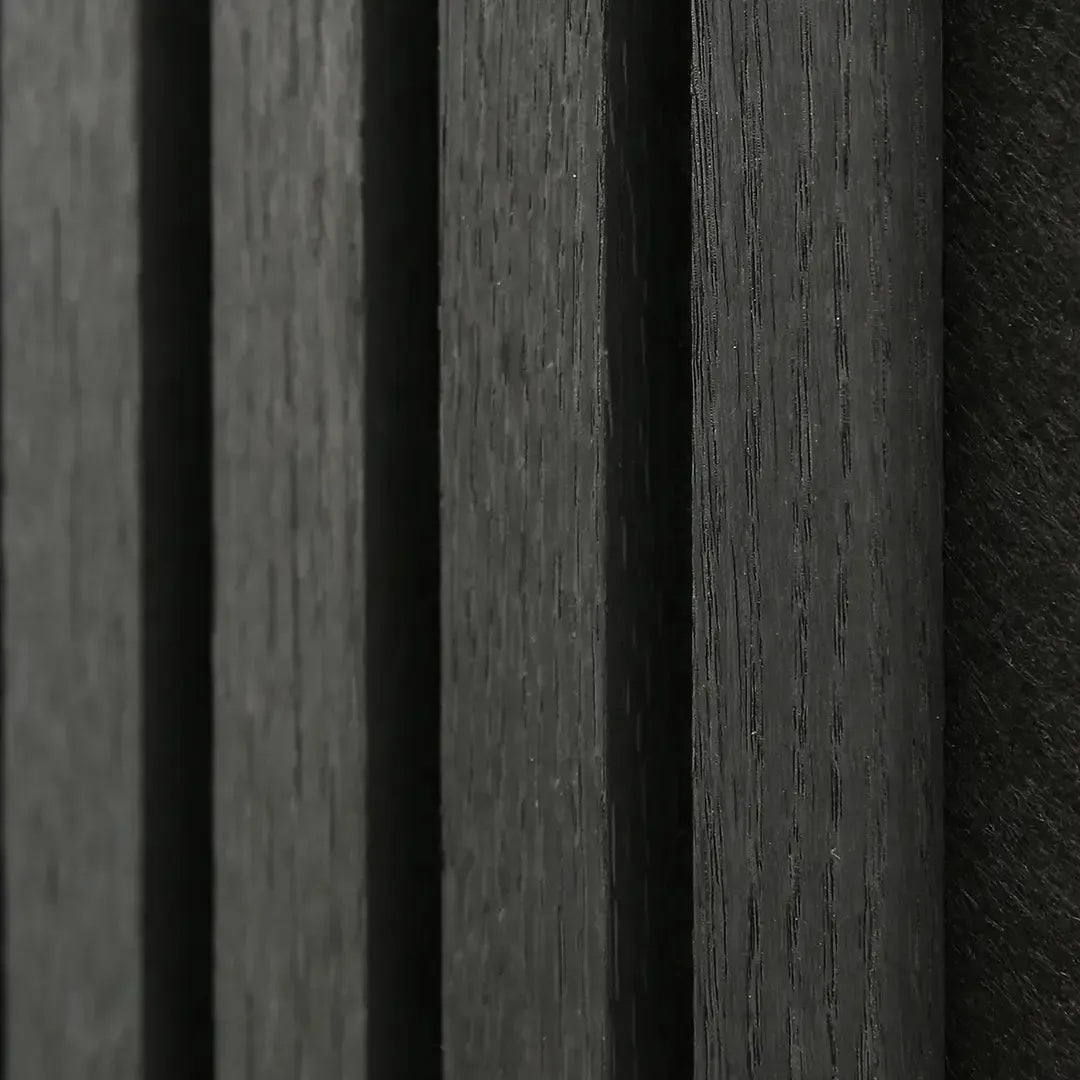
Black Oak at $177.95 is the pick for industrial-style or dark-academia office fit-outs where bamboo's light, blonde tone would clash with the rest of the palette. It's the same acoustic slat system as the Natural Oak and Walnut options, just finished dark. Buy if your office design leans moody or industrial; Skip if the rest of your space is bright and Scandinavian.
6. Fluted Natural Oak wall panel — the flexible option
Fluted panels bend to curved reception desks, columns, and awkward corners in a way flat bamboo boards can't. It's not a slatted acoustic system, so it won't match the sound absorption of the slat panels above, but it solves a layout problem bamboo can't touch. Consider for curved walls or columns where a flat panel simply won't fit.
7. Cork wall tiles — the low-traffic filler
Cork absorbs sound reasonably well and is renewable, but it dents and scuffs faster than a 3-sided wood veneer under office foot traffic and rolling chairs. It works in a quiet corner office; it doesn't hold up in a corridor. Hold for low-traffic private offices only.
Comparison table
| Panel type | Face material | Acoustic performance | Price | Verdict |
|---|---|---|---|---|
| Solid bamboo slat | Bamboo | None (flat, hard) | Mid | Skip for echo-prone rooms |
| Bamboo veneer plywood | Bamboo veneer | None | Low | Consider (budget accent only) |
| Natural Oak acoustic slat | 3-sided wood veneer | Yes, slatted | $169.95 | Buy |
| Walnut acoustic slat | 3-sided wood veneer | Yes, slatted | $182.95 | Buy |
| Black Oak acoustic slat | 3-sided wood veneer | Yes, slatted | $177.95 | Buy (dark interiors) |
| Fluted Natural Oak | Wood veneer | Moderate | Varies | Consider (curved walls) |
| Cork tiles | Cork | Yes, moderate | Low | Hold (low traffic) |


Where to buy
- Order a physical sample before committing to a full wall — veneer color shifts under office LED lighting more than showroom photos suggest.
- Buy acoustic slat panels in full boxes, not loose pieces, so grain direction matches across the run; mismatched batches are the most common install complaint in 2026 office fit-outs.
- Confirm panel width against your wall length before ordering — see the biophilic office interior design guide for layout math on mixed material walls.
For curved reception counters or columns, the Fluted Natural Oak wall panel bends where a flat bamboo board can't, and it's worth pricing against a custom millwork quote before you assume flat panels are the cheaper route.
FAQ
Are bamboo wall panels good for office acoustics?
No — solid bamboo wall panels are flat and hard, so they reflect sound rather than absorb it. For an office with an echo problem, a slatted acoustic wood veneer panel does the job bamboo can't.
What's the best eco-friendly wall panel for an open-plan office in 2026?
A slatted acoustic slat wall panel with a real wood veneer face, like the Natural Oak or Walnut options at $169.95 and $182.95, combines a renewable-wood face with actual sound absorption, which flat bamboo boards don't provide.
Is bamboo more sustainable than oak or walnut veneer panels?
Bamboo matures faster, typically in 3 to 5 years versus decades for oak or walnut. That's a real advantage for raw material renewal speed, but it doesn't change acoustic performance, which depends on panel construction, not species.
How much do acoustic wood veneer panels cost for an office wall?
Acoustic slat wall panels from Akuwood Panel run $169.95 to $182.95 depending on finish as of 2026, with Natural Oak and Smoked Oak with Gray Felt at the lower end and Walnut at the top.
Can bamboo and acoustic wood panels be mixed on the same wall?
Yes — a common 2026 office layout uses a flat bamboo or oak veneer section for visual warmth and a slatted acoustic section behind the seating area where noise actually needs to be controlled.
Do wood veneer office panels need special cleaning?
A dry or lightly damp cloth is standard for wood veneer panels; avoid soaking the surface since standing moisture can lift veneer edges over time.
Which finish works best for a dark, industrial office design?
Black Oak acoustic slat panels at $177.95 suit dark, industrial-style offices where a light bamboo tone would clash with the rest of the palette.
One last thing
Most offices don't need a full wall of panels to fix an echo problem — a single slatted acoustic wall behind the main seating cluster, paired with a flat veneer or bamboo accent on the opposite side, solves the noise complaint without turning the whole floor into one material. Test that split on your worst-echo wall before ordering enough panels to cover every surface.
 Better performance and aesthetic appeal
 In Stock