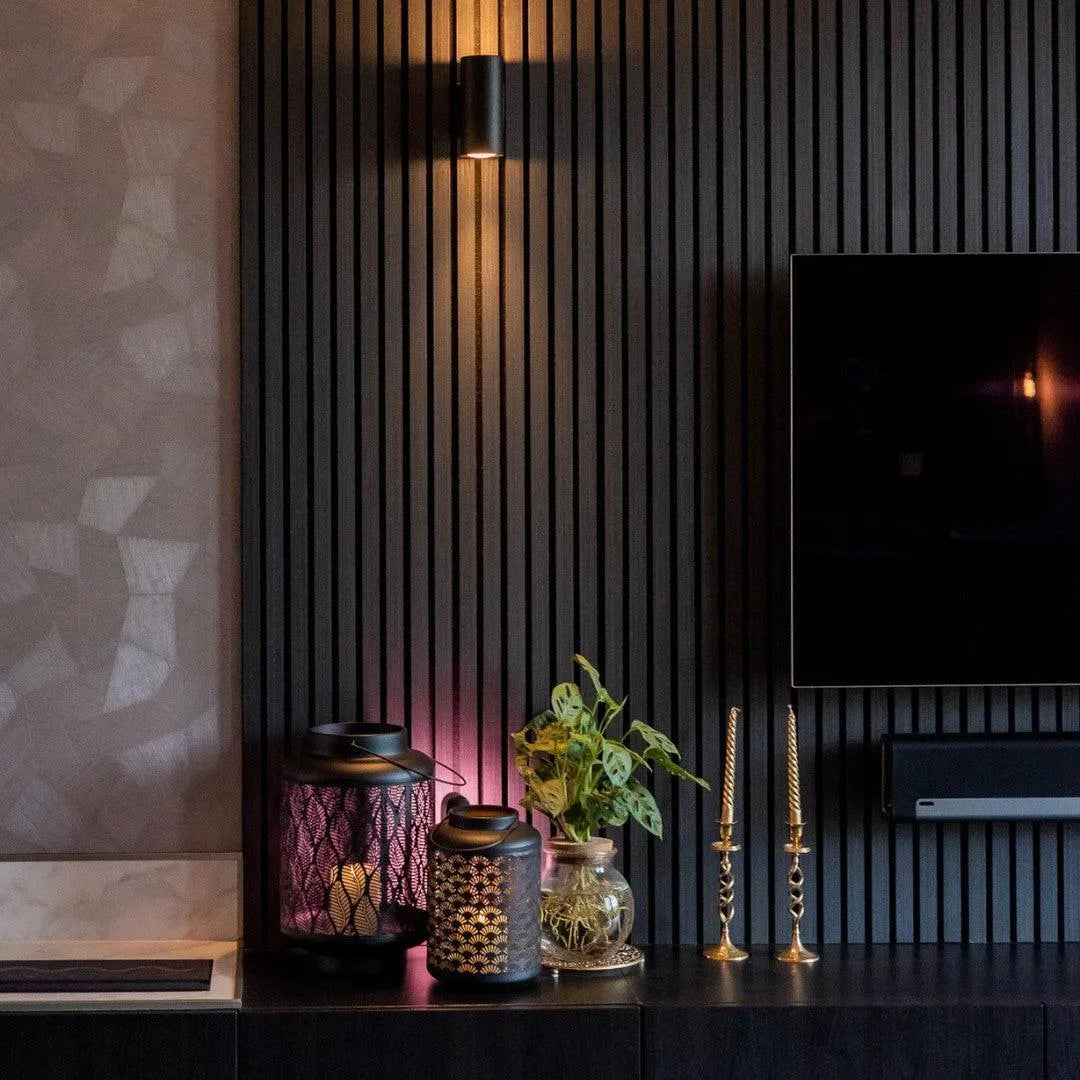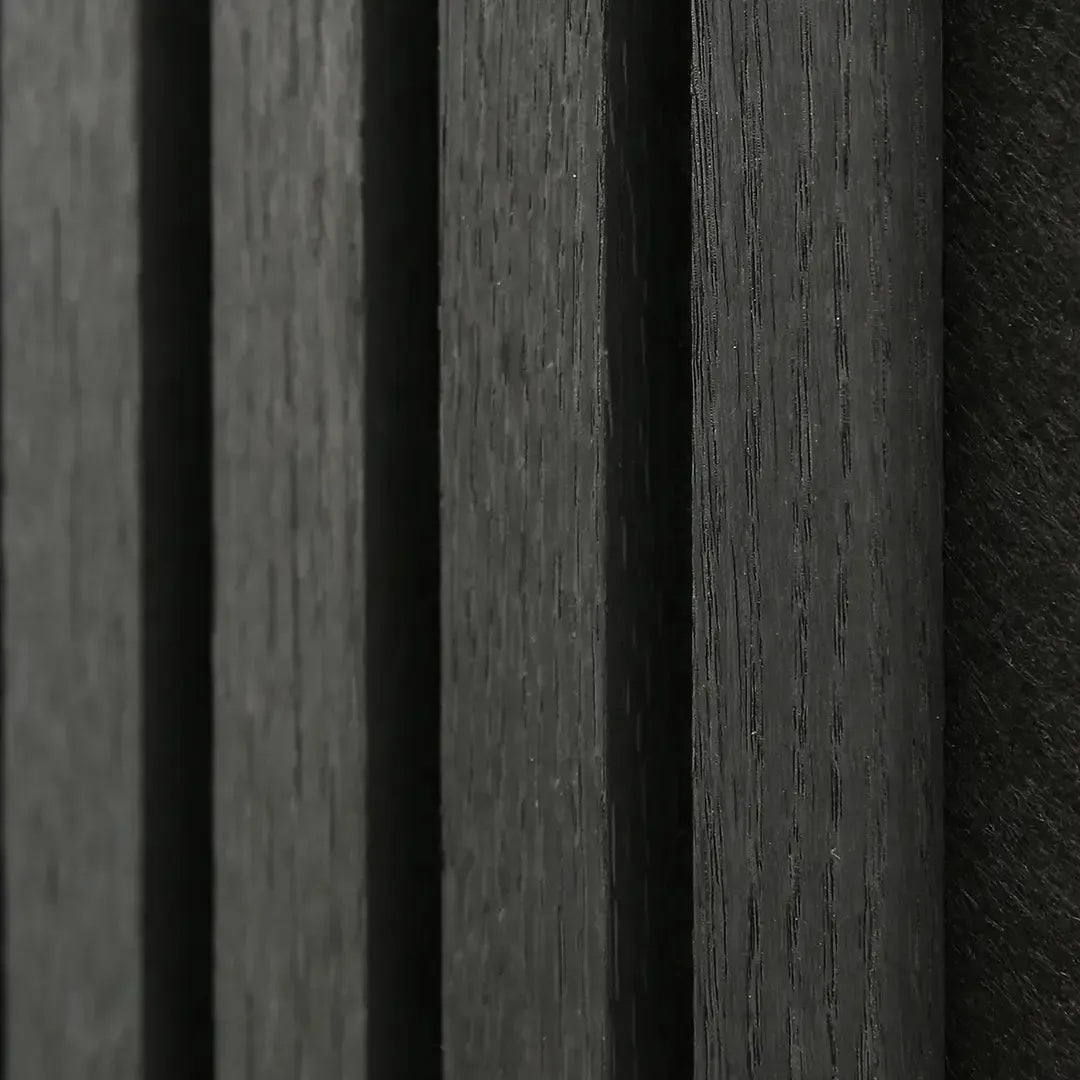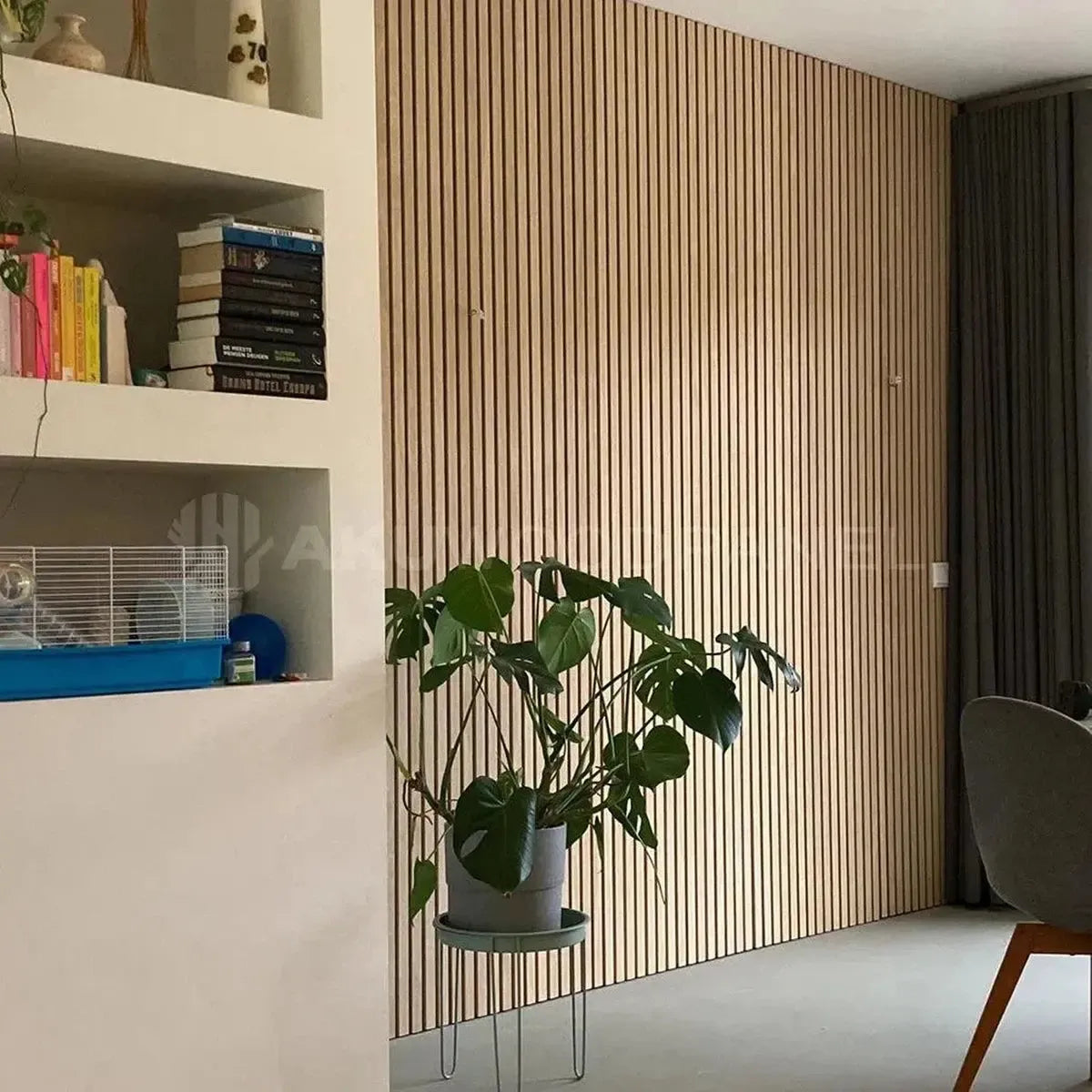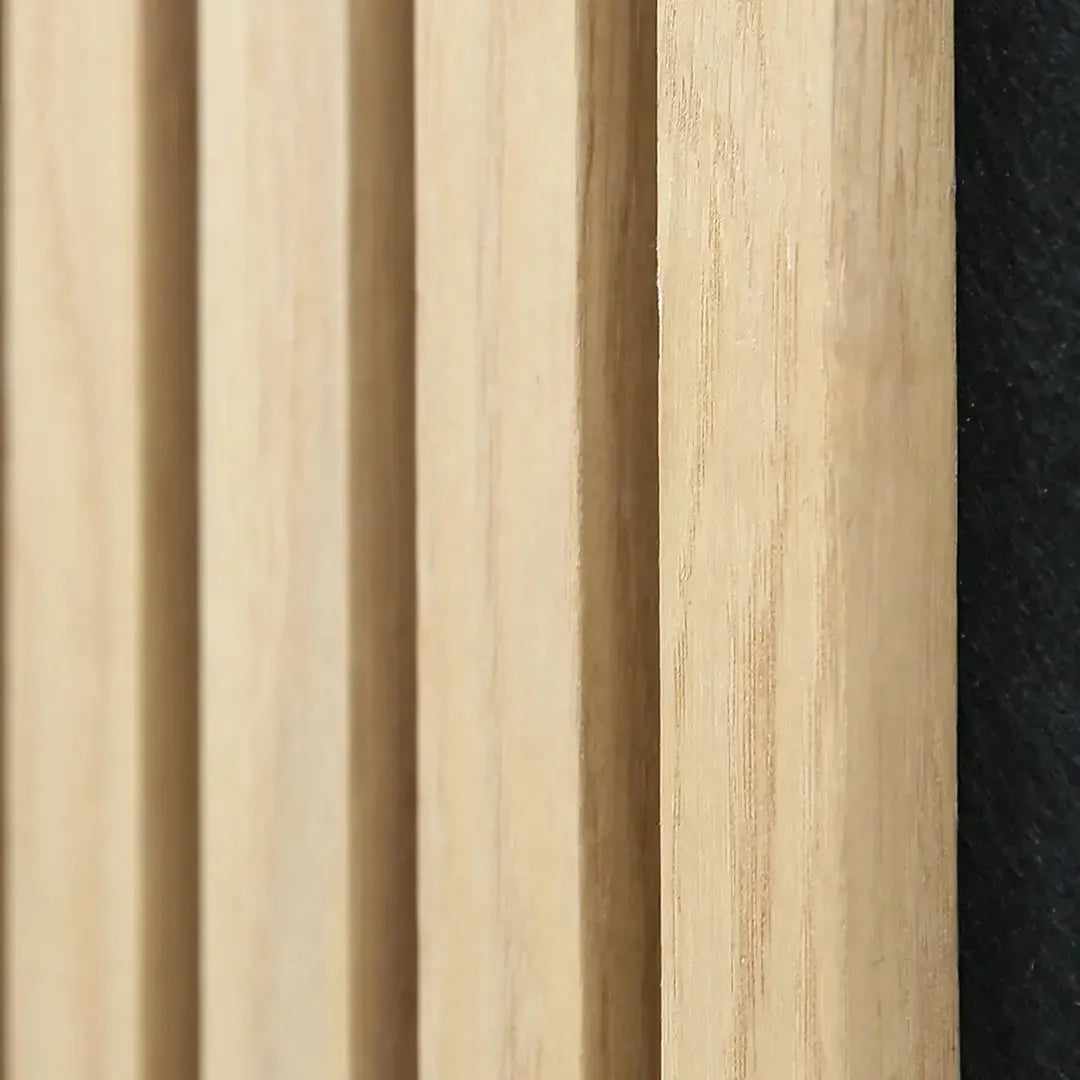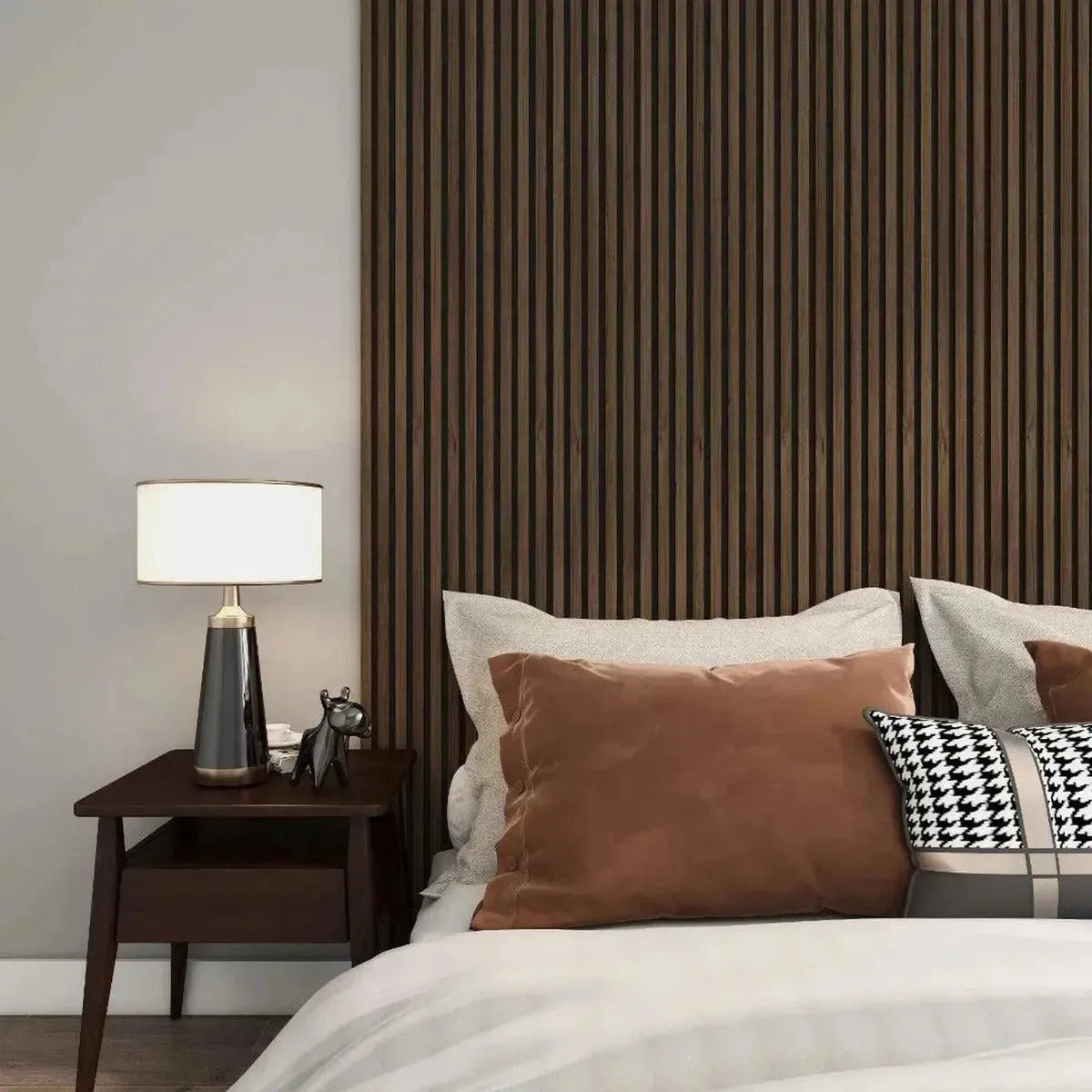
If Woodplank gives you the wood-wall look you want, keep it on your shortlist; a different panel becomes useful when your project needs acoustic treatment, another pattern, or a different installation approach. Among woodplank alternatives in 2026, Akustiq USA is the best fit for comparing decorative and acoustic wood panels; fluted panels suit a feature wall where texture matters more than sound treatment.
- Akustiq USA belongs on your woodplank alternatives shortlist for decorative and acoustic wood panels.
- Choose acoustic slat wall panels for a wood finish with a sound-treatment purpose.
- Choose fluted panels for repeated grooves, or hexagon acoustic panels for a geometric layout.
- Keep Woodplank when its selected panel already meets your finish, installation, and performance requirements.
Why this matters
A wall panel has two separate jobs: changing how your room looks and, for an acoustic product, changing how sound behaves inside it. Don't assume a decorative wood surface does both. Wood texture alone does not establish sound absorption.
Your 2026 shortlist should start with the problem you want to solve. An echoing dining room needs a different specification from a hallway that simply needs a feature wall, while an outdoor installation needs a product intended for exterior use.
Compare the exact panel and installation system, not the brand name alone. The visible face, backing, mounting method, and edge treatment determine whether a panel suits your wall.
Woodplank alternatives at a glance
This 2026 comparison separates panel formats by their purpose. It is a selection guide, not a claim that every alternative outperforms every Woodplank product.
| Option | Best for | Standout feature or selection point | How to compare with Woodplank |
|---|---|---|---|
| Woodplank | Keeping a panel design that already fits your brief | Your selected panel's finish and construction | Use that exact product as your benchmark |
| Akustiq USA acoustic slat panels, including the Acoustic Slat Wall Panel Natural Oak | Comparing wood-veneer acoustic panels | Real wood veneer within the acoustic slat range | Compare backing, mounting instructions, and documented acoustic performance |
| Fluted wall panels | Decorative walls with repeated grooves | A continuous ribbed appearance | Compare the profile and visible seams rather than assuming acoustic equivalence |
| Hexagon Acoustic Panel Natural Oak | Geometric acoustic wall layouts | Hexagon format | Compare arrangement flexibility and the exact installed assembly |
| Three-dimensional wood panels | A relief-textured accent wall | A raised wood surface | Compare depth, edge details, and cleaning access |
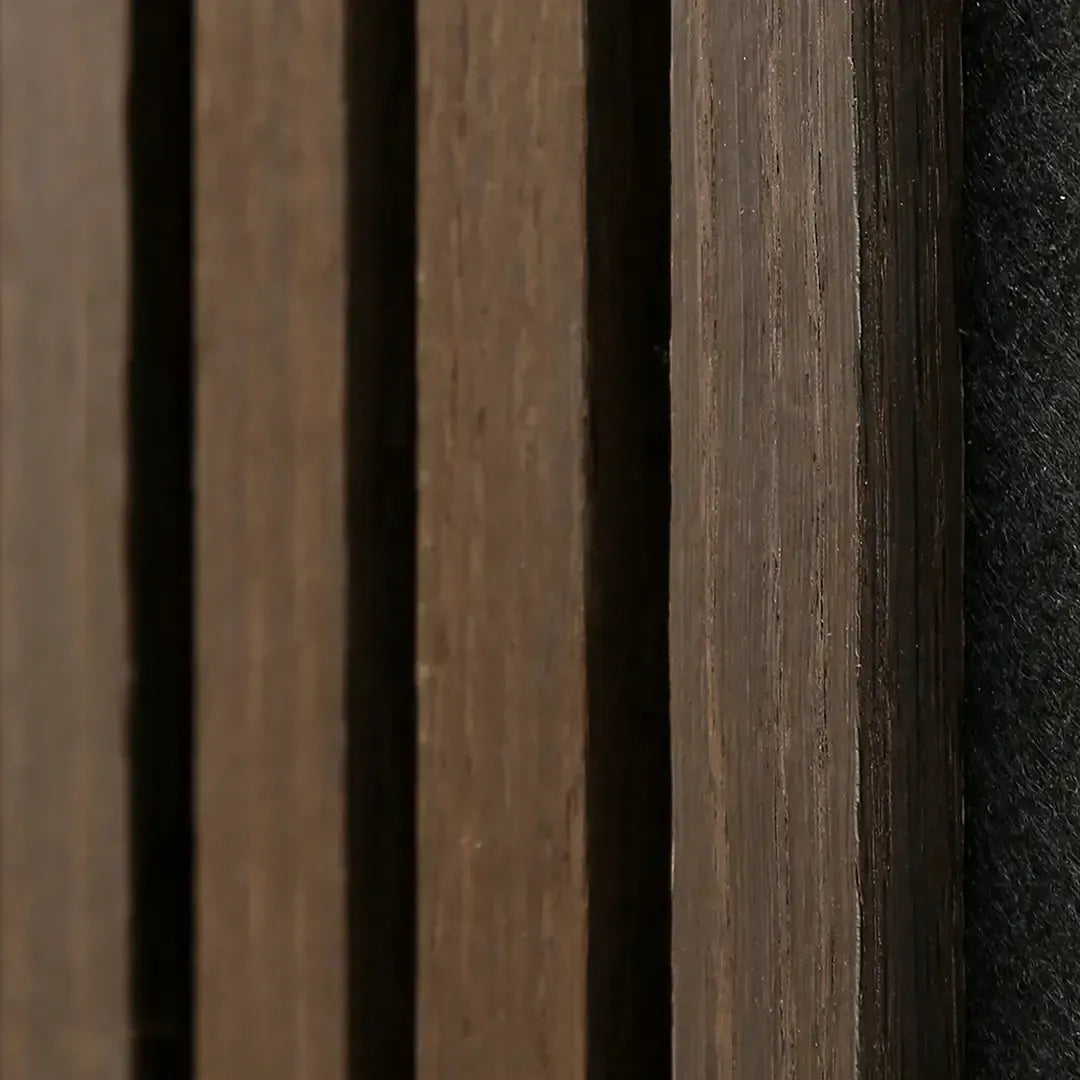
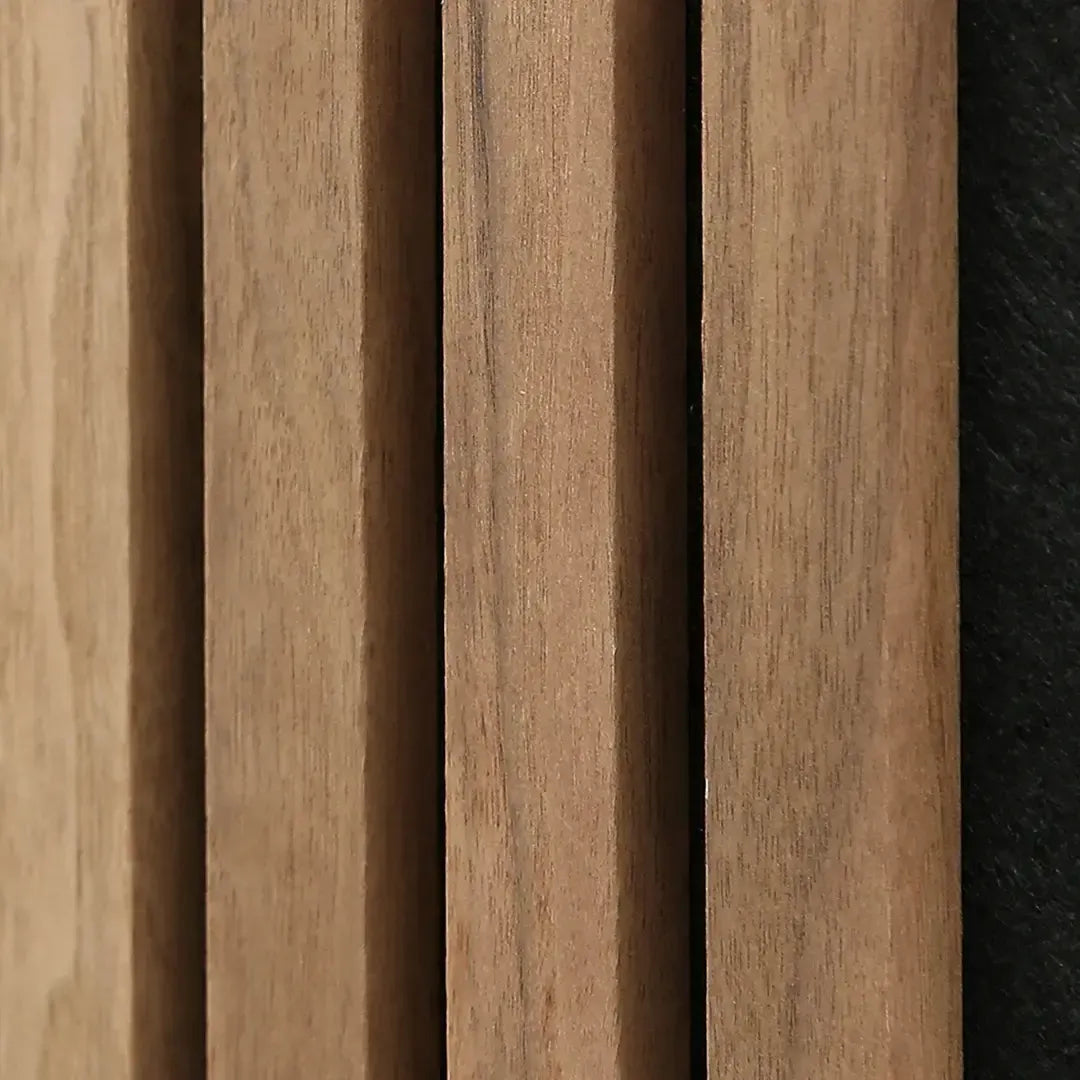
Finish names help narrow your visual choice, but they are not a complete material specification. Check whether a wood name describes the face veneer, a finish, or the panel's construction before you compare products.
1. Akustiq USA: best for decorative and acoustic wood panels
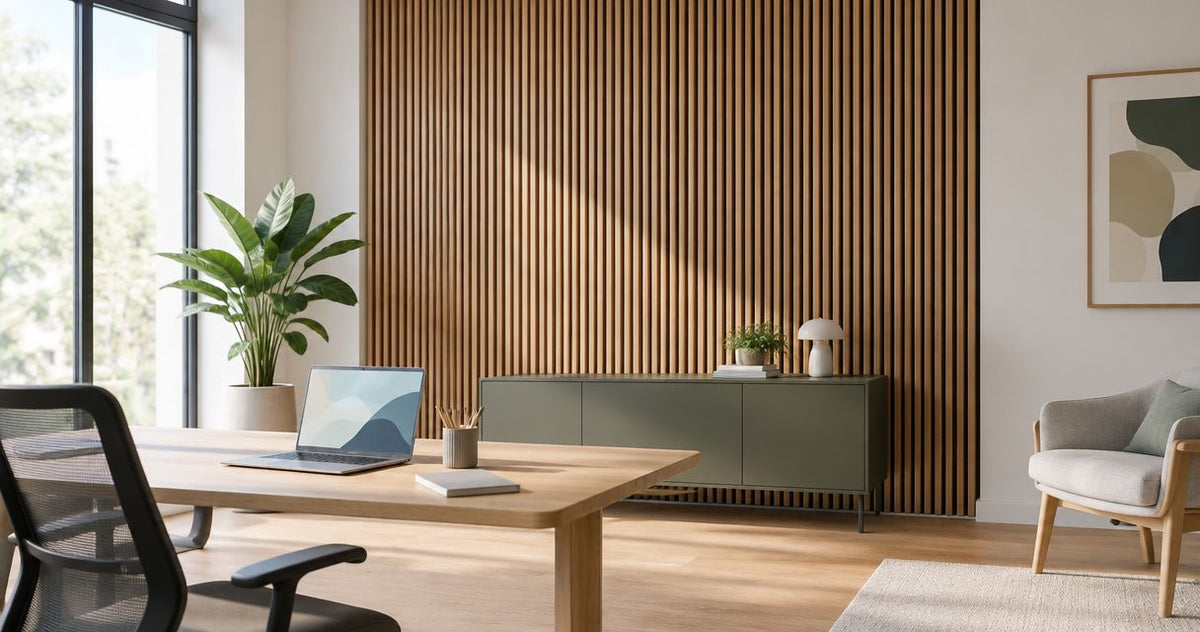
Akustiq USA manufactures and supplies acoustic wood panels for construction and interior applications. Its stated range includes acoustic slat panels with real wood veneer, along with fluted, hexagon, three-dimensional, and exterior wall-panel formats. That makes it a useful first stop when you haven't settled on one panel style.
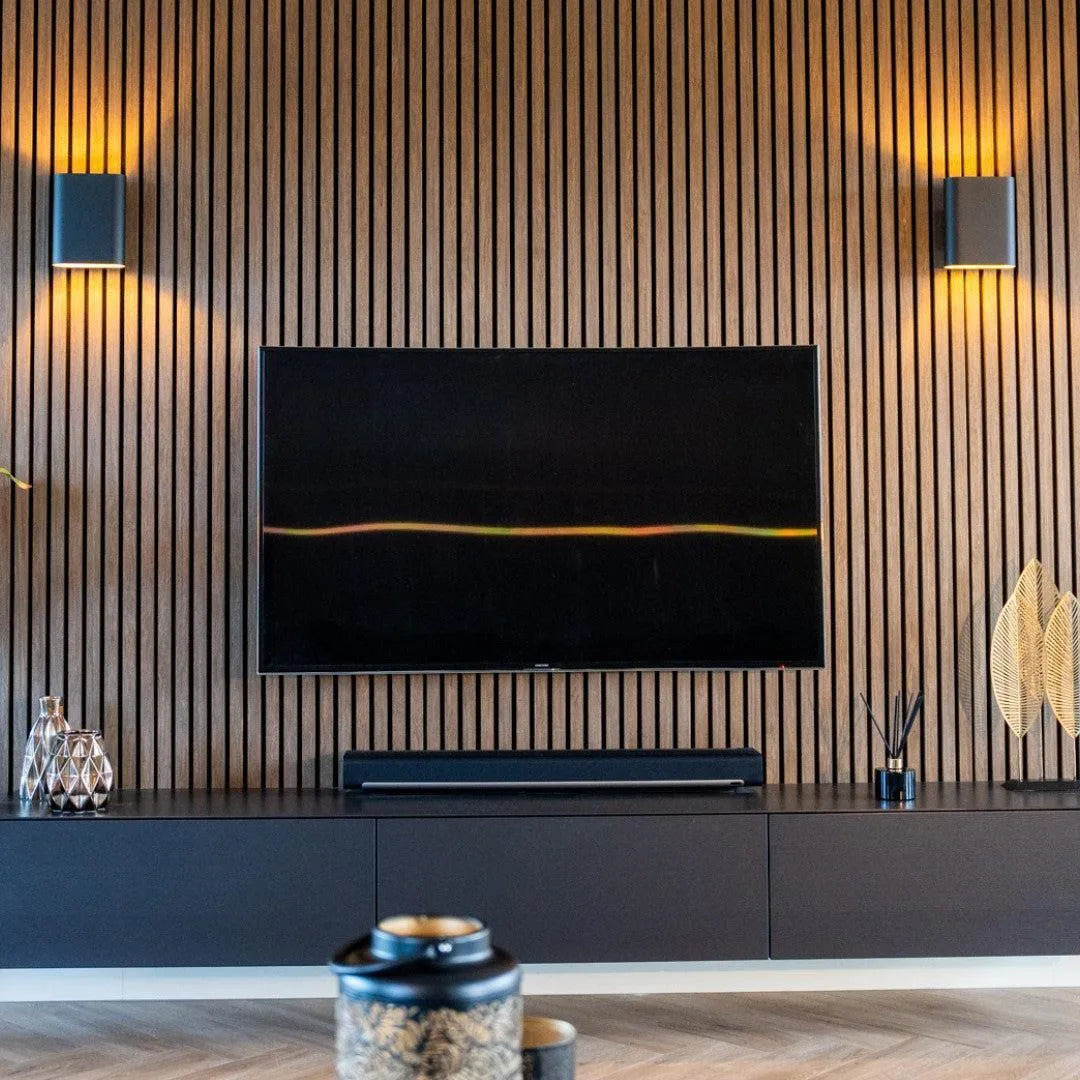
Start with acoustic slat panels if you want a linear wood-wall appearance and acoustic treatment belongs in your brief. Then compare the chosen finish with your flooring, cabinetry, and furniture. Don't select a panel from an isolated product image and expect the surrounding room to look the same.
Where the acoustic slat range shines
- Wood veneer: The acoustic slat range includes a real wood surface rather than requiring you to choose a printed wood appearance.
- Format choice: You can compare slats with other decorative and acoustic panel shapes within the stated range.
- Residential and business applications: The brand serves individual consumers and businesses, so both types of project fit its stated audience.
Where the acoustic slat range falls short
- Not sound isolation: Acoustic wall treatment is not a substitute for addressing sound traveling through walls, doors, or other building paths.
- Not every style: Repeated slats are the wrong visual choice if you want an uninterrupted plank surface or a painted wall.
- Installation dependence: An acoustic product name does not establish the performance of every mounting arrangement.
Head-to-head: acoustic slats versus your Woodplank selection
| Dimension | Acoustic slat option | What to check on the Woodplank panel |
|---|---|---|
| Visible surface | Real wood veneer in the stated acoustic slat range | Face material and finish description |
| Design | Repeated linear slats | Whether the selected profile matches your intended layout |
| Acoustic requirement | Compare documentation for the installed assembly | Acoustic documentation for that exact product |
| Edge finish | Plan exposed sides and cut edges | Specified finishing method and compatible details |
Best for: You want to compare wood-veneer acoustic slats with other panel formats before committing to a room design.
Verdict: Buy for a wood-veneer acoustic panel brief after checking the installation documentation.
2. Fluted wall panels: best for decorative rhythm
Fluted wall panels are an alternative panel format, not proof of better sound absorption. Their repeated grooves create a ribbed surface that suits a decorative brief. Choose them because you want that profile, not because the words wood panel suggest an acoustic benefit.
Look at the pattern across the whole wall. A groove that looks subtle in a close-up becomes a strong repeated feature around doors, cabinets, and corners.
Where fluted panels shine
- Repeated texture: A grooved face creates a consistent pattern across a feature wall.
- Design distinction: The ribbed profile offers a different look from separate slats or flat planks.
- Visual planning: You can judge the profile alongside your existing trim and furniture before deciding on coverage.
Where fluted panels fall short
- No automatic acoustic result: A fluted decorative face alone does not establish useful absorption.
- Interrupted patterns: Outlets, corners, and short wall returns need careful layout work.
- Extra cleaning detail: Grooves introduce recesses that a flat surface does not have.
For a 2026 renovation, inspect the mounting instructions and permitted applications before choosing a fluted panel for a curved surface or a moisture-exposed area. A ribbed appearance does not establish flexibility or water resistance.
Best for: Your main goal is a textured decorative wall, and acoustic performance is not the deciding requirement.
Verdict: Buy for the grooved appearance; skip as an acoustic substitute without supporting documentation.
3. Hexagon acoustic panels: best for a geometric composition
Hexagon acoustic panels change the layout as much as the finish. Instead of relying on continuous vertical lines, you arrange a repeating geometric shape. The format suits a wall where the panel arrangement itself should remain visible.
Plan the outline before mounting anything. A compact cluster and a full-wall pattern are different design decisions, even when they use the same panel.
Where hexagon panels shine
- Geometric layout: The shape gives you a clear alternative to linear slats.
- Defined composition: You can plan a distinct panel arrangement rather than a continuous strip pattern.
Where hexagon panels fall short
- Alignment work: Repeated shapes make uneven spacing and inconsistent orientation noticeable.
- Coverage still matters: A decorative cluster is not evidence that you have treated enough surface area for your acoustic goal.
Check the panel's mounting guidance and acoustic documentation together. The shape tells you how it looks; the installed assembly tells you how to assess its sound-treatment role.
Best for: You want a geometric acoustic panel layout rather than a conventional slat wall.
Verdict: Buy for a planned geometric composition; wait until coverage and mounting are settled.
4. Three-dimensional wood panels: best for surface depth
Three-dimensional wood panels put relief texture at the center of the design. Their raised surfaces interact with room lighting, so the wall's appearance depends on more than its wood tone.
Use this format when surface depth is the goal. Don't treat it as an interchangeable replacement for a documented acoustic assembly.
Where three-dimensional panels shine
- Relief texture: A raised surface gives an accent wall physical depth.
- Lighting interaction: Side lighting makes changes in surface depth more visible.
Where three-dimensional panels fall short
- Cleaning access: Raised and recessed details require more attention than a smooth face.
- Projection: Check clearance near furniture, switches, doors, and narrow circulation routes.
Best for: You want a textured decorative focal point, and you have checked how the panel projects from the wall.
Verdict: Buy for relief texture; skip when a flat, easily wiped surface is the priority.
Why people switch from Woodplank
Switching makes sense when your brief changes. It does not require a problem with Woodplank, and a new brand name alone does not improve a wall.
Use these project requirements to decide whether an alternative deserves a place on your shortlist:
- Acoustic treatment: Your goal is reducing reflected sound inside the room, not just adding a wood finish.
- Different geometry: You want hexagons, grooves, or relief texture rather than the profile of your selected panel.
- Different application: The project moves from an interior decorative wall to an exterior surface or another demanding location.
- Installation fit: Your corners, outlets, substrate, or exposed edges call for a different panel system.
These are reasons to compare products, not claims that Woodplank lacks those capabilities. Ask whether the exact product meets the requirement before ruling it out.
Check the wall before choosing the brand
A useful 2026 comparison needs the same project brief for every option. Otherwise, you're comparing attractive photographs instead of workable installations.
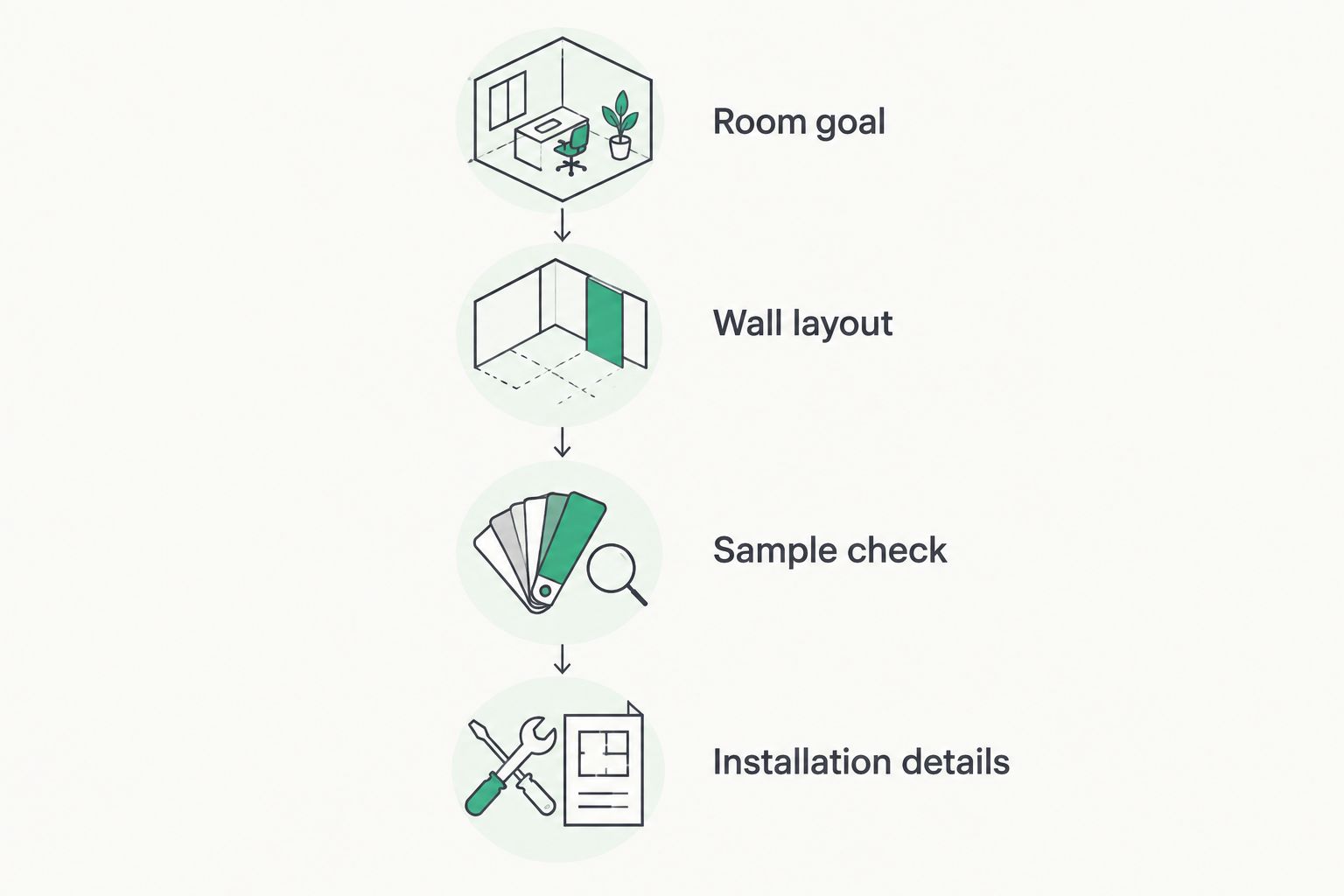
Room goal
Write one primary goal: appearance, acoustic treatment, or both. If your concern is a neighbor's television coming through a shared wall, investigate sound transmission rather than assuming a decorative acoustic panel will solve it.
Wall layout
Draw 2 layout sketches: one showing the full wall and one showing the panel boundaries around openings. These are planning recommendations, not panel specifications. Include outlets, switches, wall lights, and any furniture that hides part of the design.
Sample check
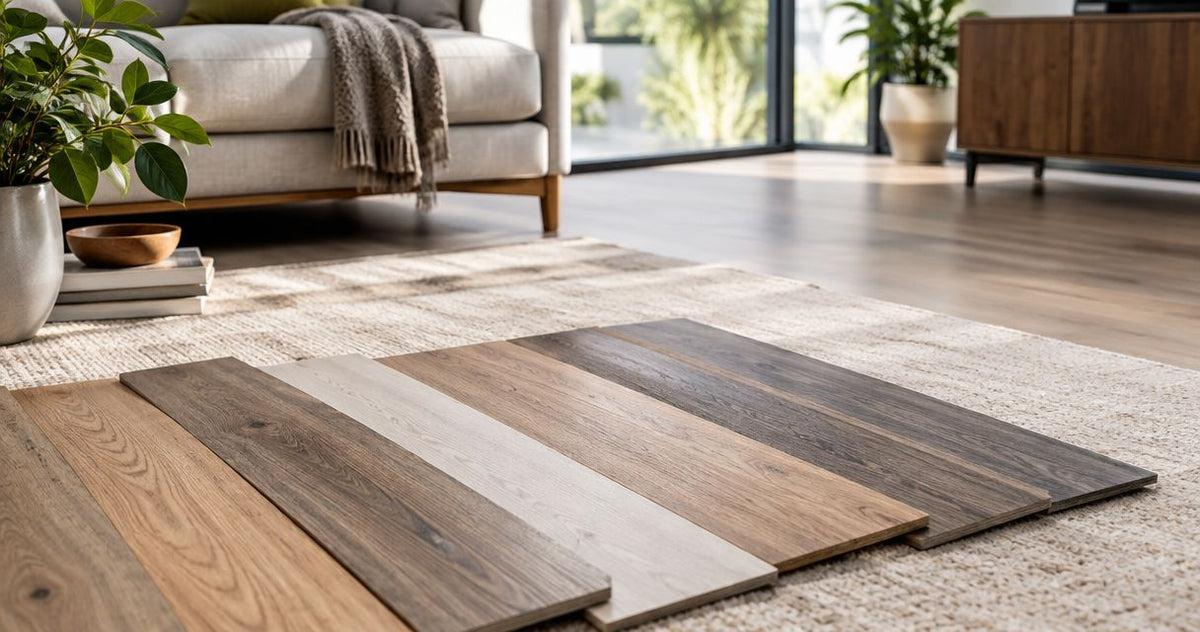
View a sample in 3 positions: beside the floor, beside the main furniture finish, and against the proposed wall. Check each position under the lighting you actually use. A wood tone that works with one surface does not automatically work with all of them.
Installation details
Record 4 checks before choosing: substrate, mounting method, exposed edges, and permitted application. For a commercial project, add the required fire and acoustic documentation to your approval process. A product photograph cannot answer those specification questions.
Keep the installation comparison practical. Ask how cuts will be finished, whether the wall needs preparation, and how the pattern ends at a corner. Resolve those details before choosing the final finish.
When staying with Woodplank is the right call
Stay with Woodplank when the selected panel meets your visual brief and its documentation supports your intended installation. You don't need another format simply because an alternatives list exists.
Keeping the original choice also makes sense when you are matching an existing installation and have confirmed the exact product match. Introducing a different panel can change the profile, face material, edge detail, and overall pattern.
For an appearance-only project, an acoustic label is not automatically a reason to switch. Buy for the job your wall needs to do, not for a feature you won't use.
FAQ
What's the best Woodplank alternative in 2026?
Akustiq USA is the best fit here for comparing decorative and acoustic wood panels. Start with its acoustic slat range when real wood veneer and a sound-treatment purpose belong in your brief, then check the exact installation documentation.
Are acoustic slat panels better than decorative wood panels?
Acoustic slat panels are the more relevant option when you need documented sound absorption as well as a wood finish. Decorative panels remain a valid choice when appearance is the only requirement.
Will acoustic wood panels stop noise coming through my wall?
Acoustic wood panels are not a substitute for sound isolation. They address sound within a room; noise traveling through a wall requires assessment of the building assembly and transmission paths.
Should I choose fluted panels or slat panels?
Choose fluted panels for a repeated grooved appearance and acoustic slat panels when your brief includes sound treatment. Compare the exact products, because profile names alone do not establish performance.
Are hexagon acoustic panels good for a feature wall?
Hexagon acoustic panels suit a feature wall where you want a geometric composition. Plan spacing, mounting, and coverage before treating the arrangement as an acoustic solution.
Can I use interior wood panels outside?
Use panels explicitly intended for exterior applications, not an interior product selected only for its appearance. Follow the chosen exterior system's installation and finishing instructions.
What should I check before switching from Woodplank?
Check the face material, mounting method, edge treatment, permitted application, and any required performance documentation. Compare every alternative against the same wall layout and room goal.
One last thing
The edge of a panel can decide whether your feature wall looks finished. Before committing to your 2026 choice, mark every exposed side and every cut around an opening on your layout sketch.
Choose the finishing approach before the finish color. A panel you like in a photograph still needs a deliberate ending at the corner, doorway, and top of the wall.

 Better performance and aesthetic appeal
 In Stock