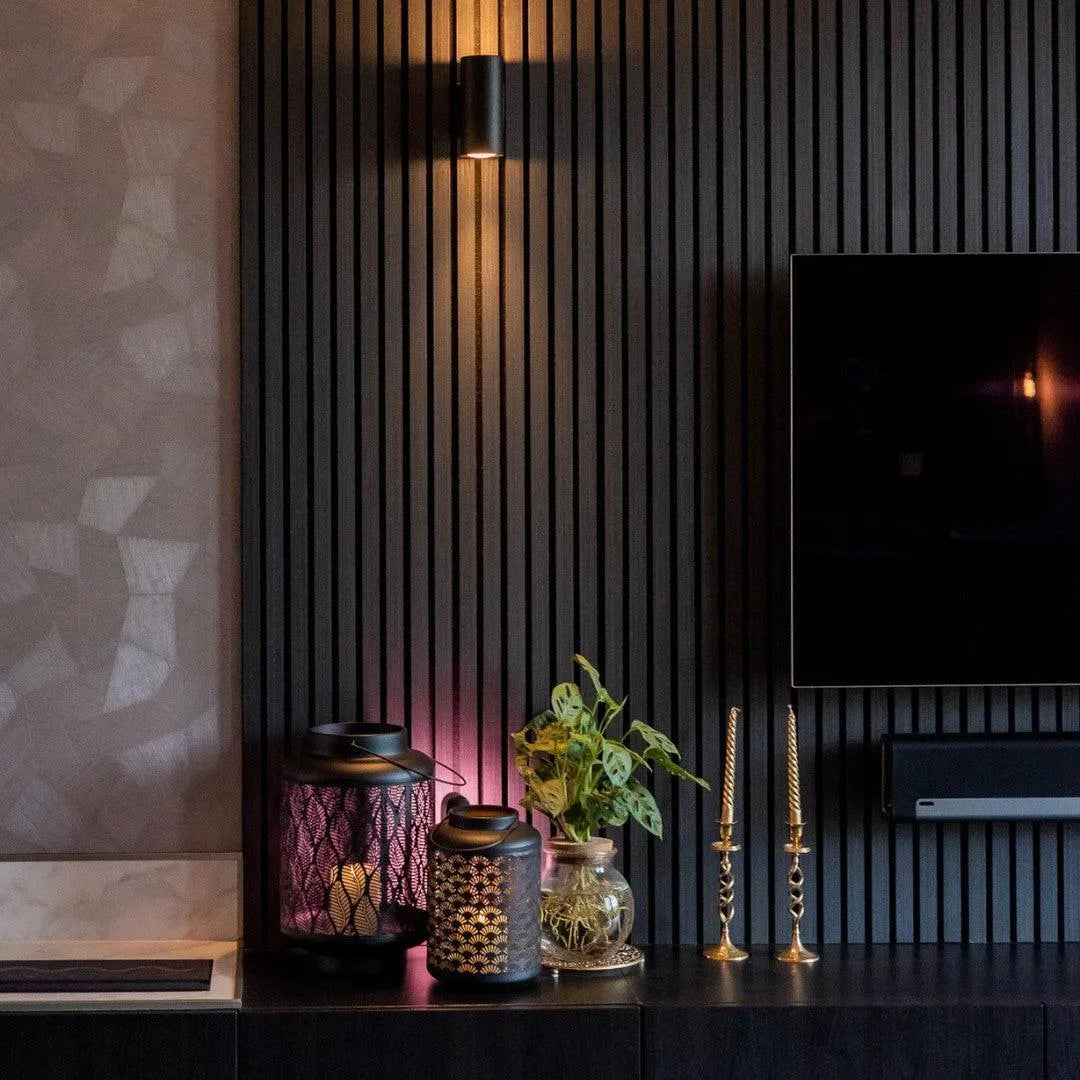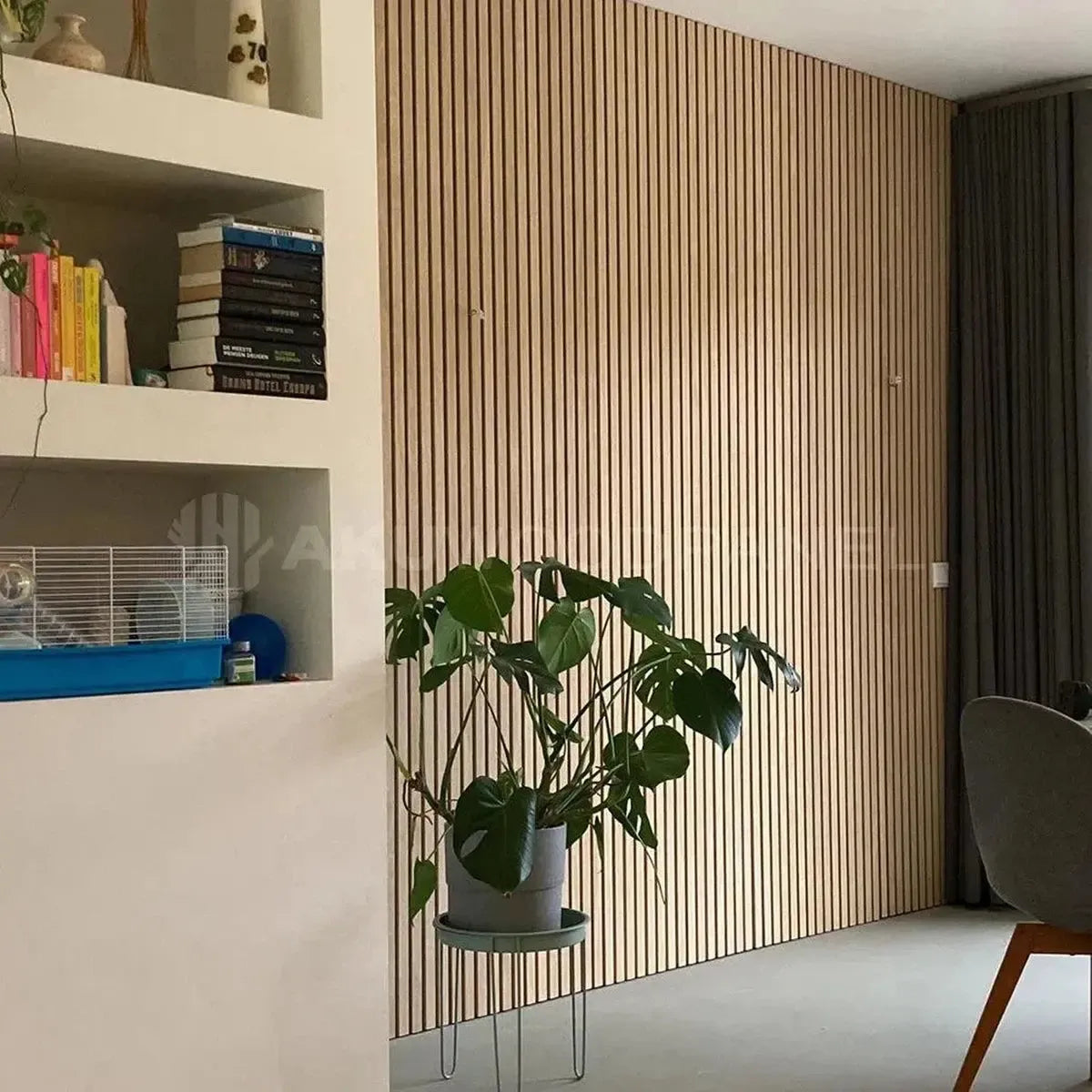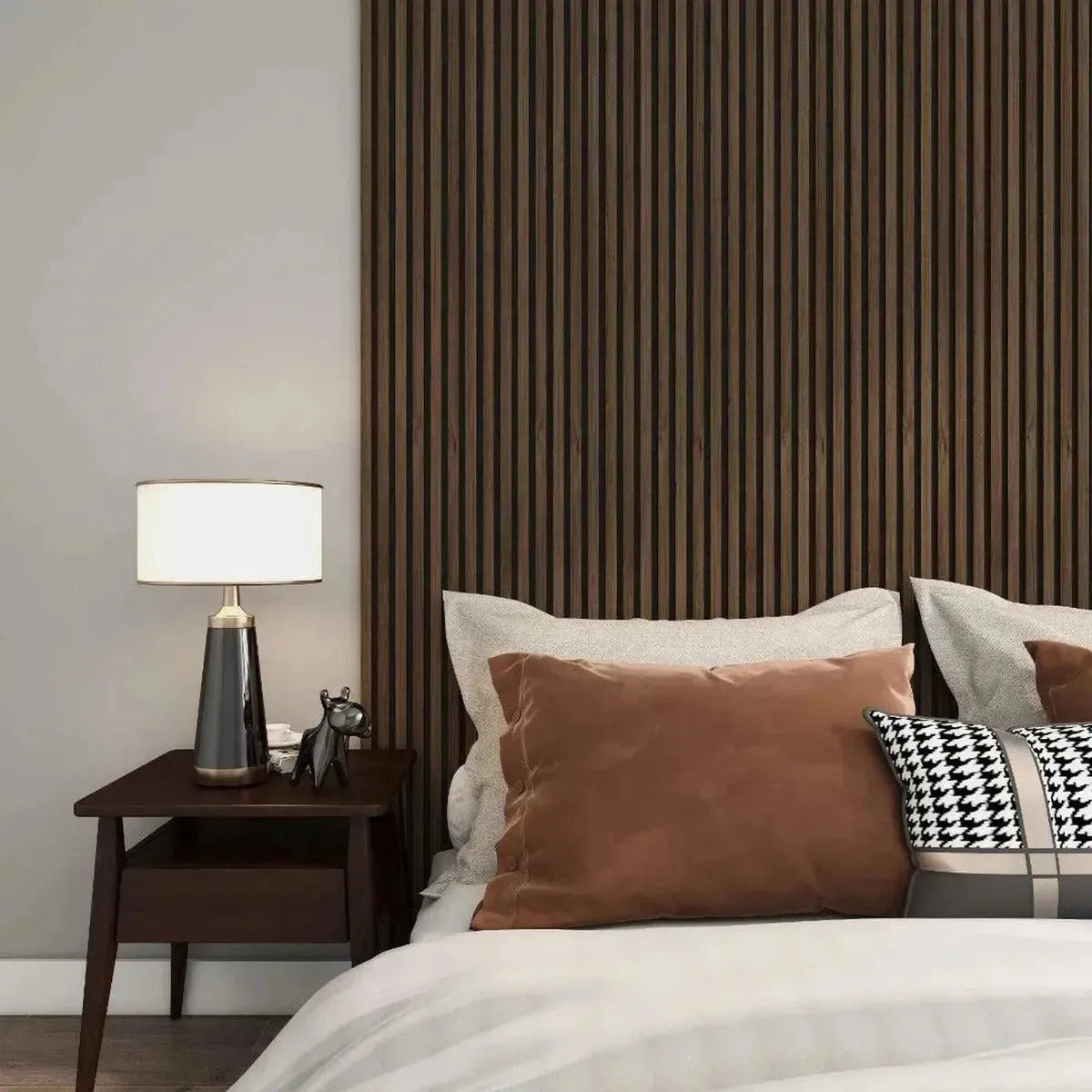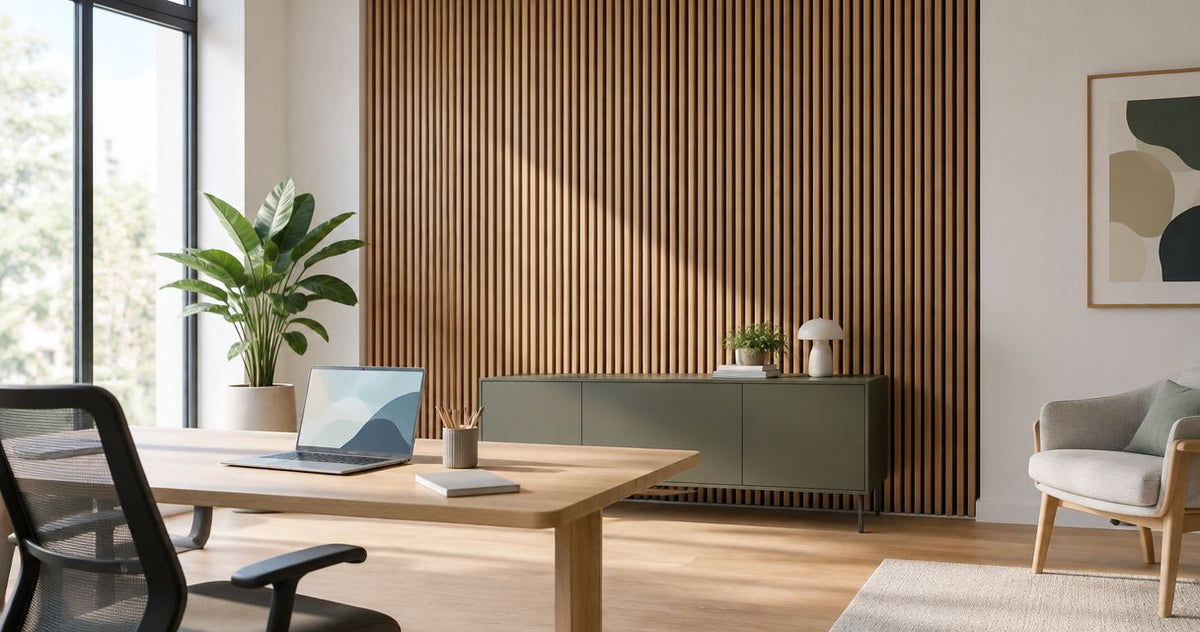
Slatpanel combines a wood-slat appearance with acoustic wall treatment, making it a practical starting point for an echo-prone room. Its format stops being enough when your project calls for geometric sections, a different surface profile, or custom spacing. The best Slatpanel alternative in 2026 is Akustiq USA if you need acoustic wood panels; hexagon acoustic panels are the better fit if you want a geometric wall layout.
- Akustiq USA is the first choice among slatpanel alternatives for acoustic wood panels with real wood veneer.
- Hexagon acoustic panels suit geometric feature walls; fluted panels suit decorative surface texture.
- Custom-built slat walls give you control over spacing but require a separate acoustic design.
- Compare acoustic test assemblies, exposed edges, and finish samples before choosing wall panels in 2026.
Why this matters
An alternative should solve a problem that your original choice does not. Changing suppliers while keeping the same wall layout is different from replacing slats with hexagons or a fluted surface.
Start with your room. If conversations sound harsh or television dialogue becomes difficult to follow, sound absorption belongs in the brief. If the room already sounds comfortable, focus on the finish, panel profile, and installation details rather than treating an acoustic label as a requirement.
Sound absorption and sound isolation are different jobs. Acoustic wall treatment addresses reflections inside a room; it does not replace a wall assembly designed to limit sound transmission between rooms.
Slatpanel alternatives at a glance
| Option | Best for | Standout feature | How it differs from Slatpanel |
|---|---|---|---|
| Slatpanel | A wood-slat wall with an acoustic purpose | Repeated wood slats over felt backing | The reference option for this comparison |
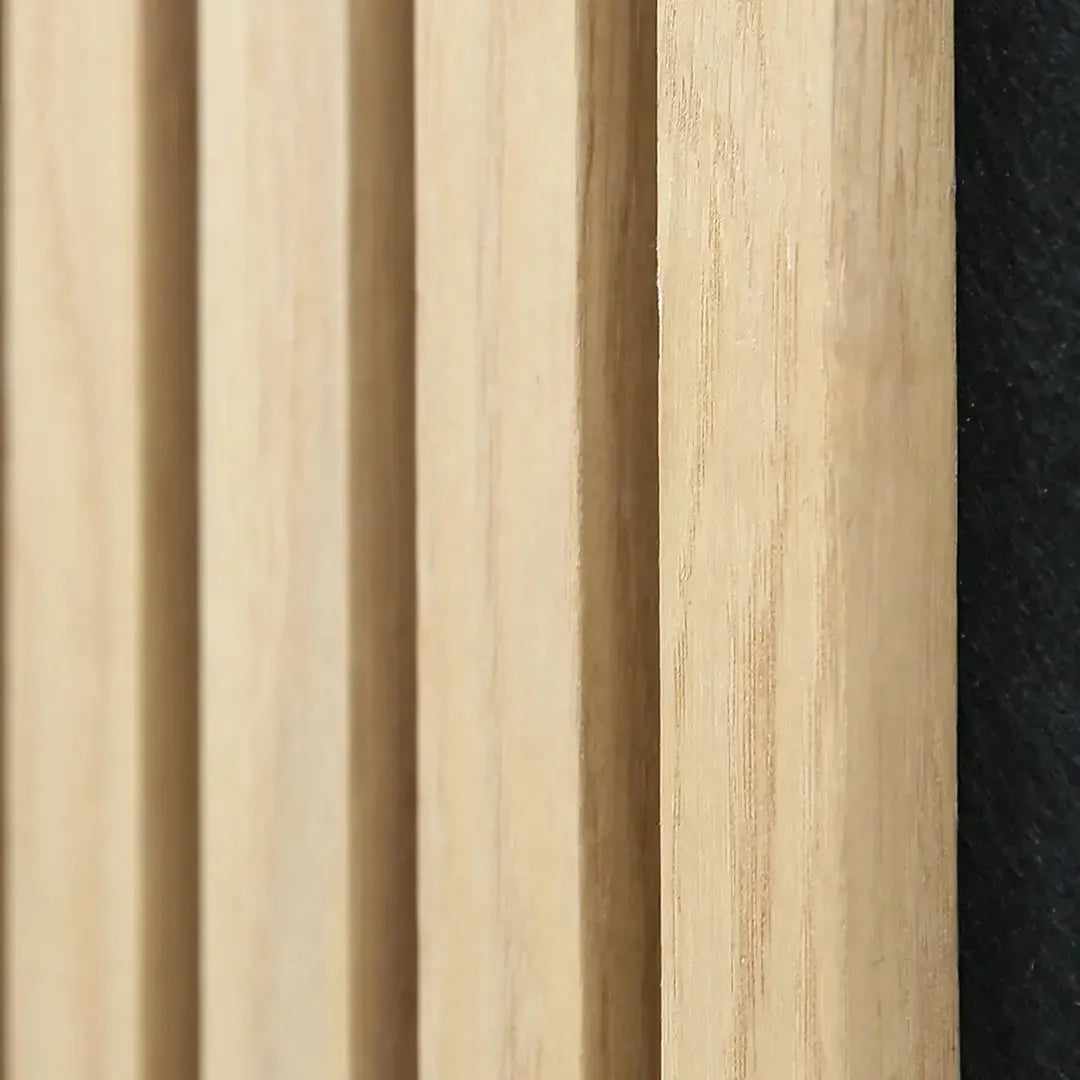
| Akustiq USA acoustic slat panels, including the Natural Oak acoustic slat wall panel | Keeping the slat format while comparing another supplier | Acoustic wood panels with real wood veneer | An alternative supplier and finish selection, not a different wall geometry |
| Walnut hexagon acoustic panel | Geometric acoustic feature walls | Hexagonal panel shape | Replaces continuous slat lines with a tiled composition |
| Natural Oak fluted wall panel | Decorative walls with a repeated surface profile | Fluted appearance | A decorative format rather than an assumed equivalent acoustic assembly |
| Custom-built slat wall | Bespoke spacing and wall detailing | Control over the layout | Requires you to specify the wood, backing, attachment, and acoustic treatment separately |
Use this 2026 shortlist to choose a direction, not to assume every option delivers the same acoustic result. A finish name describes appearance; an acoustic test describes performance under a particular installation condition.
1. Akustiq USA: best for acoustic wood panel projects
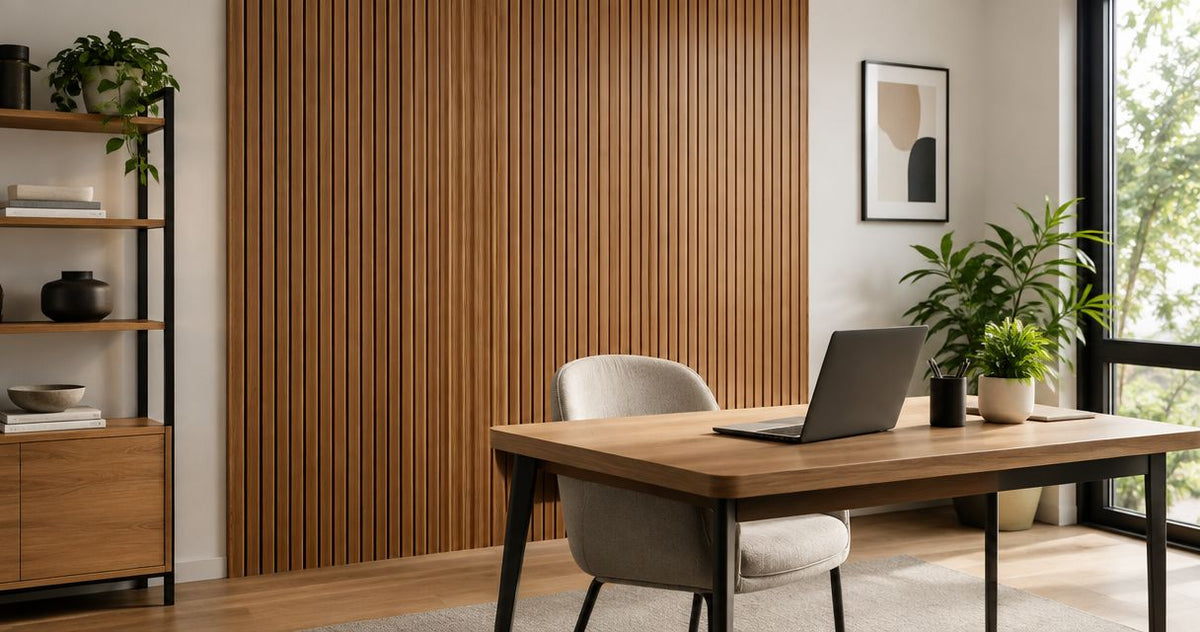
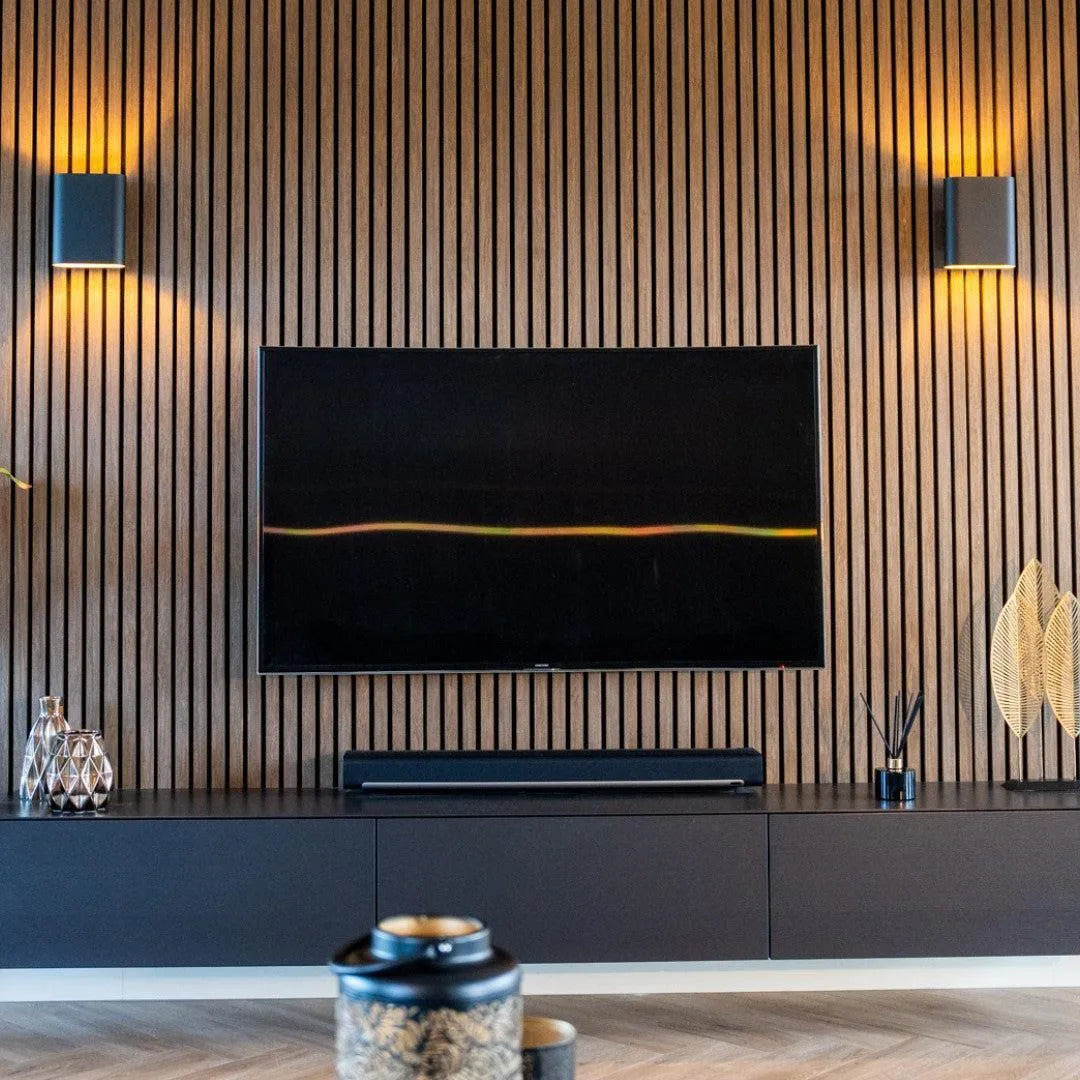
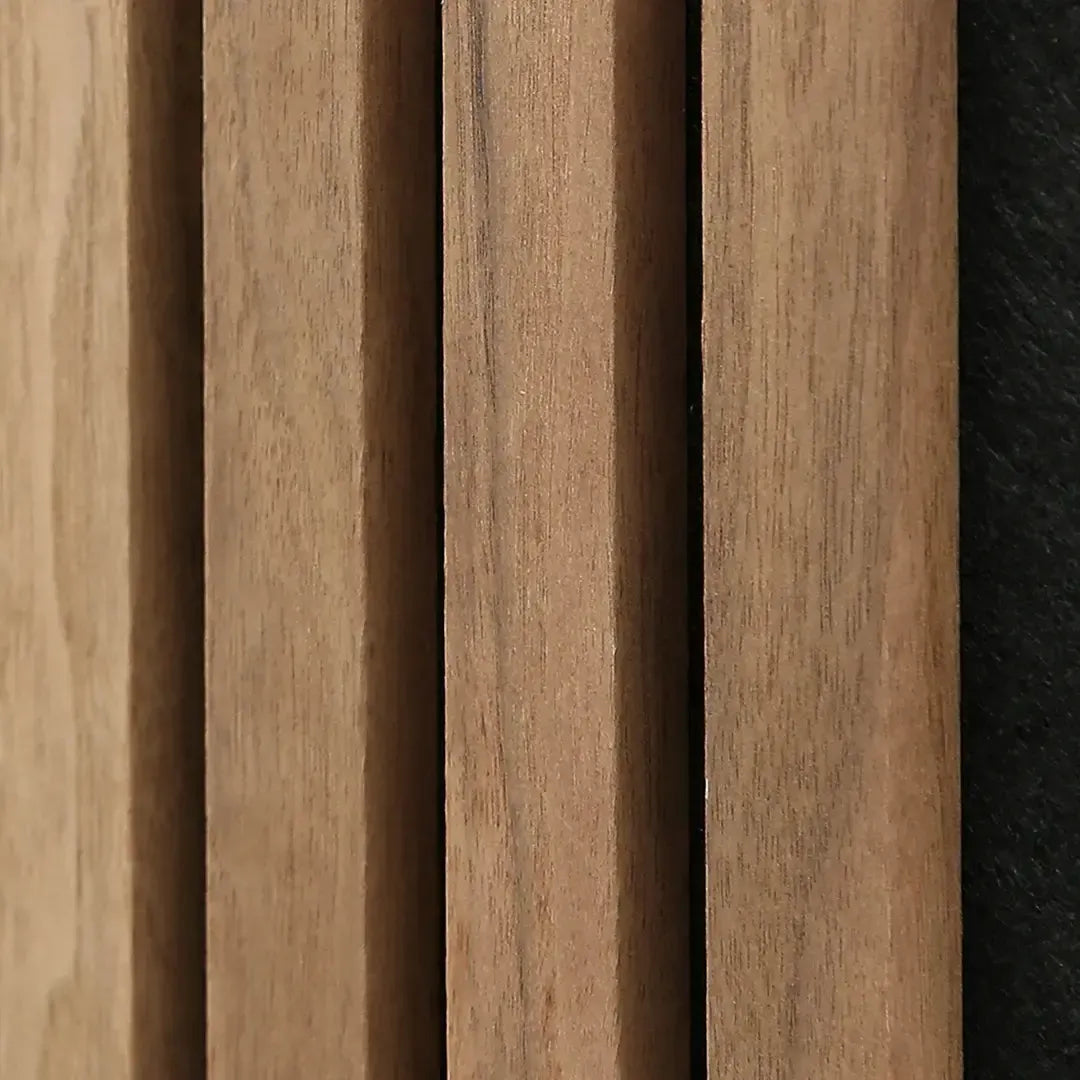
Akustiq USA manufactures and supplies acoustic wood panels for construction and interior applications. Its acoustic slat range provides the closest format match when you want to keep a wood-slat feature wall rather than redesign the room around another shape.
That makes this a supplier comparison first. Compare the exact finish, backing, installation requirements, and edge treatment against the Slatpanel option you are considering.
Where Akustiq USA shines
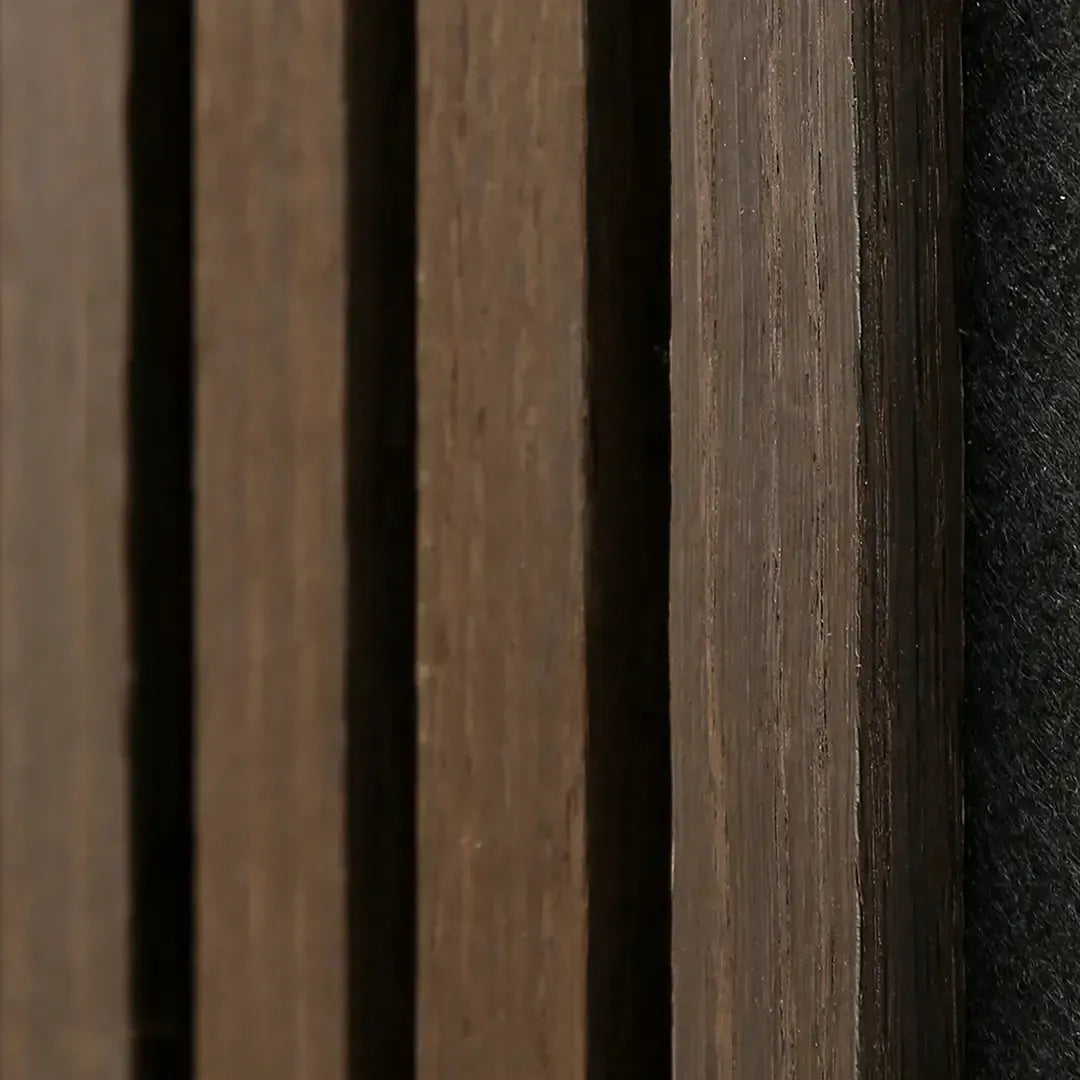
- Acoustic slat panels use real wood veneer, keeping an actual wood surface in the design.
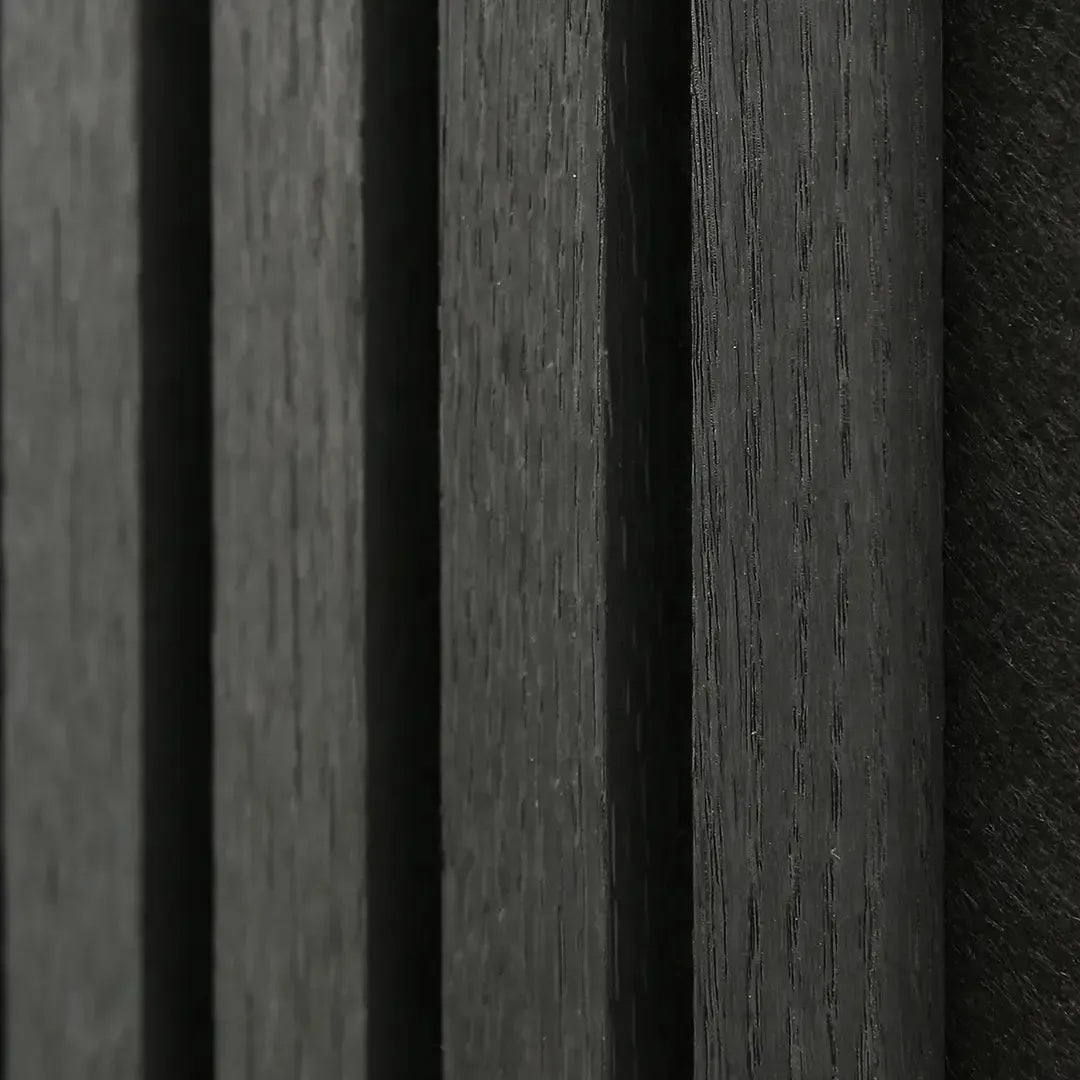
- The catalog includes Natural Oak, Walnut, Black Oak, and Smoked Oak acoustic slat panel options.
- Natural Oak and Smoked Oak options with gray felt give you another way to coordinate the backing with your room.
- The wider panel range includes hexagon, fluted, and decorative wood formats when the brief changes.
Where Akustiq USA falls short
- Acoustic slat panels are not a substitute for sound-isolating construction when noise travels through a shared wall.
- A slatted surface introduces exposed edges and cut details that you must plan around outlets, corners, and wall ends.
- Real wood veneer does not eliminate the need to inspect the finish under your room's lighting.
Best for: Homeowners and project buyers who want acoustic wood panels without abandoning the slatted appearance.
| Decision | Acoustic slat alternative | Slatpanel |
|---|---|---|
| Wall appearance | Repeated wood slats | Repeated wood slats |
| Acoustic comparison | Evaluate the exact panel and mounting assembly | Evaluate the exact panel and mounting assembly |
| Finish approval | Compare the chosen veneer and backing | Compare the chosen veneer and backing |
| Installation planning | Resolve cuts, exposed edges, and attachments | Resolve cuts, exposed edges, and attachments |
Verdict: Buy the acoustic slat format when your brief combines wood appearance with room sound treatment; approve the specific assembly before ordering.
2. Hexagon acoustic panels: best for geometric layouts
Hexagon acoustic panels change the composition of the wall rather than simply changing its wood tone. You can design a defined geometric feature instead of carrying straight slat lines across the whole surface.
The catalog includes Walnut, Natural Oak, Black, and Smoked Oak hexagon acoustic panel options. Choose the shape because it fits your layout, then assess the acoustic specification separately.
Where hexagon acoustic panels shine
- The hexagonal shape supports a geometric composition around furniture or a focal point.
- Individual shapes let you establish a deliberate boundary for the feature.
- Wood-finish options keep the design connected to other timber surfaces in the room.
Where hexagon acoustic panels fall short
- More individual pieces mean more placement decisions and alignment checks.
- A small decorative cluster does not establish that you have treated enough of the room.
- Hexagons do not recreate the uninterrupted vertical lines of a slatted wall.
Best for: A gaming room, bedroom, or office where a geometric acoustic feature fits better than a continuous slat wall.
| Decision | Hexagon acoustic panels | Slatpanel |
|---|---|---|
| Visual pattern | Repeated hexagonal shapes | Repeated straight slats |
| Layout planning | Position individual shapes and their outer boundary | Plan panel joins and slat alignment |
| Acoustic selection | Match tested performance and coverage to the room | Match tested performance and coverage to the room |
Verdict: Buy hexagon acoustic panels for a geometric feature; skip them if continuous slat lines are central to your design.
3. Fluted wall panels: best for decorative texture
Fluted wall panels give you a repeated surface profile without making a wood-slat acoustic assembly the organizing feature. Choose them when the main objective is the wall's appearance.
Do not treat a decorative fluted panel as acoustically interchangeable with Slatpanel. Surface texture alone does not establish sound absorption performance.
Where fluted wall panels shine
- The repeated profile gives a plain wall a defined texture.
- Natural Oak and Walnut options connect the surface to a wood-led interior.
- The format offers a different visual direction when separate slats feel too prominent.
Where fluted wall panels fall short
- Decorative texture does not replace documented acoustic performance.
- Cut edges and corners still need a finish plan.
- A profile that looks appealing straight on also needs checking under side lighting.
Best for: A bedroom or living-room feature wall where decorative texture is the priority.
| Decision | Fluted wall panels | Slatpanel |
|---|---|---|
| Main selection reason | Decorative surface profile | Wood-slat appearance with an acoustic purpose |
| Echo-control decision | Require acoustic evidence before selecting for this job | Check the acoustic assembly and installation conditions |
| Design check | Inspect profile, joints, and side lighting | Inspect slat rhythm, backing, and joins |
Verdict: Buy fluted panels for decorative texture; skip them as an acoustic replacement unless the exact product has supporting test evidence.
4. Custom-built slat walls: best for bespoke spacing
A custom-built slat wall lets you specify the spacing, timber selection, and relationship to doors or built-in furniture. It is a construction approach, not a ready-defined acoustic product.
Where custom-built slat walls shine
- You control the slat rhythm and wall boundary.
- The design can follow bespoke joinery details.
Where custom-built slat walls fall short
- You must coordinate the materials, attachment, backing, and finish yourself.
- Acoustic performance belongs to the complete design, not to the presence of wood strips.
Best for: Projects where a specific slat layout matters more than using a preconfigured panel format.
Verdict: Hold until the detailing and acoustic design are resolved; buy this approach only when customization is necessary.
Why switch from Slatpanel?
Switch from Slatpanel when another option meets a requirement that your chosen Slatpanel configuration does not. The strongest reason is a changed brief, not a different logo on a similar-looking wall.
Use these project requirements to decide:
- Finish coordination: You need to compare a particular wood tone or felt color against existing floors and furniture.
- Wall geometry: You want hexagonal sections instead of straight slat lines.
- Decorative priority: You want a fluted profile and do not need the panel to carry the acoustic brief.
- Bespoke detailing: You need slat spacing or boundaries tied to custom joinery.
- Specification fit: Your project requires evidence for the exact mounting method, room use, or construction assembly.
For a 2026 commercial fit-out, separate visual approval from technical approval. A finish sample answers whether the wall looks right; installation instructions and relevant test documents answer different questions.
Compare the assembly, not just the panel photograph
Before selecting any Slatpanel alternative, work through Sound goal, Test assembly, Wall layout, and Finish sample in that order. This keeps an attractive finish from masking a mismatch with the room's actual problem.
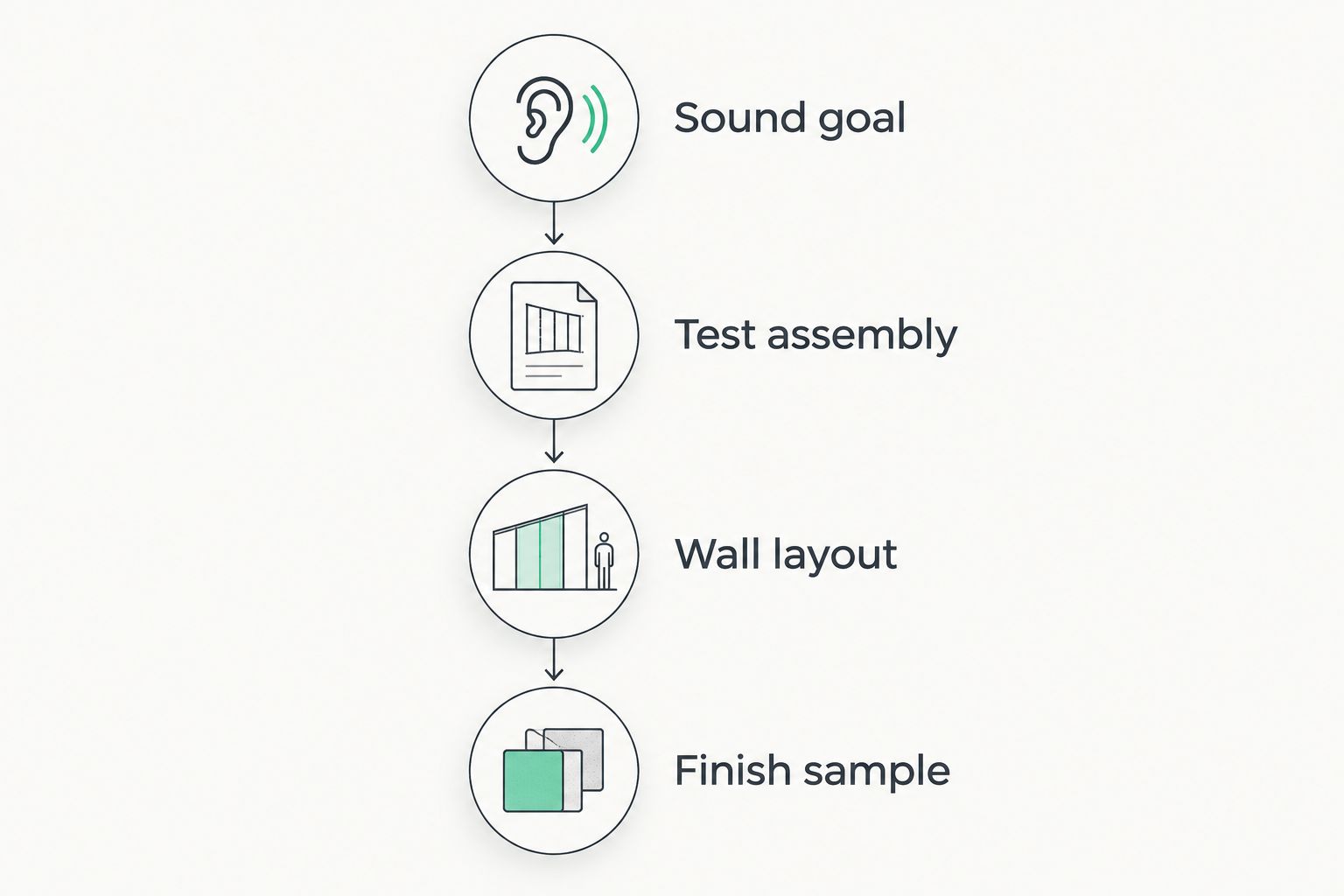
Sound goal
Describe the problem plainly. Lingering sound after speech, harsh reflections, and noise arriving from the next room are not interchangeable symptoms.
If your main complaint is neighboring noise, investigate the separating wall, doors, gaps, and transmission paths. Do not start by selecting a decorative face finish and expect it to resolve sound isolation.
Test assembly
Ask how the acoustic panel was mounted for its reported test. Direct mounting and mounting with an air space are different assemblies, so a result for one does not automatically describe the other.
The Noise Reduction Coefficient, or NRC, summarizes absorption at 250 Hz, 500 Hz, 1,000 Hz, and 2,000 Hz under the ASTM C423 method. Those frequencies describe the rating calculation, not a performance claim for any panel listed here.
For your 2026 comparison, require the report to identify the tested construction. Check whether the proposed backing, mounting arrangement, and any additional absorber match the installation you intend to build.
Wall layout
Draw the wall with doors, outlets, switches, furniture, and every exposed boundary. Mark where panel joins will land before deciding how much material you need.
A full-width wall, a narrow feature behind a desk, and a geometric cluster require different layouts. Treat their acoustic coverage as a design question rather than assuming the same number of decorative sections produces the same result.
Finish sample
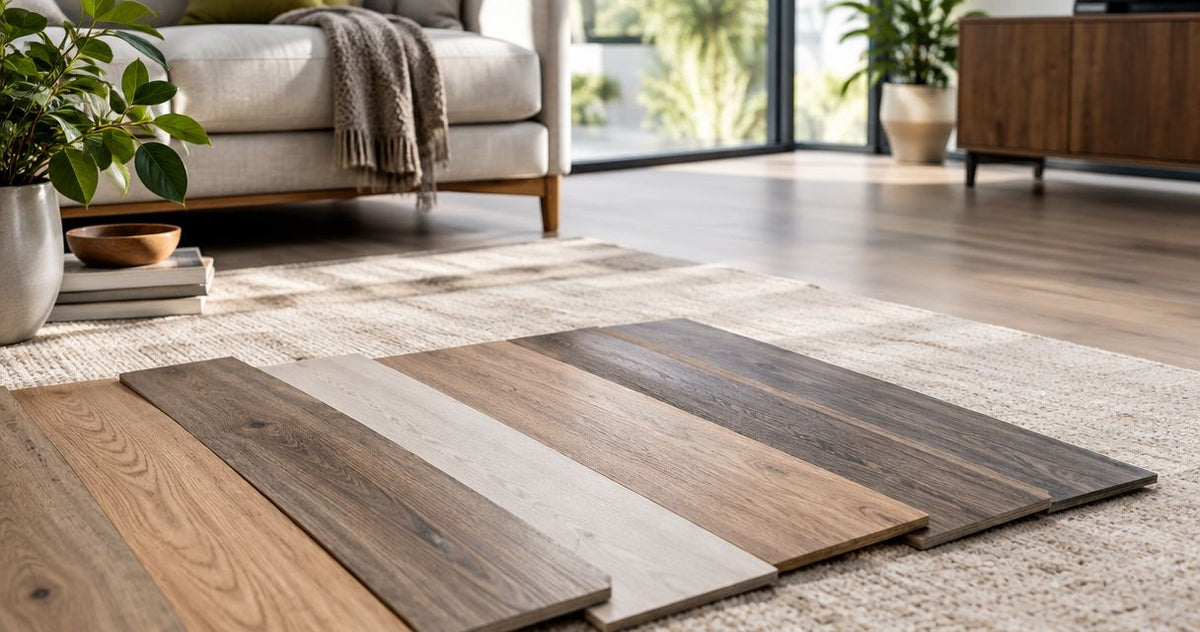
Inspect a physical sample beside the flooring, furniture, and painted wall. Look at it in daylight and under the lighting you actually use in the evening.
Approve the backing as well as the wood. On a slatted wall, the spaces between the slats remain part of the finished appearance, so the backing color deserves a deliberate choice.
Bedroom alternatives: decide between relief and acoustics
For a bedroom feature wall, distinguish a visual problem from a sound problem. If the wall feels flat but the room already sounds comfortable, the comparison between wood panels and 3D wallpaper for bedrooms belongs to surface styling; acoustic selection requires a separate check of tested absorption and room coverage.
Neither a dimensional appearance nor a wood finish proves acoustic performance. Choose decorative texture for the look, and specify an acoustic assembly when reflections are the issue.
Place the feature in relation to the bed, bedside furniture, and lighting before settling on its boundary. A wall treatment should fit the room's composition rather than stop wherever an unplanned cut happens to fall.
When staying with Slatpanel is the right call
Stay with Slatpanel if its chosen finish, documented acoustic assembly, and installation details already satisfy your project. Switching is unnecessary when the alternative changes the supplier but leaves every meaningful requirement unchanged.
Slatpanel remains the reference choice in this comparison for a wood-slat acoustic wall. Keep it on your 2026 shortlist if you have approved its appearance and confirmed the relevant technical details.
The same standard applies to every alternative: choose the panel system that meets your brief, not the one with the most persuasive room photograph.
FAQ
What's the best Slatpanel alternative in 2026?
Akustiq USA is the first choice for buyers comparing acoustic wood panels while keeping a slatted appearance. Hexagon acoustic panels fit a geometric layout, while fluted panels fit a decorative-texture brief.
Is Slatpanel better than other acoustic slat panels?
Choose between Slatpanel and another acoustic slat panel by comparing the exact finish, tested mounting assembly, and installation requirements. A similar photograph does not establish equivalent acoustic performance.
Can fluted wall panels replace Slatpanel for echo control?
Fluted wall panels are an acoustic replacement only when the exact product has supporting absorption evidence. A decorative surface profile alone does not establish that it will meet an echo-control requirement.
Are hexagon acoustic panels better than slat panels?
Hexagon acoustic panels are better for a geometric wall composition, not automatically for sound absorption. Compare documented performance and planned coverage separately from the panel shape.
Will acoustic wood panels stop noise from the next apartment?
Acoustic wood panels do not replace sound-isolating construction between apartments. Room absorption addresses reflections inside the room; neighboring noise requires attention to transmission paths and the separating assembly.
What should I compare on an acoustic panel test report?
Compare the tested panel construction and mounting conditions with your proposed installation. Check the backing, air space, and any additional absorber rather than relying on the headline rating alone.
Should I choose a sample before ordering wall panels?
Approve a physical finish sample before committing to a wall design. Compare the wood and backing with your flooring, furniture, daylight, and evening lighting.
One last thing
Approve the edge detail before you approve the wall. The face of a panel is easy to imagine; an exposed end beside a doorway or an awkward cut around a switch is where an unfinished design becomes visible.
For your 2026 project, draw those details on the wall elevation and confirm the intended finish. A well-resolved boundary matters more than changing brands after the main panel has already met your brief.
 Better performance and aesthetic appeal
 In Stock