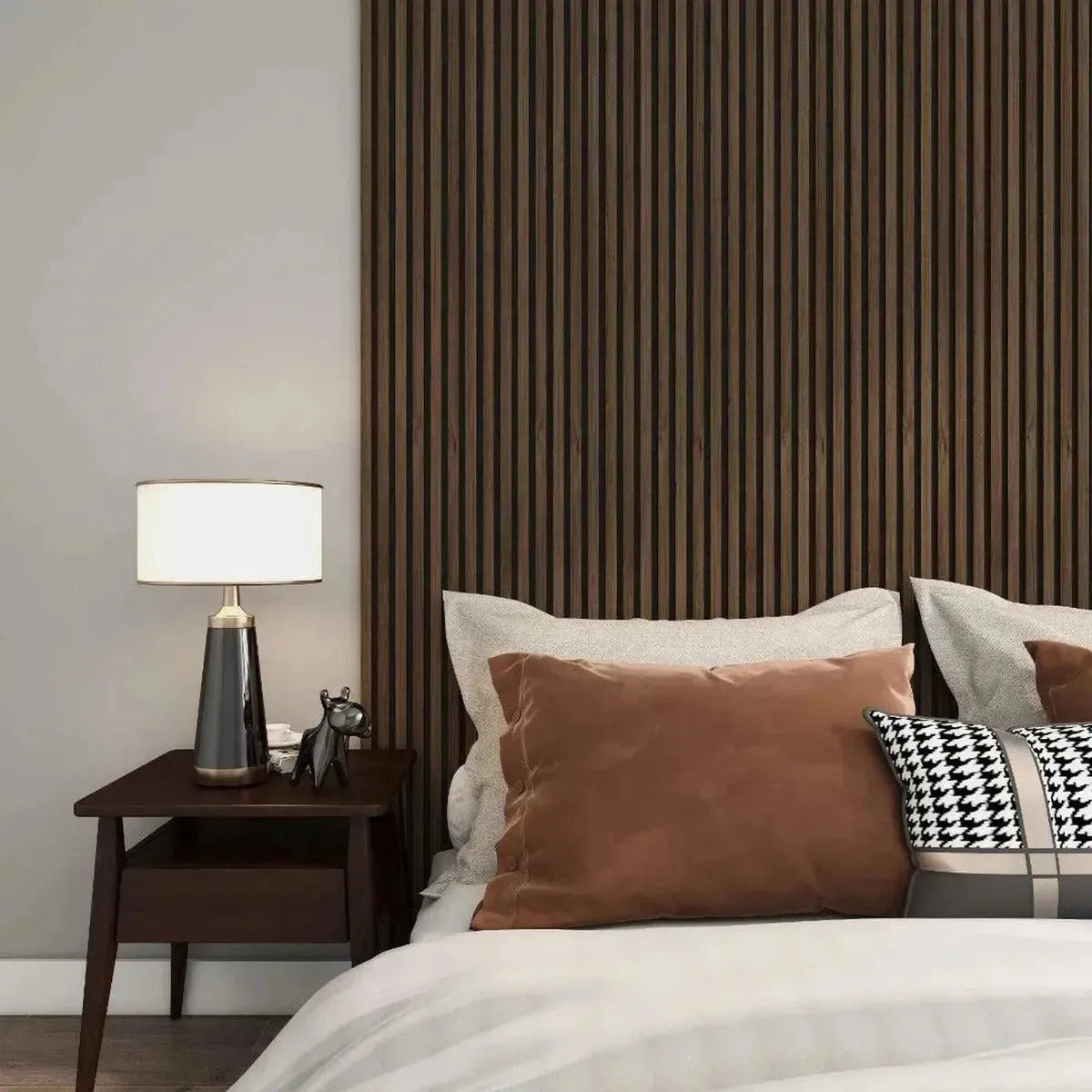
Creative agency studios use wood slat panels to solve two problems at once: echo bouncing off glass and polished concrete, and a reception wall that looks like every other coworking space in 2026. A well-placed run of acoustic slat wall panels cuts reverb in open-plan bullpen areas while giving client-facing rooms a materials-forward look that a painted drywall accent wall can't match. Agencies differ from home offices in one key way: the wall has to perform in front of clients on video calls and in person, not just quiet a home office.
- Akustiq USA's acoustic slat wall panels cut echo in open-plan agency studios and double as a branded feature wall in 2026.
- Hexagon acoustic panels with gray felt backing carry a 0.75 NRC rating, useful for phone booths and small meeting pods.
- Fluted and 3D wood wall panels add texture but carry no acoustic backing on their own — pair them with felt-backed slat panels where noise is the real complaint.
- Test one wall section before covering an entire studio; a small agency floor plan changes the acoustic math fast.
Why wood slat panels matter for creative agency studios
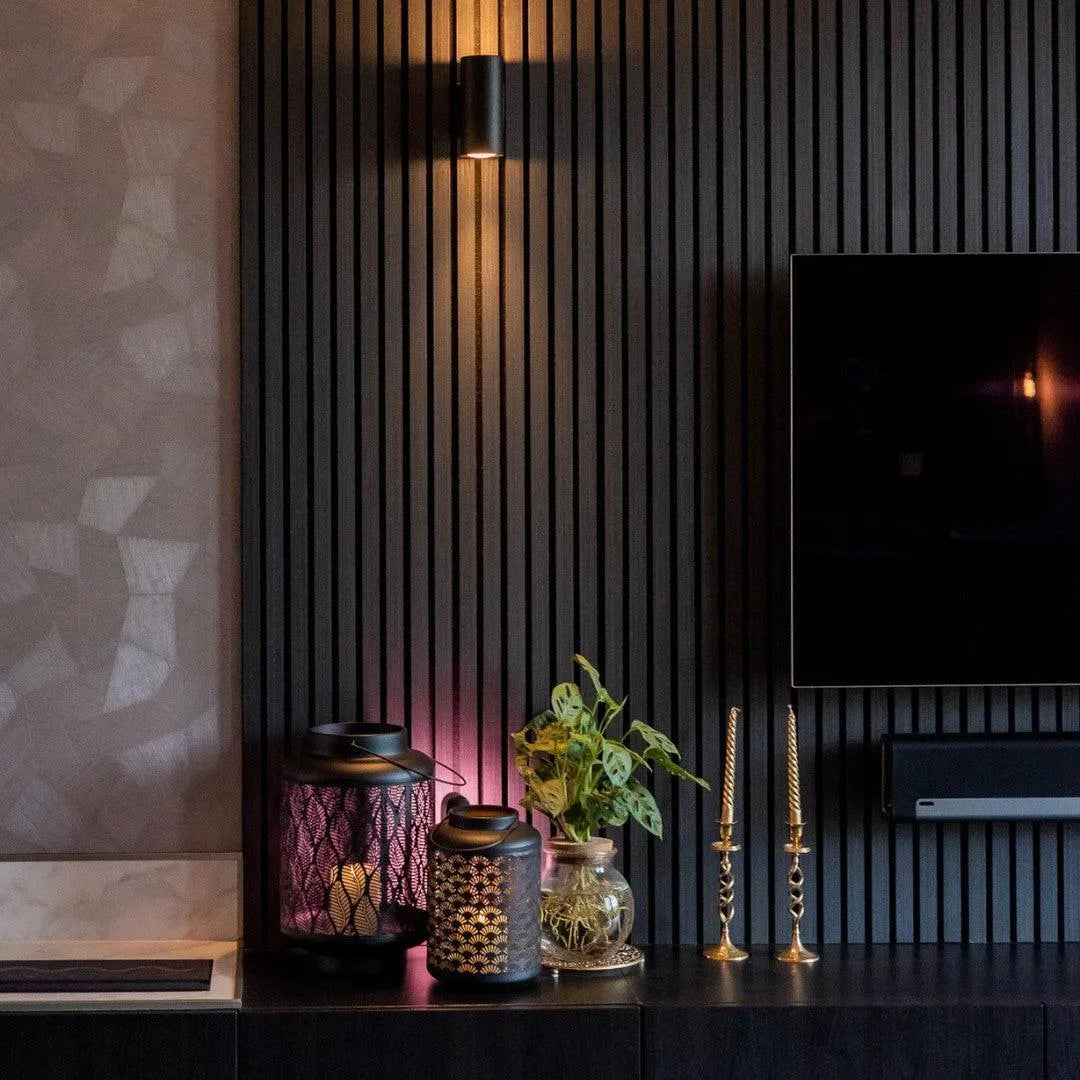
An agency floor plan usually mixes three loud surfaces: glass conference rooms, exposed ceilings, and hard flooring chosen for the design-forward look. That combination amplifies every phone call, every Zoom pitch, and every casual conversation in the bullpen. Wood acoustic slat wall panels address the noise problem without forcing the studio into a corporate-office aesthetic — the veneer stays visible, unlike foam panels or fabric-wrapped boards.
The pitch room and reception area carry more weight than a home office wall ever will. Clients see that wall in every deck review and every walkthrough, so the finish has to hold up under scrutiny — real wood veneer photographs and video-calls better than laminate or foam.
Set up wood slat panels for your studio
1. Measure the noise problem before buying anything
Walk the floor plan and flag the loudest zones before ordering a single panel.
- Clap-test each open area and note where the echo lingers longest
- Use a free decibel meter app during a normal work afternoon, not a quiet one
- Count hard-surface square footage: glass walls, concrete or polished floors, exposed ceiling deck
- Flag rooms used for client calls versus internal work — treat the client-facing rooms first
- Check existing soft furnishing (rugs, upholstered seating) already absorbing some sound
2. Pick veneer and slat spacing to match the studio's visual identity
Agency brand books usually specify a material palette — match the panel to it rather than picking the panel first.
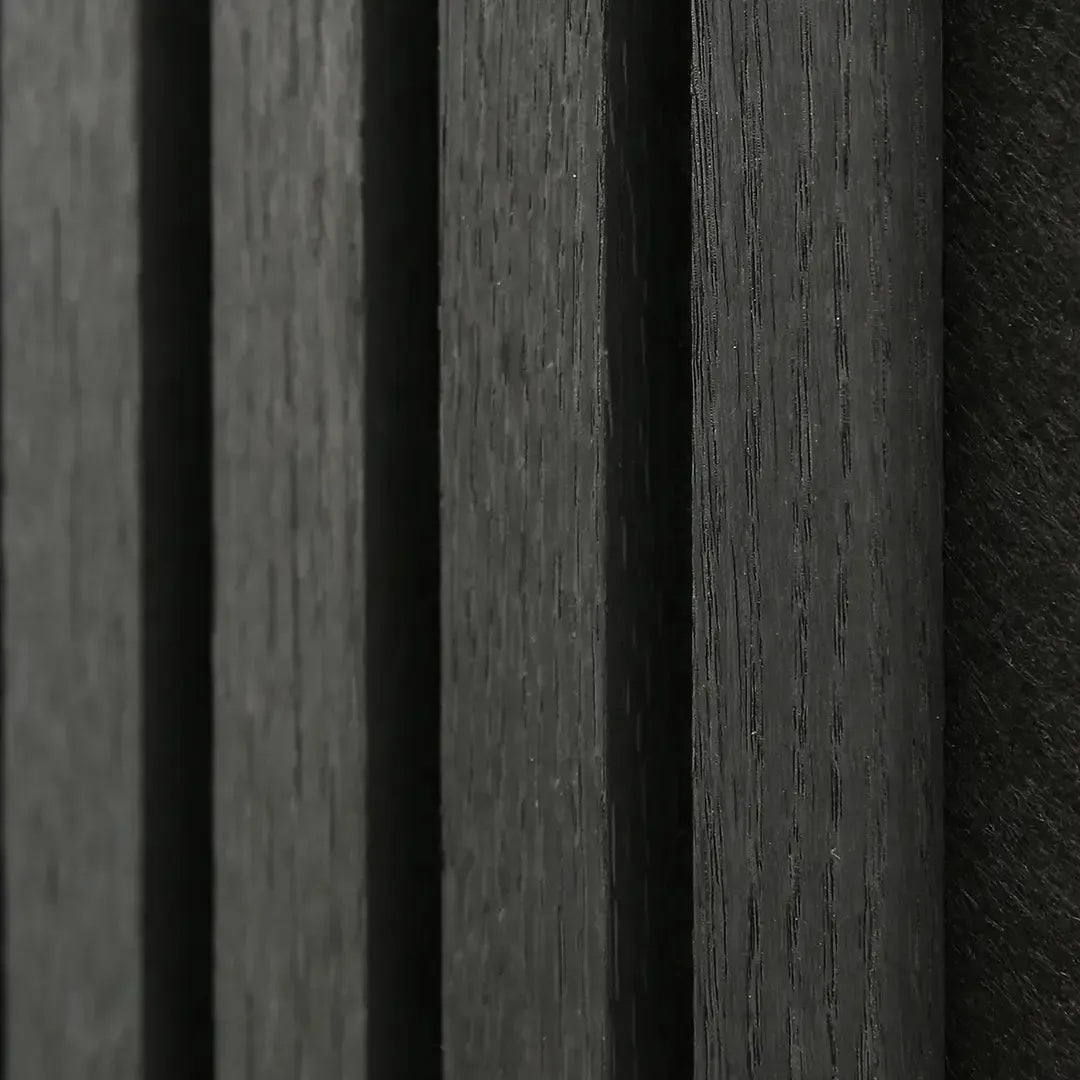
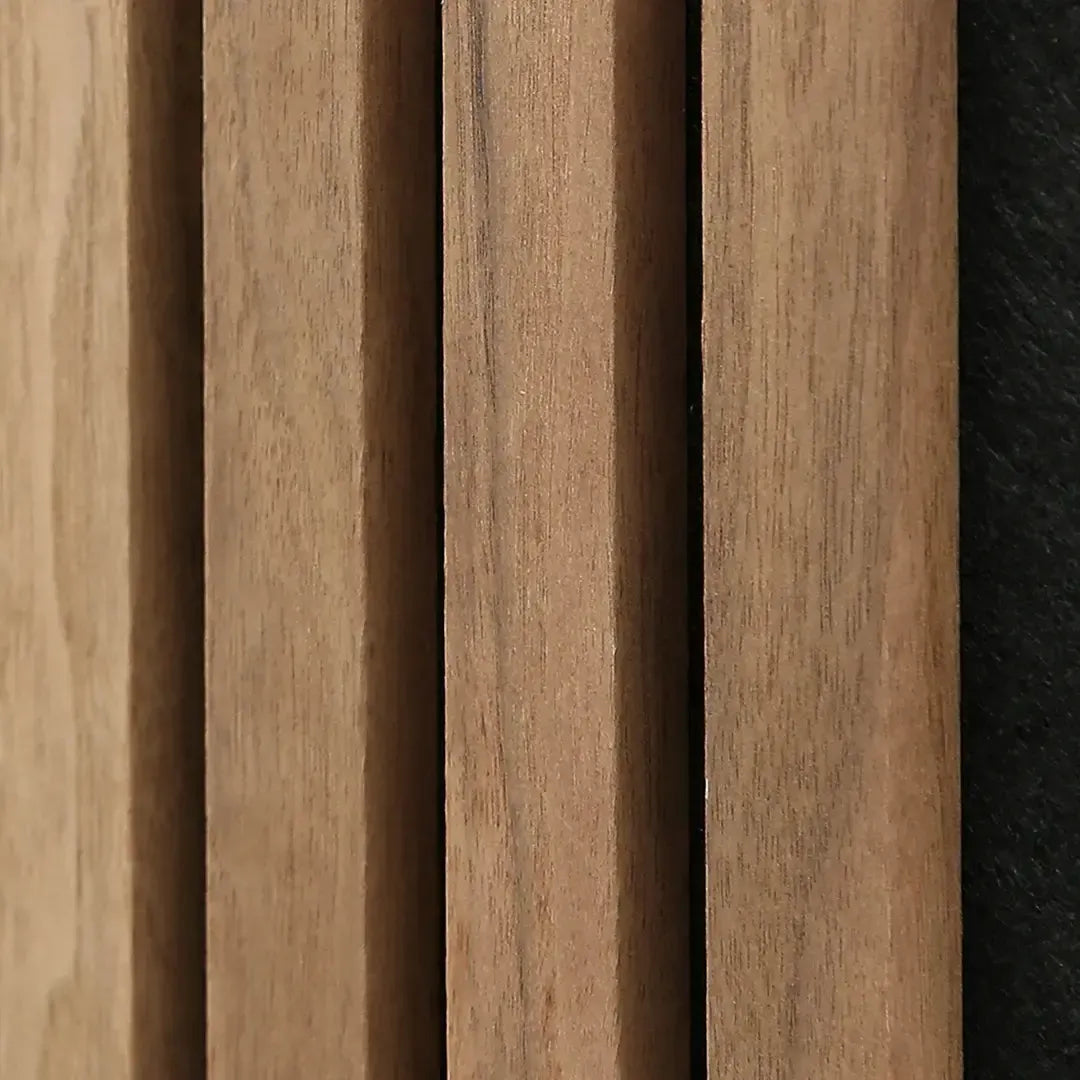
- Walnut and black oak read darker and more editorial, common in agencies leaning moody or design-led
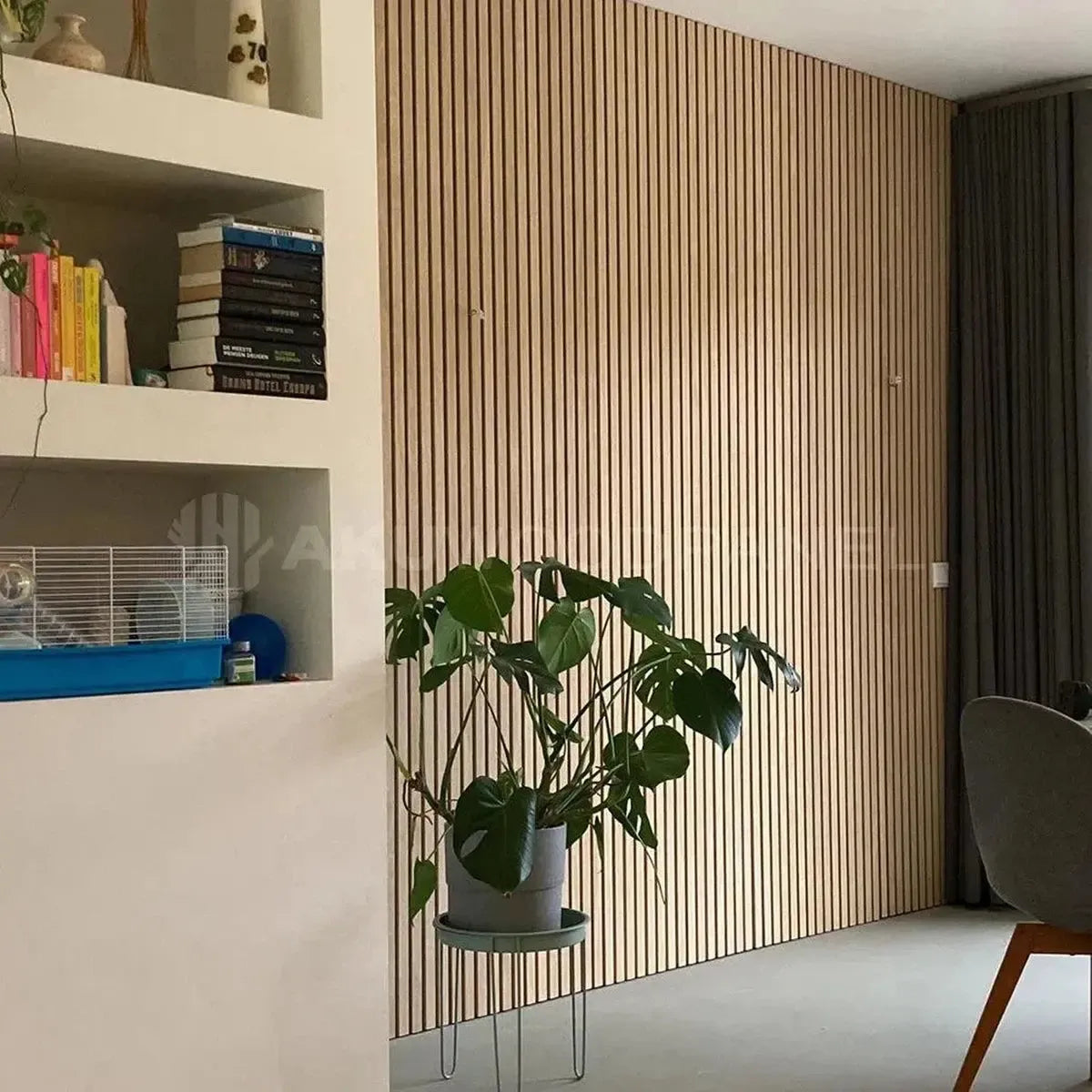
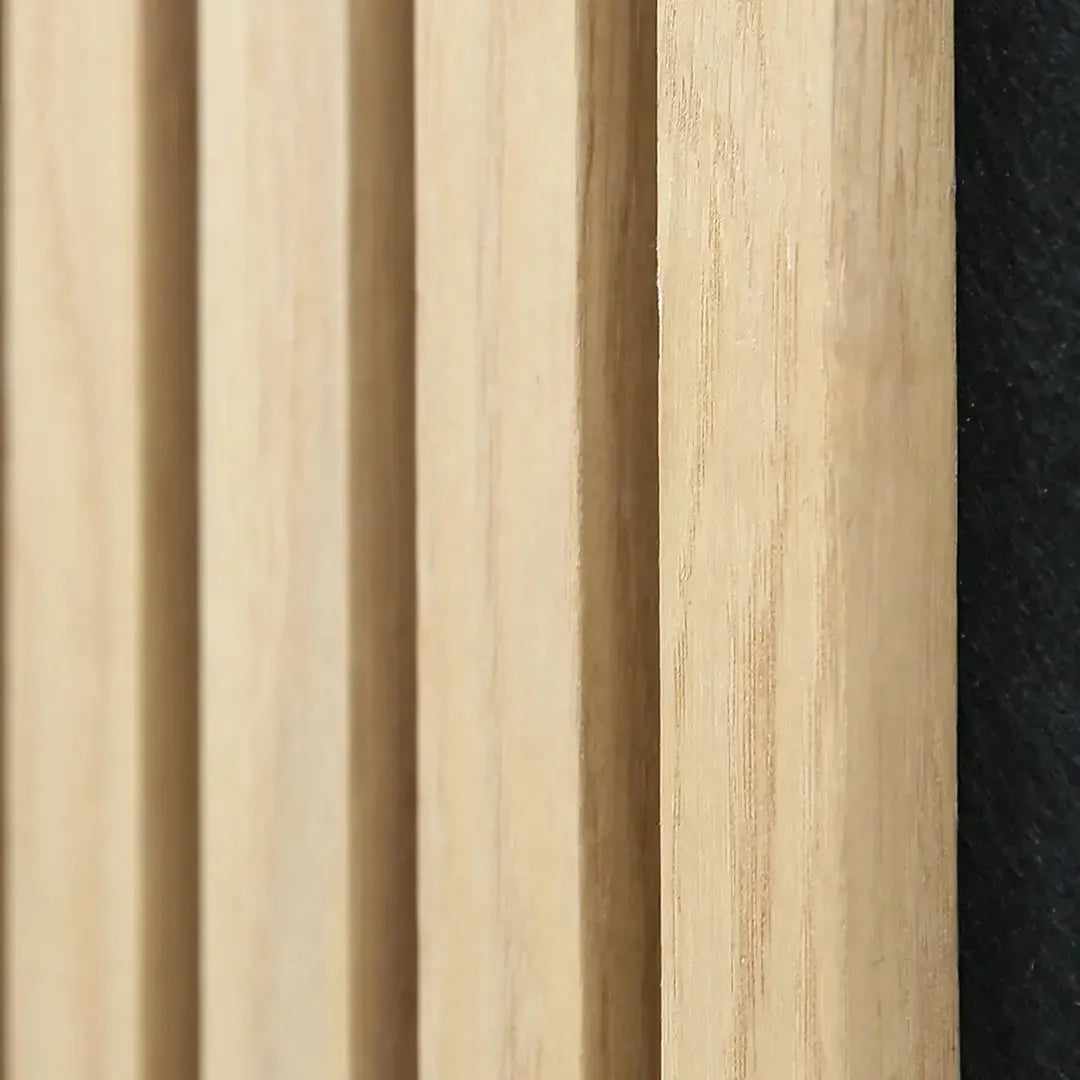
- Natural oak and smoked oak read warmer and lighter, common in agencies branding around openness
- Tighter slat spacing reads more formal for a reception wall; wider spacing reads more casual for a bullpen
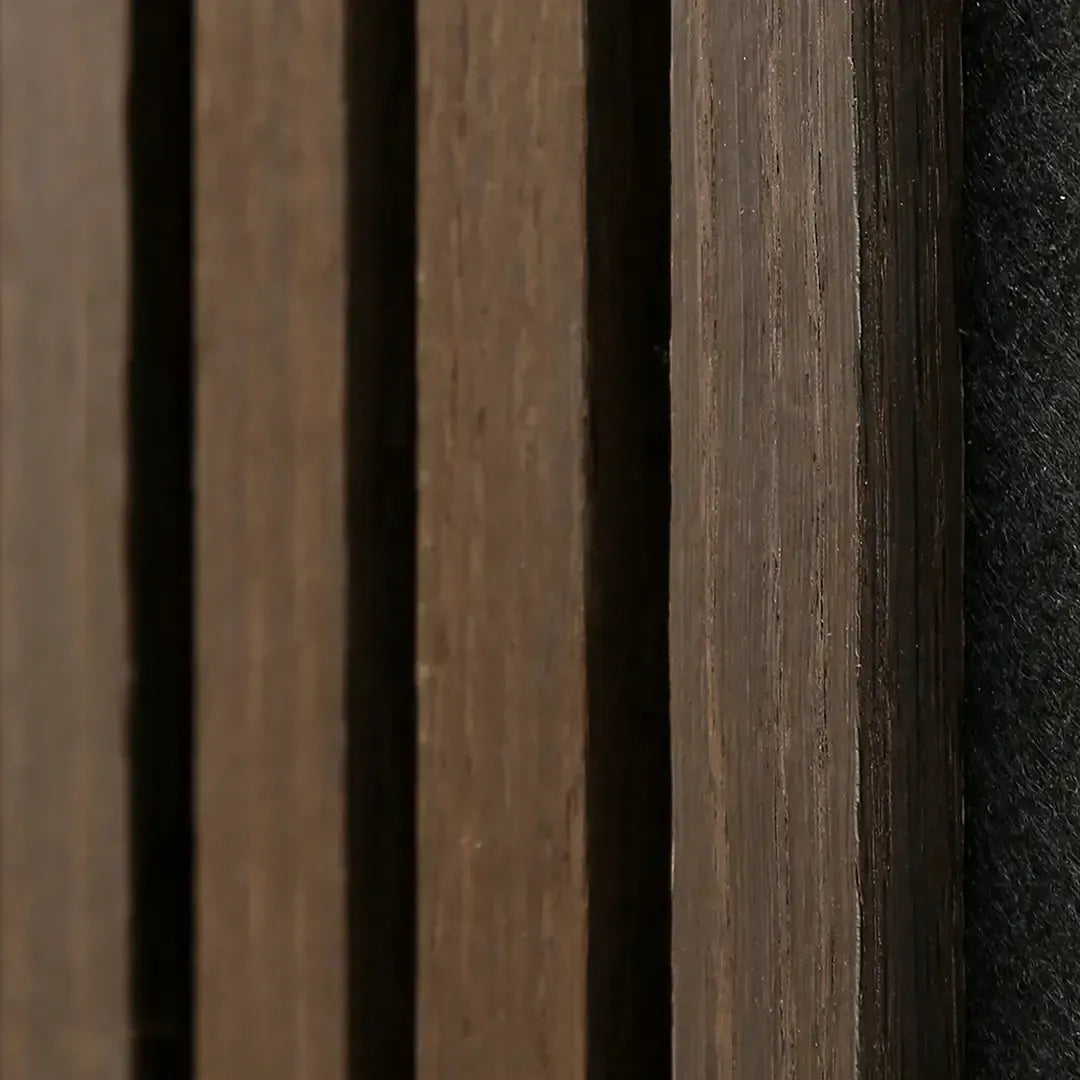
- Felt-backed slat panels add acoustic value where the visible slat alone won't cut it
- Order a sample before specifying a full wall — veneer tone shifts under studio lighting
3. Zone the studio instead of treating every wall the same
A reception wall, a pitch room, and a bullpen have different acoustic and visual jobs.
- Reception and lobby walls: prioritize visual impact, moderate acoustic gain
- Pitch and conference rooms: prioritize acoustic gain since these rooms carry client audio
- Bullpen and open desks: prioritize coverage across the loudest wall, not the prettiest one
- Phone booths and small pods: a hexagon acoustic panel grid fits tight footprints better than long slat runs
- Hallways and circulation: lower priority unless echo carries into open rooms
4. Test one wall section before covering the whole studio
Install a single run first, live with it for a week, then decide on the rest.
- Mount one accent wall in the loudest zone identified in step 1
- Re-run the clap test and decibel check against the pre-install baseline
- Compare a felt-backed panel section against a non-felt section side by side if budget allows
- Confirm the veneer tone under the studio's actual lighting, not a sample photo
- Get sign-off from whoever owns the brand book before scaling to other walls
5. Plan cable runs, outlets, and AV mounts before panels go up
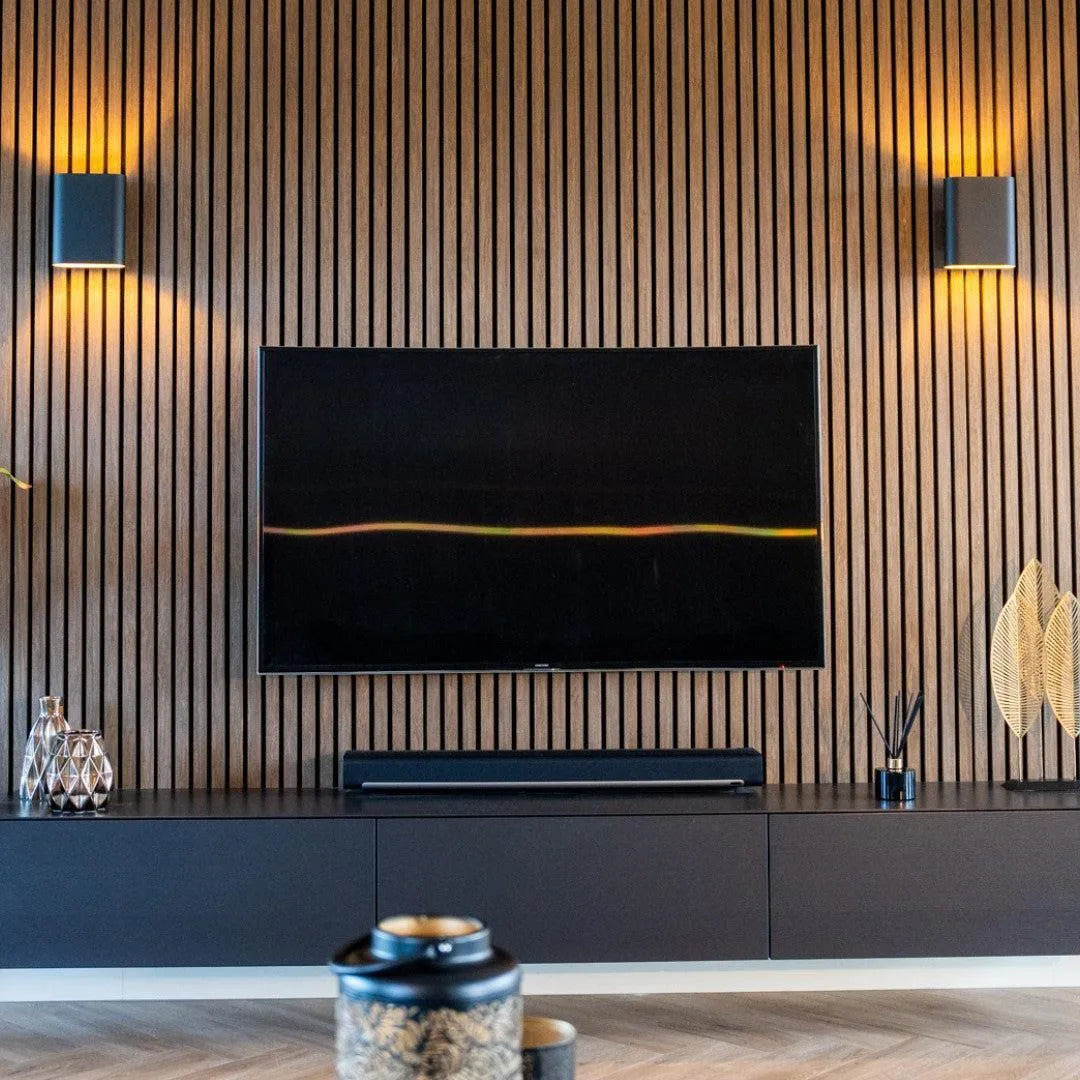
Agency walls carry monitors, speakers, and conference cameras — plan around them, not after.
- Mark outlet and switch locations before ordering panel dimensions
- Leave access points for AV mounts on pitch-room walls
- Route cable channels behind the panel line where possible, not across the surface
- Use end pieces and trim to finish edges around doors, corners, and outlets cleanly
6. Maintain wood panels under studio traffic
Studios see foot traffic, rolling chairs, and the occasional dropped laptop bag — plan cleaning into the routine.
- Dust veneer surfaces weekly with a dry or slightly damp cloth
- Avoid harsh chemical cleaners on real wood veneer finishes
- Check felt-backed sections for dust buildup, which dulls acoustic performance over time
- Touch up scuffs near high-traffic corners before they spread
Compare panel options for agency studios
| Option | Best for | Key limitation |
|---|---|---|
| Acoustic slat wall panels | Reception and pitch-room feature walls | Heavier install, needs batten mounting |
| Hexagon acoustic panels | Phone booths, small meeting pods | Felt backing only ships on specific SKUs |
| Felt-backed slat and fluted panels | Bullpen desks near the loudest zone | Added thickness — check outlet and trim clearance |
| 3D wood wall tiles | Reception desk or portfolio-wall accents | Decorative only, no acoustic backing |
| Fluted wall panels | Budget texture on columns or short runs | Minimal sound absorption versus felt-backed lines |
Akustiq USA's felt-backed hexagon line is the pick when a phone booth or small pod needs measurable acoustic gain in a footprint too small for a full slat wall — verdict: Buy for pods, skip for full open-plan coverage where a slat wall covers more square footage per panel.


Common mistakes creative agencies make
- Covering the whole floor plan before testing one wall — the loudest zone often isn't the most visible one, and a full rollout locks in the wrong choice.
- Choosing 3D wood wall tiles for the bullpen — these look sharp on a portfolio wall but carry no acoustic backing, so the noise complaint stays unsolved.
- Ignoring AV and outlet clearance — pitch rooms need cable runs and camera mounts planned before panels go up, not cut into finished veneer afterward.
- Mismatching veneer tone to the brand book — a warm natural oak wall reads wrong in a studio branded around dark, editorial materials, and vice versa.
- Skipping the sample order — veneer tone shifts noticeably under studio LED lighting versus a product photo.
FAQ
What are the best wood slat panels for a creative agency office in 2026?
Acoustic slat wall panels in walnut or black oak work best for reception and pitch-room walls in 2026 because they combine visible wood grain with sound absorption. Felt-backed hexagon panels suit smaller phone booths and pods better than full slat runs.
Do wood slat panels actually reduce echo in an open-plan studio?
Felt-backed slat and hexagon panels reduce echo measurably, with the hexagon felt line rated at 0.75 NRC. Non-felt-backed decorative panels like 3D wood tiles or plain fluted panels add texture but little acoustic value on their own.
Should an agency cover an entire wall or just a test section first?
Install one wall section in the loudest zone first, live with it for a week, and compare the noise level before scaling to the rest of the studio. This avoids covering the wrong wall at full cost.
Is real wood veneer better than faux wood panels for a client-facing office?
Real wood veneer holds up better under studio lighting and video calls because the grain reads as authentic rather than printed. Faux wood options are lighter on maintenance but read flatter on camera.
Where should acoustic panels go first in an agency studio?
Start with the pitch room or conference room since client audio quality matters most there, then move to the bullpen where the most people sit. Reception walls can prioritize visual impact over acoustic gain.
Can wood slat panels be installed around outlets and AV mounts?
Yes, but plan outlet and AV mount locations before ordering panel dimensions so cable runs sit behind the panel line. End pieces and trim finish the edges around fixtures cleanly.
How do hexagon acoustic panels compare to slat wall panels for a studio?
Hexagon acoustic panels fit tight footprints like phone booths and small pods better than long slat runs, and the felt-backed version carries a 0.75 NRC rating. Slat wall panels cover more square footage per panel, making them the better pick for full accent walls.
What's the biggest mistake agencies make with acoustic wood panels?
Covering an entire studio before testing one wall section, which locks in the wrong zone or veneer choice at full cost. A single test wall in the loudest area, checked against a before-and-after noise comparison, avoids that mistake.
One last thing
The felt backing is what does the acoustic work, not the wood veneer itself — a plain fluted or 3D wood panel looks similar in a photo but does almost nothing for echo. If the studio's real problem is noise rather than looks, spec the felt-backed hexagon or slat line for the loudest wall first, then use the decorative-only lines for the reception accent where sound isn't the issue.


 Better performance and aesthetic appeal
 In Stock