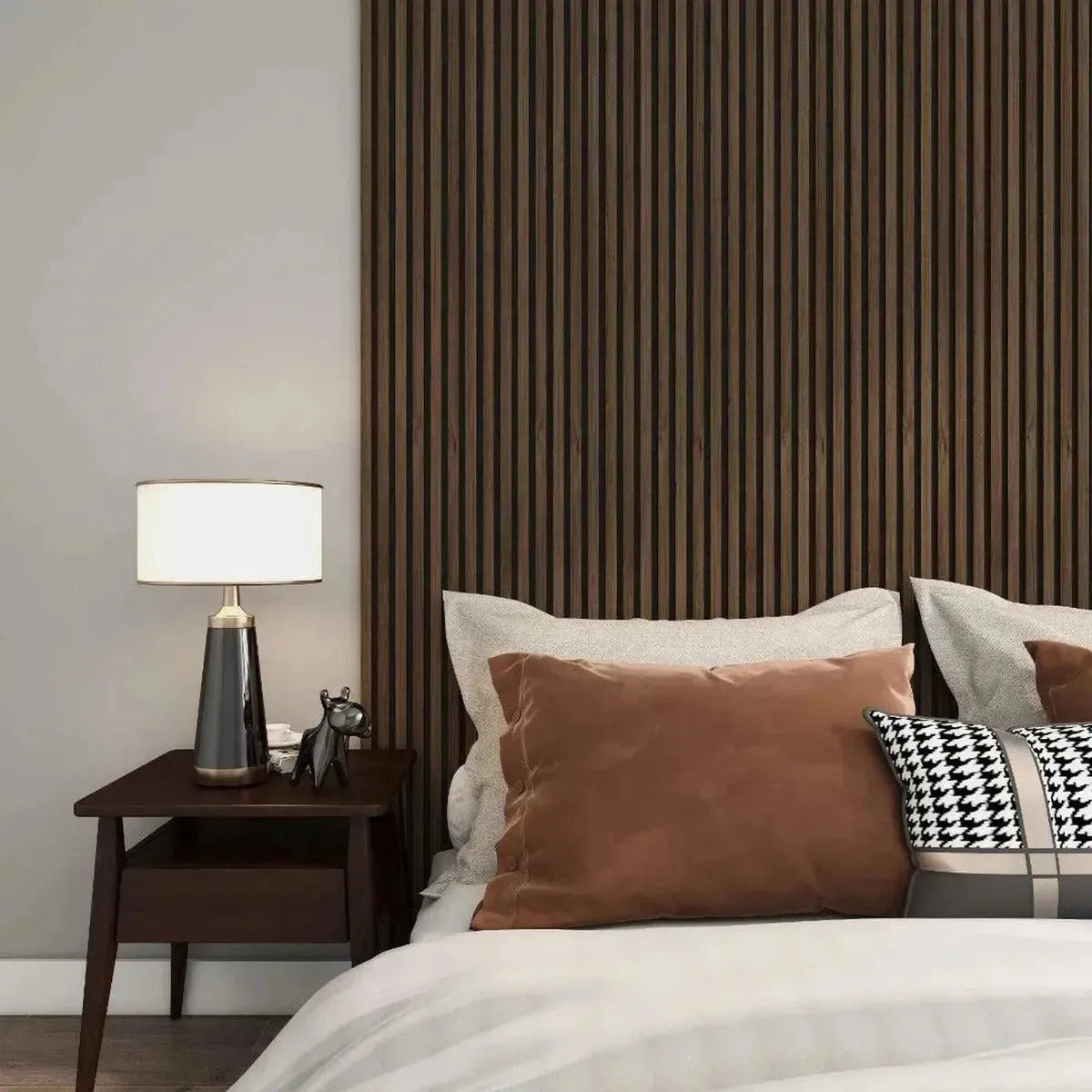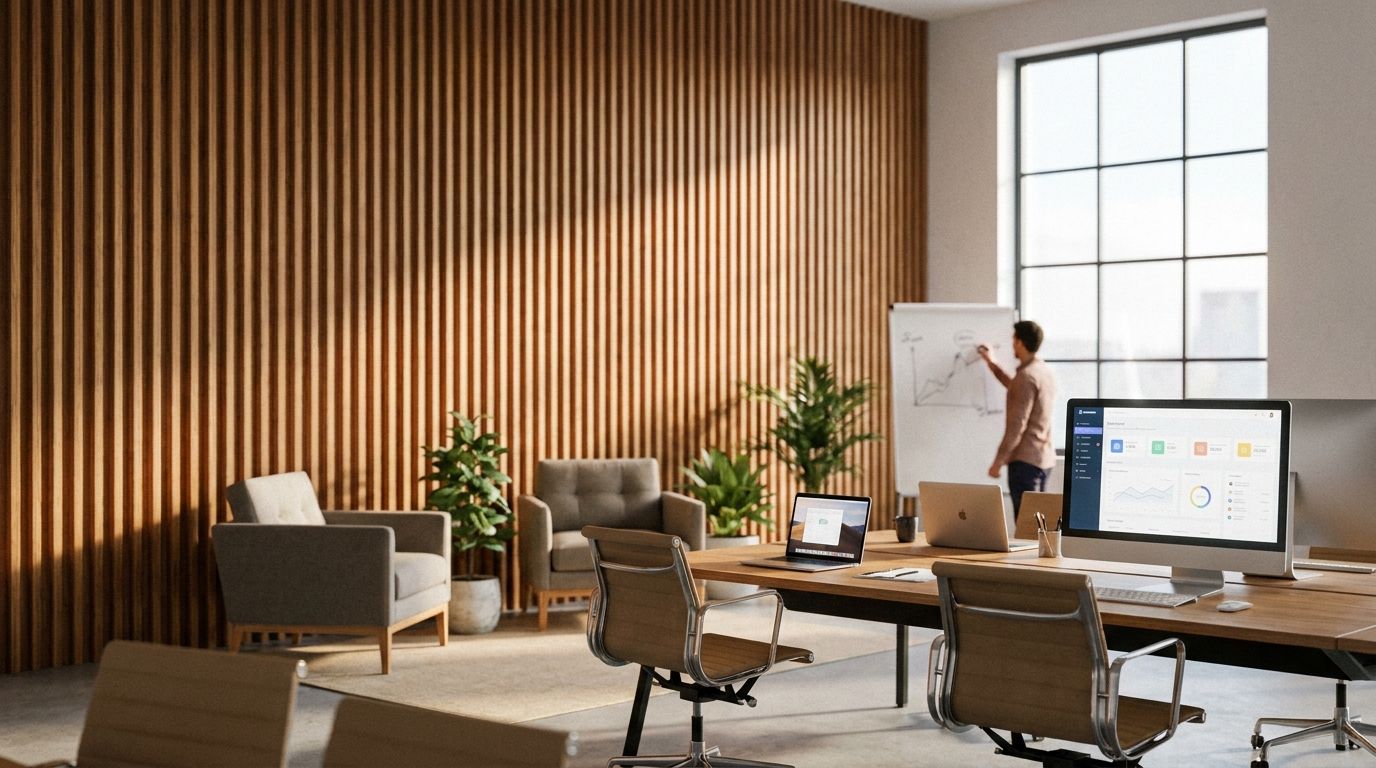
Tech startup office fluted wood panels solve two problems at once: they cut echo in an open floor plan and give the space a design signature that doesn't scream cheap folding-wall build-out.
- Fluted wood panels for a startup office cut open-plan echo cheaper than acoustic ceiling retrofits. Verdict: buy.
- Akuwood Panel's fluted wall panel in natural oak and walnut ship flexible enough to install without full drywall demo.
- Full acoustic coverage needs felt-backed slat panels alongside fluted panels once open-plan noise gets uncomfortable for calls.
- Phase panels by headcount: cover reception and meeting rooms first, expand into the open floor as funding rounds close.
- Hexagon and 3D tile panels work as budget-friendly complements when fluted panels alone exceed the fit-out budget.
Why fluted wood panels matter for tech startup offices
Startup offices run on two constraints most other businesses don't share: a lease that might end in 18 months, and a reception wall that gets photographed for LinkedIn posts, pitch decks, and recruiting pages before it gets used for anything else. Fluted wood panels give a young company a finished, funded look on a tenant-improvement budget instead of a full architectural build-out.
Open floor plans — the default layout for almost every 2026 startup office — are also acoustically brutal. Concrete floors, glass conference rooms, and drywall ceilings bounce sound instead of absorbing it. A fluted wall panel in natural oak breaks up that reflection on a feature wall; it won't fix a loud open floor by itself, but it's the fastest visual upgrade in the room.
Manufacturing and industrial suppliers in this category ship fluted panels as pre-finished, cuttable sheets, which matters for a startup: no custom millwork lead time, no contractor negotiating a change order mid-lease.
How to add fluted wood panels to a startup office
Map your noise problem before buying panels
Walk the floor during a normal workday and note where voices actually carry.
- Test it with a phone voice memo from across the room during a call
- Flag hard surfaces: concrete floors, glass partitions, bare drywall ceilings
- Separate "echo" (reverberation) from "bleed-through" (thin walls) — fluted panels solve the first, not the second
- Note where investors, candidates, and clients actually sit — that's where panel spend pays off first
Choose the wood tone that fits your brand system
Panel color reads as a design decision before anyone reads a word of copy on the wall.
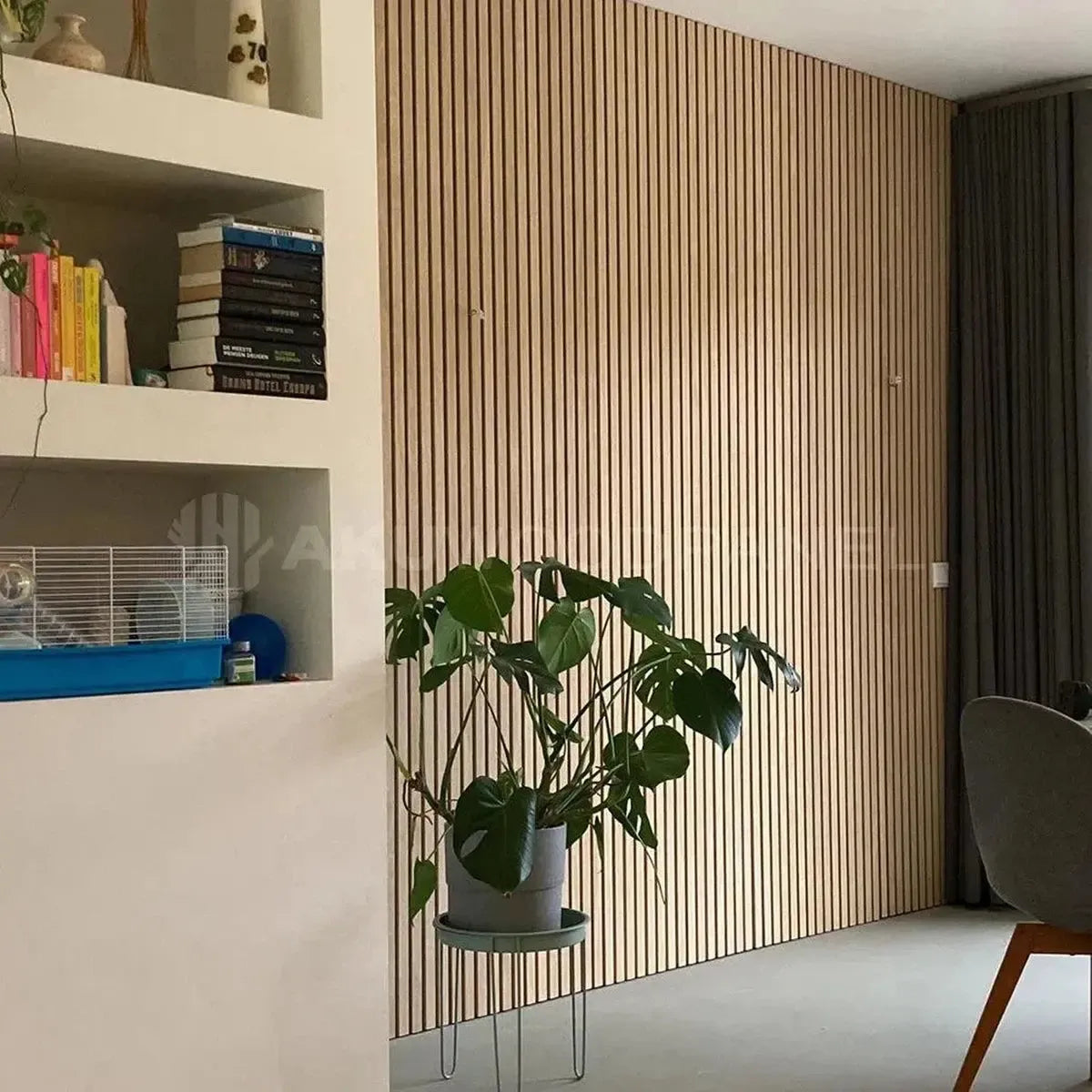
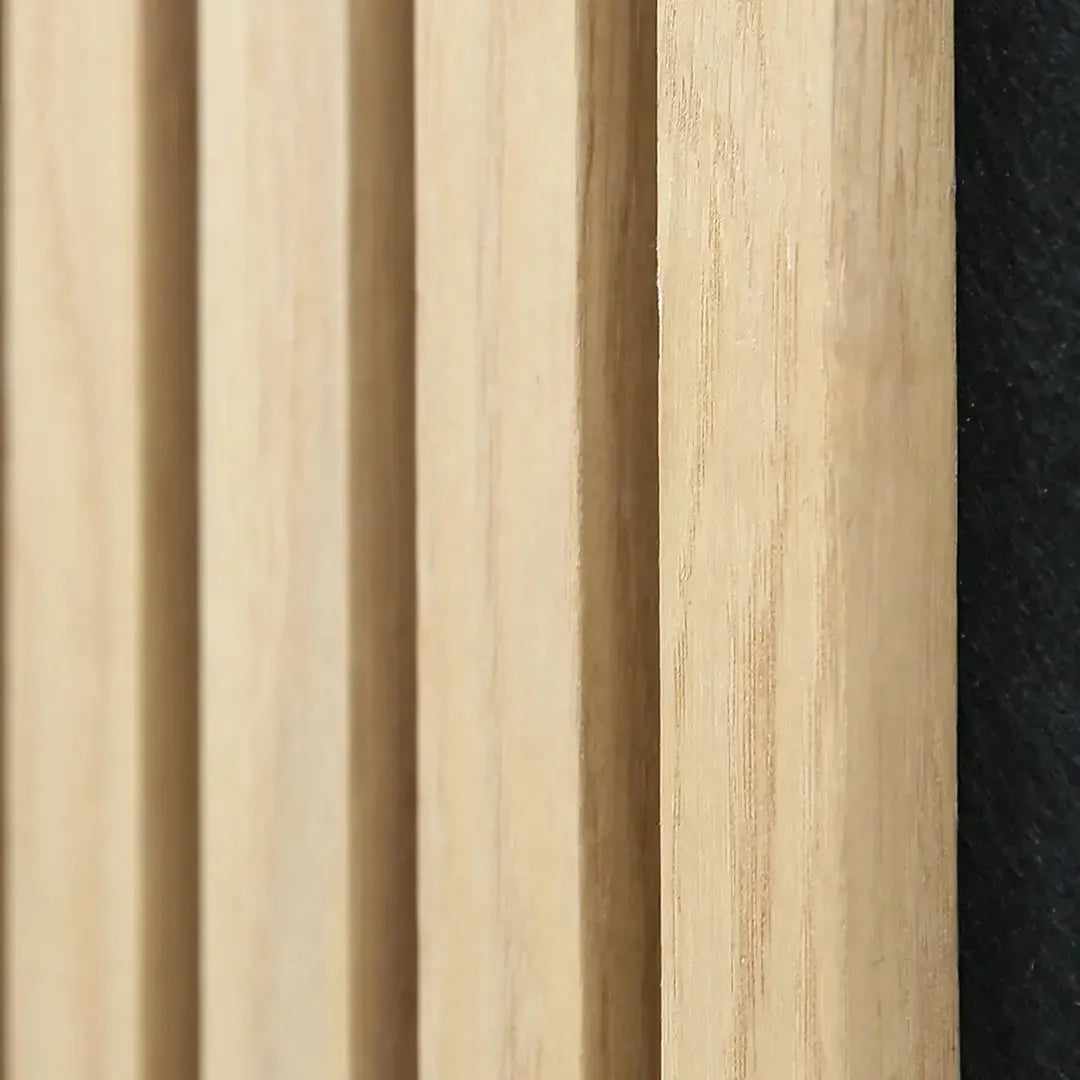
- Natural oak reads warm and approachable — common in early-stage offices
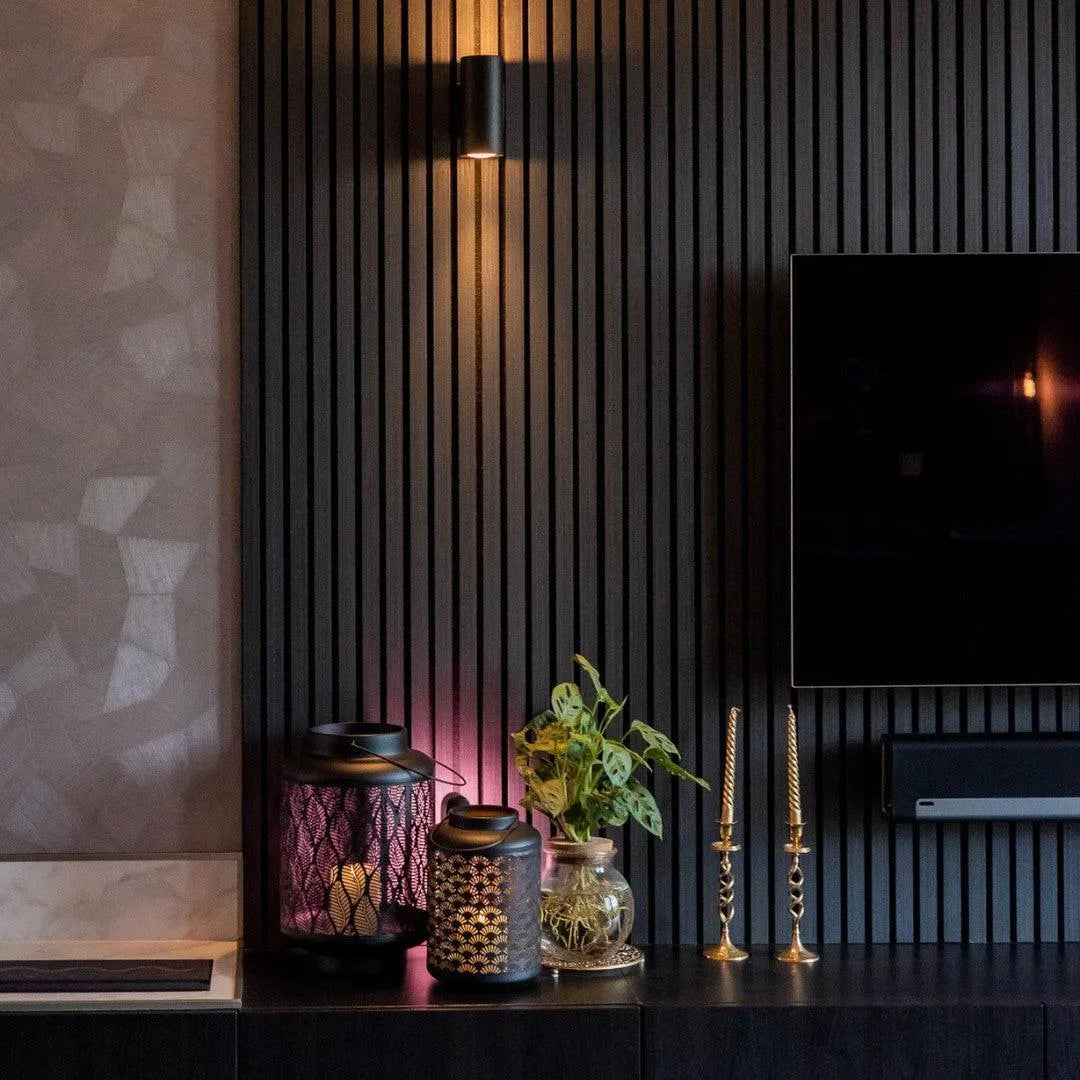
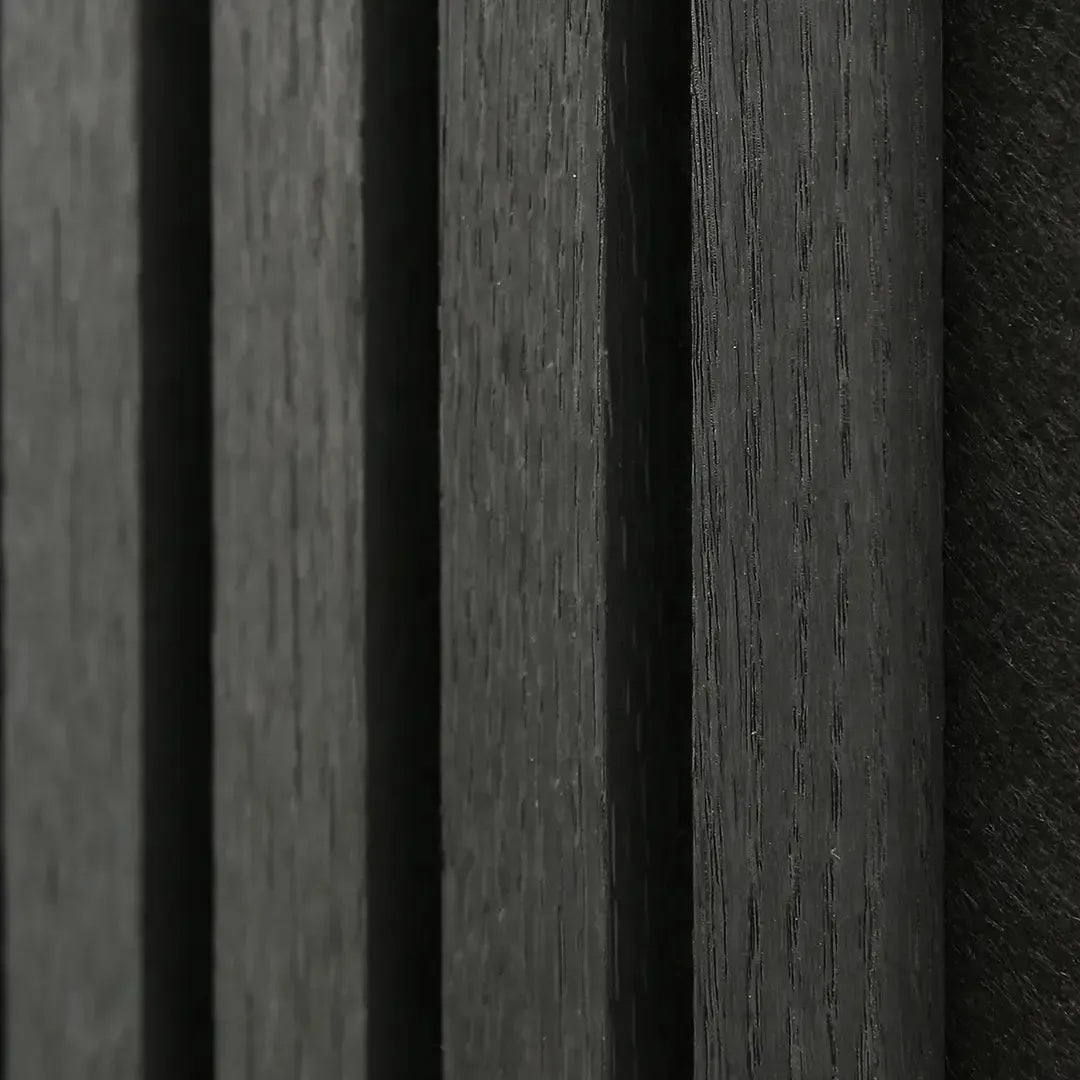
- Walnut and black oak read more established, useful ahead of a Series B raise
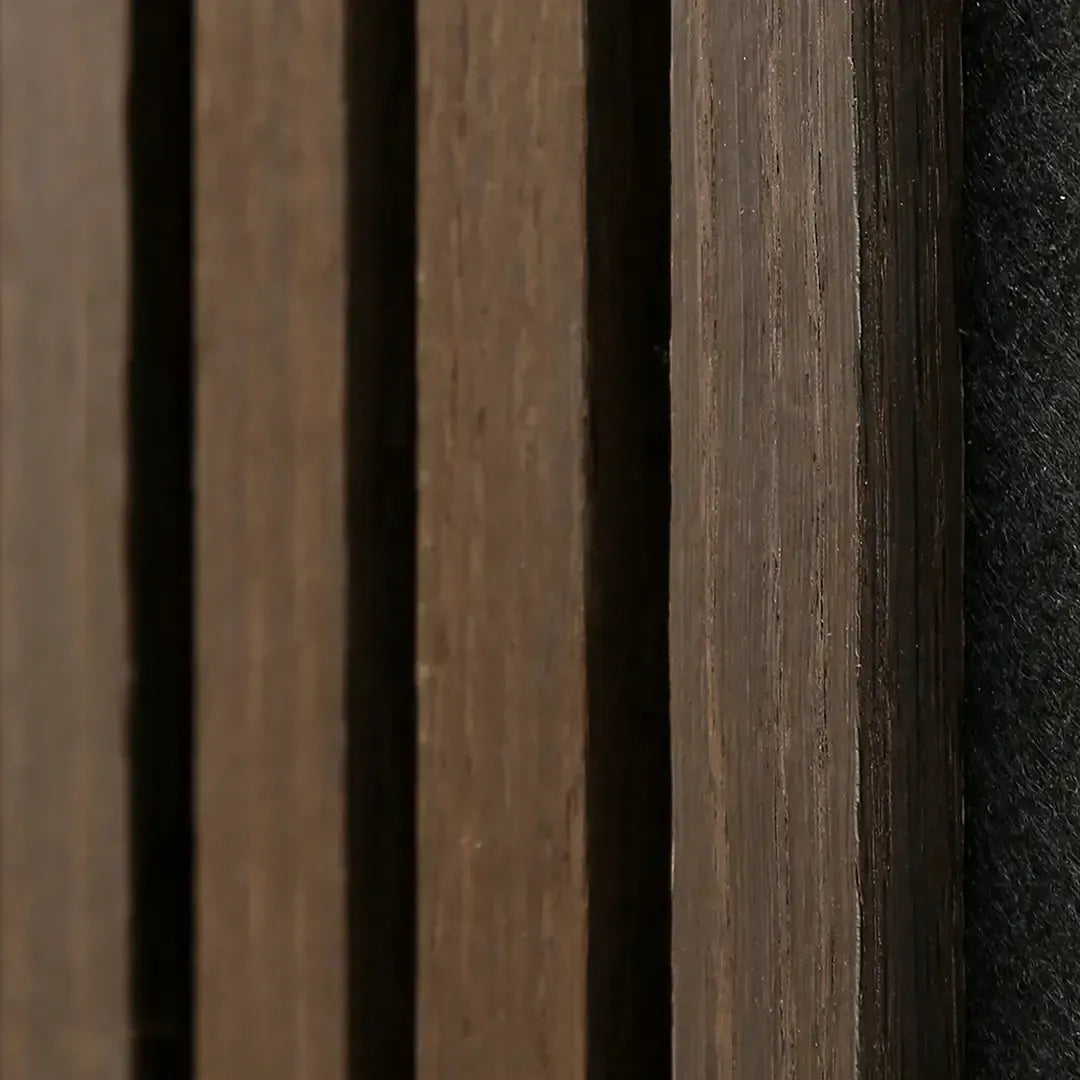
- Order a sample before committing a full wall; grain and tone shift under office lighting
- Akuwood Panel's fluted wall panel in natural oak and its walnut fluted option both ship with a flexible, cuttable backing built for exactly this kind of tenant-improvement job
Pick groove depth and panel width for the room
Groove profile changes how the wall reads from across the room, not just up close.
- Deep grooves cast more shadow line — good for a single feature wall behind reception
- Shallow, tighter flutes read cleaner on long hallway runs
- The walnut fluted panel is built to flex around curved reception desks or columns without extra cutting
- Match panel height to ceiling height — full-height panels read more finished than a half-wall wainscot look
Plan placement by zone, not by square footage
Coverage decisions should follow foot traffic and camera angles, not raw wall area.
- Reception wall: first thing investors and candidates see — highest return on panel spend
- Main conference room: panels behind the video-call camera position improve how the room looks on every remote call
- Phone booths and huddle rooms: small surface area, largest per-square-foot acoustic payoff
- Open floor: skip full wall-to-wall coverage here — budget for accent strips or columns instead
Budget the install in phases as headcount grows
A startup's floor plan changes faster than its lease term.
- Price reception and one conference room first — the highest-visibility spend
- Hold a second phase for phone booths once the team outgrows the current huddle space
- Treat any exterior signage cladding as a separate line item from interior fluted panel budget
- Ask about volume pricing before ordering panels for more than two rooms at once
Install without damaging a leased space
Most startup offices are leased, not owned, which changes the install rules.
- Confirm with the landlord whether panels can be screw-fixed to drywall or need a floating frame
- Peel-and-stick style panels work for small, non-structural accents but aren't a substitute for full acoustic slat coverage
- Keep offcuts and end pieces — panels installed on a removable frame can move with the company to the next office
- Photograph the wall before install for the security deposit file
Compare fluted vs slat vs hexagon for your layout
No single panel format solves every wall in a startup office.
- Fluted panels: linear grooves, best for feature walls and reception, moderate acoustic benefit and mostly visual impact
- Acoustic slat wall panels: felt-backed slats built for stronger noise absorption, better for full-wall open-office coverage
- Hexagon acoustic panels: modular tiles, best for irregular walls or columns where a straight panel run doesn't fit
- Mixing formats — fluted at reception, slat panels across the open floor — usually beats picking one format for the whole office
Panel options for a startup office wall


Fluted panels vs other wall treatments for a startup office
| Option | Best for | Starting price | Key limitation |
|---|---|---|---|
| Fluted wall panel (natural oak / walnut) | Reception and feature walls | Price varies by finish — check current listing | Adds visual texture, not full sound absorption |
| Acoustic slat wall panel (walnut) | Full open-floor noise control | $182.95 | Flat slat look reads more residential than fluted grooves |
| Hexagon acoustic panel (natural oak with gray felt) | Irregular walls, columns, accent zones | $165.95 | Modular tiles take longer to install than a full sheet |
| 3D wood wall panel tile (Deep Dusk Walnut) | Small accent areas, reception desks | $41.95 | Covers less area per tile than a full panel |
Fluted wood panels win the reception wall; acoustic slat panels win the open floor — a 2026 startup fit-out usually needs both, not one or the other.
Common mistakes startups make with fluted wood panels
- Paneling the whole open floor before treating reception, spending the full fit-out budget on square footage nobody sees on a video call
- Skipping the landlord conversation and screw-fixing into a wall the lease says can't be altered
- Picking a dark walnut fluted wall to match a mood board, then finding it swallows light in a windowless interior office
- Treating fluted panels as full acoustic treatment for corporate innovation lab-style open labs when the real noise source is bare concrete floor and glass, not the wall
- Ordering one finish for the current office and repaneling within a year once the team doubles and moves floors
FAQ
What are fluted wood panels best for in a startup office?
Fluted wood panels work best on a reception wall or main conference room feature wall in a startup office. They add texture and mild sound diffusion but aren't a substitute for full acoustic slat coverage across an open floor.
Do fluted panels actually reduce office noise?
Fluted panels break up sound reflection where they're installed, which helps on a single feature wall, but they don't absorb noise the way felt-backed acoustic slat panels do. Pair fluted panels with acoustic slat panels for full open-floor noise control.
Is fluted wood panels for startup office cheaper than a full acoustic ceiling retrofit?
Paneling one or two feature walls is a smaller line item than retrofitting an entire ceiling with acoustic tile. Most startups phase the spend: reception and one conference room first, then expand coverage as the team grows.
Can fluted panels be installed in a leased office without damage?
Fluted panels can be installed on a floating frame or with removable fixings so they don't damage the underlying wall. Confirm the install method with the landlord before drilling into drywall or concrete.
What's the difference between fluted and acoustic slat wall panels?
Fluted panels have continuous rounded grooves and read as a design feature first. Acoustic slat wall panels use felt backing between slats and are built primarily for sound absorption across larger wall areas.
How much wall coverage does a startup office actually need?
Most startup offices only need panel coverage on reception, the main conference room, and phone booths — not the full open floor. Coverage should follow where investors, candidates, and calls happen, not total square footage.
What wood tone works best for a small startup office?
Natural oak keeps a small or windowless office feeling brighter, while walnut and black oak read more established but absorb more light. Order a sample panel before committing a full wall.
Can fluted panels move with the company to a new office?
Panels installed on a removable frame rather than glued directly to drywall can be taken down and reused in a new lease. Keep offcuts and end pieces from the original install for a clean reinstall.
One last thing
The reception wall is the one surface every candidate and investor photographs before they've said a word about the product — treat it as the first stop for panel budget, not the last room touched after the open floor is done.


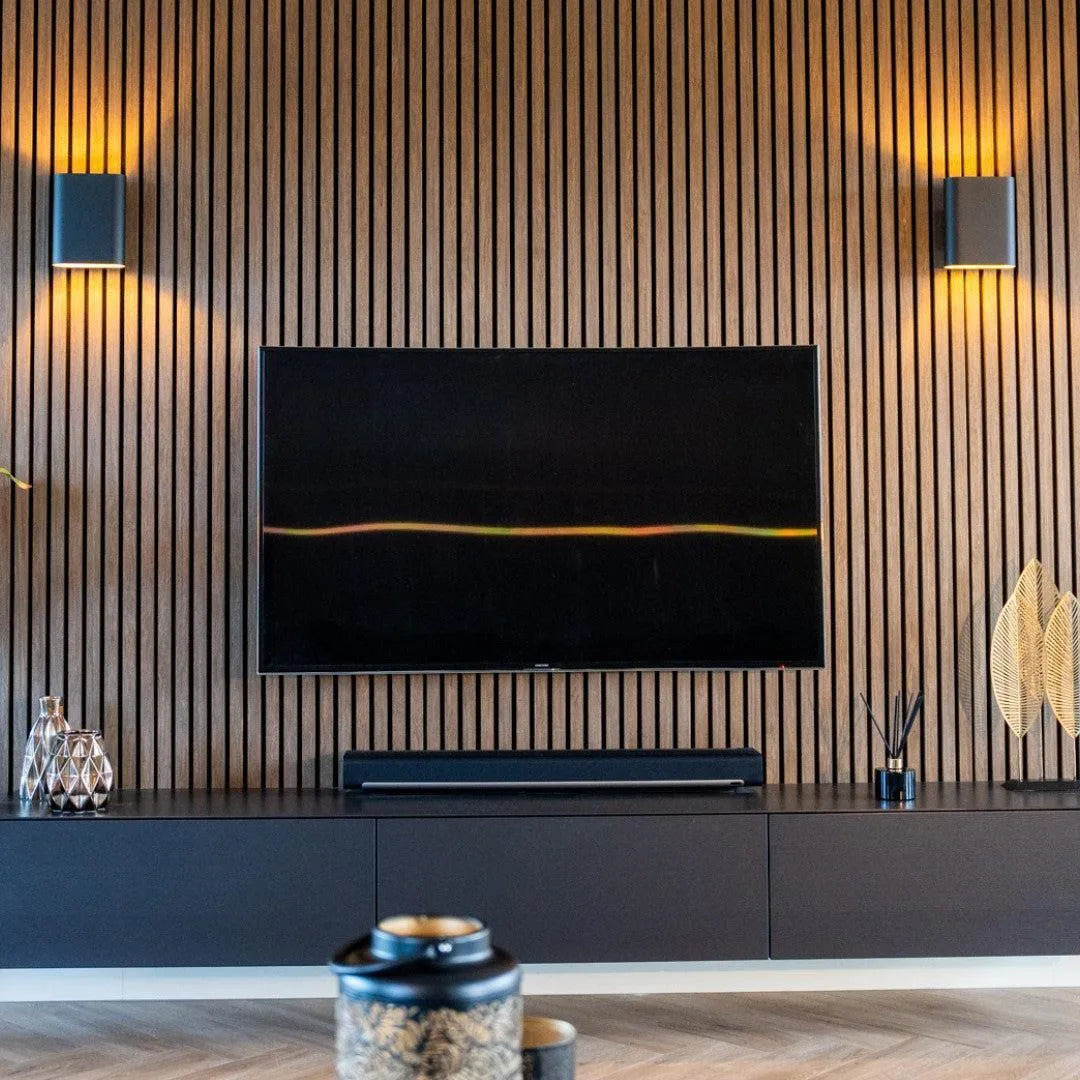

 Better performance and aesthetic appeal
 In Stock