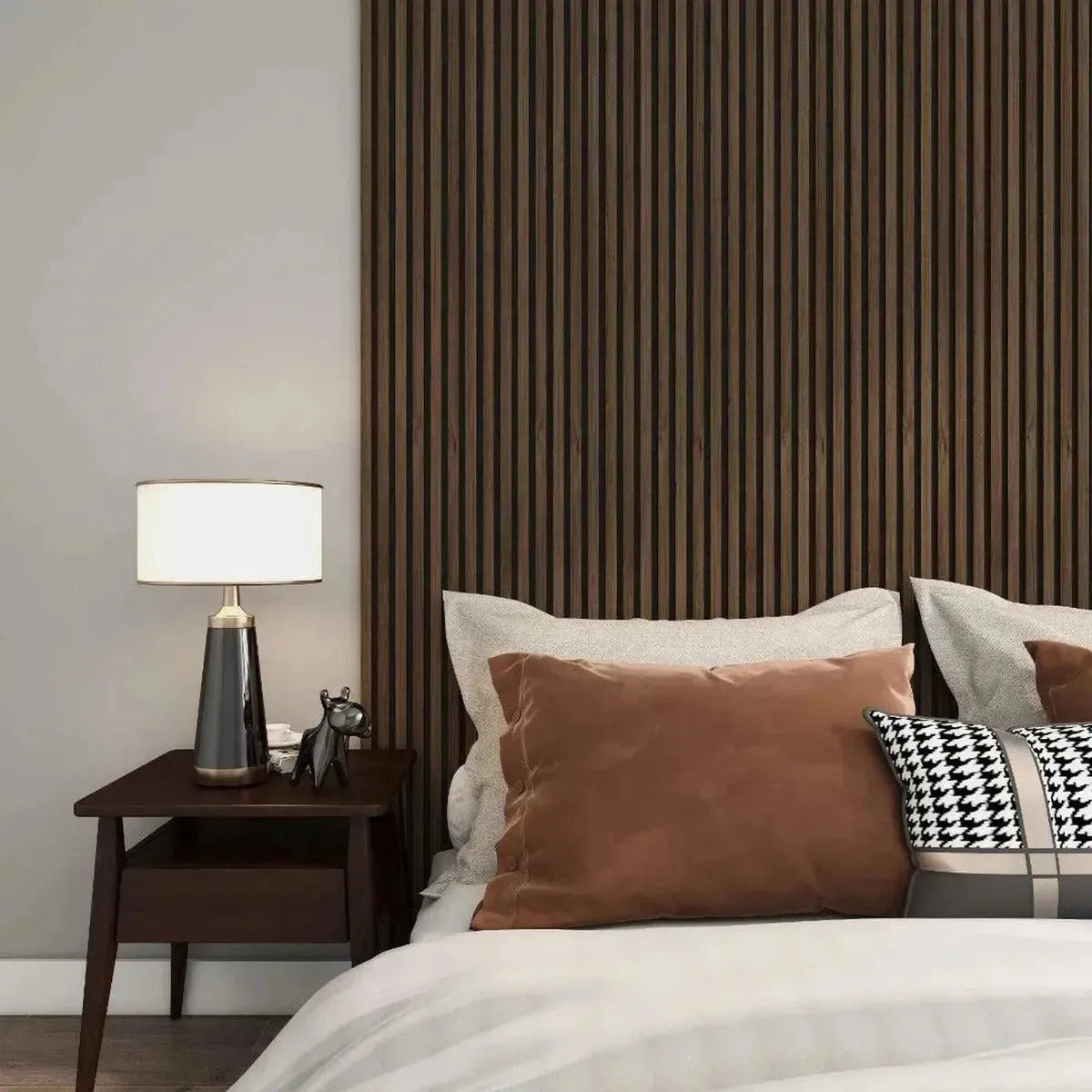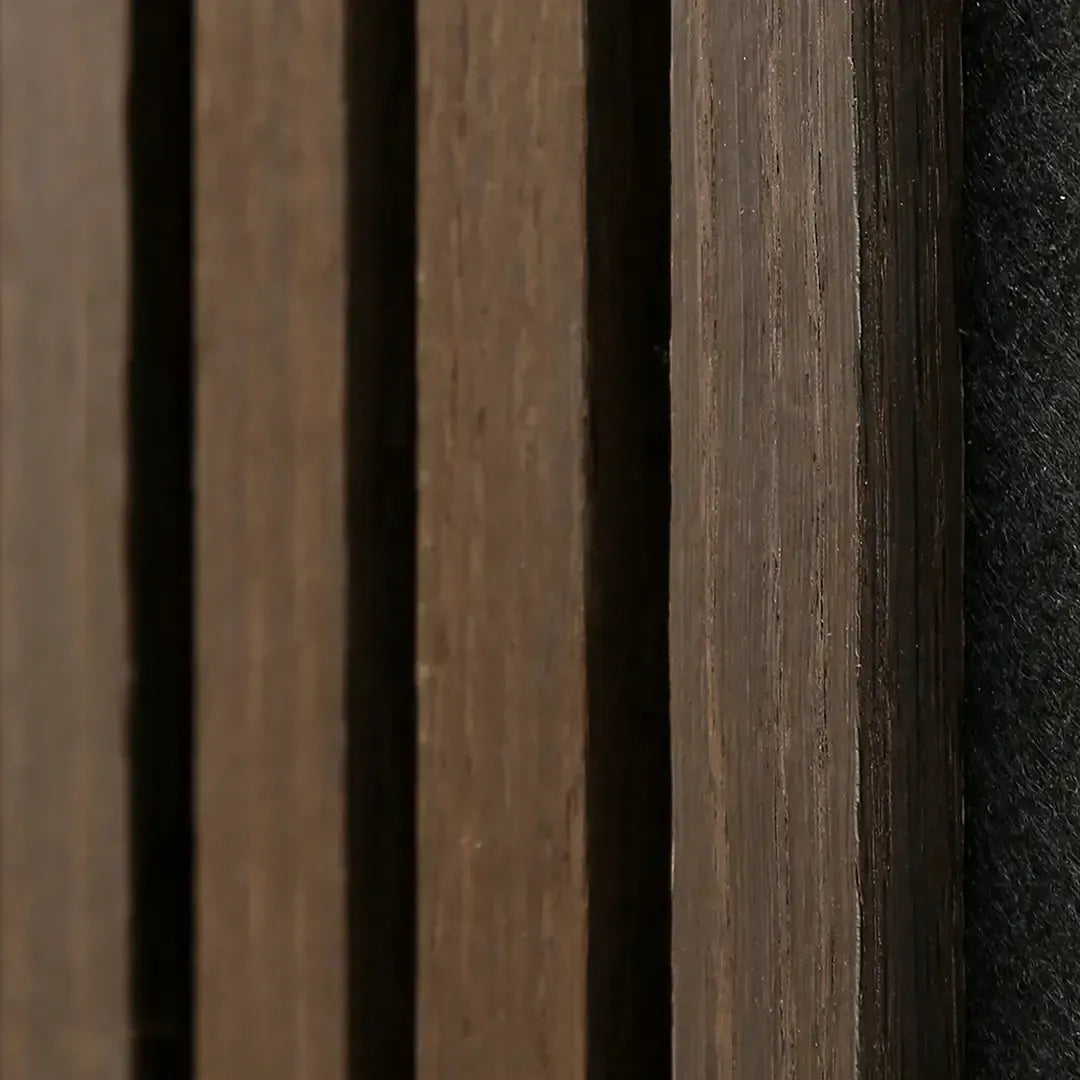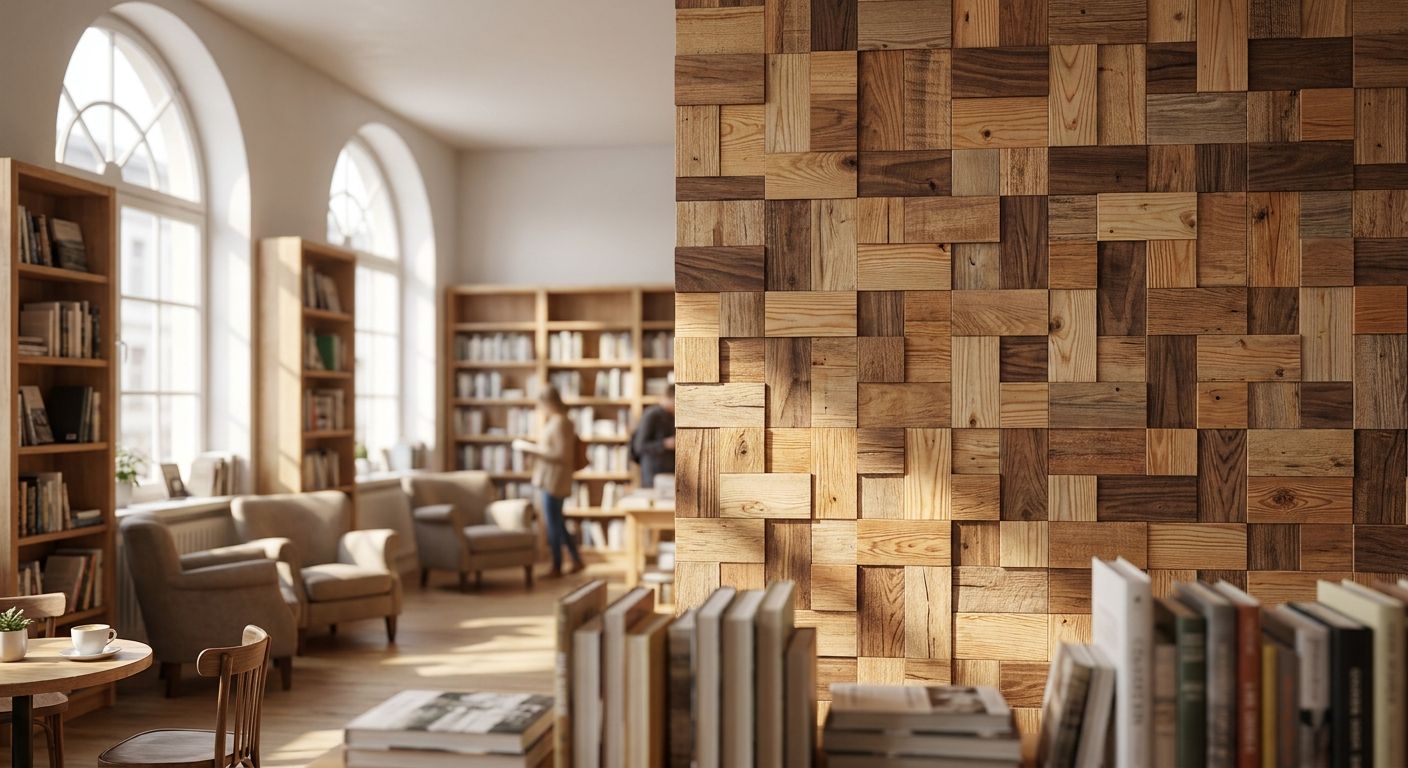
Bookstore wood mosaic panels are modular hexagon or wood-tile panels installed behind registers, reading nooks, or event backdrops to add texture without adding noise. A bookstore's feature wall has to do double duty: it needs to photograph well for author events and social posts, and it needs to not amplify the hush-and-murmur acoustics that make browsing pleasant in the first place.
- Felt-backed hexagon panels hit an NRC of 0.75, the strongest sound absorption in Aku Wood Panel's mosaic lineup for hard-floor bookstores.
- 3D wood wall tiles start at $41.95 per 12x12 inch tile and suit small reading-nook backdrops, not full-wall noise control.
- Slat wall panels run $169.95 to $182.95 per box and work better behind long checkout counters than as a mosaic pattern.
- Order samples before ordering a full wall run — wood tone mismatch against existing shelving is the most common bookstore mistake in 2026.
Why wood mosaic panels matter for bookstores
A bookstore is one of the few retail formats where the customer is expected to linger, read jacket copy, and hear a staff recommendation across the aisle. Hard floors, tall metal shelving, and glass storefronts turn that browsing quiet into an echo chamber the moment foot traffic picks up. Wood mosaic panels — hexagon tiles, slat panels, or 3D wood tile grids — break up that reflective surface area on a feature wall while giving the store a warmer backdrop than bare drywall or exposed brick.
The segment's real constraint is scale: most bookstore feature walls are small, 8 to 20 feet, tucked behind a register or framing a reading nook rather than covering an entire sales floor. That changes which panel shape makes sense. A retail feature wall guide built for a 40-foot boutique run doesn't translate directly to a 10-foot bookstore alcove — panel count, seam planning, and budget all shrink with the wall.
Measure your wall and map the noise sources first
Before picking a panel, walk the space and note where sound actually bounces — that's the wall that needs treatment, not necessarily the one behind the register.
- Measure width and height in inches, not feet, since panel coverage is sold per tile or per box
- Note any outlets, light switches, or shelving end-caps the panel run has to work around
- Flag hard-surface zones (tile floor, glass storefront, high ceiling) where echo is worst
- Photograph the existing shelving wood tone under store lighting, not daylight, for an accurate match
- Decide if the wall is purely decorative or needs to absorb sound from a children's or event section
Choose a panel shape that reads at bookstore scale
Hexagon tiles and 3D wood wall tiles create a mosaic look at almost any wall size, while slat panels read better on longer, uninterrupted runs.
- Hexagon panels for a geometric, honeycomb pattern that works on walls as narrow as 6 feet
- 3D wood wall tiles for a smaller accent zone, like a reading nook or single display column
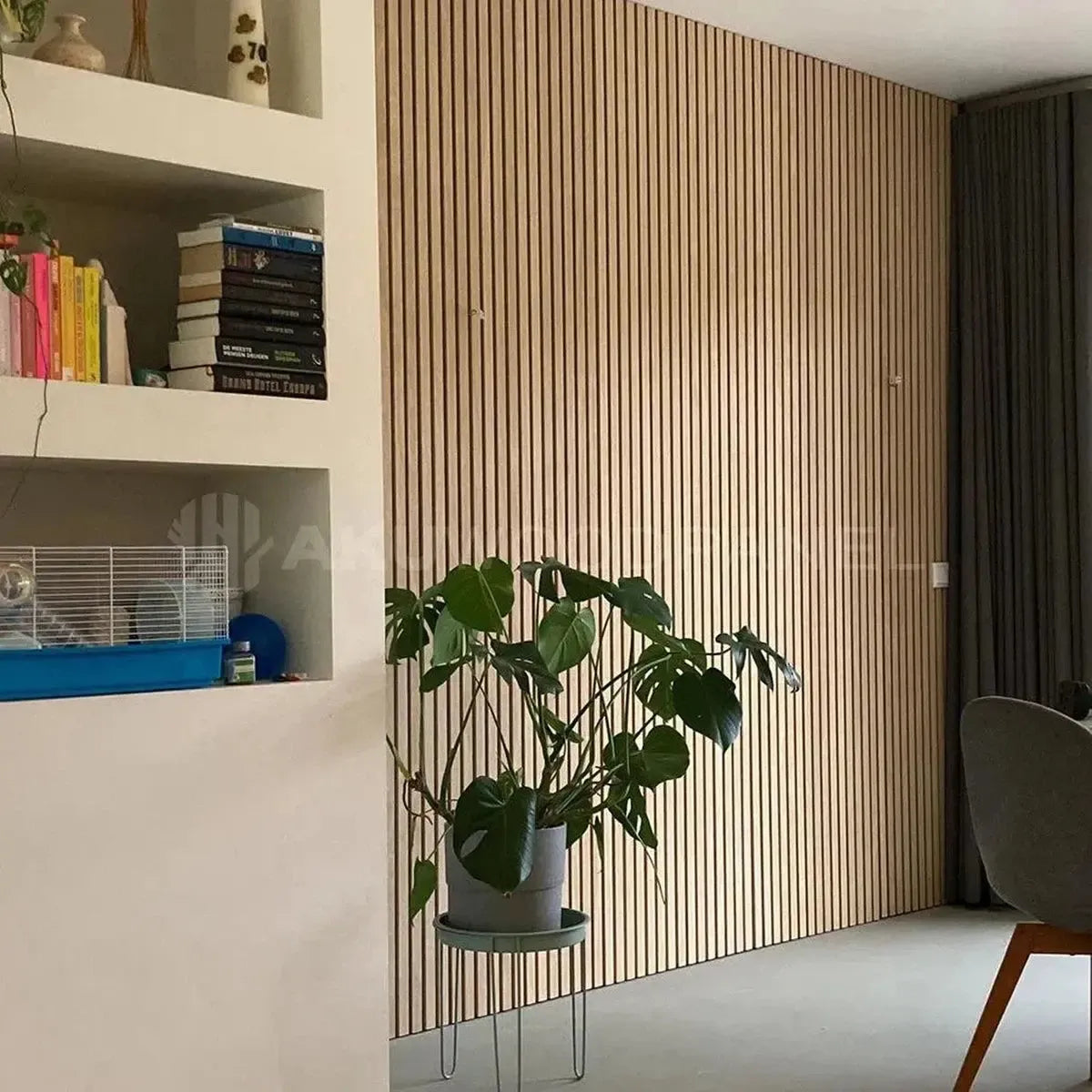
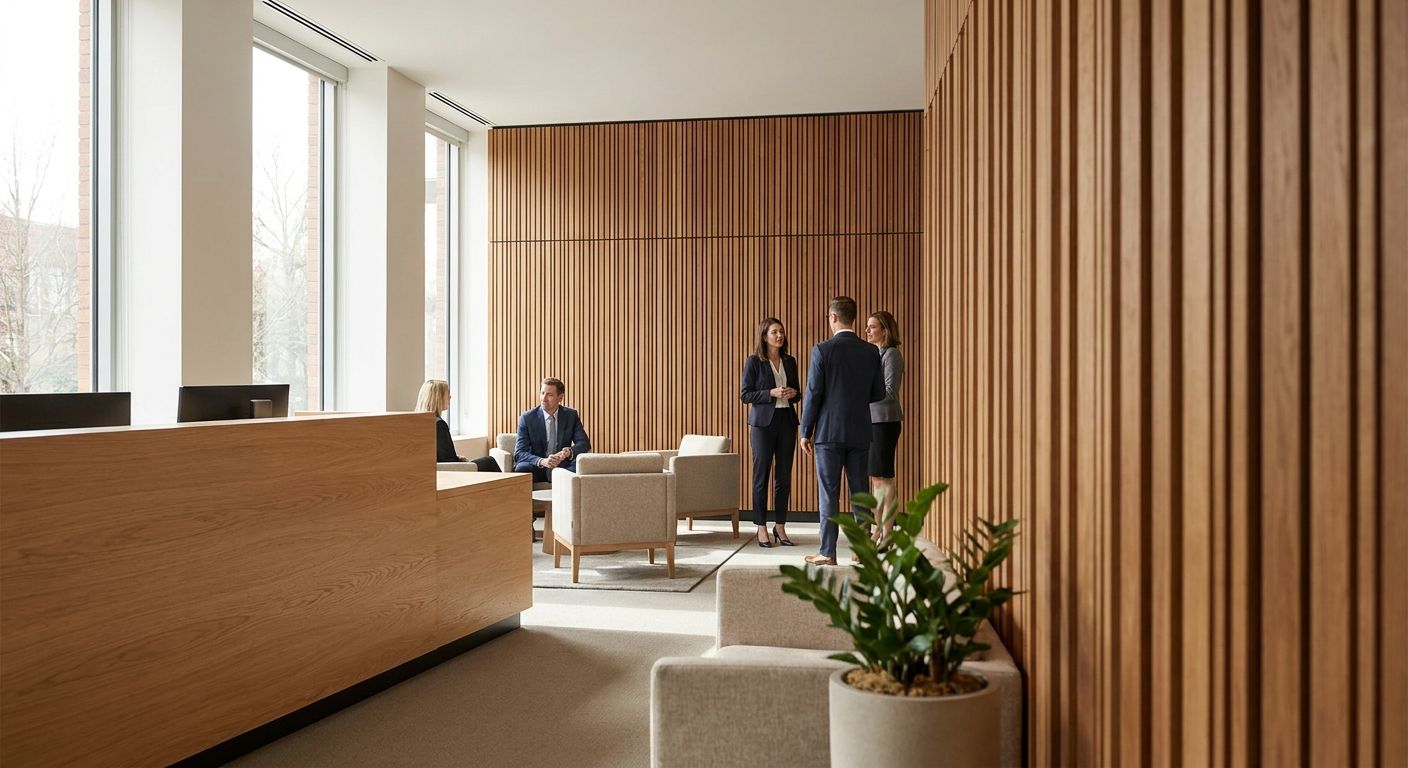
- Slat wall panels for a long, linear run behind a checkout counter or return desk
- Mixed layouts (hexagon border with a slat center) for stores that want a focal point without covering the full wall
The walnut hexagon acoustic panel is a common pick for bookstores because the felt backing does acoustic work the decorative-only 3D tiles can't. It's not the cheapest option per panel, but it's the one doing double duty as both mosaic texture and sound treatment.
Pick a wood tone that matches your shelving, not your logo
Bookstores lean on wood shelving more than almost any other retail format, so the feature wall tone has to sit next to it without clashing.
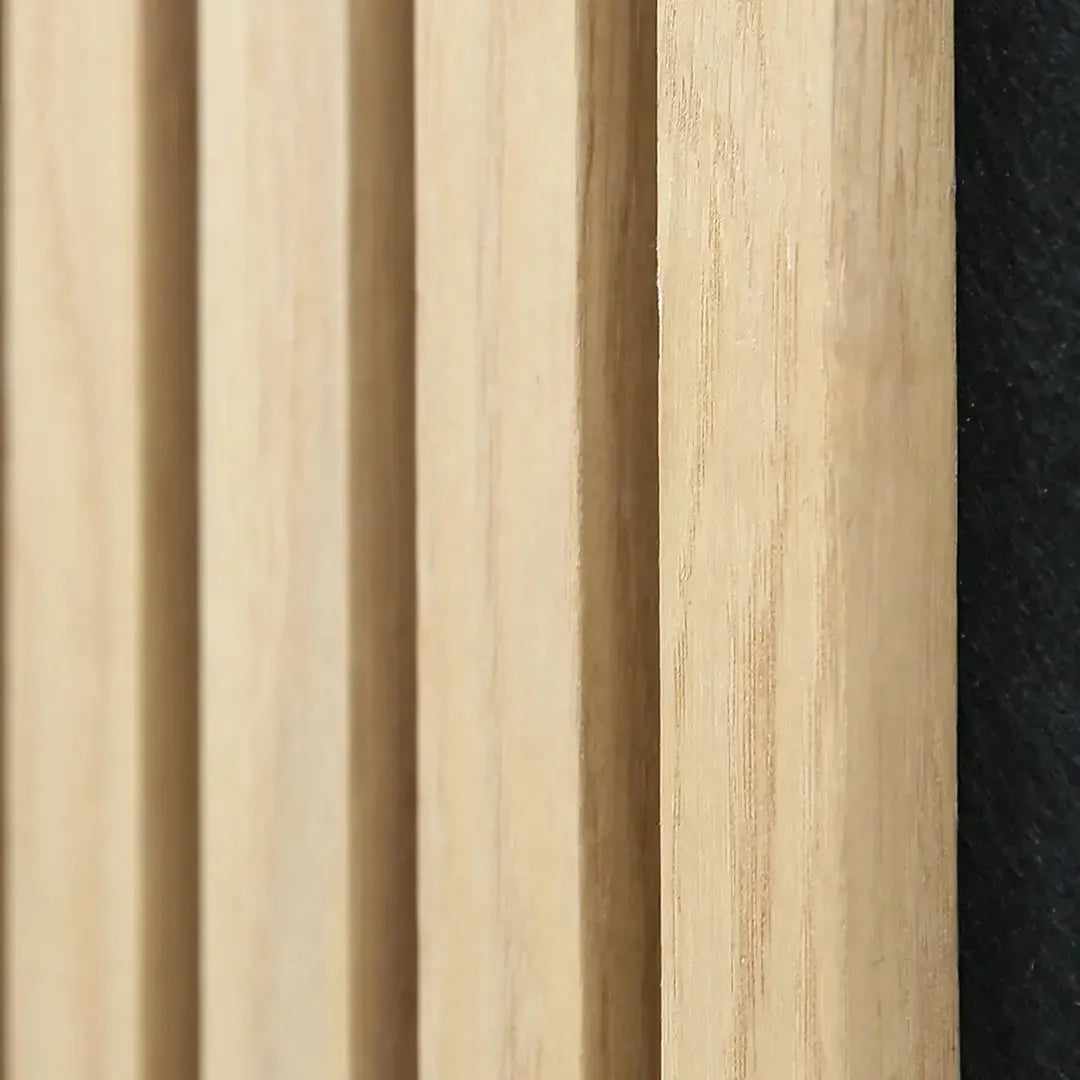
- Natural oak and walnut pair with standard birch or oak shelving without a visible seam in tone
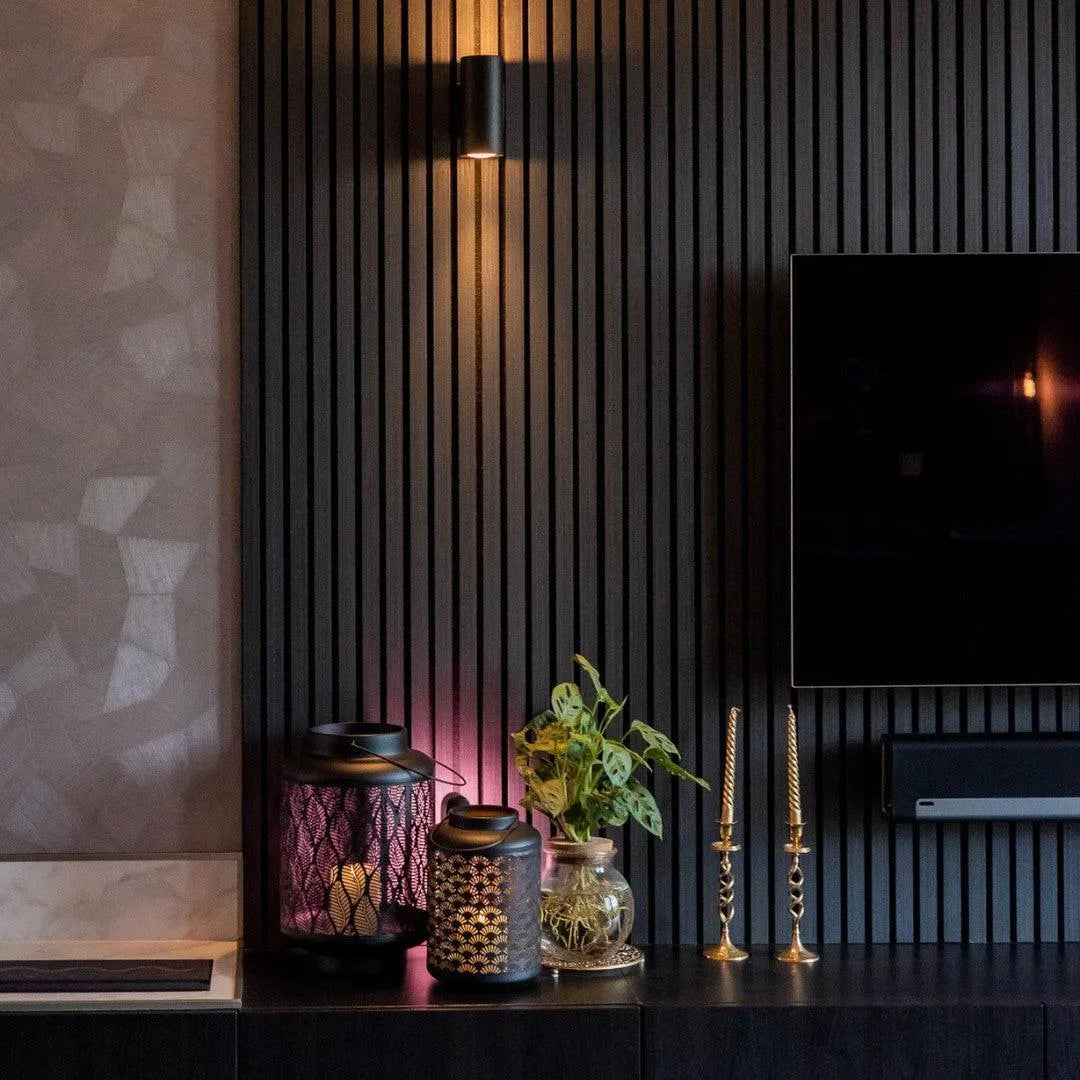
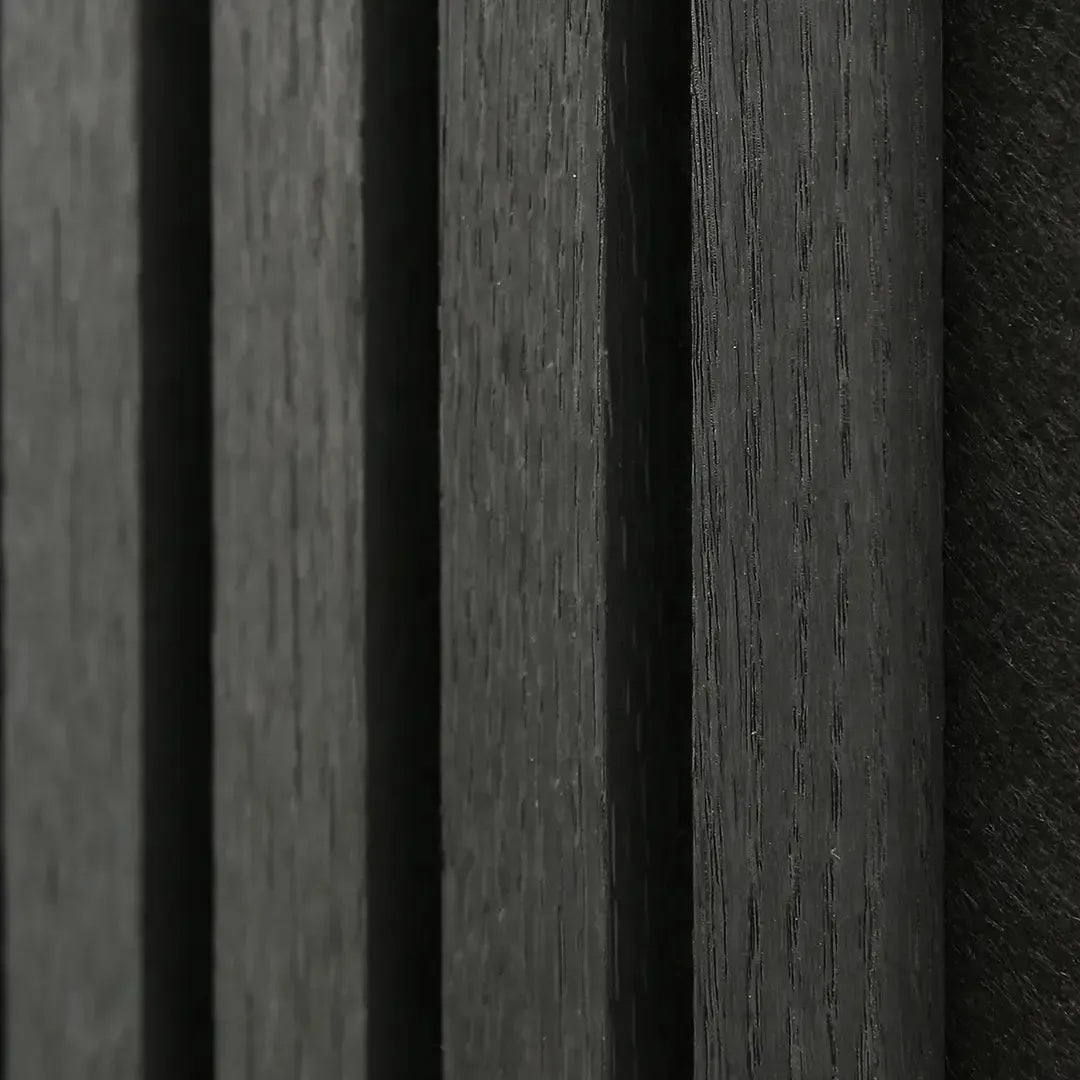
- Black oak or smoked oak work for stores leaning into a dark academia or moody reading-room look
- Gray felt-backed panels soften the contrast when shelving is painted rather than natural wood
- Avoid picking a tone from a screen — order a physical sample and hold it against the actual shelf under store lighting
Add acoustic backing where shelving amplifies noise
A purely decorative panel looks the same as an acoustic one from six feet away, but only one of them does anything for the murmur-and-echo problem bookstores fight daily.
- Felt-backed hexagon or slat panels absorb sound instead of reflecting it back across the aisle
- Placement matters more than coverage — treat the wall opposite the entrance or the one behind a reading area first
- Combine acoustic panels with soft flooring (rugs, carpet tile) in reading nooks for compounding effect
- Reserve non-acoustic 3D wood tiles for small accent zones where sound isn't the concern
Plan the install around shelving and bookshelf surrounds
Most bookstore feature walls butt up against built-in shelving, which means panel layout has to account for where the shelf ends and the open wall starts.
- Measure from the shelf edge, not the wall corner, so panel seams don't fall mid-shelf
- Use end pieces or corner trim to finish exposed panel edges cleanly where shelving stops short
- Plan outlet cutouts before ordering, not during install — retrofitting a cut panel wastes material
- Check the bookshelf surround panels guide if the feature wall wraps around or frames a built-in shelving unit rather than standing alone
Budget per square foot and compare product lines
Bookstore feature walls are usually small enough that per-box or per-tile pricing matters more than bulk-rate math.
- Tile-format slat panels sold in 4-packs suit tight budgets and small accent sections
- Full-size slat panels cost more per box but cover more wall per install hour
- Hexagon panels sit in the middle of the price range and add acoustic value the tiles don't
- 3D wood tiles are the cheapest per unit but need more units to cover the same square footage
Finish edges cleanly around windows and columns
A mosaic wall that stops abruptly at a window frame or support column looks unfinished no matter how good the panels are.
- Use finishing trim to cap exposed panel edges at window and door frames
- Corner trim wraps panels cleanly around columns or the end of a shelving run
- Match trim finish to the panel tone, not the wall paint, for a continuous look
- Leave a small expansion gap at hard stops — wood panels shift slightly with humidity
Maintain the finish in a high-traffic retail environment
Bookstore feature walls take more incidental contact than a living room accent wall — book carts, browsing customers, and event crowds all brush against it.
- Dust with a dry or slightly damp cloth; avoid soaking the veneer
- Keep carts and displays a few inches clear of the panel edge to prevent scuffing
- Spot-check felt-backed panels for compression near high-touch areas and rotate stock displays if needed
- Reorder matching panels early if the store plans a phased rollout across multiple locations


Comparison: panel options for bookstore feature walls
| Option | Best for | Starting price | Key limitation |
|---|---|---|---|
| Slat wall panels (box) | Long checkout-counter runs | $169.95 | Linear pattern, not a mosaic look |
| Hexagon acoustic panels | Mosaic pattern plus sound damping | $165.95 | Felt edge shows if cut mid-panel |
| 3D wood wall tile | Small reading-nook accent | $41.95 per tile | No acoustic backing |
| Tile-format slat panel (4-pack) | Tight budgets, small sections | $126.95 | More seams to plan on larger walls |
Verdict: for a bookstore feature wall under 15 feet with a hard floor, felt-backed hexagon panels are the buy — they're the only option in this table doing acoustic work as well as decorative work. Reserve 3D wood tiles for a small nook where sound isn't the concern.
Common mistakes bookstores make with mosaic panels
- Treating the panel as decoration only in a store built around quiet browsing, then wondering why the children's section still echoes
- Under-measuring around shelving end-caps and ordering a full run before checking where the built-in shelf actually stops
- Skipping the physical sample and picking a tone from a photo, which almost never matches shelving under store lighting
- Ignoring cart and foot traffic wear near entrances and registers, where panels get bumped daily
- Ordering all shapes for the whole store instead of matching hexagon acoustic panels to noisy zones and tile panels to quiet accent corners
FAQ
What are wood mosaic panels for bookstore feature walls?
They're modular hexagon, slat, or 3D wood tile panels installed on a bookstore wall to add texture and, in felt-backed versions, reduce echo. Aku Wood Panel sells all three shapes in oak, walnut, and black oak finishes.
Do wood mosaic panels reduce noise in a bookstore?
Felt-backed hexagon and slat panels carry an NRC of 0.75, which absorbs meaningful sound versus a bare drywall or brick wall. Purely decorative 3D wood tiles do not have acoustic backing and are chosen for looks, not sound control.
Are hexagon panels better than slat panels for bookstores?
Hexagon panels create a mosaic pattern that reads well on shorter walls, which matches most bookstore feature-wall footprints. Slat panels suit longer, uninterrupted runs like the wall behind a checkout counter.
How much do wood mosaic panels cost for a bookstore wall?
3D wood wall tiles start at $41.95 per 12x12 inch tile, tile-format slat panels run $126.95 per 4-pack, and hexagon acoustic panels cost $165.95 per box of 4 in 2026. Total cost depends on wall square footage and panel count.
Can wood mosaic panels go behind a register or checkout counter?
Yes, and slat wall panels are usually the better shape there since the pattern reads cleanly on a long, linear surface. Hexagon panels work too but need more precise cutting at counter edges.
What wood tone works best for a bookstore feature wall?
Natural oak and walnut match most existing birch or oak shelving without a visible tone break. Black oak or smoked oak suit stores going for a darker, dark-academia reading-room look.
How do you install wood mosaic panels around bookshelves?
Measure from the shelf edge rather than the wall corner so panel seams don't land mid-shelf, and use end pieces or corner trim to finish any exposed edges where the shelving stops short.
Is 3D wood wall tile durable enough for high-traffic retail?
3D wood wall tile is solid wood construction meant for accent areas rather than high-contact zones like entrances. For walls near carts or heavy foot traffic, a slat or hexagon panel with a full veneer face holds up better.
One last thing
The detail most bookstores miss: felt-backed hexagon panels and non-acoustic 3D wood tiles look almost identical in a product photo but perform completely differently once the store fills up on a Saturday. If the wall in question backs onto a children's section, an event nook, or anywhere staff raise their voice to be heard, spend the extra few dollars per panel on the felt-backed version in 2026 rather than retrofitting acoustic treatment later.
 Better performance and aesthetic appeal
 In Stock