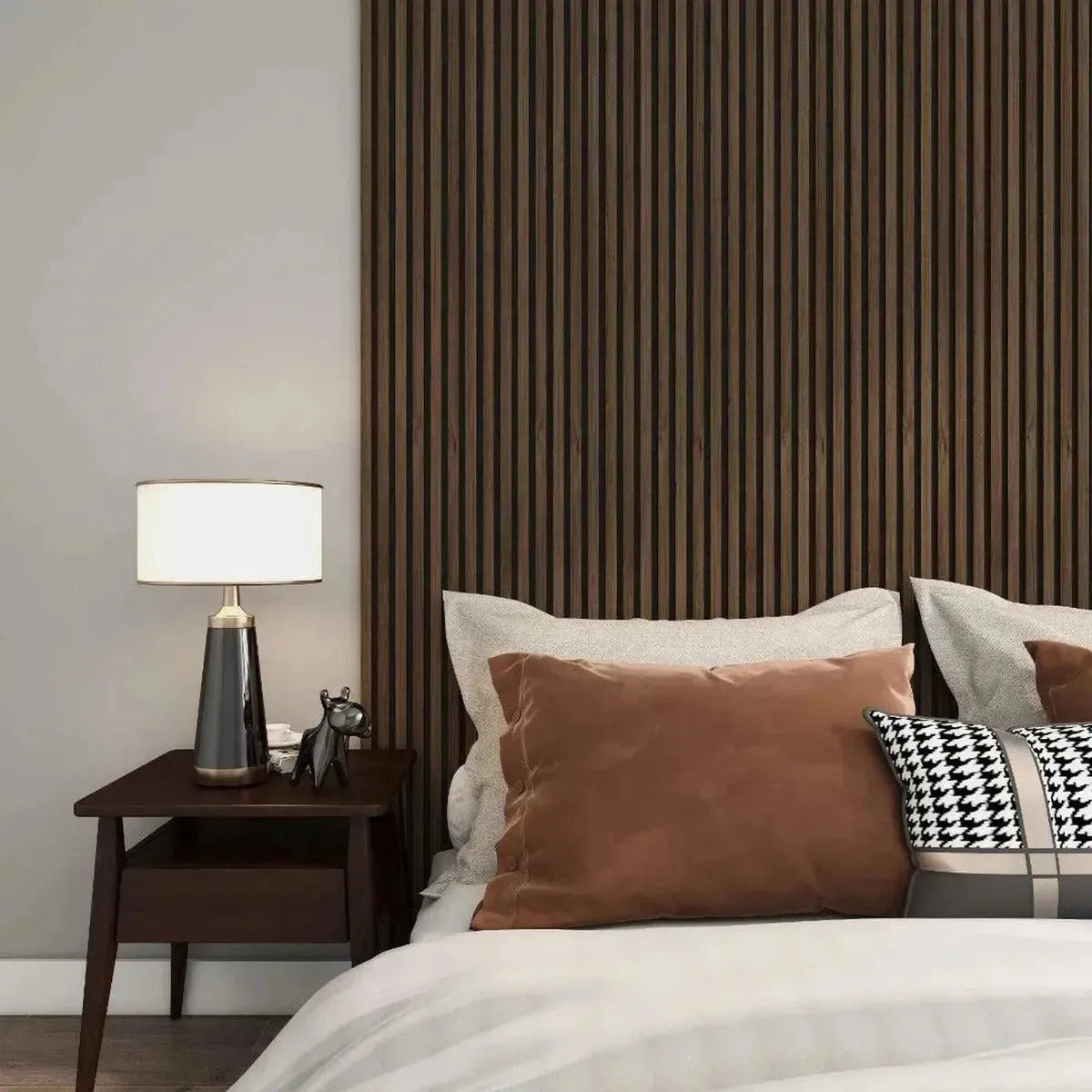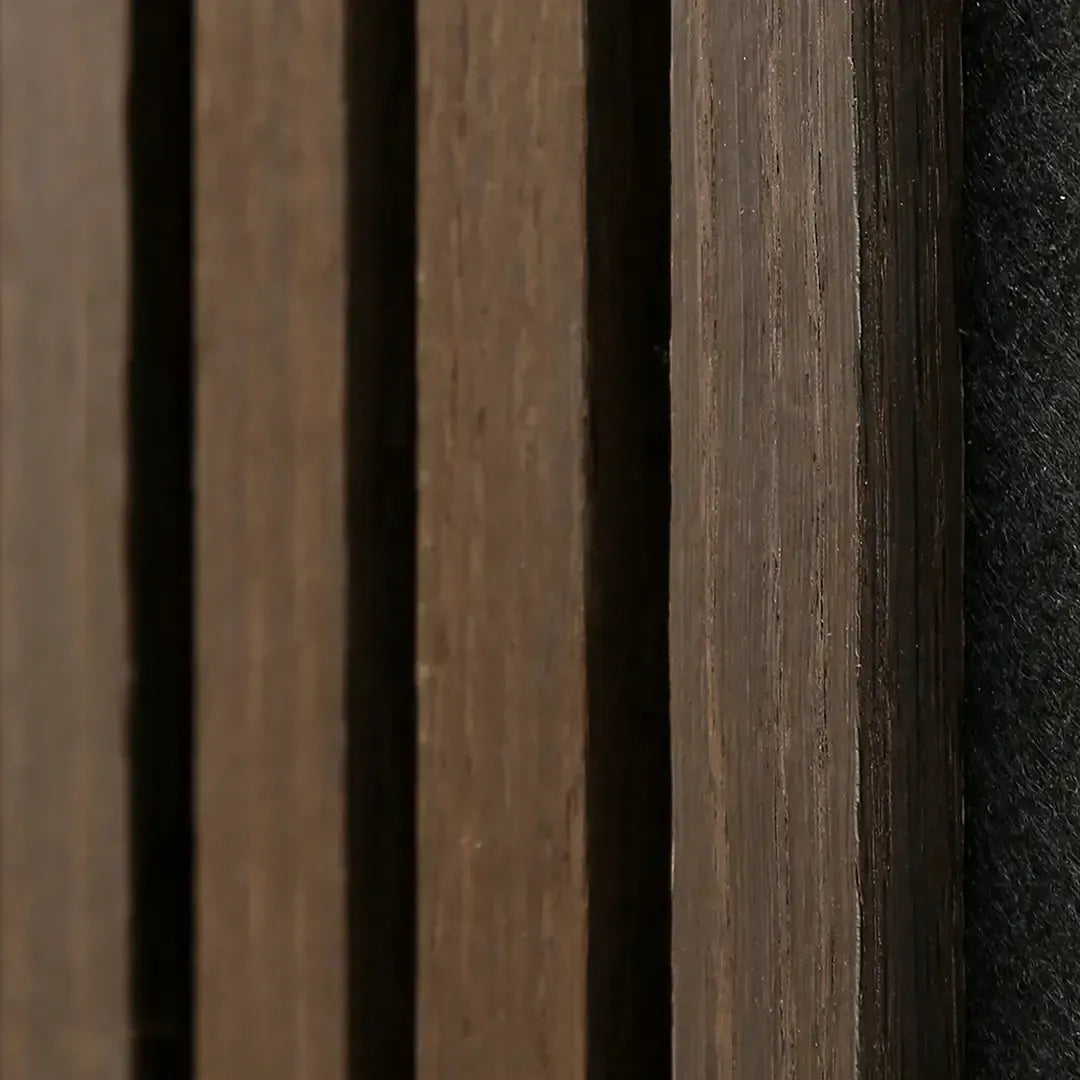
Specialty tea shop and tasting room wood paneling is acoustic wall treatment finished in real wood veneer, installed to quiet the clink of ceramic teaware and hushed conversation without turning the space into a corporate lobby. Tea rooms and tasting bars run on deliberate rituals — pouring, steeping, low conversation over tasting notes — and hard surfaces like tile, glass display cases, and polished concrete work against that atmosphere every single day.
- Wood panels for tea shop interiors cut echo around ceramic ware; felt-backed slat panels absorb sound best.
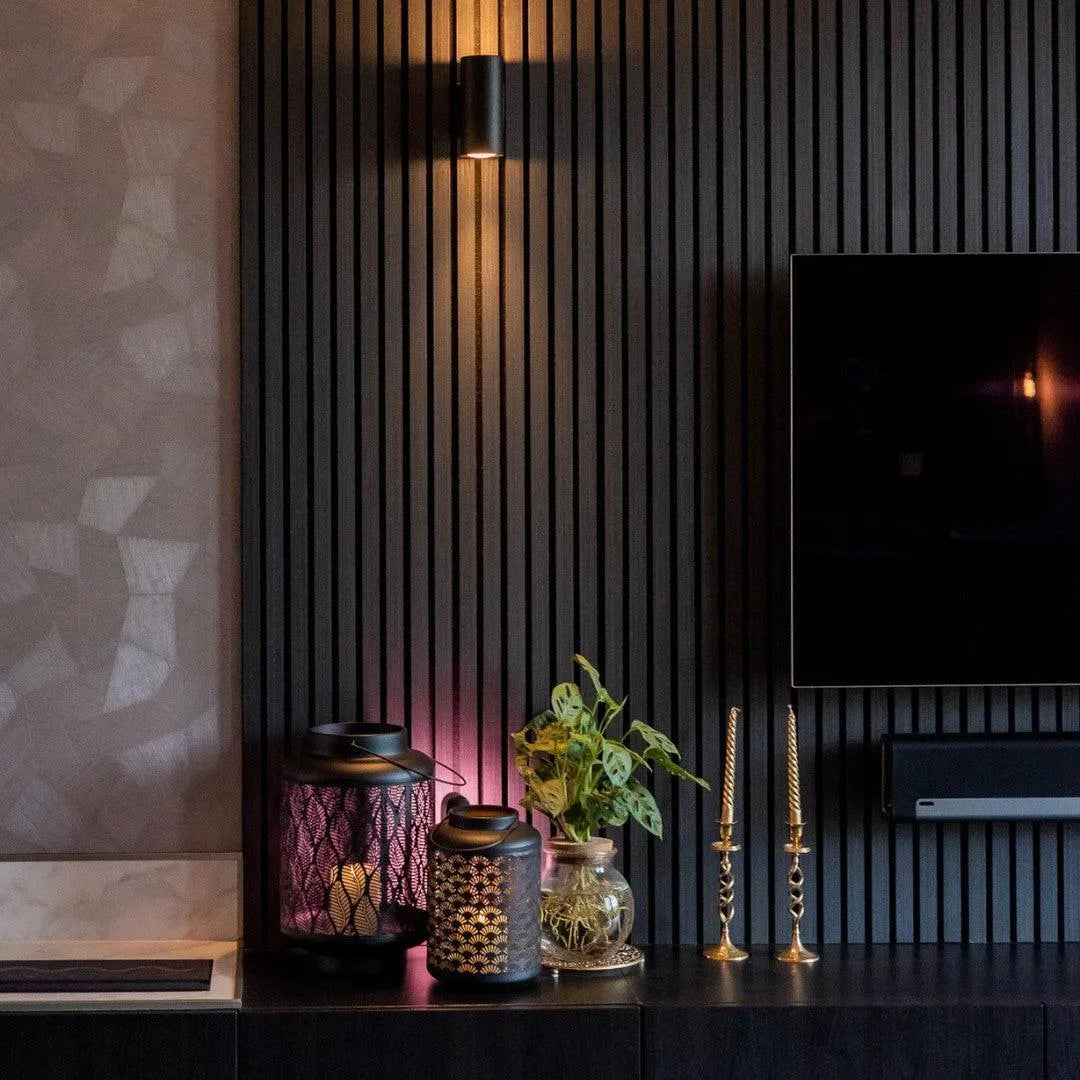
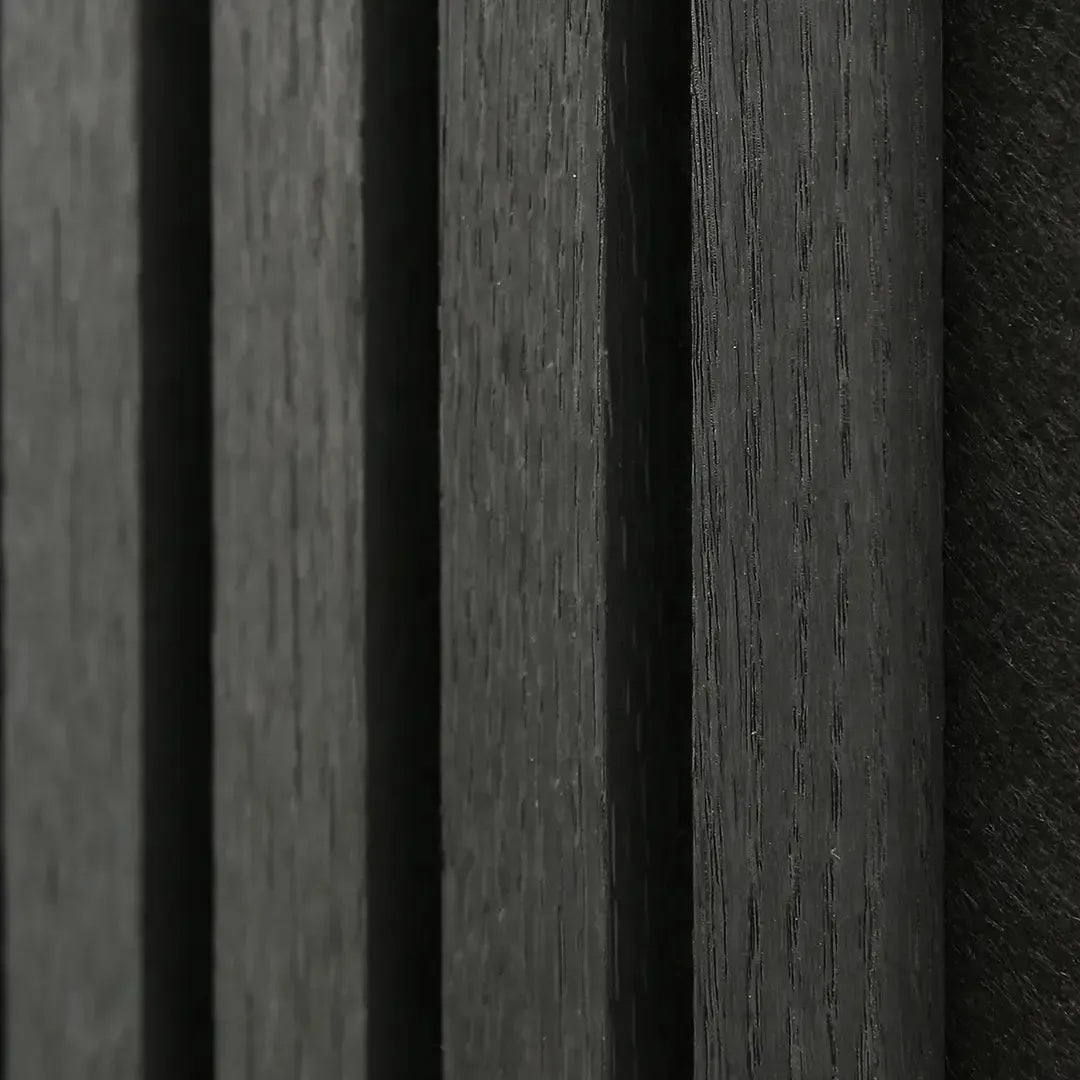
- Akuwood Panel's walnut and smoked oak finishes read warm and calm, not corporate, for tasting rooms.
- Install behind the tasting bar first — that's where clinking cups and low conversation bounce hardest.
- Fluted and hexagon panels break up flat walls in small tea shops under 800 square feet.
- Skip non-felt-backed panels in 2026 if echo, not just decor, is the actual complaint.
Why acoustic wood panels matter for tea shop interiors
A tea tasting room lives or dies on how quiet it feels. Customers are there to notice subtle differences between a first and third steeping, and every hard surface in the room — the display shelving, the pour-over station, the tile behind the counter — bounces sound instead of absorbing it. Akuwood Panel builds panels for exactly this kind of problem: real wood veneer bonded to an acoustic core, so the wall looks warm and the room actually gets quieter.
Most tea shop owners diagnose the wrong thing. They blame the espresso machine or the crowd size, when the real issue is a room with nothing soft on the walls. A tasting room under 800 square feet with tile floors and glass cases needs sound absorption more than it needs another shelf.
Map the noise sources in your tasting room
Before buying anything, walk the room and note where sound actually bounces.
- Ceramic cup-and-saucer contact at the tasting bar
- Steam kettles and hot water dispensers running during service
- Matcha whisking or espresso stations near the counter
- Hard flooring — tile, polished concrete, sealed wood
- Glass retail shelving and display cases facing each other
Choose a wood finish that reads calm, not corporate
The finish sets the mood before a customer tastes anything. Light oak reads clean and works well with delicate greens and whites; darker finishes suit pu-erh, roasted oolong, or coffee-adjacent tasting menus.
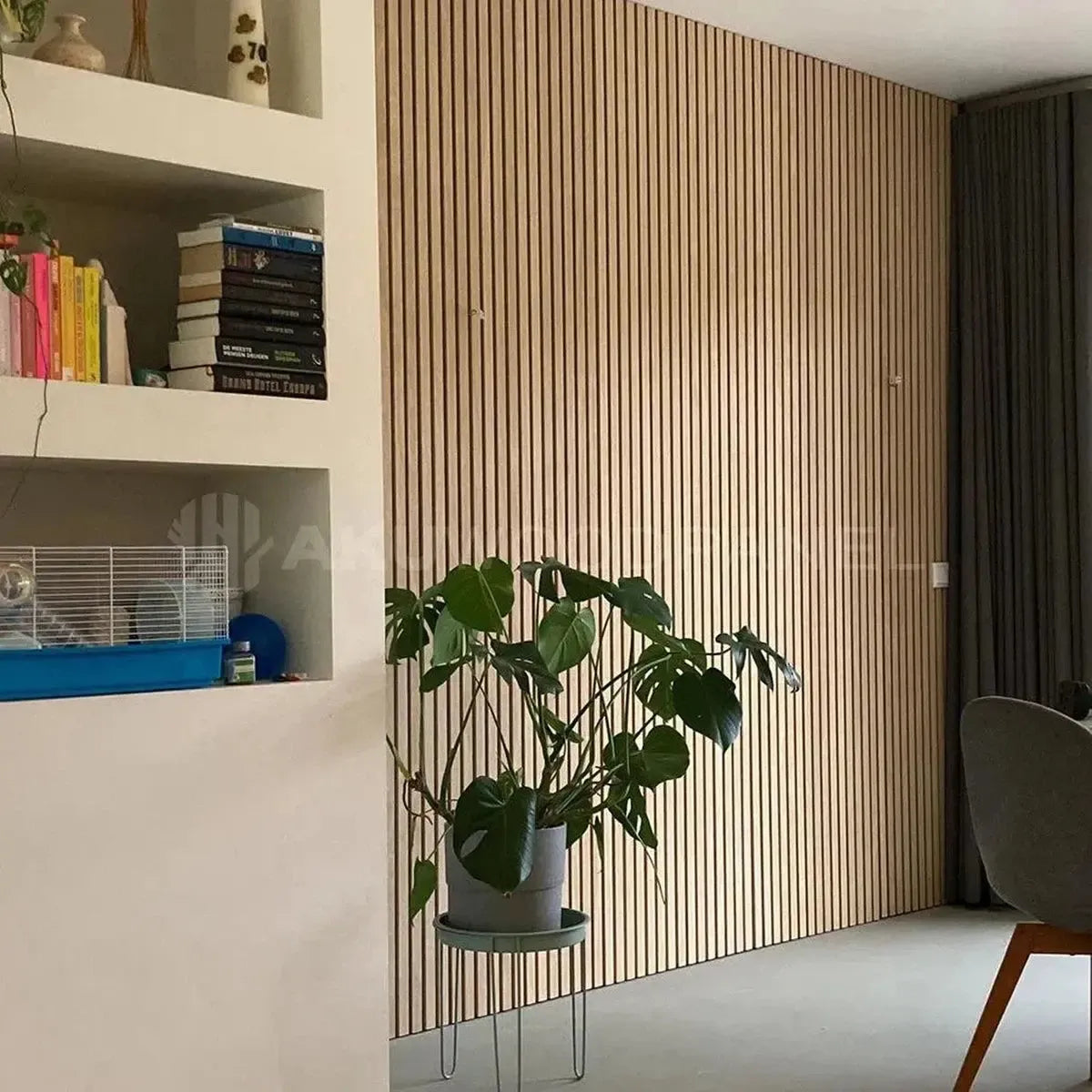
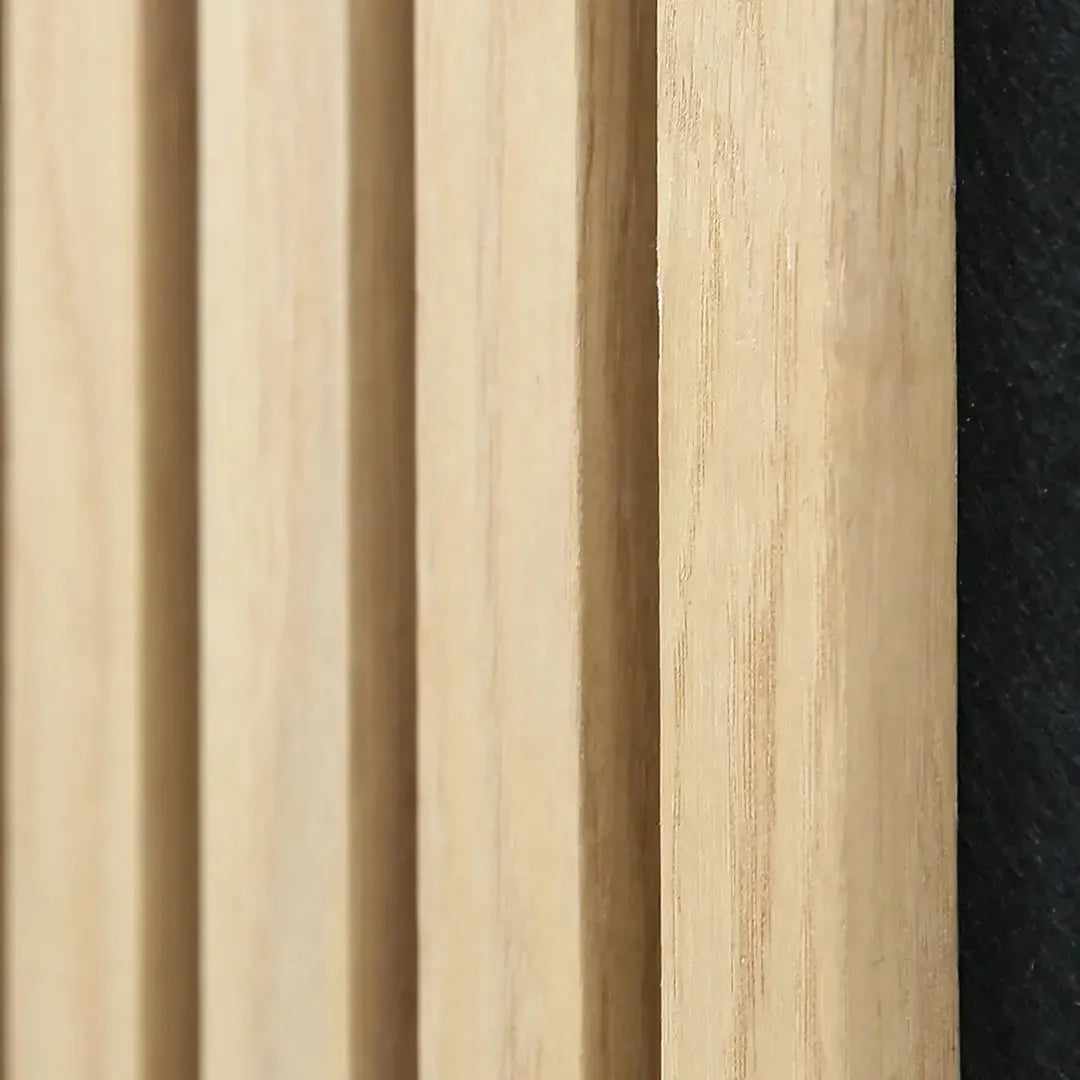
- Natural oak for bright, minimalist tea rooms
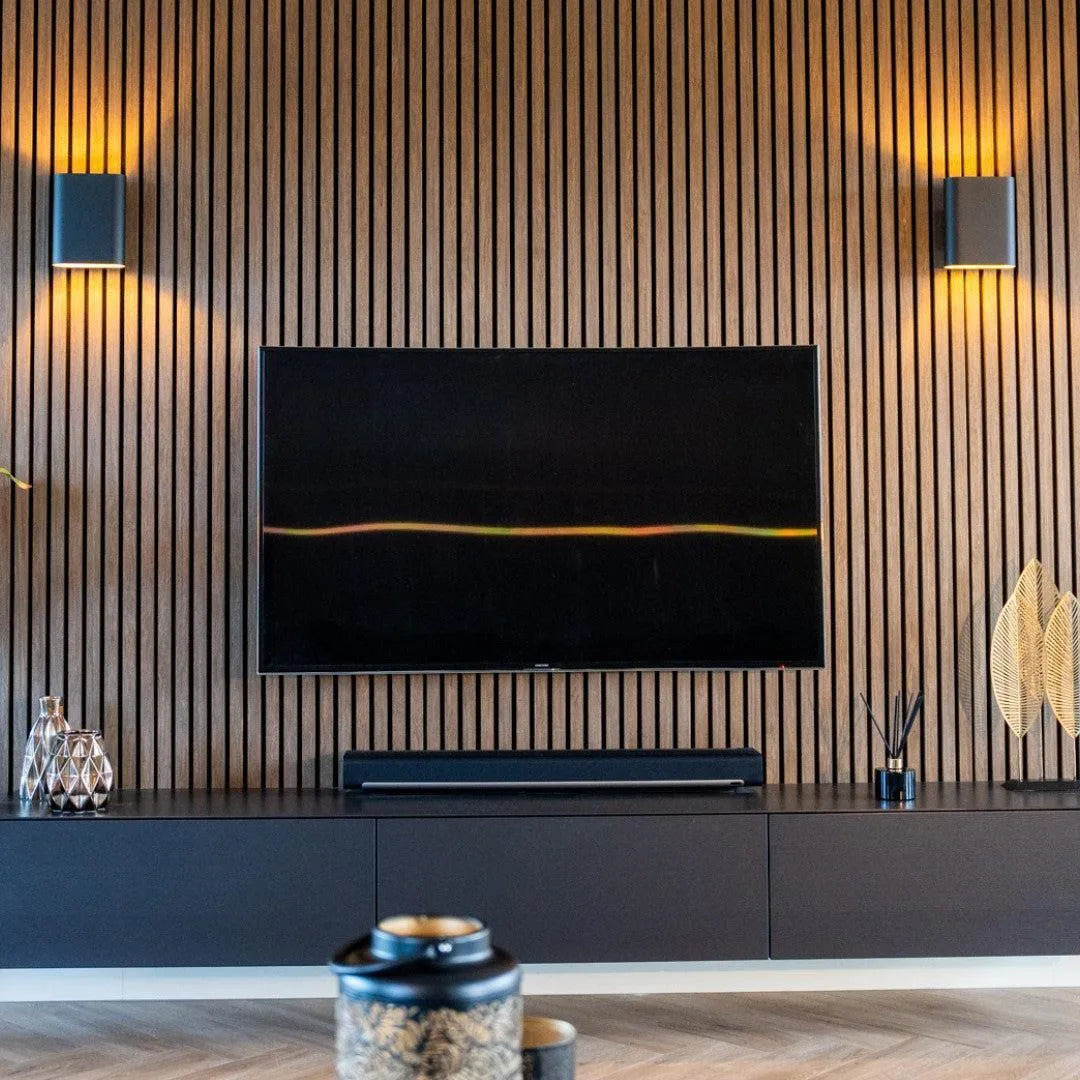
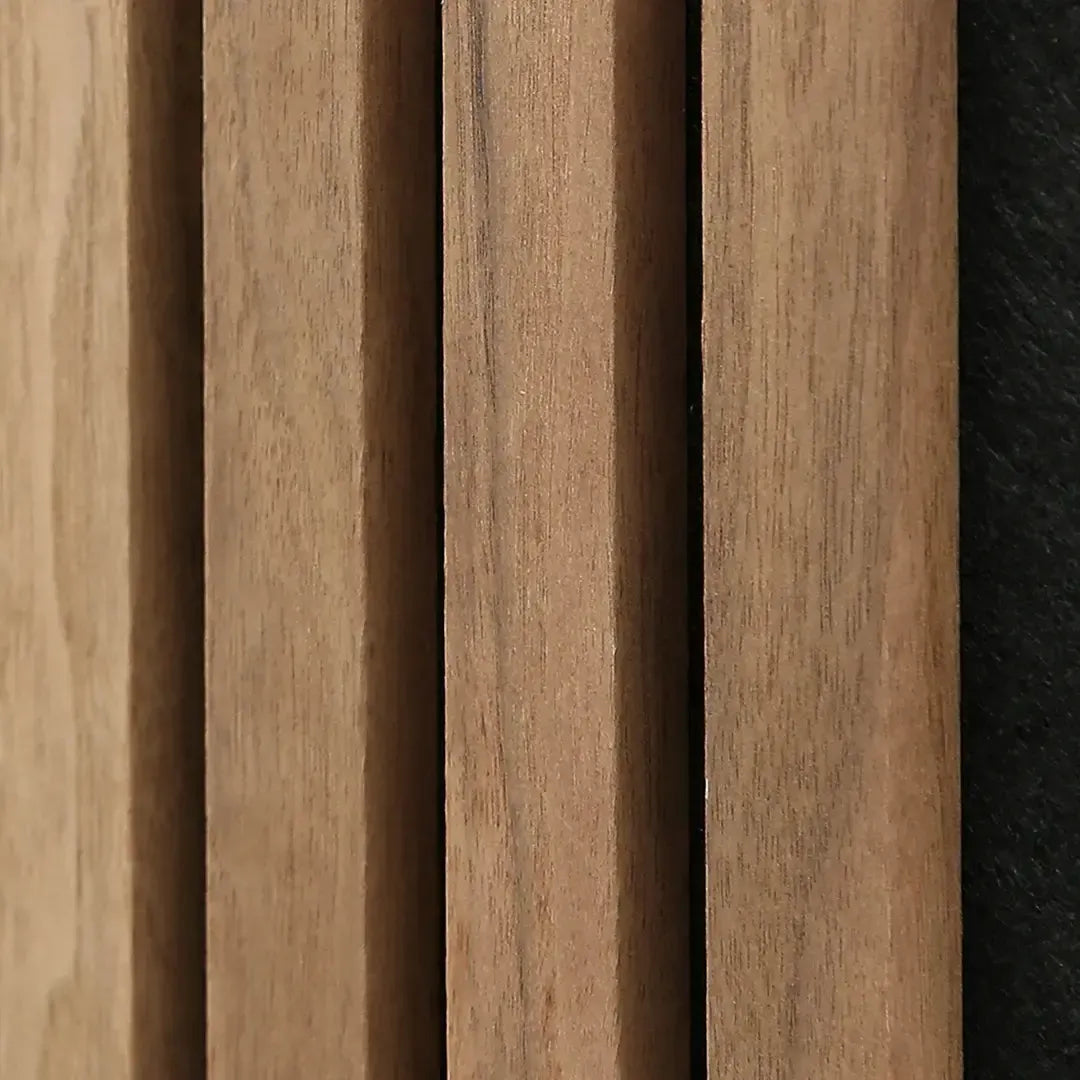
- Walnut acoustic slat wall panel for a warmer, coffeehouse-adjacent tasting bar
- Smoked oak for moody, low-lit tasting rooms
- Avoid glossy laminate finishes — they read retail, not artisan
- Match finish tone to your existing counter or shelving wood
Install felt-backed acoustic slat panels behind the tasting bar
The tasting bar wall is where the actual noise complaint lives — cup contact, low conversation, staff calling out orders. This is the wall that needs felt-backed panels, not the accent wall by the entrance.
- Mount panels at seated ear height, not just above eye level
- Use felt-backed slat panels (NRC 0.75 rated) behind the bar specifically
- Run panels the full width of the pour station, not a partial strip
- Leave a small gap behind the panel for the felt backing to work
- Treat this wall first if budget only covers one phase
Break up flat walls with fluted or hexagon panels
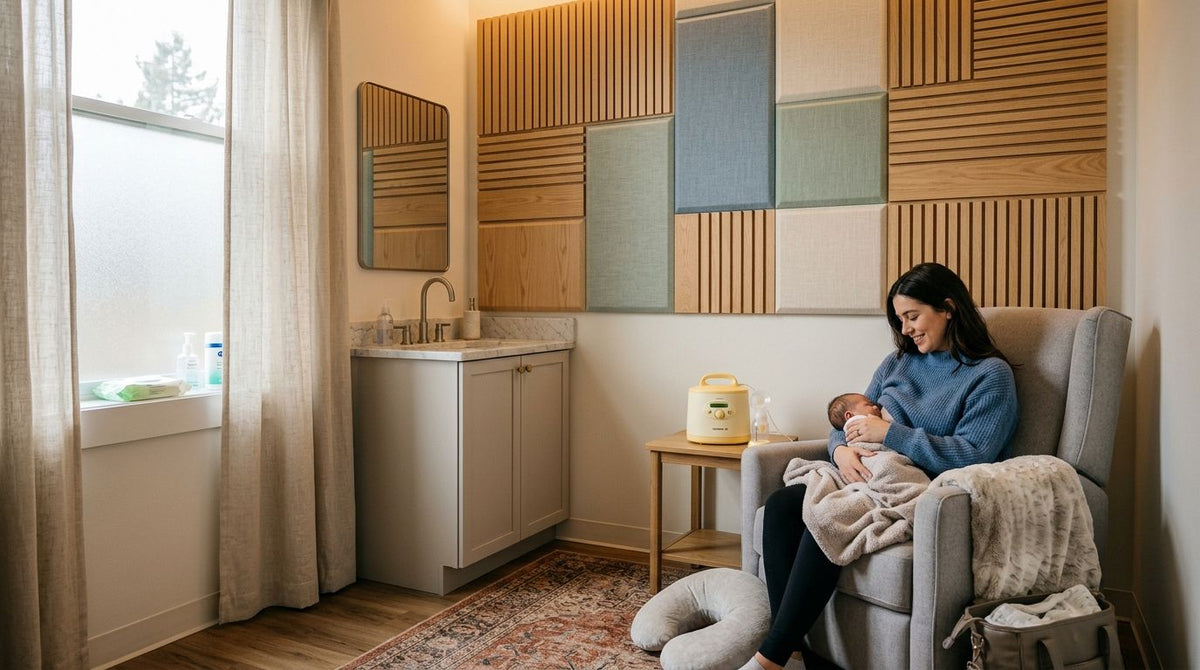
Once the tasting bar is handled, secondary walls get decorative treatment. Geometric panels do more visual work per square foot than flat slats.
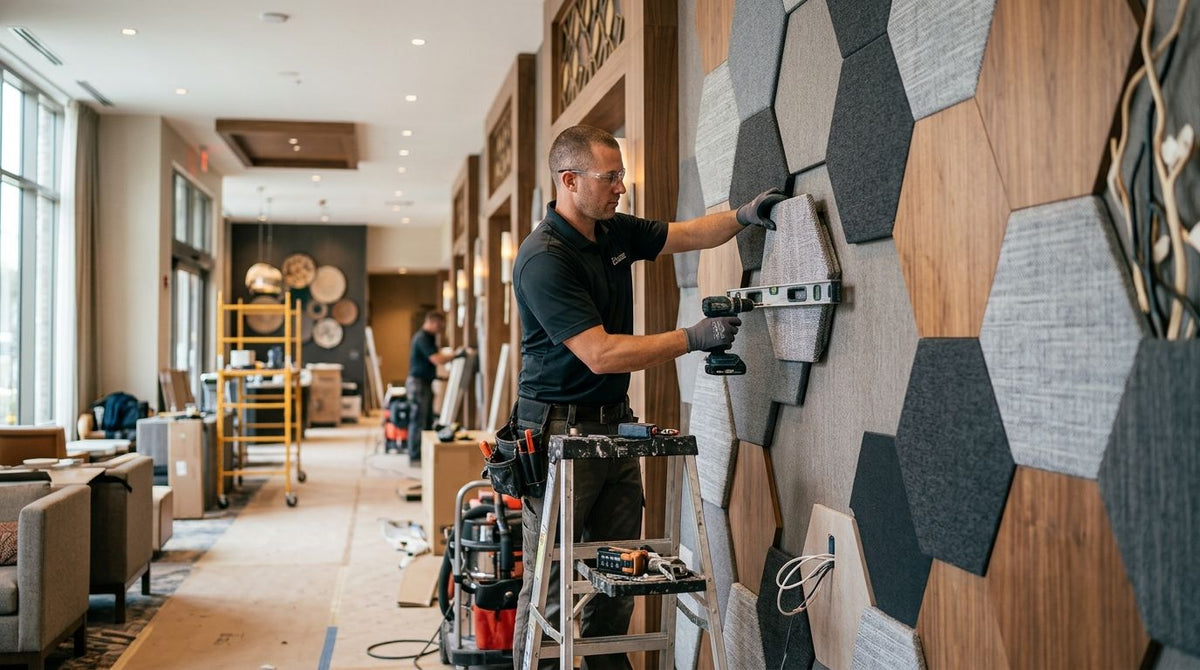
- Hexagon acoustic panel in walnut for a boutique, honeycomb-style accent wall
- Fluted panels for narrow entry walls or columns near the door
- Keep geometric panels to one accent wall — more than that competes with the tea display
- Mix panel shapes sparingly; one flat wall plus one geometric wall reads intentional
- Reserve the busiest finish for the wall customers photograph, not the whole room


Handle humidity and steam near the brew station
Tea shops run kettles and steam wands most of the day, and wood veneer doesn't like standing moisture.
- Keep panels at least 18 inches back from direct steam plumes
- Use sealed, finished veneer for any wall within splash range
- Ventilate the brew station separately instead of relying on open airflow
- Wipe condensation off nearby panels the same day it happens
Phase the install by budget
Most tea shop owners in 2026 don't panel the whole room in one pass — and they shouldn't.
- Phase one: the tasting bar back wall only
- Phase two: one accent wall (hexagon or fluted) near seating
- Phase three: entryway or retail shelving backdrop
- Save leftover panels for a hostess stand or small display backing
Maintain panels after months of steam and spills
Veneer holds up well, but daily service leaves marks if nobody wipes it down.
- Use a dry or barely damp cloth, never a steam cleaner directly on the veneer
- Check edges near high-touch zones (bar corners, doorframes) every few months
- Reseal exposed edges if the shop runs high humidity year-round
- Replace individual slats rather than the whole wall if one section wears
Comparing panel options for tea shop and tasting room walls
| Option | Best for | Acoustic performance | Key limitation |
|---|---|---|---|
| Felt-backed acoustic slat panel | Tasting bar back walls | NRC 0.75 rated | Needs a flat wall for a clean run — Buy |
| Fluted wall panel | Narrow entry walls, columns | Moderate diffusion, no felt backing | Less absorption than felt-backed slats — Buy for accents |
| Hexagon acoustic panel | Geometric accent walls | NRC 0.75 with felt backing | Slower install due to interlocking cuts — Buy |
| 3D wood wall tile | Small feature walls near displays | Mostly visual texture, minimal absorption | Not a fix if echo is the actual complaint — Hold |
| Plain painted drywall | Budget-only fit-outs | No sound absorption | Leaves the noise problem unresolved — Skip |
“If you can hear the kettle from three tables away, your walls are the problem, not your staff.”
Common mistakes tea shops make
- Paneling only the photo wall. The Instagram-ready accent wall gets treated while the tasting bar — where the actual echo complaint lives — stays bare tile.
- Choosing decor panels when the problem is acoustic. A 3D wood tile looks good on camera but does little for a room where cup contact and low conversation carry across the space.
- Placing panels too close to steam. Kettles and steam wands running all day will warp untreated veneer edges within months.
- Mixing more than two finishes on one sightline. A tasting room with oak, walnut, and black oak all visible at once reads busy instead of calm — pick one primary tone and one accent.
FAQ
What's the best wood panel for a tea shop or tasting room?
Felt-backed acoustic slat wall panels in walnut or smoked oak work best for tasting bar back walls in 2026 — they absorb sound at an NRC of 0.75 and read warm rather than corporate. Hexagon and fluted panels work as secondary accent walls once the main noise source is handled.
Do wood panels actually reduce echo in a small tea shop?
Yes, but only felt-backed panels do the acoustic work — decorative 3D wood tiles mostly add texture, not absorption. A tasting bar wall under 800 square feet with tile floors and glass cases needs the felt-backed slat option specifically.
Should tea shops use fluted or slat wall panels?
Slat panels with felt backing go on the tasting bar wall where noise is worst. Fluted panels work better on narrow entry walls or columns where acoustic performance matters less than visual texture.
How much wall coverage does a tasting bar need for acoustic treatment?
Cover the full width of the pour station at seated ear height, not just a partial strip above eye level. Partial coverage leaves the loudest zone — cup-and-saucer contact — untreated.
Are wood panels safe near steam and hot water stations?
Sealed, finished veneer panels handle occasional steam exposure, but they should sit at least 18 inches back from direct steam plumes. Standing moisture on unsealed edges will warp the veneer over time.
What's the difference between felt-backed and standard slat panels?
Felt backing behind the slats raises the acoustic absorption rating to roughly NRC 0.75, while standard slat panels without felt are closer to decorative. Choose felt-backed whenever echo, not just aesthetics, is the complaint.
How long does a tea shop wood panel install take?
A single tasting bar wall typically installs in a day for a small crew, since slat panels interlock without wet trades. Hexagon panels take longer per square foot because of the interlocking cuts.
Can wood panels handle humidity in a tasting room?
Sealed veneer panels tolerate normal humidity from kettles and steam wands when kept clear of direct splash zones. Reseal exposed edges periodically in shops that run high humidity year-round.
One last thing
Most tea shop owners over-budget the accent wall and under-budget the tasting bar. The wall behind the counter — the one closest to seated customers' ears — does more to fix the actual complaint than a full-room wrap ever will. Treat that wall first in 2026, phase the rest, and the room quiets down before the second wall goes up.
 Better performance and aesthetic appeal
 In Stock