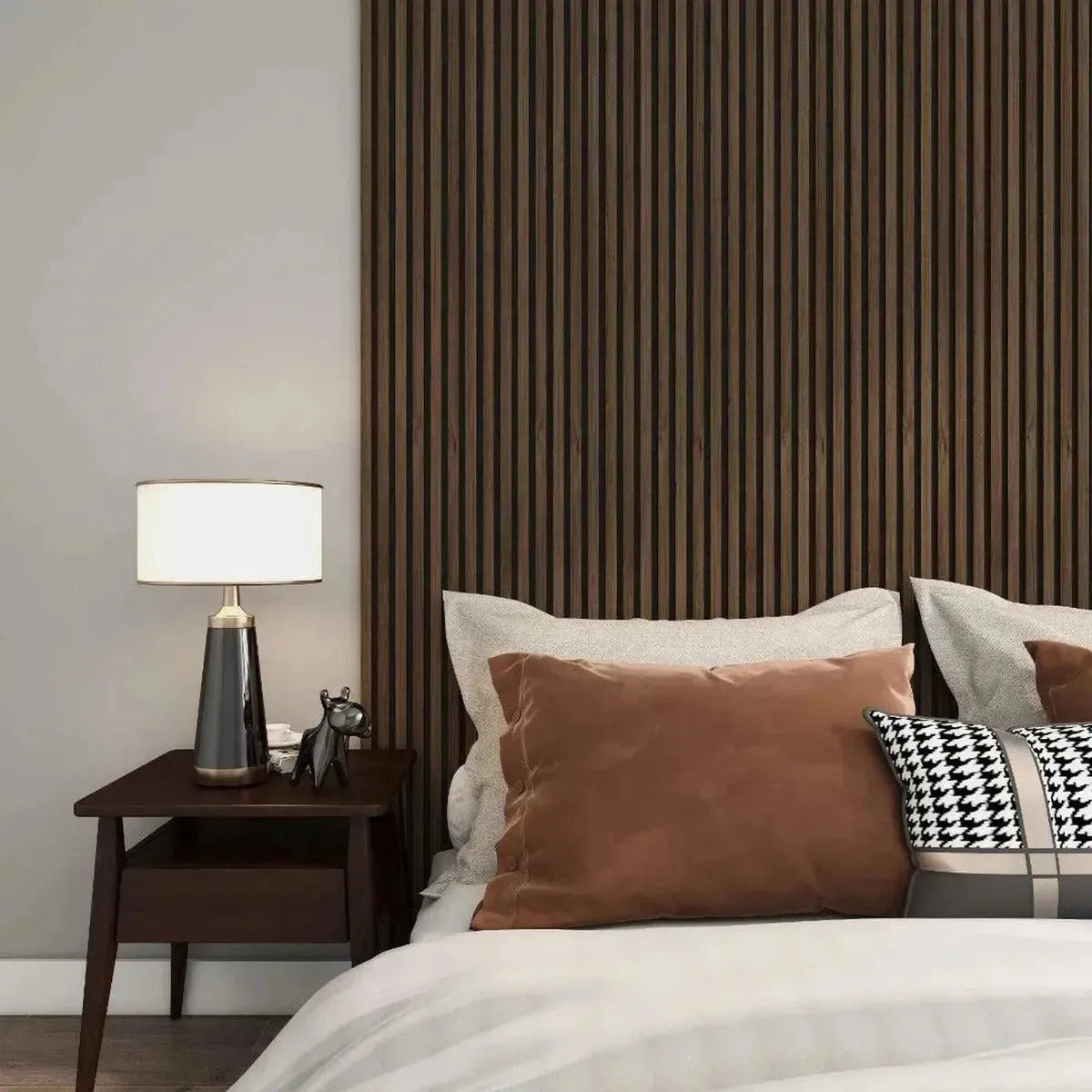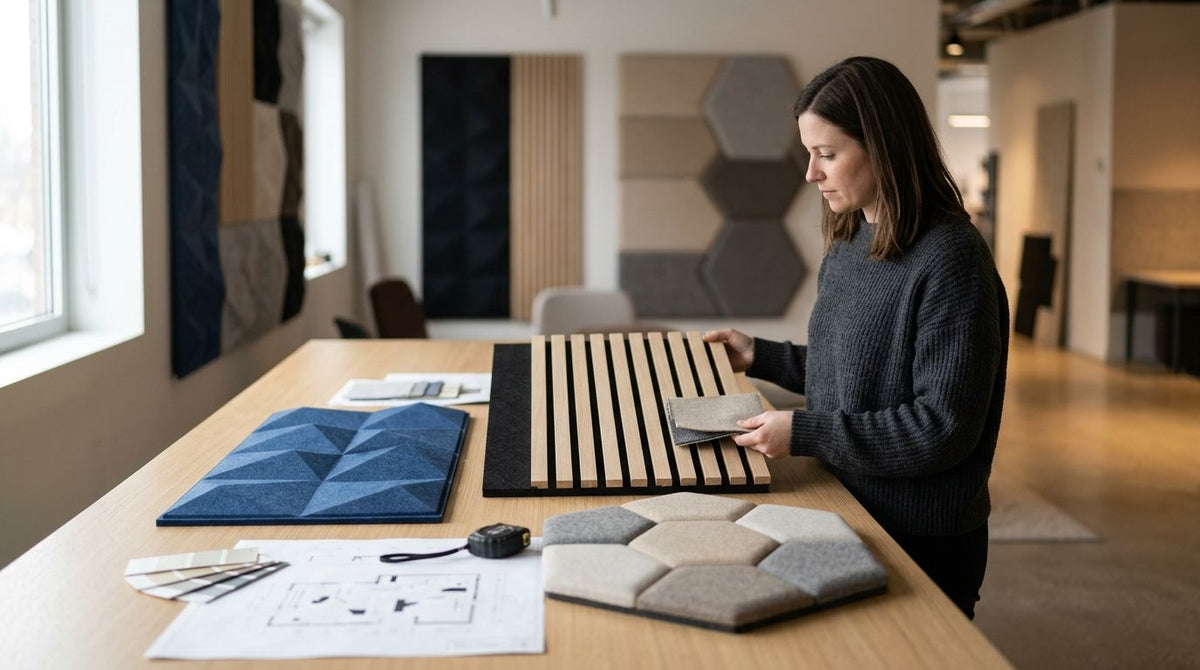
AKU Woodpanel's catalog spans five real-wood panel families that get grouped under one umbrella term, but they solve different problems. Best overall: the natural oak acoustic slat panel. Best for geometric statement walls: the black hexagon acoustic panel. Best for curved or angled surfaces: the natural oak fluted panel. Best for a sculptural, non-flat feature wall: the 3D wood wall panel. Best low-commitment option for a small accent area: the peel-and-stick wood tile backsplash.
- Acoustic slat wall panels top this acoustic wall panel styles compared ranking on felt-backed NRC 0.75 sound absorption and real oak veneer.
- Hexagon acoustic panels suit geometric statement walls; fluted panels are the only style built to bend around curves.
- 3D wood wall panels add sculptural depth but skip felt backing, so pick them for looks over echo control.
- Peel-and-stick wood tiles need no tools, fitting small backsplash or rental accent walls in 2026.
Why this matters
Drywall, tile, and glass all reflect sound instead of absorbing it — standard gypsum board sits around an NRC of 0.05, which is why open kitchens and minimalist living rooms echo the second you add hard flooring. Wood wall panels solve two problems at once: they cover a plain wall with real grain, and depending on the style, they cut reverberation.
The catch is that not every panel style does both jobs equally well. A natural oak acoustic slat panel with felt backing tests at NRC 0.75, but a solid 3D wood tile with no felt layer is doing almost none of that acoustic work — it's a decorative choice, not a treatment plan. Picking the wrong style for the wrong room is the most common mistake homeowners make heading into 2026 renovations.
What makes the best acoustic wall panel style
- Sound absorption performance — whether the panel ships with a felt or acoustic backing, or is decorative-only
- Veneer authenticity — real wood grain versus a printed or laminate finish
- Install flexibility — rigid board versus a panel that bends around curves and columns
- Pattern scale — geometric (hexagon), linear (slat, fluted), or sculptural (3D tile)
- Room fit — full-wall coverage versus a single small accent area
At a glance
| Style | Best for | Standout feature | Key limitation |
|---|---|---|---|
| Acoustic slat panel | Living rooms, bedrooms | Felt-backed NRC 0.75 absorption | Rigid boards, flat walls only |
| Hexagon acoustic panel | Geometric accent walls | Modular hex tiles, felt or non-felt | More cut waste on odd edges |
| Fluted panel | Curved walls, columns | Bends around curves | No felt-backed version listed |
| 3D wood wall panel | Sculptural feature walls | Deep sidelight texture | No acoustic backing |
| Peel-and-stick wood tile | Backsplash, rental accents | No tools needed | No acoustic rating |
1. Acoustic slat wall panel: best overall for living rooms and bedrooms
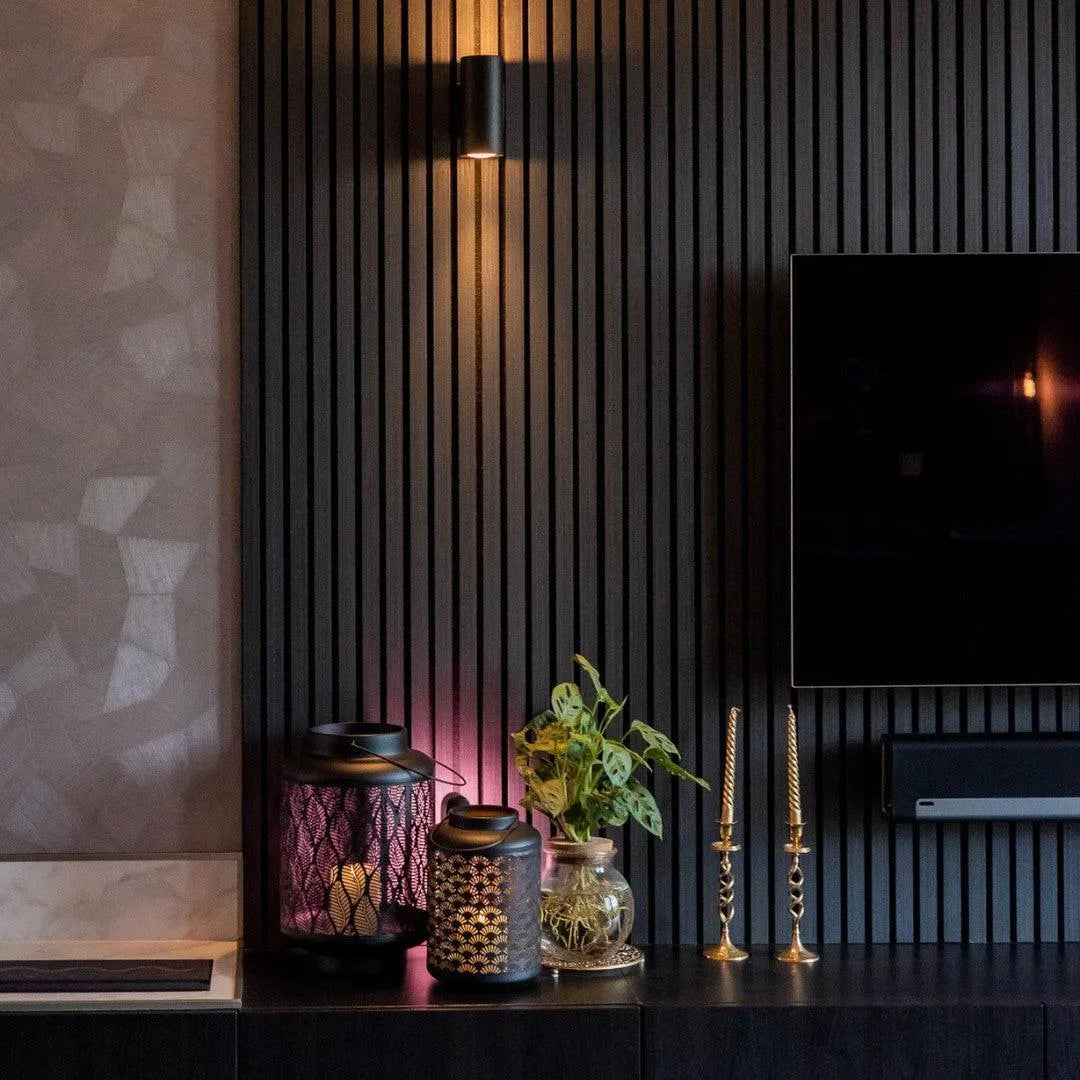
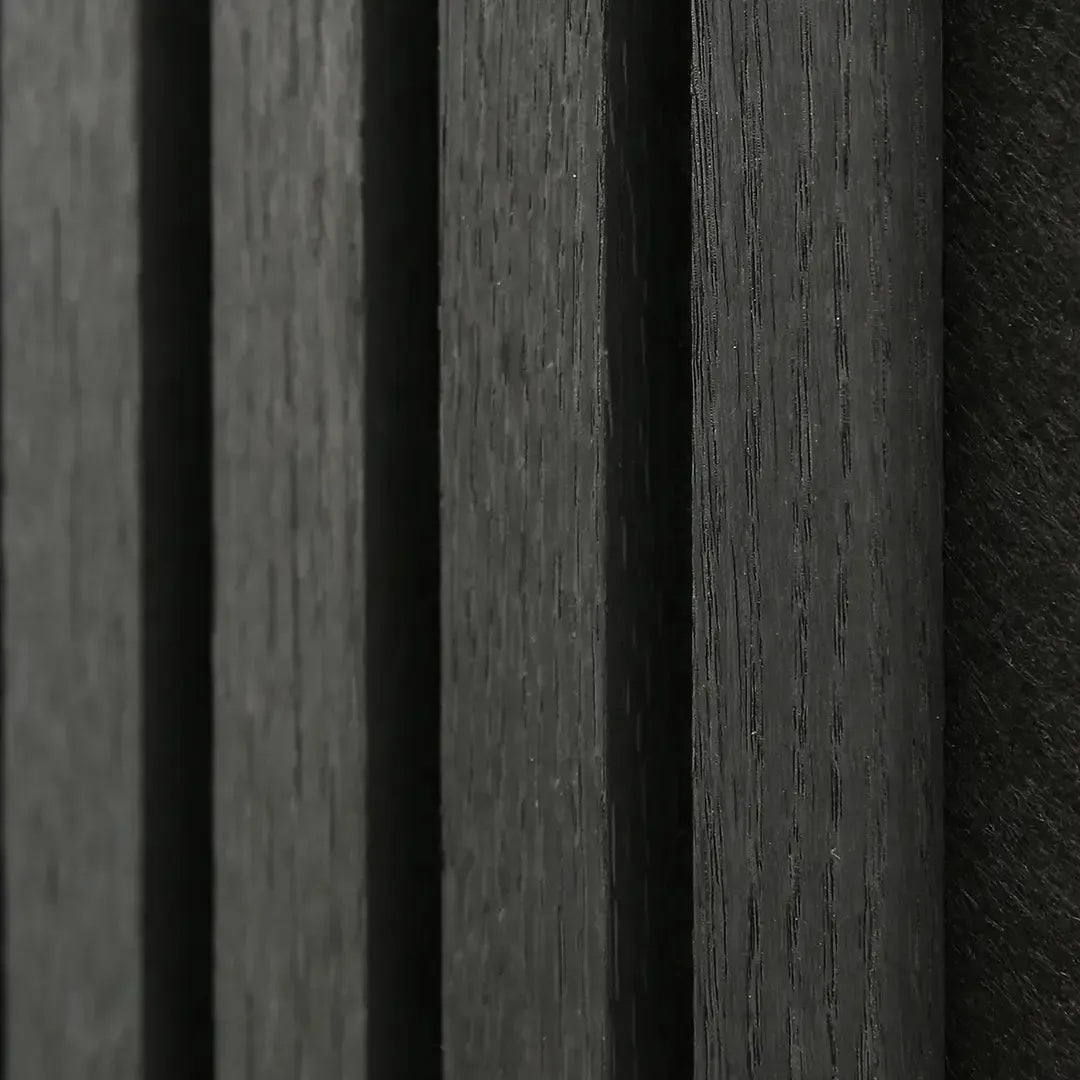
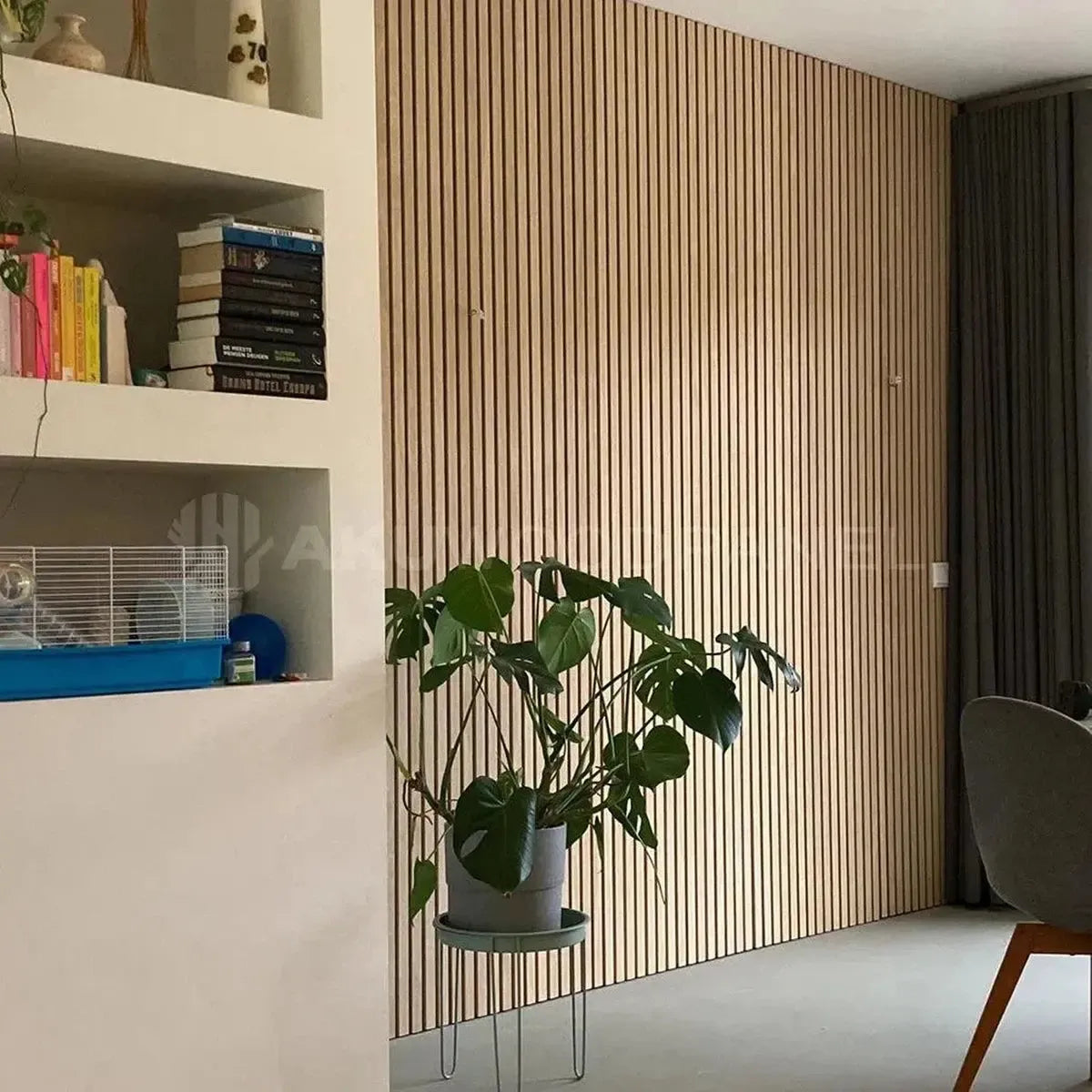
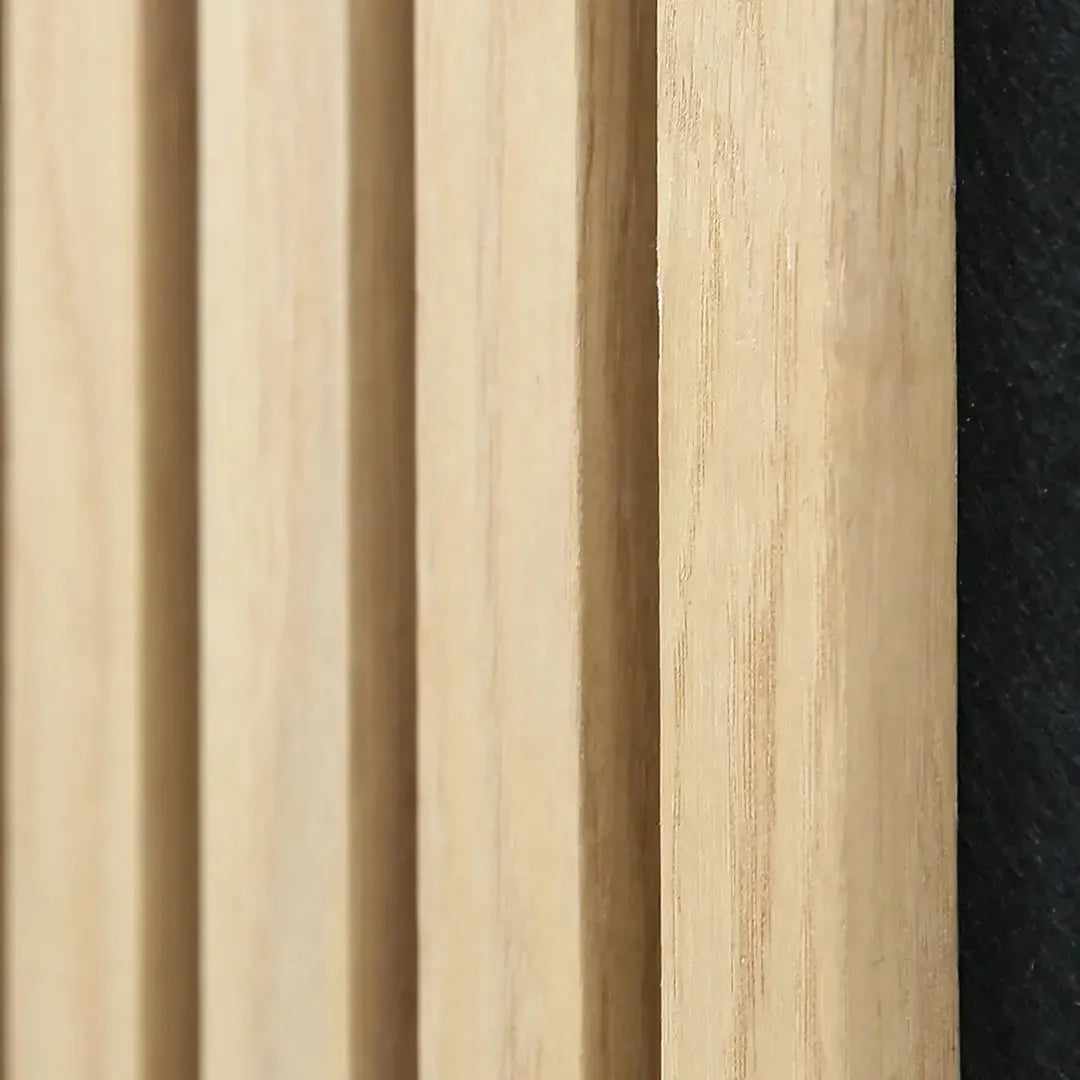
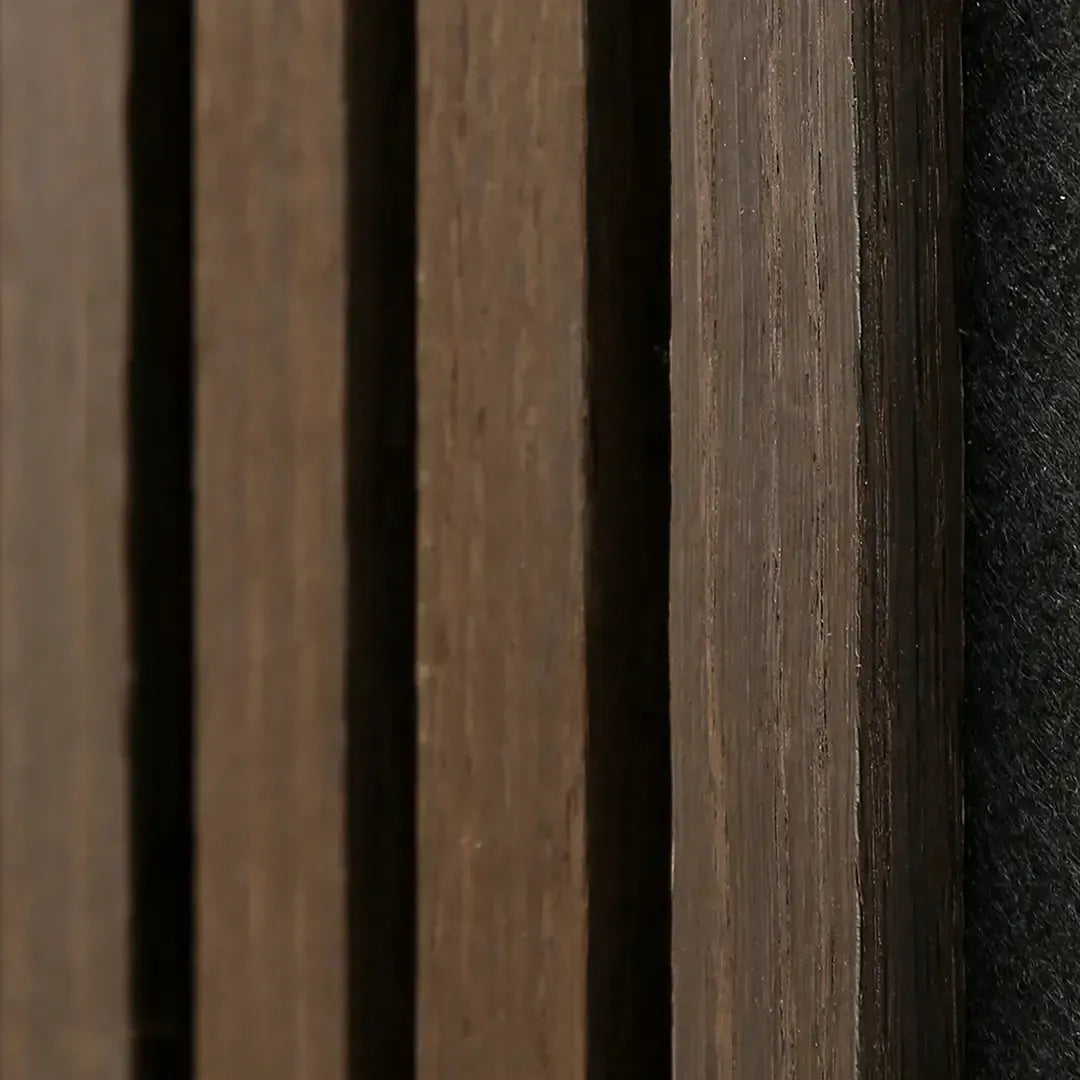
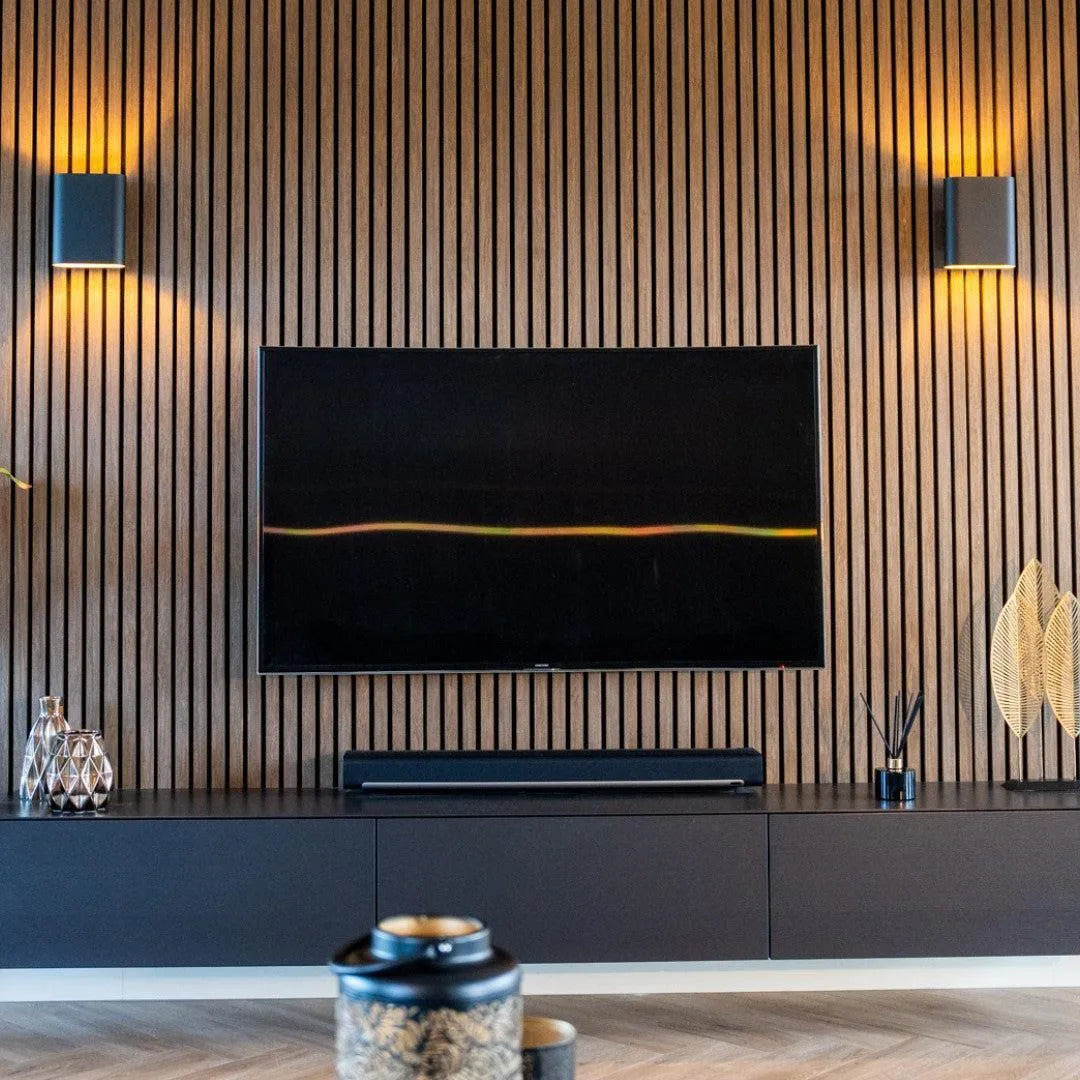
The slat panel is the style most people picture when they hear "acoustic wood wall." Thin vertical wood slats sit on a felt-backed board, so the panel does two jobs on one flat wall: it shows real oak, walnut, or smoked oak grain, and the felt layer behind the slats tests at NRC 0.75 versus roughly 0.05 for bare drywall.
Acoustic slat wall panel pros:
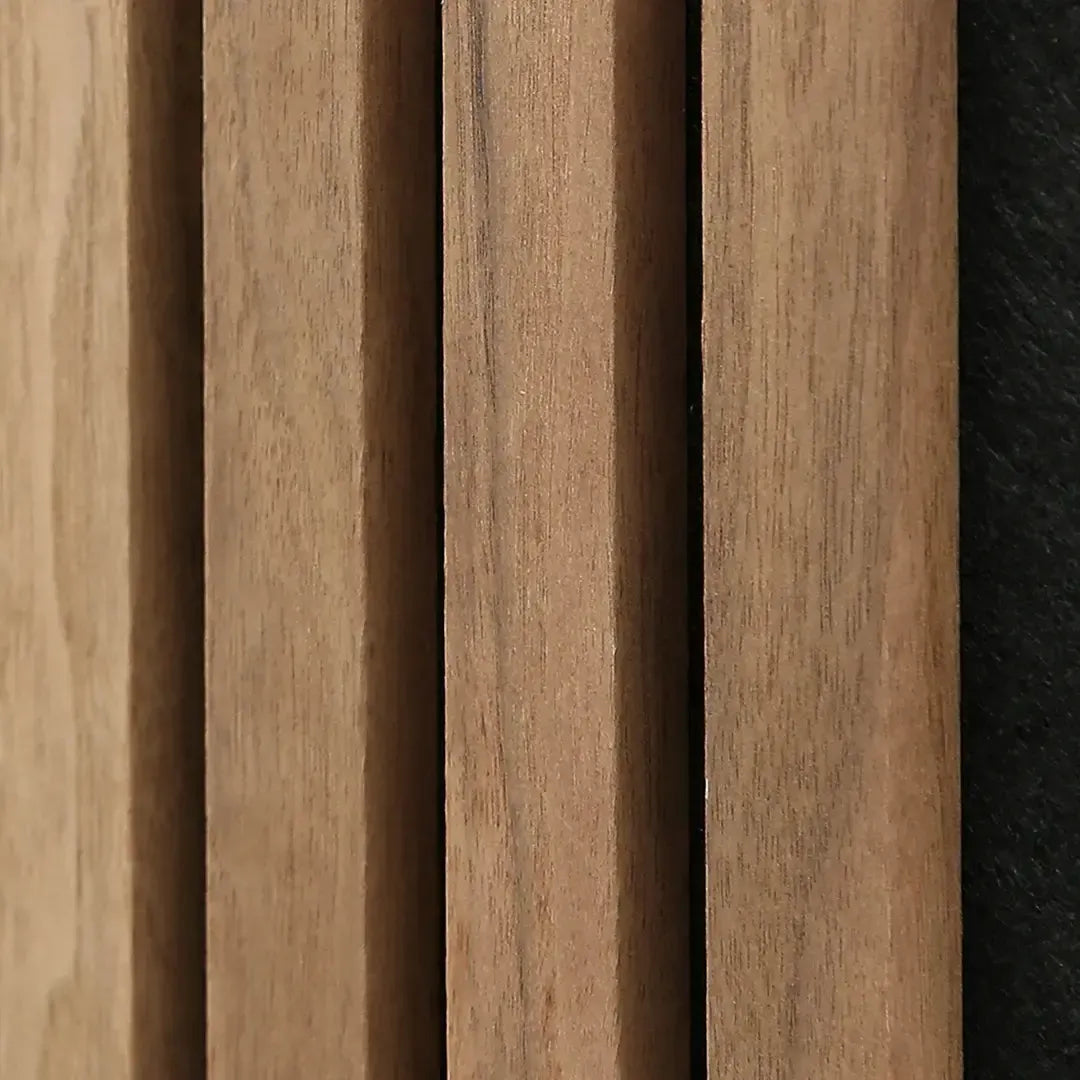
- Real wood veneer with visible grain, not a printed finish
- Felt backing measured at NRC 0.75 for sound absorption
- Straightforward install on a flat wall
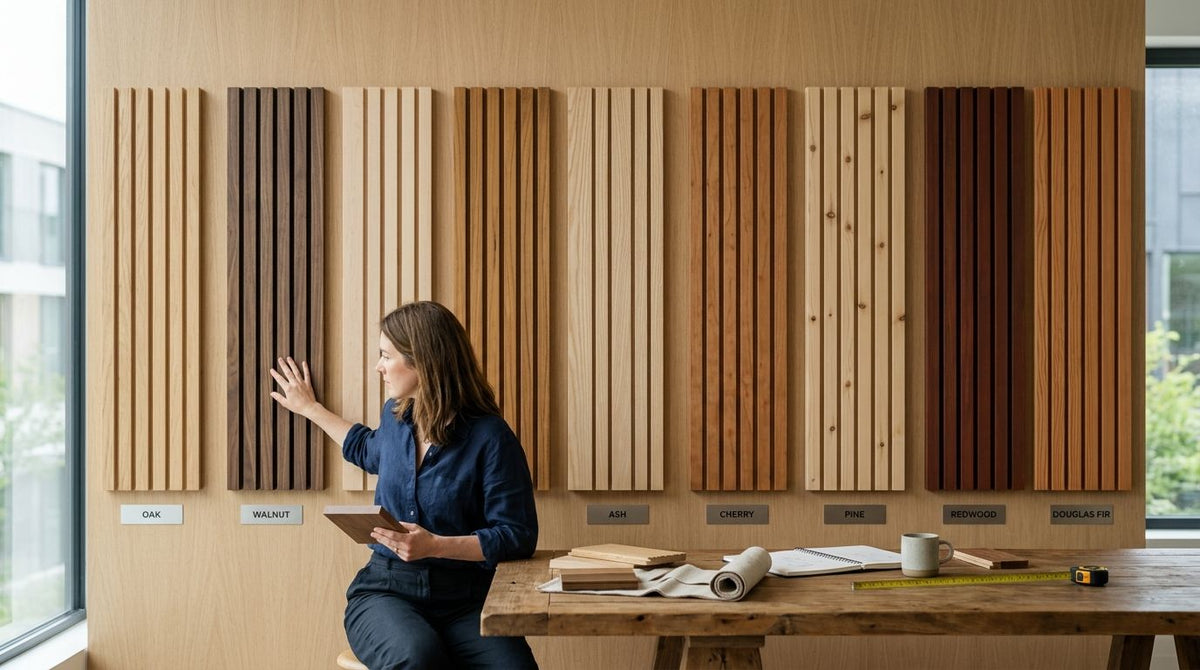
- Available in natural oak, walnut, black oak, smoked oak, and natural oak with gray felt
Acoustic slat wall panel cons:
- Rigid boards don't bend around curves or columns
- Heavier per panel than tile-based styles
- Coverage is limited to flat wall runs
Best for: anyone treating a full wall in a living room, bedroom, or home office where echo is the main complaint. Verdict: Buy.
2. Hexagon acoustic panel: best for geometric statement walls
Hexagon panels swap the linear slat look for a tiled geometric pattern. Each hex tile locks into the next, so you can build a partial pattern in one corner or cover an entire wall, and the black hexagon acoustic panel reads as a much bolder statement than a row of straight slats.
Hexagon acoustic panel pros:
- Modular tiles allow custom-shaped layouts, not just full walls
- Felt-backed versions exist alongside non-felt options
- Wide finish range: natural oak, walnut, black, smoked oak, gray walnut
- Pattern hides minor wall imperfections better than a flat slat run
Hexagon acoustic panel cons:
- More cut waste along irregular wall edges and corners
- Point-heavy pattern takes more layout planning than a straight slat row
- Can look busy in an already pattern-heavy room
Best for: gaming rooms, feature walls behind a TV, or any space where the wall itself is meant to be the focal point. Verdict: Buy.
3. Fluted wall panel: best for curved walls and columns
Fluted panels are the flexible option in the lineup. Where slat and hexagon panels are rigid boards, the natural oak fluted panel is built to follow a curve, which makes it the only style on this list that can wrap a rounded reception desk, a column, or a bowed hallway wall without cutting the panel into segments.
Fluted wall panel pros:
- Bends around curved walls and columns without seams
- Thin vertical grooves read as textured even from across the room
- Matches the same oak and walnut finishes as slat and hexagon panels
- Easier to trim for tight corners than a rigid board
Fluted wall panel cons:
- No felt-backed acoustic version listed in the catalog
- Thinner face means less mass, so sound absorption trails felt-backed slat and hexagon panels
- Vertical grooves can collect dust over time and need occasional wiping
Best for: curved architectural features, columns, and reception desks where a rigid panel physically won't fit. Verdict: Buy for shape-driven walls; treat it as decorative rather than acoustic.
4. 3D wood wall panel: best for a sculptural feature wall
The 3D wood wall panel drops the linear or geometric repeat entirely and goes for depth instead. The deep dusk walnut wood tile uses a tile format with real sculpted relief, so sidelight throws shadow across the surface instead of just showing grain.
3D wood wall panel pros:
- Sculptural depth creates shadow play under angled or accent lighting
- Reads as a single focal feature rather than a repeating pattern
- Real wood veneer over the tile face, same as the other styles
3D wood wall panel cons:
- No felt or acoustic backing, so it's decorative rather than sound-treating
- Tile format takes longer to install across a full room than a flat board panel
- Better suited to one accent wall than open-plan noise control
Best for: a single dramatic wall behind a bed, bar, or reception desk where texture matters more than echo control. Verdict: Hold — great look, but pair it with a felt-backed style elsewhere if the room actually echoes.
5. Peel-and-stick wood tile backsplash: best for small accents and rentals
This is the low-commitment entry. Peel-and-stick tiles in pentagon, hexagon, and trefoil wood-look shapes stick directly to a clean surface, no adhesive mixing or panel cutting required, which makes them a fit for kitchen backsplashes, small bathroom accents, or a rental where drilling into the wall isn't an option.
Peel-and-stick wood tile pros:
- No tools or wall damage for small runs
- Wood-look finish without committing to a full acoustic panel
- Fast to apply behind a stove or vanity
Peel-and-stick wood tile cons:
- No acoustic rating at all
- Thin format won't do anything for a room with a real echo problem
- Best treated as a finish, not a sound-treatment plan
Best for: backsplashes, small feature strips, and renters who need a wood look without a permanent install. Verdict: Buy for accents; Skip if the goal is actually quieting a room.


How we ranked these acoustic wall panel styles
Each style was scored against the same five criteria: sound absorption, veneer authenticity, install flexibility, pattern scale, and room fit. The slat panel wins overall because it's the only style that scores well on all five at once — the others each trade one criterion away for another, which is exactly why they land in specific-use-case slots instead of competing head to head.
It's worth being honest here: exterior wall panels also exist in the catalog and are rated for over 25 years of maintenance-free outdoor use, but they're built for garden fencing and facades, not indoor acoustics, so they sit outside this comparison entirely.
Which acoustic wall panel style should you choose?
If you're treating a full living room, bedroom, or home office wall and the priority is cutting actual echo, the natural oak acoustic slat panel is the default pick for 2026 — real veneer plus NRC 0.75 felt backing covers both the look and the function. If the wall itself needs to be a design feature, move to hexagon for geometric pattern or 3D wood tile for sculptural depth, and reserve fluted panels for anywhere a rigid board physically can't follow the wall's shape. Peel-and-stick tiles stay in the small-accent lane, not the acoustic-treatment lane.
FAQ
What's the best acoustic wall panel style for a living room?
The acoustic slat wall panel is the best fit for most living rooms in 2026 because it combines real oak or walnut veneer with felt backing tested at NRC 0.75. Hexagon panels work as a bolder alternative when you want a geometric feature wall instead of a linear one.
Is hexagon better than slat for sound absorption?
Both can use the same felt backing and reach NRC 0.75, so absorption performance is similar when you pick the felt-backed version of either. The real difference is pattern: hexagon suits a statement wall, slat suits a full-room treatment.
Can fluted panels be installed on curved walls?
Yes, fluted panels are designed to bend around curved walls, columns, and rounded desks without seams. Rigid slat and hexagon panels can't do this and need a flat surface.
How do peel-and-stick wood tiles compare to full acoustic panels?
Peel-and-stick tiles have no acoustic rating and are meant for small decorative runs like a backsplash, not whole-room echo control. Full acoustic slat or hexagon panels with felt backing are the choice when the goal is actually reducing reverberation.
What NRC rating do AKU Woodpanel's acoustic styles have?
Felt-backed slat and hexagon panels are rated at NRC 0.75, compared to roughly 0.05 for standard drywall. Fluted panels and 3D wood tiles are not sold with a felt-backed acoustic version.
Do 3D wood panels need felt backing to absorb sound?
3D wood wall panels don't ship with felt backing, so they function as a decorative, sculptural finish rather than a sound-absorbing treatment. Pair them with a felt-backed slat or hexagon panel elsewhere in the room if echo is a real concern.
Which style works best in a home office with echo problems?
A felt-backed acoustic slat panel on the wall behind your desk or monitor is the most direct fix for home office echo. It covers the largest flat surface with the highest-rated absorption in the lineup.
One last thing
The detail most people skip: felt backing is what does the acoustic work, not the wood veneer itself. Two panels can look nearly identical from across the room — one felt-backed, one not — and only one of them will actually quiet a space. Check for the felt-backed variant by name before ordering if sound reduction, not just the wood look, is the point of the project.
 Better performance and aesthetic appeal
 In Stock