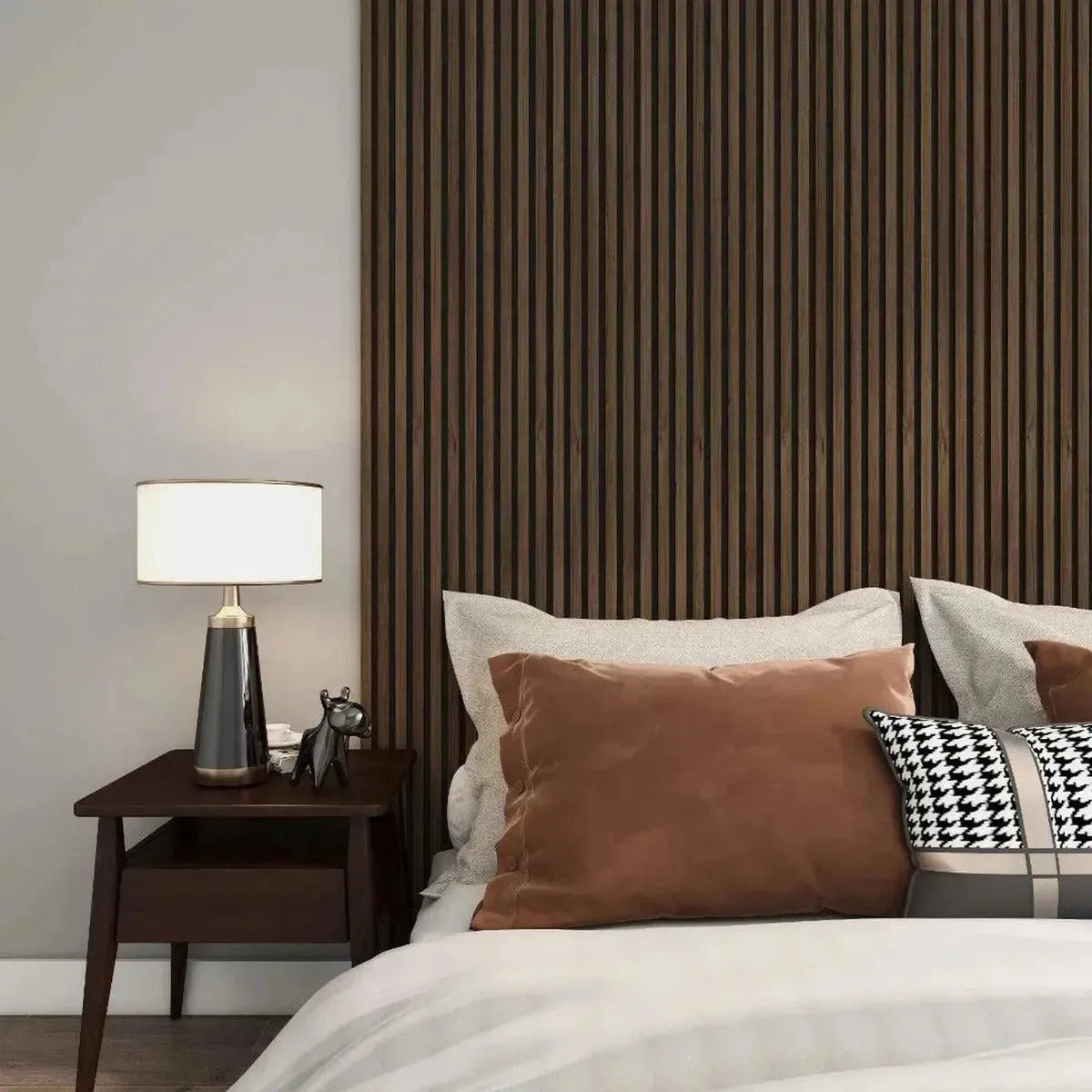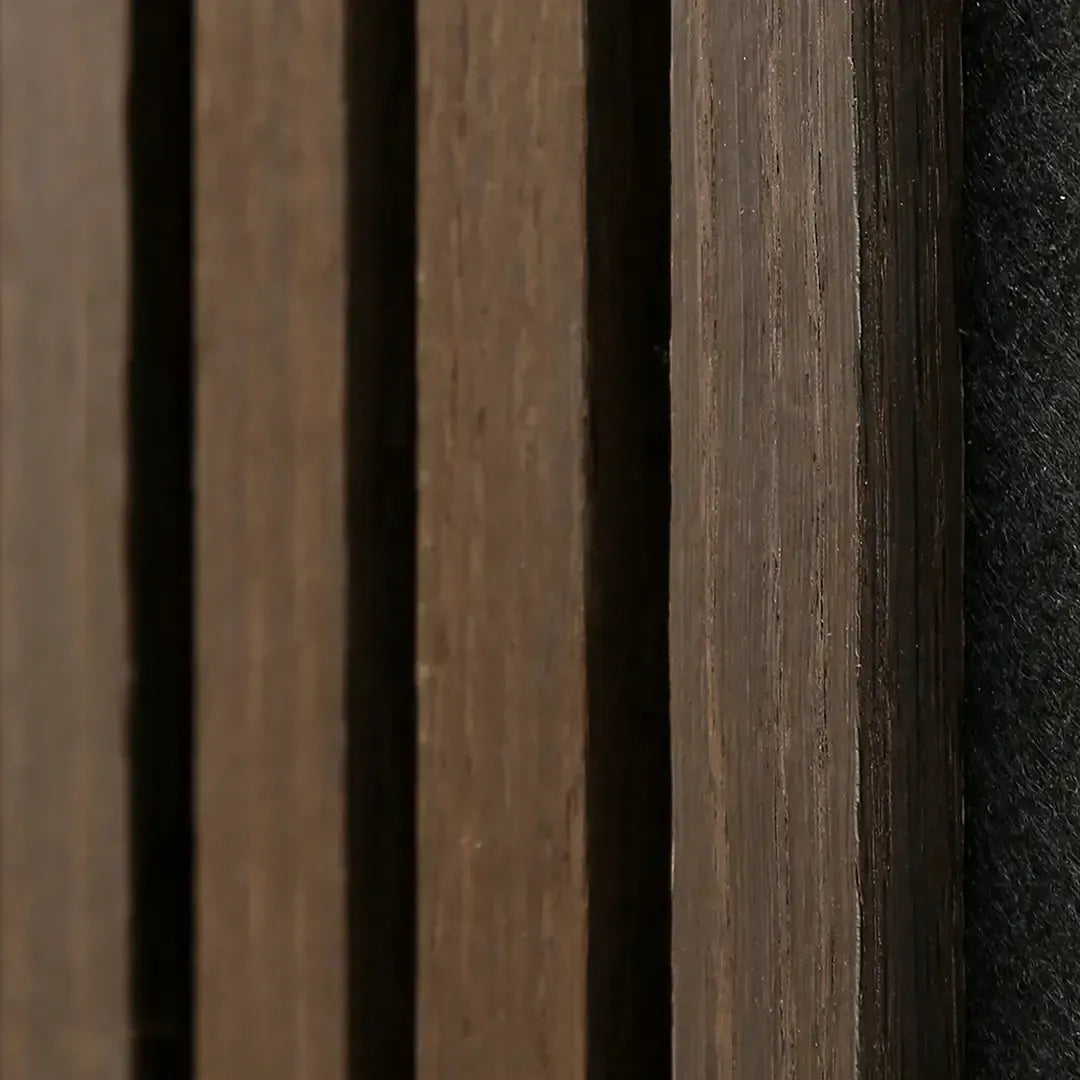
Oak, walnut, smoked oak, black oak, and rustic oak account for most of the wood species for slat wall panels sold into US homes and commercial fit-outs in 2026, and picking the wrong tone is the single most common reason a slat wall gets redone within a year. This guide ranks the 5 wood species that come up most often, with one clear best-for pick per finish so you're not guessing.
- Natural Oak is the overall pick for wood species for slat wall panels in bright, minimalist rooms in 2026.
- Walnut fits dark, moody living rooms and executive offices where scuffs need to disappear.
- Black Oak gives the sharpest contrast for one statement wall, not whole-room coverage.
- Smoked Oak splits light and dark for bedrooms that need warmth without visual weight.
- Rustic Oak Premium 3-Sided Veneer wraps exposed corners so no MDF edge shows.
Why this matters
Wood species does more than set a mood. Grain pattern, tone, and veneer thickness change how a room reads under artificial light, how much a wall shows fingerprints and dust, and whether a panel needs a felt backer to actually cut noise instead of just decorating a wall.
Most buyers pick a species off a small swatch and regret it once the panel covers a full wall under different lighting than the showroom. The Natural Oak slat wall panel from AKU Woodpanel is the safest starting point for exactly that reason — it behaves close to how it looks on a screen, in daylight or under warm bulbs, which matters more than any spec sheet.
Real veneer also ages differently than a printed foil finish. A genuine oak or walnut veneer develops slight tone shifts with UV exposure over years of use; a foil-wrapped panel doesn't age gracefully, it just fades and eventually peels at the seams. That difference is why species selection and veneer quality get discussed together, not separately, going into 2026 renovation projects.
What makes the best wood species for slat wall panels
- Grain visibility at normal viewing distance — busy grain hides small installation gaps, tight grain shows them
- Tone — light species open up a room, dark species add visual weight
- Real veneer vs. printed finish — veneer shows authentic grain variation panel to panel, foil repeats the same pattern
- Acoustic backing availability — some species come with a felt backer that adds sound absorption, not just decoration
- Fade resistance — how much the tone shifts under direct sun over months of exposure
- Edge and corner finishing — whether end pieces or a 3-sided wrap are available for that species
Wood species for slat wall panels: at a glance
| Wood Species | Best For | Standout Feature | Key Limitation |
|---|---|---|---|
| Natural Oak | Bright, minimalist rooms | Reflects light, pairs with most flooring | Less dramatic on a standalone statement wall |
| Walnut | Dark, luxury living rooms & offices | Deep tone hides scuffs and fingerprints | Can shrink the feel of a small room |
| Smoked Oak | Warm mid-tone bedrooms | Balances cool and warm palettes | Tone can vary slightly batch to batch |
| Black Oak | High-contrast accent walls | Strongest visual contrast against pale walls | Absorbs light in small spaces |
| Rustic Oak Premium 3-Sided Veneer | Wraparound corners, farmhouse walls | Veneer wraps three sides, no exposed MDF core | Grain variation fights a minimalist look |
1. Natural Oak: best wood species for slat wall panels in bright rooms
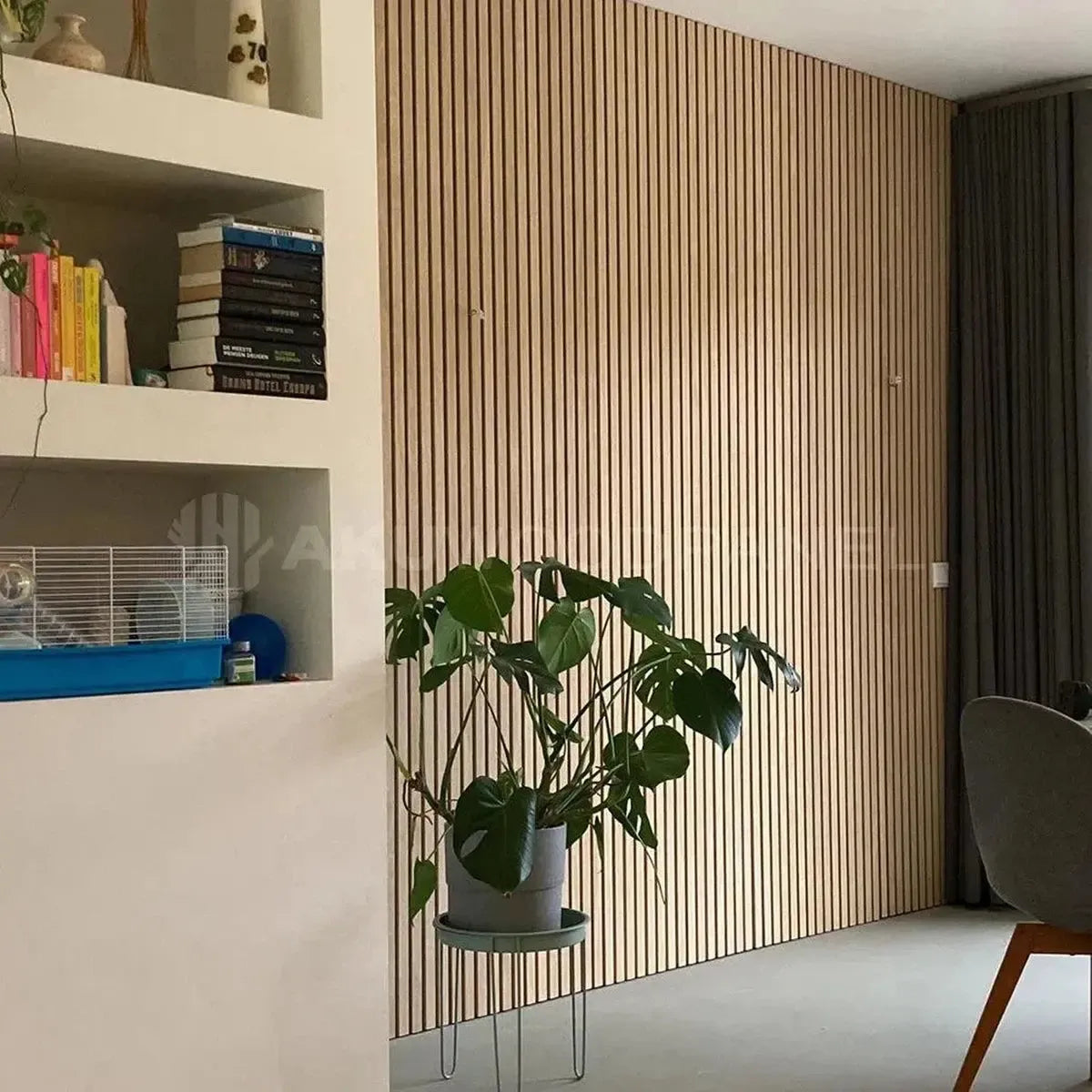
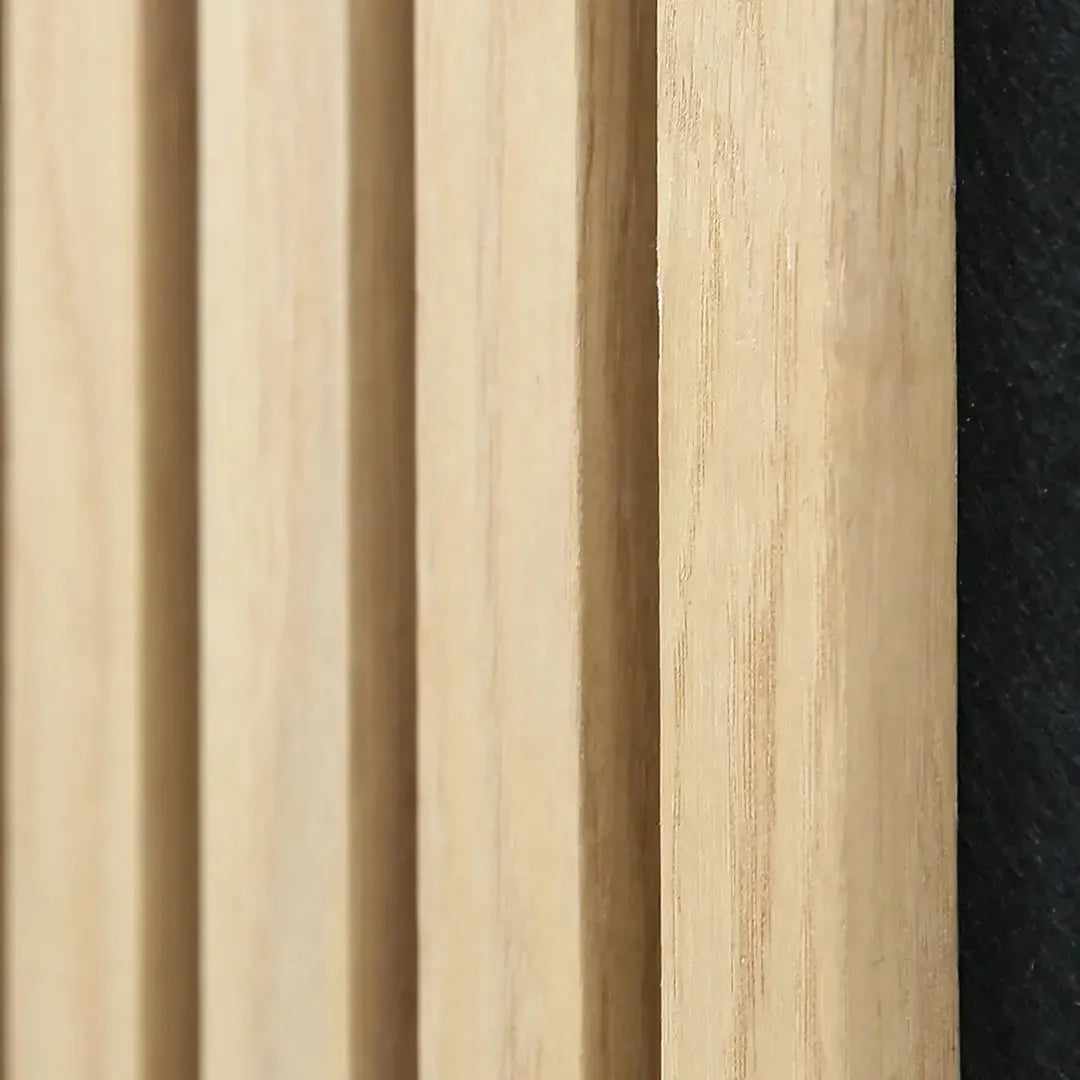
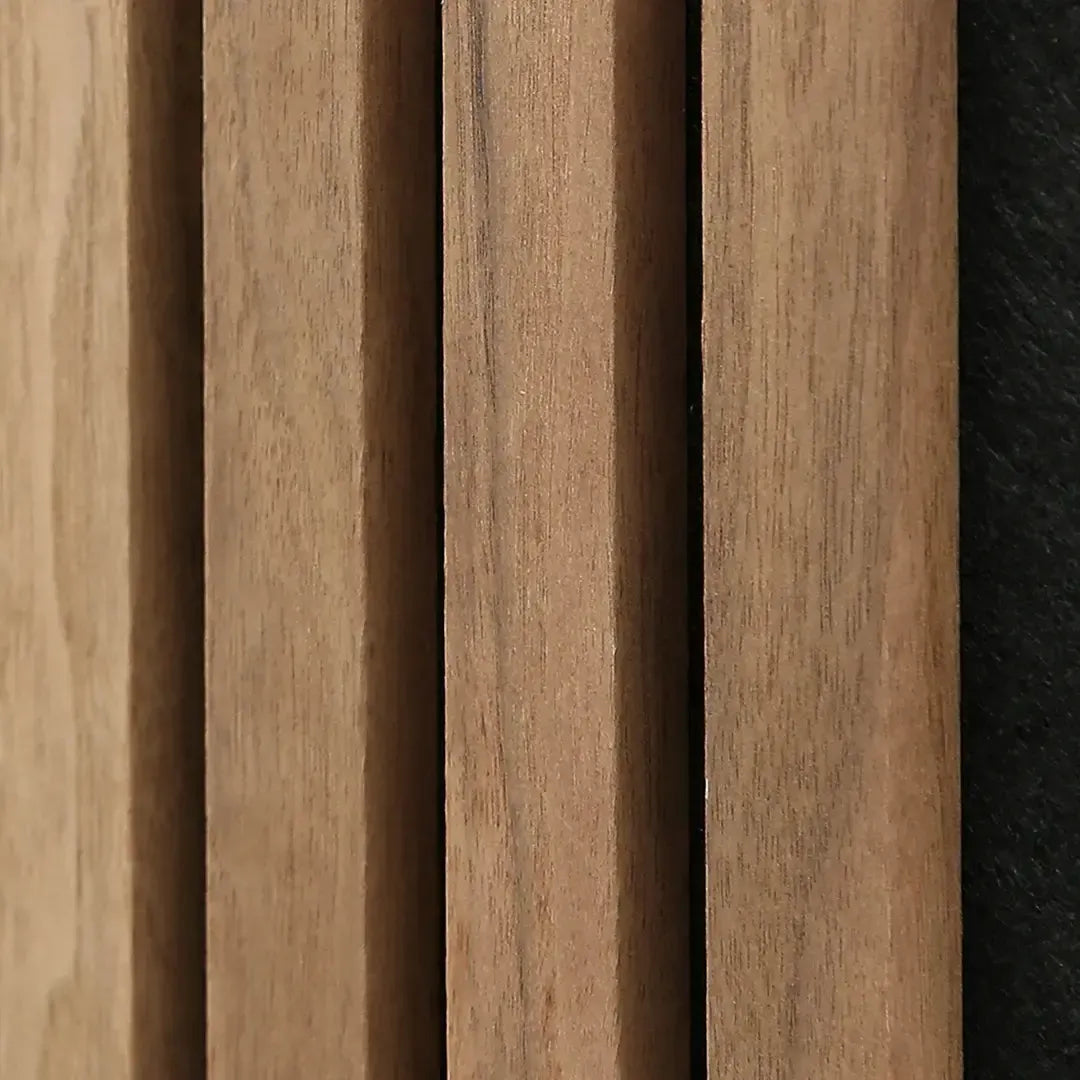
Natural Oak carries a pale, tight grain that reflects ambient light instead of absorbing it, which is why it shows up on nearly every Scandinavian and minimalist mood board built in 2026. It reads similarly under warm and cool bulbs, so a room with mixed lighting doesn't shift the tone as much as darker species do, and it's the one finish in this list that rarely gets vetoed by a second decision-maker in the room.
Natural Oak pros:
- Opens up small or low-light rooms instead of closing them in
- Pairs with almost any flooring tone, light or dark
- Available with a gray felt backer for added sound absorption
- Consistent tone across large runs, easier to match panel to panel
Natural Oak cons:
- Less dramatic as a lone statement wall
- Shows less personality than a busier grain like Rustic Oak
Natural Oak best for: small rooms, rentals, and any interior that needs to feel bigger and brighter. Verdict: Buy.
2. Walnut: best wood species for dark, luxury living rooms and offices
Walnut slat wall panels carry a deep chocolate-brown tone with visible grain movement that reads as a premium finish the moment it's on the wall. It's the species AKU Woodpanel sells most often for executive offices and hospitality feature walls that need to look expensive without looking loud, and it holds up well in rooms that already get plenty of daylight.
Walnut pros:
- Rich tone hides scuffs, smudges, and fingerprints better than pale finishes
- Pairs naturally with black or brass hardware and fixtures
- Reads as premium against a plain white or gray wall
- Strong contrast for a single accent wall
Walnut cons:
- Can make a small room feel smaller without enough natural light
- Dust and pale-colored fibers show up more visibly than on oak
Walnut best for: living rooms, home offices, and hospitality walls with good ambient lighting. Verdict: Buy.
3. Smoked Oak: best wood species for warm mid-tone bedrooms
Smoked Oak sits between Natural Oak and Walnut on the tone spectrum — a warm gray-brown that avoids the flatness some buyers find in pale oak without the visual weight of walnut. It's a common pick for bedrooms where a fully dark wall feels heavy at night but a fully pale wall feels sterile, and it tends to age well since the tone was already muted going in.
Smoked Oak pros:
- Balances cool and warm color palettes in the same room
- Less visually heavy than walnut in a bedroom setting
- Matches most mid-tone hardwood and laminate flooring common in US homes
Smoked Oak cons:
- Doesn't deliver the contrast Black Oak gives on a statement wall
- Slight tone variation between production runs
Smoked Oak best for: bedrooms and dining rooms that need warmth without a heavy, dark wall. Verdict: Buy.
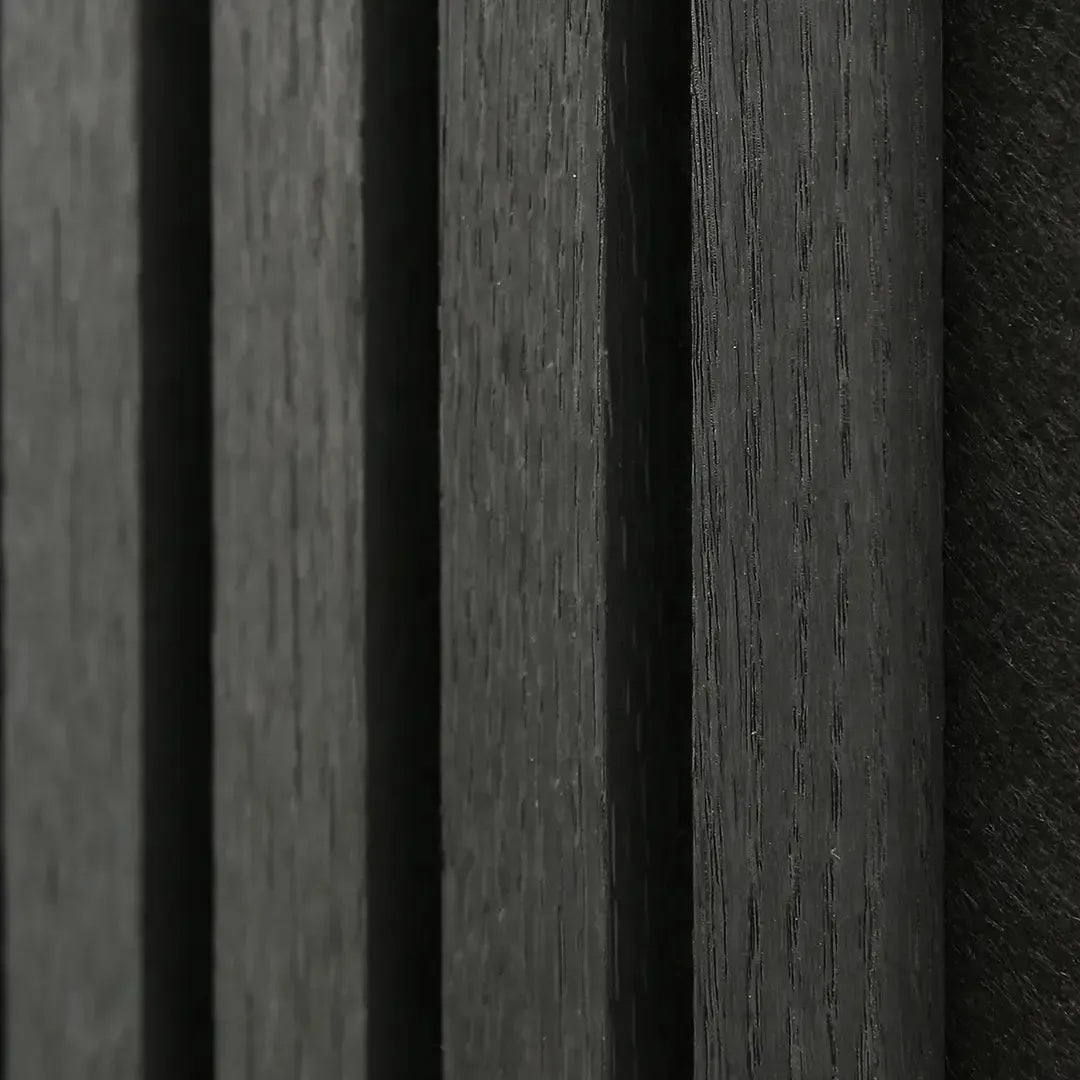
4. Black Oak: best wood species for high-contrast statement walls
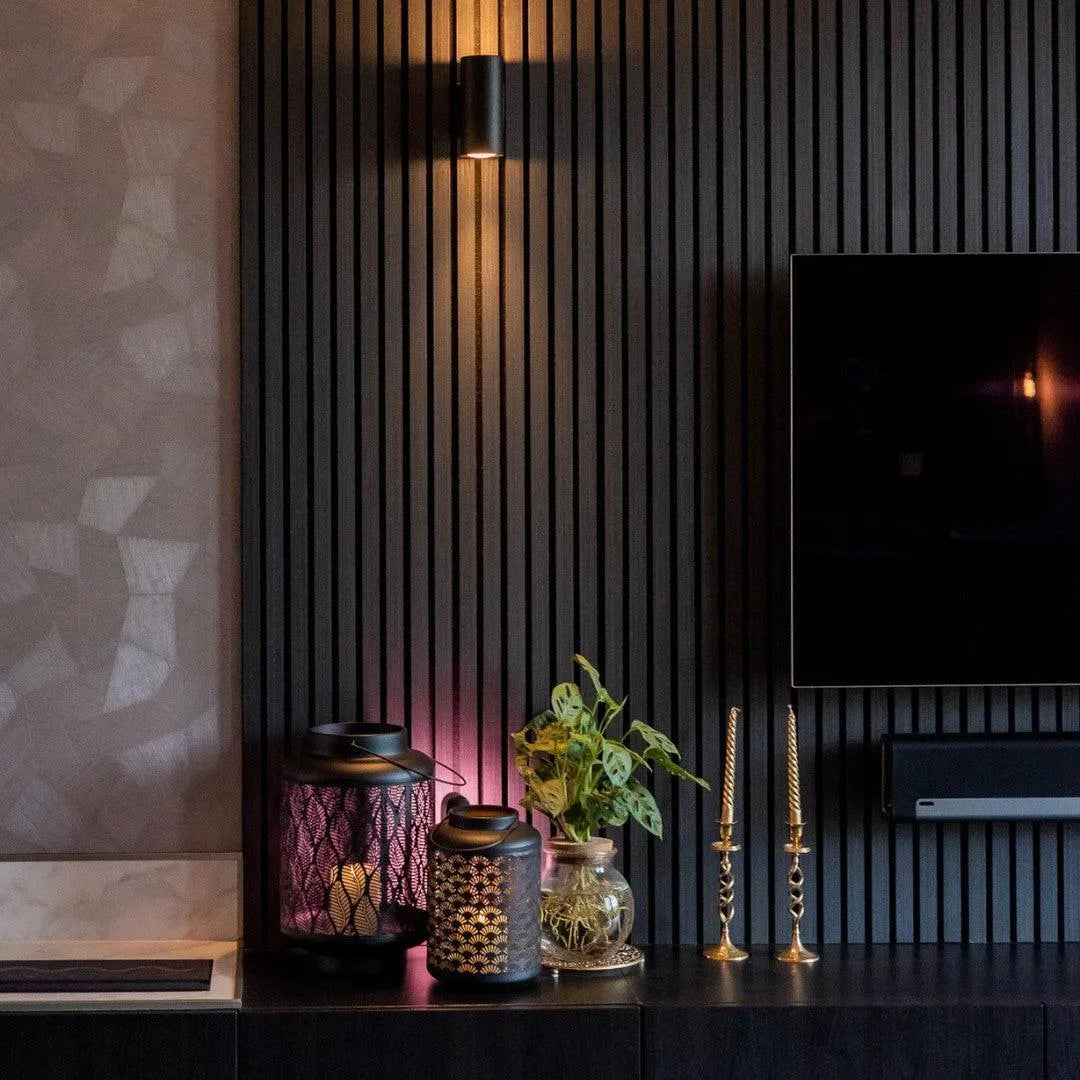
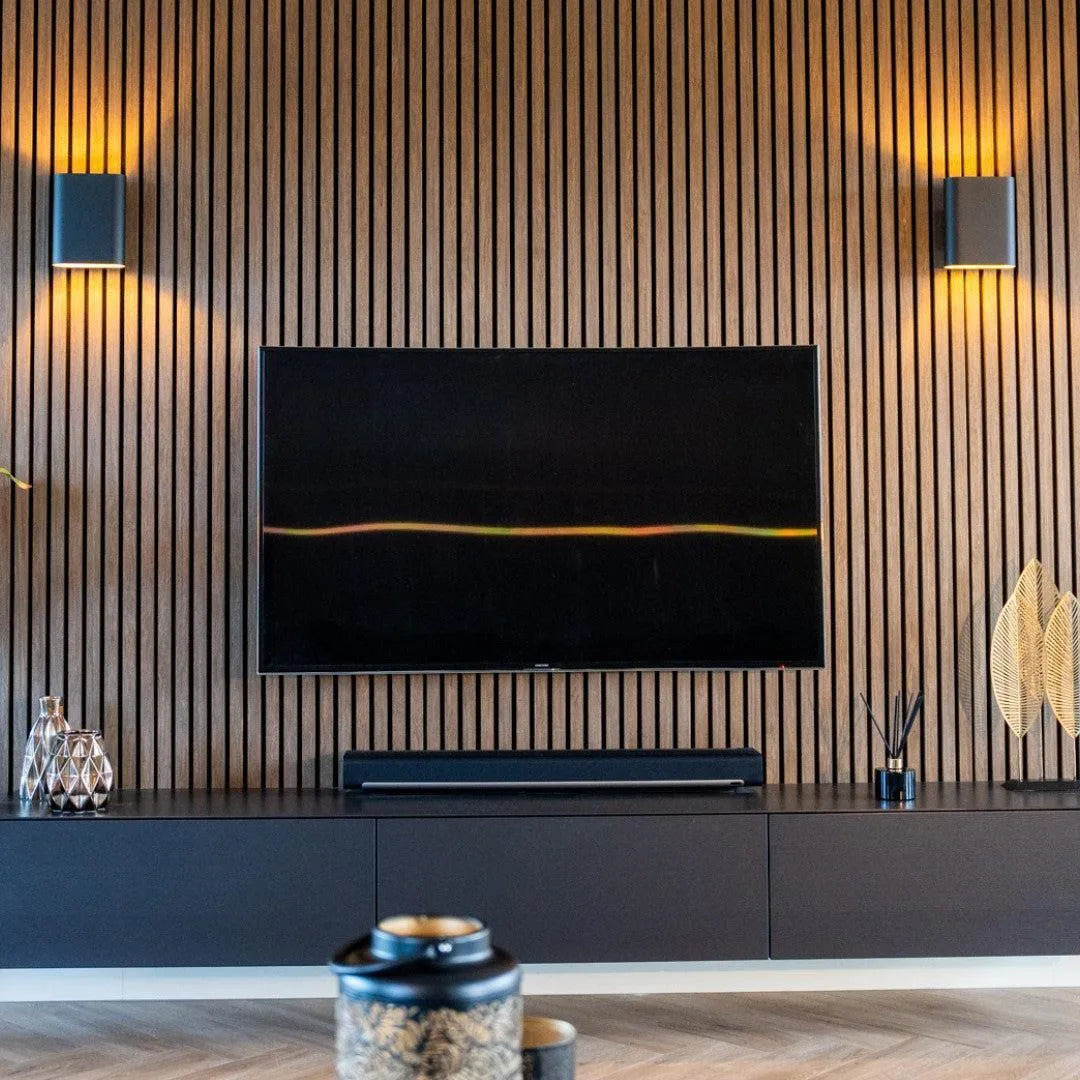
Black Oak slat wall panels deliver the strongest tonal contrast in the AKU Woodpanel lineup, which makes them the go-to pick when a single wall needs to do all the visual work in a room. It's the species most often chosen for a TV wall, a home bar, or an entryway that needs to read as a design statement instead of background texture, and it photographs well for listings and portfolios.
Black Oak pros:
- Strongest contrast against white or pale walls in the group
- Hides marks and fingerprints better than any lighter finish
- Suits industrial, modern, and dark academia styles
Black Oak cons:
- Absorbs light, so a small room covered wall-to-wall can feel cramped
- Can look severe against traditional or country-style trim and molding
Black Oak best for: one accent wall in a room with good natural or artificial light. Verdict: Buy for a single wall, skip for full-room coverage in a small space.
5. Rustic Oak Premium 3-Sided Wood Veneer: best wood species for wraparound corners
Rustic Oak Premium 3-Sided Wood Veneer solves a problem the other four species don't: what happens at an inside corner or an exposed panel edge. Because the veneer wraps three sides instead of one, a corner or a shelf edge shows real wood grain instead of the MDF core underneath, which matters most on kitchen islands, room dividers, and reception desks where an edge sits at eye level.
Rustic Oak pros:
- Veneer wraps three sides, so exposed edges and inside corners don't show raw MDF
- Heavier grain variation suits farmhouse, cabin, and rustic interiors
- Works well with end pieces for a fully finished run
Rustic Oak cons:
- Busy grain pattern fights a strict minimalist or Scandinavian look
- The 3-sided wrap is wasted spend on a single flat wall with no exposed edges
Rustic Oak best for: kitchen islands, room dividers, and any layout with exposed corners or edges. Verdict: Buy for corner-heavy layouts, skip for a single flat wall.
Matching wood species to your flooring and trim
Tone contrast between a slat wall and the floor beneath it matters more than most buyers expect before installation. A pale Natural Oak wall over dark walnut flooring reads as intentional and layered; the same pale wall over pale flooring can wash a room out and make the panel disappear into the background instead of standing out.
Dark species like Walnut and Black Oak work best when trim and baseboards are also dark or black — white traditional trim against a near-black panel tends to look unfinished rather than contrasted on purpose. Smoked Oak is the most forgiving species here, since its mid-tone sits close enough to both light and dark trim that it rarely clashes. Rustic Oak's heavier grain pairs naturally with exposed brick, reclaimed wood shelving, or black metal fixtures rather than polished, high-gloss surfaces.
Felt-backed oak and walnut for acoustic performance
Two of the five species above also come in a felt-backed acoustic format that adds sound absorption on top of the visual finish. Felt-backed hexagon panels in oak and walnut carry a 0.75 NRC rating, which puts them in useful range for cutting echo in a living room or open-plan office, not just softening the look of a wall.
Felt backing is worth the upgrade in any room where echo is already a problem — a home office, an open living room, or a space with hard floors and bare walls. It's less necessary in a bedroom or hallway where sound isn't bouncing around in the first place, so don't pay for acoustic backing you won't feel the benefit of.


How we ranked these wood species
Each species above was weighed against the same six criteria: grain visibility, tone, real veneer vs. printed finish, acoustic backing availability, fade resistance, and edge or corner finishing. No species won on every criterion — that's the point of ranking by use case instead of by a single leaderboard score. Natural Oak wins on room-brightening and flexibility, Walnut and Black Oak win on drama and contrast, Smoked Oak wins on balance for bedrooms, and Rustic Oak wins on corner and edge handling that the other four don't address at all.
Which wood species should you choose?
Default to Natural Oak in 2026 if you're unsure — it works in the most rooms, pairs with the most flooring, and comes with a felt-backed acoustic option if echo is a concern. Move to Walnut or Black Oak only if the room already has strong natural light and you want the wall to be the focal point rather than background texture. Pick Smoked Oak for a bedroom that needs warmth without heaviness, and reach for Rustic Oak Premium 3-Sided Veneer only when the layout has exposed corners or edges that a single-sided veneer can't cover cleanly.
AKU Woodpanel carries all five species in the same slat profile, so switching between them later for a second room doesn't mean switching suppliers or panel systems entirely.
FAQ
What's the best wood species for slat wall panels in 2026?
Natural Oak is the best overall wood species for slat wall panels in 2026 for most rooms — it reflects light, pairs with most flooring, and comes with a felt-backed acoustic option. Walnut and Black Oak are better picks for a dedicated statement wall.
Is walnut or oak better for a slat wall panel?
Walnut reads darker and more premium and hides scuffs better; oak reflects more light and works in more rooms. Choose walnut for a feature wall with good lighting and oak for a room that needs to feel bigger.
Which wood tone hides scratches and fingerprints best?
Darker species like Black Oak and Walnut hide marks and fingerprints better than pale species like Natural Oak, since contrast against the mark is lower.
Do all wood species come with acoustic felt backing?
No. Among the species compared here, felt-backed acoustic versions are available in Natural Oak and Gray Walnut, rated at 0.75 NRC for sound absorption.
What's the difference between Natural Oak and Smoked Oak panels?
Natural Oak is pale and light-reflecting; Smoked Oak is a warm gray-brown mid-tone that sits between Natural Oak and Walnut on the tone spectrum, useful when a fully pale or fully dark wall doesn't fit the room.
Can I mix wood species on the same wall?
Yes, mixing tones like Natural Oak and Black Oak in a striped or paneled layout is common for statement walls, but matching grain direction across the mix matters more than matching species.
Which wood species works best for a small room?
Natural Oak or Smoked Oak work best in small rooms because lighter tones reflect more light and don't visually shrink the space the way Walnut or Black Oak can.
How much maintenance do real wood veneer panels need?
Real wood veneer panels need occasional dusting and placement away from direct sun to limit fading; they don't need refinishing or sealing like solid hardwood flooring.
One last thing
The detail buyers miss most: Rustic Oak Premium 3-Sided Wood Veneer is the only species in this list wrapped on three sides instead of one. On a flat wall that difference doesn't matter — on a kitchen island corner or an exposed shelf edge, it's the difference between real wood grain at eye level and a strip of raw MDF staring back at you every time someone walks past in 2026 and beyond.


 Better performance and aesthetic appeal
 In Stock