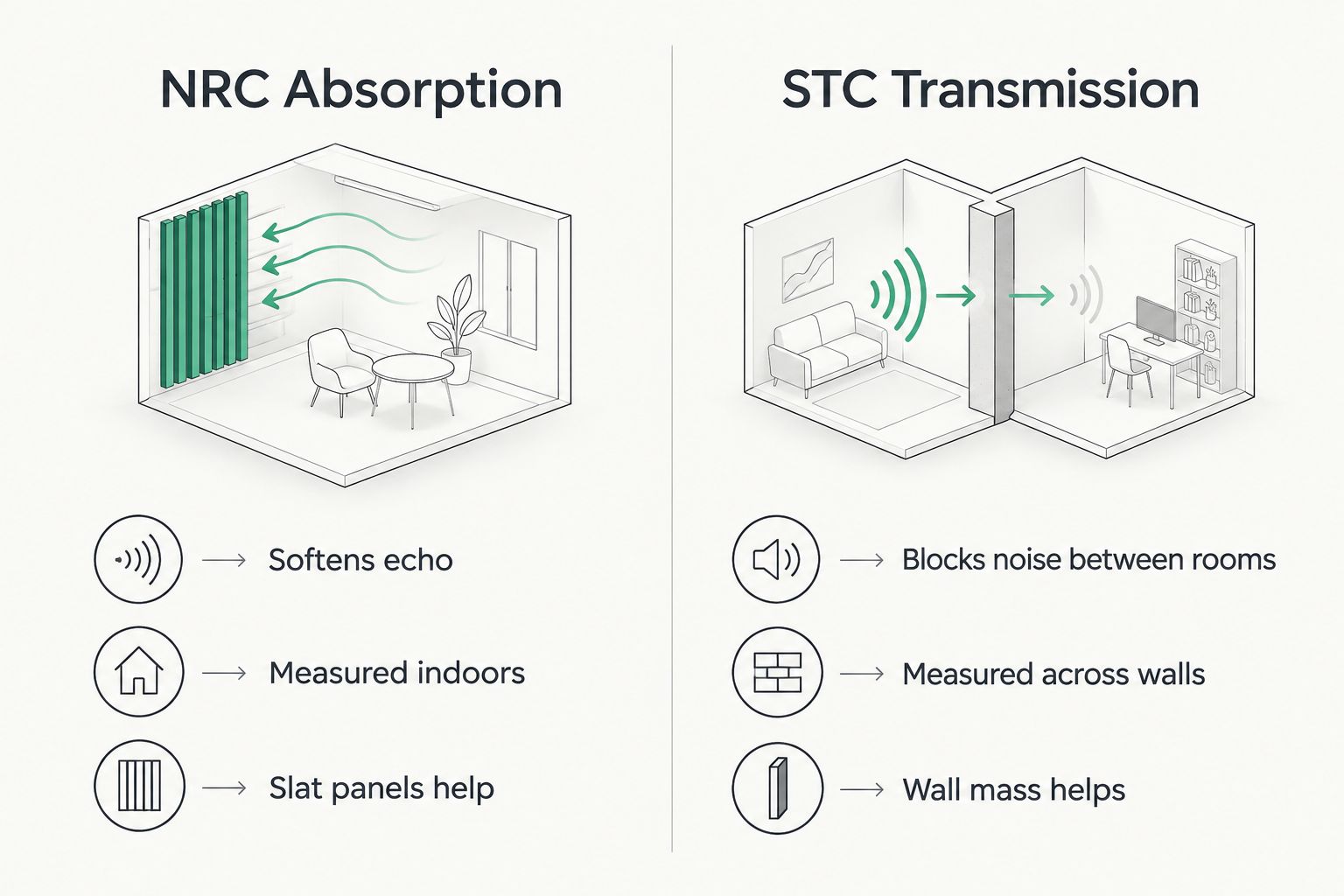
Search “sound absorbing wall panels stc rating” and the first problem is the question itself. STC (Sound Transmission Class) measures how much sound a wall assembly blocks between two rooms; NRC (Noise Reduction Coefficient) measures how much a surface absorbs inside one room. Decorative wood panels move the second number, not the first, and this guide ranks the panels that do that job well in 2026 — starting with the acoustic slat wall panel in natural oak, through options built for heavier absorption in open-plan rooms, and ending with what to buy instead if the real problem is noise coming through a wall.
- Sound absorbing wall panels are rated by NRC, not STC — the two specs measure different things entirely.
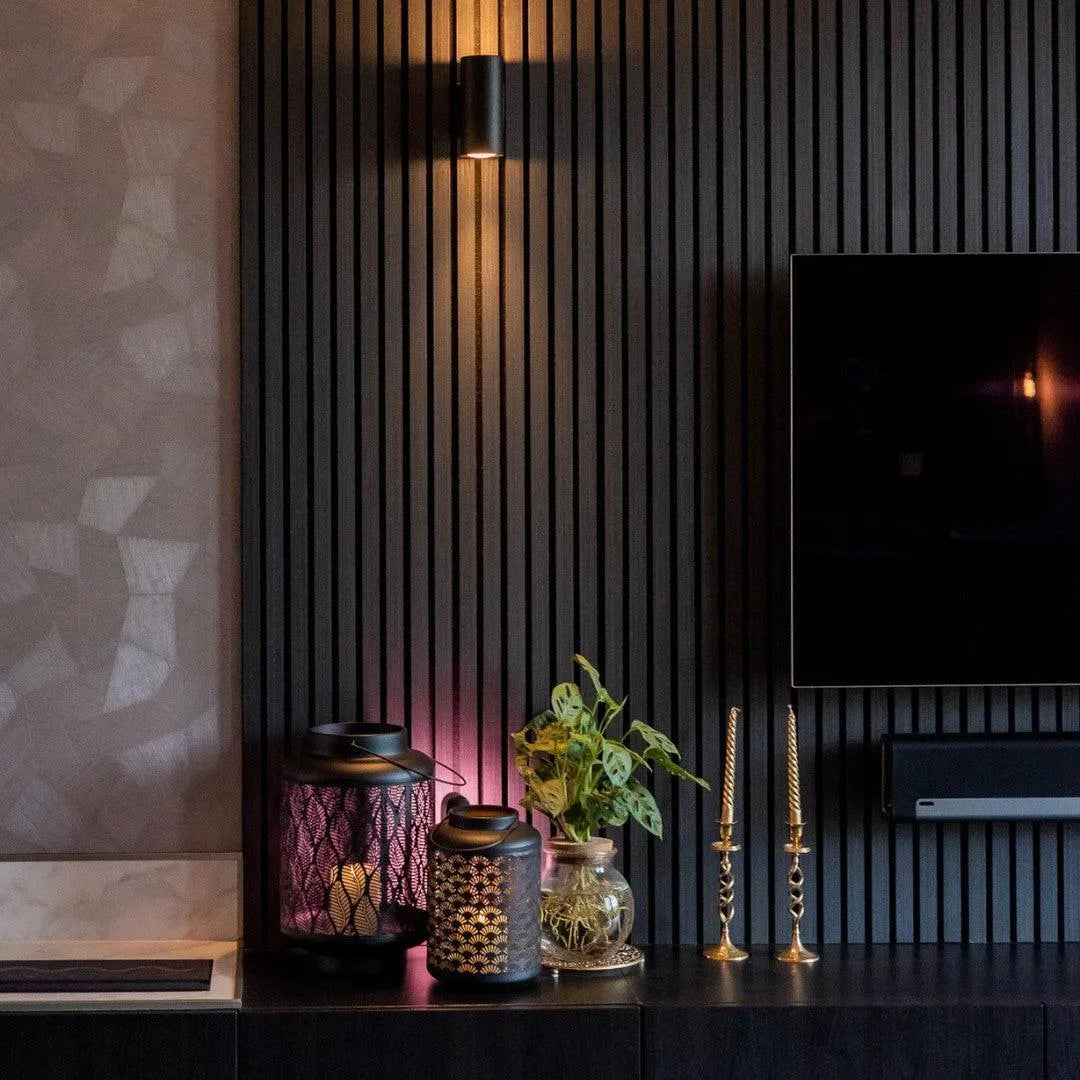
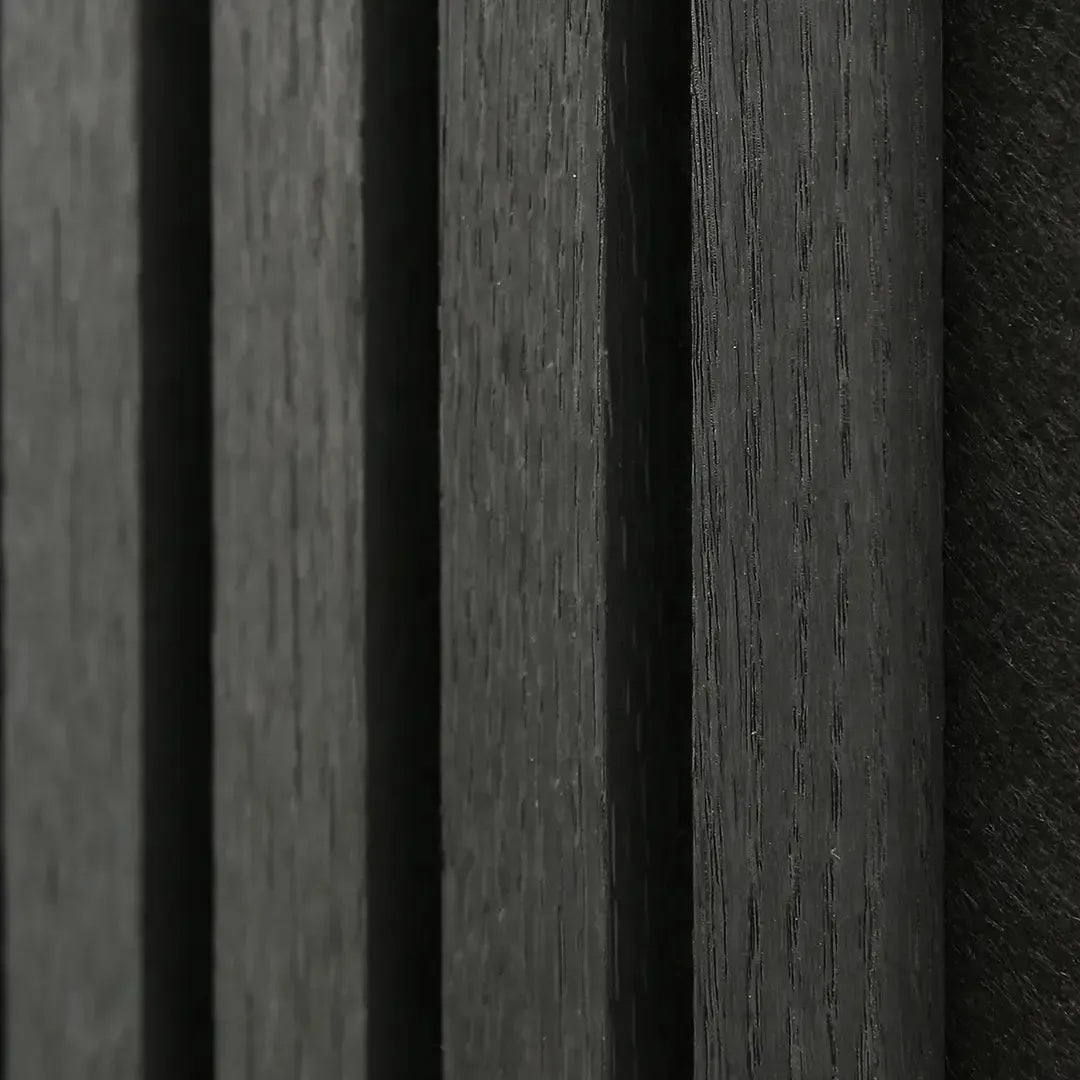
- AKU Woodpanel's Smoked Oak with Gray Felt slat panel wins for maximum absorption in open-plan rooms in 2026.
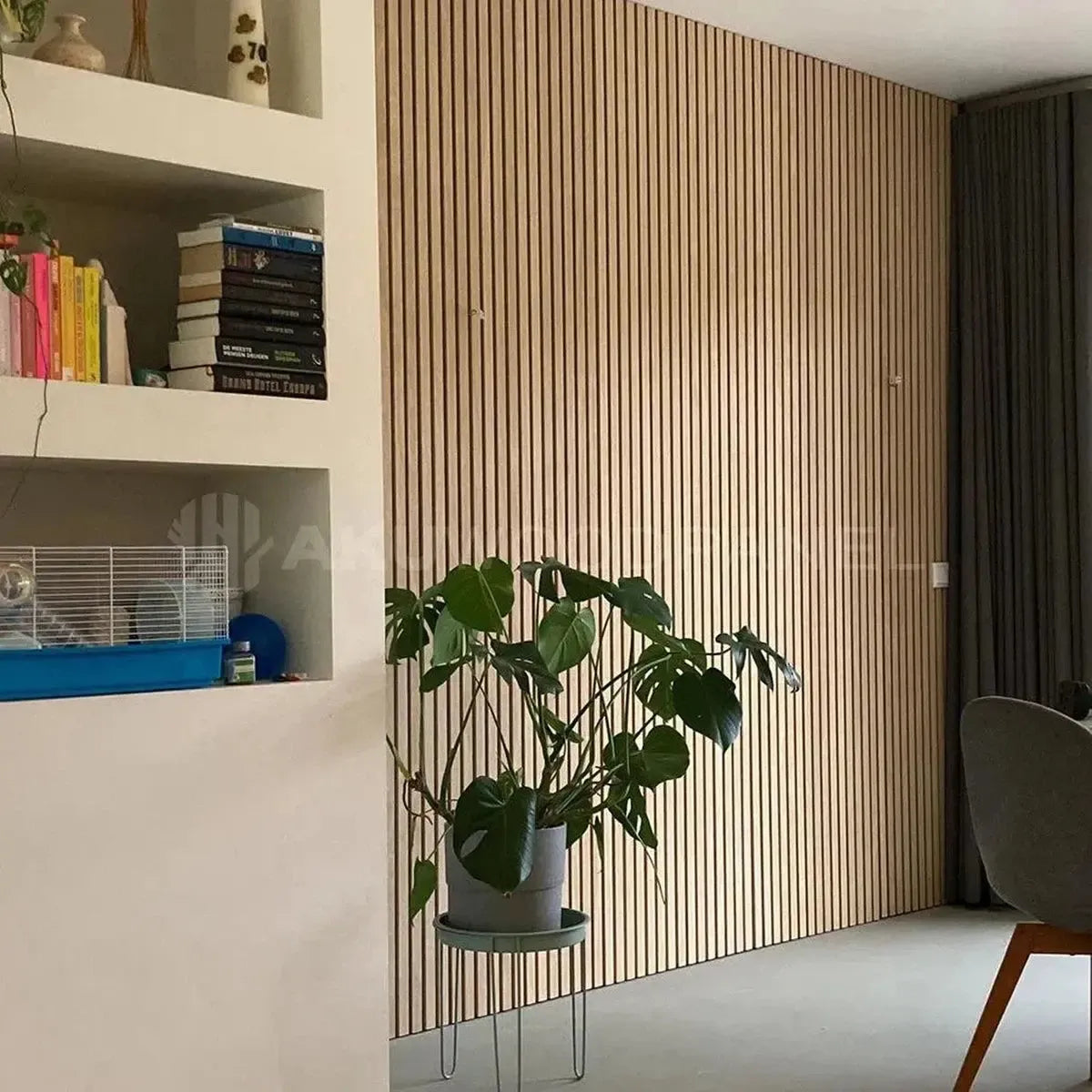
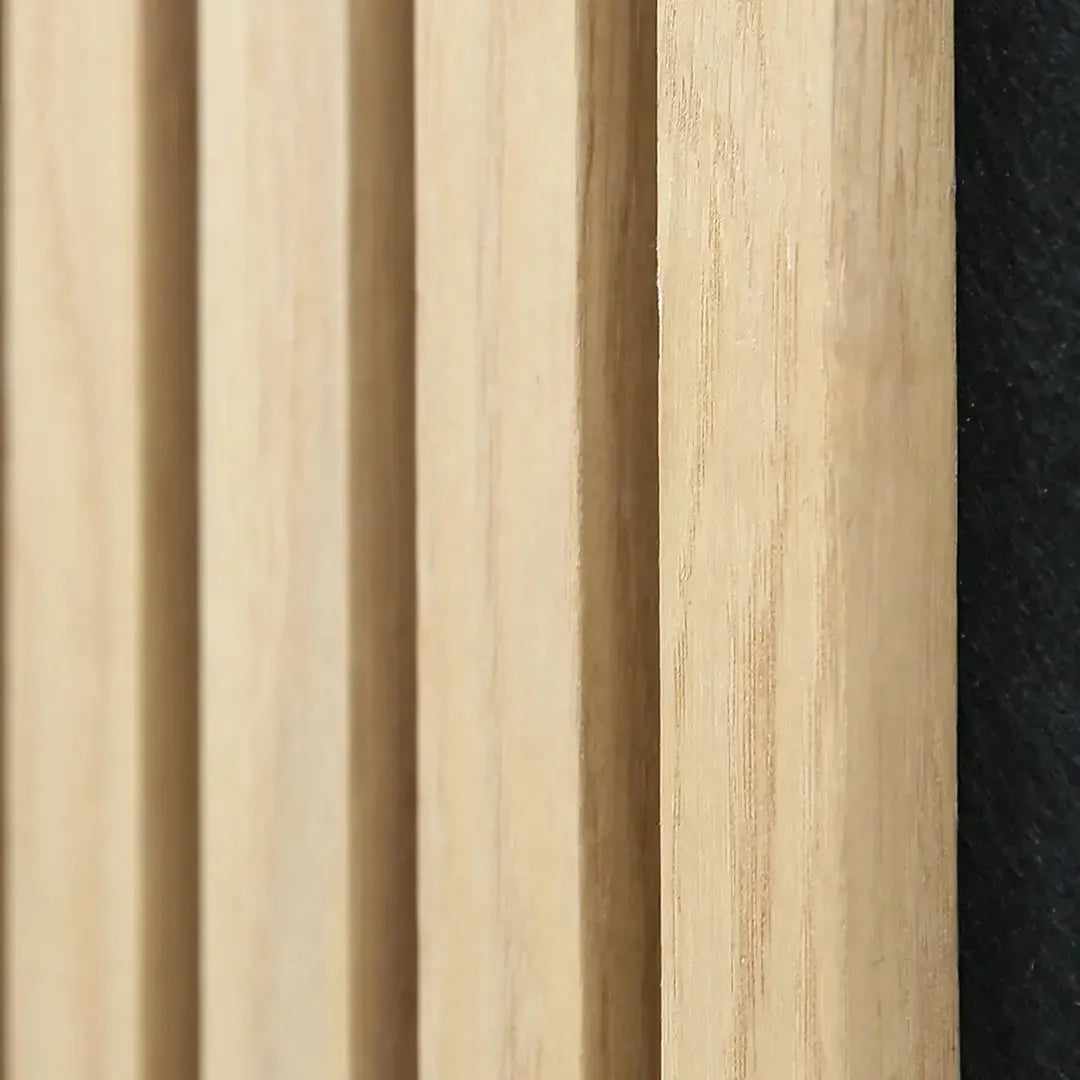
- The Natural Oak Acoustic Slat Wall Panel is the best overall pick for living rooms and home offices.
- No surface-mounted panel changes a wall's STC rating — that takes mass, decoupling, or insulation inside the wall.
- Felt-backed acoustic slat panels typically test around 0.85 to 0.90 NRC versus roughly 0.05 for bare painted drywall.
Why this matters
Most people typing “STC rating” into a search bar actually have an echo problem, not a noise-through-the-wall problem. A living room that sounds harsh, a home office where a phone call bounces off drywall, an open kitchen where every dish clank carries — that's an absorption problem, and it's solved with NRC-rated surfaces, not STC-rated assemblies.
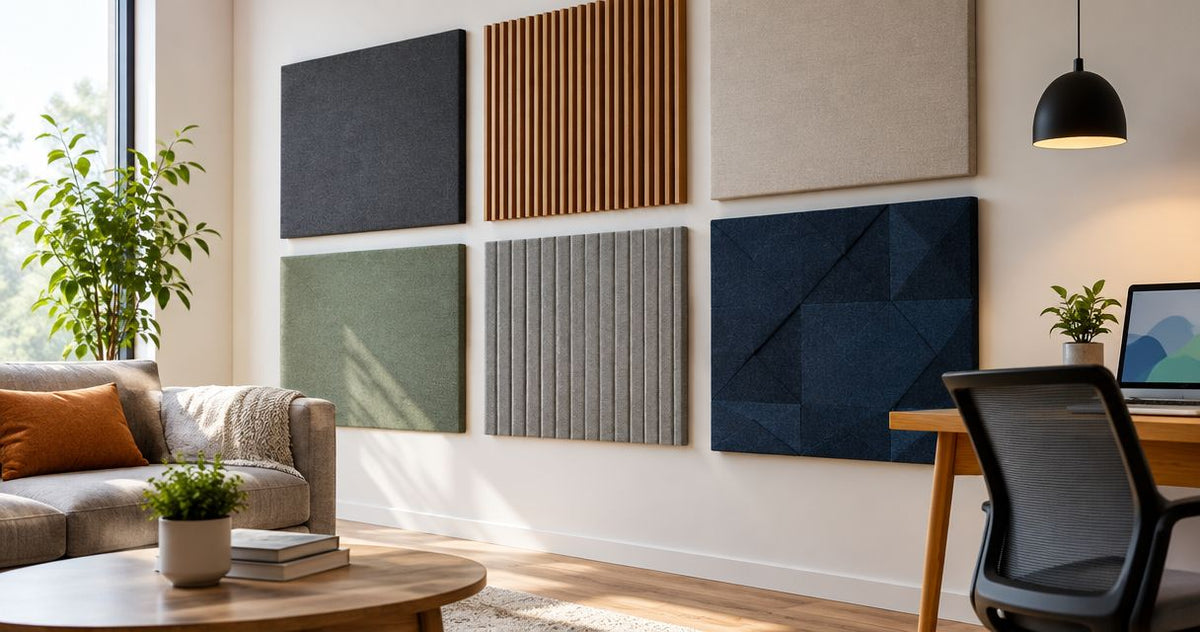
Bare painted drywall reflects almost everything it hears, sitting around 0.05 NRC. A felt-backed acoustic slat wall panel typically lands in the 0.85 to 0.90 NRC range, which is why a room full of hard surfaces sounds different the moment panels go up. If you want the math behind that number for your own room, the NRC rating calculation guide walks through it room by room.
STC is a different animal. It's tested on a full wall assembly under ASTM E90 — studs, insulation, drywall layers, sealant — and many building codes set STC 50 as the minimum between apartment units. A quarter-inch of wood panel screwed to the face of an existing wall does not meaningfully move that number, no matter what the marketing copy implies. That's not a flaw in the panels; it's just not the job they're built for.
What makes the best sound absorbing wall panel
- Absorption core, not just veneer. Felt, foam, or acoustic wool behind the wood grooves is what actually does the absorbing work.
- Groove-to-surface ratio. Slat panels absorb through the gaps between wood strips; tighter, deeper grooves catch more mid and high frequencies.
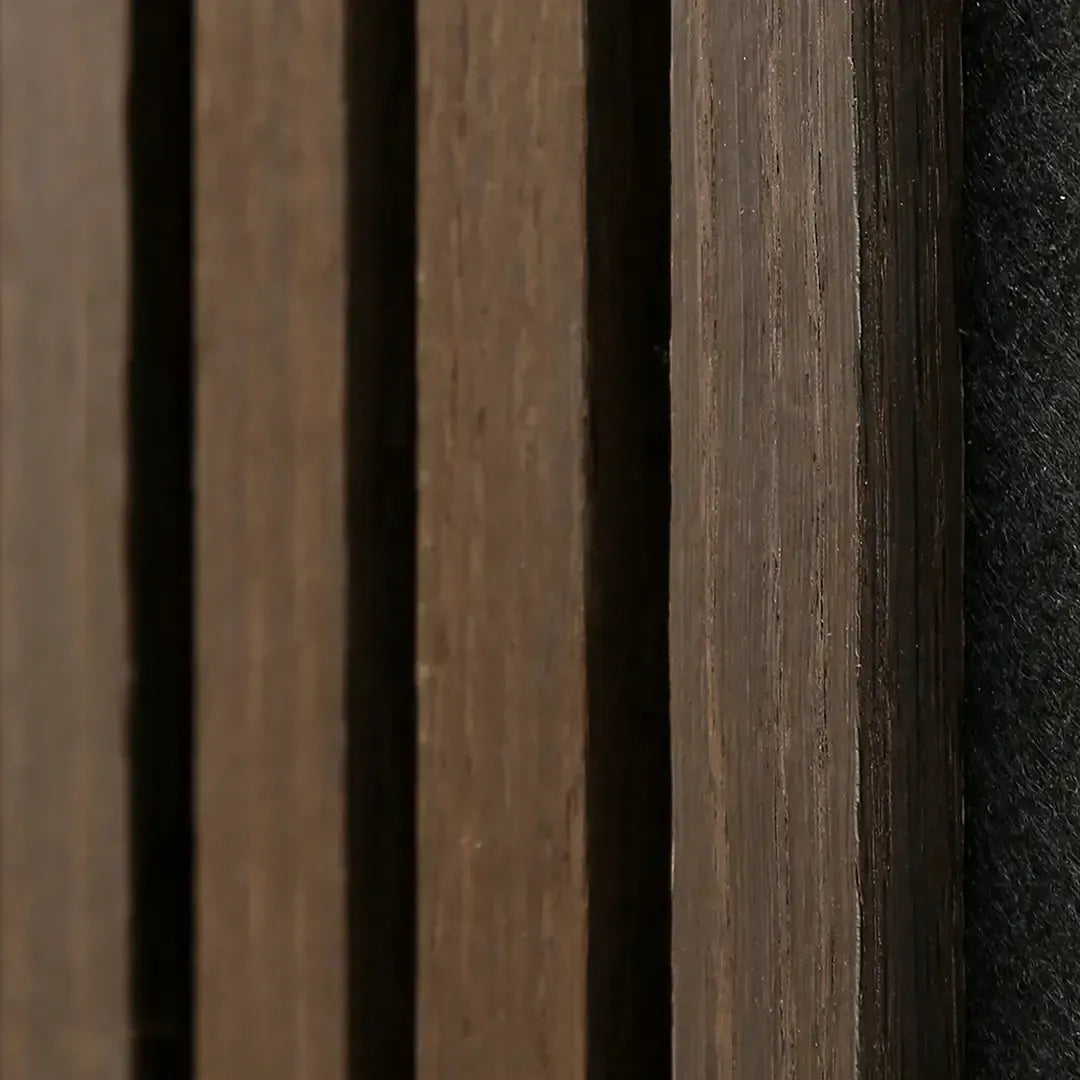
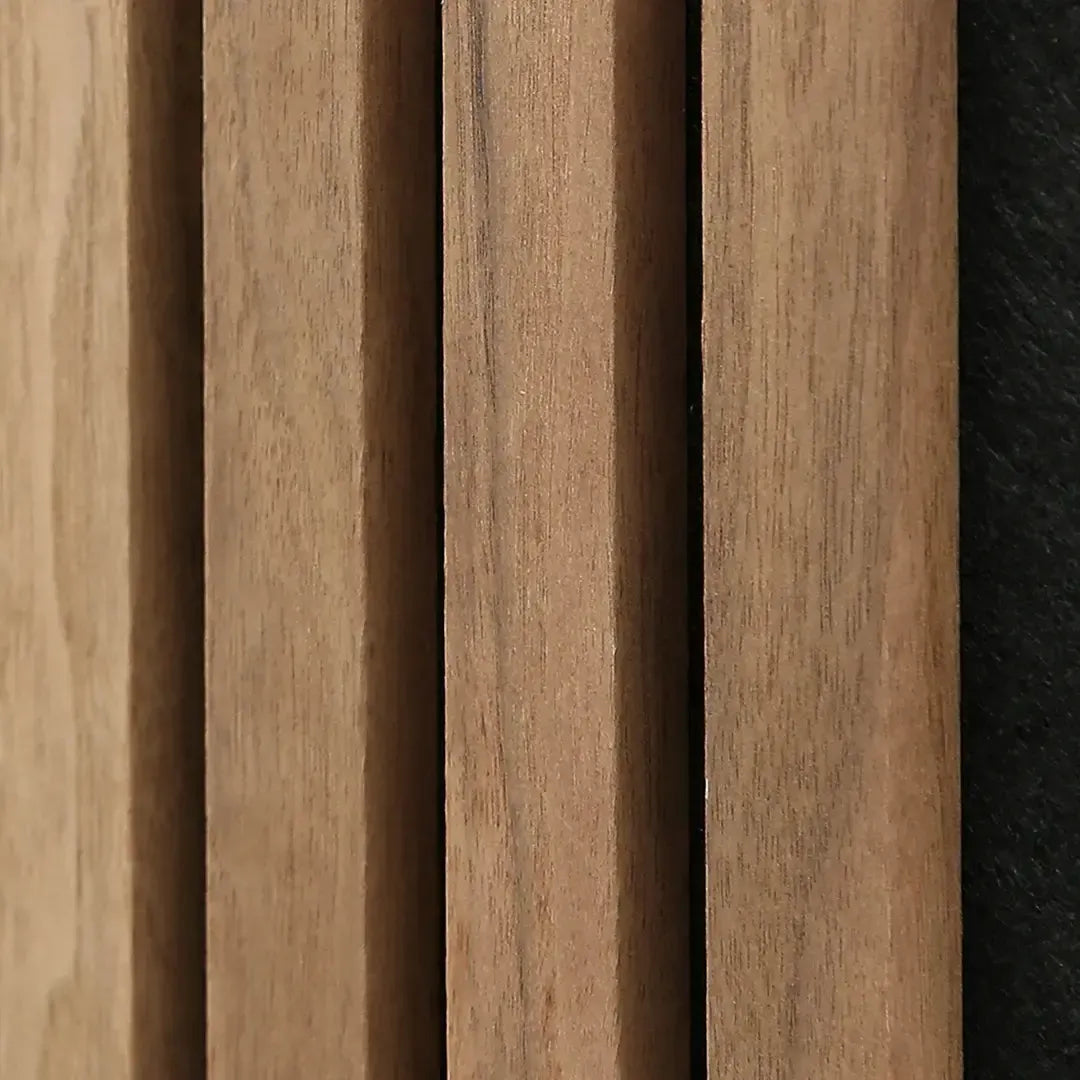
- Real wood veneer thickness. A 3-sided veneer holds up to grain detail and repair better than a printed laminate wrap.
- Coverage efficiency. Panel width and mounting pattern decide how many square feet one order actually treats.
- Sample-first buying. A wall-sized order is a bad first purchase — testing color and slat spacing on a real sample avoids a costly reorder.
- Application range. The best panels work in a bedroom and a restaurant dining room without a redesign.
At a glance: sound absorbing wall panels ranked for 2026
| Panel | Best for | Standout feature | Key limitation |
|---|---|---|---|
| Natural Oak Acoustic Slat Wall Panel | Living rooms and home offices | Balanced absorption with a light, neutral grain | Lighter finish shows dust and marks faster than darker veneers |
| Smoked Oak with Gray Felt Slat Panel | Maximum absorption in open-plan rooms | Gray felt backing adds visible acoustic contrast | Higher-contrast look isn't right for every color scheme |
| Walnut Acoustic Slat Wall Panel | Premium offices and hospitality interiors | Dark, dense grain reads as high-end from across a room | Darker veneer shows scratches more visibly than oak tones |
| Hexagon Acoustic Panel, Walnut | Accent walls and smaller treated zones | Modular hexagon shape treats partial walls without a full slat run | Covers less absorbing surface per panel than a full slat sheet |
| Full Sample Box, Slat Wall Panel | Testing before a full room order | Multiple finishes in hand before committing | Doesn't treat a wall on its own — it's a decision tool |
| Mineral wool behind drywall or resilient channel | Actual STC improvement between rooms | Targets sound transmission, not just echo | Requires opening the wall, not a surface-mount weekend project |
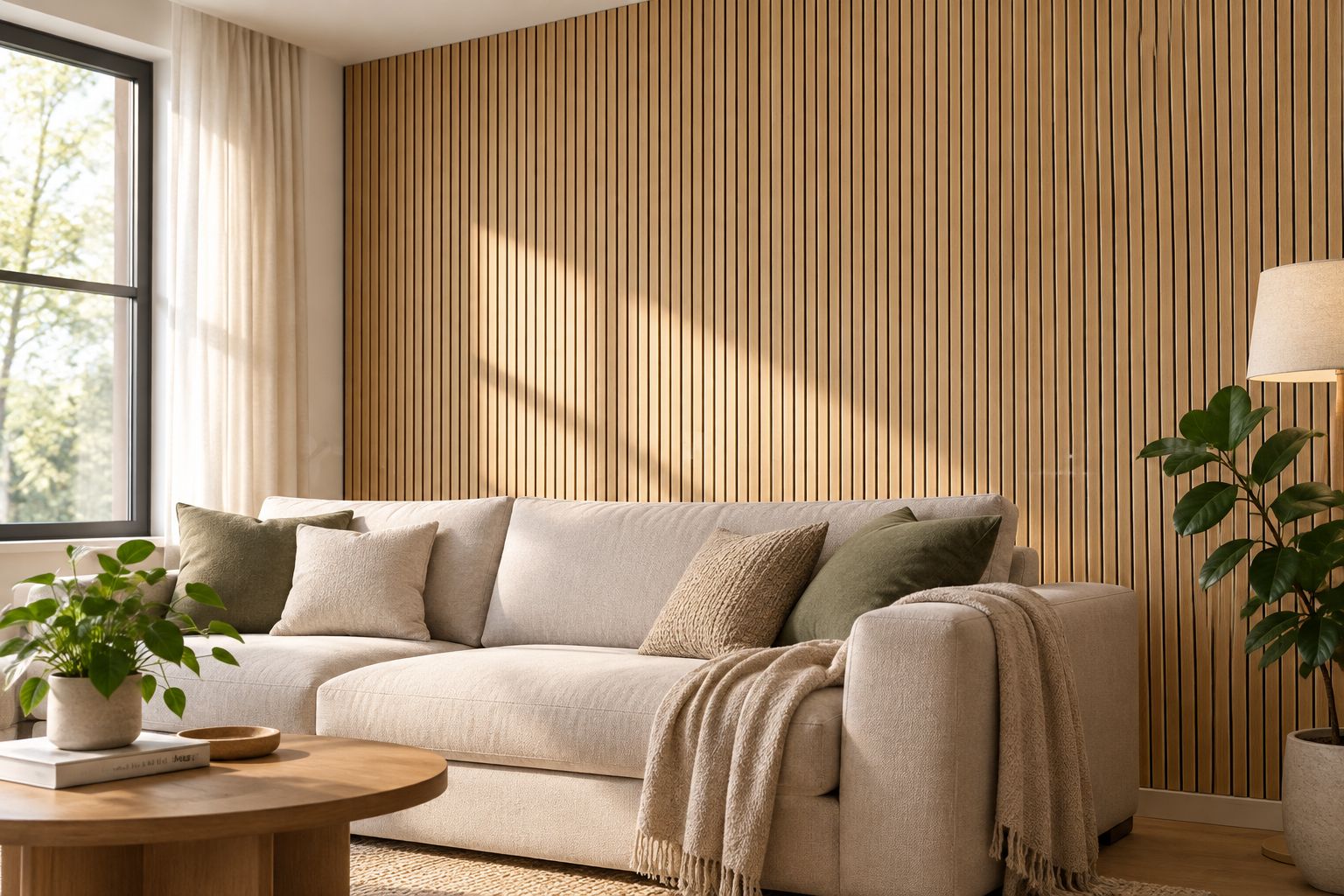
1. Natural Oak Acoustic Slat Wall Panel: best sound absorbing wall panel for living rooms and home offices
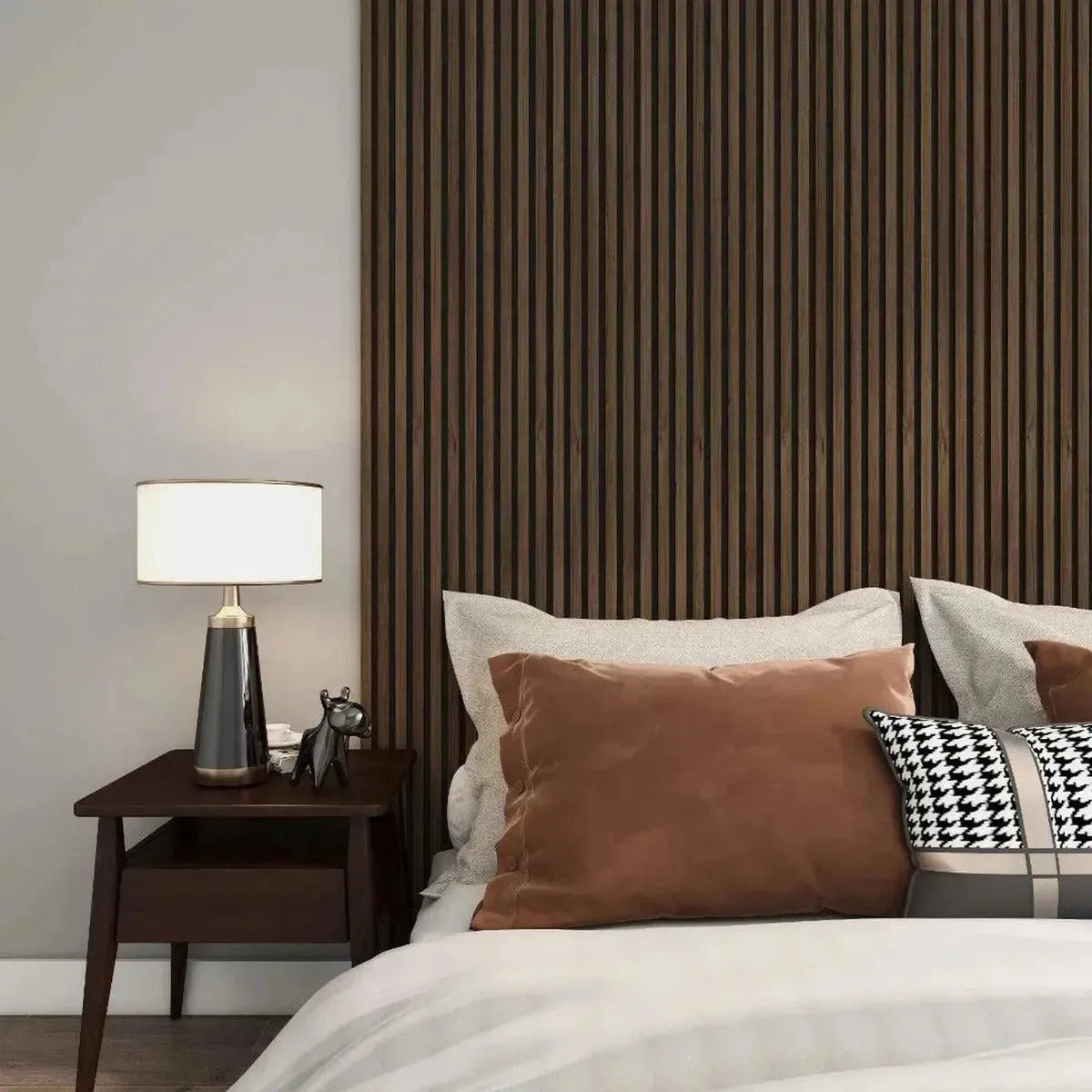
This is AKU Woodpanel's standard acoustic slat wall panel, built with the exclusive 3-sided wood veneer over a felt-backed core. It's the panel most people should start with when a room has hard floors, bare drywall, and an echo that makes TV dialogue or video calls harder to follow.
Natural Oak Acoustic Slat Wall Panel pros:
- Light, neutral grain works with most existing furniture and flooring
- Felt backing behind the slats does the real absorption work, not just the wood surface
- Vertical or horizontal mounting without changing the acoustic performance
- Reasonably priced entry point into real wood acoustic paneling
Natural Oak Acoustic Slat Wall Panel cons:
- Lighter finish shows scuffs and dust faster than darker oak tones
- Absorbs echo; does nothing for noise coming through the wall from a neighbor
Best for: first-time buyers treating a living room, bedroom, or home office echo problem. Verdict: Buy.
2. Smoked Oak with Gray Felt Slat Panel: best sound absorbing wall panel for maximum absorption in open-plan spaces
Adding gray felt behind smoked oak slats does two things: it visually breaks up a large wall, and it adds absorbing surface area in rooms where sound has more distance to travel before it hits a hard surface. Open kitchens, great rooms, and lofts with high ceilings need more absorption per square foot than a small bedroom does.
Smoked Oak with Gray Felt Slat Panel pros:
- Darker smoked finish plus visible felt reads as an intentional design choice, not a retrofit
- Higher perceived absorption in rooms with hard floors and open sightlines
- Same 3-sided veneer construction as the standard slat line
Smoked Oak with Gray Felt Slat Panel cons:
- Higher contrast look doesn't suit every interior style
- Still an absorption product — won't reduce noise transfer to the room next door
The Smoked Oak with Gray Felt slat panel is the one to reach for when a single wall has to do more acoustic work than a standard living room panel can manage.
Best for: open-plan rooms, lofts, and high-ceiling spaces with more untreated hard surface. Verdict: Buy.
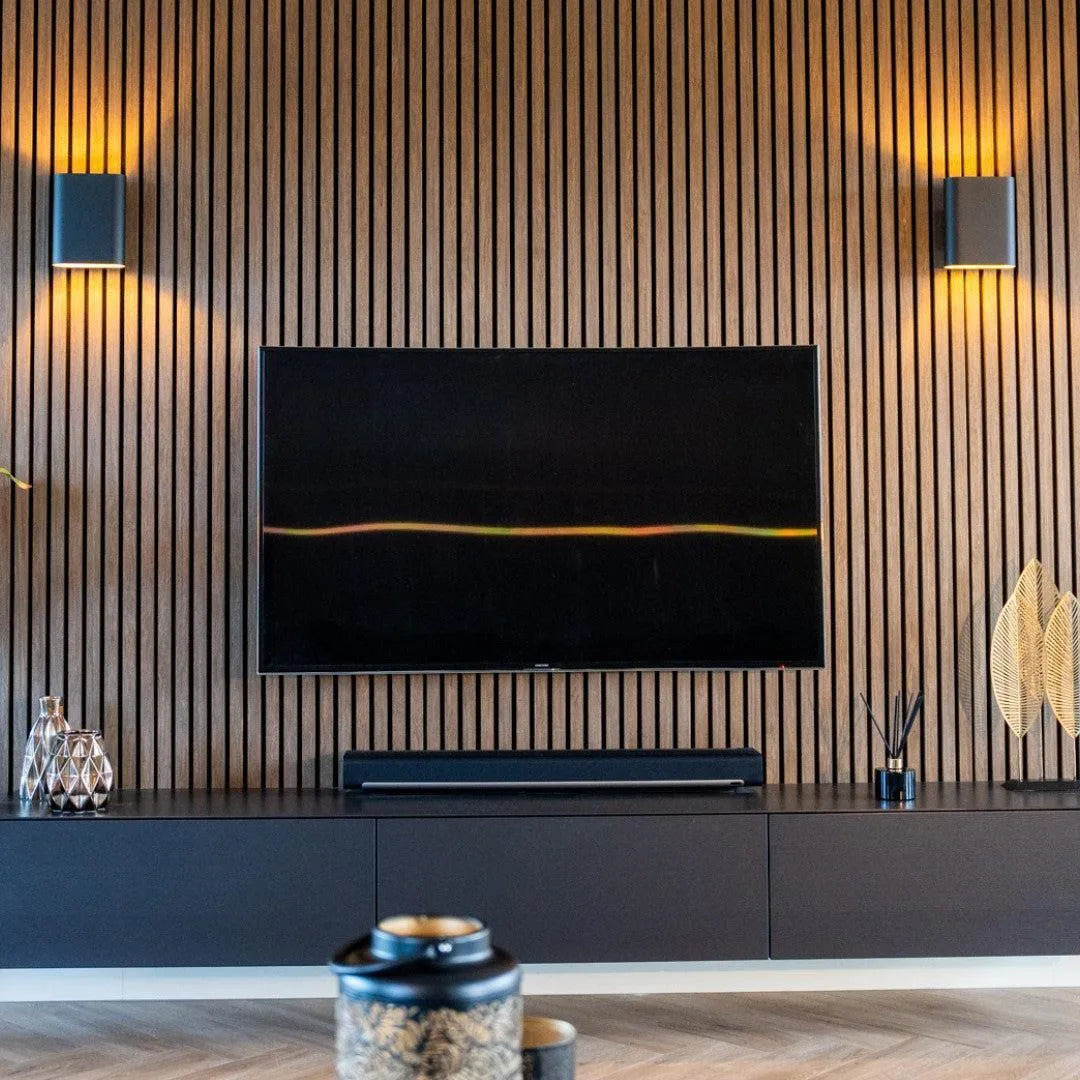
3. Walnut Acoustic Slat Wall Panel: best sound absorbing wall panel for premium offices and hospitality interiors
Walnut's dense, dark grain photographs well and holds up in commercial settings where the wall gets seen constantly — reception areas, boutique hotel rooms, restaurant dining rooms. It carries the same felt-backed acoustic core as the rest of the slat line, so the design upgrade doesn't cost absorption performance.
Walnut Acoustic Slat Wall Panel pros:
- Reads as a premium material from across a lobby or dining room
- Same acoustic slat construction as lighter finishes, no performance trade-off
- Pairs well with brass, black metal, and warm lighting common in hospitality design
Walnut Acoustic Slat Wall Panel cons:
- Darker veneer shows fine scratches more visibly than oak tones
- A poor fit for spaces that need a brighter, lighter finish
Best for: commercial interiors where the panel is also doing design work, not just acoustic work. Verdict: Buy.
4. Hexagon Acoustic Panel, Walnut: best sound absorbing wall panel for accent walls and smaller treated zones
A hexagon acoustic panel treats a section of wall rather than a full run, which matters when only part of a room needs absorption — behind a headboard, around a TV, or on a single accent wall in an otherwise finished room. It's a different shape doing the same felt-backed absorption job as the slat line.
Hexagon Acoustic Panel pros:
- Modular shape treats a partial wall without redesigning the whole room
- Distinct geometric pattern works as a feature, not just a fix
Hexagon Acoustic Panel cons:
- Covers less continuous absorbing surface per panel than a full slat sheet
- Better suited to accent treatment than whole-wall echo control
Best for: gaming rooms, headboard walls, or any space that needs partial rather than full-wall treatment. Verdict: Buy for accents; skip if the whole wall needs treating.


5. Full Sample Box, Slat Wall Panel: best way to test absorption before a full room order
A full room of acoustic slat panels is not a purchase to make from a product photo. A full sample box puts multiple finishes and felt-backing options in hand, against your actual wall color and lighting, before a bigger order goes out.
Full Sample Box pros:
- Removes the guesswork on finish and felt color before a large order
- Cheapest way to see the 3-sided veneer grain in person
- Speeds up decisions for multi-room or commercial projects
Full Sample Box cons:
- Doesn't treat a wall by itself — it's a decision tool, not a solution
- Adds a step for anyone in a hurry to finish a room
Best for: anyone ordering panels for a full wall, a commercial fit-out, or more than one room. Verdict: Buy first, before anything else on this list.
6. Mineral wool behind drywall or resilient channel: best for actually raising a wall's STC rating
If the real problem is a neighbor's TV coming through the wall, or a shared apartment wall carrying conversation, no surface panel fixes that. Raising STC means adding mass, decoupling the wall structure with resilient channel, or packing the wall cavity with mineral wool insulation — work that happens inside the wall, not on its face.
Mineral wool / resilient channel pros:
- Targets sound transmission directly, which is what STC measures
- Combines with acoustic panels afterward for both absorption and blocking
Mineral wool / resilient channel cons:
- Requires opening the wall, not a weekend surface-mount project
- Doesn't do anything for in-room echo on its own
Best for: noise coming from the other side of a wall, not echo inside the room. Verdict: Buy — but only if transmission, not echo, is the actual complaint.
How we ranked these
Each pick was measured against the criteria above: absorption core, groove design, veneer quality, coverage efficiency, sample-testing option, and application range. Items further down the list get shorter write-ups because they solve a narrower problem — a hexagon accent panel isn't competing with a full slat wall, and a sample box isn't competing with either.
Which sound absorbing wall panel should you choose?
For most rooms with an echo problem — a living room, a home office, a bedroom — the Natural Oak Acoustic Slat Wall Panel is the default buy for 2026. Step up to the Smoked Oak with Gray Felt panel when the room is larger or more open than a standard bedroom. Order the full sample box first if the project covers more than one wall. And if the actual complaint is sound coming through a shared wall rather than echo inside the room, no acoustic panel on this list changes that — that's a mineral wool and resilient channel job.
FAQ
What's the difference between STC and NRC ratings for wall panels?
STC measures how much sound a wall assembly blocks between two rooms, tested under ASTM E90. NRC measures how much a surface absorbs sound inside one room. Acoustic wood slat panels are rated by NRC, not STC.
Do acoustic wood slat panels have an STC rating?
No. Slat wall panels are surface-mounted absorption products rated by NRC, typically 0.85 to 0.90 for felt-backed designs. STC is a property of the full wall assembly, not a panel applied to its face.
What NRC rating should I look for in sound absorbing wall panels?
Look for felt-backed or foam-backed panels in the 0.85 to 0.90 NRC range. Bare painted drywall sits around 0.05 NRC, so even a partial wall of felt-backed panels changes how a room sounds.
Can wall panels increase a room's STC rating?
Not meaningfully. STC depends on the wall's mass, air gaps, and decoupling, which a surface-mounted panel doesn't change. Raising STC requires work inside the wall, like mineral wool insulation or resilient channel.
Is the Smoked Oak with Gray Felt panel good for open offices or open-plan homes?
Yes. Open-plan rooms have more hard surface and distance for sound to travel, so the added felt-backed absorption in this panel does more work per wall than in a smaller enclosed room.
How many acoustic panels do I need to treat a wall for echo?
Coverage depends on room size, ceiling height, and how much hard surface is already untreated. A full sample box helps confirm finish and spacing before ordering panels for the whole wall.
Do felt-backed panels absorb sound better than plain wood veneer panels?
Yes. The felt or foam layer behind the wood slats does most of the absorbing work; the wood veneer is the visible surface. A felt-backed panel outperforms a solid, unbacked wood panel for echo control.
What's the best sound absorbing wall panel for a home theater in 2026?
A darker finish like Walnut or Smoked Oak with Gray Felt suits a home theater both acoustically and visually, since these rooms usually need heavier absorption and benefit from a darker wall for screen contrast.
One last thing
Bare painted drywall sits around 0.05 NRC — meaning it reflects roughly 95% of the sound that hits it. That's the number worth remembering before buying anything: a room doesn't need an STC-rated wall to stop sounding harsh, it needs surface area that stops reflecting everything back at you. Start with one wall, not the whole room, and see how much a single run of felt-backed slat panel changes before ordering more for 2026.


 Better performance and aesthetic appeal
 In Stock