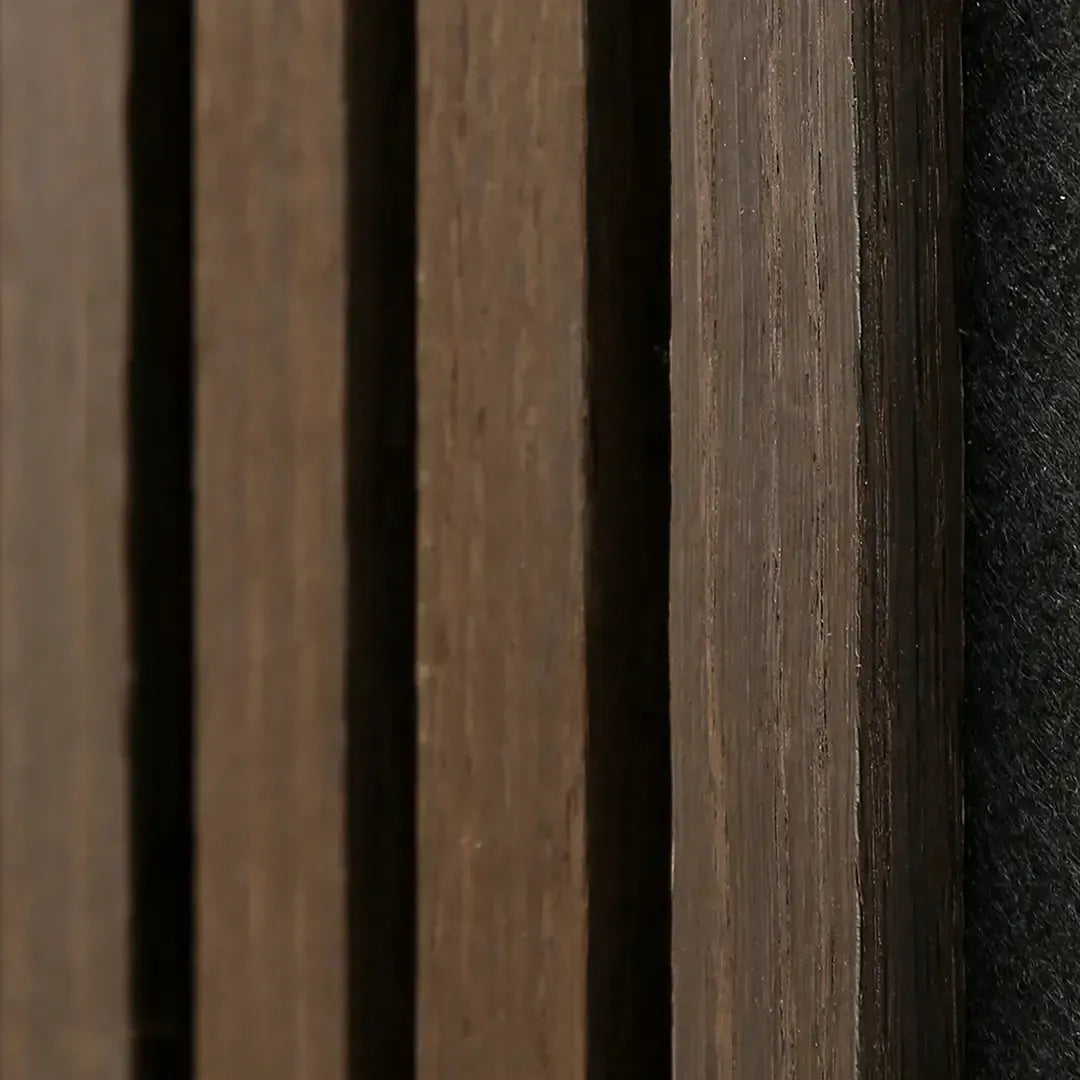
The best wood acoustic ceiling panel overall in 2026 is the Acoustic Slat Wall Panel in Natural Oak, built to run in one continuous plane from wall to ceiling. The best pick for home theaters and media rooms is the Smoked Oak slat panel with gray felt backing, which pairs a dark veneer with denser sound absorption. The safest way to test a finish before committing to a full ceiling is the Full Sample Box, which puts real wood swatches in your hands before you order anything overhead.
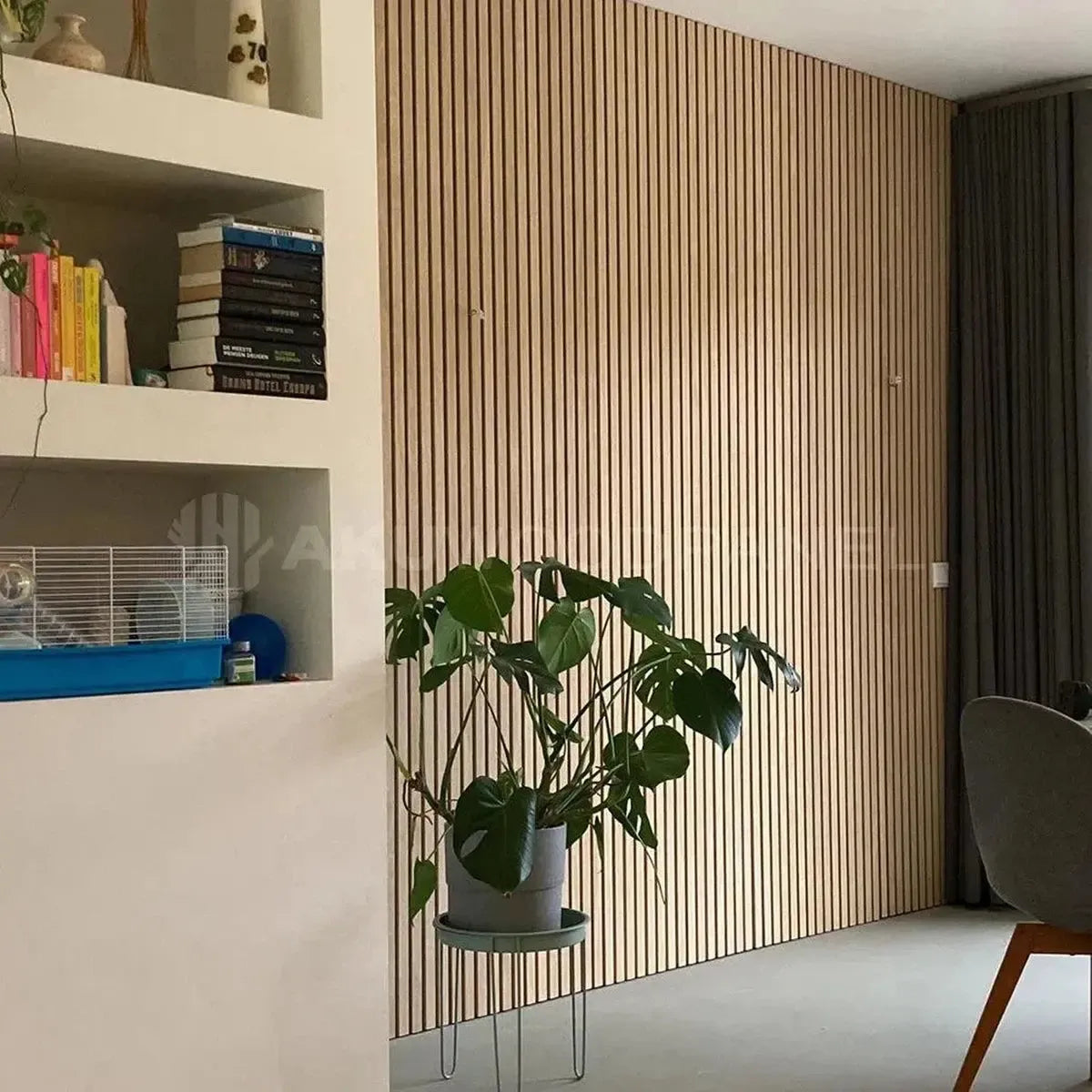
- Acoustic Slat Wall Panel in Natural Oak is the best wood acoustic ceiling panel overall for living rooms and open-plan ceilings in 2026.
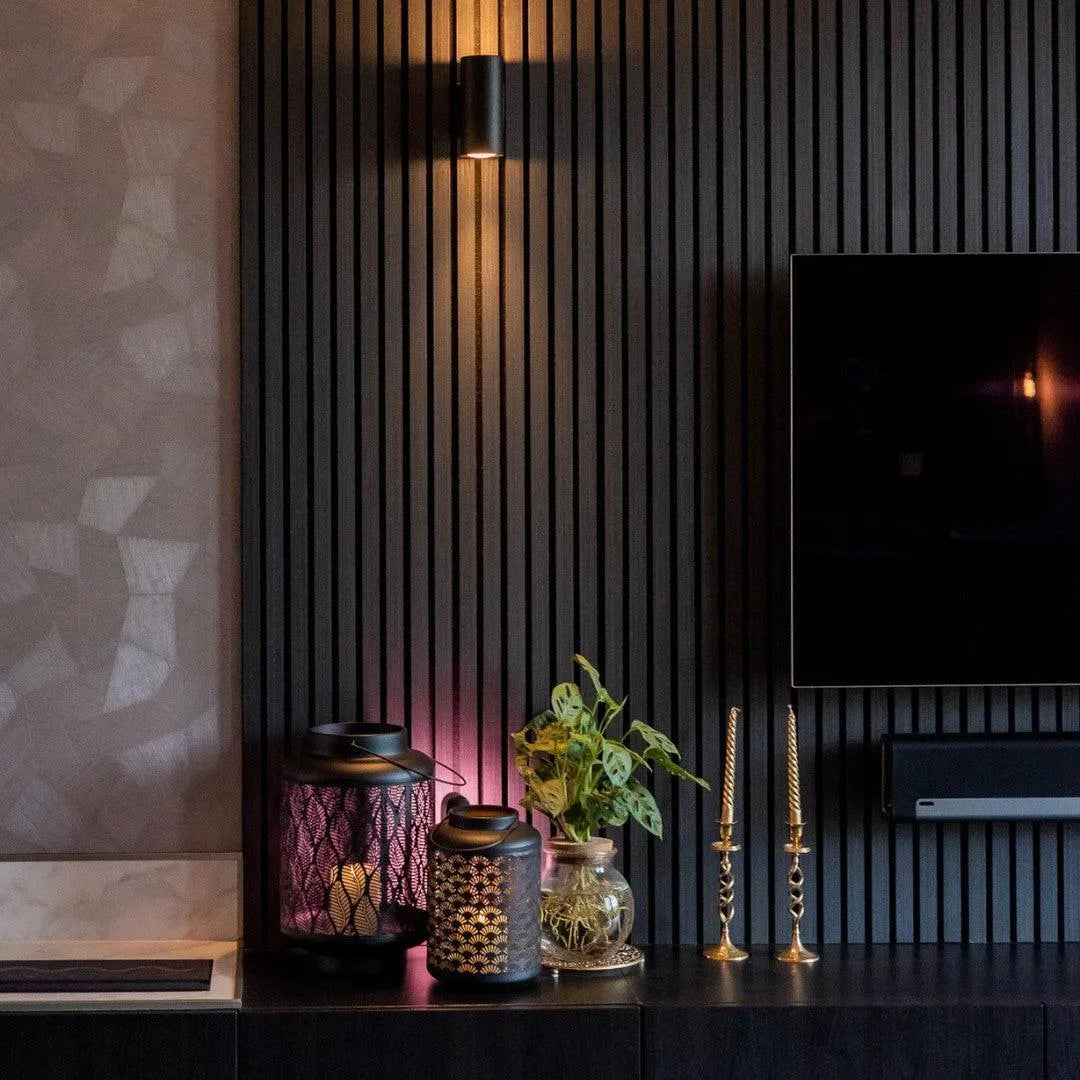
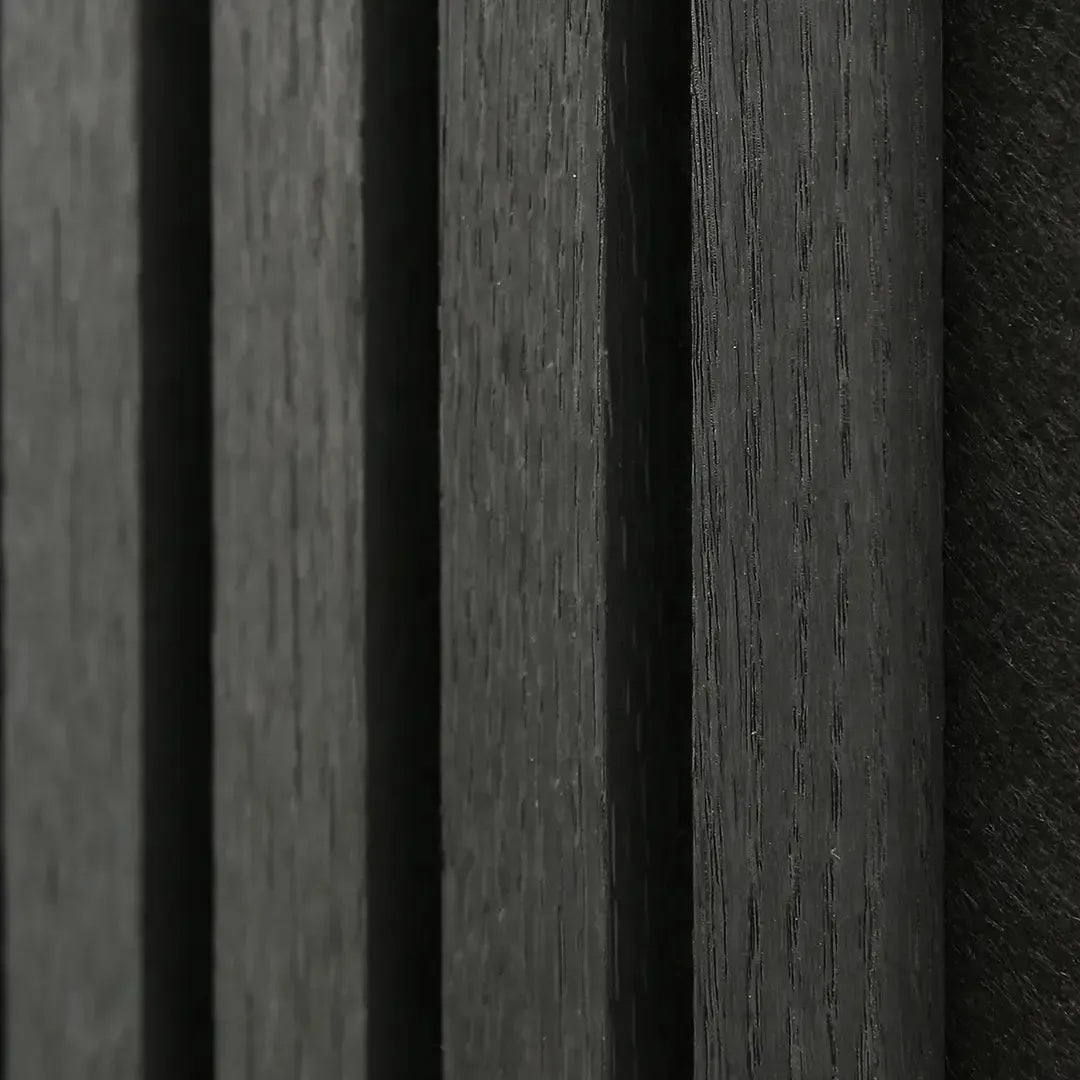
- Smoked Oak with gray felt backing wins for home theaters and media rooms where echo control matters more than brightness.
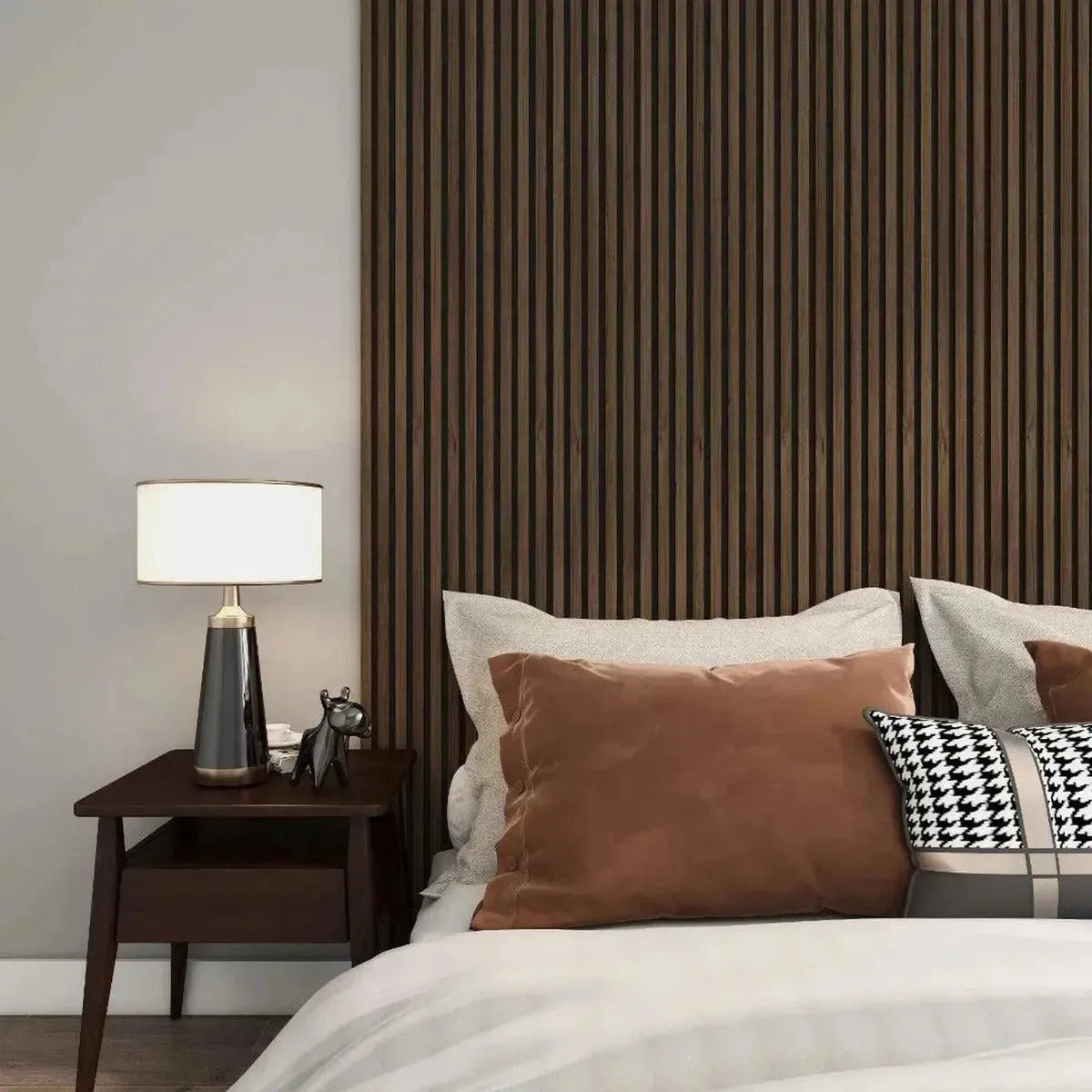
- Hexagon Acoustic Panel in Walnut fits statement ceilings where geometry carries the design, not straight slats.
- Fluted Wall Panel in Natural Oak bends to follow sloped, vaulted, or curved ceiling lines that flat slats can't.
- Order the Full Sample Box before any ceiling install — wood tone shifts more under overhead lighting than on a wall.
Why this matters
A ceiling is the hardest surface in a room to fix acoustically. It's flat, unbroken, and sits directly above every conversation, TV speaker, and set of footsteps, so sound bounces straight back down instead of scattering. Drywall reflects almost all of it.
Open-plan homes and rooms with ceilings past 8 feet make the echo worse, not better, because there's more hard surface for sound to travel across before it lands somewhere soft. A wood acoustic ceiling panel solves two problems at once in 2026: it breaks up that reflection and it replaces a flat white plane with actual material — oak, walnut, or smoked veneer instead of paint.
What makes the best wood acoustic ceiling panels
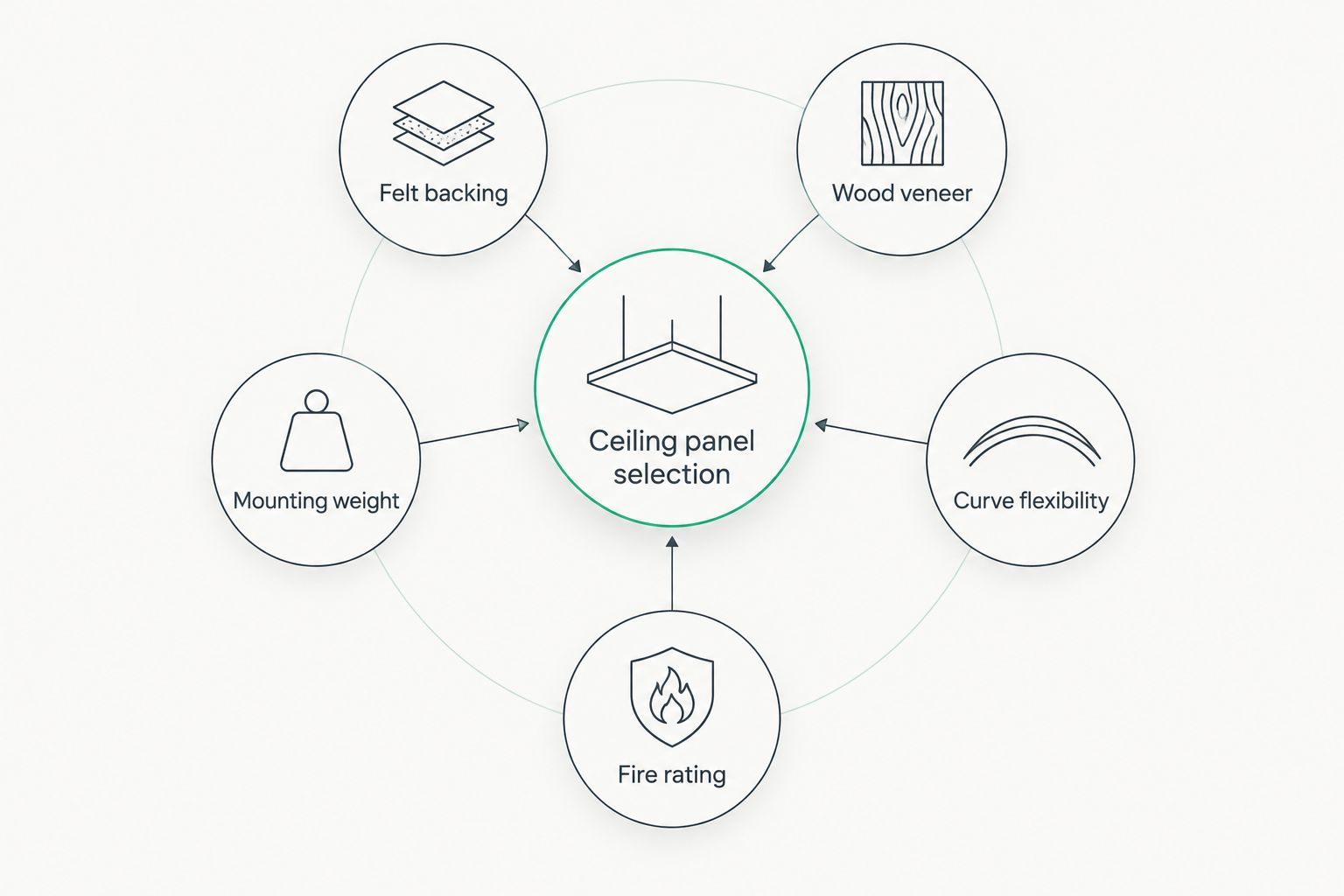
Before ranking anything, here's what separates a panel that works overhead from one that was only ever designed for a wall.
- Felt or foam backing density — thicker backing behind the slats absorbs more mid- and high-frequency sound than bare veneer alone
- Real wood veneer over an engineered core — a true veneer ages and can be refinished; a printed laminate just peels
- Panel weight and mounting hardware — ceiling installs need lighter cores and fasteners rated to hold against gravity, not just against a wall
- Flexibility for curved or sloped profiles — a flexible backing lets a run follow a vaulted or angled ceiling without visible seams at the ridge
- Fire rating documentation — commercial and multi-tenant ceilings need a stated fire-retardant rating, not a marketing line
At a glance
| Panel | Best for | Standout feature | Key limitation |
|---|---|---|---|
| Acoustic Slat Wall Panel – Natural Oak | Living rooms & open-plan ceilings | Oak veneer over slats with felt backing | Lighter tone shows dust and cobwebs sooner than dark finishes |
| Acoustic Slat Wall Panel – Smoked Oak with Gray Felt | Home theaters & media rooms | Denser gray felt behind a dark veneer for extra absorption | Dark tone can make a low ceiling feel lower |
| Hexagon Acoustic Panel – Walnut | Statement / geometric ceilings | Modular hex shape breaks up a flat plane visually | More cut edges to align than a straight slat run |
| Fluted Wall Panel – Natural Oak | Sloped, vaulted or curved ceilings | Flexible backing follows angled framing without seams | Vertical fluting reads busier than slats in a small room |
| Full Sample Box | Testing before a full order | Real wood swatches across multiple finishes | Doesn't cover a ceiling — it's a planning tool only |
1. Acoustic Slat Wall Panel – Natural Oak: best wood acoustic ceiling panel for living rooms and open-plan ceilings
This is a run of real oak-veneer slats over a felt-backed core, meant to install as easily overhead as it does on a wall. It's the panel AKU Woodpanel sells most for combined living-and-dining ceilings where one continuous wood plane needs to read as intentional, not patched in.
Acoustic Slat Wall Panel pros:
- Natural oak veneer matches most existing flooring and trim tones
- Felt backing cuts flutter echo in rooms with hard floors
- Runs continuously from wall to ceiling for a seamless look
Acoustic Slat Wall Panel cons:
- Light oak shows overhead dust faster than a darker finish
- Needs level framing underneath — it won't hide an uneven ceiling
Best for: open-plan living and dining ceilings. Verdict: Buy.
2. Acoustic Slat Wall Panel – Smoked Oak with Gray Felt: best wood acoustic ceiling panel for home theaters and media rooms
Same slat construction as the Natural Oak panel, but with a smoked veneer and a denser gray felt layer behind it. The darker tone also hides a projector-lit ceiling better than a pale wood ever could.
Smoked Oak with Gray Felt pros:
- Denser felt backing means more absorption per square foot than the standard backing
- Dark tone hides screen glare and shadow lines overhead
- Reads intentional in a room built around a screen, not a window
Smoked Oak with Gray Felt cons:
- Dark ceilings can feel lower in rooms under 8 feet
- Less forgiving of uneven lighting than a lighter finish
Best for: dedicated home theaters and media rooms. Verdict: Buy.
3. Hexagon Acoustic Panel – Walnut: best wood acoustic ceiling panel for statement, geometric ceilings
The Hexagon Acoustic Panel in Walnut breaks a flat ceiling into a repeating geometric pattern instead of running straight lines. It's the pick when the ceiling itself is meant to be the design statement in the room, not a background surface.
Hexagon Acoustic Panel pros:
- Modular hex shape reads as a design feature, not just acoustic treatment
- Walnut tone pairs well with darker furniture and metal fixtures
- Works as a partial ceiling feature over just one zone of a room
Hexagon Acoustic Panel cons:
- More cut edges to align during install than a straight slat run
- Harder to patch a single damaged tile without the seam showing
Best for: entryways, lobbies, and statement ceiling zones. Verdict: Buy.
4. Fluted Wall Panel – Natural Oak: best wood acoustic ceiling panel for sloped, vaulted, or curved ceilings
A cathedral or dormer ceiling that climbs past 12 feet at the ridge needs a panel that can flex with the framing instead of fighting it. The Fluted Wall Panel in Natural Oak is built with a flexible backing specifically for angled and curved runs.

Fluted Wall Panel pros:
- Flexible backing follows sloped or curved framing without buckling
- Vertical fluting adds texture without a heavy visual weight overhead
- Works on dormer nooks and angled attic ceilings, not just flat runs
Fluted Wall Panel cons:
- Vertical lines can look busy in a small or low-ceiling room
- Needs more careful measuring at angle transitions than a flat slat panel
Best for: vaulted, sloped, or dormer ceilings. Verdict: Buy.
5. Full Sample Box: best way to test finishes before a full ceiling order
The Full Sample Box isn't a ceiling panel — it's a set of real wood swatches across the slat panel range. Ordering it before a full room job matters more on a ceiling than on a wall, because overhead lighting shifts wood tone in ways a screen or a wall sample never shows.
Full Sample Box pros:
- Shows true veneer color and grain, not a screen rendering
- Lets you compare finishes side by side under your own lighting
- Low commitment before ordering enough panels to cover a ceiling
Full Sample Box cons:
- Doesn't include felt backing samples, so acoustic feel isn't tested
- Adds a step before ordering if you already know your finish
Best for: anyone ordering a full ceiling for the first time. Verdict: Buy — before, not instead of, the panel itself.
How we ranked these
Each panel was checked against the five criteria above: backing density, veneer quality, mounting weight, curve flexibility, and fire rating documentation where it applied. No panel here won every category — the Hexagon panel loses on install speed what it gains on visual impact, and the Smoked Oak felt panel loses ceiling height what it gains in absorption. That's the trade-off a ranked list should show, not hide.
Which wood acoustic ceiling panel should you choose?
If you're undecided, default to the Acoustic Slat Wall Panel in Natural Oak. It handles the widest range of ceiling heights and room types without the trade-offs the more specialized picks carry. Choose Smoked Oak with felt only if the room is a dedicated theater, choose Fluted only if the ceiling actually slopes or curves, and order the Full Sample Box first either way — wood tone under a downlight is not the same as wood tone on a screen.
FAQ
What's the best wood acoustic ceiling panel for a living room?
The Acoustic Slat Wall Panel in Natural Oak is the best fit for most living rooms in 2026 because it runs continuously from wall to ceiling and suits a wide range of ceiling heights.
Are wood slat panels good for soundproofing a ceiling?
Wood slat panels with felt backing reduce echo and flutter, but they absorb sound rather than block it, so they help with room acoustics more than with noise transfer to the floor above.
Can you install fluted wood panels on a sloped or vaulted ceiling?
Yes. The Fluted Wall Panel in Natural Oak uses a flexible backing designed to follow angled or curved framing, including dormer nooks and cathedral ceilings.
Is a wood acoustic ceiling panel heavier than a standard acoustic tile?
It depends on the core, but wood veneer panels generally need mounting hardware rated for overhead weight, not the lightweight clips used for foam acoustic tiles.
What's the difference between hexagon and slat acoustic panels on a ceiling?
Hexagon panels break a ceiling into a repeating geometric pattern and work as a visual feature, while slat panels run in continuous straight lines and blend more into the room as a whole.
Do wood acoustic ceiling panels need a fire rating for commercial spaces?
Commercial and multi-tenant ceilings typically require documented fire-retardant ratings, so check the specification sheet for the panel rather than relying on general marketing claims.
Should you order samples before installing wood panels on a ceiling?
Yes. A Full Sample Box shows true veneer color under your own lighting, which matters more on a ceiling because overhead fixtures shift wood tone more than side lighting does.
How do ceiling joist spacing affect panel mounting?
Most residential ceilings frame joists at 16 or 24 inches on center, and mounting hardware needs to land on that spacing consistently across the full panel run.
One last thing
Most people pick a ceiling finish under a showroom light or a laptop screen, then install it under warm-white LED downlights that shift every wood tone a shade warmer. Order the Full Sample Box and hold it directly under the fixtures you're actually keeping before you commit a full ceiling to one finish — a swatch that looks neutral on a wall can read orange three feet above your head.



 Better performance and aesthetic appeal
 In Stock