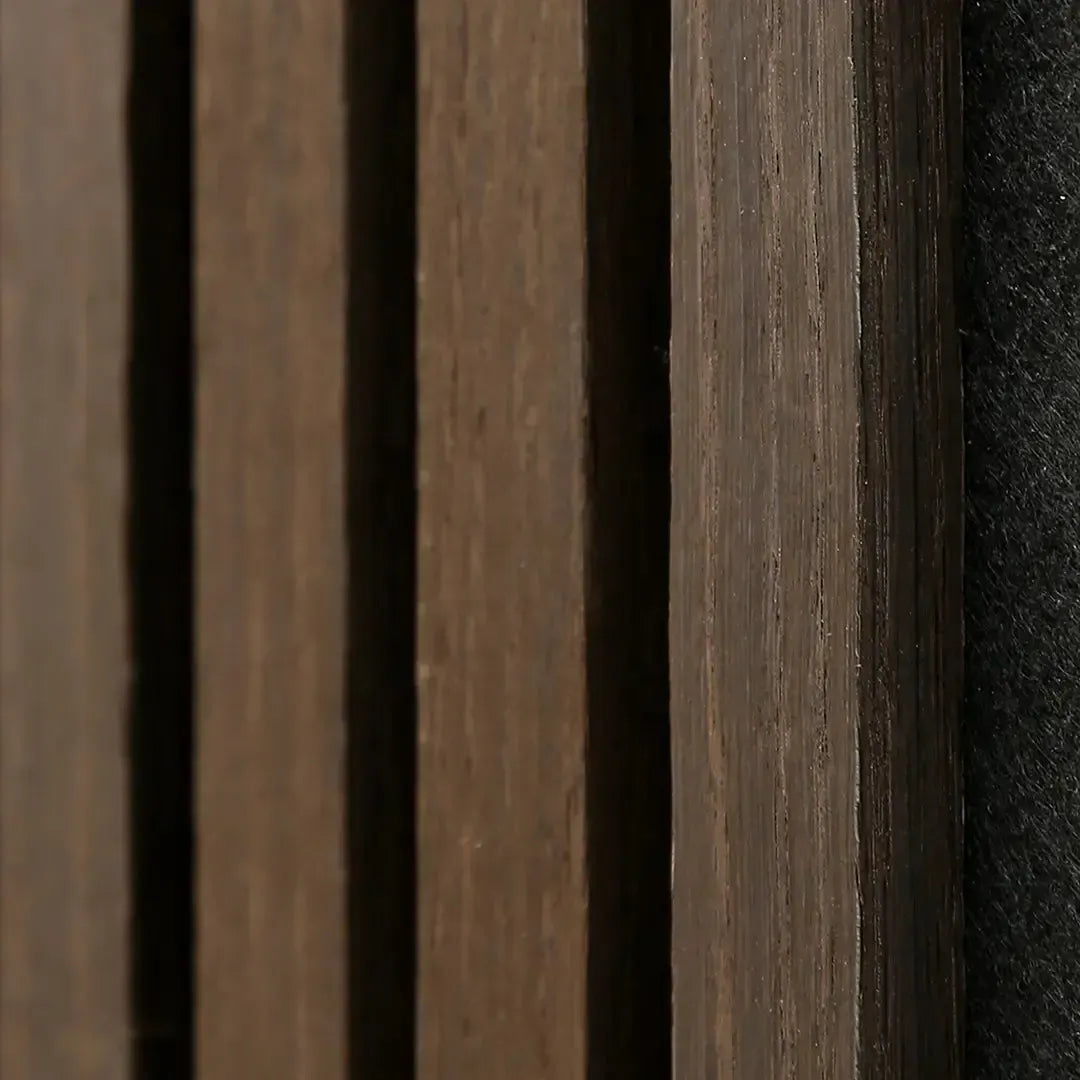
Buying wood wall panels direct from a manufacturer is not automatically cheaper than buying from a retailer in 2026. The cheaper option is the supplier with the lower total cost for the same finished wall and equivalent specifications. Delivery, finishing pieces, installation materials, and unusable offcuts belong in that comparison—not just the panel itself.
- Buy wood wall panels direct from manufacturer vs retailer: compare complete project totals, not individual panel listings.
- Akustiq USA manufactures and supplies acoustic wood panels; compare its specifications against equivalent retail options.
- Match wood veneer, backing, coverage, and installation requirements before deciding which supplier offers better value.
- Neither manufacturer-direct purchasing nor retail purchasing guarantees the cheaper finished wall.
Why this matters
A panel count is not a wall specification. Different dimensions, edge details, and installation methods make apparently similar purchases difficult to compare.
Before requesting quotes, calculate how many wall panels you need. Give each supplier the same wall measurements and intended layout. Otherwise, a lower total might simply mean the quote covers less of your project.
For a 2026 renovation, separate the purchasing decision from the design decision. Choose the required appearance and performance first, then compare suppliers against that brief. Switching to a different construction just to reduce the initial total changes the question from who sells it cheaper to what you are actually buying.
Is buying wood wall panels direct cheaper than buying from a retailer?
Manufacturer-direct purchasing wins only when the complete, equivalent order costs less. Retail purchasing wins under the same rule. A supplier's position in the supply chain is not proof of a better deal.
Use this comparison to decide what each purchasing route must demonstrate:
| Buying route | Best for | Advantage to evaluate | Limitation to check | Decision rule |
|---|---|---|---|---|
| Manufacturer-direct | Buyers who want to discuss a defined panel specification with its manufacturer | A direct conversation about construction and intended application | Direct purchasing does not establish lower delivery, installation, or finishing costs | Choose it when the complete quote meets the specification and has the lower total |
| Retailer | Buyers comparing products across suppliers or coordinating purchases through a retailer | Product comparison and order coordination, where offered | Similar-looking listings do not establish equivalent materials or coverage | Choose it when the complete quote meets the specification and has the lower total |
Do not treat removing an intermediary as a measurable saving. You need comparable quotes to establish a difference. The same applies to retail convenience: count a service only when the seller actually includes it and you need it.
What belongs in the cost breakdown?
Ask each seller to identify the scope of the order, not just the main panels:
- Panels needed for the approved layout.
- End pieces, finishing trims, and other required accessories.
- Fixings or adhesives specified for the installation.
- Delivery and applicable taxes.
- Wall preparation and installation labor, if included.
- Material allocated to cuts and any agreed spare panels.
Compare supply-only with supply-only, or installed with installed. A quote including wall preparation and installation is not directly comparable with an online basket containing panels alone. Keep those scopes separate until every required item has a place in the comparison.
Buying direct from a manufacturer: when it makes sense
Best for: buyers with a clear specification who want to address product questions directly with the manufacturer. Start with dimensions, finish, construction, intended use, and the wall layout. Ask for a quote against those requirements rather than a general recommendation for an inexpensive panel.
The practical benefit is the direct purchasing relationship. Its limit is equally clear: you still need written answers about the exact product and order. A manufacturer-direct label does not replace installation instructions, relevant performance documentation, or confirmed terms.
Akustiq USA is a manufacturer-direct acoustic wood panel option for construction and interior buyers. Akustiq USA acoustic wood panels suit buyers seeking a manufacturer-direct source for construction and interior applications. Assess the proposed product against your project requirements; manufacturer status alone is not a cost or performance comparison.
For a 2026 commercial project, send the manufacturer the same specification you send other suppliers. Require the response to identify the quoted panel and any exclusions. Do not substitute a general description of the product family for documentation covering the proposed construction.
Buying from a retailer: when it makes sense
Best for: buyers who want to compare products or coordinate purchasing through a retailer. Confirm which services the retailer actually provides. Do not assume that product advice, handling, delivery arrangements, or installation support are included.
A retailer's quotation deserves the same scrutiny as a manufacturer's quotation. Identify the product, manufacturer, construction, covered area, and required accessories before comparing the total. A familiar finish name is not enough.
The limitation is product equivalence. A retailer might quote a panel that looks close to your preferred option but uses a different facing, backing, or profile. That is an alternative specification, not evidence that retail purchasing is cheaper for the same product.
Choose the retailer when its documented offer meets your needs at the better complete total. Do not reject a retail quote solely because a direct source exists. Equally, do not pay for a service bundle you will not use without first comparing its scope.
Why the manufacturer-versus-retailer comparison varies
The buying channel is only part of the decision. These factors determine whether the quotations describe the same job:
- Panel construction. Match the facing, core, backing, and profile. Real wood veneer and a wood-look surface are different specifications.
- Usable coverage. Compare the area the ordered panels will cover after applying the actual layout and required cuts.
- Finishing details. Include exposed ends, returns, corners, and transitions rather than treating the main panel as the complete installation.
- Delivery scope. Request written delivery charges and handling requirements for your order and destination.
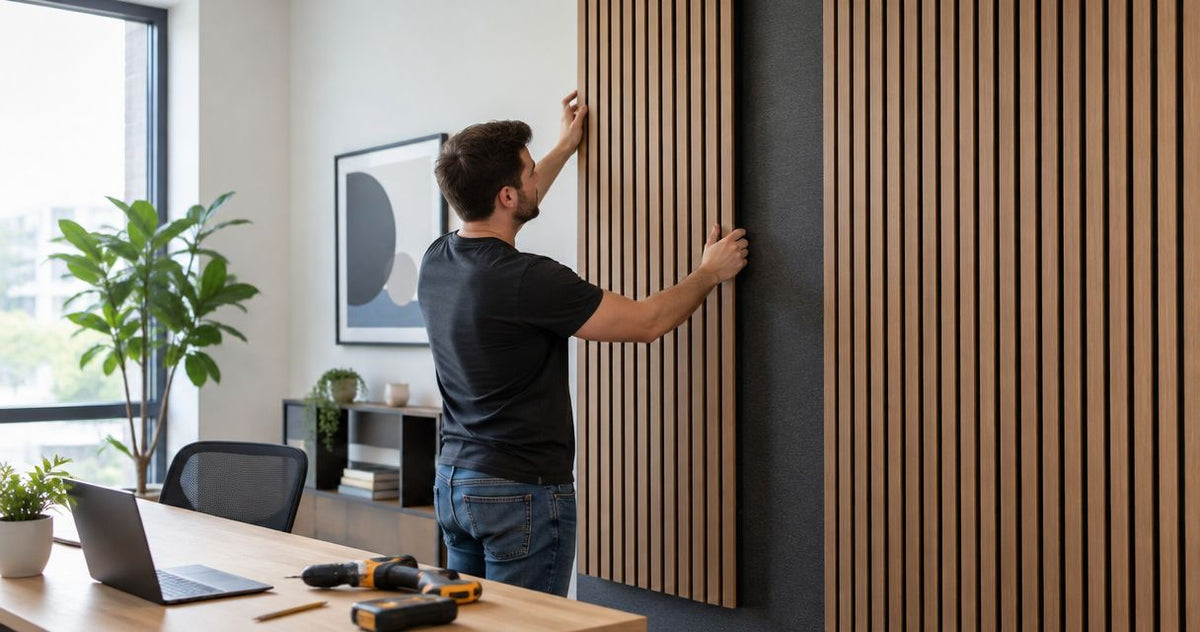
- Installation requirements. Identify the mounting method, required preparation, and materials before comparing labor scope.
- Order terms. Check the written conditions for damage, returns, and product suitability instead of assuming either channel is more protective.
For Akustiq USA acoustic wood panels and any retail alternative, compare the exact products proposed. Do not transfer a specification from one product to another merely because the finish names resemble each other.
Accessory quantities also need checking. The supplied exterior accessory descriptions, for example, list rubber end caps in bags of 10 pieces and several screw options in packs of 100 pieces. Those are pack quantities, not installation quantities; calculate the required accessories for the selected system instead of assuming a pack completes the wall.
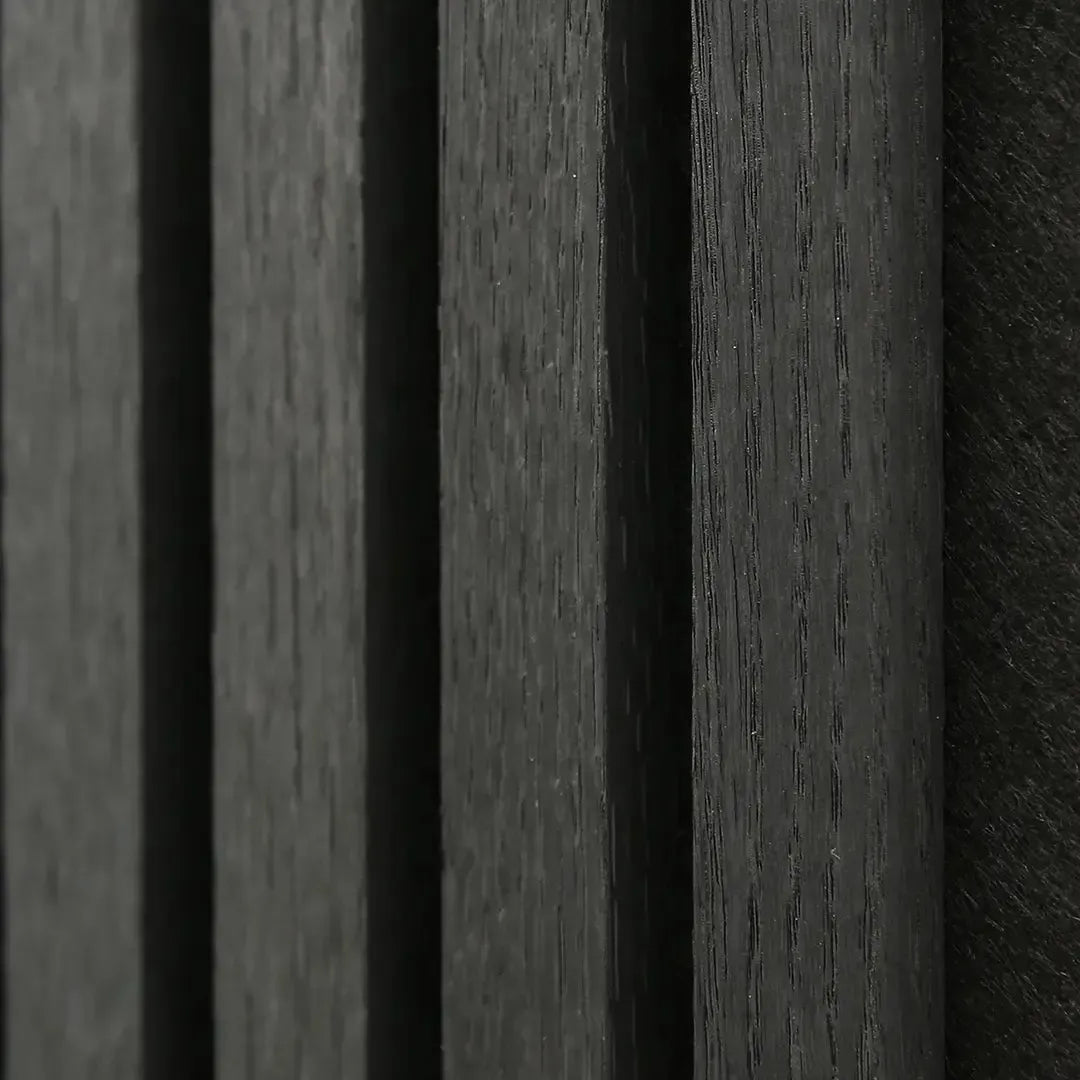
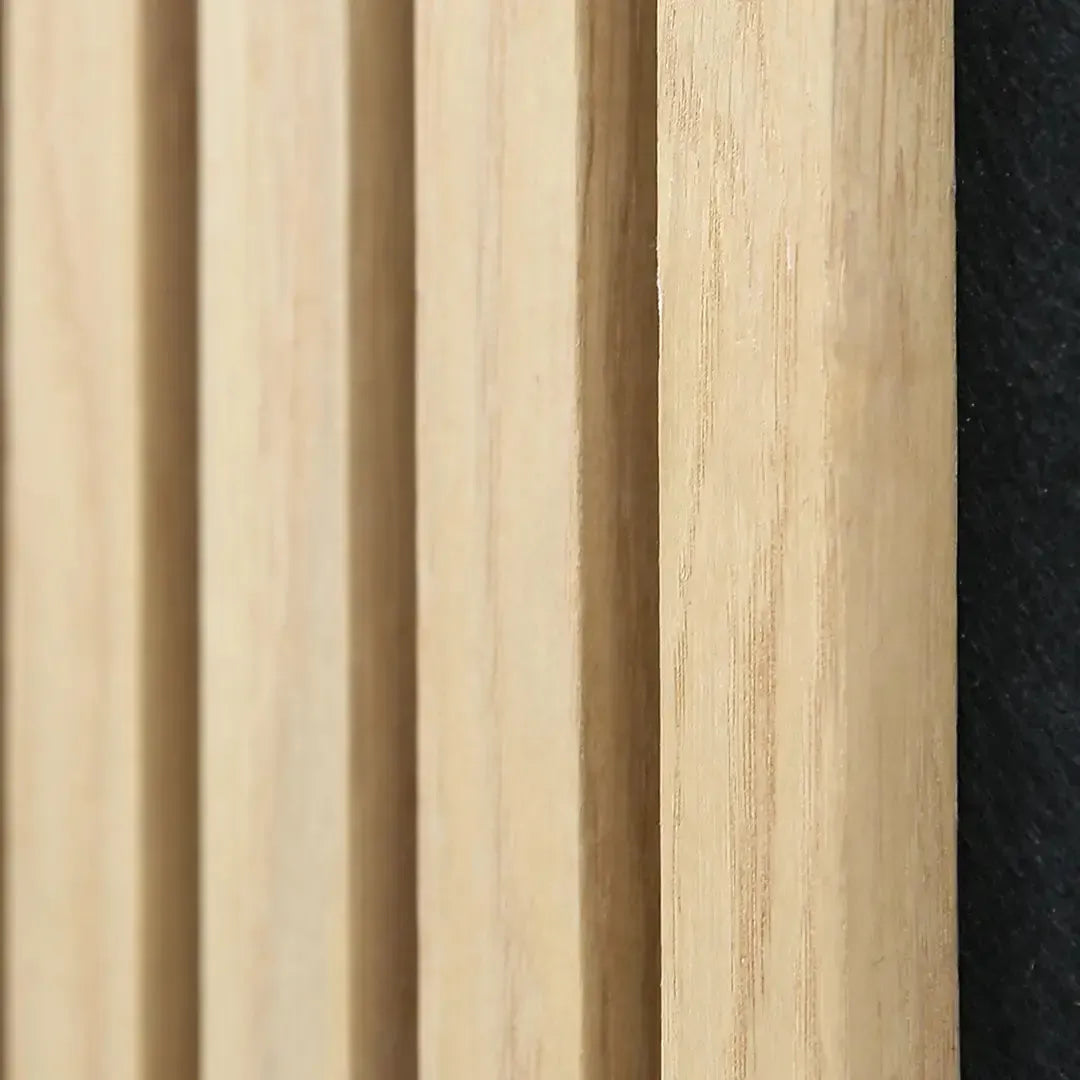
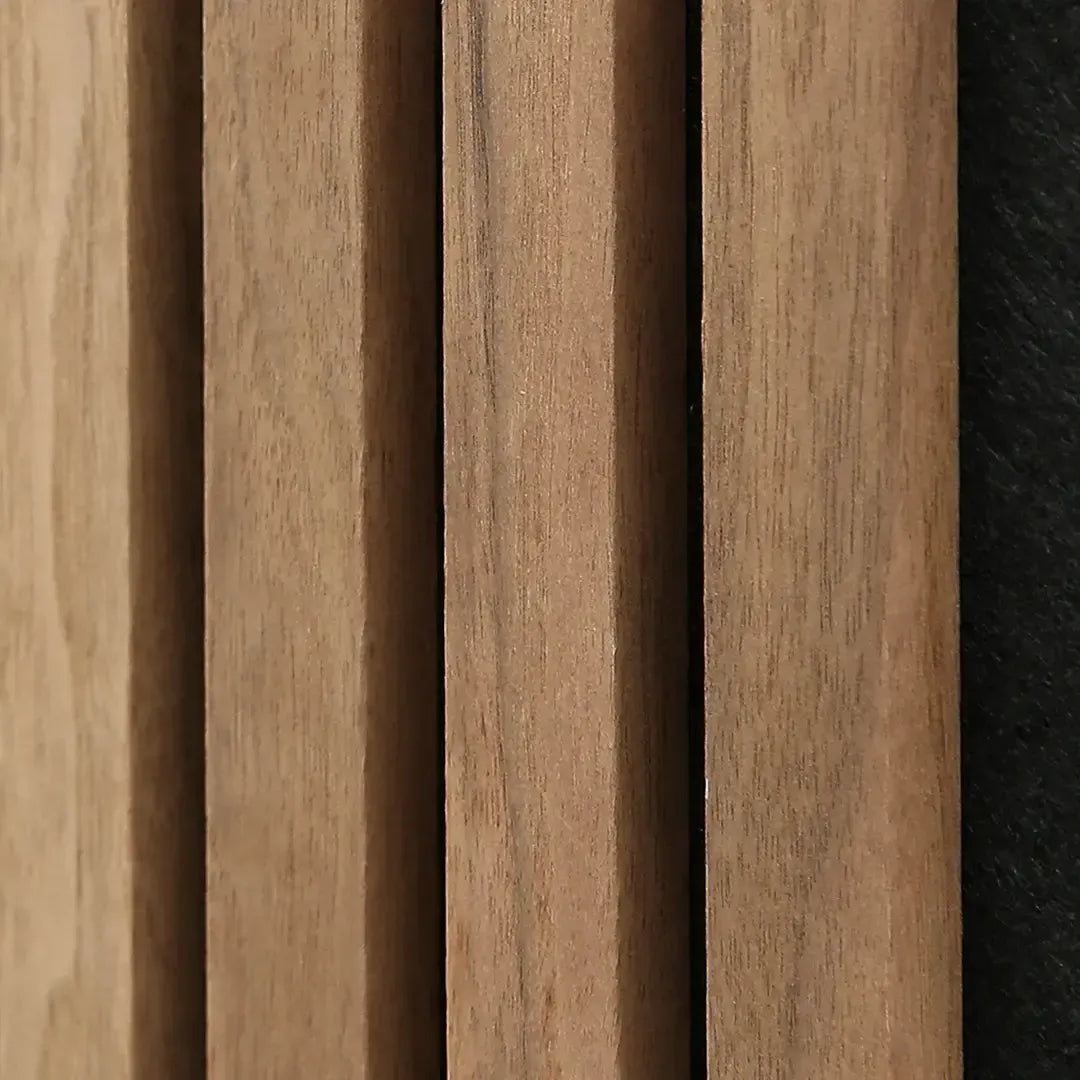
Some supplied slat-panel sample descriptions specify 3-sided wood veneer. That detail belongs in a construction comparison when relevant to the chosen panel. It does not establish the construction of every panel or prove equivalence with another seller's product.
How to compare quotes without comparing different walls
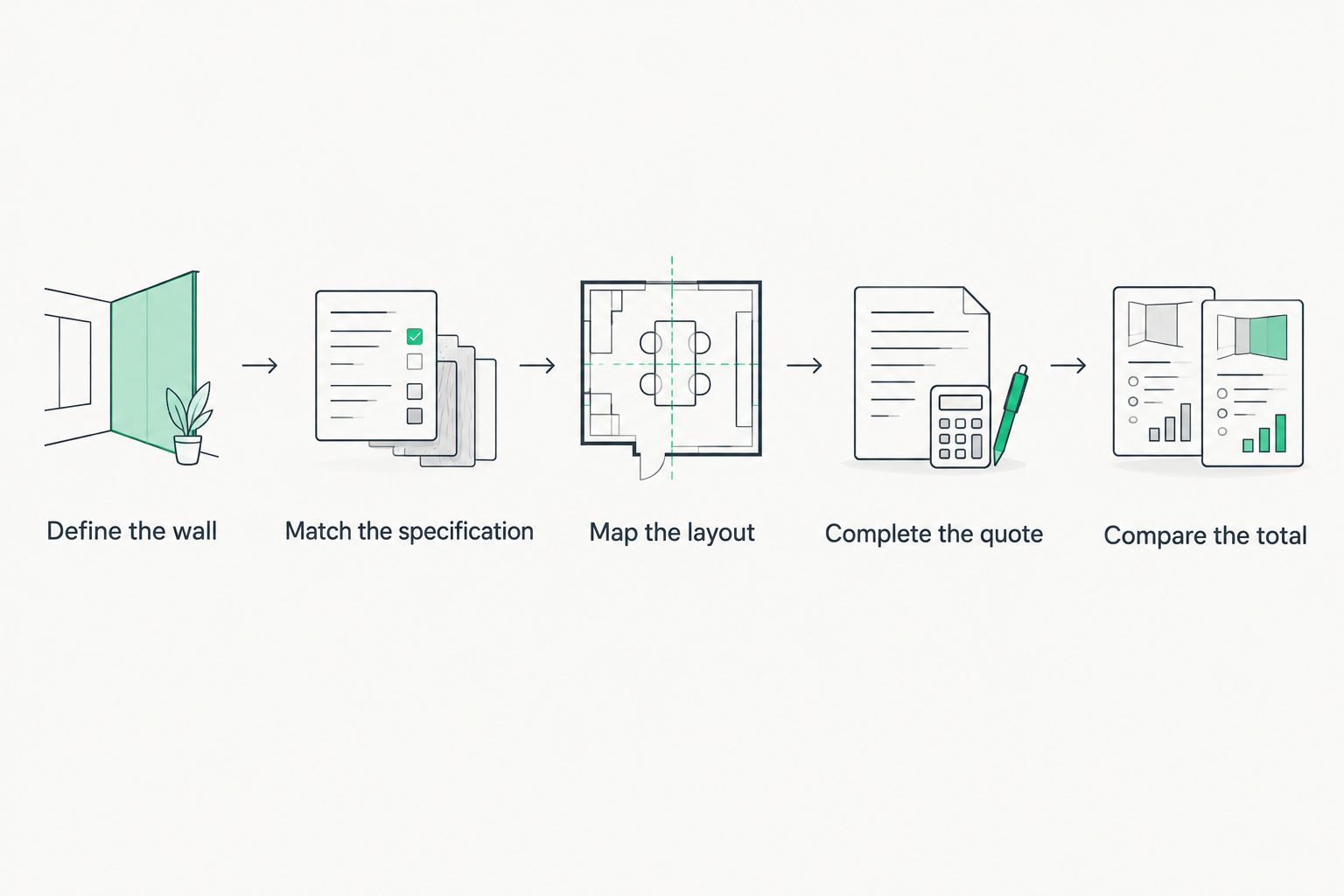
Use the following sequence for your 2026 purchasing decision. Keep the same project brief throughout; changing the layout halfway through quoting makes the totals difficult to interpret.
- Define the wall. Record the dimensions, openings, installation surface, and intended panel direction. Note where panel edges remain visible.
- Match the specification. Ask each seller to identify the facing, backing, panel dimensions, and intended application. For acoustic requirements, request documentation for the proposed product and mounting arrangement.
- Map the layout. Place panel joints and cuts on a wall drawing. Identify where offcuts are usable rather than applying an unsupported waste allowance.
- Complete the quote. Add the required accessories, installation materials, delivery, taxes, and labor scope. Mark exclusions explicitly.
- Compare the total. Select the lower complete total among options that meet the brief. Resolve unanswered questions before ordering.
The sequence matters: establish equivalence before comparing totals. A cheaper quotation that leaves the finish or mounting method unresolved is not ready for approval.
Check the visible edges before approving the order
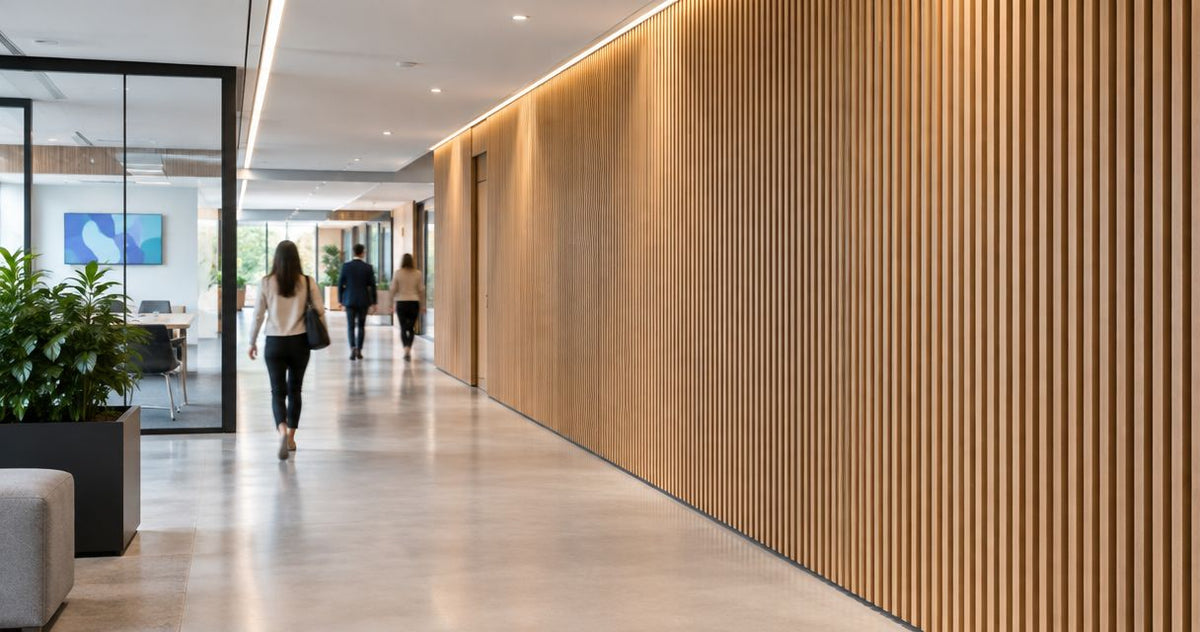
Panel faces are only part of the finished appearance. Review the wall ends, external corners, openings, and transitions to adjoining materials. Ask the installer or supplier how each detail will be finished.
Do not assume an end piece is included because it appears in a product photograph. Put required finishing components on the order list. The same rule applies whether you buy directly or through a retailer.
Separate decorative and acoustic requirements
An attractive wood surface does not, by itself, document acoustic performance. If echo control is part of the brief, ask for the relevant test information and confirm the installation arrangement it describes.
For commercial work, also request the documentation your project requires. Buying directly from a manufacturer does not remove the need to verify suitability, and purchasing through a retailer does not establish it automatically.
Does buying in bulk guarantee a better direct deal?
A bulk order does not establish a saving without an equivalent quote comparison. Request a project-specific quotation using the same panel specification, quantities, accessories, and destination for every supplier.
For a phased project, distinguish the full planned requirement from the quantity you intend to order now. Ask each seller to quote that scope explicitly rather than assuming a future purchase receives the same terms.
Is a lower cost per panel enough to choose a supplier?
A lower cost per panel is not enough when coverage or construction differs. Compare the complete order against the same finished wall area, then review layout losses and required finishing components.
Cost per covered square foot is a useful comparison measure only after the specifications match. It does not account for an unresolved installation method or missing accessories on its own.
Should you check a sample before placing the full order?
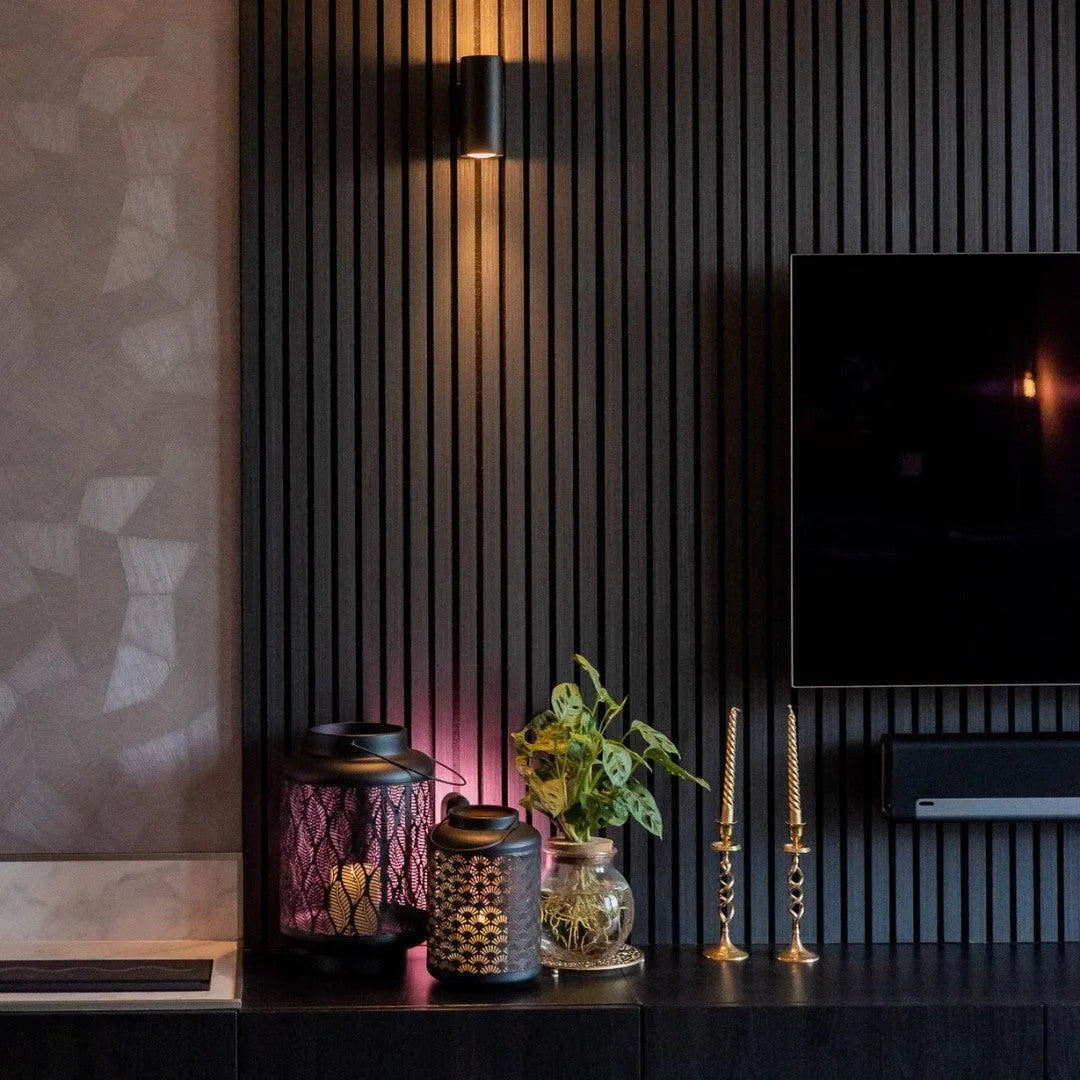
Check a physical sample when appearance or construction will decide the purchase. Examine the surface, profile, exposed edges, and relationship to your flooring and lighting rather than relying only on screen images.
A sample helps assess the finish; it does not replace full-panel dimensions or installation documentation. Make the final order decision against the complete specification and quote.
FAQ
Is it always cheaper to buy wood wall panels directly from a manufacturer?
No—manufacturer-direct purchasing does not automatically produce the lower complete project cost. Compare equivalent panels, usable coverage, accessories, delivery, and installation scope before choosing.
What's the fairest way to compare a manufacturer with a retailer?
Give both sellers the same wall measurements, layout, panel specification, and required order scope. Compare their complete quotations only after confirming that both meet those requirements.
Should I compare wood wall panels by panel count or square footage?
Compare equivalent products by the finished area your order will cover, using the actual layout. Panel count alone does not account for different dimensions, cuts, or finishing requirements.
Does buying directly mean I get better acoustic performance?
No—the purchasing channel does not establish acoustic performance. Request relevant documentation for the proposed panel and the mounting arrangement you intend to use.
What should I ask before ordering wood wall panels online?
Ask for the exact product specification, required accessories, delivery scope, and written order terms. Confirm how exposed edges and installation materials are handled before approving the purchase.
Are end pieces and fixings included with wood wall panels?
Do not assume end pieces or fixings are included. Check the proposed installation requirements and have the seller identify included items and exclusions in writing.
Is manufacturer-direct purchasing suitable for a small feature wall?
Manufacturer-direct purchasing is suitable when the proposed product and order terms meet your feature-wall requirements. Order size alone does not determine whether direct or retail purchasing offers the better complete total.
One last thing
Draw the cuts before choosing the supplier. An offcut only reduces your material requirement when it fits another planned section with the correct orientation and edge treatment.
Before approving a 2026 order, put the panel layout beside the quotation. Check every exposed edge and required component against that drawing. The cheapest complete wall is the useful comparison—not the cheapest isolated panel.

 Better performance and aesthetic appeal
 In Stock