High ceilings turn ordinary rooms into echo chambers, and the wrong sound absorption panels waste money without cutting the reverb. This guide ranks the sound absorption panels worth buying in 2026 for rooms with ceilings above 10 feet, using NRC ratings, panel size, and real installed cost as the filters.
- AKU Woodpanel's Hexagon Acoustic Panel in Walnut posts an NRC of 0.75 for $165.95 per box — Buy for high-ceiling living rooms in 2026.
- Hexagon Acoustic Panel in Natural Oak with Gray Felt matches that 0.75 NRC rating at the same $165.95 price — Buy.
- Mineral wool and fabric-wrapped fiberglass absorb more raw sound but need extra framing to look finished on tall walls — Consider.
- Foam acoustic tiles are the cheapest sound absorption panels on the market but sag and yellow fast above 10 feet — Skip.
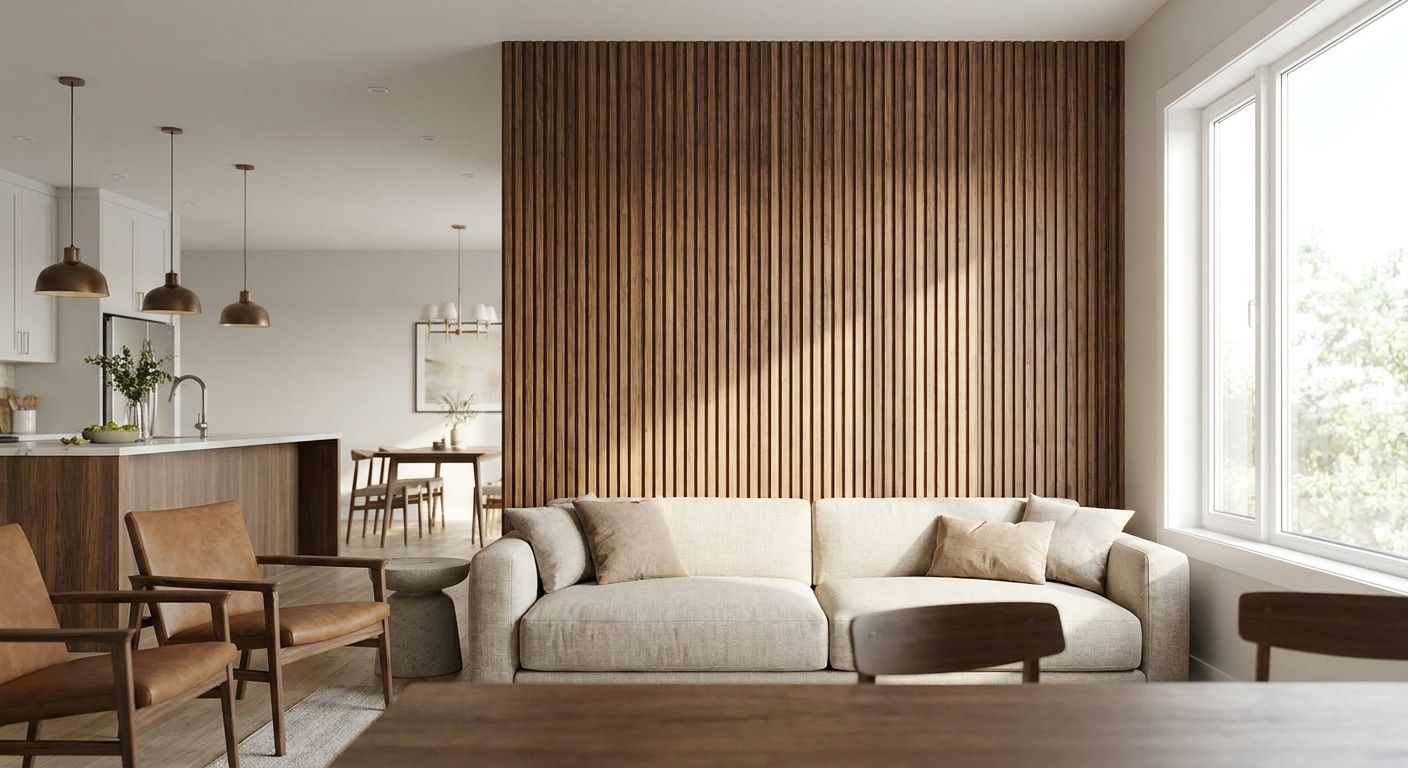
- Real wood slat panels suit large XL wall runs on cathedral and vaulted ceilings better than small foam squares — Buy.
Why This Matters
Sound bounces longer in a room with a 10, 12, or 20-foot ceiling because there's more air volume for it to travel through before it hits a soft surface. A standard 8-foot living room reaches a comfortable reverberation time with a rug and some furniture. A room with a vaulted or cathedral ceiling doesn't get that break — the sound keeps climbing and bouncing off drywall and glass long after someone stops talking.
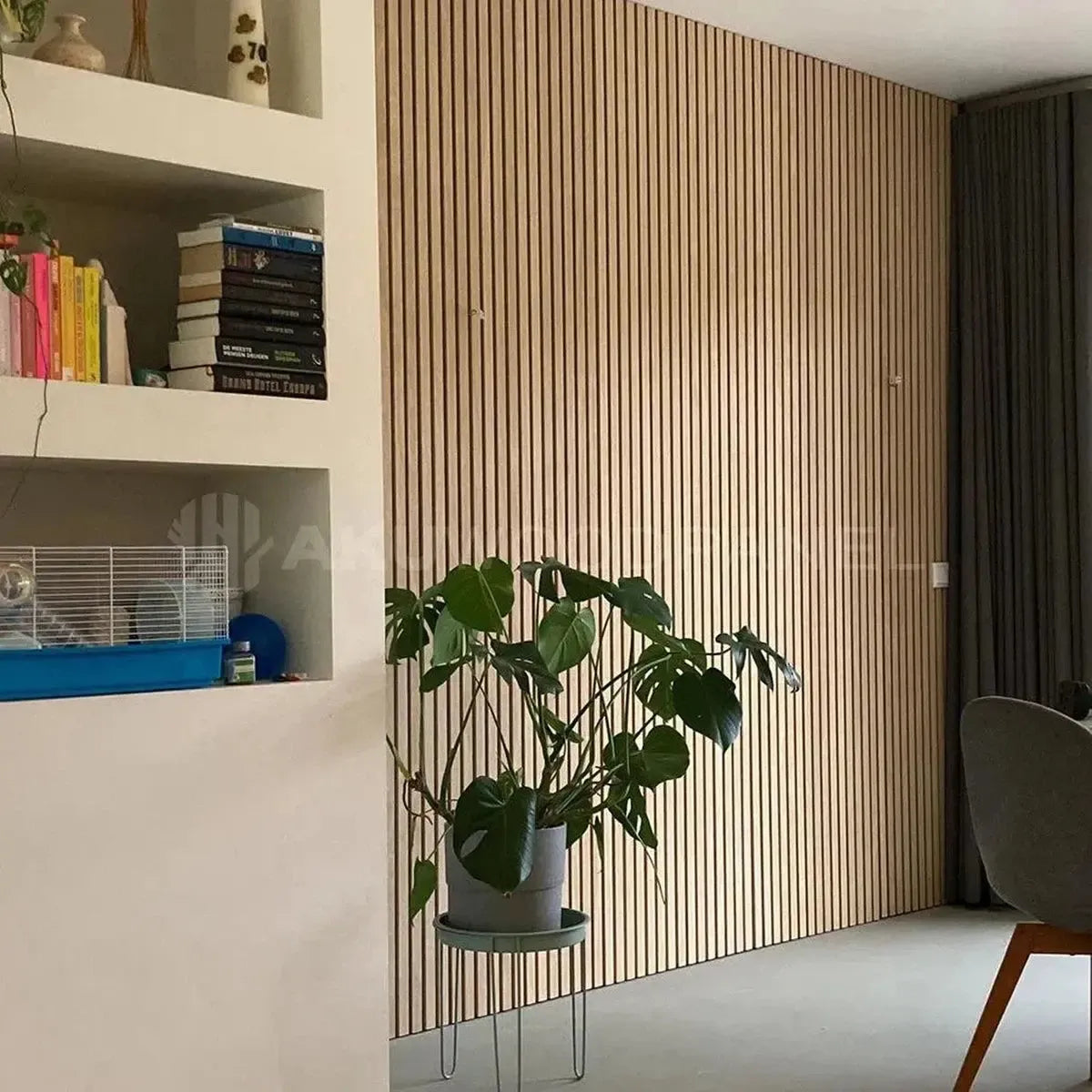
That's why panel placement matters as much as panel rating in tall rooms. A guide on installing XL slat wall panels on high ceilings walks through the framing math, but the short version is this: sound absorption panels mounted only at eye level do almost nothing to a 14-foot wall. You need coverage that runs closer to the full height, or a denser panel that pulls more weight per square foot.
Most of the panels on this list target rooms with hard surfaces — vaulted living rooms, open-plan lofts, home theaters with exposed ceiling beams. If your ceiling is a standard 8 feet, cheaper foam options work fine. Above 10 feet, the physics change and so does the shortlist.
How We Ranked These Panels
Each pick below is scored against three factors that matter specifically for high-ceiling rooms: NRC (noise reduction coefficient, the standard 0-to-1 scale for how much sound a material absorbs versus reflects), panel size relative to wall coverage needed on a tall run, and installed cost per finished wall.
Panels with published NRC data from the manufacturer rank above panels with no published rating, even when the un-rated option is a reasonable material. Price is compared per finished box or unit as listed in 2026, not per square foot, since box coverage varies by shape. Materials that need extra framing, fabric wrapping, or a contractor to look presentable in a visible high-ceiling room get marked down even if their raw absorption number is strong — a tall wall is usually a focal wall, and it has to look intentional up close.
The Ranked List
1. Hexagon Acoustic Panel, Walnut — the safe pick
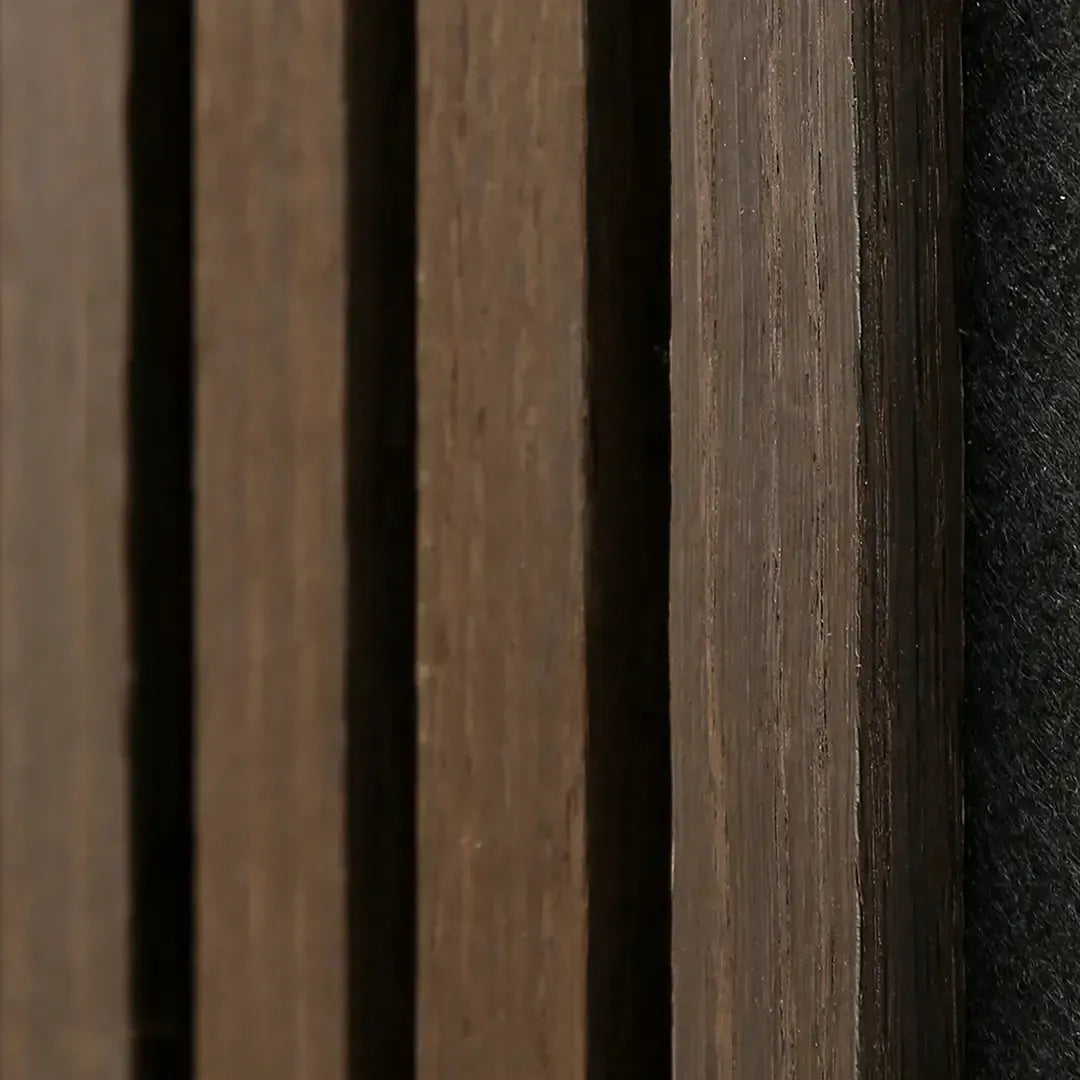
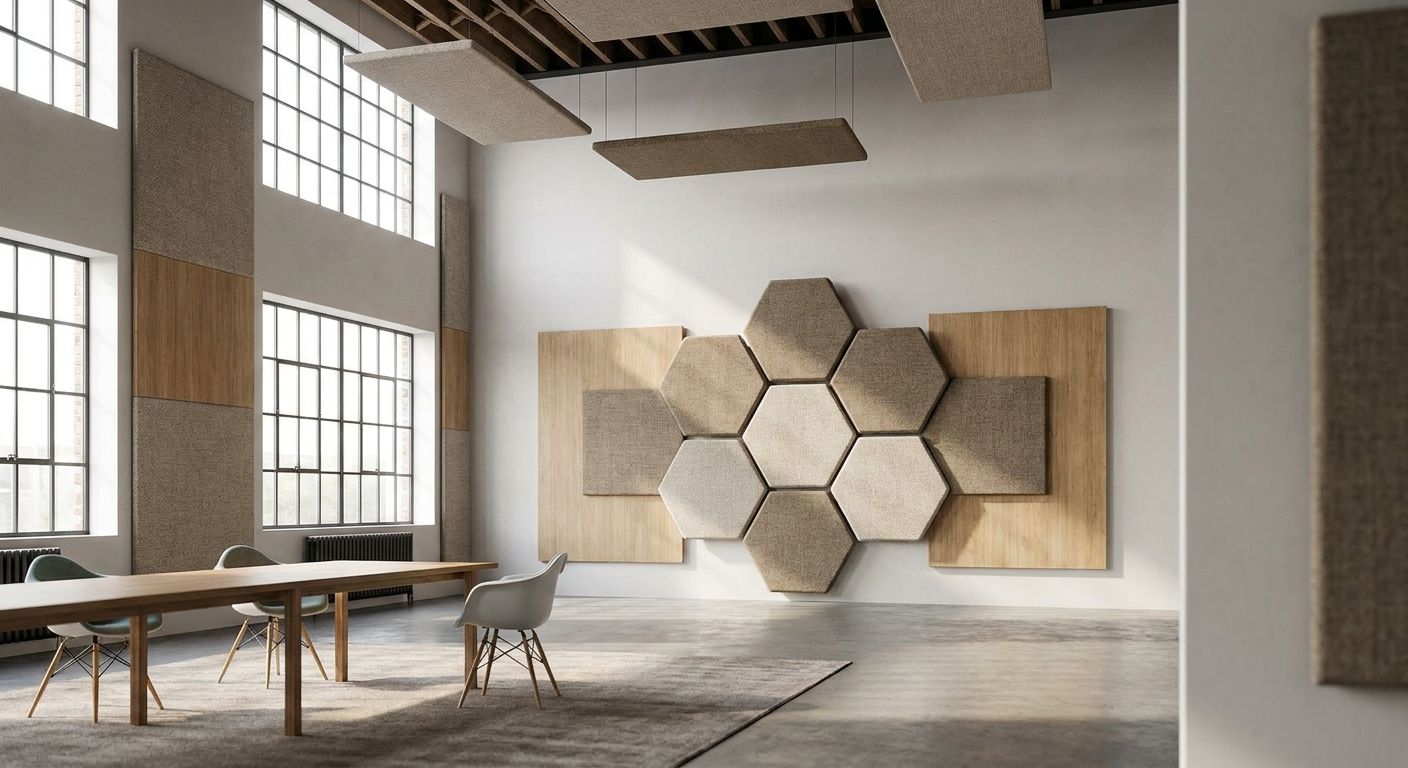
AKU Woodpanel's Hexagon Acoustic Panel in Walnut carries a published NRC of 0.75 and ships four 32-inch panels per box at $165.95. The felt backing sits behind a real wood veneer face, so it reads as a finished decorative wall from across a 15-foot living room, not an acoustic retrofit.
The hexagon shape interlocks with minimal gap between units, which matters more on a tall wall than most buyers expect — gaps between panels create small flanking paths for sound to slip through untouched. For a vaulted living room or a two-story stairwell wall, this is the panel to start a project with. Verdict: Buy.
2. Hexagon Acoustic Panel, Natural Oak with Gray Felt — the daylight pick
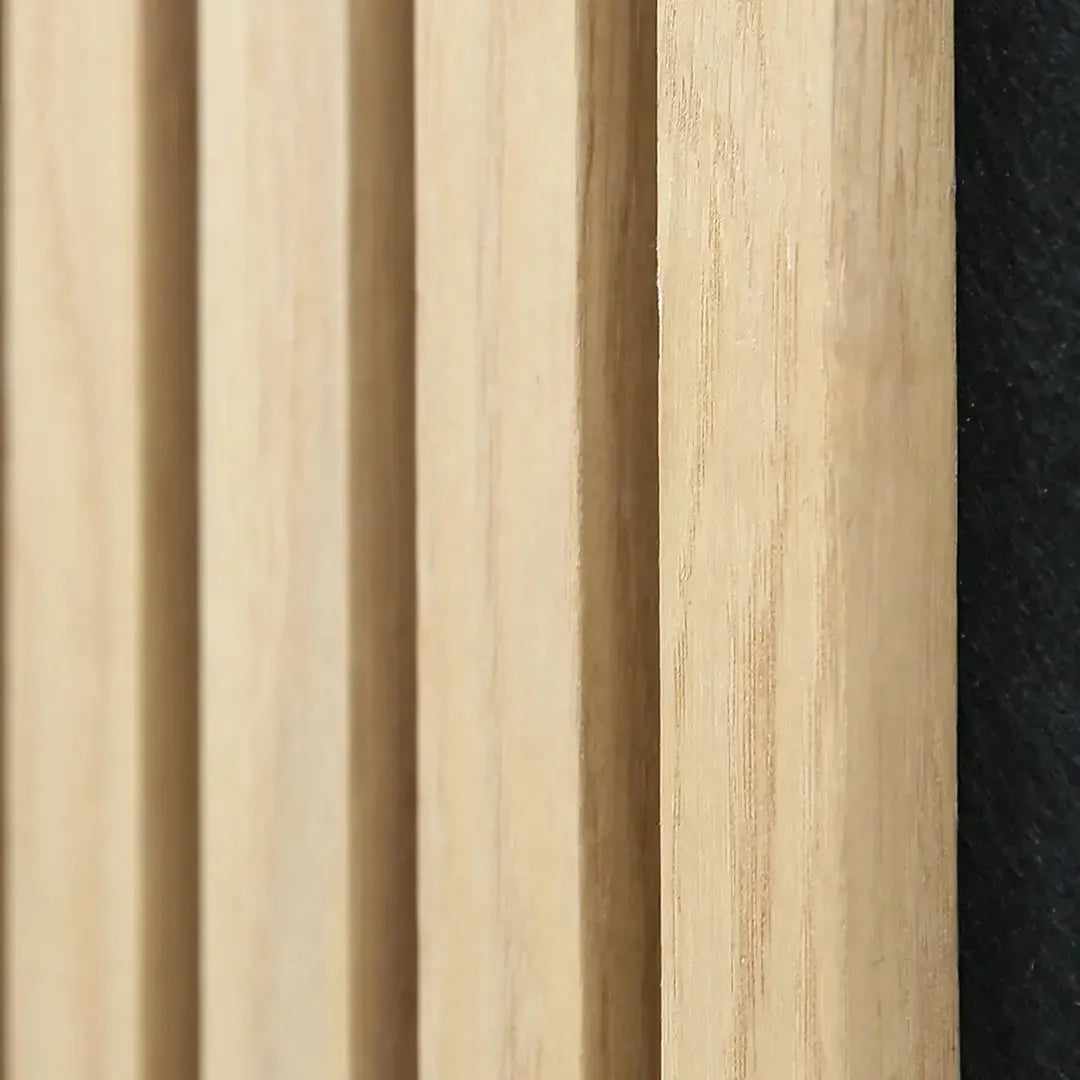
This is the same Hexagon Acoustic Panel in Natural Oak with Gray Felt construction as the walnut version — 0.75 NRC, four 32-inch panels per box, $165.95 — but the lighter oak veneer reflects more ambient light, which matters in rooms where a 12-foot ceiling already reads dark.
Rooms with skylights or large west-facing windows tend to wash out dark veneers by late afternoon; the natural oak holds its color instead of going flat. Anyone pairing sound absorption panels with a bright, Scandinavian-leaning interior should start here over the walnut. Verdict: Buy.
3. Acoustic Slat Wall Panel, Smoked Oak — the wildcard for full-height walls
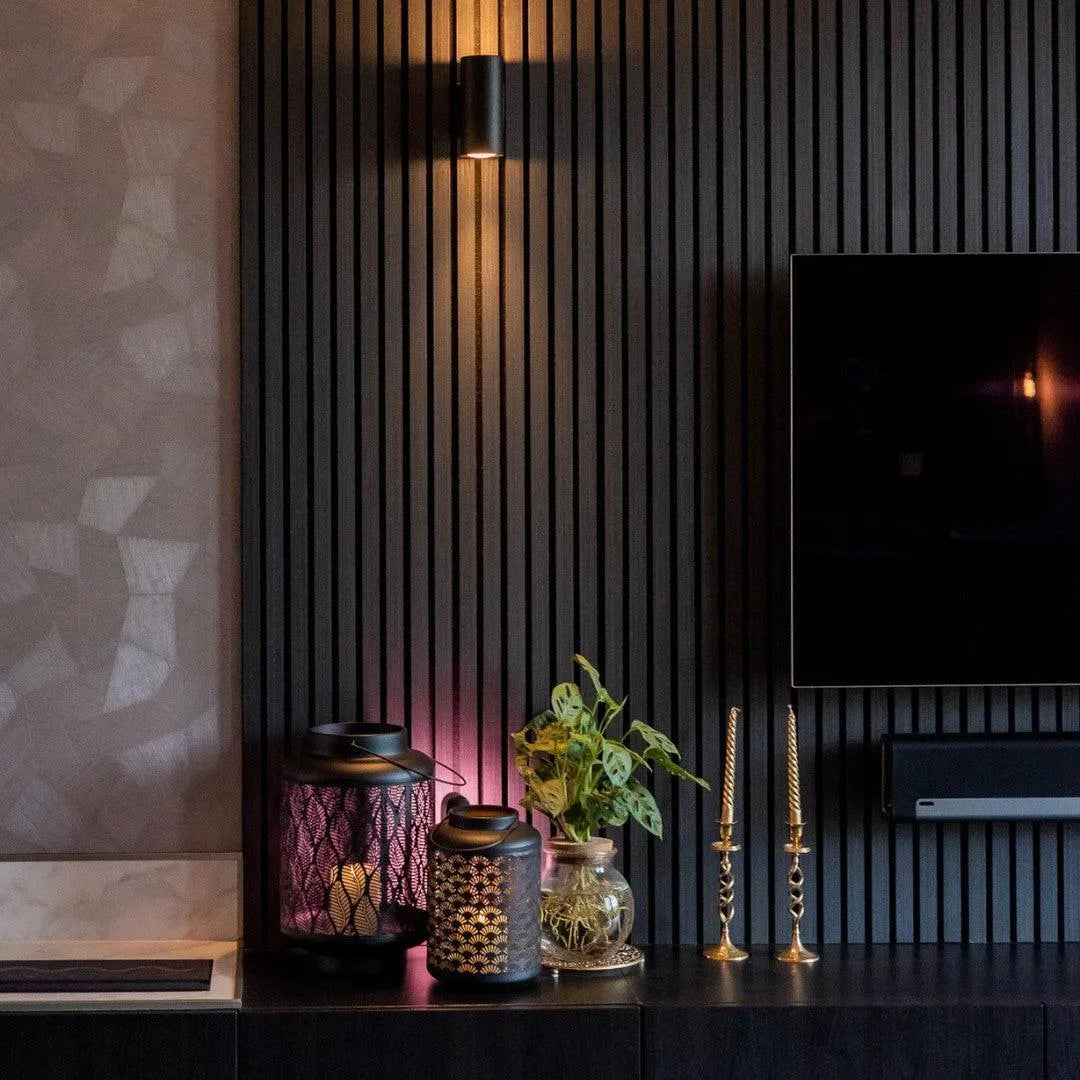
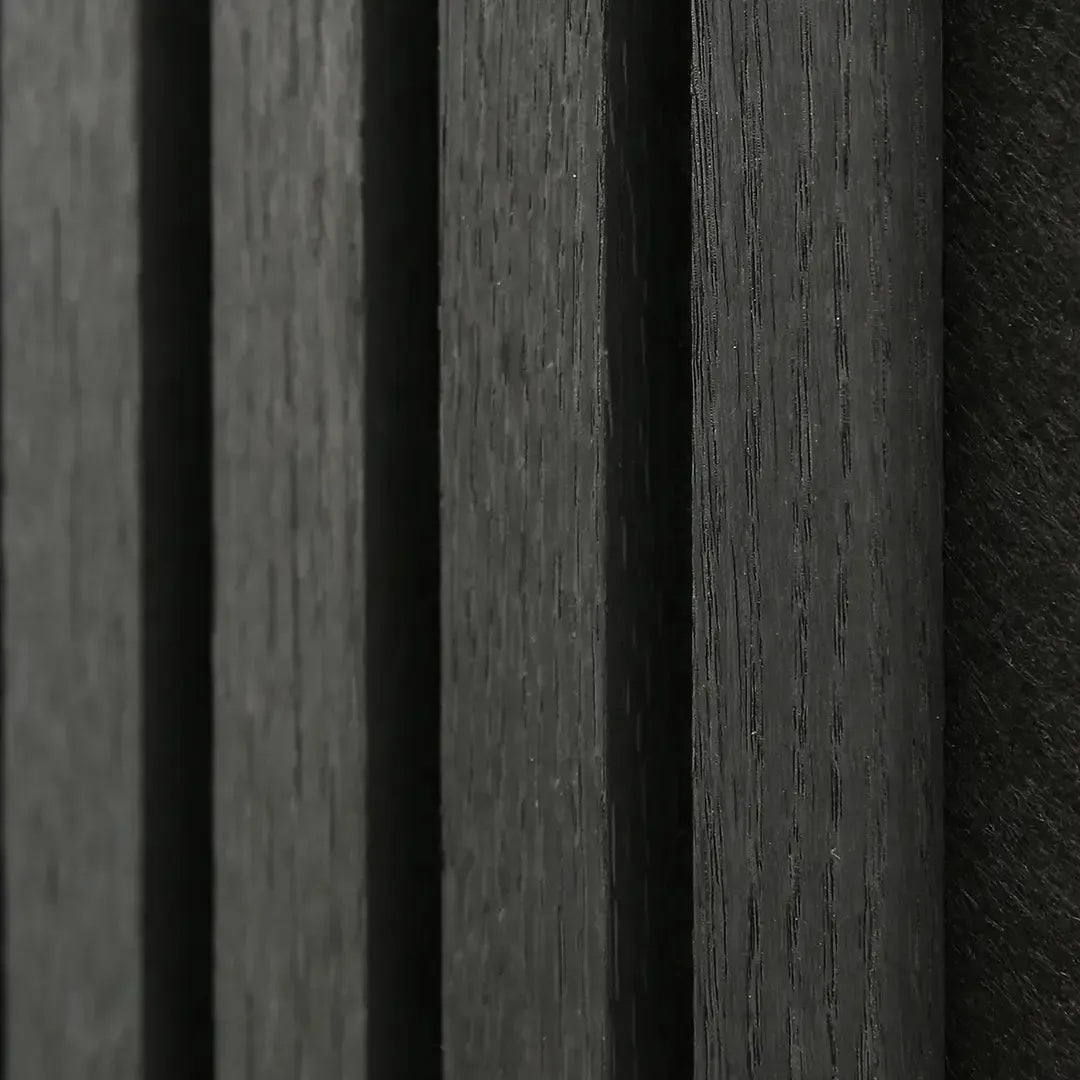
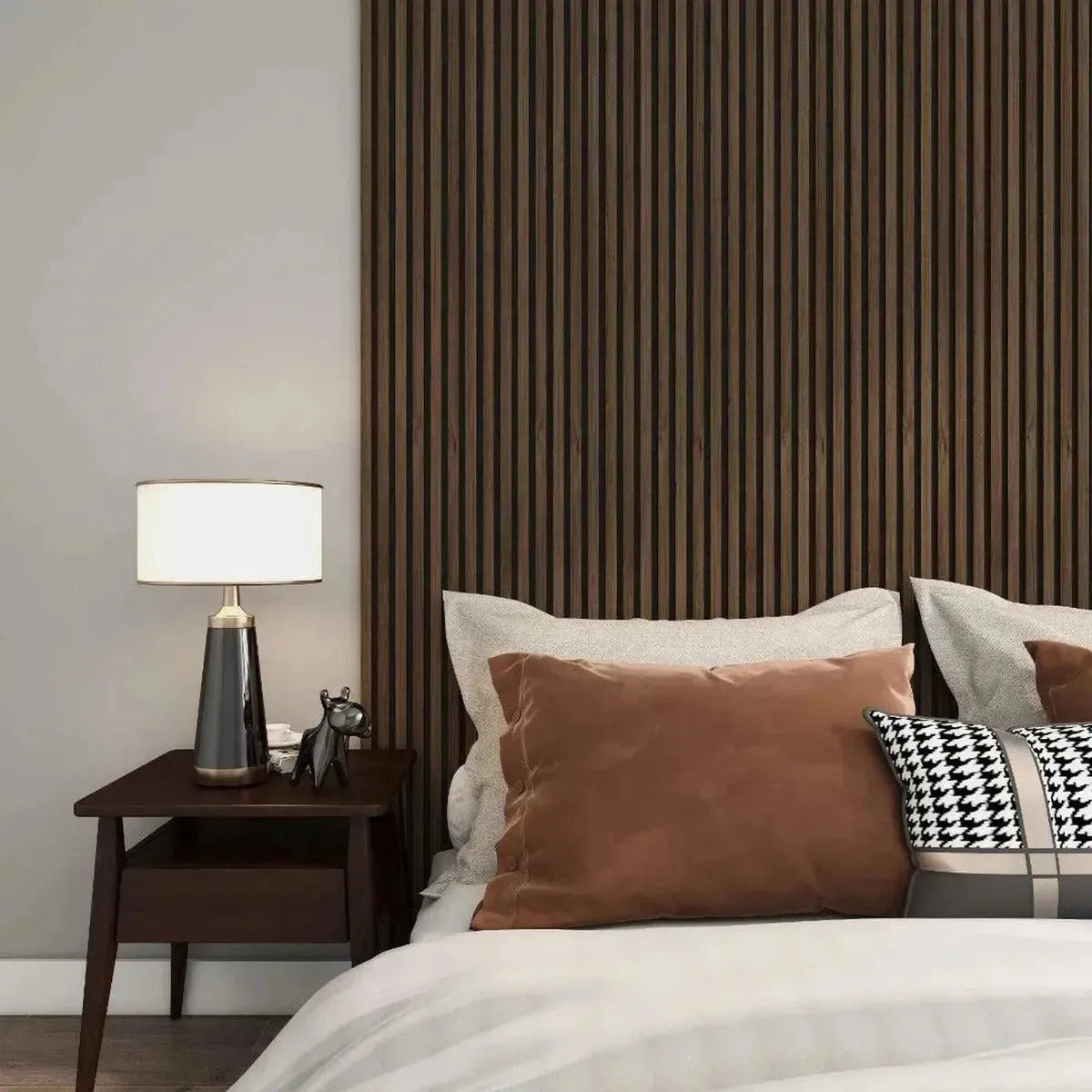
The Acoustic Slat Wall Panel in Smoked Oak uses real wood veneer slats over an acoustic backing, built for full-wall coverage rather than a modular tile grid. On a wall that runs floor to a 14 or 16-foot peak, slat panels cover more linear footage per install session than hexagon tiles do, since each panel spans the full plank length instead of a single hexagon unit.
The smoked oak finish hides dust and fingerprints better than lighter veneers, a real consideration on a wall that's hard to reach for cleaning once it's mounted near a cathedral ceiling. Confirm panel count against your exact wall height before ordering, since full-height runs eat more linear footage than a standard 8-foot wall project. Verdict: Consider.
4. Mineral wool panels — the raw-performance option
Mineral wool boards typically post higher raw NRC numbers on paper than veneer-faced hexagon or slat panels, and they're a standard choice in recording studios and commercial acoustic retrofits. The tradeoff is presentation: raw mineral wool needs a fabric wrap and a frame to look finished on a visible wall, which adds labor and cost that a pre-finished wood panel doesn't carry.
For a mechanical room, a garage band space, or anywhere the wall isn't a design feature, mineral wool is a reasonable call. For a living room or entryway with a tall, visible ceiling, it's the wrong tool. Verdict: Consider — utility spaces only.
5. Fabric-wrapped fiberglass panels — the commercial default
Fiberglass panels wrapped in acoustic fabric show up constantly in office fit-outs and conference rooms because they're cheap to produce at scale and easy to color-match to branding. They absorb sound well in the mid and high frequencies that matter most for speech clarity.
The catch for high-ceiling residential or hospitality spaces is texture and warmth — fabric panels read as corporate, not as a design element, and fiberglass dust exposure during cutting is a real installation concern without the right handling. Verdict: Consider for offices, skip for homes.
6. Foam acoustic tiles — the budget trap
Foam wedge and pyramid tiles are the cheapest sound absorption panels sold online, and they show up first in most searches for the category. On a standard 8-foot studio wall they do a passable job. On a tall, sun-exposed wall, foam degrades faster — it yellows, compresses, and loses adhesion within a couple of years, especially near skylights or south-facing glass common in vaulted rooms.
Foam also reads as a home studio, not a finished interior, which matters if the wall in question is in a living room or entryway rather than a closet booth. Verdict: Skip for any visible high-ceiling wall.


Comparison Table
| Panel | NRC | Panel Size | Price (per box) | Verdict |
|---|---|---|---|---|
| Hexagon Acoustic Panel, Walnut | 0.75 | 32 in, 4 per box | $165.95 | Buy |
| Hexagon Acoustic Panel, Natural Oak w/ Gray Felt | 0.75 | 32 in, 4 per box | $165.95 | Buy |
| Acoustic Slat Wall Panel, Smoked Oak | Not published | Full-length plank | Check current pricing | Consider |
| Mineral wool panel | Higher on paper | Varies by board | Varies | Consider (utility) |
| Fabric-wrapped fiberglass | High mid/high frequency | Varies | Varies | Consider (offices) |
| Foam acoustic tile | Lower, degrades over time | Small tile | Lowest cost | Skip (visible walls) |
Where To Buy
Order a sample box before committing to a full high-ceiling wall — veneer color shifts under different light, and a 12-foot wall is expensive to redo. AKU Woodpanel's Full Sample Box covers Natural, Smoked Oak, and Walnut in one order, which is the fastest way to check a finish against your actual wall before buying full boxes.
Buy hexagon and slat panels from the same production batch when covering a full-height wall — veneer grain and tone vary slightly between runs, and mismatched batches show up more on a tall wall than a short one because there's more surface to compare side by side.
For commercial jobs — theaters, gyms, offices with double-height lobbies — confirm fire rating and NRC documentation directly before specifying panels at scale, since building codes for public spaces are stricter than residential jobs.
FAQ
What's the best sound absorption panel for a high-ceiling room in 2026?
The Hexagon Acoustic Panel in Walnut or Natural Oak with Gray Felt is the best sound absorption panel for high-ceiling rooms in 2026, with a published NRC of 0.75 and a finished wood veneer face. Both cost $165.95 per 4-panel box and work as a standalone feature wall.
How much do sound absorption panels cost?
Hexagon acoustic panels with wood veneer cost $165.95 per box of four 32-inch panels in 2026. Foam tiles cost less per square foot but need replacing sooner on walls exposed to sunlight or humidity.
Do wood panels absorb sound as well as foam?
Wood-and-felt hybrid panels post a solid 0.75 NRC rating, close to mid-range foam, while adding a finished look foam can't match. Pure foam sometimes scores higher on raw absorption but looks and ages worse on a visible high-ceiling wall.
How many panels do I need for a high-ceiling living room?
Coverage depends on wall height and how much reverb you're trying to cut, but most high-ceiling rooms need coverage running closer to the full wall height, not just eye level. Measure the wall and compare it against the box coverage before ordering.
Is real wood veneer better than faux wood for acoustic panels?
Real wood veneer holds its color and texture longer than faux finishes, especially on walls that get direct sunlight through skylights common in vaulted rooms. Faux options are usually cheaper upfront but show wear faster on a prominent tall wall.
Can sound absorption panels go on a cathedral or sloped ceiling, not just the walls?
Yes, slat and hexagon panels can be mounted on sloped or cathedral ceiling sections, though the framing and fastening approach differs from a flat vertical wall. Confirm weight and mounting method for overhead installs before starting.
What's the difference between hexagon and slat acoustic panels?
Hexagon panels are modular tiles that interlock in a grid, better for accent walls and irregular shapes. Slat panels run in continuous planks, covering more linear footage per piece, which suits full-height walls on tall ceilings.
How much wall coverage do I need before I notice less echo?
Most rooms need a meaningful percentage of hard wall surface replaced with absorptive material before the drop in echo is noticeable, not just a single small accent panel. A full feature wall does more than a scattered handful of tiles.
One Last Thing
The interlocking edge on hexagon panels matters more than most buyers realize once a wall clears 50 percent coverage — tight seams block the small flanking gaps where sound sneaks through untreated, something a grid of square foam tiles with visible seams can't do as cleanly. On a 12-foot or taller wall, that detail does more for perceived echo reduction than chasing a slightly higher NRC number on a spec sheet.
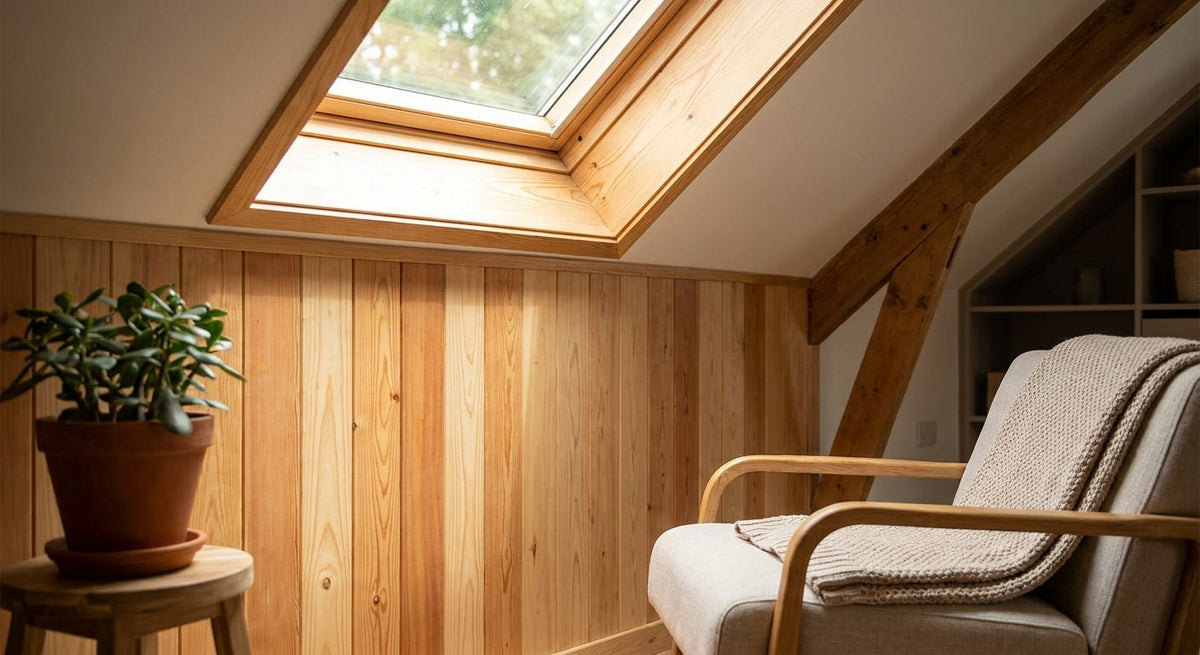

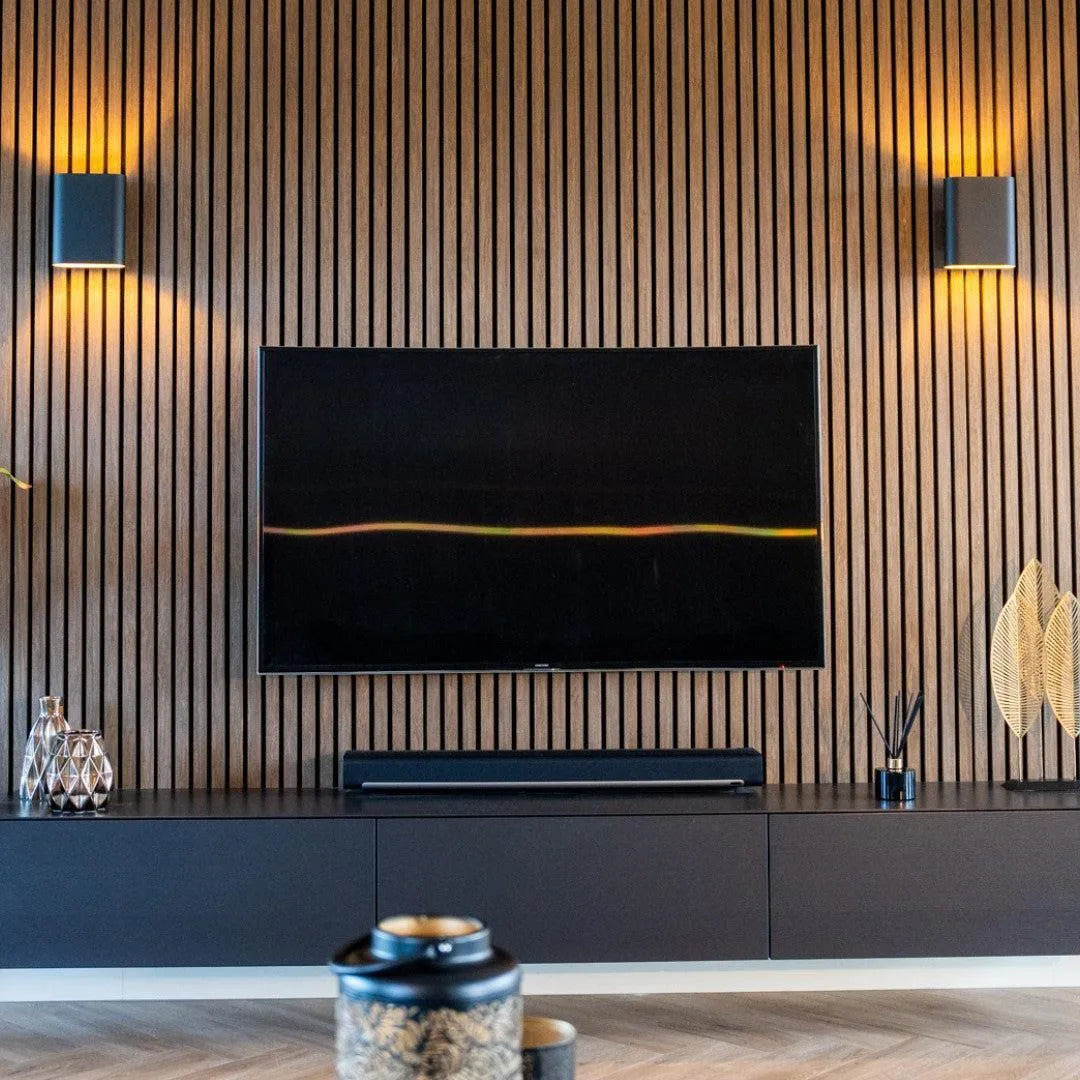
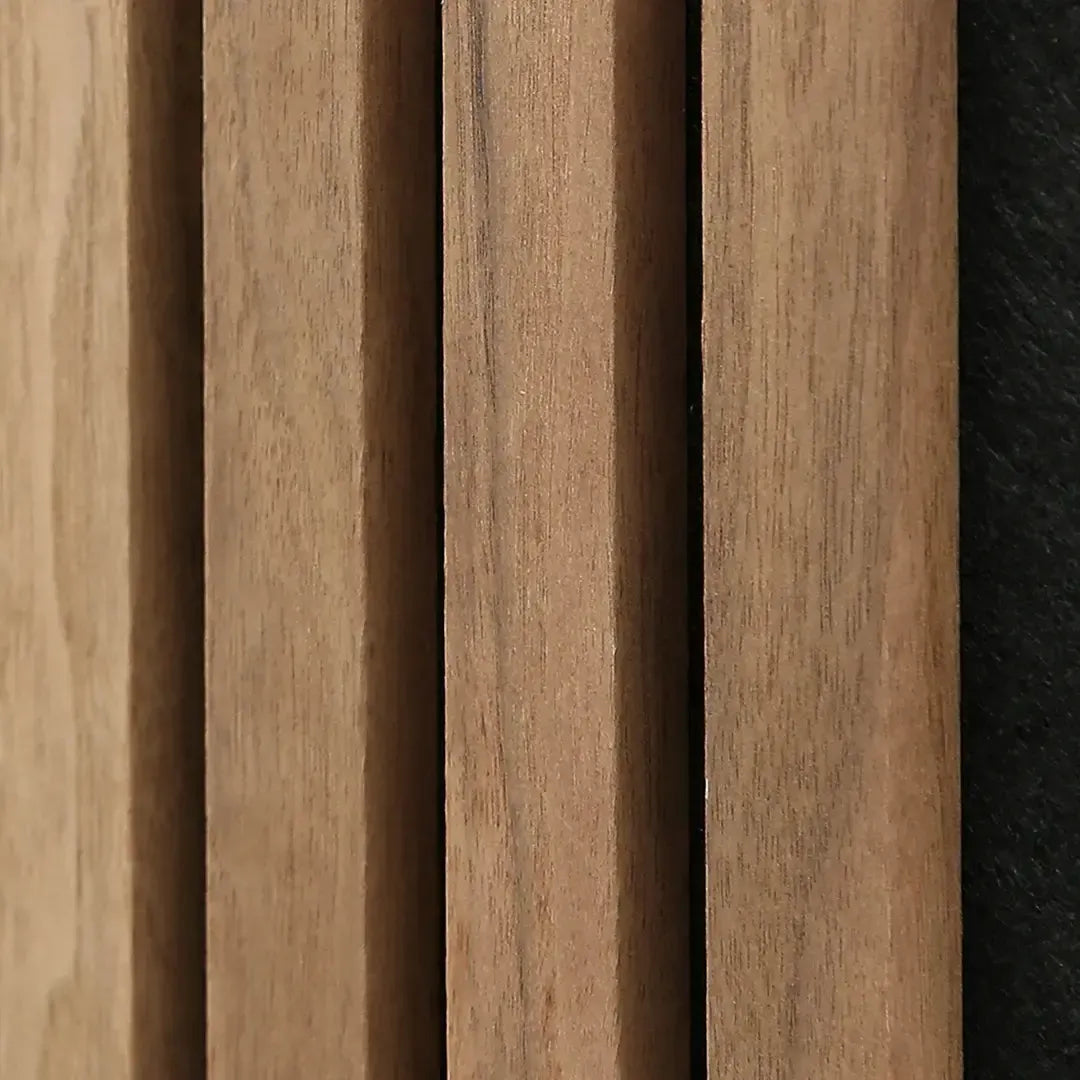
 Better performance and aesthetic appeal
 In Stock