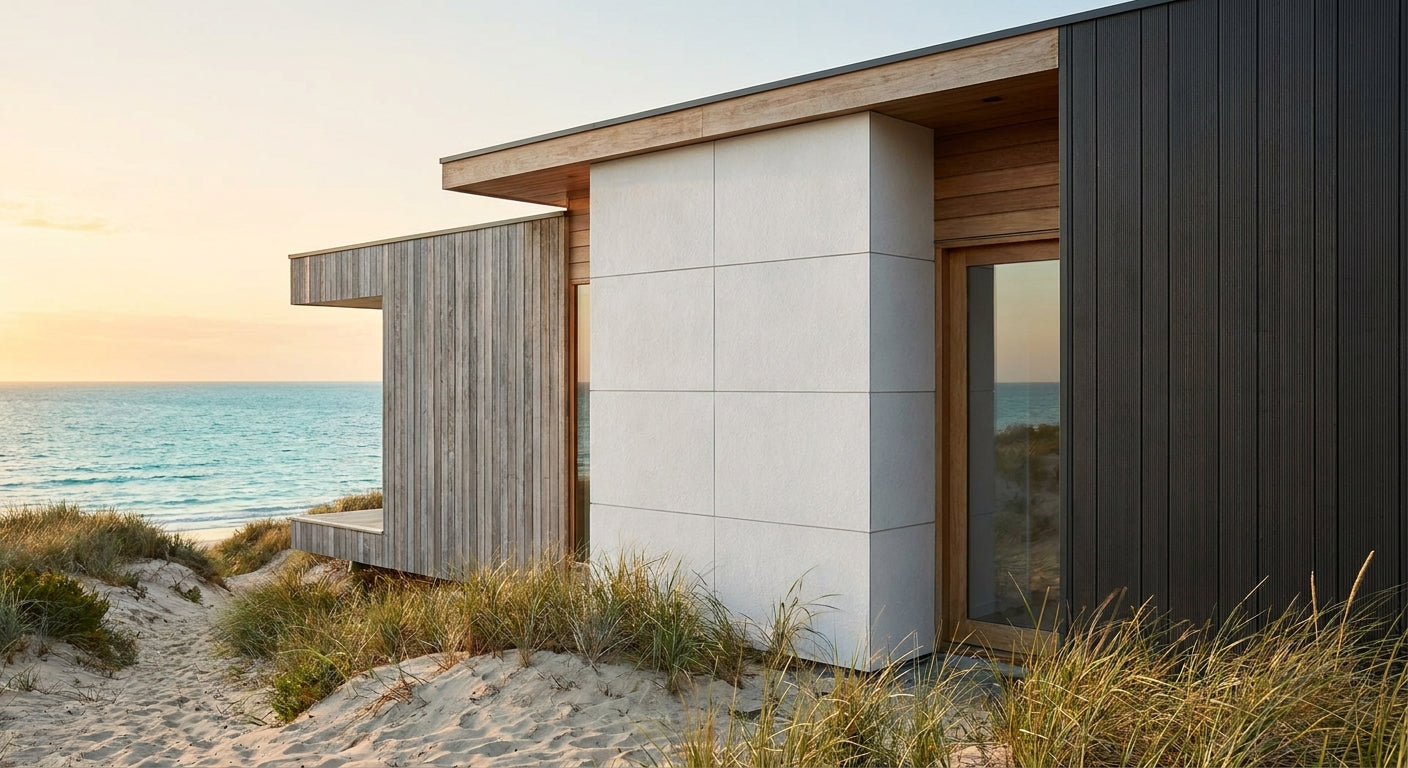
Salt air, driving rain, and UV bake coastal facades harder than any inland wall will ever see, and most cladding marketed as "beach house ready" fails that test within a few seasons. This guide ranks the exterior cladding options that actually hold up on beach house facades in 2026, with clear verdicts on what to buy, what to hold off on, and what to skip.
TL;DR
AKU Wood Panel's Exterior Wall Panel in Stone Gray is the top pick for beach house facades in 2026, delivering a driftwood look with a low-maintenance composite core built for coastal exposure. The Black finish is the runner-up for modern builds, real cedar shiplap is a Hold unless you're committed to annual upkeep, and vinyl shake is a flat Skip for anything within sight of the water. Search interest for exterior cladding panels beach house sits at 510 monthly searches with a difficulty score of 33 in early 2026, which tells you demand is real but the ranking field is still open.
Why this matters
A beach house facade takes abuse an inland home never sees. Salt spray corrodes fasteners, humidity above 80% for weeks at a stretch swells untreated wood, and UV exposure fades cheap coatings within a single summer. Building codes in many coastal counties define a salt spray zone extending roughly 1,500 feet from the shoreline, and cladding inside that zone needs a different spec sheet than cladding three miles inland.
Get the material wrong and you're repainting or replacing boards by year three. Get it right and the facade holds its look through a decade of nor'easters, humidity swings, and direct sun. That's the entire decision this guide is built to shortcut.
How we ranked
Each product on this list is scored against four factors that matter specifically for coastal exteriors: moisture and salt resistance, maintenance frequency, UV color stability, and installation practicality over common beach house wall types like block, stucco, and timber frame. Rankings weigh publicly available product specs, coastal building practice, and category-wide performance patterns rather than lab claims from any single manufacturer. Products with visible fastener corrosion issues or known warping complaints in humid climates get marked down regardless of price or appearance.
The ranked list
1. AKU Wood Panel Exterior Wall Panel — Stone Gray
The weathered-driftwood look without the actual weathering. This finish reads like reclaimed beach timber but runs on a composite core designed to resist the swelling and cupping that hits real wood in humid coastal air. It's the closest match to the classic shingle-style beach house aesthetic that doesn't require re-staining every spring.
Verdict: Buy. It's the safe pick for anyone building or re-cladding a beach house facade in 2026 who wants the coastal look without the coastal maintenance cycle. Check the Stone Gray exterior wall panel for current availability.
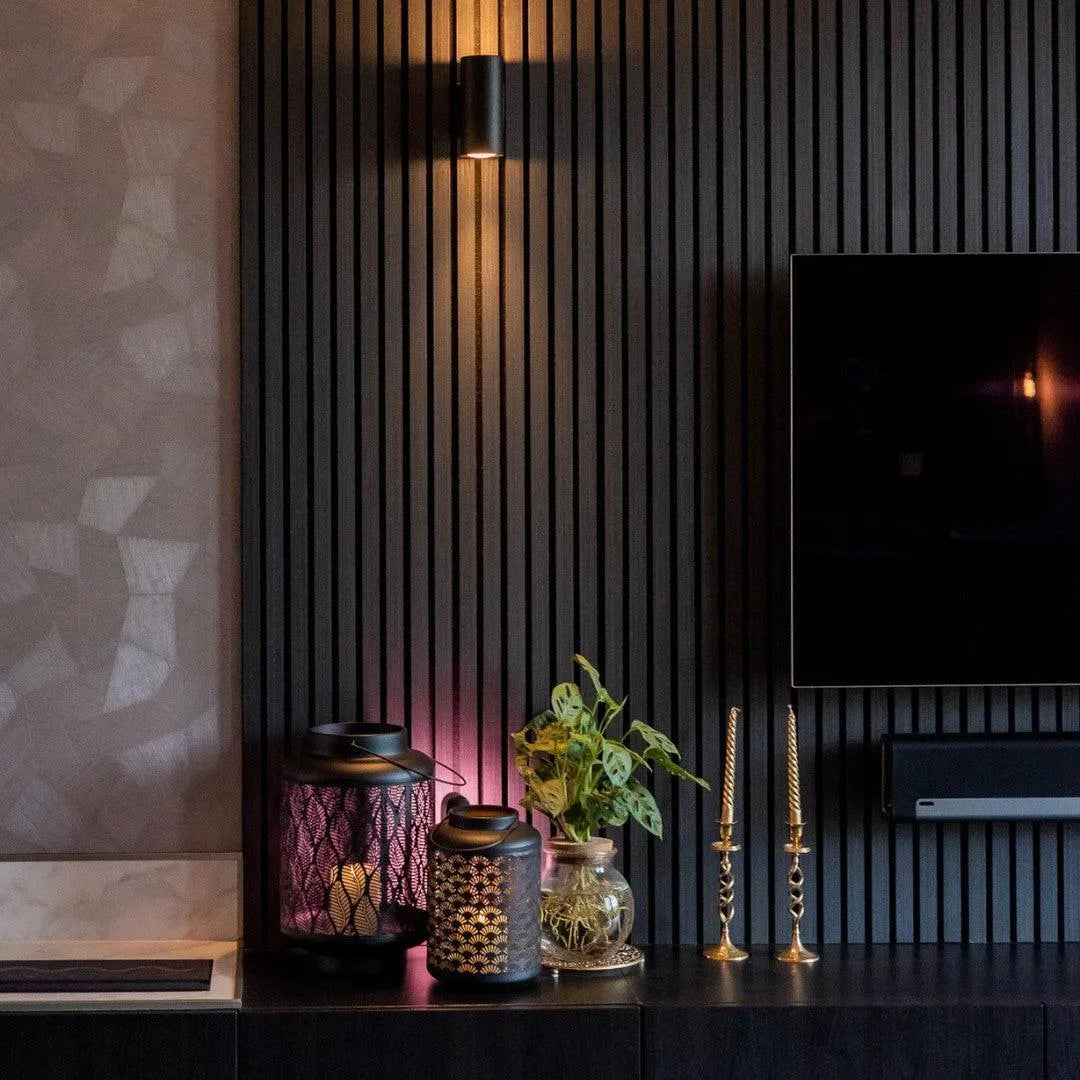
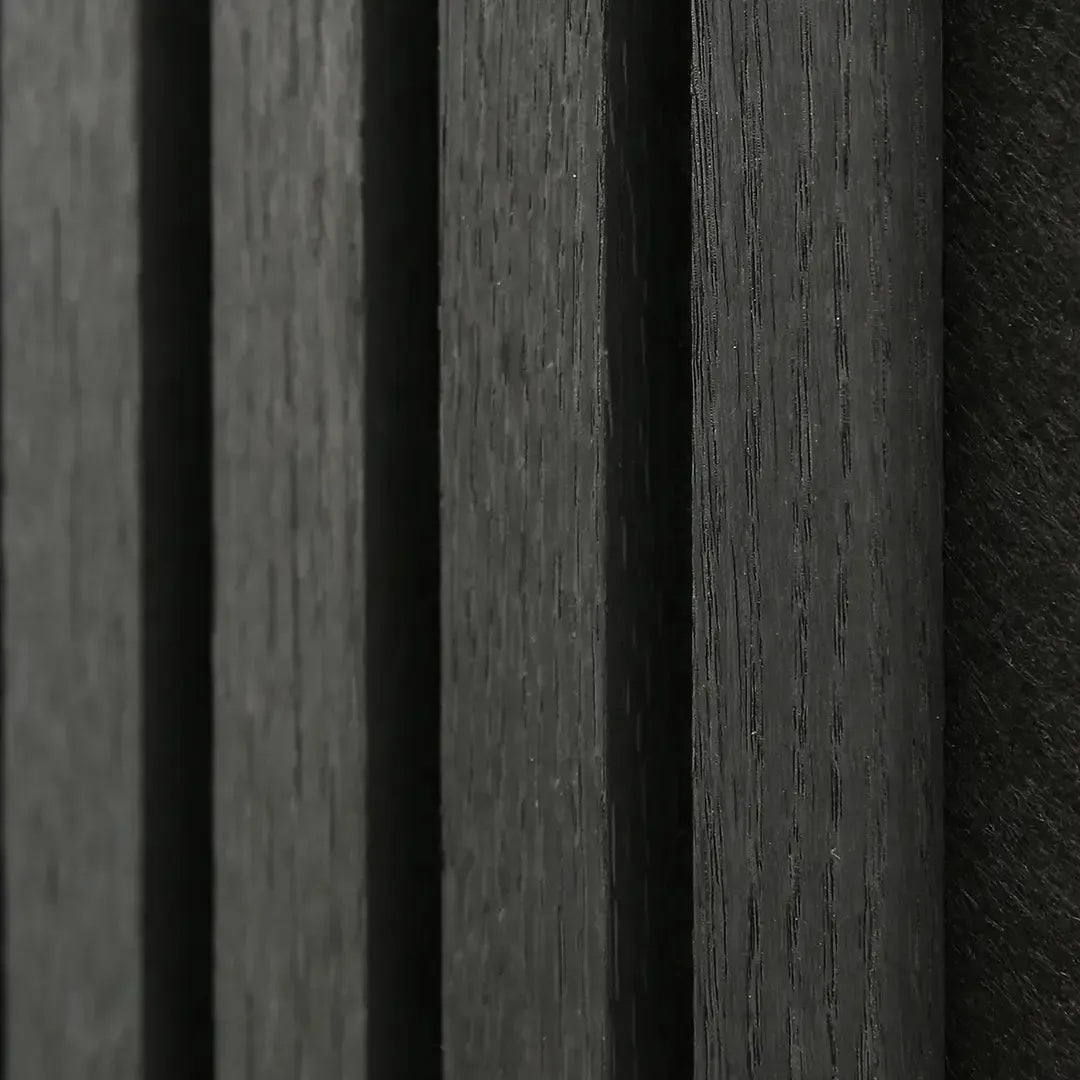
2. AKU Wood Panel Exterior Wall Panel — Black
The modern monochrome pick for contemporary beach houses that skip the shingle-style look entirely. Black exterior cladding reads sharp against dune grass and ocean-facing glass, and it hides salt residue and water spotting far better than lighter finishes between cleanings.
Verdict: Buy. Salt film shows up as a white haze on dark cladding faster than on light cladding, so plan on a rinse-down every few months if the house sits directly on the water. See the Black exterior wall panel for specs.
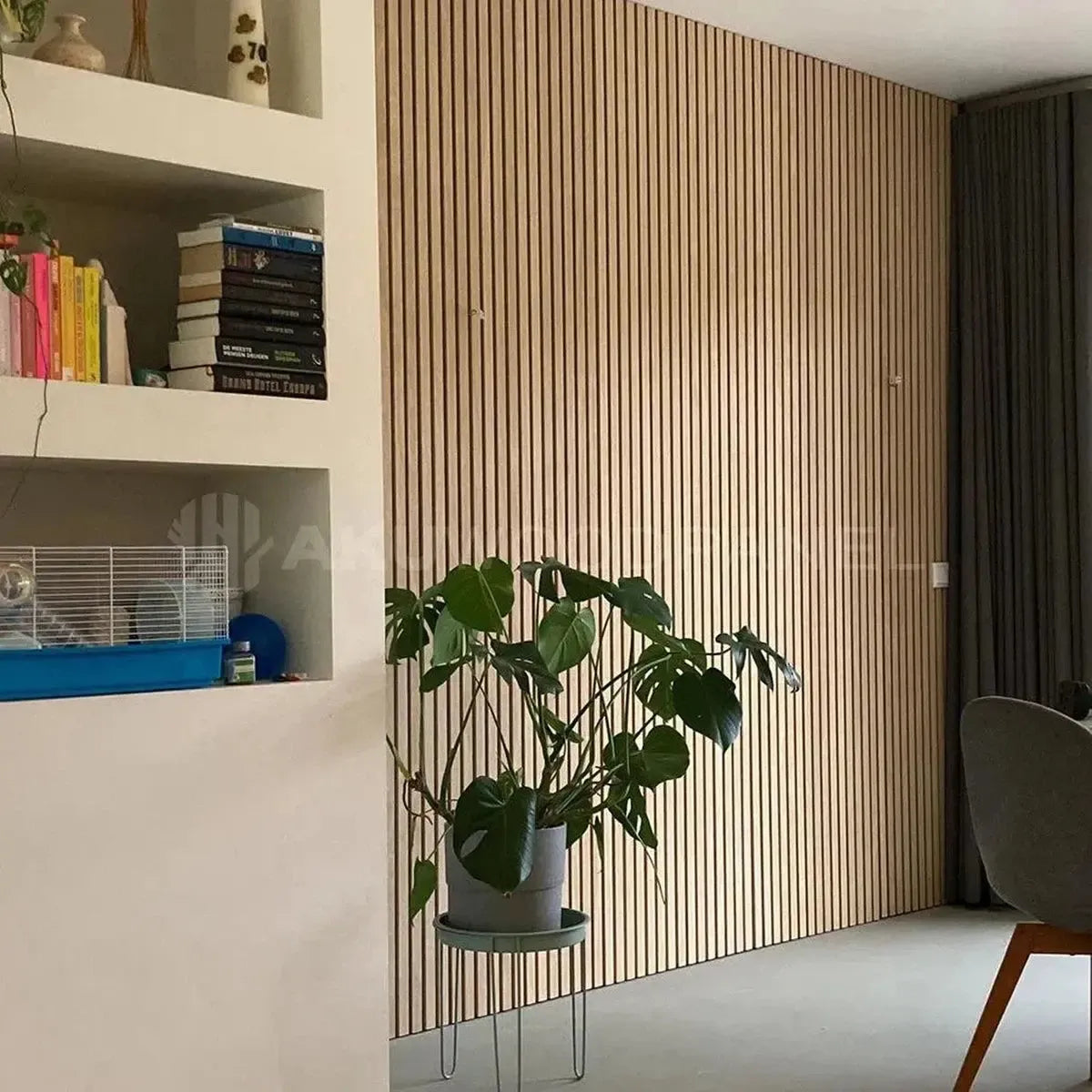
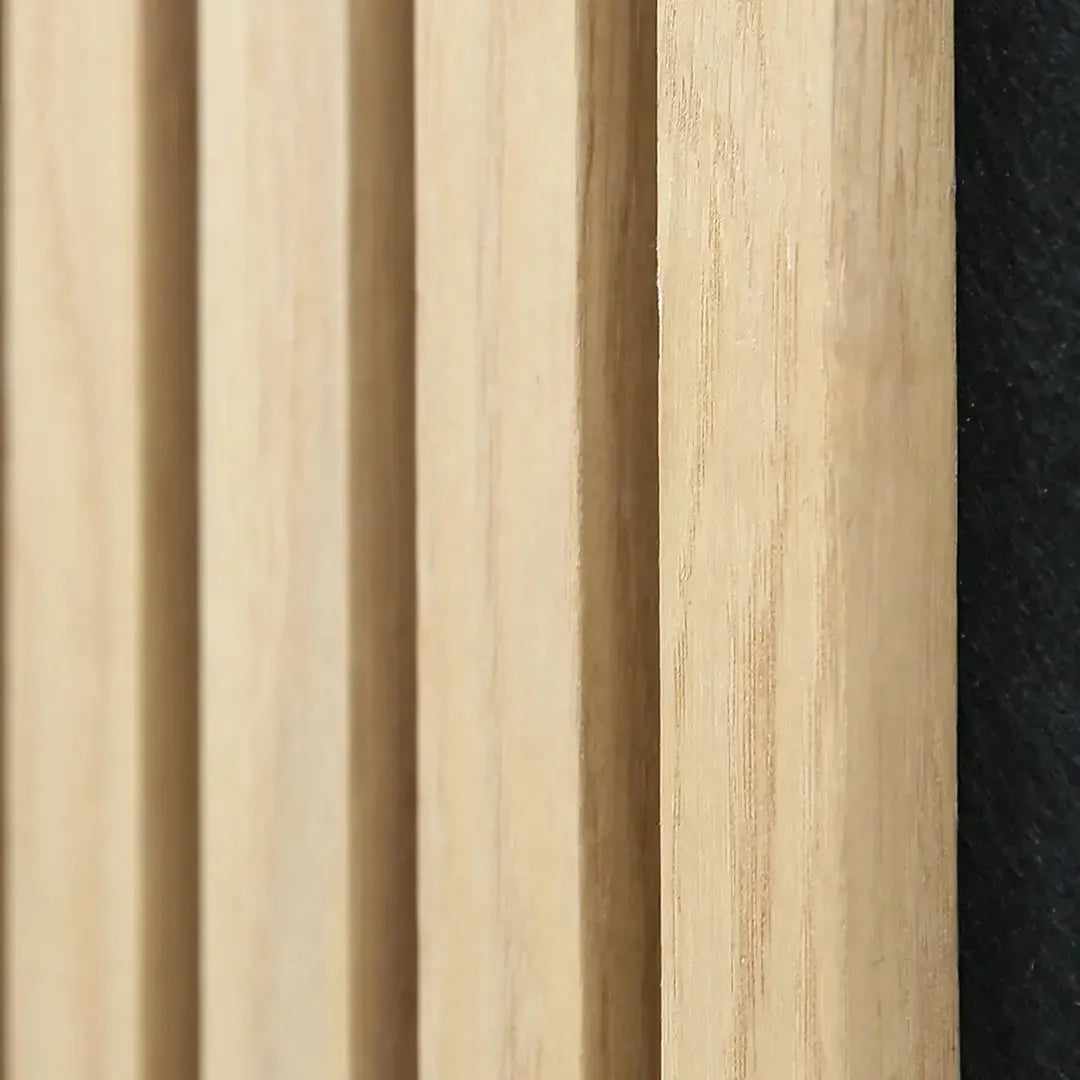
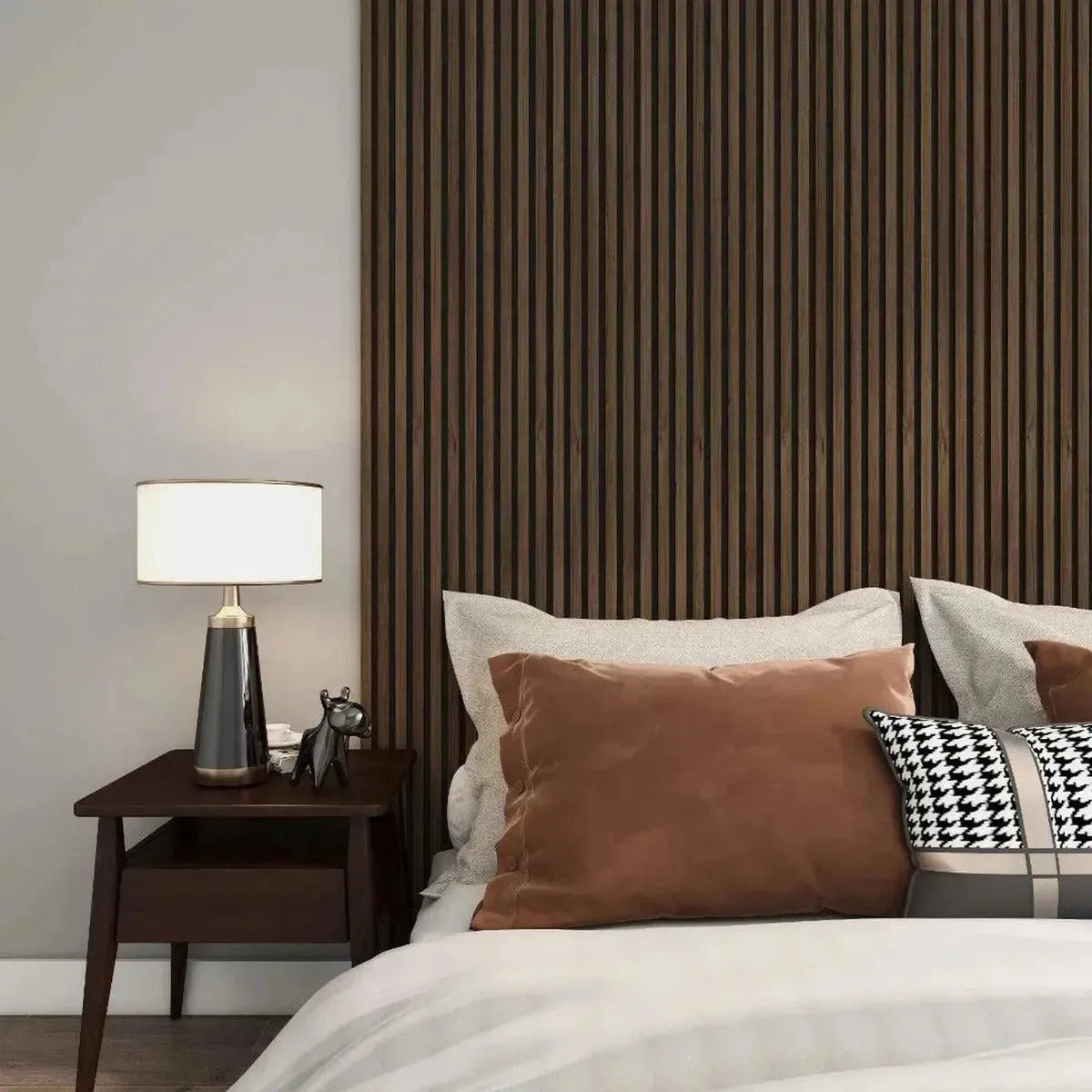
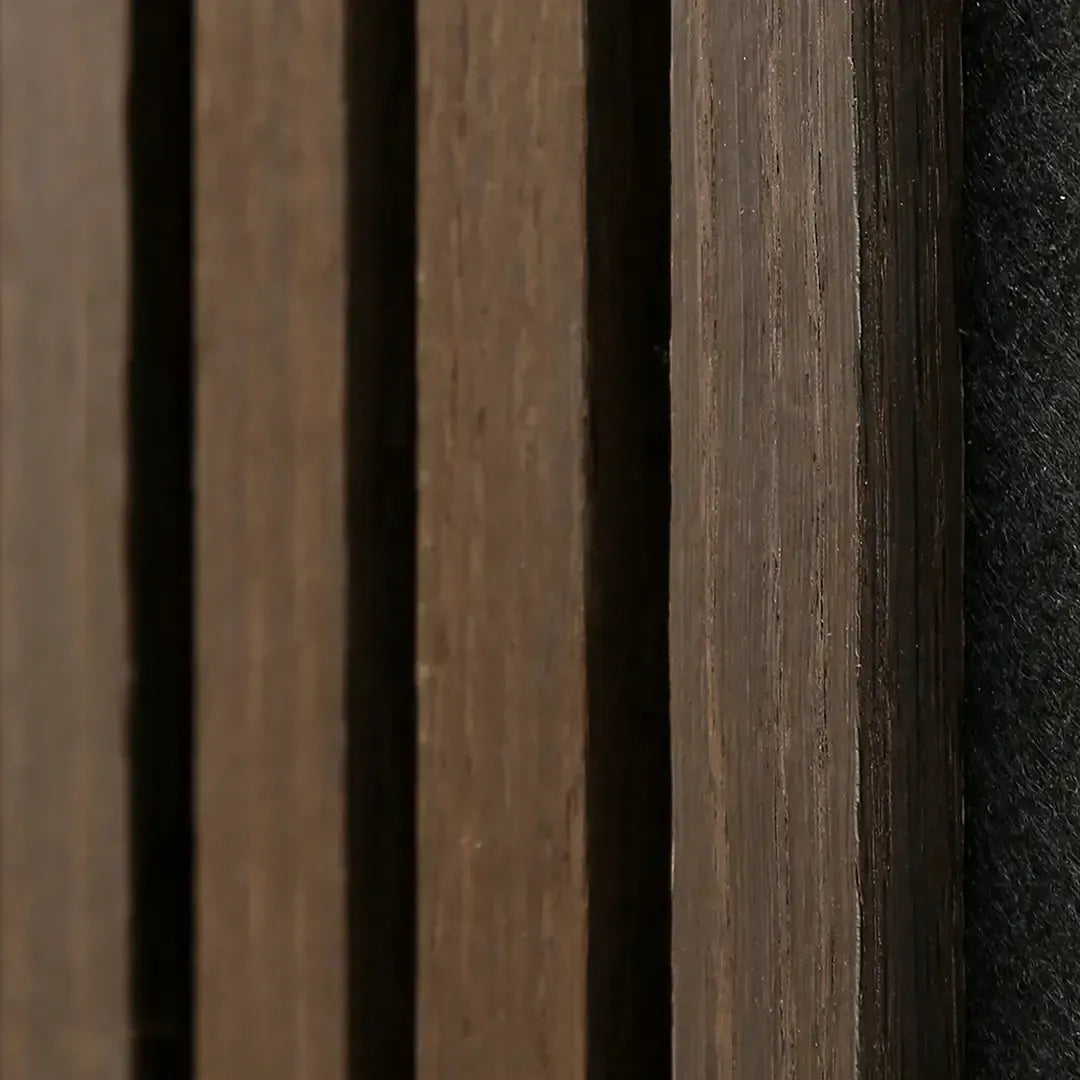
3. AKU Wood Panel Exterior Wall Panel — Oak
The warm, classic option for owners who want a facade that still reads as wood without committing to real timber's upkeep schedule. It pairs well with natural stone foundations and timber decking, a common combination on older beach lots.
Verdict: Consider. It's a strong pick if the rest of the exterior palette leans traditional, but the Stone Gray finish hides salt film and sun fade slightly better over multi-year exposure. View the Oak exterior wall panel before deciding between the two.
4. AKU Wood Panel Exterior Wall Panel — Birch
The lighter, budget-conscious wildcard in the exterior lineup. Birch reads brighter and more casual than Oak or Stone Gray, which suits smaller cottage-style beach houses better than large modern builds.
Verdict: Consider. It's a reasonable entry point if you're cladding a smaller structure like a pool house or garden studio rather than a full-size beach house facade, but check current sizing and coverage details on the product page before ordering enough for a full elevation.
5. Real cedar shiplap (generic category)
The traditional beach house material, and still the benchmark everyone compares composite finishes against. Cedar has natural rot resistance that beats most softwoods, but it still needs sealing or staining on a recurring cycle once it's exposed to direct salt spray and sun.
Verdict: Hold. Buy it only if you're prepared for a maintenance routine that composite alternatives don't require, and budget for re-sealing well before the five-year mark in a high-exposure zone.
6. Fiber cement panels (generic category)
The fireproof, rot-proof workhorse of coastal construction. Fiber cement resists salt and moisture better than untreated wood and holds paint longer than vinyl, which is why it shows up on so many code-compliant coastal rebuilds.
Verdict: Consider. It's a legitimate alternative if wood-look aesthetics aren't the priority, but it weighs significantly more than composite wood panel systems, which affects both shipping cost and installation labor.
7. Vinyl shake siding (generic category)
The low-cost placeholder that looks fine in a listing photo and less fine up close. Vinyl softens and can warp under sustained direct sun, and repeated salt exposure accelerates the fading that already plagues the material inland.
Verdict: Skip. It's the wrong call for a facade that's meant to last through multiple coastal seasons without a full re-clad.
Comparison table
| Option | Salt/moisture resistance | Maintenance | UV color stability | Verdict |
|---|---|---|---|---|
| AKU Wood Panel — Stone Gray | High | Low | High | Buy |
| AKU Wood Panel — Black | High | Low-Medium | Medium | Buy |
| AKU Wood Panel — Oak | High | Low | Medium-High | Consider |
| AKU Wood Panel — Birch | Medium-High | Low | Medium | Consider |
| Real cedar shiplap | Medium | High | Medium | Hold |
| Fiber cement | High | Medium | High | Consider |
| Vinyl shake | Low-Medium | Low | Low | Skip |
Where to buy
- Order samples before committing to a full elevation. Color and grain read differently under direct coastal sun than under indoor lighting, and a sample piece left outside for a week tells you more than a photo ever will.
- Buy from the manufacturer or an authorized distributor rather than a reseller with unclear stock, especially for coastal projects where fastener and trim compatibility matters as much as the panel itself.
- Confirm coverage and trim requirements before ordering. A beach house facade usually needs corner trim and finishing trim in addition to the field panels, and under-ordering delays installation by a full shipping cycle.
FAQ
What's the best exterior cladding panel for a beach house facade in 2026? AKU Wood Panel's Stone Gray exterior wall panel is the strongest overall pick for 2026, combining a driftwood aesthetic with a composite core built for coastal moisture and UV exposure.
Is wood cladding durable in salt air environments? Real wood cladding like cedar shiplap holds up reasonably well but needs recurring sealing or staining, while composite wood-look panels resist swelling and salt film buildup with far less upkeep.
Should I choose composite or real wood veneer for coastal exteriors? Composite wins for low-maintenance coastal use because it resists the humidity swings and salt exposure that cause real wood to cup and gray unevenly over time.
How often does exterior cladding need maintenance near the ocean? Real wood typically needs re-sealing or staining every few years in a high-exposure coastal zone, while composite panel systems mainly need periodic rinsing to clear salt residue.
Can AKU Wood Panel exterior panels be installed over stucco or block walls? Exterior wall panel systems are commonly installed over rendered block and stucco with the right furring and trim setup, so check the current installation guidance before starting the project.
What's the difference between fiber cement and wood-look composite cladding? Fiber cement is heavier, fireproof, and holds paint longer, while wood-look composite panels are lighter, install faster, and deliver a natural grain look without repainting cycles.
Does color affect how cladding performs in coastal sun exposure? Darker finishes like Black show salt film and water spotting faster between cleanings, while lighter and mid-tone finishes like Stone Gray and Oak hide residue better over multi-season exposure.
How do I calculate how many panels I need for a beach house facade? Measure total elevation square footage, subtract window and door openings, then add extra coverage for corner trim, waste, and cutting around fixtures before placing an order.
One last thing
The detail most owners miss on beach house facades isn't the panel color, it's the fastener and trim spec. A cladding system can resist salt spray perfectly and still fail early if the screws and corner trim underneath aren't rated for the same exposure zone, so match the whole system, not just the face material, before you order for 2026 installation.
 Better performance and aesthetic appeal
 In Stock