Six wood panel styles handle sound absorption and wall decoration differently, and picking the wrong one means echo problems that never actually get fixed. This guide ranks decorative acoustic wall panels from AKU Woodpanel by the exact use case each one solves, not by which one looks best in a photo.
- Acoustic Slat Wall Panel in Natural Oak wins for everyday living rooms - real oak veneer over a slotted acoustic core.
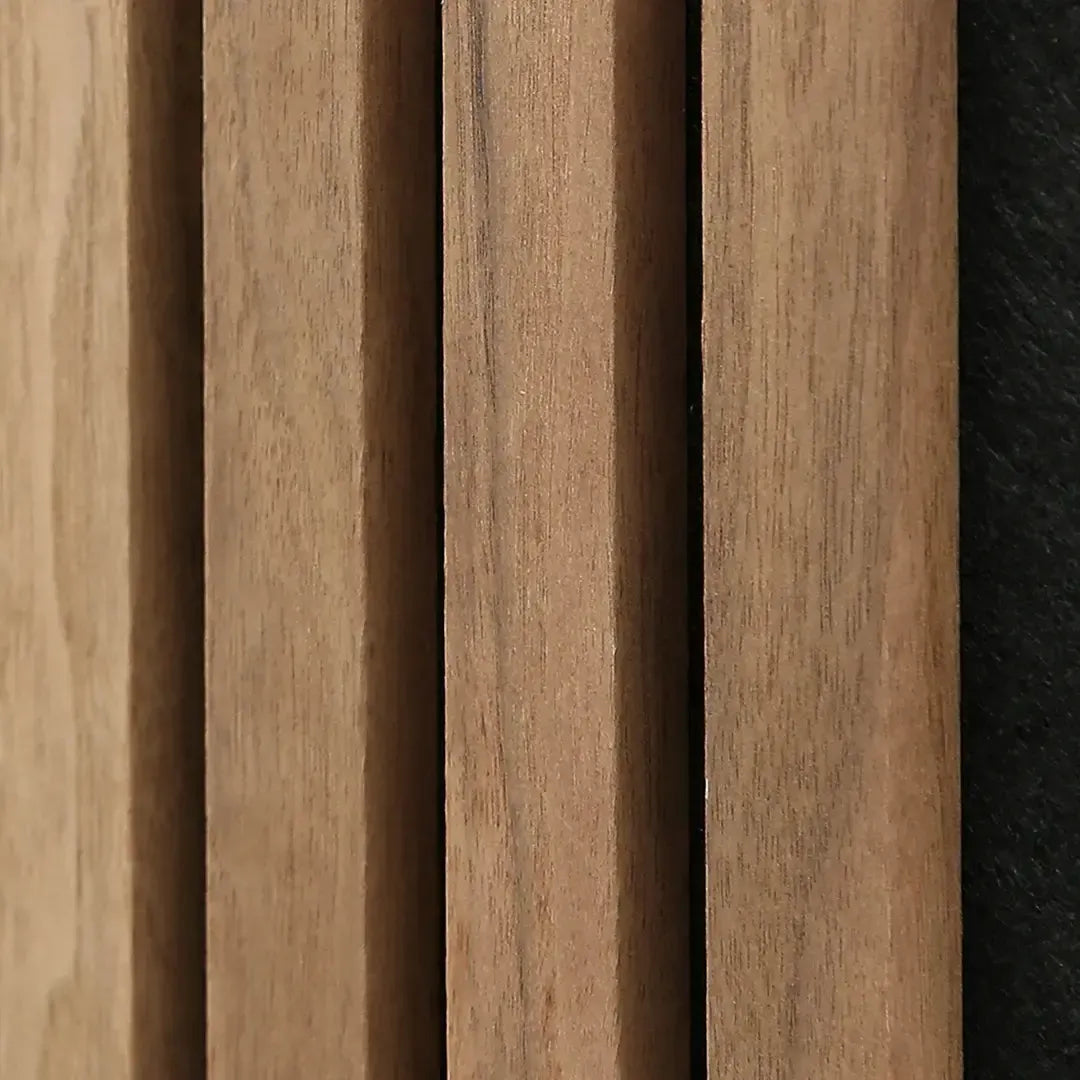
- Fluted Wall Panel in Walnut is the only pick here with a flexible backing for curved walls and columns.
- Peel-and-Stick Backsplash tiles are the budget and renter-friendly decorative acoustic wall panels option - no drilling, no acoustic benefit.
- Exterior Wall Panel in Birch is the one panel on this list rated for outdoor use, not indoor echo control.
- Hexagon Acoustic Panel in Walnut covers the most wall area with the fewest visible seams of any shape tested here.
Why this matters
Most "acoustic" wall panel listings mix decorative-only products with genuine sound-absorbing ones, and a buyer who wants to fix an echo problem in 2026 can end up installing a panel that only changes the look of the wall. The AKU Woodpanel catalog splits cleanly into slat, fluted, hexagon, exterior, and adhesive tile formats, and each format solves a different problem.
A slotted slat panel with a felt back absorbs mid-range frequencies that cause voices to bounce around a room. A solid-veneer 3D wood tile does none of that - it's decoration, full stop. Knowing which is which before you order samples saves a return shipment.
What makes the best decorative acoustic wall panels
- Real wood veneer over printed laminate - veneer ages and can be re-oiled; laminate just fades
- Slotted or fluted profile behind the veneer - this is what actually absorbs sound, not the wood surface itself
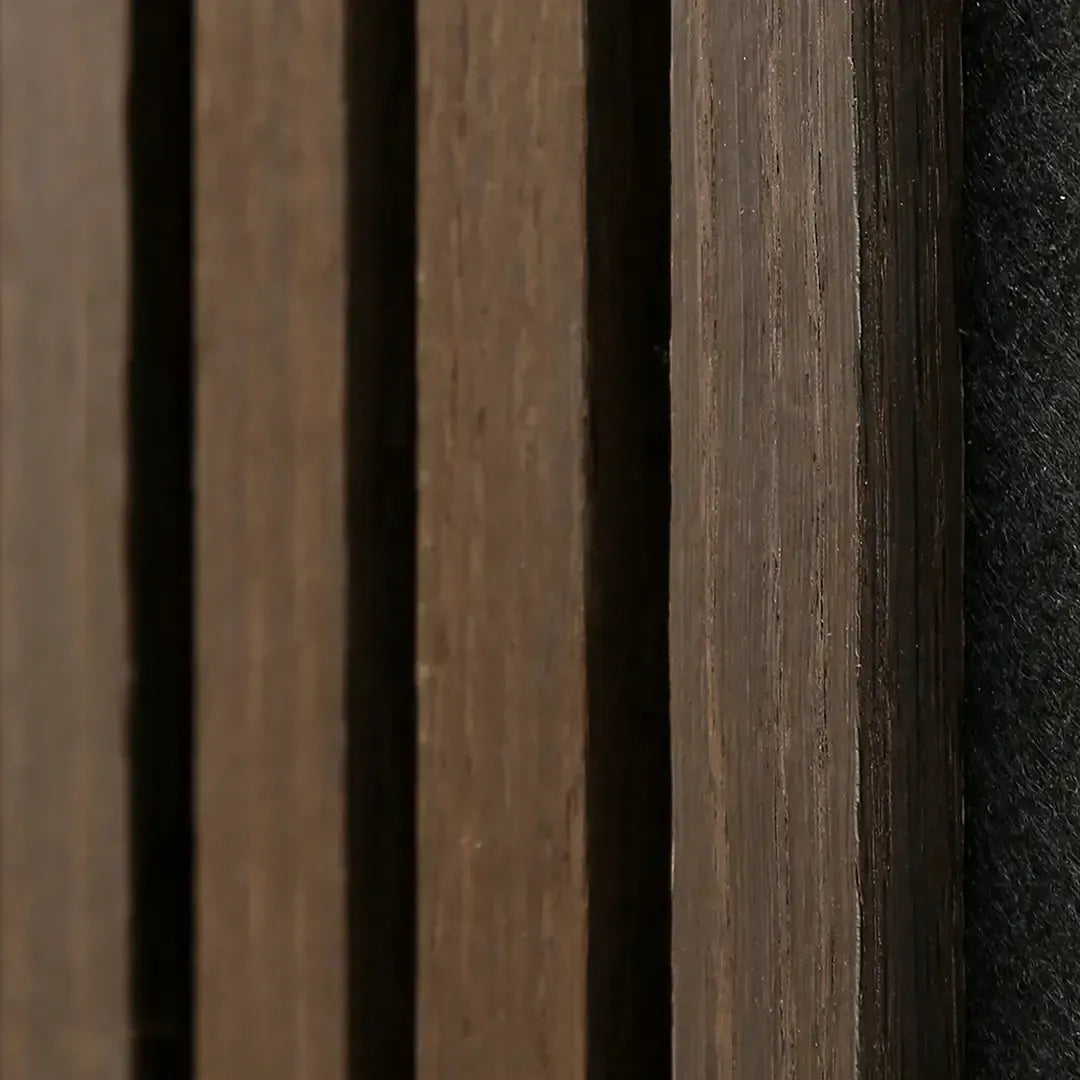
- Felt backing option - a gray felt layer behind the slats increases sound absorption over a solid-wood panel
- Mounting method - click-together tongue and groove, screw-fixed trim, or peel-and-stick adhesive
- Indoor vs. outdoor rating - UV and moisture resistance matter for anything going on an exterior wall
- Edge and corner finishing - end pieces and corner trim determine how clean the install looks at wall edges
At a glance
| Panel | Best for | Standout feature | Key limitation |
|---|---|---|---|
| Acoustic Slat Wall Panel - Natural Oak | Everyday living room echo control | Real oak veneer over a slotted acoustic core | Light tone shows dust and scuffs faster than darker finishes |
| Acoustic Slat Wall Panel - Black Oak | Home theaters and bold accent walls | Dark oak veneer hides panel seams in low light | Dark finish shows fingerprints and dust more visibly |
| Fluted Wall Panel - Walnut | Curved walls and flexible layouts | Flexible backing bends around columns and curves | Vertical fluting limits horizontal design options |
| Hexagon Acoustic Panel - Walnut | Geometric statement walls | Interlocking hex shape covers walls with fewer visible seams | More edge cutting required than with rectangular slats |
| Exterior Wall Panel - Birch | Outdoor cladding and exterior accent walls | 3D wood grain texture built for UV and weather exposure | Not acoustic - decorative exterior use only |
| Peel-and-Stick Backsplash - Pentagon 3D Anthracite | Renters and budget-friendly upgrades | Adhesive install, no tools or drilling | Small tile format, not acoustic, not meant for full walls |
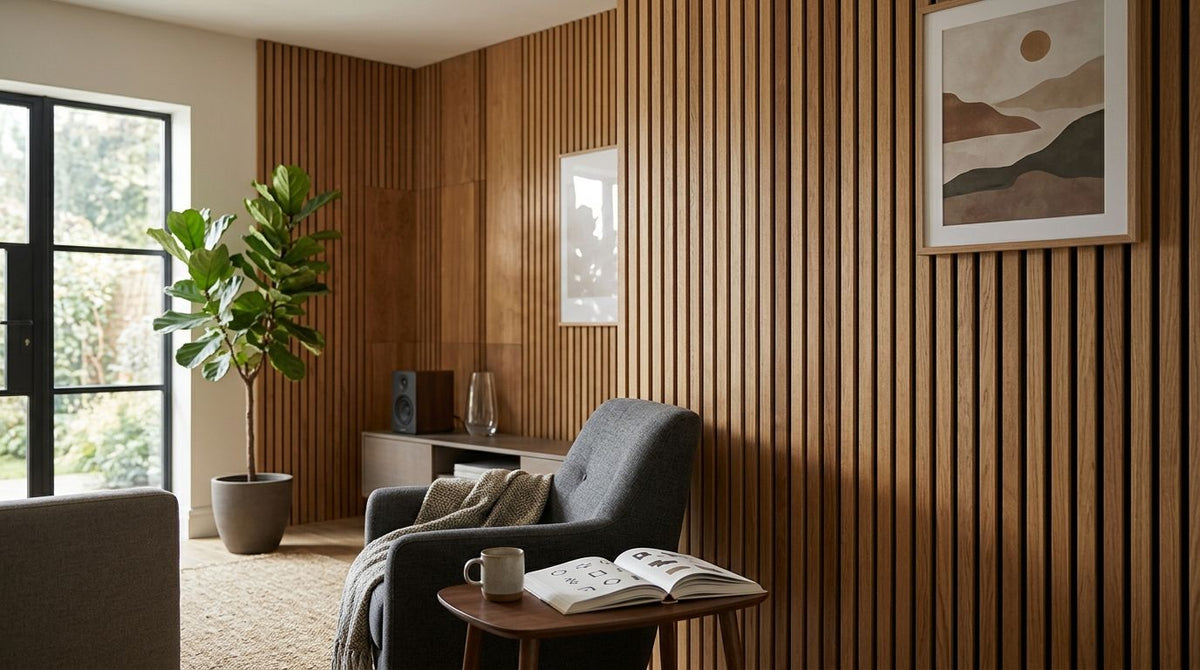
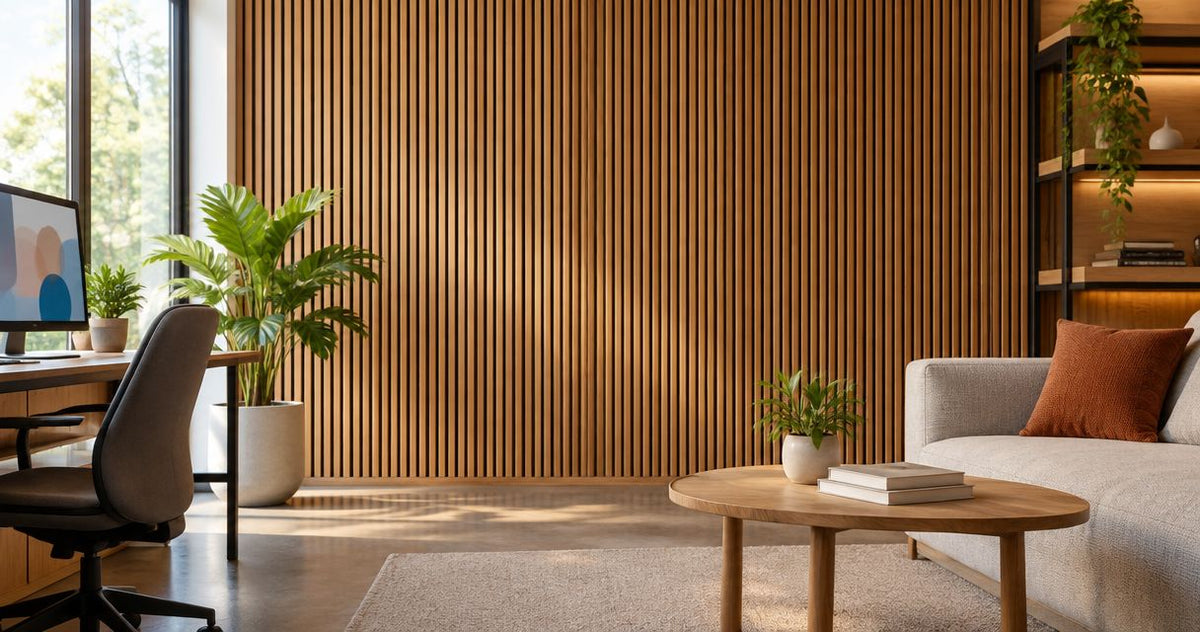
The default pick for 2026 is the Acoustic Slat Wall Panel in Natural Oak if you're treating a living room or bedroom with a normal echo problem and want real wood grain, not a printed pattern.
1. Acoustic Slat Wall Panel - Natural Oak: best decorative acoustic wall panel for everyday living rooms
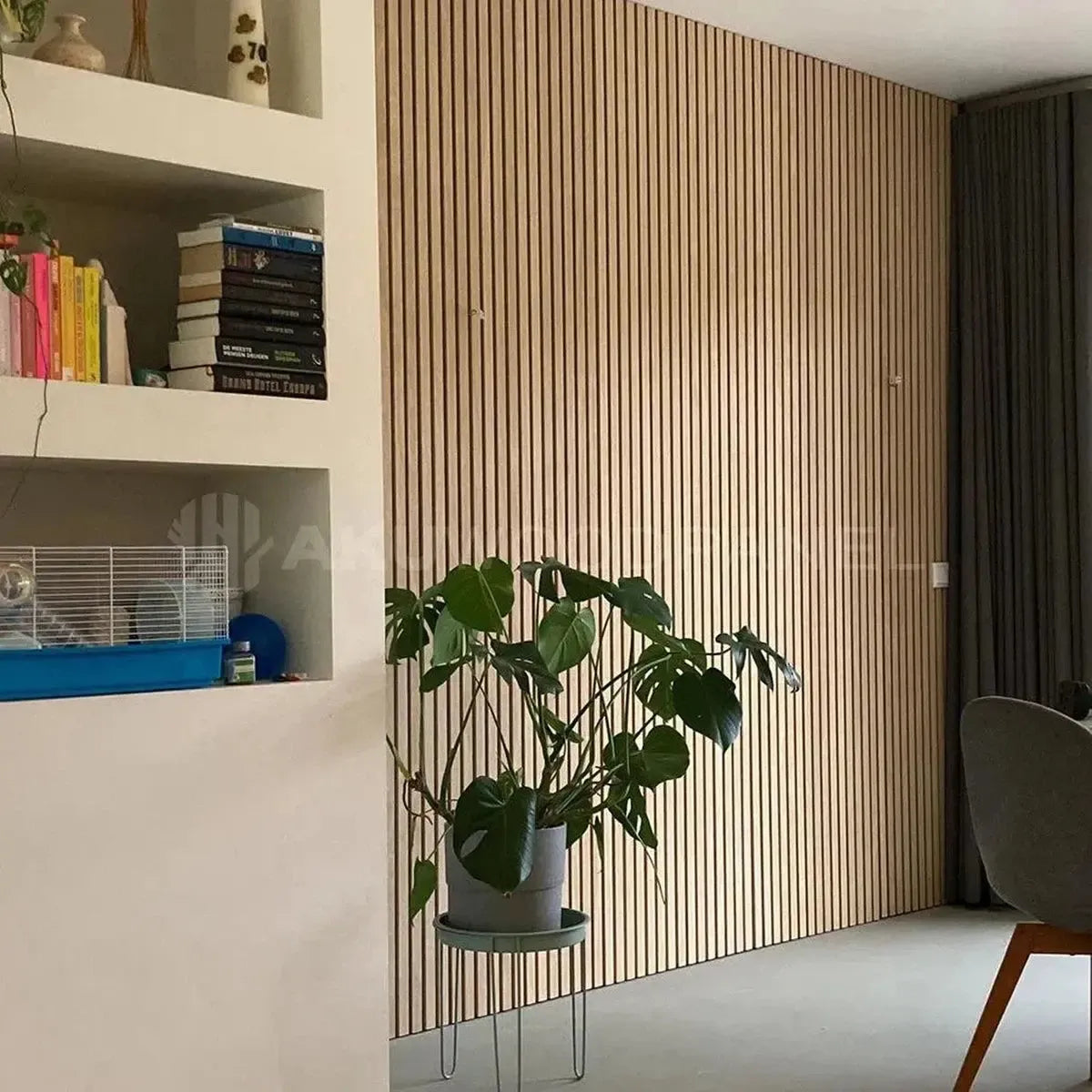
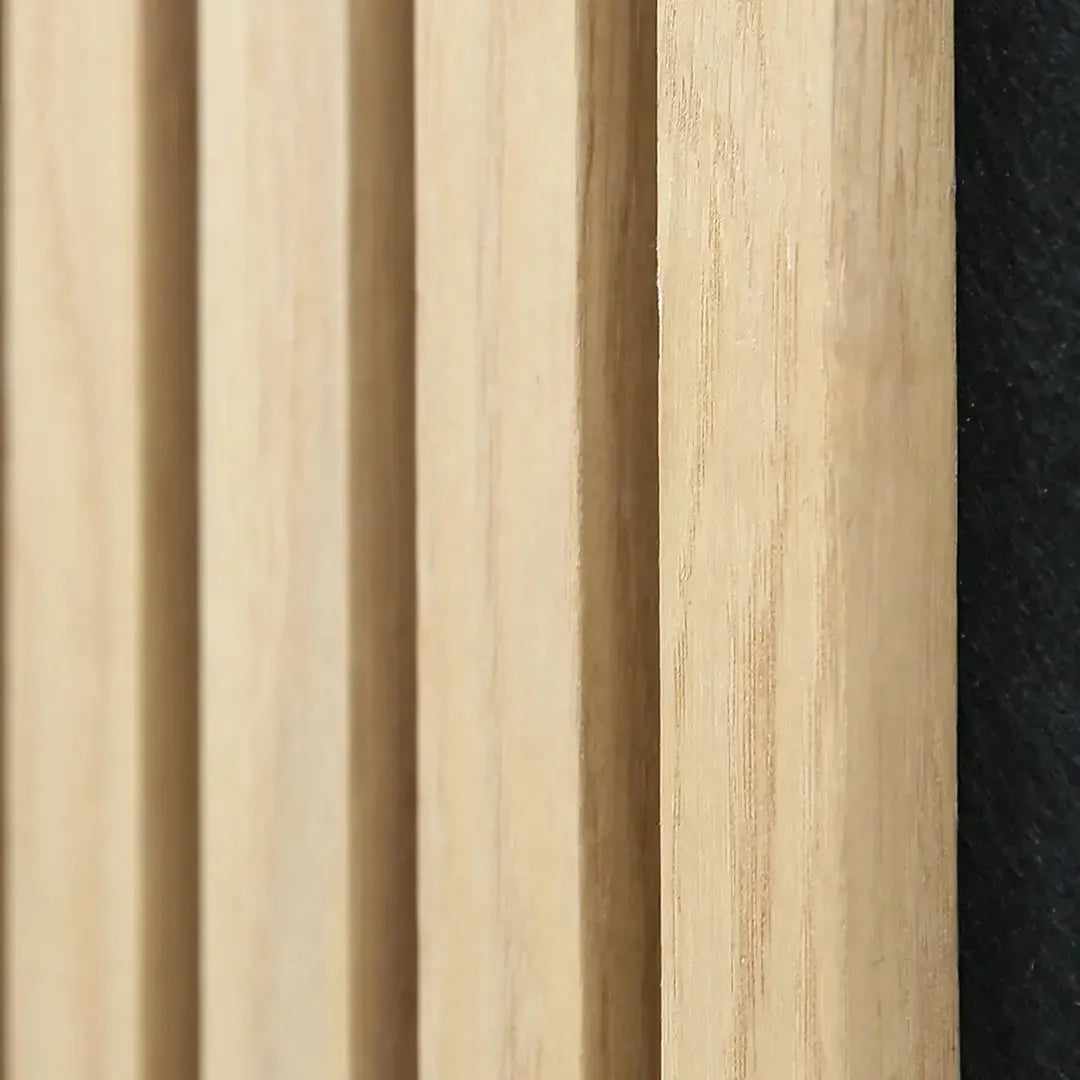
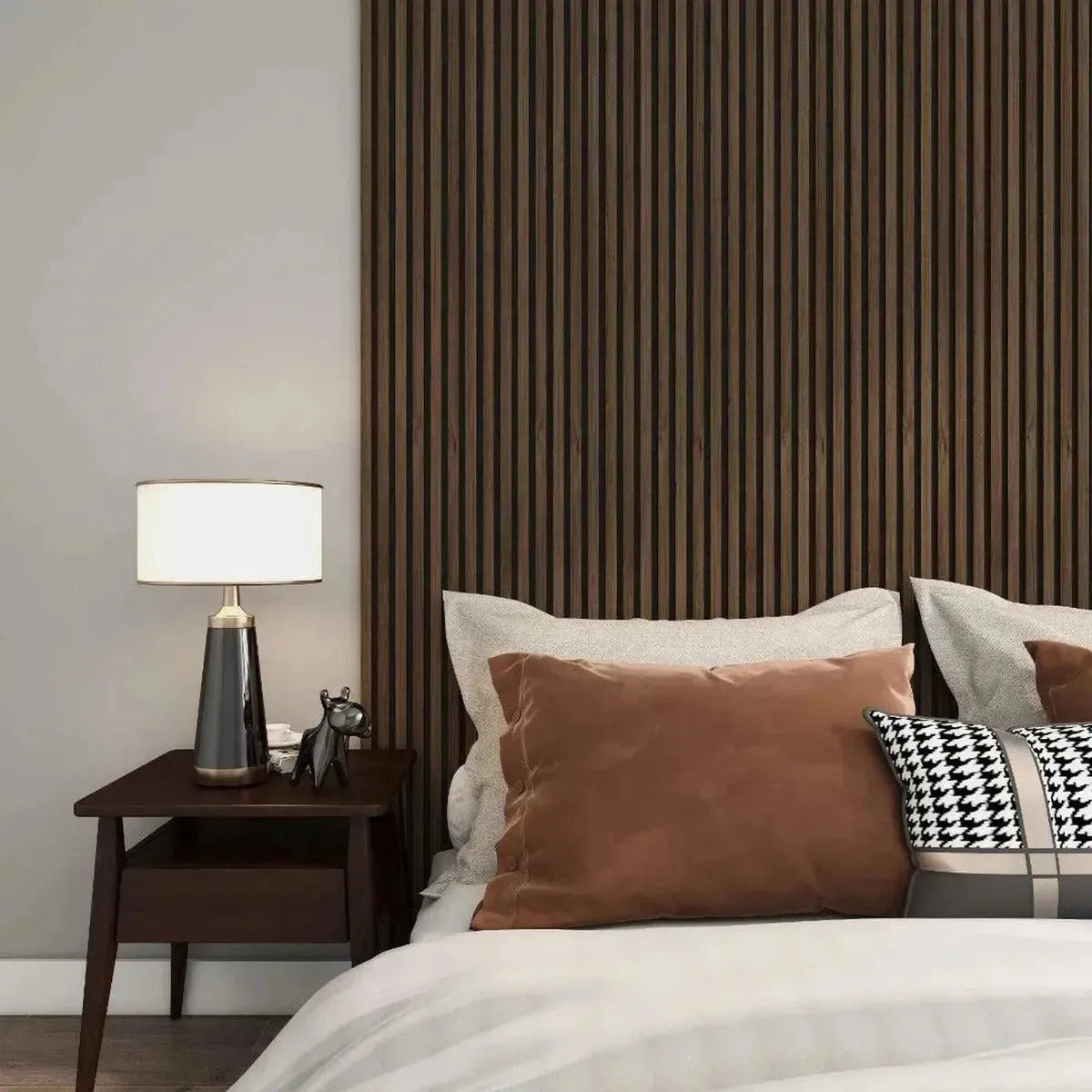
The Acoustic Slat Wall Panel in Natural Oak pairs a real wood veneer face with a slotted acoustic core, so it does two jobs at once: covers a plain drywall accent wall and breaks up sound reflections that cause voices and TV audio to echo. It's the panel most homeowners reach for first because the light tone works with almost any existing flooring or furniture color.
Natural Oak slat panel pros:
- Real oak veneer, not a printed laminate finish
- Slotted core absorbs sound rather than just decorating the wall
- Light tone brightens rooms with limited natural light
- Works with click-fit end pieces for a finished edge
Natural Oak slat panel cons:
- Shows dust and minor scuffs faster than darker finishes
- Needs a felt-backed variant for noticeably more absorption than the plain version
Best for: living rooms, bedrooms, and home offices with a normal amount of daily echo. Verdict: Buy.
2. Acoustic Slat Wall Panel - Black Oak: best for home theaters and bold accent walls
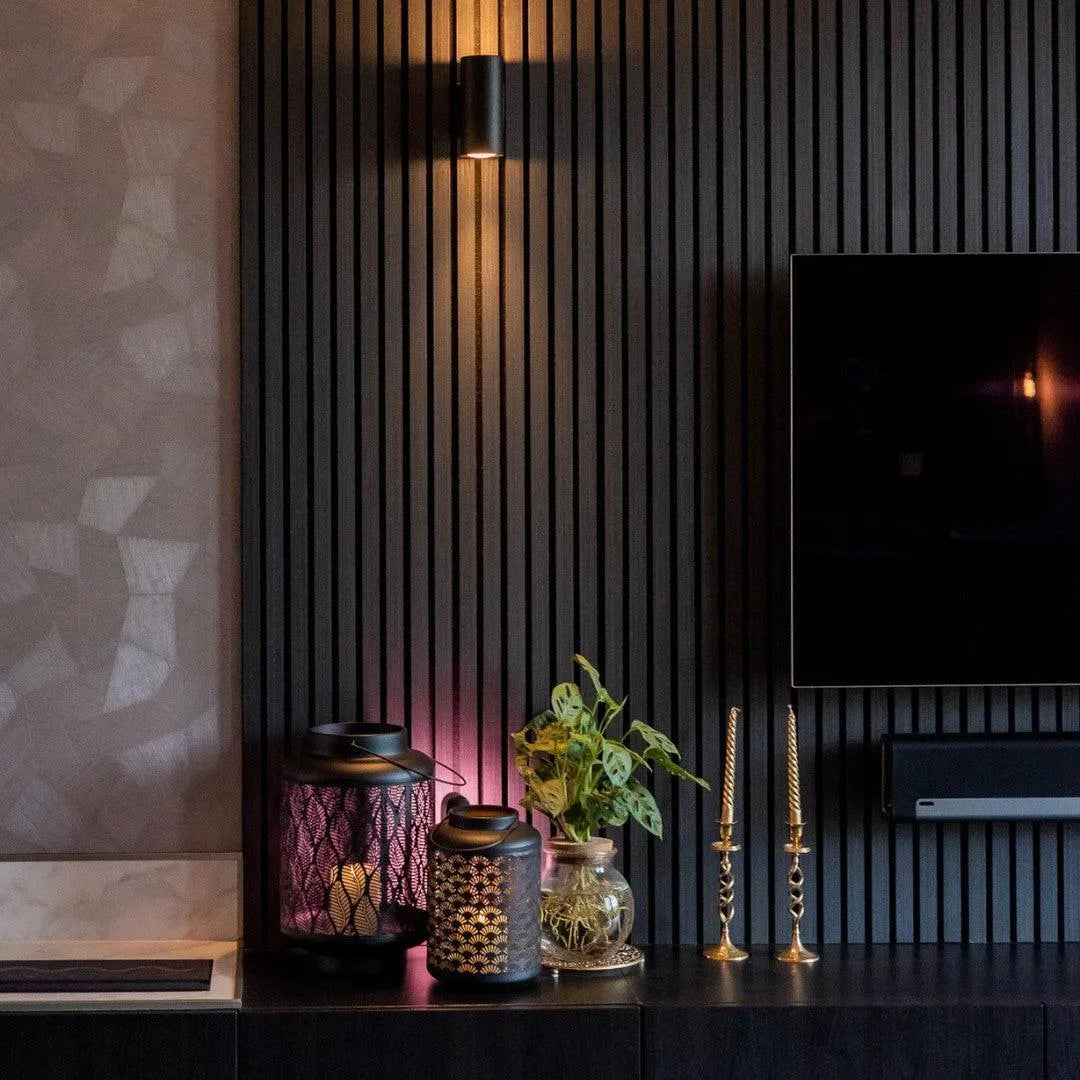
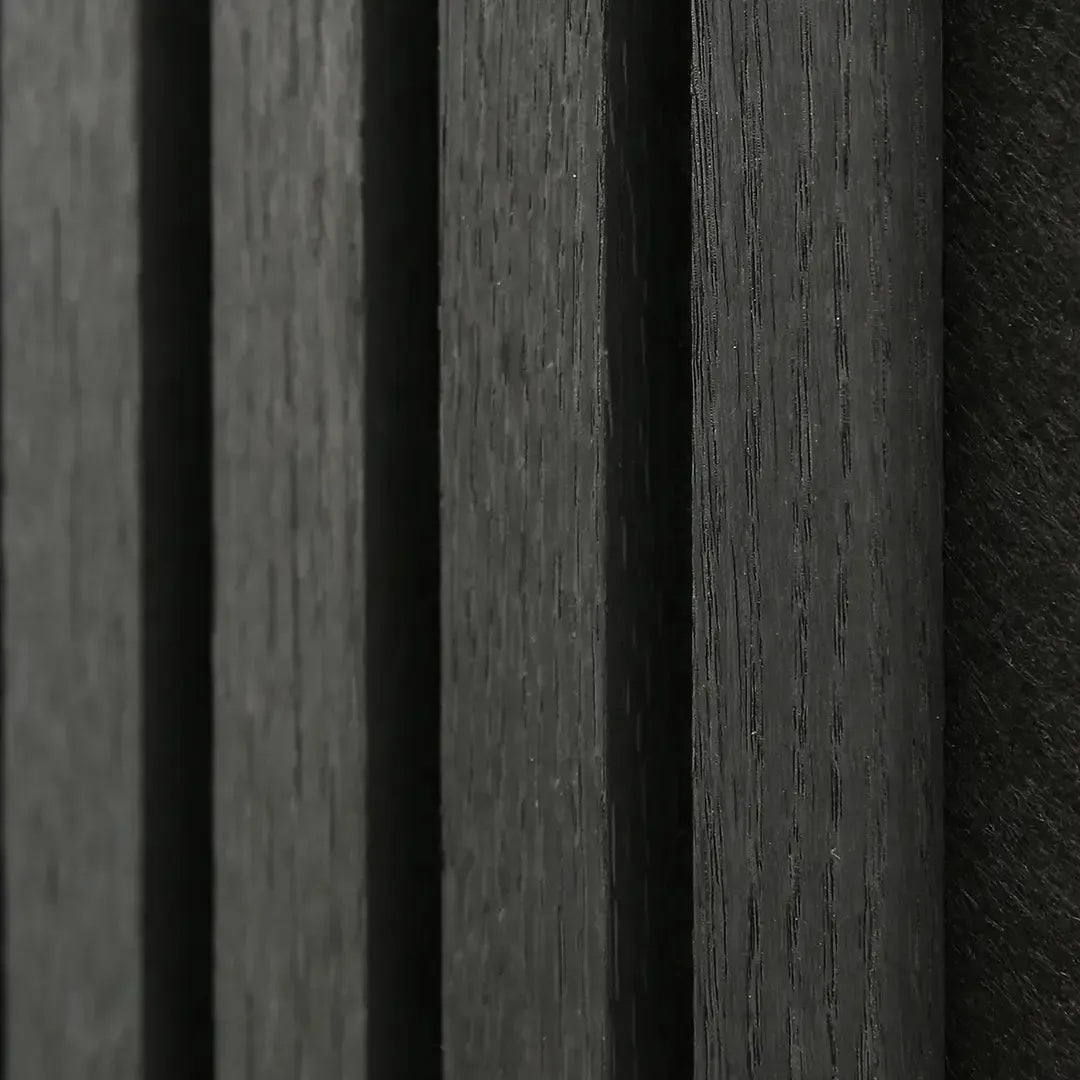
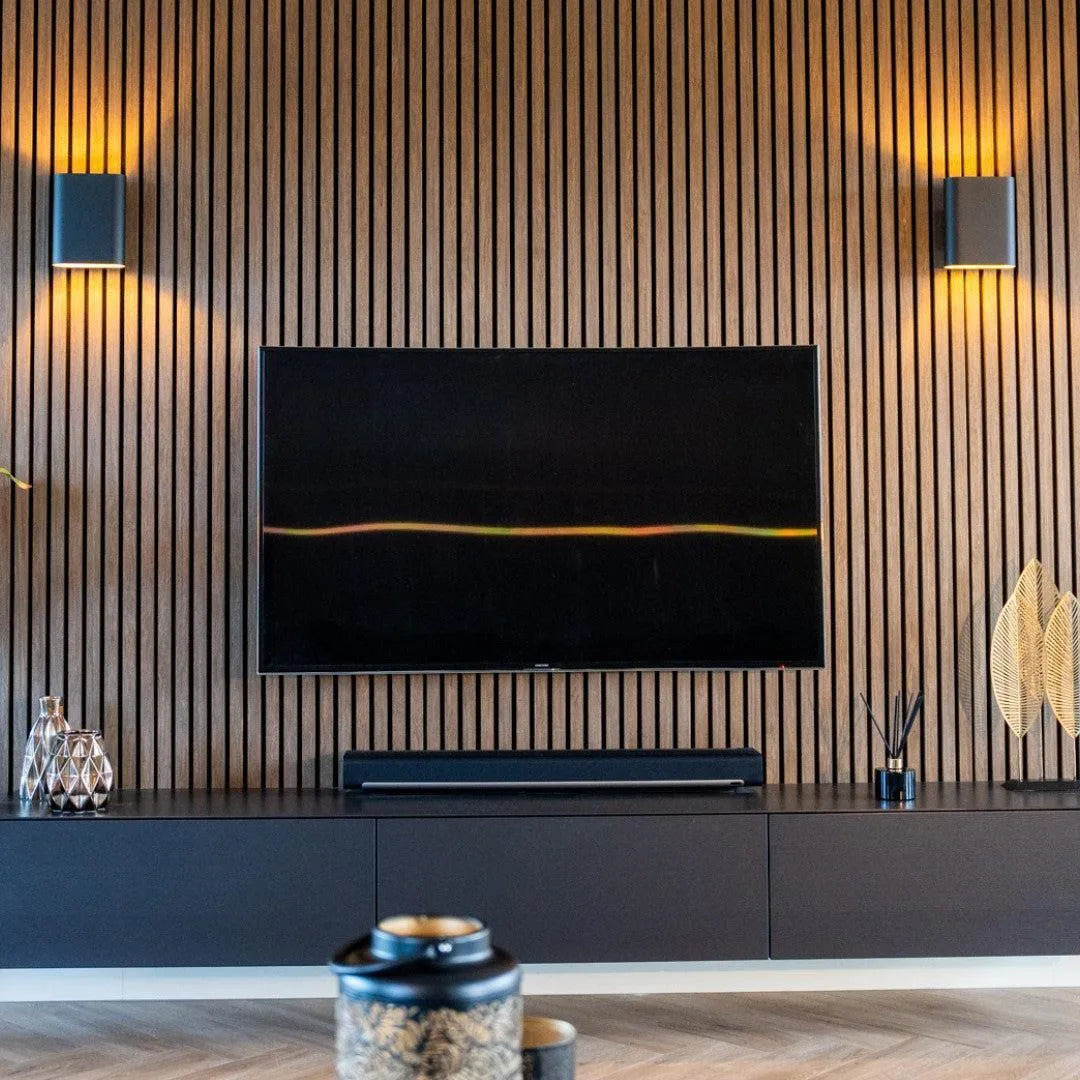
The Acoustic Slat Wall Panel in Black Oak is the same slotted acoustic core as the Natural Oak version, finished with a dark oak veneer instead. In a home theater or a media wall behind a large TV, the dark finish hides panel seams and reduces glare off the wall surface during movie nights.
Black Oak slat panel pros:
- Same slotted acoustic core as the lighter finishes on this list
- Dark veneer minimizes visible seams behind a mounted TV
- Pairs well with black hardware and dark flooring
Black Oak slat panel cons:
- Fingerprints and dust show up faster than on light finishes
- Can make a small, low-light room feel smaller if overused
Best for: home theaters, media walls, and rooms that already lean dark and moody. Verdict: Buy if the room has good ambient lighting; Hold in a small windowless room.
3. Fluted Wall Panel - Walnut: best for curved walls and flexible layouts
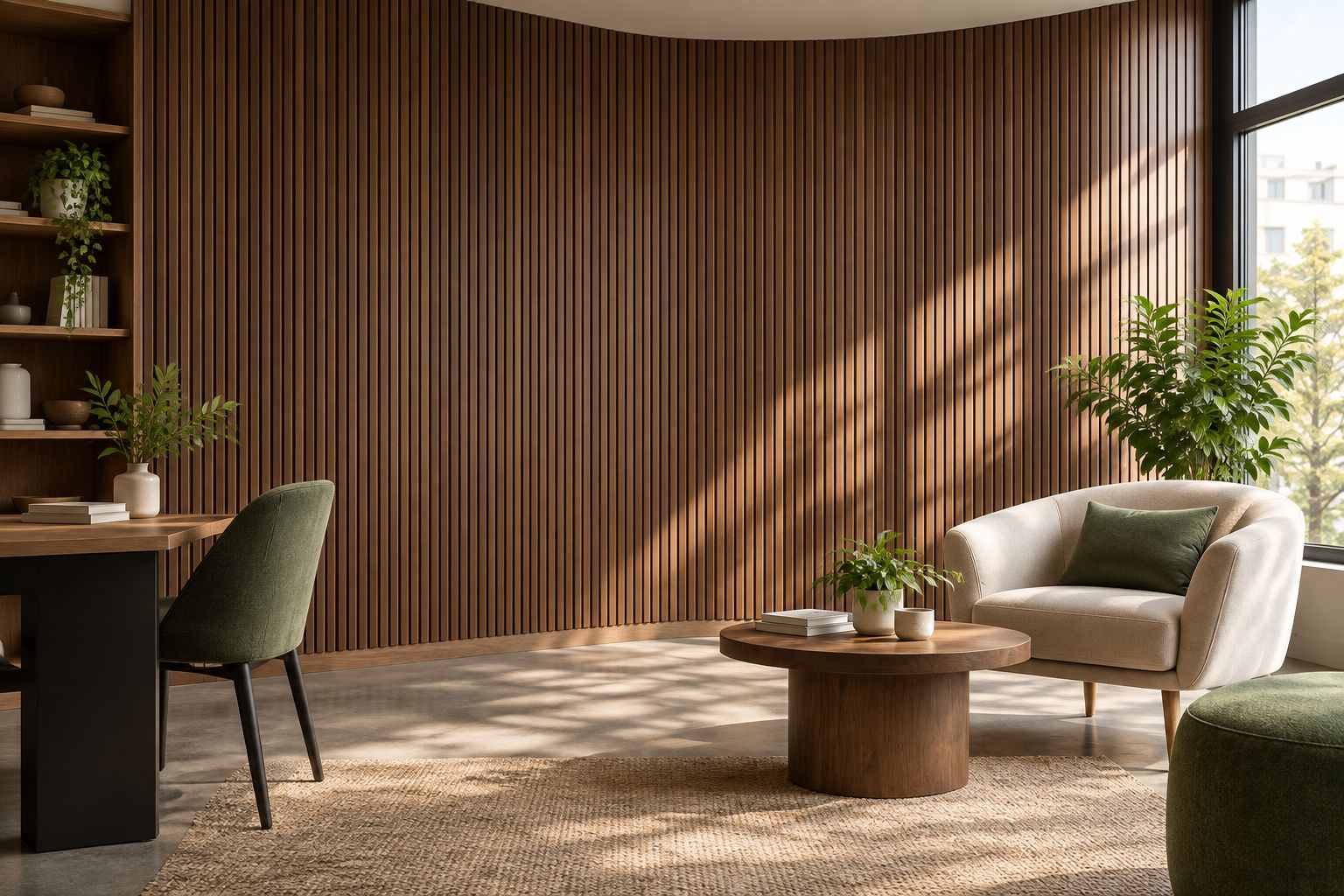
The Fluted Wall Panel in Walnut is built with a flexible backing, which is the reason it exists on this list at all - it's the only panel here designed to bend around a curved reception desk, a rounded column, or an awkward bay window wall. The vertical fluted profile reads as texture even from across the room.
Fluted Walnut panel pros:
- Flexible backing bends around curved walls and columns
- Vertical fluting hides minor wall imperfections better than flat slats
- Walnut veneer reads as a premium finish from a distance
Fluted Walnut panel cons:
- Fixed vertical orientation - no horizontal layout option
- Less sound absorption than a slotted slat panel with a felt back
Best for: curved walls, columns, and reception desks where a flat panel physically won't fit. Verdict: Buy for curved applications; Skip if your wall is flat and you want maximum sound absorption instead.
4. Hexagon Acoustic Panel - Walnut: best for geometric statement walls
The Hexagon Acoustic Panel in Walnut interlocks edge to edge, so a full wall reads as one continuous geometric pattern instead of a stack of rectangular boards. It's the pick for anyone who wants the wall itself to be the design statement, not just a backdrop.
Hexagon Walnut panel pros:
- Interlocking hex shape leaves fewer visible seams than rectangular panels
- Reads as a design feature on its own, without extra decor
- Available in matching gray felt-backed and plain versions
Hexagon Walnut panel cons:
- More edge cutting needed at wall corners and ceiling lines than with straight slats
- Pattern can look busy in a small room already full of other patterns
Best for: feature walls behind a bed, sofa, or reception desk where the wall is meant to be noticed. Verdict: Buy.
5. Exterior Wall Panel - Birch: best for outdoor cladding and exterior accent walls
The Exterior Wall Panel in Birch is the one product on this list built for outdoor exposure, with a 3D wood grain texture designed to hold up to UV and weather rather than absorb indoor sound. It's the right call for a garden wall, a shed, or an exterior accent panel next to a front door - not for an indoor echo problem.
Birch exterior panel pros:
- 3D wood grain texture built specifically for outdoor exposure
- Pairs with matching finishing trim, corner trim, and rubber end caps for a clean edge
- Available in coordinating oak, black, and stone gray tones for matching trim sets
Birch exterior panel cons:
- No acoustic function - this is decorative exterior cladding only
- Requires exterior-rated screws and end caps for a finished, weatherproof install
Best for: exterior accent walls, garden structures, and entryway cladding. Verdict: Buy for outdoor projects; Skip entirely if you're solving an indoor noise problem.
6. Peel-and-Stick Backsplash - Pentagon 3D Anthracite: best budget and renter-friendly option
The Peel-and-Stick Backsplash in Pentagon 3D Anthracite is an adhesive tile, not a mounted panel, which means no drilling and no wall damage on move-out. It's decorative only - there's no acoustic core behind the 3D texture - so it belongs on a kitchen backsplash or a small accent nook, not a full echo-prone living room wall.
Pentagon Anthracite backsplash pros:
- Adhesive install with no tools, screws, or drilling required
- Small tile format makes it easy to work around outlets and switches
- Renter-friendly since it can be removed without wall damage
Pentagon Anthracite backsplash cons:
- No acoustic benefit - purely decorative
- Tile format isn't practical for covering a full-size wall
Best for: kitchen backsplashes, small accent nooks, and rental units where drilling isn't allowed. Verdict: Buy for small decorative jobs; Skip if sound absorption is the goal.
Also worth a look for small accent areas
If none of the six above fit a small backsplash or accent nook, AKU Woodpanel's solid wood 3D tiles cover the same footprint in different finishes.


How we ranked these
Each panel was placed against the six criteria above: real veneer versus laminate, whether a slotted or fluted profile sits behind the finish, felt backing availability, mounting method, indoor/outdoor rating, and edge-finishing options. The ranking is a decision tree by use case, not a leaderboard - the Fluted Walnut panel isn't "worse" than the Natural Oak slat, it just solves a different wall shape.
Which decorative acoustic wall panel should you choose in 2026?
For a normal living room, bedroom, or home office echo problem, the Acoustic Slat Wall Panel in Natural Oak is the default buy - real veneer, a slotted acoustic core, and a light finish that works in most rooms. If your wall curves or wraps a column, move to the Fluted Wall Panel in Walnut instead. If you're renting or just need a small decorative accent, the Peel-and-Stick Backsplash tiles solve that without touching the acoustic problem at all.
FAQ
What are decorative acoustic wall panels?
Decorative acoustic wall panels combine a real wood veneer surface with a slotted or fluted core that absorbs sound while also covering the wall. AKU Woodpanel's slat, fluted, and hexagon panels fall into this category; peel-and-stick tiles are decorative only.
Are decorative acoustic wall panels actually soundproof?
No - they absorb sound reflections inside a room rather than blocking sound from passing through a wall. A slotted slat panel reduces echo and reverberation, it doesn't stop noise from a neighboring room.
What's the best decorative acoustic wall panel for a living room?
The Acoustic Slat Wall Panel in Natural Oak is the best fit for most living rooms in 2026 because it pairs real oak veneer with a slotted acoustic core and a light finish that works with most existing decor.
Can you install acoustic wall panels without a contractor?
Yes for most slat, fluted, and hexagon panels, which use click-fit edges and end pieces designed for DIY installation. Exterior wall panels need weatherproof screws and rubber end caps for a proper outdoor install.
Do wood slat panels work outdoors?
Standard indoor slat, fluted, and hexagon panels aren't built for outdoor exposure. Use the Exterior Wall Panel line in Birch, Oak, Black, or Stone Gray instead, which is rated for UV and weather.
Is peel-and-stick backsplash the same as acoustic paneling?
No. Peel-and-stick tiles like the Pentagon 3D Anthracite are adhesive decorative tiles with no acoustic core behind them, meant for small backsplash or accent areas rather than echo control.
What's the difference between fluted and slat wall panels?
Fluted panels have a continuous vertical ridged profile and a flexible backing that can bend around curves, while slat panels are flat rectangular boards separated by gaps over a slotted acoustic core.
Do felt-backed panels absorb more sound than plain wood panels?
Yes - a felt backing layer behind the slats adds absorption on top of what the slotted wood core provides on its own, which is why felt-backed variants exist alongside the plain versions.
One last thing
Most buyers install one panel style across an entire room, but the felt-backed slat panel and a plain-veneer panel from the same wood tone can be split across two walls in the same room - the felt-backed wall does the acoustic work near the TV or speakers, and the plain-veneer wall keeps the grain pattern uninterrupted where it's purely decorative. That split gets more real absorption where it matters without covering every wall in felt.
 Better performance and aesthetic appeal
 In Stock